Commissioning Brief, Spring 2018: Proposals for Specific Ideas - BBC
←
→
Page content transcription
If your browser does not render page correctly, please read the page content below
RADIO COMMISSIONING FRAMEWORK

      Commissioning Brief,
                 Spring 2018:
Proposals for Specific Ideas

 Production of factual, arts, comedy and drama programmes.
Commissions are mainly for broadcast from April 2019 to March
   2020 but some may be bought ahead for later years.
        Factual and Arts: Proteus 2019-2020 Round 1
                   Version 2Proteus
      Comedy and Drama:      08.02.20182019-2020
                                        LL       Round 5
                           1 of 89
CONTENTS
 ............................................................................................................................................... 1
SECTION A:                    TIMETABLE ................................................................................................... 3
SECTION B:                    THE COMMISSIONING PROCESS ................................................... 4
   THE THREE STAGES ................................................................................................................ 5
   STAGE 1: SHORT PROPOSAL .................................................................................................. 5
   STAGE 2: FULL PROPOSAL ..................................................................................................... 6
   STAGE 3: CONDITIONAL COMMISSION ................................................................................ 8
SECTION C:  ABOUT RADIO 4 ...................................................................................... 10
SECTION D: EDITORIAL OPPORTUNITIES ............................................................. 11
   FACTUAL .............................................................................................................................. 11
   ARTS..................................................................................................................................... 36
   COMEDY .............................................................................................................................. 42
   DRAMA ................................................................................................................................ 55
SECTION E:  COMMISSION AWARD ......................................................................... 84
SECTION F:  KEY CONTRACT TERMS .................................................................... 87
SECTION G: ABOUT BBC COMMISSIONING .......................................................... 89

                                                    Version 2 08.02.2018 LL
                                                            2 of 89
SECTION A: TIMETABLE
The commissioning process consists of three stages, as set out in the timetable
below.
Stage Dates Activities
Commissioning 5th February Publish commissioning brief documentation and
briefs published open round in Proteus.
6th February –
Launch briefings The Commissioning team brief programme
Salford makers
8th February -
London
DRAMA & COMEDY
1. Short Proposal 12:00 Deadline for Short Proposals submitted in
and shortlisting Proteus
7th March
W/c 26th Commissioners shortlist proposals and notify
March producers of outcomes. Full Proposals
requested from those proceeding to next stage.
2. Full Proposal 4th-25th April Opportunity to discuss re-requested short
proposals prior to submitting Full Proposals.
12:00 Deadline for Full Proposals submitted in Proteus.
26th April
FACTUAL & ARTS
1. Short Proposal 12:00 Deadline for Short Proposals submitted in
and shortlisting Proteus
13th March
W/c 2nd April Commissioners shortlist proposals and notify
producers of outcomes. Full Proposals
requested from those proceeding to next stage.
2. Full Proposal 10th April-25th Opportunity to discuss re-requested short
May proposals prior to submitting Full Proposals.
12:00 Deadline for Full Proposals submitted in Proteus.
29th May
DRAMA, COMEDY, FACTUAL & ARTS
3. Commission Mid August Commissioning decision made, subject to
awarded contract. Editorial specifications and price
agreed.
We will assess your proposal(s) according to this timetable. Late submissions
cannot be accepted. If you have any questions about this commissioning brief that
you need answering before you submit your short proposals, please ensure you send
them to the relevant commissioning co-ordinator well before the deadline.
Version 2 08.02.2018 LL
3 of 89SECTION B: THE COMMISSIONING PROCESS
Everything in this commissioning round is open to competition. Any department or
company with demonstrable suitable expertise may submit ideas for any brief.
For this specific ideas process, there is no formal eligibility questionnaire. If you are
registered on the BBC supplier database it is assumed that you satisfy the basic
eligibility requirements.
We are taking two distinct approaches to commissioning in this round.
Specific ideas
All briefs listed in this document are being commissioned in the traditional Radio 4
manner, in which we invite you to submit proposals for specific ideas. In Stage 1 you
submit brief Short Proposals; we may then invite you to discuss some of those ideas.
In Stage 2 you submit Full Proposals.
Batch tenders
In Factual documentaries and in Arts Features much of the programming is being
commissioned on the basis of a batch. This is where we contract successful
applicants to deliver a set number of programmes per year. Some of these specific
programmes are commissioned at the outset; the rest are left unspecified for rolling
commissioning through the year.
Each batch proposal will be supported by a number of proposals for specific ideas,
which should follow the process set out in this document.
For details of how to apply for a batch commission, read the document entitled
Commissioning briefs, Spring 2018: proposals for batches.
Version 2 08.02.2018 LL
4 of 89THE THREE STAGES
STAGE 1: SHORT PROPOSAL
Step 1 Complete your Short Proposal – maximum 250 words - in Proteus.
Please do not offer proposals unless you can demonstrate relevant
expertise.
Observe the cap on numbers where this has been applied. If the cap says a
maximum 10 proposals per supplier, we will only read your first 10.
Fewer, stronger ideas are much more likely to get through. In slots where
each commission is for multiple episodes, the number of commissions will be
far fewer than the number of individual programmes available.
We welcome proposals from suppliers who wish to group together in some
form of partnership, as long as this is made clear in the proposal. Where
there is a cap on proposals, the suppliers joining together may combine their
cap allowance (e.g. if the cap is 5 and two companies offer in partnership,
they may submit 10). Each joint proposal should be entered only once.
All Short Proposals must be entered through Proteus by the stage 1
deadline.
PROPOSALS FOR FACTUAL AND ARTS SHOULD BE SUBMITTED IN
PROTEUS: 2019-2020 ROUND 1
PROPOSALS FOR COMEDY AND DRAMA SHOULD BE SUBMITTED IN
PROTEUS: 2019-2020 ROUND 5
The following must be entered for each Short Proposal:
Title (of your proposal, not the slot)
Commissioning Brief number: This number is at the top of each
commissioning brief. Enter each proposal in one schedule slot only. If we
consider it suitable for another slot, we will transfer it.
Delivery date: Enter an estimated delivery date e.g. 01/06/2019.
Price per episode: This will default to the bottom of the guide price range.
Radio 4 will not expect to pay above guide price range. If, at this stage you
think the price will be outside the range, you can enter this in the ‘Price Per
Episode £’ field.
Number of episodes
Duration: The total allotted airtime per episode, including continuity
Version 2 08.02.2018 LL
5 of 89announcements, for example 14’ or 28’ (not 15’ or 30’).
Short synopsis: This is where you sell your idea in Stage 1. Max 250 words.
Long synopsis: Do not enter anything in this field at this stage.
Step 2 Short Proposals will be evaluated by the commissioning team who will
shortlist those which they wish to see as Full Proposals.
Step 3 We will release the results in Proteus, with proposals showing as either
‘rejected’ or ‘re-requested’. Re-requested means the idea has been short-
listed to go to the next stage. We regret that we are unable to provide
feedback on unsuccessful Short Proposals, due to pressure on our time.
STAGE 2: FULL PROPOSAL
Step 1
If you reach the next stage, you will be invited to discuss your short-listed ideas with
the commissioning editor. This may by phone rather than face to face. We will not
discuss ideas that have not been submitted as Short Proposals.
Step 2
When a proposal is re-requested in Proteus, do not re-create it from scratch; just edit
it to reflect the requirements for the Full Proposal.
While it is possible to submit fresh offers which have not been discussed, experience
shows that very few ideas that have not been offered as Short Proposals get
commissioned.
All Full Proposals must be delivered in Proteus by the Stage 2 deadline.
PROPOSALS FOR FACTUAL AND ARTS SHOULD BE SUBMITTED IN
PROTEUS: 2019-2020 ROUND 1
PROPOSALS FOR COMEDY AND DRAMA SHOULD BE SUBMITTED IN
PROTEUS: 2019-2020 ROUND 5
The following must be entered for each Full Proposal:
Title: If your idea is commissioned you must not change this title without the written
agreement of the commissioning editor.
Commissioning Brief number: Submit each proposal in one slot only. If we think it
suitable for another slot, we will transfer it.
Delivery Date: (linked to anniversary / event dates where relevant). This information
is important and will be used when scheduling a commissioned programme.
Version 2 08.02.2018 LL
6 of 89Price per episode: For this commissioning round we have decided to issue a guide
price range rather than a single guide price. We hope that by doing so we will
encourage suppliers to consider the optimum balance between cost, quality and
ambition within this range, taking into account the different characteristics of specific
commissions. We anticipate that this will result in savings in some cases but accept
that in other cases it will not be possible to make savings without jeopardising the
editorial proposition of the commission.
We ordinarily would not consider bids above the range unless the editorial
proposition clearly justified it and Radio 4 was able to find corresponding savings
elsewhere.
If you do not specify a price in your bid, Radio 4 will assume that you are offering
your programme at the bottom of the guide price range. Please note that although
submitting a lower price may increase your chance of a commission, the editorial
proposition is always paramount.
Producer: Include CV in long synopsis field if the producer is new to Radio 4.
Executive Producer: Include CV in long synopsis if the executive producer is new
to Radio 4.
Number of episodes
Duration: The total allotted airtime per episode, including continuity announcements,
for example 14’ or 28’ (not 15’ or 30’).
Short synopsis: For the final proposal this must be under 50 words. Its purpose is
to convey the essence of the idea and enable us to find it quickly in our records.
Think of it as a fledgling Radio Times billing.
Full synopsis: This is where you sell your idea. It must not exceed 2 x A4 pages of
size 11 type.
Key talent: Any intended writer/abridger/performer/presenter etc. should be shown in
the long synopsis. You do not have to secure talent agreement before submitting an
offer but you should let us know the degree to which named talent has expressed an
interest in the project or has intellectual ownership of it.
If you prepare proposals offline to paste into Proteus, keep the format simple: bold,
underline and italic only. Proteus will remove other formatting, including bulleted and
numbered points, as well as converting your font to the equivalent of Arial size 11.
Supporting material (digital or hard copy) See sections below on Submission of
Supporting Material.
Appendices
After setting out your idea, please add the following appendices in the full synopsis
field (these are in addition to your 2 page allowance):
Version 2 08.02.2018 LL
7 of 89Appendix A – Confirmation of acceptance of the key BBC contract terms (Section F).
Appendix B – Risk management: identify any specific risks and the processes or
systems that will be put in place to manage these.
If you have any questions that you need answered before you submit your Full
Proposal please ensure you send them to the relevant commissioning co-ordinator
well before the submissions deadline.
Digital commissioning
Beyond the standard metadata and possible clip requirements, we do not require any
extra digital deliverables to be offered for these commissions.
Our digital commissioning editor will look at the slate of commissions along with the
genre commissioning editors and assess the potential for any additional digital
content. The supplier of the programme will have the first option to offer to supply
this if it is required and if they have the capacity and ability.
We are open to ideas that producers think will work as digital first or podcast,
followed by broadcast in the linear schedule.
Step 3
We evaluate all Full Proposals against the editorial brief and commission those which
most successfully fulfil the brief and contribute to the most varied, original and
balanced schedule for the Radio 4 audience.
The following people will evaluate your proposal:
Gwyneth Williams, Controller, Radio 4
The relevant Commissioning Editor(s)
Step 4
Commissioning decisions will be communicated in Proteus. Brief feedback for
rejected proposals will be given there.
At any stage of the process, we may need to come back to you to seek clarification.
Your answers will be factored into the evaluation process as appropriate.
STAGE 3: CONDITIONAL COMMISSION
Confirmation of all specific programme proposals is conditional on the issues listed
below. Radio 4 is not responsible for any costs incurred prior to full agreement.
There will be important information included in the feedback field in Proteus which
will not be communicated through other means so it is vital that you take time to read
this, make notes and disseminate to colleagues where necessary.
Price
Each conditional commission will be made with a fixed price offer that has been
judged as value for money by the Commissioning, Finance and Business Affairs
Version 2 08.02.2018 LL
8 of 89teams. Most will be within the published guide price range but we reserve the right to
negotiate an alternative price if we believe it appropriate. If our price is accepted in
writing by an independent company there will be no need to submit a detailed budget.
Contracts will be issued immediately.
If, however, you wish to challenge the offer made, a detailed budget in Proteus will
be requested and scrutinised by our Finance and Business Affairs teams with the
aim of reaching agreement.
Conditional acceptance may be withdrawn if agreement on price is not reached
within a reasonable period.
Rights
Radio 4 requires an appropriate set of rights dependent on the type of
programme. This will vary only in exceptional circumstances. The guide price range
quoted on the commissioning brief is based on buying the standard set of rights for
that programme. If fewer rights are bought, the price may be reduced.
Digital rights
Rights should be cleared for streaming, together with a 30-day “listen again” window
and podcast.
Independent suppliers are required to clear the rights for podcast for any of the
factual briefs (except the Narrative History brief comprised of 10 or more episodes),
unless otherwise agreed between the BBC and the independent producer.
Independent suppliers are not required to clear podcast rights for comedy and drama.
Schedule and delivery dates
Each proposal should include your ideal delivery date although our conditional
acceptance will not necessarily be able to reflect this date. We are unlikely to issue
precise transmission dates for programmes not pegged to a particular anniversary or
season but will give the calendar quarter in which we intend to place them. If you
cannot deliver to meet the given transmission quarter, notify Amanda Benson
(Schedule Planning Manager) within 14 days of results publication. Precise delivery
dates will be confirmed well before the start of each calendar quarter.
Editorial
A conditional acceptance might have specific editorial conditions attached to it, e.g.
that a particular actor is available. Fulfilment of them must be confirmed before the
commission is finalised and before you start work.
Compliance and BBC Editorial Guidelines
You will be required to deliver programmes that are in line with the BBC’s Editorial
Guidelines and be able to adapt to the BBC’s changing editorial and business needs
during the period of the commission.
Version 2 08.02.2018 LL
9 of 89SECTION C: ABOUT RADIO 4
Radio 4
Radio 4 is unique in the breadth and quality of its informative, educational and
entertaining programming. Every day, on air and online, Radio 4 has more original
content than any other broadcaster in the world. Its authoritative news and current
affairs journalism is complemented by programmes exploring many areas, including
science, arts, history, religion, ideas, drama and comedy, offered through regular
strands, one-off programmes and special seasons.
While the average age of its 11 million plus audience is 56, Radio 4 is constantly
evolving its schedule and tone to attract the next generation of listeners. It also
seeks to continue to build appeal to audiences across the UK and among ethnic
minorities.
The latest audience data is available on the commissioning website.
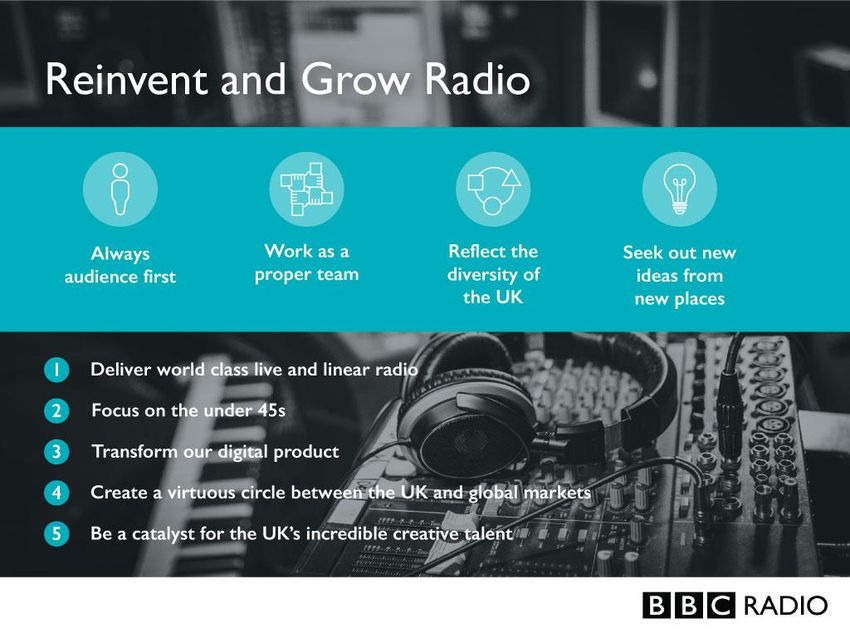
Radio 4 forms part of BBC Radio, whose strategic vision and objectives are here:
Version 2 08.02.2018 LL
10 of 89SECTION D: EDITORIAL OPPORTUNITIES
FACTUAL
Commissioning Editor Mohit Bakaya
Commissioning Co-ordinator Jacqueline Clarke
jacqueline.clarke@bbc.co.uk
Eligibility
We invite proposals from BBC departments and independent companies who can
demonstrate considerable experience in radio/audio or TV factual production at both
producer and executive producer level. If you have not produced programmes for
Radio 4, you should include your track record in the long synopsis of your final offer.
The following briefs are open in Proteus Round 1 2019-2020
Brief no. 47209 Brief name: Long Form Documentary – Specific
Proposals
Brief no. 47006 Brief name: 14’ Feature
Brief no. 47169 Brief name: Narrative History
Brief no. 47040 Brief name: Wednesday Debate
Brief no. 47004 Brief name: Formats
Brief no. 47088 Brief name: Archive on 4
Brief no. 47144 Brief name: New Saturday Show
Brief no. 47194 Brief name: Multi-part Documentary Series
Brief no. 47052 Brief name: New Science Show
Brief no. 47132 Brief name: Special Events & Seasons
Version 2 08.02.2018 LL
11 of 89Factual Audio – a very modern medium…
Documentaries - my God, there is so much going on in our country and in the
world today that every time you open the newspaper or turn on the radio or
watch the news on TV there is another documentary subject. We're getting
the headlines for a second, shaped by corporate delivery most of the time,
but what's really the story there?
Jonathan Demme
Factual documentary is where we take time to explore, understand and report the
world; the events and ideas that are shaping our lives. It’s an important mission at a
time of uncertainty, misinformation and polarisation. We are in a period of turbulence
for traditional media – including many news organisations – and Factual
documentary and storytelling is essential to help the audience navigate the choppy
waters that surround them.
Radio 4 is, and must remain, a place where anyone who chooses to listen will find
clear, intelligent, fair and uncompromising reporting. We also need you to find new
ways to serve our audiences better than we ever have before – because doing so is
more important than ever. Not just the audience that knows and loves Radio 4 but
also the potential audience out there, curious about the world and demanding clear
and authoritative analysis.
Reality changes; in order to represent it, modes of representation must
change.
Bertolt Brecht
The more clearly we can focus our attention on the wonders and realities of
the universe about us, the less taste we shall have for destruction.
Rachel Carson
Audio storytelling has been re-energised by innovations in podcasting. Radio 4 has
been responsible for some of the best radio in the world for many decades. But now
we need to go even further. We need your help to reach new and younger audiences
with original ideas and trailblazing linear and podcast storytelling.
Let’s make our audience – however they come to us – the most informed listeners in
the world. But let’s also transport them far from the news cycle; factual documentary
must be a place of wonder, surprise and delight – as well as a place of truth, depth
and clarity.
New Slots
We are introducing two new slots to help us innovate and compete digitally. To find
out more, read on ...
Version 2 08.02.2018 LL
12 of 89To batch or not to batch?
We will award a smallish number of batches for long form Factual Documentaries
(28’ and 37’ slots) to enable us to work more closely with a number of suppliers so
that we can think and react better to a fast-changing world. The batch relationship is
a great way to work more collaboratively on certain ideas and types of programmes;
it helps us meet the audience’s needs more dynamically.
These documentaries will cover the full range of Factual genres – History, Politics,
Science, Current Affairs, Religion, Big Ideas & Trends, and Natural History.
Batches will be awarded for 12 months, with an option to renew for a second year.
We will not be able to confirm price or number for year two at this stage.
For information on how to bid for a batch, see the separate document
Commissioning briefs, Spring 2018: proposals for batches.
However, a batch is only one means of getting Factual business on Radio 4.
The long form documentaries brief is also open for specific proposals (i.e. non-
batched).
There are many factual briefs open to specific ideas and not batched.
We are taking the short form documentary series brief out of the batch process.
We will continue to commission Archive on 4, big Narrative History series, Formats
and Debates in the standard way to ensure that there is still opportunity and a
diversity of supply.
For 2019/20, we are adding to this list New Saturday Formats, New Science Formats
and Multi-part Series. To make space for these new briefs we are taking out some
long form 28’ docs that were previously in the batch. These briefs will be priced
differently to long form docs.
Ideas for non-batched slots are subject to the usual short proposals process with
pitch meetings for the ones shortlisted. A maximum of 250 words at short proposals
will apply.
There may be a cap on the number of ideas you can submit.
Version 2 08.02.2018 LL
13 of 89ALL FACTUAL SLOTS: EDITORIAL GUIDANCE
Be the first to explain emerging thinking and trends to our audience.
Introduce the audience to people and places they might not otherwise encounter.
Untangle contemporary events with clarity and a fresh, clever treatment.
Tell historical stories which have new contemporary relevance.
Return and revise history when new thinking and facts come to light.
Offer deeper understanding of everyday experience.
Bring voices that we rarely hear to the audience’s attention.
Ask (and maybe answer) so-far unaired questions through counter-factual
thinking or polemic.
Grip the audience with compelling narratives; perhaps with no other purpose than
to delight or surprise. We want more wonder.
Hold the powerful to account – taking a broad view of where power lies (not just
politics).
Reveal what others would prefer to hide through investigative journalism.
You might think of something we should be doing which we haven’t listed here, in
which case, persuade us.
Treatment, Treatment, Treatment
We are as interested in treatment as we are in purpose. In fact, we feel some of
our great documentaries can be let down by being too densely packed, too
conventional and didactic, not told imaginatively enough. Journalism, sound,
music, craft and storytelling can be fine bedfellows.
Success comes when you have thought about how you will tell your story as
well as the story you want to tell. Here are the routes to success:
Fresh thinking and treatment about the most important issues facing the
audience.
When your idea is about the “hardy factual perennials”, territory that is important
to understanding the modern world and, as a result, often pitched – eg refugees,
homelessness, death, housing, inequality, Brexit, abuse, social injustice,
immigration – the key factor will be how you cover the story; the clever conceit or
treatment that makes your idea stand out from the pack and engages the
audience in new and interesting ways. Another factor, of course, will be the
person telling us the story or embarking on the project of enquiry. Please indicate
whether they’ve been approached.
Stories that start from a brilliant and surprising place. So: seeing a classified ad
for a missing person; or a jog around a golf course leading to an enquiry into how
golf clubs can afford the rent. Be more curious and let that curiosity seek out
stories and doc ideas NO ONE else will get to.
Find true wonder in the world and bring it to us.
Version 2 08.02.2018 LL
14 of 89Commissioning Brief no. 47209
Brief name: Long Form Documentary – Specific Proposals
Duration (including announcements) 28’ and 37’
Schedule slot Various days, 1602, 1330, 1102, 2002
Number of programmes available 150 in the batch commissions
approx 50 outside the batch commissions
Transmission period April 2019 - March 2020
Guide price range per episode £8,200-£8,500 for a 28’ programme and
£10,100 to £10,400 for a 37’ programme
Commissioning Round 2019/2020 Round 1
NON-BATCH CAP Maximum FIVE ideas, if you are not bidding for a batch.
BATCH CAP Suppliers bidding for a batch, see
Commissioning briefs, Spring 2018: proposals for batches
Editorial Opportunity
We will primarily take single doc ideas here, though some series may be included.
Most multi-part docs series should be submitted separately under BRIEF 47194.
o The genres we expect to cover here are:
CURRENT/SOCIAL AFFAIRS
HISTORY
SCIENCE
RELIGION
BIG IDEAS & TRENDS
NATURAL HISTORY
POLITICS
Version 2 08.02.2018 LL
15 of 89IMPORTANT: See ALL FACTUAL SLOTS: EDITORIAL GUIDANCE, page 14.
Some further guidance
o Most importantly, think why this story should be told in long form documentary
and would not be best covered as an item or series of items on a regular Radio 4
strand. Listen to the other single topic strands that sit on the network like
Analysis, In Business, Crossing Continents and File on 4. But also magazine
shows like Woman’s Hour, Week in Westminster and the science strands.
o If you are pitching an access doc, consider the editorial challenges proximity
might throw up and address how you will meet them. Also, access needs to have
a strong editorial purpose. And think hard about how you establish character and
engagement when access is to a number of people in an institution.
o We want more women and people from ethnic communities presenting in this
slot. We particularly want to hear more Black British voices.
o Where your story is very specifically located please explain how you will make
your documentary of interest to a national audience.
o Revisionism is welcomed here - documentaries that uncover new evidence about
the past or feature new arguments challenging received wisdom regarding a
historical event or period.
o Where the subject matter is especially complex, proposals should suggest ways
in which actuality and texture will be used to give the audience time to absorb
and reflect.
o More polemic and thesis-driven programmes would be welcome.
o If pitching a science idea, do consider the various science strands and ask
yourself why your idea is more than a 7 minute report on a magazine show. Think
documentary storytelling!
o Beware anniversary pegs. They are rarely sufficient in their own right.
o Please indicate whether a named presenter has brought the idea to you
o Radio 4 reserves the right to commission some of the individual ideas and
schedule these along with work from other suppliers.
Digital
We are keen to encourage bold digital ambition. However, remember that we will
only be able to support a certain number of big digital projects in any one year. Our
digital commissioning editor and factual commissioning editor will together assess
the potential for any additional digital content. The supplier of the programme will
have the first option to offer to supply this if it is required and if they have the capacity
and ability. We are open to ideas that producers think will work as digital first or
podcast, followed by broadcast in the linear schedule.
Version 2 08.02.2018 LL
16 of 89Commissioning Brief no. 47006 Brief Name: 14’ Feature
Duration (including announcements) 14’
Schedule slot Various days, 09.30, 12:04, 13:45, 20.45
Number of programmes available Approx 200
Transmission period April 2019 - March 2020
Guide price range per episode £3,000-£3,200
Commissioning Round 2019/2020 Round 1
Editorial Opportunity
We invite applications from suppliers, BBC and independent, to supply short form
feature series to Radio 4. These 14’ programmes will be placed in various slots in
the schedule. We will commission all short form docs under this brief. Subjects can
be anything that falls under ‘Factual’
IMPORTANT: See ALL FACTUAL SLOTS: EDITORIAL GUIDANCE, page 14.
Some further guidance
The short features open up opportunities for audiences to engage with
storytelling with a different rhythm and pace. They are a great place to tell
episodic stories, programmes that naturally divide into a series of smaller
explorations or journeys.
Do not submit big multi-part (10 or more) Narrative History ideas here. They are
being commissioned separately.
Examples of successful new types of storytelling here are The Boy Who Gave
His Heart Away, Whodunnit, and Intrigue.
Version 2 08.02.2018 LL
17 of 89 The 14’ programmes are placed in high profile parts of the schedule, often
between well known Radio 4 strands.
They provide a bridge between The World at One and The Archers, for example,
when there are breaks in the narrative history commissions at 13.45. Features
that change theme and texture are particularly welcome. Please do not offer too
many history ideas so that we can vary the range of ideas at lunchtime.
Set out clearly why you want to make this programme for the Radio 4 audience.
How the episodes break down and lend themselves to multi-part treatment is
crucial to this form.
We will commission programmes in blocks of 5, very occasionally we may take a
one off 14’ idea.
Craft
We are keen to encourage more crafted feature making in these slots and more
imaginative treatments. So please think long and hard about how your series will
break down into single episodes and how they will join up to be greater than the
sum of their parts.
We are also keen to commission more series that work digitally. Think how your
story might work as a “box set” with all the attendant storytelling devices.
Digital
We are keen to encourage bold digital ambition. However, remember that we will
only be able to support a certain number of big digital projects in any one year.
Our digital commissioning editor and factual commissioning editor will together
assess the potential for any additional digital content.
The supplier of the programme will have the first option to offer to supply this if it is
required and if they have the capacity and ability.
We are open to ideas that producers think will work as digital first or podcast,
followed by broadcast in the linear schedule.
Version 2 08.02.2018 LL
18 of 89Commissioning Brief no. 47169 Brief name: Narrative History
Duration (including announcements) 14’
Schedule slot
Mon – Fri 13.45
Approx number of programmes 90
Transmission period April 2019 - March 2020
Guide price range per episode £3,000-£3,200
Commissioning Round 2019/2020 Round 1
Editorial Opportunity
Narrative History has established itself as a high impact slot on Radio 4. It is where
we tell some of our biggest history stories, from Living with the Gods to Our Man in
the Middle East. In 2018/19, we have big historical takes on China, education, health
and innovation planned.
We are only inviting BIG Narrative History ideas here. Other shorter bursts of 14’
programmes will be considered under the SHORT FORM SERIES.
IMPORTANT: See ALL FACTUAL SLOTS: EDITORIAL GUIDANCE, page 14.
Some further guidance
First and foremost, voice is the thing that matters here. This year we really want
you to think about who are the best storytellers, the most interesting minds who
have compelling ways to make their expertise come alive. Too many people who
are pitched here are very knowledgeable, but make for slightly dull narrators.
Who is the next Neil MacGregor? They have to be jump-out-of-the-radio
compelling, engaging voices!
Narrative History ideas will be at least 10 episodes long and tackle big subjects
demanding that level of exploration and exposition. It is the opportunity to
construct chronological, thematic or other narratives from these brilliant building
blocks that makes this slot both challenging and exciting.
Narrative History commissions are one of the key ways the station defines
Version 2 08.02.2018 LL
19 of 89its ambition for the year. So ideas here need to be big, bold, imaginative and
agenda setting.
The combination of expertise and original authorship with dynamic and
imaginative use of audio offers huge potential for creative and intellectual
ambition. These are also programmes that work well as digital downloads, with
short episodes building over a number of weeks.
Not all the series in this slot are of the same length; one or two will be broadcast
over 4 to 6 weeks. Other commissions will be around 10 episodes. Commissions
of 10+ episodes will normally include a weekly 58’ omnibus version.
An offer in this slot should explain why you want to introduce or reintroduce the
Radio 4 audience to the history you are passionate about. Are there new things
to say about it? How is it relevant to today? Does it challenge received wisdom?
We would expect to know who will write and present the series – this is key to
understanding how the editorial authority of the project will be guaranteed and
how it will sound on air. Let us know if you are using an adviser or consultant.
We would expect an indicative outline of how the series might work across a
number of weeks. Please also state digital ambitions, where appropriate.
With long commissioning lead-ins, ideas must stand the test of time and not date
too quickly.
Where the series is big enough we may want to explore the possibility of a book
spin-off. Where a pre-existing book deal is involved, this MUST be flagged up in
the proposal.
Please indicate whether the presenter has been approached. If they are high
profile it might be worth waiting until we express interest in them and the idea.
This is not the place for one-off or 5 x 14’ ideas. Those will be commissioned as
part of the SHORT FORM SERIES.
Given the size of some narrative history commissions, we are keen to
commission a few ideas that achieve economies of scale and are offered at
lower than guide price.
Digital
We are keen to encourage bold digital ambition. However, remember that we will
only be able to support a certain number of big digital projects in any one year.
Our digital commissioning editor and factual commissioning editor will together
assess the potential for any additional digital content. The supplier of the programme
will have the first option to offer to supply this if it is required and if they have the
capacity and ability.
We are open to ideas that producers think will work as digital first or podcast,
followed by broadcast in the linear schedule.
Version 2 08.02.2018 LL
20 of 89Commissioning Brief no. 47040 Brief name: Wednesday Debate
Duration (including announcements) 43’
Schedule slot Wed 20.02 (rpt Sat 22.15)
Number of programmes available Approx 20
The number of programmes open to
competition in this slot is small so please be
realistic in the number of offers you submit.
Transmission period April 2019 - March 2020
Guide price range per episode £7,900-£8,100
Commissioning Round 2019/2020 Round 1
Editorial Opportunity
This slot is home to The Moral Maze for 26 weeks of the year and has been home to
the series exploring the future – Futureproofing. We also have The Fix – solutions
based journalism – and over the next 12 months a new series about sport and ideas
and Across the Red Line, which deals with listening to opposing political views.
Proposals should also be aware of the Any Questions? format on Friday evenings.
IMPORTANT: See ALL FACTUAL SLOTS: EDITORIAL GUIDANCE, page 14.
Some further guidance
o A debate at this time should lift the tone of the evening schedule and inject
some energy.
o This is a chance to develop fresh formats which could turn into returning
strands on the network.
Version 2 08.02.2018 LL
21 of 89o One-off debates are possible, though these need to command their place in
this slot in particular rather than being a special edition of a specialist or
magazine programme.
o Where a format is proposed and it is not possible to look forward to issues for
2019/20, it would be useful to include an indication of the subjects that would
be covered were this series about to be transmitted now.
o Think about bringing together people who do not always see eye to eye or
share space in our increasingly fragmented universe.
o Think about how you can use this space to challenge deeply held opinions
and narratives. Bring down the echo chamber! Burst the social media bubble!
Presenter
The right presenter who is able to hold the ring with authority and wit is essential
to these programmes.
Please indicate whether the presenter has been involved in the development of
the proposal.
The ability to create a sense of occasion and manage a complex, often audience-
based format, is important.
Digital
We are keen to encourage bold digital ambition. However, remember that we will
only be able to support a certain number of big digital projects in any one year.
Our digital commissioning editor and factual commissioning editor will together
assess the potential for any additional digital content.
The supplier of the programme will have the first option to offer to supply this if it is
required and if they have the capacity and ability.
We are open to ideas that producers think will work as digital first or podcast,
followed by broadcast in the linear schedule.
Version 2 08.02.2018 LL
22 of 89Commissioning Brief no. 47004 Brief name: Formats
Duration (including announcements) 28' or 42’
Schedule slot various
Number of programmes available TBC
Transmission period April 2019 - March 2020
Guide price range per episode £6,900-£7,100 (interview and studio
formats)
Commissioning Round 2019/2020 Round 1
Editorial Opportunity
CAP: No more than TWO ideas per supplier please
IMPORTANT: Also see ALL FACTUAL SLOT GUIDANCE on page 14
Radio 4 has a number of established formats, many of which have been running for a
long time. These include Desert Island Discs, Start the Week, In Our Time, and many
others.
We are very keen to develop new format ideas, some of which we will place in the
high profile 9am slot.
With an eye on the digital landscape we are also keen to encourage ideas for new
conversation or panel formats here.
We expect proposals to be editorially ambitious with high profile presentation and,
where appropriate, a digital dimension. They can sit anywhere within the factual
landscape, though do be aware of what formats already exist on the Network.
Also, keep in mind that some of these programmes will sit at 9am and will follow the
Today programme.
Version 2 08.02.2018 LL
23 of 89How you will hold the attention of the audience at this key junction should be
highlighted in your proposal. The style of production, potential power of the material,
strength of the contributors and the promise of revelation will be essential
ingredients.
Please do not enter documentary ideas under this brief as we will consider
some of the offers submitted for other slots for placing here. This brief is
specifically focused on new format ideas.
Given the scale of the ideas required, we do not expect more than TWO
proposals from any company or department for formats at short proposals.
Please check the full range of strands and series that Radio 4 already broadcasts to
avoid duplication of programmes already commissioned.
Depending on the idea, we might commission a pilot rather than going straight into
production.
Further guidance
Choose presenters who know how to handle programmes like this – it is
unlikely they will be new to presenting – and remember 9am is our biggest
commissioned slot audience.
This is a place for strong, confident voices. Sometimes an established Radio
4 voice will be right here, but we’d also be interested to see some new (non
rookie) presenter ideas. It would also be great to increase the range of voices
in this high-profile slot.
We are keen to develop digital savvy conversation or panel formats.
Think clever conceits. 21st century formats that could potentially run and run.
Don’t be derivative!
Think about how we might find people beyond our limited contact book and
social circle
Be careful not to over complicate the format.
However, be clear that what you are proposing is, indeed, a replicable format
(Desert Island Discs is always 8 discs, never 9!)
Think about ways to burst the social media bubble. How can we help the
audience engage with ideas and views that challenge their thinking?
Digital
We are keen to encourage bold digital ambition. However, remember that we will
only be able to support a certain number of big digital projects in any one year.
Our digital commissioning editor and factual commissioning editor will together
assess the potential for any additional digital content. The supplier of the programme
will have the first option to offer to supply this if it is required and if they have the
capacity and ability.
We are open to ideas that producers think will work as digital first or podcast,
followed by broadcast in the linear schedule.
Version 2 08.02.2018 LL
24 of 89Commissioning Brief no. 47088 Brief name: Archive on 4
Duration (including announcements) 57’
Schedule slot Sat 20.02
Number of programmes available Approx 40
Transmission period April 2019 - March 2020
Guide price range per episode £7,900-£8,100
Commissioning Round 2019/2020 Round 1
CAP: No more than FIVE ideas per supplier please
Editorial Opportunity
“…the Archive on 4 strand, which, for reasons I've yet to fathom, rarely puts a foot
wrong. I've tried to find fault, because no series can be this perfect, but so far to no
avail….these hour-long, socio-political programmes are rigorously researched,
beautifully produced and mesmerising in their detail”
Fiona Sturges, The Independent
Archive on 4 has become an important part of the Radio 4 schedule. It has evolved
into a classy storytelling hour using the archive, rather than a simple showcase for
broadcast material.
We are looking for ideas that maintain the quality and range of subjects in this
Saturday night slot.
Story is key here. The best Archive on 4s deploy analysis, argument, wit,
revisionism, new interviews and authorship along with compelling archive material.
Version 2 08.02.2018 LL
25 of 89IMPORTANT: See ALL FACTUAL SLOTS: EDITORIAL GUIDANCE, page 14.
Some further guidance
This strand should include a wide variety of ideas: individual life stories or
biographies, cultural, scientific, social, political, sporting or entertainment history.
The authority, charisma and energy of the presenter are all vital to the success of
programmes in this slot. The presenter needs to actively engage with the archive
and do more than simply link clip A to clip B.
One of the challenges for those making programmes in the Archive on 4 slot is to
tell stories that can sustain for an hour. Proposals should set out how the idea
justifies a 57 minute origination, with enough twists and turns to keep the listener
engaged.
Don’t forget this goes out on Saturday night. Programmes should seek to
entertain and engage, as well as inform and educate.
Programmes can include new interviews, where appropriate, but the slot is not
funded or designed to feature a large amount of new material. You are also
allowed out of the studio on occasion!
Too many offers come in where the bulk of archive available is written,
rather than broadcast archive.
New archive coming to light is rarely, in itself, sufficient reason to make a
programme. Offers should demonstrate both the story you want to tell, and
why that story is best told through audio archive.
Archive sources beyond the BBC’s have worked well. Indeed, some of these are
better suited to providing longer inserts than much of the BBC News material.
There will always be a place for simpler programmes that just make use of
fantastic archive without much else besides, but the archive needs to be just that
– fantastic!
In the past, we have had too many anniversary pegged programmes that move
gently, but rather predictably, through their story, offering few new insights. If you
are submitting an anniversary pegged proposal, do say how you might introduce
surprise and challenge expectations.
When choosing the presenter, do think carefully about how his/her voice would
contrast with the type of archive that will dominate the hour.
Be mindful of the cumulative effect of an hour of very old archive. It can make
listening hard work!
We could do with more women presenters in this slot. And more ethnic diversity
too. We particularly want to hear Black and Asian Britain better represented.
Please indicate whether the presenter has been involved in development of the
proposal.
NB: Where the programme is comprised of clips of archive recordings or pre-
recorded material, details of ownership and availability of rights should (if possible)
be provided. If no preliminary enquiries have been made, this should be stated. As
far as entire or complete programmes are concerned (i.e. where we would normally
expect to take a licence to broadcast), details of availability of broadcast rights,
ownership and price per broadcast must be provided.
Version 2 08.02.2018 LL
26 of 89Digital
We are keen to encourage bold digital ambition. However, remember that we will
only be able to support a certain number of big digital projects in any one year.
Our digital commissioning editor and factual commissioning editor will together
assess the potential for any additional digital content. The supplier of the programme
will have the first option to offer to supply this if it is required and if they have the
capacity and ability.
We are open to ideas that producers think will work as digital first or podcast,
followed by broadcast in the linear schedule.
Version 2 08.02.2018 LL
27 of 89Commissioning Brief no. 47144 Brief name: New Saturday Show
Duration (including announcements) 28’
Schedule slot Sat 10.30
Number of programmes available 26
Transmission period April 2019 - March 2020
Guide price range per episode £5,300-£5,500
Commissioning Round 2019/2020 Round 1
Cap: No more than THREE format ideas per supplier please
Editorial Opportunity
IMPORTANT: See also ALL FACTUAL SLOTS: EDITORIAL GUIDANCE, page 14.
We can guess what you’re thinking: “I can’t make the kind of factual documentary
half-hour that Radio 4 expects for under £6,000.
You’re probably right. But in this slot we want you to make something unlike anything
you’ve made for us before.
We are looking for loveable, witty, clever and, yes, inexpensive formats for Saturday
mornings at 10.30. These programmes must be aimed squarely at replenisher
audiences and designed to work brilliantly as podcasts. They should not be science-
based as these will be commissioned in a different new slot.
Version 2 08.02.2018 LL
28 of 89They should probably be talent-led. We are likely to try out short runs of several
formats in the hope we find something truly dazzling – a future fixture or two for our
Saturday schedule.
Be mindful of existing Radio 4 returning series, to ensure you are proposing
something distinctive, original and surprising in this new slot.
So please think hard about the people you want to bring to our attention here and
whether their participation is realistic.
Most of all, please push the boundaries of what’s possible, create the next big thing,
don’t give us something derivative of the last big thing.
And it would be great if these were programmes that left the audience with a smile on
its face. No misery here please!
Digital
We are keen to encourage bold digital ambition. However, remember that we will
only be able to support a certain number of big digital projects in any one year.
Our digital commissioning editor and factual commissioning editor will together
assess the potential for any additional digital content. The supplier of the programme
will have the first option to offer to supply this if it is required and if they have the
capacity and ability.
We are open to ideas that producers think will work as digital first or podcast,
followed by broadcast in the linear schedule.
Version 2 08.02.2018 LL
29 of 89Commissioning Brief no. 47194 Brief name: Multi-part Documentary Series
Duration (including announcements) 28’
Schedule slot 11:02
Number of programmes available 15 - 20
Transmission period July 2019 - March 2020
Guide price range per episode £6,900-7,100
Commissioning Round 2019/2020 Round 1
Cap: No more than FIVE series per supplier please
Editorial Opportunity
IMPORTANT: See ALL FACTUAL SLOTS: EDITORIAL GUIDANCE, page 14.
We are changing one of the factual long form slots to make it a place for short series
(three or four episodes, occasionally more) which explore contemporary themes and
ideas or historical stories with analytical rigour and journalistic ambition.
Tell us about the forces shaping our future before they reach the news agenda. Tell
us in a manner which is compelling, digestible and definitive. Tell us how you will
use the space to make a real statement. This is a place for big ideas and big talent.
This is not a reactive slot. By the time these stories are on the front pages it’s too
late. Think about it the other way round: give listeners to these series the context
they need to understand and evaluate the significance of headlines they encounter in
the future.
Version 2 08.02.2018 LL
30 of 89We are looking for original, but not investigative, journalism. This is an opportunity to
step back and ask a big question. Maybe about something that pops up in the news
everyday, but goes unexamined in depth.
Examples that have worked for us in multi-part docs include Englishness,
confidence, elements in the periodic table, The Invention of… (Germany, France,
America etc), tax, death, sleep, the new world order, as well as big history stories
best explored in long form documentary.
If you are pitching a history idea, be clear why this is best told as a long form series
and not through the 14’ Narrative History brief.
Stories can be local or global, big picture or close-up and forensic. But we will always
want clear and stylish production.
Where the series is big enough we may want to explore the possibility of a book spin-
off. Where a pre-existing book deal is involved, this MUST be flagged up in the
proposal.
Your contributors must be leaders in their fields. Your presenter might have specific
expertise, but they must have a talent for simplifying complexity for a general
audience and a broadcast voice which is easy to absorb and hard to ignore.
We will expect a clear breakdown of each episode.
Digital
We are keen to encourage bold digital ambition. However, remember that we will
only be able to support a certain number of big digital projects in any one year.
Our digital commissioning editor and factual commissioning editor will together
assess the potential for any additional digital content. The supplier of the programme
will have the first option to offer to supply this if it is required and if they have the
capacity and ability.
We are open to ideas that producers think will work as digital first or podcast,
followed by broadcast in the linear schedule.
Version 2 08.02.2018 LL
31 of 89Commissioning Brief no. 47052 Brief name: New Science Show
Duration (including announcements) 28’
Schedule slot 11.02 and 21.02
Number of programmes available 20
Transmission period July 2019 - March 2020
Guide price range per episode £5,300-£5,500
Commissioning Round 2019/2020 Round 1
Cap: No more than THREE format ideas per supplier please
Editorial Opportunity
IMPORTANT: See ALL FACTUAL SLOTS: EDITORIAL GUIDANCE, page 14
We are looking to develop a few clever science formats to help us win over the
global, digital savvy audience who are currently not consuming BBC science.
We want to try out a few formats in 2019/20 with a view to establishing some longer
term commissions so please hit us with your best ideas and most exciting
presenters.
These formats are being priced at a lower rate to the science documentaries that will
be commissioned as part of long form; we are not expecting documentary-type ideas
here. Rather, these will be simpler, but clever, format ideas, probably with runs of 4
to 6, that we will experiment with in 2019/20.
But remember these programmes will need to work on air as well as on demand.
Version 2 08.02.2018 LL
32 of 89You should be aware of what we do in science that already seeks to serve this
audience (Curious Cases of Rutherford and Fry, The Digital Human, The Infinite
Monkey Cage, FutureProofing) and look across the broader scientific digital
landscape to identify gaps.
Science is a genre that can help us build a global digital presence, please think about
this as well when coming up with your ideas.
Digital
We are keen to encourage bold digital ambition. However, remember that we will
only be able to support a certain number of big digital projects in any one year.
Our digital commissioning editor and factual commissioning editor will together
assess the potential for any additional digital content. The supplier of the programme
will have the first option to offer to supply this if it is required and if they have the
capacity and ability.
We are open to ideas that producers think will work as digital first or podcast,
followed by broadcast in the linear schedule.
Version 2 08.02.2018 LL
33 of 89Proposals for special events and seasons are assessed by the whole
commissioning team, working together.
Commissioning Brief no. 47132 Brief name: Special Events & Seasons
Transmission period April 2019 - March 2020
Commissioning Round 2019/2020 Round 1
Editorial Opportunity
What distinguishes a Special Event or Season is that it should be a proposal on a
single theme which crosses strands or day parts. The impact will be different and
distinctive from the rest of the station’s schedule. A sense of occasion or celebration
may be created.
Proposals may span a variety of commissioning briefs and their coherence becomes
obvious only when the various parts are assembled.
Sometimes, small, carefully constructed clusters of programmes might be
commissioned in their entirety from one supplier. More often, Radio 4 will scope out
the scale and scheduling of a season.
Therefore, ideas for Special Events that get past the short proposal stage should be
discussed with Commissioning Editors before you do any work on the detail.
An anniversary might be marked on several stations. Your proposal for Radio 4 must
be utterly distinctive and clearly shaped for our audience. We can be over-reliant on
anniversaries. The Mars season in 2017 did not mark an anniversary. It was just a
wonderfully evocative and multi-faceted theme which found expression in
documentaries, features, drama and readings across the schedule and in special
digital moments online.
We particularly welcome suggestions of events or a focus on a subject that will
surprise the audience and be distinctive. Innovative treatments of more predictable
events are also welcome. A big event on Radio 4 may also enable us to design a
Version 2 08.02.2018 LL
34 of 89You can also read


