Lethbridge Community Outlook 2016 - 2023 - City of Lethbridge
←
→
Page content transcription
If your browser does not render page correctly, please read the page content below

Lethbridge Community Outlook 2016 - 2023
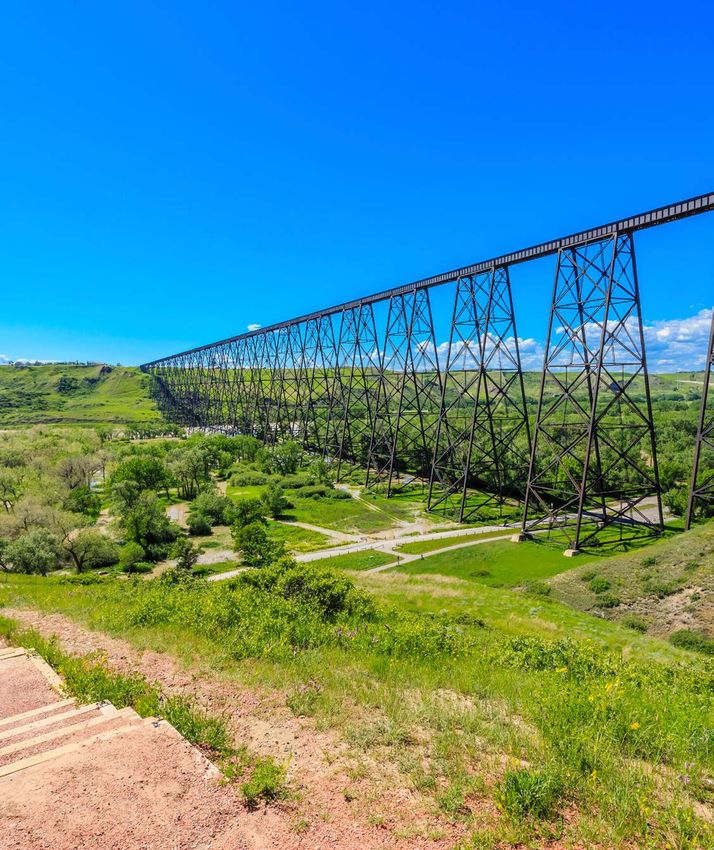
This report is produced by the City of Lethbridge in cooperation with
 Economic Development Lethbridge and Environment Lethbridge.

Table of Contents

                                              PAGE                                             PAGE
Executive Summary                               2    Part 4: Environmental Outlook              59
Part 1: Global Outlook                          4         4.1: Introduction/Overview             60
     1.1: United States of America              5
     1.2: Canada                                5      4.2: Biodiversity                         61
     1.3: Alberta                               5    		 4.2.1: Ecosystem Services                61
                                                     		4.2.2: Wetlands                           62
Part 2: Economic Outlook                        6    		 4.2.3: Riparian Areas                    62
                                                     		4.2.4: Grasslands                         62
  2.1: The Lethbridge Economy                   7    		4.2.5: Species-At-Risk                    63
		 2.1.1: Business Investment                   8    		 4.2.6: Invasive Species                  63
		 2.1.2: Construction Activity                10    		4.2.7: Parks                              63
		 2.1.3: Housing Markets                      12    		 4.2.8: Urban Forest                      63
  2.2: Key Indicators for Lethbridge         14        4.3: Water                                65
		 2.2.1: Consumer Price Index and Inflation 14      		 4.3.1: Water Quantity                    65
		 2.2.2: Labour Market (Employment)         16      		 4.3.2: Water Quality                     67
  2.3: Industry Trends                         20      4.4: Air		                                70
		 2.3.1: Agricultural Markets                 20    		 4.4.1: Ozone (O3)                        70
		 2.3.2: Energy Markets (Oil and Gas)         21    		 4.4.2: Fine Particulate Matter (PM2)     71
		 2.3.3: Public Sector                        22    		 4.4.3: Nitrogen Oxide (NO2)              72
		 2.3.4: Development Sector                   23
                                                       4.5: Waste                                73
  2.4: Economic Forecasts                      30    		 4.5.1: Waste Diversion                   74
		 2.4.1: Population Forecasts                 30
		 2.4.2: Employment Forecasts                 34      4.6: Energy                               76
                                                     		 4.6.1: Electricity Usage                 76
Part 3: Social Outlook                         38    		 4.6.2: Renewable Energy                  77
  3.1: Demographic Change                      39    		 4.6.3: Vehicle Emissions                 77
		3.1.1: Diversity                             40    		 4.6.4: Mode Share                        77
		 3.1.2: Families and Children                44
		3.1.3: Seniors                               46     4.7: Climate Change                        79
		 3.1.4: Persons Living with a Disability     47    		4.7.1: Temperature                        79
                                                     		4.7.2: Impacts                            81
  3.2: Health                                  48
		 3.2.1: Housing Needs                        50    Part 5: Appendices                         83
		 3.2.2: Poverty Profile                      52         5.1   Crime Severity Index             84
     3.3: Education                            54         5.2   Social-Demographic and Economic
                                                                Characteristics                  86
     3.4: Public Safety                        56
                                                       5.3 Lethbridge & Region Major Development
     3.5: Community Resilience (Fire/Flood)    57    			 Projects                                87

1
Executive Summary

Executive Summary                                              •   Lethbridge housing starts were up 14% in 2017,
                                                                   due primarily to a flurry of activity in the row and
                                                                   apartment segments. Housing activity in Lethbridge
The Community Outlook Report evaluates the current state           was buoyed by the multi-family segment last year, as
of Lethbridge within the context of the Global, National,          there were a total of 238 row and apartment starts in
Provincial and Regional settings. It is intended to provide        2017, up 62% from the previous year.
a snapshot of how well the city is positioned to continue to
prosper and to balance the needs of the community through      •   Inflation in 2017 in Alberta, following the Consumer
time. It includes an analysis of the city of Lethbridge from       Price Index (CPI), was 1.6% in 2017. Forecasts for 2018
an economic as well as a social perspective to provide             suggest inflation between 1.8% and 2.3% and for 2019
insights into the current state of the community along             in the range of 1.9% to 2.1%.
with future projections that are intended to enable the
community to anticipate and plan for future services and       •   Unemployment in the Lethbridge-Medicine Hat region
needs.                                                             was 5.7% in 2017 the lowest comparable value among
                                                                   all economic regions in the province.
FACTS AND FIGURES
•   The global economic growth is projected to be 3.3-3.8%     TRENDS AND OBSERVATIONS
    for 2018 and growth in Canada is projected to be 2.1-      •   Population growth in Lethbridge has traditionally been
    2.4%. Alberta had a strong bounce-back year in 2017 as         stable averaging about 1.8% per year since 1994. The
    GDP growth led all Canadian provinces.                         population booms and busts experienced in other cities
                                                                   in Alberta have not tended to take place in Lethbridge.
•   The outlook for Lethbridge and Region’s economy                Growth between 2016 and 17 was 1.41% but is expected
    is positive. Stability in the public service sector and        to grow at an average annual growth rate of 1.9%
    traditional industries, along with growth in the agri-         between 2017 and 2023. It is possible that Lethbridge
    business sector and in emerging industries, will lead          will reach a population of 100,000 in 2018, but it is
    to positive growth. Economic Growth in Lethbridge              more likely that it will reach this milestone in 2019.
    increased by 2.4% in 2017 and is expected to see
    moderate growth in 2018-2021.                              •   Contrary to popular myth, Lethbridge has a very young
                                                                   population. According to the 2016 Federal census, of
•   Lethbridge’s core industries include agri-food                 Canada’s 35 metropolitan areas (Census Metropolitan
    processing, manufacturing and supply chain and                 Areas - CMAs), Lethbridge had the highest proportion
    logistics. Significant investment in recent years              of children 14 years of age and under (19.11%) and
    has included Cavendish Farms’ new frozen potato                residents between 15 and 24 years of age (13.97%).
    processing plant, construction of a new PepsiCo                The high proportion of those between 15 and 24 is in
    Beverage Canada warehouse distribution centre,                 part, due to the presence of two major post-secondary
    expansion of the Lethbridge Frito-Lay plant, and               institutions in the city. However there is a sharp decline
    upgrading and modernization by Richardson Oilseed.             in the proportion of residents older than 24 years of age,
                                                                   as students graduate and move to other centres where
•   Building permit construction value, a significant              their skills are in high demand. Efforts should be made
    leading indicator of economic activity totalled $313.5         in stemming the observed exodus of people completing
    million dollars in Lethbridge in 2017. This is the             university or college as these individuals are highly
    second highest annual value on record for Lethbridge.          skilled and tend to work in higher wage jobs.
    Institutional activity in 2017 was up 88% from 2016,
    and residential activity was down 4% from the previous     •   The Oil and Gas Sector plays a significant role in
    year.                                                          Alberta. Oil averaged $51 a barrel in 2017 and is
                                                                   anticipated to be between $57 and $60 by the end of
                                                                   2019.

2    2016-2023 Lethbridge Community Outlook                                                              City of Lethbridge
Header
                                                                                    Executive Summary

•   The residential development sector remains stable                   •    In perspective of the recent provincial economic
    with a small decline in Lethbridge new home starts                       instability, Lethbridge’s employment diversity has
    for the 2016-2017 period. Despite the sharp decline                      served it well. The recent expansion to the Chinook
    in 2017, infill developments have shown a gradual                        Regional Hospital and the University of Lethbridge’s
    rise in popularity over the past decade. Greenfield                      Destination Project are already having a significant
    development continues to show a decrease in the                          impact upon employment within Lethbridge in the
    amount of land that is consumed for new single                           future and underscore the importance of the public
    family domestic dwellings. As major commercial                           sector to the local economy.
    and industrial projects near completion, commercial
    development is expected to return to a level closer to
    what was seen in the early 2010s.

SOURCES
Conference Board of Canada. (21 February 2018). 2017 Mid-Sized Cities Outlook.

City of Lethbridge                                                               2016-2023 Lethbridge Community Outlook             3
Part 1: Global Outlook

City of Lethbridge          2016-2023 Lethbridge Community Outlook   4

Global OH eader
                                                                                                 utlook

We live in an interconnected world where market forces            1.2 Canada
tend to be increasingly correlated. As a result, it is always     •   The national unemployment rate witnessed substantial
best to analyze a municipal economy in the context of the             declines in 2017, and recorded the lowest comparative
bigger global picture. This Global Outlook highlights the             figure since 2008
economic conditions in a variety of areas that help shape
the Lethbridge picture. It will focus specifically on 2017
                                                                  •   Growth was paced by Alberta in 2017, but every prov-
                                                                      ince west of Quebec witnessed GDP growth in excess of
economic conditions in the following areas:
                                                                      2.6%, with the exception of Saskatchewan
•   United States of America                                      •   2018 could see tempered growth as regulatory changes
                                                                      affect housing and trade uncertainty lingers
•   Canada
•   Alberta                                                       1.3 Alberta
                                                                  •   Strong bounce-back year in 2017 as GDP growth led all
1.1 United States of America                                          Canadian provinces
•   A tight labour market has boosted wages, and in turn
    consumer spending
                                                                  •   Western Canadian Select (WCS) oil prices witnessed
                                                                      healthy annual growth, but remain adversely affected by
•   Tax changes should help catalyze further growth this              a lack of pipeline capacity to facilitate exports
    year
                                                                  •   Manufacturing sector witnessed solid gains from a year-
•   The prospects of inflation are becoming increasingly              over-year perspective
    concerning and could dampen the effects of fiscal
    stimulus programs
                  2018/19 GDP Forecasts
          Area             Institution       2018       2019
                                          (forecast) (forecast)
                       BMO                   3.7%       3.4%
                       TD                    3.8%       3.6%
Global
                       CIBC                  3.3%       3.1%
                       Scotiabank            3.8%       3.6%
                       BMO                   2.6%       2.0%
                       TD                    2.6%       2.3%
United States          CIBC                  2.7%       1.9%
                       Scotiabank            2.5%       1.8%
                       RBC                   2.5%       1.9%
                       BMO                   2.2%       1.8%
                       TD                    2.4%       1.8%
Canada                 CIBC                  2.1%       1.6%
                       Scotiabank            2.3%       1.7%
                       RBC                   1.9%       1.6%
                       BMO                   2.4%       2.3%      SOURCES
                       TD                    3.0%       2.0%      CIBC Economics.                Scotiabank.
Alberta                CIBC                  2.3%       1.9%
                                                                  BMO Capital Markets.           TD Economics.
                       Scotiabank            2.5%       1.9%
                       RBC                   2.3%       2.0%      RBC Economics.

City of Lethbridge                                                        2016-2023 Lethbridge Community Outlook              5
Part 2: Economic Outlook

6   2016-2023 Lethbridge Community Outlook   City of Lethbridge

Economic Outlook

2.1 Lethbridge Economy                                          As our population moves towards 100,000, work is being
                                                                done by the municipality, and its many partners, to build a
                                                                great community and plan for a bright future. Over the next
Based on the many economic indicators outlined in this          five years, there is nearly $1 billion in major developments
report there are plenty of reasons to maintain a continued      underway or planned such as Cavendish Farms Frozen
positive outlook for the city and region. That’s not to say     Potato Plant, University of Lethbridge Destination Project
we are completely immune from the challenges facing             and ATB Centre - Phase 2 Leisure Complex.
the provincial economy. However, stability in traditional
industries, growth of emerging industries and strength in       Quality of life is also impacted by housing prices which
the public sector create an environment for both stability      have historically experienced steady growth in the city.
and new opportunity.                                            This is an important data point as the housing market is
                                                                generally seen as one of the first economic indicators to rise
In terms of economic growth, at $5.5 billion, local GDP was     or fall when conditions change. In 2017 these indicators
expected to grow by 2.4% for 2017, which is slightly less       showed positive activity in Lethbridge with new home
growth than experienced in 2016 at 2.6% according to the        construction up 14% over the previous year. With the
Conference Board of Canada.                                     addition of 769 new units, Lethbridge added more new
                                                                residential builds than other similar sized cities in Alberta,
In terms of the labour market, the Lethbridge-Medicine          excluding Wood Buffalo. Average prices in the residential
Hat region’s average unemployment rate in 2017 was 5.7%.        resale market continued to demonstrate steady growth.
This is an decrease of 1.2 percentage points on an annual
basis (6.9% in 2016). The region remains the lowest in the      Lethbridge is certainly not immune to the pressures
province sitting well below the provincial unemployment         affecting the province even with a diverse mix of industry
rate which averaged 7.8% and the national rate of 6.3%.         and significant employment within the public sector.
This reflects some of the diversity in the local business       The majority of the tracked economic indicators support
landscape as well as the need to focus on innovation that       Lethbridge’s claim as a stable market supported by a
comes through education and entrepreneurship.                   reasonable level of economic diversification.
Innovation can be driven by education as well as
entrepreneurship, and Lethbridge continues to demonstrate
strength in both of these areas. 2017 was a milestone year
for the post-secondary institutions in this city. Lethbridge
College celebrated its 60th anniversary and opened the final
phase of the Trades and Technology Facility – one of the
largest projects in its history. The University of Lethbridge
marked it’s 50th anniversary and, with provincial funding
in place, has begun work on the Destination Project – a new
science and academic building that will shape the future of
education in southern Alberta. With two prominent post-
secondary institutions, there also comes the need for quality
opportunities to encourage graduates to stay and work in
this region. The Tecconnect centre for entrepreneurship
and innovation provides training opportunities and support
services as well as a welcoming place for innovative thinkers
to collaborate, grow and in some cases, build their own
careers.
SOURCES
The Conference Board of Canada
- Mid-Sized Cities Outlook:
Economic Insights Into Select
Canada Cities - 2017

City of Lethbridge                                                      2016-2023 Lethbridge Community Outlook               7
Economic Outlook

2.1.1 Business Investment                                                        New Business in Lethbridge
Lethbridge has close to 5,700 businesses operating in             500
multiple sectors with new businesses opening their doors
every year. The market has experienced strong investment                                          411
                                                                                                              389         383
                                                                  400
over the past five years in the commercial, industrial,                              334          155
institutional and residential sectors.                                   314                                  150         143
                                                                  300                139
                                                                         106
Over the past five years more than 1,831 new businesses
have been licensed to operate in Lethbridge, 693 of those         200                             256         239         240
are regular brick and mortar businesses, with the remaining              208         195
1,138 home-based businesses licensed.                             100
Lethbridge and the surrounding area enjoy a wide range of
industrial and commercial opportunities – serviced land             0
                                                                         2013       2014    2015             2016     2017
in industrial and commercial parks, big box power centres,                        Home Occupations            Regular
small strip malls, and downtown retail space and office
buildings. Our core industries enjoy favourable real estate        Source: The City of Lethbridge, Regulatory Services,
market conditions that allow many options for investment                   New Business License List
now and in the future.                                        PROJECTS 2011-2017:
                                                              Over the years, many new business investments as well
HIGHLIGHTS:                                                   as expansions have positively impacted the Lethbridge
• The total number of licensed businesses in Lethbridge       marketplace. The following are just a few examples of
    has been relatively steady since 2015                     private sector activities tracked or supported by EDL:
•   New business activity has witnessed a slight decline
    since 2015, with new home-based licenses down by 6%       •    Red Arrow Motor Coach announced services to, and
    and regular licenses (non-home based) down by 8%               offices in, Lethbridge. (2011)
    over this period                                          •    PepsiCo Beverages Canada announced the start of
          Total New Lethbridge Business Licenses                   construction on a 9,600 square foot LEED-certified
           Year          Total New       Annual %                  warehouse distribution facility in Lethbridge. (2012)
                          Business         Change             •    Richardson Oilseed Ltd. invested $15 million to
                          Licenses                                 expand and upgrade Canola Manufacturing Operations.
      2013                     314                                 (2012)
      2014                     334             6.4%           •    Egg Processing Innovations Cooperative (EPIC)
      2015                     411            23.1%                plant began operation in Lethbridge. It is the first egg
      2016                     389            -5.4%                breaking plant of its kind in Alberta. (2013)
      2017                     383            -1.5%           •    Richardson Oilseed Limited, one of the largest canola
                                                                   oil processors in North America, announced it will
              Lethbridge Business Licenses                         enhance efficiencies at the Lethbridge location through
       Year      Total New     Year-       Annual %                upgraded technology and modernization of $120
                  Business   Over-Year      Change                 million, which will more than double the capacity of the
                  Licenses    Change                               facility. (2016)
    2013           5,678                                      •    Sunnyrose Cheese (a division of Agropur) successfully
    2014           5,472        -206         -3.6%                 created a new wastewater agreement with the City of
    2015           5,667         195          3.6%                 Lethbridge to build a pipeline from their Diamond City
                                                                   plant to the Lethbridge Water Treatment facility. (2013)
    2016           5,691           24         0.4%
    2017           5,673          -18        -0.3%

8    2016-2023 Lethbridge Community Outlook                                                                  City of Lethbridge
Economic Outlook
• The Tecconnect centre for entrepreneurship and PROJECTS 2016-2017:
innovation celebrated it fifth anniversary with seven The following are a few examples of the largest business
incubator companies and five alumni companies investments during 2016-2017:
demonstrating a growing positive influence on • Cavendish Farms (Industrial) will expand its business with
entrepreneurial success. Since opening, 165 jobs have the construction of a new frozen potato processing plant.
been created thorough the centre with 57% of the The new facility has an estimated construction cost of $360
companies in the Tecconnect started by, or employing, million - the largest private investment in Lethbridge’s
grads from the local post-secondary institutions. (2015) history. (2017-2019)
• Laporte acquired Lethbridge-based firm, Trimark • University of Lethbridge (Education, Training &
Engineering and established their sixth Canadian Research) destination project includes a new science and
office and first Alberta location. Laporte specializes in academic building. The campus footprint will expand by
biopharmaceutical, food and beverage, and industrial 36,000 sq. meters.
engineering. (2014) • ATB Centre (Recreation & Leisure) is a new leisure
• Coulee Brew Company broke ground for a new centre that will include an aquatic centre, multi-purpose
restaurant and brewery. (2014) rooms, fitness centre, field house, indoor playground and
• Federated Co-Operative Ltd. choose Lethbridge amenities. The new facility has an estimated construction
for Alberta expansion. Following information-based cost of $109.5 million.
support over several months, South County CO-OP • Lethbridge College (Education, Training & Research)
opened two new gas bars in the Chinook Business Park invested $77 million in a new Trades and Technologies
South and in Westgate, adding to an Agro Centre in facility.
Broxburn Business Park in Lethbridge County. (2014)
• Lowe’s, a new retail store opened in Lethbridge.
• Mint Smartwash opened a carwash in Lethbridge.
• PepsiCo Foods completed construction of a nine-story
expansion to their Lethbridge Frito-Lay plant adding
a state-of-the-art automated storage and retrieval
warehouse system. (2015)
Lethbridge Major Business Investment 2016-2017 Lethbridge Major Business Investment 2017-2021
(in millions) (in millions)
ATB $13.4
Centre $30.3
$109.5 $34.0 $360.0
Cavendish
Farms $58.7
U of L $360.0 $64.8
Destination
Project $85.4 $345.9
$280.0
$109.5
Industrial Industrial Water & Wastewater
Educational, Training & Research Educational, Training & Research Waste & Recycling
Recreation & Leisure Recreation & Leisure Community Supports
Transportation Arts & Culture
Electric Utility
City of Lethbridge 2016-2023 Lethbridge Community Outlook 9Economic Outlook
2.1.2 Construction Activity There was a total of $313.4 million in building permit
construction values in Lethbridge in 2017, down 7% on
Building permits are an important leading indicator as a year-over-year basis. In spite of the annual decline, the
this capital investment allows us to gauge where a market figure from the current year is still the second highest on
is headed. When permit values increase, it is a sign that record; taken together, the most two-year figure (2016-
developers have confidence in a local economy and its 2017) of $650.5m is the highest on record for a comparable
ability to generate growth. time period. The elevated investment totals are suggestive of
confidence in the local area moving forward.
HIGHLIGHTS:
• Total value of building permits were $313.5 million, the Institutional permits comprised the largest share of the
second highest annual figure on record, but down 7% overall total last year, accounting for 54% of the annual
from the 2016 figure figure. The 2017 value of $168.3 million was the largest
on record and represents an increase of 88% from the
• Institutional permit values were up 88% on a year-over- comparative figure one year ago, the largest increase
year basis among all permit sub-categories (commercial, industrial,
• Per capita permit totals in Lethbridge were significantly institutional, residential). It should be noted that the bulk of
higher than comparable figures in other mid-sized cities this figure was concentrated, as one large permit accounted
in Alberta for 75% of the annual total last year.
Building Permit Construction Value
(in millions)
2013 2014 2015 2016 2017
Commercial $ 83.5 $ 39.2 $ 71.8 $ 137.3 $ 35.5
Residential 84.1 89.8 95.5 98.8 94.9
Industrial 28.7 23.5 23.4 11.3 14.8
Institutional 51.1 88.5 59.1 89.7 168.3
Total $ 247.4 $ 241.0 $ 248.8 $ 337.1 $ 313.5
10 2016-2023 Lethbridge Community Outlook City of LethbridgeEconomic Outlook
Lethbridge Building Permit Values by Sector Industrial permit values totalled $14.8 million in the most
(in millions) recent calendar year, an increase of 31% on an annual
basis. This segment has softened over the past two years,
$14.8
as the average annual value of permits in this sub-category
between 2012 and 2015 was $24.0 million. Permits totals in
$35.5
this sector accounted for 5% of the overall figure in 2017, up
from 3% in the prior twelve months.
$168.3
$94.8 Per capita figures are a good way to control for population
growth when making comparisons between geographically
disparate locations. Permit values in Lethbridge totalled
$3,192 last year, down 8% from 2016. In spite of this
drop, the Lethbridge figure remains 77% higher than the
Institutional Residential Commercial Industrial Medicine Hat value and exceeded the Red Deer comparative
by 110%.
Residential permit values totalled $94.8 million in 2017,
down 4% on a year-over-year basis. Permit values for the
single-family segment were up 2% last year, but multi- Per Capita Building Permit Value Comparison - Alberta
family values declined by 23%, which was enough to trigger Mid-Sized Cities
a reduction in the overall sub-category. Residential values
made up 30% of the overall total in 2017, roughly equal to Red Deer $1,523
its share the year prior (29% in 2016).
Medicine Hat $1,799
The total value of commercial permits was $35.5 million last Lethbridge $3,192
year, representing a decline of 74% on an annual basis. The
$0 $500 $1,000 $1,500 $2,000 $2,500 $3,000 $3,500
2016 value in this category was record high, making this a
challenging annual comparative. At the same time, it should
be noted that the value for the most recent year represents SOURCES
the smallest annual figure since 2012. Commercial values City of Lethbridge.
accounted for 11% of the overall total last year; in 2016,
they accounted for 41%.
City of Lethbridge 2016-2023 Lethbridge Community Outlook 11Economic Outlook
2.1.3 Housing Markets Alberta Mid-to-Large Sized Cities
Housing Start Comparison
LETHBRIDGE AND REGION HOUSING Area 2017 2016 %
Housing markets are an important leading indicator as Change
they are one of the first sectors to shift when economic
conditions change. An increase in housing starts suggests Wood Buffalo 1,625 135 1,104%
heightened demand to live in an area, which is usually Calgary 11,534 9,245 25%
linked to a strong local economy. Population growth, in Lethbridge 769 677 14%
concert with strong economic fundamentals, can lead Edmonton 11,435 10,336 11%
to higher housing prices and overall wealth generation.
Red Deer 331 375 -12%
Housing comprises the core financial asset of most
Canadian families, so fluctuations in the value of this Medicine Hat 140 160 -13%
market has reverberations for local macroeconomic Grande Prairie 194 234 -17%
conditions and overall wealth generation.
Housing activity in Lethbridge was buoyed by the multi-
family segment last year, as there were a total of 238 row
HIGHLIGHTS: and apartment starts in 2017, up 62% from the previous
• Lethbridge housing starts were up 14% in 2017, year.
due primarily to a flurry of activity in the row and
apartment segments Lethbridge & Region Multi-Family Housing Starts
• The 238 multi-family starts were the most witnessed in
a single year since 2000 2017 238
• Single detached starts were flat
• Resale home prices in the Lethbridge area continued to
demonstrate steady, incremental gains 2016 147
• Sales volumes were down 1% on a year-over-year basis
50 100 150 200 250
0
Lethbridge & Region Housing Starts This is the highest number of starts in this combined
category since 2000 and is the second highest figure on
2017
record since CMHC began providing this data series in
769
1990. Multi-family starts were up by 22% in Alberta in
2017.
2016 677
0 100 200 300 400 500 600 700 800 Alberta Mid-to-Large Sized Cities
Multi-Family Housing Start Comparison
There were 769 total housing starts in Lethbridge in 2017, Area 2017 2016 %
up 14% on a year-over-year basis. The broader provincial Change
market outperformed Lethbridge in this area over the
Wood Buffalo 603 24 2,413%
same time period, as Alberta starts were up by 22% last
year. This figure somewhat distorts the picture though, as Lethbridge 238 147 62%
growth was highly concentrated in Wood Buffalo (where Edmonton 4,497 3,709 21%
there were approximately 1,500 more starts in 2017 than Calgary 5,793 4,804 21%
2016 due to the wildfires) and Calgary (up 25% compared Red Deer 90 190 -53%
with the 2016 total). Lethbridge outperformed other mid-
Medicine Hat 13 35 -63%
sized cities in the province as starts were down in Red
Deer (-12%), Medicine Hat (-13%), and Grande Prairie Grande Prairie 2 92 -98%
(-17%) over the preceding twelve months.
12 2016-2023 Lethbridge Community Outlook City of LethbridgeEconomic OH eader
utlook
Lethbridge & Region Single/Semi-Detached Housing Starts Alberta Mid-to-Large Sized Cities
Single/Semi-Detached Housing Start Comparison
2017 531 Area 2017 2016 %
Change
Wood Buffalo 1,022 111 821%
2016 530
Grande Prairie 192 142 35%
0 100 200 300 400 500 600 Red Deer 241 185 30%
Calgary 5,741 4,441 29%
Edmonton 6,938 6,327 10%
Activity in the single and semi-detached segments was flat
last year, as there were a total of 531 starts, representing Medicine Hat 127 125 2%
an increase of one unit from the year prior (530 in 2016). Lethbridge 531 530 0%
Starts in this portion of the market have slowed a bit
in recent years, with the 2016 and 2017 annual totals The average price of a resale transaction in this area was
representing the lowest annual comparatives since 2001. approximately $270,000 in 2017, up from $267,000 the year
Starts were up by 22% provincially last year, boosted in prior.
part by an 821% annual increase in Wood Buffalo; Grande
Prairie (35%), Red Deer (30%), and Calgary (29%) other Resale housing prices were up by 1% across the province
cities to witness strong growth in 2017. over the same time period. Among all mid-to-large sized
cities in Alberta, price growth was greatest in Edmonton
Average prices in the resale market continued to (4%) while Fort McMurray witnessed the largest pullback
demonstrate steady growth last year, with annual price with prices receding by 15%.
gains of 1% in the Lethbridge & District region (which
encompasses Lethbridge and the surrounding area). Sales volumes in the Lethbridge & District area were
down 1% on a year-over-year basis last year (2,555 in 2017
Average Re-Sale Housing Prices vs 2,573 in 2016). This figure was not aligned with the
Alberta Mid-to-Large Sized Cities provincial trend over the same period, as total sales were
2017 2016 up 10% in Alberta, led by a 15% increase in Edmonton
transactions.
Calgary
Fort McMurray
Edmonton
Red Deer
Grande Prairie
Medicine Hat
Lethbridge $270,063
$0 $100 $200 $300 $400 $500
In Thousands
SOURCES
Canada Mortgage and Housing Corporation.
Canadian Real Estate Association.
City of Lethbridge 2016-2023 Lethbridge Community Outlook 13Economic Outlook
2.2 Key Indicators for Lethbridge
2.2.1 Consumer Price Index and Inflation
Alberta CPI, % Change Year-Over-Year Canada CPI, % Change Year-Over-Year
Institution 2017 2018 2019 Institution 2017 2018 2019
(forecast) (forecast) (forecast) (forecast)
Statistics Canada 1.6% - - Statistics Canada 1.6% - -
ATB Financial 2.3% 1.9% RBC Economics 1.8% 2.0%
TD Economics 1.8% 2.1% TD Economics 1.8% 2.0%
CIBC Economics 2.1% 2.1% CIBC Economics 2.1% 2.1%
BMO 2.0% 2.1% BMO 2.2% 2.1%
2017 Provincial CPI % change year-over-year
• Statistics Canada reported that the Alberta Consumer
(highest to lowest)
Price Index (CPI) increased by 1.6% in 2017, which was
equivalent to the national increase over the same time Province % Change
period
Newfoundland 2.4%
• Price increases in the province were led last year by
New Brunswick 2.3%
gasoline (+13.2% year-over-year), natural gas (+13.1%),
and reading materials (+7.1%) British Columbia 2.1%
Prince Edward Island 1.8%
• The largest price declines in Alberta in 2017 were edible
fats and oils (-6.4%), home entertainment equipment, Ontario 1.7%
parts and services (-5.7%), and preserved fruit and fruit Saskatchewan 1.7%
preparations (-5.5%) Manitoba 1.6%
• Alberta had one of the lowest CPI increases among all Alberta 1.6%
provinces last year Nova Scotia 1.1%
• Projections for 2018 suggest the cost-of-living in Quebec 1.0%
Alberta will be roughly in line with the national figure,
with an average estimate of 2.0% (aggregate of the five
Alberta projections listed above)
SOURCES
Statistics Canada (CANSIM table 326-0021) RBC Economics – Provincial Outlook (issued Dec 2017)
BMO Provincial Economic Outlook (issued Feb 9, 2018) CIBC Economics – Forecast Update (issued Jan 10, 2018)
RBC Economics - Economic and Financial Market Outlook (issued Dec TD Economics - Provincial Economic Forecast (issued Dec 14, 2017)
2017)
ATB – Alberta Economic Outlook (issued Nov 2017)
14 2016-2023 Lethbridge Community Outlook City of LethbridgeEconomic Outlook City of Lethbridge 2016-2023 Lethbridge Community Outlook 15
Economic Outlook

 2.2.2 Labour Market (Employment)                                 LABOUR FIGURES
                                                                  The annual unemployment rate in the Lethbridge-Medicine
 Labour Force statistics are helpful in assessing the             Hat region was 5.7% in 2017, down 1.2 percentage points
 economic strength of an area. Generally speaking, an             on an annual basis (6.9% in 2016). This figure is the lowest
 area with a flourishing economy will have a relatively low       comparable in the province among all economic regions for
 unemployment rate and a high participation rate. The             the second consecutive year.
 unemployment rate is calculated by dividing the number
 of employed individuals in a given area by the size of the       Labour markets in Alberta improved in 2017, as the
 labour force while the participation rate measures the           provincial unemployment rate averaged 7.9% in 2017, down
 number of individuals age 15 and above who are either            from 8.2% the year prior. The improving conditions were
 employed or are actively looking for work. Alberta is broken     geographically dispersed, as five of the seven economic
 into seven employment regions and Lethbridge is part of          regions in the province recorded a lower unemployment
 the Lethbridge-Medicine Hat employment region.                   rate over the past twelve months. While improving
                                                                  conditions are a welcome sight, there is still scope for
 This section shares labour metrics (unemployment                 further gains as Alberta had the highest unemployment rate
 rates, participation rates, and workforce data) for both         among all provinces outside of Atlantic Canada in 2017.
 the employment region as well as the Lethbridge census
 agglomeration, an area defined by Statistics Canada, which       The Canadian economy made strong gains last year,
 primarily includes the city of Lethbridge.                       finishing with an annual unemployment rate of 6.4%, the
                                                                  lowest national figure in years. Strong conditions were
 HIGHLIGHTS:                                                      broad-based, with eight of ten provinces incurring a lower
 • The unemployment rate in the Lethbridge-Medicine               annual jobless rate.
     Hat economic region declined by 1.2 percentage points
     in 2017 on a year-over-year basis (5.7% in 2017 vs. 6.9%     While a lower unemployment rate is in theory a positive,
     in 2016)                                                     supporting data creates a somewhat murkier picture locally.
                                                                  According to Statistics Canada data, the labour force
 •   The Lethbridge-Medicine Hat region had the lowest            (-4.4%) and overall employment (-3.3%) both declined
     unemployment rate among all Alberta economic                 in the Lethbridge-Medicine Hat region in 2017 while the
     regions in 2017                                              number of individuals reporting they are “not in the labour
 •   The participation rate declined by 3.0 percentage points     force” increased substantially (up 9.5% year-over-year).
     in 2017, and is the lowest figure among all economic         These movements were borne out by declines in both the
     regions in Alberta (66.5%)                                   annual participation rate (-3.0%) and employment rate
 •   The size of the labour force declined by 4.4% in 2017        (-2.0%). The participation rate had trended upwards in

                         Annual Unemployment Rate Comparison - Alberta Economic Regions

                                                                                  5.7%             2017         2016
                      Lethbridge-Medicine Hat                                            6.9%
           Banff-Jasper-Rocky Mountain House and                                      6.4%
             Athabasca-Grande Prairie-Peace River                                        6.9%
                                                                                         6.9%
                                       Red Deer                                                    8.6%
                                                                                            7.7%
                      Wood Buffalo-Cold Lake
                                                                                                 8.0%
                          Camrose-Drumheller                                                    7.8%
                                                                                               8.1%
                                     Edmonton                                              7.4%
                                                                                                 8.4%
                                        Calgary                                                      9.2%
                                                0%           2%       4%         6%         8%            10%

16    2016-2023 Lethbridge Community Outlook                                                                    City of Lethbridge
Economic Outlook
2015-16, but after the decline in the most recent year it has
reclaimed the status as the lowest comparative measure in
the province. A confluence of these factors suggests that the
lower unemployment rate had more to do with fewer people
looking for work as opposed to an increase in the number
of jobs. While the cause of this shift remains unclear, this
trend is worth monitoring moving forward.
Provincial & National Annual Unemployment Rate Comparison
5.1% 2017 2016
British Columbia 6.0%
5.4%
Manitoba 6.2%
6.0%
Ontario 6.6%
6.0%
Quebec 7.0%
6.3%
Saskatchewan 6.3%
6.3%
Canada 7.0%
7.8%
Alberta 8.1%
8.1%
New Brunswick 9.6%
8.4%
Nova Scotia 8.4%
9.9%
PEI 10.8%
13.4%
NL 14.7%
0% 3% 6% 9% 12% 15%
Lethbridge-Medicine Hat Labour Figures
2017 2016
Not in the
Labour Force 9.5% y/y
Employment -3.3% y/y
Labour Force -4.4% y/y
0 50 100 150 200
In Thousands
City of Lethbridge 2016-2023 Lethbridge Community Outlook 17Economic Outlook
JOBS BY SECTOR
The Public Administration sector witnessed the largest
absolute increase in employment in the Lethbridge-
Medicine Hat region last year, as employment was up
by 3,000 in December 2017 vs the same time one year
ago. This was followed up by employment gains in the
Transportation & Warehousing (2,800) and Manufacturing
(2,300) industry sectors. The Accommodation & Food
Services sector recorded the largest decline in the region last
year, with employment as of December 2017 down 4,300
compared to the year prior; Finance, Insurance, Real Estate,
Rental & Leasing (2,100) and Construction (1,900) also
witnessed substantial pullbacks over the same time frame.
Provincially, the sectors recording the largest job gains last
year were Manufacturing (17,900), Wholesale & Retail
Trade (15,900), and Forestry, Fishing, Mining, Quarrying,
Oil & Gas (11,800) while Health Care & Social Assistance
(10,200), Other Services (10,000) and Professional,
Scientific and Technical Services (5,000) witnessed the
largest losses.
Lethbridge-Medicine Hat Employment by Industry - Dec 2017 vs. Dec 2016
Public Administration 3,000
Transportation & Warehousing 2,800
Manufacturing 2,300
Construction -1,900
Finance, Insurance, Real Estate, Rental & Leasing -2,100
Accommodation & Food Services -4,300
-5,000 -4,000 -3,000 -2,000 -1,000 0 1,000 2,000 3,000
Alberta Employment by Industry - Dec 2017 vs Dec 2016
Manufacturing 17,900
Wholesale & Retail Trade 15,900
Forestry, Fishing, Mining, Quarrying, Oil & Gas 11,800
Professional, Scientific and Technicial Services -5,000
Other Services -10,000
Health Care & Social Assistance -10,200
-15,000 -10,000 -5,000 0 5,000 10,000 15,000 20,000
SOURCES
Statistics Canada.
18 2016-2023 Lethbridge Community Outlook City of LethbridgeEconomic Outlook City of Lethbridge 2016-2023 Lethbridge Community Outlook 19
Economic Outlook

 2.3 Industry Trends
 2.3.1 Agricultural Markets

 HIGHLIGHTS
 • Trade-based concerns (NAFTA) and opportunities
     (CETA, CPTPP) will weigh heavily on the minds of
     agricultural producers in 2018
 •   Wheat and canola prices made incremental gains in
     2017, increasing on an annual basis by 4% and 5%
     respectively
 •   Cattle prices were stable from a year-over-year
     perspective (up 1%), but were down significantly
     compared to the 2015 comparatives (-18%)

                   Average Alberta Crop Prices                            Average Alberta Cattle prices per Hundredweight
                                                   $498
                                                                   2017                                          $143
Canola

                                                                   2016                                          $142
                         $194

 Barley                                                            2015                                                 $174
                                                     2017
                                                     2016
                              $240                   2015          2014                                          $146

 Wheat                                               2014
                                                     2013                                              $109
                                                                   2013
       $0     $100     $200     $300    $400    $500      $600         $0           $50         $100            $150       $200

 Information derived from Statistics Canada CANSIM table         Information derived from Statistics Canada CANSIM table
 002-0043.                                                       002-0043.
 Figures presented represent annual averages.                    All prices reported in dollars per hundredweight.
 All prices reported in metric tonnes.
 Wheat prices exclude durum.                                     Figures presented represent annual averages.

 NOTES: The prices provided do not account for fee
 deductions (i.e. storage, transportation and administration
 costs).

20    2016-2023 Lethbridge Community Outlook                                                                  City of Lethbridge
Economic Outlook
2.3.2 Energy Markets (Oil and Gas) HIGHLIGHTS
• Oil prices strengthened in 2017, although Western
Oil and gas play a central role in the Alberta economy, Canadian Select (WCS) still trades at a discount to West
but have a substantially less significant impact on the Texas Intermediate (WTI) due in part to transportation
Lethbridge market. That said, this sector is central to the bottlenecks
health of the overall Alberta economy and its indirect • Prices for both WTI & WCS remained nearly 50%
impact can affect all provincial jurisdictions in a multitude below highs attained in 2013
of ways. • WTI prices are trending upwards due to supply
restrictions coupled with strong demand
• Prices are projected to increase in 2018, although WCS
price gains could continue to be constrained by a lack of
pipeline capacity
West Texas Intermediate (WTI) & Western Canadian Select (WCS) Oil Prices
$120
WTI WCS
$98
$100 $94
$80 $73 $72
$60 $49 $51
$43
$35 $39
$40
$29
$20
0
2013 2014 2015 2016 2017
West Texas Intermediate (WTI) Oil Price Forecasts
Institution 2018 2019
(forecast) (forecast)
BMO $58 $60
CIBC $64 $59
Scotiabank $57 $60
TD $59 $57
City of Lethbridge 2016-2023 Lethbridge Community Outlook 21Economic Outlook
2.3.3 Public Sector Health Services has increased its number of employees by
64% since that time, while the University of Lethbridge has
Note: The information in this section will be updated in witnessed a 41% jump in its staff count. The net result of
the next revision cycle of this Outlook report, as current this has been an additional 1,912 jobs here in Lethbridge.
data is incomplete.
The 2014 Conference Board of Canada Mid-Sized Cities
Public sector employment has been the stabilizing force Outlook indicates that public administration in Lethbridge
behind the Lethbridge economy over the years. It tends accounts for 4.5% of GDP. The figure is down by 0.2% on
to experience less turnover than the private sector and a year-over-year basis and represents a reduction of 0.6%
pays competitive wages which serve as a catalyst for other from the 2009-2013 five-year average of 5.1%. It should be
secondary industry. Nine of the ten largest employers noted that these figures do not include contributions from
in Lethbridge are public sector or not-for-profit (NFP) health care and education. That said, it is interesting to note
organizations, which further solidifies the important role that output from other public services appear to be receding
these institutions play in shaping the local labour market. in recent years.
Lethbridge GDP by Sector
HIGHLIGHTS 100%
• As of 2015, there were 13 public sector/not-for-profit
(NFP) major employers in Lethbridge with a total of 80%
14,169 staff
• This represents a 7% increase from 2013 and a 49% 60%
jump from 2006
• Public sector employment in Alberta increased by 12% 40%
and 28% over the same time periods
• Of the 13 public sector major employers, only one 20%
reduced its staff number over the past two years
0%
2009 2010 2011 2012 2013 2014
The figures for public sector employees in Lethbridge are
Public Administration Information & Cultural Industries
from the Major Employers Survey which is tabulated on
Personal Services Transportation & Warehousing
a biennial basis by Economic Development Lethbridge. Business Services Manufacturing
The results of the 2015 survey show that there are 13 Non-Commercial Services Construction
public sector/not-for-profit (NFP) major employers in the Finance, Insurance, Real Estate Primary & Utilities
city with a combined staff total of 14,169. This is up 7% Wholesale & Retail Trade
from 2013 and 49% from 2006, which is the closest data
we have to offering a ten-year comparative. To contrast, SUMMARY
the Alberta public sector increased in size by 12% in the The public sector continues to have a stabilizing effect on
two-year timespan between December 2013 and 2015, and the local economy as demonstrated by the most recent
experienced gains of 28% between December 2006 and Major Employers Survey, which indicates that nine of the
2015. These comparatives suggest that the expansion of the ten largest employers in the city are in the public sector.
public sector in Lethbridge has not exceeded the provincial Public sector major employers in Lethbridge have increased
benchmark over the past few years, but has been an outsized their head count by 7% since 2013, representing a healthy
source of employment growth over the past decade. increase in employment over this timespan. Employment
Employment data from Alberta Health Services and the data from Alberta Health Services and the University of
University of Lethbridge augment the importance of the Lethbridge indicate substantial increases in employee totals
public sector in the city. As these two institutions have been since 2006, speaking to the important role these institutions
the largest employers in Lethbridge since 2006. Alberta play in the local labour market.
SOURCES
Economic Development Lethbridge. (25 Feb. 2016). 2015 Major Conference Board of Canada. (30 June 2015). 2015 Mid-Sized Cities
Employer Survey. Retrieved from http://www.chooselethbridge.ca/ Outlook.
charts/D.31.a_2016.pdf
22 2016-2023 Lethbridge Community Outlook City of LethbridgeEconomic Outlook
2.3.4 Development Sector Growth in Lethbridge would slow drastically from the
onset of World War I in 1914 and throughout the Great
HIGHLIGHTS Depression in the 1930s. Swift expansion of the city would
• There has been a steady decline in the land area not occur until after World War II. Post World War II was
consumption rate for residential growth. a period of strong growth for the Canadian economy and
Lethbridge grew substantially. For the first 15 years after
• The average lot size has shrunk by 100 sq. meters over
the war, housing development increased substantially
the past 25 years for detached single family dwellings.
across Canada with the housing stock rose by nearly 50%.2
• The number of permits issued for greenfield Lethbridge was no exception, adding a significant amount
development have remained stable. of housing as new developments in both south and north
• Two story homes remain the most popular type of new Lethbridge begun.
development for single family dwellings in Lethbridge
By the 1960’s the “golden era” of development came to an
end. Inflation across Canada rose into the double digits
LETHBRIDGE DEVELOPMENT HISTORY and as a result, the economy slowed down, unemployment
Lethbridge originally developed as a tiny coal mining rose, and development stalled.3 This short lived “bust” was
settlement known as “Coalbanks” in the 1880’s, with quickly followed by an oil boom beginning in the 1970s.
development predominantly taking place in the river valley Growth and development were spurred by the decision to
next to the mining operations. This original development build the university campus in west Lethbridge.
is all but gone and the development that we are familiar
with today dates back to 1885. Early Lethbridge housing This boom came to an abrupt end in the mid-1980s as world
development spread out from the core with housing for the oil prices dropped severely.4 Again, this bust was short lived
more affluent located to the south and housing for poorer as Alberta soon saw a recovery beginning in the 1990s with
segments of the population was left to the land adjacent to the increasing price of oil. Lethbridge followed suit, growing
industry and railways. steadily until the market turmoil of the late 2000s.
Recent development in Lethbridge has followed a pattern
The first dozen years of the 20th century constituted a of primarily low-density development taking place on the
period of unparalleled prosperity for Lethbridge. The edge of the city. A development model that has emphasized
Canadian economy saw strong growth from 1896 to 1913 in choice and has seen growth on 11 fronts in the west, north,
a period known as the wheat boom.1 The population rose
and south sides of the city.
approximately 36% per year from 2,072 in 1901 to 11,070 in
1913.
Single Family
Single Home
Family Inventory
Homes by Year Built
(Year Built)
800
700
600
500
400
300
200
100
0
05
15
25
35
45
55
65
75
85
95
05
15
00
10
20
30
40
50
60
70
80
90
00
10
19
19
19
19
19
19
19
19
19
19
20
20
19
19
19
19
19
19
19
19
19
19
20
20
North South West Total
City of Lethbridge 2016-2023 Lethbridge Community Outlook 23Economic Outlook RESIDENTIAL DEVELOPED LAND Beginning in 2006, the total number of lots each year is consistent with the number of new home starts. While the number of new lots and related new home starts are strongly correlated, there is a decline in the amount of land area that is being consumed for residential growth. Since 1990 the average lot size for single family homes in Lethbridge has declined by more than 25%. This correlates with the overall amount of land that has been developed in Lethbridge for new neighbourhoods. This is a function of land and housing affordability as over that same ten year period lot sizes have consistency gotten smaller. 24 2016-2023 Lethbridge Community Outlook City of Lethbridge
Economic Outlook
RESIDENTIAL DEVELOPED LAND
Residential lot sizes have shown a decline over the past
quarter century. Residential lot sizes which averaged over
600 square meters in the early 1990s find themselves below
the 500 sq. meter for the majority of the last decade. This
reduction in land consumption per lot may be driven by
several factors including land and infrastructure costs
associated with greenfield development. When observing
the average lot size of development in Lethbridge over the
past century sub 500 square meter development periods
were often during times of economic decline until a
persistent decline began in the early 1990s.
SingleResidential
Average
Single Family Home
Family Home Inventory
Lot Inventory by Year
Size (Starting
by Year Built
1900)
Built
800
800
700
700
600
600
Sq. Meters
500
500
400
400
300
300
200
200
100
100
00
0055
1155
2255
3355
4455
5555
6655
7755
8855
9955
0055
1155
0000
1100
2200
3300
4400
5500
6600
7700
8800
9900
0000
1100
1199
1199
1199
1199
1199
1199
1199
1199
1199
1199
2200
2200
1199
1199
1199
1199
1199
1199
1199
1199
1199
1199
2200
2200
Single Family
Single Family Home
Home Inventory
Inventory by
by Year
Year Built
Built
700
700 Average Residential Lot Size (Previous 25 Years)
600
600
Sq. Meters
500
500
400
400
9977
9966
9955
0077
1177
9944
0066
1166
9988
0055
1155
9999
9933
0044
1144
0088
0099
0000
0022
0033
1100
1122
1133
0011
1111
1919
1919
1919
2020
2020
1919
2020
2020
1919
2020
2020
1919
1919
2020
2020
2020
2020
2020
2020
2020
2020
2020
2020
2020
2020
City of Lethbridge 2016-2023 Lethbridge Community Outlook 25Economic Outlook
HOUSING STARTS Over time the number of permits issued for various types of
The data within this section was provided by Planning and greenfield development have remained relatively stable. This
Development Services and is based on residential building may be in part due to the diversity of the local economy
permits. A ‘Housing Start’ within this section is defined as a based in education, government and agriculture. Between
residential building permit issued by the City of Lethbridge. 2008 and 2017 the number of housing permits issued has
These figures represent the number of permits issued ranged from a low of 397 in 2011 to a high of 576 in 2009
whose projects were not cancelled and remain valid as of and 2010.
December 31, 2017. ‘Housing Completions’ are defined as
a residential building permit which has received its final Typically the range of permits issued in Lethbridge for new
inspection and is ready for occupancy. home construction is in the realm of 500 per year. A specific
cycle or pattern is difficult to discern in these numbers.
The majority of development within the City of However, there is a correlation between the number of lots
Lethbridge takes place in “greenfield” locations. Greenfield available for residential development and the number of
development is the creation of new planned communities permits issued.
in areas that were previously undeveloped or used for
agricultural purposes.
Residential Home
Residential Starts
Home Starts
600
500
400
300
200
100
0
2008 2009 2010 2011 2012 2013 2014 2015 2016 2017
North South West Total
ResidentialHome
Residential Completions
Completions
600
500
400
300
200
100
0
2008 2009 2010 2011 2012 2013 2014 2015 2016 2017
North South West Total
26 2016-2023 Lethbridge Community Outlook City of LethbridgeEconomic OH eader
utlook
INFILL DEVELOPMENT
Infill development is based on the number of residential
building permits issued within mature neighbourhoods.
Infill development represents a very small portion of the
new home starts in Lethbridge. Over the past decade there
has been a minor increase in the number of infill permits
applied for with a sharp decline in 2017. Infill Development
Infill Development
30
25
20
15
10
5
0
2008 2009 2010 2011 2012 2013 2014 2015 2016 2017
North South Total
City of Lethbridge 2016-2023 Lethbridge Community Outlook 27Economic Outlook
HOUSING TYPES Share of Residential Dwelling Unit Growth by Housing
The information within this section was derived from Classification
Assessment and Taxation. Quantities are based on the net 100%
change in property assessments.
90%
24%
The distribution of housing types vary significantly across 33%
35% 36%
the three main sectors (west, north, and south). Older 80%
development areas such as the north and south sections
8%
of Lethbridge have a substantial number of bungalow 70%
dwellings. Meanwhile, west Lethbridge which was not 1%
developed until the 1970s consists mostly of split entry 60%
homes. 15%
50% 100%
Growth in the north and south sectors over the past five
years has been limited compared to the west sector with a 40%
majority of new development in all sectors consisting of two
68%
story and split entry homes. Two story homes have shown 64%
67%
30%
the greatest amount of growth with an average of 235 new
49%
units reaching completion per year.
20%
Revision Note: The figure titled “Share of Residential
10%
Dwelling Unit Growth by Housing Classification” was
incorrectly labelled. The previous graph displayed the
net growth of properties by assessment classifications. 0%
2013 2014 2015 2016 2017
The revised figure displays the estimated net growth of Single Family Home Apartment and Rental Units MF and Condo Dwelling
residential units derived from assessment classifications.
Photo credit: Jeff Hinman Photography
28 2016-2023 Lethbridge Community Outlook City of LethbridgeEconomic OH eader
utlook
NON-RESIDENTIAL ACTIVITY
Downtown Lethbridge is home to both hi-rise office
properties and department stores. The market has remained
relatively flat at this level of inventory over the past three
decades.
The vacancy rate for downtown hi-rises peaked in 2016 at
17.1% and has shown a decrease to 14.1% in 2017. However,
several offices did not report their vacancy rates to the City
of Lethbridge, skewing the rate downwards.
Junior department store vacancy rates peaked at 15.9%
in 2015. This decreased significantly in 2016 as new
department stores opened along Mayor Magrath Drive
South.
Downtown Hi-Rise Office Vacancy Rate Junior Department Store Vacancy Rate
20% 20%
17.1%
15.9%
14.8% 15%
15% 14.1%
13.7% 13.3%
10.0%
10% 10%
6.7% 6.5%
5% 5%
2.0%
0% 0%
2013 2014 2015 2016 2017 2013 2014 2015 2016 2017
SUMMARY
Lethbridge continues to maintain a stable development
environment and has not seen dramatic changes in
residential constructions despite a small decline in
new residential building permits in 2017. Commercial
development has remained strong in the Lethbridge area
with multiple large scale projects currently underway.
SOURCES
1 McInnis, M. (n.d.). Canadian Economic Development in the Wheat 4 CBC. (n.d.). Boom and Bust in Alberta. Retrieved from CBC History:
Boom Era: A Reassessment. Retrieved from Queen’s University. http://www.cbc.ca/history/EPISCONTENTSE1EP17CH3PA1LE.html
2&3 Slater, D. W. (n.d.). Setting the Scene: The Post-WWII Canadian Johnston, Alex and den Otter, Andy A. Dempsey, Hugh A., Editor.
Economy. Lethbridge Centennial History. City of Lethbridge and Whoop-up
Country Chapter Historical Society. Lethbridge, Alberta. 1985
City of Lethbridge 2016-2023 Lethbridge Community Outlook 29Economic Outlook
2.4 Economic Forecasts As shown in the table below, the 15-19 year old and 20-24
year old cohorts also make up a relatively large proportion
2.4.1 Population Forecasts of the total population of west Lethbridge with these
cohorts forming 8.6% and 15.0% of the total population,
2017 MUNICIPAL CENSUS RESULTS AND respectively. The proportion of the 20-24 year old cohort
CURRENT CONDITIONS in west Lethbridge is approximately double that found in
In 2017, the total population of Lethbridge derived from the north and south sectors of the city (7.0% and 8.0%).
the annual municipal census was 98,198. This represented This can be attributed to the University of Lethbridge being
an overall growth rate of 1.41% from 2016 and an average located in west Lethbridge and a large number of students
annual growth rate of 1.8% over the previous twenty-three living near the campus.
years (since 1994).
2017 Age Proportion by Sector
West Lethbridge is the largest of the three sectors of the city
North
(the others being north and south), with a population of 85+
South
39,085. It has enjoyed most of the city’s growth since it was West
initially developed in the early 1970’s and there is a number 80-84
of neighbourhoods that are currently under development
in this sector. North Lethbridge has seen a steady pace of 75-79
growth in previous years and currently has a population
of 27,453. The residential communities of Blackwolf and 70-74
Legacy Ridge are currently under development in north
Lethbridge. 65-69
South Lethbridge has a population of 31,660 and over the 60-64
past few years has had a relatively slow rate of growth;
even experiencing a small population decrease of 60 55-59
residents between 2016 and 2017. This can be attributed
to the fact that there are currently few areas for new 50-54
residential expansion in south Lethbridge, as the South
Gate neighbourhood is nearly entirely developed and 45-49
the remaining utility servicing capacity is limited in this
area. The Arbour Ridge and South Ridge/Sandstone/Gold 40-44
Canyon communities, located south of Six Mile Coulee,
cater to the upper, luxury end of the local housing market. 35-39
The luxury housing market is relatively small in Lethbridge,
so growth in these two communities has been slow. 30-34
This total population was further broken down into age
cohorts of 5 years. The impact of Lethbridge’s two post- 25-29
secondary institutions is evident when these cohorts are
considered, as the 20-24 year old cohort is the largest age 20-24
cohort consisting of just over 10,000 people. In contrast the
age cohorts that are above 24 years old comprise smaller 15-19
portions of the population. This phenomenon is consent
throughout censuses that have been conducted in the past 10-14
as well, suggesting that students move here, are educated
in their early twenties and then move elsewhere when their 5-9
education is complete.
0-4
0% 2% 4% 6% 8% 10% 12% 14% 16%
30 2016-2023 Lethbridge Community Outlook City of LethbridgeYou can also read


