COMMUNITY INFORMATION AND WARNINGS SUB PLAN - Version 7.0
←
→
Page content transcription
If your browser does not render page correctly, please read the page content below
COMMUNITY INFORMATION
AND WARNINGS
SUB PLAN

Version 7.0
Townsville Local Disaster Management Group              VERSION 7.0                   January 2021
Community Information and Warnings Sub Plan

Endorsement
This plan is recommended for distribution by the Townsville Local Disaster Management Group.

Sarah Sullivan
TLDMG Core Member (Communications)
Townsville Local Disaster Management Group

Date: 21/01/2021

Wayne Preedy ESM
Local Disaster Coordinator
Townsville Local Disaster Management Group

Date:   21/01/2021

Cr Jenny Hill
Chair
Townsville Local Disaster Management Group

Date: 21/01/2021

                                              -2-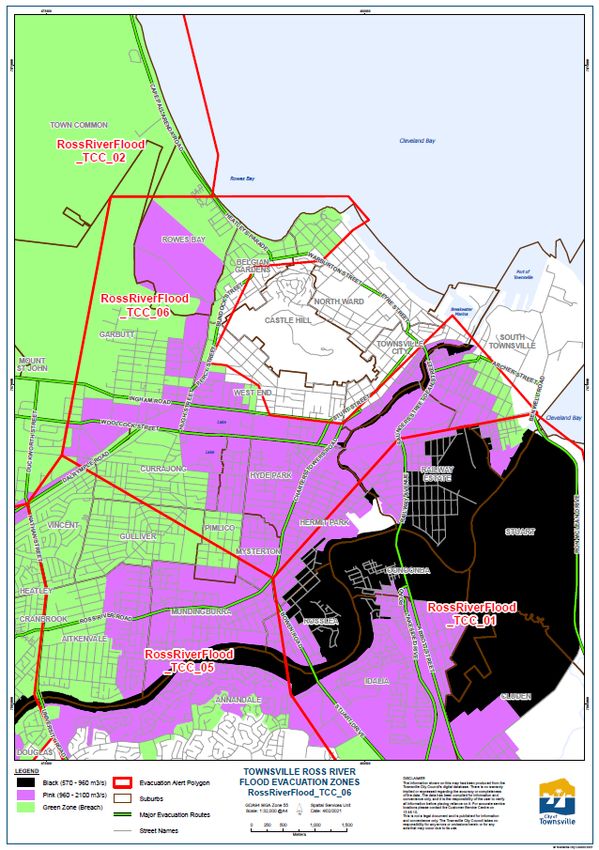
Townsville Local Disaster Management Group              VERSION 7.0                 January 2021
Community Information and Warnings Sub Plan

Consultation
 Organisation                       Name of consulted            Date distributed    Comments
                                                                                     received
 Townsville City Council            Wayne Preedy                 21 January 2021
 Townsville City Council            Bec Torrisi                  21 January 2021
 Townsville City Council            Sarah Sullivan               21 January 2021
 Townsville City Council            Megan Leese                  21 January 2021
 Townsville City Council            Katrina Appleton             21 January 2021
 Townsville City Council            Richard Hannay               21 January 2021
 Townsville City Council            Scott Chandler               21 January 2021
 Townsville City Council            Michael McCall               21 January 2021
 Townsville City Council            Tracey Rossato               21 January 2021

                                              -3-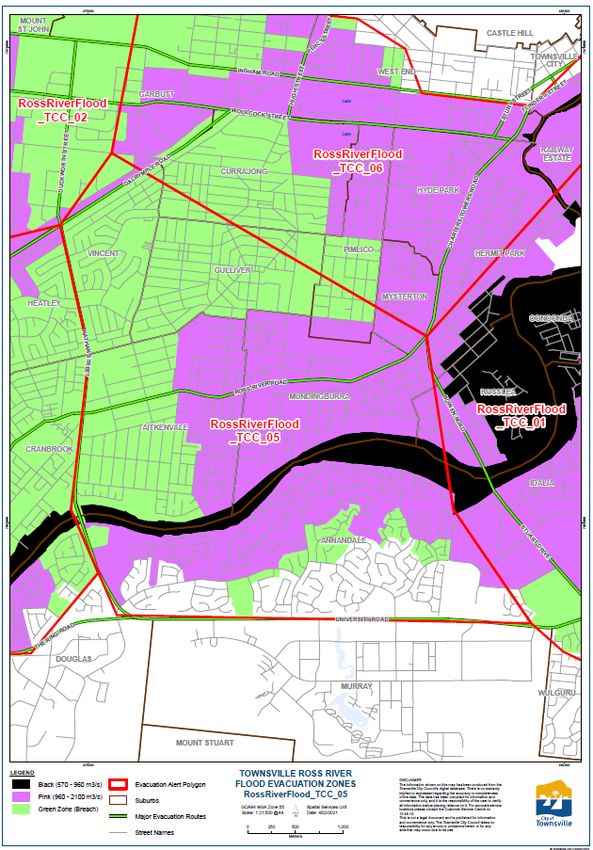
Townsville Local Disaster Management Group                                           VERSION 7.0                                  January 2021
Community Information and Warnings Sub Plan

Contents
Endorsement ........................................................................................................................................... 2
Consultation ............................................................................................................................................ 3
Contents ................................................................................................................................................... 4
Document Control ................................................................................................................................... 5
       Amendment Control ..................................................................................................................... 5
       Amendment Register ................................................................................................................... 5
       Abbreviations List ......................................................................................................................... 6
Plan Matrix ............................................................................................................................................... 7
Part One – Overview ............................................................................................................................... 8
       1.1 Purpose .................................................................................................................................. 8
       1.2 Authority ................................................................................................................................. 8
       1.3 Functional Responsibility ....................................................................................................... 8
       1.4 Responsibilities of Agencies and Organisations .................................................................... 8
       1.5 Relevant Issues ...................................................................................................................... 9
Part Two – Communication Process ..................................................................................................... 10
       2.1 Communication Phases ......................................................................................................... 10
       2.2 Information to be released ..................................................................................................... 11
       2.3 Assessment of the Situation .................................................................................................. 11
       2.4 Identification of Vulnerable Communities .............................................................................. 11
Part Three – Emergency Messaging ..................................................................................................... 12
       3.1 Message Distribution.............................................................................................................. 12
                   3.1.1 Method of Distribution ............................................................................................ 12
                   3.1.2 Messaging for Vulnerable Communities ................................................................ 14
       3.2 Template Messages ............................................................................................................... 14
       3.3 Emergency Alerts (EA) .......................................................................................................... 14
       3.4 Early Warning Network (EWN) .............................................................................................. Error!
                   Bookmark not defined.
       3.5 Social Media and Website (Digital Communications) ............................................................ 15
Part Four – Testing of Emergency Alert ............................................................................................... 15
       4.1 Emergency Alert Messaging and Polygons ........................................................................... 15
Related Documents ................................................................................................................................. 16
Annexure Index ....................................................................................................................................... 16
       Annexure A – Key Messages – used for messages on hold, radio ads, television ads and
                   media releases ................................................................................................................ 17
       Annexure B – Local Information available for distribution for disaster events ............................. 31
       Annexure C – Prepared Emergency Alert Messaging ................................................................. 32
       Annexure D – Prepared Emergency Alert Map Polygons ............................................................ 37

                                                                  -4-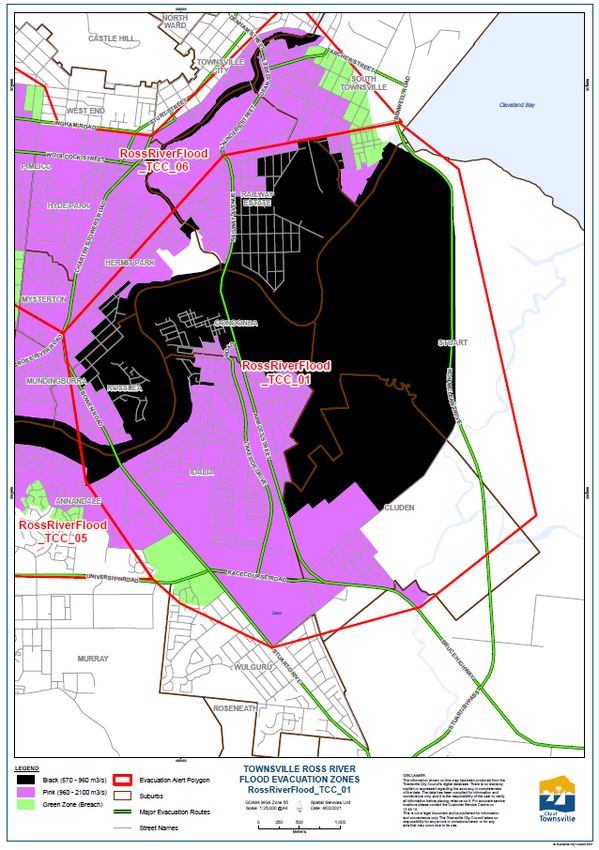
Townsville Local Disaster Management Group                  VERSION 7.0                  January 2021
Community Information and Warnings Sub Plan

Document Control
Amendment Control
The Community Information and Warnings Sub Plan is a controlled document. The controller of the document is the
Townsville Local Disaster Coordinator (LDC). Any proposed amendments to this plan should be forwarded in
writing to:

 Local Disaster Coordinator
 Townsville City Council
 PO Box 1268
 Townsville, QLD 4810

The LDC may approve inconsequential amendments to this document. The LDC will ensure that any
changes to the content of the document will be submitted to the Townsville Local Disaster Management
Group (TLDMG) for approval and be endorsed by the Townsville City Council.

Amendment Register
  Version No.     Issue Date            Amended by            Action                  Date
  01
                  September 2013        Allen Morris          Initial Plan            30 September 2013
  Initial Plan
  02              October 2015          Gavin Hammond         Annual Review           25 October 2015

  03              November 2016         Catherine Jordan      Annual Review           1 November 2016

  04              January 2018          Wayne Preedy          Annual Review           5 January 2018

  05              November 2018         Wayne Preedy          Annual Review           28 March 2019

  06              April 2019            Wayne Preedy          Annual Review           28 March 2020
                                                               • Annual Review
                                                               • Added Table to
                                                                 align TLDMG &
                                                                 TCC ERG comms
                                        Wayne Preedy,            strategy.
                                        Bec Torrisi,           • Added Activation
                                        Sarah Sullivan,          for water pipeline
                                        Katrina Appleton,        rupture.
  07              January 2021                                                        21 January 2021
                                        Richard Hannay         • EA Coloured
                                        Megan Leese,             Zones changed
                                        Michael McCall,          (All reference to
                                        Adam Pietrobon,          brown removed)
                                                                 wording in voice
                                                                 message and text
                                                                 also updated.

                                              -5-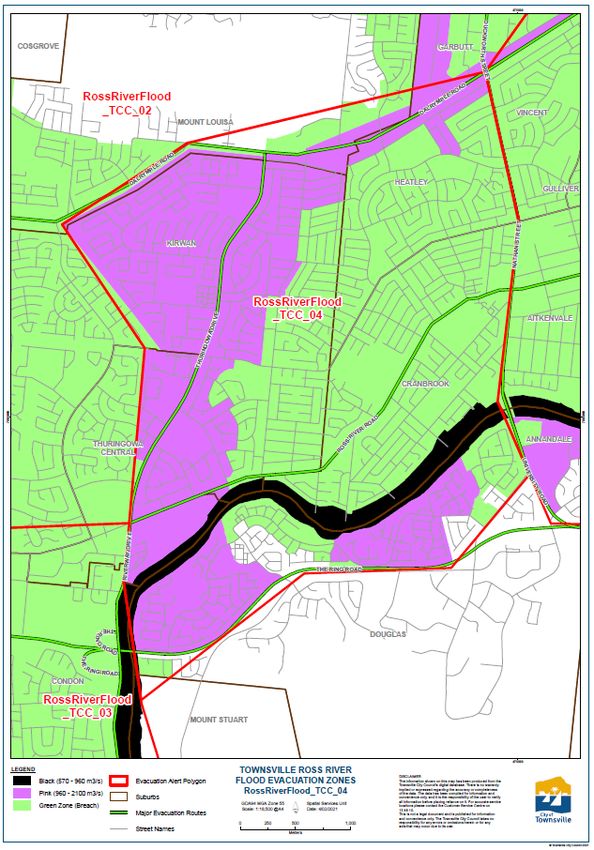
Townsville Local Disaster Management Group              VERSION 7.0                  January 2021
Community Information and Warnings Sub Plan

Abbreviations List
  BOM                       Bureau of Meteorology
  DCC                       Disaster Coordination Centre
  EA                        Emergency Alert
  EAP                       Emergency Action Plan
  EWN                       Early Warning Network
  GIS                       Geospatial Information System
  LDC                       Local Disaster Coordinator
  QFES                      Queensland Fire and Emergency Services
  QPS                       Queensland Police Service
  TCC                       Townsville City Council
  TCC EOC                   Townsville City Council Emergency Operations Coordinator
  TCC EOCC                  Townsville City Council Emergency Operations Coordination Centre
  TLDMG                     Townsville Local Disaster Management Group
  TLDMP                     Townsville Local Disaster Management Plan

                                              -6-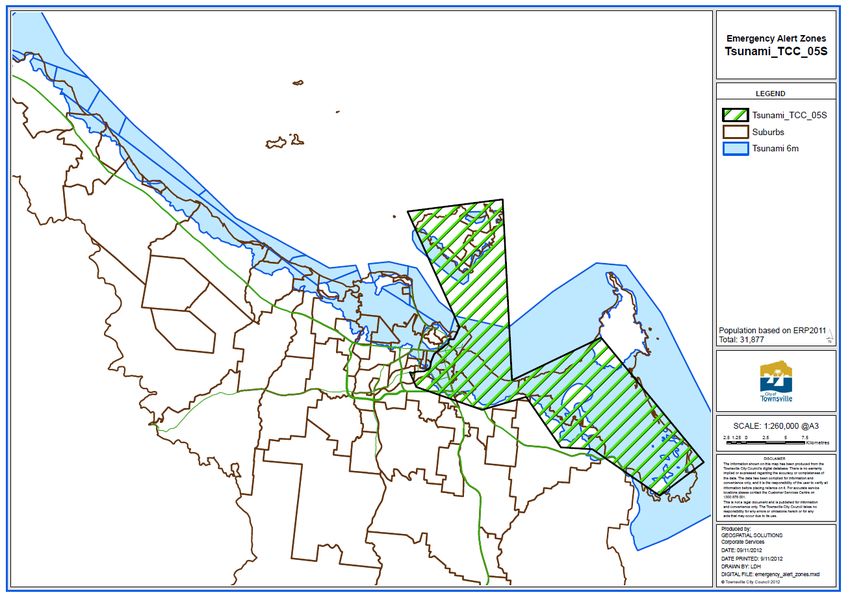
Townsville Local Disaster Management Group          VERSION 7.0   January 2021
Community Information and Warnings Sub Plan

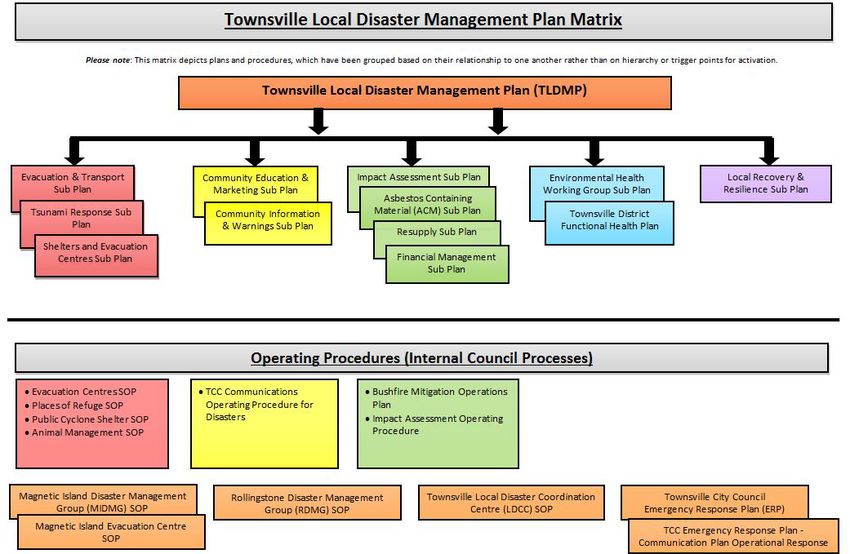
Plan Matrix

                                              -7-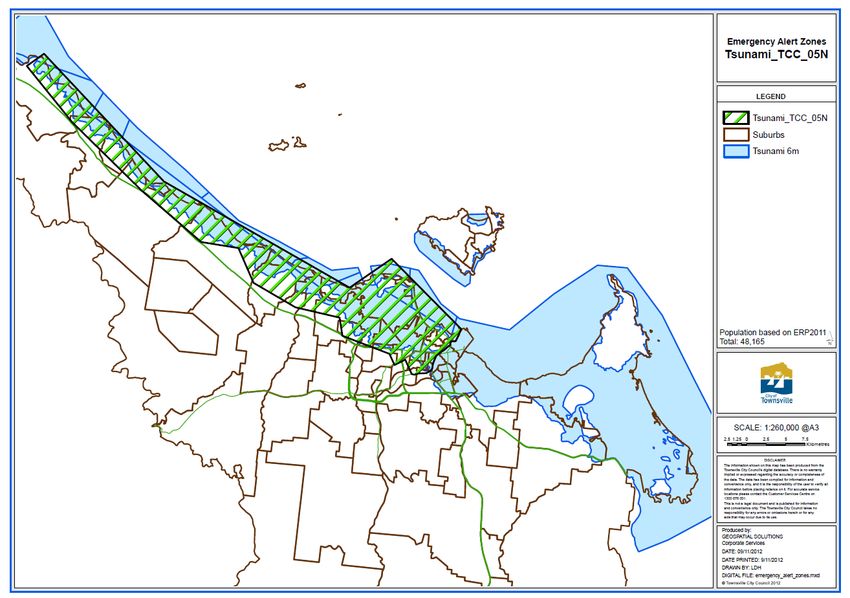
Townsville Local Disaster Management Group                   VERSION 7.0                     January 2021
Community Information and Warnings Sub Plan

Part One - Overview
1.1 Purpose
The purpose of the Community Information and Warnings Sub Plan is to manage the effective collection,
monitoring, management and dissemination of accurate, useful and timely information and warnings to the
community for a local disaster event, in which the Townsville Local Disaster Management Group (TLDMG)
and its plans and processes have been activated.

1.2 Authority
This plan forms a sub plan of the Townsville Local Disaster Management Plan (TLDMP) and is developed
under the authority of the Disaster Management Act 2003. This sub plan will be managed in accordance
with the administrative and governance processes outlined within the TLDMP including approval, document
control, distribution and review and renew.

This sub plan will be reviewed annually by the Local Disaster Coordinator (LDC) of the TLDMG and
reissued as necessary.

1.3 Functional Responsibility
The LDC is to ensure all agencies and members of the TLDMG are aware of these arrangements.

The coordination and distribution of this information is the responsibility of Townsville City Council’s (TCC)
Community Engagement Department, as per their TCC Communication Operational Procedure.

1.4 Responsibilities of Agencies and Organisations
The release of information to the community regarding an emergency/disaster, and associated hazards, will
be the responsibility of the Chairperson of the TLDMG or his/her delegate. This will be done in conjunction
with representatives of lead agencies and/or support agencies of the TLDMG, who are responsible for the
input of relevant data to this process.

A Media Liaison Officer from Council’s Community Engagement or Media team will be utilised for disaster
events as per the TCC Communication Operational Procedure and the position description within the
TLDMG Local Disaster Coordination Centre Standard Operating Procedures (LDCC SOP). This position
may be supported by “Media or Community Engagement personnel” from other agencies such as QPS,
QFES, & Ergon.

Some partner agencies that also provide public information and warnings in the event of an
emergency/disaster include:

 Organisation                      Responsibility
 Bureau of Meteorology (BOM)       Provides cyclone, flood (flood alert, flood watch and flood advice), severe
                                   storm (including thunderstorm), tsunami, land gales and severe bushfire
                                   weather advices to media outlets.
 Department of Agriculture,        Provides clear, accurate information about an animal/plant disease
 Fisheries and Forestry            emergency and its implications and the progress of control or eradication
                                   procedures.
 Department of Transport and       For information on road closures on state highways (through 13 19 40).
 Main Roads
 Ergon Energy                      Provides information regarding power outages and power supply.
 Queensland Fire and               Coordinates media and public information regarding fire, chemical or gas
 Emergency Services (QFES) -       emergency situations.
 Fire and Rescue
 Queensland Health                 For information regarding a public health epidemic or heat wave.

                                              -8-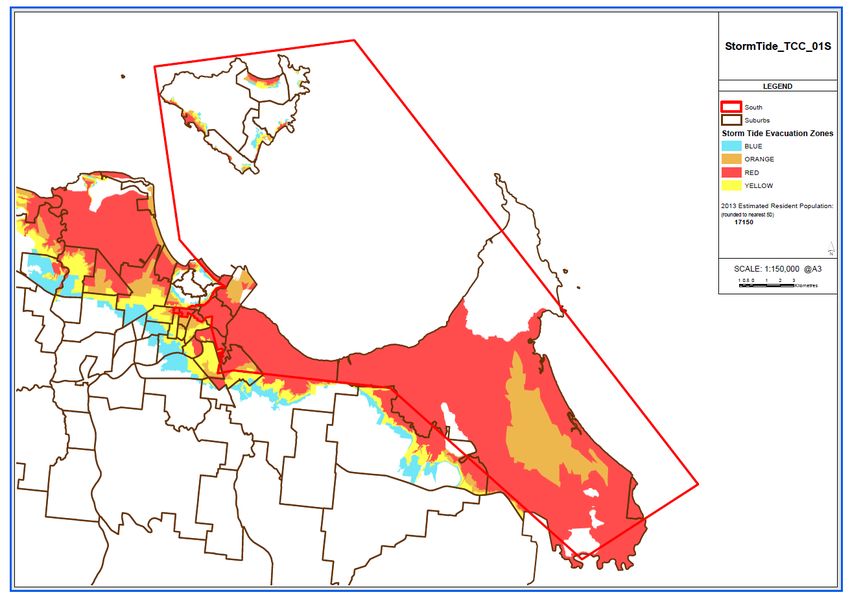
Townsville Local Disaster Management Group                VERSION 7.0                   January 2021
Community Information and Warnings Sub Plan

 Queensland Police Service        Has responsibility for providing information about a locally managed
 (QPS)                            incident, including directed evacuations.
 Townsville City Council          For local information on road closures, traffic routes, evacuations,
                                  shelters and evacuation centres, recovery centres, debris clean-up, and
                                  all matters relating to the activation of the TLDMG.

1.5 Relevant Issues
Effective warning systems are an essential prevention strategy that aims to convey information to the
community relating to the impending disaster event. Warnings to the community from the relevant agencies
and Council are transmitted via electronic media and radio as per the processes of their respective
organisations. Warning systems in use for disaster management purposes are detailed in Part Three –
Emergency Messaging of this document.

                                              -9-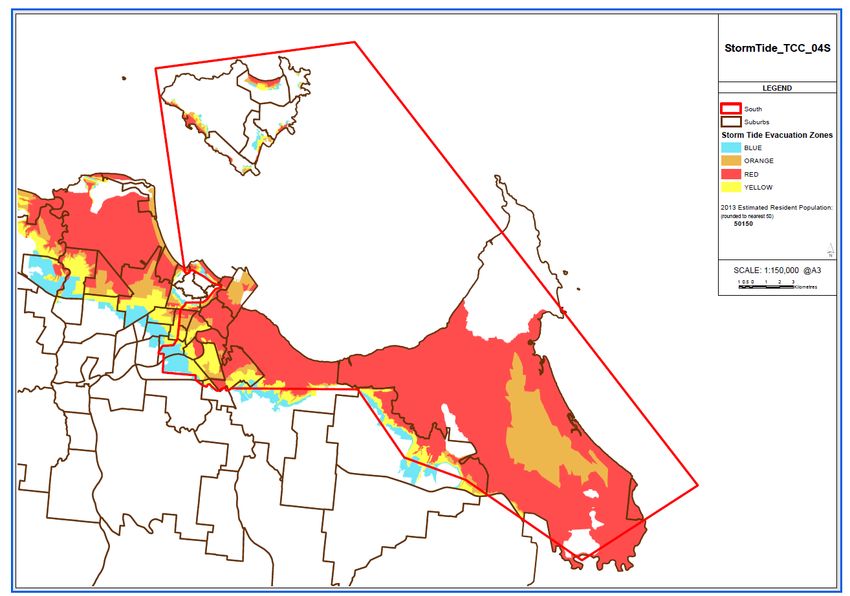
Townsville Local Disaster Management Group                     VERSION 7.0               January 2021
Community Information and Warnings Sub Plan

Part Two – Communication Process
2.1 Communication Phases
There are five (5) communication phases for emergency management used within Council and TLDMG
communications and marketing plans and procedures. These are:

                                                                     Alignment
                                                                     with
                                                                     Townsville
  Communication                                        Alignment     City Council    ERP Detail
                      TLDMP Detail
  Phases                                               with TLDMP    Emergency
                                                                     Response
                                                                     Plan (ERP)
  Phase 1 –           This includes; Disaster          ALERT         ALERT - Stage   This includes internal
  Seasonal            Ready Day, Emergency                           1 - GENERAL     communications
  Preparedness        Action Guide, billboards,                                      through inSPIRE, tool
                      television, radio,                                             box talks, internal
                      website, social media.                                         training sessions

  Phase 2 –           This would include               LEAN          LEAN            This would include
  Imminent Event      communications prior to          FORWARD       FORWARD -       communications prior
                      a disaster event, and the                      Stage 2 -       to a disaster event, and
                      relocation of the                              STANDBY         the relocation of the
                      marketing and media                                            marketing and media
                      team to the Local                                              team to the Local
                      Disaster Coordination                                          Disaster Coordination
                      Centre (LDCC).                                                 Centre (LDCC).

  Phase 3 –           This would include               STAND UP      STAND UP -      This would include
  Operational         communications                                 Stage 3 -       communications
                      immediately before or                          OPERATIONAL     immediately before or
                      “as it is happening”                                           “as it is happening”
                      disaster event.                                                disaster event.

  Phase 4 –           This would include               STAND         STAND UP -      This would include
  During and          communications                   DOWN          Stage 4 -       communications
  Immediate Post      immediate post event.                          RECOVERY        immediate post event.
  Event
  Phase 5 –           This would include               n/a           Stage 4 -       This would include
  Recovery Post       communications post                            RECOVERY        communications post
  Event               event.                                                         event.

* Length of phase is dependent upon impact assessment and size of disaster event.

                                              - 10 -
Townsville Local Disaster Management Group VERSION 7.0 January 2021
Community Information and Warnings Sub Plan
2.2 Information to be released
Communications will focus on preparation for and response to disaster events ensuring residents are informed
of:
• the progress of the event;
• the progress made in combating the event; and
• the threat to themselves and the actions they need to take.
Information/media releases relevant to LDMG operations will require approval by the LDC prior to being
released as per the TCC Emergency Management – Internal Communication Plan.
If it’s TCC related the media release and approval will be approved by the TCC EOC & handled by the TCC
EOCC.
2.3 Assessment of the Situation
Information for events will be analysed and assessed as per the TLDMP and its sub plans and procedures.
Decisions relating to warnings of impending events, possible evacuations or other issues affecting the local
community will be distributed via a range of methods and in a timely manner.
Events that will trigger community messaging include, but are not limited to:
• Cyclone and storm tide;
• Riverine flooding – particularly in relation to Ross River Dam;
• Localised flash flood events;
• Potential landslides;
• Bushfire – particularly if in or adjacent to major urban areas
• Public health events – pandemics, heatwave, etc; and
• Public infrastructure failures – water, sewerage treatment.
2.4 Identification of Vulnerable Communities
Townsville City Council understands that some members of the community may need to be specifically
targeted with disaster and emergency information and warnings due to their increased vulnerability to the
adverse impacts associated with these events. Through Council’s risk assessment processes and extensive
cooperation and collaboration with local organisations and agencies, potentially vulnerable groups
throughout the region have been identified and their specific needs considered in Council’s communications
processes (refer to the TLDMP - Annexure D – Community Consultation List for full list of vulnerable groups
and representative organisations).
Council maintains year round discussions with the local organisations and agencies that represent identified
vulnerable groups in the community in order to continually review the emergency warnings and
communications processes so that they meet the specific needs of the region’s most at-risk individuals
and/or groups.
- 11 -Townsville Local Disaster Management Group VERSION 7.0 January 2021
Community Information and Warnings Sub Plan
Part Three – Emergency Messaging
3.1 Message Distribution
3.1.1 Method of Distribution
The method of distribution may include
• Official warning agencies
• Local media
• Telephone-based
• Radio-based
• TV-based
• Emergency Management Dashboard
• Social Media
• Person-to-person
• Community organisation networks
• Roadside changeable signs
• Queensland Government Emergency Alert System – SMS, text, recorded message.
- 12 -Townsville Local Disaster Management Group VERSION 7.0 January 2021
Community Information and Warnings Sub Plan
Mode of Distribution Delivery Methods
Radio − Implement pre-recorded radio ads or live reads with key
messages (including any relevant changes)
Television − Implement pre-recorded television ads with key
messages (including any relevant changes)
− Arrange interviews for key messages from Mayor as
Chair of TLDMG
Newspaper − Arrange interviews for key messages from Mayor as
Chair of TLDMG
Council’s Emergency Management − User-friendly information sharing platform, which allows
Dashboard the TLDMG to communicate Emergency News and
(disaster.townsville.qld.gov.au) other essential information about disaster events, as
well as provides a “one-stop shop” for users to obtain
important updates from Emergency Services, Transport
& Main Roads, Bureau of Meteorology, etc.
LDCC & TCC Owned Digital Display − Key information displayed on external wall of LDCC
Billboards − Able to be updated and changed by LDCC staff
internally
External Billboards − Arrange with Paradise Outdoor Advertising digital
billboards to be uploaded
Council’s Phone System – − Implement pre-recorded messages using same script as
Messages on Hold TV and radio ads
Council’s Website − Maintain content distribution network to host emergency
(townsville.qld.gov.au) information for the website
− Reset home page to the emergency management
dashboard
Council’s Social Media Outlets
• Facebook − Maintain increased monitoring and posting on TLDMG
Facebook Page (“Townsville Disaster Information”)
− Maintain increased monitoring and posting on
• Twitter @TCC_NEWS twitter account
Digital Advertising Utilising localised geo-targeting in the following digital
platforms
- Spotify
- YouTube
- Digital display ads
Person-to-Person − Door-knocking and/or mobile speakers
Community organisation networks − Contact as per arrangements through TLDMG
Roadside changeable signs − Specific local messages at key locations
Queensland Government − Critical warning/advisory messages sent via:
Emergency Alert System • SMS to mobile phones; and
• Automatic scripted voice recordings to landlines.
- 13 -Townsville Local Disaster Management Group VERSION 7.0 January 2021
Community Information and Warnings Sub Plan
3.1.2 Messaging for Vulnerable Communities
Townsville City Council has adapted its communications processes for the distribution of emergency
messages to reflect the following principles as per Communicating with People with Disability: National
Guidelines for Emergency Managers, in order to target all vulnerable groups in the community. Council will:
• Only distribute necessary and relevant information;
• Verbalise visual information, including phone numbers and website details;
• Use multiple information and presentation formats;
• Keep information consistent, accurate, short and sharp; and
• Use clear language and simple sentences.
In order to assist in the delivery of emergency warning messages, Council will utilise interpreter services
(including Auslan) as required.
3.2 Template Messages
Key messages for local highest risk events (wet season) have been prepared as per the TCC Emergency
Management Communication Plan for implementation when required – refer to Annexure A.
Fact sheets and pre-recorded advertisements for television which will be utilised for disaster events are
listed in Annexure B.
3.3 Emergency Alerts (EA)
The Queensland Government’s “Emergency Alert Service” is the national telephone-based emergency
warning system, which provides the capability to send warning messages to fixed line telephones (i.e.
landlines) and to mobile phones. The “Emergency Alert” (EA) system will be utilised by the TLDMG as
required and as per the Queensland Emergency Alert Guidelines.
Messages will:
• warn targeted areas of the local community of imminent and severe threats from disaster events;
and
• direct those warned to other sources of information and/or direct them to move away from an
imminent hazard or threat.
Council will utilise Geographic Information System (GIS) data to generate a map of the region, which
includes a polygon of the defined incident area. Using this map, the EA system will:
• identify the phone services located within that polygon area;
• send a voice message to all identified landline telephone services;
• send a text message of up to 160 characters to all identified mobile phone services; and
• report on the delivery of these messages.
The local areas to receive the messages and contents of the message will be prepared by the TLDMG,
approved by the TLDMG Chairperson and processed as per the Queensland Emergency Alert Guidelines.
Predefined messages and mapped areas have been prepared for tsunami and storm tide zones as per the
TLDMG Tsunami Evacuation Guide and TLDMG Storm Tide Evacuation Guide (www.townsville.qld.gov.au)
and stored by the Watch Desk, State Disaster Coordination Centre. These messages and mapped areas will
be reviewed by the LDC annually in collaboration with Council’s Spatial Services and Marketing
Communications Teams.
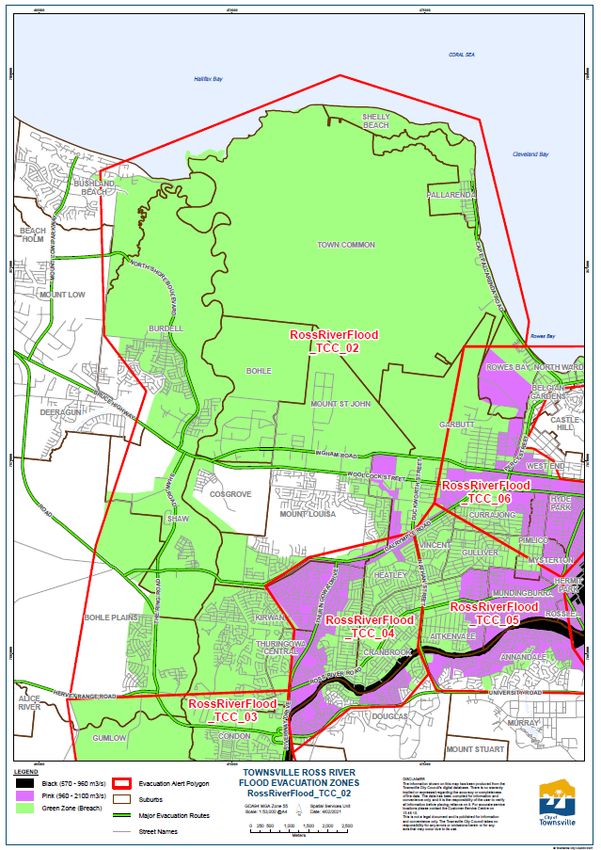
A list of pre-approved emergency alert messages and map polygons have been prepared for implementation
when required – refer Annexure C and Annexure D.
- 14 -Townsville Local Disaster Management Group VERSION 7.0 January 2021
Community Information and Warnings Sub Plan
3.5 Social Media and Websites (Digital Communications)
As per the TCC Communication Operational Procedure, Council’s website and social media links will be
altered as required to ensure relevant and up to date information is available for the community. The process
includes:
• Activating and maintaining the cloud server to host emergency information for the website, in
conjunction with resetting Council’s homepage to the disaster information webpage;
• Implementing live web updating;
• Activating system check on the Information Blog Site (backup system); and
• Implementing increased monitoring and posting on TLDMG Facebook Page (“Townsville Disaster
Information”).
Part Four – Testing & Training of Emergency
Alert Use
4.1 Emergency Alert Messaging and Polygons
Council and the TLDMG participate in exercises at least annually to evaluate the request process, as well as
assess message content and polygon criteria for Emergency Alert. Recent exercises are outlined below:
Exercise Name Date EA Event Tested
LDCC Exercise “Slingshot” 1 – 2 December 2015 Storm Tide
TLDMG Exercise “Trojan Horse” 2 December 2015 Chemical Incident
TLDMG Exercise “Dam You Huey” 26 October 2016 Flood / Dam Break
DDMG Exercise “Echo Alpha” 26 October 2016 Flood / Dam Break
(Activation) Tropical Cyclone Debbie 25 – 29 March 2017 Cyclone / Storm Tide
LDCC Training (SDCC Watch Desk 7 Nov 2018 EA production practiced
Staff and QFES EMC conducted
training)
(Activation) January Rain Event 31Jan-11Feb 2019 Flood
TLDMG Exercise “Scorpion King’ 16 October 2020 COVID-19 / Cyclone
(Activation) December Water Pipe 11 Dec – 21 Dec 2020 Water Pipe Rupture
Rupture
- 15 -Townsville Local Disaster Management Group VERSION 7.0 January 2021
Community Information and Warnings Sub Plan
Related Documents
Queensland Disaster Management Act 2003
Townsville Local Disaster Management Plan
Communicating with People with Disability: National Guidelines for Emergency Managers
TCC Communication Operational Procedure
TCC Emergency Management Overarching Communication Plan
TLDMG Disaster Coordination Centre Standard Operating Procedures
TLDMG Transport and Evacuation sub plan.
Queensland Emergency Alert Guidelines
Annexure Index
A Key Messages – used for messages on hold, radio ads, television ads and media releases
B Local Information available for distribution for disaster events
C Prepared Emergency Alert Messaging
D Prepared Emergency Alert Map Polygons
- 16 -Townsville Local Disaster Management Group VERSION 7.0 January 2021
Community Information and Warnings Sub Plan
Annexure A - Key Messages – used for radio ads, television ads and media releases
Phase 1 – Seasonal Preparedness (November to March)
PLAN. PREPARE. SURVIVE
Target Audience Message theme Message script
General Townsville For Facebook only, paid Choose to be informed this cyclone season. Like the Townsville Disaster Information Facebook Page – your official
Community promotion for those that don’t source of information from the Townsville Local Disaster Management Group
like the page yet
General Townsville General prepare message Townsville is a beautiful place to live but there is a potential risk for natural disasters. Council is committed to
Community educating residents about the natural dangers that can occur in North Queensland during the summer. It pays to be
prepared; GET READY TOWNSVILLE!
Head of households Preparing your property Intro: Here’s another Disaster Ready Tip brought to you by Townsville City Council.
Outro: Be disaster ready – visit disaster.townsville.qld.gov.au for more information.
There are several things you can do now to minimise potential damage to your home and property during a
cyclone or storm.
Check the condition of your roof and fix loose tiles, eaves and screws.
Clean gutters and downpipes so water can drain away quickly.
Trim trees and overhanging branches.
Secure loose items like garden furniture and toys that could cause damage if blown around in high winds.
Head of households Preparing your property Intro: Here’s another Disaster Ready Tip brought to you by Townsville City Council.
Outro: Be disaster ready – visit disaster.townsville.qld.gov.au for more information.
To minimise potential damage your home and property this wet season now is the time to prepare.
Two important things you can do now are:
- 17 -Townsville Local Disaster Management Group VERSION 7.0 January 2021
Community Information and Warnings Sub Plan
Target Audience Message theme Message script
Identify where and how to turn off the mains supply for water, power and gas, and purchase emergency essentials
to have on hand.
These include containers to store drinking water, spare fuel for your vehicle, wide masking tape for windows, and
hessian bags and sand for sandbagging indoor drains.
Head of households Preparing your household Intro: Here’s another Disaster Ready Tip brought to you by Townsville City Council.
Outro: Be disaster ready – visit disaster.townsville.qld.gov.au for more information.
When severe weather warnings are issued there are several things you need to do.
Make sure you disconnect all electrical appliances and external TV and radio aerials.
Turn off electricity and gas main supplies if advised by emergency authorities.
Secure outdoor furniture and other garden items.
Take your Emergency Kit with you.
And keep listening to Power 100/Star 1063 for updates, weather warnings and safety messages.
Head of households Emergency Kit Intro: Here’s another Disaster Ready Tip brought to you by Townsville City Council.
Outro: Be disaster ready – visit disaster.townsville.qld.gov.au for more information.
An Emergency Kit is an important step to prepare, survive and recover from an emergency.
Check that your emergency kit is in working order and that its contents haven’t expired.
Your emergency kit should include the following essential items:
- 18 -Townsville Local Disaster Management Group VERSION 7.0 January 2021
Community Information and Warnings Sub Plan
Target Audience Message theme Message script
10 litres of water per person
Non-perishable food for 3 days
A First Aid Kit and manual
Essential medications and prescriptions
A torch
Battery powered radio
Head of households Important Documents Intro: Here’s another Disaster Ready Tip brought to you by Townsville City Council.
Outro: Be disaster ready – visit disaster.townsville.qld.gov.au for more information.
To minimise any potential damage or loss to your important documents plan ahead of any emergency.
Keep original and certified copies of your important documents in a safe and secure place.
The type of documents you should include are:
Home, contents and car insurance papers,
Medicare, pension cards, and immunisation records
As well as bank account and credit card details
You should also keep a back-up copy of important computer files and a list of emergency contact numbers.
Head of households Emergency Plan Intro: Here’s another Disaster Ready Tip brought to you by Townsville City Council.
Outro: Be disaster ready – visit disaster.townsville.qld.gov.au for more information.
- 19 -Townsville Local Disaster Management Group VERSION 7.0 January 2021
Community Information and Warnings Sub Plan
Target Audience Message theme Message script
Every household should have an emergency plan.
Before you start putting together your plan check Council’s disaster management plans, and read information
about local warning systems, evacuation processes and nominated evacuation routes.
Become familiar with weather warnings issued by the Bureau of Meteorology website and phone services.
Discuss possible emergency scenarios and responses with everyone in your home.
Also, nominate two emergency contacts who don’t live with you in case you and your family become separated.
And make sure everyone knows how to contact these people.
Head of households Emergency Phone Numbers Intro: Here’s another Disaster Ready Tip brought to you by Townsville City Council.
Outro: Be disaster ready – visit disaster.townsville.qld.gov.au for more information.
Communication is really important during an emergency:
As part of your Emergency Plan make sure you have the following:
Emergency phone numbers for Police, Fire, Ambulance and SES
Contact numbers for medical services, Council, electricity and other service providers, and your insurance
company.
It’s also a good idea to have in the one place all number for household mobile phones, relatives, work, school,
childcare providers, friends, neighbours and your emergency contacts.
Head of households Be prepared Intro: Here’s another Disaster Ready Tip brought to you by Townsville City Council.
Outro: Be disaster ready – visit disaster.townsville.qld.gov.au for more information.
Make sure everyone in your household is prepared for an emergency.
You can do this in a number of ways.
The first is prepare an Emergency Kit and keep it in a safe and accessible place.
- 20 -Townsville Local Disaster Management Group VERSION 7.0 January 2021
Community Information and Warnings Sub Plan
Target Audience Message theme Message script
Review and practice your Emergency Plan regularly.
Make sure you have a fully stocked First Aid Kit in your Emergency Kit.
Tune into weather warnings.
Head of households Tune into Warnings Choose to be informed. In the event of a disaster, activate your plan and tune into warnings.
Head of households Evacuations - Cyclones Shelter in Place - If you live in a well-constructed home located outside of a Storm Tide Evacuation Zone, your
best option is to shelter in your home. If you need to evacuate prearrange with friends or family first. Consider
commercial accommodation or shelter options in your community as a last resort.
Head of households Evacuations Plan to leave early, well before strong winds start to impact your area and allow time to secure and protect your
property. Prepare supplies to take an evacuation kit. Check in advance if you can take your pets and pack
supplies for them.
Head of households Evacuations Intro: Here’s another Disaster Ready Tip brought to you by Townsville City Council.
Outro: Be disaster ready – visit disaster.townsville.qld.gov.au for more information.
Every household should have an evacuation plan.
Discuss possible emergency scenarios and consider whether it would be safe to shelter in your home if it’s outside
the evacuation zone.
Or know where you could go if you need to find a safer place. Pre-arranged with friends and family first then
consider shelters as last resort with COVID-19 risks still upon us.
Head of households Shelters Shelters such as Shelters or Evacuation Centres should be considered only after they have exhausted all other
options, or if they are unable to leave the warning area. Both types of facilities are intended as short-term options,
have very basic amenities and limited capacity.
Head of households Shelters Intro: Here’s another Disaster Ready Tip brought to you by Townsville City Council.
Outro: Be disaster ready – visit disaster.townsville.qld.gov.au for more information.
Know your storm tide zone this wet season.
- 21 -Townsville Local Disaster Management Group VERSION 7.0 January 2021
Community Information and Warnings Sub Plan
Target Audience Message theme Message script
Review the Storm Tide Evacuation Guide on the Emergency Management Dashboard to determine if your
property is located in an evacuation zone. Properties in storm tide evacuation zones are categories red, orange,
yellow and blue base on inundation risk.
The height of the predicted storm tide during the disaster event will determine which zones will be affected.
Head of households Storm Tide Evacuation Guide You may need to evacuate your home due to a storm tide. Are YOU disaster ready? The Townsville Storm Tide
Evacuation Guide will help you prepare for the cyclone and storm season. Evacuation zones have been identified.
Authorities will advise evacuations by zones, NOT streets or suburbs. For more information and to download a
copy of the guide visit townsville.qld.gov.au. Plan. Prepare, Survive
Business owners Preparing your business All businesses in cyclone and flood affected areas should have a current Emergency Management Plan. Identify the
risks from cyclones and floods around your business, including those caused by wind, flooding and storm tides.
Prepare anemergency plan and evacuation plan and ensure multiple certified copies of vital business records are
stored in watertight containers and raised out of floodwater zones.
Head of households Emergency Alerts Townsville City Council utilises the Queensland Government Emergency Alert Service. This is a national
emergency warning system that can send messages via landlines and mobile phones based on billing address.
Registration of this service is not required, residents will automatically receive targeted messages during a
disaster.
Head of households Asbestos in Disasters Is it possible that your house could contain asbestos which could become damaged in a disaster event? It is
important to know how to safely handle and dispose of asbestos.
Head of households Pets and disasters Intro: Here’s another Disaster Ready Tip brought to you by Townsville City Council.
Outro: Be disaster ready – visit disaster.townsville.qld.gov.au for more information.
Know what to do with your pet in an emergency.
Plan ahead and be sure to include your animals in your emergency plans.
Determine where you can safely shelter your pets if you are required to evacuate.
Ensure your pets are properly identified and that animal registers are current and kept in a safe place.
Move your pets to a safer place before a potential disaster. This might be with relatives, friends, animal boarding
facilities or a temporary animal shelter.
Head of households Pets and disasters Your animals are your responsibility. It is up to you to plan ahead and to prepare for the safety and welfare of your
pets, livestock or other farm animals well before the effects of an event begin to affect your home or farm. By acting
early, you will avoid unnecessary danger and anxiety to you and your animals.
Head of households Preparing your household Protect your important documents like your passport, birth/marriage certificates and insurance forms this wet
season..
- 22 -Townsville Local Disaster Management Group VERSION 7.0 January 2021
Community Information and Warnings Sub Plan
Target Audience Message theme Message script
Head of households Preparing your property Now is the time to prepare your home for the wet season. Plan ahead for rain and localised flooding by cleaning
out roof gutters and downpipes, trimming tree branches close to your roof and inspecting your roof for potential
leaks.
Head of households Preparing your household November to March is wet season: are YOU disasterready? Stock an emergency kit – include a battery operated
radio, food, clothing, important documents and first aid. Know which is the strongest part of your house for shelter
during a cyclone or storm, and in the event of a warning, keep your pets indoors and monitor local and online
media for updates.
- 23 -Townsville Local Disaster Management Group VERSION 7.0 January 2021
Community Information and Warnings Sub Plan
Phase 1 – Seasonal Preparedness (November to March)
ALERT
Target Audience Message theme Message script
Facebook Followers Tune into Warnings Did you know the Townsville Disaster Information Facebook Page is your official source of information from the
Townsville Local Disaster Management Group? Choose to be informed this wet season.
Facebook Followers Sign Off Sign off – We will now be signing off for today and back in tomorrow morning at 8am. Be alert, be informed and most of
all stay safe. Monitor local media including tv and radio for the latest updates this evening and tomorrow morning. For
emergency assistance to protect homes contact the State Emergency Service on 132 500. For life threatening
emergencies phone 000.
Head of households Alert A severe weather event is expected to impact the community in the next 7 days.
Head of households Preparedness Now is the time to prepare yourself, your family and your property. Ensure your emergency kit is stocked and you have
enough food and water to survive for 3 days. Be alert, be informed. Monitor local media and Townsville City Council
website.
Tide Evacuation Zones Evacuations You may need to evacuate your home due to a storm tide. Authorities will advise evacuations by zones, NOT streets or
suburbs. If you live in a low lying area or near the foreshore know your evacuation zone, route and where you will stay.
Monitor local media and Townsville City Council website.
Tide Evacuation Zones Evacuations - Cyclone Townsville City Council advises that homes in the red/orange/yellow/ blue zone maybe in an area affected by storm
surge associated with the crossing of Tropical Cyclone ___ on ________. You should consider evacuation to friends or
family now. More information to come. Monitor local media and Townsville City Council website.
Head of households Shelters Shelters such as Places of Refuge, Public Cyclone Shelters and Evacuations Centres should be considered only after
you have exhausted all other options. Both types of facilities are intended as short-term options, have very basic
amenities and limited capacity.
Head of households Evacuations Do you need to evacuate?
» Consider the location of your home - review the Storm tide Evacuation Guide.
» Consider the construction and condition of your home. Do you live in an older home (built before 1982) that has not
been maintained, or do you live in a caravan or temporary dwelling?
» Consider your needs. Do you live alone, have pets or have special needs? You need to plan and prepare now so
you can so you can quickly evacuate and shelter in a safer place if needed.
Head of households Preparedness Prepare yourself, your family and your property. Check on elderly family, single parents, young people, friends and
neighbours and ensure they have a secure location to sit out the event and have an emergency kit. Be alert, be
informed. Monitor local media and the Emergency Management Dashboard.
- 24 -Townsville Local Disaster Management Group VERSION 7.0 January 2021
Community Information and Warnings Sub Plan
Target Audience Message theme Message script
Business owners Business preparedness Now is the time to prepare your business and activate your emergency plan. Inform your staff of expectations leading up
to, during and after the disaster. Be alert, be informed. Monitor local media and the Emergency Management Dashboard.
Business owners Business preparedness Builders and Tradies are urged to clean up their job sites and secure machinery, equipment and loose items in the city.
Head of households Preparedness Townsville’s landfills are open for free green waste disposal. Now is the time to clean out roof gutters and downpipes
and trim tree branches close to your roof.
Head of households Preparedness Ensure you have food capable of lasting up to three days.
Fill up gas bottles for cooking.
Ensure your car is full of fuel.
Ensure you have torches and spare batteries.
Pack spare clothes including wet weather gear in a water proof container.
Don’t forget to stock up on any medication you may need over the next few days.
Make arrangements for your pets.
Head of households Asbestos in disasters Houses built before 1990 are likely to contain asbestos. If your home is damaged in a storm or cyclone and contains
Asbestos you are responsible for the debris clean-up. Do you have an asbestos clean-up kit ready?
Your asbestos clean-up kit should contain:
• Latex gloves
• Marker pen
• Paper
• Masking tape
• Builders plastic or plastic bags
• Disposable P2 mask
• Disposable coveralls
• Council fact sheet – Asbestos After a Disaster – Handling Asbestos Safely
Head of households Preparedness Make a plan for your animals - Consider whether you can move your pets and other animals to a safer place when a
warning is issued. This will depend on whether you intend to stay or leave and whether you have alternative
accommodation in a safer location. You may be required to evacuate so ensure you have the appropriate plans in the
place.
Head of households Preparedness Make a disaster kit for your animals. Contents could include; Sturdy crate and/or carrier, Identification tag and collar for
both dogs and cats, Leads, Food/water (7-day supply for each pet), Bowls, Litter/litter box
Any special medication(s), Manual can opener/plastic lid, Copy of your pet's current vaccination history
Recent photos of your pet, Pet First-Aid book, Pet First-Aid kit (see inside this booklet for contents)
Phone numbers of the local emergency veterinary clinic , Phone number of your local animal shelter
Portable caging or crate, Large plastic bags for cat litter disposal and dog clean-up and Newspapers and paper towels.
- 25 -Townsville Local Disaster Management Group VERSION 7.0 January 2021
Community Information and Warnings Sub Plan
Phase 2 – Imminent Event
LEAN FORWARD
Target Audience Message theme Message script
Head of households Preparedness A severe weather event is expected to impact the community in the next 48 hours.
Head of households Preparedness If you are not required to evacuate, the safest place for you is in your own home. If you feel unsafe, please
move to the home of a family member or friend.
Storm Tide Evacuation Evacuations If you are in the red/orange/yellow/ blue zone you need to evacuate your home due to a storm tide. Please
Zones make immediate arrangements to move via the evacuation route to the home of a friend of family member
and rregister your location with Queensland Police.
Head of households Sand bags Free sandbags and sand are available from “listed Locations” . Please bring your own shovel, you will need to
fill the bags yourself.
Head of households and Preparedness - Cyclone Listen to cyclone advices from BOM issued on the radio and television. Cyclones can change direction,
business owners intensity and speed very suddenly.
Head of households and Preparedness The Disaster Coordination Centre is now active and staffed to take your enquiries. Please call 13 48 10 for
business owners any enquiries regarding [name of emergency/disaster]
Head of households Myth-busters Reintegrate key messages to stop incorrect information.
Head of households Waste collection Townsville City Council will collect wheelie bins tomorrow as normal but there will be NO collections on
______. Collections will resume on _______. Residents who were due to have their bins collected on
_______ are requested to place them out for collection on ______. Residents due to have their bins collected
on ________ should put them out as normal.
Head of households Evacuation Centres Residents required to evacuate need to first try to lodge with family and friends. There are public shelters as a
last resort. Facilities will be basic. Toilets and water will be available and security will be on hand but you will
need to bring food for a couple of days, bedding, medicines, clothing and other essential supplies. Space is
limited so please do not bring unnecessary items. [Add line for COVID-19 if necessary]
Head of households Road safety Queensland Police advises motorists to stay off the roads, only travel if absolutely necessary.
Head of households Power outages Refer to the Ergon Energy’s website and Facebook site for information on power outages.
Head of households Preparedness You should by now have your asbestos cleanup kit ready to go
Head of households Preparedness Do you have asbestos materials you need to dispose of? Do you know how to handle asbestos waste
correctly? Do you know where you can get help with the disposal of asbestos waste?
Head of households Evacuation Centres Evacuation centres accommodating people will not accept animals. Shelters may only accept animals in
extreme circumstances. Facilities may be available for your animal to be housed elsewhere during the event
but you should not rely in this being the case. Ensure that your animals are properly identifiable (e.g. tag ,
- 26 -Townsville Local Disaster Management Group VERSION 7.0 January 2021
Community Information and Warnings Sub Plan
Target Audience Message theme Message script
microchip, tattoo, or brand) and that stock registers are current and kept in a safe place. This is critical in
ensuring that your animal can be identified should it become displaced or killed.
Head of households Preparedness • act early – be prepared for the event
• seek alternative accommodation options e.g. relocate to family or friends, relocate out of Townsville
• listen to regular updates
• If you need to seek accommodation at a shelter, bring enough clothing, personal items and non-
perishable food to last up to 36 hours (back-pack size)
• Communicate who will be accepted into the public cyclone shelter
• Communicate what will not be allowed at a shelter (pets, illicit drugs, alcohol etc.)
• No food will be supplied at shelters
Head of households Preparedness Stock up on water by filling your bath and other containers and Freeze extra water, or buy bags of ice for your
fridge, freezer or esky to keep food cool in case your power is cut.
- 27 -Townsville Local Disaster Management Group VERSION 7.0 January 2021
Community Information and Warnings Sub Plan
Phase 3 – Operational
STAND UP (1 - 2 days out from an event)
Target Audience Message theme Message script
Head of households Preparedness A severe weather event is expected to impact the community in the next 48 hours.
Head of households Preparedness If you are not required to evacuate, the safest place for you is in your own home. If you feel unsafe, please
move to the home of a family member or friend.
Storm Tide Evacuation Evacuations If you are in the red/orange/yellow/ blue zone you need to evacuate your home due to a storm tide. Please
Zones make immediate arrangements to move via the evacuation route to the home of a friend of family member
and register your location with Queensland Police.
Head of households Sand bags Free sandbags and sand are available from “Listed Locations”. Please bring your own shovel, you will need to
fill the bags yourself.
Head of households and Preparedness - Cyclone Listen to cyclone advices from BOM issued on the radio and television. Cyclones can change direction,
business owners intensity and speed very suddenly.
Head of households and Preparedness The Disaster Coordination Centre is now active and staffed to take your enquiries. Please call 13 48 10 for
business owners any enquiries regarding [name of emergency/disaster]
Head of households Myth-busters Reintegrate key messages to stop incorrect information.
Head of households Waste collection Townsville City Council will collect wheelie bins tomorrow as normal but there will be NO collections on
______. Collections will resume on _______. Residents who were due to have their bins collected on
_______ are requested to place them out for collection on ______. Residents due to have their bins collected
on ________ should put them out as normal.
Head of households Evacuation Centres Residents required to evacuate need to first try to lodge with family and friends. There are public evacuation
centres as a last resort. Facilities will be basic. Toilets and water will be available and security will be on hand
but you will need to bring food for a couple of days, bedding, medicines, clothing and other essential supplies.
Space is limited so please do not bring unnecessary items.
Head of households Road safety Queensland Police advises motorists to stay off the roads, only travel if absolutely necessary.
Head of households Power outages Refer to the ERGON Energy’s website and Facebook site for information on power outages.
- 28 -Townsville Local Disaster Management Group VERSION 7.0 January 2021
Community Information and Warnings Sub Plan
Phase 3 – Operational
STAND UP
POSSIBLE KEY MESSAGES - DEPENDING ON IMPACT ASSESSMENT AND SITUATIONL ANALYSIS
Target Audience Message theme Message script
Head of households Personal Safety Townsville residents are asked to be patient and remain at their safe place of refuge. Please do not leave
your homes and GO SIGHTSEEING. Sightseers are causing problems for emergency and council recovery
crews.
Head of households Sewerage overflows E.g. 1. Power disruptions and heavy rain are affecting sewerage services in the city. Residents are advised
that sewerage overflows will occur in low lying areas of the city.
E.g. 2. If you are experiencing sewerage overflows, please call 13 48 10 Stay away from sewerage as it is a
health risk.
Head of households Water restrictions and water use E.g. Water Treatment Plants are currently without power and are a priority for restoration. Residents of
Townsville and Magnetic are urged to conserve water until further advised. Water levels are expected to
reach critically low levels. Please use water ONLY for drinking and basic needs. A ban on outdoor water use
is in place.
Head of households Council crews E.g. 1. There are powerlines down, trees and debris blanketing the roads in Townsville. Council and other
crews are working hard to get the city cleaned up.
E.g. 2. Roads will be assessed by council crews and removed if possible commencing with main roads and
progressing into suburbs.
Head of households Power outages Relay Ergon messages. Visit Ergon’s website or facebook page for power updates.
Head of households Generator rules and regulations i.e. Noise, ventilation etc…
Head of households SES Report trees that may have hit your home or are blocking access to your property to the SES on 132 500.
Priority is given to damaged houses from these fallen trees.
Head of households Council waste collections Advise updates on council waste collections and bin days.
Head of households Landfills Information on Landfills and opening days and times. Outline if charges apply.
Head of households Health tips Injuries, food, hygiene, dengue, boil water alerts etc…
Head of households Animal safety Injuries, food, hygiene
- 29 -Townsville Local Disaster Management Group VERSION 7.0 January 2021
Community Information and Warnings Sub Plan
Phase 4 – During and Immediate Post Event
STAND DOWN
POSSIBLE KEY MESSAGES - DEPENDING ON IMPACT ASSESSMENT AND SITUATIONL ANALYSIS
Target Audience Message theme Message script
Head of households Australian Government Disaster Release information on [name of disaster] - Australian Government Disaster Recovery Payment.
Recovery Payment
Head of households Road Safety People in Cyclone affected areas are being advised to by Queensland Police Service to STAY OFF THE
ROADS. A large number of traffic signals are out and the roads are covered with trees and debris.
Head of households Health tips Maintain health tips – injuries, food, hygiene, dengue, boil water alerts etc…
Head of households Clean up Start the clean-up in your own neighbourhood. Check if your neighbours, including the frail and elderly, need
assistance to clear their property.
Business owners Council facility/precinct closures. E.g. The Strand is closed to allow Council crews to remove debris and clean the area. Residents need to stay
away from The Strand.
Business owners Power and telephone outages Relay Telstra and Ergon messages on power and phone lines.
Head of households Landfills E.g. Landfills and transfer stations are now open normal business hours. Dumping is free until _____ for
DOMESTIC WASTE ONLY. Please take care on these sites as they are wet and muddy.
Head of households Waste Collections E.g. Rubbish bin collections have return to normal. Bins should be on your curb side for collection by 6am on
your designated day.
Head of households Volunteer Assistance Program Council will share various sources that are current during the particular event.
Head of households Green waste What is happening, what can be left, who will be collecting, is mulch available? E.g. Green Waste should be
left on your curb for collection from Council.
Head of households Clean up factsheets Distribute information factsheets for cleanup regarding building materials (e.g. asbestos), heath risks and food
safety, drying out flood affected items, cleaning up gardens, restoring your swimming pool and Is your house
habitable?
• listen to regular updates and follow instructions from the shelter staff
• Some areas may not be safe to return to – listen to the updates
- 30 -You can also read


