Company Update

   June 24, 2018
←
→
Page content transcription
If your browser does not render page correctly, please read the page content below

Company Update June 24, 2018
Forward-Looking Statements
    This presentation contains "forward-looking statements" as defined by the Private Securities Litigation Reform Act
    of 1995. We caution investors that forward-looking statements are based on management’s expectations and
    assumptions as of the date of this presentation and involve substantial risks and uncertainties that could cause our
    clinical development programs, future results, performance or achievements to differ significantly from those
    expressed or implied by the forward-looking statements. These risks and uncertainties include, but are not limited
    to, those associated with: the potential market opportunity for HTX-011; the timing of the NDA filing for HTX-011;
    the timing of completion and results of clinical studies for HTX-011; and other risks and uncertainties identified in
    the Company's filings with the Securities and Exchange Commission. Forward-looking statements reflect our
    analysis only on their stated date, and we take no obligation to update or revise these statements except as may
    be required by law.

2
Status of Product Portfolio
              CINV
              Pain              Preclinical                         Clinical                          NDA                Approved

    SUSTOL®
    (granisetron) extended-                             Approved by U.S. FDA for CINV Prevention
    release injection

    CINVANTI®
    (aprepitant) injectable                             Approved by U.S. FDA for CINV Prevention
    emulsion

    HTX-011 bupivacaine                                                                          • Fast Track and Breakthrough
    + meloxicam ER                    Postoperative Pain with Local Administration                 Therapy designations granted
    Local Administration                                                                         • Positive Phase 2, 2b and 3 results

    HTX-011 bupivacaine
    + meloxicam ER            Postoperative Pain with Nerve Block     Positive Phase 2b results in breast augmentation
    Nerve Block

3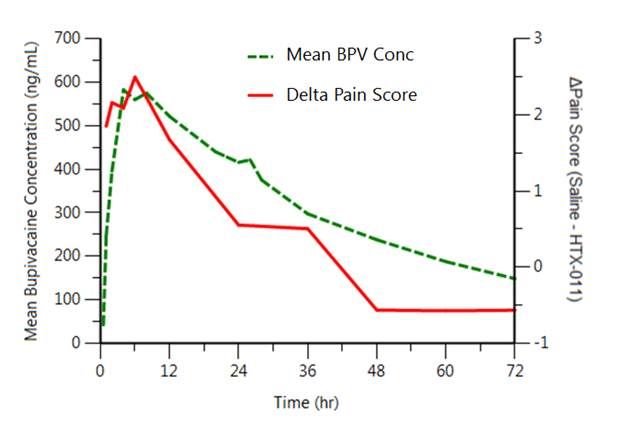
HTX-011 for Postoperative Pain Management Has
    Received FDA Breakthrough Therapy Designation
    • Breakthrough Therapy designation designed to expedite development and
      review of drugs:
       – Intended to treat serious conditions; and
       – For which preliminary clinical evidence indicates substantial improvement over
         available therapies on clinically significant endpoint(s)
    • Designation granted by FDA based on results of Phase 2 studies and two
      recently completed Phase 3 studies
       – HTX-011 produced significant reductions in both pain intensity and need for
         opioids through 72 hours post-surgery compared to placebo and bupivacaine
         solution, the standard of care
    • HTX-011 was also granted Fast Track designation in November 2017

4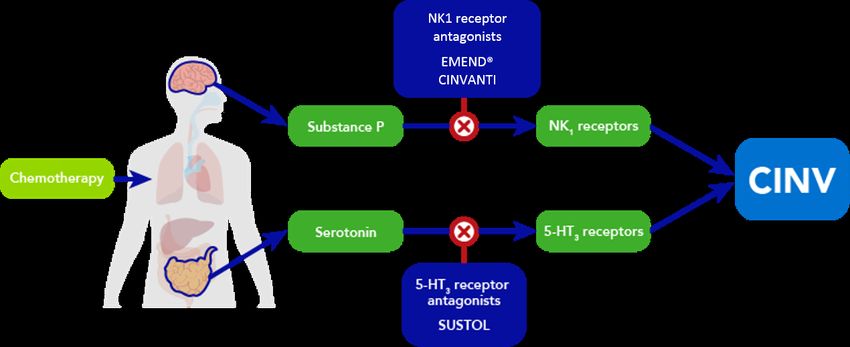
Why HTX-011’s Unique Mechanism of Action Resulted in Superior
    Reduction in Pain and Opioid Use, Qualifying HTX-011 to Receive
    Breakthrough Therapy Designation
     Inflammation Can Reduce the Activity of Local Anesthetics
                                                                                                                    • Surgical insult produces an
                     BUPH+                              BUPN + H+                                                     immediate drop in pH

                                                                  Outside membrane
                                                                                                                    • As inflammatory cytokines are
                                                                                                       Nerve Cell     released and inflammation sets in,
                                                                                                       Membrane       the acidic environment is
                                                                  Inside membrane                                     maintained for many days
                                                                                                                    • The acidic environment shifts the
                                                                                                                      balance to the ionized form, which
                     BUPH+                              BUPN + H+
                                                                                                                      is unable to enter the nerve

         • Acidic environment associated with inflammation results in far less drug penetrating the nerve
           membrane and reduced anesthetic effects1,2
         • Bupivacaine is very sensitive to reduced pH
         • Addition of meloxicam is designed to help reduce local inflammation and allow bupivacaine to work better in
           the first several days after surgery

     1. Ueno, et al. J of Inflammation Research 1:41-48 2008.
5    2. Local anesthetic nerve penetration model adapted from Becker and Reed, Anesth Prog 53:98–109 2006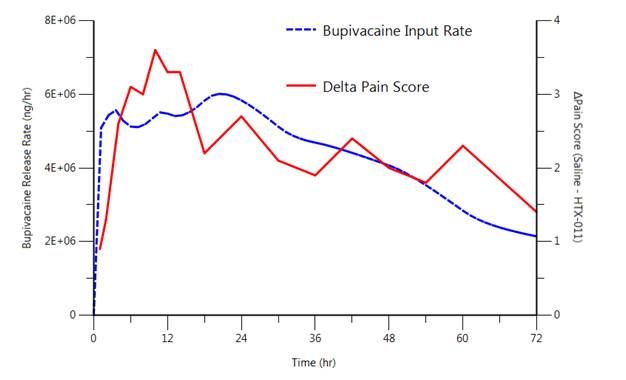
Postoperative Opioids Are a Gateway to Addiction

     MORE THAN 40 MILLION                                          AS MANY AS 2.6 MILLION                                       UP TO 440,000
    patients undergoing surgical procedures are                  patients that take opioids to manage pain after            patients will become addicted to
     prescribed opioids for pain management                       surgery may become persistent opioid users                       opioids each year
           in the United States each year                                           each year

                                                                                         .

                                                   In addition
                                    >1 BILLION OPIOID PILLS                                                           >$15 BILLION
                             are taken home from the hospital after surgery each year                              of the annual healthcare costs
                                                                                                                   associated with addiction can
                                                                                                                   be attributed to postoperative
                                                                                                                          pain management
    70% of all these      90% of these pills remain inside       32% of all opioid addicts report
       opioid pills        the home in unsecured locations             first opioid exposure
       go unused                                                       through leftover pills

6
HTX-011 ACHIEVED STATISTICALLY SIGNIFICANT
      REDUCTIONS IN PAIN AND THE NEED FOR
     OPIOIDS VS. BUPIVACAINE IN EVERY PHASE 2
         STUDY AND BOTH PHASE 3 STUDIES

7
Seven Positive Controlled Studies to Be Included in
HTX-011 New Drug Application (NDA)
NDA, planned in 2H 2018, will request broad label for reduction of postoperative pain
and opioid analgesics for 72 hours after surgery
Significant for Significant for Significant PK – PD
Tissue
Study Phase Surgical Model Pain Reduction Pain Reduction Reduction in Relation-
Type
vs. PBO vs. BPV Opioid Use ship
202 2 Hernia Repair Soft
203 2 Abdominoplasty Soft
208 2 Bunionectomy Bony
209 2b TKA Bony
211 2b Breast Augmentation Soft
301 3 Bunionectomy Bony
302 3 Hernia Repair Soft
PBO = placebo; BPV = bupivacaine solution; PK = pharmacokinetic; PD = pharmacodynamics; TKA = total knee arthroplasty
8RECENTLY COMPLETED PHASE 2B STUDIES 9
Study 209: Phase 2b Total Knee Arthroplasty (TKA)
     Study Design

                      HTX-011 200 mg                                  HTX-011 400 mg
                        Instillation                                    Instillation
                           N=20                                            N=58

                                                                      HTX-011 400 mg
                      HTX-011 200 mg                              Instillation + Ropivacaine
                    Instillation + Injection                                 Injection

                                                     Cohort 2
         Cohort 1

                              N=22                                             N=56
                                               IRC
                    Bupivacaine 125 mg                             Bupivacaine 125 mg
                         Injection                                      Injection
                           N=10                                           N=55

                       Saline Placebo                                 Saline Placebo
                           Injection                                      Injection
                             N=11                                           N=53

                                                          Stand-alone, adequate and well-
                                                              controlled study cohort
10
Study 209: Both HTX-011 Arms Reduce Pain with Activity
Significantly Better than Placebo and Bupivacaine
through 48 Hours
HTX-011 achieved primary endpoint for AUC0-48 at rest, and with activity
wWOCF for use of opioid rescue medication and LOCF for missing pain data
11Study 209: Significant Separation between HTX-011
Arms and Placebo through 72 Hours for Pain at Rest
Notes:
Pain intensity collected at rest
wWOCF for use of opioid rescue medication and LOCF for missing pain data
12Study 209: HTX-011 plus Ropivacaine Significantly
Reduces Opioid Use vs. Placebo through 72 Hours
Opioid consumption is presented in mean milligrams of morphine equivalents
13Study 211: Phase 2b Breast Augmentation
Study Design
HTX-011 60 mg HTX-011 120 mg HTX-011 240 mg HTX-011 400 mg
Nerve Block Nerve Block Nerve Block Nerve Block
N=12 N=27 N=25 N=47
HTX-011 400 mg
Instillation
N=50
Cohort 1
Cohort 2
Cohort 3
Cohort 4
Bupivacaine 50 mg Bupivacaine 50 mg Bupivacaine 50 mg
Nerve Block Nerve Block Nerve Block
N=6 N=11 N=12
IRC Bupivacaine 50 mg
Interim Review IRC Nerve Block
Committee (IRC) Cohort 3 dose Cohort 4 dose
decision N=12
Cohort 2 dose decision
decision
Saline Placebo Saline Placebo Saline Placebo Saline Placebo
Nerve Block Nerve Block Nerve Block
Nerve Block
N=6 N=11 N=12
N=12
Protocol includes additional optional cohorts to evaluate other doses and administration techniques
14Study 211: Pain Reduction from HTX-011 at Rest
Approximately Triple that of Bupivacaine
HTX-011 achieved primary endpoint for AUC0-24 with activity and at rest
15Study 211: HTX-011 Instillation Shows Superior Reduction in
Pain at Rest Intensity Early and HTX-011 Nerve Block Shows
Durable Response
Notes:
Pain intensity collected at rest
wWOCF, windowed-worst observation carried-forward for use of opioid rescue medication and LOCF for missing pain data
16Study 211: Raw Pain Scores in All Arms Drop Quickly;
Difficult to Discriminate between Arms after 24 Hours
Notes:
Raw pain intensity collected at rest
Scores not adjusted for opioid use
17Study 211: Both HTX-011 Arms Significantly Reduce
Opioid Use vs. Placebo through 24 Hours
Opioid consumption is presented in mean milligrams of morphine equivalents
18PHASE 3 19
Study 301/EPOCH1: Phase 3 Bunionectomy
     Study Design

                                     HTX-011 60 mg
                                       Instillation                        Study 301
            Randomization (3:3:2)

                                         N = 157                           Endpoints

                                                        Primary: Pain Intensity AUC0-72 vs. placebo
                                    Bupivacaine 50 mg
                                        Injection       1st Key Secondary: Pain Intensity AUC0-72 vs.
                                         N = 155        bupivacaine

                                                        2nd Key Secondary: Opioid use vs. placebo

                                     Saline Placebo     3rd Key Secondary: Opioid-free vs. bupivacaine
                                       Instillation
                                         N = 100        4th Key Secondary: Opioid use vs. bupivacaine

20
Study 301: HTX-011 Reduces Pain After Bunionectomy Significantly
Better Than Placebo or Bupivacaine (Standard-of-Care)
Increasing Pain
wWOCF, windowed-worst observation carried-forward for use of opioid rescue medication and LOCF for missing data Source: Figure 14.2.7
21Study 301: HTX-011 Significantly Increases Proportion of
Opioid-Free Subjects vs Bupivacaine and Placebo
Percent of Patients With Severe
Pain at Any Time Through 72 hours
HTX-011 53.5%
83.0%
Saline Placebo
pStudy 301: Incidence of Treatment Emergent Adverse
Events Occurring in ≥ 5% in the HTX-011 Group
HTX-011 60 mg Saline Placebo Bupivacaine HCl 50 mg
Preferred Term
(N=157) (N=101) (N=154)
Any TEAE 83.4% 78.2% 85.1%
Nausea 37.6% 43.6% 45.5%
Dizziness 21.7% 17.8% 23.4%
Incision site oedema 17.2% 12.9% 14.3%
Vomiting 14.6% 18.8% 21.4%
Headache 14.0% 9.9% 13.0%
Incision site erythema 12.7% 7.9% 11.7%
Post procedural contusion 12.1% 12.9% 11.7%
Bradycardia 7.6% 5.9% 7.8%
Impaired healing 6.4% 1.0% 3.9%
Constipation 5.7% 6.9% 11.7%
Muscle twitching 5.7% 5.0% 5.2%
Pruritus 5.1% 5.9% 0.6%
Source: Table14.3.1.3
23Study 302/EPOCH2: Phase 3 Herniorrhaphy
Study Design
HTX-011 300 mg
Study 302
Instillation
Randomization (2:2:1)
Endpoints
N = 164
Primary: Pain Intensity AUC0-72 vs. placebo
Bupivacaine 75 mg
1st Key Secondary: Pain Intensity AUC0-72 vs.
Injection
bupivacaine
N = 172
2nd Key Secondary: Opioid use vs. placebo
Saline Placebo 3rd Key Secondary: Opioid-free vs. bupivacaine
Instillation
N = 82 4th Key Secondary: Opioid use vs. bupivacaine
24Study 302: HTX-011 Reduces Pain After Herniorrhaphy Significantly
Better Than Placebo or Bupivacaine (Standard-of-Care)
Increasing Pain
wWOCF, windowed-worst observation carried-forward for use of opioid rescue medication and LOCF for missing data Source: Figure 14.2.7
25Study 302: HTX-011 Significantly Increases Proportion of
Opioid-Free Subjects vs Bupivacaine and Placebo
Percent of Patients With Severe Pain
at Any Time Through 72 hours
HTX-011 48.8%
81.7%
Saline Placebo
pStudy 302: Incidence of Treatment Emergent Adverse
Events Occurring in ≥ 5% in the HTX-011 Group
HTX-011 300 mg Saline Placebo Bupivacaine HCl 75 mg
Preferred Term
(N=163) (N=82) (N=173)
Any TEAE 73.0% 74.4% 73.4%
Nausea 18.4% 34.1% 21.4%
Constipation 17.2% 18.3% 23.7%
Dizziness 14.7% 15.9% 24.3%
Headache 12.9% 12.2% 13.9%
Bradycardia 9.2% 7.3% 9.2%
Dysgeusia 9.2% 3.7% 12.1%
Skin odor abnormal 8.0% 1.2% 0.6%
Source: Table14.3.1.3
27Safety Summary
HTX-011 was generally well tolerated across all Phase 2 and Phase 3
studies with no clinically meaningful differences in:
• Overall adverse events
• The incidence of serious adverse events
• Premature discontinuations due to adverse events
• Potential local anesthetic systemic toxicity (LAST) adverse events
• Potential wound healing related adverse events in 4 of 5 surgical models
– Small imbalance in wound healing events in bunionectomy likely due to the
vasodilatory effects of bupivacaine with superficial surgery; incidence higher for
bupivacaine HCl and HTX-011 compared with the saline placebo. No wound healing
imbalances in the other 4 surgical models
• No deaths on HTX-011 (one on bupivacaine)
28CONSISTENT PHARMACOKINETICS AND
STRONG CORRELATION BETWEEN PK – PD
ACROSS SURGICAL MODELS
29HTX-011 Pharmacokinetics Across 5 Diverse Surgical
Models Are More Dose-Linear than Bupivacaine Solution
HTX-011 Bupivacaine HCl
Bupivacaine Cmax Bupivacaine Cmax
800 700 Bunionectomy
Bunionectomy Herniorrhaphy
700 600
Bupivacaine Cmax (ng/mL)
Bupivacaine Cmax (ng/mL)
Abdominoplasty R² = 0.0349
Herniorrhaphy
600 Total Knee Arthroplasty
Abdominoplasty R² = 0.8103 500
Augmentation Mammoplasty
500 Total Knee Arthroplasty
400
400 Augmentation Mammoplasty
300
300
200
200
100 100
0 0
0 100 200 300 400 25 50 75 100 125
Bupivacaine Dose (mg) Bupivacaine Dose (mg)
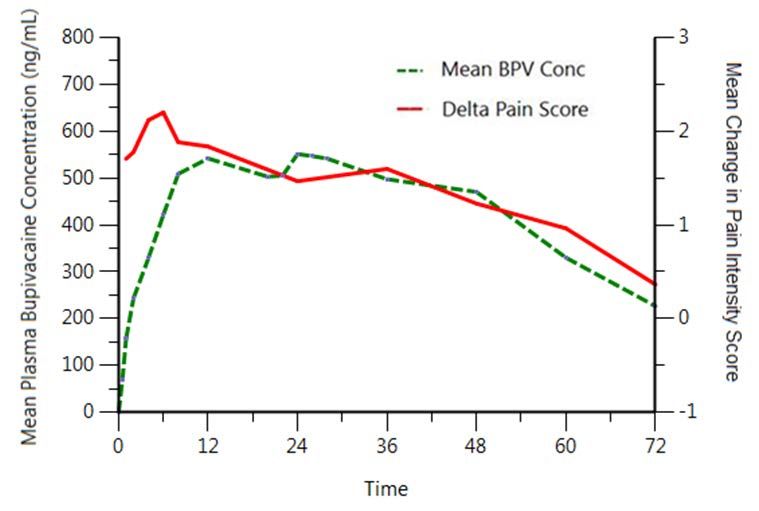
30Excellent Correlation Between Pain Reduction and
Pharmacokinetics of HTX-011 Across Surgical Models
Bunionectomy Hernia Repair
Pain Score Plasma PK
4 50
3.5 45
Bupivacaine Concentation (ng/mL)
40
3
35
(Saline-HTX-011)
2.5 30
ΔPain Score
2 25
1.5 20
15
1
10
0.5 5
0 0
0 24 48 72
Time (hour)
Breast Augmentation Total Knee Arthroplasty
31HTX-011 NDA Filing Plans
• Goal is to file an NDA in 2H2018 requesting a broad label for reduction
of postoperative pain and opioid analgesics for 72 hours after surgery
• HTX-011 produced significant reductions in both pain intensity and need for
opioids through 72 hours post-surgery compared to placebo and bupivacaine
solution, the standard of care, in both Phase 3 studies
• NDA will contain PK, efficacy and safety data from 5 surgical models
with HTX-011 doses from 60 mg to 400 mg to support a broad label:
– Bunionectomy (Phase 2 & 3 data)
– Herniorrhaphy (Phase 2 & 3 data)
– Abdominoplasty (Phase 2 data)
– Total Knee Arthroplasty (Phase 2b data)
– Breast augmentation (Phase 2b data)
329.7 Million Out of the 15 Million Initial Target Procedures
(65%) Will Occur in Outpatient Setting
Hospitals account for 76% Remaining outpatient facilities account for 24%
[11.4 M procedures] [3.6 M procedures]
10% Ambulatory Surgical 14% Other (Physician
35% Inpatient 41% Hospital Outpatient
Centers (ASCs) Practices)
[5.3M procedures] [6.1M procedures]
[1.5M procedures] [2.1M procedures]
MS-DRG / Bundled
C-Code / J-Code C-Code / J-Code C-Code / J-Code
Payment
Surgical Supply Package / Surgical Supply Package / Surgical Supply Package /
X-Code Opportunity
APCs APCs APCs
Hospital Sales Force will cover approximately 76%+ of total opportunity (Inpatient, HOPD and Hospital owned ASCs)
33Large US Market Opportunity
Theoretical and Target Market
~28M Annual US Surgical Procedures Requiring Postoperative Pain Management That Were
Considered Potentially Suited For HTX-011
~15M procedures ~6M procedures ~7M procedures
Initial Targets Secondary Targets Tertiary Targets
Higher volume procedures across 4 major specialties Higher volume procedures in Lower volume procedures and
~6.5M Orthopedic procedures non-core specialties (e.g., ENT, procedures where local
~4.3M General Surgery procedures urology, hand, others) anesthetics are not widely
~3.3 M OB/GYN procedures used today
~1.1M Plastic Surgery procedures
$4.9B $1.9B $2.3B
Theoretical Market Size*
*Based on the current WAC of Exparel
34HTX-011 Has Demonstrated Significant Clinical Benefit in
Several of the High-Value Procedures in Initial Target Market
Annual Volume Overall % Local HTX-011 Significantly
Procedure (‘000s, US, 2015) Anesthetic Use Superior to Bupivacaine
Claims Survey
Knee arthroplasty 815 85% YES
Hip arthroplasty 337 78%
Ortho
Shoulder arthroplasty 107 98%
Surgery
Rotator cuff repair 550 90%
Completed
Spine procedures 750 100%
studies
Hernia repair 1,096 67% YES
General Hemorrhoidectomy 504 86%
Surgery
Colon and small bowel
483 69%
resection
Plastic Abdominoplasty 160 73% YES
Surgery Mammoplasty >300 86% YES
OB/GYN C-Section 1,285 TBD
35Overwhelmingly Positive Response by Physicians and
Pharmacists to HTX-011’s Target Product Profile
HTX-011 Target Product Profile: Strengths
Reduction in Opioid Consumption 88% 11%
Reduction in Pain Score 87% 13%
Reduction in Opioid AEs* 80% 19%
Analgesia Duration 79% 20%
Mechanism of Action 73% 23%
No Impact on Wound Healing 69% 30%
Indication 67% 31%
Compatability with NSAIDs 66% 31%
No Impact on Implantables 60% 38%
Overall Safety 60% 37%
Dosing Regimen 55% 43%
Phase 3 Procedures 48% 50% 1%
Strength Neither a Strength Nor Weakness Weakness
n = 376 total (101 anesthesiologists, 51 general surgeons, 122 orthopedic surgeons, 50 plastic surgeons, 52 pharmacy directors)
*Opioid AE’s are assumed to be reduced with significant reduction in use
36CINV Commercial Products
CINV Prophylaxis Typically Requires Two
     Complimentary Mechanisms of Action
                                        NK1 receptor antagonists
                    NK1 receptor        • Substance P is primary driver of delayed
                     antagonist
                                          CINV, but related to ~15% of acute failures
                    CINVANTI™
                                        • EMEND® IV (fosaprepitant), which has
                                          90% share of the US NK1 market, contains
                                          the synthetic surfactant polysorbate 80
                                          that has been associated with serious
                                          hypersensitivity and infusion site reactions
                                        5-HT3 receptor antagonists
                    5-HT3 receptor      • These are the backbone of CINV
                      antagonist
                                          prophylaxis
                      SUSTOL®
                                        • Excessive serotonin release is the primary
                                          driver for CINV in the acute phase and
                                          secondary driver in the delayed phase

38
SUSTOL® Outperformed ALL Recent CINV New Brand
Launches
CINV New Brand Launches Since 2008
Administrations in First 12 Months
(launch aligned)
80,000
70,000 68,694
60,000
50,000
40,000
30,000 33,530
20,000
10,000
2,756 11,759
0
Sancuso (2008) Akynzeo (2014) Varubi (2015) SUSTOL (2016)
Sources: IMS DDD; Heron actuals (distributor 867 reports) are for 4Q2016 through 3Q2017; due to data
availability, Sancuso data includes actuals for launch months 3-12 and estimates for months 1-2.
39Heron’s CINV Portfolio Continues to Outperform
All Recent CINV Branded Launches
CINV Brand Launches Since 2008 New CINVANTI Accounts By Month Q1 CINVANTI Provider Demand Units
Approximate administrations in 60 25,000
First 18 Months (launch aligned) 55
21,900
50
136,000 20,000
43
40
15,000
30
20 10,000
58,000
20
5,000
20,000 10
6,000
0 0
Sancuso Akynzeo Varubi SUSTOL CINVANTI
(2008) (2014) (2015) (2016)
Jan Feb Mar
Q1 2018
Sources: IMS DDD; Heron actuals (distributor 867 reports); due to data availability, Source: Heron 867 data
Source: Heron 867 data
Sancuso data includes actuals for launch months 3-12 and estimates for months 1-
2; Varubi includes actuals for launch months 1-15 and estimates for months 16-18
40Heron CINV Portfolio achieved $11.6M Q1 2018
Net Sales
$15.0 CINV Franchise Net Sales
$13.0
$11.6
$11.0
$10.0
Net Sales ($M)
$9.0 $8.5 $8.6 $5.2
$7.0
$5.0
$3.6
$3.0 $6.41
$1.3
$1.0
$(1.0) Q4 2016 Q1 2017 Q2 2017 Q3 2017 Q4 2017 Q1 2018
1If
it were not for the fact that the Company adopted the required revenue recognition rules
Source: Heron 867 data (Topic 606) on January 1, net sales would have been $7.7M
412018 CINV Franchise Outlook
SUSTOL®: We continue to expect core SUSTOL business to hold firm and with
possibility of modest decline during arbitrage and growth thereafter
• Even with the potential for generic palonosetron, 4th quarter unit sales grew 22%
• Approximately $31M in net product sales in 2017
• Permanent J-code 1627 granted by CMS; effective January 1, 2018
CINVANTI®
• Commercially available in the US
• We believe it has the best overall profile compared to the other available NK1 antagonists
• Offers strong strategic and operational fit with existing commercial organization to win in a branded
CINV market with ~3.6M annual units
CINV Franchise
• CINV franchise 2018 guidance of $60M–$70M in net product sales
42Financial Summary
As of March 31, 2018, pro-forma cash, cash equivalents and short-term investments, adjusting for the April 2018 public
offering, were $282.6 million.
Summary Statement of Operations and Net Cash Used in Operations Three Months Ended
(In thousands, except per share data) March 31, 2018
Net product sales $ 11,567
Operating expenses1 63,557
Other expenses, net (275)
Net loss1 $ (52,265)
Net loss per share2 $ (0.81)
Net cash used in operations $(61,713)
Condensed Balance Sheet Data
(In thousands) March 31, 2018
Cash, cash equivalents and short-term investments $ 113,938
Accounts receivable, net $ 37,713
Total assets $ 183,383
Promissory note payable $ 25,000
Total stockholders’ equity $ 92,206
Common shares outstanding at March 31, 2018 totaled 65.0 million.
1 Includes $7.7 million of non-cash, stock-based compensation expense for the three months ended March 31, 2018.
2 Based on 64.7 million weighted-average common shares outstanding for the three months ended March 31, 2018.
43Key Catalysts in Pain Management & CINV
Franchises
HTX-011 for Postoperative Pain CINVANTI ® and SUSTOL® for CINV
2018 net sales guidance for CINV
Fast Track designation granted
franchise: $60M - $70M
Completed enrollment in Phase 3 pivotal
trials
Top-line Pivotal Phase 3 results 1H 2018
Topline results from breast augmentation
and TKA studies late 1H 2018
Breakthrough Therapy designation received
from FDA
NDA filing 2H2018
44You can also read


