Conservation status of New Zealand freshwater fish, 2013
←
→
Page content transcription
If your browser does not render page correctly, please read the page content below
NEW ZEALAND THREAT CLASSIFICATION SERIES 7

Conservation status of New Zealand
freshwater fish, 2013
Jane M. Goodman, Nicholas R. Dunn, Peter J. Ravenscroft, Richard M. Allibone,
Jacques A.T. Boubee, Bruno O. David, Marc Griffiths, Nicholas Ling,
Rodney A. Hitchmough and Jeremy R. Rolfe
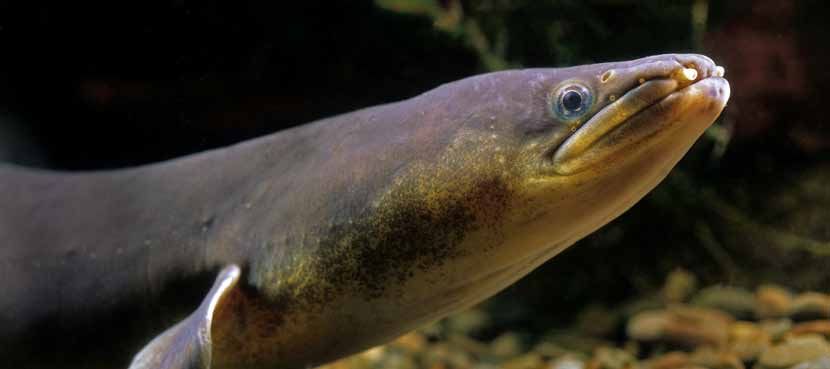
Cover: Longfin eel, Anguilla dieffenbachii. Photo: Rod Morris

New Zealand Threat Classification Series is a scientific monograph series presenting publications related to the New Zealand Threat
Classification System (NZTCS). Most will be lists providing NZTCS status of members of a plant or animal group (e.g. algae, birds, spiders).
There are currently 23 groups, each assessed once every 3 years. After each three-year cycle there will be a report analysing and summarising
trends across all groups for that listing cycle. From time to time the manual that defines the categories, criteria and process for the NZTCS will
be reviewed. Publications in this series are considered part of the formal international scientific literature.

This report is available from the departmental website in pdf form. Titles are listed in our catalogue on the website, refer
www.doc.govt.nz under Publications, then Science & technical.

© Copyright May 2014, New Zealand Department of Conservation

ISSN       2324–1713 (web PDF)
ISBN       978–0–478–15014–8 (web PDF)

This report was prepared for publication by the Publishing Team; editing and layout by Lynette Clelland. Publication was approved by the
Deputy Director-General, Science and Technical Group, Department of Conservation, Wellington, New Zealand.

Published by Publishing Team, Department of Conservation, PO Box 10420, The Terrace, Wellington 6143, New Zealand.

In the interest of forest conservation, we support paperless electronic publishing.
CONTENTS

Abstract		                                                                1

1.   Summary                                                             2

2.   Conservation status of all recognised New Zealand freshwater fish   5

     2.1   Taxonomically determinate                                     5
           Extinct		                                                     5
           Data Deficient                                                5
           Threatened                                                    6
              Nationally Critical                                        6
              Nationally Endangered                                      6
              Nationally Vulnerable                                      7
           At Risk		                                                     7
               Declining                                                 8
               Recovering                                                8
               Relict                                                    8
               Naturally Uncommon                                        9
           Non-resident Native                                           9
              Migrant                                                    9
              Vagrant                                                    9
              Coloniser                                                  9
           Not Threatened                                                10
           Introduced and Naturalised                                    10
     2.2   Taxonomically indeterminate                                   11
           Data Deficient                                                11
           Threatened                                                    11
              Nationally Critical                                        11
              Nationally Endangered                                      11
              Nationally Vulnerable                                      11
           At Risk		                                                     11
               Declining                                                 12
               Naturally Uncommon                                        12
           Not Threatened                                                12

3.   Acknowledgements                                                    12

4.   References                                                          12
Conservation status of New Zealand
freshwater fish, 2013
Jane M. Goodman1, Nicholas R. Dunn2, Peter J. Ravenscroft3, Richard M.
Allibone4, Jacques A.T. Boubee5, Bruno O. David6, Marc Griffiths7, Nicholas Ling8,
Rodney A. Hitchmough9 and Jeremy R. Rolfe9
1 Science and Capability Group, Department of Conservation, Private Bag 3072, Hamilton 3240,
New Zealand. Email: jgoodman@doc.govt.nz
2 Science and Capability Group, Department of Conservation, Private Bag 4715, Christchurch
Mail Centre, Christchurch 8140, New Zealand.
3 Ōtepoti / Dunedin Office, Department of Conservation, PO Box 5244, Dunedin 9058,
New Zealand.
4 Golder Associates (NZ) Ltd, PO Box 1087, Dunedin 9054, New Zealand.
5 National Institute of Water and Atmospheric Research (Ltd), PO Box 11115, Hamilton 3216,
New Zealand.
6 Waikato Regional Council, Private Bag 3038, Hamilton 3240, New Zealand.
7 Ministry for Primary Industries, PO Box 2526, Wellington 6140, New Zealand.
8 University of Waikato, Private Bag 3105, Hamilton 3240, New Zealand.
9 Science and Capability Group, Department of Conservation, PO Box 10420, Wellington 6143,
New Zealand.
Abstract
The conservation status of all known New Zealand freshwater fish taxa was assessed using the
New Zealand Threat Classification System (NZTCS) criteria. A full list is presented, along with
a statistical summary and brief notes on the most important changes. This 2013 list replaces all
previous NZTCS lists for freshwater fish.
Keywords: New Zealand Threat Classification System, freshwater fish, conservation status,
Anguillidae, Cheimarrichthyidae, Cyprinidae, Eleotridae, Galaxiidae, Geotridae, Gobiidae,
Ictaluridae, Microdesmidae, Mugilidae, Percidae, Pleuronectidae, Poeciliidae, Retropinnidae,
Salmonidae, Tripterygiidae.
© Copyright May 2014, Department of Conservation. This paper may be cited as:
Goodman, J.M.; Dunn, N.R.; Ravenscroft, P.J.; Allibone, R.M.; Boubee, J.A.T.; David, B.O.; Griffiths, M.; Ling, N.;
Hitchmough, R.A.; Rolfe, J.R. 2014: New Zealand Threat Classification Series 7. Department of Conservation,
Wellington. 12 p.
New Zealand Threat Classification Series 7 11. Summary
The conservation status of 77 New Zealand freshwater fish taxa was assessed using New Zealand
Threat Classification System (NZTCS) criteria (Townsend et al. 2008). This list replaces the
2009 list published by Allibone et al. in 2010. The categories, criteria and process were identical
between the two listings and many of the panel members (the authors of Allibone et al. 2010 and
this document) were the same.
The New Zealand Freshwater Fish Database (McDowall & Richardson, 1983; https://nzffdms.
niwa.co.nz/, retrieved May 2, 2013) and unpublished Department of Conservation survey and
monitoring data were the primary sources of information used to examine the distribution and
abundance of freshwater fish taxa.
Table 1 provides a summary of the number of taxa in each category listed in Allibone et al. (2010)
and this document. A summary of status changes between the 2009 and 2013 lists is presented
in Table 2. More comprehensive information on the status of individual taxa, the qualifiers that
apply to each, and the criteria that triggered the taxon to be placed in a category, is outlined in
section 2.
Current understanding of the taxonomic status of all non-migratory Galaxias taxa was
determined at a Department of Conservation (DOC) convened workshop held prior to the
meeting of the New Zealand freshwater fish threat classification panel. Participants at this
workshop included geneticists, taxonomists, and conservation managers (DOC unpubl. data).
Four participants at the workshop were also members of the current threat classification panel.
Fourteen native entities are listed as taxonomically indeterminate and are awaiting formal
description; they have been assigned tag names in this list (hereafter they are referred to as
taxonomically indeterminate taxa). Two parallel lists have been produced, one for taxonomically
determinate taxa and one for taxonomically indeterminate taxa.
Two species name change have occurred since the 2009 list was published (Allibone et al. 2010;
Table 3). The subspecies status of Anguilla australis schmidtii is no longer recognised based
on Dijkstra & Jellyman (1999); and Grahamina nigripenne has been reassigned as Forsterygion
Ta b l e 1 . S t a t i s t i c a l s u m m a r y o f t h e s t a t u s o f N e w Z e a l a n d f re s h w a t e r f i s h
species assessed in 2009 (Allibone et al. 2010) and 2013 (this document).
CATEGORY TOTAL 2009 TOTAL 2013
Extinct 1 1
Data Deficient 0 1
Threatened—Nationally Critical 4 5
Threatened—Nationally Endangered 3 6
Threatened—Nationally Vulnerable 7 10
At Risk—Declining 13 14
At Risk—Recovering 0 0
At Risk—Relict 1 0
At Risk—Naturally Uncommon 6 5
Non-resident native—Migrant 0 0
Non-resident native—Vagrant 0 0
Non-resident native—Coloniser 3 3
Not Threatened 17 12
Introduced and Naturalised 20 20
Total 75 77
2 Goodman et al.—Conservation status of New Zealand freshwater fish, 2013Ta b l e 2 . S u m m a r y o f s t a t u s c h a n g e s o f f re s h w a t e r f i s h b e t w e e n 2 0 0 9 ( A l l i b o n e e t a l . 2 0 1 0 ) a n d 2 0 1 3 ( t h i s
d o c u m e n t ) . B o l d n u m b e r s a re t h e 2 0 1 3 s t a t u s t o t a l s w i t h t h e p re v i o u s s t a t u s l i s t e d b e l o w.
CONSERVATION STATUS 2013 CONSERVATION STATUS 2009 DETERMINATE INDETERMINATE TOTAL
EXTINCT 1 0 1
Extinct 1 0 1
DATA DEFICIENT 0 1 1
Not listed 0 1 1
THREATENED 12 9 21
Nationally Critical 2 3 5
Nationally Critical 2 2 4
Nationally Vulnerable 0 1 1
Nationally Endangered 3 3 6
Nationally Endangered 2 1 3
Nationally vulnerable 1 1 2
Not listed 0 1 1
Nationally Vulnerable 7 3 10
Nationally Vulnerable 3 1 4
Naturally uncommon 0 1 1
Declining 3 0 3
Not threatened 1 1 2
AT RISK 16 3 19
Declining 12 2 14
Declining 9 1 10
Naturally Uncommon 1 0 1
Not threatened 1 1 2
Relict 1 0 1
Naturally Uncommon 4 1 5
Naturally Uncommon 3 1 4
Not Threatened 1 0 1
NON-RESIDENT NATIVE 3 0 3
Coloniser 3 0 3
Coloniser 3 0 3
NOT THREATENED 11 1 12
Not Threatened 11 1 12
INTRODUCED AND 20 0 20
NATURALISED
Introduced and Naturalised 20 0 20
TOTAL 63 14 77
nigripenne following Jawad (2008). Family names now adhere to Eschmeyer (2014), as does
spelling, resulting in several minor changes in spelling of species names compared with the 2009
list (Allibone et al. 2010).
Three native freshwater fish taxa have been added to the 2009 list (Allibone et al. 2010) (Table 4);
two are indeterminate taxa that have been split from Galaxias “species D” due to recent
taxonomic research (DOC unpubl. data). The third taxon was ranked in 2009 but not published in
Allibone et al. (2010).
Fifty-four of the 77 taxa listed are resident natives. Of the 54 resident native taxa, 40 (74%) are
considered to be Threatened or At Risk, compared with 34 of 52 (65%) resident native taxa in the
2009 list (Allibone et al. 2010). One taxon, the grayling (Prototroctes oxyrhynchus) is classified
New Zealand Threat Classification Series 7 3Ta b l e 3 . N a m e c h a n g e s a ff e c t i n g N e w Z e a l a n d f re s h w a t e r f i s h b e t w e e n t h e p u b l i c a t i o n o f
Allibone et al. (2010) and this document.
SCIENTIFIC NAME AND AUTHORITY IN SCIENTIFIC NAME IN THIS DOCUMENT FAMILY
ALLIBONE ET AL. (2010) (BASED ON ESCHMEYER (2014)
Anguilla australis schmidtii Richardson 1841 Anguilla australis Richardson 1841 Anguillidae
Grahamina nigripenne Valenciennes 1836 Forsterygion nigripenne (Valenciennes 1836) Tripterygiidae
Ta b l e 4 . Ta x a i n c l u d e d i n t h i s d o c u m e n t t h a t w e re n o t
listed in Allibone et al. (2010).
NAME FAMILY
Galaxias “lower Clutha” Galaxiidae
Galaxias aff. paucispondylus “Southland” Galaxiidae
Galaxias “Pomahaka” Galaxiidae
as Extinct. Twelve taxa are Not Threatened and one taxon was assigned to the Data Deficient
category. The remaining 23 of 77 freshwater taxa are either listed as Non-resident native—
Colonisers (3 taxa) or Introduced and Naturalised (20 taxa).
Fourteen of the resident native taxa (26%) have a higher threat classification in 2013 than in 2009;
6 (11%) were moved because of observed declines in abundance and distribution and 8 (15%)
because of improved knowledge. Five resident native taxa (9%) have moved from being classified
as Not Threatened to either At Risk or Threatened. Changes to the conservation status of these
taxa are for one or more of the following reasons: a more accurate estimate of their population
size and/or area of occupancy; loss and/or degradation of habitat due to land use intensification;
competition and/or predation by introduced species; or increased genetic knowledge.
4 Goodman et al.—Conservation status of New Zealand freshwater fish, 20132. Conservation status of all recognised
New Zealand freshwater fish
Taxa are assessed according to the criteria of Townsend et al. (2008), grouped by conservation
status, then alphabetically by scientific name. For non-endemic species that are threatened
internationally, the IUCN category is listed alongside the NZTCS listing. Categories are ordered
by degree of loss, with Extinct at the top of the list and Not Threatened at the bottom, above
Introduced and Naturalised. The Data Deficient list is inserted between Extinct and Threatened.
Although the true status of Data Deficient taxa will span the entire range of available categories,
taxa are in that list mainly because they are very seldom seen, so most are likely to end up being
considered threatened and some may already be extinct. The Data Deficient list is likely to
include many of the most threatened species in New Zealand.
See Townsend et al. (2008) for details of criteria and qualifiers, which are abbreviated as follows:
CD Conservation Dependent
De Designated
DP Data Poor
EF Extreme Fluctuations
EW Extinct in the Wild
IE Island Endemic
Inc Increasing
OL One Location
PD Partial Decline
RF Recruitment Failure
RR Range Restricted
SO Secure Overseas
S?O Overseas security uncertain
Sp Sparse
St Stable
TO Threatened Overseas
2.1 Taxonomically determinate
Extinct (1)
Taxa for which there is no reasonable doubt—following repeated surveys in known or expected
habitats at appropriate times (diurnal, seasonal and annual) and throughout the taxon’s historic
range—that the last individual has died.
SCIENTIFIC NAME AND AUTHORITY COMMON NAME FAMILY
Prototroctes oxyrhynchus Günther 1870 Grayling Retropinnidae
Data Deficient
Taxa that are suspected to be threatened, or in some instances, possibly extinct but are not
definitely known to belong to any particular category due to a lack of current information about
their distribution and abundance. It is hoped that listing such taxa will stimulate research to find
out the true category (for a fuller definition see Townsend et al. 2008).
No taxonomically determinate freshwater fish taxa are listed in this category.
New Zealand Threat Classification Series 7 5Threatened (12)
Taxa that meet the criteria specified by Townsend et al. (2008) for the categories Nationally
Critical, Nationally Endangered and Nationally Vulnerable.
Nationally Critical
Criteria for Nationally Critical:
A—very small population (natural or unnatural)
A(1) < 250 mature individuals, regardless of cause
A(2) ≤ 2 subpopulations, ≤ 200 mature individuals in the larger subpopulation
A(3) Total area of occupancy ≤ 1 ha (0.01 km2)
B—small population (natural or unnatural) with a high ongoing or predicted decline
B(1/1) 250–1000 mature individuals, predicted decline 50–70%
B(2/1) ≤ 5 subpopulations, ≤ 300 mature individuals in the largest subpopulation,
predicted decline 50–70%
B(3/1) Total area of occupancy ≤ 10 ha (0.1 km2), predicted decline 50–70%
C—population (irrespective of size or number of subpopulations) with a very high
ongoing or predicted decline (> 70%).
C Predicted decline > 70%
NAME AND AUTHORITY COMMON NAME FAMILY CRITERIA QUALIFIERS
Galaxias cobitinis McDowall & Waters 2002 Lowland longjaw galaxias Galaxiidae A(1) CD, EF, OL
(Kakanui River)
Neochanna burrowsius (Phillipps 1926) Canterbury mudfish Galaxiidae C CD, RR, Sp
Nationally Endangered
Criteria for Nationally Endangered:
A—small population (natural or unnatural) that has a low to high ongoing or predicted
decline
A(1/1) 250–1000 mature individuals, predicted decline 10–50%
A(2/1) ≤ 5 subpopulations, ≤ 300 mature individuals in the largest subpopulation,
predicted decline 10–50%
A(3/1) Total area of occupancy ≤ 10 ha (0.1 km2), predicted decline 10–50%
B—small stable population (unnatural)
B(1/1) 250–1000 mature individuals, stable population
B(2/1) ≤ 5 subpopulations, ≤ 300 mature individuals in the largest subpopulation,
stable population
B(3/1) Total area of occupancy ≤ 10 ha (0.1 km2), stable population
C—moderate population and high ongoing or predicted decline.
C(1/1) 1000–5000 mature individuals, predicted decline 50–70%
C(2/1) ≤ 15 subpopulations, ≤ 500 mature individuals in the largest subpopulation,
predicted decline 50–70%
C(3/1) Total area of occupancy ≤ 100 ha (1 km2), predicted decline 50–70%
6 Goodman et al.—Conservation status of New Zealand freshwater fish, 2013NAME AND AUTHORITY COMMON NAME FAMILY CRITERIA QUALIFIERS
Galaxias anomalus Stokell 1959 Central Otago roundhead galaxias Galaxiidae C(3/1) EF
Galaxias eldoni McDowall 1997 Eldon’s galaxias Galaxiidae A(3/1)
Galaxias pullus McDowall 1997 Dusky galaxias Galaxiidae A(3/1) CD
Nationally Vulnerable
Criteria for Nationally Vulnerable:
A—small, increasing population (unnatural)
A(1/1) 250–1000 mature individuals, predicted increase > 10%
A(2/1) ≤ 5 subpopulations, ≤ 300 mature individuals in the largest subpopulation,
predicted increase > 10%
A(3/1) Total area of occupancy ≤ 10 ha (0.1 km2), predicted increase > 10%
B—moderate, stable population (unnatural)
B(1/1) 1000–5000 mature individuals, stable population
B(2/1) ≤ 15 subpopulations, ≤ 500 mature individuals in the largest subpopulation,
stable population
B(3/1) Total area of occupancy ≤ 100 ha (1 km2), stable population
C—moderate population, with population trend that is declining
C(1/1) 1000–5000 mature individuals, predicted decline 10–50%
C(2/1) ≤ 15 subpopulations, ≤ 500 mature individuals in the largest subpopulation,
predicted decline 10–50%
C(3/1) Total area of occupancy ≤ 100 ha (1 km2), predicted decline 10–50%
D—moderate to large population, and moderate to high ongoing or predicted decline.
D(1/1) 5000–20 000 mature individuals, predicted decline 30–70%
D(2/1) ≤ 15 subpopulations and ≤ 1000 mature individuals in the largest subpopulation,
predicted decline 30–70%
D(3/1) Total area of occupancy ≤ 1000 ha (10 km2), predicted decline 30–70%
E—large population, and high ongoing or predicted decline.
E(1/1) 20 000–100 000 mature individuals, predicted decline 50–70%
E(2/1) Total area of occupancy ≤ 10 000 ha (100 km2), predicted decline 50–70%
NAME AND AUTHORITY COMMON NAME FAMILY CRITERIA QUALIFIERS
Galaxias depressiceps McDowall & Wallis 1996 Taieri flathead galaxias Galaxiidae C(3/1) CD
Galaxias gollumoides McDowall & Chadderton 1999 Gollum galaxias Galaxiidae B(2/1) DP
Galaxias macronasus McDowall & Waters 2003 Bignose galaxias Galaxiidae C(3/1) RR
Galaxias prognathus Stokell 1940 Upland longjaw galaxias Galaxiidae C(1/1) DP
(Canterbury, West Coast)
Galaxias postvectis Clarke 1899 Shortjaw kokopu Galaxiidae D(1/1) De, DP
Geotria australis Gray 1851 Lamprey Geotriidae C(3/1) S?O
Neochanna heleios Ling & Gleeson 2001 Northland mudfish Galaxiidae D(3/1) RR
At Risk (16)
Taxa that meet the criteria specified by Townsend et al. (2008) for Declining, Recovering, Relict
and Naturally Uncommon.
New Zealand Threat Classification Series 7 7Declining
Taxa that do not qualify as ‘Threatened’ because they are buffered by large population size and/or
a slower rate of decline than the trigger points.
Criteria for Declining:
A—moderate to large population and low ongoing or predicted decline
A(1/1) 5000–20 000 mature individuals, predicted decline 10–30%
A(2/1) Total area of occupancy ≤ 1000 ha (10 km2), predicted decline 10–30%
B—large population and low to moderate ongoing or predicted decline
B(1/1) 20 000–100 000 mature individuals, predicted decline 10–50%
B(2/1) Total area of occupancy ≤ 10 000 ha (100 km2), predicted decline 10–50%
C—very large population and low to high ongoing or predicted decline.
C(1/1) > 100 000 mature individuals, predicted decline 10–70%
C(2/1) Total area of occupancy > 10 000 ha (100 km2), predicted decline 10–70%
NAME AND AUTHORITY COMMON NAME FAMILY CRITERIA QUALIFIERS
Anguilla dieffenbachii Gray 1842 Longfin eel Anguillidae C(2/1) CD
Cheimarrichthys fosteri Haast 1874 Torrentfish Cheimarrichthyidae C(1/1)
Galaxias argenteus (Gmelin 1789) Giant kokopu Galaxiidae B(1/1) PD
Galaxias brevipinnis Günther 1866 Koaro Galaxiidae C(1/1) PD
Galaxias divergens Stokell 1959 Dwarf galaxias (West Coast) Galaxiidae B(2/1) DP, RR
Galaxias gracilis McDowall 1967 Dwarf inanga (North Kaipara Galaxiidae A(2/1) EF, RR
Head dune lakes)
Galaxias maculatus (Jenyns 1842) Inanga Galaxiidae C(1/1) CD, SO
Galaxias vulgaris Stokell 1949 Canterbury galaxias Galaxiidae A(2/1) DP
Neochanna apoda Günther 1867 Brown mudfish Galaxiidae C(1/1) PD
Neochanna diversus Stokell 1949 Black mudfish Galaxiidae C(2/1) DP
Gobiomorphus hubbsi (Stokell 1959) Bluegill bully Eleotridae C(1/1) DP
Gobiomorphus huttoni (Ogilby 1894) Redfin bully Eleotridae C(1/1) PD
Recovering
Taxa that have undergone a documented decline within the last 1000 years and now have an
ongoing or predicted increase of > 10% in the total population or area of occupancy, taken over the
next 10 years or three generations, whichever is longer. Note that such taxa that are increasing
but have a population size of < 1000 mature individuals (or total area of occupancy of < 10 ha) are
listed in one of the Threatened categories, depending on their population size (for more details
see Townsend et al. (2008)).
Criteria for Recovering:
A 1000–5000 mature individuals or total area of occupancy ≤ 100 ha (1 km2),
and predicted increase > 10%
B 5000–20 000 mature individuals or total area of occupancy ≤ 1000 ha
(10 km2), and predicted increase > 10%
No taxonomically determinate freshwater fish taxa are listed in this category.
Relict
Taxa that have undergone a documented decline within the last 1000 years, and now occupy
< 10% of their former range and meet one of the following criteria:
8 Goodman et al.—Conservation status of New Zealand freshwater fish, 2013Criteria for Relict:
A 5000–20 000 mature individuals; population stable (±10%)
B > 20 000 mature individuals; population stable or increasing at > 10%. The range of a relictual
taxon takes into account the area currently occupied as a ratio of its former extent. Relict can
also include taxa that exist as reintroduced and self-sustaining populations within or outside
their former known range (for more details see Townsend et al. (2008)).
The range of a relictual taxon takes into account the area currently occupied as a ratio of
its former extent. Relict can also include taxa that exist as reintroduced and self-sustaining
populations within or outside their former known range (for more details see Townsend et al.
(2008)).
No taxonomically determinate freshwater fish taxa are listed in this category.
Naturally Uncommon
Taxa whose distribution is confined to a specific geographical area or which occur within
naturally small and widely scattered populations, where this distribution is not the result of
human disturbance.
NAME AND AUTHORITY COMMON NAME FAMILY QUALIFIERS
Galaxias paucispondylus Stokell 1938 Alpine galaxias (Canterbury, Marlborough, Galaxiidae RR
West Coast)
Gobiomorphus alpinus Stokell 1962 Tarndale bully Eleotridae RR
Neochanna rekohua (Mitchell 1995) Chatham Island mudfish Galaxiidae RR, St
Stokellia anisodon (Stokell 1941) Stokell’s smelt Retropinnidae RR
Non-resident Native (3)
Taxa whose natural presence in New Zealand is either discontinuous (Migrant) or sporadic or
temporary (Vagrant) or which have succeeded in recently (since 1950) establishing a resident
breeding population (Coloniser).
Migrant
Taxa that predictably and cyclically visit New Zealand as part of their normal life cycle
(a minimum of 15 individuals known or presumed to visit per annum) but do not breed here.
No taxonomically determinate freshwater fish taxa are listed in this category.
Vagrant
Taxa whose occurrences, though natural, are sporadic and typically transitory, or migrants with
fewer than 15 individuals visiting New Zealand per annum.
No taxonomically determinate freshwater taxa are listed in this category.
Coloniser
Taxa that otherwise trigger Threatened categories because of small population size, but have
arrived in New Zealand without direct or indirect help from humans and have been successfully
reproducing in the wild only since 1950.
NAME AND AUTHORITY COMMON NAME FAMILY QUALIFIERS IUCN STATUS
Anguilla reinhardtii Steindachner 1867 Australian longfin eel Anguillidae SO Not assessed
Gobiopterus semivestitus (Munro 1949) Glass goby Gobiidae DP, OL, SO Not assessed
Parioglossus marginalis Rennis & Hoese 1985 Dart goby Microdesmidae SO Not assessed
New Zealand Threat Classification Series 7 9Not Threatened (11)
Resident native taxa that have large, stable populations.
NAME AND AUTHORITY COMMON NAME FAMILY QUALIFIERS
Aldrichetta forsteri (Valenciennes 1836) Yelloweye mullet Mugilidae
Anguilla australis Richardson 1841 Shortfin eel Anguillidae Inc
Galaxias fasciatus Gray 1842 Banded kokopu Galaxiidae
Gobiomorphus basalis (Gray 1842) Cran’s bully Eleotridae
Gobiomorphus breviceps (Stokell 1939) Upland bully (East Coast South Island) Eleotridae
Gobiomorphus cotidianus McDowall 1975 Common bully Eleotridae
Gobiomorphus gobioides (Valenciennes 1837) Giant bully Eleotridae DP
Forsterygion nigripenne (Valenciennes 1836) Estuarine triplefin Tripterygiidae
Mugil cephalus Linnaeus 1758 Grey mullet Mugilidae SO
Retropinna retropinna (Richardson 1848) Common smelt Retropinnidae
Rhombosolea retiaria Hutton 1874 Black flounder Pleuronectidae DP
Introduced and Naturalised (20)
Taxa that have become naturalised in the wild after being deliberately or accidentally introduced
into New Zealand by human agency.
NAME AND AUTHORITY COMMON NAME FAMILY
Ameiurus nebulosus (Lesueur 1819) Brown bullhead catfish Ictaluridae
Arenigobius bifrenatus (Kner 1865) Bridled goby Gobiidae
Carassius auratus (Linnaeus 1758) Goldfish Cyprinidae
Cyprinus carpio Linnaeus 1758 Koi carp Cyprinidae
Gambusia affinis (Baird & Girard 1853) Gambusia Poeciliidae
Leuciscus idus (Linnaeus 1758) Orfe Cyprinidae
Oncorhynchus mykiss (Walbaum 1792) Rainbow trout Salmonidae
Oncorhynchus nerka (Walbaum 1792) Sockeye salmon Salmonidae
Oncorhynchus tshawytscha (Walbaum 1792) Chinook salmon Salmonidae
Perca fluviatilis Linnaeus 1758 Perch Percidae
Phalloceras caudimaculatus (Hensel 1868) Caudo Poeciliidae
Poecilia latipinna (Lesueur 1821) Sailfin molly Poeciliidae
Poecilia reticulata Peters 1859 Guppy Poeciliidae
Salmo salar Linnaeus 1758 Atlantic salmon Salmonidae
Salmo trutta Linnaeus 1758 Brown trout Salmonidae
Salvelinus fontinalis (Mitchill 1814) Brook char Salmonidae
Salvelinus namaycush (Walbaum 1792) Mackinaw Salmonidae
Scardinius erythrophthalmus (Linnaeus 1758) Rudd Cyprinidae
Tinca tinca (Linnaeus 1758) Tench Cyprinidae
Xiphophorus helleri Heckel 1848 Swordtail Poeciliidae
10 Goodman et al.—Conservation status of New Zealand freshwater fish, 20132.2 Taxonomically indeterminate
This section includes described taxa whose taxonomic status is uncertain and requires further
investigation, and also potentially distinct freshwater fish whose taxonomic status has yet to be
determined.
Data Deficient (1)
Taxa that are suspected to be threatened, or in some instances, possibly extinct but are not
definitely known to belong to any particular category due to a lack of current information about
their distribution and abundance. It is hoped that listing such taxa will stimulate research to find
out the true category (for a fuller definition see Townsend et al. 2008).
NAME COMMON NAME FAMILY QUALIFIERS
Galaxias “lower Clutha” Lower Clutha galaxias (Clutha River) Galaxiidae RR
Threatened (9)
Taxa that meet the criteria specified by Townsend et al. (2008) for the categories Nationally
Critical, Nationally Endangered and Nationally Vulnerable.
Nationally Critical
NAME AND AUTHORITY COMMON NAME FAMILY CRITERIA QUALIFIERS
Galaxias aff. cobitinis “Waitaki” Lowland longjaw galaxias (Waitaki River) Galaxiidae C CD, RR
Galaxias “species D” Clutha flathead galaxias (Clutha River) Galaxiidae C
Galaxias “Teviot” Teviot flathead galaxias (Teviot River) Galaxiidae A(3) RR
Nationally Endangered
NAME AND AUTHORITY COMMON NAME FAMILY CRITERIA QUALIFIERS
Galaxias aff. paucispondylus “Manuherikia” Alpine galaxias (Manuherikia Galaxiidae A(3/1) OL, DP
River)
Galaxias “Nevis” Nevis galaxias (Nevis River) Galaxiidae A(3/1) DP, RR
Galaxias “Pomahaka” Pomahaka galaxias (Pomahaka Galaxiidae A(3/1) RR
River)
Nationally Vulnerable
NAME AND AUTHORITY COMMON NAME FAMILY CRITERIA QUALIFIERS
Galaxias aff. paucispondylus “Southland” Alpine galaxias (Southland) Galaxiidae C(3/1)
Galaxias aff. prognathus “Waitaki” Upland longjaw galaxias (Waitaki Galaxiidae C(1/1) DP, RR, Sp
River)
Galaxias “northern” Northern flathead galaxias Galaxiidae C(3/1) RR
(Marlborough, Nelson, West Coast)
At Risk (3)
Taxa that meet the criteria specified by Townsend et al. (2008) for Declining, Recovering, Relict
and Naturally Uncommon.
New Zealand Threat Classification Series 7 11Declining
NAME AND AUTHORITY COMMON NAME FAMILY CRITERIA QUALIFIERS
Galaxias aff. divergens “northern” Dwarf galaxias (Nelson, Galaxiidae A(2/1) DP
Marlborough, and North Island)
Galaxias “southern” Southern flathead galaxias Galaxiidae A(1/) DP, RR
(Southland, Otago)
Naturally Uncommon
NAME AND AUTHORITY COMMON NAME FAMILY QUALIFIERS
Galaxias “dune lakes” Dune lakes galaxias (Kai Iwi lakes) Galaxiidae EF, RR
Not Threatened (1)
Resident native taxa that have large, stable populations.
NAME AND AUTHORITY COMMON NAME FAMILY QUALIFIERS
Gobiomorphus aff. breviceps Upland bully (West Coast South island, North Island) Eleotridae DP
3. Acknowledgements
The authors would like to thank Sjaan Bowie, Ciaran Campbell, Shannan Crow, Daniel Jack,
Tania King, Lan Pham, Graham Wallis and Jon Waters for their valuable contributions to
defining the distribution, threats to and genetic status of non-migratory galaxiids at a workshop
prior to the New Zealand threat classification meeting.
Santiago Bermeo-Alvear, Bill Chisholm, Jan Clayton-Green, Gavin Collis, Dave Eastwood, Paul
Fisher, Tom Kroos, Michael Lake, Mike McGlynn, Michael Pingram, Ricky Olley, Alton Perrie,
Martin Rutledge, Graham Surrey, Manna Warburton and Dave West provided comments,
submissions or data on the distribution and status of New Zealand freshwater fish. Anna
Paltridge provided helpful editing advice.
4. References
Allibone, R.M.; David, B.O.; Hitchmough, R.; Jellyman, D.J.; Ling, N.; Ravenscroft, P.; Waters, J.M. 2010: Conservation
status of New Zealand freshwater fish, 2009. New Zealand Journal of Marine and Freshwater Research 44: 271–287.
Dijkstra, L.H.; Jellyman, D.J. 1999: Is the subspecies classification of the freshwater eels Anguilla australis australis
Richardson and A. a. schmidtii Phillipps still valid? Marine and Freshwater Research 50: 261–263.
Eschmeyer, W. N. (ed.): Catalog of Fishes: genera, species, references. (http://research.calacademy.org/research/
ichthyology/catalog/fishcatmain.asp). Electronic version accessed 20 January 2014.
Jawad, L.A. 2008: Second revision of the New Zealand triplefin genus Forsterygion Whitley and Phillips, 1939 (Pisces:
Tripterygiidae). Journal of Natural History 42: 2943–2989.
McDowall, R. M.; Richardson, J. 1983. The New Zealand freshwater fish database—a guide to input and output. Fisheries
Research Division Information leaflet 12, Ministry of Agriculture and Fisheries, Wellington.
NIWA (National Institute of Water and Atmospheric Research): New Zealand Freshwater Fish Database.
Retrieved May 2, 2013, from https://nzffdms.niwa.co.nz/.
Townsend, A.J.; de Lange, P.J.; Duffy, C.A.J.; Miskelly, C.M.; Molloy, J.; Norton, D.A. 2008. New Zealand Threat
Classification System manual. Department of Conservation, Wellington, New Zealand. 35 p.
12 Goodman et al.—Conservation status of New Zealand freshwater fish, 2013You can also read


