Corso di Biblioteche Digitali - ISTI-NMIS
←
→
Page content transcription
If your browser does not render page correctly, please read the page content below
Corso di Biblioteche Digitali
Vittore Casarosa
– Mail: casarosa@isti.cnr.it
– Tel: 050 621 3115 (office) 348 397 2168 (mobile)
– Skype: vittore1201
“Ricevimento” at the end of the lessons or by appointment
Final assessment
– 70% oral examination
– 30% project (development of a small digital library))
Reference material:
– Ian Witten, David Bainbridge, David Nichols, How to build a Digital
Library, Morgan Kaufmann, 2010, ISBN 978-0-12-374857-7 (Second
edition)
– Material provided by the teacher
Teams: section “File” of channel “Generale”
http://nmis.isti.cnr.it/casarosa/BDG/
UNIPI BDG 21-22 Vittore Casarosa – Biblioteche Digitali RefresherComputers - 1
Modules Computer Fundamentals and Networking A conceptual model for Digital Libraries Bibliographic records and metadata Information Retrieval and Search Engines Knowledge representation Digital Libraries and the Web Hands-on laboratory: the Greenstone system UNIPI BDG 2021-22 Vittore Casarosa – Biblioteche Digitali RefresherComputers - 2
Refresher Refresher on Computer Fundamentals and Networking History of computers Architecture of a computer Computer networks and the Internet Data representation within a computer UNIPI BDG 2021-22 Vittore Casarosa – Biblioteche Digitali RefresherComputers - 3
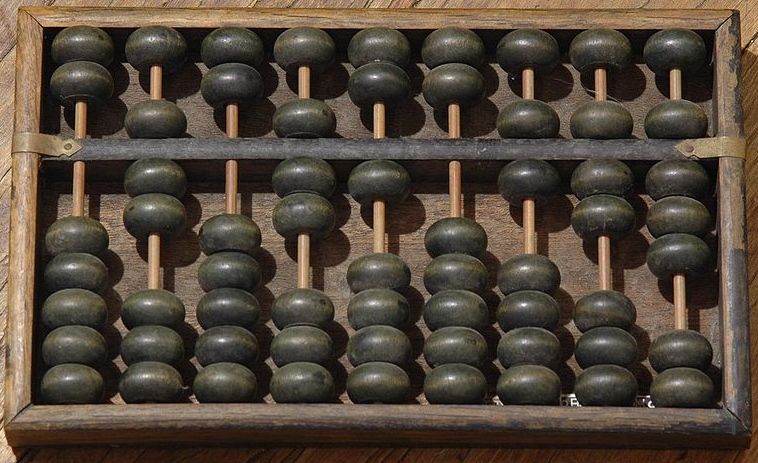
Early devices (not computers)

                                                                            Abacus
                                                                            2500 BC

                      Pascalina
                        1645

UNIPI BDG 2021-22                 Vittore Casarosa – Biblioteche Digitali             RefresherComputers - 4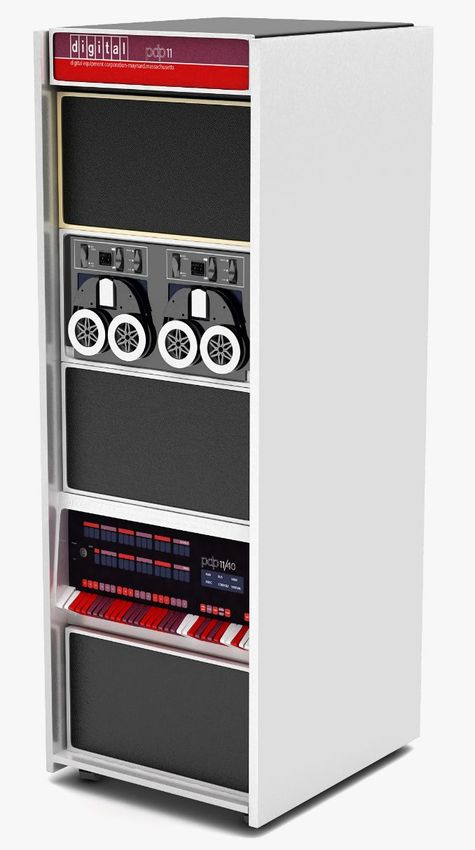
Early visions (of computers)

                                                                         Charles Babbage
                                                                         1791-1871

                                                                         Professor of
                                                                         Mathematics,
                                                                         Cambridge University,
                                                                         1827-1839

UNIPI BDG 2021-22              Vittore Casarosa – Biblioteche Digitali                     RefresherComputers - 5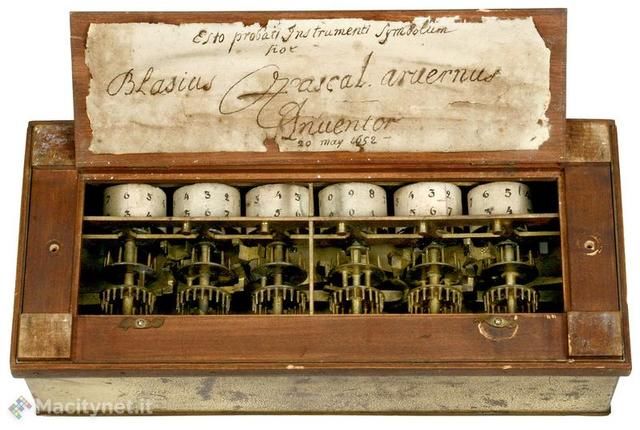
Babbage’s engines
Difference Engine 1823
Analytic Engine 1833
– The forerunner of modern digital computer
Application
– Mathematical Tables – Astronomy
– Nautical Tables – Navy
Technology
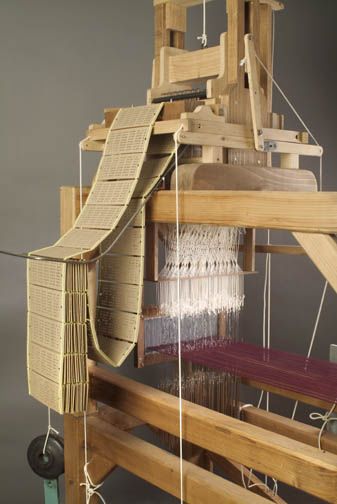
– mechanical gears, Jacquard’s loom (1801),
simple calculators
UNIPI BDG 2021-22 Vittore Casarosa – Biblioteche Digitali RefresherComputers - 6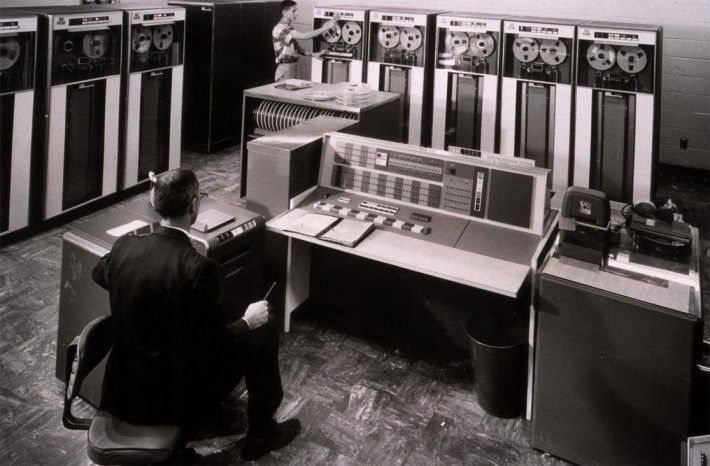
Use of punched paper tape

UNIPI BDG 2021-22             Vittore Casarosa – Biblioteche Digitali   RefresherComputers - 7
The loom

             Ordito   Trama

UNIPI BDG 2021-22       Vittore Casarosa – Biblioteche Digitali   RefresherComputers - 8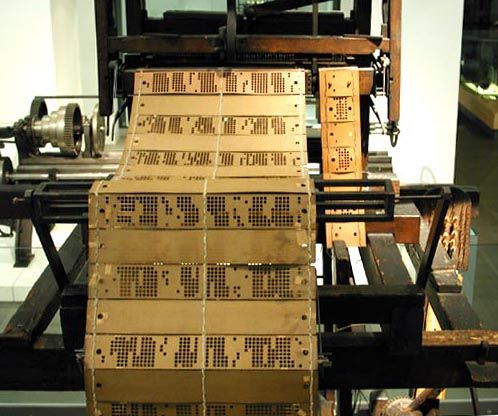
The organ grinder

UNIPI BDG 2021-22         Vittore Casarosa – Biblioteche Digitali   RefresherComputers - 9
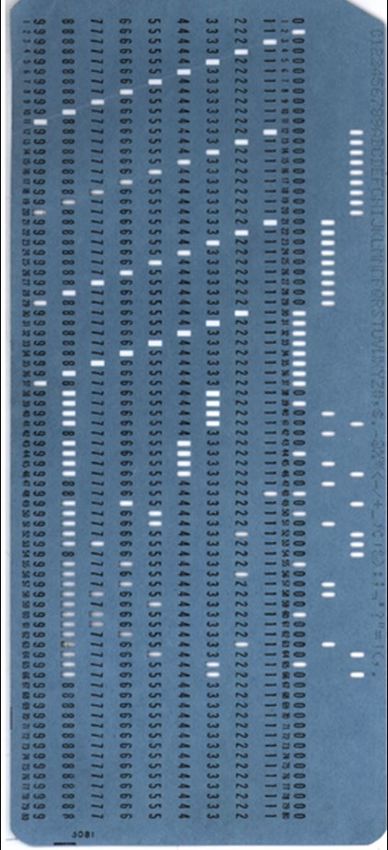
«Programmable» carillon
                      and punched cards

UNIPI BDG 2021-22            Vittore Casarosa – Biblioteche Digitali   RefresherComputers - 10
Early experiments
100 years later
Z1 machine (Konrad Zuse, private entrepreneur,
1936-1941)
ABC (Atanasoff-Berry Computer, Iowa State
University, 1937-1942)
Mark I (Howard Aiken, MIT, 1937-1941)
1942 Second World War
UNIPI SUMMER SCHOOL 2021 Vittore Casarosa – University of Pisa and ISTI-CNR RefresherComputers - 11Harvard Mark I
Built in 1944 in IBM Endicott laboratories
– Howard Aiken – Professor of Physics at Harvard
– Essentially mechanical but had some electro-magnetically
controlled relays and gears
– Weighed 5 tons and had 750,000 components
– A synchronizing clock that beat every 0.015 seconds (66KHz)
Performance:
0.3 seconds for addition
6 seconds for multiplication
1 minute for a sine calculation
WW-2 Effort Broke down once a week!
UNIPI BDG 2021-22 Vittore Casarosa – Biblioteche Digitali RefresherComputers - 12ENIAC
Inspired by Atanasoff and Berry, Eckert and Mauchly designed and
built ENIAC (1943-45) at the University of Pennsylvania
The first, completely electronic, operational, general-purpose
analytical calculator!
– 30 tons, 72 square meters, 200KW
Performance
– Read in 120 cards per minute WW-2 Effort
– Addition took 200 µs, Division 6 ms
– 1000 times faster than Mark I
Not very reliable!
Application: Ballistic calculations
angle = f (location, tail wind, cross wind,
air density, temperature, weight of shell,
propellant charge, ... )
UNIPI BDG 2021-22 Vittore Casarosa – Biblioteche Digitali RefresherComputers - 13Colossus
Colossus (derived
from Mark 1 and
Mark 2) was used
in London during
the second World
War to decipher
secret German
messages
(Enigma machine)
UNIPI BDG 2021-22 Vittore Casarosa – Biblioteche Digitali RefresherComputers - 14EDVAC - Electronic Discrete
Variable Automatic Computer
ENIAC’s programming system was external
– Sequences of instructions were executed independently of the
results of the calculation
– Human intervention required to take instructions “out of order”
Eckert, Mauchly, John von Neumann and others designed EDVAC
(1944) to solve this problem
– Solution was the stored program computer
⇒ “program can be manipulated as data”
First Draft of a report on EDVAC was published in 1945, but just had
von Neumann’s signature
In 1973 the court of Minneapolis attributed the honor of
inventing the computer to John Atanasoff
UNIPI BDG 2021-22 Vittore Casarosa – Biblioteche Digitali RefresherComputers - 15Basic components of a computer
Control Unit
CPU RAM
Central Random
Processing Access
Unit Memory
I/O
Input and Output Devices
UNIPI BDG 2021-22 Vittore Casarosa – Biblioteche Digitali RefresherComputers - 16Random Access Memory
The RAM is a linear array of “cells”, usually called “words”
The words are numbered from 0 to N, and this number is the “address” of the
word
In order to read/write a word from/into a memory cell, the CPU has to provide
its address on the “address bus”
A “control line” tells the memory whether it is a read or write operation
In a read operation the memory will provide on the “data bus” the content of the
memory cell at the address provided on the “address bus”
In a write operation the memory will store the data provided on the “data bus”
into the memory cell at the address provided on the “address bus”
UNIPI BDG 2021-22 Vittore Casarosa – Biblioteche Digitali RefresherComputers - 17Von Neuman architecture
The RAM contains both the program (machine instructions) and the
data
The basic model is “sequential execution”
– each instruction is extracted from memory (in sequence) and
executed
Basic execution cycle
– Fetch instruction (from memory) at location indicated by LC
– Increment Location Counter (to point to the next instruction)
– Bring instruction to CPU
– Execute instruction
• Fetch operand from memory (if needed)
• Execute operation
• Store result
– in “registers” (temporary memory)
– in memory (RAM)
UNIPI BDG 2021-22 Vittore Casarosa – Biblioteche Digitali RefresherComputers - 18Data within a computer
The Control Unit, the RAM, the CPU and all the physical
components in a computer act on electrical signals and on
devices that (basically) can be in only one of two possible
states
The two states are conventionally indicated as “zero” and
“one” (0 and 1), and usually correspond to two voltage
levels
The consequence is that all the data within a computer (or
in order to be processed by a computer) has to be
represented with 0s and 1s, i.e. in “binary notation”
UNIPI BDG 2021-22 Vittore Casarosa – Biblioteche Digitali RefresherComputers - 19Evolution of computer technology
First Generation
mechanical/electromechanical
Second Generation
vacuum tubes
Third Generation
discrete transistors (solid state devices)
SSI, MSI, LSI integrated circuits
Fourth Generation
VLSI integrated circuits
VLSI = Very Large Scale Integration
UNIPI BDG 2021-22 Vittore Casarosa – Biblioteche Digitali RefresherComputers - 20Evolution of computer components
Computer technology
– CPU on integrated chips
• From KHz to MHz to GHz
– Random Access Memories
• RAM – from KB to MB to GB
– External memories
• Tapes, hard disks, floppy disks
• Memory sticks
• CDs
• DVDs
• from MB to GB to TB to PB to EB
UNIPI BDG 2021-22 Vittore Casarosa – Biblioteche Digitali RefresherComputers - 21Size of digital information UNIPI BDG 2021-22 Vittore Casarosa – Biblioteche Digitali RefresherComputers - 22
Evolution of the software
Operating systems
– Multi user
– Multi tasking
Applications
– Client-Server
– Multimedia
Communication
UNIPI BDG 2021-22 Vittore Casarosa – Biblioteche Digitali RefresherComputers - 23Evolution of computer market
Military applications in early 40s
Scientific/research applications in late 40s
Commercial applications appear in early 50s
Monopoly of IBM starts with 650, 701, 702
Monopoly of IBM continues with 7070, 7090 and the 360
series, starting the “mainframe era” (in the 60s)
Arrival of the “minicomputers” in the 70s
Arrival of the PC in the 80s
Arrival of the Internet in the 90s
Arrival of the Web in the 90s
UNIPI BDG 2021-22 Vittore Casarosa – Biblioteche Digitali RefresherComputers - 24ENIAC - Electronic Numerical
Integrator And Computer
UNIPI BDG 2021-22 Vittore Casarosa – Biblioteche Digitali RefresherComputers - 25EDSAC - Electronic Delay Storage
Automatic Calculator
EDSAC, University of Cambridge, UK, 1949
UNIPI BDG 2021-22 Vittore Casarosa – Biblioteche Digitali RefresherComputers - 26A “mainframe” in the 60’ UNIPI BDG 2021-22 Vittore Casarosa – Biblioteche Digitali RefresherComputers - 27
A “mainframe” in the 70’

UNIPI BDG 2021-22            Vittore Casarosa – Biblioteche Digitali   RefresherComputers - 28
Minicomputers

UNIPI BDG 2021-22       Vittore Casarosa – Biblioteche Digitali   RefresherComputers - 29
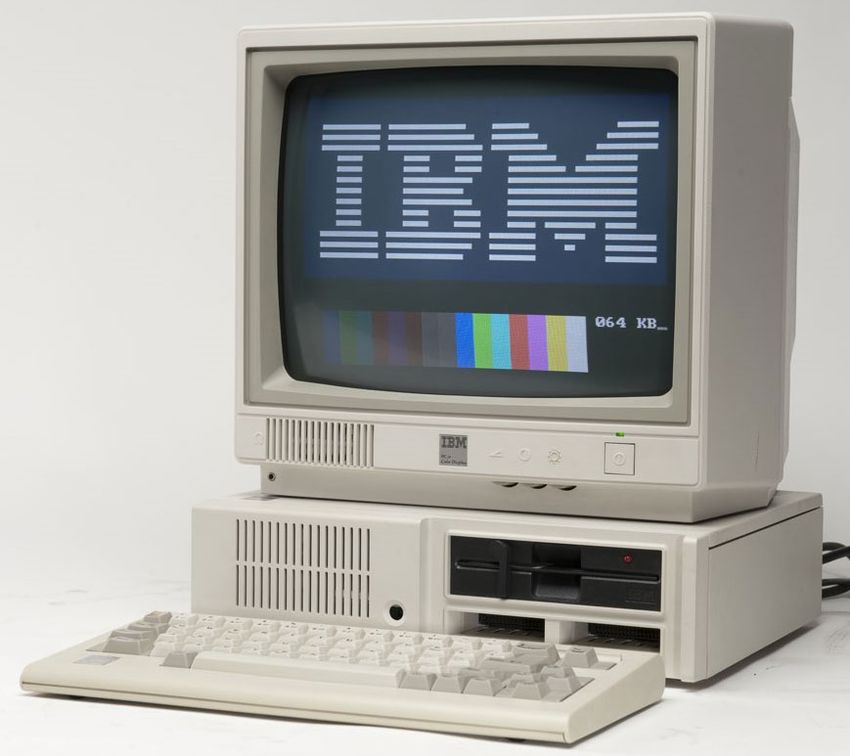
Early PCs

UNIPI BDG 2021-22     Vittore Casarosa – Biblioteche Digitali   RefresherComputers - 30
Evolution of technology
Computer technology
– CPU and integrated chips
– Random Access Memories
• RAM – from KB to GB
– External memories
• Tapes, hard disks, floppy disks
• Memory sticks
• CDs
• DVDs
• from MB to GB to TB to PB to EB
Communication technology (networks)
– (Telephone) line speed
– Point to point (leased lines)
– Local Area Networks
– Inter-networking (TCP/IP)
UNIPI BDG 2021-22 Vittore Casarosa – Biblioteche Digitali RefresherComputers - 31You can also read


