Counseling Techniques Supporting West African Children With Adverse Childhood Experiences: A Systematic Review
←
→
Page content transcription
If your browser does not render page correctly, please read the page content below
SYSTEMATIC REVIEW
                                                                                                                                               published: 07 June 2021
                                                                                                                                        doi: 10.3389/fsoc.2021.573115

                                               Counseling Techniques Supporting
                                               West African Children With Adverse
                                               Childhood Experiences: A Systematic
                                               Review
                                               Shanelle V. Clay*, Cheria Jackson and Quincy Stephenson

                                               Department of Counseling, Psychology, and Special Education, Duquesne University, Pittsburgh, PA, United States

                                               Using a meta-synthesis approach, through the review of current literature, five published
                                               and peer reviewed qualitative research reports were studied. The intention was to
                                               identify interventions being used with West African children who have endured adverse
                                               childhood experiences. These results were found through matching inclusionary criteria
                                               and all studies were screened for appropriateness and relevance to the topic matter.
                                               The literature was analyzed across five online databases including Proquest, PsychInfo,
                                               Scopus, Wiley, and Springer from January 2005 to June 2020. The authors found
                                               minimal evidence indicating interventions used in West Africa for adverse experiences
                                               related specifically to children, but found themes related to interventions that serve
                          Edited by:
                                               West African families that include children. Findings were thematically analyzed through
               Lynne Sanford Koester,          meta-synthesis and identified four themes used in the interventions, which include
 University of Montana, United States
                                               western, spiritual, expressive arts, and cultural approaches. West African children endure
                        Reviewed by:
                                               adverse experiences such as terrorism, abuse, and war violence that contribute to an
                     Yemataw Wondie,
         University of Gondar, Ethiopia        increasing the need for mental health interventions. These experiences approached from
                    Missaye Mengstie,          western, spiritual, expressive arts, and cultural vantage points were identified but limited
         University of Gondar, Ethiopia
                                               in information about delivery and efficacy, thus providing little guidance regarding further
                  *Correspondence:
                     Shanelle V. Clay
                                               exploratory research.
                      clays@duq.edu
                                               Keywords: Western Africa, counseling, children, intervention, techniques, counseling techniques, adverse
                                               childhood adversities
                    Specialty section:
          This article was submitted to
                  Public Mental Health,        INTRODUCTION
                a section of the journal
                  Frontiers in Sociology
                                               Adverse childhood experiences (ACES), can be described as distressing and traumatic involvements
            Received: 16 June 2020             during youth and adolescence such as exposure to abuse (sexual, physical, mental, emotional),
           Accepted: 16 March 2021             introduction to violence, household dysfunction, and separation of family (Kimple and Kansagra,
            Published: 07 June 2021
                                               2018). According to a report conducted by CDC-Kaiser, adverse childhood experiences are
                              Citation:        common across the world with indication of some populations with a higher probability of
              Clay SV, Jackson C and           exposure due to contrary social and economic circumstances (Felitti et al., 1998). The research
     Stephenson Q (2021) Counseling
                                               steered to identifying the adverse childhood experiences on a global perspective, showing an impact
  Techniques Supporting West African
     Children With Adverse Childhood
                                               on socio-emotional learning, cognition, and health status after exposure to trauma. Addressing
   Experiences: A Systematic Review.           the impact of mental health on school-aged children can be beneficial to their learning. Children
              Front. Sociol. 6:573115.         exposed to adverse experiences are found to have a greater negative impact on health status, which
      doi: 10.3389/fsoc.2021.573115            may reduce their lifespan (Herzog and Schmahl, 2018).

Frontiers in Sociology | www.frontiersin.org                                         1                                            June 2021 | Volume 6 | Article 573115
Clay et al. Techniques Supporting West African Children
West African children are exposed to adverse childhood to adverse experiences and children. The purpose was to examine
experiences that are unique in comparison to other parts of the adverse experiences that children in West Africa endure and
the world. An article by Herzog and Schmahl (2018) states, to understand interventions that are used in therapeutic efforts to
malnutrition, exposure to violence through witnessing death of alleviate the effects of those experiences.
family members, committing murder or violent acts as child Adverse experiences can be defined as traumatic exposures to
soldiers, sexual violence, genital mutilation, and war are listed abuse, violence, dysfunction (Kimple and Kansagra, 2018). Using
as potential adverse childhood experiences in West Africa. a three-phase methodology of a key term search, filtering by
In a presentation by Ogunkua et al. (2019), an ACES self- date relevance of January 2005 to June 2020, and content screen
report was completed by teachers in training to reflect their review, the researchers were able to gather data that highlighted
own childhood trauma in Nigeria. The results showed that adverse experiences and interventions that were either used in the
over 66% of the respondents who work in schools reported literature or suggested for the West African population, including
to have at least one adverse childhood experience and one children, for addressing mental health symptoms.
in five of the responders reported having three or more Qualitative research has historically been chosen as the
experiences from a pool of 826 participants. The results highlight preferred research method to recount phenomenological
that West Africans are exposed to many experiences due to perspectives, interpret behavior, and understand cross-cultural
adverse issues such as war, sexual abuse, violence and emotional information (Lazaraton and Taylor, 2007; Rahman, 2017). Rather
neglect (Ogunkua et al., 2019). Children who live through than quantitative investigations of viability, which plan to assess
these experiences would benefit from counseling interventions results regarding outcomes, a qualitative approach offers a more
to regulate socio-emotional learning and reduce other mental in-depth perspective from the participant. Qualitative research
health issues, that can come from these traumatic experiences provides a subjective examination that does not rely on the
such as alcoholism, substance abuse, and other risky behaviors researcher for data; therefore, using a subjective examination
(Kabiru et al., 2010). supports this study in identifying best practices for children
Counseling in indigenous communities, such as West and adolescents in West Africa. Our investigation about clinical
Africa, requires the acknowledgment that modern practices practices used with West African people, provided minimal
are not easily accepted within the community (Levers et al., perspective and no formal model for treatment; therefore,
2011). Articles that address counseling interventions for a subjective examination into the perspective of treatment
adverse childhood experiences in West Africa are limited. by children, adolescents, and families was completed. The
Previous education on traumatic experiences impacting Africa’s information identified through qualitative review may foster
indigenous people primarily focus on South Africa (Jewkes implications for improved care. The key aim of this systematic
et al., 2010), with studies pooled from people in Capetown analysis is to determine the efficacy of interventions for children
and Johannesburg (Felitti et al., 1998). This shortage of in West Africa who have encountered adverse conditions during
mental health data suggests that insight for this sub-group their childhood.
of people is needed; therefore, summoning the necessity for
this article. Database Searches
There was a review of five computer databases: Proquest,
METHODOLOGY PsychInfo, Scopus, Wiley, and Springer. These databases were
searched online using a university sponsored search engine
The primary role of a systematic review of the literature is to and can be found in Table 1 of this article. The database
identify and examine the available research for specific research selection remained limited to these search database due to
queries. Research is inspected using a protocol for retrieval and restriction in application. The searches included key terms
reliability which respond to the scope of the study. It is important to filter down the articles to keep the most relevant and
to have knowledge of indigenous cultures when conducting appropriate articles for review. Beginning the search at African
research in another country. All of the researchers in this counseling techniques (interventions), West Africa, children,
article identify as African American. The research team discussed adverse experiences, qualitative, restricted dates for articles from
cultural implications and potential differences in cultures to January 2005 to June 2020 and excluded any results that were
reduce bias. not from peer reviewed journals. In reviewing this time frame,
The research questions should be identified before completing we are able to see the influx on mental health articles over
the search, as it impacts the entire process for the systematic a range of time impacted by political changes and discovery
review (Wheeler and Richards, 2007). The point of this in mental health. In applying this methodology there were
qualitative study is to introduce a compact diagram of the challenges with initial searches due to lack of results in searching
current writing to respond to the lack of information on West Africa generally. To accurately search for articles that
techniques and interventions used for West Africa’s school-aged apply to West Africa, the researchers also searched the articles
children with adverse childhood experiences. These interventions by each individual country that represents West Africa. These
will include components highlighting the mental, physical, were identified by the Encyclopedia Britannica as the countries
and spiritual component of wellness as it applies to the of Benin, Burkina Faso, Cameroon, Cabo Verde, Chad, Cote
acknowledged population. d’Ivoire, Guinea, The Gambia, Ghana, Guinea, Guinea-Bissau,
The systematic review conducted by the researchers in this Liberia, Mali, Mauritania, Niger, Nigeria, Senegal, Sierra Leone,
analysis focuses literature from January 2005 to June 2020 related and Togo (Britannica, 2019).
Frontiers in Sociology | www.frontiersin.org 2 June 2021 | Volume 6 | Article 573115Clay et al. Techniques Supporting West African Children
TABLE 1 | Database search results.
Psychinfo (2005–2020) Proquest (2005–2020) Springer (2005–2020) Wiley (2005–2020) Scopus (2005–2020) Total
Citations of key term per database
African counseling techniques 413 318 2,542 23,781 1,606 28,978
Western Africa 5 97 2,542 1,838 19 4,498
Children 3 – 2,046 1,090 10 3149
Adverse experiences – 675 570 – 1,245
Total 3 97 675 27,279 1635 29,689
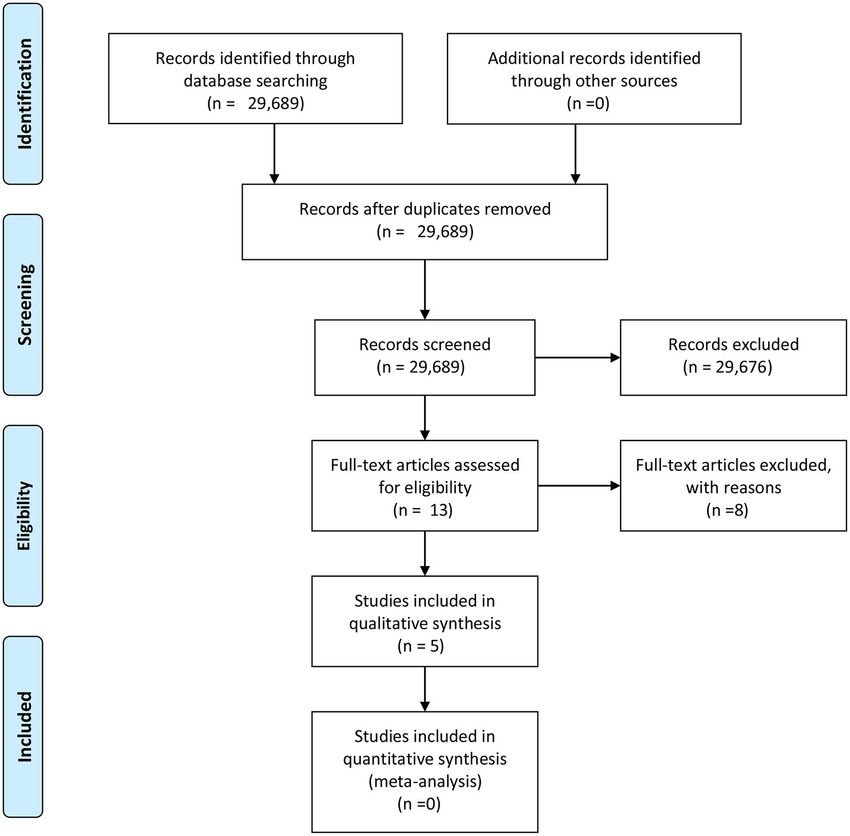
FIGURE 1 | Prisma flow chart for journal findings (Moher et al., 2009).
RESULTS in terms of focus on children and families with children,
leaving eight articles to be removed. After filtering the articles
The researchers restricted the search to qualitative studies for desired population, appropriateness, qualitative factors,
and date ranges of January 2005 to June 2020, to support removing abstracts, keeping articles focused on psychology and
the systematic review needed to assess the current state of child and family studies, the result was five articles that were used
interventions related to adverse experiences with West Africa’s to explain interventions. Descriptive characteristics of the articles
children. Following this algorithm 29,689 articles were identified are in Table 2. Following the article extraction and analysis
as presented in Figure 1 of the PRISMA flow diagram (Moher it was found that the research suggests interventions of use
et al., 2009). Thirteen articles were assessed for eligibility clinically within the West African culture that focus on themes
Frontiers in Sociology | www.frontiersin.org 3 June 2021 | Volume 6 | Article 573115Clay et al. Techniques Supporting West African Children
TABLE 2 | Five journal articles selected between 2005 and 2020 included in systematic review.
Author(s) Year Title Discipline Journal Interventions and Themes
Lo and Dzokoto 2005 Talking to the master: Clinical Mental Journal of Mental Western-style psychotherapy, public health
Intersections of religion, culture, Health Health Counseling education, religious mentoring, The Ideal
and counseling in Taiwan and Master Approach
Ghana Themes: Western Psychotherapy, Spirituality,
Culture
Stepakoff et al. 2006 Trauma Healing in Refugee Psychology The American Stage-oriented model of trauma recovery
Camps in Guinea: A Psychologist (psychodynamic, relational/interpersonal,
Psychosocial Program for cognitive–behavioral, narrative, and
Liberian and Sierra Leonean expressive/humanistic psychotherapies),
Survivors of Torture and War affect-laden experiences in words or other
symbolic forms (e.g., drawings, drama, songs).
Themes: Western Psychotherapy, Expressive
Arts
Weine 2011 Developing preventive mental Family Family Process Resilience approach, community collaboration,
health interventions for refugee Studies/Psychology Mixed Methods With Epidemiology, and
families in resettlement Focused Ethnography
Preventative mental health interventions
(Feasibility, Acceptability, Culturally Tailored,
Multilevel, Time Focused, Prosaicness,
Effectiveness, and Adaptability) Social Support,
Peer Groups
Themes: Western Psychotherapy
Asagba 2015 Developing logotherapeutic Psychology Gender and Frankl mountain range, Long’s logotherapeutic
strategies as effective Behavior transcendent crisis intervention
interventions for victims of sexual 3-step model as logohint or logohooks for
assault managing of the sexual assault victims
Themes: Expressive Arts
Ebigbo et al. 2017 Cross cutting issues in the Clinical Journal of Prayer houses, traditional healers, Harmony
practice of psychotherapy in Psychology Contemporary Restoration Therapy and Meseron treatment
Nigeria Psychotherapy frameworks, cosmogram. Wawa-Technique,
Culture Centered Psychotherapy
Themes: Spirituality, Culture
surrounding spirituality, culture, expressive arts, and Western therapy. The spirits provide a sense of consciousness and
approaches to psychotherapy. guidance of morally accepted ideals. The prayer houses are a
popular place to reduce stress and identify aspects of hope
Spiritual in times of adversity. Prayers serve as meditation and instant
The introduction of modern counseling practices for gratification because those who appear at these prayer houses
indigenous communities requires cultural competency serve as each other’s support with the guidance of a priest. This
and knowledge of their world view. Traditional African act is like group counseling with a facilitator. Traditional healers
culture emphasizes great respect for and wisdom in their are the preferred facilitators of these healing groups fostered in
community leaders such as village chiefs, elders, traditional the prayer houses.
healers, and ancestors. It is to them that one goes for Ebigbo’s Harmony Restoration Therapy acknowledges the
guidance, direction, and atonement; therefore, these are importance of spirituality in the healing techniques of the
their “counselors” (Levers et al., 2011). Although many Igbo people by identifying the need for mending and healing
of the interventions practiced by traditional healers may amongst one’s own self and one’s relationships with others
not be applicable to children, children and adolescents are (Ebigbo et al., 2017).
influenced by these healers due to the nature and culture A qualitative study by Lo and Dzokoto (2005), recognized
of their environment and influence on the family (Lo and the importance of acknowledging spirituality and the balance
Dzokoto, 2005). The extracted articles identify the importance of technique as it applies to counseling. This study provides
of indigenous psychological practices from a spiritual and implications of interventions used with Ghanaian clients with
creative lens. the counseling framework of the approach of the Ideal
Two of the extracted articles indicated that spirituality was Master (IM). Approaches used by the Ideal Master identify
a preferred counseling intervention for children in West Africa ways to manage stress through reduction of anxiety, positive
who have had adverse childhood experiences. Ebigbo et al. (2017) self-talk, and prayer, and are unified to eliminate cognitive
qualitative study acknowledges the importance of spirits—use distortion due to traumatic experiences, such as genital shrinking
of traditional healers—and prayer houses as interventions for (Lo and Dzokoto, 2005).
Frontiers in Sociology | www.frontiersin.org 4 June 2021 | Volume 6 | Article 573115Clay et al. Techniques Supporting West African Children
Culture culture based and innate to West Africans, enabling them to
The foundation of African society includes the identity of the reach beyond their individual selves.
family and community. Meseron Therapy is a psychotherapeutic method that is native
People are viewed as a section of their natural setting and are to Nigeria based on the language and culture of Nigerians.
closely meshed in the practices and beliefs through experience Maseron equates to “I refuse.” It focuses on the assumptions that
and education from family (Kamya, 1997). The incorporation an individual’s decisions hold consequences that are inevitable,
of culture into the application of treatment interventions for as well as that individuals have the capacity to change their
West Africa’s community members, including children, creates condition by working on themselves (Awaritefe, 1995). In
an experience that is unique to individuals within a regional Meseron treatment an individual detaches themselves from
area. As previously mentioned the Ideal Master not only uses negativity and actively embraces and surrounds themselves with
spirituality but culture as well to facilitate interventions. The positive things (Ebigbo et al., 2017). In Meseron, the therapist
Ideal Master (IM) is a counselor who is knowledgeable and aware assists the client in moving to a place that promotes the strength
of cultural values, religious beliefs, and Western Counseling to refuse actions and be self-motivated and determined to
theories (Lo and Dzokoto, 2005). They are able to process overcome their illness. The goal is to encourage the awakening of
the importance of culture and religion in the worldview of the client to think about their situation, use mobilization of their
the client. IMs integrate all three previously mentioned factors resources to change their situation, and assist in symptom relief
to understand and encourage mental health wellness. IM is or termination of the unwanted condition of the client (Ebigbo
not easily achieved in practice, as incorporating cultural and et al., 2017).
spiritual factors with Western trained counselors may be a Cosmograms are used in therapy to create interview maps
difficult task for more native clients (Lo and Dzokoto, 2005). of the areas of important relationships and to display the levels
Western trained counselors should be aware of the cultural of harmony or disharmony within them (Ebigbo et al., 2017).
and spiritual norms in the client’s native community. In With the purpose of restoration, a cosmogram maps out all
understanding the norms, this assists the counselor in processing the relationships that are important to the individual. Using
problems and developing conceptualizations more effectively detailed psychological exploration that focuses on the sources
and appropriately. Counselors should also know how a client of belief systems and usual relationships in West Africa, such
engages in cultural and spiritual practices as it applies to their as immediate and extended family, a cosmogram illustrates the
life. Counselors should consult where appropriate to increase client’s belief systems and any discourse within the relationships
their cultural and religious knowledge (Lo and Dzokoto, 2005). (Ebigbo et al., 2017). These are used to discover the functional
Lastly, IM counselors should be considerate of the various social and non-functional relationships and how they relate to each
identities a client may have in avoiding generalization based upon other, understand if there are any breaches of promises or
one factor of their identity. Differences in history and personality oaths within the relationships as well as identifying successes
as well as sexual orientation, physical ability, gender, socio- and failures. Tangible components of the client’s life that are of
economic status, and age contribute to individuals’ experiences value are also explored. In evaluating these components of the
and should be considerations in assessment and intervention client’s life the client should have a fair understanding of the
development and application (Lo and Dzokoto, 2005). relationships that interact with their life and encourage the family
Other interventions steeped in culture include culture to process their relationships (Ebigbo and Onuora, 1987). This is
centered psychotherapy in the form of Harmony Restoration usually observed by a Harmony Restoration Therapist to protect
Therapy, Meseron treatment frameworks, cosmogram, and the from superstitious, exploitative religious and traditional healers
Wawa Technique (Ebigbo et al., 2017). Human Restoration (Ebigbo et al., 2017). The Harmony Restoration Measurement
Therapy (HRT), is based on African culture and used in Nigeria. Scale is used as an objective psychometric measure of the cosmos
It is the concept of belief in supernatural forces, expectations and can be used interchangeably with the cosmogram (Ebigbo
of supernatural punishment, belief in symbols, tribal legends et al., 2010).
and mythological concepts, affective activity in everyday life, Lastly the Wawa Technique, also derived from Nigerian
identification with cultural group, decreased ego boundaries, culture, prompts the client to say Wa (no) to an issue that is
ancestor worship, belief in dream life as a reality, belief in against moral order or the well-being of the individual (Ebigbo
idealized good objects, use of symbols and grand religious belief et al., 1997). It is used to build willpower in clients to refuse
(Ebigbo et al., 2017). HRT focuses on the relationship between something that is against moral order and demonstrates wisdom
humans, spirits, gods, and the Almighty God as a part of the and good cultural orientation. Proverbs are also used to help to
sanity of Africans. It is a holistic view that incorporates ancestors, establish moral order and are grounded in cultural, traditional,
spirits and nature and focuses on the relationships that an and religious beliefs (Ebigbo et al., 2017).
individual has with these entities. If there is discourse in those The goal of the Wawa Technique is to make the client
relationships the wellness and health will not be well for the cognizant and detest the consequences of poor behavior,
person until the relationships are mended (Ebigbo et al., 2017). problematic thinking, or depression that is coupled by external
Harmony Restoration Theory acknowledges that there is a mind, pressures. It can also be used in combination with a behavior
body, society, psychosocial, and environmental thread that is chart to monitor adherence in treatment (Ebigbo et al., 2012).
Frontiers in Sociology | www.frontiersin.org 5 June 2021 | Volume 6 | Article 573115Clay et al. Techniques Supporting West African Children
Expressive Arts In 2005 the Center for Victims of Torture concluded their
Two studies identified interventions that included artistic support and mental health treatment for Liberian and Sierra
expression as best practices for counseling West African children. Leonian survivors of civil war (Stepakoff et al., 2006). The quest
Narration and storytelling are recognized in the qualitative study was identified as the Guinea project. A stage-oriented model
by Asagba (2015) using Long’s logotherapeutic intervention 3- of trauma recovery was used to guide their treatment. Trauma
step model. The storytelling aspect of this model provides hope specialist and American psychiatrist, Dr. Judith Herman’s
and promise to sexual assault victims through the identification trauma approach provided the most influence of the model
of rebirth using symbols such as butterflies. This article also (Herman, 2015). The three phases of her model are safety and
provides other expressive art therapeutic forms such as Frankls stabilization, processing traumatic memories, and the process of
Mountain, which identifies the challenges they have come to face resolution and recovery (Herman, 2015). The treatment team
due to their assault and encourages forgiveness as a tool to heal used approaches that are like community and group counseling
(Asagba, 2015). in western approaches of mental health treatment. The results
A study by Stepakoff (2016), evaluates trauma-informed indicated a decrease in trauma symptoms for participants and
practices for those West African survivors of torture and an increase of positive daily function and use of social support.
war. The stage-model of trauma and recovery includes a wide The team provided counseling to over 4,000 clients and provided
range of affect-laden experiences that encourage expressive arts support to at least 15,000 people by delivering supportive services
as a technique to healing. Use of symbolism in forms of (Stepakoff et al., 2006).
drawing, drama, song, and other forms of communicative habits The Guinea team’s initial objective was to establish trust
encourages resilience and hope. Children who have endured and to promote safety. This was initiated by providing the
traumatic experiences through torture such as mutilation and nature and limitations of their treatment. This is parallel
witnessing of killings, use these therapeutic methods to provide to providing consent of treatment. Clients were encouraged
them a voice to speak without consequences. The countenance to establish ground rules and expectations. Confidentiality
of the client requires the rapport to be built with the counselor, and respect were promoted among the group members and
and trust established to promote the freedom to process through the team. Group members were encouraged to get to know
expression (Stepakoff, 2016). about other group members. This initial stage of treatment
is very similar to western approaches; however, there are
Western Psychotherapeutic Approaches some significant differences that the Guinea team promoted
Western approaches to psychological treatment are being used to establish safety among group members. Group members
in West Africa. Lo and Dzokoto (2005), suggested that it is were encouraged to spend time together outside of the group
important to critically examine the use of western interventions sessions. In addition, group members were not encouraged
due to their rise in popularity and use. In their examination, to share their trauma story at the beginning of treatment.
Lo and Dzokoto (2005), the use of western style interventions Clients were encouraged to share what their lives were like
and the appropriate nature of these counseling methods in before they experienced the trauma of war (Stepakoff et al.,
non-western countries was explored for cultural sensitivity and 2006).
best practice. A common approach between Ghana and the Cognitive therapy is another western approach that was
United States is the use of talk therapy. Both countries use consistently used in this treatment. The team noticed that clients
psychiatrists and psychologists. Clients receive treatment based struggled with negative self-talk and made negative statements
on a mental health diagnosis and can seek both inpatient that were not accurate in accordance to reality. Positive self-talk
and outpatient support. However, there are significant cultural and positive reframes were encouraged in a cultural manner.
differences in the use of western approaches to treatment. In The team encouraged group members to practice positive self-
Ghana, the psychologist is perceived to be more of an expert on talk within the group along with facilitators. They noticed
mental health than a psychiatrist due their perceived ability to that their approach to positive self-talk represented cultural
better understand human behavior (Lo and Dzokoto, 2005). significance for the clients. Ultimately clients of various ages
The use of mental health counseling is not limited to only expressed appreciation for the services provided (Stepakoff et al.,
psychiatrists and psychologists in Ghana. Similar to western 2006).
approaches to community counseling, they also have school
counselors, religious counselors, and public health educators
(Lo and Dzokoto, 2005). Similar to the United States (U.S.), DISCUSSION
counseling services are becoming more socially acceptable in
Ghana. An integrative approach is used to allow services to work In reviewing counseling interventions best appropriate for
together for a preventive approach to mental health. In contrast children and adolescents of West African descent, exploration of
to the United States, Ghana has remained true to their culture best practices is still a necessity. In the five articles included in this
by using traditional healers to support mental health (Lo and manuscript, children and adolescents’ counseling interventions
Dzokoto, 2005). Although this is a difference in approach, the use were identified for treatment of various mental health illness
of multiculturalism is becoming more important in the U.S. and specific to West African culture and experiences.
around the world to provide a more holistic approach to mental While examining existing data on counseling techniques
health treatment. used with children, research identifying traditional healers and
Frontiers in Sociology | www.frontiersin.org 6 June 2021 | Volume 6 | Article 573115Clay et al. Techniques Supporting West African Children
spiritual practices were reported to be used to cast out demonic is limited research concerning specific interventions and
behaviors or witchcraft (Yoder et al., 2016). The presence of experiences with children. Findings on counseling practices
the traditional healers is limited in the literature and does not were more prevalent in other parts of the continent such
elaborate on their role as a holistic healer for mental health. as South Africa (Myers et al., 2019); therefore, review of
When discussing spirituality, both the Ebigbo et al. (2017) practices in West Africa was deemed to be important for this
article and the Lo and Dzokoto (2005) article highlighted the manuscript. The articles presented a community counseling
presence of a spiritual leader such as a priest, Ideal Master approach to treatment. Talk therapy, group counseling, consent,
or traditional healer to help the client with stress and anxiety confidentiality, cognitive therapy, and multiculturalism, are all
reduction, and prayer to assist in reducing the experiences themes that were identified that are like western styles of
of trauma. The Ideal Master is also mentioned by Lo and treatment. However, culture and spirituality are the primary
Dzokoto (2005) regarding cultural related interventions. The Lo differences that separate how treatment is uniquely presented
and Dzokoto (2005) article discusses the inclusion of cultural and received in West Africa. In reference to culture, human
values in delivering spiritual and western approaches and behavior is valued at a high level; therefore, the psychologist is
interventions to clients. Increased knowledge of culture and its viewed as more of an expert than is a psychiatrist, who may offer
life application for the client increases processing of problems a more medically based approach. In reference to spirituality,
and conceptualizations with more context and accuracy (Lo traditional healers are still viewed as a source of support for
and Dzokoto, 2005). During the review of the Ideal Masters mental health.
as a cultural intervention tool, other cultural interventions
such as Harmony Restoration Therapy, Meseron Treatment, CONCLUSION
cosmograms, and the Wawa Technique are also identified in
the Ebigbo et al. (2017) article. These interventions align with Political instability, war violence, terrorism, chronic illness,
elements of West African culture. Cultural interventions that and abuse are themes that were identified in the reviewed
include the value of relationships, symbols, and language create articles as adverse child experiences that place children
opportunities to address adversities in a connecting experience at a high risk for mental health needs in West Africa.
that emphasizes shared practices and belief. For expressive The trauma associated with these situations is treated
arts, two articles found produced interventions that use oral from a mixture of spiritual, cultural, expressive arts, and
communication and symbolism for healing. Counselors working western style approaches that are related to the culture of
with clients who have experienced traumatic experiences such the region.
as sexual abuse or physical abuse may use expressive arts in
their sessions. Research from older journals avoid discussion IMPLICATIONS FOR FUTURE RESEARCH
of traditional techniques to therapy due to holistic beliefs
regarding healing. Techniques that incorporate holistic practices Mental health awareness and the need for support of children
through creative skill and application are neglected such as concerning mental health are growing in West Africa. A gap
expressive arts (Bulus, 1989). Asagba (2015) discusses the use in research that was revealed in the review of these articles was
of storytelling through symbolism to identify challenges and the lack of psychotherapeutic interventions designed specifically
encourage forgiveness and rebirth, and Stepakoff et al. (2006) for children. The research suggested that children are being
uses symbolism in the form of song, drawings and other exposed to adverse childhood experiences and severe trauma;
methods as a means of expression to lead toward healing— however, there does not appear to be a universal approach or
thus, there is a common thread between these two sources. agreement regarding best practices for children. This gap in
Lastly, Western psychotherapeutic approaches were presented research can serve as an opportunity to further explore specific
throughout the articles of Lo and Dzokoto (2005), Stepakoff interventions tailored to the needs of children in West Africa
et al. (2006), and Herman (2015) in an integrated approach and to establish best practices for mental health interventions in
to understanding the experience of West African families and the region.
children. Interventions delivered to West African communities
such as stage-oriented model of recovery, trauma recovery, and
group counseling incorporated culture appropriation. Health AUTHOR CONTRIBUTIONS
professionals such as psychologists, traditional healers, religious
and school counselors, and health educators are encouraged to SC completed abstract, designed the model and the
use this approach. computational framework, and analyzed the data. SC, CJ, and QS
There is growing research and literature on western wrote the manuscript and carried out the implementation of the
approaches to mental health in West Africa; however, there search and study.
Frontiers in Sociology | www.frontiersin.org 7 June 2021 | Volume 6 | Article 573115Clay et al. Techniques Supporting West African Children
REFERENCES Levers, L. L., May, M., and Vogel, G. (2011). “Research on counseling
in African settings,” in Counseling People of African Ancestry, ed
Asagba, R. B. (2015). Developing logotherapeutic strategies as effective E. Mpofu (Cambridge, MA: Cambridge University Press), 57–74.
interventions for victims of sexual assault. Gender Behav. 13, 6795–6802. doi: 10.1017/CBO9780511977350.007
Awaritefe, A. (1995). Meseron Therapy: The Practice of Psychotherapy in Africa. Lo, H. W., and Dzokoto, V. (2005). Talking to the master: intersections of religion,
Enugu: Chukka. culture, and counseling in Taiwan and Ghana. J. Ment. Health Counsel. 27,
Britannica, E. (2019) Western Africa. In Encyclopaedia Britannica. Retrieved from: 117–128. doi: 10.17744/mehc.27.2.gx7d7thlvgkju4pd
https://www.britannica.com/place/western-Africa/The-wider-influence-of- Moher, D., Liberati, A., Tezlaff, J., Altman, D. G., and PRISMA Group. (2009).
the-Sudanic-kingdoms (accessed June 12, 2020). Preferred reporting items for systematic reviews and meta-analyses: the
Bulus, I. (1989). Towards a traditional model for school counselling and care in PRISMA statement. PLoS Med 6:e1000097. doi: 10.1371/journal.pmed.10
Nigeria. Int. J. Adv. Counsell. 12, 105–112. doi: 10.1007/BF00117208 00097
Ebigbo, P. O., Elekwachi, C. L., John, E. E., Nweze, F. C., and Innocent, Myers, B., Carney, T., Browne, F. A., and Wechsberg, W. M. (2019). A trauma-
C. U. (2010). Development of the harmony restoration measurement scale informed substance use and sexual risk reduction intervention for young
(Cosmogram) Part 1. Niger. J. Clin. Psychol. 8, 25–49. South African women: a mixed-methods feasibility study. BMJ Open 9:e024776.
Ebigbo, P. O., Elekwachi, C. L., and Nweze, F. C. (2012). Challenges in doi: 10.1136/bmjopen-2018-024776
the treatment of drug abuse in a Nigerian health worker: a case study Ogunkua,B., Okunkua, L., Ricard-Pognon,P., and Ofoche,U. (2019). “ACE
applying the WaWa technique. J. Contemp. Psychother. 42, 257–264. surveillance study of teachers and administrators in public and private schools
doi: 10.1007/s10879-012-9213-9 in Southwest Nigeria, West Africa,” in Paper presented at the Child Trauma
Ebigbo, P. O., Elekwachi, C. L., and Nweze, F. C. (2017). Cross cutting issues in Conference (Lagos).
the practice of psychotherapy in Nigeria. J. Contemp. Psychother. 47, 75–86. Rahman, M. S. (2017). The advantages and disadvantages of using qualitative
doi: 10.1007/s10879-016-9356-1 and quantitative approaches and methods in language “Testing and
Ebigbo, P. O., Oluka, J. G., Udeoke, B., and Okwaraji, F. (1997). Wawa Technique Assessment” research: a literature review. J. Educ. Learn. 6, 102–112.
in Harmony Restoration Therapy: An African psychiatric perspective. Medikka doi: 10.5539/jel.v6n1p102
Int. J. Univ. Niger. Med. Stud. 5, 5–11. Stepakoff, S. (2016). The healing power of symbolization in the aftermath
Ebigbo, P. O., and Onuora, A. N. (1987). A model of understanding and treatment of massive war atrocities: examples from liberian and sierra leonean
of paranoia in Nigeria. Psychosom. Med. Psychoanal. 38, 78–90. survivors - shanee stepakoff, 2007. J. Humanist. Psychol. 47, 400–412.
Felitti, V. J., Anda, R. F., Nordenberg, D., Williamson, D. F., Spitz, A. M., doi: 10.1177/0022167807301787
Edwards, V., et al. (1998). Relationship of childhood abuse and household Stepakoff, S., Hubbard, J., Katoh, M., Falk, E., Mikulu, J. B., Nkhoma, P., et al.
dysfunction to many of the leading causes of death in adults: the adverse (2006). Trauma healing in refugee camps in guinea: a psychosocial program
childhood experiences (ACE) study. Am. J. Prev. Med. 14, 245–258. for liberian and sierra leonean survivors of torture and war. Am. Psychol. 61,
doi: 10.1016/S0749-3797(98)00017-8 921–932. doi: 10.1037/0003-066X.61.8.921
Herman, J. L. (2015). Trauma and Recovery: The Aftermath of Violence–From Wheeler, S., and Richards, K. (2007). The impact of clinical supervision
Domestic Abuse to Political Terror. Hachette UK; New York, NY. on counsellors and therapists, their practice and their clients. A
Herzog, J. I., and Schmahl, C. (2018). Adverse childhood experiences and the systematic review of the literature. Counsell. Psychother. Res. 7, 54–65.
consequences on neurobiological, psychosocial, and somatic conditions across doi: 10.1080/14733140601185274
the lifespan. Front. psychiatry 9:420. doi: 10.3389/fpsyt.2018.00420 Yoder, H., Tol, W. A., Reis, R., and Joop, T. V. M., de,Jong. (2016). Child
Jewkes, R. K., Dunkle, K., Nduna, M., Jama, P. N., and Puren, A. (2010). mental health in sierra leone: a survey and exploratory qualitative
Associations between childhood adversity and depression, substance abuse and study. Int. J. Ment. Health Syst. 10:48. doi: 10.1186/s13033-016-
HIV and HSV2 incident infections in rural South African youth. Child Abuse 0080-8
Negl. 34, 833–841. doi: 10.1016/j.chiabu.2010.05.002
Kabiru, C. W., Beguy, D., Crichton, J., and Ezeh, A. C. (2010). Self-reported Conflict of Interest: The authors declare that the research was conducted in the
drunkenness among adolescents in four sub-Saharan African countries: absence of any commercial or financial relationships that could be construed as a
associations with adverse childhood experiences. Child Adolesc. Psychiatry potential conflict of interest.
Ment. Health 4:17. doi: 10.1186/1753-2000-4-17
Kamya, H. A. (1997). African immigrants in the United States: the challenge for Copyright © 2021 Clay, Jackson and Stephenson. This is an open-access article
research and practice. Soc. Work 42, 154–165. doi: 10.1093/sw/42.2.154 distributed under the terms of the Creative Commons Attribution License (CC BY).
Kimple, K. S., and Kansagra, S. M. (2018). Responding to adverse childhood The use, distribution or reproduction in other forums is permitted, provided the
experiences it takes a village. N. C. Med. J. 79, 95–98. doi: 10.18043/ncm.79.2.95 original author(s) and the copyright owner(s) are credited and that the original
Lazaraton, A., and Taylor, L. (2007). “Qualitative research methods in language test publication in this journal is cited, in accordance with accepted academic practice.
development and validation,” in Language Testing Reconsidered (Ottawa, ON: No use, distribution or reproduction is permitted which does not comply with these
University of Ottawa Press), 113–129. doi: 10.2307/j.ctt1ckpccf.12 terms.
Frontiers in Sociology | www.frontiersin.org 8 June 2021 | Volume 6 | Article 573115You can also read


