Course Readings and Information Source Credibility: Increasing Student Familiarity with University Extension and Government Publications - Colby ...
←
→
Page content transcription
If your browser does not render page correctly, please read the page content below
Course Readings and Information Source Credibility:
Increasing Student Familiarity with University Extension
             and Government Publications
             Colby Moorberg, PhD, CPSS
                   @ColbyDigsSoil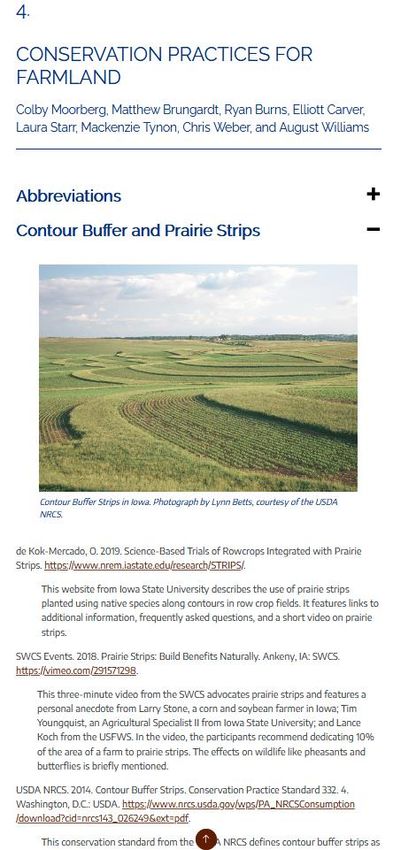
Outline
• The course
• Textbook options and decision
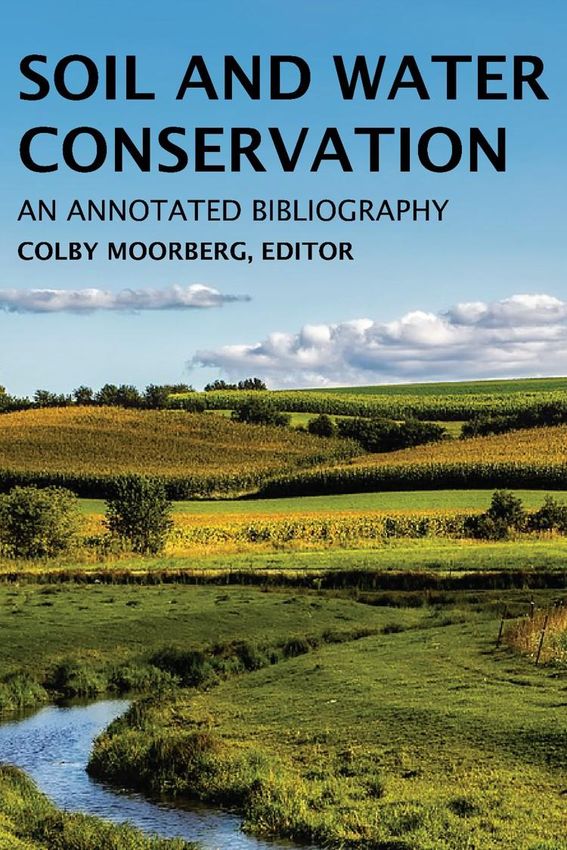
• Overview of Soil and Water Conservation: An Annotated
  Bibliography
• Strategies for assigned readings and effective discussion
• Overview of an ongoing study examining student perception of
  information source credibility
• Conclusions
• Open discussion
 2
The Course and Context
AGRON 635 – Soil and Water Conservation
• Upper level undergraduate/lower level
  graduate course
• Students were buying but not reading
  the textbook
• Needed a new options for readings
• Wanted to flip the classroom

3
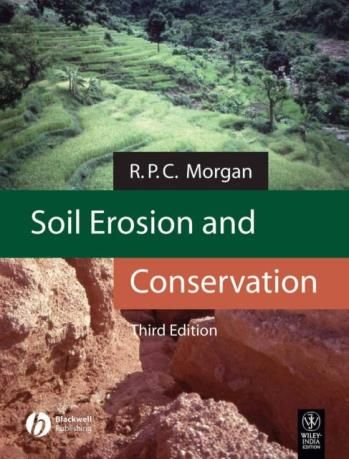
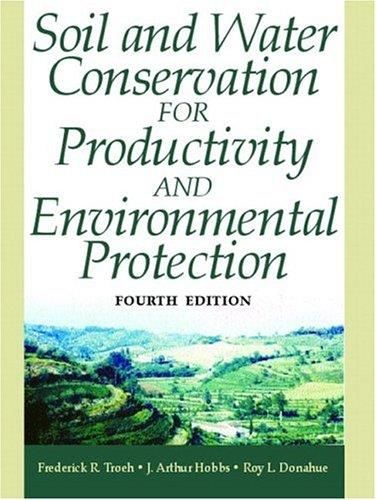
Textbook Options

4
The Decision
• Create a collection of free online resources
     –   Extension publications
     –   Gov. publications, reports, and fact sheets
     –   NGO publications
     –   Other free educational resources
• This approach
     – Exposes students to credible information sources
     – Facilitates student contribution to textbook
       development
• Research Questions
     – Does using this annotated bibliography change student
       perceptions of information source credibility?
     – Does exposure to extension and government
       publications train students to seek them out?
 5
Soil and Water Conservation: An
      Annotated Bibliography
• Published in Dec. 2019 by New Prairie Press
• Available formats:
     –   PDF
     –   MOBI (Kindle)
     –   EPUB
     –   Web book
• Optimized for accessibility
• 13 chapters
• >700 citations
 6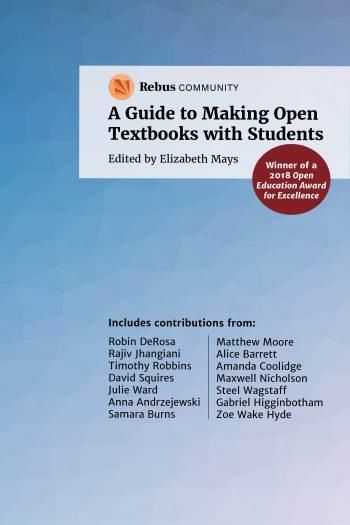
Strategies for Effective Discussion
• Communicating reading assignments to students
• Accountability for assigned readings
     – Participation was 15% of overall grade
     – Students called on by name and asked specific questions
• Student-led discussions
     – Each student led two discussions
         • One on a conservation practice
         • One on a government agency/policy
     – I made comments and asked questions to fill in gaps
     – I took notes on the board to highlight important points
 7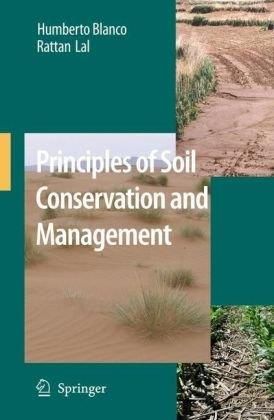
OER-Enabled Pedagogy
•       Annotated bibliography submissions were included
        in the textbook with written permission (MOU)
•       Students selected their topics
•       Students taught how to:
         – Search for relevant content
         – Evaluate credibility of content
         – Cite resources using Zotero
•       Biggest concern – being explicitly identified as the
        creators
         –   Concerns alleviated by the editing process
•       More content is added by students each year

    8
Student Perceptions of Information Source Credibility
• Hypothesis
– Regular exposure to extension and government publications through
reading assignments from an open annotated bibliography will
increase students’ perceived credibility of these types of information
sources relative to other types
9Extension and Government Publications
• Concise and written for a general
audience
• Prevalent in soil and water
conservation discipline
• Written by credible professionals
• Usually have a review process
• Rarely openly licensed
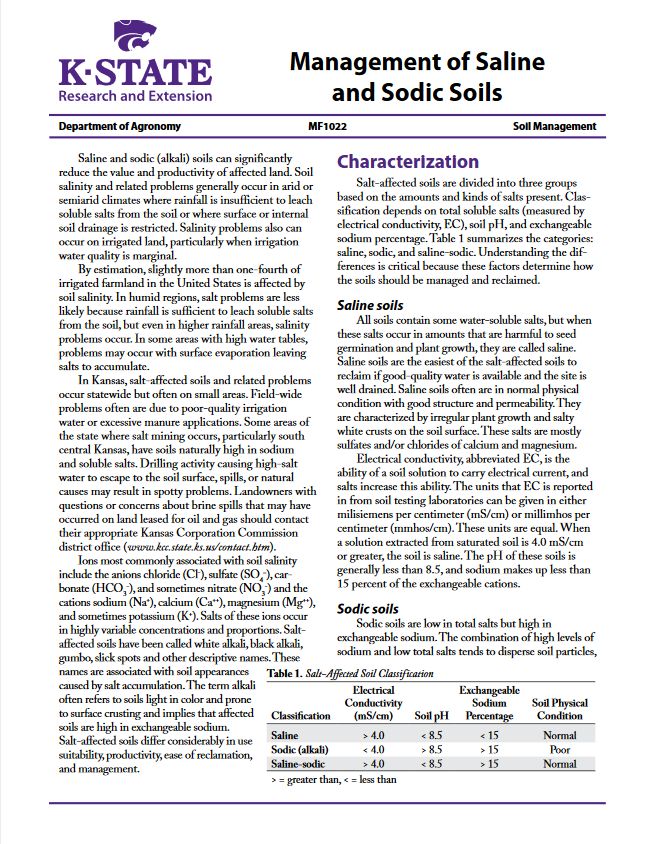
(Ruiz Diaz and Pressley, 2017)
10Survey Methods
• Surveys conducted in first & last week of semester
• Seven participating universities
School Course Frequency Annual 2021-2022
Enrollment Enrollment
CSES 580 – Soil Resources
Auburn University (AU) Once per year 15 30
and Conservation
AGRI 4220/5220 - Soil and
Austin Peay State University (APSU) Once every two years 24 24
Water Conservation
PSSC 356 - Soil Quality and
California State University Chico (CSU Chico) Once per year 48 96
Health
Soil 321 - Soil Management and
Dickinson State University (DSU) Once every two years 12 12
Conservation
AGRI 625 - Soil and Water
Fort Hays State University (FHSU) Once per year 18 36
Management
AGRON 635 - Soil and Water
Kansas State University (KSU) Once per year 12 24
Conservation
Total: 222
11Survey Methods
• Conducted online using Qualtrics
• Anonymous, but includes questions on
demographics
• Focuses on 15 information types
• Students are asked to, “Please rate
how you perceive the credibility of
____________.”
A. Not credible
B. Somewhat credible
C. Credible
D. Very credible
E. Extremely credible
12Survey Methods
• “Which of the following types of
information sources do you actively
seek out during an initial search for
information?”
• “Which of the following types of
information sources do you prefer to
cite in papers and other writing
assignments?”
• “Which of the following information
types do you actively avoid or ignore?
Select all that apply.”
13What’s Next?
• Study is ongoing
– Spring 2021 to fall 2022
• I’ll present results at a future TLC discussion
14More Information • Download a copy of Soil and Water Conservation: An Annotated Bibliography (Moorberg, 2019): https://newprairiepress.org/ebooks/30/ • Read it online: https://kstatelibraries.pressbooks.pub/soilandwater/ • Read the published case study (Moorberg, 2020b): https://doi.org/10.1002/nse2.20014 • Watch a lightning talk on the case study (Moorberg, 2020a): https://www.youtube.com/watch?v=FDuSZ5tpnsc&feature=youtu.be 15
Acknowledgements                         References
                                   Blanco-Canqui, H., and R. Lal. 2008. Principles of Soil Conservation and
• Funding provided by              Management. New York: Springer Netherlands.
                                   Mays, E. E. 2017. A Guide to Making Open Textbooks with Students. The
     – APLU Innovative Teaching    Rebus Community for Open Textbook Creation.
                                   https://press.rebus.community/makingopentextbookswithstudents/.
       Award
                                   Morgan, R. P. C. 2005. Soil Erosion and Conservation. Essex, England :
     – K-State Open/Alternative    New York, NY: Longman Scientific & Technical ; Wiley.

       Textbook Initiative         Moorberg, C. 2019. Soil and Water Conservation: An Annotated
                                   Bibliography. Manhattan, KS: New Prairie Press.
     – K-State Open Textbook Fee   https://newprairiepress.org/ebooks/30.
                                   Moorberg, C. 2020a. An open annotated bibliography case study. Open
                                   Education Conference. November 9, 2020.
                                   https://opened20.sched.com/event/fHYU.
                                   Moorberg, C. J. 2020b. An open annotated bibliography for soil and water
Contact Information                conservation: A case study. Natural Sciences Education 49(1):e20014.
                                   https://doi.org/10.1002/nse2.20014.

• moorberg@ksu.edu                 Ruiz Diaz, D., and D. Pressley. 2017. Management of Saline and Sodic
                                   Soils. 4. Manhattan, KS: Kansas State University Agricultural Experiment
                                   Station and Cooperative Extension Service.
• @ColbyDigsSoil                   https://www.bookstore.ksre.k-
                                   state.edu/Item.aspx?catId=364&pubId=525.
                                   Troeh, F. R., J. A. Hobbs, and R. L. Donahue. 2003. Soil and Water
                                   Conservation for Productivity and Environmental Protection. Fourth
16                                 Edition. Upper Saddle River, N.J: Prentice Hall.
Questions
• Questions for me
• Questions for you
– What strategies do you use to engage students in assigned readings?
– How do you teach students to seek credible information sources?
17You can also read


