COVID-19 in humanitarian contexts: no excuses to leave persons with disabilities behind! - Evidence from HI's operations in humanitarian settings ...
←
→
Page content transcription
If your browser does not render page correctly, please read the page content below
Study
June 2020

COVID-19 in humanitarian contexts: no excuses
to leave persons with disabilities behind!
Evidence from HI's operations in humanitarian settings
Acknowledgements
In the midst of an unprecedented global health crisis, this report was only made possible
thanks to the dedication of colleagues and partners, who collected data and testimonies in
the different countries of intervention. Our heartfelt thanks to all the colleagues, partners
and persons with disabilities who shared their testimonies and insights with us.

Table of Contents
Method & Limitations............................................................................................... 4

I. COVID-19: Persons with disabilities face exacerbated barriers.............. 5
1.1 Persons with disabilities face inaccessible environments and barriers to information hindering their               5
ability to protect themselves and stay healthy

1.2 Negative perceptions and stigma against persons with disabilities impact their safety and access to                6
health, protection and livelihood services

II. Spotlight on the growing needs of persons with disabilities in
humanitarian crises.................................................................................................   7
2.1 Persons with disabilities face higher health risks                                                                 7
2.2 Persons with disabilities, especially women and displaced persons, are more exposed to economic                    9
shock

2.3. Preventive measures often do not take into account particular needs of persons with disabilities and 11
negatively impact their safety, physical and psychological wellbeing

2.4. Persons with disabilities and their caregivers, particularly women and children with disabilities, face           12
heightened protection risks such as abuse or violence

III. Recommendations towards an inclusive humanitarian response.......                                                 14
This collection and review of evidence aims                “Daily workers and those with
to illustrate how the COVID-19 crisis triggers
                                                           temporary contracts have lost their
disproportionate risks and barriers for men,
women, boys and girls with disabilities                    source of income. This creates a lot
living in humanitarian settings. It highlights             of distress as they do not know how
recommendations for humanitarian actors, to                to support their families or buy their
enhance inclusive action, aligned with existing
                                                           medications.”
guidance and learnings on disability inclusion. It is
based on evidence, including testimonies, collected     While persons with disabilities are estimated
by HI programs in 19 countries of intervention.         to represent 15% of the world’s population,(1)
Special efforts were made to reflect the voices of      in countries where conflicts and humanitarian
persons with different types of disabilities, genders   crises are ongoing, these figures may be much
and ages, residing in different geographical areas      higher. In Syria for instance, this figure doubles
and living circumstances, including refugee and         as the latest estimates show that 30% of the
internally displaced persons’ settlements and host-     population aged 12 and above are persons
communities.                                            with disabilities.(2) In Aleppo governorate, 59%
                                                        of women and 27% of men are persons with
   “Persons with disabilities are affected              disabilities. Across the country, 99% of women
   psychologically and physically by the                and 94% of men over the age of 65 years have a
   COVID-19 crisis. They are negatively                 disability.(3)
   impacted by protective measures; they                In conflict, disaster affected or fragile
   spend all the day at home because                    countries, the pandemic increases the risks
   some of them, especially children with               and discrimination against certain groups. The
                                                        pandemic, including public restriction plans,
   disabilities, older persons and persons
                                                        leads to the collapse of health and social support
   with some physical impairments,                      systems (such as home-based assistance or
   have underlying health issues or poor                community support for accessing distributions).
   immune systems”, says Reham, HI                      Persons with disabilities face additional risks and
                                                        challenges to access information and assistance.
   Rehabilitation Technical Advisor in the
                                                        Structural inequalities in interaction with crisis-
   Gaza Strip (Palestine).                              specific barriers lead to higher risks of contracting
                                                        the virus and developing severe cases of
Reham's account on the situation of persons             COVID-19 for certain groups. According to the
with disabilities in the midst of the pandemic          UN Secretary General, “persons with disabilities
also highlights the impact on the physical and          generally have more health-care needs than
psychological wellbeing of persons with disabilities    others – both standard needs and needs linked to
as well as their protection, in at-risk countries       impairments – and are therefore more vulnerable
affected by the COVID-19 pandemic.                      to the impact of low quality or inaccessible health-
                                                        care services than others. Compared to persons
    “Being at home for a long period of                 without disabilities, persons with disabilities
   time, unable to access services, can                 are more likely to have poor health: among 43
                                                        countries, 42% of persons with disabilities versus
   cause stress and depression. Persons
                                                        6% of persons without disabilities perceive their
   with disabilities might feel anxious                 health as poor”.(4)
   and fear catching the virus, especially
                                                        Moreover, evidence from the Ebola outbreak
   when they cannot afford protective
                                                        in 2014 shows that the diversion of resources
   equipment or depend on a support                     towards the fight against the epidemic may
   person for daily activities. Children                hamper the provision of critical humanitarian
   with disabilities who stopped going to               assistance and have negative consequences on
                                                        public health. The Ebola response, for example,
   schools can face domestic violence at
                                                        detracted resources dedicated to care for other
   home due to their isolation or change                health issues or diseases such as cholera, malaria
   in routine”.                                         or HIV/Aids.(5)

                                                        COVID-19 exacerbates barriers faced by the
Reham is also witnessing the economic impact of         most at risk groups, especially persons with
the pandemic on the livelihoods of persons with         disabilities, to access services, such as health,
disabilities:                                           water, sanitation, shelter and food, and to stay

                                                                                                                3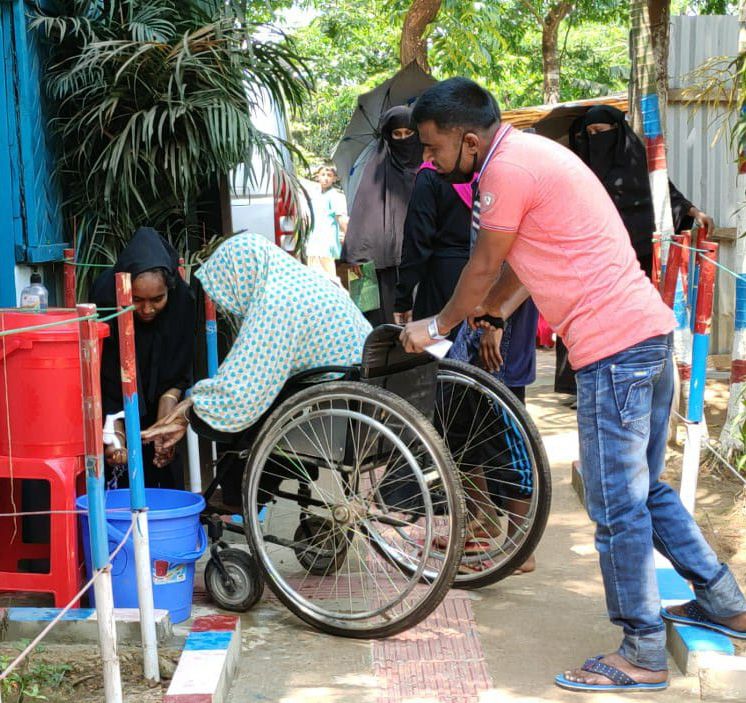
safe. The Global Humanitarian Response Plan on             working in countries impacted by the COVID-19
    COVID-19 has identified persons with disabilities          pandemic in April/May 2020. Data was extracted
    as the most affected population groups in the              from assessments conducted by HI and
    63 countries covered by the plan.(6) Moreover,             partners in Bangladesh, Egypt, Haïti, Indonesia,
    as a humanitarian organisation engaged in the              Philippines, Jordan, Lebanon, Somaliland and
    response in more than 20 countries experiencing            Togo. Testimonies from affected communities, staff
    humanitarian crises, we often witness that                 and partners were collected in Kenya, Myanmar,
    men, women and children with disabilities fall             Pakistan, Palestine, Philippines, Somaliland, South
    between the cracks of humanitarian response.               Sudan, Rwanda, Thailand, Uganda and Yemen.
    Multiple risks are created by the intersection             Some names have been changed to preserve the
    of disability, gender and age factors, such as             safety of the persons concerned.
    women and girls with disabilities facing particular
    protection risks or older persons with disabilities        Due to the nature of the outbreak and its
    facing denial of access to health services. Other          specificity, limited evidence is available on the
    risk factors include ethnicity, displacement, access       impact of COVID-19 on persons with disabilities.
    to documentation, or health status.                        The recent nature of the outbreak in countries
                                                               already affected by humanitarian crises, in
    Various legal instruments and policy frameworks            addition to pre-existing poor data collection
    call for humanitarian actors to identify and               practices inclusive of persons with disabilities,
    respond to the needs and rights of persons with            leads to the lack of evidence base on disability.
    disabilities who are particularly at risk of being left    Even though data is fragmented, localized, and
    behind in humanitarian settings, including during          not representative of the whole population of
    the COVID-19 crisis. Today, these commitments              persons with disabilities affected by the COVID-19
    and recommendations must be put into action                pandemic, it illustrates common difficulties faced
    to scale up an inclusive preparedness and                  by men, women and children with different
    responses to COVID-19, during all stages and at            types of disabilities from different ages, genders,
    all levels of intervention.                                geographical areas and living circumstances,
                                                               to cope with and recover from the impact of
    Method & Limitations                                       COVID-19 in humanitarian contexts.

    Evidence has been collected through primary
    data collection among HI teams and partners,

    Legal instruments and policy frameworks on inclusion of persons
    with disabilities in humanitarian settings

    The UN Convention of Rights of Persons                    dignity of persons with disabilities in situations
    with Disabilities (CRPD), together with                   of risk.”(7)
    International Humanitarian Law and other
    legal frameworks applicable to humanitarian               The UN Security Council resolution 2475 to
    settings, such as International Refugee Law,              protect persons with disabilities in armed
    requires all humanitarian assistance and                  conflict was adopted in June 2019 to ensure
    protection efforts to be inclusive of persons             that they have equal access to protection and
    with disabilities.                                        humanitarian assistance in situations of armed
                                                              conflict.(8)
    The Charter on Inclusion of Persons with
    Disabilities in Humanitarian Action, launched             The Inter-Agency Standing Committee
    at the 2016 World Humanitarian Summit, calls              (IASC) Guidelines on Inclusion of Persons
    on all States and non-state actors engaged                with Disabilities in Humanitarian Action,(9)
    in the humanitarian response (UN agencies,                endorsed in October 2019, provide practical
    humanitarian actors and organisations of                  strategies to effectively identify and respond to
    persons with disabilities - OPDs) to “take all            the needs and rights of persons with disabilities
    steps to meet the essential needs and promote             who are particularly at risk of being left behind
    the protection, safety and respect for the                in humanitarian settings, including during the
                                                              COVID-19 crisis.
4
4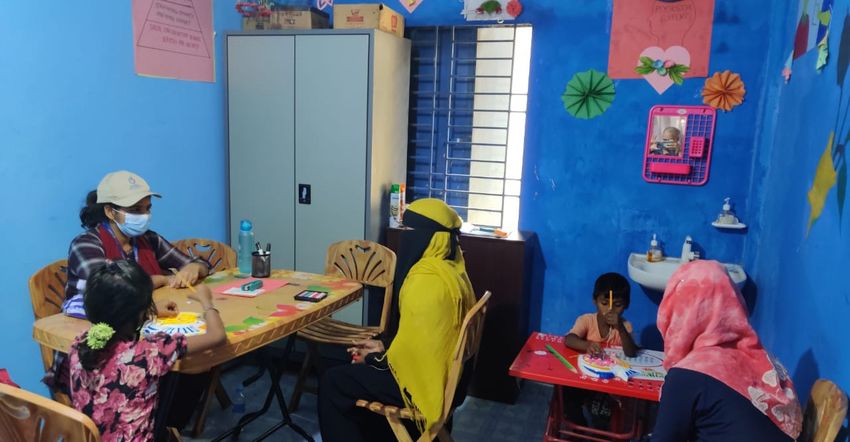
COVID-19: Persons
                                                      with disabilities face                                      1.
                                                      exacerbated barriers

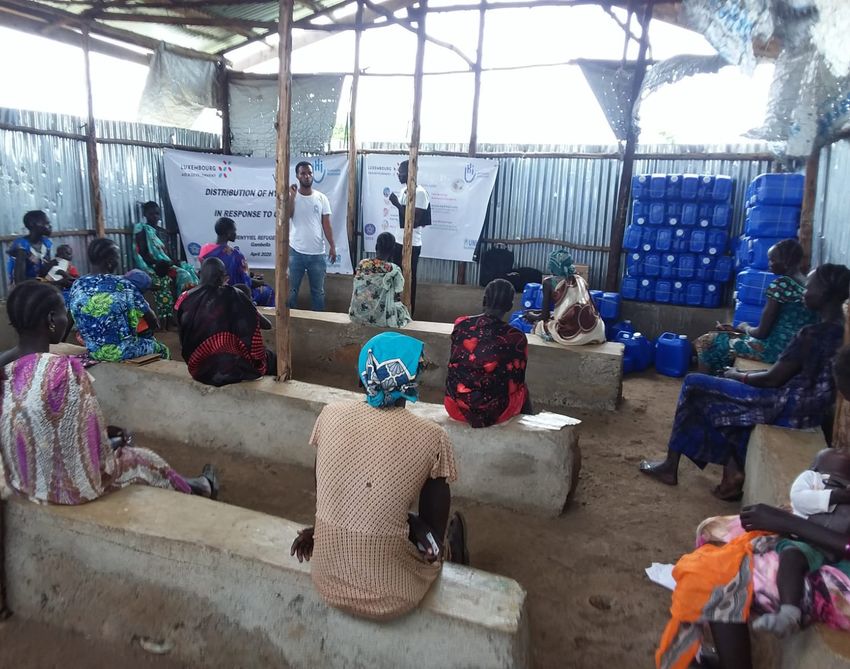
© HI, awareness session on COVID-19 prevention measures at Kakuma camp, Kenya.

Multiple factors can preclude persons with                      programs due to the COVID-19 outbreak.
disabilities, as well as other groups at risk,
from enjoying their rights, including accessing                 Humanitarian actors active in affected countries
COVID-19 related health and non-health services                 are insufficiently prepared to adapt their processes
on an equal basis with others. Pre-existing                     and interventions to be inclusive of persons with
inequalities are often exacerbated in times of crisis,          disabilities, and to accompany their staff for
and are further aggravated by new risk factors,                 inclusive service delivery. Additionally, we see that
due to changing environments and shifting needs.                persons with disabilities and their representative
In contexts where persons with disabilities already             organisations have limited opportunities of
face structural inequalities and inaccessible service           consultation and participation in decision-making
delivery, they are now confronted by increased                  processes regarding the response, resulting in the
challenges when attempting to access services                   de-prioritisation of their needs and an increase in
such as healthcare, livelihood and social protection            barriers.

1.1 Persons with disabilities face inaccessible environments and barriers to
information hindering their ability to protect themselves and stay healthy
Persons with disabilities may face difficulties                 persons with disabilities (such as how to protect
to implement preventive measures to protect                     themselves, where to access assistance, report
themselves and their families from the disease                  violence). Furthermore, methods to reach out to
due to gaps in humanitarian preparedness and                    more isolated and remote communities have been
response programming. Barriers identified in                    strongly absent, impacting persons with disabilities
countries of intervention include the use of                    in remote locations, as well as those without family
inaccessible communication channels and formats,                or community networks.
as well the lack of access to information useful for

   In Egypt, 77% of households surveyed said they are not aware of hotlines for COVID-19
   psychosocial support.(10)

   In Haïti, persons with disabilities surveyed reported that the information provided is not accessible
   enough (11%), are not adapted to their needs (14%), or that they do not know where to find the
   information (8%).(11)

   In Ethiopia, 9.9% of adults with disabilities and 16.6% of children with disabilities reported not
   having access to public information on COVID-19; 20% of adults and 19.7% of children reported that
   the information provided on COVID-19 was difficult to understand as the messages included too many
   words, while 6.5% of adults and 8.1% of children reported that the format was inaccessible.(12)
                                                                                                                        5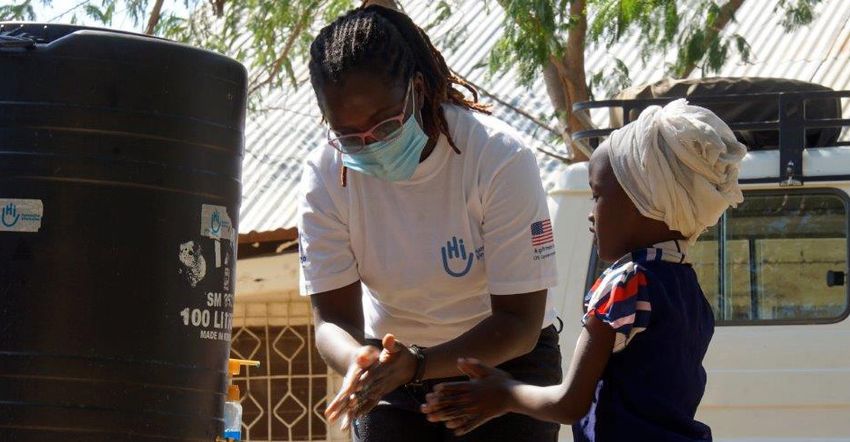
Testimonies:
        In South Sudan, Caroline, a deaf                           In Rwanda, Sabiti, 41, lives in Kiziba
        person and a member of the South Sudanese                  refugee camp. He has a hearing and speech
        Women with Disabilities Network (SSWDN),                   impairment, and works as a shoe repairman. He
        explains how the lack of access to information             was struggling to obtain concrete information
        about COVID-19 negatively impacted her                     about COVID-19 as there was no sign language
        wellbeing: “I am scared because there is no clear          interpretation at the beginning of the outbreak.
        information about the Coronavirus and the                  In the camp, there are around 70 persons with
        response organised by the government of South              hearing and speech impairments who were left
        Sudan does not include persons with disabilities.          without any information. “I could have contracted
        I cannot hear the prevention messages about                COVID-19 without knowing it. People started
        the virus on TV, and there is no sign language             staying home… My family told me that I could
        interpretation. They are broadcasting messages on          not go out and move around, but they could not
        the radio every day, but these are also inaccessible       explain clearly why I could not go to work”.
        for persons with hearing impairments. There is
        a lack of awareness through social media, which
        poses great challenges. I get very scared when
        I use public transport, as I don't know who has
        symptoms and who has none.”

    1.2 Negative perceptions and stigma against persons with disabilities
    impact their safety and access to health, protection and livelihood
    services

    Prejudices and inaccurate beliefs about persons            decisions to contribute to an effective response to
    with disabilities and their families aggravates the        the pandemic.
    risk of being discriminated against and increases
    the impact of the pandemic. Attitudinal barriers           Persons with disabilities and other persons with
    and violence against persons with disabilities             under-lying health concerns can be associated
    intensified by the pandemic hinders access                 with the pandemic, which particularly accelerates
    to health, protection and livelihood services,             violent and discriminatory behaviours against
    and influences the autonomy of persons with                certain groups.
    disabilities and their capacity to make their own

             Testimony:
       In Yemen, Ahmed, a physiotherapist working for HI, says: “Discrimination will affect persons
       with disabilities. Many persons with disabilities do not have access to hygiene supplies, due to a lack of
       financial resources or information. When they are in need of help, many people will refuse to help them
       because they fear that persons with disabilities are sick or dirty.”

     In Haiti, 81% of households led by or including persons with disabilities reported that the
     pandemic could result in increased stigmatisation, within the communities, of older persons, persons
     with disabilities and persons living with HIV or AIDS. Pre-existing beliefs and traditional practices are
     leading to more discrimination and violence against these groups.(11)

6
Spotlight on the growing needs
                                  of persons with disabilities in                                                         2.
                                            humanitarian crises

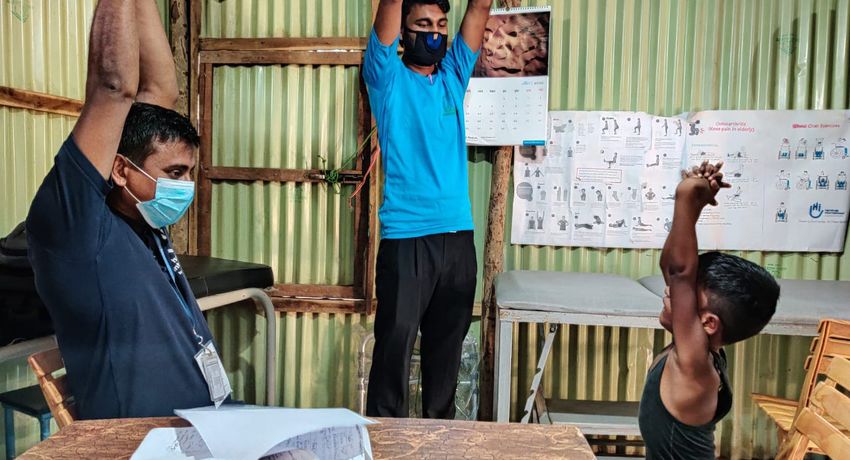
© HI, rehabilitation session in a Rohingyas’ refugee camp, in Bangladesh, May 2020

The specificities of the impact of this pandemic are                as they are more susceptible to contract the virus,
challenging due to its unique scale, as a global crisis,            develop severe consequences or face multiple risks
as well as the double impact of the virus and of the                due to environmental changes. Changes in service
protective and preventative measures implemented                    delivery also impact those in need of assistance,
by governments in fragile countries.                                such as social support, health care including
                                                                    rehabilitation, or protection.
Persons with disabilities face higher health risks,

2.1 Persons with disabilities face higher health risks
Persons with disabilities are challenged to access                  In many countries, this leads to persons with
health care, in particular to maintain medical                      disabilities reporting unmet health needs and the
treatment, access rehabilitation care or social                     aggravation of their situation. Due to lack of access
support services. Health care rationing or the                      to healthcare and rehabilitation, persons with
redirection of resources towards the COVID-19                       disabilities see their health status worsening, risking
response can also lead to poor health outcomes and                  complications and additional permanent impairments
reduced healthcare-seeking behaviour from persons                   or reduced functional ability.
with disabilities, who assume that they will be
discriminated against and denied access to services.

 In the Philippines, Manila, 49% of youths with disabilities have reported the need
 for healthcare support such as regular medication, support for hospitalisation costs, and medical
 consultations. 41% reported a need for accessible information about COVID-19 and community
 quarantine.(13)

 In Jordan, 88% of persons with a physical impairment and with current medical needs reported
 that they could not go to the hospital either for their regular checks or for additional medical needs.(14)

 In Bangladesh, 36% of caregivers face challenges to provide rehabilitation due to COVID-19,
 and 19% face challenges in getting masks. In a context where rehabilitation services are unavailable,
 55% of person with physical impairment using assistive devices reported that their devices did not work
 well. Among them, 93% reported that their devices needed replacing.(15)

                                                                                                                              7
In Lebanon, 68% of households who have at least one member of the household a disability,
reported having difficulty finding medications over the 30 days previous to the assessment. 59% of
households also have difficulties procuring hygiene items. Access barriers include limited access to
information about service delivery: 41% reported a need for accessible information about COVID-19 and
community quarantine.(16)
Testimonies:
In Somaliland, Meryam, 40, is In Yemen, Ahmed, a physiotherapist
mother to 10 children; she lives in a rural town working for HI, explains: “Since COVID-19,
in Somaliland. She has physical impairments in hospitals now only receive emergency cases.
both legs. She received support from HI in the Some persons with disabilities have respiratory
form of hygiene kits and awareness. However, problems, for example because of paralysis. They
rehabilitation services and referrals have might not be able to reach the hospital if they
become more difficult, as health care workers need ventilation. And ventilation will no longer
are subject to travel restrictions and prioritise be available at the hospital, because ventilators
COVID-19 cases. Her eldest daughter had are for COVID cases only. The prosthetics centre
severe stomach ache and could be treated, but is still working but beneficiaries are not allowed
after a delay. to come for daily check-ups, like they used to.
Only priority patients can still come and receive
rehabilitation advice. Many patients are being told
In Palestine, Ihab, 28, lives with his to wait until after Eid (end of May 2020).”
wife and children. In 2019, he was injured by
gunshot and had complex fractures in both
legs. Since the injury, Ihab needs psychosocial In Jordan, Sofia is a Syrian refugee. She
support and rehabilitation services, as he feels has back-pain and severe knee pain, which limits
anxious most of the time and cannot walk or her mobility. Sofia has developed new symptoms
stand for long periods. Since COVID-19, he during the lockdown, such as hypertension. Her
cannot receive rehabilitation and medical doctor attributes the degradation of her health to
services as he did before, as he is consulted the stress she experienced during the lockdown
only by phone for physiotherapy and wound period. She came to Jordan with her 21 years
care. He is worried that he does not have the old nephew, Ahmad, who has a psychosocial
skills to care for his wounds. The visits of the disability for which he receives psychosocial
rehabilitation team were also an opportunity to support and medication regularly from HI and
meet and talk with people - now he feels very partners. Since the lock-down, Ahmad has
isolated. not been able to get this support, which has
affected his stress and behaviour.
In Yemen, Khadija works with internally
displaced persons as a Case Management
Officer for HI. She adds: “The COVID-19
In Palestine, Batool, 13, lives in Gaza
City with her parents and 4 brothers and sisters,
situation is disturbing. In hospitals, oxygen
and has cerebral palsy. She has a deformation of
treatments are reserved to COVID patients, so
the spine that is affects her breath and digestion.
people with asthma or heart diseases may not
Before the COVID-19 lockdown, Batool had
receive care.” Khadija explains that people who access to speech therapy services. However,
need assistive devices and rehabilitative care, since the quarantine has been declared, the
without hospitalisation, cannot be admitted or rehabilitation and medical services that she
access services. “Patients who need to return needs are not provided. She was also supposed
to hospital for follow-up rehabilitative care to travel to the West Bank for medical follow-
through out-patient services are no longer up; this will not happen because of travel
allowed to return. Services are being limited restrictions. Batool and her mother were also
and some organizations are excluding persons placed in compulsory quarantine for 21 days.
with disabilities from local services.” She adds:
“Buses won't even stop for persons with
disabilities to get in, as in general persons
with disabilities don't get much respect or
consideration in our society”.
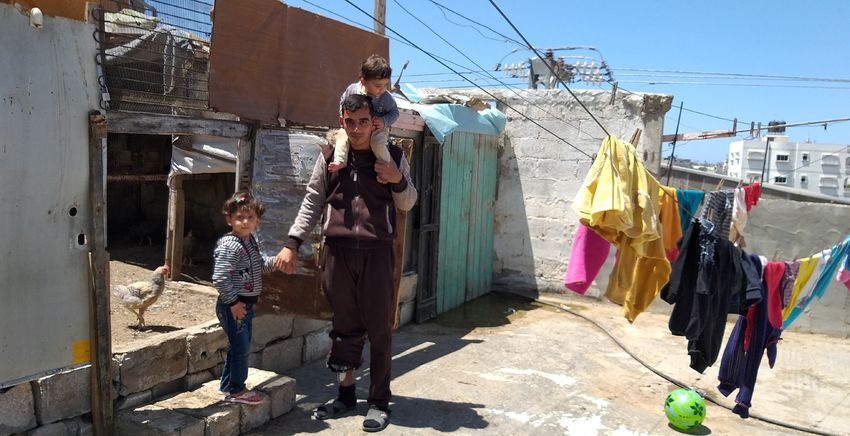
8© HI, Ihab and his children, in front of their house in Gaza, April 2020
Health services disruption due to COVID-19 might were already scarce and concentrated in major cities,
also lead to the reduced capacity of essential the additional barriers due to COVID-19 protective
services for women and children with and without measures, such as the limitation of movement,
disabilities, such as family planning, maternal results in the complete unavailability of these
and child care, clinical management of rape and services, resulting in the deterioration of health
psychosocial support for survivors. In countries with status, well-being and safety of women and children
active crises and conflicts, where these services with disabilities.
2.2 Persons with disabilities, especially women and displaced persons,
are more exposed to economic shock
According to UN estimates, half a billion people, or support systems and protection schemes and the
8% of the world’s population, could be pushed into public restrictions due to the crisis disproportionally
poverty by the end of the year, largely due to the expose persons with disabilities and their family to
pandemic. The fight against poverty could see a set loss of income and food insecurity. Many countries
back by as much as 30 years.(17) Some preventive do not have disaggregated data of the socio-
measures to curb the spread of the COVID-19 economic impact on persons with disabilities, and
pandemic, such as lockdowns, have increased the
do not implement specific measures to ensure their
already negative effect of the pandemic on groups
protection. Moreover, the loss of socio-economic
already at socio-economic risk.
resources can induce negative coping strategies.
The lack of access to the informal and formal
economy, the lack of disability-inclusive social
In the Philippines, (Manila), 95% of youths with disabilities surveyed need urgent financial
aid. 74% are worried about insufficient food supply, 69% about loss of employment or income, and
64% about the lack of availability of transportation. For residents of poor communities in Manila who are
already experiencing high levels of vulnerability, the lockdown means that they are receiving less to no
income. Some of them get food packs from the local government, but they highlighted the fact that these
food packs arrive arbitrarily and the rationed items do not meet the basic nutritional needs adapted to the
size and composition of the families.(13)
9In Jordan, 79% of households which have children or adults with disabilities did not receive
external support in the last 3 months and another 79% designated food as their top need, mostly because
of a lack of money.(18)
In Haiti, 65% of respondents with disabilities said that the economic support that they received
has been greatly disrupted since the declaration of the state of health emergency. Quarantine measures
negatively impacts the socio-economic situation of households with at least one member of the household
with a disability, as those offering economic support, most often family members, are no longer able to
contribute.(11)
In Lebanon, households with at least one member of the household with a disability reported
purchasing food on credit (74%), reducing spending on essential non-food items including hygiene
products (53%), using savings (28%) and selling household assets such as jewellery and phones to
purchase food (23%). Moreover, 62% of them, regardless of nationality (Lebanese, Palestinian and Syrian
living in Lebanon), stated that they planned to seek assistance and charity in the month of May 2020 to
meet their needs. The assessment shows greater impact of COVID-19 on refugees and displaced persons
with disabilities as food insecurity rates are increased according to nationality of the household with 69%
of Lebanese households, compared to 78% of Palestinian households and 93% of Syrian households
respectively, reporting not being able to meet all their needs in April 2020.(16)
Testimonies:
In Pakistan, Saima has used a big, with many people occupying it, and with
few medical health practitioners. So, if the virus
wheelchair since childhood. She lives with is found here, it would be very dangerous for
her family in a shantytown in Karachi. The us.” “There are many challenges, especially the
pandemic and lockdown have made their daily fact that Kakuma is isolated from big towns with
lives almost impossible to bear. When Saima’s better services and opportunities. Poverty levels
husband, a day labourer, stopped working in are high and most refugees do not have jobs to
March, this family with three children found itself sustain a decent life at the camp”. He adds “A
without enough to eat. “Finding food is now an lot has changed in the camps [due to COVID-19],
ordeal”, said Saima. They must travel to a food especially regarding the movement of people and
distribution point two hours from their home supplies from Nairobi […]. Most organizations
to find enough to eat for a month, and depend and government institutions have adopted new
entirely on humanitarian assistance. ways of working and implementing activities,
which makes it very difficult for services to be
In Pakistan, Abdul Baqi, 50, lives in accessed.”
the Jalala Afghan Mardan refugee camp with his
wife and 10 children. After fleeing Afghanistan
in 1986, he was injured by a landmine explosion
In Uganda, Winifred is Executive director
of MUDIWA, an organisation of women and
and lost his leg. Following the outbreak of girls with disabilities in Uganda. She explains
COVID-19, Abdul Baqi had to close his shop how the measures of lockdown have impacted
near the refugee camp. As a result, he was the livelihood of the members: “Over 30 women
deprived of his only source of income that with disabilities were working on the roadside
allowed him to feed his family. "I am not afraid markets, selling clothes, household utensils and
that my children will catch COVID-19. My worry food. (…) Due to the drastic measures of social
is that I won't be able to feed them," he says. distancing, they were sent back home, with no
Abdul is also worried about his house: the heavy other choice than to use their available capital
rain has damaged the roof, which is in danger of to buy food and other necessities. Since the
collapsing while they sleep. lockdown, the price of a bunch of bananas has
decreased from between 20,000-35,000 shillings
In Kenya, Jemale, 52, is a refugee in to between 4,000- 8,000 shillings. As a result,
many women with disabilities who were involved
Kakuma camp. He lost his wife a few years ago
in agriculture are discouraged from continuing to
and has 7 children. He has mobility limitations
sell ”.
due to a club foot. He shares: “The camp is very
10In Somaliland, Ethiopia, Mohamed, enough income to cover their daily expenditure.
They are very worried and fear the social and
45, lives with his wife and his 10 children in a economic consequences of the COVID-19
3-room house. He has a physical impairment pandemic.
in his left leg. His wife manages a small
restaurant established with the support of an
HI community-based rehabilitation project. He In Myanmar, Min Min, 42, a mine
works as an electronic maintenance technician. survivor, works as a social worker and
“I want to be a role model in my community, carpenter. He often faces difficulties in finding
to show that persons with disabilities are regular employment as he has a prosthetic leg.
capable and strong enough to manage their Employment opportunities have been reduced
daily life. Before COVID-19, we managed to due to the lockdown measures: “In this situation,
meet the daily needs of our family, but now as the government prohibits gatherings of more
our income from the restaurant and electronic than 5 people, the employers only give work to
maintenance is at risk as customer demand persons without disabilities, which affects my
has declined.” His family has difficulty securing income”.
2.3. Preventive measures often do not take into account particular
needs of persons with disabilities and negatively impact their safety,
physical and psychological wellbeing
In several humanitarian contexts, persons with needs of persons with disabilities and therefore they
disabilities are sharing concerns about access report additional challenges for their health and
resulting from COVID-19 preventive and protective social situations.
measures. These measures are not inclusive of the
Testimonies:
In Myanmar, Noor Jann, 40, lives in In Thailand, Aye Aye, 50, has mobility
an internally displaced persons (IDP)’ camp in limitations due to an amputation. She is the
Rakhine State. She has 8 children, including chairwoman of the Self-Help Group of persons
a son with a disability who requires regular with disabilities along the border between
rehabilitation exercises and her husband who Thailand and Myanmar. “Before the COVID 19
has tuberculosis. “We are living in a formal crisis, I could move freely inside the camp to visit
refugee camp. We cannot maintain social other persons with disabilities and provide them
distancing and it is very difficult to access with peer support at home or in the hospital. We
health care services.” had monthly meetings with the other members of
the self-help group to share general information,
update each other on our monthly activities and
In Palestine, Batool, 13, reports that future plans. When the lockdown started, the
the quarantine was not adapted to the needs camp committee did not allow traveling around
of children, especially children with disabilities. and inside the temporary shelter. I had to explain
They had to purchase masks, gloves and my situation to them and the fact that I needed
disinfection materials, as well as limiting their to continue to support other persons with
movements. She experienced a lot of distress, disabilities. They understood and allowed me to
as she felt imprisoned. Compulsory quarantine pursue my activities, with preventative measures
and isolation often imposes several challenges to such as physical distancing, wearing masks and
persons with disabilities as support plans are not hand washing. Persons with disabilities should not
prepared and procedures and the environment be abandoned. It is my duty to support them.”
are not made accessible.
11©HI, mental health and psychosocial support session for a woman and her two daughters in a Rohingyas’ refugees camp in
Bangladesh, May 2020
2.4. Persons with disabilities and their caregivers, particularly women
and children with disabilities, face heightened protection risks such as
abuse or violence
Evidence shows that the risk of violence to children violence, gender-based violence (GBV), sexual
and adults with disabilities is routinely three to four exploitationabuse and harassment (SEAH). It
times higher than for those without disabilities. can also push some households and individuals
(19)
Women with disabilities are 10 times more likely to adopt negative coping mechanisms such as
than women without disabilities to experience child labour, forced isolation and early or forced
sexual violence.(20) marriages.
In the current circumstances, public restrictions, Persons with disabilities and their relatives are also
self-isolation of households and disruption of less likely to disclose or report violence because of
community life, services and social support may shame, fear of family/community members who are
lead to increased protection risks for persons with often the perpetrators, or because the subject is
disabilities and their caregivers. Those include still perceived as a taboo. These cases of violence
separation from families and caregivers, domestic therefore go largely unreported.
In Togo (Lomé), 20.9% of homeless persons surveyed are persons with disabilities. During the
confinement, homeless people, especially women, have been exposed to increased physical and sexual
violence (19 women and girls reported cases, 14 men). This violence includes aggression and abuse
committed by individuals, including law enforcement agencies, sexual violence and exploitation.(21)
In Ethiopia, 22% of adult respondents with disabilities felt unsafe in periods of prolonged work
closure and movement restrictions. 11.2% reported that they felt less safe and protected from violence and
abuse since Covid-19. 41.6% of child respondents with disabilities reported experiencing fears/ anxiety/
feeling unsafe and able to express their feelings to family / caregiver; 4.9% reported experiencing the same,
though not able to express their feelings to family / caregiver.(12)
12Testimonies:
In the Philippines, Joanna, a and girls with disabilities, living in rural contexts
have been severely impacted by the COVID-19
Personalized Support Officer for HI, says: “In lockdown. The majority of them are single
the midst of the COVID-19 pandemic, (…) mothers, and they struggle to provide food and
discrimination and violence towards persons protective equipment for their families due to the
with disabilities continues to persist even disruption of their livelihoods. “The occurrence
inside our homes — a place where we are of sexual and gender-based violence against
supposed to find safety and comfort. During women and girls with disabilities has increased.
times like this, persons with disabilities display During the lockdown, they cannot flee from
resilience and increase their tolerance for unjust abusive partners. They also cannot access
circumstances; it shows us that a disability- sexual and reproductive health services or
inclusive response is imperative especially justice, because of transport restriction and lack
when the usual support systems become of financial means.”
dysfunctional.”
In Jordan, Mousa, 27, has a congenital
In the Philippines, V. (name condition which led to an amputation in his
lower limbs as a child and means that he has
withheld) is a young woman with hearing
impairment. Prior to the quarantine she had a prostheses. He is the head of the household
completed a short sewing training and was and the breadwinner of a family of five. At the
applying for jobs. In the meantime, she is helping beginning of the COVID-19 lockdown in March,
actively in the family-owned tailoring shop. Due his employer started to push him to submit his
to quarantine tensions increasing, V. reached out resignation as, according to his employer, his
to HI and sought assistance about the threats mobility limitations were a barrier for him to
of violence and the physical abuse inflicted accomplish his tasks. As the authorities provided
by a family member, who intimidated and flexible measures for employers to respond to the
insulted her. V.’s case was reported. However economic impact of the pandemic, his employer
access to protection reporting mechanisms was took the opportunity to fire him. Meanwhile the
challenging. landlord of the apartment he rented pressured
him for rent arrears, knowing that he was jobless.
To flee the verbal and psychological violence he
In Uganda, Achayo Rose Obol, was experiencing, he was forced to leave the
Chairperson of the Board of Directors of the house with his family.
National Union of Women with Disabilities of
Uganda (NUWODU), explains that women
13Recommendations
3. towards an inclusive
humanitarian response
©HI, distribution of hygiene kits in a mother and child health project in Togo, April 2020.
All State parties to the UN Convention on the Rights of Persons with Disabilities have the
obligation to take “all necessary measures to ensure the protection and safety of persons with
disabilities in situations of risk”, Article 11.
Ensuring that all the rights of persons with disabilities apply to crisis contexts requires
inclusive and accessible COVID-19 preparedness and response plans, across all sectors and
without any forms of discrimination on the basis of disability, age, gender, and health status,
amongst others. It requires coordination and collaboration across governmental services/
branches and civil society organisations to identify and mitigate risks faced by persons with
disabilities.
More precisely, HI recommends all humanitarian actors to:
■ Ensure meaningful participation protection risks.
of persons with disabilities, their ■ Design and share disability, gender and
representative organizations (OPDs) and age sensitive information on COVID-19
other local organizations, as they should prevention and response, through a
play a key role in all stages of the response. diversity of accessible formats with use of
Men, women, boys and girls with different accessible technologies, to reach people
types of disabilities should be consulted with visual, hearing and intellectual
in assessments, project design phases, in disabilities (sign language, Easy Read, plain
particular to discuss the impact of public language, audio, captioned media, Braille).
restrictions, and recommendations to Public communication should also avoid
enhance safety and access to services. stereotyping messages and images. Share
■ Collect, analyse and monitor needs information to persons with disabilities
assessment data, disaggregated by sex, on how to stay safe and healthy, how to
age and disability, using the Washington access assistance or submit concerns.
group Set of Questions, as well as collect ■ When designing response, refer to
information on barriers and facilitators of the IASC Guidelines on Inclusion of
access and participation. Persons with Disabilities in Humanitarian
■ Collaborate with organisations of Action(22) while designing inclusive
persons with disabilities and disability strategies and key actions as well as to
specific actors to assess impact of public WHO considerations on disability during
restrictions, collapse of the informal labour the COVID-19 outbreak,(23) to remove
market, informal social services and attitudinal, environmental and institutional
rehabilitation care, situations in isolation barriers in order to ensure that the rights
areas, and related impact on physical, and needs of persons with disabilities are
psychological wellbeing, socio-economic met in operational plans.
status and safety, such as disability-specific
14References
(1). World Health Organization, Global Report on of the financial crisis and COVID-19 on the households
Disability, 2011. of Users accessing specialized services, April 2020. 197
(2) Humanitarian Needs Assessment Programme members of households with at least one user with at
(HNAP) - Syria, Spring 2020 report series, Disability least one impairment, including 82 females and 115
overview. males, from 18 to 60+ years.
(3) Syria Protection Cluster (Turkey)’s note “A disability- (17) United Nations University, WIDER Working Paper
inclusive COVID-19 response”, April 2020. 43/2020, April 2020. Available: https://doi.org/10.35188/
(4) United Nations Secretary General, May 6 2020. UNU-WIDER/2020/800-9
Available: https://www.un.org/development/desa/ (18) HI, Needs Assessment, impact of COVID-19 on
disabilities/covid-19.html People with Disabilities and their Families in Jordan, April
(5) Groupe URD, Epidemics, pandemics and humanitarian 2020. 942 households including 524 households having
challenges: lessons from a number of health crisis, March adults with disabilities and 418 households having
2020. children with disabilities.
(6) United Nations, “Global Humanitarian Response Plan (19) Review on the prevalence and risk of violence
COVID-19 (April – December 2020)”, May 2020 Update, against children with disabilities, published by
Available: https://www.unocha.org/sites/unocha/files/ Lancet in July 2012 and carried out by Liverpool John
GHRP-COVID19_May_Update.pdf Moores University’s Centre for Public Health, a WHO
(7) The Charter on inclusion of persons with disabilities Collaborating Centre for Violence Prevention, and WHO’s
in humanitarian action, launched in May 2016. Available: Department of Violence and Injury Prevention and
http://humanitariandisabilitycharter.org/ Disability.
(8) Resolution 2475 (2019) / adopted by the (20) UNFPA, We decide initiative. Available: https://www.
Security Council at its 8556th meeting, on 20 msh.org/sites/msh.org/files/we_decide_infographic.pdf
June 2019. Available: https://digitallibrary.un.org/ (21) FODDET, WAO-Afrique, Humanity & Inclusion,
record/3810148?ln=fr Halsa international, UNICEF, Rapport du diagnostic et
(9) IASC (Inter-Agency Standing Committee), analyse rapide de l’impact de la crise liée au COVID-19
“Guidelines, Inclusion of Persons with Disabilities in auprès des populations sans domicile, May 2020. Survey
Humanitarian Action”, July 2019. Available: https:// conducted in May 2020 of 2080 homeless persons in
interagencystandingcommittee.org/system/files/2019-11/ Lomé, including 44% of women and 20% of persons
IASC%20Guidelines%20on%20the%20Inclusion%20 with disabilities, of all ages.
of%20Persons%20with%20Disabilities%20in%20 (22) IASC (Inter-Agency Standing Committee),
Humanitarian%20Action%2C%202019.pdf “Guidelines, Inclusion of Persons with Disabilities in
(10) Basic Rapid Survey on the Socio-Economic Impact Humanitarian Action”, July 2019. Available: https://
of COVID-19 on HI’s Beneficiaries in Egypt. 240 interagencystandingcommittee.org/system/files/2019-11/
respondents of all ages, among which 49% of direct IASC%20Guidelines%20on%20the%20Inclusion%20
respondents have disabilities. 58% are female and 42% of%20Persons%20with%20Disabilities%20in%20
male. Humanitarian%20Action%2C%202019.pdf
(11) Rapport de l’enquête rapide sur les connaissances, (23) WHO, Disability considerations during the
attitudes et pratiques des personnes handicapées et de COVID-19 outbreak, March 2020. Available:
leurs familles en lien avec le mécanisme de réponse de la https://www.who.int/publications/i/item/disability-
COVID-19 (Réalisée du 21 au 24 Avril 2020 à Port-au- considerations-during-the-covid-19-outbreak
Prince – HAITI) sur 37 ménages.
(12) HI, Survey Report, Persons with disabilities and
COVID-19 in Ethiopia: Knowledge and impact, May
2020. A total of 895 adults and children with disabilities
participated to the survey. Out of these, 446 are adults
(258 women and 188 men), and 449 are children from 5
to 18 yo (286 girls and 163 boys). 40% are displaced or
refugees, 60% are from the host community.
(13) Survey on the Impact of Enhanced Community
Quarantine on persons with disabilities in Manila,
Philippines and Jakarta, Indonesia, April 2020. Surveyed
73 youth with disabilities from Manila and Jakarta,
beneficiaries of HI project ‘Forward Together’. The
respondents are between ages 18-39. 44% are female
and 56% are male.
(14) HI, Needs Assessment, impact of COVID-19 on
People with Disabilities and their Families in Jordan, April
2020.
(15) HI, Rapid Need Assessment of Persons with
Disabilities in COVID-19 crisis UKAID Direct Project,
April 2020. 91 persons with disabilities were surveyed.
The gender ratio Male to Female was 3:2.
(16) HI, Impact Assessment. Understanding the impact
15Published by Humanity & Inclusion, also known as Handicap International Website: http://www.hi.org Blog: http://blog.hi.org/influenceandethics First published in June 2020, © Handicap International. Handicap International is registered in France under the following references: N° SIRET: 519 655 997 00038 - Code APE: 9499Z. This publication is copyrighted, but may be reproduced by any method without fees or prior permission for teaching purposes, but not for resale. For copying under any other circumstances, prior written permission must be obtained from the publisher, and a fee may be payable. Cover photos: © HI // Map design by: © Designed by Layerace
You can also read


