COVID-19 MESSAGE FROM ISC BC REGION - UPDATE #75 / February 9, 2021 - First Nations ...
←
→
Page content transcription
If your browser does not render page correctly, please read the page content below
COVID-19 MESSAGE FROM ISC BC REGION
UPDATE #75 / February 9, 2021
                                                                           This update and earlier editions are also available on
                                                                           the First Nations Public Service Secretariat website.

Good afternoon,

These are challenging times. Whether your community is managing an outbreak or you are trying to protect your
community from COVID-19 cases, we understand the strain this puts on you and your staff. We recognize your
extended efforts to support the health and safety of your members and share our thanks yet again.

We continue to work with our partners such as the First Nations Health Authority (FNHA) and Emergency
Management British Columbia (EMBC) to ensure a coordinated approach to the evolving situation and to be able
to respond as quickly as possible. A reminder that should you have questions or have identified a need for
additional resources or support from us, please contact your FSO or the ISC BC Regional office at
aadnc.iscbccovid19.aandc@canada.ca.

We note that all COVID-19 public health orders and restrictions in BC are being kept in place. On Friday, the
Provincial Health Officer, Dr. Bonnie Henry, said that we need to use this time to reduce the potential for new
COVID-19 variants to spread in our province, as we await more vaccine from the manufacturers. “Let’s continue to
work together to push our curve down – today and in the weeks ahead, so we can get to the brighter, safer days
ahead,” she said. Please see more on the need to restrict social gatherings – even for ceremonies and funerals
– from the First Nations Health Authority later in this Update.

In the midst of all this, comes the data review led by former judge Mary Ellen Turpel-Lafond, which shows with
quantitative evidence that too many Indigenous people in BC don’t have access to family doctors and other
primary-care services, and instead end up in the emergency room dealing with health crises. This leads to poorer
health outcomes at the best of times, let alone during a pandemic. On January 28, the Honourable Marc Miller, the
Honourable Carolyn Bennett, the Honourable Patty Hajdu and the Honourable Daniel Vandal issued a statement on
the work to eliminate racism against Indigenous people in the healthcare systems. In BC Region, we echo this pledge
and will continue to work with our partners at the First Nations Health Authority and the Province of British Columbia
to address systemic racism.

                                                                                                                               1 /8
UPDATES
Indigenous Community Support Fund The BC Recovery Supplement is part of a package of
supports announced by the Province of BC to support all
First Nations will now have all received their funding
British Columbians to recover from COVID-19. For more
amendments the third round of the Indigenous
information on the BC Recovery Benefit please visit the
Community Support Fund. Please be advised that
Provincial website.
stream 2 amendments for the ICSF2 application-based
proposals which we were unable to fund in December We recognize the unique circumstances on reserve
are going out to your communities this week. We’re and the additional stress that COVID-19 has placed on
pleased to report that all First Nations with unfunded First Nations families and communities. Our officials
approved proposals from ICSF2 will be issued a funding are available to discuss alternative options that may be
amendment. more effective than providing a benefit to clients.
We expect to forward the third round of ICSF stream 2 Please do not hesitate to reach out to the BSDW Policy
off-reserve components in about two weeks. Support Line, by phone (toll-free): 1-888-440-4080, or by
email: aadnc.tsdbsoutien-bsdwsupport-bc.aandc
Income Assistance COVID-19 Funding for @canada.ca. The BSDW Policy Support Line is available
2020-21 Round 2 Monday to Friday, 9am-3pm, should you have any
questions.
Until the end of March 2021, Income Assistance
available to members is actually going to go up $150. The Terms and Conditions for the On-reserve Income
Assistance program will continue to apply for this
In light of ongoing needs during the pandemic, an
funding along with existing reporting requirements.
additional $95.2 million of COVID-19 funding has been
In addition, an Annual Activities and Expenditures
provided for the On-reserve Income Assistance program.
Report (DCI# 4548549) will be required with a due date
This is in addition to the $270 million in supplemental,
of July 30, 2021.
COVID-19 funding for the On-reserve Income Assistance
program announced by the Prime Minister last May. The
funding is to help ensure that First Nations individuals
COVID-19 Income Assistance Funding COVID-19
and families who rely on income assistance will be able
to cover their essential living expenses during these
COVID-19 Income COVID-19 Income
uncertain times.
Assistance Benefit (per IA Assistance Benefit (per IA
$300 $300 $300 $300 $300
$300 $300
$300 $300
household) household)
A letter and information package were sent to your
communities on Monday, February 1. Similar to Round
1 of funding, this amount is based on a $300 per month
COVID-19 Crisis COVID-19 Crisis
Supplementtemporary
(per eligible COVID-19
$300
benefit per
$300
Income
$300
Assistance
$300 $300 $300 $300
Supplement (per $300
eligible $300
$300 $300 $300 $300 $300
Adult IA Recipient) Adult IA Recipient)
client for three months (January - March 2021).
Please note that this funding is separate, and in addition
to, the $300 per adult COVID-19 Crisis Supplement (April
BC Recovery Supplement BC Recovery Supplement
(per eligible Adult IA (per eligible Adult IA $150 $150 $150
to December 2020) and $150 per adult BC Recovery
Recipient) Recipient)
Supplement (January to March 2021).
April 2020 May 2020 June 2020 July 2020 August 2020 September October 2020 November April
December
2020 January
May 2020
2021 February
June 2020
2021 March
July 2020
2021 August 2020 S
2020 2020 2020
Total $600 $600 $600 $300 $300 $300 $300 $300
Total $300
$600 $450
$600 $450
$600 $450
$300 $300
COVID-19 Income Assistance Funding
2 /8QUESTIONS AND ANSWERS
¼ Who is eligible for ISC’s temporary COVID-19 benefit?
This benefit is available to all Income Assistance clients on
reserve.
Income Assistance clients are defined as the person in
a family who is in receipt of Income Assistance funding
and benefits. Also known as “family unit” or the “head of
household.” INCOME ASSISTANCE:
CASE MANAGEMENT &
¼ Is each Income Assistance client automatically entitled to
receive this temporary COVID-19 benefit from ISC? PRE-EMPLOYMENT SUPPORTS
Yes, this benefit or an alternative option* needs to be REGIONAL GATHERING
provided to either to the client (head of household) ($300), Hosted by the Tribal Resources
or, if the First Nation opts for the alternative option, then Investment Corporation, the theme of
to any Income Assistance clients on reserve in amounts the gathering is Building Strength and
determined by the First Nation. Resiliency in Challenging Times, and
will focus on timely and relevant topics
*An alternative option must be deemed by Chief and
surrounding mental health, resilience,
Council as one that better meets the immediate need(s) of
and positive change.
Income Assistance clients.
This workshop is intended for those
¼ What are alternative options, and when should they be involved in the delivery of Indigenous
considered? Services Canada’s Income Assistance
Alternative options are another way (instead of a temporary Pre-Employment Supports Program,
COVID-19 benefit in cash) of providing additional Income including:
Assistance supports to clients. • Pre-Employment Supports Team
A First Nation community or organization may want to Members
consider alternative options if they have already provided • Band Social Development Workers
additional emergency benefits (during the months of • Chiefs and Council Members
January, February, and March) to clients and/or feel that
there are other, more effective ways of meeting the needs If you have any event questions please
of Income Assistance clients during the pandemic. contact Elizabeth Greenberg by email
at tricorp@nautsamawt.com.
Alternative options must be discussed with ISC in advance
of implementation.
February 16 - 18, 2021 VIRTUAL
EVENT
¼ What types of activities are eligible as alternative options? 8:30 a.m. - 1:00 p.m. PST (via ZOO
M)
Alternative options must only include activities that
are considered eligible expenditures under the Income
Assistance program’s terms and conditions. Please kindly
For this funding, alternate options can consist of basic and
REGISTER
by Thursday, February 11th
special needs items, employment and pre-employment cost
items, and/or employment and pre-employment financial
assistance items available in the reference province or
Yukon including, but not limited to:
3 /8• Providing different amounts to clients based on
family composition (for an individual versus a
family) THE BC RECOVERY BENEFIT
• Providing funding to clients in future months In addition to ISC supports, your members may
(example: Feb, March, April 2021) be eligible for the BC Recovery Benefit. As
• Bulk food purchases for distribution shared in Update 74, an estimated 3.7 million
• Community pantry (including traditional food individuals and families (90% of all BC adults),
procurement) are eligible for the BC Recovery Benefit,
including those on Income Assistance.
• Greenhouse food program
Eligibility includes:
• Gift cards for food, clothing, gas
• Transportation/delivery service for food and • $1,000 for families with annual incomes
supplies (for IA clients only or the % that under $125,000. Families earning up to
represents service for IA clients) $175,000 will qualify for a reduced benefit
• Cultural baskets (hunting, fishing) amount. Single-parent families also qualify
for these benefit amounts. (Based on their
• Bulk cleaning supplies
2019 tax returns.)
• Increased hydro costs (power, utilities) and/or
purchase alternatives (including firewood) • $500 for single people with annual incomes
under $62,500. Single people earning up to
• Virtual supports and tools (for case management $87,500 will qualify for a reduced benefit
in special cases to be discussed with ISC-HQ) amount.
• Internet fees (for case management in special
cases to be discussed with ISC-HQ) People can apply online or call 1-833-882-0020
(toll-free within North America). Call centre
All alternative options must be discussed with ISC agents are available to assist those who need
prior to implementation. help applying or those who want to apply
over the phone, Monday to Friday (excluding
¼ When will the funds be distributed to recipients? statutory holidays), from 7:30 a.m. to 5 p.m.
ISC is working on amending community contribution (Pacific time).
agreements now and will be distributing funds to
recipients shortly. Recipients can cash manage upon A modified application process is available for
receipt of the funding confirmation letter. people who have not filed their income taxes
for 2019 or those who do not have banking
¼ When must all funds be expended? services. Let members know they can get
support by calling the Canada Revenue Agency
All funds should be provided March 31, 2021, but
at 1-800-959-8281 or online at Doing your
carry-forward of the funding may be an option
Taxes.
depending on your funding agreement. Your ISC
representative can provide further details.
More questions and answers are available through the
BC Region Band Social Development Workers (BSDW)
Policy Support Group on GCCollab, a Government of
Canada online collaboration platform. To be added
to the group or to the policy updates email list, please
contact the BSDW Policy Support Line at
1-888-440-4080, or via email at
aadnc.tsdbsoutien-bsdwsupport-bc.aandc@canada.ca.
4 /8Indigenous Students to Benefit from Federal
Funding to Province.
To support BC’s COVID-19 response for K-12 education,
the Government of Canada announced $242.4 million in
one-time funding for the 2020-21 school year, with the
first half of the investment allocated in September.
The second instalment of this funding arrived on
January 29, 2021. The BC Ministry of Education is THE REGISTRATION AND STATUS CARD
allocating $101.1 million to school districts and $7.5
million to independent schools, and is providing school
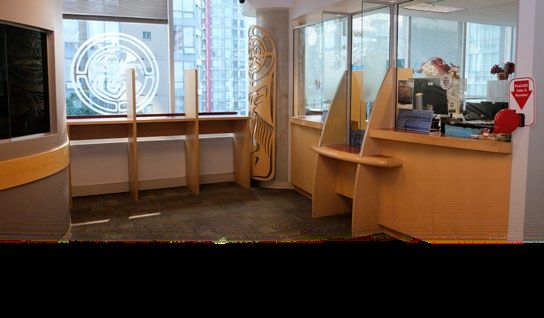
SERVICE COUNTER IN VANCOUVER
districts an additional $3.5 million to manage COVID-19 IS OPEN BY APPOINTMENT
exposures in schools. Please call 236-330-9961 to make an
appointment before arriving. For application
As part of the February 4 announcement, the Province
requirements, please visit canada.ca/indian-
highlighted that in order to support Indigenous learners
status or call 1-800-567-9604.
attending provincial schools, $8.2 million of that federal
funding will go towards: addressing learning loss
and student health; technology for remote learning;
education and mental health support; adapting
classroom spaces; and, enhanced cleaning.
FUNDING APPLICATION
Additionally, all middle and secondary students will now DEADLINES APPROACHING
be required to wear non-medical masks in all indoor
In August 2020, ISC BC Region rolled out the
areas. All staff, from Kindergarten to Grade 12, will also
COVID Indigenous Community Business Fund. BC
have to wear masks but elementary school students will
received $14.3 million with nearly $12 million
still have the choice whether to wear one in class.
expended to date including $8.7 million in Stream
One funds that were distributed to First Nation
Status Card Update communities in September. Please note that
Many of you have asked about Status Cards and applications from community-owned businesses
what’s being done to address backlogs caused by the for Stream Two continue to be welcomed until
pandemic. March 1, 2021. As well, the April 2020 COVID
Economic Stimulus Package for Indigenous
Please be advised ISC has extended the validity date of Businesses, through the Aboriginal Financial
status cards until further notice. As Indian status does Institutions network, closes on March 31, 2021.
not expire, service providers are encouraged to accept
status cards or Temporary Confirmation of Registration
Documents (TCRDs), with identification, even if the
renewal or expiry date has passed. This message is also Canada Temporarily Waives the One-week
available at Canada.ca/indian-status. Waiting Period for Employment Insurance (EI)
TCRDs can be requested by calling 1-800-567-9604.
Claims
In response to the increase in people needing support,
ISC is also accepting expired government-issued IDs the Government of Canada announced EI regulations
toward registration and status card applications until will be amended to temporarily waive the waiting
further notice. period for EI claimants who establish a new claim
between January 31, 2021 and September 25, 2021.
To request priority consideration for a registration
This includes claimants of regular, fishing and special
application, write to aadnc.infopubs.aandc@canada.ca.
benefits.
5 /8People who open a new EI claim after January 31, 2021, Communities to Benefit from Improved
and return to work before exhausting all of their weeks Broadband Connectivity
of entitlement will benefit from an additional week
of income support, due to the removal of the waiting The pandemic has highlighted the importance
period. of reliable internet to keep us all connected.
Congratulations to Saulteau First Nations and West
Please note, Canadians who are eligible can be Moberly First Nations, who will benefit from one of five
confident that this temporary measure will not change recently approved transport projects being funded by
the total weeks of EI benefits for which they are entitled the CRTC Broadband Fund.
to, nor the service standard for payment. Claims will be
automatically processed with this new waiver, meaning The $13.8 million being invested in Shaw Cablesystems’
workers are not required to take additional steps to GP British Columbia transport fibre project will also
receive the support they need. benefit five neighbouring communities totaling 1,500
households.
The aim is to improve broadband connectivity in the
region. Like other recipients, Shaw will have to provide
AFOA BC COVID-19 RECOVERY wholesale access to their infrastructure to those entities
WEBINAR SERIES that wish to offer retail Internet services.
BUSINESS STRATEGIES FOR It is anticipated that construction will start in the second
INDIGENOUS ECONOMIC DEVELOPMENT half of 2021.
CORPORATIONS AND BUSINESSES
Session #1: February 17
Financial Governance: Strategies to Integrate
First Nations Economic Development PARTNER INFORMATION
Corporations and Trusts
Session #2: February 24 First Nation Health Authority information
Operating Risks of your Business and What To about COVID-19 Vaccines
Do When Disaster Strikes As part of the FNHA’s commitment to keep you
Session #3: March 3 informed about vaccines, the FNHA issued a statement
Indigenous Opportunities in the Digital about the shortage of Pfizer mRNA vaccines.
Economy A global delay in receiving vaccine doses from Pfizer
Session #4: March 10 may affect the start date of some vaccination clinics of
IndigiMall – Virtual Shopping Mall for First Nations communities in British Columbia. Health
Indigenous Businesses officials in BC are expecting a shortfall of approximately
60,000 doses of Pfizer’s COVID-19 vaccine over the
Session #5: March 17 coming weeks. While the FNHA received the Moderna
10 Ways HR Can Impact Your Business Strategy vaccine, in some regions the regional health authority
has provided Pfizer vaccines to support community
Session #6: March 24 clinics.
Indigenous Procurement Opportunities
The FNHA says its continuing to work with provincial
and federal partners to prioritize available doses for
First Nations communities, however there will likely be
REGISTER NOW a delay until global vaccine supplies increase.
6 /8The statement also includes a reminder that we all need All youth who are transitioning into adulthood can
to continue to practice all the recommended public access housing supports to stay where they are. In
health measures to stay safe, even after receiving the addition, for the first time, those who are eligible for
vaccine. the Agreements with Young Adults (AYA) program can
apply to participate in both programs at the same time.
Continued Need to Avoid Gatherings Eligible young adults using the emergency housing
support may be eligible to receive up to $350 per month
As the daily count of new COVID-19 cases remains
through AYA, based on their unique needs and the
high, a reminder that the First Nations Health Authority
length of their program.
encourages First Nations individuals and communities
to continue observing physical distancing, maintain All youth who are set to transition into adulthood at
small social bubbles, and avoid gatherings. age 19 will continue to receive housing and financial
support past their 19th birthday, until March 31, 2022.
“While the FNHA recognizes and honours the
This means youth who are currently living in foster
significance of these ceremonies to our health and
care, contracted residential agencies or with relatives
wellness—and particularly the trauma caused by past
through an out-of-care arrangement, such as through
banning of these activities—now is not the time to hold
the extended family program, will be able to stay in
group activities,” said the FNHA’s Acting Chief Medical
their placements, and youth on Independent Living
Officer, Dr. Shannon McDonald.
Agreements and Youth Agreements will continue to
“Large gatherings and funerals have led to several receive financial support. Social workers will continue
COVID-19 clusters in those communities,” said Dr. transition planning with young adults who are ready to
McDonald. “We know it’s difficult, but staying in your move on from their current placements.
bubble is the healthiest choice. It only takes one
person, who may not be showing symptoms, to pass on
COVID-19.”
So to keep yourself, your family and your community
safe, the FNHA recommends following the COVID-19
safety guidelines. You could modify your cultural MENTAL HEALTH RESOURCES
practice or ceremony to ensure physical distancing of Lockdowns and limited travel options create
at least two metres (six feet). You could also conduct mental health concerns. It can be challenging
ceremonies with only family members who live in the to keep people in their homes and manage the
same household (and have a larger event later), or frustration in community with people wanting
consider an alternative such as a FaceTime event. to leave.
For more information, read this FNHA advisory. The Hope for Wellness Helpline provides
immediate, culturally safe, telephone crisis
Supports for Youth in Care Extended intervention support for First Nations, Inuit
Another Year and Métis, 24 hours a day, seven days a
week (1-855-242-3310 or the online chat at
Youth and young adults set to transition from
hopeforwellness.ca).
government care will be able to stay in their living
arrangements for up to one additional year as the Additionally community members can call the
Province extends COVID-19 emergency measures. First Nations Health Authority’s 24/7 culturally
Minister of Children and Family Development, Mitzi safe KUU-US Crisis Response Services at 1-800-
Dean, said “As the economy recovers, housing and 588-8717 (or 250-723-2040 for child and youth
employment are recovering too. We are supporting / 250-723-4050 for adult and Elder).
young adults to stay in their current living arrangements,
so they don’t need to transition to independence during
this tumultuous time.”
7 /8USEFUL LINKS REGIONAL CONTACTS
• Coronavirus (COVID-19) and Indigenous communities We’ve set up a dedicated email for any non-
• COVID-19 vaccines and Indigenous peoples health COVID-19-related questions and requests:
» Moderna COVID-19 vaccine: what you should know aadnc.iscbccovid19.aandc@canada.ca.
» Pfizer-BioNTech COID-19 vaccine: what you should ¼ Regional Director General
know Catherine Lappe / 604-340-7703
» Canada’s COVID-19 Immunization Plan ¼ Associate Regional Director General
Bill Guerin / 604-803-9476
• COVID-19 Awareness Resources and Videos ¼ Director, Community Infrastructure
» COVID-19: How vaccines are developed (video) Paula Santos / 604-790-8451
» Vaccine development and approval in Canada ¼ Director, Programs and Partnerships
(infographic) Wendy Rogers / 604-363-8117
» What you need to know about the COVID-19 ¼ Director, Lands and Economic Development
vaccine for Canada (poster) David Russell / 604-817-2644
» Canada’s Chief Public Health Officer Statement ¼ Director, Funding Services
Series on COVID-19: mRNA Vaccines Jody Kaden / 236-334-4742
¼ Director, Child and Family Services
• Taking care of your mental health during the Chiara Taylor / 778-668-9067
COVID-19 pandemic ¼ Director, Community Development
• Protect your health and your community – Preventing James Moxon / 604-367-8241
infection, handwashing and drinking water advisories, ¼ Director, Corporate Services
how to prepare, what to do if you are sick or caring Harold Powell / 604-219-1737
for someone sick
Should you have any COVID-19 health-related
• First Nations Health Authority – Information for
questions, the First Nations Health Authority would like
community leaders
you to use the following:
• COVID-19 BC Support App and Self-Assessment Tool
• For general inquiries: COVID19@fnha.ca
The app will let you receive the latest updates,
trusted resources, and alerts. The Self-Assessment • For FNHA and community health care providers
Tool is built in. (CHNs, HD, etc.) or CDE planning questions:
CDMgmt@fnha.ca
• New financial support – developed by ISC, this page
provides financial support information for Indigenous • For individual health care and COVID-19 questions:
individuals, students, businesses, organizations and 811 or primary care provider or contact the First
communities. Nations Virtual Doctor of the Day 1-855-344-3800 or
email virtualdoctor@rccbc.ca.
• Latest Service Canada programs and services posters
» General Should you have any questions regarding the
» For seniors Emergency Management Assistance Program,
» For youth please contact our Duty Officer at 604-209-9709 or
» For businesses bcaandc.do@canada.ca.
8 /8You can also read


