COVID CATCH UP FUNDS May 2021 - Chenderit School
←
→
Page content transcription
If your browser does not render page correctly, please read the page content below
COVID CATCH UP FUNDS
                                                                                                                    May 2021
                                                    Covid catch up funds

The DfE require all schools to publish online information about how they have used the premium in the previous year, and
their strategy for the current academic year. This ensures that parents and others are made fully aware of the progress and
attainment of pupils covered by the premium. The interventions used result in students making progress in line with the rest of
the school.

What catch-up funding is for:
In June 2020 the government announced £1 billion of funding to support children and young people to catch up on missed
learning caused by coronavirus (COVID19). This is especially important for the most vulnerable pupils and pupils from
disadvantaged backgrounds who we know have been most affected. This funding includes: a one-off universal £650 million
catch-up premium for the 2020 to 2021 academic year to ensure that schools have the support they need to help all pupils
make up for missed learning
Schools should use this funding for specific activities to support their pupils to catch up for lost teaching over the previous
months, in line with the guidance on curriculum expectations for the next academic year. Schools have the flexibility to spend
their funding in the best way for their cohort and circumstances.

Accountability and monitoring
As with all government funding, school leaders must be able to account for how this money is being used to achieve our
central goal of schools getting back on track and teaching a normal curriculum as quickly as possible.
Given their role in ensuring schools spend funding appropriately and in holding schools to account for educational
performance, governors should scrutinise schools’ approaches to catch-up from September, including their plans for and use
of catch-up funding. This should include consideration of whether schools are spending this funding in line with their catch-up
priorities, and ensuring appropriate transparency for parents.
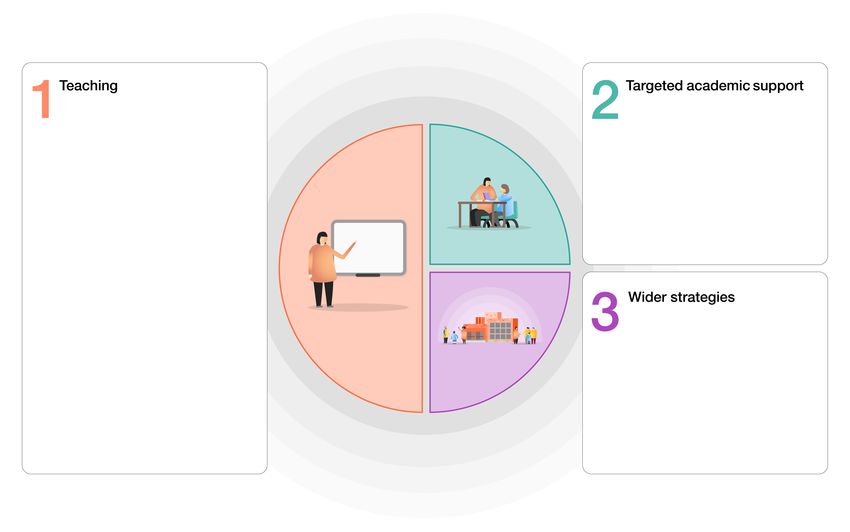
EEF GUIDE TO SUPPORTING SCHOOL PLANNING (2020-21) – TIERED MODEL
Chenderit School – Y7-11
• Virtual Resources produced/acquired and
• Departments to review their curriculum shared with students.
offer for each year group, making • ‘Drop in’ sessions for Y11 students
amendments to compensate for catch up. • KS4 Maths form time intervention
• KS4 English intervention in PE/PSHE
• Quality First Teaching supported by lessons
evidence informed CPD for teachers and • Targeted report system
support staff. • Provide parents and students with
additional support materials.
• Frequent low-stakes testing to ensure all • OUDEs interns teaching Y10 students-
students, and in particular disadvantaged English, Maths, Science and some option
students, experience success and GCSE subjects- looking at content
celebrate the acquisition of knowledge. covered in lockdowns and new concepts
for the summer term 2021.
• Support staff with sustained CPD, having
a focus on using the Google Suite to
support Catch up
• Monitor outcomes on a student and
subject basis and compare this to
• Ensure our most vulnerable pupils have
previous years’, resulting in timely
priority access to classroom teaching and
interventions.
online materials.
• CPD- Rosenshine’s ‘Principles of
• Ensure pastoral contact home for
Instruction’- and the use of visualisers-
disadvantaged students also identifies
explicit teaching and scaffolding-
barriers to engagement due to technology
WAGOLLs.
or a lack of other forms of support.
• Active Learn textbook subscription- online
• Ensure teachers are focused on closing
access for Y10 and Y11 students
gaps for disadvantaged students that
would potentially be greater in a blended
• GCSE Pod subscription Y9-11
learning environment.
• English intervention teaching
• Reading project
1Teaching
Strategy/Year Actions/Dates Responsibility Resources/ Costing Review
Y7 – 11 Curriculum review meetings to take HoD – overseen by Existing meeting time. Exams Suggestions collected
Departments to review their place with JCC, ACW and NLN. ACW and NLN and curriculum meetings and from meetings showing
curriculum offer for each year HoDs can use the curriculum meeting HoD meeting time. review that has taken
group, to ensure learning is discussions already taken place to place with actions planned
effectively sequenced, review their KS3 and KS4 curriculum Scaffold for HoD to use in the and
making amendments to and make amendments are necessary. department time to guide alterations/amendment
address gaps and ACW/NLN to then use a HoD meeting discussion. intended for each
misconceptions where these on 12th October - for HoDs to identify department. Google docs
are identified. topics that need to be revisited as part completed during the
of the recovery curriculum for each year meetings to help manage
group. Recommendation from the DfE workload.
for KS3- “prioritisation within subjects of
the most important components for
progression.”
Departments regularly review Staff regularly share effective practice ACW/NLN/MJB Calendared staff meeting times Lesson observations and
schemes of work, teaching within teams and with other members of work scrutinies.
strategies and student staff through the teaching and learning
response to build on good bulletin, SIM and CPD sessions
practice: for example, the
principles of “Make it stick.”
Y7 – 11 Teams chose appropriate and relevant ACW/NLN/MJB Calendared staff meeting times Lesson observations
Teams build frequent low- ways of building low stakes testing into Evidence from CPD-
stakes testing into lesson their schemes of work; for example as Staff with appropriate Additional software (if//where presentations or printed
plans and schemes of work starter activities, plenary activities or expertise in ICT appropriate to allow regular resources
to ensure all students, and in homework activities. testing and tracking
particular disadvantaged
students, experience Staff are shown how to use technology
success and celebrate the to create Google forms that will allow
acquisition of knowledge. automatic marking and feedback- to use
time efficiently.
Y7 – 11 Use CPD through whole staff sessions ACW/MJB/CRD and Calendared training throughout Lesson observations
(TLT- Teaching and Learning Themes KCS the year for example, 23/9/2020
Build on the gains made in and CTT0 Curriculum Training Time) to and 30/09/2020 Evidence from CPD-
staff expertise in use of ICT promote effective practice in using ICT. presentations or printed
to support learning during the 30/9/20. resources.
second partial closure. These calendared events
Google experts to share expertise. took place with different
Support staff with sustained members of staff sharing
CPD, having a focus on good practice. ICT audit
using the Google Suite to of skills done before and
support Catch up after events. Data to be
2used to inform future CPD
Y7 – 11 Use the review spreadsheets that are in ACW/NLN Calendared discussion Internal reporting dates
Use evidence from the place and produce a report for each ACW/NLN and HoL
reporting system to monitor HoL/SENCo about progress of particular Data from 4Matrix to track
outcomes on a student and students in each year group. Identify progress
subject basis and identify those students with reports that show
underperformance- leading low Progress 8, low attainment, low Data produced and shared
to timely interventions production of homework rates and poor with HoL. DP files
behaviours. This is to be done after produced with summary
each internal reporting date for each data, including photos.
year group. This was shared with all
members of staff.
HoL to put into place relevant
interventions – for example, contacting
home/electronic academic report/
monitoring progress over the next half
term
Y7 – 11 Identify students from year groups as NLN NLN time Assessment at the start
Identify students who require above and prioritise for catch up with and end of the series of
small group intervention and support from a tutor through the NTP or sessions.
organise support either our own staff.
internally or through the This is under review on
National Tutoring Sessions took place in the summer how best to achieve
Programme term. additional tutoring support.
Year 11 English teaching Groups taught by NLN and EMW from NLN/EMW Internal reporting data
English intervention lessons September 2020- December 2020. Students received
in taught PE time significantly higher grades
in English in November
2020 in comparison to the
summer Y10 PPEs.
3Targeted Academic Support
Strategy Actions/Dates Responsibility Resources/ Costing Review
Y7 - 11 5th October- ask HoDs- to identify topics ACW/NLN Time in Guidance Meeting Jan- March 2022 PPE
• Purchase resources that that need to be retaught as part of the data. This has taken place
will support the catch up recovery curriculum and what resources Proforma for collation of and subject areas have
of students in each area can be used/purchased to help support departmental responses invested in resources such
this. as online
Collate responses and prioritise what is Costings to change in light of resources/textbooks and
needed to support the catch-up responses visualliser. See below for
curriculum. breakdown.
Purchase relevant resources
Year 11 A member of each subject team to go NLN 3 hours per department Team reviews
• Use of Oak Academy through the Oak Academy resources Internal data collection
resources and signpost via Satchel One/google points
classroom the relevance of resources
for revision and list online
Oak Academy virtual summer school –
for Y6-12 NLN 1 hour per department
Year 11 initially September/October- CPD- NLN NLN and IT £100 cost of a visualiser Team reviews
• CPD- Rosenshine’s completed the National Colllege training X16 units Internal data collection
‘Principles of Instruction’- session on Rosenshine’s ‘Principles of £1600 points
and the use of Instruction’ recommended in the EEF
visualisers- explicit and shared resources with staff through
teaching and scaffolding- the teaching and learning bulletin.
WAGOLLs.(Additional
rationale: the visualisers September 2020- IT- to source
will benefit all students visualisers for departments- E, M,
Y7-13 and will be able to Hums, Art etc.
be used year on year). Staff will be able to use visualisers to
scaffold and write WAGOLLs for Y11-
staff can write WAGOLLs in ‘real time’.
Y10 – Y11 NLN/MBB/ACW- purchase online NLN- MBB Approx £3500 Internal data collection
• Active Learn online subscription to ActiveLearn for points
textbooks maths/Science GCSE students- February PPE data
foundation and higher students (Two Fortnightly checks on
years- support Y10 and Y11 students) student usage- MBB
• GCSE Pod Y9-11 NLN- purchase online subscription for NLN £7407.72 for a 2 year Internal data collection
GCSE Pod for all KS4 students for 2 subscription. (14.26% discount) points
years. Monitor usage. External outcomes
CPD training session on GCSE Pod. £9680 for a 3 year subscription
(25.31% discount)
GCSE Pod has diversified and now all Purchased Approximately 20000 pods
students in KS3-5 can have access to were watched from
their resources for the cost of Y10 and December 2020-July
4Y11 students. New initiatives: ‘Getting 2021.
ready for KS4’ and ‘Getting ready for
KS5’. There are ready made revision
questions and Check and Challenge for
MAMA.
This was very well received with the
boundary leaper students. Well utilised.
Y10 intervention May 2021- Identified Y10 students are NLN 15 hours of NLN time. Progress will be reviewed
receiving additional academic teaching in each subject area.
from OUDEs interns. Subjects include: Baseline assessments and
English, maths, science, RS, Geography endpoint assessments
and MFL. taken by Y10 students to
4th May- 20th July 2021 identify progress.
5Wider strategies
Strategy Actions/Dates Responsibility Resources/ Costing Review
Y7– 11 Launch resources in assembly/KIT. NLN/ACW/DMC NLN/ACW/DMC time Monitoring of work, report
Gather vulnerable students (per year outcomes, interviews with
• Ensure our most
group) and demonstrate the resources TA support for SEND students students.
vulnerable pupils have
available to them. and vulnerables
priority access to
classroom teaching and
Ensure vulnerable/SEND student
online materials.
receive support in using technology to
access materials
Y7– 11 Tutors and HoLs to discuss access to NLN/ACW/HoLs/HoD NLN/ACW/HoL time This was completed
technology with families. successfully and the data
• Ensure pastoral contact
Signposting to opportunities available Additional hardware, software regarding the number of
home for disadvantaged
Ask HoD/HoL to identify students who and ICT supports laptops and dongles
students also identifies
are not able to access specialist loaned to families is below
barriers to engagement
equipment at home or able to purchase
due to technology or a
specialist equipment
lack of other forms of
support.
Y7– 11 DP strategies highlighted in KIT NLN/ACW NLN/ACW time All departments have
• Ensure teachers are Prioritise DP students with interventions contributed towards
focused on closing gaps HoDs- recovery curriculum in place constructing and
for disadvantaged Use of google meet and the google suite implementing their catchup
students that would by teachers. curriculum. HoD have
potentially be greater in identified topics covered
a blended learning during lockdown and this
environment. has shaped the curriculum
this academic year.
During the second
lockdown google suite was
used to support on line
learning
Y7 - 11 NLN to collate reading habits survey- 5th NLN/EMW EMW and NLN March 2021
• Reading: Metacognition, October July 2021
cultural capital and Y7-9 to complete regular reading tasks
communication with as part of PD- using google forms and
parents satchel one.
KIT information for parents on
metacognition and the importance of
reading
Reading challenges in the school
holidays
6Costings
Year
Resources Requested Subject Impact Group(s) Cost
Student Practical Book Science To ensure all students have access to practical style questions Y9 £504.88
Student Practical Book Science To ensure all students have access to practical style questions Y10 £466.91
Student Practical Book Science To ensure all students have access to practical style questions Y11 £469.61
To create WAGOLLs for all students in lessons and in possible remote
webcams English learning situations. Can be reused year on year. All £900.00
Student access to high quality lectures and seminar material from
Massolit English academics and chief examiners. 14 day free trial well used. KS4 £450.00
Active Learn ebooks Maths Support catch up and online learning Y7 to Y11 £732.60
ebooks Maths Support catch up and online learning £200.00
Online textbooks MFL Students have access to revision materials KS4 £360.00
Pearson online MFL To ensure students have access to revision materials All £2,200
Webcams Tech to support with WAGOLLs (EEF suggestion) All £374.09
Visualisers MFL/SEN All £776.58
online textbooks Maths To support with KS4 students- catch up and online learning. Kerboodle x2 KS4 £360.00
To support catch up and content/support remote learning lesson delivery.
CGP revision books RS Staff can take the booklet and create revision material for future years Y11 £574.00
Google Suite - 3 years All To support on line/remote learning All £6,930
GCSE Pod membership To be used to support students with catchup - GCSE pod has access to £9,680
(3 years) All lots of on line resources All
TA Additional Support All To support students in the classroom accessing work Y7 to Y11 £20,273
Teacher costs for Y7 This is a proportion of HBB's time to deliver catch up for year 7 completing £13,139
Catch up All - Read/Write inc Y7
Total £58,390.67
7Resource to support Learning and Catch up
1. All year groups have an average attendance to live lessons of above 4 live lessons a day – not all lessons are done live
for a variety of reasons so an average of 5 lessons per day is not likely. The vast majority of students were accessing
between 4 and 5 live lessons per day
2. Only 5% of students have an average attendance to live lessons of less than 2 a day – these students are being
supported/challenged through inclusion/SEN/HoL and DP lead
3. Contact is made daily with those students who are not engaging
4. All requests for hardware have been able to be fulfilled
5. Issues with using existing technology at home have been uncovered and support has been provided so devices such as
iPads can be used as a device to get online
6. Nearly 9000 live lessons have taken place since the beginning of this lockdown
7. DP have an average attendance to online lessons that is slightly less than Non DP – approximately 0.4 fewer lessons
per day than the general population. However, this figure may be skewed by the number of DP taking tech subjects at KS4,
as DT is teaching differently than other subjects.
Use of Technology to Enhance Remote Learning and support Catch up
During this and previous lockdowns we have been identifying students without adequate technology at home. This has been
done is a variety of ways:
1. Technology survey in Y7
2. Inclusion team contacting parents of vulnerable students
3. SEND loaning out laptops to students who normally use them in school
4. Investigation once lockdown began into why some students are not accessing online lessons
These investigations have led to the following actions:
1. System of tracking live lessons put into place
2. Logging of all equipment loaned by the school
3. All Y10 DP students receiving a laptop
4. Ordering of laptops through the Government scheme – 44 provided (29.01.2021)
5. Ordering of 4G dongles – 8 provided and all in use (29.01.2021)
6. 5 additional 4G dongles bought
7. 20Gb data sims received through a free scheme with Vodafone – we are using these in our 4G dongles as the DfE data
runs out – we have 20 sims – 3 in use (29.01.2021)
8. Paperwork in place for parents/carers to sign
9. Repurposing of old hardware from the sixth form centre
810. Additional £5000 spent on purchasing more laptops to support catch up
This has resulted in the following equipment being loaned out to students (29.01.2021):
• 85 laptops/repurposed desktops
• 11 4G dongles
Number of laptops/repurposed desktops by year group:
• Year 7 = 7
• Year 8 = 17
• Year 9 = 15
• Year 10 = 25
• Year 11 = 15
• Sixth Form = 6
Outcomes
Year 11
The PG for the Y11 cohort is showing that a positive P8 score being predicted. Catch-up has had a positive impact on the
results for this cohort. Progress of DP is below non DP but with a higher P8 score than achieved in 2019.
Year 10
In term 3 the CWA grade for the Y10 students is closer to zero than it was in term 1. Progress has been made in the last 2
terms of +0.17 on the P8 score. However, CWA for the current Y10 is lower than at the same point 12 months ago for the
current Y11 students. Further assessments are needed to see if the trend of improving CWA continues to move in line with a
P8 of zero or above and to be in line with the current Y11 cohort. Progress of DP students is in line with non DP.
Year 9
In term 3 the CWA of the current Y9 is broadly in line with the CWA that the current Y10 students showed at this point in Y9.
There has been some progress made on P8 for the Y9 cohort from term 1 to term 3. There was an improvement on the P8
of +0.5 from term 1 to term 3. More data is needed to validate this outcome. Progress of DP students is in line with non DP.
9Year 8
The age related expectation (ARE) average score for the cohort is in line with 12 months ago before any national or local
lockdown. The progress being made by the students is also broadly similar to 12 months ago. Progress of DP students is in
line with non DP.
Year 7
The age related expectation (ARE) average score for term 3 for the cohort is in line with term 1 as is the progress. Progress
of DP students in Y7 is slightly above non DP.
Conclusion/Evaluation
Due to not having externally validated data from last academic year and due to the most recent lockdown, further data is
required to get a more accurate picture of the impact the measures put into place have had on the attainment and progress
of each cohort. Additional interventions are also taking place with the DP students this half term and the impact of this will
also be able to be assessed by the end of this academic year. Progress of DP students is broadly in line with non DP;
however, again, further assessments are needed at the end of the academic year, where end of year exams will be used to
validate this data.
June 2021
Andrew Williams
Assistant head
10You can also read


