Creating a world of bionic vision for those who have lost their sight - Corporate Presentation | September 2019 - Pixium Vision
←
→
Page content transcription
If your browser does not render page correctly, please read the page content below

Creating a world of bionic vision
for those who have lost their sight

Corporate Presentation | September 2019
Forward Looking Statements

This document contains information on Pixium Vision’s markets and competitive position, and more
specifically, on the size of its markets. This information has been drawn from various sources or
from the companies own estimates. Investors should not base their investment decision on this
information. This document also contains certain forward-looking statements. These statements
are not a guarantee of the Company's future performance. These forward-looking statements relate
to the Company's future prospects, developments and marketing strategy and are based on
analyses of earnings forecasts and estimates of amounts not yet determinable. Forward-looking
statements are subject to a variety of risks and uncertainties as they relate to future events and are
dependent on circumstances that may or may not materialize in the future. Pixium Vision draws
your attention to the fact that as forward-looking statements cannot under any circumstance be
construed as a guarantee of the Company's future performance and that the Company’s actual
financial position, results and cash flow, as well as the trends in the sector in which the Company
operate may differ materially from those proposed or reflected in the forward-looking statements
contained in this document. Furthermore, even if Pixium Vision’s financial position, results, cash-
flows and developments in the sector in which the Company operates were to conform to the
forward-looking statements contained in this document, such results or developments cannot be
construed as a reliable indication of the Company's future results or developments. The Company
does not undertake any obligation to update or to confirm projections or estimates made by
analysts or to make public any correction to any prospective information in order to reflect an event
or circumstance that may occur after the date of this presentation. A description of those events
that may have a material adverse effect on the business, financial position or results of Pixium
Vision, or on its ability to meet its targets, appears in the sections "Risk Factors" of its “Document
de Base” filed with the French Autorité des Marchés Financiers. By attending this presentation or
accepting this document, you agree to be bound by the foregoing restrictions set out above.

                                                                                                     2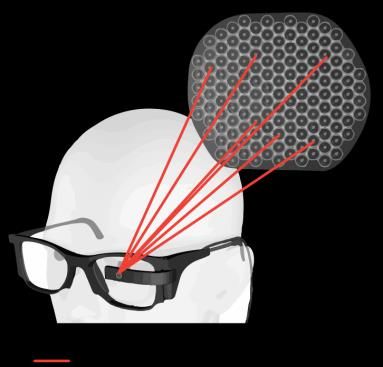
Company Overview
Investing into the last stage of clinical development
▪ Pixium Vision (PIX.PA)
▪ Market Cap: €24m(1) / Cash Position: €10.2m(2)
▪ Headquartered in Paris-France with 29 employees

▪ Focus – Applying proprietary algorithms and artificial intelligence to ophthalmology
▪ A brain-machine technology company leveraging proprietary algorithms and artificial intelligence to
    developing bionic vision system for the treatment of retinal dystrophies

▪ Proof of Concept validated in dry-AMD(3) - a $1.5bn potential with no current therapeutic option
▪ The Prima System met its primary endpoint, demonstrating successful elicitation of light perception in
    the central retinal area in all subjects, exceeding initial expectations
▪ The Prima system could become 1st therapeutic option in dry-AMD with $1.5bn initial market potential

▪ Next development steps
▪ PrimaVera European pivotal study in dry-AMD to be initiated in H1 2020, read-out late 2022
▪ PRIMA US Early Feasibility Study (EFS) to implant patients in Q3 2019

(1) as of September 2nd 2019
(2) As of June 30th 2019                                                                                   3
Age-related Macular Degeneration: Progressive
central vision loss
The Well Served wet-AMD market vs the Underserved Dry-AMD market

Age-related Macular Degeneration                               Dry-AMD
▪ Eye disease leading to progressive loss of central vision    ▪   Affects 80-90% of AMD patients
▪ Onset mostly around 60 years old                             ▪   Chronic progressive neurodegenerative disease
▪ Significant impact on quality of life with restrictions to   ▪   Challenging multifactorial pathogenesis
   read, drive, conduct daily tasks and interact socially      ▪   No current treatment approved
                                                               ▪   Large unmet medical need

                                                                    Pixium’s Prima System could become
                                                                          1st approved treatment

                                                               Wet-AMD
                                                               ▪   Affects 10-20% of AMD patients
                                                               ▪   Relatively well treated with Lucentis(1) and Eylea
                                                                   generating over $10bn(2) in annual sales
                                                               ▪   Often evolves to Dry-AMD despite treatments

                                                                                                                        4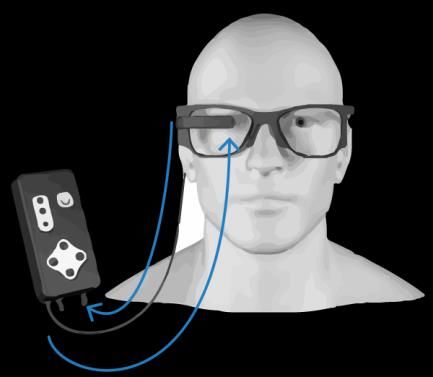
Progressive Loss of Visual Acuity in AMD patients
Leads to Dramatic Loss on Quality of Life

                                                      DALY as a function of Visual Acuity
         DALY
              1

            0.9

            0.8

            0.7

            0.6

            0.5

            0.4

            0.3

            0.2

            0.1

              0                                                                                                                        Visual acuity
                                                                20/100

                                                                         20/200

                                                                                  20/300

                                                                                           20/400

                                                                                                    20/800

                                                                                                                  LP

                                                                                                                               Death
                                                                                                             HM
                    20/25

                             20/30

                                     20/40

                                              20/50

                                                        20/70

                                                                                                                       No LP
     Consistent data in range 70-79 and 80-89 years old based on DALY1 analysis

(1) DALY is an adjusted version of QALY including the impact of disability                                                                       5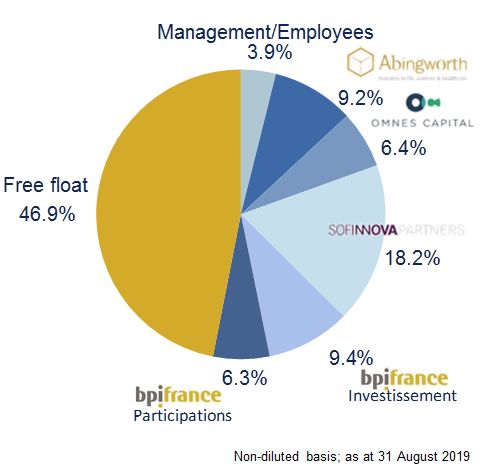
Pixium’s Prima System to Initially Target
15,000 Dry-AMD Patients (US & EU)

                                                                 Atrophic Dry-AMD
                            1.5-3.8m
                                                                        (GA)

                                                                  Late stage
                         350,000-500,000
                                                             (VA 20/400 and below)

                            170,000                    Almost no foveal perception

                            120,000                Adressable patient population
                                                          (30% not seen)

                             15,000
                                       Targeted population given age, comorbidities
                                                 and cognitive disorders

                                Initial market potential of $1.5bn

                                                                                      6
Prima System, a breakthrough
machine-brain interface for Dry-AMD
7Prima System, a Cutting-Edge Technology Supported
by Multi-disciplinary Partners
Universities and Research Institutes Vision Clinics
8Prima System – 2 Pieces of Equipment
[1] Vizualisation & image analysis [2] Wireless subretinal implant
system
▪ Mini-camera captures images of the ▪ Subretinal implant surgically inserted on
environment as a video stream retina via minimally invasive surgery
▪ Pocket computer transforms the images ▪ Implant electrically stimulates the retina,
into stimulation signals using Pixium’s generating a signal the brain will interpret
proprietary algorithms as bright light
▪ Smart glasses receive images and project
patterns onto implant
implant
Patient retina
9Prima System – 3 Steps Vizualisation Process
Step 1 Step 2 Step 3
Generating Signal based on Transmitting Signal to Converting Signal into
surrounding environment subretinal implant retina stimulation
2
1 1
2
Laser beam
1. Mini-camera captures images ▪ Glasses project via laser a 1. Stimulated implant cells use
of the environment as a video pattern at the back of the eye photovoltaic property to
stream and send it to pocket based on signal received transform energy received
computer from image analysis system from laser beam into
electric current/stimulation
2. Pocket computer transforms ▪ This laser stimulates specific 2. Electric current stimulates
the images into stimulation retina leading to optical
cells of the subretinal implant
signals using proprietary nerve stimulation and brain
algorithms and sends back interpretation of stimulus
signals to glasses
10An Evolutive “Implant / Image Processing” Ecosystem
Working Seamlessly to Provide Enhanced Visual
Acuity
Current
clinical
setting
Potential further
enhancement obtained
through implant progress
~2,500 pixels
of 40µm
Potential algorithm and AI- ~1,500 pixels
related enhancements of 50µm**
~700 pixels Invitro tests indicate
of 75µm** over 10 years lifetime
378 pixels
The pictures are for illustration purpose only
of 100µm* * Version in clinical trials
** Versions under pre-clinical validation
11Clinical development
12EU & US Clinical Development Overview
18-month FIH 12-month PrimaVera follow-up CE mark
follow-up CE mark submission
12-month FIH
follow-up
6-month FIH
follow-up
PrimaVera Pivotal Study
France First-in-Human Study
2018 2019 2020 2021 2022 2023 2023+
US Early Feasibility Study Expected US Pivotal Study
12-month follow-up
Potential earlier FDA submission should
parallel US/EU development be authorised
13Clinical Data Collected to Date –
France First-in-Human 6-Month and 12-Month Follow-Up1
▪ Clinical benefit at 6-month demonstrated in the 5 Central visual perception at 6-month
implanted patients : Octopus Visual Field Measurement
▪ All patients demonstrated elicited visual perception
(primary endpoint)
▪ All patients progressively identified letters and
sequence of letters
2 3 4 5
▪ Safety profile demonstrated at 6-month: Patient 1
▪ No serious post-operative complications during the System
follow-up OFF
▪ No decrease in natural vision vs pre-trial acuity
months
System
▪ 12-month follow-up demonstrated:
6
ON
▪ Further improvement in elicited visual perception
▪ Sustainable safety profile
Prima provides the best prosthetic visual acuity to date
(1) France first-in-human study (PRIMA FS) recruited 5 patients. Primary endpoint is Elicitation of
visual perception at 12 months with up to 36-month follow-up.
14Conclusion
15Pixium Vision Equity Story
Prima System, a technology platform, with
world-leading internal expertise and knowhow
Prima System entering last development stage with clear
US/EU development path
Clinical benefit exceeded expectations clearing the
development roadmap to CE mark
No close competition in Dry-AMD, an initial addressable
market of $1.5 bn
Pixium funded through H1 2020
16Experienced management team
Lloyd Diamond, CEO
▪ 25+ years experience in the medtech industry
▪ Extensive experience in development, commercial and financing
in orthopaedic, ophthalmology and other clinical segments
Guillaume Buc, CTO
▪ 20+ years medtech industry experience
▪ GE Healthcare (1995-2013) – CTO Interventional Cardiology R&D
Karine Chevrie, RA/QA Dir.
▪ 20+ years medtech industry experience
▪ EOS Imaging (2006-2015) – QA/Reg Director
Ralf Hornig, Clinical Affairs Dir.
▪ 20+ years retinal implant technology experience
▪ Since 2001, working with IMI then Pixium
Didier Laurens, CFO
▪ 15+ years financial markets experience Korian (2014-2017)
▪ Director Financing and IR
17Shareholders
18Thank you
Lloyd Diamond, CEO | E: ldiamond@pixium-vision.com
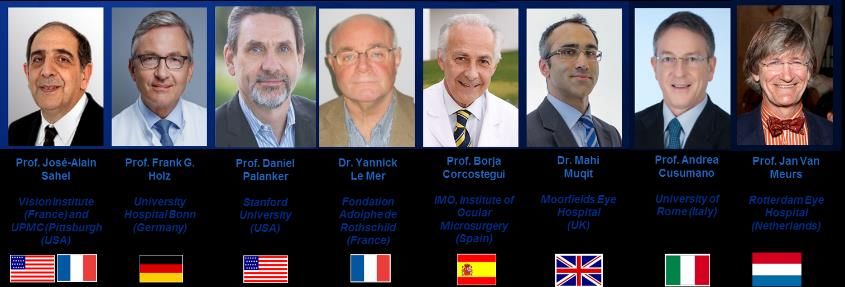
19Developments Supported and Advised by
Knowledgeable Scientific and Medical Experts
…
▪ International
▪ Multidisciplinary: from basic science to medical expertise
▪ Highly recognized and respected in their field
20You can also read


