Creating Gender Inclusive Learning Environments for Transgender and Nonbinary Student
←
→
Page content transcription
If your browser does not render page correctly, please read the page content below

Creating Gender
Inclusive Learning
Environments for
Transgender and
Nonbinary Student
Julián Cancino, he/him/his
Gender and Sexuality Center Director
Brandeis University

Andrea Bowers, Trans Liberation: Building a Movement
(CeCe McDonald), 2016, ink-jet print, 95 × 57 1/4".
What You Want To Know

1.   How to best approach gender fluidity (pronouns may change over time, e.g. she/they,
     he/they)
2.   Etiquette for non-binary genders (e.g. so-called xenogenders, which do occur albeit
     infrequently, or neopronouns)
3.   How can we get faculty, particularly older faculty, to become invested in creating
     more gender-inclusive learning environments?
4.   What are good strategies to set an inclusive tone for a course at the beginning of
     lectures or smaller sections? (e.g. should we have students verbally introduce
     themselves, have them fill out notecards with information, or other options?)
What is the life expectancy
of transgender people today?
Factors

 ●      Political (Wedge Issue)
 ●      Legal (Narrow vs. Broad Definitions)
 ●      Medical (Lack of Research)
 ●      Culture (Social Construct)

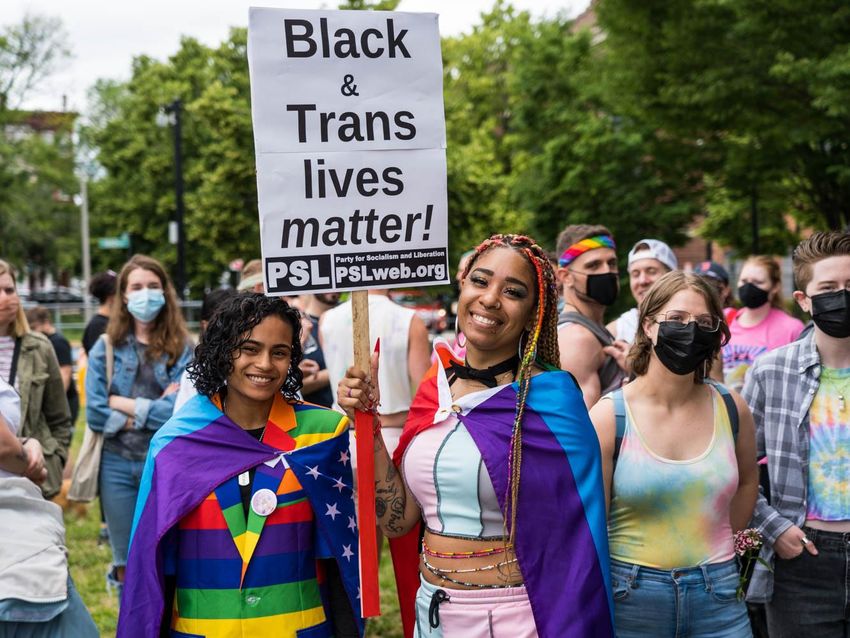
     March and Vigil for Black Trans Lives,
     Boston University Daily Free Press, 2021
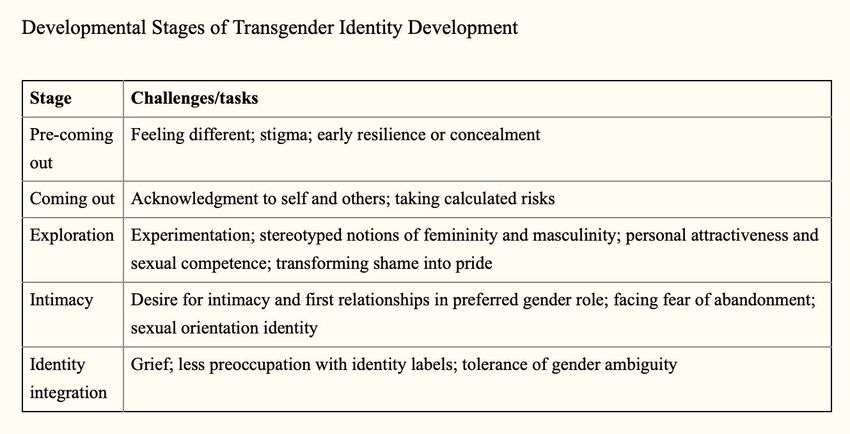
Bockting & Coleman, Adult Development and Quality of Life of Transgender and Gender Nonconforming People, Current Opinion in
Endocrinology, Diabetes, and Obesity (2016).
Gender Identity                                    Gender Expression

The gender(s), if any, with which a person identifies.   External appearance of one's gender identity,
Gender identity can be the same or different from        usually expressed through behavior, clothing,
an ascribed sex.                                        haircut or voice, and which may or may not
                                                        conform to socially defined behaviors and
      —GSC and WGS at Brandeis University               characteristics typically associated with being
                                                        either masculine or feminine.

                    Fun fact: The transgender flag                           —The Human Rights Campaign
                    was created in 1999 by Monica
                    Helmes in Arizona.
Transgender                                            Nonbinary

A person whose gender identity does not                A person whose gender identity rejects the gender
correspond to an ascribed sex. A transgender           binary of woman and man. Nonbinary people may
person may take social, medical, or legal steps to     identify as agender, genderqueer, Two Spirit, or
transition from ascribed sex to identified gender. A    gender nonconforming.
person may identify as transgender before or
without taking any steps to transition, as gender is         —GSC and WGS at Brandeis University
self-determined and not based on social, medical,
or legal recognition.

      —GSC and WGS at Brandeis University
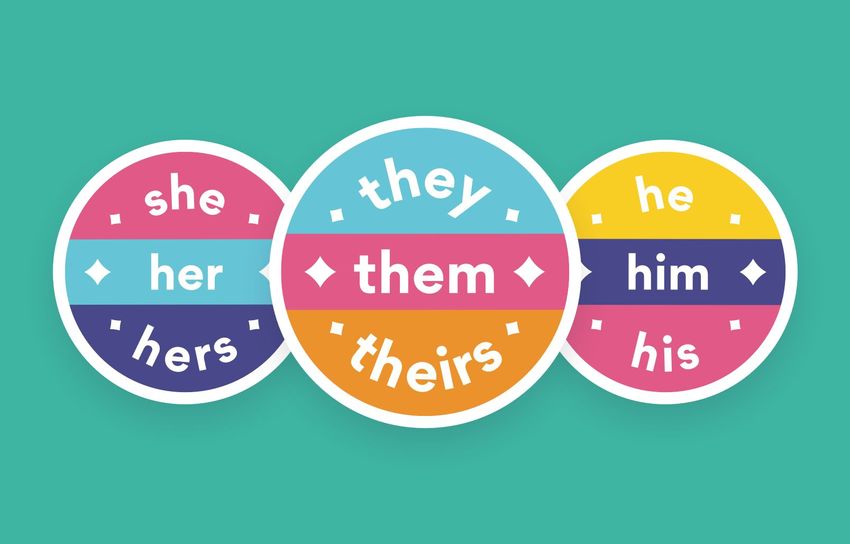
Jacob of Melrose
Pronouns                                                Lived Names

●   Personal pronouns                                    ●   A lived name is a self-chosen personal or
      ○   First Person: Referring to the speaker             preferred professional name used instead of
          (I, We, Us)                                        one’s legal name.
      ○   Second Person: Referring to addressee
          (You)                                          ●   Lived names are to be used whenever
      ○   Third Person: Referring to a third party           possible in the course of university business
          (He, She, They)                                    and education.
                                                         ●   To change your name legally as an adult in
●   They, third person personal pronoun, singular:           Massachusetts, you need to go through a
                                                             court name change proceeding.
    “Used with reference to a person whose sense of
                                                         ●   GLAD Transgender ID Project at glad.org/id.
    personal identity does not correspond to
    conventional sex and gender distinctions, and
    who has typically asked to be referred to as they
    (rather than as he or she).”

                         —Oxford English Dictionary
Pronouns Lived Names
Instead of: Instead of
● Assigning a person a personal pronoun ● Reading names out loud or publishing a list
based on appearance or other assumptions of names without asking each person
Try: Try:
● Putting your pronouns next to your name on
● Wear a name tag when in large gatherings
your email signature
● Sharing your pronouns when speaking to a ● Share your name when speaking to a new
new person person
● “How should I refer to you?” ● “What is your name?”I made a mistake. What do I do now?
Remember that you are not defined by your Remember:
mistakes. If you make a mistake, fix it and learn.
Gender identity and expression is a protected
If you made a mistake:
category. Repeated use of incorrect pronouns or
1. “Oops. I’m sorry I used the wrong pronouns.” neglecting to correct the behavior of others, could
2. Use the correct pronouns. result in a violation of the institution’s
nondiscrimination policy and state or federal laws.
If somebody else makes a mistake:
1. “I think they use he/she/they pronouns.”
2. Use the correct pronouns.Case Study
Ari is an upper-class student at Brandeis. Ari
calls you, the coach, to tell you that Ari is
feeling disrespected by a teammate, who
keep calling Ari by the wrong pronouns in front
of the entire team. Ari is transitioning and this
feels like a lot to go through alone. It’s the
beginning of the semester and showing up to
practice is challenging because it feels to
them like nobody cares about trans people.
Ari wonders what could be done to help the
teammate understand the wounding that is
being caused.
What would you do?You can also read


