Creation of a Regional Circular and Ecological Sphere
←
→
Page content transcription
If your browser does not render page correctly, please read the page content below
08

     Creation of
     a Regional Circular
     and Ecological Sphere
     (Regional CES) to Address
     Local Challenges
     For the country as a whole to build a sustainable society, it is important to
     create a Regional CES that complements and supports regional resources. Each
     region will demonstrate its strengths by utilizing its unique characteristics,
     thereby building a self-reliant and decentralized society where different
     resources are circulated within each region, leading to symbiosis and exchange
     with neighboring regions according to the unique characteristics of each region.

      2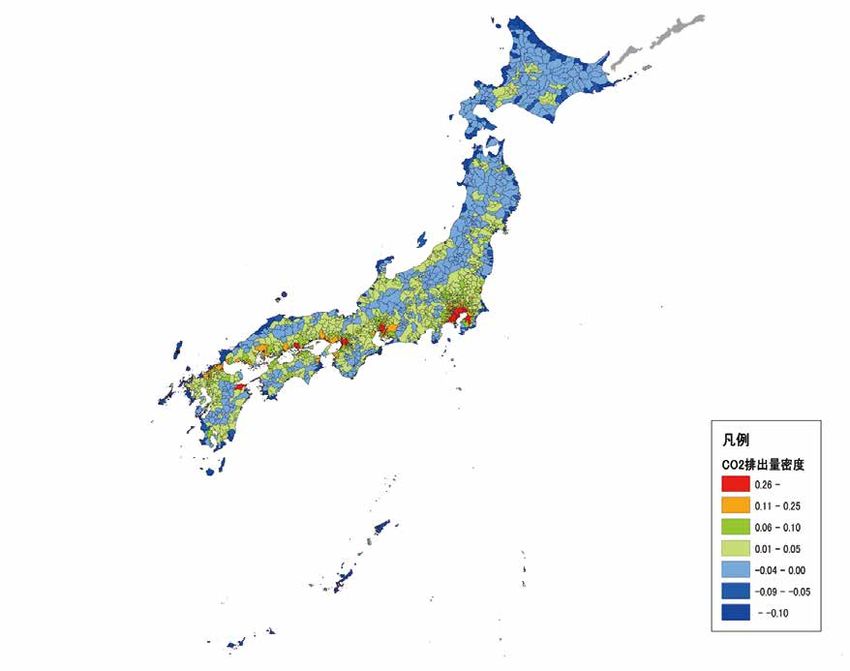
Annual Report
                                                                                                                                                   on the Environment
                 2.   Creation of a Regional Circular and Ecological Sphere (Regional CES) to Address Local Challenges                                  in Japan 2018   09

    1
Regional Circular and Ecological Spheres
Management and quality improvement of local resources
Local socio-economic activities depend on local                                           Conversely, improvement of the quality of the
resources. Local resources are not just limited to                                        resources can lead to enhancement of the
locally available energies, natural resources,                                            socioeconomic activities. Keeping in mind that the
infrastructure, and industrial conglomerations but                                        distinctive cultures and the additional value arisen
also include the indigenous culture, climate,                                             from the diversity, uniqueness, and collaboration of
groups, and communities. For a region to be                                               regions can be the engine for national growth, we
sustainable, its local resources must not be                                              can say that sound management of local resources,
impaired by its socio-economic activities.                                                which are the source of local diversity, and the
                                                                                          improvement of their quality are quite important.

The importance of a Regional CES
While each region is required to pursue efforts                                           Each region demonstrates its strengths by utilizing
toward II2ES, while taking advantage of its own                                           its unique characteristics, thereby building a
characteristics, it is impossible for any local                                           self-reliant and decentralized society where
socio-economic activities to be entirely                                                  different resources are circulated within each
self-contained in this modern age of extensive                                            region, leading to symbiosis and exchange with
socioeconomics. In this context, the creation of a                                        neighboring regions according to the unique
Regional CES that complements and supports                                                characteristics of each region is important for a
regional resources by building broader networks,                                          region to achieve II2ES and remain sustainable.
which is composed of natural connections                                                  The key to creating a regional CES is to re-discover
(connections among forests, the countryside, rivers                                       regional resources and make optimum use of them
and the sea) and, economic connections (composed                                          in a sustainable manner. Finding new values in
of human resources, funds, and others), thus                                              overlooked resources of each region will be the first
complementing each other and generating synergy.                                          step moving towards II2ES.

Conceptual illustration of a Regional CES

                                                       Natural resources/ecosystem services
                                                       + Food, water, timber + Natural energy
                                                       + Water purification, prevention of natural disasters                                        countryside

                                 Mountainous,
Forests                        agricultural and                     Self-reliant and                                    Cities
                                fishing villages                  decentralized society
                                                                   Circulation of local resources
                                                                  (natural, material, human, financial)

                                                             Local production for local consumption,
                                                                introduction of renewable energy

                                                                        Provision of funds and human resource
                                                                        + Participation in nature conservation activities such as eco-tourism
                                                                        + Consumption of local products + Support through socio-economic systems
                                                                        + Investment in local funds
        Rivers                                                                                                                                               sea
Source : Ministry of the Environment
10                   2.   Creation of a Regional Circular and Ecological Sphere (Regional CES) to Address Local Challenges

        2
     Making a low-carbon community
     to create a Regional CES
     Community revitalization through introduction
     of renewable energies
     Potential renewable energy resources of some kind                                 introduction of, or investment in, renewable energy
     are found in all communities in Japan.                                            will return the energy balance to equilibrium and
                                                                                       help build a resilient local economy. One estimate
     The potential supply capacity nationwide is estimated to                          suggests that investments in renewable energies and
     be about 1.8 times as large as the total energy demand.                           energy efficiency projects required to meet Japan's
     At present, however, about 90% of municipalities                                  2030 greenhouse gas emission reduction target will
     have an energy deficit, causing capital to flow out                               generate some 3.4 trillion yen worth of impact on
     of the community. Redirecting funds to the                                        the Japanese economy.

     Renewable energy introduction potential (by municipalities)

                                                                                                                                             Renewable
                                                                                                                                             energy
                                                                                                                                             potential
                                                                                                                                             LOW
                                                                                                                                                      0.26
                                                                                                  Municipalities with demand exceeding
                                                                                                  their renewable energy potentials and               0.11     0.25
                                                                                                  needing to buy from others
                                                                                                                                                      0.06     0.10
                                                                                                  Municipalities generally self-sufficient
                                                                                                  by its renewable energy potential                   0.01     0.05

                                                                                                                                                      −0.04    0.00
                                                                                                  Municipalities with renewable energy
                                                                                                  potential exceeding their demand and                −0.09   −0.05
                                                                                                  able to sell to others
                                                                                                                                                              −0.10
                                                                                                                                             HIGH CO2 emission density
                                                                                                                                                   1,000ton CO2/ha

     Source : Ministry of the Environment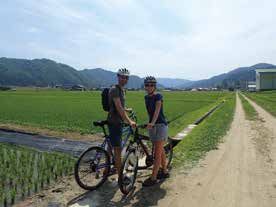
Annual Report
                                                                                                                                                on the Environment
                                                                                                                                                     in Japan 2018            11

Local production of energy for local consumption
Efforts are already underway through the                                                   demand as much as possible, and thus achieve
collaboration among local firms, citizens, and                                             decarbonization and self-sufficiency in energy (also
financial institutions to develop and use local                                            in the sense of disaster risk reduction), and create
renewable energy to satisfy the local energy                                               new opportunities for employment and income.

           Local energy potential fully utilized by direct supply management

     The city of Yonago, Tottori Prefecture promotes the
     concept of “local production for local consumption” to
     generate new flows of funds within the region by
     setting up a power and heat distribution company
     named Local Energy Corporation in 2015 in a joint
                                                                                                                           SoftBank Tottori Yonago Solar Park
     venture with five local private firms.
                                                                                                                           (solar power generation)
                                                                                                                           Source: Sharp Corporation
     Waste-to-energy, solar energy and geothermal
     energy sources account for about 60% of the electric
     power that Local Energy distributes. The company
     has the capacity to manage its power supply to match
     the fluctuating local demand and can adjust optimum
     energy balance according to the local demand                                                                          Yonago City Clean Center
                                                                                                                           (waste-to-energy power generation)
     characteristics. It has also created new employment
                                                                                                                           Source: The city of Yonago, Tottori Prefecture
     opportunities in the area.

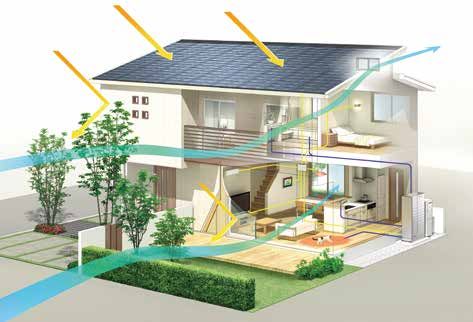
Making houses and office buildings low-carbon
Net Zero Energy Buildings (ZEB) and Net Zero                                               new public facilities by 2020 and the average of all
Energy Houses (ZEH) are being built to make                                                new construction by 2030. In addition, the plan
office buildings and family houses energy neutral.                                         calls for ZEH in a majority of custom-built
The final energy consumption by civilian sector is                                         single-family houses that home-building
about 30% and is increasing faster than other                                              companies construct by 2020 and provides for
sectors. Energy conservation in this sector is an                                          measures to encourage such construction.
urgent challenge for Japan. In this context, ZEB is                                        Sekisui House Ltd. reports that over 70% of the
a focus of attention. The Plan for Global Warming                                          new single-family houses they build by order are
Countermeasures calls for net zero energy in all                                           already ZEH.
                                                     Extending eaves cut direct sunlight                                           Wind enters from south openings leave
                                                     in summer and take it in in winter.         Solar panel power generation
                                                                                                                                   out of high windows and north windows
A “Green First ZERO”
house model

                               Lattice balcony for
                               better ventilation
                                                                                                                                            Long-life LED lighting
                                                                                                                                            High efficiency air
                                                                                                                                            conditioning saves energy

                                                                                                                                        Fuel cell
                                                                                                                                            Fuel cell generates electricity
                                                                                                                                            and hot water at the same time
                                                                                                                                            using gas. Floor heating gives
  Deciduous leaves block
                                                                                                                                            additional comfort.
  sunlight in summer and
  let it in in winter.

                                                                                                                        HEMS makes the eco-life easily visible
 High performance heat insulation
      - High insulation KJ window sash
      - Argon-gas filled double-glazed glass                                                                        Wind runs through the “Slow Living” room.
                                                                                                                    Openings in the north let natural air pass through.

Source : Sekisui House Ltd.
12                   2.     Creation of a Regional Circular and Ecological Sphere (Regional CES) to Address Local Challenges

        3
     Use of natural resources to
     create a Regional CES
     Revitalization of local industries by the use of natural resources
     Utilization of blessings from nature, a kind of local                               well as in tourism, local industries and the locality
     resources, has the potential to enrich the locality in                              itself can be turned into brands and can enjoy
     its own way consistent with its distinctive culture                                 economic benefits.
     and climate. In agriculture, forestry and fisheries as

     Project to Fully Enjoy National Parks
     Japan has put up the targets of increasing the                                      million by 2020, more than double the numbers in
     inbound visitors to 40 million a year by 2020 and                                   2015. The Ministry of the Environment has
     60 million by 2030. In line with this and in                                        selected eight national parks as pilot projects for
     pursuit of bringing Japan's national parks to a                                     focused efforts to provide high quality and
     world-class level, a target has been set to increase                                value-added tourism in accordance with “National
     national park visitors from outside Japan to 10                                     Park Step-up Program 2020.”

     Overview of the Step-Up Programs of the eight selected national parks                                                                                       1

      1 Akan-Mashu National Park                                                                        8

                                   Rebirth as an attractive recreational location                                                             2
                                   offering novel nature conservation activities,
                                   comfortable, high quality accommodation,
                                   participatory Ainu culture workshops and other                           5
                                   activities
      2 Towada-Hachimantai National Park                                                                                                  3
                                                                                                    6
                                   Enjoyment of native wilderness on a variety of
                                   mountain paths, along with the traditional hot
                                                                                                                        4
                                   spring culture. Improvement of scenery based
                                   on removal of abandoned buildings and other                  7
                                   eyesores to create attractive facilities
      3 Nikko National Park                                                             6 Aso-Kuju National Park
                                   Opening up of public facilities to attract quality                           Implementation of a field museum concept with the
                                   hotels and enable visitors to enjoy examples of                              historical man-made grasslands at its core, offering
                                   Japan’s culture and history such as the World                                activities focused on enjoyment of the majestic
                                   Heritage site of Shrines and Temples of Nikko,                               grassland and volcano scenery, and also possibly
                                   former embassy villas, and Royal Resort Nasukogen                            entrance fee-funded grassland egeneration
      4 Ise-Shima National Park                                                         7 Kirishima-Kinkowan National Park
                                   Installation of a private-sector café in the                                 Promoting multi-day tourism of park destinations
                                   lookout offering panoramic views of the ria                                  through attracting quality hotels, together with
                                   coastline dotted with fishing and farming                                    development of a diversified tour program enabling
                                   villages                                                                     visitors to experience a volcanic landscape steeped in
                                                                                                                history and mythology, and possible refurbishment of
                                                                                                                the wide variety of hot springs for enjoyment by
      5 Daisen-Oki National Park
                                                                                                                foreign visitors
                                   Opening public facilities to and otherwise working   8 Keramashoto National Park
                                   with private sector initiatives to develop
                                   integrated facilities for the enjoyment of various                           Enhancing value through offering opportunities
                                   ready-made recreational activities including                                 to participate in conservation activities and
                                   hiking and hands-on nature/cultural experiences                              utilizing environmental cooperation tax levied
                                                                                                                on park entry

     Common             5 Cooperating with private enterprise and relevant agencies to promote the attractions of Japan’s national parks both in Japan and
     initiatives        overseas      5
                                     Integration of park use in visitor centers     5
                                                                                 Clear communication of park boundaries through establishing conspicuous
                        entrances as standard fixtures     5
                                                           Implementation of universal design, including installation of Western-style toilets

     Source : Ministry of the Environment
Annual Report
on the Environment
in Japan 2018 13
Cafe Terrace in the Sky in collaboration with private sector
Ise-Shima National Park is working to increase the
number of foreign visitors to the area under the concept
of “Ise Jingu, a site where a long, splendid, multifaceted
history unfolds. Satoyama and Satoumi, a land of
enrichment interweaved with the workings of people and
nature.” A part of such efforts is the opening of a cafe and
the renovation of Yokoyama Observatory located in the hill
north of Ago Bay with a commanding view. In parallel,
English and other foreign languages are added to the
signs and exhibits of Yokoyama Visitor Center to pursue Panoramic view of Yokoyama Tenku Café Terrace
synergy. The renovation of observation deck was Source : Ministry of the Environment
completed in March 2018 and the cafe terrace in the sky
(Mirador Shima) opened in August of the same year. The
visitors can enjoy the local delicacies of Ise-Shima while
being marveled by the panoramic views of Ago Bay.
Conceptual drawing of rest area in Yokoyama Tenku Café Terrace
Source : Ministry of the Environment
Eco-tourism
In addition to natural resources, local culture, custom serves to protect the natural environment, promote
and traditional lifestyle, which are closely linked to tourism business, stimulate the local economy, and
the natural environment, can be understood as offer environmental education.
resources. An effort to make use of such resources
in a sustainable manner is eco-tourism, which
Hida Satoyama Cycling to journey through the life of Hida
Chura-boshi Company of the town of Furukawa, the city
of Hida, Gifu Prefecture, capitalizes on the rich local
resources to offer eco-tours for visitors to journey
through the good old traditions and culture of the area.
The most popular eco-tour is the Hida Satoyama Cycling
to enjoy satoyama landscape on a mountain bike with a
guide. The tour offers the opportunities to feel and touch
the ecosystem of satoyama and the people there, an
experience an ordinary tourist would never be able to
have. This cycling tour garners high praise since its start
in 2010 and continues to receive new visitors and
repeaters.
Picture of Satoyama Cycling
Source : Chura-boshi Company14
Hot springs (Onsen)
Recent technological advancement has made it the visitors to enjoy a variety of programs making
possible to make use of the thermal energy of hot full use of the surrounding nature, history, culture,
springs (onsen) as long as the water is above a food in addition to bathing in hot springs and
certain temperature, making multistage utilization interacting with local people and other visitors so
of onsen heat feasible. The Ministry of the that they are rejuvenated both physically and
Environment is advocating a new style of spa mentally.
bathing coined “ONSEN Stay,” which encourages
Joint use of onsen heat
Yunohama Onsen in the city of Tsuruoka, Yamagata
Prefecture, has joined hands to utilize the untapped
thermal energy of the onsen and has reduced CO2
emissions. In April 2017, the association installed a
central hot water distribution system with heat
exchanger to adjust the high temperature of the raw
onsen stream and distribute hot water to 12 facilities
for use for warm shower and other purposes. By
replacing the fossil fuels previously used for privately
owned boilers, some 15% reduction (879 tons) in CO2
emission is expected annually. In addition to the CO2 Panoramic view of Yunohama Onsen
reduction, the project will have a branding effect on
Yunohama Onsen as an environment-friendly resort
and thus revitalize the area.
Heat recovery type heat pump
Exterior of central hot water distribution system
Source : Yunohama Gensen Facility Co., Ltd.Annual Report
on the Environment
in Japan 2018 15
Utilization of wood biomass resources
Following the 2012 start of the Feed-in Tariff low-carbon and resource saving and at the same
(FIT) system, wood biomass power generation has time contributes to better management and
surged. Use of timber from forest thinning and maintenance of forests. In this way, it helps
other unutilized wood materials for energy preserve and enhance ecosystem services and also
purposes increased to 4.33 million m3 in 2016, contributes to increased economic benefits and job
more than five times as large as in 2012. Use of opportunities in the area.
such unutilized wood materials helps achieve
Sustainable community development based on the forest of 100 years
The village of Nishiawakura, Okayama Prefecture,
launched the “Initiative with a 100-year Vision of
Forests” in 2008 and has been working to achieve
100% renewable energy self-sufficiency by the use of
forest biomass and other sources. More specifically,
wood-fired boilers were installed at the village's
three hot spring facilities to heat up the raw spa
water. The expected benefits include 20% saving in
fuel cost, 13 million yen in annual retained earnings,
and 379 tons in CO2 emission reduction. Through this
initiative, 30 local venture businesses mostly in
forest-related fields were established, creating over
Central facilities for forest progressed
140 new employment. by the “Initiative with a 100-year Vision of Forests”
Wood-fired boiler for hot spring facilities
Source : The village of Nishiawakura, Okayama PrefectureYou can also read


