Crurent and Future Massive Redshift Surveys - LASTRO Light on the Dark - ISDC
←
→
Page content transcription
If your browser does not render page correctly, please read the page content below
Crurent and Future
Massive Redshift Surveys
      Jean-Paul Kneib      LASTRO

                           Light on
                           the Dark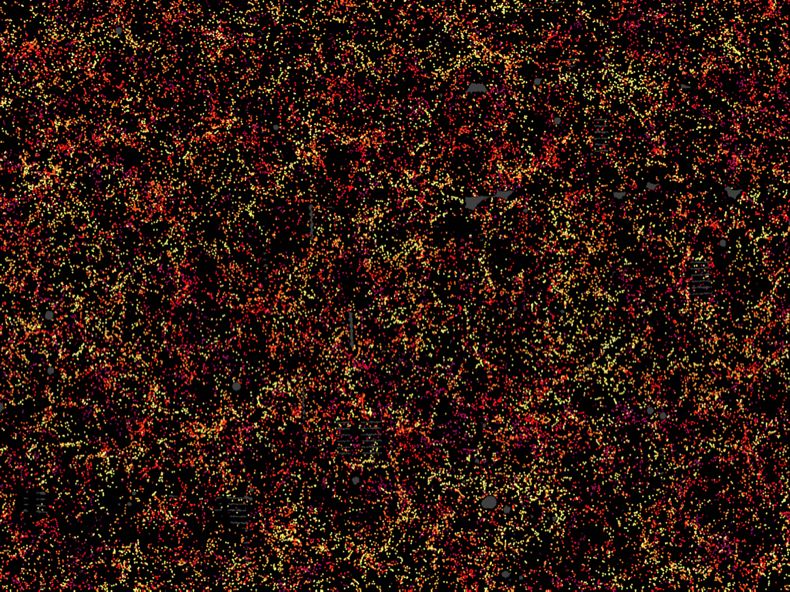
Galaxy Power Spectrum
                                               Size of the Horizon: mass-radiation
                                                           equilibrium
3D mapping of the position of                                                          Dark Energy:
         galaxies                    non-gaussian initial
                                        fluctuations
                                                                                Baryonic Acoustic Oscillation

                                                                                              Dark Matter Warm/
                                                                                                    Cold

                                                              Neutrinos
                                                               Masses

                                                    Galaxy halo occupation                      Growth of
                                                      distribution (HOD)                        structure
   Distribution of galaxies (SDSS)

     EPFL/LASTRO - J.-P. Kneib                                                                              2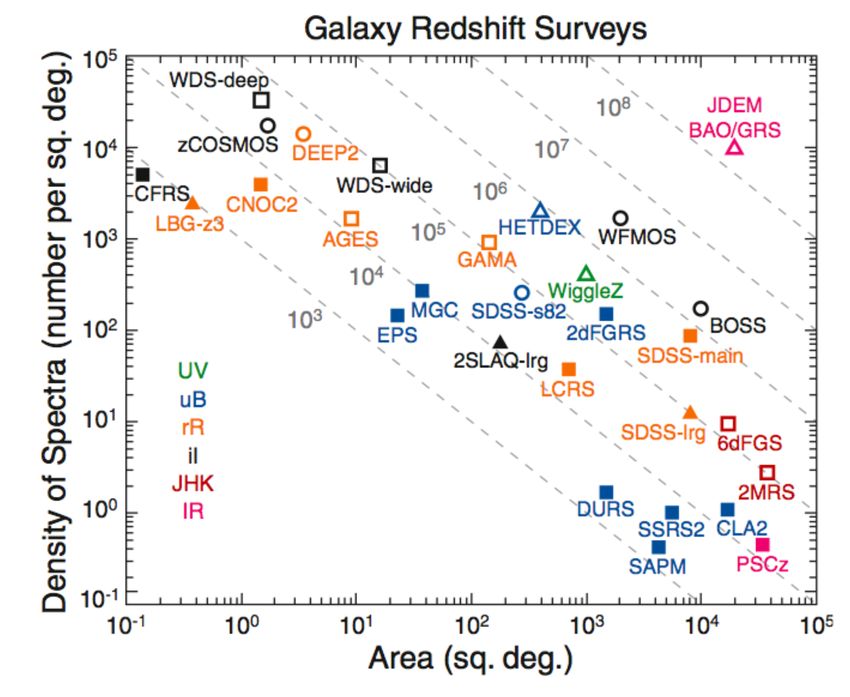
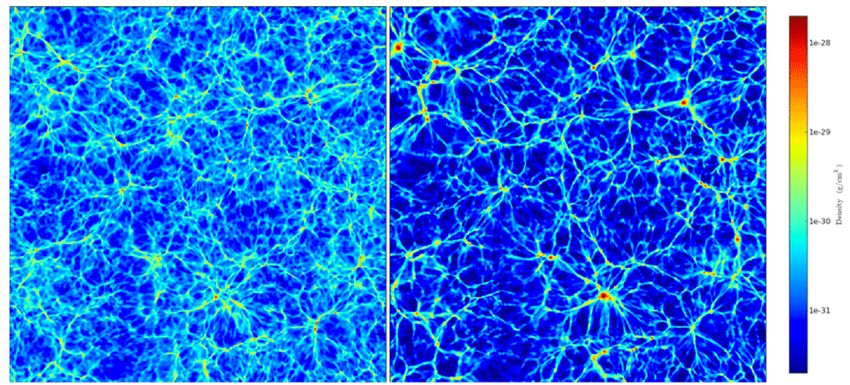
Neutrinos impact on LSS
How sum of neutrino masses affect the density field

                                                                     28
                                                                10

                                                                     29
                                                                10

                                                                          Density (g/cm3)
                                                                     30
                                                                10

                                                                     31
                                                                10

       X                         X
            m⌫ = 0 eV                m⌫ = 1eV
                                           eV

     EPFL/LASTRO - J.-P. Kneib   Figure Credit: Agarwal & Feldman         3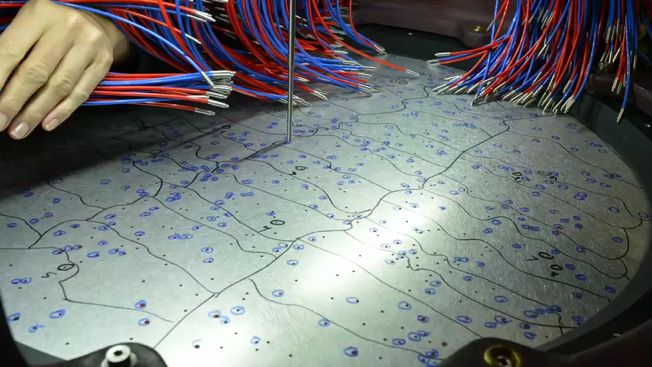
Broad  BandPower
    Broadband Power   Spectrum
                   Spectrum
                                          2025
• Redshig Space DistorPons:
  Since P is smaller on scales of
  interest, noise (nP)-1 is larger
  and geqng greater density
  than DESI would pay off.
• Different tracers might
  miPgate cosmic variances.
• Higher density tracers might
  trace the dark maBer more
  efficiently
• Might get more objects at
  lower S/N by exploiPng              Future projects:
  photo-z’s
                                     MSE, SSSI (DOE),
      EPFL/LASTRO - J.-P. Kneib         China, ESO               4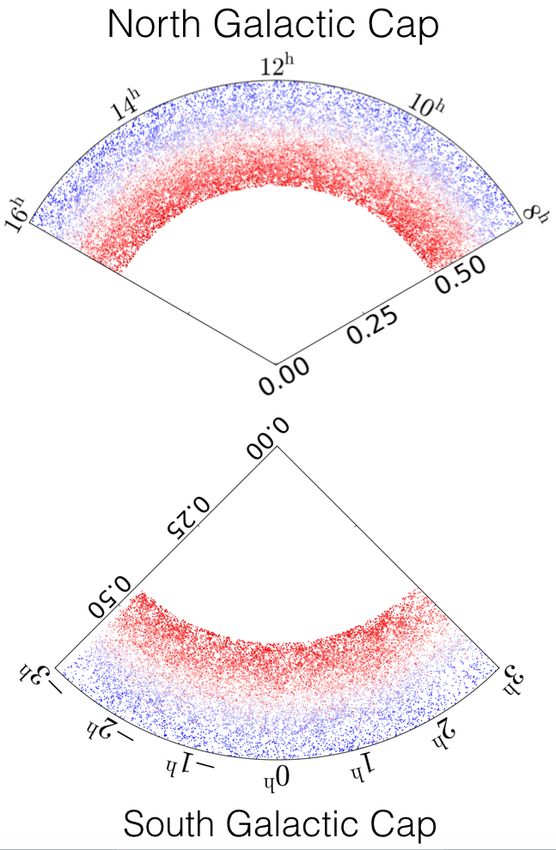
Massive Redshift Surveys
                                            • Hubble (1930): expanding Universe
                                            • CfA Redshift Survey (1985): first
                                              large scale structures
                                            • 2dF (2000-6): 1500 deg2
                                            • SDSS (2002-9): 5700 deg2
                                            • zCOSMOS (2005-10): 2 deg2
                 MOONS
                                            • WiggleZ (2011): 800 deg2 (BAO)
                                     DESI
                                            • SDSS-III/BOSS (2014): 10,000 deg2
                             eBOSS
                                              BAO/LSS (BAO)
                                            • e-BOSS (2014-2020): BAO/LSS:
                                                7,500deg2 w/ LRG+QSO & 1,500deg2 of ELGs
                                            •   DESI (2019), 4MOST (2021) Optical
                                            •   MOONS (2020) Infrared
                                            •   Euclid (2020) Space mission
                                            •   SKA (2025) Radio Telescope
                                            •   future projects ...
 EPFL/LASTRO - J.-P. Kneib                                                                 5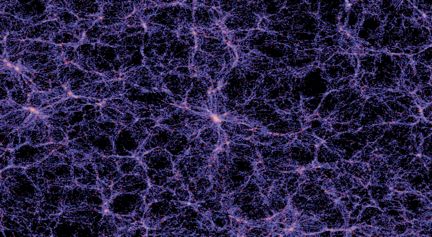
The Sloan Telescope & Spectrograph
•   90 cm aluminium plate with 1000 holes for fibers,

•   45 min to plug for typical 1 hour observation on sky

•   up to 9 plates observed per (good) night

•   1.5 millions redshifts in ~4 years

•   The best multiplexing spectroscopic facility still

      EPFL/LASTRO - J.-P. Kneib                            6
BOSS       (2009-2014)

Busca et al 2013

EPFL/LASTRO - J.-P. Kneib                 7
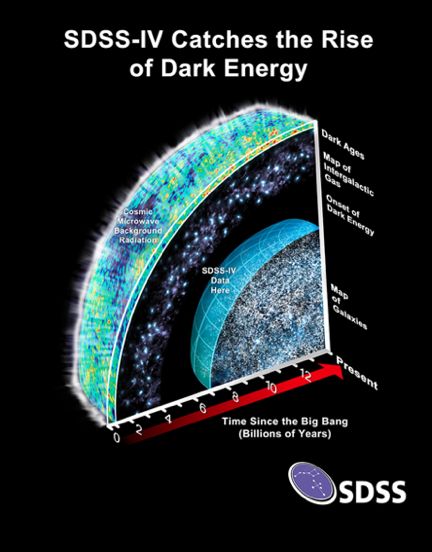
eBOSS             (2014-2020)
                            •   eBOSS = cosmology survey of SDSS-IV
                                ★ Fully funded for 5yr (likely 6)
                                ★ 1/4 of the telescope time
                                ★ Uses BOSS spectrograph, targets
                                  from SDSS+WISE imaging
                                ★ ~150 participating scientists
                            •   extend BOSS to unexplored
                                redshift window 0.6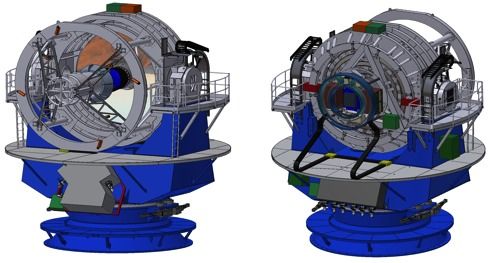
DESI     (2019-2024)

          5000 fiber actuators

         New 3° field-of-view
         corrector

       10 New
       spectrographs
Mayall 4m Telescope
                                                  35 Millions redshifts

                            • 30 4x4k detectors   Most of them will be ELGs

                            •100 Tb/year          •BAO at sub-% level
                            •Complex data/algo    •Gravity
                                                  •Neutrino Masses
                                                  •Inflationary model

       EPFL/LASTRO - J.-P. Kneib                                          9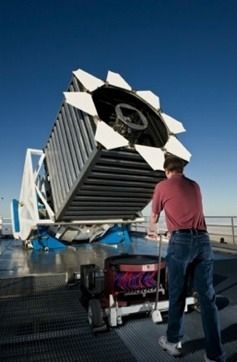
Euclid   (2020-2025)
                            •   Euclid is a major wide-field imaging
                                and spectroscopy space mission, lead
                                by ESA (+NASA participation).
                                Launched in 2020.
                            •   Strong implication of Swiss
                                Astronomers (UniGe, EPFL, UniZH,
                                FHNW).
                            •   15’000 sq.deg to be covered with
                                space-images: 260 Gb/day; ~100 Tb/
                                year.
                            •   Euclid data will also included other
                                ground-based images/spectroscopy
                                (including LSST) ~10 Pb/year.
                            •   Switzerland will host one of the
                                Euclid Data Centre.
                            •   Pierre Dubath presentation for details.
EPFL/LASTRO - J.-P. Kneib                                                 10
4MOST (2021-2026)
! Cosmology!and!galaxy!evolu0on • Approved by ESO council - Southern Sky
! Euclid spectroscopic survey to start in 2021
• Complementary to DESI in the North
! High4energy!sky
' eROSITA • Complementary to Euclid (focus on 1Number of spectra
Number of spectra
4MOST
DESI
Euclid
BOSS
eBOSS
SDSSI/II
WiggleZ
2MRS
CFA
Year experiment finishes
Shirley Ho
EPFL/LASTRO - J.-P. Kneib 12DESI Data Needs
• Example for DESI (4MOST/Euclid-spectro will be similar)
★ Data Volume (2016-2023):
✦ DESI Imaging Data: 850 Tb
✦ DESI Data: 800 Tb => 100 Tb (once data reduced)
✦ Simulations (for analysis): 150 Tb
✦ Total: 1’800 Tb ~ 2 Pb => 1 Pb (once reduced)
★ CPU hours:
✦ operation 2019-2023 : 10-20 millions CPU-hours/year (mostly for
main pipeline 2D images => spectra - data analysis/mining will
likely be less)
✦ simulations ~20 millions CPU-hours
• DESI approach is to use NERSC supercomputer facility (not distributed)
EPFL/LASTRO - J.-P. Kneib 13EPFL/LASTRO - J.-P. Kneib 14
Example of Data Usage
 •    Computing 1D and 2D correlation function (number of
      pairs of galaxies separated by a distance of ‘r’ as a function of
      ‘r’) on data and on mocks (complexity: handling selection
      function and completness information)
 •    Full mocks, including simulated observation strategy (100s
      of mocks compare to 1 set of cosmological data)
 •    Extracting information from spectra & other data:
     ★ double objects spectra (lenses, AGN and SN signatures) -
       mining spectra
     ★ variability spectra - comparison across database
     ★ combining spectra information with imaging/lensing -
       combining data information across database

EPFL/LASTRO - J.-P. Kneib                                                 15
EPFL/LASTRO - J.-P. Kneib 16
You can also read


