CSC Cultural Studies Colloquium
←
→
Page content transcription
If your browser does not render page correctly, please read the page content below
An interdisciplinary
   forum for the
                                                        CSC
presentation of new
  research on the
important issues of                                   Cultural
     our time.                                         Studies
                                                     Colloquium
                           The Campus
                          4400 University Drive
                         Enterprise Hall, MSN 5E4
                            Fairfax, VA 22033

                            Contact Us                Cultural Studies
                                                       PhD Program
                             (703) 993.2851
                           cultural@gmu.edu
                       www.culturalstudies.gmu.edu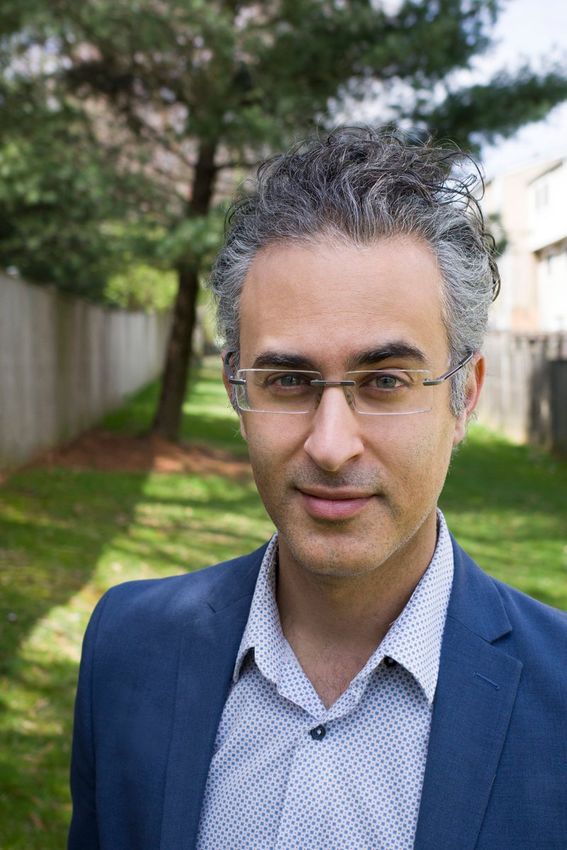
FEB. 25, 2021, 4:30pm                                                                          MAR. 18, 2021, 4:30pm
Jamie McCallum,                                                                                        Gavin Mueller,
Middlebury College                                                                           University of Amsterdam
"Labor's Forgotten Fight:                                                                   "Breaking Things at Work:
Renewing the Struggle for                                                                      The Luddites Are Right
Shorter Hours Under                                                                         About Why You Hate Your
Neoliberalism."                                                                                                  Job."
                                                                                                  https://gmu.zoom.us/j/92198595473
https://gmu.zoom.us/j/98178563191

The annual hours of labor in the US declined                                               "Luddite" has become a pejorative term
for over a century, then began to reverse                                                          for anyone with an antipathy for
course, rising steadily since the 1970s. But   MAR. 4, 2021, 4:30PM                             technology. But could the historical
this wasn’t an even process. Scheduling
norms became uneven and subject to
                                                                                           experiences of those machine-breakers
frequent change, and many workers today,
                                                      Gerald Horne,                      have relevance for current debates on the
even before the pandemic, seek more hours.         University of Houston                 politics of automation, digital technology,
This talk, based on Worked Over: How            "A Deeper History of an                  and the future of work? Drawing from his
Round-the-Clock Work is Killing the
American Dream, examines this historic
                                               Insurrection: When Past                        latest book Breaking Things At Work,
shift and the possibilities for a labor        Meets Present on 1/6/21."                   Gavin Mueller argues for Luddism as an
movement to gain a greater control over         https://gmu.zoom.us/j/98556141922                approach for anticapitalist politics.
work time.
                                                  The remarks will trawl on his own
                                               published work in order to illuminate
                                                the hinge moment that was 1/6. The
                                                   class composition of the earliest
                                               settler colonial node by London in the
                                                    1580s in North America will be
                                                  deployed to shed light on the class
                                                dynamics of 1/6; similarly, the class
                                               collaboration of that node will be tied
                                                    to that of 1/6--just as the class
                                                 struggle that has characterized the
                                                 journey of Africans on these shores
                                                   will be employed to explain their
                                                      relative absence among the
                                                         insurrectionists on 1/6.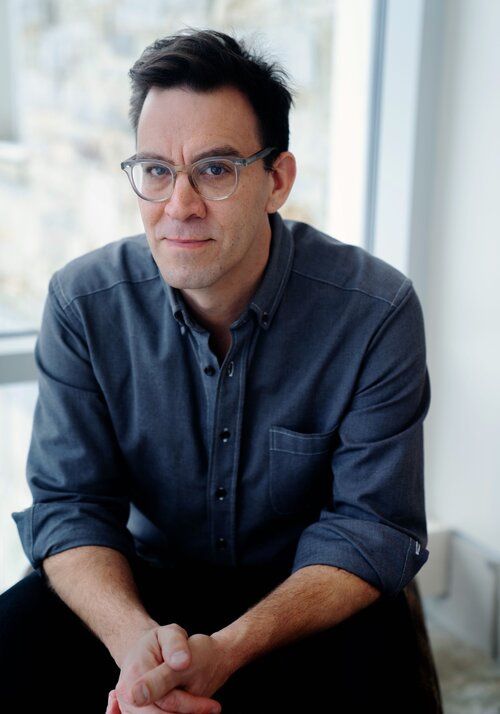
MAR. 25, 2021, 4:30pm                                                                                 APR. 1, 2021, 4:30pm
Rashmi Sadana,                                                                                                 Ann Cvetkovich,
George Mason University                                                                                    Carleton University
"The Mobilities of the Delhi                                                                         "Public Feelings in a Time
Metro."                                                                                                          of Pandemic."
                                                                                                      https://gmu.zoom.us/j/93781283399
https://gmu.zoom.us/j/93191846662

The arrival of the Delhi Metro – an ultra-                                                                  This presentation draws on Cvetkovich’s
                                                                                                         writings over the course of the pandemic in
modern urban rail system and South Asia’s
                                                                                                    monthly meetings with her Austin-based Public
first major, multi-line metro – has become a                                                          Feelings group, whose participants are also in
touchstone for discussions of urban                                                                       Chicago, Vancouver, and Ottawa, Canada.
development, gendered social mobility, and                                                             These short pieces constitute efforts to make
India’s increasingly aspirational culture. A                                                                       sense of what is going on – or just
street-level ethnographic view of the city,                                                         document how it feels – with attention to topics
this research captures the contradictions of       MAR. 25, 2021, 4:30pm                            such as covid silver linings (and other pandemic
a capital-intensive mega project that seeks                                                           keywords); Zoom-based art and performance;
to equalize how people of diverse social                 Hatim El-Hibri                                protest under conditions of social distancing;
classes and backgrounds get around. This            George Mason University                            dialectics of hope and despair; black feminist
talk will focus on the different kinds of                                                                  resources for survival and other forms of
mobilities of the Metro, including transport,   "Another Future was Possible: The                    collective care and mutual aid; and the relation
gender, class and caste, and explore the         Before/After Image and Beirut's                    between the HIV/AIDS pandemic and the covid-
relationship between the Metro as symbol,                                                               19 pandemic. Through an exploration of the
                                                     Postwar Construction."                         current state of theories of affect and sensation,
material infrastructure, and new form of
sociality in the city.                               https://gmu.zoom.us/j/93191846662                  she would also hope to prompt discussion of
                                                                                                      how the pandemic feels in Canada and the US.
                                                  What role do images play in remaking cities
                                                  after conflict? And what can the history of
                                                urban space tell us about infrastructure? This
                                                 talk examines the case of Beirut after its civil
                                                war (1975-1990), and shows how the creation of
                                                 a new economic regime depended on media.
                                                   Imaging technologies played a key role in
                                                     urban design and in managing public
                                                perception of the private real estate company
                                                 that was given control of the city center, but
                                                also in securing new links to global finance. By
                                                     problematizing the work of images of
                                                     before/after, which contrast damaged
                                                  buildings with a future-perfect, it becomes
                                                    possible to understand how other, more
                                                    equitable urban futures are foreclosed.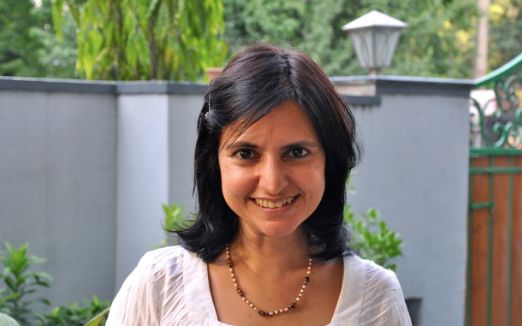
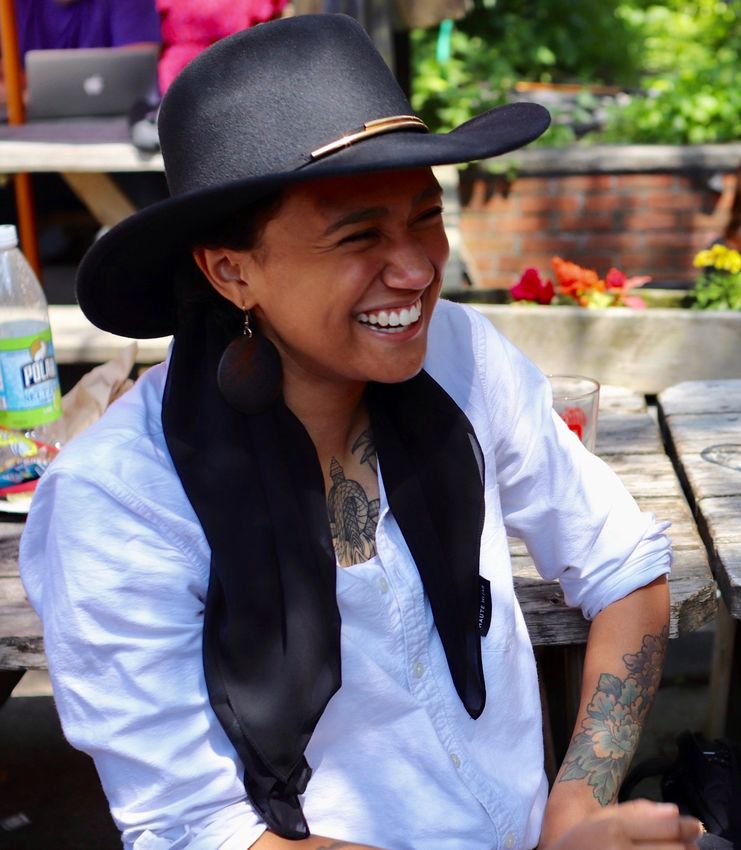
APR. 22, 2021, 4:30pm                        APR. 29, and
   Robin Dembroff, co-speaker                 May 6, 2021, 4:30pm
          Yale University                     Cultural Studies PhD
"What the Transracial/ Transgender
         Analogy Misses."
                                                   Students
    https://gmu.zoom.us/j/91495228452       George Mason University
 Almost without exception, people take
    the question, “Should someone be               CULT 998
  recognized as a woman?” to be settled
 by first answering the question “Is that
                                             Dissertation Proposals
                                              https://gmu.zoom.us/j/94511086015
   person really a woman?” They do the
    same in the case of race, taking the
      question, “Should someone be            Cultural Studies doctoral
 recognized as a Black?” to be settled by     students will each give a
   the answer to, “Is that person really     15-minute presentation to
    Black?” We think this reasoning is
                                              outline and discuss their
 based on a mistake: what matters is not
  what race and gender "really are", but     proposed research on the
  rather what race and gender concepts         dissertations they are
      ought to do. We argue that this          about to embark upon.
   paradigm shift reveals an important
                                              Members of the Cultural
  asymmetry between transgender and
         transracial identification.            Studies Program and
                                             George Mason University
    APR. 22, 2021, 4:30pm                         communities will
      Dee Payton, co-speaker
                                               participate in the Q&A
        Rutgers University
                                              with the candidates after
      "What the Transracial/
                                                 their presentations.
   Transgender Analogy Misses."
  https://gmu.zoom.us/j/91495228452
CSC is presented by the Cultural Studies PhD Program at George Mason
 University, bringing scholars of diverse methodological, theoretical, and
topical expertise to share new and cutting-edge interdisciplinary research.
We are grateful to the African and African American Studies Program, the
Departments of History, Philosophy, and Sociology and Anthropology, the
     Women and Gender Studies Program, and the Interdisciplinary
  Programming Support Fund from the College of Humanities and Social
Sciences for funding that helped make this possible. For questions or more
  information, please contact colloquium coordinator Denise Albanese,
       dalbanes@gmu.edu, or contact the Cultural Studies office at
                           cultural@gmu.edu.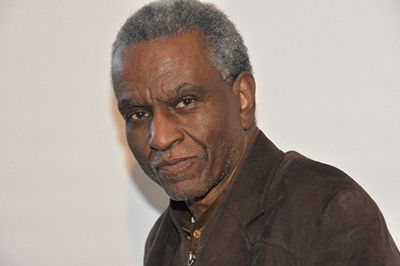
You can also read


