CYCLE POLICY 2018 - Fianna Fail
←
→
Page content transcription
If your browser does not render page correctly, please read the page content below
CYCLE POLICY 2018
EXECUTIVE SUMMARY

Fianna Fáil is committed to greatly increasing
participation in cycling in Ireland, for both
transportation and leisure purposes. We
believe that benefits for individual health and
well-being can be realized by encouraging
physical activity and cycling has a significant
role to play in achieving that objective. In
addition, cycling has a part to play in helping
to improve our environment and reduce
damaging emissions.

Major changes are required in order to
boost participation in cycling. Fianna Fáil is
committed to substantially increase spending
on cycling infrastructure, especially on
segregated cycle lanes, and to allocate a
greater share of the overall transport budget
to cycling. Cycling will assume a central role
within transport policy and planning will be        making in urban and rural areas across
structured to integrate cycling concerns in         Ireland.
all new development projects. That means
integrating cycling with public transport           Cycle safety concerns are paramount and
services, providing safe and secure indoor          Fianna Fáil will work to ensure that all road
bike parking facilities at bus and train stations   users, cyclists and motorists alike, receive
and close to other public amenities, as well        training to minimize accidents on our
as providing options for taking bikes on            roads. Furthermore, there will be greater
public transport, whether local or intercity.       emphasis on enforcement of traffic laws, for
                                                    cyclists and motorists to increase safety. We
Providing safe and accessible infrastructure        will introduce minimum passing distance
is a major element in attracting greater            legislation to keep cyclists safe.
participation. However, additional incentives
will be introduced in order to maximize             Finally, recognizing the role that cycling plays
the number of people cycling. These will            as a leisure activity, both for Irish people and
be targeted especially at daily commuters           for visiting tourists, Fianna Fáil will invest in
cycling to and from work and will yield             more greenway projects in scenic rural areas
benefits both for individuals but also more         and also in our towns and cities.
broadly for society and our environment.
Measures will include making it easier
for people to avail of the cycle-to-work
scheme, as well as further supports for bike
maintenance.

A Cycling Division will be created within the
NTA to champion cycling on a national basis         Robert Troy, T.D.
and to work closely with local authorities to       Fianna Fáil Spokesperson on Transport,
put cycling at the heart of transport decision      Tourism & Sport
INTRODUCTION

In April 2009, the previous Fianna Fáil          To support cyclists, Fianna Fáil will:
government published Ireland’s first National
Cycle Policy Framework (NCPF). The Policy        • Increase the availability of physically
predicted the need for greater emphasis            segregated cycle lanes
on the development of cycling in Ireland,
citing the many benefits, both health and        • Establish a National Cycling Champion
transport, associated with cycling as well
as the potential to reduce greenhouse gas        • Rollout ample bike storage facilities on
emissions.
                                                   public transport and near public transport
                                                   hubs
Fianna Fáil’s commitment to the principles
contained in the NCPF has not changed
in the intervening years. Yet we recognise       • Appoint Cycling Officers to every Local
that time has not stood still and people’s         Authority
behaviour and perceptions of cycling
have moved on. The last decade has               • Expand bike sharing schemes to include
seen growing interest in cycling as an             more suburbs and areas
alternative means of transport, particularly
for commuters in large towns and cities,         • Reduce the VAT payable on bicycle repair
but also as a leisure pursuit. While this is a
positive development, more must be done          • Allow people to avail of the Bike-to-Work
to encourage this trend.                           Scheme every 3 years instead of every 5

The NCPF recognised that a broad range of        • Provide safe cycling education to every
measures, and not just single interventions,
                                                   primary school student
would be required to encourage greater
participation in cycling. The policy
                                                 • Review speed limits to make cycling safer
document included 19 high level objectives,
with over 100 detailed goals and set a target
of 10% of all journeys by bicycle by 2020.
We are still far short of that target and many
of the objectives included in the document
have not been put into practice. In fact,
under the current Government, cycling has
been more or less neglected.

Fianna Fáil remains committed to the
objectives of the NCPF and to promoting
cycling so that a greater number of people
become involved in this activity and reap
the benefits of better health and wellbeing.
In this document, we set out our renewed
commitment to achieving the aims of the
NCPF and the steps needed to get there.
INCREASING POPULARITY OF CYCLING

  Census 2016 figures demonstrate a                  infrastructure in the city, such as segregated
  significant increase in cycling as a               cycle paths.
  commuting option in Ireland. In April 2016,        Recent research also indicates that cycling
  56,837 people cycled to work, which                is often the quickest mode of transport
  represented an increase of 43% since 2011.         for commuting in built up areas during
  Two thirds of all cyclists were in Dublin          rush hour traffic. The research, which
  city and suburbs, totalling 38,870 persons         was carried out in Dublin, showed that
  cycling to work. In contrast, just 2,330           even for commuting longer distances
  people cycled to work in Cork city and             from the outskirts of the city into the city
  suburbs, 1,874 in Galway, 968 in Limerick,         centre, travel by bicycle was often quicker
  and 395 in Waterford.                              than travel by car and even more so than
                                                     commuting by public transport.
  A study conducted in June 2018 showed
  that during rush hour traffic in Dublin,              Too many cyclists’ lives are lost on Irish
  the number of cyclists was almost twice               roads, something that is simply wrong..
  the number of cars, the next most                     We must employ a range of measures to
  numerous vehicle type. In the past ten                tackle this and make Ireland a safer place for
A years,
  studymembership
           2
             conducted       in June
                        of Cycling      2018
                                    Ireland hasshowed      that during rush hour traffic in Dublin, t
                                                        cyclists.
  increased by almost 700 percent. The graph
was   almost
  below         twice
         illustrates the the  number
                         figures          of the
                                  and shows    cars, thePeople
                                                           nextmaymostnotnumerous
                                                                          see cycling asvehicle
                                                                                         a viable type. The
the  figures
  growing       and shows
             popularity         theasgrowing
                        of cycling     a mode popularitymode of oftransport
                                                                    cyclingforasreasons
                                                                                 a mode     of than
                                                                                         other  transport in
  of transport in Dublin. It is also important          safety, too. Commuters, for example, may
important      to note that the increase in participation
  to note that the increase in participation in
                                                                        in cycling in recent years has o
                                                        have no access to secure storage facilities
backdrop      whereyears
  cycling in recent     there
                            has has   beenagainst
                                 occurred     little or or
                                                        noshowers.
                                                            investment
                                                                     We have inaproviding     safer cycling
                                                                                 range of proposals to      in
city, such aswhere
  a backdrop      segregated      cyclelittle
                       there has been     paths.
                                              or        make cycling an easier and more attractive
  no investment in providing safer cycling              choice.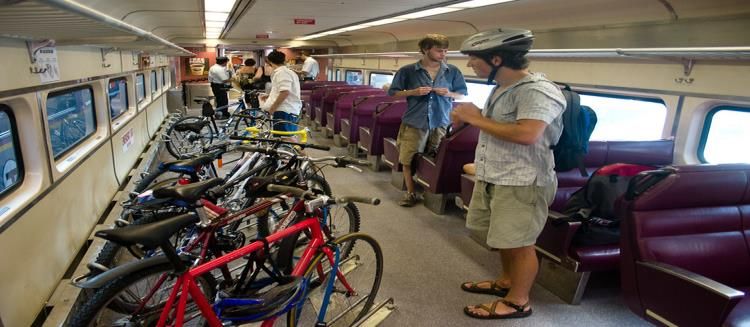
PROMOTING GREATER PARTICIPATION

While cycling is among the most accessible                                     In both the Netherlands and Denmark, there
and inexpensive modes of transport,                                            has been a concerted effort to encourage
there are nevertheless significant barriers                                    participation in cycling and to provide the
preventing a great number of people from                                       infrastructure necessary to attract cyclists.
participating. Chief among them is concern                                     As a result, a cycling culture has existed in
for safety.                                                                    those countries for some time, but other
                                                                               cities have made significant gains in recent
Cyclists are among the most vulnerable                                         years starting from a low base. For instance,
road users, yet are exposed to significant                                     Seville in Spain has seen a massive increase
risks when travelling alongside buses, cars                                    in journeys conducted by bicycle following
and lorries. This would be less of a concern                                   the introduction of cycle lanes.
if cyclists had dedicated cycle lanes,
ideally segregated from other road users.                                      Seville saw a tenfold increase in the
At present, even where cycle lanes exist,                                      number of journeys by bike in the three
they often do not offer sufficient space or                                    years following the construction of the
protection for cyclists.                                                       first segregated cycle lanes in 2007. It
                                                                               now has over 120 km of segregated cycle
Additionally, we will provide cycling safety                                   lanes and has installed other cycle specific
education for children to ensure that                                          infrastructure, such as new traffic lighting
children can enjoy the health benefits and                                     systems. Cycling went from only 0.5% to
independence that cycling provides in a safe                                   7% of all journeys within the city over a ten
manner.                                                                        year period, with average daily bike users
                                                                               up from 6000 to over 70,000. The graph
SEGREGATED CYCLE                                                               below shows the substantial increase in the
                                                                               number of journeys by bicycle in the city
LANES                                                                          following the introduction of segregated
                                                                               cycle lanes. The graph also shows that even
The provision of cycling infrastructure that                                   though the number of cyclists has increased
facilitates safer cycling has been shown to                                    in Seville, the accident rate has not
substantially increase journeys undertaken                                     increased during the same period, arguably
by bicycle. In cities such as Copenhagen                                       due to safe segregated cycle paths.
and Amsterdam, where dedicated cycle
infrastructure exists, a large number of                                       As part of the BusConnects programme,
residents rely on cycling as a preferred                                       the Government proposes to provide cycle
mode of transport. For decades, both cities                                    lanes alongside planned new bus routes
have invested in bicycle-friendly measures,                                    that would be separated from other traffic
infrastructure and technology and these                                        “as far as is practicable”. While Fianna Fáil
cities continue to represent the standard to                                   welcomes recognition of the need to
which other cities aspire. The graph below                                     develop cycle facilities in Dublin and right
shows that in Copenhagen the number of                                         across Ireland, the undertaking in relation
journeys by bicycle has now surpassed that                                     to segregated cycling facilities must be
of cars within the city.                                                       stronger.

Census 2016 Profile 6 – Commuting in Ireland.
http://irishcycle.com/2018/07/04/liffey-cycle-route-delayed-again-while-count-shows-twice-as-many-bicycles-than-cars-on-dublins-quays/
http://www.ucd.ie/newsandopinion/news/2018/june/20/cyclistsreignsupremeinbattleforrushhourcommute/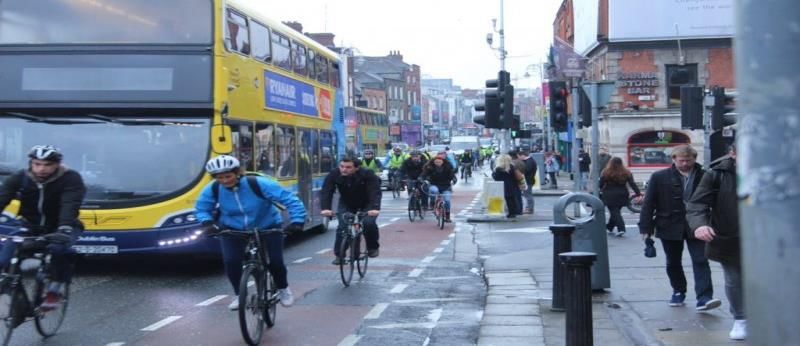
Given the scope of the proposed project,          other road users. Outside towns and cities,
there is a unique opportunity to ensure that      segregated cycle lanes should be installed
all cycle lanes created along new routes          alongside national roads, utilizing space
are fully segregated. Those considering           from the hard margin where appropriate.
participation in cycling because of improved      Finally, bicycles can sometimes travel
and safer facilities could be discouraged         where motorised transport cannot. This
if they are required to join other traffic on     includes accessing routes not available to
busy roads, even if only for a short distance     cars, particularly in urban residential areas,
along the route. Therefore, there must be         such as laneways, that link one residential
a commitment that all new cycle lanes             area to another. As a result, cycling can
constructed as part of the BusConnects            often enable permeability away from main
scheme in Dublin and elsewhere in Ireland         transport routes during journeys. Fianna
are fully segregated.                             Fáil believes that permeability should be
                                                  formalised and encouraged in urban areas
In addition to the proposed BusConnects           alongside segregated cycle tracks, with due
routes, Fianna Fáil will work with city and       regard for pedestrian safety and well-being.
countySegregated      Cycle
         authorities to       Lanes
                         develop   segregated
cycle paths wherever possible which are              Putting in place safe cycling infrastructure
      The provision of cycling infrastructure
protected   from  on  street traffic and parking.    will that  facilitates
                                                          be necessary        safer cycling
                                                                          to encourage        has been sho
                                                                                        greater
Whereincrease
        total segregation   cannot   be achieved     cycling,  but it is only one
                 journeys undertaken by bicycle. In cities such as Copenhagen and of a number  of Amsterda
then flexible bollards can be installed to           important issues that must be tackled. This
      cycle   infrastructure    exists,  a
separate cycle lanes from other traffic. In
                                           large  number    of residents rely on cycling as a preferred
                                                     will require substantial coordination as well
      Forcycle
all cases,   decades,    both cities
                 lanes should           havein invested
                                 be painted    a          in bicycle-friendly
                                                     as increased   funding.       measures, infrastructu
      and
uniform      theseto cities
          colour     clearly continue    to represent
                             signal the lane to          the standard to which other cities aspire
     shows that in Copenhagen the number of journeys by bicycle has now surpassed tha
     city.

     In both the Netherlands and Denmark, there has been a concerted effort to enco
     participation in cycling and to provide the infrastructure necessary to attract cy
PROMOTING GREATER PARTICIPATION

NATIONAL CYCLING                                                                  proposes amending the title to Director
                                                                                  of Transportation and Cycling to reinforce
POLICY CHAMPION                                                                   our ambition for cycling nationally and to
                                                                                  consolidate the ambition and commitment
Cyclists have a distinct set of needs                                             of local government to developing
from other road users, and it is vital that                                       additional cycling infrastructure and
these are accounted for at every level of                                         services.
policymaking. To ensure that this is the
case, Fianna Fail supports the creation of
a Specialist Cycling Division within the                                          PLANNING NEW
National Transport Authority (NTA), which                                         DEVELOPMENT
would take the lead on delivering an ever
improving environment for cycling and
                                                                                  PROJECTS
cyclists in Ireland. The Division would sit at
                                                   At the planning stage for the construction
the heart of all cycling related activities in
                                                   of all new transport infrastructure,
Ireland, promoting cycling and working with
                                                   consideration should be given for how the
local authorities to construct appropriate
                                                   needs of cyclists can be integrated into
infrastructure and facilities. It would also
                                                   those transport networks and systems. This
provide information and education on cycle phase. This will include providing facilities for carri
                                                   will apply to all transport related projects,
safety and put in place codes of practice for
                                                at including
                                                   park and new
                                                              ride facilities.
                                                                    road and rail services.
cyclists and other road users. This would
include working with schools to provide
bicycle safety training for children as well as
working with the Road Safety Authority and
other bodies to improve motorist awareness
of vulnerable road users.

Fianna Fáil will provide for the appointment
of officers with responsibility for cycling
to each local authority, who will work to
identify infrastructure and other measures
necessary to develop cycling in each
                                                                                 Where roads are constructed or upgraded,
council area. These officers will work
                                                                                 planning must take account of how services
closely with the NTA’s Cycle Division and
                                                                                 suitable for cyclists can be integrated
collaborate with each other to ensure that
local initiatives feed into and are consistent                                In and
                                                                                  addition,
                                                                                        what canall and
                                                                                                    future  residential
                                                                                                        should  be donedevelopments,
                                                                                                                           to            espe
with the overall aims of the NCPF and its                                     house-style developments, as well as commercial an
                                                                                 accommodate         the needs  of cyclists. When
successor programmes. This will cost €1.1                                     fornew    rail projects
                                                                                   indoor     bicycle are  undertaken,
                                                                                                       parking           including
                                                                                                                 facilities.  Bicycle theft is
                                                                                 the   new   Metro   Link in Dublin or  future
                                                                              of cycling, people are investing substantial     light amounts
million per year.
                                                                                 rail lines in Dublin and other towns and
                                                                              deter some from engaging in cycling but this barri
                                                                                 cities, cycling considerations must be at the
In addition, each local authority has a                                       provision      of secure and easily accessible parking faci
                                                                                 heart of the planning and implementation
number of Directors of Service, including
                                                                                 phase. This will include providing facilities for
Directors of Transportation. Fianna Fáil
                                                                                 carriage or storage of bikes, both on trains
ttps://www.theguardian.com/cities/2015/jan/28/seville-cycling-capital-southern-europe-bike-lanes
http://www.thejournal.ie/article.php?id=4076823
https://www.busconnects.ie/initiatives/on-your-bike/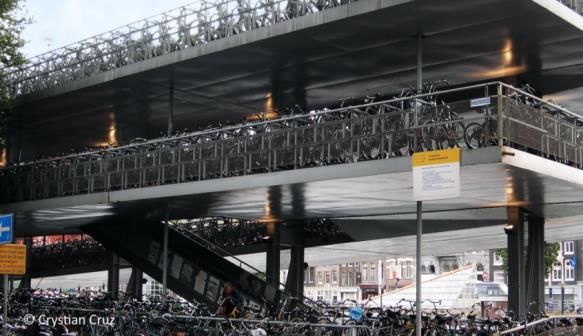
and buses and at park and ride facilities. Local and intercity buses, coaches and
In addition, all future residential trains will be assessed for capacity to carry
In addition, all future residential developments, especially those comprising apartment, duplex and town
developments, especially those comprising bicycles and improvements and adjustments
house-style developments, as well as commercial and industrial developments should include provision
apartment,
for indoor bicycleduplex
parkingand town house-style
facilities. will be introduced,
Bicycle theft is unacceptably high and withespecially on commuter
the increased popularity
developments, as well as commercial and bus and train services in large
of cycling, people are investing substantial amounts in bicycles and equipment. Fear of bicycle theft towns and can
deterindustrial
some fromdevelopments should but
engaging in cycling this barrier to cities.
include Some intercity
participation train services
can be reduced currently
or removed with
provision for indoor bicycle parking facilities.
provision of secure and easily accessible parking facilities. have limited bike storage capacity but this
Bicycle theft is unacceptably high and with will be expanded and also introduced for
the increased popularity of cycling, people buses to provide options for those who
are investing substantial amounts in bicycles would like to engage in cycling as a leisure
and equipment. Fear of bicycle theft can pursuit.
deter some from engaging in cycling but Public Transport Integration
this barrier to participation can be reduced When train and bus stock is replaced or
or removed with provision of secure and Local andupgraded, this willcoaches
intercity buses, be doneand withtrains
a view to be assesse
will
easily accessible parking facilities. integrating cycling at the very heart of the
improvements and adjustments will be introduced, especially on c
towns and service, ensuring
cities. Some new carriages
intercity and currently
train services vehicles have lim
Fianna Fáil will work to integrate bicyclebe expanded haveandadequate space for
also introduced forbicycle
buses storage andoptions f
to provide
parking with public car parking facilities, cycling as older ones
a leisure are retrofitted to facilitate this.
pursuit.
particularly those in city and urban areas. We will allocate €300,000 for this purpose.
In towns and cities across Ireland there are
insufficient designated bicycle parks.
DEDICATED BIKE PARKS
Fianna Fáil will work to integrate bicycle parking with public car parking facilities, particularly those in
city and urban areas. In towns and cities across Ireland there are insufficient designated bicycle parks.
Large bike parking facilities should be
Dedicated Bikefor
provided Parks
storage of bikes at main train
and bus stations and appropriate bike
Large bike parking
parking facilities
facilities shouldshould be provided
be considered for for
all storage of bikes at main train and bus stations and
appropriate bike parking facilities should be
bus stops in villages, towns and cities across considered for all bus stops in villages, towns and cities
across
thethe country.InInprinciple,
country. principle,ititshould
should always
always be
be easy for cyclists to securely store their bikes close to
public transport facilities, wherever they may be.
easy for cyclists to securely store their bikes
close to public transport facilities, wherever
they may be.
this purpose. 8
Bike Rental Facilities BIKE RENTAL FACILITIES
The DublinThe Dublin
City City Bikehas
Bike Scheme Scheme has successful
been very been very and is on
7
successful and is one of the key factors
in the number of journeys by bicycle in recent years. Figures fro
behind
trips have been theon
taken increase
Dublin in the number
Bikes of operating in 2
since it began
journeys schemes
Similar successful by bicycle in recent
have years.out
been rolled Figures
in other cities a
fromFianna
and Limerick. 2017 show thatextend
Fáil will almostthe
15.5 millionto other towns
scheme
trips havewith
they are integrated been takentransport
public on Dublin Bikes since
services and other impo
it began operating in 2009.
addition, where CityBike scheme are already in operation Fianna
‘within-reach’ suburbs of major towns and cities, as both a public
tourism-boosting
Similarmeasure.
successful schemes have been rolled
out in other cities across Ireland, including
PUBLIC TRANSPORT Cork, Galway and Limerick. Fianna Fáil will
extend the scheme to other towns and
INTEGRATION 8
This is based on the assumption that retrofitting a bus costs approximate
cities with planning to ensure that they are
http://civitas.eu/sites/default/files/bikes_on_board_2move2_di7.02.03.pdf
9
https://www.irishtimes.com/news/environment/more-than-15-million-tr
1.2768204
This cost is based on the cost of a similar scheme to appoint broadband officers to every local authority. Please see: https://www.
kildarestreet.com/wrans/?id=2018-05-08a.1068&s=cost+of+broadband+officers#g1070.r
PROMOTING GREATER PARTICIPATION

       integrated with public transport services and   With that in mind, Fianna Fáil will review
       other important amenities within local areas.   planning laws so that new commercial
 y, the provision of private dockless on-street bike sharing schemes shou
       In addition, where CityBike scheme are
       already in operation Fianna Fáil is committed
                                                       property developments incorporate bike
                                                       storage and shower and changing facilities
nded as proper infrastructure is developed and in place to facilitate those servi
       to extending them to ‘within-reach’ suburbs     for staff. All new developments, whether
       of major towns and cities, as both a public     private or public, should plan for facilitating
       transport enhancement measure and a             a more active population and workforce.
te Sector
       tourism-boosting measure.
                                                       For existing workplaces that do not currently
       Finally, the provision of private dockless      incorporate these facilities, financial
privateon-street
          sectorbike  has   a key
                        sharing      roleshould
                                schemes     to play in facilitating a shift toward a culture
                                                       incentives will be introduced to encourage
ss to secure        bike storage facilities as well as adequate shower and chang
        be encouraged and expanded as proper
        infrastructure is developed and in place to
                                                       employers to modify existing workplaces to
                                                       bring them up to standard.
 r to commuters           that could consider cycling to work. Some employers, esp
        facilitate those services.
ities, already provide these facilities for ADDITIONALstaff but expansion will be needed in
maximum PRIVATE choice SECTOR
                           and opportunity.           INCENTIVES
       The private sector has a key role to play       The Cycle To Work scheme was introduced
that in mind, Fianna Fáil will review planning laws so that new commercial
       in facilitating a shift toward a culture of     under the previous Fianna Fáil government
porate bike storage and shower and changing facilities for staff. All new
       cycling in Ireland. Access to secure bike
       storage facilities as well as adequate shower
                                                       and has been a success in encouraging
                                                       many people to become more active.
 e or public, should plan for facilitating a more active population and workfor
       and changing facilities is often a barrier to   Under current rules, workers may only avail
       commuters that could consider cycling           of the scheme once every five years. Fianna
       to work. Some employers, especially in          Fáil will reduce this period to three years,
xisting workplaces that do not currently incorporate these facilities, finan
       larger towns and cities, already provide        conscious that for those using their bikes to
uced to encourage employers to modify existing workplaces to bring them up
       these facilities for staff but expansion will
       be needed in order to provide people with
                                                       commute to and from work on a daily basis,
                                                       an upgrade will often be required within a
       maximum choice and opportunity.                 shorter timeframe.

                                                       Furthermore, while the Cycle to Work
                                                       scheme targets workers and has been
                                                       successful in encouraging this cohort to
                                                       become more active, there are many that
                                                       cannot avail of this benefit. A central aim of
                                                       Fianna Fáil policy is to encourage greater
                                                       health and fitness among all age groups and
                                                       people from socio-economic backgrounds.
                                                       Therefore, measures will be introduced
                                                       to facilitate and encourage pensioners
                                                       and those not currently in employment to
                                                       acquire and use bicycles to ensure the gains
                                                       from a more active and healthy lifestyle are
                                                       spread across all sectors of our society.
In addition, it is necessary to maintain eventually if they become motorists. This
bicycles to ensure that they remain will cost €8 million per annum.
roadworthy and are safe for cyclists. This
also cuts down on waste, as it encourages Fianna Fáil will legislate for minimum
people to repair rather than replace their passing distances, a policy which to date
bikes. Fianna Fail will reduce VAT on bicycle has received strong opposition from the
repair to make this more affordable. Government. Even with increased availability
of segregated cycle paths, cyclists will often
SAFETY have to share road space with other traffic
and in those circumstances, motorists
should be required to observe a minimum
Fifteen cyclists died on Irish roads in 2017,
passing distance so as to increase safety for
which represents almost 10% of all fatalities,
cyclists.
even though cyclists account for a much
smaller fraction of road users. A greater
Cycling organisations have long called for
number of people adopting cycling as a
a reduction of speed limits in built up urban
mode of transport has unfortunately led
areas, which can attract greater numbers
to increased injuries and fatalities on Irish
of cyclists and increase safety. Fianna
roads.
Fáil will review speed limits and, taking
account of international best practice, make
Fianna Fáil is committed to increasing
amendments where appropriate to improve
participation in cycling and there are many
cycle safety.
good reasons why this would greatly benefit
Irish people and Irish society in general. For
Advance stop lines are used at some
instance, studies have shown that those
junctions in towns and cities and are a
who cycle usually enjoy better health and
means of improving safety. These and other
therefore the risks associated with cycling
measures to protect cyclists will be further
greatly outweigh the benefits. However, it
utilized. This includes the introduction
is essential that more is done to improve
of new traffic lighting systems that are
safety conditions for cyclists on our roads to
preferential for cyclists, especially with a
encourage ever greater numbers of people
view to counteracting the risk posed by
to participate and to ensure that they are
left turning vehicles, as well as measures to
safe when cycling.
increase safety for cyclists at roundabouts.
Where cycle lanes currently exist, they are
Providing safer cycling infrastructure is a
routinely ignored by motorists, who use
vital step in making cycling an attractive
them for parking and driving. This greatly
alternative mode of transport in Ireland.
increases the risk to cyclists who are
However, other measures are also required
required to weave in and out of cycle lanes
to ensure that cycling is safe, not only for
and into traffic to avoid parked cars. The
cyclists but for all road users.
penalties associated with driving or parking
in cycle lanes will be substantially increased
Working with schools, Fianna Fáil will
to discourage motorists from this activity.
provide cycle safety training for young
Furthermore, at present there is insufficient
people, with a view to instilling skills that
enforcement of the laws in this area and
will be of use initially as a cyclist, but also
This is based on the assumption that retrofitting a bus costs approximately €1,200 per rack
(as per http://civitas.eu/sites/default/files/bikes_on_board_2move2_di7.02.03.pdf) .
https://www.irishtimes.com/news/environment/more-than-15-million-trips-made-on-dublinbikes-since-2009-1.2768204
http://www.rsa.ie/RSA/Road-Safety/Our-Research/Deaths-injuries-on-Irish-roads/
https://ecf.com/sites/ecf.com/files/ECF-Helmet-brochure-2012-for-web.pdf
This cost is based on extrapolation from the cost of administering the existent cycle education programme to include 282,000 primary school aged
childrenhttps://www.kildarestreet.com/wrans/?id=2018-06-26a.1222&s=%22cycle+right%22#g1224.rch has increased every year from a figure of 6.6 million
sm earned the country
PROMOTING GREATERan estimated €6.5 billion and
PARTICIPATION
nd, both directly and indirectly.
rists Fianna
are Fáilmotivated
will work with Gardaítoto bring
visit Ireland forGreenway
The Old Rail Trail a number
along the of rea
ery of our country andmany the
well range
Mullingarof natural attractions.
about improvements. disused rail track connecting Athlone and
Finally, across Ireland there are in County Westmeath is a good
ountries
have usedright across theour world and with cyclethe
routes. right p
established routes that amateur cyclist example of the beneficial effects of properly
for decades. While many of planned and constructed
talize on this.
rural roads nationally have warning signage The trail provides an amenity that is heavily
for drivers for livestock and wild animals used by local people for recreation, but
such as deer, there is little or no similar also attracts both Irish and international
signage warning motorists of cyclists. The tourists who are drawn by the opportunity
general area of signage and cycling is long to experience the Irish countryside in a safe
Old Rail Trail Greenway along the disused rail track
overdue a review and overhaul and Fianna
Fáil will work to ensure that appropriate
environment.
tmeath is a good example ofInhave the
infrastructure is introduced to improve cycle
safety conditions across Ireland, in urban
beneficial effects of p
the Dublin area, several Cycling Greenways
been in the pipeline for a number of
trail provides an amenity that
and rural locations.
isphase
the first heavily
of the Sutton used by loca
years. Fianna Fáil welcomes the opening of
to Sandycove
andTOURISM
international AND LEISURE tourists who areshoredrawn
along the by the oppor
(S2S) cycleway and promenade running
of Dublin Bay.
environment.
According to recent Fáilte Ireland figures, However, we are disappointed at the
the state received over 9 million visitors from slow progress of the remainder of the
overseas in 2017, which has increased every S2S Greenway and the Dodder Greenway
year from a figure of 6.6 million in 2013. It projects – which have been in preparation
is estimated that in 2017, overseas tourism for many years.
earned the country an estimated €6.5 billion Fianna Fáil also believes that both the
and is responsible for many thousands of corridors of the Royal and Grand Canals
jobs in Ireland, both directly and indirectly. as they enter the city boundaries hold
Tourists are motivated to visit Ireland for a potential for segregated cycle ways that
number of reasons, but chief among them have not as yet been fully explored and
are the beautiful scenery of our country developed and in government we would
and the range of natural attractions. Cycling move to develop further the possibility
tourism is a massively growing sector in of a continuous cycle way within the city
countries right across the world and with boundaries along both canals.
the right planning, Ireland is extremely well
placed to capitalize on this.THE BENEFITS OF CYCLING
Further dedicated routes providing safe towns and cities across Ireland and with the
access for cyclists to Ireland’s natural population set to increase in coming years,
resources will be identified and developed to it is likely that the situation for car users will
provide leisure activities for both visitors from not significantly improve. Cycling may not
overseas and people living in Ireland, who be an option for everyone, but many could
will also greatly benefit from domestic leisure benefit from using cycling as an alternative
opportunities. Cycle routes will be integrated mode of transport for commuting to and
with public transport infrastructure so that from work, if not on its own, then perhaps in
users can easily travel to and from greenways combination with public transport.
taking bikes with them.
ENVIRONMENT
MENTAL AND PHYSICAL
WELLBEING Another major benefit to cycling is the
effect the activity has on the environment.
The health benefits of cycling are well A changing climate is a risk that may be hard
known and can improve not only the lives of to comprehend but increasingly people
individuals who cycle, but also have positive are aware that there will be consequences
knock on effects for the rest of society. for themselves and for future generations
Fianna Fáil’s mission is to create a society of Irish people if no action is taken. We
that enables everyone in Ireland to live the are, each of us, custodians of the Irish
best lives they can. Those who are physically environment and the Irish way of life for
active often enjoy greater levels of health, future generations. Given that cycling
happiness and wellbeing. is a low-cost, zero-carbon way to get
around, it can play an important role in
Cycling allows people to get from A to B reducing Ireland’s transport emissions.
exposed to the open air, especially in nature As awareness has grown, cycling has
in the countryside but even in the city. It come to be recognized as one method
gets us out and about and brings us closer to reduce personal contributions to
to the environment in which we live. This damaging emissions. The individual cyclist’s
has tremendous health benefits, especially contribution may be small on its own but
as regards mental health. alongside the efforts of others it can make a
big difference.
ALTERNATIVE
TRANSPORT
Cycling, first and foremost, is a mode
of transport. As mechanized modes of
transport developed, cycling became less
popular and there is no doubt that cars,
buses and trains often offer a greater
degree of comfort. However, increased car
use has led to major traffic congestion inCONCLUSION The NCPF introduced by Fianna Fáil almost a decade ago sets out in great detail the sound reasons for developing a robust cycle infrastructure in Ireland and encouraging greater numbers of people to engage with this activity, as a mode of transport and for leisure. Our commitent to that vision remains and this policy is a restatement of the goals embodied in that document to take us into the next decade and beyond. We believe that a cultural shift towards a more active society is necessary for the long term health and well-being of everyone in our society and this is reflected in our policies on health and sport, among others. Providing the space for people of all age groups and from all backgrounds to safely engage in cycling can be a significant step towards achieving the goal of a healthier and happier Ireland. That’s why, for Fianna Fáil, cycling really does matter and will remain at the heart of our transport policy going forward.
Robert Troy TD
SPOKESPERSON ON TRANSPORT,
      TOURISM & SPORT

     www.roberttroy.ie
You can also read


