D7.6 SECOND YEAR DISSEMINATION AND COMMUNICATION REPORT - ELEXIS
←
→
Page content transcription
If your browser does not render page correctly, please read the page content below
D7.6
                               SECOND YEAR
                               DISSEMINATION AND
                               COMMUNICATION
                               REPORT
                                     Author(s): Anna Woldrich, Tanja Wissik
                                     Date: March 30, 2020

This project received funding from the European Union's Horizon 2020 research and innovation programme under grant
agreement No 731015. The information and views set out in this publication are those of the author(s) and do not
necessarily reflect the official opinion of the European Union.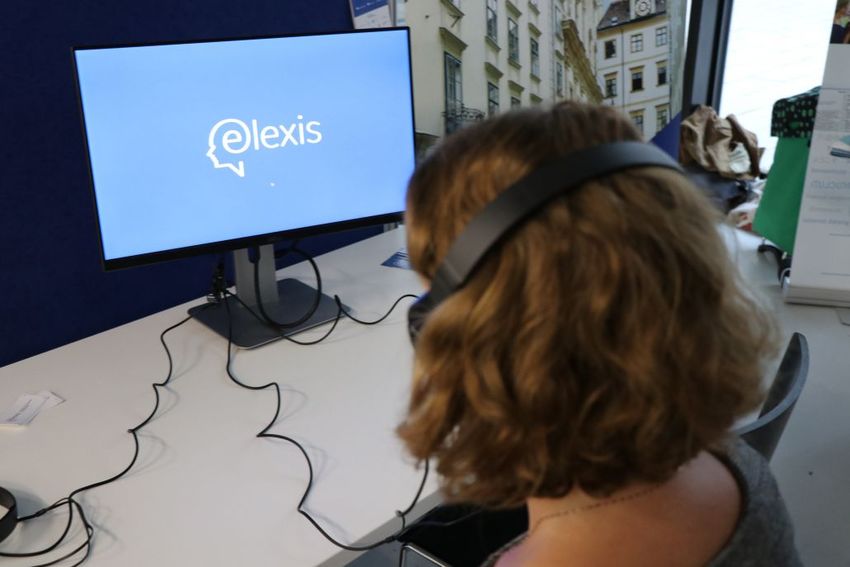
H2020-INFRAIA-2016-2017
                                                              Grant Agreement No. 731015
                                                              ELEXIS - European Lexicographic Infrastructure

                                                              D7.6 SECOND YEAR DISSEMINATION AND
                                                              COMMUNICATION REPORT

Deliverable Number:                   D7.6

Dissemination Level:                  Public

Delivery Date:                        March 30, 2020

Version:                              Final

Author(s):                            Anna Woldrich
                                      Tanja Wissik

Contributor(s):                       Teja Goli
                                      Iztok Kosem,
                                      Carole Tiberius

             This project received funding from the European Union's Horizon 2020 research and innovation programme under grant
             agreement No 731015. The information and views set out in this publication are those of the author(s) and do not
             necessarily reflect the official opinion of the European Union.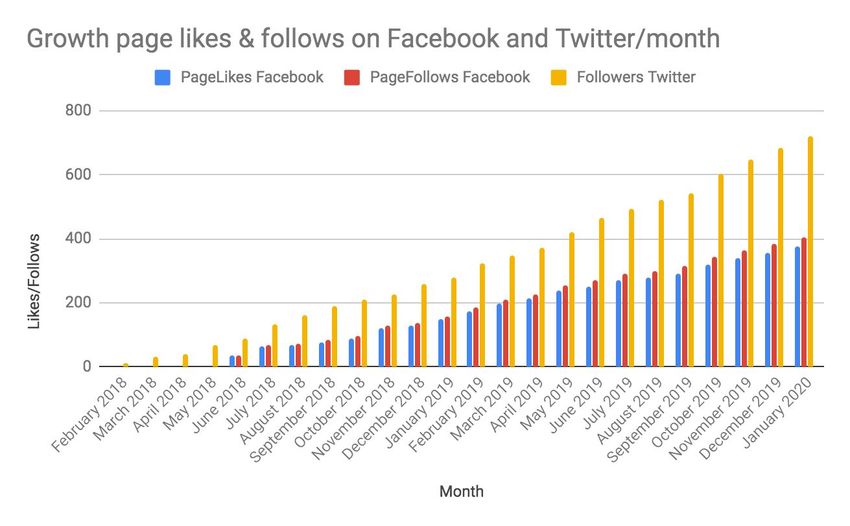
Project Acronym:                       ELEXIS
Project Full Title:                    European Lexicographic Infrastructure
Gran Agreement No.:                    731015

Project Acronym:                       ELEXIS
Project Full Title:                    European Lexicographic Infrastructure
Grant Agreement No.:                   731015

Deliverable/Document Information

Document History

Version Date                           Changes/Approval                           Author(s)/Approved by
V0.1 20/01/2020                        First Draft                                Anna Woldrich, Tanja Wissik
V0.2 11/02/2020                        First Draft, Input and Review              Anna Woldrich, Tanja Wissik
V0.3 14/01/2020 -                      Incorporation of Scientific                WP7 members of the consortium
     19/02/2020                        Publication List
V0.4 24/02/2020                        Review                                     Anna Woldrich, Tanja Wissik
V0.5 11/03/2020                        Incorporation of feedback,                 Anna Woldrich, Tanja Wissik
                                       Review
V0.6 26/03/2020                        Incorporation of feedback                  Anna Woldrich, Tanja Wissik,
                                                                                  Teja Goli
V 1.0 30/03/2020                       Final version                              Anna Woldrich, Tanja Wissik

            This project received funding from the European Union's Horizon 2020 research and innovation programme under grant
            agreement No 731015. The information and views set out in this publication are those of the author(s) and do not
            necessarily reflect the official opinion of the European Union.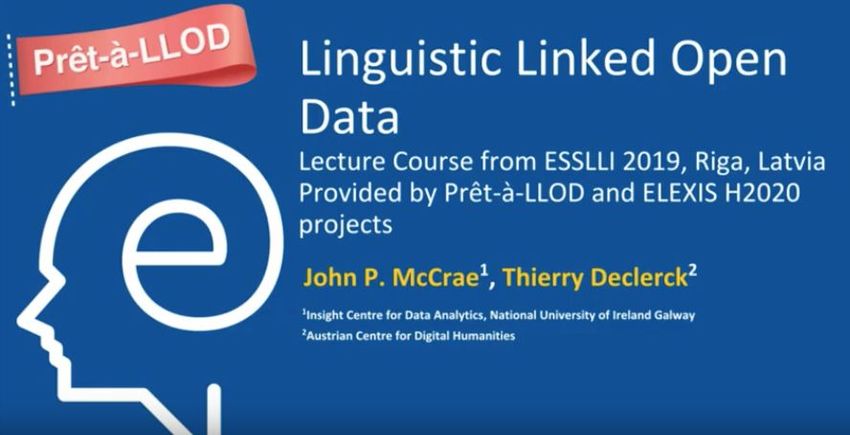
Second year dissemination and communication report

Table of Contents

1. Executive Summary                                                                      3

2. Events                                                                                 3
   2.1. ELEXIS Community Building Event in the second year                                3
   2.2. ELEXIS training measures in the second year                                      4
   2.3. Third Party Events or Joint Events in the second year                            6

3. Dissemination Material                                                                11
   3.1. Online Promotion Material                                                        12
   3.2. Offline Promotion Material                                                       12

4. Scientific Dissemination                                                              12
   4.1. Publications                                                                     13
   4.2. Presentations                                                                    13
   4.3. Poster Presentations                                                             17

5. Evaluation, Monitoring and Reporting                                                  18
   5.1. Social Media Monitoring Year 2                                                   18
       5.1.1. Twitter Analysis                                                           18
       5.1.2. Facebook Analysis                                                          21
       5.1.3. Social Media Campaigns: Performance                                        22
   5.2. Website Monitoring                                                               23
   5.3. E-Mail Monitoring Year 2                                                         25
   5.4. Evaluation: WP7 Achievements within year 2                                       26
       5.4.1. Evaluation of Research Visits                                              27
       5.4.2. Evaluation of attendance at ELEXIS (training) events within year 2         27
       5.4.3 Evaluation of attendance at all events
       (including ELEXIS branded and training events and third-party events) in year 2   29
       5.4.4. Evaluation of Scientific Output                                            31
       5.4.5. Outlook                                                                    38
Deliverable D7.6 Second year dissemination and communication report
List of Tables
Table 1: Overview ELEXIS EU on Twitter, February 2019 - January 2020 20
Table 2: Overview ELEXIS EU on Facebook, February 2019 - January 2020 22
Table 3: ELEXIS Website visits 24
Table 4: Objective 1 26
Table 5: ELEXIS branded events and training measures with participant numbers in year two 28
Table 6: Excerpt of Objective 2 in D 7.5’s table 2 32
Table 7: Excerpt of Objective 3 in D 7.5’s table 3 33
Table 8: Excerpt of Objective 4 in D 7.5’s table 4 36
Table 9: Excerpt of Objective 1 38
List of Figures
Figure 1: ELEXIS network in January 2020 4
Figure 2 Screenshot of the lecture recorded at ESSLLI 2019 6
Figure 3: Interactive Dictionary Matrix at the European Researchers’ Night 2019, Vienna 10
Figure 4: Elexis video stand at the European Researchers Night 2019 12
Figure 5: Facebook & Twitter follower growth, February 2018 - January 2020 18
Figure 6: Overview ELEXIS social media campaigns in year 1 and year 2 23
Figure 7: Comparison of ELEXIS website visits by country 24
Figure 8: Google Analytics - Page Visits November 2018 - January 2020 25
Figure 9: Audience growth over time on mailchimp 26
Figure 10: Number of attended events per type according to the ECAS portal 30
Figure 11: number of people reached at attended events in year 2 31
Figure 12: Number of publications per time period 31
2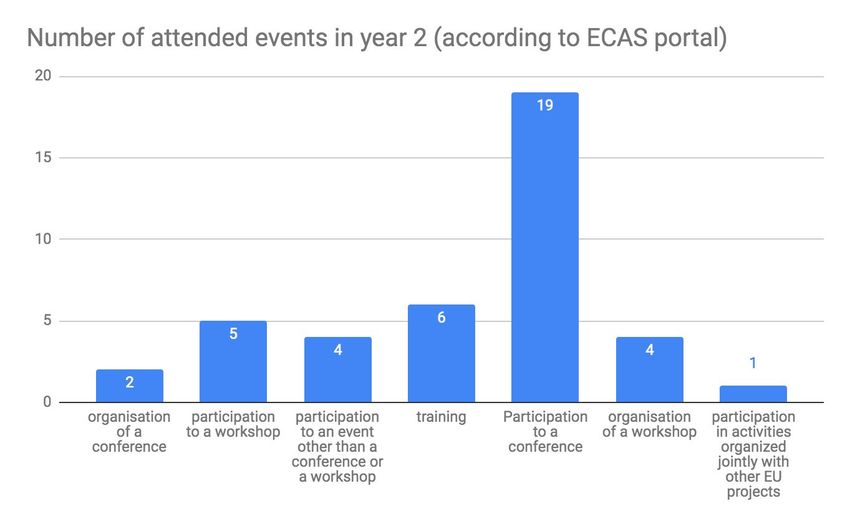
Deliverable D7.6 Second year dissemination and communication report
1. Executive Summary
This second year dissemination and communication report includes the activities of the
second year of the project, February 1st 2019 to January 31st 2020. It is based on
Deliverable D7.5, the first year dissemination and communication report and the updated
communication plan - available here.
Since the communication plan, including objectives, impact, target groups, tailored
message(s), multi level communication and communication channels remains as described
in D7.5, we provide updates on the respective chapters only - events (2), dissemination
material (3), scientific dissemination (4) as well as evaluation, monitoring and reporting (5).
2. Events
We are documenting all networking and community building activities on the ELEXIS
website: https://elex.is/all-events/. Organising, promoting and attending events fosters the
community, supports networking with other initiatives/infrastructures and creates an
opportunity to engage with academia and the general public. Furthermore, it generates
dissemination output (e.g. papers in conference proceedings).
In the reporting period1 of year 2, February 1st 2019 to January 31st 2020, we organized a
variety of ELEXIS-branded events (see chapters 2.1, 2.2., 5.4.2.). Additionally, we were
presenting aspects of the ELEXIS project in the form of presentations, posters or project
booths at a variety of conferences for different target audiences (see chapters 2.3., 4.2. and
4.3). Furthermore, experts from the consortium were teaching ELEXIS-related topics at
training events co-organized by ELEXIS. For the broader public engagement, we were
present at the European Researchers Night 2019 in Vienna (September 27th, 2019).
We will give an overview of different types of events attended, organized and/or supported
as follows:
2.1. ELEXIS Community Building Event in the second year
In the reporting period of year two, the first ELEXIS event (as it was called in the project
proposal) was organized in February 2019 by ACDH-CH2 in Vienna. For this event,
representatives of various research departments and institutions all over Europe were
invited to join the ELEXIS consortium members to ‘Stay at the forefront of Lexicography’
within the framework of the ELEXIS observer event: Work package leaders presented their
1
Period I refers to the reporting period in the ECAS portal: February 2018 - (incl.) July 2019; (WP7)
year one: February 2018 - including January 2019; year two: February 2019 - including January 2020
2
On January 1st 2020 ACDH-OeAW, the Austrian Centre for Digital Humanities, Austrian Academy of
Sciences (Österreichische Akademie der Wissenschaften) was re-named to Austrian Centre for
Digital Humanities and Cultural Heritage (ACDH-CH).
3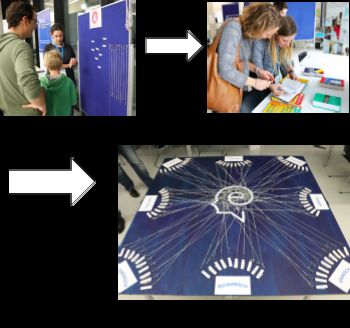
Deliverable D7.6 Second year dissemination and communication report
(ongoing) work, a first step towards an international collaboration was taken, offering
representatives of various lexicographic institutions to join ELEXIS as an observing
institution and to contribute to the project in a mutual exchange of lexicographic expertise
and measures to enhance (their) lexicographic data as well as services and tools (to be)
developed in due course (Lexonomy, TEI-LEX0). Detailed information is available at
https://elex.is/observers/: All lectures have been recorded by the Videolectures team (from
the partner institution Jozef Stefan Institute) and are available online.
The event was a big success, more than 100 participants gathered and by the beginning of
the reporting period of year two, 33 observers had been confirmed by the project
management board (PMB). The ELEXIS community has been constantly growing ever since:
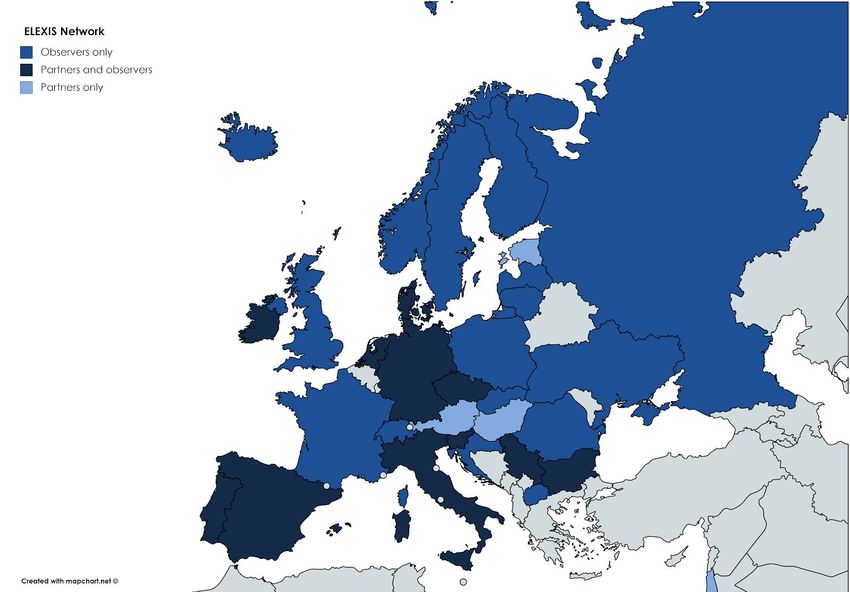
In January 2020, it included 17 partner and 40 observer institutions from 32 different
countries in Europe (see map, i.e. Figure 1 below).
Figure 1: ELEXIS network in January 2020
The second ELEXIS event is planned in Q4 2020, in Italy, Tuscany. More information about
this event will be included in D7.8, the third year dissemination and communication report.
2.2. ELEXIS training measures in the second year
In the course of the second year of the project, February 2019 - January 2020, a series of
workshops as well as ELEXIS-related modules at already existing training schools were
(co-)organized in order to develop methodological and technological skills needed for the
productive use of and contribution to ELEXIS. Furthermore in Summer 2019 (August 2019)
4
Deliverable D7.6 Second year dissemination and communication report
the Austrian Centre for Digital Humanities and Cultural Heritage had an intern for 4 weeks
(Polina Solonets from the European Master in Lexicography (EMLex)) within the ELEXIS
project.
Hereinafter is the list of organized training activities:
- The Linked Data and the Semantic Web for Humanities research, LiSeH spring school,
held in Graz, Austria in April 2019 was co-organized by ELEXIS, namely the Austrian
Centre for Digital Humanities and Cultural Heritage, giving an introduction to the concepts
related to the Semantic Web and Linked Data and provided an overview of semantic web
technologies and tools with a special focus on application scenarios in the Humanities.
ELEXIS staff was teaching ELEXIS-relevant topics, namely John McCrae & Thierry
Declerck (Introduction to Linked Open Data in Linguistics) and Ksenia Zaytseva (Controlled
Vocabularies in SKOS). The LiSeH spring school was part of the ‘Training Digital Scholars:
Knowledge Exchange between V4 and Austria’ Series financed by the Visegrad Fund, in
collaboration with the ‘ELEXIS’ Horizon 2020 project and the Erasmus+ project
‘DigiCulture’. More information as well as the programme is available at:
https://informationsmodellierung.uni-graz.at/de/institut/veranstaltungen/archiv/spring-sch
ool-liseh-2019/
- The third Summer Datathon on Linguistic Linked Open Data (SD-LLOD19,
https://elex.is/sd-llod-19/) was organized in conjunction with and held before the 2nd
Conference on Language, Data and Knowledge (LDK, May 2019), with the main goal of
giving people from industry and academia practical knowledge in the field of Linked Data
and its application to natural language data and natural language annotations, from areas
as diverse as knowledge engineering, lexicography, the language sciences, natural
language processing and computational philology. This edition was supported by several
international projects (Linked Open Dictionaries (LiODi), Pret-a-LLOD. Ready-to-use
Multilingual Linked Language Data for Knowledge Services across Sectors and ELEXIS)
addressing different aspects of natural language processing, lexicography and digital
humanities. Tutorials and supervision was provided by leading experts on Linked Open
Data. One of its main organizers was John McCrae (NUIG), Sina Ahmadi (NUIG) and
Thierry Declerck (OeAW) fungated as tutors.
- Lisbon Summer School in Linguistics (July 2019), offered 12 courses within 3 areas.
Area 2 “Terminology and Lexicography” was co-organized by ELEXIS and ELEXIS staff
was teaching ELEXIS-relevant topics: Rute Costa was co-teaching ”Trends and advanced
approaches in Lexicography” and Toma Tasovac was teaching “Encoding Dictionaries
with TEI: A Masterclass” (for details, see the online program
5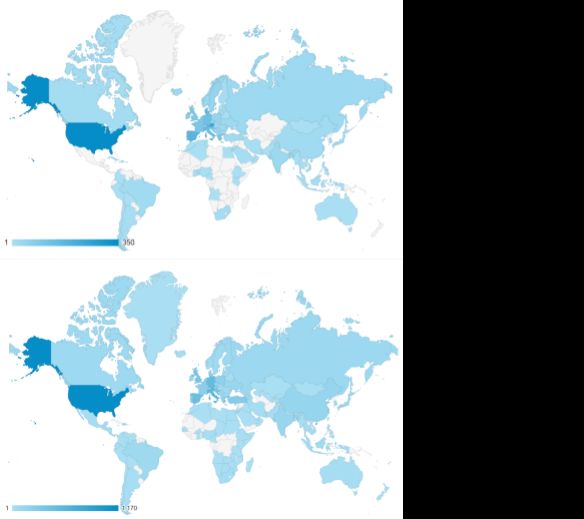
Deliverable D7.6 Second year dissemination and communication report
https://elex.is/lisbon-summer-school-2019/)
- The European Summer School in Logic, Language and Information (ESSLLI Summer
School 2019) is an event organized every year in a different European country under the
auspices of the Association for Logic, Language and Information (FoLLI). Within the first
week of ESSLLI, John P. McCrae (NUIG) and Thierry Declerck (OeAW) gave an
Introduction to Linked Open Data in Linguistics with the main goal of giving people in the
field of computational linguistics practical skills in the fields of linked data and semantic
technologies as applied to linguistics and lexical data.
They recorded lecture 1 (figure 2) of their course and made the video available on
YouTube.
Figure 2: Screenshot of the lecture recorded at ESSLLI 2019
- In the first half of 2019, ELEXIS organized two Lexonomy hackathons in order to facilitate
Lexonomy development and collaboration between Lexonomy users (lexicographers and
developers). The first hackathon took place from the 23rd to 25th April 2019 in Brno and
was attended by nine people. The first day focused on a general development plan for
Lexonomy, while the other two focussed on addressing specific issues, such as opening
up large files, etc.
The second hackathon took place from the 12th to 14th June 2019 and was attended by
ten people. More focus was on solving specific persistent issues and bugs, whereas
general discussions covered topics such as cross-references, format support, XSL
schema support and documentation. More information is available in Deliverable D6.1:
Early ELEXIS interoperability report (see especially chapter 2.2.).
2.3. Third Party Events or Joint Events in the second year
Dissemination was and is still being carried out at third party events or joint events (e.g.
workshops, conferences, panels, a project booth co-located at other international or
national events) in order to reach out to other (non-scientific) communities and enlarge the
6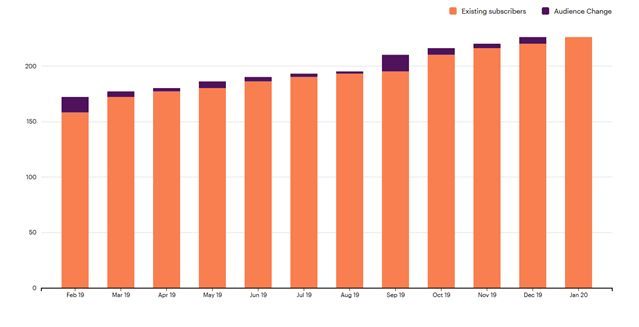
Deliverable D7.6 Second year dissemination and communication report
community of interest. ELEXIS researchers participate(d) with talks, posters or booths and
present(ed) project results or co-organized workshops within the context of various
conferences. A detailed list of regional, national and international events, grouped
according to the target audience, is available in Deliverable D7.5, page 36.
In addition to the events mentioned in 2.1. and 2.2. consortium partners were among the
presenters of various events listed below, presenting ELEXIS-related topics either in the
form of an invited talk, a poster presentation, or a short/long paper presentation. In this list,
we are especially highlighting (in bold) events co-organized by ELEXIS and are providing
more information on those events:
February 2019
● European Master of Lexicography (EMLex) meeting - Workshop
https://www.emlex.phil.fau.de/workshop-synergy-effects-between-erasmus-mundu
s-emlex-higher-education-institutions-and-the-private-sector/
● ACDH Hackathon Series (virtual)
The core goal of the ACDH Hackathon series was to promote openness in Digital
Humanities and show a path towards putting it into practice. The three hackathons
centred on three data sets that were connected to Open Data events which took
place in spring 2019. The first task, organised at the time of the ELEXIS Observer
Event, focused on enriching a lexicographical dataset. More information is available
at: https://elex.is/acdh-hackathon/.
April 2019
● Language Rules conference
https://www.nottingham.ac.uk/conference/fac-arts/clas/language-rules/index.aspx
● Conference Jaen - III Jornadas Internacionales in LÉXICO2019 -
https://inlexico2019.webnode.es/
● Workshop: Showcasing Language Technologies in Horizon 2020 and INEA projects
- https://elex.is/showcasing-lt-2019/
May 2019
● E-dictionaries and E-lexicography Conference -
http://ihjj.hr/mreznik/page/e-rjecnici-i-e-leksikografija/8/
https://elex.is/e-dictionaries-and-e-lexicography/
● The Dictionary Society of North America Biannual Conference, DSNA 2019 -
https://www.indiana.edu/~iucweb/dsna/
● GLOBALEX workshop on Lexicography and Neologism, co-located with DSNA
2019:
7Deliverable D7.6 Second year dissemination and communication report
The GLOBALEX workshop on Lexicography and Neologisms (GWLN 2019, program
available here), focussing on issues related to the detection of neologisms and their
representation in lexicography and dictionaries, was co-organized by ELEXIS and
held in conjunction with DSNA 2019, the 22nd biennial meeting of the Dictionary
Society of North America, at Indiana University, Bloomington, in May 2019. The
abstracts have been published in Kernerman Dictionary News, Issue 27.
● The Language, Data and Knowledge Conference (LDK) 2019 - https://elex.is/ldk19/
● Translation Inference across Dictionaries (TIAD) at LDK 2019 -
http://2019.ldk-conf.org/tiad-2019/
June 2019
● Terminology & Ontology: Theories and applications (TOTh conference 2019) -
http://toth.condillac.org/
● ELEXIS Session at TOTh 2019:
The ‘Terminology and Ontology: Theories and Applications’, TOTh Conference,
held in June 2019, brought together researchers, professionals and, more generally,
all persons interested in issues related to language and knowledge engineering. A
Special Session was dedicated to lexical resources and lexicography in connection
with ELEXIS: Representatives of the project presented on ELEXIS data model and
the use of domain-specific research infrastructures in other domains. Detailed
information is available here.
● The Conference on Lexicography in the Nordic Region -
https://www.helsinki.fi/sv/konferenser/15-konferensen-om-lexikografi-i-norden
https://elex.is/lexicography-nordic-region/
● Asialex 2019 - https://elex.is/asialex2019/
● ELEXIS - Lexonomy workshop at ASIALEX, June 2019:
ELEXIS representatives held a Lexonomy workshop during which they presented all
the aspects of the tool, from basics such as creating and setting up a dictionary, to
more advanced features such as subentry setup, publication visualisation and so on.
The second part of the workshop was dedicated to recent ELEXIS developments,
related to linking tools and automatic lexicography, namely the One-click dictionary
feature, and Sketch Engine push and pull features (see Deliverables such as D6.1,
D1.2, D1.3, D4.1, D2.2, D4.2).
● The 8th Language Technology Industry Summit -
https://www.lt-summit.com/the-sound-of-intelligence
July 2019
● The 22nd Conference on Language for Specific Purposes (LSP 2019) -
http://www.maldura.unipd.it/LSP2019/
8Deliverable D7.6 Second year dissemination and communication report
● The Global Wordnet Conference 2019 - https://gwc2019.clarin-pl.eu/
● Workshop on eLexicography between Digital Humanities and Artificial
Intelligence: Complexities in Data, Technologies, Communities
ELEXIS co-organized this workshop co-located with the Digital Humanities
Conference 2019 (DH2019) in Utrecht, in July 2019 together with the EU Project
Prêt-à-LLOD (https://elex.is/workshop-on-elexicography-dh2019/ )
The event was the second iteration of a first highly successful workshop that took
place at EADH Conference in Galway (December 2018).
August 2019
● ACL 2019 - http://www.acl2019.org/EN/index.xhtml
● Joint Workshop on Multiword Expressions and WordNet (MWE-WN 2019) at ACL
2019 -
http://multiword.sourceforge.net/PHITE.php?sitesig=CONF&page=CONF_03_MWE-
WN_2019___lb__ACL__rb__
September 2019
● TEI 2019: What is text, really? TEI and beyond - https://graz-2019.tei-c.org/
● European Researchers Night 2019
We want to highlight the participation in this event because it made it possible for us
to engage with the general public for the first time: ELEXIS representatives
participated in the European Researchers’ Night (ERN) in Vienna, Austria, which is
held in several cities across Europe every year in autumn. Under the theme “Inside
the Dictionary Matrix – ELEXIS and the multilingual dictionaries of the future” ELEXIS
researchers invited ERN visitors to gain insight into how the dictionary matrix is
created and at the same time try their hand at the craft of lexicography (figure 3): An
interactive ‘language board game’, hosting 8 language ‘stations’ invited interested
participants to grab a word in one of those 8 languages. In the first step, there was a
bilingual ‘dictionary station’, where people had to investigate the kind of word
selected, its language and its sense/meaning, as well as the translation into one of
the 7 languages remaining. Once the sense-connection was clear, participants
moved the word to its respective station and connected its sense via the ‘sense
hooks’ to its equivalent in one of the languages remaining.
9Deliverable D7.6 Second year dissemination and communication report
Figure 3: Interactive Dictionary Matrix at the European Researchers’ Night 2019, Vienna, Austria ((CC-BY 4.0.
Britta Breuers)
October 2019
● MetaForum - https://www.european-language-grid.eu/programme/
● EURASC2019 - https://www.eurasc.org/programme-eurasc2019
● XXXV ENCONTRO NACIONAL DA ASSOCIAÇÃO PORTUGUESA DE LINGUÍSTICA -
http://enapl2019v2.apl.pt/wp-content/uploads/2019/10/programa-xxxv-2019_2020o
utubro_vf.pdf
● eLex2019: Smart Lexicography
The co-organised conference ‘eLex2019: Smart Lexicography’, seeked to
investigate different aspects of ‘smart lexicography’, smart use and the reuse of
dictionary content to ensure compatibility of formats in which dictionaries are
provided, and to develop API services and conversion tools that facilitate such
compatibility, also bringing lexicography closer to the Semantic Web. The
conference aimed to look at examples of good practice, as well as to address some
of the main challenges that need to be met in such undertakings.
● Collocations in Lexicography: existing solutions and future challenges
The pre-conference workshop on ‘Collocations in Lexicography: existing solutions
and future challenges’ at eLex, September 2019 seeked to address various topics
related to collocations in dictionaries, with a focus on methodological and
theoretical challenges, such as defining collocation for dictionary purposes,
especially in relation to other multiword expressions, challenges in collocation
detection and/or automatic extraction from corpora, statistics for measuring
10Deliverable D7.6 Second year dissemination and communication report
collocability, using collocations in sense disambiguation or sense induction, in
describing differences between words such as synonyms and to detect diachronic
changes in word’s behaviour.
● K Dictionaries and Lexicala Data Workshop
ELEXIS partner K Dictionaries invited eLex 2019 participants to a ‘K Dictionaries and
Lexicala Data Workshop’ on lexicographic data, including sessions by KD members
and partners, featuring automatic generation and manual editing, formats, standards
and the Ontolex lexicog module, dissemination by API and modes of use,
lexicographic resources and interoperability with other domains, morphological and
other enrichment.
November 2019
● The Future of Academic Lexicography: Linguistic Knowledge Codification in the Era
of Big Data and AI -
https://www.lorentzcenter.nl/lc/web/2019/1177/info.php3?wsid=1177&venue=Oort
● 2019 Conference on Empirical Methods in Natural Language Processing and 9th
International Joint Conference on Natural Language Processing -
https://www.emnlp-ijcnlp2019.org/
● CLiC-it 2019 Sesta Conferenza Italiana di Linguistica Computazionale -
http://clic2019.di.uniba.it/index.html
December 2019
● Open Days of Digital Humanities & Dictionary Day -
https://www.emlex.phil.fau.eu/2019/12/04/agora-digital-humanidades-digitais-lexico
grafia-at-university-of-minho/
● Language Technologies for All (LT4All): Enabling Linguistic Diversity and
Multilingualism Worldwide -
https://en.unesco.org/sites/default/files/lt4all_programme_day2and3.pdf
https://en.unesco.org/LT4ALL
January 2020
● COST Action Nexus Lingarium Prague Meeting 2020 -
https://www.cost.eu/actions/CA18209/#tabs|Name:parties
3. Dissemination Material
The dissemination material distributed follows the corporate design guidelines described in
D 7.1: Visual Identity and Design Manual (available here).
11Deliverable D7.6 Second year dissemination and communication report
3.1. Online Promotion Material
All the digital promotion material and communication was regularly updated in the second
year (for a detailed list, see D7.5).
In addition to the online promotion material listed in D7.5, we have produced an informative
introduction video about ELEXIS. The interviews from the ELEXIS team and the voices from
the observers were recorded during the ELEXIS Observer Event in February 2019. The
video was launched in September 2019 for the European Researchers Night (Figure 4) as an
“offline” video in order to be independent from wifi connection. Thus, participants of the
European Researchers night were able to watch the video on a local PC.
Since the video was uploaded to Youtube in October 2019, it has reached 312 views.
Figure 4: Elexis video stand at the European Researchers Night 2019 (CC-BY 4.0. Britta Breuers)
3.2. Offline Promotion Material
In addition to the offline promotion material listed in D7.5, flyers and small posters for calls
for travel grants were created to be distributed at different events and the ELEXIS brochure
was reprinted.
4. Scientific Dissemination
The online-repository Zenodo preserves peer-reviewed scientific papers published by
ELEXIS partners and makes them directly available in the ECAS portal for reporting.
12Deliverable D7.6 Second year dissemination and communication report
4.1. Publications
All published peer-reviewed and open access articles are available on Zenodo. We also
published information on ELEXIS in Kernerman Dictionary News Number 26 (year one) and
Number 27 (year two). Detailed information on scientific output is described in chapter
5.4.4.
4.2. Presentations
Here, we provide a list of presentations held by members of the ELEXIS consortium per
month in year two:
February 2019
● European Master of Lexicography (EMLex) meeting, An Overview of K Dictionaries &
Lexicala, Ilan Kernermann, 18th February, Nurenberg, Germany.
● ELEXIS Observer Event 2019, several presentations, for details see recordings on
videolectures http://videolectures.net/elexisobserver2019_vienna/
April 2019
● Conference Jaén - III Jornadas Internacionales in LÉXICO2019 “Marcas temáticas
en los diccionarios académicos ibéricos: estudio comparativo; Salgado, Ana &
Costa, Rute; 4 April, 2019; Jaén, Spain.
● Language Rules conference, Dictionaries, dictionary-making, standard, variation and
the real world – ELEXIS; Simon Krek; 15th-17th April 2019; Nottingham, UK.
● Language Rules conference, Dictionaries, dictionary-making, standard, variation and
the real world – USERS; Iztok Kosem; 15th-17th April 2019; Nottingham, UK.
May 2019
● E-dictionaries and E-lexicography, Dictionary Matrix vs. Matrix Dictionary (in
ELEXIS); Simon Krek; 10th-11th May 2019; Zagreb, Croatia.
● The Dictionary Society of North America Biannual Conference DSNA, European
Lexicographic Infrastructure (ELEXIS): First results; Iztok Kosem, Carole Tiberius,
Jelena Kallas, Miloš Jakubíček, Margit Langemets, Svetla Koeva; 10th May 2019;
Bloomington, Indiana, USA
June 2019
● The Conference on Lexicography in the Nordic Region,Responsive dictionaries:
bringing dictionaries (and lexicographers) and users closer together; Iztok Kosem;
6th June 2019; Helsinki, Finnland.
13Deliverable D7.6 Second year dissemination and communication report
● Terminology & Ontology: Theories and applications (TOTh conference 2019),
Towards a uniform data model for ELEXIS; Carole Tiberius & Simon Krek; 7th June
2019; Chambery, France.
● Terminology & Ontology: Theories and applications (TOTh conference 2019), Using
Domain Specific Research Infrastructures in another Domain: The Use of an
Infrastructure for Lexicography in the field of Terminology; Tanja Wissik & Thierry
Declerck; 7th June 2019; Chambery, France.
● Terminology & Ontology: Theories and applications (TOTh conference 2019), Dealing
with specialized co-text in text mining: The verbal terminological collocations;
Ramos, Margarida / Costa, Rute /Roche, Christophe; 7th June 2019; Chambery,
France.
● Terminology & Ontology: Theories and applications (TOTh conference 2019), A good
TACTIC for lexicographic work: football terms encoded in TEI Lex-0; Salgado, Ana &
Costa, Rute; 7th June 2019; Chambery, France.
● Asialex 2019, European Lexicographic Infrastructure (ELEXIS);, Iztok Kosem,
19th-21st June 2019; Istanbul, Turkey.
● Asialex 2019, Improving the consistency of usage labelling in dictionaries with TEI
Lex-0; Salgado, Ana / Costa, Rute / Tosavac, Toma; 19th-21st June 2019; Istanbul,
Turkey.
● 8th Language Technology Industry Summit, Transforming Dictionary Products into
Cross-lingual Lexical Data Services; Ilan Kernerman; 24th-25th June 2019; Brussels,
Belgium.
July 2019
● LSP2019, Terminology and research infrastructures; Tanja Wissik; 10th July; Padua,
Italy.
● eLexicography workshop@DH2019, Linking communities through ELEXIS: the social
aspects of an infrastructure; Anna Woldrich; 7th July 2019; Utrecht, Netherlands.
● Global Wordnet Conference 2019, OntoLex as a possible Bridge between WordNets
and full lexical Descriptions; Thierry Declerck, Melanie Siegel and Dagmar Gromann;
23rd-27th July 2019; Wroclaw, Poland.
● Global Wordnet Conference 2019, English WordNet 2019 — An Open-Source
WordNet for English; John P. McCrae, Alexandre Rademaker, Francis Bond, Ewa
Rudnicka and Christiane Fellbaum; 23rd-27th July 2019; Wroclaw, Poland.
● Global Wordnet Conference 2019, Lexicography meets Linguistic Linked (Open)
Data, Simon Krek; 23rd-27th July 2019; Wroclaw, Poland.
14Deliverable D7.6 Second year dissemination and communication report
August 2019
● ACL 2019 - Joint Workshop on Multiword Expressions and WordNet (MWE-WN
2019), Using OntoLex-Lemon for Representing and Interlinking German Multiword
Expressions in OdeNet and MMORPH; Thierry Declerck, Melanie Siegel, Stefanie
Racioppa; 2nd August 2020; Florence, Italy.
September 2019
● TEI2019, TEI Lex-0: a good fit for the encoding of the Portuguese Academy
Dictionary?; Salgado, Ana / Costa, Rute / Tosavac, Toma; 16th-20th September
2020: Graz, Austria.
October 2019
● eLex2019: Smart Lexicography, LeXSmart: a smart tool for lexicographers; Salgado,
Ana / Simões, Alberto / José João Almeida / Costa, Rute; 1st-3rd October 2019;
Sintra, Portugal.
● eLex2019: Smart Lexicography, TEI Lex-0 In Action: Improving the Encoding of the
Dictionary of the Academia das Ciências de Lisboa (DACL); Salgado, Ana / Costa,
Rute / Tosavac, Toma / Simões, Alberto; 1st-3rd October 2019; Sintra, Portugal.
● eLex2019: Smart Lexicography, It takes a CROWD to raise awareness: expert
patients as co-creators of lexicographic resources; Carvalho, Sara / Costa, Rute /
Silva, Raquel; 1st-3rd October 2019; Sintra, Portugal.
● Collocations in Lexicography workshop @eLex2019: Smart Lexicography, What is a
Collocation After All? On the Challenges of Encoding Multiword Expressions with
TEI Lex-0; Tosavac, Toma / Salgado, Ana / Costa, Rute; 1st-3rd October 2019;
Sintra, Portugal.
● eLex2019: Smart Lexicography, TEI (-Lex0), OntoLex and more; John McCrae;
1st-3rd October 2019; Sintra, Portugal.
● eLex2019: Smart Lexicography, Ontologies, linked lexical data; Jelena Kallas;
1st-3rd October 2019; Sintra, Portugal.
● eLex2019: Smart Lexicography, Writing Assistants, users and dictionary design;
Simon Krek; 1st-3rd October 2019; Sintra, Portugal.
● eLex2019: Smart Lexicography, Dictionaries and crowdsourcing; Miloš Jakubíček,
1st-3rd October 2019; Sintra, Portugal.
● K Dictionaries & Lexicala data workshop @ eLex2019, Introduction and coordination;
Ilan Kernerman; 3rd October 2019; Sintra, Portugal.
15Deliverable D7.6 Second year dissemination and communication report
● K Dictionaries & Lexicala data workshop @ eLex2019, Naisc: Dictionary linking
made easy in the Elexis infrastructure; John McCrae; 3rd October 2019; Sintra,
Portugal.
● MetaForum 2019; European Lexicographic Infrastructure (ELEXIS); Simon Krek; 8th
October 2019; Brussels, Belgium.
● EURASC2019, Natural Language Understanding by means of current (multilingual)
Word Sense Disambiguation; Roberto Navigli, 21st-11th October 2019; Madrid,
Spain.
● XXXV ENCONTRO NACIONAL DA ASSOCIAÇÃO PORTUGUESA DE LINGUÍSTICA,
O projeto Edição Digital dos Vocabulários da Academia das Ciências: o VOLP-1940;
Ana Salgado/Rute Costa; 9th-11th October 2019; Braga, Portugal.
November 2019
● The Future of Academic Lexicography: Linguistic Knowledge Codification in the Era
of Big Data and AI, Can crowdsourcing engage the general public in complex
lexicographic tasks?; Iztok Kosem; 4th-8th November 2019; Leiden, Netherlands.
● The Future of Academic Lexicography: Linguistic Knowledge Codification in the Era
of Big Data and AI, Positioning lecture on the future of dictionaries and their
technological challenges; Miloš Jakubíček; 4th-8th November 2019; Leiden,
Netherlands.
● The 2019 Conference on Empirical Methods in Natural Language Processing and
the 9th International Joint Conference on Natural Language Processing
(EMNLP-IJCNLP), VerbAtlas: a Novel Large-Scale Verbal Semantic Resource and
Its Application to Semantic Role Labelling; Andrea Di Fabio, Simone Conia, Roberto
Navigli; 5th November 2019; Hong Kong, China.
● Sixth Italian Conference on Computational Linguistics (CLiC-it), Creating a
multilingual terminological resource using linked data: the case of archaeological
domain in the Italian language; Speranza, Giulia, Carlino, Carola, & Ahmadi, Sina;
13th-15th November 2019; Bari, Italy.
● Sixth Italian Conference on Computational Linguistics (CLiC-it),Enriching Open
Multilingual Wordnets with Morphological Features; Stefania Racioppa, Thierry
Declerck; 13th-15th November 2019; Bari, Italy.
December 2019
● Open Days of Digital Humanities & Dictionary Day, Dictionary of the Portuguese
Academy of Sciences: Lexicography’s contribution towards Digital Humanities; Ana
Salgado; 3rd December 2020; Braga, Portugal.
16Deliverable D7.6 Second year dissemination and communication report
● Croaticumov okrugli stol / The Croaticum round table, COLLOCATIONS AND
COMPLICATIONS: experience from Slovenian projects; Iztok Kosem; 16th
December 2019; Zagreb, Croatia.
4.3. Poster Presentations
In the following we are listing the posters presented in year two per month:
● International Conference Language Technologies for All (LT4All): Enabling Linguistic
Diversity and Multilingualism Worldwide, Towards a Global Lexicographic
Infrastructure; Simon Krek, Thierry Declerck, John Philip McCrae and Tanja Wissik;
4th-6th December 2019; Paris, France.
October 2019
● eLex2019: Smart Lexicography, Challenges for the Representations of Morphology
in Ontology Lexicons; John McCrae; 1st-3rd October 2019; Sintra, Portugal.
● eLex2019: Smart Lexicography, Porting multilingual wordnets and morphologies to
ontolex lemon; John McCrae; 1st-3rd October 2019; Sintra, Portugal.
● eLex2019: Smart Lexicography, Towards Electronic Lexicography for the Kurdish
Language; Sina Ahmadi, Hossein Hassani, John McCrae; 1st-3rd October 2019;
Sintra, Portugal.
November 2019
● The 2019 Conference on Empirical Methods in Natural Language Processing and
9th International Joint Conference on Natural Language Processing, SyntagNet:
Challenging Supervised Word Sense Disambiguation with Lexical-Semantic
Combinations; Marco Maru, Federico Scozzafava, Federico Martelli, Roberto
Navigli; 6th November 2019; Hong Kong, China.
December 2019
● International Conference Language Technologies for All (LT4All): Enabling Linguistic
Diversity and Multilingualism Worldwide, Towards a Global Lexicographic
Infrastructure; Simon Krek, Thierry Declerck, John Philip McCrae and Tanja Wissik;
4th-6th December 2019; Paris, France.
January 2020
● COST Action Nexus Lingarium Prague Meeting 2020; Thierry Declerck; Prague,
Czech Republic.
17Deliverable D7.6 Second year dissemination and communication report
5. Evaluation, Monitoring and Reporting
Outreach and engagement are measured with the Mailchimp mass mailing tool’s reporting
system, website analytics (Google Analytics and Matomo, formerly known as Piwik) and
with standard reporting features of social media platforms and figures/data collected at
events.
5.1. Social Media Monitoring Year 2
(February 2019 - incl. January 2020, M13-M24)
Tables 1 and 2 provide an overview of ELEXIS social media performance on Twitter and
Facebook, indicating (organic) reach, engagement and growth of Followers/Page Likes. It is
evident that Twitter allows more impressions and a more formal language thanks to using
hashtags; however, people are more likely to engage with the content published on
Facebook. Figure 5 visualizes follower growth by platform: ever since the project was
registered, users on Twitter were more likely to follow ELEXIS’ account.
Figure 5: Facebook & Twitter follower growth, February 2018 - January 2020
5.1.1. Twitter Analysis
In the course of year two, ELEXIS published 584 tweets, which earned 911 retweets, 2600
Likes and 69 Replies. Table 1 shows that ELEXIS tweeted most frequent in the context of
18Deliverable D7.6 Second year dissemination and communication report
lexicographic events, namely in February (#elexisobserver event), May (LDK2019,
SDLLOD2019), July (DH2019) and September/October (eLex2019: Smart Lexicography).
Accordingly, Table 1 visualizes that user engagement is linked to these months, followers
(who are interested in or present at these events) were more likely to engage with the
tweets.
We can derive from Figure 5 that a vast majority of followers could be gained in the course
of year 2019 thanks to participation in various events:
In early 2019, we could get 28 new followers due to the observer event. In May 2019,
ELEXIS researchers initiated the Summer Datathon on Linguistic Linked open data and took
part in LDK2019 - ELEXIS attracted 48 new followers. In June, when ELEXIS researchers
participated in the conference for Lexicography in the Nordic Region, the TOTh Conference
and ASIALEX2019, the network attracted 46 new followers. In October, ELEXIS
co-organized eLex2019, including 2 workshops - by the end of the month we had 62 new
followers. Last but not least, it was most likely ELEXIS’ presence at the workshop on the
future of Lexicography in November, that brought 46 new followers to the Twitter account.
Overall, ELEXIS could gain 424 new followers in the course of the year 2019, summing up
to an overall total of 719 followers by the end of January 2020.
When looking at the top 3 tweets per month, tweets are significantly often linked to
lexicographic events, followed by ‘opinion pieces’ of researchers linked to ELEXIS, who
shared their impressions and outcomes in a sometimes more, sometimes less formal way.
In February 2019, all top 3 tweets are linked to the #elexisobserver event. One of the top 3
tweets in March 2019 is linked to the announcement of a joint workshop at DH2019, the top
tweet dealt with the publication of ELEXIS survey of lexicographers’ needs (which is linked
to a picture taken at EURALEX 2018, where ELEXIS representatives could draw attention to
the survey, face to face). In April 2019, two of the top 3 tweets dealt with ELEXIS events:
the DH2019 workshop (call for papers) and the LiSeH Spring School. (The third top tweet
was an informative update from one of the winners of a research grant.)
In May 2019, again all top tweets dealt with lexicographic events: the joint workshop at
DH2019 (1), the Lisbon Summer School in Linguistics (2) and the 3rd summer datathon in
linguistic linked open data (3).
In June 2019, two out of the three top tweets are linked to events: one tweet shared the link
of the livestream to a keynote at a lexicographic conference in the North (#lexikografi2019),
the second tweet dealt once more with the workshop at DH2019.
In July, two of three top tweets dealt with happenings at DH2019, the no. 1 tweet described
the research visit of an ELEXIS researcher to explore the alignment of Danish lexicographic
data at a sense level.
In August, a tweet about a third party workshop as well as the announcement of ELEXIS
researchers teaching at ESSLLI2019 were among the top 3.
19Deliverable D7.6 Second year dissemination and communication report
In September, two top tweets sent directly from TEI2019 and one tweet from the eLex2019
workshop on collocations are among the top 3.
Same for October: eLex2019 (a tweet about TEI LEX-0) and an ELEXIS talk at the
MetaForum in Brussels (European Language Grid) are among the top 3 together with a
tweet about the release of ELEXIS’ first dissemination video.
In November 2019, a tweet about a newly published paper made it among the top three
tweets, together with a tweet about a lexicographic event: the workshop on the future of
academic lexicography (Leiden, NL).
In December 2019, the tweet about the relaunch of the digital humanities course registry
(which also collects and links teaching programmes and courses related to lexicography)
was the most popular, followed by a call for papers for the workshop on Multiword
Expressions & Electronic Lexicons at LREC2020 and the (internal) ELEXIS TMB meeting in
Vienna.
In January 2020, we can observe the same phenomenon: two of three top posts deal with
the call for papers for both upcoming GLOBALEX workshops (at LREC2020 and
EURALEX2020), the third top post comes from the ELEXIS lexicographic newsfeed3.
Number Avg. Impressions Total Number of
Month of Impres Engage- Followers
Tweets sion ment
February 2019 73 915 66.8k 729 323
March 2019 34 1061 36.1k 343 346
April 2019 55 889 48.9k 544 372
May 2019 65 900 58.5k 515 420
June 2019 35 1254 43.9k 380 465
July 2019 86 823 70.8k 541 494
August 2019 32 1240 39.7k 358 521
September 2019 43 921 39.6k 399 541
October 2019 59 1141 67.3k 794 603
November 2019 22 1495 32.9k 304 649
December 2019 24 1679 40.3k 352 682
3
The Lexicographic news feed is an ELEXIS service that uses the Event Registry API to extract
latest news articles identified to be related to lexicography. News articles are extracted from 30,000
news sources, and over 35 languages are currently supported. In March 2019 we have started to
publish selected articles on our social media channels. See also D.6.1 as well as section 5.2 in this
report.
20Deliverable D7.6 Second year dissemination and communication report
January 2020 26 1480 38.5k 290 719
TOTAL 548 - - - 719
Table 1: Overview ELEXIS EU on Twitter, February 2019 - January 2020
5.1.2. Facebook Analysis
In the course of year two (Table 2), ELEXIS EU published 319 postings on Facebook,
earned 199 new page likes (total: 374) and 217 new page follows (total: 403).
In April and May 2019, ELEXIS EU published much more postings than usual due to a
combination of announcing upcoming events, call for papers and a wave of newly
published articles by ELEXIS researchers, as well as outcomes involving or published by
winners of the first call for travel research grants (the visiting period ended in April 2019).
Additionally, the DSNA 2019 conference took place in May and ELEXIS was strongly
involved with various presentations as well as a GLOBALEX workshop on Lexicography and
Neologism, which is reflected in ELEXIS EU’s timeline of May 2019.
An analysis of the top 3 postings per month reveals that postings about (upcoming) events
are most popular among ELEXIS page followers, as well as content related to research
visits of both, the winners of the respective call for a research visit grant (#travelgrant) and
ELEXIS researchers paying visits to partner institutions.
In June 2019, ELEXIS researchers documented participation in ASIALEX 2019 on the
project's Facebook page which attracted people to view and follow ELEXIS EU.
However, most page likes (30) were collected in October 2019, due to involvement in eLex
2019 - Smart Lexicography: ELEXIS co-organized two workshops and was present with
various posters and talks. Thanks to the attendance of the workshop on the future of
lexicography in November 2019, visitors were looking up the page and ELEXIS could gather
more page likes.
Since the launch of the #elexisobserver campaign in October 2019, intending to introduce a
(new) ELEXIS observing institution once a week and to connect with those institutions via
their respective social media channels, the campaign gained momentum: In November
2019, the most popular post on Facebook is part of this campaign. In December 2019, all
top postings include the hashtag #elexisobserver, the announcement post of new observers
in January 2020 is also among the top 3 (of January). In the course of this campaign,
ELEXIS tagged the respective institutions in postings and tweets - users who are connected
with these institutions, but could not be attracted by events or other project relevant
outcomes in the first place, were more likely to look up the projects Facebook page and
leave a ‘like’.
21Deliverable D7.6 Second year dissemination and communication report
Number Avg. Total Total Number of Number of
Month of Reach/ Reach Engagement Page Likes Page -
Postings Month Follows
February 2019 24 224 5373 488 175 186
March 2019 23 378 8693 1522 197 209
April 2019 35 305 10692 1097 212 224
May 2019 38 210 7985 1369 237 253
June 2019 28 182 5103 898 251 269
July 2019 25 189 4723 579 272 290
August 2019 27 201 4723 688 280 300
September 2019 23 202 4643 831 291 314
October 2019 28 173 4839 1215 321 345
November 2019 28 186 5217 942 338 364
December 2019 17 183 3118 582 357 384
January 2020 23 200 4602 507 374 403
TOTAL 319 219 - - 374 403
Table 2: Overview of ELEXIS EU on Facebook, February 2019 - January 2020
5.1.3. Social Media Campaigns: Performance
In the second year, ELEXIS launched two calls for research visit grants (#travelgrants),
continued its series of portraying the winners behind the winning projects of call one,
launched the follow-up campaign of call 2 and is still in the process of publishing blog posts
about researchers, who still have their journey ahead of them: the winners of call 3 (see
Figure 6).
On top of that, the #elexisobserver series, portraying various observing institutions from
countries all over Europe, was initiated: Each week, a (new) observing institution is
portrayed in a post and a tweet.
Additionally, we started publishing selected content pieces of ELEXIS lexicographic
newsfeed in various languages in March 2019. When it comes to reach on Facebook, a
posting in French about a newly published book, "Les secrets des mots" by Jean Pruvost,
was most popular (612). Regarding engagement, people interacted the most with a posting
about the trailer of ‘The professor and the Madman’ (a movie about the teacher and
lexicographer James Murray): 26 likes, comments & shares and 43 post clicks. So did its
equivalent on Twitter, which earned the most impressions (1563) and engagements (44) of all
22Deliverable D7.6 Second year dissemination and communication report
newsfeed postings/tweets published.
Figure 6: Overview of ELEXIS social media campaigns in year 1 and year 2
5.2. Website Monitoring
In the course of ELEXIS’ first months, the website was hosted on ACDH-CH’s server until
16th October 2018. Matomo was used as a website analytic tool. After the switch to the LC
Server, Matomo was replaced with Google Analytics, due to technical difficulties, the
tracking only started on 7th November 2018.
In the course of reporting for year two (see Table 3), we could attract 8,142 users who
visited pages 56,703 times. Most of them (5,661) browsed the site via desktop, followed by
mobile (2,327) and tablet (153).
Next to various countries of Europe, we can count the United States (1,170) among the top
ten users by country. Figure 7 visualizes the growth of users by country of year two in
comparison to year one.
23Deliverable D7.6 Second year dissemination and communication report
Figure 7: Comparison of ELEXIS website visits by country
Period of time Visits / Users Pageviews/ Page Unique Pageviews
Visits
May - October 2018 3,231 8,700 6,495
(ACDH Server,
Matomo)
October 2018 - incl. 2,669 15,513 11,010
February 2019
March 2019 - incl. 8,142 32,490 25,226
January 2020
Total 14,042 56,703 -
Table 3: ELEXIS Website visits
24Deliverable D7.6 Second year dissemination and communication report
Figure 8: Google Analytics - Page Visits November 2018 - January 2020
Figure 8 indicates page visits between November 2018 and January 2020. Peaks in this
graph of the data collected are linked to visits of specific pages on the website, an analysis
reveals the motivation why users were drawn to visit the ELEXIS website:
● Year one:
In December 2018, ELEXIS opened its second call for research visit grants, the
information was spread widely via mailing lists and social media, which attracted
many users (371) to the page. In January 2019, ELEXIS transnational access (TNA)
committee extended the call for research visit grants, the news led users (425) to the
page once more.
● Year two:
The ELEXIS observer event held in February 2019 drew the attention of attendees
(449) to the information and content available at the website.
In March 2019 videolectures.net published recordings of the presentations held at
the observer event, at the same time ELEXIS announced a second iteration of the
very successful workshop: ‘Between artificial intelligence and digital humanities’ at
Digital Humanities Conference 2019, Utrecht and users (384) were attracted to visit
the page.
In December 2019, ELEXIS TNA committee opened the fourth call for research visit
grants - curious users (395) read about the details on the website.
The ELEXIS Lexicographic newsfeed was launched and implemented on the website in
spring 2019. Within the tools and services category on the website, this page is the most
popular and most frequented one (712 page visits since the launch): This ELEXIS service
uses the Event Registry API to extract latest news articles identified to be related to
lexicography and publishes them on the elex.is website. Some of the news is also posted
on Twitter and Facebook, clearly marked, drawing users attention to the tool and the
respective article.
5.3. E-Mail Monitoring Year 2
(including January 2020)
By the End of January 2020, ELEXIS could gather 231 subscribers for its newsletters. All
newsletters are publicly available on the website.
25Deliverable D7.6 Second year dissemination and communication report Here, we present some statistics on the monitoring of our dissemination activities. Figure 9 below shows the total number of ELEXIS newsletter subscriptions per month via Mailchimp. Figure 9: Audience growth over time on Mailchimp for year 2 5.4. Evaluation: WP7 Achievements within year 2 Besides the overall objectives and the key performance indicators to be achieved by the end of the ELEXIS project, visualized in Tables 1-5 in D7.5, first year communication and dissemination report, WP7 identifies especially with the targets described in D7.5’s Table 1 (i.e. Table 4 below), namely in developing an infrastructure which will foster cooperation and knowledge exchange between different research communities in order to bridge the gap between lesser-resourced languages and those with advanced e-lexicographic experience. Each indicator of Table 4 (if already applicable) will be taken into account in the following subchapters. Objectives related to scientific publications are described in section 5.4.4. OBJECTIVE 1 To foster cooperation and knowledge exchange between different research communities in lexicography Target outcome Indicator Target Research visits (Transnational Yearly number of visits = 10 Access) accomplished (from M6-M48) Use of online training modules Number of users in mid-term = 500 (satisfactory) Videolectures.net etc.) Use of online training modules Number of users at the end of
Deliverable D7.6 Second year dissemination and communication report
(#dariahTeach, the project (M48) >= 2.000 (satisfactory)
Videolectures.net etc.)
Attendance at ELEXIS training Number of registrations per = 40 (satisfactory)
Attendance at ELEXIS Number of registrations per = 100 (satisfactory)
Forming international alliance Number of institutions in the = 70 (satisfactory)
universities, industry)
Social media engagement Number of followers/likes (end = 5.000 (satisfactory)
Promotional activities Website analytics (after M24) = 50 (satisfactory)
Table 4: Objective 1
5.4.1. Evaluation of Research Visits
In the course of year 2, M13-M24, the third and fourth (out of seven) for ELEXIS research
visit grants were announced.
After the third call, the TNA committee received 13 submissions for the visiting period from
October 2019 - April 2020, of which 7 applicants were accepted for a research grant. At this
juncture,in February 2020, two applicants have successfully completed their stay. Their
travel grant reports are publicly available on the website:
https://elex.is/travel-grant-reports/.
The announcement of the winners is documented both on ELEXIS social media channels
and the website (https://elex.is/grants-for-research-visits/).
Call four for research grants, covering the period from April - October 2020, received 10
submissions, of which 6 were accepted by the TNA committee.
Summing up, ELEXIS received 23 submissions for research grants in the course of the
second year, of which 13 were accepted.
These indicators show that ELEXIS is very well on track with fulfilling the first target (10
research visits per year), which is visualized in Table 4.
Further information on research visits, as well as outcomes and statistics will be available in
WP9’s deliverable D9.2 (due in July 2020 - M40).
5.4.2. Evaluation of attendance at ELEXIS (training) events within year 2
In chapter 2.1. and 2.2. we described in detail the ELEXIS branded training measures and
events held in the course of year 2, Table 5 below presents an overview of those events,
27Deliverable D7.6 Second year dissemination and communication report
indicating the number of participants per event. Altogether, ELEXIS (co-)organized 14
events in the course of year two: 8 community building events and 6 training measures.
Table 5 below indicates six co-organized training events and the number of attendees per
event: We have to take into account that the hackathons were organized internally, and are
therefore not counted for the evaluation of ELEXIS training measures.
Although the number of participants per event was restricted, 43 participants attended a
course on average. Hence, the indicator for objective no. 1 (Table 4) of at least 40
registrations per event could be fulfilled.
The first element in Table 5, the ELEXIS observer event, is crucial in terms of fulfilling the
goal of at least 100 registrations per ELEXIS community building event (see Table 4): In
February 2019, 109 participants gathered for this event, which is ‘satisfactory’ and WP7
could reach this goal as well.
# ELEXIS branded Events Number of Branding
Participants
1 ELEXIS Observer Event (February 2019) (described as ELEXIS 109* organized
community building event in the grant agreement)
2 GLOBALEX workshop on Lexicography and Neologism 20 organized
(May 2019)
3 TOTh Conference: ELEXIS Session (June 2019) 70 organized
4 ELEXIS Workshop at ASIALEX (June 2019) 20 organized
5 Workshop on eLexicography between Digital Humanities and Artificial 22* co-organized
Intelligence (July 2019)
6 Workshop on Collocations in Lexicography (September 2019) 65* organized
7 eLex: Smart Lexicography (October 2019) 180 co-organized
8 K Dictionaries and Lexicala Data Workshop (October 2019) 15 organized
ELEXIS training measures
9 LiSeH Spring School (April 2019) 30* co-organized
10 3rd Summer Datathon on Linguistic Linked Open Data 32* co-organized
(May 2019)
11 Lisbon Summer School in Linguistics (July 2019) 70* co-organized
12 ESSLLI Summer School (August 2019) 40* co-organized
13 Lexonomy Hackathon 1 9* organized
28You can also read


