FROM BIG DATA TO - DATA ANALYTICS AS A TOOL FOR HUMAN-DRIVEN WELL-BEING - Sitra
←
→
Page content transcription
If your browser does not render page correctly, please read the page content below

S I T R A ST U D I E S 14 1   NOVEMBER 2 0 1 8

FROM BIG
DATA T O
M Y H E A LT H
– DATA ANALYTICS AS A TOOL FOR
HUMAN-DRIVEN WELL-BEING
ANDREW SIRKKA (ED.)
1
                                                                                                                             FROM BIG DATA TO MYHEALTH

                                                                                          Preface
                                                                                          Healthcare is undergoing profound change. Whole-genome sequencing and high-resolution
                                                                                          imaging technologies are key drivers of this rapid and crucial transformation. Big data in health
                                                                                          can be used to improve the efficiency and effectiveness of prediction and prevention strategies or
                                                                                          of health services. Exploiting data is key to value-based healthcare, personalised care, as well as
                                                                                          patient involvement.
                                                                                               Data is the primary component of building new health services in citizen-centric way. As the
                                                                                          world moves further into the digital age, generating vast amounts of data and born digital
                                                                                          content, there will be a greater need to deploy this information in the healthcare routines. Our
                                                                                          passion has been not only to find out but also to develop disruptive tools and methods to break
                                                                                          down barriers of accessibility for healthier life of future generations.
                                                                                               The potential of “big data” for improving health is enormous but, at the same time, we face a
                                                                                          wide range of challenges to overcome urgently. In healthcare, analytics and the use of collected
                                                                                          data is still in their infancy. We are very proud of some of our leading-edge projects; however, the
                                                                                          truth is that there is the big gap between these novel tools and the reality how they are deployed
                                                                                          in healthcare. Operational culture needs to change.
                                                                                               There is also a need for a citizen-centric, “my data” approach to improve healthcare services
                                                                                          in Europe. Instead of current volume-based healthcare we should concentrate on creating value
                                                                                          and better health outcomes for people by better understanding their needs and supporting them
                                                                                          towards healthy and happier living.
                                                                                               Unhealthy lifestyles are major public health issues in many European countries like Finland.
                                                                                          Unmet medical care needs are relatively high, especially among low-income people in Finland*.
                                                                                          For example, the amount of people seeking help for mental health problems has increased in
                                                                                          Finland in recent years. Despite those changes in customers’ needs, only minor improvements
                                                                                          have been successfully made in the care chain, access to care and the service system.
                                                                                               These findings were the start of the Health Analytics Programme (HEAP) in the autumn of
                                                                                          2017. The aim of the HEAP training on analytics was to advance analytical and technological
© Sitra 2018                                                                              competence in order to facilitate the innovative and proactive use of health data reserves in health
                                                                                          and social services. The project explored how the opportunities brought about by information
Sitra studies 141                                                                         technology could enhance the activity and engagement of clients in the service system.
                                                                                               The HEAP project was carried out in co-operation with Satakunta University of Applied
From Big Data to Myhealth
                                                                                          Sciences (SAMK), the Pori unit of Tampere University of Technology (TTY) and the eMed
                                                                                          laboratory of the Tallinn University of Technology (TalTech). I would especially like to thank Sari
ISBN 978-952-347-086-6 (paperback)
                                                                                          Merilampi, Doris Kaljuste and Andrew Sirkka for their invaluable work and encouragement, and
ISBN 978-952-347-087-3 (PDF) www.sitra.fi
                                                                                          the TTY and TalTech, under the leadership of Tarmo Lipping and Peeter Ross, for their ideas and
ISSN 1796-7104 (paperback)
ISSN 1796-7112 (PDF) www.sitra.fi                                                         support during the HEAP project.
                                                                                               Data analytics can be applied in healthcare in many forms and across all stages of the
Erweco, Helsinki 2018                                                                     healthcare service chain. It is of the utmost importance for decision-makers and management to
                                                                                          identify the need to educate new kinds of healthcare professionals. Finally, healthcare institutions
                                                             *State of Health in the EU   should become learning and supporting organisations that are skilled at creating, acquiring and
SITRA STUDIES is a publication series which focuses on the
                                                             Finland, Country Health
                                                                                          transferring knowledge, and at modifying their behaviour to reflect new knowledge and insights,
                                                             Profile 2017, OECD and
conclusions and outcomes of Sitra’s future-oriented work.    World Health Organization.   together with their clients, citizens.

                                                                                          27.10.2018 Lappeenranta

                                                                                          TUULA TIIHONEN
                                                                                          Project director, Human-driven Health, Sitra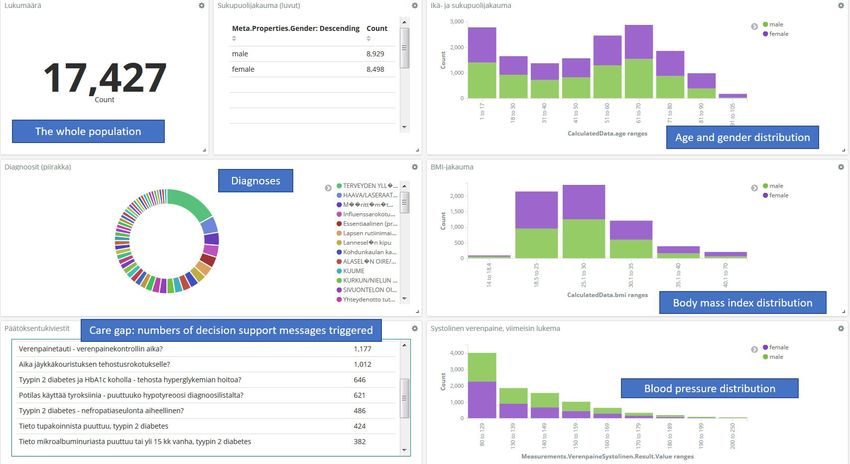
2 3
FROM BIG DATA TO MYHEALTH FROM BIG DATA TO MYHEALTH
Tiivistelmä Summary
Viime vuosina on puhuttu paljon big datan ja tekoälyn tuomista mahdollisuuksista. Niin myös In recent years there has been much talk about the opportunities offered by big data and artificial
terveydenhuollossa, missä kerätään ja tallennetaan päivittäin valtavat määrät tietoa. Näiden intelligence. This is also the case in healthcare, where large amounts of information are collected
tietomassojen älykkäässä hyödyntämisessä otamme kuitenkin vasta ensi askeleita. and stored every day. However, we are only taking the first steps in the smart use of this mass of data.
Tässä julkaisussa arvioidaan, kuinka hyvin osaamme hyödyntää terveys- ja hyvinvointidataa This publication evaluates how well we currently use data on health and well-being,
tällä hetkellä, esitellään hyvinvointianalyytikkojen koulutusohjelman (HEAP) pilottihankkeen presenting the experiences and teachings of the Health Analytics Programme (HEAP) pilot
kokemuksia ja oppeja sekä kerrotaan käytännön tapausesimerkkien avulla, miten tietoa hyödyn- project and using practical examples of cases to illustrate how data is already being used in new
netään aivan uudenlaisissa terveyspalveluissa jo nyt. HEAP-pilottiprojekti toteutettiin yhteis- forms of healthcare services. The HEAP project was a co-operation between Satakunta University
työssä Satakunnan ammattikorkeakoulun, Tampereen teknillisen yliopiston Porin yksikön ja of Applied Sciences (SAMK), the Pori unit of Tampere University of Technology (TTY) and the
Tallinnan teknillisen yliopiston kanssa. eMed laboratory of the Tallinn University of Technology (TalTech).
Kuten professori Tarmo Lipping kirjoittaa, hyvinvointianalytiikka voidaan nähdä lukutai- According to Professor Tarmo Lipping, data analytics can be seen as a kind of literacy, whose
tona, jonka arvo kasvaa jatkuvasti, varsinkin terveydenhuollon kaltaisessa monimutkaisessa value becomes greatest in complex environments such as healthcare. It is also an important way
ympäristössä. Niin ikään se on tärkeä keino parantaa ihmisten osallisuutta omassa hoidossaan. to improve people’s participation in their own care.
Tulevaisuudessa tätä lukutaitoa tarjoavat yhä useammin tekoäly ja algoritmit, mutta sitä In future, this literacy will increasingly be offered by artificial intelligence and algorithms,
odotellessamme terveydenhuollon arjessa tarvittaisiin data-analyysin ammattilaisia, jotta tietova- but until then professional health analysts could enhance the day-to-day operations of the
rantomme saataisiin hyötykäyttöön. Hyvinvointianalyytikot voisivat toimia erilaisissa rooleissa eri healthcare system, maximising the value of our existing knowledge reserves. Health analysts
osissa terveydenhuoltojärjestelmää ja esimerkiksi tuottaa hyödynnettävää tietoa hoitotiimin tai could operate in many different roles in various parts of the healthcare system and, for example,
johdon päätöksenteon tueksi. Analyytikko voisi koostaa ja analysoida mm. potilasdataa sekä provide information that improves treatment or supports administrative decision-making. An
asiakastietoa palveluohjauksen ja asiakaskokemuksen kehittämiseksi. Analyytikko voisi myös analyst could compile and analyse information such as patient data and customer information for
tukea yksilöllistä terveys- ja hyvinvointisuunnittelua ja -valmennusta datan avulla. the development of service counselling and the customer experience. An analyst could also
support individual planning for health and well-being and for coaching with the help of data.
Pilottihankkeen tulos: matka on vasta alussa mutta paljon on
tehtävissä jo nyt Pilot project outcome: the journey is just beginning but much
HEAP-pilottihankkeesta saadut kokemukset ovat rohkaisevia mutta alleviivaavat myös sitä, että more can be done now
tehtävää on vielä paljon. Asiakasrajapintaa hoidetaan edelleen pääosin manuaalisesti The experiences of the HEAP pilot project are encouraging, but they also underscore the fact that
terveydenhuollon arjessa. Toiminta- ja prosessiautomaatio on vasta aivan alkuvaiheessa moniin much remains to be done. The customer interface continues to be primarily handled manually as
muihin toimialoihin verrattuna. a part of healthcare routine. Production and process automation is only at the early stages
Pilotin myötä datan käytön esteiksi tunnistettiin esimerkiksi terveydenhuollon tietojärjes- compared with many other fields of activity.
telmien monimutkaisuus, tiedon puute, käyttöoikeuksien rajoitteet ja tietosuojasäädökset (tässä The pilot identified some impediments to the use of data, such as the complexity of health
järjestyksessä). Hyvinvointianalyysiohjelman, johon kuului myös hyvinvointivalmennusta, information systems, the lack of information, restricted user rights and data protection
puolestaan nähtiin tuovan lisäarvoa niin ammattilaisille, asiakkaille kuin koko palvelujärjestel- regulations. Health analytics programme including customer coaching and case management,
mälle. Erityisesti laadunhallinnan, muutosjohtamisen ja asiakasviestinnän arvioitiin parantu- was seen as providing added value for professionals, customers and the service delivery system. In
van, jos hyvinvointianalytiikkaa käytettäisiin nykyistä enemmän. particular, it is envisaged that the greater use of data analytics will improve quality management,
Tulevaisuus näyttää kuitenkin valoisalta. Olemme parhaillaan matkalla kohti osallistavaa change management and communication with customers and their families.
ja ennakoivaa hyvinvointia, terveys 1.0:sta älykkääseen terveys 4.0:aan. Tämä matka on aikoi- Despite some reservations, the future looks bright. We are currently on our way towards
naan alkanut erilaisten tietoaineistojen muuttamisella digitaaliseen muotoon, jatkunut eri inclusive and proactive well-being, from Health 1.0 to smart Health 4.0. This journey began with
tietoaineistojen yhdistelyn oppimisella ja etenee parhaillaan kohti entistä yksilöllisempien the conversion of various data into digital form, continued by learning how to combine various
palvelujen kehittämistä. Matka jatkuu kohti tekoälyn ja algoritmien mahdollistamia yksilöllisiä data materials and is currently moving towards the development of increasingly individualised
päätöksenteon tukipalveluja ja parempaa asiakasymmärrystä. Suomi ja Viro ovat tämän mat- services. The journey will continue towards individualised support services for decision-making
kan edelläkävijöitä. and better understanding of customers, enabled by artificial intelligence and algorithms. Finland
Julkaisussa esitellään uudenlaisia, jo käytössä olevia keinoja hyödyntää dataa, kuten and Estonia are at the forefront of this journey.
Terveyshyötyarvio, joka tunnistaa väestön hoitovajeita ja auttaa löytämään kullekin yksilölle This publication proposes new ways of using data that is already available and in use, such as
tehokkaimmat ennaltaehkäisy- ja hoitovaihtoehdot sekä KardioKompassi®, joka auttaa arvioi- the Health Benefit Analysis, which recognises care gaps in the population and helps find the most
maan henkilökohtaista riskiä sairastua sydän- ja verisuonisairauksiin genomi- ja elintapatieto- efficient alternatives for prevention and treatment, and the KardioKompassi®, which helps
jen perusteella. Niin ikään esittelyssä on sähköinen Omaolo-palvelu, joka tarjoaa asiakkaalle evaluate the risk of individuals contracting cardiovascular diseases by analysing genome and
apua ajasta ja paikasta riippumatta. Datan hyödyntämisen kokonaisuudessa merkittävä rooli lifestyle data. Also presented is the electronic Omaolo service, which offers customers help no
tulee olemaan myös suomalaisilla tietoaltailla ja biopankeilla, joista kerrotaan luvussa 4.5. matter the time or place. Finnish data lakes and biobanks, also addressed in the report, will also
have a significant role to play in maximising the use of personal data.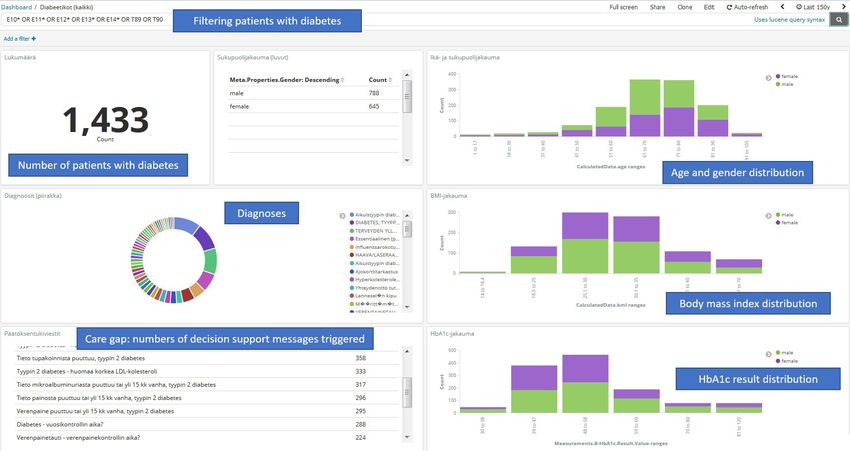
4                                                                               5
                                FROM BIG DATA TO MYHEALTH                                                       FROM BIG DATA TO MYHEALTH

    Contents

    Preface                                                                 1
                                                                                4   Analytic methods and tools for digital care services                 48

                                                                                       4.1 Care gap and health benefit – tools for value-based care       48

                                                                                       4.2 Omaolo service                                                 54
    Executive summary                                                       2          4.3 KardioKompassi® – using genomics to accurately predict and

                                                                                           prevent cardiovascular disease                                 58

                                                                                       4.4 Proactive cardiovascular prevention in subjects with a high

1   Introduction                                                           6               hereditary risk by using the Kardiokompassi tool in Estonia    60

                                                                                       4.5 The Finnish biobanks and data lakes                            64

2   The future of healthcare – from health 1.0 to health 4.0               8

                                                                                    Towards the era of myhealth: customer inclusion and customer-
                                                                                5   driven approaches in care services                                    68
    Data analytics transforming health services towards
3
                                                                                       5.1 Inclusion and involvement as a basis for the analysis of social
    myhealth services                                                      12              decision-making and the efficacy of services                   68
       3.1 Teaching healthcare analytics – a new curriculum in healthcare 		           5.2 Customer inclusion in healthcare and social services           72
           education                                                       12          5.3 Health coaching – challenges to widespread incorporation
       3.2 Data analytic skills required in the health and social sector   16              within healthcare                                              78
       3.3 Data analytics for decision support in healthcare               20          5.4 Designing individually tailored health promotion programmes
       3.4 Visualisation as a tool for data analytics                      26              for people with disabilities                                   82
       3.5 Small-scale working life pilots pave the way to data-driven

           personalised care services                                      30       Annex		                                                               85
       3.6 The value and impacts of advanced analytics in the healthcare

           ecosystem                                                       36

       3.7 Echos from the health analytics programme (HEAP)                40

       3.8 Lessons learned in the health analytics programme (HEAP)        44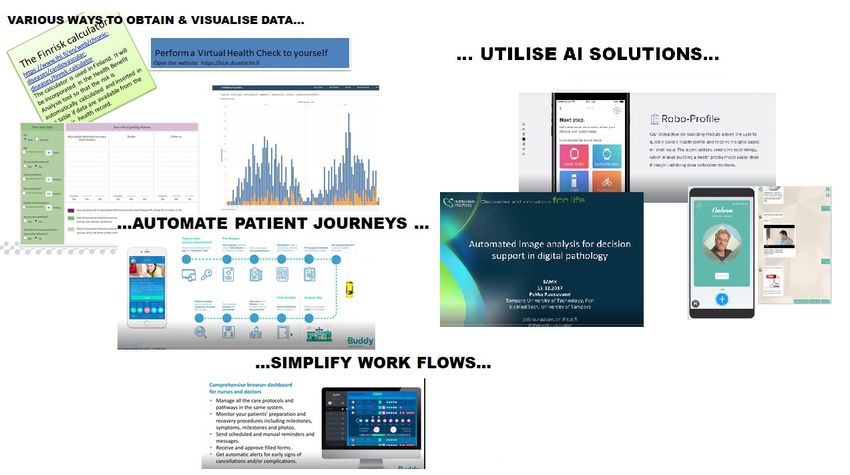
6                                                                                                                   7
                                              FROM BIG DATA TO MYHEALTH                                                                                          FROM BIG DATA TO MYHEALTH

1            Introduction
             ANDREW SIRKKA EdD, PRINCIPAL LECTURER, PROJECT MANAGER,
                                                                                                                               the education remarkably, widening the                project, we found the topics very intriguing
             SATAKUNTA UNIVERSITY OF APPLIED SCIENCES (SAMK)
                                                                                                                               horizons of data analytics and its applications       to discuss and work with. I hope that this
                                                                                                                               in service design.                                    publication conveys the same enthusiasm
             Since the first digitisations in the field of       things, only serve to multiply the amount of                        This publication discusses the key topics       and motivation to its readers, to make future
             healthcare, the speed and extent of                 data available. This enormous increase in                     related to big data, and its use in healthcare        healthcare and social services more flexible
             transformation has been increasing on an            digital data needs to be utilised much more                   and social services. The publication consists         and individualised based on effectively
             annual basis. Fast technology development of        effectively to meet customers’ health and                     of three main parts: 1) the “big picture”, as a       deployed data analytics.
             disruptive technologies and emerging trends         well-being needs. What we need is better                      knowledge base for the project, discussing                  Finally, as the HEAP project manager
             like robotics, artificial intelligence, 3D          deployment of data analysis and analysts                      global trends and transformations in the              and the editor of this publication, I would
             printing, precision medicine or patient             within the service delivery systems.                          health industry; 2) the implementation of the         like to express my sincere appreciation and
             design affect the health industry globally.               This publication is one of the outcomes                 HEAP project and pilot education                      gratitude to all the experts and students for
             More and more fascinating and easy-to-use           of a two-year project (2017–2018) called                      experiences; and 3) interesting novel means           their priceless contributions to the project
             trendy applications arrive on the market that       Health Analytics Programme (HEAP). The                        and methods for data analytics in healthcare          and this publication.
             appeal to anyone who wants to monitor               project was initiated and funded by Sitra, and                and social services. As participants in the
             activity, sleep, blood pressure, ECG, pulse,        was conducted as a collaboration between
             nutrition levels – you name it. Any self-           Satakunta University of Applied Sciences
             respecting modern individual wants these            (SAMK), Tampere University of Technology
             apps on their smartphone and feels the need         (TTY) and the eMed Lab of the Tallinn
             to be actively involved in their own health         University of Technology (TalTech). The
             and well-being.                                     purpose of the project was to provide
                   The healthcare and social sector have         evidence of the impact of analytical solutions   What we need is better deployment
             traditionally been seen as information-             and their suitability in healthcare and social      of data analysis and analysts
             intensive industries filing massive amounts         services. The project envisaged an education
             of information intended for use in a person’s       package to provide the expertise required for    within the service delivery systems.
             care. A long time ago it became obvious that        the use of the data analytics. The education
             no one would be able to manually handle             programme consisted of theoretical studies
             that amount of produced or filed                    (30 ECTS, European Credit Transfer and
             information. The mass of data has become            Accumulation System) and a pilot phase (20
             akin to hazardous waste! It is commonly             ECTS) with data analytics projects in
             accepted that this manually or electrically         students’ working environments introducing
                                                                 data analytics into practice.
                                                                       Added to a Steering Committee, the
                                                                 project established a Working Life
                                                                 Committee representing the service provider
    The mass of data has become                                  organisations in the target region, Satakunta,
      akin to hazardous waste!                                   Finland. Students enrolled in this pilot
                                                                 education programme formed two
                                                                 simultaneously progressing groups, one in
                                                                 Pori, Finland and one in Tallinn, Estonia.
             gathered information is not accessible and          The students in the Estonian group had
             does not move between various services and          backgrounds from areas other than
             professionals that badly need it when serving       healthcare, unlike the Finnish students who
             their customers. Moreover, digitalisation and       all were healthcare professionals. The
             modern technology solutions, among other            heterogeneity of the student groups enriched
8 9
FROM BIG DATA TO MYHEALTH FROM BIG DATA TO MYHEALTH
2 The future of healthcare – Why IHAN? Because more and more
services that we use are digital, which also
MyData model – a model that equips
individuals to control who uses their
from health 1.0 to health 4.0 means global. IHAN gives us the ability to
collect data from different providers. For
personal data, stipulates the purposes for
which it can be used and gives informed
that, clear and open standards are needed. consent in accordance with personal data
MADIS TIIK, MD, SENIOR ADVISOR, SITRA The closest example of IHAN number (a part protection regulations. It makes data
of the IHAN concept) is IBAN, the collection and processing more transparent
international bank account number, which and it helps companies or other organisations
This article discusses the transformation in attendance at or admission to the facility. The gives us a simple address for a person’s bank implement comprehensive privacy protection
the healthcare concept since the first primary aim of the EHR is integration, data account. Why not use a similar solution for policies (Poikola, Kuikkaniemi and Honko
digitisation in the Health 1.0 concept and up sharing between healthcare providers, health information? (See Figure 2.) 2015).
to the future smart Health 4.0. The automation and streamlining of a healthcare The second precondition is consent Sitra will create an international consept
technology-driven development has provider’s workflow. It is very important to management. Making decisions about which for a human-centric and secure data
generated new ecosystems and enabled new ensure that the information generated in the service to use, every inidivual also has to give exchange and part of it will be standardised
potential in health services. However, the EHR is timely, accurate and available all the a certain level of consent to the service by European standardisation process. Sitra is
new ecosystems require new competences time. provider. This can be solved using the also working closely with MyData Alliance.
and outstanding changes in working PHRs are also developed for the
patterns. ecosystems of different services and devices
but are still separate from the EHR. A health FIGURE 1.
Health 1.0 – Digitisation information exchange (HIE) is a centrally THE HEALTHCARE
The widely deployed and popular computer collected dataset from local EMRs, and PROCESS TODAY Laboratory/ Laboratory/
other tests other tests
application, the electronic medical record enables data exchange between different
(EMR), is in its basic version a digitised EMRs, with data passing from one to the
version of the regular traditional paper-based other over the HIE platform (Figure 1).
medical chart for everyone. It contains all the
329 will General
patient’s medical and clinical data history in Health 3.0 – Personalisation 1000 citizens
during one
800 of them
have some
meet
a medical
practitioner Specialist
medical
a single facility, such as a hospital, clinic or The first precondition for Health 3.0 is a month concerns
professional,
e.g. nurse
GP’s office. It is used by healthcare providers personal health account (HA), which consists
to monitor and manage care delivery within of both PHR and EHR-generated data and
the facility. At the same time, there have been which can be fully controlled and managed
different services and devices which collect by individuals themselves. The PHR and
EHR of HIE
data for everyone’s own personal health EHR service providers feed HA with data.
record (PHR). At this stage, they are stand- From the perspective of the individual, the
alone solutions – one device or service which process must be simple and easy to manage.
has its own data storage. The EU General Data Protection
Regulation (GDPR) enables people to take
Health 2.0 – Integration over the control of data, but there is a lack of FIGURE 2.
DEVICES
An electronic health record (EHR) is shared infrastructure and standards for doing so. HEALTH 3.0 – A
Disease PHR
HEALTH ACCOUNT Medical EHR Health
instantly and securely among multiple Moving towards Health 3.0, we have to build services
episode
Sickness data Healthe and data
AND IHAN information wellness
healthcare facilities within a community, trust and security around the health account. SERVICES
ENABLING A
region and state, or, in some cases, the whole Once those components are in place, PATIENT-CENTRED
country. Effective implementation of EHRs everyone can connect with other data APPROACH
can be done after healthcare organisations sources, like genome bank data or data from
IHAN
have adopted complete EMR systems. Like various registries. That´s why Sitra, the
Open data Genomic data
EMRs, EHRs are longitudinal patient-centred Finnish Innovation Fund, started (2018) an
records containing a patient’s full health international project IHAN® to enable us to HEALTH
Account
profile (or, more accurately, a sickness move our personal data between different
profile, because it carries primarily your service and data providers, including our
medical history) starting from the first personal health data.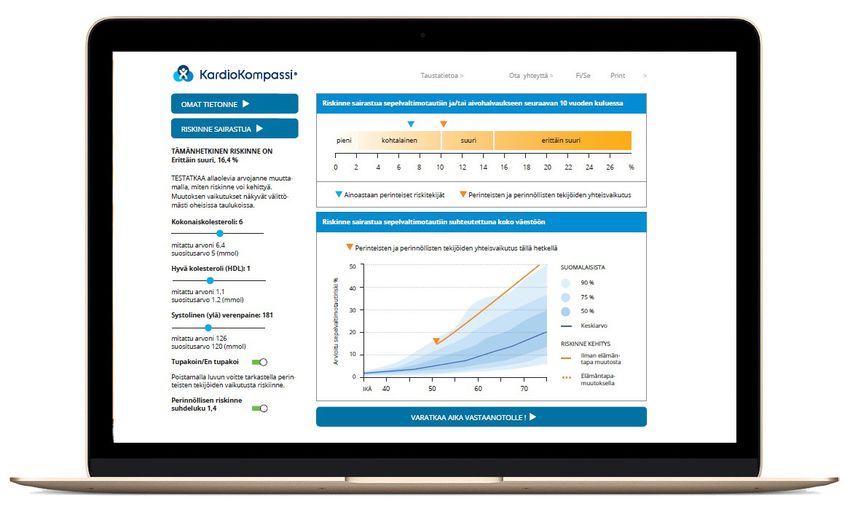
10 11
FROM BIG DATA TO MYHEALTH FROM BIG DATA TO MYHEALTH
Health 4.0 – AI empowered services. First, the 800 people who had FIGURE 4.
THE HEALTHCARE
decision-making services health-related concerns could have started to
PROCESS IN THE
While Health 3.0’s focus is more on securing solve them together with AI. A symptom FUTURE
data exchange under the control of an checker, decision support tools and access to Symptom checker
Nurse
individual, Health 4.0 is more concerned existing medical history would form the basis Data extraction General
800 of them
with the opportunities and services enabled of analytical tools, which will help to clarify 1000 citizens have some
practitioner
EHR
during one Data analytics
medical
by a health account and proper consent and specify the existing condition. month concerns Decision making Specialist
management. It is evident that in this stage After triage, some problems could be Advice and recommendation
the main role will be taken by artificial solved by a healthcare professional, but most Laboratory
intelligence (AI; Figure 3). Decision support of the problems could be solved elsewhere.
and triage systems for better decision- The health account is the connecting particle
making have been in use already for 20 years, between the dataflow from EMRs and other
but thanks to modern machine learning and services, but also feeds the AI for better
advanced analytics we can go much deeper analytics (Figure 4). Self-care HEALTH
account
and closer to personalisation. Different kinds PHR
of analytical services can be built around a Conclusions
health account; maybe we even need new Although we have spent a lot of money and
professionals to deal with that – health time on integrating EMRs, allowing personal
analysts? access to the data, we really do not have
The health account can be also seen as a better health outcomes. One reason for that
market place for different services – one might be that the focus has been wrong –
person may open his or her dataset and concentrating too much on data collection
realise they need further assistance. The and digitisation, rather than building patient- FIGURE 5.
Personal data ownership
Analyst
market can work like a matchmaking centric services and using data analytics. THE
PRECONDITIONS
environment, where knowledge and health GDPR and IHAN will lead the new era of
FOR HEALTH 4.0 Health account
problems face each other and the individual healthcare, where integration is carried out AI MyData
acts as a kind of conductor, who allows or with the consent of data owners, people, and
Analytical services
denies access to the personal dataset. artificial intelligence is used to make better
With all the necessary components in decisions. This will lead to the empowerment Health
account
place, we can design a new process for how of the patient and may have a positive impact Interpretation service CDPR
people should interact with healthcare on personal well-being (Figure 5).
IHAN
Health analyst
Freedom Patient
FIGURE 3. Patient involvement
AI-EMPOWERED DEVICES
Disease PHR
DECISION-MAKING Medical EHR Health
episode Healthe and
services Sickness data data
SERVICES. information wellness
SERVICES
IHAN
Open data Genomic data
HEALTH
Account
2 References 1. Green L. A., Fryer G. E. Jr., Yawn B. P., Lanier D.
and Dovey S. M. (2001), “The ecology of medical care
3. Poikola A., Kuikkaniemi K. and Honko H. (2015),
MyData – A Nordic Model for human-centered
revisited”, New England Journal of Medicine, 344(26): personal data management and processing,
2021–2025. Ministry of Transport and Communication, Finland:
www.lvm.fi/documents/20181/859937/MyData-
2. Sitra (2018), the Human-Driven Data Economy:
nordic-model/2e9b4eb0-68d7-463b-9460-
www.sitra.fi/en/topics/human-driven-data-
821493449a63?version=1.0.
economy/#what-is-it-about.
AI-empowered decision-making services / marketplace
12 13
FROM BIG DATA TO MYHEALTH FROM BIG DATA TO MYHEALTH
3 DATA ANALYTICS data and the diverse information systems that
have low interoperability with each other. In
10) patient empowerment; 11) smart
healthcare services; and 12) internship in
TRANSFORMING HEALTH addition, bringing in new technologies to health analytics.
SERVICES TOWARDS
conventional medical service provision
demands smart change management Primary and secondary
MYHEALTH SERVICES approaches, to avoid resistance by healthcare
professionals that are already overwhelmed
use of data
Data is the primary component of building
with continuous changes in their daily work. e-health services and digital tools. Data in
The current situation supports the information technology is the same as cells in
introduction of a new type of healthcare medicine – while cells are foundations of
professional, who understands how health organs, tissues and the human body, data is
and medical data from different databases the foundation of e-services and digital tools.
can be integrated and updated into an easily Data has no meaning without the context.
usable, standardised format. The knowledge Adding context to data generates
of this profession should be based more on information. The same data could carry
the understanding of types and sources of different information, depending on the
data, and how collected information can be surrounding environment. In medicine, data
3.1 Teaching healthcare analytics presented to the decision-maker (rather than is often mixed with information. In the
– a new curriculum in solving the problems of one particular
individual).
analogue world, a clinician’s notes might
include some conclusions in free text without
healthcare education Thus, the health analyst is a professional
that potentially covers the existing gap
presenting the source data. This hinders
reuse of collected notes because they are not
between insufficient handling, high volumes computer processable. To make clinical notes
PEETER ROSS, PROFESSOR, EMED LAB, TALLINN UNIVERSITY OF of medical data and the universal available for digital decision support systems
TECHNOLOGY, ESTONIA implementation of artificial intelligence. The they should be standardised and as context
role of the health analyst would be to find specific as possible. Furthermore, the more
relevant data from the various databases, granular the data, the wider the spectrum of
Increasing amounts of health and medical medicine for centuries. Nowadays, when the decide on the quality of data, and present e-services and tools that could be developed.
data, collected from different data sources amount of data collected about patients is data to the decision-makers or enter it into Healthcare professionals have to
and present on healthcare professionals’ exceeding analytical limits of the human digital decision support tools. understand that the quality of e-services
desktops, brings a need to aggregate this data brain, the traditional synthesis of data by one applied on different information systems
and information and present it in condensed professional is not possible. In addition, Core components of depends on the quality of the data they are
form. In an ideal situation, collected data research in biomedical sciences is producing the healthcare analyst’s entering into the information system. The
could be processed with digital tools using so much professional knowledge that keeping curriculum entering of data and its use at the point of
artificial intelligence and decision support the diagnostic and treatment skills of a Three universities in Finland and Estonia care is the primary function of data. This is a
systems. Unfortunately, current data in doctor or nurse up to date requires (Satakunta University of Applied Sciences, part of the modernisation of healthcare and
electronic medical and health record systems aggregation and presentation of this new Tallinn University of Technology and brings some efficiency into processes, but it
is not of sufficient quality for computer information with the help of computers, in Tampere University of Technology) has relatively limited value compared to the
processing in most cases. The health an easily understandable way. developed a curriculum for the health analyst secondary use of data. Secondary use of data
analytics profession might cover this gap in This situation is ideal for introducing profession. The curriculum consists of the is taking advantage of the already collected
the coming years. Below is an overview of the artificial intelligence tools to help healthcare following basic components: 1) primary and data by other users, in different locations. It
content of the curriculum for health analysts. professionals handle ever-increasing amounts secondary use of data; 2) content and trends is the use of data collected by other
The teaching of healthcare professionals, of information. However, despite the high in e-health; 3) digital tools in healthcare; 4) professionals in different locations and
doctors and nurses, traditionally expectations for computer-aided detection of theoretical basis of data analysis; 5) service circumstances. Accordingly, the reuse of free,
concentrates on problems of a particular diseases and digital decision support systems, design and change management; 6) unstructured and non-standardised free text
individual or understanding the development a real breakthrough regarding the above- information systems in healthcare and their is cumbersome and time consuming, while
of specific diseases. This has been an efficient mentioned tools has not happened. integration; 7) digital decision support structured and standardised data that is
way of passing on professional experience Insufficient use of digital tools can be systems; 8) artificial intelligence; 9) practical easily computer processable allows for the
and introducing scientific evidence to contributed to the low quality of the collected design of a health analyst’s work processes; provision of added-value services (not only
14                                                                                                                          15
                                   FROM BIG DATA TO MYHEALTH                                                                                                   FROM BIG DATA TO MYHEALTH

for the person who has entered the data, but            takes responsibility for the reliability of the                   risk scores, visualisation tools, etc.) is part of        and is accessible only after approval from the
more widely for all parties in the health               tools used and must be confident that they                        the curriculum. Students have a chance to                 person him/herself. Therefore, the benefits
domain, including the patient, healthcare               will not harm the patient.                                        enter their personal health data into digital             for the patient are analysed, and different
professionals and society).                                                                                               tools and see what kind of output is                      e-services and digital tools for disease
                                                        Service design and change                                         delivered. This practical exercise allows                 prevention and health promotion are
Content of and trends                                   management                                                        students to understand the importance of                  investigated.
in e-health                                             As discussed earlier, the implementation of                       data availability and quality, because
E-health is a term that defines the                     innovative tools and shared services in                           insufficient data would lead to no response               Practical experience
introduction of innovation and change                   healthcare is not possible without                                from the decision support system.                         The pilot project for health analyst training,
management into healthcare through                      redesigning analogue processes. On the other                                                                                consisting of a total of 50 ECTS, was
digitisation. Similar to banking, where digital         hand, change is perceived as a stress factor by                   Practical design of health                                conducted at the Satakunta University of
transformation is seen to a large extent (and           healthcare professionals, who are typically                       analyst work processes;                                   Applied Sciences (SAMK) and at Tallinn
e-banking is so common that the term itself             conservative in the nature of their everyday                      internship of health analysts                             University of Technology (TalTech), during
is rarely used any more), healthcare                    work. The health analyst profession is new to                     Different scenarios involving the health                  three semesters, in 2017 and 2018. There
digitisation should also consign the e-health           the healthcare environment and every                              analyst’s work responsibilities have been                 were 10 students in Finland and five students
term to history, digitisation being an inherent         activity performed by health analysts could                       designed. Scenarios in which health analysts              in Estonia participating in the pilot.
part of ordinary healthcare. However, to                be taken as an unwanted event in the health                       work in a GP’s office and provide doctors                 Feedback from the students and lecturers was
make this transformation happen students                system’s well-established environment. Every                      with patient summaries collected from                     collected. Every student had to partake in a
must understand how digitisation can change             new service must be designed in such a way                        different healthcare databases before a                   practical internship that provided additional
processes and bring new innovative tools                that change is almost undetectable by users.                      patient visit is one option. Scenarios have               information about the need and value of the
into healthcare. Another aspect of                      Alternatively, if the redesign leads to evident                   also been tested in which health analysts                 health analyst profession. Input from
digitisation is that it involves new parties in         change in the responsibilities or working                         work at medical call centres and as health                different sources was analysed and several
health-related decision processes. This                 environment, proper change management                             coaches, providing out-of-pocket services for             recommendations about the new profession’s
applies especially to the involvement of                should be in place in advance.                                    patients. Each student has a chance to                    skills and roles in healthcare, and about the
patients.                                                                                                                 conduct an internship of 20 ECTS credits in               curriculum for health analysts, were
                                                        Information systems in                                            healthcare services.                                      provided. The results of the pilot from
Digital tools in healthcare                             healthcare and their                                                                                                        different perspectives are discussed in other
Innovation is often related to disruption.              integration                                                                                                                 chapters of this book.
Digital tools in healthcare are disruptive in           Although the health analyst will use several                                                                                      To conclude, all participants in the
                                                                                                              Understanding the opportunities of
nature, involving the redesign of processes,            new digital tools in their workplace, most of                                                                               pilot project were enthusiastic about the
the involvement of completely new decision-             the medical information is collected in              new tools while also having knowledge                                  need for this profession and found the
makers and sometimes making traditionally               healthcare providers’ sophisticated electronic                                                                              proposed curriculum comprehensive.
                                                                                                               about their potential harm is an
highly specialised services a commodity.                medical records. Teaching basic principles of                                                                               However, the role of the health analyst in
Understanding the opportunities of new                  design and architecture, data standards and            essential part of the curriculum.                                    the management of health status and
tools while also having knowledge about                 user interfaces used in information systems                                                                                 medical problems in the healthcare
their potential harm is an essential part of the        are important elements. Also, how to                                                                                        environment is not yet well defined. In
curriculum.                                             integrate different electronic medical records                         The importance of patient                            addition, the design of services where the
                                                        and the data provided by them into patient-                       empowerment is thoroughly discussed in the                health analyst could be used is in progress.
Theoretical basis of data                               centric, electronic health records is essential                   programme. Data used by healthcare                        As a result, the curriculum might need
analysis                                                knowledge.                                                        professionals should be owned by the patient              some further fine-tuning in the future.
Data analysis is based on mathematical
calculations and statistical analysis. Even             Digital decision support
though development of analytical tools is not           systems and artificial
a part of a health analyst’s profession, the            intelligence
understanding of what lies under the hood of            The introduction of digital decision support
digital tools is of utmost importance. The              systems for the primary use of data (i.e.
user needs to decide what digital tools are             entering of structured data into standardised
reliable and evidence-based. While using                formats) and for the secondary use of data
decision support systems the health analyst             (i.e. to receive alerts, notifications, reminders,
16                                                                                                        17
                                         FROM BIG DATA TO MYHEALTH                                                                                 FROM BIG DATA TO MYHEALTH

3.2   Data analytic skills required in                                                                          also transform governance towards more
                                                                                                                customer-driven perspectives (Butcher 2015;
                                                                                                                                                                        driven) care fails without genuine shared
                                                                                                                                                                        decision-making and management, working
      the health and social sector                                                                              Kadmon et al. 2016; McNichol et al. 2015;
                                                                                                                STM 2016).
                                                                                                                                                                        in interdisciplinary teams. Evidence-based
                                                                                                                                                                        practice, integrating the best research with
                                                                                                                      Opportunities for digitisation have also          clinical expertise and patient values for
      ANDREW SIRKKA, EdD, PRINCIPAL LECTURER, SATAKUNTA UNIVERSITY                                              been identified by the Finnish Government’s             optimum care and active participation in
      OF APPLIED SCIENCES                                                                                       key projects, introducing and implementing              research and learning activities, requires data
                                                                                                                digital healthcare accessible to customers,             analytic skills. Applying quality improvement
                                                                                                                relatives and professionals. Rapid digital              implies analytic competencies to identify
                                                                                                                innovation is also evidenced by numerous                errors and hazards in care and patient safety,
      Healthcare as an                                        Digitisation expanding the                        start-up events and exhibitions, where digital          to constantly measure the quality of care in
      information-intensive                                   quantity and quality of data                      health is a strong presence. More and more              terms of structure, process and outcomes in
      industry                                                available                                         digital tools are being generated, marketed             relation to patient and community needs,
      The Health Analytics Programme (HEAP)                   Digitisation in the healthcare industry is        and used to monitor one’s health indicators,            and to design and test interventions with the
      was launched as a reaction to the increasing            moving with a great deal of speed all over the    including fitness levels, muscle activity, heart        objective of quality improvement. None of
      need for data analytic competences in the               world, even in developing countries. This is      rates, blood pressure and sleep. The current            this would be possible without utilising
      health sector. The healthcare sector has                pushing services and businesses towards           discussion debates the pros and cons                    informatics in terms of communicating and
      traditionally been an information-intensive             product-as-a-service services, usable             regarding usability of the data provided by             managing knowledge, and using decision-
      industry, collecting large amounts of                   anywhere and anytime, incorporating               wearable trackers in official healthcare                making support technologies.
      information from various sources (society,              personalisation and agile continuous              services. Despite active marketing, recent
      patients, science, machinery, etc.) for several         improvement (Little 2017). Digitisation           surveys indicate that only 20-22% of adults             A project to pilot education
      reasons (health statistics, patient health              could mean anything: devices capable of           are using wearable health trackers in Finland           programmes on health
      records, reports).                                      managing digital signals; computerised            and in the USA (eMarketer 2017; Statista                analytics
            Healthcare collects huge quantities of            media and communication systems to                2018).                                                  The Health Analytics Education Pilot
      data about patients, treatments and                     explain or understand aspects of                                                                          (HEAP) was launched in 2017, in
      procedures in manual or electric records,               contemporary social life (Brennen and Kreiss      New competences required                                collaboration with Sitra, Satakunta University
      forming vast repositories of health and                 2014); or big technology innovations              Because of rapid digitisation, large datasets of        of Applied Sciences (SAMK), Tampere
      care-related information. These repositories            radically transforming processes and services     information are commonly available.                     University of Technology (TTY) and Tallinn
      are like libraries – only the problem is that           by means of information technology                Advanced exploratory data analysis                      University of Technology (TalTech). The
      use of this library is blocked! A widely well-          (Chilikuri and van Kuiken 2017). No matter        techniques are also available to identify               project envisaged a study programme for
      known constraint, especially in developed               what the definition, it is obvious that           potentially useful patterns in data. Use of             health service analyst competences on the
      industrialised countries, is that because of            digitisation is constantly and with increased     these techniques could provide colossal                 grounds of the challenges discussed above.
      strict data protection legislation, data is hard        intensity transforming the world, life, work,     benefits and value to organisations and                 The education programme contained a total
      to access (even by the most relevant                    services, economy and culture.                    professionals involved in service delivery, as          of 30 ECTS theoretical and 20 ECTS practical
      professional for supporting optimal care) and                 Digital transformation, together with       well as to customers.                                   studies to implement analytics in real-life
      poorly transferred between various care                 the ideology of consumerism, requires major             According to Chilukuri and van Kuiken             services. The pilot group consisted of two
      providers (Baker 2013; Tiik 2018).                      changes in service concepts, processes and        (2017), digital transformation is more likely           student groups, one in Pori, Finland, and the
            The value of building huge libraries with         means, in all kinds of organisations and          to succeed when organisations focus on four             other in Tallinn, Estonia.
      massive information repositories that are               business domains. User-orientation and            critical dimensions: capabilities, modern IT                  Given the issues associated with rapid
      scarcely used (if ever) is questionable. Should         consumerism are essential parts of modern         foundation, delivery engines and sources of             digitisation and its attendant challenges for
      the system instead pay closer attention to              digitised services. They are drivers for change   value. These dimensions obviously set new               healthcare, designing a one year-long
      collecting smart data – data that is beneficial         in management and leadership models, in           competency requirements for anyone                      education programme aimed at the
      and usable on a wider scale? Should people              innovative service concepts and new business      working in the sector of healthcare and social          furthering knowledge of data analytics for
      have a greater ownership of their health data?          models, and in the incorporation of digitised     services.                                               non-medical healthcare professionals was not
      Smart data collection and automated analyses            assets and increased use of technology to               Kaggal et al. (2016) presents a list of           a simple task. To get started, the project
      at the patient registration phase could                 improve and streamline the quality of             core competences that all healthcare                    group had a few meetings to figure out the
      expedite and improve quality of care.                   services provided by/to organisations,            professionals should possess, regardless of             most essential elements and competency
                                                              employees, customers, suppliers, partners         their discipline in the 21st-century healthcare         requirements to be met and to plan how to
                                                              and other stakeholders. Digitised services        system. Patient-centred (let alone patient-             implement the identified contents in the
18 19
FROM BIG DATA TO MYHEALTH FROM BIG DATA TO MYHEALTH
programme. Also, a working life committee Studies consisted of online studies using FIGURE 1.
HEALTH ANALYTICS
with representatives from the main video lectures and online sessions. Weekly
WAS CARRIED
Multimethod education
healthcare service providers in the region face-to-face workshops were held to facilitate OUT AS A FORM
• Weekly tutoral classes
was established, to discuss the needs and the work of the two groups and to keep up OF MULTIMETHOD • Video lectures and student assignments in Moodle e-learning environment
challenges organisations currently face with the progress of the studies. As expected, EDUCATION • Intensive programmes
regarding data analytics. the data analytics part turned out to be quite • Service and tech demos
• Seminars and workshops
A special characteristic of this pilot a challenge for all the students. To support
• Multiprofessional joint classes
education project was having two international aspects and get a deeper insight
• Close collaboration with companies, service provider organisations
simultaneous groups of students in Finland into commonalities and diversities in service
and projects
and Estonia. Additionally, the Estonian deliveries between the two countries, a
students had a variety of professional couple of intensive campus weeks with a
backgrounds compared to the healthcare variety of workshops and seminars
FIGURE 2.
professionals in the Finnish group. (including public seminars on the theme) SOME OF THE PERFORM A VIRTUAL HEALTH
CHECK TO YOURSELF
Heterogeneity in the healthcare services and were held (Figure 1). MAIN LEARNING https://star.duodecim.fi/star/
student groups turned out to be a strength Working on the given assignments the OUTCOMES IN
HEALTH ANALYTICS
and a huge resource, rather than a challenge. students faced difficulties, even as
EDUCATION
Even though in the commerce and retail professional staff in the organisation, in
sector customer orientation is expected to be accessing the required data in the systems.
a centrepiece, it soon became very obvious Many flaws in documentation were
how similar the challenges and shortages identified, which resulted in either limited
were both in commerce and healthcare (or access or a total lack of the required
social services) today. Analytical skills are information. Most documentation is still in
not well known, let alone a core competence, unstructured narrative form, which requires
in either industry. natural language processors (NLP) to
analyse. The massive quantities of collected
data in the organisations was poorly
accessible and used in surprisingly scarce
The students found the pilot period ways. The students found the pilot period
very eye-opening in many ways. In 3.2 References Baker B. (2013), “Great patient care begins at Delivery at the Point of Care Empowered by Big Data
very eye-opening in many ways. particular, students realised how even small-
registration”, in Health Management Technology, April
2013, Vol. 34 Issue 4, p. 17.
and NLP”, Biomedical Informatics Insights 2016: 8(S1)
13-22 doi: 10.4137/BII .S37977.
scale analysis can identify bottlenecks and Brennen S. and Kreis D. (2014), “Digitalization and Little A. D. (2017), “Digital transformation in
Digitization”, in Culture Digitally, cited 12 September developing countries – Promotion and adoption
critical points, in addition to the 2018. Available at: http://culturedigitally.org/2014/09/ should be the main actions for companies and
digitisationisation-and-digitisation/. government”, cited 19 September 2018. Available
The structure of the education opportunities to streamline services. The at: www.adlittle.com/sites/default/files/viewpoints/
Butcher L. (2015), Consumerism Hits Healthcare,
programme consisted of the following student’s pilot projects are discussed in more H&HN: Hospitals & Health Networks, February 2015,
adl_digital_in_emerging_markets.pdf.
theoretical studies: 1) e-health and telehealth, details in the article 3.5 in this publication. Vol. 89 (2), pp. 22-27. McNichol E., McKay A., Milligan C., Bennett K.,
Hulme R. and Joy H. (2015), “A patient-led approach
Health 1.0-4.0 strategies, comparing digitised To conclude, the pilot education Chilukuri S. and Van Kuiken S. (2017), “Four keys
to product innovation in patient education and wound
to successful digital transformations in healthcare”,
health services at national levels; 2) decision programme provided a lot of new McKinsey & Company, cited 13 September 2018.
management”, EWMA Journal, April 2015; 15(1): 47-
51. 5p. ISSN: 1609-2759.
support systems and tools that focus on data perspectives. New skills were also attained Available at: www.mckinsey.com/business-functions/
digital-mckinsey/our-insights/four-keys-to-successful- Statista (2018), “Fitness band, connected car system
analytics, and technology tools provided to regarding how to handle and visualise data, digital-transformations-in-healthcare. and smartwatch ownership in Finland 2017”, cited
19 September 2018. Available at: www.statista.com/
support decision-making in healthcare; 3) and how to automate and streamline eMarketer (2017), “Wearables Still Far from Mass
statistics/716752/survey-ownership-of-smart-home-
Adoption”, cited 19 September 2018. Available at:
client involvement and smart services and customer services through process mapping www.emarketer.com/content/wearables-still-far-from-
devices-in-finland/.
digitools to implement customer engagement and use of AI solutions (Figure 2). mass-adoption. STM (2016), ”Digitalisaatio terveyden ja
hyvinvoinnin tukena Sosiaali- ja terveysministeriön
and client-centredness in services; 4) service Kadmon I., Noy S., Billig A. and Tzur T. (2016),
digitalisaatiolinjaukset 2025”, Sosiaali- ja
“Decision-Making Styles and Levels of Involvement
design and case management; 5) a practical Concerning Breast Reconstructive Surgery: An Israeli
terveysministeriön julkaisuja 2016:5, cited 10
September 2018. Available at: http://julkaisut.
period piloting analytics in healthcare Study”, Oncology Nursing Forum, January 2016
valtioneuvosto.fi/bitstream/handle/10024/75526/
Supplement Online Exclusive Articles; 43 E1-E7. 7p.
services. ISSN: 0190-535X.
JUL2016-5-hallinnonalan-ditalisaation-
linjaukset-2025.pdf.
Kaggal V. C., Elayavilli R. K., Mehrabi S., Pankratz J.
Tiik M. (2018), ”Miksei tieto kulje?”, Tekniikan maailma,
J., Sohn S., Wang Y., Li D., Rastegar M. M., Murphy S.
March 2018, pp. 77-83.
P., Ross J. L., Chaudhry R., Buntrock J. D. and Liu H.,
“Toward A Learning Health-care System – Knowledge20 21
FROM BIG DATA TO MYHEALTH FROM BIG DATA TO MYHEALTH
3.3 Data analytics for decision Repeated manual insertion of the same data
is demotivating for the staff involved. If
after spending some time with his/her
computer code and calculation gadgets. This
support in healthcare relevant, well-defined protocols for data
collection should be designed and observing
does not work in most cases. Designing the
analysis framework requires experts from
these protocols should be ensured and both fields.
TARMO LIPPING, PROFESSOR, TAMPERE UNIVERSITY OF TECHNOLOGY monitored by respective checklists or apps. Let’s take an example of collecting
No analysis can compensate for negligence in patient data in a department carrying out a
data collection. certain kind of treatment. We might end up
Analysis of health-related data is a diverse data analysis is outsourced to the tools and During the HEAP project, there has with a table containing demographic data of
topic spanning from health coaching to routines of commercial information systems, been a lot of discussion on who should the patients such as age, gender, level of
complex environments of intensive care, with exploiting data and data analytics in everyday actually perform the data analysis and where education, diagnosis, BMI, use of alcohol,
various goals, requirements and practices. clinical work is a matter of attitude. To use in the service chain the health data analyst etc., as well as the type (assuming that there
Health data analytics is used at the point of and trust the analysis results, one has to have should step in. There is no single answer to are several alternative treatment types) and
care, in real time; but it is also invaluable in basic knowledge of how these results are this question. It is desirable that medical staff outcome of the treatment. A generic
developing healthcare service chains, obtained. In addition, data analysis can only have at least some preliminary skills to objective of data analysis might just be: “what
treatment standards and guidelines, and be as good as the data it relies on. The data is visualise data available in common formats does the data tell us?” The data analyst can
reducing the overall costs of healthcare while collected by humans and it is difficult to such as Excel or CSV. Performing statistical calculate and visualise various correlations,
maintaining high service quality. Health data motivate oneself to carefully register data if analysis requires more skills and carefulness. such as those between the age or BMI of the
analytics may be integrated into commercial the data is not used, or if those who collect The tools of statistical analysis usually make patient and the treatment result, for example,
clinical decision support (CDS) systems, but the data never receive feedback on its usage. certain assumptions and if these are not or study the practices adopted in the
it can also be used by healthcare experts It is not uncommon to see tables of clinical fulfilled, the results may be misleading. At department by considering the relation of the
locally by collecting relevant data from their data filled with non-informative predefined the higher end of the scale of data analysis assigned treatment type to the level of
immediate work environment and analysing entries, or with fields left empty. methods are the various classification, education and gender of the patient.
data to better understand the impact of their The general steps of data analysis are machine learning and time series modelling Statistical analysis can also address questions
work. In this paper, both types of health shown in Figure 1. The workflow starts with tools, the application of which almost always such as if women tend to have better
analytics applications are considered. In the data collection. Studies where data collection requires involvement of a data analyst. treatment results and what is the statistical
first part, general workflow from data has been performed poorly are often referred Designing the analysis framework is significance of the finding. Using machine
collection to decision-making is discussed. to as “garbage in, garbage out”. Nowadays, often an iterative process where the learning methods, the data analyst can build
The training projects performed by the when there is a lot of discussion about big knowledge and skills from both fields – a model to predict the treatment outcome
students in the HEAP programme belong data and artificial intelligence, many medical and engineering – are required. This based on what is known about the patient.
mostly to this category; the relevant topics organisations decide to collect as much data iterative process usually contains the steps of After performing the calculations and
were covered in the Decision Support as possible, without a good strategy on data data visualisation, evaluation of the results, visualising the results, the data analyst and
Technologies course of the HEAP usage. While this might be justified in some and performing data analysis to produce new the medical expert go through them and
programme. In the second part of the paper, cases, much better results are obtained if the results for visualisation (Figure 1). It is often decide what is meaningful, what deserves
I will consider CDS systems, their functions, purpose of data collection is well specified mistakenly expected that the data analyst, more detailed insight and what is the best
features, aspects of implementation and and there is a clear strategy regarding the when provided with the data, will perform a way of visualising the findings. This triggers
challenges of adoption. These topics were usage of the collected data. The more the trick and come up with useful interpretation a second round of analytics. It may also be
covered in the Decision Support in data collection requires the time and effort of
Healthcare course of the HEAP programme. medical staff, the more important it is to
carefully design the structure of the data to
Data analytics and decision be collected. It is important to implement
support technologies data collection so that there is no need to
To use and trust the analysis results,
Although data analytics is increasingly manually insert the data that can be retrieved one has to have basic knowledge
integrated into various healthcare from other repositories (electronic health
information systems, there are (and will records (EHRs), for example), or that can be
of how these results are obtained.
always be) lots of data collected at various collected semi-automatically (by building
points of the healthcare service chain that interfaces to measurement equipment, for
cannot be incorporated into centrally example). This reduces the workload of data
maintained data repositories. Also, even if collection and makes it less prone to errors.You can also read


