ENGAGING YOUNG PEOPLE FOR HEALTH AND SUSTAINABLE DEVELOPMENT - STRATEGIC OPPORTUNITIES FOR THE WORLD HEALTH ORGANIZATION AND PARTNERS - WORLD ...
←
→
Page content transcription
If your browser does not render page correctly, please read the page content below
Engaging young people
for health and
sustainable development
Strategic opportunities for
the World Health Organization and partners
Engaging young people for health and sustainable development: strategic opportunities for the World Health Organization and partners

     ISBN 978-92-4-151457-6

     © World Health Organization 2018

     Some rights reserved. This work is available under the Creative Commons Attribution-NonCommercial-ShareAlike 3.0 IGO licence (CC BY-NC-SA 3.0 IGO;
     https://creativecommons.org/licenses/by-nc-sa/3.0/igo).

     Under the terms of this licence, you may copy, redistribute and adapt the work for non-commercial purposes, provided the work is appropriately
     cited, as indicated below. In any use of this work, there should be no suggestion that WHO endorses any specific organization, products or services.
     The use of the WHO logo is not permitted. If you adapt the work, then you must license your work under the same or equivalent Creative Commons
     licence. If you create a translation of this work, you should add the following disclaimer along with the suggested citation: “This translation was not
     created by the World Health Organization (WHO). WHO is not responsible for the content or accuracy of this translation. The original English edition
     shall be the binding and authentic edition”.

     Any mediation relating to disputes arising under the licence shall be conducted in accordance with the mediation rules of the World Intellectual
     Property Organization.

     Suggested citation. Engaging young people for health and sustainable development: strategic opportunities for the World Health Organization
     and partners. Geneva: World Health Organization; 2018. Licence: CC BY-NC-SA 3.0 IGO.

     Cataloguing-in-Publication (CIP) data. CIP data are available at http://apps.who.int/iris.

     Sales, rights and licensing. To purchase WHO publications, see http://apps.who.int/bookorders. To submit requests for commercial use and
     queries on rights and licensing, see http://www.who.int/about/licensing.

     Third-party materials. If you wish to reuse material from this work that is attributed to a third party, such as tables, figures or images, it is your
     responsibility to determine whether permission is needed for that reuse and to obtain permission from the copyright holder. The risk of claims
     resulting from infringement of any third-party-owned component in the work rests solely with the user.

     General disclaimers. The designations employed and the presentation of the material in this publication do not imply the expression of any opinion
     whatsoever on the part of WHO concerning the legal status of any country, territory, city or area or of its authorities, or concerning the delimitation
     of its frontiers or boundaries. Dotted and dashed lines on maps represent approximate border lines for which there may not yet be full agreement.

     The mention of specific companies or of certain manufacturers’ products does not imply that they are endorsed or recommended by WHO in
     preference to others of a similar nature that are not mentioned. Errors and omissions excepted, the names of proprietary products are distinguished
     by initial capital letters.

     All reasonable precautions have been taken by WHO to verify the information contained in this publication. However, the published material is
     being distributed without warranty of any kind, either expressed or implied. The responsibility for the interpretation and use of the material lies
     with the reader. In no event shall WHO be liable for damages arising from its use.

     Graphic design and layout: Roberta Annovi.

ii     Engaging young people for health and sustainable development
       Strategic opportunities for the World Health Organization and partners
Contents

Foreword................................................................................................................................................ iv
ACKNOWLEDGMENTS.............................................................................................................................. v
list of abbreviations....................................................................................................................... vi
Executive summary......................................................................................................................... viii
Introduction......................................................................................................................................... 1
Leadership................................................................................................................................................ 5
Country impact.................................................................................................................................. 11
Focusing global public goods on impact....................................................................... 15
Partnerships......................................................................................................................................... 21
Conclusion............................................................................................................................................27
References..............................................................................................................................................29
ANNEX 1: Definitions and diversity of young people.................................................................. 31
ANNEX 2: Methods to develop this report......................................................................................33
ANNEX 3: List of interviewees..............................................................................................................34
ANNEX 4: Semi-structured interview questionnaire....................................................................36
ANNEX 5: Innovative partner initiatives engaging young people, illustrative examples....37
ANNEX 6: WHO initiatives engaging young people, illustrative examples..........................57

                                                                                                                                                               iii
Foreword
     There is limited time available to achieve the
     ambitious 2030 Agenda where we will see the fruits
     of our collective actions. The world is changing,
     challenges are growing and every single action
     matters. With more than half of the planet under 30
     and a world’s population that is younger than ever
     before, it is clear that we cannot achieve the
     Sustainable Development Goals without the
     engagement of young people. To fully unleash this
     power, institutions at all levels are required to
     provide an enabling environment that provides
     young people with their human rights allowing them
     to thrive up to their potential.

     The power of young people is probably the most           I invite all leaders in institutions from local to global
     untapped resource in the global endeavors towards        levels and from within and beyond the UN system to
     achievement of health for all. A first reason could be   carefully read this valuable report and allow a
     the nature of the power of young people itself with      moment for institutional rethinking on how their
     its enormous potential and versatile roles to play       respective organizations are placed to meaningfully
     alongside the insufficient understanding of how          engage with young people. Lastly, to young people
     possibly this power can be put in harmonized action      everywhere, I reaffirm our solid commitment to you;
     towards achieving the global goals. Secondly, there is   your health and your rights. Together, let us
     global institutional under-investment with both          collaborate meaningfully and make our world a
     intellectual and financial resources on developing       better place; now and for the generations to come.
     robust engagement strategies that recognize young
     people as partners.

     As the global health leader, and in recognition of the   Diah S. Saminarsih
     power of young people, the World Health                  Senior Adviser on Gender and Youth
     Organization (WHO) is leading the way on how to          Office of the Director General
     meaningfully engage young people as partners             WHO
     towards achieving health for all. The report in hand
     presents a valuable assessment and brings examples
     on initiatives that engage young people from across
     and beyond the UN system, providing a valuable
     piece of evidence to WHO as well as all partners
     willing to improve and create meaningful
     engagement strategies. It comes at an opportune time
     whereby WHO embarks on developing an action plan
     on Meaningful Youth Engagement and the launch of
     the UN Youth Strategy. This report particularly
     provides valuable evidence on engagement with
     young people aged 10-24 and opportunities on
     opening safe and meaningful spaces for their voices
     to drive transformative change.

iv    Engaging young people for health and sustainable development
      Strategic opportunities for the World Health Organization and partners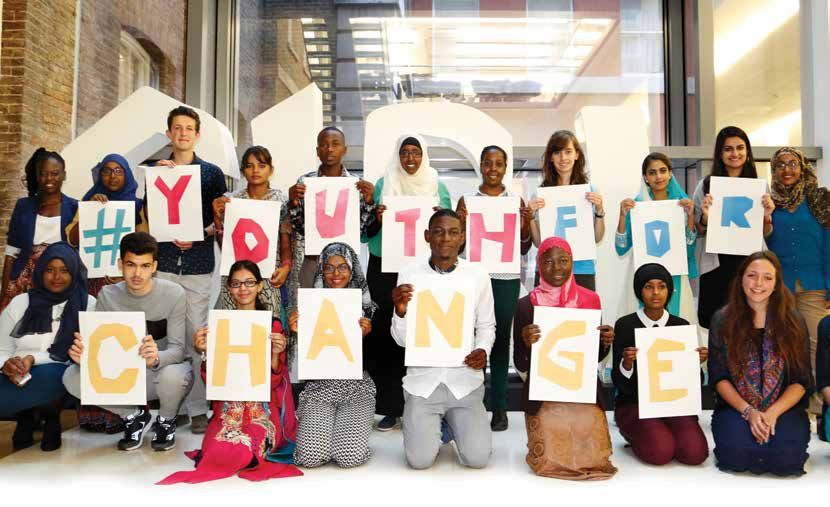
ACKNOWLEDGMENTS
This report is an extension of World Health             Anshu Mohan (Partnership for Maternal, Newborn &
Organization’s (WHO) long-standing work on young        Child Health); Alison Bellwood (Project Everyone –
people’s health and rights. It is informed by the UN    World’s Largest Lesson); Charlotte Finn (Salesforce);
Youth Strategy (launched in 2018), the Every Woman      Robin Gorna and Mallah Tabot (She Decides); Ed
Every Child Global Strategy for Women’s, Children’s     Barney (United Kingdom Department of Foreign
and Adolescents’ Health (2016–2030), the Global         Affairs); Saskia Schellenkens (United Nations Youth
Accelerated Action for the Health of Adolescents        Envoy Office); Elena Kudravtseva (United Nations
(AA-HA!) guidance and WHO’s mandate related to          Women); Ruben Pages (Joint United Nations
young people’s health within the SDGs, including as     Programme on HIV/AIDS); Jennelle Babb (United
part of the WHO Thirteenth General Programme of         Nations Educational, Scientific and Cultural
Work (2019–2023). The report was developed as part      Organization); Irem Tumer (United Nations
of the consultations and roadmap towards the            Population Fund); Fabio Friscia and Julianna Lindsey
development of a WHO strategy for engaging              (United Nations Children’s Fund); Myriam Sidibe
young people and young professionals, being             (Unilever); David Ross, Julia Samuelson, Lale Say and
coordinated by the WHO Gender and Youth adviser,        Kathleen Strong (World Health Organization); Fatiha
Diah Saminarsih.                                        Terki (World Food Programme); Kara Brown (World
                                                        Young Women’s Christian Association); Hazal Atay
This report would not have been possible without        (Youth Coalition for Sexual and Reproductive Rights);
the contributions of numerous organizations and         and Frederik Kristensen (Coalition for Epidemic
individuals, including young people on the teams.       Preparedness Innovations).
To develop this report, WHO commissioned Global
Development and Antara Global Health Advisors,          The following partners provided additional helpful
with the work led by Barbara Bulc and Rohit             insights: Collaborate for Social Impact (C4SI), a
Ramchandani, with assistance from Mia Clausin,          student initiative at the Graduate Institute, Geneva,
Grace Kamara, Desmond Molloy and Julianne               for setting a challenge and exploring approaches for
Nyasulu. The consultants worked closely with a          a potential Young Voices Count initiative with their
team at WHO led by Shyama Kuruvilla, Alastair Robb      students; Seedspace; SaharaVentures; Impact Hub
and Guilhem Labadie, with Valentina Baltag, Ryan        and other various emerging networks of innovation
Bunney, Kid Kohl, Mary Manandhar and Basem              and start-up hubs incubating ideas and connecting
Mohamed. Richard Cheeseman of Robert Taylor             young entrepreneurs around the world; Shakira
Communications provided editorial consultancy to        Choonara, Founding Editor of the Young Leaders for
shape the report.                                       Development Blog which brings together youth
                                                        voices on Agenda 2030.
Colleagues from several organizations generously
shared their knowledge, experience, ideas and,
above all, their time, including in the interviews:
Nicola Toffelmire (Canada’s Youth Representative to
the World Health Assembly); Martha Nelems and
Emily Delap (Child Frontiers); Caitlin Feurey and
Katherine Haye (Bill & Melinda Gates Foundation);
Laura Scanlon (Girl Effect); Catherine Palmier
(Global Affairs Canada); Jen Duffy, Andria Teather,
Carlos Drews and Erin Viera (Jane Goodall Institute);
Jami Taylor (Johnson & Johnson); Anna Darling
and Brid O’Brien (Lumos); Meheret Melles and

                                                                                                                v
list of abbreviations
     AA-HA!      Global Accelerated Action for the Health   IANYD     Inter-Agency Network on Youth
                 of Adolescents                                       Development
     AGYW        Adolescent Girls and Young Women           IAP       Independent Accountability Panel
     AIESEC      Association Internationale des Étudiants   IBRD      International Bank for Reconstruction
                 en Sciences Économiques et                           and Development (World Bank Group)
                 Commerciales
                                                            IDA       International Development Association
     ARMADILLO Adolescent/Youth Reproductive Mobile                   (World Bank Group)
               Access and Delivery Initiative for Love
               and Life Outcomes                            IDEA      Institute for Democracy and Electoral
                                                                      Assistance
     AYC         Adolescent and Youth Constituency
                                                            IFMSA     International Federation of Medical
     BGCPR       Boys & Girls Clubs of Puerto Rico                    Students’ Associations
     CIFF        Children’s Investment Fund Foundation      IGLYO     International Lesbian, Gay, Bisexual,
                                                                      Transgender, Queer and Intersex
     CoP         Community of Practice                                (LGBTQI) Youth & Student Organization
     CRVS        Civil Registration and Vital Statistics    ILO       International Labour Organization (Office)
     CSE         Comprehensive sexuality education          IOE       International Organization of Employers
     CSW         Commission on the Status of Women          IOM       International Organization for Migration
     DFID        The United Kingdom’s Department for        IPU       Inter-Parliamentary Union
                 International Development
                                                            ITU       International Telecommunication Union
     DREAMS      Determined, Resilient, Empowered,
                 AIDS-free, Mentored, and Safe women        J&J       Johnson & Johnson
     ECOSOC      Economic and Social Council                LEAPs     Leadership, Empowerment, Action and
                                                                      Partnerships
     FAO         Food and Agriculture Organization of
                 the United Nations                         LGBT      Lesbian, Gay, Bisexual, Transgender
     FENSA       Framework of Engagement with               LGBTQI    Lesbian, Gay, Bisexual, Transgender,
                 Non-State Actors                                     Queer and Intersex
     GAVI        Global Vaccine Alliance                    M&E       Monitoring and Evaluation
     GFF         Global Financing Facility                  MPs       Members of Parliament
     GPE         Global Partnership for Education           NCDs      Non-Communicable Diseases
     GPW         General Programme of Work                  NGOs      Non Governmental Organizations
     GRYC        Global Refugee Youth Consultations         ODI       Overseas Development Institute
     HPA         The Harry Potter Alliance                  ODIHR     Office for Democratic Institutions and
                                                                      Human Rights
     HPS         Health Promoting Schools

vi    Engaging young people for health and sustainable development
      Strategic opportunities for the World Health Organization and partners
OHCHR    Office of the United Nations High            UNHCR      Office of the United Nations High
         Commissioner for Human Rights                           Commissioner for Refugees
OSCE     Organization for Security and                UNICEF     United Nations Children’s Fund
         Cooperation in Europe
                                                      UN -MGCY United Nations Major Group for
OXFAM    Oxford Committee for Famine Relief                    Children and Youth
PEPFAR   President’s Emergency Plan for AIDS Relief   USLP       Unilever Sustainable Living Plan
PETSI    Peer Education Training Research Institute   WASH       Water, Sanitation and Hygiene
PMNCH    Partnership for Maternal, Newborn &          WFP        World Food Programme
         Child health
                                                      WHO        World Health Organization
PSI      Population Services International
                                                      WLL        World’s Largest Lesson
R&S      Roots & Shoots
                                                      WPAY       World Programme of Action for Youth
RMNCAH   Reproductive, Maternal, New-Born,
         Child and Adolescent Health                  WRC        Women’s Refugee Commission

SDGs     Sustainable Development Goals                YCSRR      Youth Coalition for Sexual and
                                                                 Reproductive Rights
SRH      Sexual and Reproductive Health
                                                      YKPs       Young Key Populations
SRHR     Sexual and Reproductive Health and
         Rights                                       Youth-GPS Youth Global Programme for
                                                                Sustainable Development and Peace
STF      She’s the First
                                                      YVC        Young Voices Count
SWAP     System-Wide Action Plan on Youth
                                                      YWCA       Young Women’s Christian Association’s
TEGA     Tech Enabled Girl Ambassadors
UHC      Universal Health Coverage
UN       United Nations
UNAIDS   Joint United Nations Programme on
         HIV/AIDS
UNDP     United Nations Development Programme
UNDPI    United Nations Department of Public
         Information
UNEP     United Nations Environment Programme
UNESCO   United Nations Educational, Scientific
         and Cultural Organization
UNFPA    United Nations Population Fund
UNGA     United Nations General Assembly

                                                                                                         vii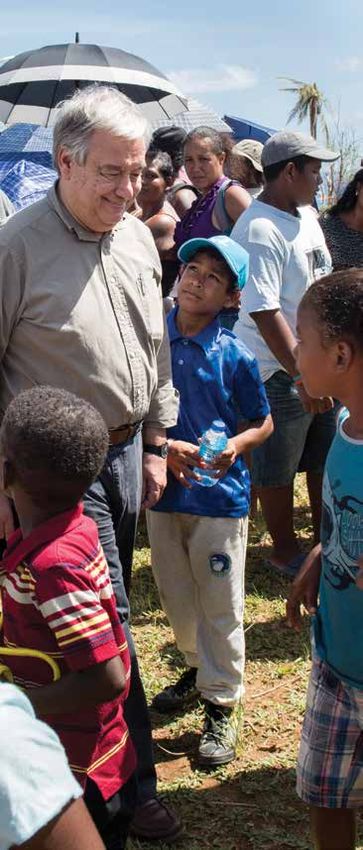
Executive summary
                                                              The world today has the largest generation of
                                                              young people in history with 1.8 billion between
                                                              the ages of 10 and 24 years. Many of them
                                                              already are driving transformative change, and
                                                              many more are poised to do so, but lack the
                                                              opportunity and means. This cohort represents a
                                                              powerhouse of human potential that could
                                                              transform health and sustainable development.

                                                              This force for change represents an unparalleled
                                                              opportunity for the World Health Organization
                                                              (WHO) and partners to transform the way they
                                                              engage with young people. Their engagement is
                                                              critical to achieving the 2030 Agenda for
                                                              Sustainable Development.1 WHO needs young
                                                              people’s input to ensure its work reflects the lived
                                                              reality of their lives, and their needs, concerns,
                                                              ideas and solutions. This input should come
                                                              through strongly in the advice and support WHO
                                                              gives to Member States and partner organizations.

                                                              Safe, effective and meaningful engagement is also
                                                              an important part of helping young people realize
                                                              their full potential for health and wellbeing and
                                                              their rights. This not only enables individuals to
                                                              thrive, it also brings economic and social benefits
                                                              for countries, because a healthy population is
                                                              more likely to be productive and prosperous.

                                                              However, for many organizations, successful
                                                              engagement with young people is more of an
         “We must build on the work that has
                                                              ambition than a reality. Several United Nations
         been done with the support of Member
                                                              (UN) agencies, governments, non governmental
         States, the Youth Envoy and civil society.           organizations, and private sector actors are
         But this cannot be an initiative by old              benefiting from engaging young people in
         people discussing the younger generation.            innovative ways, and vice-versa. However, there
         The United Nations must empower young                are still obstacles to seeing such engagements
         people, increase their participation in              lead to a paradigm shift in young people realizing
         society and their access to education,               their rights and driving transformative change.
         training and jobs.”                                  Leveraging some of WHO’s core functions – its
                                 – Antonio Guterres,          normative, data, research and innovation
                                UN Secretary-General          activities, as well as helping countries meet their
                                                              health-related Sustainable Development Goals
                                                              (SDGs) – could help overcome some of these
                                                              obstacles and will require strong partnerships.

viii   Engaging young people for health and sustainable development
       Strategic opportunities for the World Health Organization and partners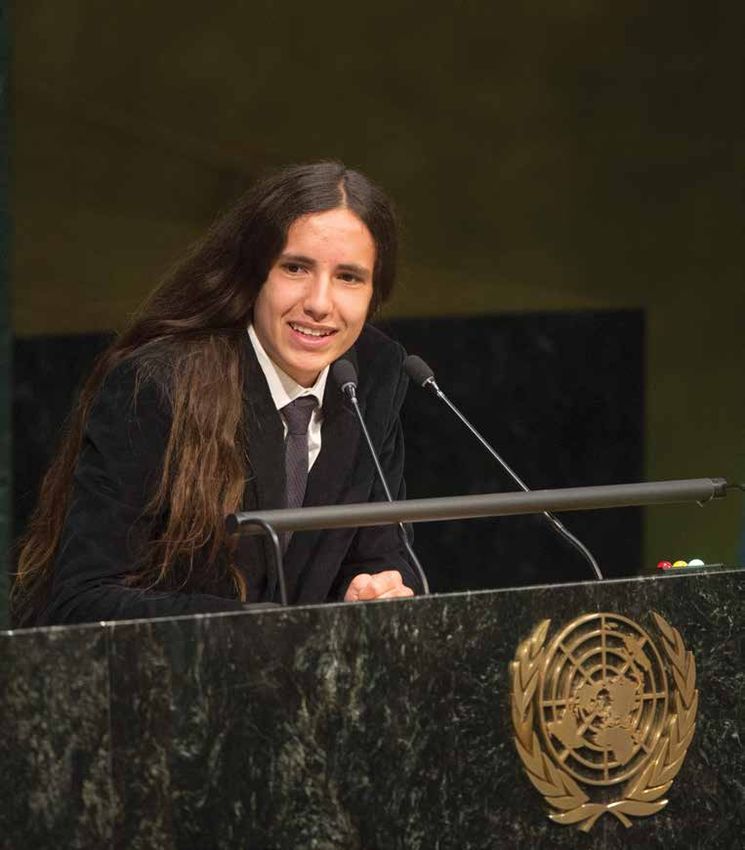
Engagement with young people is a two-way street.           enable young people to augment their knowledge
Organizations that do it well not only display internal     and to lead on health and rights
leadership – putting in place the necessary people,
systems and resources – they also enable young people     Focusing global public goods
to participate fully and to develop and act as leaders.   on impact
These organizations typically share certain behaviours:   5. Engage young people throughout the design and
•• ensuring young people have space, voice, audience         delivery of global public goods, and especially on
   and influence, grounded in their agency and rights        issues that affect their health and rights

•• enabling young people to shape and implement           6. Establish an innovative partnership-driven platform,
   agendas                                                   such as Young Voices Count, so that young people
                                                             can share their experiences and ideas to monitor
•• explicitly committing to young people’s
                                                             and drive change on health and the SDGs
   engagement and leadership by young people.

To gain insight into these and related issues, WHO
                                                          Partnerships
commissioned Global Development and Antara Global         7. Forge innovative partnerships with diverse
Health Advisors to review young people’s engagement          organizations that engage with young people
on health globally across sectors and geographies. This   8. Mobilize resources for a comprehensive, coherent
report highlights four areas of strategic opportunity        global movement that engages the power of young
for WHO: 1) Leadership; 2) Country impact; 3) Focusing       people for health and sustainable development.
global public goods on impact; and 4) Partnerships.
These areas are aligned with WHO’s General
Programme of Work (GPW) 13.2 Recommendations              Conclusion
for WHO are listed here in each of the four strategic
areas, and elaborated within the report.                  By implementing the recommendations of this
                                                          report, WHO can become a global leader on
                                                          engaging young people towards achieving health
Recommendations                                           and SDGs, setting an example within its own
                                                          organization and creating norms and standards for
Leadership                                                others to follow. It should work with Member States
1. Create a fully resourced WHO strategy for              and a diverse range of partners, including groups led
   engaging with young people                             by young people, to embed engagement with young
                                                          people in all relevant aspects of the health system.
2. Modernize WHO culture to orient the organization       And it should lead efforts to fill data gaps and
   towards young people, ensuring none are left           improve understanding of how to maximize the
   behind in the SDG era                                  impact of young people’s engagement.

Country impact                                            The priority is to ensure that no young person is left
3. Engage all young people, taking into account their     behind and all can realize their right to health
   diverse backgrounds and characteristics, in health     equitably and without discrimination or hindrance.
   and sustainable development planning and               These aims can only be achieved with young people’s
   implementation                                         informed and enthusiastic engagement. It is WHO’s
                                                          responsibility to smooth the path so young people
4. Strengthen the capacity of organizations to engage
                                                          can lead on creating a healthy and sustainable future
   safely, effectively and meaningfully in ways that
                                                          for the planet.

                                                                                                                    ix
Introduction

                                                          “When the whole world is silent, even one voice
                                                          becomes powerful.”
                                                                                       – Malala Yousafzai,
                                                              Co-Founder, Malala Fund and Board Member

1   Engaging young people for health and sustainable development
    Strategic opportunities for the World Health Organization and partners
WHO and its Member States and partners recognize This report summarizes the findings and presents
the immense potential of young people to realize recommendations. The latter envision a
their own health and human rights – and in so doing transformative role for WHO and its leadership in
to strengthen their societies and the economy.3,4 creating a new paradigm for engaging young people
They are a tremendous global resource for leadership, with health and the SDGs.
ideas and collaboration, but they require a place at
the decision-makers’ table and a platform where
their voices can be heard. Currently, opportunities to
engage in this way are rare. Even in health systems, The case for engaging with –
which should set an example, young health
professionals and young users of health services
and investing in – young people
have little or no say in policy, planning and other Today’s generation of young people is the largest in
decisions that impact them. history. It is also potentially the most influential, in
part due to the rapid increase and geographical
There are multiple efforts worldwide to correct the
spread of internet-enabled devices and other
deficit and engage with young people. However, it is
modern communications methods.
not always clear how meaningful this engagement is
for young people or how it contributes to the In this report we refer to young people as those
Sustainable Development Goals (SDGs).1 With WHO’s aged 10 to 24 years, including both adolescents and
mandate on health and the SDGs, and the General youth. More than 3 billion people (42% of the
Programme of Work (GPW) 13,2 WHO has an world’s population) are under the age of 24 years;
unprecedented opportunity to step up leadership to 1.8 billion (24%) are between the ages of 10 and 24.5
address these issues. Close to 90% live in developing countries.6 This
cohort represents a powerhouse of human
No proven formula exists for engaging safely, effectively
potential that could transform global health and
and meaningfully with young people. However,
sustainable development.
within WHO there is consensus in two key areas:
1. To maximize the impact of their investments in However, young people are not a homogenous group.
health, countries urgently need to engage more They experience immense physical and cognitive
effectively with young people – who are not only changes between the ages of 10 and 24 years, so a
beneficiaries of services, but can also be leaders of variety of approaches is required to engage with
health and sustainable development efforts. them at different points on the age spectrum.
2. WHO has a unique global health leadership role Age is not the only significant factor. Young people
and unique capabilities, which it must use to should be considered in all their diversity, including
strengthen its own, and Member States’, those most at risk of being left behind – such as
engagement with young people. individuals with disabilities or chronic illnesses; living
in remote locations; caught up in social disruption; or
To gain fresh insight on these issues, WHO
stigmatized and marginalized because of sexual
commissioned Global Development and Antara
orientation, gender identity or ethnicity. Annex 1 lists
Global Health Advisors to explore innovative initiatives
different definitions of young people by age and
that engage young people, to review evidence and
gives more details of at-risk, underserved and
to identify potential partnerships for WHO. They
marginalized groups.
interacted with a broad range of partners, including
young people (see Annex 2 Methods; Annex 3 List of
interviewees; Annex 4 Interview questionnaire).
2Figure 1
Young people as a proportion of the global population in 2017.
Data from The World Bank Group. 2018.5
10-24 years old: 1.8 billion people (24%)
A clear case for investing in the health and well- This is the economic growth that may occur in a
being of young people has been made by WHO and country when people of working age outnumber
others over the last decade.3,4,7 Key points include: non-workers, and when the number of young people
increases and fertility declines.12
•• At least a 10 to 1 benefit to cost ratio
with health, social and economic dividends for
Yet, young people in these countries often have
young people now, their future and future
limited access to health and social services and face
generations.4,5 Investments in adolescent health
significant barriers and discrimination to realizing
can yield benefits for socioeconomic growth and
their full potential and rights. Crucially, they may be
sustainable development.8
unaware of their rights, lack information and be
•• Developing human capital unable, or reluctant, to exercise their right to
better health has a powerful, positive effect on influence decisions that affect them.
human capital. According to the World Bank,
human capital represents roughly two-thirds of A key challenge and strategic opportunity for all
global wealth.9 Improving human capital across the Member States is to move away from a position
life course is central to GPW 13.2 Healthier children where many young people are excluded from public
are more likely to perform well in schools, get jobs, dialogue and processes around health. Hearing young
earn good wages and be productive adults. people’s powerful voices on their lived experiences
and ideas for change could profoundly change the
•• Reducing disease and preventable death
shape of health and sustainable development.
in 2015, more than 1.2 million adolescents died
and many more suffered from issues such as poor
mental health, communicable and
noncommunicable diseases, sexual and gender-
based violence and inequities.10
A mandate for engaging with
young people
Many of the lowest-income countries are those with
the largest populations of young people – and The human right of young people to participate in
therefore human capital – and should be well decisions, institutions and processes that affect their
positioned to benefit from a “demographic dividend”.11 lives is protected by international human rights law.
3 Engaging young people for health and sustainable development
Strategic opportunities for the World Health Organization and partnersUnited Nations General Assembly (UNGA) resolution WHO’s mandate for engaging with young people is
A/HRC/RES/35/14 “calls upon all States to promote further strengthened by the 2030 Agenda for
and ensure the full realization of all human rights and Sustainable Development, which recognizes the critical
fundamental freedoms for youth ... [empowering] role young people can play as agents of change.
them to contribute as active members of society to The latest related General Assembly Resolution,
the political, civil, economic, social and cultural A/RES/70/127, advocates meaningful participation of
development of their countries”.13,14 young people“... including in designing and
implementing policies, programmes and initiatives”.18
WHO’s GPW 13 is well placed to align with these Another mandate is the new United Nations Youth
rights and with global frameworks and indicators to Strategy, which was formally endorsed in July 2018.19
transform the engagement of young people with Its first priority is to amplify youth voices for the
health and the SDGs. It includes a “triple billion” target promotion of a peaceful, just and sustainable world.
of 1 billion more people benefiting from Universal
Health Coverage (UHC), 1 billion more being better
protected from health emergencies, and 1 billion
more enjoying better health and well-being.2 At least
one quarter of the triple billion is likely to be young The way forward
people so this is an ideal opportunity to progress
While WHO and partner organizations have various
engaging with young people as part of WHO’s overall
activities for engaging with young people (see
strategy. WHO’s mandate extends also to multi-sectorial
Annexes 5 and 6), this report concludes these efforts
engagement including young professionals and
are currently fragmented and are not guided by an
service providers. Their full participation will be
overarching strategy. The key to transforming these
instrumental to succeed in achieving UHC, in the
activities into a strong position of global leadership
context of the global shortage of health workforce.2
in young people’s engagement lies in building on
WHO’s mandate for engaging with young people WHO’s existing areas of comparative advantage.
includes a 2015 request from Member States to Aligned with GPW 13,2 these cover four strategic areas:
develop the Global Accelerated Action for the Health
1) Leadership
of Adolescents (AA-HA!) guidance (now being rolled
WHO needs to strengthen its leadership on
out to countries).4 It is also grounded in United Nations-
engagement with young people by putting in place
wide and partner initiatives, such as the first United
an overall strategy for engaging with young people
Nations System-wide Action Plan on Youth15 and the
with the necessary people, systems and resources –
Young Voices Count initiative. WHO is collaborating
including measures to enable young people
on related initiatives with the Food and Agriculture
themselves to lead on health.
Organization of the United Nations (FAO), the Joint
United Nations Programme on HIV/AIDS (UNAIDS), the 2) Country impact
United Nations Development Programme (UNDP), Evidence-based policies on young people are
the United Nations Educational, Scientific and Cultural needed to drive country impact. To this end, WHO
Organization (UNESCO), the United Nations Population should help countries to strengthen their capacity for
Fund (UNFPA), the United Nations Children’s Fund effective engagement with young people.
(UNICEF), the United Nations Secretary-General’s
Envoy on Youth, the World Food Programme (WFP), 3) Global public goods
and the Adolescent and Youth Constituency of the WHO is well placed to leverage its core functions
Partnership for Maternal, Newborn & Child Health.16 around: setting global norms and standards; data
and monitoring; research and innovation.
The WHO Adolescent Health Flagship Programme in
Africa applies knowledge about adolescent health, 4) Partnerships
from AA-HA! and other sources, to the unique health Strategic, high-impact, multi-stakeholder partnerships
challenges of young people in African countries.17 are central to improving engagement of young
people in health.
4Leadership
“I could sit by idly as the world
around me—my world—
collapsed. But a lot of people
say this generation is the
future. The truth is we’re here
now; we are the present. I had
to take action.”
– Xiuhtezcatl Martinez,
Youth Director, Earth Guardians
5 Engaging young people for health and sustainable development
Strategic opportunities for the World Health Organization and partnersA clear finding of this report is that WHO needs to transform its leadership and culture on engaging
with young people. However, a word needs to be said about what constitutes “leadership” in this
context. While the standard definition of an entity that sets the agenda and directs the action does
apply, WHO’s leadership has to be much broader than this.
Engagement with young people is a two-way street. Organizations that do it well not only display
internal leadership – putting in place the necessary people, systems and resources – but also enable
young people themselves to participate fully and to develop as leaders. This aligns with the fourth
priority of the UN Youth Strategy, which advocates support for the civic and political engagement of
young people.19
Crucially, leadership for WHO must include creating – and sustaining – safe, effective and meaningful
leadership and engagement opportunities for young people, both within WHO and externally. They
should participate at every step of the design and delivery of the activities recommended in this report.
Summary of evidence model,20 which conceptualizes a young person’s
right to participate based on Article 12 of the UN
The review of evidence identified organizations Convention on the Rights of the Child (UNCRC).21
within the United Nations and elsewhere that have
demonstrated effective leadership on engaging with
young people (Annex 5). Although approaches differ, Shaping and implementing the agenda
these organizations typically share certain behaviours:
Some organizations interviewed made a point of
•• ensuring young people have space, voice, audience hiring young people, at senior level or as core staff, to
and influence, grounded in their agency and rights lead their activities focused on young people. An
•• enabling young people to shape and implement example is SheDecides, a global movement created
agendas in 2017 to promote and protect the rights of girls and
women. More than 33% of all staff are young people
•• explicitly committing to young people’s and 75% of the Friends of SheDecides are under 30.
engagement and leadership by young people. Among its young people’s champions, four senior
leaders, politicians and influencers are under 30.22
Ensuring space, voice, audience The World Economic Forum’s annual shaper’s survey
and influence of young people from 186 countries provides insights
into the dynamics of hiring young people and what it
Examples of good practice demonstrated that
takes to create an environment where they can shape
organizations should be flexible enough to fulfil a
the agenda and develop as leaders.23 These included:
variety of roles, each of which is equally important.
opportunities to contribute to vision and strategy
They include: enabler, facilitator, mentor, mentee and
(41.4%); mentoring and reverse mentoring (34.3%);
listener. Organizations that displayed strong leadership
accepting failure as a learning experience (33.9%);
on engagement with young people were seen to
self-managed work schedules (25.2%); ability to
ensure space, voice, audience and influence for
express opinions freely (24.6%); engage young board
young people with their rights and agency at the
members (22.5%); and allotting time for personal
centre (Fig. 2). These categories are taken from Lundy’s
interest projects (17.7%).
6Figure 2
Examples of young people’s engagement from the organizations interviewed, using
Lundy’s model (space, voice, audience and influence). Adapted from Lundy L. British
Educational Research Journal; 2007.20
YWCA (The World Young Girl Effect’s TEGA
Women’s Christian Association): (Tech Enabled Girl Ambassadors):
provides (physically and mobile, peer-to-peer app led by
emotionally) safe spaces that young girls that allows girls to share
are accessible and convenient information and collect data on
locations for girls and women every-day life from others with
in local communities that foster similar cultures or backgrounds
growth, leadership and
empowerment
DREAMS Partnership UNICEF’s U-Report:
(President’s Emergency text-message based
Plan for AIDS Relief social platform for
(PEPFAR), Johnson & young people to
Johnson, Girl Effect, voice their opinions,
Gilead Sciences, ViiV connect with their
Healthcare, Bill & leaders, and
Melinda Gates influence
Foundation): community change.
HIV interventions for E.G. - young people
adolescent girls under from 16 countries
DREAMS (Determined, were engaged to
Resilient, Empowered, better understand
AIDS-free, Mentored, and Safe adolescents’ and
women) successfully leverage young people’s fears
the safe space model around HIV/AIDS
testing, and their
preferences on
testing services.
U-Reporters’
UN Youth Envoy and concerns were
Economic and Social shared with decision
Council (ECOSOC) makers at the
Youth Forum: biggest HIV/AIDS
platform for youth conference in the
to engage with world (AIDS 2016) by
UN member states the Executive
and share ideas on Director of UNICEF,
innovation, action Anthony Lake
and solutions to
global problems
Canadian Prime IPU (Inter-Parliamentary Jane Goodall Institute’s
Minister’s Youth Union) and National Roots & Shoots:
Council: Parliaments: young people identify
group of young e.g. Ecuador, Finland, local problems, propose
Canadians who provide Norway and Sweden solutions, and work under
advice and insights to are the only parliaments mentorship of adults/
the Prime Minister and in the world where decision makers to move
government on issues more than 10 % of their concept forward and
that concern youth and members are aged elicit change
Canadians as a whole under 30
7 Engaging young people for health and sustainable development
Strategic opportunities for the World Health Organization and partnersExplicitly committing to young For example:
people’s engagement and leadership •• Lumos, an international NGO founded by author
JK Rowling. It has developed a clear set of core
The United Nations and some of its agencies are well
values that include placing “the rights and needs
advanced in articulating their commitments to
of children ... at the center” and “involving young
engaging with young people (Annex 6).
people both in matters that affect them and in
•• UN Strategy on Youth. The UN system is [Lumos’] advocacy activities”.29
finalizing the UN Youth Strategy, to be launched
•• The technology sector is known for its culture of
at the 73rd UN General Assembly in September
young people. In an April 2016 global survey, market
2018 (WHO is participating in this process).19
research firm Statista30 found that the median age
In addition, several UN agencies have developed of employees at selected technology companies
their own strategies focused on young people: was in the late 20s. Companies in this sector often
have policies to attract and nurture young talent.
•• UNFPA strategic plan 2018–2021 – it commits
the agency to “enhance multistakeholder
partnerships” and to “creating partnership Accountability
platforms for young people’s participation in the
development agenda”.24 The 2017 report of the Independent Accountability
Panel (IAP) for Every Woman, Every Child, Every
•• UNICEF Adolescent and Youth Engagement
Adolescent is themed around young people.31 To
Framework – “feeds into the UNICEF Strategic
enhance accountability to young people and realize
Plan 2018-21 and Adolescent Strategy for the
their potential for leadership, the IAP prioritizes
rights-based inclusion of adolescents and youth in
improved data and monitoring, especially at national
areas that affect their lives and their communities,
and local levels. It recommends investing in
including dialogue, decisions, mechanisms,
countries’ accountability processes (including social
processes, events, campaigns, actions and
accountability), and engaging young people in
programmes – across all stages, from identification,
decision-making as key informants and experts to
analysis and design to implementation,
ensure effective policies and investments that
monitoring and evaluation.”25
“deliver for and with them”. This echoes the fifth
•• UNAIDS youth programme – works with young priority of the UN Youth Strategy, which recognizes
people as beneficiaries, partners and leaders of the potential of young people as agents of change.19
the HIV response. The Youth Programme was
launched in 2012, based on the CrowdOutAIDS Concluding that accountability to adolescents is
recommendations developed in collaboration fragile and needs special attention, the IAP calls for
with more than 5000 young people.26 “civic engagement, independent review, meaningful
oversight mechanisms and participatory accountability”,
•• UN Women youth and gender equality
and bringing the voices of young people to the fore.
strategy – this has a well-articulated LEAPs
framework (leadership, empowerment, action and The six recommendations of the IAP report are:
partnerships). As well as partnering with young
1. Leverage accountability for the Global Strategy
people, it seeks to forge multi-stakeholder
for Women’s, Children’s and Adolescents’ Health
partnerships for young people’s engagement across
and the SDGs.
the public and private sectors and civil society.27
2. Make adolescents visible and measure what
•• UNESCO operational strategy on youth matters to them.
2014–2021 – this provides the framework for
3. Foster whole-of-government accountability to
constructive partnerships to be developed with
adolescents.
and between young people’s organizations and
stakeholders related to young people.28 4. Make universal health coverage work for adolescents.
5. Boost accountability for investments, including
Outside the UN, some organizations and sectors for adolescents’ health and well-being.
are noted for their young people-focused cultures 6. Unleash the power of young people.
and organization-wide strategies and principles.
8Challenges and strategic Recommendations
opportunities for WHO 1. Create a fully resourced WHO
WHO has a leadership role and mandate related to
strategy for engaging with
health and the SDGs,32 and to support country
young people
implementation and monitoring progress of the a) Develop WHO’s own strategy for young
Global Strategy for Women’s, Children’s and people’s engagement on health aligned with
Adolescents’ Health. 33 Interviewees also noted the new UN Strategy on Youth.
WHO’s technical leadership in developing the Global b) Clearly articulate WHO’s leadership position,
Accelerated Action for the Health of Adolescents based on its areas of core competency and
(AA-HA!) guidance.4 WHO’s leading role in its mandate to support Member States.
publication in 2017, and its ongoing roll-out to
countries, has increased its credibility as a leader in 2. Modernize WHO culture to orient
engaging on health with this age group. the organization towards young
people, ensuring none are left
There are various activities focused on young people behind in the SDG era
across different WHO departments (Annex 5).
Notwithstanding these, WHO was perceived among a) Transform the ethos of WHO, placing young
interviewees as lagging behind several other UN people and their ideas and experiences at the
agencies in terms of showing leadership for heart of the organization and the “triple billion
engaging with young people, having a coherent goal”.
organization-wide strategy and having innovative b) Create opportunities for young people to play
partnerships with public or private organizations a leadership role in relevant areas of decision-
outside the UN system. WHO is not yet perceived by making and policy.
young people as an open-minded and innovative
c) Develop WHO’s capability as a global leader on
partner engaged with young people, speaking their
young people’s engagement in health.
language or understanding their needs. However,
certain comparative advantages should enable WHO d) Avoid replicating power norms and elites that
to address this. discriminate against, exclude or make
vulnerable certain individuals or groups, even
WHO’s mission aligns strongly with what many if these consequences are unintended.
young people increasingly value – the opportunity
to make a positive difference in the world. Therefore
it is reasonable to infer they will respond favourably
when WHO shows leadership by articulating a
coherent new strategy for engaging with young
people, commits resources to implementing it and
invites young people to participate in meaningful “We [donor] aim to amplify young
ways. The appointment of an Adviser on Gender and
peoples’ voices in decision making and
Youth in the office of the WHO Director-General
holds promise for strengthening leadership and strengthen their participation in political
accelerating progress. and development processes. At a local,
national and international level, we will
look for opportunities to provide a
platform for young voices, enabling them
to contribute to the decisions that will
affect them, and supporting them to
advocate for delivery of Agenda 2030.”
– Donor Representative
9 Engaging young people for health and sustainable development
Strategic opportunities for the World Health Organization and partners“They try to include young
people in panels, but the
young people are not the ones
that choose the person and
the person is just a token.”
– Youth-Led Organisation
Representative
“WHO has a unique opportunity to play an
instrumental role in youth engagement.
Best would be to clearly link to what WHO
is already doing. Good mapping of
activities and resources is essential.”
– UN Agency Representative
10country IMPACT
“The localisation and contextualisation is
important for successful implementation.”
– UN Agency Representative
“Use the tools that a young person will
use. Revolutionize yourself to meet the
young person!”
– Private Sector Representative
11 Engaging young people for health and sustainable development
Strategic opportunities for the World Health Organization and partnersThere is major potential for young people’s ideas, energy and leadership to drive impact for health
and sustainable development in countries. Platform 1 of GPW 13 – improving human capital across
the life course – provides the context for WHO’s engagement with young people in countries with its
“special focus on women, children and adolescents”.2 Similarly, the second priority of the UN Youth
Strategy supports human capital by advocating greater access to quality education and health
services for young people.19
Summary of evidence Characteristics of young people’s
engagement
This report highlights numerous programmes and
initiatives that engage young people at global, Public and private sector programmes that effectively
regional or national level, including many involving engage young people on health and the SDGs in
WHO (Annex 5). It includes WHO’s emerging activities countries are often characterized by their broad
(Annex 6). However, interviewees identified systemic appeal, by multisectoral approaches that emphasize
barriers to greater effectiveness and wider country the whole person in their context, and by the close
adoption, including: involvement of young people themselves. They
frequently integrate determinants of health from
•• inadequate political commitment, policies outside the health sector, such as education, nutrition,
and resources employment and commercial factors. Conversely,
•• insufficient integration across health and other traditional health programming and advocacy have
sectors (such as education, nutrition and jobs) often been narrowly focused or siloed. They have
paid insufficient attention to comprehensive
•• data gaps relating to young people and inadequate
approaches – such as “adolescent health in all
civil registration and vital statistics systems (see
policies” – that look beyond health and view young
text on data and civil registration and vital
people as powerful societal assets and future leaders.
statistics (CRVS) in next section)
•• lack of awareness of initiatives and platforms for It also is critical that young people are aware of the
young people’s engagement importance of attaining the highest standard of health
both as an intrinsic right, and linked to their getting a
•• uncertainty over how young people can
better education, having fulfilling relationships and
contribute to these initiatives
productive jobs, and their security, safety and
•• limited support to strengthen young people’s well-being overall.
capacities to engage meaningfully and drive
country impact Reflecting these findings, interviewees agreed it is
critically important to look at young people and
•• inadequate safety measures – physical, political,
health in a holistic, multisectoral way rather than as
financial, psychological, sociocultural – for young
purely medical or technical challenges. GPW 13
people’s engagement
highlights the importance of multisectoral
•• absence of, or weak, accountability mechanisms approaches to address the social, environmental and
in countries, regions and globally. economic determinants of health. It also stresses the
need to strengthen critical systems and processes.22
12Effective engagement platforms It offers reliable information on sexual and reproductive
health and rights (SRHR) and provides safe spaces
The school system is an increasingly important where young women and girls can discuss challenging
platform for engaging with young people in health. subjects without fear or judgement. Women build
With a growing retention of adolescents in mutual trust, share experiences and develop solutions
secondary education in many countries, the task of of their own. For example, a YWCA group in Kenya
developing and scaling-up health initiatives within helped a 23-year-old mother of two, who is HIV
schools should be a priority for Member States and positive and separated from her husband, to create
for WHO. The most effective school actions are likely her own support group of friends living with HIV.
to be multicomponent and coordinated across
different aspects of school life.34 Evidence suggests The Youth Progress Index has been created as an
that school-based programmes have been utilized to initial effort to measure the quality of life of young
engage and inform young people on health issues people in more than 100 countries. It is based on 60
such as sexual abuse and self-protection, tobacco indicators and structured around three dimensions:
use, nutrition and physical activity.35 The WHO 1) Basic human needs, 2) Foundations of well-being
initiative, Make Every School a Health Promoting and 3) Opportunity (including indicators on the
School, in collaboration with UNESCO, aims to engagement of young people). It can be used as a
develop global standards in this area.36 mapping dashboard of public expenditures, civil
society engagement and private sector investment.39
WHO and its partners need to find effective ways of
engaging with young people who are not in
education, particularly those unable to attend school Capacity building
due to economic, social, cultural and other factors.
Girls and young women are of particular concern as The third priority of the UN Youth Strategy centres on
their opportunities for education may be the importance to young people of accessing decent
compromised by issues such as early marriage, lack of work and productive employment.19 The economic
sanitary and hygiene facilities at school, or pressure and social empowerment they achieve in this way is
to stay at home to complete domestic chores.4 vital to building both personal and country capacity.
For example, many young people aged 18–24 years
Launched in 2015 by the WHO Regional Office for work in country health systems at all levels. Given the
Africa, the Adolescent Health Flagship Programme17 right support, knowledge, empowerment and
aims to guide and support African countries and capabilities, they have the potential to drive change
partners in the implementation of evidence-based from within. However, as noted previously, young
interventions to improve adolescent health, aligned health professionals currently have little or no say in
with AA-HA! guidance. The programme takes a health system policy and planning.
multisectoral approach, with the strong involvement
of adolescents themselves. A notable capacity-building initiative for countries is
the Adolescent and Youth Constituency (AYC) of the
The Prime Minister’s Youth Council of Canada is an Partnership for Maternal, Newborn & Child health
example of a country initiative that actively engages (PMNCH). As well as growing a global network of
with young people to inform public policy.37 A group delegates of young people aged 10–30 years, AYC is
of young Canadians provides non-partisan advice to a leader in young people-friendly communications,
the Prime Minister and the Government of Canada engaging young people’s grass-roots organizations
on issues of importance to them and to all Canadians. and connecting with young people in innovative ways.
Youth Council members meet both online and in For example, AYC has posted an induction video on
person several times a year and interact intermittently YouTube as an introduction for new members.40 It
at other times. A fundamental component of any worked with WHO to develop a comic book to tell
country initiative to engage young people on health young people about the AA-HA! guidance.41 And it is
is that it should be safe. The Young Women’s rolling out a one-year pilot mentorship programme,
Christian Association’s (YWCA) Safe Spaces Model which matches mentors from WHO and other
emerged from programming on sexual and organizations with young people.
reproductive health and rights in Sub-Saharan Africa. 38
13 Engaging young people for health and sustainable development
Strategic opportunities for the World Health Organization and partnersAnother initiative driving country impact and Recommendations
building capacity is the Women Deliver Young
Leader’s Programme.42 Started in 2010, it now has 3. Engage all young people, taking
700 young people’s advocates for gender equality into account their diverse
and women’s health and rights from more than 120 backgrounds and characteristics,
countries. It helps young people to strengthen their in health and sustainable
advocacy skills through opportunities such as a development planning and
speakers’ bureau, media events and training, and implementation
alumni networking and mentoring.
a) Increase young people’s involvement in
A variety of initiatives led by young people have implementing the AA-HA! guidance in countries.
been seeded by UNFPA to build capacity for young b) Connect community-level young people’s
people to advocate for adolescent sexual and voices with national, regional and global
reproductive health. They include Youth Peer decision-makers.
Education Network (Y-Peer), Youth LEAD and Youth
c) Focus on subnational, district and community
Coalition (Annex 5). An example of a crowdsourced
levels and engage through primary health care.
and self-organized social movement for young
people’s engagement in health is NCDFREE, which 4. Strengthen the capacity of
campaigns for “a world without preventable organizations to engage safely,
noncommunicable diseases”.43 effectively and meaningfully in
ways that enable young people to
augment their knowledge and to
lead on health and rights
Challenges and strategic
a) Build new partnerships across sectors for
opportunities for WHO young people’s engagement, including with
initiatives led by young people and private
Interviewees viewed WHO as a unique catalyst for
sector organizations.
policies and action. They remarked on its potential to
use its position as a provider of strategic support and b) Accelerate development and country
technical assistance to help countries identify their Implementation of the Make Every School a
priorities for young people’s engagement on health Health Promoting School initiative.
and to develop plans and programmes. Roll-out of the
AA-HA! guidance offers a template for how this could
work (Annex 6) – while noting the caveat of low
awareness of AA-HA! reported by some interviewees.
There is clear untapped potential for WHO to support
and work in countries with other development
partners that work on young people’s, health and “One of the key fundamentals of this
SDG-related challenges. Focus areas for these [children and young people’s participation
organizations include: health, nutrition, education, in decision-making] strategy is recognition
environment, gender, technology innovation, that children and young people are not
advocacy and employment.
‘beings in becoming’, but rather are ‘citizens
of today’ with the right to be respected and
heard during childhood, their teenage
years and in their transition to adulthood.”
– Dr James Reilly,
Minister for Children and Youth Affairs Ireland
14You can also read


