Pioneering
progress
2018 Sustainable development report
←
→
Page content transcription
If your browser does not render page correctly, please read the page content below
Pioneering progress 2018 Sustainable development report
CONTENTS
                                                          At the
1    Overview
     1     Chief executive’s message
                                                          heart of our
     2
     4
           Our business at a glance
           Our integrated sustainability approach
                                                          sustainability
10   Running a safe, responsible and
                                                          strategy – and
     profitable business                                  our business –
                                                          are our people
     12    Delivering safety and wellbeing
     17    Protecting the environment
     24
     28
           Our values at work
           Ethics and integrity
                                                          and their
34   Collaborating to enable long-term                    safety.”
     economic benefits
     36    Working with shared purpose
     42    Regional economic development
     46    Global engagement

48   Interview with the
     Sustainability Committee chair
52   Pioneering materials for human progress
     54    Climate change: risks but also opportunities
     60    Groundbreaking partnerships
     61    A responsible value chain
     62    Closure: ending production
     63    Intelligent mining
     65    Pioneering human progress

66   Performance data
71   Appendix 1
     71    Reporting what matters
     73    Our stakeholders
     75    Voluntary commitments, external benchmarking
           and accreditation
     78    Global Reporting Initiative index

89   Appendix 2
     89    Basis of reporting glossary
Chief executive’s
message
                                                                                              Aside from this, 2018 was a year of
                                                                                              milestones on the sustainability front,
                                                                                              and we can look back with pride at our
                                                                                              significant achievements.

                                                                                              In March, Rio Tinto became the first mining
                                                                                              company to receive White Ribbon Australia
                                                                                              accreditation, a recognition of our efforts to
                                                                                              eradicate domestic violence, particularly as
                                                                                              it affects our employees, their families and
                                                                                              our communities. We have since expanded
                                                                                              our support to employees in Canada and
                                                                                              the United States.

                                                                                              In May, we launched a partnership to
                                                                                              develop greenhouse-gas-free aluminium
                                                                                              smelting: our Elysis joint venture with
                                                                                              Alcoa, supported by Apple and the
                                                                                              governments of Canada and Quebec.
                                                                                              Late in the year, we signed an agreement
                                                                                              to provide aluminium certified as
                                                                                              “responsible” by the Aluminium
                                                                                              Stewardship Initiative (ASI) to Nespresso –
We produce materials essential to human progress;                                             we are the first company to achieve
aluminium for our cars and smartphones;                                                       ASI certification.

anti-microbial copper for hospitals; borates that help                                        In September, we completed the sale of
                                                                                              the last of our coal assets, becoming the
crops grow; responsible diamonds that celebrate                                               only major mining company to divest
enduring love. We believe we can be part of the                                               completely from fossil fuel production.
                                                                                              And in December, we completed the sale
world’s sustainability solution.                                                              of our interest in the Grasberg copper mine,
                                                                                              in Indonesia. Today, our portfolio is
                                                                                              differentiated from our industry peers,
As the expectations of society increase       We discussed our approach and initiatives
                                                                                              with a fundamentally changed exposure to
in the 21st century, we know we must do       with investors and civil society groups
                                                                                              environmental, social and governance risks.
better to explain our contribution and        in the latter half of the year; the response
purpose beyond delivering shareholder         has been largely positive, with some good
                                                                                              In November, we were pleased to be
value. This is one reason why, in 2018,       ideas for improvement shared as well.
                                                                                              ranked the top extractives company and
we refreshed our sustainability strategy,     We look forward to working together
                                                                                              the second overall on the Corporate Human
developing an integrated approach linked      with our many partners in the coming
                                                                                              Rights Benchmark. We understand we have
to the United Nations’ Sustainable            months and years to deliver our goals.
                                                                                              more work to do, but take such recognition
Development Goals. This approach
                                                                                              to mean we are on the right track.
ensures that material sustainability issues   At the heart of our sustainability
are integrated into our business strategy.    strategy – and our business – are our
                                                                                              As we look to the future, we can say
                                              people and their safety. This year,
                                                                                              with certainty that Rio Tinto will be part of
As a result, we produced a number of firsts   we remember Francis Lalancette,
                                                                                              the solution. We will continue to make
in 2018 – our first climate change strategy   Muzi Patrick Nhlenyama and Daniel
                                                                                              every effort to keep our people safe and
in many years and, in parallel, our first     Patterson – our colleagues who went to
                                                                                              healthy. Our focus on partnership and
report in line with the recommendations of    work last year but did not return home.
                                                                                              sustainability will intensify. And we will
the Task Force on Climate-related Financial   Like all of us at Rio Tinto, I am deeply
                                                                                              continue to create superior value for our
Disclosures (TCFD). In addition, we           saddened by their tragic deaths and the
                                                                                              shareholders, our communities, our
produced our first transparency and civil     irreplaceable loss this has caused their
                                                                                              employees, and the world at large.
society statements, and our first global      families, friends and colleagues.
parental leave policy.                        We must do better on safety.
                                                                                              J-S Jacques
                                                                                              Chief executive

                                                                                             2018 Sustainable development report              1
Our business
       at a glance

                                                                                          Explore and evaluate
                     Repurpose                                  Explore
                        and                                       and
                                                                                          We use some of the most
                       renew                                    evaluate                  advanced exploration
                                                                                          technologies in the world to
                                                                                          find potential new sources
                                                                                          of minerals and metals.
                                                                                          And we consider new
                                                                                          products and operations from
                                                                                          an understanding of customers’
                                        Disciplined                                       and communities’ needs. We
                                                                                          are also mindful of the future:
                                          capital                                         our environmental impact,
                                        allocation                                        as well as the diversity and
         Market                                                       Develop             balance of our portfolio.

          and                                                           and
         deliver                                                      innovate

                                            Mine
                                             and
                                           process

Image: West Angelas iron ore mine, Pilbara, Western Australia

                                                                             2018 Sustainable development report       2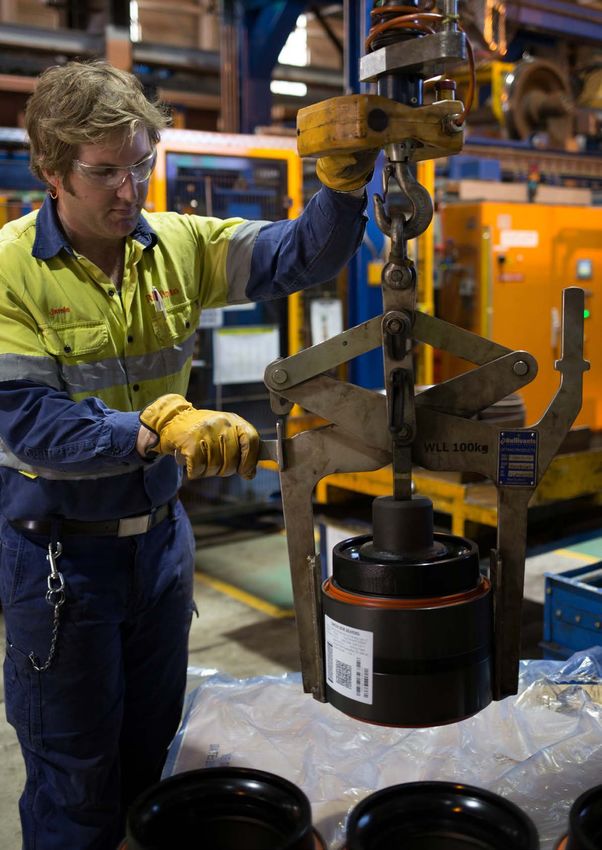
The Rio Tinto Group comprises Rio Tinto plc, a London listed public
                                   company headquartered in the UK, and Rio Tinto Limited, which is listed
                                   on the Australian Stock Exchange. The two companies are joined in a
                                   dual listed company structure as a single economic entity.

                                   Our interests are diverse – both in geography and product. Most of our
                                   assets are in Australia and North America, with operations also in Europe,
                                   Asia, Africa, and Central and South America. To produce aluminium, copper,
                                   diamonds, gold, industrial minerals, iron ore and uranium, we own and
                                   operate open pit and underground mines, mills, refineries, smelters, power
                                   stations, research and service facilities. We also use our own railways, ports
                                   and ships to deliver materials to our customers.

Develop and innovate               Mine and process                    Market and deliver                 Repurpose and renew

We assess each potential           A safe site is a productive site,   Our minerals and metals are        We aim to design and run our
operation with a focus on risk,    and advanced technologies are       used in a vast array of everyday   assets to create a positive
potential returns, and long-       playing a more important role       products – from cars to coffee     legacy once our mining
term sustainability and value.     in how we achieve both.             pods to smartphones. Our           activity concludes. Applying
Once we have approved an           We also share best practices        Marketing and Commercial           this approach could entail
investment, we design and          across our assets to create         teams ensure that we manage        rehabilitating the land for a
build each operation. We aim       safe, environmentally               our products in line with market   nature reserve, for example,
to develop every potential site    responsible working practices       and customer needs. And our        or repurposing it for light
to achieve optimal, long-term      and a high-performing culture       network of rail, ports and ships   industrial use. Each of our sites
productivity while minimising      that targets production at          means that we can control          has rehabilitation plans that we
risks. Our growing network of      lower costs.                        end-to-end logistics to deliver    review each year. We see this
partners – governments,                                                our products safely, efficiently   long-term approach – planning
customers, suppliers and           At the same time, our               and reliably.                      and operating with the future
communities – is helping           operations aim to benefit local                                        in mind – as integral to running
expand our thinking,               economies by contributing jobs,                                        a safe, responsible and
capabilities and ability to        taxes and royalties, contracts                                         profitable business.
deliver mutual benefit.            with local businesses and social
                                   and community investment. By
                                   understanding and respecting
                                   our business partners,
                                   employees, communities and
                                   the environment, we can
                                   create sustainable value
                                   for all our stakeholders.

Please see our Annual report for a more detailed explanation of our business model.

                                                                                            2018 Sustainable development report          3
Our integrated
        sustainability
        approach

Image: Rehabilitated land at Richards Bay Minerals, South Africa

                                                                   2018 Sustainable development report   4
Our values, experience
and history tell us that
we must work in a way
that delivers real,
lasting benefits for the
owners of our company
as well as the wider
communities in which
we operate.

         2018 Sustainable development report   5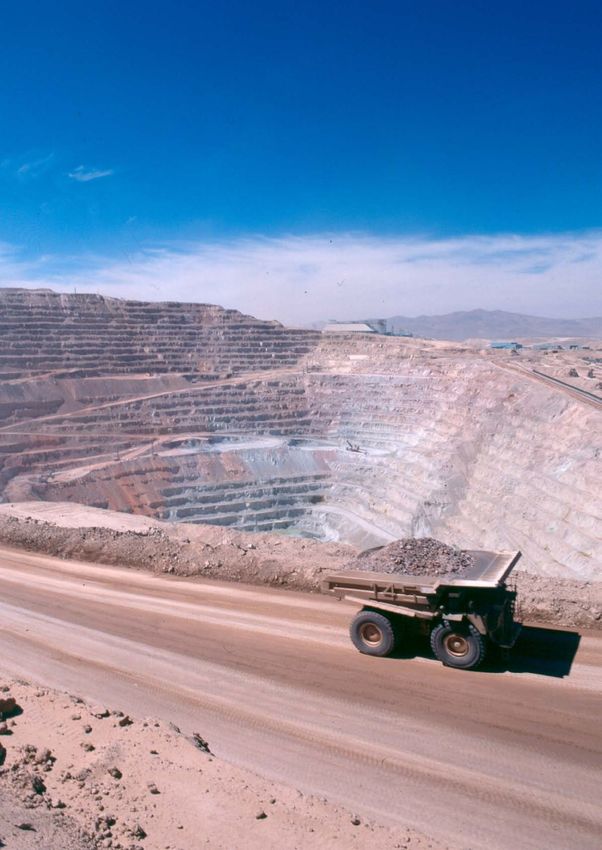
OUR INTEGRATED SUSTAINABILITY
APPROACH

Our business by                        At Rio Tinto, we produce materials
                                       essential to human progress.
                                       Achieving this purpose requires us
                                                                                 This approach comprises every
                                                                                 facet of the work we do, but begins
                                                                                 with running a safe, responsible
its very nature                        to work, as often as not, in remote
                                       locations and sensitive, beautiful
                                                                                 and profitable business. Safety is
                                                                                 important to Rio Tinto not only

must have                              environments, often on land owned
                                       by Indigenous people. Our values,
                                                                                 because we care for the people
                                                                                 we work with, but because a safe

sustainability                         experience and history tell us that
                                       we must work in a way that delivers
                                       real, lasting benefits for the owners
                                                                                 business is also operationally sound.
                                                                                 Responsibility starts at home, with
                                                                                 a commitment to the safety, rights
at the centre                          of our company as well as the wider
                                       communities in which we operate.
                                                                                 and wellbeing of our employees,
                                                                                 the integrity of our business and

of its strategy.”                      We must care for our employees,
                                       respect and care for the environment
                                                                                 supply chain, and respect for the
                                                                                 environment. Profitability enables
                                       while we operate, and rehabilitate        us to meet our commitments to our
                                       the land when we cease. We must           shareholders and assume leadership
                                       contribute our fair share to local and    in other areas, including sustainability.
                                       national economies, including
                                       through taxes, and do so                  We work hard to leave a lasting,
                                       transparently. These beliefs are          positive legacy everywhere we work.
                                       the foundation of our views on            Our long-term economic contribution
                                       sustainability.                           is one way we do this. In 2018*,

$3.6bn
Paid in corporate tax in 2018
                                       This year, we again took stock of the
                                       issues facing our business, as well as
                                       the societal and economic trends
                                                                                 Rio Tinto paid $3.6bn in corporate
                                                                                 taxes to governments around the
                                                                                 world; and our direct economic
                                                                                 contribution was $42.8 billion. Over
                                       changing the global landscape, and        the past five years, our business has
                                       developed an integrated approach to       contributed more than $200 billion

$42.8bn
                                       sustainability that ensures material      to countries and communities
                                       issues are at the heart of our business   everywhere we operate. We do not
                                       strategy and corporate governance.        always build and maintain roads and
                                       The expected outcome is commercial        bridges or schools and hospitals
Direct economic contribution in 2018   success coupled with a meaningful         ourselves – but the billions we
                                       contribution to the world around us.      contribute support all of these.

$200bn
Economic contribution over the
                                                                                 * Our 2018 Taxes paid report will be
                                                                                   published in April 2019.

past 5 years to the countries and
communities where we operate

                                       Governance and materiality

$192m
Invested to strengthen health,
                                       Every year we review the sustainability topics that matter most to our
                                       business and stakeholders. Following the Global Reporting Initiative (GRI)
                                       Standards, this year we prioritised our material topics, combining an analysis
                                       of the external environment with feedback from Rio Tinto leaders and subject
education, cultural heritage and       matter experts while also considering stakeholder expectations. This report
environment in 2018                    details these topics in relation to our business in 2018.

                                       See pages 71-72 for Reporting what matters.

                                                                         2018 Sustainable development report            6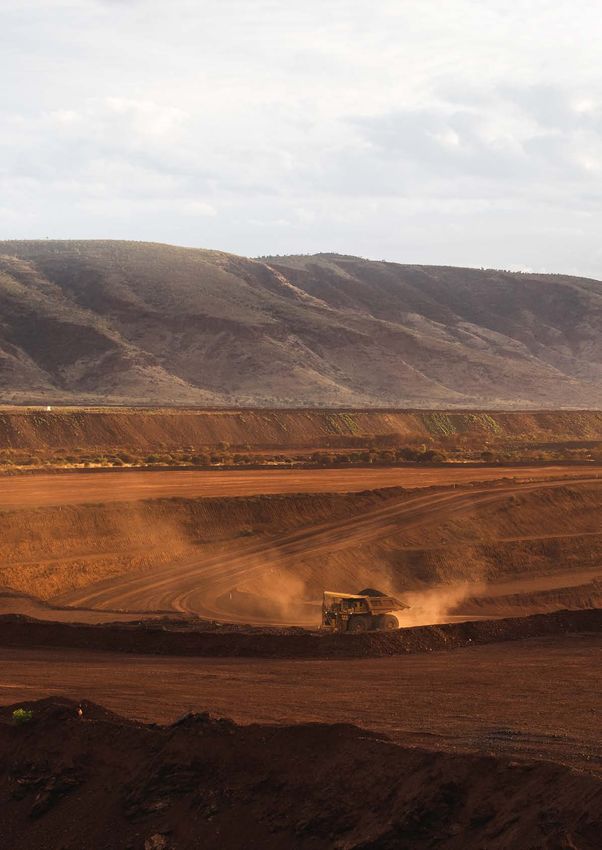
Our business is often the major
source of jobs and livelihoods –
and sometimes, one of few
                                       To be clear, protecting the
                                       environment is also critically            Our business
                                                                                 is often the
                                       important. Rio Tinto has long
avenues to opportunity. We take        acknowledged the reality of climate
this responsibility seriously.         change and its potential to have a

We employ 47,500 people in
                                       negative impact on our business, our
                                       communities and the world around          major source
35 countries. In Mongolia, we are
the single largest private sector
                                       us. In 2015, we supported the
                                       outcomes of the Paris Agreement           of jobs and
                                                                                 livelihoods...
employer; approximately 93% of         and the long-term goal to limit global
our employees there are Mongolian.     average temperature rise to well
In our Iron ore product group, in      below 2°C, recognising that doing
Western Australia, we employ
10,500 people: 13.5% of our
                                       so will require governments and
                                       companies alike to approach climate
                                                                                 We take this
residential workforce are from
Indigenous groups in the Pilbara.
                                       change with more ambition and action.
                                                                                 responsibility
                                                                                 seriously.”
We are a major employer in the         We believe we are doing our part
Saguenay, in northern Quebec.          – from helping to develop technology
At our mineral sands business in       that can make aluminium smelters
Madagascar, we have over 90%           entirely GHG emissions-free to
Malagasy employees. We also work       providing the world with the materials
with about 37,000 suppliers in more    it needs, such as copper and titanium,

                                                                                  47,500
than 120 locations, supporting the     to build a new low-carbon economy
employment of many thousands           and products like electric vehicles
more. In 2018, we paid $4.7 billion    and smartphones. This year, we
in wages and employment costs,         also exited fossil fuel production,
and spent $12.3 billion with           becoming the only major mining             Employees
suppliers. This year, we invested      company to do so.
another $192 million to strengthen

                                                                                 35
the health, education, cultural        As much as we have done, there is
heritage and environment of the        more to do. We are not where we
places that so many of us call home.   want to be on safety, or diversity.
This is how economic development       We appreciate that the changing            Countries worldwide
and prosperity is created,             nature of work presents opportunities
and sustained.                         for our business, but also significant

                                                                                 37,000
                                       challenges for many of our
                                       communities and our employees.
                                       Managing the coming closure of
                                       certain sites, and doing this well,
                                       will reflect our commitment.               Suppliers

                                       However, as our performance in

                                                                                120
                                       2018 illustrates, commercial
                                       success can indeed be coupled
                                       with a meaningful contribution to
                                       the world around us. This report           Locations
                                       aims to illustrate our contribution.

                                                                                2018 Sustainable development report   7
OUR INTEGRATED SUSTAINABILITY APPROACH

Our sustainability framework
Our sustainability framework has three pillars that each contribute
to the United Nations’ 17 Sustainable Development Goals.

                                    Pioneering materials for human progress
                                     We are helping to pioneer a more sustainable future –
                                      through examining our own global carbon footprint, forming
                                        smart partnerships and producing materials that contribute
                                         to a low-carbon economy.

                                             READ MORE ON PAGE 52

                                                          Collaborating to enable long-term
                                                           economic benefits
                                                               We collaborate with others to enable long-term benefits
                                                                where we operate – working with governments at all
                                                                 levels and community partners to help make a
                                                                   difference in people’s lives.

                                                                       READ MORE ON PAGE 34

                                                                              Running a safe,
                                                                               responsible and
                                                                                 profitable business
                                                                                     The foundation of our approach is
                                                                                      to run a safe, responsible and
                                                                                        profitable business.

                                                                                            READ MORE ON PAGE 10

                                                                              2018 Sustainable development report        8
How we contribute to the UN Sustainable
Development Goals (SDGs)
In 2019, we will re-evaluate our sustainability strategy and related activities
to determine our contribution to individual SDGs.
Safety is our number one priority. We make In every country and region in which we
every effort to safeguard the health and operate, we strive to create an inclusive, fair
wellbeing of our employees, contractors culture. We do not discriminate on any basis.
and communities – at work and at home. We are transparent about the payments
we make and we aim to build resilient
communities beyond our direct involvement.
Education is a means to access opportunity. We produce the metals and minerals required
We work with governments and educational to build sustainable cities and the technology
institutions to help our own employees required for a low-carbon future. We recognise
develop and grow new skills; and in our that socio-economic development is about
communities, we support education, training more than employment and social investment,
and development, so people can follow and so we partner with communities,
opportunity wherever they find it. governments, civil society and others to
enable local communities’ long-term
resilience and success.
We want to create an environment where every Over the past decade, we have reduced our
voice is heard, and respected, and every greenhouse gas (GHG) emissions by 43%
employee is empowered, and has equal access and our GHG intensity by 29%. We make the
to opportunity. We have clear targets to improve materials critical to a low-carbon future. We
the proportion of women in our organisation and recently published our first TCFD report and
our leadership; and are advocates for issues that are aiming for substantial decarbonisation of
are important to women, including parental leave our business by 2050.
and domestic violence policies.
We work hard to leave a lasting, positive legacy We believe sustainable development by
everywhere we work through our economic definition requires working in partnership with
contribution and status as a major source of many stakeholders, global to local. This year,
jobs and livelihoods. Over the past five years, in addition to our many existing partnerships,
our business has contributed more than we refreshed our sustainability strategy,
$200 billion to countries and communities developing an integrated approach linked to
wherever we operate. the United Nations’ Sustainable
Development Goals.
2018 Sustainable development report 9Running a safe,
responsible and
profitable business
Running a safe, responsible and
profitable business is the foundation Contribution
of our sustainability approach. to UN SDGs
Staying safe, keeping others safe,
and being responsible are core to
who we are as a company.
Profitability allows us to meet our
commitment to our shareholders
while contributing to the world
around us.
Running our business in this way
means not only meeting production,
financial and productivity targets, but
also paying close attention to safety
and wellbeing, inclusion and diversity,
and ethics and integrity. It means
thoughtfully managing our operational
environment, including resources like
water and air, and the rights, traditions
and heritage of the communities
where we operate.
2018 Sustainable development report 102018 financial highlights
$18.1bn
underlying EBITDA
$8.8bn
underlying earnings
$0.3bn
net cash balance*
42%
EBITDA margin
$11.8bn
operating cash flow
2018 performance against targets
Goals Performance
To reach zero fatalities, and to eliminate workplace Two safety fatalities and one security fatality at
injuries and catastrophic events managed operations
All injury frequency rate (AIFR) of 0.44, up 5% on 2017
(target 0.38)
1.45 million Critical Risk Management (CRM) verifications
(target 1.2 million)
To minimise exposure to critical fatality health risks by 77% of managed operations achieved this target
verifying that effective controls are in place at all
managed operations by the end of 2018
To reduce the rate of new occupational illnesses 15% increase in rate of new cases of occupational illness
(per 10,000 employees) each year since 2017
To improve diversity through:
– Increasing women in senior management by 2% – 22.6% of senior management were women, up 0.2% from 2017,
each year with women in operational roles increasing from 10% to 15%
– 50% of our graduate intake being women – 25% of our Executive Committee were women
– 30% of our graduate intake being nationals of the – 36% of our graduate intake were women, down 5% from 2017
countries in which we’re developing new businesses – 31% of our graduate intake were nationals from the places
where we are developing new businesses
– 17.7%(a) of our total workforce were women
– To achieve approved local water targets in all – 79% of our operations met their local targets this year – the
managed operations with material water risk final year of our current water target programme (target 100%)
– We are in the process of establishing new water targets for
2019-23
– Improving our employee engagement and satisfaction – An eight-point increase in our employee Net Promotor
Score (eNPS)
– Two-point increase in employee satisfaction score (eSAT)
– Six-point increase in average monthly engagement on Yammer
* With expected outflows in 2019, including a $4.0 billion special dividend to our shareholders, our net debt is expected to rise in the first half of the year.
(a) Gender distribution for our total workforce is based on managed operations (excludes non-managed operations and joint ventures) as of 31 December 2018.
Less than 1% of the workforce is undeclared.
2018 Sustainable development report 11Delivering
safety
and
wellbeing
Image: Employee using automation for railway maintenance tasks, Dampier, Pilbara, Australia
2018 Sustainable development report 12RUNNING A SAFE, RESPONSIBLE AND PROFITABLE BUSINESS: DELIVERING SAFETY AND WELLBEING
Safety
Our number one priority is to keep our people, contractors
and suppliers safe. This focus underpins everything we do:
our leadership, our systems and controls and the standards
that we set with our partners and contractors. We believe all
accidents and work-related health risks are preventable, so
we concentrate on identifying, understanding, managing and,
where possible, eliminating these.
Tragically, three people lost their lives in 2018 at our We are also focusing on leadership, coaching and
operations. In April, a maintainer lost his life while engagement in the field with our workforce and
working on a furnace rebuild at our Sorel-Tracy plant partners, because a more engaged workforce is one
in Quebec, Canada. In July, a security guard at Richards where people actively look out for their own and others’
Bay Minerals, in South Africa, was fatally assaulted. safety. Our goal is to improve our all injury frequency
And in August, a haul truck driver was in a fatal accident rate (AIFR) every year. Over the past ten years, both our
at our Paraburdoo mine in Western Australia. We must AIFR and the severity of injuries have reduced (from
get better at safety because we firmly believe our 0.94 in 2008 to 0.44 in 2018). However, as this year’s
people are our most important asset. Having a safe, performance shows, we still have work to do.
healthy and engaged workforce is important to deliver
both our purpose and strategy. Engaged employees In 2018, we improved how we categorise occupational
can also help us to sustain, evolve and expand our illness, leading to a 15% rise in the rate of new cases of
operations, and contribute to our partnerships with occupational illness from 2017 (25 up to 29 cases per
local communities and other stakeholders. 10,000 employees). The main types recorded were
musculoskeletal disorders (33%), noise-induced
To help us manage our safety and health risks, we hearing loss (32%) and stress (23%).
have developed performance standards. We apply
and assure controls to manage major hazard risks, We are also working with local governments and health
to reduce occupational illness and injury, and to organisations to prevent our employees, contractors
minimise and eliminate fatalities and potentially and communities from contracting infectious and
disabling injuries and illnesses. non-infectious diseases, such as tuberculosis, Ebola,
malaria, HIV/AIDS and Zika virus. In 2018, for example,
Our management processes, risk assessments and our the second phase of an epidemiological study to
global fatality management system, Critical Risk understand the possible health effects on workers from
Management (CRM), help us to achieve this and to mine-related radiation exposure at our Rössing uranium
understand the short-term safety and long-term health mine in Namibia was completed. The outcomes should
impacts of our operations. CRM requires us to verify be published mid-2019.
critical controls throughout the year, with a focus on the
quality and coverage of controls. For example, before
completing maintenance on a conveyor, we would first
identify all sources of energy and verify that they have
been isolated. In 2019, we will be introducing a safety
maturity model to give managers a recipe for stronger
safety outcomes. This will incorporate and build on our
existing CRM programme and other safety tools.
2018 Sustainable development report 13RUNNING A SAFE, RESPONSIBLE AND PROFITABLE BUSINESS: DELIVERING SAFETY AND WELLBEING
Operational safety
The complexity of our operations makes it essential to
understand the major hazard risks and the critical controls
needed to prevent a catastrophic event.
We identify major hazard risks (low probability,
high consequence events) and manage them
through standards, analysis and external reviews
and verification of controls. Please see page 20 for
a discussion of our tailings policies and procedures. Almost 10,000 of our
This year, we strengthened our management-level
governance framework as well as our visibility of
reporting. We also focused on minimising process
employees took part in
safety risks to people in occupied buildings – for
example, by installing detection and protection the Virgin Pulse Global
technology and where possible removing the use
of chlorine from our metal treatment units.
Challenge, a team-based
wellbeing programme
Because our operations include ocean transport, we
also work with the International Council on Mining and
Metals (ICMM) and other industry associations to refine
that encourages
testing for metal corrosion, leading to the safer shipping
of bulk materials such as iron ore and bauxite. This led
to a provisional agreement with the International
employees to improve
Maritime Organization (IMO) for a refined test method
in bulk shipping of metal ores and concentrates.
Ultimately, the aim is for the IMO to approve this test
physical activity,
method for future versions of the International Maritime
Solid Bulk Cargoes (IMSBC) Code, helping businesses
around the world to properly characterise their
nutrition, sleep and
materials before shipping. This better protects goods
in the hold and reduces the risk of corrosion to the
ship’s hull, as well as potential pollution of the
mental wellbeing.
marine environment.
2018 Sustainable development report 14RUNNING A SAFE, RESPONSIBLE AND PROFITABLE BUSINESS: DELIVERING SAFETY AND WELLBEING
Wellbeing
We promote a healthy, balanced lifestyle for our employees,
including work-life balance, good nutrition, regular exercise
and access to health care – all important elements of wellbeing.
We also have an increasing focus on mental health.
Mental illness is one of the most rapidly growing causes One way we support mental health is through our
of long-term sickness absence and labour market Employee Assistance Programme, which gives
exclusion across developed countries, despite improved employees access to professional coaching, advice and
rates of detection and methods of intervention. We support for themselves and their families. It can help
provide mental health training for managers, as studies with many types of concerns, including financial and
have suggested that these improve occupational legal questions, children’s needs, family relationships,
outcomes for employees with mental health problems. advice for supporting an ill parent, balancing work and
home, and dealing with change and stress. More than
95% of our employees are covered by this programme,
and the rest are supported by on-site counsellors.
Another way we support mental health is through
our peer support programme, established in 2012
in our Iron Ore business and continuing today. This
programme is also in place at a number of our other
product groups. Research suggests that when
people do reach out for help, particularly in a work
environment, they are more likely to approach friends
and colleagues than to use more formal support
programmes. Our programme equips employees at
all levels of the business to support their colleagues
through difficult times. This year, we piloted peer
support programmes at a number of our sites in
Canada, with over 1,000 people taking part.
We are continuing to champion White Ribbon
Australia’s campaign against domestic violence.
This year, we extended to North America our
groundbreaking initiative supporting employees
affected by domestic violence. Employees can now
access up to ten days of paid extra leave, flexible work
hours, financial aid and emergency accommodation if
they are experiencing domestic and family abuse, or
have an immediate relative who is experiencing abuse.
We received White Ribbon accreditation for our
Australian programme and were recognised at the 2018
Women in Resources National Awards (WIRNA) for our
commitment to breaking the cycle of violence
against women.
Fatigue is another critical risk in our day-to-day
operations. Some of the work our employees do is
Image: Family leisure time, Dampier, Australia
physically and mentally taxing; fatigue increases the
chances of injury, even when people are not at work.
2018 Sustainable development report 15RUNNING A SAFE, RESPONSIBLE AND PROFITABLE BUSINESS: DELIVERING SAFETY AND WELLBEING
WELLBEING CONTINUED
Working with the Central
Queensland University in
An integrated approach to safety and health
Australia and the University of
Witwatersrand in South Africa, Leadership and culture
we studied our employees’
attitudes towards fatigue across
sites in Africa and Australia.
We learned that we have a
good foundation in our fatigue
management systems, Fatality
although controls are not
Critical risk and controls
elimination
Systems and technology
always consistently applied.
We have an opportunity to
quickly learn and apply best
practice; to this end, we will
develop and roll out a
standardised fatigue
management framework Ensuring
in 2019. the safety, health
This year, we also conducted
and wellbeing of
our own studies to better our people
understand and manage
fatigue-related risk, including Reducing Catastrophic
piloting the use of wearable injuries event
technology to help manage and illness prevention
employees’ fatigue. This
provided valuable information Learning and communication
to individuals on their quality
and quantity of sleep, and data
for the business to better
understand risks and how to Safety Respect Excellence
more effectively manage them.
As a result, we provided
awareness training for Teamwork Integrity
employees and leaders on
how to reduce fatigue-related
risk. We will continue to use
wearable technologies to
measure our effectiveness All injury frequency rate New cases of occupational illness
in this area.
(per 200,000 hours worked) (per 10,000 employees)
0.44 29
2014 0.59 2014 17
2015 0.44 2015 32
2016 0.44 2016 47
2017 0.42 2017 25*
2018 0.44 2018 29
* Number restated from those originally published
to ensure comparability over time.
2018 Sustainable development report 16RUNNING A SAFE, RESPONSIBLE AND PROFITABLE BUSINESS: PROTECTING THE ENVIRONMENT
Protecting
the environment
We aim to minimise the adverse effects of
our operations on environments and communities.
This involves establishing very clear internal standards and practices that are in line with –
and sometimes go beyond – international and local regulations. It also means having open
dialogue with neighbouring communities – both to understand and to respond to complaints
about our environmental impacts such as noise, dust and water quality.
As well as working in line with our own standards and processes, we take part in industry
reviews of issues such as biodiversity, tailings management and water stewardship to share
knowledge, learn from others and improve our approaches and practices.
7.9%
decrease in our greenhouse
gas emissions since 2017
79%
of our 2014-18 site water
targets attained
71%
Image: Oyu Tolgoi in Mongolia is one of the most
water-efficient mines of its kind in the world
of electricity used at
Rio Tinto is from renewable
sources
2018 Sustainable development report 17RUNNING A SAFE, RESPONSIBLE AND PROFITABLE BUSINESS: PROTECTING THE ENVIRONMENT
Water
Water is a valuable resource and is crucial to our operations.
539
We balance our operational needs with those of local Freshwater withdrawn
communities, Traditional Owners, ecosystems and
regulatory requirements. And we are continuing to (in billion litres)
strengthen our water governance and planning
2014 465 89
processes to improve water management across the
business. We support the new ICMM position statement 2015 460 104
on water stewardship and have begun to report our
2016 467 106
practices against the commitments in this report.
2017 465 120
Like other mining companies, we remove groundwater
2018 401 139
to allow us to reach orebodies, and use water to process
ore, manage dust emissions, supply drinking water and Freshwater withdrawn and used Freshwater withdrawn and discharged without use
wastewater services, and generate hydroelectric power.
The sum of the categories may vary to the total figure due to rounding.
Totals are provided in the “Performance data” section.
Sites manage the quality of water returned to the
environment during operations and closure. However,
672
to us, managing water does not just mean managing Sources of water withdrawn
constrained supply. Each of our operations has its own
water context: while some operations are located in (in billion litres)
water-scarce environments, others have to manage 555
intense rainfall. Based on the World Business Council 2014
162
Global Water Assessment Tool, 43% of our managed 2015
564
168
sites are assessed as operating in a “water stressed” 573
environment. Of these sites, only one was locally 2016
180
assessed as having its operations marginally 2017
584
206
impacted by water availability. 539
2018
133
At some sites, mining below the water table presents Fresh Poor
challenges as to how we manage dewatering and water
The sum of the categories may vary to the total figure due to rounding.
disposal. Many of our sites are also experiencing
changes in their local water regimes due to climate
change, which is a key water management consideration.
1,091
Water used and recycled
To ensure we focus on the right issues and with
appropriate resources, we have committed to (in billion litres)
establishing new site-specific targets for the period 264
2019-23 at operational sites where water is a 2014
834
recognised risk. At the end of 2018, 79% of our 2015
287
841
operations with water targets attained their local 282
performance targets for the period 2014-18. 2016
870
This is the highest attainment we have achieved 2017
304
883
during the five-year target programme.
296
2018
796
Water recycled in process Water use
2018 Sustainable development report 18RUNNING A SAFE, RESPONSIBLE AND PROFITABLE BUSINESS: PROTECTING THE ENVIRONMENT
Image: Water quality testing,
Boron Operations, California, US
Diverted water used for generation of hydropower 149,267 GL
Diverted water around mining and processing sites 48 GL
Water withdrawn1 672 GL Water use on site Water return 2 509 GL
Water output = 150,502 GL
Surface water 272 GL - Process water 3
923 GL To surface water 314 GL
Water input = 150,508
Groundwater, including - Recycled water 4 296 GL To groundwater and seepage 126 GL
dewatering 321 GL - Change in storage To marine 66 GL
Sea water 48 GL during year 5 6 GL
Imported freshwater
(municipal) 31 GL Evaporation 563 GL
and other losses
Third party water 36 GL Entrained in product 85 GL
Transferred water 36 GL or process waste
Water in ore that 485 GL Supply to third party 30 GL
is processed
Water supplied directly to others 52 GL
Water input Water use Water supplied Water output
1. Including on site impounded/imported surface, onsite/impounded groundwater (including dewatering) and marine water.
2. Including process effluent and dewatering water discharged without use
3. Including mining (dewatering), milling, washing, power generation, dust suppression, etc.
4. Tailings, sewage or water contaminated in process that has been treated for re-use.
5. The difference between total water input and total water output is “change in storage”.
2018 Sustainable development report 19RUNNING A SAFE, RESPONSIBLE AND PROFITABLE BUSINESS: PROTECTING THE ENVIRONMENT
Tailings and Waste
structures
Mining processes create residues called tailings. Where Our main types of waste are mineral waste such as
it is not possible to reclaim and reuse these, they are waste rock, slag and tailings, and non-mineral waste
discharged – normally as slurry – to storage facilities. such as used oil and office waste. It is not always
We manage the operation of tailings and/or large water possible to reuse or recycle waste, so we build
storage facilities at 32 sites worldwide, including closed facilities to manage it in ways that minimise adverse
and legacy sites not yet fully rehabilitated. We also have environmental and community impact, disposal costs
a further four non-managed operational sites and 14 and future liabilities. We found off-site opportunities for
non-managed legacy sites with joint venture partners. reuse or recycling of 353,877 tonnes of our non-mineral
waste and 740,249 tonnes of mineral waste in 2018.
There were no tailings or water dam related failures at We have rigorous controls and monitoring programmes
our managed operations in 2018; at our non-managed in place to prevent and mitigate the potential harmful
operations, we work with our partners to minimise the impact of acid and metalliferous drainage (AMD)
environmental and social impacts and risks associated potentially generated by approximately 31% of our
with tailings management. mineral waste though reactions with air or water.
Our approach to tailings management is in line with the
ICMM position statement on tailings governance, and Our controls include:
we continually review and audit our practices, including – Identifying reactive mineral potential during
externally. We are working with our industry peers to exploration and evaluating risk in project
better manage risks associated with tailings and water developments
storage facilities, and also participating in two research
– Identifying mining areas containing reactive wastes
projects led by the University of Western Australia,
and applying controls during mine operations
specifically on reducing tailings risks. Additionally,
we are working to help develop and update tailings – Choosing appropriate areas to permanently store
management guidelines in Australia and Canada. reactive waste rock
– Using strategies during operation and at closure
To raise awareness on tailings risks and good practices, that isolate reactive waste to minimise AMD and
we hold regular webinars where internal and external collect drainage
experts share their knowledge with our employees.
– Regularly monitoring the performance of our
We also continue to develop our executive reporting
mineral waste disposal programmes, including
protocol, and we are piloting an integrated control
after operations are no longer active in line with
effectiveness tool to monitor progress and drive
closure criteria
improvements on the ground.
– Completing independent, external reviews of our
In 2018, following our 2017 site reviews, we created site-level strategies and performance
and have started delivering seven training modules – Helping non-managed operations to manage mineral
to increase understanding and capabilities around waste responsibly by joining technical committees
effective tailings management, particularly for and sharing good practice
nominated role personnel under our tailings standard.
We also completed technical risk reviews at five sites
to strengthen our technical assurance process.
Our Iron Ore Mineral Waste
These were in addition to business conformance audits Management Team won an
at 14 sites that assessed compliance with our tailings International Network for Acid
performance standard. Group Internal Audit also Prevention (INAP) Best Practice
completed an independent assurance process to assess
our approach to tailings risk management: we have award in 2018, for “Pilbara operations
good fundamentals in place, but we will continue to exemplify global best practice and
learn, evolve and improve our approach. Learn more at deserve international recognition”.
www.riotinto.com/tailings
2018 Sustainable development report 20RUNNING A SAFE, RESPONSIBLE AND PROFITABLE BUSINESS: PROTECTING THE ENVIRONMENT
Air Biodiversity
Mining processes, such as using fossil fuels, smelting Mining can affect biodiversity through disturbing land,
metals and moving ores and waste, release gases and waters, ecosystems and potentially the livelihoods of
particulates into the atmosphere. The major air host communities. We work to retain the biodiversity
emissions from our operations are: value of sensitive areas and contribute to regional
biodiversity research and conservation efforts.
– Sulphur oxides (SOx), mainly at our aluminium and
copper smelters and coal and fuel oil Our revised environmental standards take an integrated
fired power stations approach to environmental management, informed by
– Nitrogen oxides (NOx) from burning fossil fuels stakeholders’ concerns. These standards guide our
operational leaders in identifying and managing risks
– Particulate and gaseous fluoride emissions from
to the environment, often with the help of academic,
aluminium smelters and, to a lesser extent, from
civil society or Indigenous partners.
processes that use coke and coal
– Particulate emissions less than ten micrometres in We have set up a number of international panels for
diameter (PM10 ) from our mining activities, metal specific sites to guide and assist us. The Committee for
manufacturing processes and power stations QIT Madagascar Minerals, for example, involves several
biodiversity and natural resource experts from
Our air quality protection standard international and Malagasy institutions and is facilitated
is designed to prevent breaches by the International Union for the Conservation of
Nature (IUCN). This helps us to balance our efforts to
under both normal and worst- mitigate the impacts we may have on biodiversity with
case weather conditions. We focus the natural resource needs of local communities.
on controlling and monitoring
air emissions at source and We also work closely with local communities
throughout each asset’s life cycle to plan for and
understanding our impacts on the air monitor all potential impacts from our operations –
quality conditions where we operate. and to carry out mitigation activities together.
We encourage our host communities to get involved.
For example, at Oyu Tolgoi, Mongolia, QIT Madagascar
Minerals and Richards Bay Minerals, South Africa and
Weipa, Australia, local community members monitor
water and biodiversity mitigation services. In California
62.8
Particulate (PM10) emissions we use a local beekeeper to rehome bees that are a
(000 tonnes) safety risk to employees but provide an important
service to the ecosystem in the area. At Amrun, we use
2014 8 0.6 94 native seeds collected by Traditional Owners, which
has seen our rehabilitation work improve through the
2015 6 0.6 88
diversity and quality of seed collected.
2016 6 0.6 85
We ship material between our sites all over the world.
2017 6 0.6 60 For example, bauxite and alumina from Australia, and
2018 6 0.6 57 heavy minerals from Madagascar, travel for processing
and smelting to our facilities in Canada. This travel can
SRRC point sources Other point sources Fugitive sources affect global waters and marine life. We invest in marine
The sum of the categories may vary to the total figure due to rounding. research to assess and address these impacts.
Emissions from stationary sources such as smelters, refineries,
roasters and concentrators (SRRC point sources).
2018 Sustainable development report 21RUNNING A SAFE, RESPONSIBLE AND PROFITABLE BUSINESS: PROTECTING THE ENVIRONMENT
BIODIVERSITY CONTINUED
Some of our sites are close to migratory bird paths. Dampier Salt,
Oyu Tolgoi, Richards Bay Minerals and QIT Madagascar Minerals In 2018, we paid environmental fines totalling
work with bird conservation organisations, such as Birdlife $284,683 covering:
International and their local partners, to document populations
and ensure the protection of important bird areas. – In Canada, non-compliance with a sanitation certificate
and multiple spillages of diesel at a port terminal
In 2018, we won an Australian Mining Prospect Award for
– In Mongolia, the death of four gazelles (through
Excellence in Environmental Management for our project in Parker
collision and drowning) and rehabilitation in an area
Point in the Pilbara, Australia, where we built an artificial reef and
that was previously used for community wood
translocated a coral colony.
distribution
– In the US, for the settlement of multiple instances of
water quality related releases from 2003 to 2017
2018 Waste performance data
886
Mineral waste by disposal location Hazardous and non-hazardous waste
(%) (million tonnes)
47
Others: 1% 2014
1,690
75
Ocean/River/Lake: 2% 2015
1,671
46
Storage: 2% 2016
1,681
44
2017
1,144
31
Tailings dams: 17% In pit backfill: 20% 2018
855
Mineral Hazardous Mineral Non-Hazardous
Rock dumps: 57%
(‘000 tonnes) 274
130
2014
288
82
2015
201
306
2016
228
110
Non-mineral waste by disposal location 2017
219
123
(%) 2018
151
Non-Mineral Hazardous Non-Mineral Non-Hazardous
Hazardous waste: All wastes which regulation has determined to be hazardous or
where a business has made a determination in the absence of appropriate local laws.
Other: 23% Landfill off site: 29%
In-pit backfill: 6%
Incineration: 4%
Landfill on site: 29%
Storage: 10%
Due to rounding, the sum may not total 100%.
2018 Sustainable development report 22RUNNING A SAFE, RESPONSIBLE AND PROFITABLE BUSINESS: PROTECTING THE ENVIRONMENT
Working with
non-managed
assets
We hold interests in companies and joint ventures
that we do not manage and control. In 2018, the
two largest were the Grasberg copper-gold mine
in Indonesia, managed by PT Freeport Indonesia,
a subsidiary of Freeport-McMoRan (divested in
December), and the Escondida copper mine in
Chile, managed by BHP. We work closely with our
partners in these larger joint ventures through
formal governance structures and technical
exchanges to learn and improve performance. In
some cases this may include providing specialists
on site to help advise on particular challenges.
For more detail on our non-managed assets,
see our 2018 Annual report.
Image: Escondida copper mine, Chile, managed by BHP
2018 Sustainable development report 23RUNNING A SAFE, RESPONSIBLE AND PROFITABLE BUSINESS
Our values
at work
Our five values – safety,
teamwork, respect, integrity
and excellence – define
how we treat each other
and how we work with
our partners.
Some of the best people in the industry
work at Rio Tinto, and we want to make
sure this tradition continues. We do this
by fostering a culture where every voice
is heard, every idea is encouraged and
everyone is supported.
Respect is core to how we work. We
continue to recognise and support
people’s right to belong to a union and
to bargain collectively. We reject any form
of slavery and prohibit the use of forced,
bonded or child labour. And we do all we
can to support our employees with
disabilities, including offering them
retraining and more suitable roles if they
become disabled while working with us.
Image: Employee, Gove, Northern Territory, Australia
2018 Sustainable development report 24RUNNING A SAFE, RESPONSIBLE AND PROFITABLE BUSINESS: OUR VALUES AT WORK
Engaging our
employees
30
We know that having engaged people makes our business safer and more
productive; we have regular dialogue with all our employees, at all levels.
This year, our chief executive held well over 30 town halls and small group
discussions in 20 locations; he also conducted webcasts to present annual
and half-year financial results to our global employees. This year, he also Chief executive town halls
launched open-door sessions where employees at manager level and below and small group discussions
can stop by and talk to him about whatever they like. We also use Yammer, at 20 locations
an internal social networking app, to support engagement: in 2018 nearly
half of our employees were on Yammer, and average monthly engagement
2x
across nearly 2,000 groups was up six points year on year.
This year, our board also held its first-ever “employee AGM” in Brisbane, where
directors discussed our purpose, strategy, culture and values, and answered
questions on a wide range of topics, including business performance. Global engagement surveys
each year
We also run global engagement surveys twice a year to understand employees’
views and perceptions. We improved our employee relations focus in 2018,
achieving an eight-point increase in our employee Net Promoter Score (eNPS)
+2pts
and a two-point improvement in employee satisfaction (eSAT).
Clearly, engagement is also driven by fair compensation and career and skills
progression. Our salary packages aim to be competitive, compliant and to strike
the right balance between fixed and performance-related pay. We also work to Employee satisfaction
strengthen our employees’ ability to meet evolving requirements. For example,
this year, in Western Australia, where automation may have a disruptive impact
on our communities, we launched a partnership with the government of
Western Australia and South Metropolitan TAFE (Technical and Further
+8pts
Education) to develop the first nationally recognised courses in automation.
This partnership aims to train and certify people in new skills, making them
easily transferable – so people can follow opportunity wherever they find it.
Employee Net
We also introduced programmes to develop leaders. For example, more than
Promoter Score
100 people, from frontline to senior levels, developed their global leadership
and networking skills this year. Supported by an executive sponsor, they were
taught by other leaders as well as an internationally recognised business
faculty. More broadly, some 6,000 leaders across the company developed their
leadership capabilities through our six-month Leading for Success programme.
2018 Sustainable development report 25RUNNING A SAFE, RESPONSIBLE AND PROFITABLE BUSINESS: OUR VALUES AT WORK
Gender
diversity
This year, we revised our policy on inclusion and diversity, jointly owned by the Gender diversity – all employees
board and Executive Committee, to more explicitly clarify our expectations
around behaviours and personal accountability. We also rolled out a gender-
neutral paid parental leave in every country where we operate, making 18
Female: 17.7%
weeks of paid leave available to primary carers, including single parents and
employees in same-sex relationships.
Male: 82.3%
We are still not where we want to be; our overall percentage of female
employees dropped by 0.3% to 17.7% (6,963 women; 32,419 men). Although
the number of women in operations roles rose from 5% to 15%, only 22.6% of
our senior management roles are held by women (112 women; 383 men)
versus 22.4% in 2017 (117 women; 406 men). Gender diversity – senior management
We are continuing to work with external partners, such as recruitment agencies
and universities, to bring more female graduates into our business. In 2018,
Female: 22.6%
there were 62 women in our graduate intake (36%), and our aim in 2019 is to
make this 50%.
Male: 77.4%
In Australia this year, we won the Excellence in Diversity Programs and
Performance Award at the 2018 Women in Resources National Awards
(WIRNA) for our commitment to gender diversity and breaking the cycle
of violence against women.
Pay equity
36%
women in our graduate intake in 2018
- still short of our 50% target
Our ongoing pay health checks ensure that employees with similar skills,
knowledge, qualifications, experience and performance are paid equally for
Winner
work of the same or comparable nature. Our Group-wide gender pay gap this
year was 1% in favour of men overall and 2% in favour of men like-for-like.
We are addressing these issues – see our website for more detail.
Excellence in Diversity Programs and
Performance Award at the 2018 Women
in Resources National Awards
2018 Sustainable development report 26RUNNING A SAFE, RESPONSIBLE AND PROFITABLE BUSINESS: OUR VALUES AT WORK
Human
We are proud of our 88% response rate on the Business
and Human Rights Resource Centre (BHRRC) – a public
platform for people to raise human rights concerns
rights
against businesses for their response. In 2018, we had
one invitation from the BHRRC to address a civil society
report on our operations, to which we responded.
In 2018, we also published our second annual slavery
and human trafficking statement in line with the
UK Modern Slavery Act. Each year we share this on
riotinto.com, outlining what we are doing to make sure
slavery and human trafficking are not happening in any
of our operations or supply chains. We also submitted
the statement to the Modern Slavery Registry.
Respect for human rights starts with people’s everyday
We respect and support human rights everywhere we actions and decisions. So we require all our sites to
work, in line with the Universal Declaration of Human provide human rights training to staff, contractors and
Rights. Our salient human rights issues are those that visitors – tailored to local contexts. We also offer
we believe are at risk of the most severe negative specific online modules to teams on issues affecting
impacts through our activities and business communities, procurement, security and inclusion and
relationships. These centre around operational security, diversity. Our online VPSHR training is mandatory for all
land access and resettlement, Indigenous people’s security personnel at high risk sites and is strongly
rights, environmental issues such as access to water, recommended elsewhere.
labour rights, and issues related to migration such as
access to local health services. This year, we also published our first annual report on
how we are implementing the VPSHR. Our human
We carry out human rights due diligence in line with the rights approach was recognised by the 2018 Corporate
UN Guiding Principles on Business and Human Rights Human Rights Benchmark, ranking Rio Tinto second out
(UNGPs). This includes processes and systems such as of 101 companies and as the top extractives company.
social risk analysis and impact assessments,
community engagement plans, grievance mechanisms
and digital tools that identify community sentiment.
This in turn allows us to prevent and minimise the
We ranked second
adverse effects of our operations on human rights. We
also integrate human rights considerations into other
health, safety, environment, communities and security
out of 101
and procurement practices, and into our business
performance audits. Where our standards and
procedures are stricter than existing laws or
regulations, we apply our own standards.
Our policies and statements relating to human rights,
together with a list of the international standards we
companies and were
the top extractives
follow, are available on the human rights page on our
website. In particular, we have made voluntary
commitments to the OECD Guidelines for Multinational
company in the
Enterprises, the UN Global Compact and the Voluntary
Principles on Security and Human Rights (VPSHR).
We also took part in several external forums to support
human rights policy and regulatory development. This
included publicly advocating for an Australian modern
slavery reporting law alongside civil society. In
2018 Corporate
November, the Australian Parliament passed the law,
and we have joined multi-stakeholder forums to
support its implementation. We also attended meetings
Human Rights
Benchmark.
of the Australian, UK and Canadian Government
Working Groups on the VPSHR. And we have engaged
with external benchmarking initiatives to enable
investors and other stakeholders to better compare
human rights performance across peers and industries.
2018 Sustainable development report 27You can also read


