PERTH'S PATHWAY TO PROSPERITY - Bigger & Better Beyond the Boom - Committee for Perth
←
→
Page content transcription
If your browser does not render page correctly, please read the page content below

B i g g e r & B e t t e r Beyond the Boom

PERTH’S PATHWAY              TO   PR O S PER IT Y

O c t ob e r 2 0 1 8
Bi g g e r & B e t t e r B e y o nd the Boom

                                      P E RTH’S PATHWAY                                              TO   PR O S PER IT Y

                                      Bigger & Better Beyond the Boom is a
                                      project of the Committee for Perth.
                                      The project is supported by its membership
                                      base with the following organisations
                                      providing additional funding:

                                                                                                                  Bigger & Better
                                                                                                                   BEYOND THE BOOM
                                                                                                                   Perth’s economic future as a region of 3.5 million people

                                                                                                                               The Aged Care Partnership is formed by the following:

                                                                                                                                    Government of Western Australia
                                                                                                                                    Department of Jobs, Tourism, Science and Innovation

                                                                          Screen: RGB

                                                                               R 47 - G 70 - B 156

                                                                               R 0 - G 157 - B 156

                                                                          Print: Brilliant Paper
NEG PREP Layout 08 2400x2110.indd 1                                                                                                                                                       24/4/18 9:03 am

                                                                               PANTONE 2726C

                                                                               PANTONE 326C

                                                                          Print: Matt Paper

                                                                               PANTONE 2728U

                                                                               PANTONE 3272U

                                                                          Print: CMYK

                                                                               C 90 % - M 80 %

                                                                               C 94 % - Y 43 %

                                      This report is copyright of The Committee for Perth. We encourage its use and citation, the report should be referenced as:
                                      Committee for Perth, 2018, Bigger & Better Beyond the Boom : Perth’s Pathway to Prosperity

                                                                                                                                                                                                            Perth’s Pathway to Prosperity   1
From the S teeri n g Com mi t t e e C h a i r                                                                F ro m th e P ro j e c t D i re c to r

                 Bigger & Better Beyond the Boom (B4) presented PwC with a unique opportunity to be the core                  As an evidenced based organisation, the Committee and its allied researchers have worked over
                 funding partner of a project that we could see had the potential to set Perth on a new pathway to            the past two years to produce an irrefutable knowledge base for B4. These facts have created a
                 achieve greater economic diversity and growth. At PwC, we seek to improve social outcomes by                 significant foundation on which to better understand Perth’s economy.
                 facilitating cross-sector collaboration between business, government, and the community in order to
                                                                                                                              A project of this size and scale requires commitment, not just to publish the facts but to also analyse
                 enhance opportunities for society. It is our belief that the B4 project has created the ability to further
                                                                                                                              what they are telling us. To go beyond what we think and move to what we know. One clear fact is
                 this goal.
                                                                                                                              that Perth, over the long-run, is not a boom and bust region. Its economy has a degree of diversity
                 In the face of new and growing challenges for the nation, the resulting Bigger & Better Beyond the           and resilience that is rarely acknowledged. When times are good, it is true that most of us benefit.
                 Boom: Perth’s Pathway to Prosperity report identifies 11 opportunities and seven recommendations             However, when a downturn occurs people experience angst, some lose jobs and find it hard to
                 to realise a bright future for the region. One which plays to the region’s strengths and builds on those,    regain full-time employment. This affects our community deeply and knocks our confidence.
                 provides space and encouragement to see new sectors and businesses grow, based on creating solid
                                                                                                                              It is this period in which we find ourselves today as we release Bigger & Better Beyond the Boom:
                 foundations built by government, the private sector, community groups and institutions.
                                                                                                                              Perth’s Pathway to Prosperity as the final report for the B4 project. Using the data and analysis
                 In undertaking this two-year venture, PwC was joined by 17 like-minded organisations who                     undertaken for B4, plus sector workshops and interviews, we have also importantly asked the
                 contributed senior representatives to a gender balanced Steering Committee of 20. Combined, we               community for its views. All of these are reflected in the Pathway to Prosperity report, in which the
                 have volunteered more than 250 hours over the life of the project. The Steering Committee has met            Committee for Perth has taken a strategic approach by mapping out a series of opportunities, with
                 regularly to receive briefings from the researchers and participated in future thinking and robust           associated recommendations and actions, in order to protect Perth’s much valued quality of life and
                 debate as we have sought to analyse what the data is telling us, beyond numbers trending up or               deliver economic growth.
                 down. In the last few months of the project we have been particularly busy considering the final drafts
                                                                                                                              This future can only be realised if we leverage Perth’s strengths, seize the opportunities and address
                 of the report and workshopping the recommendations. We were clear that we wanted to have an
                                                                                                                              impending risks and threats. Ultimately, we need do more than rely on the next boom time coming,
                 informative report with workable and implementable recommendations.
                                                                                                                              we must shape the future together.
                 I pass on my appreciation to each of the Steering Committee members, who remained engaged
                                                                                                                              On our journey to a prosperous future, we may find ourselves in uncomfortable and unfamiliar
                 throughout the process and were an invaluable asset to the project.
                                                                                                                              territory. Perth is not in this alone, with cities across the globe seeking to adjust to a more disrupted
                 The 10 socialisation sessions, attended by more than 100 senior people in industry and government,           and uncertain future. The smart ones however are leveraging their strengths and points of
                 were vital to gain feedback on the recommendations, in terms of their achievability and                      distinction.
                 appropriateness based on the key findings arising from the research. This critical last step in the
                                                                                                                              I thank our researchers, Steering Committee participants, funding partners, members and
                 project has led us to identify a pathway for Perth that is ambitious, yet achievable.
                                                                                                                              stakeholders, and my team who have been actively involved in bringing this report to fruition. I
                 An organisation like the Committee for Perth is the ideal vehicle to take leadership on an initiative        also express my appreciation to the leaders of cities who openly shared their regional economic
                 such as B4, with their significant membership base made up of local, national and international              development strategies with me during the study tours I conducted for this project.
                 organisations. Throughout the process, engagement with the Committee’s members has provided
                                                                                                                              Our analysis of the reports on Perth’s economy over the past 15 years demonstrate that there is
                 much needed thought-leadership and collaboration on an issue that is central to all our futures. A
                                                                                                                              appetite for change and a consensus on what needs to be done. The challenge now is to do more
                 Perth that is economically competitive and prosperous, highly liveable and globally connected.
                                                                                                                              than talk in fierce agreement with each other, it is time to act.
                 It is now up to all of us to drive these opportunities forward through a call to action and by leading the
                 charge. If implemented, the recommendations work to ensure Perth’s economic future for decades to
                 come.

                                                                                                                              Marion Fulker

                                                                                                                              CEO, Committee for Perth
                 Justin Carroll                                                                                               Project Director, Bigger & Better Beyond the Boom

                 Partner, PwC
                 Steering Committee Chair, Bigger & Better Beyond the Boom

2   Committee for Perth                                                                                                                                                                                            Perth’s Pathway to Prosperity   3
Contents Chapter 5: Perth’s People – Strengths and weaknesses
from a resident perspective 57
Project Introduction 8 5.0 Introduction 57
Executive Summary 14 5.1 Growth Positivity 58
Opportunities 16 5.2 Downturn Division 58
Recommendations 18 5.3 Declining Opportunity 59
5.4 Governance Inefficiency 61
Chapter 1: The Race for Global Competitiveness 21
5.5 Priorities for the Future 61
1.0 Introduction 21
1.1 Understanding Urban Competitiveness 22 Chapter 6: Perth’s Spatial Economy – Location, connectivity and
competitive advantage 63
1.2 Economically Competitive Perth – A Natural Advantage 23
6.0 Introduction 63
1.3 Benchmarking Perth’s Global Urban Competitiveness 25
6.1 Spatial Framework and Liveability in Perth 64
1.3.1 Liveability 27
6.2 Economic Geography of Perth 64
1.3.2 Cost of Living 27
6.3 Industry Dispersal and Locational Requirements 66
1.3.3 Innovation 27
1.3.4 Student Cities 27 6.4 Industry Dispersal, Growth and Government Policy 70
1.3.5 Smart Cities 27 6.5 Economic Downturn and Economic Geography of Perth 71
1.3.6 City Brand 27 Chapter 7: Perth’s Economic Future – Action, ideas and analysis 73
1.4 Global Networks and Connectivity 28 7.0 Introduction 74
1.4.1 Connectivity through Mining and Resources 29 7.1 Economic Development Policy in Perth and Western Australia 74
1.5 Human Capital 30 7.2 Research and Policy Review 2008-2018 76
Chapter 2: Globally Competitive Perth - A future of opportunity or challenges? 33 7.2.1 Ageing, Aged Care and Health Care 80
2.0 Introduction 33 Chapter 8: From Analysis to Action – Learning from cities
2.1 Global Forces 34 and countries around the globe 83
8.0 Introduction 84
Chapter 3: Failure to Act 39
8.1 Trends in Policy for Economic Development
3.0 Introduction 39
and Urban Competitiveness 84
3.1 Mining and Resource Hubs 39
8.2 Examples of Regional and National Strategies
3.2 Under-Developed Diversity 40
for Economic Development and Urban Competitiveness 86
3.3 Human Capital Divide 41
8.3 Strategies and Initiatives for Economic Development 90
3.4 Twentieth Century Liveability and Connectivity 41
8.3.1 Human Capital, Knowledge, Skills, Innovation and Technology 90
3.5 Politics as Usual 42
8.3.2 Knowledge and Technology Clusters 92
3.6 Failure to Act Scenario 42
8.3.3 Accelerating Innovation within Government 93
3.6.1 Mining and Resource Hub 42
8.3.4 Global Networks and Connectivity 93
3.6.2 Under-Developed Diversity 43
8.3.5 Enterprise Support and Funding 94
3.6.3 Human Divide 43
8.3.6 Infrastructure and Investment 96
3.6.4 Politics as Usual 43
8.3.7 Private Infrastructure Investment 96
3.6.5 Twentieth Century Liveability and Connectivity 43
8.3.8 Smart City Initiatives 97
Chapter 4: Perth’s Economy – Performance, diversity and competitive edge 45
Chapter 9: Opportunities, Recommendations and Actions 99
4.0 Introduction 45
Opportunities 99
4.1 Long-term Stability, Short-term Shock 46
Recommendations 106
4.2 Investment and Economic Performance 47
Project Team 110
4.3 Economic Performance and Investment in Other States 49
Project Steering Committee 111
4.4 Mining Investment Outlook 50
Acknowledgements 117
4.5 Economic Diversity 50
Project Funding Partners 117
4.6 Strengths, Weaknesses and Emerging Industries 53
References 118
Committee for Perth Members 126
4 Committee for Perth Perth’s Pathway to Prosperity 5
In the face of new and growing challenges

                             for the nation, the resulting Bigger & Better

                             Beyond the Boom: Perth’s Pathway to

                             Prosperity report identifies 11 opportunities

                             and seven recommendations to realise a bright

                             future for the region.

6   Committee forP h o to b y K y le Gille sp ie , 2 0 1 6 Passion for Perth Photogra phic Competition.
                   Perth                                                                                  Perth’s Pathway to Prosperity   7
Proj e ct Introdu cti on Over the past two years, the Committee has built a substantial evidence base that has informed
strategies for the future. Key inputs include:
The impetus for the Bigger & Better Beyond the Boom project (B4) was generated by the Committee
for Perth’s Get a Move On! report, which recommended the preparation of a cohesive economic
development strategy for Perth and Peel. This need was heightened by the results of the 2015 Perth
1. Community Survey
Perception Survey, which identified growing community concern about the economic future of the
region. In March 2017, the Committee asked 2,000 working
age residents of Perth and Peel for an economic
As the leading think tank focused on Perth and the region’s future, it was clear that the Committee
perspective of their home and work life. This critical
needed to lead the discussion and debate. The aim of the project was to examine the size, industry
first step in the project put people at its heart to
composition and spatial structure of the economy in the Perth and Peel region and identify industry
ensure strategies for the future capture our most
sectors that are growing; industries in decline; and emerging economic threats and opportunities for
valuable asset.
the future.
B4 was a two-year research project to challenge conventional wisdoms and identify strategies for a
more economically diverse and robust future for the region. It has been undertaken with a number of 2. FACTBase Bulletin 52
funding and research partners including core funder – PwC. – Sizing and Mapping Higher Education and
Vocational Education and Training in Perth
Applying a four-pronged approach that incorporates academic research, in-house expertise, and Peel
consultative findings and on-the-ground study tours, the Committee for Perth has undertaken an
Higher education and vocational education and
extensive research program in order to complete the B4 project. It has also deployed its unique, ‘by
training play a pivotal role in developing a more
Perth, for Perth’ methodology, outlined below, so as to truly reflect local conditions and propose
diverse and resilient economy. This research
pragmatic solutions.
examined the educational contribution to the
regional economy and identified opportunities for
economic growth.
3. FACTBase Bulletin 55
– Sizing Tourism in Western Australia
Tourism has been identified as a key growth sector,
with capacity to create new jobs and assist in
driving economic expansion in coming decades.
This research examined the tourism sector in Perth
and Western Australia to quantify its economic
contribution, compare this to other states and
territories and identify key opportunities.
4. FACTBase Bulletin 56
– Sizing Ageing in Western Australia
This research articulates the broad, predicted
impacts of ageing on the economy, including the
workforce, public spending and society. It also
provides an overview of strategies to take advantage
of opportunities associated with longer life
expectancy.
8 Committee for Perth Perth’s Pathway to Prosperity 9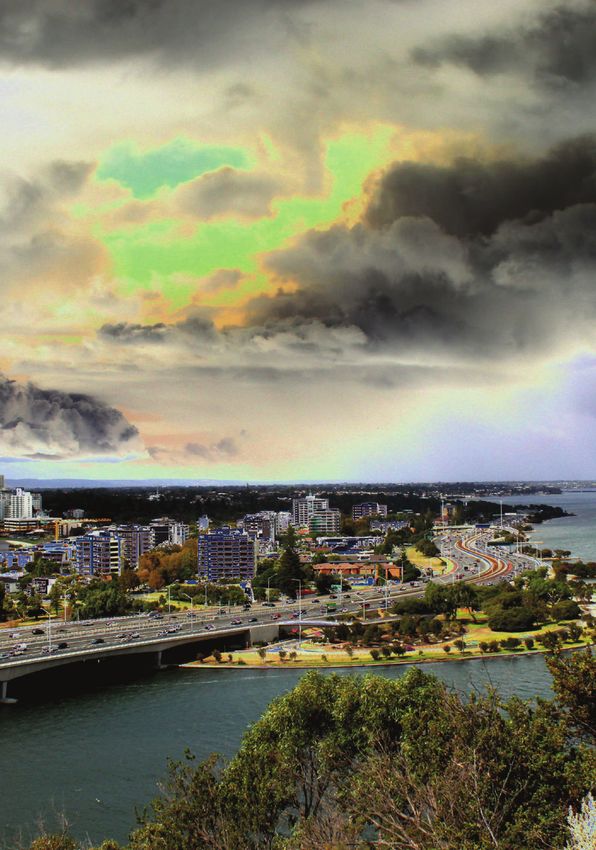
5. FACTBase Special Report 10. FACTBase Bulletin 61
– Perth as a resilient economy – Local Economic Competitiveness in Greater
Perth
This report examined Perth’s history of economic
development since World War II. It provided a detailed Local competitiveness factors such as human
look at Perth’s industries, in order to identify those with capital, innovation, technology, entrepreneurship,
the potential for steering our future. agglomeration, infrastructure and accessibility can
contribute to the expansion of local economies above
the expected average. This research examined local
competitiveness across Australia and the Perth region.
6. FACTBase Bulletin 57
– Spatial Distribution and Employment Trends in 11. Study Tours
Perth and Peel since the 2011 Census Study tours undertaken to cities in the United Kingdom, Scandinavia, Australia and Asia to conduct on-
Spatial distribution and employment trends across Perth the-ground research into economic development planning with a focus on innovation, technology and
and Peel are explored to determine geographic and infrastructure as catalysts for growth.
demographic differences across the region.
Study Tours by City from 2007 to 2018
TORONTO
Light Rail, Waterfronts,
2008
Governance, Arts &
Culture, City Brands &
Visions
BIRMINGHAM &
ABERDEEN
BOSTON
Economic Development,
7. FACTBase Special Report Urban Renewal & Transport Public Transport,
2013. 2015
Affordable Housing,
EDINBURGH Cultural Centres &
VANCOUVER
2017
Experiences, City
– Kwinana as a catalyst for economic Branding, Densification
2008, 2011, 2013
Light Rail, Waterfronts, LONDON Light Rail, Waterfronts, & Urban Renewal, Light
2008, 2010, 2017
Governance, Arts & Governance, Arts & Rail
Culture, City Brands Affordable Housing, Arts & Culture, City Brands &
Culture, City Brands
development & Visions, Stadia, Visions, Cultural Centres & Experiences, Cultural
& Visions, Public PHILADELPHIA
2013, 2015, 2017
Densification & Precincts, Governance, Light Rail, Public Transport,
2008, 2010,2011
Stadia, Densification, Transit Oriented Development, Transport, Affordable
Urban Renewal, Housing, Cultural Public Transport,
Public & Urban Renewal, Waterfronts, Public & Active Transport, SHANGHAI
2015
Gender Equality, Technology & Innovation Centres & Experiences, Affordable Housing,
Active Transport City Branding, Cultural Centres &
The Kwinana Industrial Area has been one of the most
2007
ULI World Cities Densification & Urban Experiences, City
NOTTINGHAM 2017 COPENHAGEN, OSLO &
MALMO
Conference Renewal Branding, Densification
Light Rail 2011, Public & Active Transport, Gender & Urban Renewal
significant drivers of economic activity in Western 2017 Equality, Technology & Innovation
PORTLAND 2011
THE HAGUE, VIENNA,
2015
DUBLIN
Australia, not only as a key centre for employment,
AMSTERDAM Public transport &
Light Rail, Urban Renewal, Urban Renewal
Light Rail, 2013
2008
Cultural Precincts, Densification SEATTLE, CHICAGO, SAN
2011
Waterfronts, & Affordable Housing FRANCISCO, LOS ANGELES
but as a major contributor to innovation, export Governance,
Arts & Culture, City
Brands & Visions
SHEFFIELD, MANCHESTER,
BLACKPOOL
Public Transport,
Affordable Housing,
2008
Transit Oriented Cultural Centres &
earnings and economic growth. This Report examined BARCELONA
Development, Light
Rail, Densification &
SINGAPORE
Experiences, City
Branding,
BRISBANE Densification &
2010, 2018
Urban Renewal Waterfronts,
2017
Light Rail, Urban Renewal
its development, including early origins, industry
2010
Governance,
Waterfronts,
2009, 2012, 2018
Economic Stadia,
Governance, Densification &
2010, 2013, 2015
Development
2008,
TEL AVIV & JERUSALEM
2010
Arts & Culture, City Urban Renewal, WASHINGTON
ecosystem and economic contribution. Brands & Visions
LIVERPOOL &
Gender Equality,
Technology & Innovation
Light Rail,
Governance,
GOLD COAST
Light Rail,
Cultural Centres &
Experiences,
NEWCASTLE Economic
Development Governance Waterfronts
Cultural Centres &
Experiences, Waterfronts
2012, 2014
AUCKLAND
NEW YORK
2010
Waterfronts,
Governance Cultural Centres &
Experiences,
PERTH Waterfronts, Public
2012, 2016
Transport, Affordable
8. FACTBase Bulletin 59
2011, 2016
2010 Housing, Cultural
NAPIER, WELLINGTON, Centres & Experiences,
CHRISTCHURCH City Branding,
– Greater Perth’s Economic Base: A MELBOURNE
Indigenous Culture
& Reconciliation
Densification, Urban
Renewal & Place
Making
Light Rail, Governance, SYDNEY
Comparative Assessment Updated September 2018
Public Transport,
Decentratlisation, Waterfronts, Cultural Institutions,
Public Transport, Decentratlisation,
Bigger & Better Beyond the Boom Highlighted Densification
Densification
An analysis of Perth’s economic base identified
industries that are driving economic growth and
12. Internal Report
potential industries of diversification for future focus.
An environmental scan of Perth-based reports over the past decade, an analysis of strategies other
cities have implemented to grow and diversify their economies.
13. 2018 Perth Perception Survey
9. FACTBase Bulletin 60
– Perth’s Global Connectivity Since 2012, the Committee has commissioned market
research firm Ipsos to take the pulse of the community
Australia’s economy has, much more than many other
on a range of issues. More than 600 residents were
developed countries, been historically oriented toward
asked to rank aspects of their life and identify areas of
international trade. This research identifies the global
high value and those that need improvement.
connections of Australian firms across the major
Australian cities.
10 Committee for Perth Perth’s Pathway to Prosperity 11
On our jour ney to a prosperous future, we may find

                                                                                                             ourselves in uncomfortable and unfamiliar territory.

12   Committee
        P h o t o for
                   b yPerth
                       I mo g e n Bran d - R ake rs, 2 0 1 5 Pass ion for Perth Photogra phic Competition.                                                  Perth’s Pathway to Prosperity   13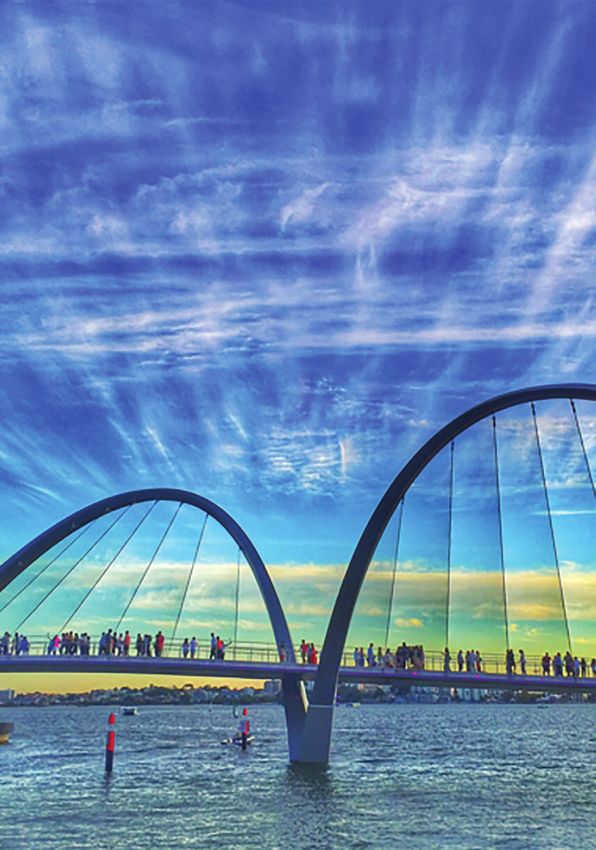
E xecuti ve S u mm ary                                                                                    The effects on the community is evident, with increasingly polarised reports of economic well-being,
                                                                                                                           and satisfaction with both life in Perth, and employment prospects in the region. It is also evidenced
                 The economic downturn impacting the Perth and Peel region (Perth) today is an opportunity to              by a rise in the proportion of Perth residents who would consider moving out of the region and the
                 catalyse a new economic future. A future defined by collective planning and action to position Perth      number of residents who have already migrated from Perth to other Australian capitals.
                 at the forefront of the technologically savvy, innovative, connected and collaborative cities that are
                 generating a new wave of global disruption and prosperity.                                                Yet the downturn in the economy is not the only force reported to be influencing Perth’s
                                                                                                                           competitiveness. Perth’s perceived attractiveness as a place to live, visit, learn and do business is also
                 The Bigger & Better Beyond the Boom: Perth’s Pathway to Prosperity report documents the                   relatively low, and is trending downwards compared to other cities in Australia, Asia and around the
                 evidence, outlines the case for change, provides the opportunities, and details the recommendations       globe, which are benefitting from heightened competitiveness, resulting from long-term strategic
                 and actions to move Perth from complacency to prosperity.                                                 efforts to generate innovative, knowledge economies, and build smarter, more efficient, sustainable
                                                                                                                           and liveable urban areas.
                 The competition for talent, investment and visitors was once a contest between countries or states
                 and now it is at the city scale. For more than two decades, cities in Australia, Asia and around the      Combined, these trends provide a strong case for Perth to re-evaluate its current economic path and
                 globe have been strategically and co-operatively transforming their urban, business and government        take action to deliver a new economic future.
                 systems to capture economic opportunities and respond to challenges presented by global forces,
                 including breakthrough technologies.                                                                      It is within this climate that the Committee for Perth, in conjunction with its members and funding
                                                                                                                           partners, including core funder PwC Australia, has undertaken the Bigger & Better Beyond the Boom
                 Yet Perth has not moved far beyond the starting line. Perth does not have a vision or strategy for        project.
                 its economic future and because of this, action to capitalise on the city’s competitive advantages,
                 stimulate innovation and investment, and respond to new, global challenges has been limited and           The project, the findings of which are outlined in this report, examined the size, industry composition
                 ad-hoc.                                                                                                   and spatial structure of the economy in the Perth and Peel region, and identified industry sectors
                                                                                                                           that are growing, and industries in decline. It also articulated emerging economic threats and
                 This lack of collective action does not come from a shortage of information, analysis or know-how.        opportunities for the future and identified a need for immediate, collaborative action to both seize
                 Rather, it reflects an economy built on the State’s abundant natural resources that has exhibited         Perth’s economic opportunities and address its weaknesses.
                 long-term resilience, punctuated by periods of rapid growth and prosperity, and downturns that have
                 been both moderate and short-lived. It is also reflective of a community that has enjoyed a quality       The B4 project focuses on Perth rather than WA in its entirety, recognising that Perth is home to 79%
                 of life, recognised as among the world’s best. Together, these attributes have delivered a ‘crisis of     of WA’s population and 79% of the employed workforce (2) (3) and acknowledging the importance
                 complacency’ that has curbed the perceived need to chart a new economic course.                           of Perth’s role as the command and service centre for WA’s broader industry and infrastructure
                                                                                                                           networks.
                 Between 2000-15, complacency was amplified by optimism, as Perth experienced a mining
                 investment fuelled economic upswing and a period of rapid population expansion. This period of            This report identifies 11 high-level opportunities for the economic future of the Perth region,
                 growth and prosperity catalysed investment in urban regeneration, infrastructure, arts, culture and       supported by 7 recommendations, which provide a conduit through which opportunities can be
                 hospitality. It also expanded the productive capacity of the mining and resource sector in the State.     realised and Perth re-positioned on a path to a competitive, prosperous and stable economic future.
                                                                                                                           Additional detail regarding Perth’s economic opportunities and the economic development tools
                 Consequently, while not all people and places benefitted from the boom, by the end of 2015, Perth         available to deliver them are provided within the body of the report.
                 found itself in a much stronger position than it was at the turn of the century, with economic activity
                 higher than when the boom commenced in 2004-05.

                 Yet in 2011, commodity prices peaked, and from 2012-13 to 2015-16, annual mining investment in
                 WA declined as resource projects were completed and fewer new projects reached final investment
                 decisions. (1) The effects of falling mining investment spilled over to other sectors in the State,
                 impacting on non-mining business investment and precipitating the current economic downturn.

                 The impact of the economic downturn has been significant. In 2016-17, gross state product in WA
                 contracted for the first time since records began in 1989-90, and 2015-17 was one of just three           The competition for talent,
                 periods in 40 years when unemployment was consistently above the national average.                        investment and visitors was once a

                                                                                                                           contest between countries or states

                                                                                                                           and now it is at the city scale.

14   Committee for Perth                                                                                                                                                                                       Perth’s Pathway to Prosperity   15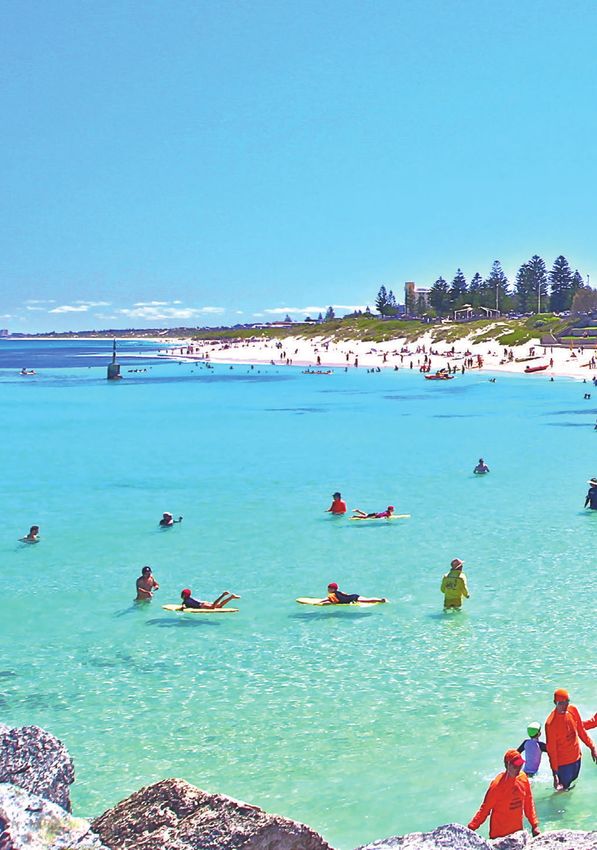
Opportuni ti e s:

                                                                                                                             8.    Leverage Mining       WA’s economy remains heavily dependent on the mining and
                           1.   Catalyse              The current economic downturn is a ‘call to action’ for Perth                and Resource          resource sector, but the sector has become more diverse and
                                Perth’s Crisis of     and provides an opportunity to re-evaluate the region’s                      Innovation            innovative, providing new opportunities for a resilient and
                                Complacency           economic course and devise a new pathway to a prosperous                                           innovative economy.
                                                      future.
                                                                                                                             9.    Expand Bright Light   Perth is home to primary and ‘bright light’ sectors and
                           2.   Shift from Analysis   There is an opportunity for Perth to build on the substantial                and Growth Sectors    industries with capacity and/or a need for growth and
                                to Action             research, discussion and analytical work undertaken by                                             innovation, including agribusiness and ag-tech; professional,
                                                      government, industry and non-government organisations                                              technical and scientific services; higher education; tourism;
                                                      over the past decade and shift from analysis to action.                                            recreation and creative services; health and social services
                                                                                                                                                         (including aged care); and advanced manufacturing, and
                           3.   Partner for           Globally, partnerships between industry and government
                                                                                                                                                         there is an opportunity for collaborative action to facilitate
                                Prosperity            and international governments and organisations are formed
                                                                                                                                                         the short and long-term growth of these sectors.
                                                      to stimulate economic growth, fund infrastructure, progress
                                                      science, research and development and foster innovation.               10.   Boost Non-Mining      Perth’s economic performance has been heavily tied
                                                      There is an opportunity for partnerships to be a central                     Business Investment   to commodity prices and investment in mining. Mining
                                                      tenant of strategies for economic development, investment                                          investment in WA declined in the 2012-16 period,
                                                      and innovation in Perth.                                                                           precipitating an associated fall in non-mining investment. It is
                                                                                                                                                         evident that to increase economic stability, Perth needs new
                           4.   Move Beyond           Long-term economic planning for the Perth region has
                                                                                                                                                         drivers to attract inward business investment.
                                ‘Politics as Usual’   been hindered by fragmented governance and political
                                                      cycles. There is an opportunity for all levels of government           11.   Foster Perth’s        Innovation is important to economic performance and
                                                      to address this problem through formal collaboration, co-                    Innovation            has been identified as a weakness of Perth’s economy. An
                                                      operation and bipartisanship.                                                Ecosystem             opportunity has been identified for ‘bottom-up’ initiatives to
                                                                                                                                                         foster an innovative and entrepreneurial ecosystem in Perth,
                           5.   Reverse Perth’s       Perth has competitive advantages, including the State’s                                            combined with investment in new, sector specific industry
                                Downward              diverse natural resource base and the region’s liveability                                         clusters to facilitate collaboration and innovation.
                                Competitiveness       strengths. Despite this, Perth’s competitiveness as a place to
                                Trend                 live, work and do business has been trending downwards,
                                                      and there is an opportunity to take strategic action to reverse
                                                      this trend.

                           6.   Build on Perth’s      Perth’s early twenty-first century mining-and-energy-fuelled
                                Mining and            economic expansion founded the region as a resource sector
                                Resource Strengths    hub of global significance, supported by both substantial
                                                      financial and human capital and strong business connections
                                                      to countries in Asia and Africa. There is potential for Perth to
                                                      capitalise on these strengths and connections.

                           7.   Adapt to Disruption   The capacity to capture opportunities and adapt to
                                and Seize Global      new challenges generated by global forces, including               The effects on the community is evident, with
                                Opportunities         technological development, globalisation and the rise of Asia,
                                                                                                                         increasingly polarised reports of economic well-
                                                      shifting demographics, and climate change, will influence the
                                                      short and long-term competitiveness of industries in Perth.        being, and satisfaction with both life in Perth,
                                                      There is therefore an opportunity to plan for this disruption
                                                                                                                         and employment prospects in the region.
                                                      and to seize the potential that global forces provide.

16   Committee for Perth                                                                                                                                                                              Perth’s Pathway to Prosperity   17
Rec omm e n dati on s:
Refer Refer
Recommendation Actions Chapter(s) Recommendation Actions Chapter(s)
1. Develop the • Government and industry to develop a prospectus for Perth. Chapters 1 4. Focus on sectors • The mining, resources and METS, higher education, tourism, Chapters 2,
inaugural and 7 where Perth has agri-tech, aged care, renewables, science and research sectors 3, 4, 5, 6, 7
• Committee for Perth to lead a collaborative exercise to develop develop reports that identify immediate barriers to growth and
investment, a competitive and 8
a brand strategy to promote: communicate these to government.
engagement and advantage,
• Lifestyle
attraction strategy opportunity or • Relevant sectors to develop case studies of examples where it
and associated • Natural environment increasing demand excels.
brand to promote • Industry specialisations in order to grow the
• Informed by the inaugural economic development and urban
Perth as a place to • Uniqueness/distinctiveness economy.
competitiveness strategy in Recommendation 2, sectors that
invest, work and • People and diversity are identified for further/future growth opportunities prepare
learn. strategies that address:
• Government to create a concierge-style approach to promote
Perth as a destination for international investment. • Global trends
• Innovation and technology
• Government and industry to utilise alumni and networks to grow
international partnerships. • Land/locational requirements
• Infrastructure needs
2. Create the inaugural • The Premier to appoint a taskforce that reports directly with Chapters 1, • Workforce planning and development
long-term economic appropriate levels of funding. The taskforce must have an 2, 7 and 8 • Local, global and national networks and opportunities
growth and independent chair, experienced in government and the private
sector, and include relevant Directors General and sector
competitiveness 5. Protect and nurture • Government to develop new clusters with an anchor industry. Chapters 7
representatives.
strategy. Perth’s ecosystem and 8
• The strategy should be built upon research and consultation in • Government to revitalise existing clusters of industry through
of innovation and
order to create a knowledge base that identifies Perth’s unique urban regeneration projects and by co-locating enterprise
entrepreneurship. support services within clusters.
regional assets, capabilities, competitive advantages and
opportunities in the global economy, in consultation with federal,
state, local government bodies, industry, higher education • Government to implement adequately funded ‘bottom-up’
providers, and stakeholders and community. initiatives for enterprise that both support innovation and
investment within established industries and facilitate the
• The strategy is tabled in Parliament. emergence of new innovative enterprises.
• Ensure the strategy has bipartisan support to give it longevity • Place government at the heart of innovation and R & D through
beyond political cycles. innovation in government service provision.
• Legislate five yearly updates. 6. Implement ‘smart • Government to investigate smart city initiatives and engage with Chapters 1, 2
city’ initiatives other global cities, innovative industries and research institutions and 8
• Commit to regular monitoring and review with necessary to identify short and long-term opportunities for the Perth region
adjustments to the strategy. for infrastructure
including:
efficiency and
improved liveability • Big data analytics
3. Develop the • Through Infrastructure WA, or its precursor, and informed by Chapters 6,
inaugural long- Recommendation 2 above, identify the infrastructure required 7, and 8 and urban • Sensor technology
term infrastructure to facilitate and support Perth’s future economic growth and competitiveness. • Artificial intelligence/automation.
competitiveness.
strategy. • Government to prepare a ‘smart city’ plan to guide long-term
• Develop the strategy to improve and respond to: implementation of ‘smart city’ initiatives in regional Perth.
• Economic growth
• Government to move to an open source data policy by making
• Urban competitiveness & liveability non-private, non-commercial data available.
• Social infrastructure
• Smart technology • Government to engage with the private sector to understand
• ICT and leverage company and sector know-how.
• Connectivity
• Sustainability 7. Increase Perth’s • Government to work with industry to prepare a progressive, Chapters 1,
• Clean energy human capital responsive and integrated education strategy to focus on: 2, 4, 7 and 8
Infrastructure is developed to a world-class standard and where and foster lifelong • Structuring education to be future focused.
buildings accompany it they should reflect the distinctive learning. • Matching resident skills and requirements of industry.
character of WA and Perth.
• Lifelong learning and ongoing skill development.
• Equity of access to quality education.
• Maximising competitiveness as an international student
destination.
• Connecting students with employment opportunities.
• Global connections, particularly with Asia, Indian Ocean
Rim and Africa.
18 Committee for Perth Perth’s Pathway to Prosperity 19CHAPT ER 1 The Race for Global Competitiveness
Ke y F i n d i n g s
• Perth’s current economic downturn provides an opportunity for the region to evaluate its current
trajectory and create a new path towards economic competitiveness and prosperity and catalyse
Perth’s economy is in a period of transition.
action for a more prosperous economic future.
• Perth is perceived to lag behind many of its global urban competitors in key areas of economic
competitiveness including innovation, technology and branding.
• Perth risks losing its perceived global and regional liveability advantage if the region’s
performance does not keep pace with improvements in other cities in Australia and Asia.
• Perth lacks a strong and unique competitive identity.
• Natural resources have been and remain WA’s and Perth’s most significant competitive
advantage.
• Connectivity has emerged as a regional strength due to the region’s role as a global minerals
and energy hub, and physical connections between Perth and other global cities and countries
have increased.
• Perth has developed strong business connections to Asia and Africa.
• Human capital is a relative strength, although Perth’s human capital base is strongly linked to the
mining and resource sector and has a smaller proportion of workers with a tertiary qualification
when compared to Sydney and Melbourne.
1 . 0 I n tro d u c ti o n
Perth’s economy is in a period of transition. After rising to a peak of mining and energy sector
investment fuelled expansion in 2012-13, mining investment and, more recently, productivity, job
and income growth in Perth has been in decline. However, the downturn is arguably an opportunity
for the region to re-evaluate its role and performance in the global economy and catalyse action to
deliver a new and prosperous economic future.
It is important for Perth to grasp this opportunity because there is evidence that Perth’s
competitiveness is falling as cities around the globe reap the benefits of long-term planning for
economic growth and competitiveness.
It is also important because the twenty-first century is expected to be the Asian century. While this
will deliver new opportunities for Perth, the region will face new competition as Asian cities emerge
as locations of choice for people, businesses and investment in the Asia-Pacific region.
P h o to b y Carly Do n o h u e , 2 0 1 2 Passion for Perth Photogra phic Competition Winner.
20 Committee for Perth Perth’s Pathway to Prosperity 211.1 Understanding Urban Competitiveness In response, cities worldwide developed broad new initiatives for economic development which
aimed to achieve the economic, social, cultural and environmental factors recognised as enhancing
Urban competitiveness refers to a metropolitan region’s potential to achieve long-term economic
urban competitiveness. These include creating or exploiting an economic comparative advantage;
growth and prosperity – by capturing opportunities for innovation and growth and by attracting new
facilitating technology, innovation and entrepreneurialism; improving strategic decision-making
businesses, inward investment and talent. It is important because businesses, investment capital
capacity; developing a skilled workforce; maximising connectivity, both internal and external;
and people are increasingly mobile, and international companies are progressively assessing and
improving liveability and quality of life; and developing a strong, recognisable city-brand.
comparing the attractiveness of cities, rather than just countries when making location decisions. It is
also important because high-performing cities drive high-performing regions and nations by delivering
Figure 1.1: Building Urban Competitiveness
positive rates of productivity, employment and wage growth, and low levels of income inequality and
social exclusion.
Cities are home to an increasing proportion of the population and high-performing cities foster well-
being, including better education, infrastructure, health and security. They are also better equipped to Factors influencing global
achieve goals for environmental sustainability. (4) (5) competitiveness
Increases economic
The race for urban competitiveness is a result of globalisation - the trend of increasing global economic 1. Liveability
performance
integration – which, although present for hundreds of years, gained pace in the 1990s to emerge as 2. Responsive Governance Build city (productivity, jobs
one of the largest forces impacting on world economies today. The rapid pace of globalisation in competitiveness,
3. Strategic Decision-Making and wages) and
recent decades was influenced by factors such as technological advancement and urbanisation and are including capacity
Capacity capacity of a city to
outlined in Box 1.1. to attract inward invest in liveability,
4. Infrastructure
investment; attract infrastructure,
5. Skills & Human Capital businesses; develop education and human
6. Safety strong industry capital, health,
Box 1.1: Factors Influencing the Rapid Pace of Globalisation from the 1990s Onward clusters; and take security, facilitating
7. Cost of Living /
advantage of global innovation, social
• China, India, the former Soviet Union and Eastern European states becoming part of the global Doing Business
opportunities. and cultural capital,
economy. 8. Innovation &
environmental
• Technological developments, particularly in ICT and transportation, diminishing the importance of Entrepreneurialism
sustainability and
distance in trade. 9. Brand branding.
• Convergence of income growth and technological developments, most notably as the economies 10. Global Connections
of China and India grew, resulting in reductions in poverty levels and rising incomes.
• The relocation of production processes through offshoring and outsourcing. Consequently, investment in factors influencing competitiveness increased, and for some cities,
• Trade and capital market integration. heightened comparative global advantage and economic performance. This, in turn increased the
capacity of the metropolis to invest in new initiatives to further enhance competitiveness, creating a
• Increasing labour mobility.
self-reinforcing loop of reinvestment and success. (5)
• Urbanisation of the global population.
1.2 Economically Competitive Perth – A Natural Advantage
Source: (6)
Since the middle of the twentieth century, Perth has enjoyed a relatively strong and resilient economy
and has built a position as a globally competitive mid-tier city and global minerals and energy hub.
The primary drivers of this growth and transformation have been the discovery of new mineral and
resource deposits, combined with increased global trade associated with economic deregulation and
the continued expansion and increasing diversity of Western Australia’s mining and resources sector.
Seventy years ago, WA was home to a little over half a million people, half of whom lived in Perth.
As WA and Perth grew, the State became more modern and culturally diverse, with an increasing
proportion of residents arriving from the United Kingdom and elsewhere in Europe. (7) At that time,
the State’s economy was small and inextricably tied to the export of agricultural products and
economic strategies focused on agricultural consolidation and diversification into the manufacturing
sector. (7)
22 Committee for Perth Perth’s Pathway to Prosperity 23Yet in the 1960s, the economic fortunes of WA shifted dramatically with the discovery of significant However, despite the current downturn it is apparent that Perth has achieved an enviable level of
iron ore deposits in the northwest of the State. This discovery aligned with the lifting of the iron ore economic growth over the past 70 years and this has been fundamentally driven by WA’s primary
export embargo in 1960 and rapid expansion of Japan’s industrial sectors. Combined, these factors competitive advantage, its abundant natural resources. It has also been supported by the region’s
underpinned one of WA’s most significant periods of economic prosperity. (8) (9) (10) long-term competitiveness as a liveable city, in comparison to many of its global counterparts.
What is less certain is whether Perth can retain a competitive position based primarily on its natural
This resource sector boom transformed the structure of the Western Australian economy for the
resource strengths into the future. Perhaps an unintended consequence of Perth’s long-term
decades that followed and Western Australia became increasingly one of Australia’s wealthier states. (11)
economic stability and relative prosperity has been a level of complacency regarding planning for
State and national governments have been driving this transformation. Since the 1950s, successive the region’s economic and competitive future and responding to global forces of change.
Western Australian governments have used State Agreements to facilitate investment in WA’s resource,
industrial and manufacturing sectors. At the same time, economic deregulation opened Australia’s 1.3 Benchmarking Perth’s Global Urban Competitiveness
economy to the world and, combined with new investment and global demand, contributed to strong
Since the early to mid-2000s, global urban competitiveness has been reflected in the emergence of
export growth and the expansion and diversification of WA’s mining sector. (12)
multiple city indices, which compare and rate the performances of cities around the globe against a
From the modest economic circumstances in the 1950s, diversification and expansion have occurred. range of economic, social and environmental factors.
By the 1990s, resources were a primary source of export earnings and Perth was home to diversified
The primary purpose of these indices has been to deliver intelligence to international businesses
national and multi-national companies. The resulting benefit was highly-skilled people and global
and investors regarding the suitability of cities as regions to invest and do business and their
connections and the region established a competitive advantage in the mining equipment, technology
attractiveness for global staff. While these indices have some limitations in scope and methodology,
and service (METS) sector. (7)
they provide a useful tool for governments and policy makers to benchmark the performance
For the first 15 years of the twenty-first century, while many other developed nations grappled with of a metropolis on an international scale, by identifying a region’s comparative strengths and
the impact of global competition and the Global Financial Crisis, rising demand and surging prices for weaknesses, measuring performance over time, and providing an external perspective on regional
commodities driven by growth in China and other Asian nations propelled a period of unprecedented competitiveness. (14)
investment in WA’s mining and resources sector. This drove the importance of the sector to the WA
A review of Perth’s performance against other major Australian capitals and a small selection of
economy to its peak.
developed metropolitan centres in the Asia-Pacific region is provided in Table 1.1. It relies on the
This twenty-first century ‘gold-rush’ transformed the economic and urban fabric of Perth and was analyses of recent city indices and benchmarking reports.
characterised by rapid economic and productivity growth; rising household prosperity; a migratory
It finds that Perth is a comparatively competitive mid-tier global city and the fourth most competitive
swell in the population and labour force of the State; a shift towards trading with Asian nations; and
capital in Australia. It also finds that the region has strong rivals – notably other major capitals within
the development of an increasingly diverse base of export resources. (7) (13)
Australia and the Asia-Pacific region.
The region also benefitted from economic prosperity with heightened investment in major urban
The indices identify liveability as Perth’s greatest competitive advantage.
renewal projects and through investment in new transport, health, arts, cultural, sporting and
recreational infrastructure.
Reform in spheres such as liquor licensing and retail trading has also catalysed the emergence of new,
independent and creative events and businesses that have transformed Perth’s recreation and cultural
sector.
However, despite the current downtur n
Yet in 2014-15, a significant period of growth in annual investment in the mining and resource sector
in WA came to an end. This period of mining investment growth drove a super cycle of construction, it is apparent that Perth has achieved
which helped lift the industry to higher levels of production.
an enviable level of economic growth
As construction projects came to an end, the pace of economic growth and demand for labour in the over the past 70 years and this has been
Perth region also declined, and the region entered a period of economic adjustment. Despite the
downturn, the productive capacity of the mining and resource sector remained substantially higher fundamentally driven by WA’s primary
than in the pre-boom era. The impacts of this period are quantified in Chapters 3 and 4. This evidence competitive advantage, its abundant
indicates that the current decline in economic performance is currently impacting on Perth’s economic
and global competitiveness as a place to live and work. natural resources.
24 Committee for Perth Perth’s Pathway to Prosperity 25Table 1.1: Index Ratings for Australian and Asia-Pacific Cities 1.3.1 Liveability
Liveability has been one of Perth’s long-term global competitive strengths – but it is a strength
it shares with other Australian and Asian capitals and Perth’s global EIU ranking has declined in
City Index recent years due to improvements in the liveability scores of other cities. (15) Cities in Asia including
(top performer Hong
Singapore, Tokyo, Hong Kong and Osaka are among the cities that substantially improved their
noted in pink) Perth Sydney Melbourne Brisbane Adelaide Auckland Singapore Osaka Kong
liveability scores, as ranked by the EIU, while the liveability scores of cities in Australia have remained
Economist 14 5 2 22 10 12 35 3 37 relatively static.
Intelligence
Unit’s Global
Liveability 1.3.2 Cost of Living
Index 2018
Mercer 21 10 16 37 29 3 25 59 71 Perth’s cost of living performance has improved over the past three years with indices reflecting
Quality declining living costs in Perth in comparison to other global cities. Despite this, in 2018 Perth
of Living continued to be rated among the most expensive Australian cities for expatriates, behind Adelaide
Ranking 2018
and Brisbane. (18) (23)
Mercer Cost 61 29 58 84 87 81 4 10 1
of Living
Ranking 2018 1.3.3 Innovation
Numbeo 77 40 86 144 110 60 38 85 81
Cost of The Innovation Cities Index rates cities against 162 indicators associated with cultural assets, human
Living Index infrastructure and networked markets. It rates Perth just outside the top 20% of most innovative cities
2018 in the world. While the Perth region’s rating has substantially improved since 2015, Perth lags behind
2thinknow 105 10 16 54 163 96 6 45 27 Sydney and Melbourne, which are ranked in the top 10 and top 20 cities respectively. Perth is also
Innovation
rated substantially below Singapore, which is identified as the sixth most innovative city in the world.
Cities Index
2018 Other cities in Asia are also very high performers on the innovation ladder including Tokyo (1st) and
QS Best 39 9 3 21 41 23 15 19 12 Seoul (12th). (19)
Student
Cities 2018 1.3.4 Student Cities
EasyPark 41 12 10 N/A 61 48 2 52 68
Smart Cities Perth’s was ranked the 39th best student city in the world in 2018. While this is a relatively strong
Index 2017 global performance, the region again sits in fourth place behind Australia’s capitals of Melbourne,
Resonance 62 5 11 29 N/A N/A 2 61 34 Sydney and Brisbane, with Perth’s major weaknesses identified as isolation and post-graduate
World’s Best
employment opportunities.
City Brands
2017
1.3.5 Smart Cities
Source: (15); (16); (17); (18); (19); (20); (21); (22).
Perth rates within the top 50 ‘smart cities’ in the world and is identified as the third ‘smartest city’
Perth consistently rates below Melbourne and Sydney in all indices, except cost of living and ranks in Australia, but is ranked well below Singapore, Sydney and Melbourne, all of which sit within the
below other cities in the Asia Pacific region including close neighbour Singapore on factors including top 15. Perth’s weaknesses according to this index include traffic; car sharing and smart parking;
innovation; smart city initiatives; branding; and attractiveness to international students. sustainability initiatives including clean energy; and a low scoring innovation economy. Access to
Cities in Asia have also increased their global liveability performance, with Tokyo and Osaka making digital infrastructure, particularly Wi-Fi hotspots and digitisation of government were also identified
their debut in the Economist Intelligence Unit’s top 10 most liveable cities in the world in 2018 and as weaknesses for Perth, while smart phone penetration and standards of living were identified as
Singapore and Hong Kong shifting up nearly ten places from 2015 to 2018 in the EIU rankings. notable strengths.
1.3.6 City Brand
Perth was identified as the 62nd strongest city brand out of 100 global cities, and Australia’s fourth
strongest brand behind Sydney (5th), Melbourne (11th) and Brisbane (29th). It is noted that Perth was
rated as a strong performer (14th) in its attraction of people/human capital, due to the diversity of
the region’s population and workforce.
26 Committee for Perth Perth’s Pathway to Prosperity 271.4.1 Connectivity through Mining and Resources
Mining and resource sector growth in Perth resulted in a substantial increase in the number of Australian
Securities Exchange (ASX) listed firms headquartered in the Perth region. This in turn, rapidly enhanced
Box 1.2: The Role of a Strong Competitive Identity
the region’s global connectivity, such as the flows of people, goods, services and capital.(24)
The Committee for Perth has researched city brands and international perceptions of Perth to better FACTBase Bulletin 60, Perth’s Global Connectivity, identified 652 Perth-headquartered firms listed on the
understand and examine Perth’s identity in the global economy (26). ASX. Sixty per cent of these are minerals sector firms and 17% are energy sector firms. These firms have
195 overseas branch offices in 58 countries. Of the overseas branches of Perth-based companies, 49
The research established that a strong competitive identity is important in the global economy and
were in the materials sector and 45 were in energy, representing approximately half of the total of 195.
effective, outward looking metropolitan governments were those with an understanding that:
Of the total overseas branches, 27 were in Africa, 42 in the Americas, 80 in Asia, 32 in Europe, and five in
1. Brand or competitive identity is a hugely important asset that needs to be managed, measured, Oceania.(24)
protected, leveraged and nurtured over the long-term as a critical factor that underpins every
transaction between the place and its consumer (trade partners, investors, visitors and future When Perth’s global connections are compared to other Australian capitals, as illustrated in Figure 1.2,
residents). Perth is found to have uniquely strong connections to and Asia and Africa.
2. Places need to engage with the outside world in a clear, co-ordinated and communicative way. The research also reveals that, when the networks and sub-networks, such as branch offices, of ASX
companies are mapped, Perth emerges as the most or second most connected capital in Australia.
3. Together, vision and brand can unite people around common goals, creating a powerful dynamic
for progress.
Figure 1.2: Relative Geographic Distribution of ASX-Listed Firm Branches by Headquarter Location
4. Sustained and coherent innovation is important in all sectors of national or state activity.
The research established that Perth did not have a strong or unique competitive identity when 100%
compared to other global mid-tier cities or a unifying vision for the future.
90%
It determined a need for Perth to establish a recognisable image that truly reflects the region’s
ambition, contribution and potential on the world stage. One that is connected to a regional vision 80%
that is an honest reflection of: the city; the genius of our people; and what we are working towards
70%
becoming in the future.
60%
Oceania
Europe
50%
Asia
Americas
40%
Africa
1.4 Global Networks and Connectivity
30%
Connectivity is recognised as an important feature of a competitive global city. Connectivity refers to
hard connections like physical infrastructure, and soft connections such as business, trade, research 20%
and investment relationships. Connectivity is important because it influences the capacity for, and
10%
logistics of, business, trade and investment relationships between places.
In the early twentieth century, Perth’s isolated and peripheral geographical location was a significant 0%
Adelaide Brisbane Melbourne Perth Sydney
barrier to building business and trade relationships. However, today, developments in transport
and information and communications technology have overcome many of the logistical challenges Source: (24).
associated with the tyranny of distance.
Perth’s connectivity by air has increased over the past 10 years and is projected to continue to expand
As a result, while Perth’s geographical location still limits the region’s potential to have a central into the future, see Figure 1.3. Continuous improvement to Perth’s air connectivity remains central to the
presence in global transport networks, Perth’s physical connectivity by air and sea has improved, and development of international business networks and is critical to the growth of potentially propulsive
the region has also developed strong ‘soft’ global connections, most notably through its role as a industries including tourism and higher education. In the past, air connectivity has been a weakness for
global mining and resources hub. Perth compared to cities such as Sydney and Melbourne, as outlined in FACTBase 55 - Sizing Tourism in
Western Australia. (25)
28 Committee for Perth Perth’s Pathway to Prosperity 29You can also read


