Day With(out) Art 2020 - Visual AIDS
←
→
Page content transcription
If your browser does not render page correctly, please read the page content below
Day With(out) Art 2020
For over thirty years, Visual AIDS has organized annual observances of Day With(out) Art, calling on art
institutions to respond to the ongoing AIDS crisis. Every year since 2014, Visual AIDS has created and
distributed free video programs to universities, museums, art institutions, and AIDS organizations to be
screened on or around December 1st, World AIDS Day.

What: A free video program featuring seven new, short         Why: Because AIDS is not over. 38 million people are
videos about the international AIDS epidemic.                 living with HIV and AIDS across the world, and only 62%
(Total runtime: 1 hour)                                       have access to antiretroviral medication. In the United
                                                              States, healthcare remains inaccessible for many, and
When: World AIDS Day is Tuesday, December 1, 2020,
                                                              HIV treatments are skyrocketing in price. Because the
but screenings can happen any time throughout the first
                                                              epidemic is intertwined with geographically specific
two weeks of December.
                                                              issues like poverty, food insecurity, housing, and beliefs
Who: Over 100 museums, universities, art institutions,        about health and medicine, the needs and experiences
and community organizations around the world.                 of communities impacted by the epidemic vary widely
                                                              across the globe.
Where: Anywhere that community can gather to view
and discuss video, including theaters, classrooms,            How: If you are interested in participating, please email
lobbies, outdoor screens, and living rooms. Looping           Kyle Croft (kcroft@visualaids.org) and Blake Paskal
presentations are also welcome.                               (bpaskal@visualaids.org).

                                                     Visual AIDS' 2019 marquee screening at the Whitney Museum in New York

                                                                        Day With(out) Art is supported by grants to Visual AIDS from
                                                                        Alphawood Foundation, Lambent Foundation Fund of Tides
                                                                        Foundation, Marta Heflin Foundation, The Shelley and Donald
                                                                        Rubin Foundation, as well as the New York City Department of
                                          https://visualaids.org        Cultural Affairs and the New York State Council on the Arts.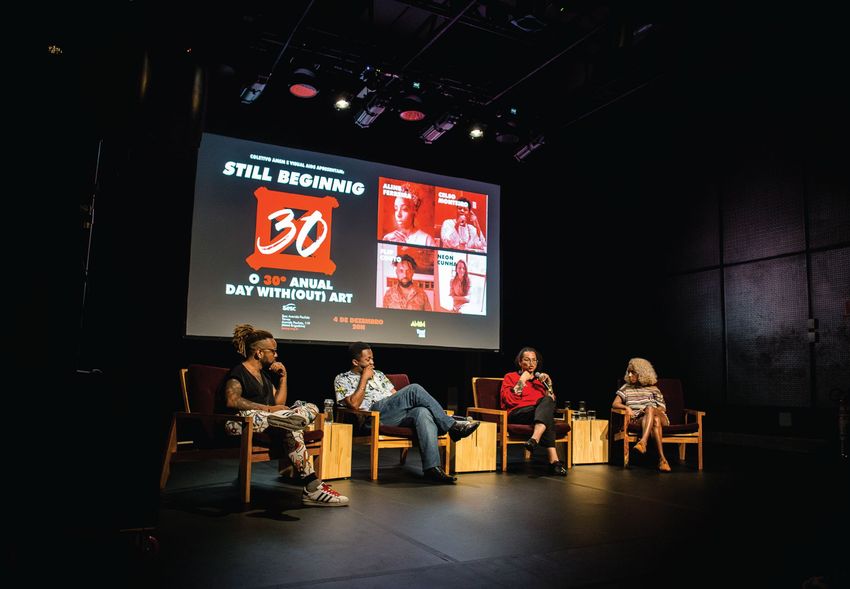
Video Program
Day With(out) Art 2020 considers the impact of               Jorge Bordello will address recent reforms to Mexico’s
HIV/AIDS beyond the United States, bringing together         health department that left hundreds without HIV
artists working across the world: Jorge Bordello             medication and cut funding for AIDS services,
(Mexico), Topher Campbell (U.K.), Gevi Dimitrakopoulou       prioritizing corporate concerns and economic policy
and Vasiliki Lazaridou (Greece), Lucía Egaña Rojas           over the needs of people living with HIV.
(Chile/Spain), Las Indetectables (Chile), Charan Singh
(India/U.K.), and George Stanley Nsamba (Uganda).            Topher Campbell will weave together a narrative of
                                                             intersecting anecdotes about Black people navigating
The program does not intend to give a comprehensive          sex and sexual health, using the ubiquitous swipe of
account of the global epidemic, but provides a platform      dating apps as a formal device to traverse the African
for a diversity of voices from beyond the United States,     diaspora in London.
offering insight into the divergent and overlapping
experiences of people living with HIV around the world
today. The seven commissioned videos cover a broad           Gevi Dimitrakopoulou and Vasiliki Lazaridou will
range of subjects, such as the erasure of women living       create a portrait of Zak Kostopoulos, a well known
with HIV in South America, the neocolonial public health     queer AIDS activist who was publically lynched to death
campaigns in India, and the realities of stigma and          in Athens in 2018. Zak's chosen family and community
disclosure for young people in Uganda.                       will highlight Zak's activist life and the response that his
                                                             murder has galvanized.

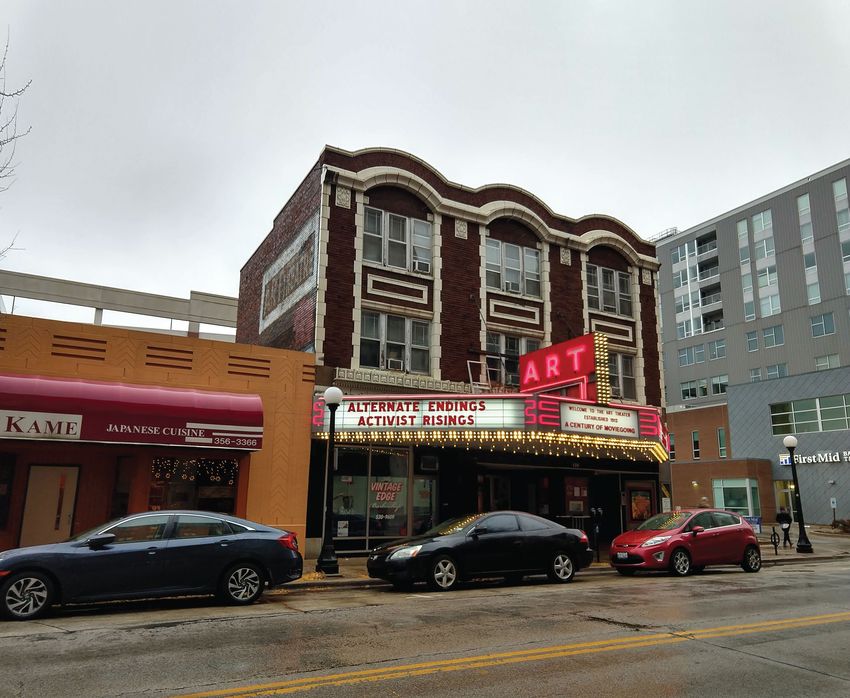
  A 2018 screening organized by the Krannert Art Museum in   Lucía Egaña Rojas will challenge gendered
  Champaign, Illinois
                                                             representations of HIV and AIDS, investigating what
                                                             Lina Meruane has called “female disappearance
                                                             syndrome”—the erasure of women living with HIV from
                                                             conversations about the epidemic.

                                                             Las Indetectables will produce a video based on the
                                                             poem “Me cuido” (I take care of myself/I’m careful) by
                                                             Noelia Shalá, which questions the relationship between
                                                             colonial paradigms of health, religious guilt, and the
                                                             stigmatization of people living with HIV in Chile.

                                                             Charan Singh will explore the colonial dynamics of HIV
                                                             services for subaltern “queer” people in India by
                                                             highlighting the disjuncture between imported Western
                                                             public health concepts like MSM (men who have sex
                                                             with men) and local indigenous identities such as kothi
                                                             (a community encompassing feminine men and trans
                                                             people).

                                                             George Stanley Nsamba will reflect on the experience
                                                             of producing a film about the lives of teens born with
                                                             HIV in Uganda and the pervasive stigma that
                                                             surrounded the project.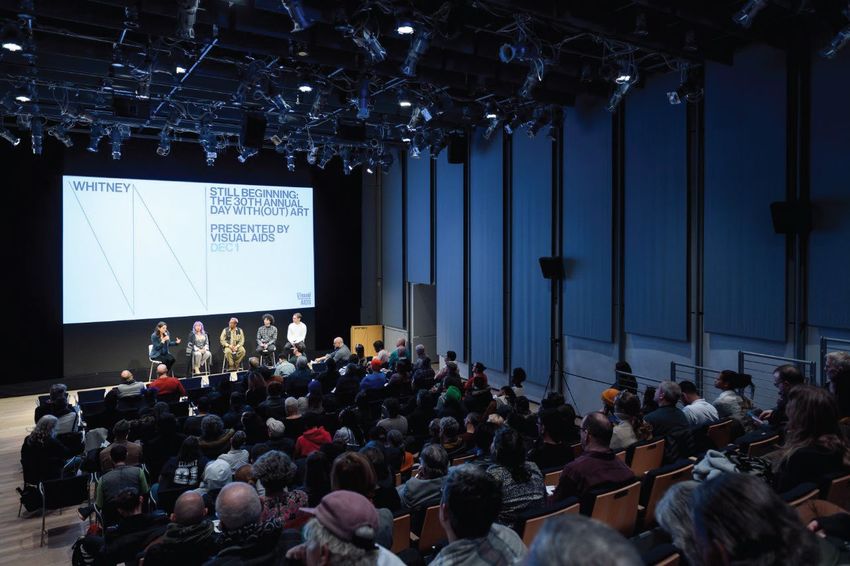
Making it happen
To participate, we ask that you:                               Visual AIDS will provide:
• Identify a date and location for a free screening            • A free, one-hour video program about the international
  event or looping presentation.                                 AIDS epidemic to be screened on/around Tuesday,
• Collaborate with local organizations to organize               December 1, 2020.
  additional programming like a panel discussion.              • English and Spanish captions for the videos.
• Publicize and promote your participation and share           • Publicity materials such as video stills, project logo, and
  your event information with Visual AIDS.                       event description.
• Help spread the word to friends and colleagues who           • A discussion guide for you to print and distribute at your
  could organize additional screenings.                          screening.

                                                                 A conversation organized by Coletivo Amem in São Paulo, Brazil

  A looping presentation at Rutgers University in New Jersey    There is no cost to participate!
                                                                Visual AIDS is proud to offer Day With(out) Art
                                                                programming free of charge so that these videos
                                                                can be seen as widely as possible. However, if your
                                                                institution has a programming budget or a standard
                                                                screening fee, we would greatly appreciate any
                                                                contribution or donation. We would be happy to
                                                                provide an invoice and/or tax deduction information
                                                                if needed.

                                                               https://visualaids.org/dwa2020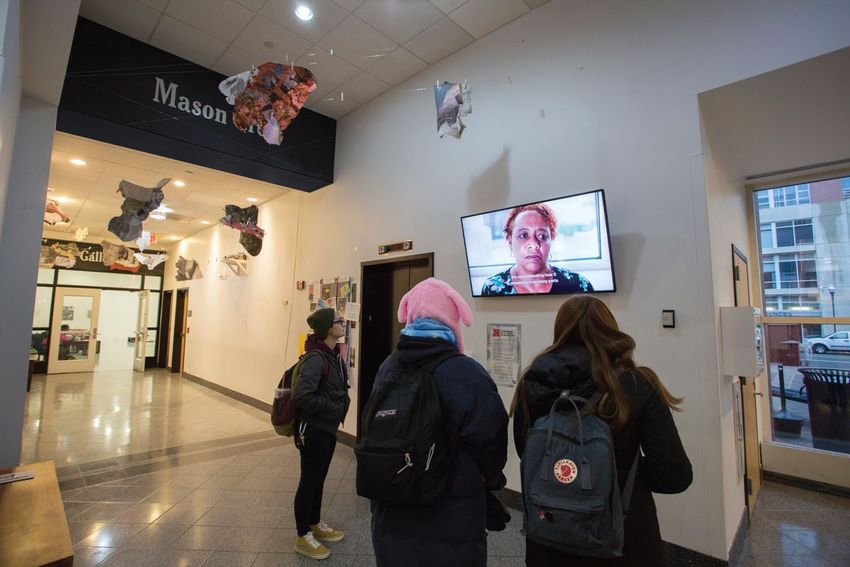
You can also read


