DEVELOPING A 4 GW POWER - CONFERENCE EDITION - The energy market in 2040 Smart Energy on Show Extreme weather events PPAs helping shape the future ...
←
→
Page content transcription
If your browser does not render page correctly, please read the page content below
CONFERENCE EDITION
VOLUME 39. ISSUE 153. AUTUMN 2019

                                                                    DEVELOPING A
                                    The energy market in 2040
                                    Smart Energy on Show             4 GW POWER
                                    Extreme weather events
                                    PPAs helping shape the future          PLANT
Contents
Smart Energy Council                                                                    Autumn 2019 Volume 39 Issue 153
Forewords by CEO and Oliver Yates               2
Smart Energy Show 2019                         16
Corporate Members                              56
Membership services                            57
Master Installers                              59
Positive Quality                               60

Market dynamics
News and views                                 4
Market rise and forecasts                      14
The year ahead in numbers                      20

Special features
Taking a stand for climate action              8

                                                                                   16
The energy market in 2040 by
 Marilyne Crestias                             18
The shape of PPAs                              22                                                                   Front cover: Renewables to the
Walcha: the rise of a 4 GW power plant         26                                                                   rescue, image Leanne Tattersall

                                                                                  18
To be or not: 100% renewables by 2030          34
The real cost of the proposed Adani coal mine 46
A conversation with Christine Milne            46

                                                                                                                    4 GW HERE
Around the industry
The Climate Council’s extreme weather
 report                                        30

                                                                                                                                      26
Burning issues                                 52
Local and global events                        58

Show partners sneak peek
Growatt                                        38

                                                                                                   50
AC Warehouse                                   40
Fronius                                        42

Innovation and inspiration
An eye on technical innovations
 by Geoff Bragg                                35

                                                                              36
Solar Sisters and friends
 by Andrea Gaffney                             36
Geodrones over the land                        50
Climate change in art                          54

                                                                                  SMART ENERGY                    Smart Energy was first published in 1980
                                                                                  EDITOR:                         as Solar Progress. The magazine aims to
                                                                                  Nicola Card                     provide readers with an in-depth review of
                                                                                  editor@smartenergy.org.au       technologies, policies and progress towards
   SMART ENERGY is published by                                                                                   a society which sources energy from the
                                                                                  nicola@smartenergy.org.au
   the SMART ENERGY COUNCIL                         SMART ENERGY COUNCIL                                          sun rather than fossil fuels.
   ABN 32 006 824 148 www.smartenergy.org.au        CEO John Grimes                                               Except where specifically stated, the
                                                    PO Box 231, Mawson ACT 2607   Contributors: Geoff Bragg,      opinions and material published in this
          @SmartEnergyCncl                          admin@smartenergy.org.au      Sue Clements, Marilyne          magazine are not necessarily those of the
                                                    Phone: 1300 768 204           Crestias, Andrea Gafffney,      Smart Energy Council. Although every
          @AustSmartNRG                                                           Simone Lutz, Christine Milne,   effort is made to check the authenticity
                                                    Smart Energy ISSN 2206-1673
                                                                                  Penny Parle                     and accuracy of articles, neither the
   Subscription & membership contact Luke Shavak, Membership Sales Manager                                        Smart Energy Council nor the editors are
   M: 0499 345 013 | luke@smartenergy.org.au                                                                      responsible for any inaccuracy.
   Smart Energy advertising enquiries contact Brett Thompson, Sales Manager       COVER DESIGN & IMAGE:           Smart Energy is published quarterly.
   M: 0402 181 250 | brett@smartenergy.org.au                                     Leanne Tattersall               www.smartenergy.org.au
Welcome

                                                                                     That means a massive response to deliver a fit for purpose transmission
                                                                                  and distribution network that can support cheap, clean renewable energy.
                                                                                     The current Liberal and National parties will simply not take the action
                                                                                  required.
                                                                                     Why? Because action to promote renewables necessarily means reducing
                                                                                  our dependence on coal.
                                                                                     In fact it will mean the orderly, staged exit of coal generation in Australia
                                                                                  and around the world.
                                                                                     Our sector is not against conservative politics.
                                                                                     Indeed a sector that drives innovation, increases competition, reduces
                                                                                  prices and employs tens of thousands of Australians should be a natural ally
                                                                                  of conservative politics.
                                                                                     The sector is driven by small business people, a naturally conservative
John Grimes, Chief Executive, Smart Energy Council                                constituency.
                                                                                     But the current iterations of the Liberal and National parties are unable
                                                                                  to shift.
WITH A FEDERAL ELECTION around the corner, I think it is time for some               I once thought a change in Prime Minister would result in changed policy.
plain speaking.                                                                   I then hoped opinion polls would cause the shift we need.
   As this summer showed so clearly, the world is facing a climate                   But it is going to take more than that. We need the post election Liberal
emergency, one we can no longer put out of mind until another day.                and National party rooms to be so empty, that those who remain have the
   The response will have to be multi-faceted. But a major front, indeed          space to make the shift essential to our future.
the major front, needs to be the rapid deployment of renewables.                     It is simply non-negotiable.

In my view …
FOR THE PAST SIX YEARS the erosion of climate                                                                climate science and a regulatory system that
action by the government has been nothing                                                                    shows a level of urgency. That is not going to be
more than spectacular. In future a book will                                                                 forthcoming under the current government.
be written about how badly the Liberal Party                                                                    In addition we are moving from just
damaged its brand, and a physiological analysis                                                              renewable power towards renewable chemicals.
undertaken of how the party was captured                                                                     This development is significant. We have the
or owned by thinking that to address climate                                                                 technology to replace the production of many
change made no economic or environmental                                                                     high carbon intensive chemicals with renewable
sense.                                                                                                       chemicals and thereby create significant extra
   Almost every year this government has been in                                                             demand for renewable energy and chemical
control our national emissions have risen. Why the                                                           production facilities that operate only when
government fails to ensure our national emissions                                                            power is in excess, providing unique balancing
are actually falling every year by 2-3 per cent                                                              assets to the energy system.
makes no sense.                                                                                                 Once hydrogen is produced with renewable
   The renewables industry has ploughed forward                                                              energy the door is open to ammonia and
in the face of it, but now stands on a knife-edge.       Oliver Yates is former chief executive              manufactured natural green gas. Renewable
Without any policy direction, ensuring renewables        of the CEFC and is now standing as an               power can now be transformed and shipped
replace our aging fleet of clunkers will require         independent candidate in the federal seat           across the world. All we need is a little vision and
guts. Guts in finance translates to higher returns       of Kooyong                                          a willing government.
and higher returns for the risk translates into                                                                 The release of the Intergovernmental Panel on
higher prices, all caused by policy failure.                                      Climate Change 1.5 report highlighted the serious climate situation we face
   Australia has a very impressive pipeline of mega projects that will            is now an emergency.
transform our power economy and due to their scale, and in some cases                That is why I am standing for election this year to replace a federal
location, produce power at super competitive pricing. To make these               environment minister that contributed to our climate emergency and has
projects a reality we need a carbon pathway that is consistent with the           left Australia in the energy transformation slow lane.

2 AUTUMN 2019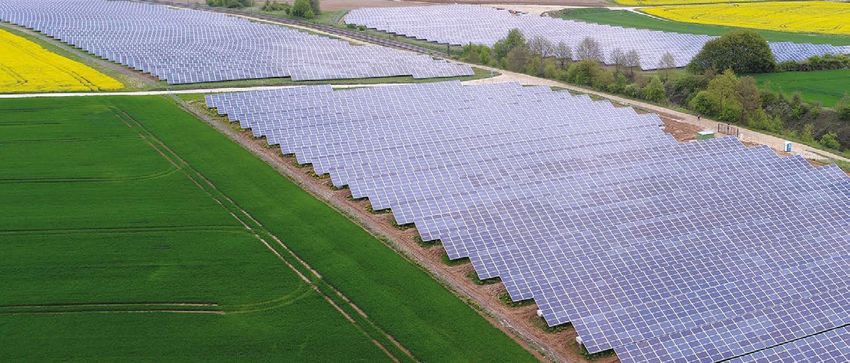
LOCAL and GLOBAL NEWS

 THE SUNSHINE ENERGY 1.5GW solar PV and 500MW energy                       GLOBAL PRIMARY ENERGY DEMAND will plateau after
 storage project in Kilroy, north of Brisbane, will become one of the      2035; electricity consumption will double until 2050, renewables are
 world’s largest solar farms and boost Queensland’s proportion of          projected to make up over 50 per cent of generation by 2035 and
 renewable energy by 15 per cent to 36 per cent. The $2bn project          carbon emissions are projected to decline due to decreasing coal
 will also abate ~2,100,000 tonnes of carbon emissions annually and        demand. However a 2-degree pathway remains “far away” McKinsey
 create >1,000 jobs, with up to 60 full-time jobs created for the life     concludes in its comprehensive report Global Energy Perspective.
 of its 25 to 30 year operation.
    Construction at the 2,055Ha site which will include ~5 million solar
 panels will start mid-2019 and be completed in two stages.

 BATTERY OF THE NATION ARENA and TasNetworks have
 assessed feasibility of a second interconnector across the Bass
 Strait, Project Marinus, that would form a key part of Australia’s
 future energy network. Under consideration is either a 600 MW
 or 1200 MW link, delivered in two stages as 600 MW cables, that
 would use a high voltage direct current cable enabling Tasmania’s
 vast pumped hydro resources to support the National Energy
 Market. Hydro Tasmania is accelerating work to identify a pumped
 hydro project that will be ready to go when a second Bass Strait
 interconnector comes online.

  NEW ANALYSIS SHOWS that
  solar PV is more popular in low and
  middle socio-economic postcodes and
  on less valuable homes. The report
  commissioned by Solar Citizens and
  assembled by Bruce Mountain also
  found that Australia is using less than
  a sixth of the total residential rooftop
  PV potential across the country, so
  there’s ample opportunity to expand
  distributed solar.

4 AUTUMN 2019

LOCAL and GLOBAL NEWS

 RENEWABLES DELIVERY MAN The illustrious Simon Corbell                            SENSIBLE, BIG
                                      recently wrapped up his role                ASPIRATIONS We
                                      as Victoria’s Renewable Energy              wonder how much
                                      Advocate in which he placed the             we will hear over the
                                      progressive state firmly on track           forthcoming months
                                      toward 25 per cent renewable                about the US Green New
                                      energy by 2020. Corbell summed              Deal Bill, the far-reaching
                                      his experience thus: “15,000 kms            blueprint to address the
                                      travelled, 25 regional centres visited,     climate crisis, and achieve
                                      reverse auction delivering jobs, supply     net-zero greenhouse
                                      chains and community benefit.”              gas emissions in the US
    With a resume like none other – as an ACT minister he steered the             while creating jobs and
 territory to 100 per cent renewables – the man who is a Patron of the            securing clean air and
 Smart Energy Council now heads up the 4000 MW Walcha Energy                      water.
 project. (See page 26.)                                                              Just the ticket: the
    Simon Corbell told Smart Energy that the Professor Blaker’s paper             US is responsible for a
 suggesting Australia will reach 100 per cent renewables by 2032 was              disproportionate one
 an important contribution that demonstrates the enormous technical               fifth of global greenhouse gas emissions yet has a high technological
 capacity of renewable energy development, with storage, to drive down            capacity and ideally would take a leading role in decarbonising
 the carbon intensity of the Australian economy. “It has also sparked             electricity, transportation, and industry while restoring ecosystems,
 a timely discussion about how we must overcome the barriers to                   upgrading buildings and electricity grids.
 this potential posed by transmission constraints and a range of other
                                                                                     Keep pushing.
 regulatory and policy barriers,” he said.

                          BIOENERGY AUSTRALIA has appointed
                          Dr John Hewson as a Director to drive
                          government support for Australia’s future
                          bioeconomy. Bioenergy’s State of the Nation
                          report outlines that Australia is mostly
                          ignoring an energy investment opportunity
                          of as much as $5 billion in urban, agricultural
                                                                                Smart Energy
                          and forest waste that would stimulate regional
                                                                                is printed by
                          economies, improve fuel security and reduce
                                                                                Printgraphics
                          emissions. Dr Hewson is widely respected on
                                                                                whose green
                          both sides of the political spectrum and he is a      credentials
                          Patron of the Smart Energy Council.                   include:

   SMART THINKING The Smart Energy Council hosted a Smart                       climate action polices will deliver jobs, investment and business
   Energy Manufacturing and Resources Roundtable with shadow                    opportunities across regional Australia, with opportunities for
   Climate Change and Energy Minister Mark Butler. During the in-depth          manufacturing of smart energy products and development of a smart
   discussion the gathering agreed that strong renewable energy and             energy value chain. What’s not to like?

6 AUTUMN 2019
SMART ENERGY MAGAZINE ADVERTISER’S SUPPLEMENTARY MATERIAL

A new wave of pool heating…
The shift in pool heating throughout Australia is happening fast with the        output relays have allowed complete control over how and when
rise of high efficiency pool heat pumps. The struggle for roof space is          customers use their heating. Integrated solutions have been the key to
seeing Australians opting for larger PV installations to offset the running      Madimack’s success.
power requirements of electric driven units and moving away from
installing traditional rooftop solar, electric element or carbon producing gas   What are the benefits of heat pumps
pool heating.                                                                    Pool heat pumps are becoming a lucrative option due to the consistent
                                                                                 temperatures achieved throughout the year even when the sun doesn’t
A heat pump is classed as a source of renewable energy as it utilises the        shine. With the ability to extract the heat energy from the air down to
sun powered ambient air temperature. Using a small compressor pump,              sub-zero temperatures they allow pools to be heated year-round in all
heat pumps transform this energy into a higher temperature which is then         conditions. With the added benefit of not needing a costly gas lines
transferred to the pool water. Heat pump technology has been around              and freeing up valuable roof space for electric production return on
for decades, but with the increase in efficiency, usability and ease of          investments can be very appealing.
installation it is now fast gaining traction in the residential market. Many
public baths and commercial pools are already seeing huge savings and            How much energy does a heat pump need?
carbon reductions by transferring to heat pump technology. With Australia        A heat pump requires only electricity, therefore has the potential to be
having the highest rate of pools per capita in the world there is certainly no   completely powered by on-site production. With a high coefficient of
short supply of demand for sustainable pool heating solutions.                   performance only a fraction of the output is required to power the heater.
                                                                                 Compared to electric element heaters, heat pumps are up to 10 x more
Leading the Change                                                               efficient and operating costs are halved compared to gas systems, even
Australian owned heat pump experts, Madimack, are leading this change            without any other source of on-site electric production.
with their range of full inverter heat pumps which are fully certified by TüV
Rheinland. They boast an impressive average coefficient of performance
rating of up to 10 by taking advantage of the summer heat and humidity.                     Running costs c/KWh
The inverter technology allows the heat pump to regulate the output
from 100% down to 20% ensuring water temperature is maintained
consistently and energy is reduced by up to a further 23% than standard
on/off units.

Madimack’s philosophy of “Energy Solutions Towards Zero” has
catapulted them to the forefront of the solar and renewable market.
They assist contractors and distributors by offering expert advice
on sizing, performance, installations and integrations. Some of the
integrations with BMS, smart homes, dry switches and solar inverter
                                                                                        MadiMack Pool        Natural Gas             LPG                   Electric
                                                                                         Heat Pump             Boiler                Boiler                Element

     From the CEO
     CEO Alex Welsh notes with the success and collaborations made with solar providers and energy experts in 2018 we are now looking to
     expand our network of installers, retailers and distributors of high efficiency pool heaters throughout all states. Our team of engineers and
     technicians work alongside renewable energy installers to integrate a seamless solution for their customer’s pool heating with a combination
     of PV production technology and heat pump technology. With access to our easy to use calculators, technical graphs, drawings and easy to
     follow installation instructions, installation is a breeze. Our technical and transparent expertise and training allows easy calculations of system
     size requirements, pool heat up times, energy use and potential savings give the perfect customer experience. The relationship with our pre-
     ferred partners is a critical piece to the industry shift.

     Inquiries are welcome through our National Partnerships Manager Westley Collins Westley@Madimack.com.au or call 1300 899 737

                                                                                                        `     Up to 25 years warranty

                                                                                                        `     TüV Rheinland Tested

        Heat Pump Pool Heaters
        elite series | summer eco series | commercial series
                                                                                                        `     Highest efficiencies

                                                                                                        `     WiFi as Standard

                                                                                                        `     Patented quietest unit

                                                                                                        `     Full inverter technology

              SPONSORED CONTENT - Opinions expressed on this page are not necessarily those of the Smart Energy Council
The hottest years on       AS SMART ENERGY was going to print the nation           Despite the apparent robust nature of the
record with storms,        was gearing up for a federal election dubbed “the       package, the general consensus was negative.
                           climate election”. The outcome is indeed pivotal        Professor Will Steffan voiced the views of many
extreme flooding in
                           to the future of Australia’s emission controls and      saying it was a case of “pouring more money after
some regions versus
                           action on global warming.                               bad” into the ERF.
widespread drought in
                              Scrambling to present some sort of climate policy,       “Emissions have been rising not declining under
others, an apocalypse      the Coalition packaged up a Climate Solutions Fund      the six years of the ERF … it is not working,” the
on a dying river with      – essentially a rebadged Direct Action plan – that      Climate Councillor said.
millions of fish deaths.   involves $56 million to hasten Tasmania’s ‘Battery of       “The policy lacks action on fossil fuels which are
But who really cares?      the Nation’ pumped hydro scheme with links to the       far more important in tackling emissions. We are
                           mainland, and topping up the existing Emissions         not on track to meet the Paris targets, this policy
What’s the game plan
                           Reduction Fund (ERF) with $200 million per year         does not do that.
to prevent further
                           over ten years.                                             “Ultimately the Federal Government is doubling
destruction? Are we           The plan also includes a $2 billion injection into   down on a bad policy. For any climate policy to be
smart enough to            Snowy Hydro 2.0, energy efficiency measures for         credible, it must drive down fossil fuel emissions
turn the tide?             business and households, and a somewhat sketchy         rapidly and deeply.”
                           electric vehicle strategy.                                  Independent candidate for Kooyong Oliver Yates
                                                                                   took to the airwaves to explain why the $2 billion
                                                                                   injection into the ERF is completely inadequate and
                                                                                   that at $200 million a year it represents around the
                                                                                   same as what the government is using to market
                                                                                   its “wonderful” performance through advertising.
                                                                                   “Without a real climate policy we are drifting.
                                                                                   Looking like we are doing something but actually
                                                                                   doing nothing,” he said.
                                                                                       Smart Energy Council chief executive John Grimes
                                                                                   sums the Climate Solutions fund “a continuation
                                                                                   of Tony Abbott’s contempt for action on climate
                                                                                   change”.
                                                                                       “We are facing a climate change emergency and
                                                                                   we need to do whatever we can to increase our
                                                                                   solar and renewable energy generation,” he said.
                                                                                       “Instead of fast tracking the connection of
                                                                                   renewables, Scott Morrison’s answer is to lock in
                                                                                   failed policy.”
                                                                                       Importantly the proposed Tasmania connector
                                                                                   would only come into its own once all Victorian
                                                                                   coal plants are closed.
                                                                                       So there you have it, and these are just a few of
                                                                                   the reactions, but representative of the consensus
                                                                                   that the Coalition’s continued treatment of
                                                                                   emissions and climate control is no more than
                                                                                   superficial. Yet more marketing spin.
                                                                                       The measures are interpreted as doing little
                                                                                   to protect Australians from worsening extreme
                                                                                   weather and climate events.

                                                                                   Imperatives
                                                                                   “Right now there has never been a greater
                                                                                   acceptance and understanding of the science
                                                                                   of climate change right across Australia,” John
                                                                                   Grimes says.
The perils wrought                                                                    “All of the abnormal climate conditions are
by climate change                                                                  speeding up and intensifying and nobody doubts
POLITICAL LANDSCAPE
that. The prospect for runaway global climate change increases. This is cent by 2030. The party is right to do so. Private polling conducted for
sending an alarm siren – not a warning bell. It requires a war-like response environmentalists and the major parties suggests community concern
to a climate emergency. about climate change (and government inaction) is currently sitting at
“We need leaders to drive the transition to clean energy that will protect levels not seen since the federal election cycle in 2007.
our economy and the very climate systems on which we depend for life. That’s why Oliver Yates can no longer sit back and listen. The former
“Nothing can be more important,” John Grimes warns. Liberal stalwart and past chief executive of the Clean Energy Finance
Corporation has mounted a strong campaign as an independent candidate
Life under Labor in the Liberal ‘safe’ seat of Kooyong, the seat of the current Treasurer.
Should Labor gain power at the May federal election, the party would “Climate change is a core issue. I consider the stance the LNP is taking is
pick up where the National Energy Guarantee left off, but lift the dangerous for citizens and I think a government’s core responsibility is to
emissions reduction target from 26 per cent to a more realistic 45 per keep its citizens safe,” Oliver Yates said.
Chief Scientist Alan Finkel, AEMO chief
executive Audrey Zibelman (left), with
Professor Martin Green (right)
Make it. Store it. Manage it.
You’ve got the power.
The Enphase Home Energy Solution lets you generate, store, and manage
your home’s energy so that you can save money, become more energy
independent, and help better the planet.
Enphase. The leader in solar innovation.
Find an Enphase installer enphase.com/au/installers“
We need leaders to drive the
transition to clean energy that
will protect our economy and the
very climate systems on which we
depend for life.
John Grimes
“It is simply impossible for many Liberal voters to vote for a party that technologies. Glencore will instead focus on metals such as cobalt, nickel,
works to prevent any action on climate change, one with the potential vanadium and zinc, which are all key components of batteries as it targets
to be controlled by the mining industry, rejects the establishment of an lower carbon industries as its customers.
integrity commission, backs the Adani coalmine, and is inconsistent with
our need to tackle climate change.” Legal landmark
Independent candidate Zali Steggall who is taking on Tony Abbott in Another recent yet far-reaching development is the landmark ruling
the seat of Warringah has called on Labor to commit to scrapping the against development of new coal plant Rocky Hill on social and climate
Adani mine and says Australian taxpayers shouldn’t be investing in coal change grounds by the NSW Land and Environment Court case, a case
projects. that sets a precedent in climate litigation.
“Our financial institutions aren’t prepared to lend or invest in coal The judgment that a new coal mine would increase greenhouse gas
projects, why should Australian people’s money be invested … We need pollution when what is needed to meet the Paris Climate Agreement
an orderly retirement of coal, I don’t think we should be entering new commitments is a rapid and deep decrease in greenhouse gas emissions
projects,” Steggall said. came as a relief – and breath of fresh air – for local community opponents
“The attention should be with renewables, technology, clean transport, as well as the renewables industry sector across Australia.
clean energy.” Simon Corbell who was instrumental in ACT’s transition to 100 per cent
renewable energy told Smart Energy “The decision highlights how the
Shifting sands law, civil society and corporate sectors are increasingly recognising that
The nation’s largest coal miner Glencore has pledged to cap its the impacts of carbon intensive proposals must be factored into long term
global coal output at current levels following pressure from activist decision making and regulatory processes.
shareholders as part of a pivot towards minerals used in renewable “Pollution caused by greenhouse gas emissions is simply another
Don’t be afraid
of the shade
Our new half-cell modules with unique interconnect
design reduces energy loss from shading or soiling.
The new SPLITMAX half-cell modules will transform the way you think about solar panels.
Designed for higher yields in industrial, commercial and large scale applications SPLITMAX
is 1500V IEC certified which helps reduce BOS cost by connecting more modules in a string.
Each module features a split JBOX resulting in lower junction temperatures, further reducing
failure rates. To find out more about SPLITMAX, contact the team Trina Solar Australia today.
trinasolar.com Email: australia.sales@trinasolar.com Phone: +61 1300 874 627“
POLITICAL LANDSCAPE
If we really want the market to take
off we need to be thinking about the
form of environmental impact we can expect regulators and courts to policies that allow for quick entry.
increasingly seek to avoid or mitigate in their decision making.”
John Grimes questions why anyone would even consider building
Audrey Zibelman
polluting coal plants to produce electricity when there are cheaper,
Chief Scientist Alan Finkel led the panel discussion that addressed
more cost effective methods involving renewable energy, saying “This
pressing challenges related to energy including the future of coal-
momentous court decision sets a precedent in the legal community and
generated energy, the renewable energy revolution and how policy and
demonstrates that while some politicians remain out of step, the courts are
government play a role in shaping the energy sector.
likely to uphold common sense and climate action.”
Addressing this very issue, Professor Martin Green, Director Australian
Leading voices Centre for Advanced Photovoltaics, UNSW said “At first sight it sounds
like renewables is not great for Australia in terms of the resource industry
At the UNSW Times Higher Education summit Energy: renewables
because of the impact it will make on thermal coal export”.
changing the composition of energy and the mining industry, energy
sector leaders agreed on the need to build an energy system that is “In reality it’s going to create far more opportunity for our traditional
scalable, sustainable and supported by both government, industry and resource exports as well as requiring all this supporting technology such as
the general public. batteries,” the ever-tactful scientist said.
Perhaps it’s timely at this point to relay
some compelling data assembled by
Green Energy Markets which reveals the
story so far…
The rise of renewable energy
1987-2017: 12 GW
2018-2020:~12 GW
2 million solar rooftops, with
29.8Mt CO2 abatement (year to October
2018)
Coal
13 closures
0 built in a decade
0 planned
Jobs
Renewables: 24,000
Coal: 35,000
FLEXIBLE DESIGN (2.4 - 60 KWH!) Speaking at the Energy summit
PERFECT FOR HOMES OR BUSINESSES. Audrey Zibelman declared “Our role as
researchers and scientists is to keep our
view on the prize, where we want to
MyReserve end up, but be very clear on the short
The world‘s first truly flexible and modular solar battery. term actions we need to make today so
that we can continue to address these
• Easy installation by one person concerns.
• Maintenance free design “Part of the problem we have is the
• Perfect for new or existing PV installations ability to get entry into the market for
• Compatible with single and three phase inverters new resources is very complicated,” the
• Quality German design and manufacture chief executive of the Australian Energy
Market Operator said. “We are at a stage
Safety Class leading 10 year battery DC coupled where if we really want the market to
focussed battery efficiency performance solution take off we need to be thinking about
design of 99.2 % warranty
the policies that allow for quick entry
and avoid the ‘valley of death’ so much
Any questions? innovation runs into.
“Thinking in terms of, how do we
www.solarwatt.com.au
make it easier as opposed to harder is
very important.”
Agreed. Easier and clearer and more
genuine with effective outcomes.HUAWEI
No.1 Inverter Manufacturer
by Global Shipments
SUN 2000L SUN 2000
5KTL HYBRID 29.9KTL
Max Efficiency 98.6% Max Efficiency 98.6%
Maximum Apparent Power Maximum Apparent Power
2200 - 5500 VA 29,900 VA
Protection Degree of IP65 Protection Degree of IP65
Natural Cooling Natural Cooling
Technology Technology
prosunsolar.com.au
AUTHORIZED DISTRIBUTOR FOR HUAWEI
Melbourne Sydney Brisbane Adelaide Tel: 1300 856 861
33 National Drive, Halam, Unit-3, 1-7 Smeaton Grange, 264 Wolston Rd Wacol 17 Ceafield Road Para Email: sales@prosunsolar.com.au
VIC 3803 Road Smeaton Grange QLD 4076 Hills West SA 5096
NSW 2567MARKET RISE
The rise of renewable energy
Last year saw a record THE MARKET IS DESCRIBED as unstoppable, but respectively, followed by hydro generation which
number of solar PV what will it take for the momentum to continue? was up by 29 per cent.
installations across Last year was one stellar year for the renewable Data shows that overall renewable energy has
Australia which now energy industry with the tally of residential and risen to a market share level exceeding 20 per cent
commercial, small and large-scale solar plants (to 21.3 per cent per cent) for the first time since
boasts more than
reaching a record 3,775 MW. the 1970s and a rise greater than three per cent on
two million rooftop
As the charts on the opposite page show, that’s the 2017 figure of 17 per cent share of renewable
PV systems, a strong
almost treble the 1270 MW of PV installations energy.
commercial market
recorded in 2017, which in itself was a record.
and record number of LARGE SCALE SOLAR FARMS: During 2018 more
large-scale solar plants RESIDENTIAL: To date two million solar PV systems
than 2,080 MW of utility-scale solar power stations
have been installed on homes which means more
commissioned and were installed and commissioned, representing
than 20 per cent of homes now have solar PV –
under construction. 55 per cent of total installations with generation
that’s one in five households, and the average
leaping almost 300 per cent on 2017.
system size in 2018 reached 6.9 kW.
Strap yourselves in – more than 3,000 MW
Queensland takes the lead in small scale PV as
(DC) of utility-scale projects will be commissioned
seen in the data below (with figures rounded up):
in 2019 on the back of significant reductions in
Queensland 592,220
installed system costs, higher wholesale prices and
New South Wales 449,580
support under the mandated Renewable Energy
Victoria 371,970
Western Australia 280,370 Target. (See the telling chart on page 20.)
South Australia 240,050 That will represent significant carbon abatement
Tasmania 33,300 at a time that emissions are rising in other sectors of
Australian Capital Territory 22,140 the economy.
Northern Territory 10,860
The dark matter
COMMERCIAL: A fast growing segment of the
The growth of renewable energy during 2018
industry installing rooftop solar is small businesses
occurred mostly along the east coast in states
that installed more than 16,596 systems in 2018
that still rely primarily on coal. Despite the closure
compared to the 9,663 during 2017.
of several coal-fired power stations during the
Green Energy Markets, which extrapolated data
from the Clean Energy Regulator’s REC-Registry, past decade, coal still accounts for more than
noted a full year’s output from systems installed in 71 per cent of Australia’s power generation,
2018 amounts to more than 6 million megawatt and generation of black coal has increased since
hours. That’s equivalent to 3.2 per cent of electricity the axing of the carbon price by the LNP in July
consumed in the National Electricity Market, which 2014. The light on the horizon is the more than
in 2018 saw a fall in coal and gas generation. 10,000 MW of renewables capacity being added
Gas dropped a significant 26 per cent relative this year which will send black coal generation
to 2017, while both solar and wind generation into decline and help plug emissions in the energy
rose substantially by 35 per cent and 26 per cent sector.
Keen to hear more market insights?
Tune in to these and other guest speakers at Smart Energy 2019 being held at Sydney’s ICC
on April 2 and 3.
• State of the Australian Market John Grimes, • Australia’s smart energy future Simon Holmes
Smart Energy Council à Court, Melbourne University
• Industry Update Ric Brazzale, Green Energy • Energy Transition Outlook Graham Slack,
Trading DNV-GL
Strap yourselves in – • Rooftop solar trends in the Renewable Energy • How solar will turn day into night for the
more than 3,000 MW (DC) Target Mark Williamson, CER electricity market & why you should be worried
• Outlook for the Australian market Leonard Tristan Edis, Green Energy Trading, and
of utility-scale projects
Quong, Bloomberg NEF • One million Australian batteries by 2025 -
will be commissioned • 100% renewables Prof Andrew Blakers, fantasy or inevitable? Warwick Johnston,
in 2019 ... ANU SunWiz.
14 AUTUMN 2019Solar PV capacity installed (MW DC)
Residential: Commercial: Small power Utility-scale:
up to and between stations: systems
including 15 kW and systems >5 MW
15 kW 100 kW >100 kW (AC) Total
2017
QLD 249.4 56.5 19.5 119.0 444.4
NSW 202.2 57.2 13.6 273.0
VIC 140.5 56.5 5.6 202.5
WA 157.6 30.2 4.7 192.5
SA 79.6 31.0 5.1 115.7
TAS 11.2 3.2 0.3 14.7
NT 10.1 5.7 15.8
ACT 9.0 2.1 11.1
TOTAL 859.7 242.3 48.8 119.0 1,269.8
2018
Driving forces QLD 320.9 78.3 19.4 1076.8 1,495.4
NSW 326.1 87.3 26.0 399.2 838.6
Strong market demand and off-the-chart
development in large-scale solar PV are VIC 237.2 82.3 29.5 419.2 768.2
good news all round as well as economically SA 122.0 53.9 23.2 149.4 348.5
sustainable in the long term, but whether WA 175.4 34.3 5.3 38.0 253.0
political forces drive the transition at the NT 14.5 5.6 7.8 27.9
current speed is an open question, says ACT 18.4 4.4 0.8 23.6
John Grimes of the Smart Energy Council. TAS 12.7 5.7 1.7 20.1
“Home and business owners are showing TOTAL 1,227.2 351.8 113.7 2,082.6 3,775.3
strong support for renewables, we also need 2018 Increase 42.8% 45.2% 132.8% 197.3%
leaders to drive the transition to clean energy
Source: Green Energy Markets using certificate creation data from the CER’s REC-Registry
that will protect our economy as well as the
very climate systems on which we depend YTD (Dec 2018) and monthly Solar Water Heater systems creating certificates
for life. Systems YTD Systems monthly
“There is no reason why we could not State Total Market Share Total Market Share Change
continue or even accelerate the current rate VIC 30,892 46.9% 2,467 50.1% (324)
of solar PV take up. It all remains a question
QLD 12,040 18.3% 854 17.3% (299)
of policy and policy intent,” he said referring
NSW 8,881 13.5% 548 11.1% (379)
to the end of the Renewable Energy Target
WA 8,436 12.8% 528 10.7% (219)
next year.
SA 2,824 4.3% 297 6.0% 74
“We are seeing alarming rises in
temperature, more widespread and longer TAS 1,141 1.7% 95 1.9% (26)
droughts and torrential rainfall with NT 958 1.5% 101 2.0% 38
flooding. Every day you see and hear more ACT 645 1.0% 39 0.8% (63)
news about the real impact.” TOTAL 65,817 100.0% 4,929 100.0% (1,198)
John Grimes said the bush fires in
Tasmania and in Queensland rainforests 8,000
“send an alarm siren – not a warning bell.
6,000
“All of the abnormal climate conditions
are speeding up and intensifying and nobody 4,000
Gigawatt hours
doubts what’s happening. People from all 2,000
walks of life are making the connection
0
between extreme weather events induced by
greenhouse gases from the burning of coal. -2,000
“They see it first hand and they get it. -4,000
Right now there has never been a greater
-6,000
acceptance and understanding of the science
of climate change right across Australia. -8,000
“If politicians don’t see that and take
Coal Gas & Oil Hydro Wind, Solar
& Bioenergy
action what will? Nothing can be more
important. This requires a war-like response Change in electricity generation levels by fuel in 2018 compared to
to a climate emergency.” 2017 levels in the National Electricity Market
15#smartenergy19
#smartenergy19
FREE ENTRY
FREE ENTRY
22- -323APRIL
-APRIL
3 APRIL 2019
2019
2019
INTERNATIONAL CONVENTION CENTRE SYDNEY smartenergyexpo.org.au
INTERNATIONAL
INTERNATIONAL CONVENTION
CONVENTION CENTRE
CENTRE SYDNEY
SYDNEY
INTERNATIONAL CONVENTION CENTRE SYDNEY smartenergyexpo.org.au
5,000+ DELEGATES 120+ SPEAKERS 100+ EXHIBITORS
5,000+ DELEGATES
DELEGATES
120+ SPEAKERS
SPEAKERS
100+ EXHIBITORS
EXHIBITORS
Register Today! www.smartenergyexpo.org.au
Register Today! www.smartenergyexpo.org.au
SMARTSMART
SMART ENERGY
ENERGY
ENERGY 20192019
2019 PARTNERS
PARTNERS
MAJOR PARTNERS
SMART ENERGY 2019 PARTNERS#SmartEnergy19
FREE ENTRY
smartenergyexpo.org.au
AMAZING LINE UP OF SPEAKERS
Lily D’Ambrosio Alan Kohler John Dee Rosemary Sinclair
Victorian Energy Minister Financial analyst RE100; Arup Energy Consumers Australia
Oliver Yates Bianca Sylvester Christine Milne Claire Johnson
UPC renewables CEFC Australian Greens Hydrogen Mobility Australia
DON’T MISS OUT
Simon Corbell Simon Holmes à Court Geoff Bragg Ric Brazzale
Energy Estate Melbourne University New England Solar Power Green Energy Trading
Professor Martin Green Nicola Morris John Hewson Grant Behrendorff
UNSW ARENA Australian National University AC Solar Warehouse
REGISTER TODAY
www.smartenergyexpo.org.auTHE FUTURE ENERGY MARKET
A brighter look at the energy sector of 2040
Marilyne Crestias RIGHT NOW, our heads are spinning. We receive • Battery of the Nation pumped hydro and new
explains why regular warnings about the dire environmental wind projects (Tasmania)
the fundamental health of our planet. Fires and floods rage across • Potential pumped hydro projects on the
transformation of the the world. Energy policy and federal politics are mainland
in a constant state of flux and uncertainty. Global • Walcha wind, solar and pumped hydro (NSW,
energy sector over
warming of +1°C is locked in and we’re likely to up to 4GW)
the next two decades
reach +1.5°C between 2030 and 2052. • Utility-scale battery storage across all States.
will be accompanied
In this article, I want to step away from this Other technological developments could mean
by profound changes daily head-spinning news. Instead, I want to focus Australia starts converting some of its surplus
to the Australian on Australia’s bright energy future – what the clean energy into hydrogen to be sent into the
economy and society. energy sector will look like in 2040 and what we existing gas network.
need to do as a society to enable that future. The electricity ‘poles and wires’ network is
also in for a big shake-up. AEMO tells us that
The energy sector in 2040 these new clean energy projects will be clustered
The market operator AEMO forecasts that around Renewable Energy Zones, many of them
around 70 TWh of coal generation will have in regional Australia. The transmission network
retired by 2040 – the equivalent of around will be augmented to ensure that this energy
one-third of total consumption in the National can be efficiently sent out to consumers. The
Electricity Market. It will be replaced by a clean opportunities to trade energy across State borders
energy portfolio of utility-scale and distributed will be strengthened with more inter-connectors.
renewables, storage and gas. (See Figure 1)
On the Australian East coast, this portfolio is Consumer demand
likely to include a number of major renewable On the demand side, it is fair to say that energy
energy projects already in the pipeline: consumers will have opportunities to be much
• Star of the South offshore wind farm (Victoria, more engaged in the market. They will become
up to 2GW) key local energy producers – through distributed
• Snowy 2.0 pumped hydro (NSW, 2GW) rooftop solar and batteries – but will also be
“
rewarded when they change their behaviour and
reduce demand.
We should call for our
Two more factors will drastically impact the
governments to advocate
demand of energy:
for the energy transition – • the inevitable uptake of electric vehicles
because it is necessary for our (EVs), a large part of which is likely to be
long term benefit and for the autonomous and part of a transport fleet
health of our planet – and keep rather than owned by individuals; and
• some level of industry electrification using
them accountable.
zero-emissions energy. (See Figure 2)
2020 2040
Renewable energy Coal Gas
Figure 1. Transformation of electricity generationDevelopments in artificial intelligence and
machine learning are likely to impact not only
the supply and demand of energy but also how
energy participants interact in the market.
These enormous changes in the supply
and demand of energy will test how nimble
policymakers can be to rework the rules so that
“ Investment in
clean energy will
generate many
economic and social
opportunities for
Australia through
the market functions efficiently, effectively and the development of
”
for the benefit of all consumers. First up will be new industries and
the introduction of the ‘5 minute rule’ in July supply chains.
2021 to shorten the settlement period on the
electricity market.
Reinvention of the energy sector over the next
20 years has the power to profoundly change
the fabric of the Australian economy and of our
society.
surrounds us, how we use it and how we tax accountable. We also need to ensure that
Investment in clean energy will generate
it. For example, the uptake of electric and local communities remain engaged, energy is
many economic and social opportunities for
autonomous vehicles will require the installation affordable and opportunities to re-skill affected
Australia through the development of new
of a new charging network; it will change how workers are available.
industries and supply chains (in high value-add
much space we need to allocate to roads and We should think about the profound changes
components, services and maintenance, and the
car parks (probably less than nowadays?), and coming our way in how we produce and
recycling of materials by way of examples).
how we tax that infrastructure and its uses consume energy and how we interact with
As Professor Ross Garnaut notes, Australia
(petrol taxes replaced by road and congestion the energy market. Let’s take a step back from
has the potential to not only become an energy
levies?). the madness of the daily news cycle and start
superpower but also export abundant energy in
debating as a society how we want our energy
the form of hydrogen or via transmission links
to Asia.
How we can enable our system to work by 2040. The consequences for
bright energy future not getting this right are too dire to write about.
Opportunities: the ripple Such large economic transformations never
effect happen easily and these major shifts in the Marilyne Crestias has a wealth of experience in
economic fabric of the country will inevitably the economics of energy markets, renewable
The types of jobs available in the energy
tend to create winners and losers. There will energy auction design, climate change and
industry will change. Although renewables
be push back as affected industry players try to environmental policy advice. She helped deliver
tend to have a lower ‘job intensity’ once the
protect their private benefits and advantages. legislation to support the Victorian Renewable
projects are up and running, the clean energy
We should call for our governments to Energy Target, and designed the largest
supply chains will create opportunities for new
advocate for the energy transition – because renewable energy auction in Australia. Marilyne
jobs, including highly skilled work.
it is necessary for our long term benefit and is a Director of Renewable Energy Insights.
The electrification of most manufacturing
for the health of our planet – and keep them www.renewableenergyinsights.com.au
processes with clean energy will be necessary
to improve the competitiveness of industry
over time and could give Australia – with its
abundant clean energy resources – an edge
on other global powers. This reshaping of
the energy system and of a large part of the
productive capacity of the country is set to
redistribute economic power across different
regional centres.
This transformation of the energy sector
will also change what physical infrastructure
”
Let’s take a step back
from the madness of the
daily news cycle and start
debating as a society how we
want our energy system to work
by 2040. The consequences for ‘Behind the meter’ generation Sales of electric vehicles
not getting this right are too 2020 2040
dire to write about.
Figure 2. Penetration of distributed generation and EVs
19THE YEAR AHEAD
FOR RENEWABLES
Solar PV Capacity installed in Australia (MW DC)
2019 4695 MW (est)
2018 3775 MW
2017 1270 MW Residential Commercial Small power stations Utility scale solar
2016 851 MW
2015 926 MW
PV systems market segments size of the installation as follows:
2014 848 MW - Residential = up to 15 kW
2013 792 MW - Commercial = 15 kW to 100 kW
- Small power stations >100kW
2012 1047 MW - Utility-scale >5 MW (AC)
2011 866 MW • >3,000 MW (DC) of utility-scale projects will be commissioned in 2019
• Generation from the anticipated solar installations 2019 & 2020 will deliver 19 million MWh
2010 389 MW (10% of NEM consumption)
2009 • Solar PV set a record 3,775 MW installations during 2018, treble that of 2017
85 MW
0 500 1000 1500 2000 2500 3000 3500 4000 4500 5000
Capacity installed MW (DC) Source: Green Energy Markets / Clean Energy Regulator
Solar market
Global solar market 2019 >103 GW
More sub-$30/MWh bids spurred by record low technology costs
Ultra-low PV costs could fall to $14/MWh under optimised assumptions
4
1% of global module manufacturing capacity will be dedicated to mono
PERC production (up from 36% in 2018)
Source: Wood Mackenzie
PREDICTIONS FOR 2019
Wind EVs
lobal sales to rise 40% (2018 growth=70%)
G
L
eap in new global capacity added
>70 GW in 2019 oday: c.5
T million passenger EVs
(up from c.53.5 GW in 2018) globally (>5 million including buses/
commercial vehicles)
O
ffshore additions are likely to rise
from 4.8 GW to 8.5 GW c.2.6 million EVs to be sold in 2019
Source: Bloomberg NEF Global PredictionsStorage – Australia the top performer
Australian household storage demand will triple in 2019
>70,000 households will install batteries
Comprising 30% of global demand in 2019
A
nnual global energy storage deployments (utility-scale and behind-the-meter) 2019 will
exceed 10 GWh for first time (2018 = estimated 8 GWh or 4 GW of new installations)
Source: Bloomberg NEF
Annual residential storage deployments by country
Estimated and forecast residential storage installations in Australia
3000
Rest of world
2000
Japan
MWh
1000 US
Australia
0
2018 2019
Source: Bloomberg NEF 2018 Long-Term Energy Storage Outlook
Weather breakers
AUSTRALIA
M
ean annual temperature 2018
= 1.14°C above 1961–1990
average °C/decade
2
018 third warmest year on 0.60
0.40
record 0.30
0.20
0.15
A
nnual mean temperatures up 0.10
>1 degree since 1910 0.05
0.00
-0.05
1 1-year mean temperature -0.10
2008–2018 = 0.77°C -0.15
-0.20
above average, highest on record -0.30
-0.40
2 018 rainfall down 11% on Trend in mean temperature -0.60
Annual 1910-2018
1961–1990 average Australian Bureau of Meteorology
Source: Bureau of Meteorology © Commonwealth of Australia 2019, Australian Bureau of MeteorologyPPAs
The growth of PPAs
… and shrinking carbon footprint
Last year saw a steep JUST A FEW YEARS AGO Power Purchase Agreements Energy’s deal with Goldwind Australia’s 530 MW
rise in the number of were a rare commodity. Today they are showing Stockyard Hill wind farm. Although financials are
corporations signing exponential growth, not just in Australia but also rarely disclosed, another recent public indicator is the
renewable energy around the globe. According to Bloomberg New $60/MWh deal by the University of Queensland which
Energy Finance corporations across the world last year has equity investment in a $125 million 64 MW solar
Power Purchase
entered into agreements for 13.4 GW of renewable farm on Queensland’s Southern Downs.
Agreements, and
energy capacity which was more than double that of UQ is one of many universities turning to PPAs,
a continuation of
the 6.1 GW recorded in 2017. among them UNSW, Monash and the University of
the trend is key
The US commanded more than 60 per cent of the Melbourne.
to stimulating 2018 capacity by signing 8.5 GW, treble that of Staying in regional Victoria, the $350 million
future investment the previous year, and companies in the Asia-Pacific Neoen’s Bulgana Green Power Hub 194 MW wind farm
in the renewables signed a record 2 GW, led by India’s 1.3 GW. combined with a 20 MW/34 MWh lithium-ion battery
industry which is Here in Australia since 2016 corporate PPAs have in Stawell is on track to provide 100 per cent renewable
edging closer to supported projects with a combined capacity of energy to Australia’s largest greenhouse being built by
the 2020 end date nearly 3600 MW, of which about 3000 MW enabled Nectar Farms.
for the Large Scale investment in new projects according to renewable PPA signings during 2017 brought capacity to 1400
Renewable Energy energy economics advisor Energetics. MW; during 2018 the rise in corporate PPAs brought
Their corporate renewable energy PPA deal tracker capacity to around 2000 MW, among them Sydney
Target.
listing agreements larger than 10 MW reveals a 50 Metro’s 15-year PPA with First Solar’s 87 MW Beryl
per cent growth spurt during 2018, approaching Solar Farm in mid-western NSW due for completion
2000 MW of projects achieved and exponential growth mid 2019.
of PPAs since 2016. Packaging giant Orora also turned to “fair dinkum”
Many big names appear among the list of significant renewable energy, signing a second 10-year PPA
PPA signatories, heralding the trend toward a lower with Victoria’s 228 MW Lal Lal wind farm due for
emissions, renewables-led future within the corporate completion this year. The company currently taps into
sector. the 57 MW Clements Gap wind farm to power 100 per
cent of South Australian operations.
Corporate PPAs and renewable The list goes on. Mars Australia is transiting to
projects 100 per cent renewables, signing a 20-year PPA with
Total Eren to source power for six Australian factories
In late 2017 Telstra, ANZ and others inked a 10-year
and two offices from a 200 MW Kiamal solar farm in
deal to buy more than half of the power generated
Victoria on its mid year completion.
by the 226 MW first stage of the Murra Warra Wind
The deal marks one of the longest known PPA terms
Farm in western Victoria. The price is thought to be
signed to date, many are in the region of 12 years
in the sub $55/MWh range, similar to that of Origin
such as that between Carlton & United Breweries and
German renewable energy developer BayWa r.e.’s
112 MW Karadoc solar farm in northern Victoria.
And in another outstanding example the
Commonwealth Bank, an RE100 signatory, is now
sourcing 65 per cent of its electricity needs from
renewable energy having signed a 12-year PPA with
CWP’s recently completed 270 MW Sapphire Wind
Farm in northern NSW and will receive 96,000 MWh
annually.
Chief executive of CWP Renewables Alex Hewitt
commented “Commonwealth Bank is taking the
lead here as other large corporate energy users are
starting to actively seek green energy direct from the
generator. To have Commonwealth Bank as one of our
direct buyers reinforces the fact dispatchable low-cost
renewable energy is viable and economical.”
CWP’s recently completed Sapphire Wind Farm in northern NSW is supplying energy for By mid 2018 Victorian projects in the region of
Commonwealth Bank operations 1400 MW accounted for more than half of project
22 AUTUMN 2019Commonwealth Bank is taking the lead as other large
corporate energy users are starting to actively seek green
energy direct from the generator. To have Commonwealth
Bank as one of our direct buyers reinforces the fact
The ALP has pledged to “lead by example” and in its
dispatchable low-cost renewable energy is viable and
economical. Alex Hewitt CWP Renewables Climate Change Action Plan Policy Paper released
later last year outlined the merits of PPAs, as follows:
capacity, today Victorian projects continue to dominate, accounting for about
1700 MW or 47 per cent of PPA project capacity. Leading by example
Victorian based Viva Energy kicked off 2019 signing a PPA with Acciona “From 2020 when the Large Scale Renewable Energy Target
Energy whose new 132 MW wind farm will support the Geelong Refinery. and Small Scale Renewable Energy Schemes come to an end, a
And for those wondering about the generation mix, as of late February 2019 Shorten Labor Government will also show leadership in driving
solar accounted for approximately 48 per cent of project capacity supported by this transition to renewable energy by facilitating a process
corporate PPAs, 8 per cent a mix of wind and solar, and the remaining 44 per through which the Commonwealth bundles its total energy
cent wind. demand into PPAs.
PPAs are a key financing mechanism to drive new investment
More to come in renewable energy.
We’re still in the warm up phase, however, according to Jonathan Upson, The Government is a significant energy user and it can play a
formerly of Esco Pacific whose landmark seven year deal with steel giant role in expanding Australia’s renewable energy industry.
BlueScope – with the bulk of the output from Esco Pacific’s 133 MW Finley To directly drive investment in renewable energy, the
Solar Farm west of Albury helping power the Port Kembla Steelworks – Government would, from 2020, work with energy providers to
representing the largest corporate offtake agreements with a solar farm to enter into PPAs equal to bringing Commonwealth energy use up
date. to 50 per cent renewable energy by 2030.
Along with recent VRET winners [in Victoria] and corporate PPAs, Upson These would be 10 to 15 year contracts, and would provide
foresees a pipeline of around 3000 MW of projects driven by governments, the certainty needed for long term investment in the renewable
businesses and university PPAs over the next 24 to 36 months. energy sector.
Among the bigger deals is utility-scale solar developer Lightsource BP which is Labor will consult with the energy industry and regulators in
understood to be developing 300 MW of PPA-backed projects, some of which finalising the design of this proposal.”
will be delivered during 2019, and is among those selected in a competitive
YOUR SMART ENERGY
solution for
residential and commercial
applications
Finance plan and PPA option available
Excellent cost / performance comparison
As one of the earliest pioneers in energy storage market
with lithium iron technology and intelligent BMS & EMS,
AlphaESS has a vision to pave the path for everyone in the
world to enjoy clean energy one day.PPAs
round to supply solar power to Snowy Hydro in by corporations to lock in prices and secure economic benefit of corporate PPAs contracting
a 15-year PPA. cheaper electricity over a longer period. with low cost fixed price renewables.
The Snowy Hydro deal which spans four new Jonathan Upson agrees, saying the likelihood Corporate social responsibility, carbon
wind farms and four solar farms in NSW and of a lack of bipartisan policy on energy and neutral target dates and shareholder pressure
Victoria with a total 888 MW capacity is among climate policy contributing to ongoing high to reduce emissions and lift green credentials
the largest. Together the plants will generate wholesale prices and substantial price volatility are also driving developments – as well as
about 2.8 TWh annually and enable Snowy will continue to drive corporate PPAs, as will the industry confidence. And it’s keeping financiers
Hydro to set a new milestone in Australia by
delivering renewables at a price lower than
Australian Renewable PPA prices as at November 2017
$70/MWh.
250
Based on incremental improvements to Greenough Solar Farm1
existing technology, UNSW Professor Martin 220
Green predicts the record for a solar PPA which AGL Nyngan/Broken
Hill Solar Farm1
currently sits at $US17.86 ($25.20) MWh in 190
Saudi Arabia will fall to below $US10/MWh by Hornsdale Wind
Ararat Wind Farm
Farm (Stage 1)
AUD$/MWh
2020-25. Approaching the Saudi Arabian solar 160
Sapphire Wind Crookwell 2
PPA price would send the cost of new solar FRV Royalla
Farm (Stage 1) Wind Farm
Solar Farm
plants to below the marginal cost of running 130
Zhenfa Canberra Hornsdale Wind
existing coal plants, he says. Solar Farm One Farm (Stage 3)
100
Demand drivers
Silverton
Wind Farm
70
Topping the list of PPA attractions is price Coonooer Hornsdale Wind Stockyard Coopers Gap
Wind Farm Farm (Stage 2) Wind Farm2 Wind Farm3
security during a time of spiralling power
40
prices. Economic modelling by PwC indicates 2011 2012 2013 2014 2015 2016 2017 2018
power prices will most likely remain almost 1
Price is the Levelised Cost of Energy (LCOE) derived by the ACT Government, Environment and Sustainable Development Directorate
double compared with what was paid just a 2
Stockyard Wind Farm price is between $50/MWh and $60/MWh
3
Coopers Gap Wind Farm PPA struck at less than $60/MWh, although shown above at $60/MWh Source: PwC Analysis, 2017
few years ago, a trend that is fuelling moves
SOLAR THERMAL WITH STORAGE:
A LONG TERM SOLUTION TO
SOUTH AUSTRALIA’S ENERGY NEEDS
PROVEN TECHNOLOGY The technology concentrates LOCAL JOBS AND LOCAL CONTENT SolarReserve’s A NEW FUTURE SolarReserve’s technology offers all
the sun’s energy onto a tower, heating up molten salt. solar thermal projects utilise a tremendous amount of the benefits of new build coal but at less the price, and
This molten salt is stored and used to convert water local content and local job creation. Our Aurora project without any harmful emissions. Our Aurora Project, is
into super-heated steam to power a turbine – the same at Port Augusta will create around 750 construction just the beginning. SolarReserve has plans for similar
process that is used at a coal or gas station except jobs for 30 months and 55 permanent jobs. projects in Western Australia, Queensland and New
there are zero emissions and the fuel is clean, free and South Wales.
limitless. PRICE STABILITY Our fuel is the sun and that fuel is
free. The technology enables electricity price certainty THE FUTURE IS HERE.
ENERGY SECURITY AND RELIABILITY We cost- for 30 years or more, unaffected by the availability and For additional information please contact:
effectively store massive amounts of captured energy cost of coal or gas. aurora@solarreserve.com
from the sun, enabling reliable, dispatchable power Visit our project site: aurorasolarthermal.com.au
that is emissions free and renewable.
© 2019 SolarReserve, LLCYou can also read


