Development of Concrete Rheometers an overview
←
→
Page content transcription
If your browser does not render page correctly, please read the page content below

Rheological measurements on building materials

                            Development of Concrete Rheometers
                                             -
                                       an overview
                                                              Dr. Helena Keller
                                                 Schleibinger Geräte Teubert u. Greim GmbH
                                                            Buchbach / Germany

Online colloquium „Rheology of Building Materials“, March 10, 2021                      www.schleibinger.com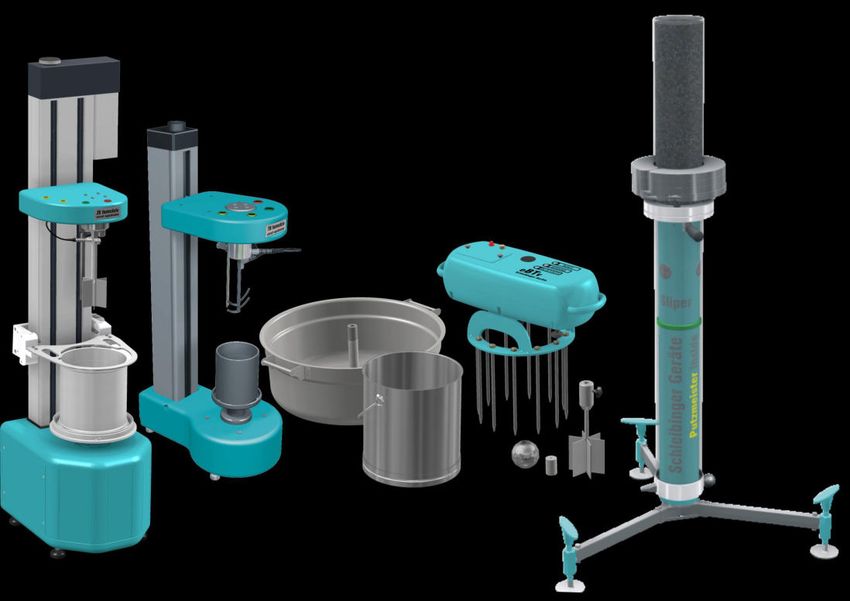
Timeline of concrete and cement history

3000 BC
                                                                  3000 BC – Egyptian Pyramids
                                                                  The Egyptians were using early forms of concrete over 5000
                                                                  years ago to build pyramids. They mixed mud and straw to form
                                                                  bricks and used gypsum and lime to make mortars.

                                                                  770 - 476 BC – China´s Great Wall
                                                                  The northern Chinese used a form of limestone mortar
700 BC                                                            containing of glutinous, sticky rice.

                                                                  300 BC – 500 AD – Roman Architecture
                                                                  The Romans used a material that is remarkably close to the
                                                                  modern cement. They also used animal products as an early
  0
                                                                  form of admixtures.

                                                                                                  https://www.concretenetwork.com/concrete-history/
                                                                                                  www.wikipedia.org

 Online colloquium „Rheology of Building Materials“, March 10, 2021                                 www.schleibinger.com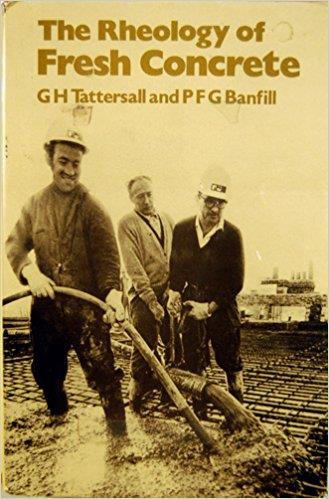
Timeline of concrete and cement history

1800
                                                                     1824 – Portland Cement invented
                                                                     Patent nr. BP 5022, „ An Improvement of the Modes of Producing
                                                                     an Artificial Stone“, Joseph Aspdin, 21 October 1824

                                                                     1836 – Strength Testing
                                                                     The first test of tensile and compressive strength took place in
                                                                     Germany.

                                                                     1845 – first precast concrete parts
                                                                     Concrete stairs are manufactured in Germany.

                                                                     1849 – reinforced concrete was born
                                                                     Joseph Monier, French gardener, copied this principle from nature
1850
                                                                     and reinforced the pots with iron wires („Moniereisen“).

1900                                                                                             https://www.concretenetwork.com/concrete-history/
                                                                                                 www.wikipedia.org / Giatec Scientific

Online colloquium „Rheology of Building Materials“, March 10, 2021                                 www.schleibinger.com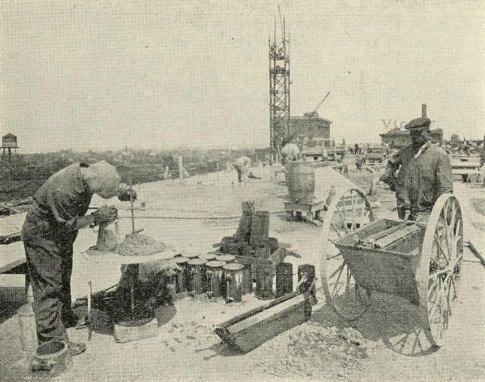
Timeline of concrete and cement history

1850
                                                             1850 – start of Portland Cement production in Buxtehude, Germany

                                                             1878 – Portland Cement is standardized
                                                             Introduction of the standard for Portland Cement by the State of Prussia
                                                             with a ministerial decree.

                                                             1879 – commercial use for reinforced concrete in Germany
                                                             Wayss & Freytag greatly contributed to the advancement of Monier´s
                                                             system of reinforcing and established it as a well-developed scientific
                                                             technology.

                                                             1882 – blast furnace slag for Portland Cement
                                                             G. Prüssing added granulated blast furnace slag to the Portland Cement.

                                                             1890 – invention of prestressed concrete
                                                             German engineer C.F.W. Döhring patented the invention of prestressed
1900                                                         concrete. First modern prestressed concrete bridge was built 1948 in West
                                                             Germany (Kanalhafenbrücke, Heilbronn).
1920                                                         https://www.concretenetwork.com/concrete-history/ www.wikipedia.org / www.beton.org /
                                                             D. Bühler, Museum aus gegossenem Stein, Betonbaugeschichte im Deutschen Museum, 2015

Online colloquium „Rheology of Building Materials“, March 10, 2021                                      www.schleibinger.com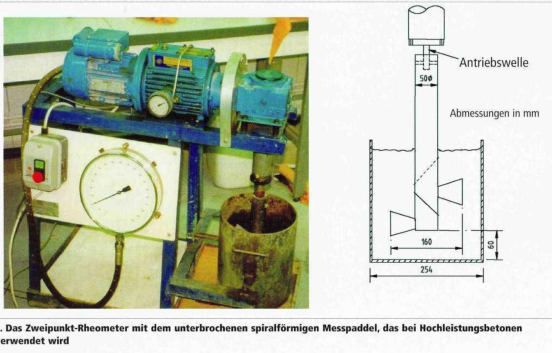
Timeline of concrete and cement history

1850
                                                                     1889 – Alvord Lake Bridge
                                                                     Was built in San Francisco, CA. This is the first
                                                                     reinforced concrete bridge, and it still exists today.

                                                                     1891 – concrete street
                                                                     The first concrete street in America was built in
                                                                     Bellefontaine, Ohio. It still exists today. The concrete
                                                                     used for this street tested at about 8,000 psi, which is
                                                                     about twice the strength of modern concrete used in
                                                                     residential construction.
1900
                                                                     1903 – concrete buildings
                                                                     Started with Ingalls Building in Cincinnati, Ohio and
                                                                     first concrete homes in Union, New Jersey in 1908 by
                                                                     Thomas Edison.

                                                                      https://www.concretenetwork.com/concrete-history/
1950                                                                  www.wikipedia.org / www.beton.org /
                                                                      https://www.atlasobscura.com/places/thomas-edisons-concrete-houses

Online colloquium „Rheology of Building Materials“, March 10, 2021                      www.schleibinger.com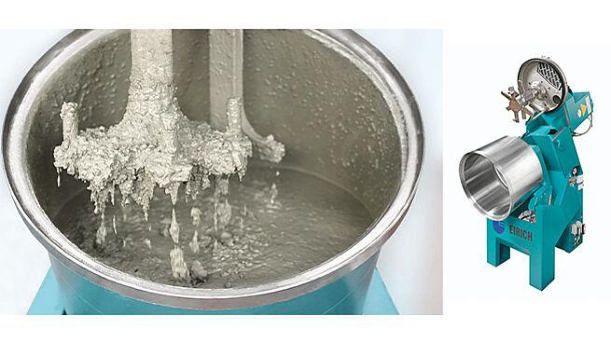
Timeline of concrete and cement history

1900                                                                 1906-1910 – Iron Portland Cement is standardized
                                                                     National Association of Cement Users (NACU)
                                                                     „Standard No.1“

                                                                     1913 – ready mix
                                                                     The first load of ready mix was delivered in Baltimore,
                                                                     Maryland.

                                                                     1925 – introduction of DIN 1045 to DIN 1048
                                                                     Standards Committee of German Industry
                                                                     (Normenausschuss der Deutschen Industrie (NADI)).

                                                                     1930 – air entraining agents
                                                                     were used for the first time in concrete to resist
                                                                     against damage from freezing and thawing.

                                                                     1938 – Concrete Overlay
1950                                                                 John Crossfield add latex to Portland cement,
                                                                     aggregate, and other materials to make a covering for
                                                                     ship desks.
1970                                                                                 https://www.concretenetwork.com/concrete-history/
                                                                                     www.wikipedia.org / www.beton.org

Online colloquium „Rheology of Building Materials“, March 10, 2021                    www.schleibinger.com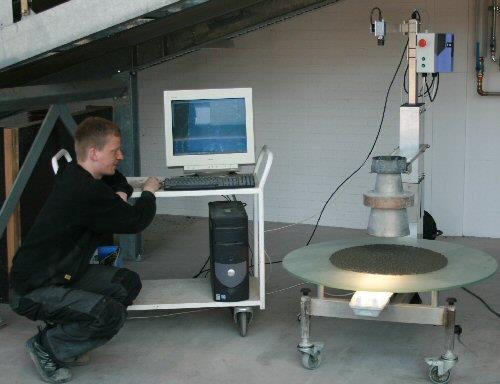
Timeline of concrete and cement history

1900

                                                                     1930 – Thin Shell Technique
                                                                     Development of new way of building with reinforced
                                                                     concrete (e.g. Eduardo Torroja, Pier Luigi Nervi, Felix
                                                                     Candela…)

                                                                     1954 – ready-mixed concrete plants
                                                                     First in the USA and from 1954 in Europe, thousands of
                                                                     ready-mixed concrete plants were built, which
                                                                     consumed around 50 % of the total cement production.

                                                                     1950´s – additive industry starts to grow
1950
                                                                     …

 1970                                                                               https://www.concretenetwork.com/concrete-history/
                                                                                    www.wikipedia.org

Online colloquium „Rheology of Building Materials“, March 10, 2021                    www.schleibinger.com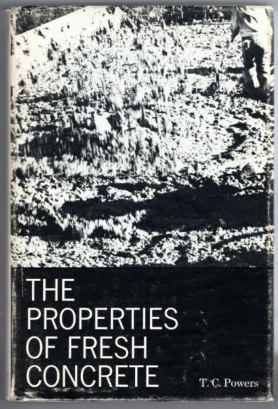
Timeline of concrete and cement history - workability

1800
                               compacting by tamping (Stampfbeton)
                               (now: stamped concrete, roller compacted concrete)

1926                                           1926 – vibrating concrete
                                               Development of internal vibrators for concrete

                                                                     1962 – flowable concrete
1962                                                                 Development of BNS (Kao Soap, Japan) and
                                                                     PMS (SKW, DE) plasticizers

                                                                                     1980 – plasticized concrete
1980                                                                                 Development of PCE´s (superplasticizers)
                                                                                     Now: SCC, HPC, UHPC, 3D-concrete printing …

2000

Online colloquium „Rheology of Building Materials“, March 10, 2021                              www.schleibinger.com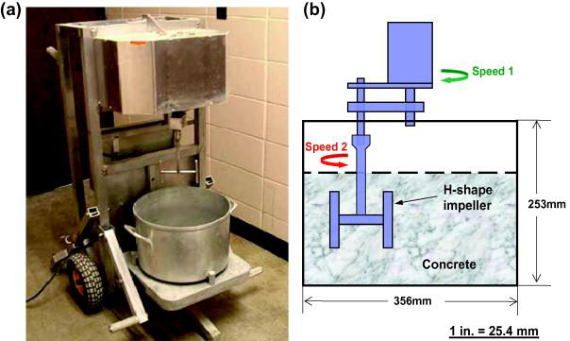
Timeline of concrete and cement history - testing

1900                                                                                  1918 - Duff Abrams, Concrete Slump Test
                                                                                      „I believe that the big thing [the slump] test can do is to bring
                                                                                      home the importance of water control in building
                                                                                      construction“
                                                                                              ➢ Showed that the strength of concrete is directly
                                                                                                  related to water-to-cement ratio
                                                                                              ➢ Suggested determining a „relative consistency“
                                                                                                  term calculated by measuring the slump test.

                                                                                      1924 – Slump Flow Test
                                                                                      Ahlers J.G., Walker S. „Field Tests of Concrete“, Proceedings
                                                                                      of the Twentieth Annual Convention of the American
                                                                                      Concrete Institute, 20, 1924.

1950

                                          Abrams D.A. „Proportioning Concrete Mixtrues“, Proceedings of the American Concrete Institute, Detroit, MI, 1922
1970                                      Ahlers J.G., Walker S. „Field Tests of Concrete“, Proceedings of the Twentieth Annual Convention of the American Concrete Institute, 20, 1924.

Online colloquium „Rheology of Building Materials“, March 10, 2021                                                        www.schleibinger.com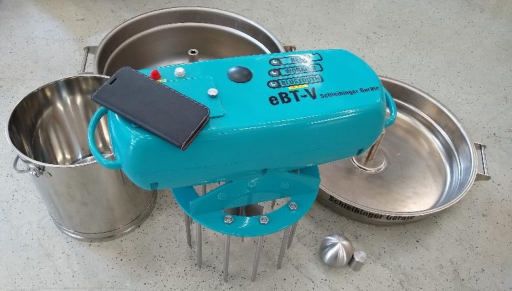
Concrete testing methods – 1920 - 2021

1900
                                                                     1918 - Concrete slump test (ASTM C143, EN 12350-2)
                                                                     1920 - Slump flow test

1926                                                                 1930´s - flow table test (DIN 1048, EN 12350-5)
                                                                     1990´s:
                                                                           ✓ Vebe consistometer (EN 12350-3)
                                                                           ✓ V-funnel test (EN 12350-9)
                                                                           ✓ L-Box test (EN 12350-10)

1962

1980

2021

Online colloquium „Rheology of Building Materials“, March 10, 2021                            www.schleibinger.com
Timeline of concrete and cement history - rheology
1900 ῥεὠ : rheo - I flow
λόγος : logos - word, science
1928 – from E.C. Bingham to M. Reiner, letter excerpt:
„ Here you, a civil engineer, and I, a chemist, are working
together at joint problems. With the development of colloid
Eugene C. Bingham chemistry, such a situation will be more and more common. We
1878 Cornwall, VT, USA therefore must establish a branch of physics, where such
† 1945 Easton, PA, USA problems will be dealt with.“
➢ 1929: Rheology … means… the study of the deformation
and flow of matter….
„An Introduction to Rheology“, Howard A. Barnes, John Fletcher Hutton,
Kenneth Walters, Elsevier, 1989
Markus Reiner
* 1886 Czernowitz, Austria for Newtonian fluids
1950 ✡ 1976 Haifa, Israel
http://universaldomainexchange.com/whoswho/eugene-cook-bingham/ Physic Today – September 1976
1970 „Rheologie“. In: Wikipedia, Die freie Enzyklopädie. Bearbeitungsstand: 5. Dezember 2017, 21:04 UTC. URL:
https://de.wikipedia.org/w/index.php?title=Rheologie&oldid=171708014 (Abgerufen: 25. Februar 2018, 10:53 UTC)
Online colloquium „Rheology of Building Materials“, March 10, 2021 www.schleibinger.comTesting methods – development of concrete rheometers
1950 1950´s – coaxial cylinder viscometer
basics for the characterisation the rheological properties of
cement slurries and other oilfield fluids:
✓ drilling fluids (muds)
✓ spacers
✓ fracturing fluids
➢ FANN 35 Viscometer, FANN Instruments (API 13D, ISO
10414)
➢ Brookfield BF35 Viscometer, Brookfield
➢ Anton Paar rheometer
➢ 8-speed viscometer, MUDTEST a Leutert company, DE
➢ NXNQ Rotational Viscometer, Tianjin Nithons
Technology CO,. Ltd., China
J.G. Savins, W.F. Roper, A direct-indicating viscometer for drilling fluids,
2021 American Petroleum Institute, API 54-007, 1954
Online colloquium „Rheology of Building Materials“, March 10, 2021 www.schleibinger.comTesting methods – development of concrete rheometers
1950 1970´s – basics for the development of modern
rheometers for suspensions
The beginning of the development of the theory of
flowability of cement based mixtures –
Non-Newtonian fluids.
1962 1968 – Powers T.C. „Properties of Fresh Concrete“, New
York, John Wiley & Sons.
1969 – Teubert J. „Determination of water/cement ratio as
a function of cement, as an index for exposed concrete“,
Betonstein-Ztg. 35, 1969:
1980
1969 – Visco Corder ® Brabender, Duisburg, Germany
Rheometer for mortar and paste
2000
Online colloquium „Rheology of Building Materials“, March 10, 2021 www.schleibinger.comTesting methods – development of concrete rheometers
1980 1983 – Tattersall G.H., Banfill P.F.G. „The Rheology of Fresh Concrete“,
Marshfield, MA. Pitman Publishing
➢ Classifies the workability of concrete: Class-I, Class-II and Class-III..
➢ Tattersall, splits up the workability test as single-point (slump test) and
multi-point tests based on flow curve relating shear stress and shear rate.
➢ Single point tests are incapable for determining the parameter of fresh
concrete.
➢ Multiple tests needed to describe different aspects of workability
➢ Two concretes with same slump may flow differently and have different
workability. Workability is closely related to flow properties.
➢ Yield stress is related to the force required breaking down
structure and initiating the flow
➢ Plastic viscosity describes the resistance to flow ones the
concrete is flowing
1983 – Tattersall two-point rheometer (Mk-I)
by Tattersall, UK
➢ Rheometer for coarse-grained mixtures such as concrete;
➢ torque is measured.
2000
Online colloquium „Rheology of Building Materials“, March 10, 2021 www.schleibinger.comTesting methods – development of concrete rheometers
1980 1985 – Rotational viscometer
Patent No. DE 3423579, Nukem GmbH,
Hannau, Germany
Rheometer for coarse-grained mixtures such as
concrete based on sealing fluid with high
density such as mercury or tetrabromoethane.
1987 - BML viscometer, (since 1992
ConTec viscometer)
Dr. Wallevik O.H., Iceland
➢ based on the Power and Wiler plastometer
and the Tattersall two-point device.
➢ Inner cylinder measures torque as the outer
cylinder rotates at variable angular velocity.
➢ Fully automated and are controlled by
computer software (FreshWin).
http://www.contec.is/page11.htm
2018 R. Zerbino et al, Workability tests and rheological parameters
in self-compacting concrete, Mater. Struct. 42(7) 2009
Online colloquium „Rheology of Building Materials“, March 10, 2021 www.schleibinger.comTesting methods – development of concrete rheometers
1990
1989 - Viskomat PC
Schleibinger Geräte GmbH
➢ Rheometer for mortar and paste
1998 - Viskomat NT
Schleibinger Geräte GmbH, Germany
2000 ➢ Velocity controlled 0.001-400 rpm
➢ Torque 0 – 500 Nmm
➢ Shear stress controlled
➢ Oscillation mode
➢ Different probes geometries
➢ Max. particle size up to 4 mm
2021 J. Golaszewski, Influence of viscosity enhancing agent on properties of
mortars with different cements and superplasticizers.
Online colloquium „Rheology of Building Materials“, March 10, 2021 www.schleibinger.comTesting methods – development of concrete rheometers
1980
1989 – BTRheom parallel plate rheometer
Larrard et al., Laboratoire des Ponts et Chaussées
(LCPC), París, France (since 2011 - IFSTTAR).
➢ It requires about 7 L of concrete that has at least
100 mm of slump.
➢ The rotation speed range is 0.1 rev/s to 1 rev/s.
➢ The maximum measurable torque is about 14 Nm.
1993 – CEMAGREF-IMG coaxial rheometer
by Coussot, PhD thesis, National Institite of Grenoble,
France.
➢ originally developed for study of mud flow rheology
➢ The inner cylinder is rotated and the torque induced
by the concrete on the inner cylinder is measured.
➢ approx. 500 L of concrete are needed.
2000 C.F. Ferraris, N.S. Martys, Understanding the Rheology of Concrete, 2012
Online colloquium „Rheology of Building Materials“, March 10, 2021 www.schleibinger.comTesting methods – development of concrete rheometers
1990 1994 – IBB rheometer
by Beaupre & Mindness, Canada
➢ Modification of the Tattersall two-point device (MKIII).
➢ Originally developed to measure the rheology of wet-
mix shotcrete, also used on a wide range of concretes
(20mm to SCC)
➢ Fully automated and uses a data acquisition system to
drive an impeller rotating in fresh concrete.
➢ The yield stress and plastic viscosity are displayed on
the screen.
➢ H-shaped impeller
1997 – RheoCad rheometer
2000 CAD Instruments, France
➢ Torque measurement in response to controlled
rotation 0-250 rpm
➢ Sample volume 11 – 37 L
➢ Torque meter max. 10 Nm
➢ Weight approx. 95 kg.
J. Hu, K. Wang, Effect of coarse aggregate characteristics on concrete
2021 rheology, Constr. Build. Mater, 25, 2011, pp. 1196-1204.
Online colloquium „Rheology of Building Materials“, March 10, 2021 www.schleibinger.comTesting methods – development of concrete rheometers
1990
1994 – mobile rheometer BT
Schleibinger Geräte GmbH, Germany
Patent no. 195 03 028 „Verfahren zum
Messen des Fließverhaltens grobkörniger
Stoffgemenge“
further development:
✓ BT2
✓ eBT2
✓ since 2016 - eBT-V
➢ 15 L to 40 L vessel
2000 ➢ for aggregate particles up to 32 mm
➢ Max. torque 10 Nm
➢ Max. speed 40 °/s or 40 rpm
➢ Two different measurement modes
➢ for zero slump concrete to SCC
➢ Device weight approx. 15 kg
2021 T. Ponikiewski, J. Golaszewski, The new approach to the study of random distribution of
fibres in high performance self-compacting concrete, Cement, Wapno, Beton, 79 (3), 2012
Online colloquium „Rheology of Building Materials“, March 10, 2021 www.schleibinger.comTesting methods – development of concrete rheometers
1990
1993-2011 – FCT-101, Ruedi Enzler, ETH Zürich
Atrof Bauphysik AG
test apparatus for freshly mixed concrete
➢ electrically operated
➢ torque determination at certain speed.
➢ single-point measurement
➢ slump between 35 and 180 mm
2000
2004 – ICAR (Plus) mobile rheometer
Koehler E.P., Fowler D.W., University of Texas at
Austin, Austin, TX
German Instruments.
➢ maximum particle size 32 mm
➢ vane rotation speed: 0.06 to 40 rpm
➢ max. torque 32 Nm
https://www.atrof.ch/?Rpage=fct101d/?Rpage=
2021 http://germann.org/products-by-application/rheology-of-concrete/icar-rheometer
Online colloquium „Rheology of Building Materials“, March 10, 2021 www.schleibinger.comTesting methods – development of concrete rheometers
2000
2009 - Viskomat XL, Schleibinger Geräte GmbH
➢ 3L vessel for aggregate particles up to 16 mm
➢ speed 0 – 80 rpm
➢ max. torque 10 Nm
➢ shear stress controlled mode
➢ oscillation mode
➢ different probes available
2014 – Sliper – Sliding Pipe Rheometer,
Schleibinger Geräte GmbH / Putzmeister
➢ determining the pumpability
➢ Sample volume approx. 7 l
➢ for lab and construction site
2021
Online colloquium „Rheology of Building Materials“, March 10, 2021 www.schleibinger.comTesting methods – development of concrete rheometers
2000 2007 – 4C-Rheometer, Danish Technological Institute,
Taastrup
➢ Based on slump flow test
➢ Numerical simulation of slump flow
➢ Rheological parameters are determined by analysis of
the spread vs. time curve.
elimination of shear induced particle migration
for measurements:
2005 – Mixer with sequence automation and process
data control
Eirich, Germany
➢ mixer incl. rheometric tools
➢ sample volume 40 L, 75 L or 150 L.
https://www.dti.dk/4c-rheometer-8211-measuring-rheology-of-self-
compacting-concrete/the-equipment/21743
https://www.eirich.com/en/meta/news/news-detail/consistency-
2021 measurements-in-eirich-production-mixers-and-rheological-
measurements-in-laboratory-mix/
Online colloquium „Rheology of Building Materials“, March 10, 2021 www.schleibinger.comTesting methods – development of concrete rheometers
2000
2008 – Laboratory Mixer KKM-RT 15, 22,5
Kniele, Germany
➢ Mixer incl. rheometric tools
➢ Sample volume 15 L
➢ Weight approx. 1 t.
2016 – Pheso rheometer, Calmetrix, MA, USA
➢ Planetary movement and attritor shaped impeller for
continuous mixing
➢ 5L, 25 L vessel for aggregate particles up to 25 mm
➢ Max. torque up to 147 Nm
➢ Weight approx. 130 kg
https://www.kniele.de/en/mixing-systems/laboratory-mixer-kkm-rt
2021 https://www.calmetrix.com/rheometers
Online colloquium „Rheology of Building Materials“, March 10, 2021 www.schleibinger.comTesting methods – development of concrete rheometers
1980 – plasticized concrete
1962 – flowable concrete
1960 1980 2000 2021
Online colloquium „Rheology of Building Materials“, March 10, 2021 www.schleibinger.comRheometers from Schleibinger 1989 One company – different testing solutions for different kind of applications 2021 Online colloquium „Rheology of Building Materials“, March 10, 2021 www.schleibinger.com
Thank you for your attention!

                                                                              Schleibinger Geräte GmbH
                                                                              Dr. Helena Keller
                                                                              Tel.: +49 8086 94731 10
                                                                              @: keller@schleibinger.com

Online colloquium „Rheology of Building Materials“, March 10, 2021   www.schleibinger.com
You can also read


