Directions 2018 Early Learning Centre Handbook - St Michael's Collegiate School
←
→
Page content transcription
If your browser does not render page correctly, please read the page content below
Directions 2018 Early Learning Centre Handbook
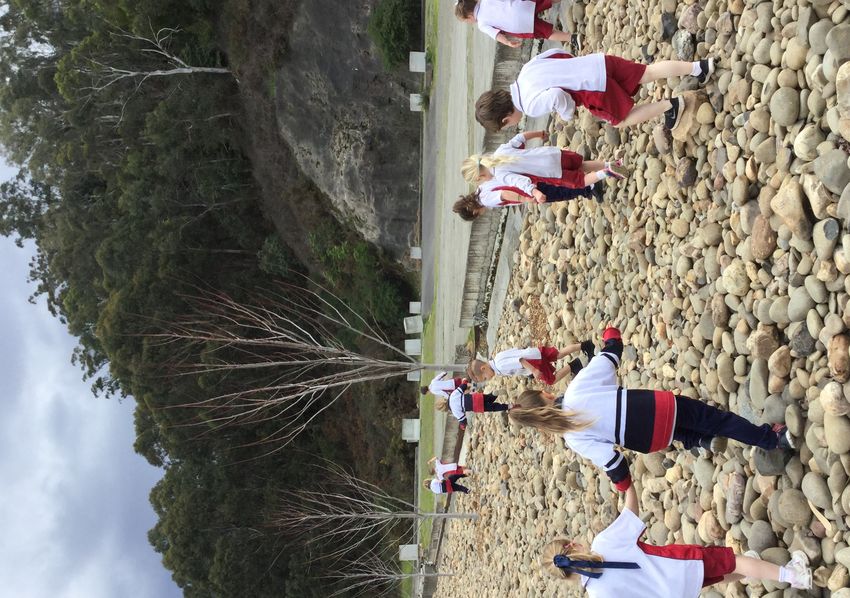
Table of Contents
PAGE      4.    Letter to Parents from the Principal

          6.    Our Curriculum

          8.    The hundred is there Poem

          9.    Our Philosophy

          10.   Key Information

          12.   Meal Times

          12.   Uniform

          14.   Sun Protection

          14.   Excursions and Routine Outings

          14.   What To Bring

          15.   Communication To Parents

          16.   Co-Curricular

          16.   Health and Physical Education

          16.   Music

          17.   Library

          18.   Little Learning House
From the Principal
         Welcome to St Michael’s Collegiate School’s Early Learning Centre (ELC).

         Our ELC is located within our Junior School Campus in South Hobart. Often referred to
         as Anglesea Village, this close community environment supports each child along their
         individual journey of discovery. Nestled alongside the Hobart Rivulet and in the shadow
         of Mount Wellington, the entire campus offers beautiful green space with the added
         convenience of being just minutes from the city centre.

         Our ELC provides a warm and caring start to your child’s learning. From the moment
         you walk through our doors you will be surrounded by happy faces and inquisitive
         minds. Our centre is staffed by an exceptional team of early learning specialists who
         each value learning as an exciting, creative and inquiry driven process. We are delighted
         to uphold exceptional ratings across all seven National Quality Standards in both our
         Early Learning Centre and Outside School Hours Care program.

         The curriculum is based around the Early Years Learning Framework for Australia in
         conjunction with the Reggio Emilia inspired educational approach. The curriculum
         is designed to enrich learning in these formative years and immerses the children
         in activity-based learning and stimuli that feeds each child’s thirst for knowledge.
         The ELC program also offers Music, Library and Physical Education, which are all
         taught by specialist teachers in dedicated learning spaces. Ballet is also available as
         an optional extra.

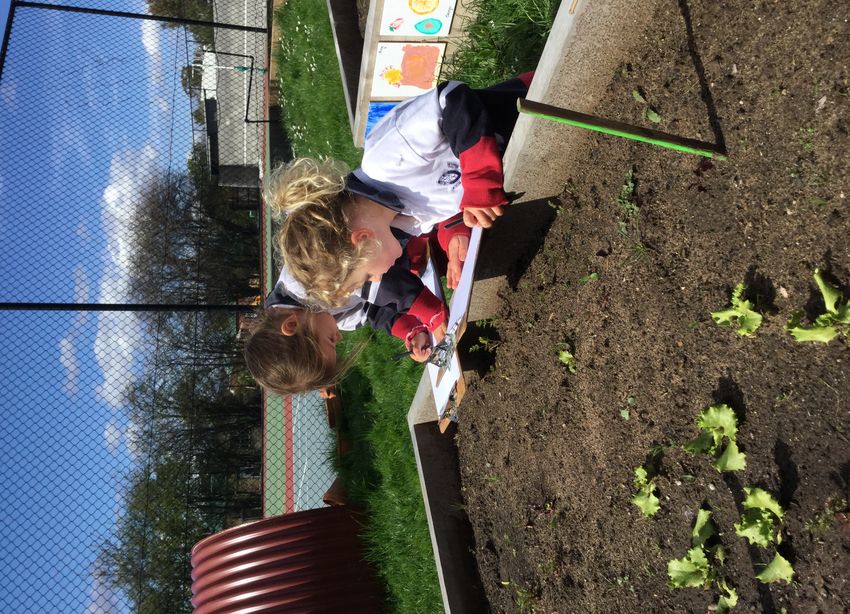
         At Early Learning we recognise the value and importance of nature play and physical
         exercise. Our ELC and Junior School is complete with access to the Anglesea Kitchen
         Garden and flower patches which are grown and maintained by the children. Our nature
         play program develops children’s confidence, resilience, respect and appreciation of
         the natural world. The children participate in unique walks along the Hobart Rivulet
         where they have the opportunity to engage in imaginative nature play.

         I look forward to welcoming your child into the St Michael’s Collegiate family.
         Should you have queries at any stage, please do not hesitate to get in touch directly
         with our experienced ELC educators.

         Mrs Judith Tudball
         Principal

[4][4]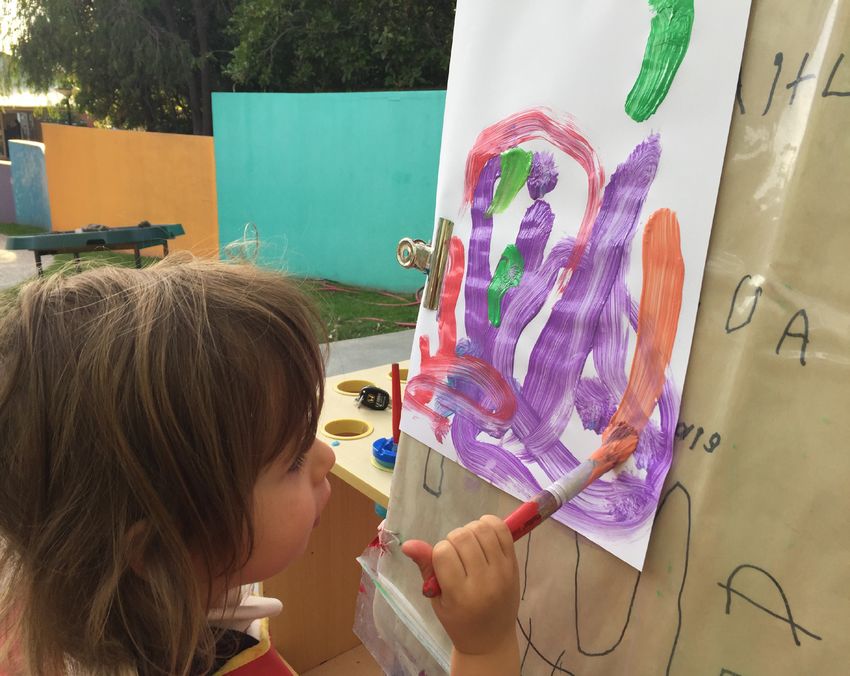
[5]
Our Curriculum
      The Early Learning curriculum draws on aspects of the Reggio Emilia Educational Project,
      the Early Years Learning framework, inquiry and play based theories and nature education.
      Our program empowers children to follow their ideas and interests, develop resilience and
      autonomy, work collaboratively to inquire and research, become effective communicators
      and to express themselves in a variety of ways.
      The Reggio Emilia approach recognises children are born with amazing potential and
      capabilities. They are curious, creative and desire to form relationships with both others
      and the world around them.
      Our program is built around the following 12 principles:
      Children are active protagonists - Children have extraordinary potential for learning
      and change. They are constantly engaging with their environment, peers, teachers and
      parents. Each child has a right to be valued for his/her individuality and uniqueness.
      All children have a right to active participation.
      The hundred languages of expression - The hundred languages is a metaphor for
      the extraordinary potential of children. Children possess a hundred languages, ways of
      expression, of understanding and encountering others. Equal value is given to verbal and
      nonverbal languages and modes of expression.
      Participation - Educators, children and families are stakeholders in the educational
      project. It is a reciprocal and democratic process. Participation is the strategy that is
      played out daily through interpersonal interactions and relationships. Participation gives
      meaning to and makes use of the hundred languages.
      Listening - An active attitude of listening between adults, children and the environment
      is the context for every educational relationship. It is an ongoing process and an
      indispensable condition for dialogue, learning and change. It necessarily involves acts
      of reciprocity.
      Individual and group learning - Children are active constructors and co-constructors of
      knowledge, competencies and processes. These are unique to relationships with peers,
      educators and the environment. Learning is fostered through strategies of research,
      comparison, dialogue and co-participation and makes use of play, creativity, curiosity
      and uncertainty, challenge and risk.
      Educational research - Shared research between adults and children is a priority,
      knowledge building is valued. Research is made visible through documentation.

[6]
                                              [6]
Educational documentation - Documentation makes visible and explicit the learning
processes of the adults and children. It gives value to the nature of the individual and group
learning processes. Documentation is produced, revisited, interpreted, reconstructed and
assessed. A ‘public place’ for all - children, educators and parents - to visit and revisit.
Progettazione - The active process of planning and designing the teaching and learning
activities, the environment, opportunities for participation and professional development
of staff. It is not a pre-defined curricula. It is carried out through a constant and evolving
process of observation, documentation, reflection and interpretation.
Organisation - Considers the organisation of the work, the spaces and time. It also
considers the administrative, managerial, political and pedagogical levels in a school or
learning community.
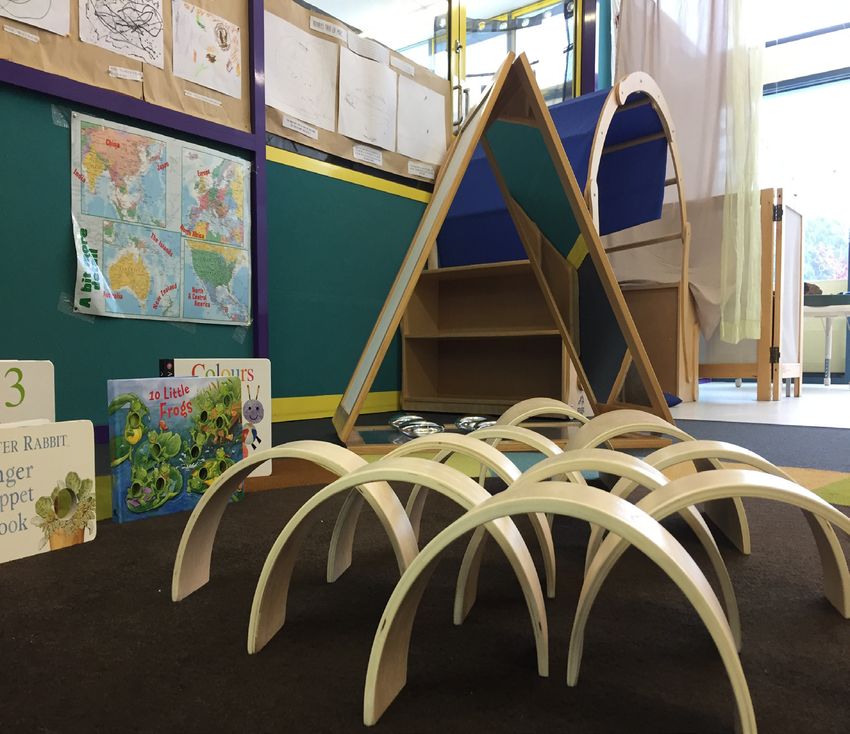
Environment - Interior and exterior spaces are carefully designed to foster a sense of
interaction, creativity, autonomy, exploration, curiosity and communication. Opportunities
and spaces are created for children and adults to research and work together. Spaces are
aesthetically pleasing but functional and generate a sense of familiarity and belonging.
Professional development - Aimed at building understanding and awareness of the
meanings and methods of education, the reflective practices of observations and
documentation are a priority; dialogue and communication between staff and the learning
community is central.
Assessment - Assessment is an ongoing, continuous action which gives meaning and
value to the educational experience. It is formative, and can often be informal. Assessment
works hand in hand with documentation, observation, interpretation, reflection and
planning.
Creative language activities are utilised as a powerful vehicle for children to make meaning
of the world around them. Through art, children are encouraged to express themselves,
ask questions, explore ideas and theories, draw conclusions, solve problems and come
to new understandings.
Our nature education program develops children’s confidence, cooperative skills,
resilience and instils in them a respect for nature. ELC children regularly venture along
the Hobart rivulet. They are provided with an opportunity for imaginative play and gain an
appreciation of the natural world.

Reference: Indications preschools and infant toddler centres of the Municipality of Reggio Emilia (3rd
edition). (2010). Reggio Emilia: Reggio Children.

                                                     [7]                                                 [7]
[8] [8]
Our Philosophy
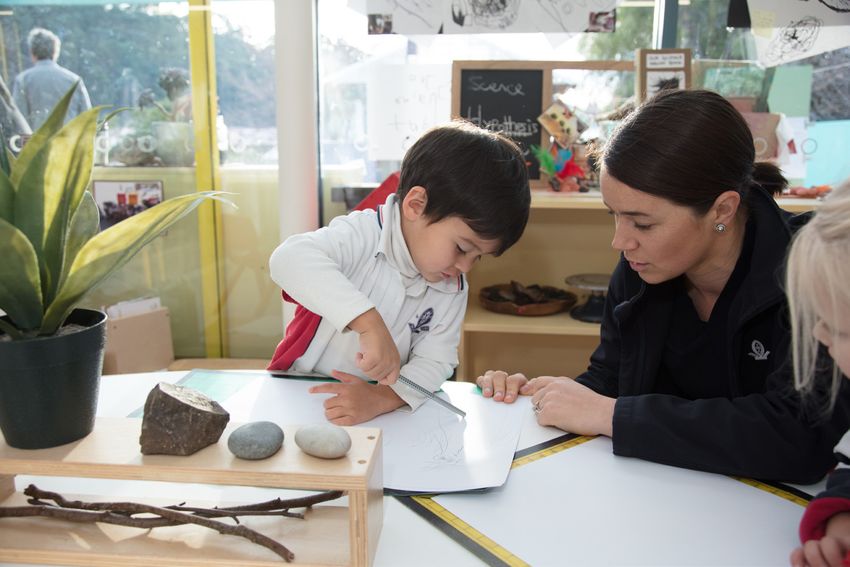
We believe that children are innate investigators.

We know that children learn best through play.

We understand that learning is not linear and highly regard the journey.

We appreciate and respect working in partnership with our families.

We acknowledge that children develop relationships with each other, the environment
and materials.

We trust that children are capable of co-constructing knowledge with others.

We see that children are intimately connected to all aspects of their world.

We hold a strong image of the child and the educator.

We recognise that children demonstrate their knowledge, theories and imagination
through a multiplicity of ways.

We value communication, dialogue and active listening between adults, children and
the environment.

                                                 [9]                                  [9]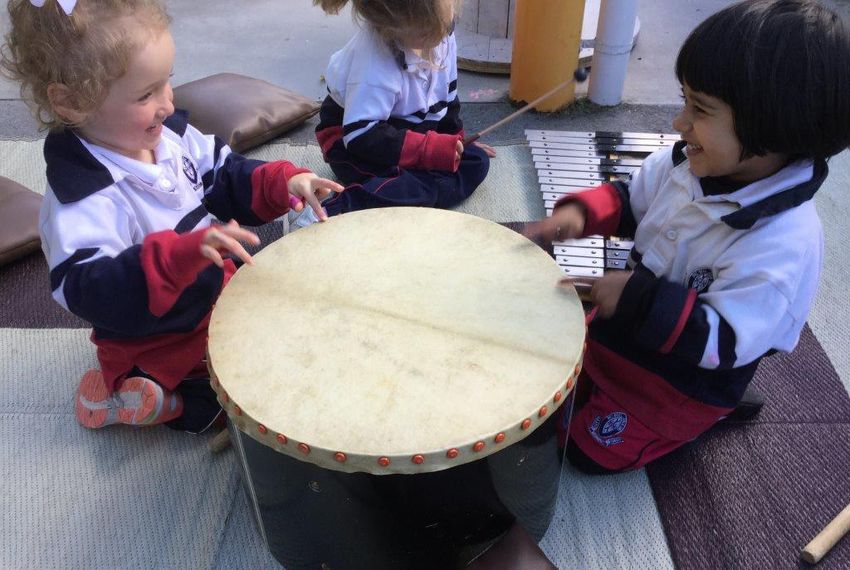
Key Information
       Contact
       The ELC phone number is 6211 4953 and email is ELCAnglesea@collegiate.tas.edu.au

       Hours Of Operation
       Our centre is open 50 weeks of the year Monday to Friday, closing for the Christmas
       period and public holidays, including Easter Tuesday. Please note we are also closed
       on the Friday following the Royal Hobart Show holiday in October. No fees are charged
       during this time.

       The ELC opens from 7.30am to 6.00pm. Families arrive between 7.30am and 8.30am
       each morning and engage with their children in settling activities. Our educators are
       always available to ensure your child is feeling nurtured and to answer any queries or
       concerns you may have. Establishing a set morning routine will help your child settle into
       the ELC day and develop a sense of security and regularity in regards to their environment.

       Orientation
       For families new to the ELC, we offer orientation sessions. These enable both the child
       and family to familiarise themselves with the educators and the environment. We arrange
       these on an individual basis according to the needs of each child and family.

       Sleep and Relaxation
       Our ELC supports each child’s need for rest, sleep and relaxation. We have a quiet spot
       for those requiring sleep and fresh linen is provided.

       At the ELC we regularly practice mindfulness. This increases children’s resilience by
       providing them with skills to deal with emotions and encourages them to be more active
       participants in their world.

       Please discuss your child’s individual sleep and rest routine at orientation or at any time
       when their needs alter and change.

[10]                                           [10]
[11]
Meal Times
       At ELC we provide a nutritious morning and afternoon tea platter consisting of fresh fruit,
       sandwiches/wraps, biscuits and cheese and cooking prepared with the children.

       We ask that you please provide a packed lunch for your child that includes a range of
       healthy snacks. We have a microwave for heating food if required. Lunches must exclude
       all nuts and nut based products (products that may contain traces of nuts are acceptable).
       Children are to bring a drink bottle with water only.

       Uniform
       Uniform is compulsory at Collegiate and a range of practical and comfortable items are
       available for children in the Early Learning Centre. Uniform helps children to identify that
       they belong to the Collegiate community.

       There are a variety of uniform items to choose from including:

       •    Shorts
       •    Track pants
       •    Long sleeve and short sleeve polo tops
       •    Smock
       •    Vest
       •    Rugby jumper
       •    Collegiate hat (bucket not cap)

       We do acknowledge that not every child will continue on to Collegiate, therefore if you are
       able to secure second hand uniform from friends or family, you are welcome to do so. The
       Collegiate Parents and Friends’ Association operates a useful Buy and Sell Facebook
       page.

       Children are not required to have the Collegiate school backpacks, library bags or socks,
       but they are available at the uniform shop, should you wish to purchase these.

       Please ensure that footwear is appropriate for running around and outdoor exploration.
       We recommend that all of your child’s uniform be clearly labelled to minimise loss.

       Jackets and gumboots are recommended for winter exploration and may be left at the
       service during this time.

       Please contact the Collegiate School Shop on (03) 6223 1897 to arrange an appointment
       prior to your child commencing Early Learning.
[12]                                           [12]
[13] [13]
Sun Protection
       Overexposure to ultraviolet radiation (UV) during childhood is a major factor in determining
       future skin cancer risk. A healthy balance of UV exposure is important for overall health
       and the implementation of appropriate sun safe practices is a simple and effective way
       to reduce the risk of developing skin and other cancers.

       Collegiate ELC supports children, educators and others associated with the service
       to provide a combination of sun safe practices whenever the UV Index is 3 or above.
       In Tasmania, this is predominantly between September and April.

       When the UV Index reaches 3 or above, sun protection measures will be implemented
       to maintain a healthy UV exposure balance and support children to be responsible and
       aware of sun protection. Sunscreen is provided unless a specific sunscreen is required.

       Excursions and Routine Outings
       Excursions are an important part of our program. They assist in educating children in their
       understanding of the broader community and promote discovery and inquiry integral to
       children’s development.

       We offer a variety of excursions and outings at Early Learning including investigations
       around our large Junior School campus, the Hobart Rivulet and surroundings, as well as
       destinations linked to the children’s learning. Excursions and outings commence once
       children are settled and confident within the surroundings.

       Permission for local walks and outings is included as part of your application form.
       All other excursions will require specific permissions. A risk assessment will be available for
       all excursions and regular outings.

       What To Bring
       Please ensure you bring the following items when attending the ELC:

       •    A healthy nutritious lunch (no nut products) and a drink bottle containing water only

       •    A full change of clothing including underwear and socks

       •    Disposable nappies/pull-ups (if applicable)

       •    Appropriate clothing accessories for the season e.g. gumboots, sunhat (wide
            brimmed or bucket hat) and raincoat

       •    A piece of fruit to share each day
[14]                                             [14]
Communication To Parents
We recognise that families are their child’s first educators and therefore effective
communication between the home and ELC is a vitally important link in the educative
process and ensuring your child feels a complete sense of belonging and engagement.
We have a variety of communication systems in place to establish and build strong
relationships.
All our educators welcome regular face-to-face communication with parents. If you have a
query or concern, or need to update us in regards to your child’s routines or development,
please feel free to speak to one of our educators at drop off or pick up time. If time is of
the essence, you are welcome to phone ahead or email to make an appointment.
Collegiate support families with an online Parent Portal. Official school communications
are placed on the Portal for you to access easily. Our educators write a regular blog which
is also added to the Portal. It features an update and photographs of our day. Sharing this
with your child is a great way to consolidate their learning.
Please ensure we always have your correct email address on hand.
Ancanthe is Collegiate’s whole school weekly electronic newsletter. It is distributed each
Friday and is also available on the School website and Facebook page.
Facebook is used by the School on a daily basis to communicate upcoming events,
reminders and general Collegiate news.
[15] [15]Co-Curricular
Three regular co-curricular activities are offered to complement the ELC program and
the ‘100 languages of learning’. These are Music, Library and Physical Education.
All are taught by qualified, specialist teachers. Ballet lessons are also available as an
optional extra.
Health and Physical Education
The Physical Education program in the ELC focuses on developing and refining gross
motor skills. Practicing these skills helps your child gain strength and confidence in his or
her own body and prepares them for more the complex skills needed for future activities,
such as playing soccer with a team.
In Physical Education gross motor skills are developed using three groups of movement;
locomotor, including walking and skipping, non-locomotor, including bending, stretching
and twisting, and manipulative skills, including kicking, striking and catching. These
movements are taught using innovative activities that promote student enjoyment,
engagement and participation.
ELC students will use the skills learnt in Physical Education when participating in the annual
ELC to Year 1 Athletics Carnival.
Music
Fun is the main ingredient in our all of our musical experiences in the ELC.
Children explore the key musical elements in singing, recognising rhythmic patterns,
playing instruments and movement. As they sing, dance and play their music they will
discover how they can imitate vocal and rhythmic patterns, create their own melodies on
the tuned percussion instruments, play their instruments together with others, experience
performances and discover what music looks like in movement. Our music program is
delivered by a specialist teacher and is taught sequentially through creative tasks and
games.
[16]
[16]Library
The Anglesea Library caters for students from Early Learning through to Year 4.
The Library Program focuses on supporting and enriching the curriculum across all
teaching and learning areas. The resource rich program focuses on literature studies
and the development of information literacy skills. Students are encouraged to develop
their love of reading and become confident, independent researchers who use library
resources to meet their information needs.
The Library Program is implemented through timetabled lessons. These lessons are
integrated where possible with the classroom program so that learning takes place in
a wide and more integrated context. Children at all levels enjoy celebrating Book Week,
national reading days and other opportunities to engage with books.
[17]
[17]Little Learning House
Collegiate’s Little Learning House program welcomes children from birth to four years
of age. The weekly sessions are filled with play-based experiences, exploration and
storytelling. The program is designed to offer parents practical support and insight into
play-based learning, to build connections between families with young children and to
support each child to begin their individual learning journey. It also provides a wonderful
introduction to the Reggio Emilia inspired educational approach.
Little Learning House runs each week during term time in the Early Learning Centre.
Sessions are one hour in duration and are run by our specialist Early Learning educators.
Little Learning House is a free program and we welcome both boys and girls to attend.
Parents/Guardians are required to supervise their children at all times.
For all Little Learning House enquiries, please contact our Head of Enrolments,
Mrs Trisha Lowe on 6211 4936 or trisha.lowe@collegiate.tas.edu.au
[18]
[18][19]
[20]
You can also read


