DISCLAIMER The information presented today is based on CDC's recent guidance and MAY change - GovDelivery
←
→
Page content transcription
If your browser does not render page correctly, please read the page content below
DISCLAIMER
The information presented today is based on CDC’s recent guidance and MAY change.
                                 February 3, 2021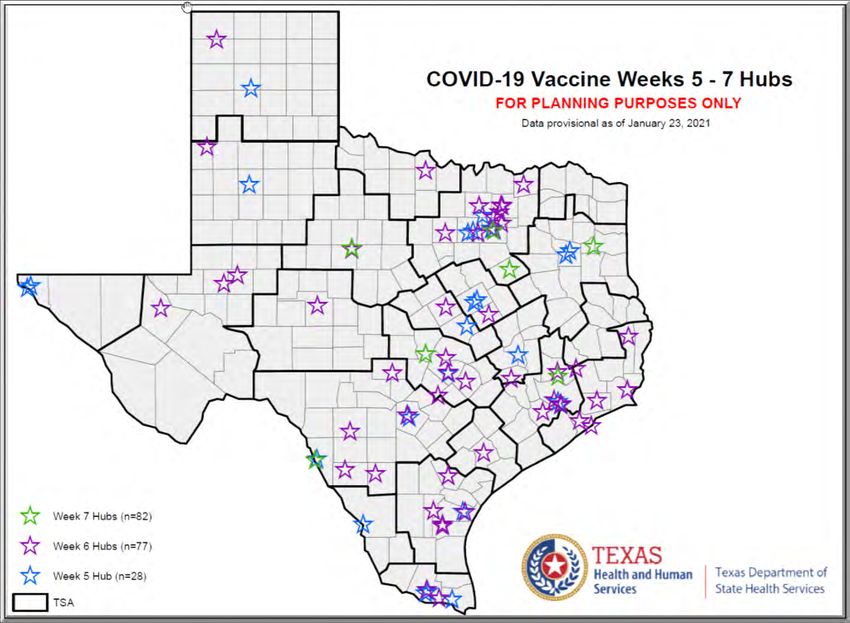
Welcome
                       February 3, 2021
                           Imelda Garcia, MPH
Associate Commissioner | Laboratory & Infectious Disease Services Division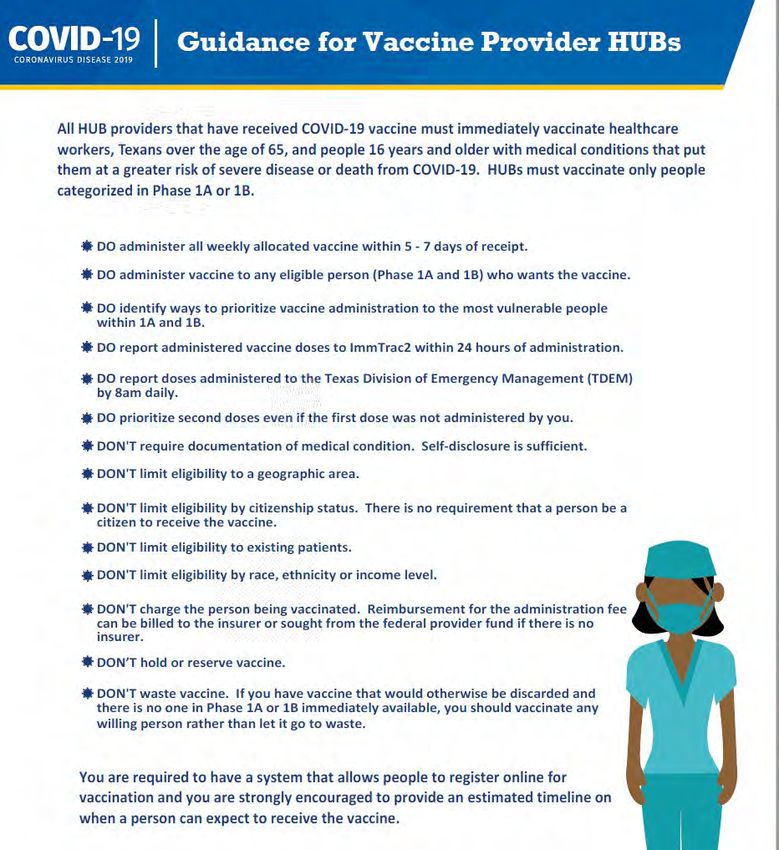
Discussion Topics

• Latest Vaccine Updates
• Vaccination Hubs
   •   Prioritization
   •   Second Dose
   •   Reporting Requirements
   •   Communication
• Best Practices
Federal Updates

• Federal Pharmacy program starts February 11th
   • CVS, HEB, Walmart, and ABC
   • Estimated 80,000 doses
• New allocation methodology based on doses
  administered
• Focus on equity in distribution and administration
COVID-19 Critical Population
Phase 1A Healthcare Workers Definition – First Tier

• Paid and unpaid workers in hospital settings working directly with patients who are
  positive or at high risk for COVID-19. Such as but not limited to:
   •   Physicians, nurses, respiratory therapists and other support staff (custodial staff, etc.)
   •   Additional clinical staff providing supporting laboratory, pharmacy, diagnostic and/or
       rehabilitation services
   •   Others having direct contact with patients or infectious materials
• Long-term care staff working directly with vulnerable residents. Includes:
   • Direct care providers at nursing homes, assisted living facilities, and state supported living
     centers
   • Physicians, nurses, personal care assistants, custodial, food service staff
• EMS providers who engage in 9-1-1 emergency services like pre-hospital care and
  transport
• Home health care workers, including hospice care, who directly interface with vulnerable
  and high-risk patients
• Residents of long-term care facilities
COVID-19 Critical Population
Phase 1A Healthcare Workers Definition – Second Tier

 • Staff in outpatient care settings who interact with symptomatic patients. Such as but not limited to:
    • Physicians, nurses, respiratory therapists and other support staff (custodial staff, etc.).
    • Clinical staff providing diagnostic, laboratory, and/or rehabilitation services
    • Non 9-1-1 transportation for routine care
    • Healthcare workers in corrections and detention facilities

 • Direct care staff in freestanding emergency medical care facilities and urgent care clinics.
 • Community pharmacy staff who may provide direct services to clients, including vaccination or testing
   for individuals who may have COVID.
 • Public health and emergency response staff directly involved in administration of COVID testing and
   vaccinations.
 • Last responders who provide mortuary or death services to decedents with COVID-19. Includes:
      • Embalmers and funeral home workers who have direct contact with decedents
      • Medical examiners and other medical certifiers who have direct contact with decedents.
 • School nurses who provide health care to students and teachers.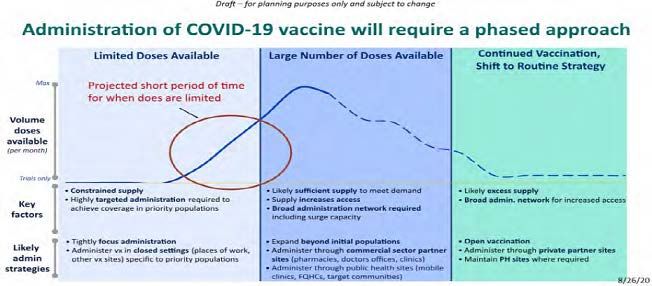
COVID-19 Critical Population
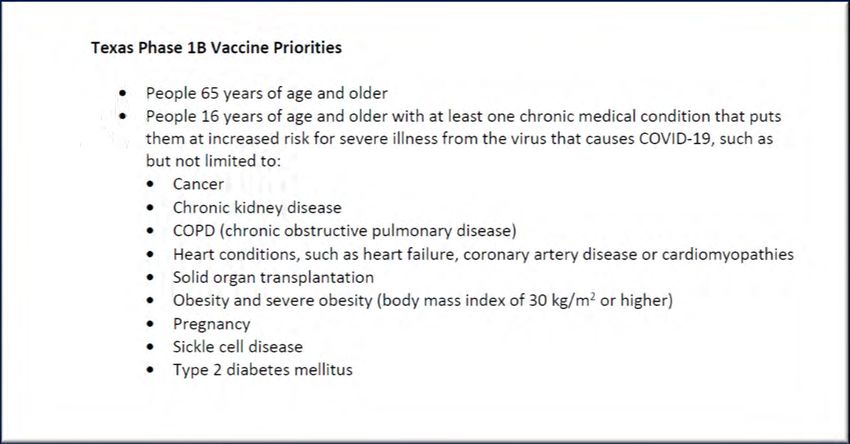
Phase 1B Definition
• DSHS will work with vaccine providers and local partners to
  ensure that people who are 65 and older or have the medical
  conditions listed below and who also work in front-line and
  critical industries have access to the vaccine so they will be
  protected from COVID-19 while on the job.
• Texas equally will strive to ensure vaccine reaches communities
  with health disparities in accordance with Texas Vaccine
  Allocation Guiding Principles.
COVID-19 Critical Population
Phase 1B Definition

Phases and Timeframe of
COVID-19 Vaccine Distribution
Texas Vaccination Hubs
Vaccination Hubs Expectations
• Strategic placement of large doses of vaccines at your sites to serve and
  maximize vaccination effort across the state.
• Vaccinate individuals in Phase 1A & 1B.
• Vaccinate all eligible Phase 1A and 1B recipients regardless of where they
  reside.
• Vaccination efforts should not be restricted to residents of your county.
• Administer all vaccine doses within 5-7 days of receipt.
• It is imperative that there be an equitable distribution through demographic
  coverage targeting the hardest hit zip codes and demographics.
• Must do daily reporting of doses administered.
Vaccination Hubs
Population Prioritization
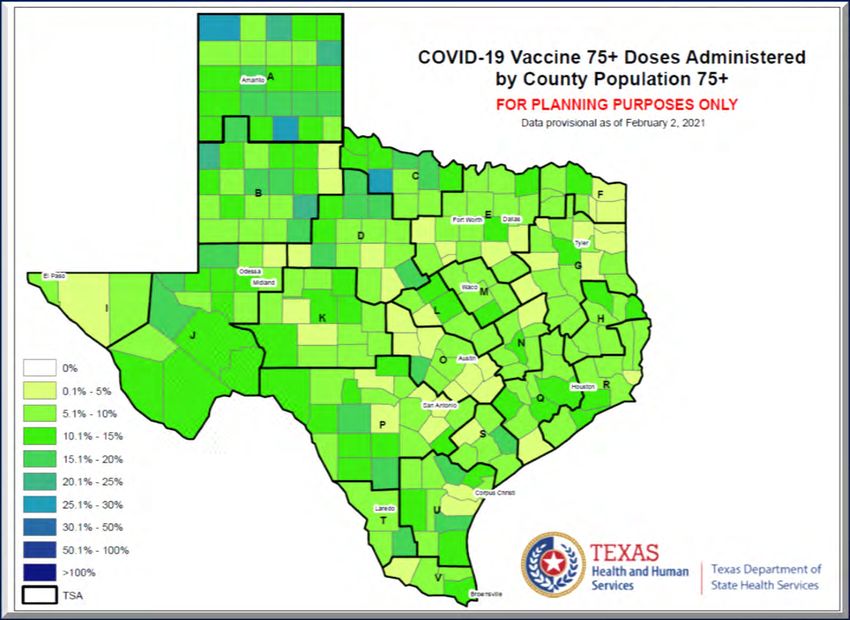
• Prioritize vaccinating people 75 years and older, the most
  vulnerable population.
• Approximately 27.5% of our Super Senior population has already
  been vaccinated with the first dose. But, about 1 Million are still
  needing vaccine.
                                 First Doses      2018 Statewide      % Population Vaccinated with
           Age                  Administered    Population Estimate            First Dose
           18+                    1,992,410         20,598,893                   9.67%
           65+                        837,811       3,329,659                   25.16%
           75+                        366,583       1,331,386                   27.53%
  Doses administered as of 2/1/2021
Which of the following populations that are disproportionally affected by
n = 63 COVID-19 are you targeting for your hub? Select all that apply.
Communities of color 37
Zip codes of disproportionately high rates of COVID-19 41
Individuals with multiple risk factors for severe COVID-19 59
Persons 65 years of age or greater 62
Plan for vaccinating populations ≥75 years of age 27
0 20 40 60 80Vaccination Plans (≥75 Years of Age)
Survey Findings (27 Hubs)
• Holding vaccine clinics at local senior & community centers that serve the low-income communities
• Plan to utilize the community paramedic program to vaccinate home bound individuals.
• Teams of paramedics and physician assistants, that usually make home visits to homebound
residents.
• Plans to partner with retail-chains located strategically near LTCF to vaccinate on site.
• Plans to use Home Health Nurses to target homebound patients in the hardest hit communities.
• Working with the “Meals on Wheels” and the FD/EMS staff to identify and vaccinate homebound
individuals.
• Providing drive thru vaccinations, on site, for seniors as they pick-up their daily meals.
• Identifies homebound individuals through clinic medical records & EMS run reports.
• Providing a shuttle service to vaccine clinics for senior living communities.
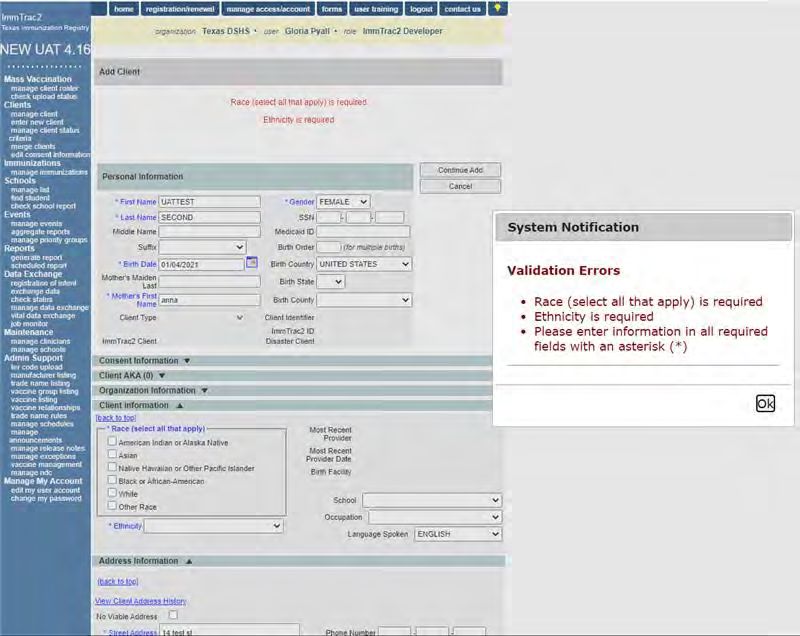
• Partnering with a home health agency to administer vaccine.Vaccination Hubs Reporting Requirements • Effective immediately, reporting into ImmTrac2 within 24 hours will be mandatory. This includes ensuring that full race and ethnicity data is submitted for all doses administered. • Continued daily reporting into the TDEM portal by 8am. • Beginning the week of February 8th, if your ImmTrac2 reporting is not current, it could impact your weekly allocation and you will not receive the same level of allocation until the reporting is caught up. • Manual data entry into ImmTrac2 may pose a challenge to your site.
ImmTrac2 Updates

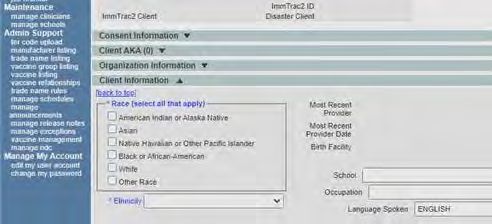
 • As of tomorrow, 2/4, Race/Ethnicity will now be a required field in ImmTrac2
ImmTrac2 COVID-19 Rapid Entry Companion
Application
 In the coming weeks, healthcare providers will be able to enter patient records for
 COVID-19 Vaccinations faster and easier.

 Provider Benefits:
 • Modern User Interface (UI) with a simplified, 4-step process to enter COVID-19
   vaccination records quickly
 • Reduced number of required fields that focus only on COVID-19 vaccinations
   patients
 • Easier data entry with new UI components and utilizing auto-fill for entering
   multiple records in a row
 • Improved field hints with intuitive instructions to help providers at point of data
   entry
Data Entry Assistance Survey Results

•   82 Hub sites surveyed
•   70 Hub sites responded
•   54 Hub sites requested data entry assistance

                                   Total   Average   Max     Min
    Number of Data Entry Support
                                   586       11      100      1
    Staff Requested

• TDEM colleagues will be reaching out to sites needing assistance.
• Any questions, please email Localvaccines@dshs.texas.gov
Vaccination Hubs
Second Dose
• Must plan to hold vaccination clinics for second dose.
• Carefully plan and order second doses in VAOS.
• Ensure your vaccine clinics are scheduled after vaccine delivery.
• Recommended not to have vaccine clinics on Monday mornings due to
vaccine delivery schedule
Note: You will not automatically be allocated second doses. You
must request a second dose allocation 7-14 days after your first
dose shipment depending on whether you have ordered Pfizer
(21) or Moderna (28.)Timeline for Requesting Second Dose Allocations
This calendar shows an example timeline for when COVID-19 Vaccine Providers should request Second Dose
allocations and when they might be delivered:
Monday Tuesday Wednesday Thursday Friday
First Dose shipment Begin administering First
received (Pfizer or Doses (Pfizer or
Moderna) Moderna)
Submit allocation request for Pfizer Second Dose by Thursday 5 PM LOOK FOR AN EMAIL
REMINDER FROM DSHS
FOR ORDERING 2ND DOSE
Submit allocation request for Moderna Second Dose by Thursday 5 PM ALLOCATIONS ON TIME
Second Dose of Pfizer Begin Pfizer Second Dose
shipment received administration (Day 21)
Second Dose of Moderna Begin Moderna Second Dose
shipment received administration (Day 28)Requesting Allocations in VAOS
Did you know… Providers should request allocations weekly by Thursday at 5PM
CT for allocations that can be administered in a one-week period.
Providers should only
request allocations for
a quantity of doses
that can be
administered to their
patient population in a
Now that Providers
one-week period. are requesting
allocations, they do
not need to accept
allocations in VAOS.
Providers should receive an email notification of their
allocation between Wednesday and Friday after they submit
their allocation request.Vaccination Hubs
Safety & Reporting
• Ensure that recipients are monitored for allergic reactions for the
appropriate amount of time after they are vaccinated, as per the
clinical guidelines from the CDC.
• Report any adverse events to Vaccine Adverse Events Reporting
System
• Vaccine Adverse Event Reporting System (VAERS)
https://vaers.hhs.gov/reportevent.html
• Proactively discuss, promote and encourage enrollment in V-safe
https://vsafe.cdc.gov/
https://espanol.cdc.gov/coronavirus/2019-ncov/vaccines/safety/vsafe.htmlSAFETY MONITORING & REPORTING CAREFUL PLANNING & ORDERING
What does
Success Look
Like? COMMUNICATION
Phase 1A & 1B Prioritize >75 Yrs
DAILY REPORTINGVaccination Hubs Do’s & Don’ts
Best Practices
Dimmit Regional Hospital
Dimmit Regional Hospital (DRH) Hub
• Collaboration / teamwork key to our success
    • DRH, Dimmit County Emergency Planning Office, Middle Rio Grande Development Council 9-1-1, City of
      Carrizo Springs, Victory/MedShield (9-1-1) Ambulance, SWTJC ADN Nursing, and many other volunteers
    • 50 team members in total (all empowered)
• Teams
    •   Registration (Online, getvaccine@dimmitregional.com, and direct phone line)
    •   Materials Management
    •   Screening on site
    •   Registration verification and acceptance of consent forms
    •   Up to six vaccination teams to effectively process first and second doses
    •   On-site medical provider
    •   On-site ambulance
    •   Post-vaccination observation
    •   ImmTrac2 documentation (very labor intensive, minimum of 2 min per, calls are required at times, legibility is a
        problem, need to double check information entered)
Dimmit Regional Hospital (DRH) Hub (con’t)
• Prep work
• Multiple meetings leading up to initial date
• Multiple facility walk-throughs prior to initial date
• Facility set-up days prior
• Reach out for lessons learned
• Reach out for volunteers
• Process
• 8am through 5pm, but will stay until all vaccines are administered
• Vaccinations by appointment (every top of the hour)
• Specific flow of traffic
• Tried single mixing station, but the team prefers to mix at each station
• 14.2 vaccinations per vaccination chair per hour (two or three vaccination chairs per team)
• Morning huddle (ready brief), hard stops throughout the day (dose count/registration count), evening huddle
(review)
• Code “Yellow”
• Other notes
• Eager people
• Watch/listen for external advertisementsDimmit Regional Hospital (DRH) Hub (con’t)
Arena + Ambulance
X
X X X
X
Break
room X
X 5x5 X
chairs
X X X X
X X
Registration
Conference room – 2-3 people/
laptops for entering into X
Immtrac2 Temp screening table
Front doors
Sidewalk – maintain 6’ social distancing throughout X X
Chairs Flow
Partitions Cones
Parking lot X Volunteers
Doors
Tables X Vaccination teamsBest Practices Houston Health Deparment
Guiding Principle
The Houston Health Department has consistently prioritized
“Access and Equity” in serving our constituents during the COVID-
19 pandemic. All our responses and interventions have been
designed with “Access and Equity” in mind.

Access is defined as geographic proximity and minimizing or
overcoming barriers such as language or cultural factors.

Equity is defined as an enhanced focus on serving marginalized or
underserved population in terms of race/ethnicity, poverty status,
residing in underserved neighborhoods, disability status, linguistic
isolation, employment sector and environmental pollution.
Partner Engagement – Equity
• Federally Qualified Health Centers
   • Senior Population
   • Ethnic Minorities
• Pharmacy
   • Senior population
   • High risk zip codes
• Health Equity Response (HER) Taskforce
   • Ethnic specific providers associations
   • Messaging
• Area Agency on Aging
   • Homebound Service Delivery
   • High Risk Zip Codes Congregate Settings
Partner Engagement – Access
Work with contracted partners to increase capacity, hours of
access, geographical footprint, settings (smaller for seniors) and
weekend access

     •   Houston EMS
     •   Curative
     •   Acadian
     •   Walgreens
     •   Kroger

Doses Administered
• 1st Dose – 43,436
• 2nd Dose – 3,705
Race/Ethnicity Status of Vaccine Recipients
January 27, 2021
Race/Ethnicity of all recipients Race/Ethnicity of recipients served
served in Houston/Harris County by Houston Health Department
11.30%
21.70%
14.00%
1.60% 43.30%
48.30%
13.40% 14.90%
12.40% 18.00%
White Black Asian Other Hispanic/Latino White Black Asian Other Hispanic/Latino
Note: Race/Ethnicity is not Note: Race/Ethnicity is not
reported for 36.4% of recipients reported for 12.2% of recipientsDoses Administered (February 1, 2021) 1st Dose – 43,436 2nd Dose – 3,705
Resources
Resources
Website for Providers:                              ImmTrac2 support Email:
www.dshs.texas.gov/coronavirus/immunize/provid      ImmTrac2@dshs.texas.gov
er-information.aspx
                                                    V-safe
FAQ for Providers                                   https://vsafe.cdc.gov/
https://www.dshs.texas.gov/immunize/covid19/CO      https://espanol.cdc.gov/coronavirus/2019-
VIDproviderfaq.pdf                                  ncov/vaccines/safety/vsafe.html

DSHS COVID-19 Vaccine Provider hotline:             Vaccine Adverse Event Reporting System (VAERS):
(877) 835-7750, 8 a.m. to 5 p.m., Monday - Friday   https://vaers.hhs.gov/reportevent.html
Email: COVID19VacEnroll@dshs.texas.gov.
COVID19VacMgmt@dshs.texas.gov
                                                    Moderna (Pregnancy Registry & MedInfo):
                                                    medinfo@modernatx.com
Website to enroll as a COVID-19 provider:           1-866- MODERNA (1-866-663-3762)
EnrollTexasIZ.dshs.texas.gov.                       www.modernatx.com/covid19vaccine-eua
General Questions:
Email: COVIDvaccineQs@dshs.texas.gov                Pfizer Medical Information
                                                    Visit PfizerMedicalInformation.com or call 1-800-
Texans Vaccinated for COVID-19 website              438-1985.
                                                    CDC McKesson:
                                                    Pfizer #: 833-272-6634
                                                    Moderna #: 833-343-2703
COVID-19 Provider Support
COVID-19 Vaccine Provider Vaccine Allocation &
Category
COVID-19 Vaccine Reporting for
Enrollment, Vaccine Information, Ordering System
Distribution COVID-19 Vaccines
and Safety Reporting (VAOS)
• How to become a COVID-19 • Who has access to VAOS • Tracking shipments • Reporting to ImmTrac2
Vaccine Provider
via online web
• In-progress applications “How to” questions Vaccine
• • application
• Updating information in Provider about completing a task transfers/returns
Sample questions
Enrollment accounts, including or process in VAOS • Reporting to ImmTrac2
population numbers
via data exchange
• Allocations • VAOS or Tableau
• Waste disposal/return dashboards • Reporting to TDEM
• COVID-19 vaccine safety
• Storage & handling • Tuesday/Thursday
• Administration of vaccine Provider Webinars
• Vaccine distribution & shipments
• Reporting adverse events to VAERS
Provider Help Desk Vaccine Management Shipments: ImmTrac2 Web app: :
Provider Support
(877) 835-7750, 8 a.m. to 5 p.m., Mailbox: COVID19VacShipments@dshs ImmTrac2@dshs.Texas.gov
Channel
Monday through Friday or Email: COVID19VacMgmt@dshs. .texas.gov Data Exchange:
COVID19VacEnroll@dshs.texas.gov Texas.gov Transfers / Returns: ImmTracMU@dshs.Texas.gov
COVID19VacEnroll@dshs.texa TDEM/ TMD Call Center:
s.gov vaccine@tdem.texas.govQ&A
DISCLAIMER
The information presented today is based on CDC’s recent guidance and MAY change.
                                 February 3, 2021
You can also read


