E-MOBILITY TRENDS AND TARGETS - SLOCAT
←
→
Page content transcription
If your browser does not render page correctly, please read the page content below
WORK-IN-PROGRESS

E-Mobility Trends and Targets
As of May 16, 2019 (constantly updated)

                                              This overview on E-Mobility includes:

                                              54 market trend reports
                                              by    various     research    institutes,
                                              consultancy firms and organizations.

                                              68 countries,
                                              72 cities or regions and
                                              50 companies
                                              With their plans and targets provide a
                                              picture on e-mobility.

                                              23 automobile companies
                                              and their vision on e-mobility are
                                              included.

                                          1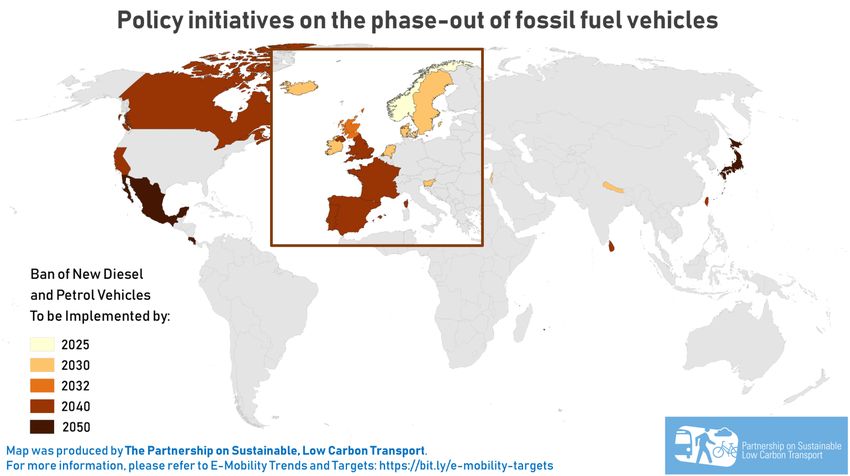
WORK-IN-PROGRESS

                                                                                                                                     If you have any news or relevant developments to share
This document compiles information on the development of electric mobility with regard to market trend                               or want to reference the document, please send an
reports; official targets by countries, cities, and companies; and industry plans. This document is a work-in-                       email to nikola.medimorec@slocatpartnership.org.
progress and will be expanded with additional narrative and data on e-mobility.

Contents

E-mobility Targets by Countries.............................................................................................................................................................................. 3
E-Mobility Targets by Cities and Regions .............................................................................................................................................................. 18
E-Mobility Targets by Companies ......................................................................................................................................................................... 26
Market Trend Reports .......................................................................................................................................................................................... 30
Automobile Manufacturer/OEM Targets .............................................................................................................................................................. 56

                                                                                                        2
WORK-IN-PROGRESS

E-mobility Targets by Countries
Policy plans by countries and cities can work as catalysts towards e-mobility. From January to July 2017 alone, 16 policy announcements were recorded, more than in any
previous year. The overview below indicates that the ambition level has increased over time, and in 2017 some of the most progressive announcements have been made.

A few countries and regions have announced plans to phase-out fossil fuel vehicles and shift to e-mobility. Leading examples are shown in the map above. Countries and regions
with the intention to phase out fossil fuel-powered vehicles by year:

                                        2025:   Norway
                                        2030:   Denmark, Ireland, Israel, Nepal, Netherlands, Slovenia, Sweden
                                        2032:   Scotland
                                        2040:   British Columbia, California, France, Portugal, Spain, Sri Lanka, Taiwan, United Kingdom
                                        2050:   Costa Rica, Japan, Mexico
                                                                                      3
WORK-IN-PROGRESS
Most of the countries plan to ban sales of internal combustion engines. India has previously made statements regarding a possible phase-out by 2030 but the most recent EV
roadmap does not include any phase-out targets.
Other countries have set targets for absolute number or overall share of electric vehicles by a certain year. 2020 is a major target year, with Spain aiming for 2.5 million electric
vehicles, Germany and India aiming for 1 million, Portugal targeting 750,000 and South Korea aiming for 200,000 electric cars. Country targets for 2030 include Finland’s goal of
250,000 electric vehicles, Malaysia aiming for 100,000 electric cars, and South Africa’s targeting a 20% share of electric cars. Norway is a leading country in terms of e-mobility
thanks to financial incentives.
Modes Charging
Announcement Infrastructure
Country Description
Date Car/Taxi Bus Trucks Others No
Mention/All
South Korea March 2019 To shift commercial vehicles (including trucks and ✓ ✓
construction machinery) to run on fuel cell energy
by 2035
July 2018 1,000 hydrogen-powered buses to be on road in ✓
Korea by 2022
December The government will strive to boost the number of ✓ ✓ ✓
2014 battery-powered cars on the road from the current
800 to 3,000 in 2015 and 200,000 in 2020 and
diversify the portfolio to taxis, buses and trucks .
The initial target was 1 million vehicles by 2020.
India March 2019 India has now more than 100 electric buses ✓
March 2018 Indian Government program FAME II with $ 1.3 ✓ ✓ ✓
billion, to support demand-side incentives, buses,
cars, two/three-wheelers
Launch of National E-Mobility Program to have
more than 30% of EVs by 2030
May 2017 Every car sold in India from 2030 will be electric ✓
2013 The 2020 target: 2W - 5 million vehicles, 3W - ✓ ✓ ✓ ✓
30,000, 4W - 1 million vehicles, LCV - 50,000, Buses
- 30,000 = Total 5 to 7 million vehicles
Costa Rica February 2019 Costa Rica’s 2050 decarbonisation plan includes ✓
25% of vehicles, 70% of buses and taxis to be zero
emission by 2035; 100% of vehicle sales, 60% of
vehicles and 100% of buses to be zero emission by
2050
4WORK-IN-PROGRESS
Modes Charging
Announcement Infrastructure
Country Description
Date Car/Taxi Bus Trucks Others No
Mention/All
January 2018 Signed law about tax exemption to promote e- ✓
mobility
December Costa Rica aims for 37,000 new EVs within 5 years ✓
2017
June 2017 Preparing bill to ban import of fossil fuel cars by ✓
2030
November greater use of electric transportation, both public ✓ ✓
2015 and private
Sweden January 2019 To ban fossil fuel cars by 2030 ✓
October 2017 E-bikes are now subsidised with 25% purchase ✓
grant
January 2013 600,000 electric vehicles and 14000 publicly ✓ ✓
accessible infrastructure stations by 2020 (street
or parking lot charging station)
Canada January 2019 100% zero-emission vehicle sales by 2040 ✓
October 2013 Highway 401 (900 km) electrified with 20 public ✓
charging stations
Indonesia January 2019 Target to have 2.1 million electric motorcycles and
2,200 electric cars by 2025
August 2017 Indonesia to introduce tax breaks for low-carbon ✓
cars to achieve 29% less emissions by 2030
October 2015 Electric vehicle and hybrid, each 1% and 5% share ✓
in 2050
Netherlands January 2019 In 2018, sales of e-bikes higher than normal bikes ✓
January 2018 First electric container ship to start operating in ✓
summer 2018 between Belgium and the
Netherlands
October 2017 New government confirms plan to ban new petrol ✓
and diesel cars by 2030
April 2016 Netherlands moots electric car future with petrol ✓
and diesel ban by 2025
2015 75,000 privately owned electric vehicles on the ✓
country’s roads by 2020, and 50% of all new cars
sales plug-in electric—with at least 30% of these
vehicles fully electric—by 2025
5WORK-IN-PROGRESS
Modes Charging
Announcement Infrastructure
Country Description
Date Car/Taxi Bus Trucks Others No
Mention/All
January 2013 200,000 electric vehicles and 32,000 publicly ✓
accessible infrastructure stations by 2020 (street
or parking lot charging station)
July 2009 65 million euros to make “the Netherlands the ✓
guide and international laboratory for electric
driving”
Portugal November Portugal intends to ban sales of ICE vehicles by ✓
2018 2040
July 2017 Portugal will soon be fully covered by electric car ✓
charging stations, one in each municipality
January 2013 200,000 electric vehicles and 12,000 publicly ✓
accessible infrastructure stations by 2020
2009 The Portuguese State also committed to play an ✓
educational role and defined that EV’s will have a
20% share of the annual renewal of the public car
fleet, starting in 2011. It is estimated
approximately 130,000 EVs will in circulation in
Portugal by 2015 and 750,000 by 2020.
Spain November Spain to propose ban sales of ICE vehicles by 2040 ✓
2018
August 2014 Spain offers 200 Euro purchase subsidy for e-bikes ✓
January 2013 2,500,000 electric vehicles and 82000 publicly ✓ ✓
accessible infrastructure stations by 2020 (street
or parking lot charging station)
January 2013 Spain established a target of 250,000 BEVs and ✓
PHEVs by 2014 and 2.5 million EVs by 2020
Israel October 2018 Phase out new diesel and gasoline cars by 2030 ✓
To have 177,000 electric cars by 2025 and 1.5
million by 2030
February 2018 To eliminate use of coal, gasoline and diesel for ✓
energy production and transport by 2030 but
continue using natural gas
6WORK-IN-PROGRESS
Modes Charging
Announcement Infrastructure
Country Description
Date Car/Taxi Bus Trucks Others No
Mention/All
Denmark October 2018 Ban of sales of new ICEs is planned, starting with ✓
only hybrids, EVs and fuel cell cars by 2030 and
only EVs and fuel cells by 2035
By 2030, there will be more than one million EVs
on the roads
January 2013 200,000 electric vehicles and 5,000 publicly ✓ ✓
accessible infrastructure stations by 2020 (street
or parking lot charging station)
Iceland September Iceland is to ban registrations of fossil fuel cars by ✓
2018 2030
Mexico September By 2050, to sell only zero emission vehicle (5% of ✓
2018 new vehicle sales by 2030 and 50% by 2040)
United July 2018 • Expects that 100% of cars to be zero- ✓ ✓ ✓ ✓
Kingdom emission by 2040
• Want to see at least 50 to 70% of new car
sales and 40% of vans to be ultra low
emission by 2030
• 25% of government fleet to be ultra low
emission by 2022
March 2018 Encouraging ULEV uptake to realize every new car ✓
an ULEV from 2040 and an effectively decarbonised
fleet by 2050
July 2017 New diesel and petrol cars and vans to be banned
from 2040 in UK
June 2017 • 60% of new cars and vans to be electric ✓ ✓
vehicles by 2030.
• 100% of new cars electric by 2040.
• The United Kingdom established a target
of 1.55 million vehicles by 2020. € 300
million will be devoted to promoting
electric cars between 2009 and 2014.
January 2013 1,550,000 electric vehicles and 122,000 publicly ✓ ✓
accessible infrastructure stations by 2020 (street or
parking lot charging station)
7WORK-IN-PROGRESS
Modes Charging
Announcement Infrastructure
Country Description
Date Car/Taxi Bus Trucks Others No
Mention/All
Japan July 2018 All Japanese cars to be electric by 2050 ✓
June 2017 To increase the share of electric vehicles and plug- ✓ ✓ ✓ ✓
in hybrid vehicles to between 20 and 30 percent
and also the share of fuel cell vehicles up to 3
percent among total new passenger vehicle sales
by 2030.
June 2014 To develop technologies to produce battery packs
whose energy density stands at 250Wh/kg and
output density at 1500W/kg for EVs; and energy
density at 200Wh/kg and output density at
2500W/kg for PHEVs; and the cost at ¥20,000/kWh
for both in the year 2020.
2010 20% sales by 2020 and Charging station target of 2
million (normal) and 5000 (fast)
Kyrgyzstan July 2018 No import taxes on EVs from July ✓
Uzbekistan July 2018 Uzbekistan introduces zero duty on import of ✓
electric vehicles from January 2019
China July 2018 New target to see 2 million EVs per year by 2020 ✓
December China extends EV rebate to 2020 ✓
2017
September • China considers to phase out diesel and ✓ ✓
2017 petrol cars
• China builds world’s largest EV charging
network with 167,000 stations
• To introduce new energy vehicle quota in
2019
2015 • NEVs will reach 5% of the total vehicle ✓ ✓ ✓
market demand by 2020, and 20% by
2025, China issued the “Electric vehicle
charging infrastructure development
guide (2015-2020)” targeting 12,000 new
centralized charging and switch station
and >4.8 million charging spots
8WORK-IN-PROGRESS
Modes Charging
Announcement Infrastructure
Country Description
Date Car/Taxi Bus Trucks Others No
Mention/All
(accommodating for needs of 5M NEVs by
2020)
• The country's future roadmap of new-car
sales projects 7 million ZEVs by the year
2025
September Second phase of e-bus subsidy policies: all-electric ✓
2013 buses to receive 38,000 to 64,000 euros, hybrids
32,000 euros and fuel cell buses 64,000 euros
January 2009 • “Ten Cities, Thousands of Vehicles” ✓
demonstration program
• Pure battery vehicle purchase subsidy of
64,000 euros and 77,000 euros
respectively per vehicle hybrid bus could
receive 64,100 euros to 54,000 euros
Scotland June 2018 Two new funds with a total of 1.3 million GBP are ✓
being announced to encourage more people to use
electric bicycles
September Scotland to ban sales of fossil fuel-powered ✓
2017 vehicles by 2032
40% of car sales by 2032 to be EVs and other low
emission vehicles
June 2009 Almost complete decarbonisation of road ✓ ✓
transport by 2050 with significant progress by 2030
through wholesale adoption of electric cars and
vans, and significant decarbonisation of rail by
2050
Norway May, 2018 To have emission-free vessels in Fjords and near ✓
harbors by 2026
January 2018 All short-haul flights 100% to be electric by 2040 ✓
September Differentiated purchase and use taxes on vehicles ✓ ✓ ✓ ✓
2016 are essential for a quick introduction of zero-
emission vehicles and plug-in hybrids. Shoreside
electric power and electric charging power is to be
9WORK-IN-PROGRESS
Modes Charging
Announcement Infrastructure
Country Description
Date Car/Taxi Bus Trucks Others No
Mention/All
available in ports where traffic and ship types
provide a great potential for emission cuts, both in
order to reduce greenhouse gas emissions and
local air pollution while at berth, and to make
hybrid solutions a viable option for ships. Within
rail transport diesel is to be replaced by carbon-
neutral fuels or low- and zero-emission
technology. After 2025, all new light vehicles, new
city buses and new light commercial vans should
be ZEVs. By 2030, all new heavy commercial vans,
75 percent of new long-distance buses and 50
percent of new lorries should be ZEVs. By 2030,
distribution of goods should take place almost
without emissions in the largest city areas in line
with the EU’s White Paper on transport
Nepal April 2018 Government announces intention to replace all ✓
fuel vehicles by EVs until 2030
Pakistan April 2018 Pakistan to cut import tax on EVs by 25% to ✓
stimulate EV Uptake
Australia March 2018 Opposition proposes to ban sales of diesel and ✓
petrol cars by 2030
Jordan March 2018 10,000 electric car charging stations to be built in ✓
Jordan
September Introduce electric cars and build 3,000 charging ✓
2015 stations over the next ten years
Germany March 2018 New government targets 100,000 public electric ✓ ✓
charging stations to be installed by 2020
Vehicle taxes for company EVs will be reduced
February 2018 EU Commission approves €70 million public ✓
support scheme for electric buses and charging
infrastructure in Germany
July 2017 1,000 new EV charging stations on German ✓
Autobahn by 2020
10WORK-IN-PROGRESS
Modes Charging
Announcement Infrastructure
Country Description
Date Car/Taxi Bus Trucks Others No
Mention/All
October 2016 • Only zero-emission passenger vehicles will ✓ ✓
be approved” for use in 2030.
• One million electric cars on German roads
by 2020.
• Make all passenger vehicles sales ZEVs by
no later than 2050
January 2013 150,000 publicly accessible infrastructure stations ✓
by 2020 (street or parking lot charging station)
April 2011 Germany aims for 1 million EVs by 2020 ✓
January 2009 Germany has set itself a battery density by volume ✓
level of 280 to 300 Wh/l by 2025
Fiji February 2018 By 2030, to have more hybrid and electric vehicles ✓ ✓ ✓
in the private and public transportation sector
Ireland February 2018 National Development Plan 2018-2027 includes ✓ ✓ ✓
target of 500,000 EVs by 2030, no new non-zero
emission vehicle to be sold in 2030, more electric
buses and no diesel only buses purchased from
2019
July 2017 Ireland wants to electrify all vehicles (cars and ✓
vans) by 2030
January 2013 350,000 electric vehicles and 2,000 publicly ✓
accessible infrastructure stations by 2020
2011 By 2020 the EV contribution to the passenger car ✓ ✓
segment is 10%, growing to 60% by 2050 in the
medium scenario
Thailand February 2018 ChargeNow expands charging network in Thailand ✓
March 2016 The goal for Thailand is to get 1.2 million electric ✓ ✓
vehicles and build 690 charging stations on its
roads by 2036
11WORK-IN-PROGRESS
Modes Charging
Announcement Infrastructure
Country Description
Date Car/Taxi Bus Trucks Others No
Mention/All
Ukraine January 2018 Ukrainian Parliament has adopted a provisional ✓
exemption on value-added tax and excise tax for
all electric vehicles for 2018
Poland December Polish government adopts e-mobility draft with no ✓ ✓
2017 excise tax on electric vehicles, zero parking fees for
e-car drivers and clean transport zones and 6,000
charging stations
September By 2025, there will be a million electric cars on ✓ ✓
2017 polish roads, as well as introducing the concept of
electrification of public transport.
April 2017 Roadmap for Deployment of E-mobility Charging ✓ ✓
Infrastructure in Poland
February 2017 41 cities and municipalities signed an agreement to ✓
buy fleets of electric buses by 2020
September Poland aims to have 1 million electric cars on its ✓
2016 roads by 2025
January 2013 46,000 publicly accessible infrastructure stations ✓
by 2020 (street or parking lot charging station)
Singapore December Singapore's first electric car-sharing service was ✓ ✓
2017 officially launched with 80 cars and 32 charging
stations
June 2016 1,000 electric cars will be rolled out across ✓ ✓
Singapore, powered by 2,000 charging points by
2020
Sri Lanka November Replace all state-owned vehicles with electric or ✓
2017 hybrid models by 2025 and all private vehicles by
2040
November To cut taxes on electric cars by at least one million ✓ ✓ ✓
2017 rupees (6,500 USD), also less for electric buses and
two/three-wheelers
April 2015 10% of vehicle fleet to be electric by 2020 ✓
Iran November Tax exemptions planned for hybrid electric vehicles ✓
2017
12WORK-IN-PROGRESS
Modes Charging
Announcement Infrastructure
Country Description
Date Car/Taxi Bus Trucks Others No
Mention/All
Slovenia October 2017 Slovenia to ban new fossil-fuel cars from 2030, ✓
reduce debt
January 2013 14,000 electric vehicles and 3000 publicly ✓ ✓
accessible infrastructure stations by 2020 (street
or parking lot charging station)
United Arab September Aims for 42,000 electric vehicles (EVs) on the
Emirates 2017 emirate’s streets by 2030
May 2017 10 per cent of car fleets of federal ministries and ✓
agencies to be electric vehicles, long-term plan
aims for up to 20 per cent of government fleets to
have electric vehicles
Malaysia August 2017 By 2030, 100,000 electric cars, 100,000 electric ✓ ✓ ✓ ✓
motorcycles on the road, along with 2,000 electric
buses and 125,000 charging stations in the country
Georgia July 2017 €5.5 million sovereign loan to Georgia to be on- ✓
lent to the City of Batumi to acquire 10 battery-
electric buses
January 2017 Import taxes for Hybrids reduced by 60%, BEVs ✓
completely free of import duties
France July 2017 The French government has set out an ambitious ✓
goal for no more petrol or diesel cars to be sold in
the country by 2040.
February 2017 France offers 200 Euro subsidy on electric bicycles ✓
November 7 million charging points for plug-in hybrid and ✓
2015 electric vehicles by 2030
January 2013 97000 publicly accessible infrastructure stations by ✓
2020
October 2009 France in 2009 had established 2 million by 2020
target
Austria April 2017 Austria renews e-bike support: 500 Euro for e- ✓
cargo bike and 200 for e-bike
January 2013 250,000 electric vehicles and 12,000 publicly ✓ ✓
accessible infrastructure stations by 2020. 5%
share of all registered passenger vehicles.
13WORK-IN-PROGRESS
Modes Charging
Announcement Infrastructure
Country Description
Date Car/Taxi Bus Trucks Others No
Mention/All
South Africa April 2017 Country will have more than 2.9-million electric ✓
cars on the road by 2050, with R6.5-trillion
invested in the industry over the next four
decades.
November Target 20% hybrid-electric vehicles by 2030.
2015
Chile 2016 Target to electrify 25% of public transport bus fleet ✓
in the capital Santiago by 2025 (National Climate
Action Plan 2017-2022)
Finland November 250 000 electric vehicles by 2030 (street or parking ✓
2016 lot charging station)
January 2013 7,000 publicly accessible infrastructure stations by ✓
2020 (street or parking lot charging station)
Slovakia September Slovakia’s target is for 31 per cent of all new ✓
2016 vehicles in the country to be electric by 2030. The
Ministry plans in the future to build one charging
station for every 10 EVs.
January 2013 4,000 publicly accessible infrastructure stations by ✓ ✓
2020 (street or parking lot charging station)
New Zealand May 2016 A goal of reaching approximately 64,000 electric ✓
vehicles on our roads by the end of 2021
Andorra June 2016 Andorra Approves €9,000 Subsidy For Electric Cars, ✓ ✓
€11,000 For Electric Pickup Trucks
Belarus June 2016 • At least 10,000 electric vehicles in Belarus ✓
by 2025
• Two scenarios: 30,800 electric cars and
1,880 electric buses (optimistic scenario)
or 9, 960 electric cars and 590 electric
buses (pessimistic scenario)
Azerbaijan November Enhance the use of electric vehicles at public ✓
2015 transportation
Cabo Verde May 2015 Making government vehicles electrically powered ✓
by 2030.
14WORK-IN-PROGRESS
Modes Charging
Announcement Infrastructure
Country Description
Date Car/Taxi Bus Trucks Others No
Mention/All
Cambodia November Increase use of hybrid cars and electric vehicles ✓
2015
Colombia 2015 96 vehicles using electricity ✓ ✓
Dominica September government vehicles to be replaced by hybrids ✓
2015 vehicles
Ecuador May 2015 • Clean Mobility plan includes integrated ✓
urban transport system and all new taxis
must be electric
• All new vehicles on Galapagos to be
electric
February 2015 Government plans to promote electric mobility ✓
Marshall July 2015 Introduction of electric vehicles ✓
Islands
Mongolia November Increase the share of private hybrid road vehicles ✓
2015 from approximately 6.5% in 2014 to approximately
13% by 2030
Seychelles November More use of electric vehicles charged with ✓
2015 renewable energy technology
Mali 2015 Replace more than one-third of fossil fuels (with ✓
renewables) for transport by 2030
Bhutan November Bhutan is a 70 percent reduction in fossil fuel ✓
2014 imports by 2020 & enhance market share of EV
substantially in 5 years
Brunei December White paper on Land Transport considering zero- ✓ ✓
Darussalam 2014 emission electric vehicles, electric buses
Philippines March 2014 • Bill promoting Electric Vehicle and Hybrids ✓
which has been under the Senate since
2014
• Electric Vehicle Association of the
Philippines (EVAP) aspires for the
establishment of a national development
program for EVs
15WORK-IN-PROGRESS
Modes Charging
Announcement Infrastructure
Country Description
Date Car/Taxi Bus Trucks Others No
Mention/All
Belgium January 2013 21,000 publicly accessible infrastructure stations ✓
by 2020 (street or parking lot charging station)
Bulgaria January 2013 7,000 publicly accessible infrastructure stations by ✓
2020 (street or parking lot charging station)
Cyprus January 2013 2,000 publicly accessible infrastructure stations by ✓
2020 (street or parking lot charging station)
Czech Republic January 2013 13,000 publicly accessible infrastructure stations ✓
by 2020 (street or parking lot charging station)
Estonia January 2013 • 1,000 publicly accessible infrastructure ✓
stations by 2020 (street or parking lot
charging station)
• World’s first nationwide network of fast
chargers (165 quick charging stations)
Greece January 2013 13,000 publicly accessible infrastructure stations ✓
by 2020
Hungary January 2013 7,000 publicly accessible infrastructure stations by ✓
2020 (street or parking lot charging station)
Italy January 2013 125,000 publicly accessible infrastructure stations ✓
by 2020 (street or parking lot charging station)
Lithuania January 2013 4,000 publicly accessible infrastructure stations by ✓
2020 (street or parking lot charging station)
Luxembourg January 2013 40,000 electric vehicles and 1000 publicly ✓ ✓
accessible infrastructure stations by 2020 (street
or parking lot charging station)
Latvia January 2013 2,000 publicly accessible infrastructure stations by ✓
2020 (street or parking lot charging station)
Malta January 2013 1,000 publicly accessible infrastructure stations by ✓
2020 (street or parking lot charging station)
Romania January 2013 10,000 publicly accessible infrastructure stations ✓
by 2020 (street or parking lot charging station)
Viet Nam August 2013 100,000 electric cars as part of 6 million ✓
environmentally-friendly vehicles by 2020
EU March 2011 Halve the use of ‘conventionally-fuelled’ cars in ✓ ✓
urban transport by 2030; phase them out in cities
by 2050; achieve essentially CO2-free city logistics
in major urban centres by 2030
16WORK-IN-PROGRESS
Modes Charging
Announcement Infrastructure
Country Description
Date Car/Taxi Bus Trucks Others No
Mention/All
Antigua and August 2011 Strategic Intent for support of hybrid, flex-fuel or ✓
Barbuda electric vehicles
United States February 2011 One million electric vehicles on the road by 2015 ✓ ✓
of America
17WORK-IN-PROGRESS
E-Mobility Targets by Cities and Regions
Numerous cities are following similar bold actions as taken by national governments. For instance, by 2030, Seattle aims for a 30% share for electric vehicles, and Dubai is
targeting a 10% share. Hong Kong wants to replace all conventional buses with zero emission buses. An outstanding example is London, which plans for a zero-emission
transport system by 2050.
Modes Charging
Announcement Infrastructure
City/Region Description
Date Car/Taxi Bus Trucks Others No
Mention/All
Seoul April 2019 Seoul plans to replace 100,000 motorcycles in the ✓
capital with electric ones by 2025
July 2018 Seoul Capital Region to transform all diesel buses ✓
to CNG, electric or hydrogen buses by 2027
January 2011 Seoul's Bus Fleet Plans to Turn Half Electric by ✓ ✓
2020 and 120,000 EVs on Seoul streets by 2020
Hainan March 2019 China's island province of Hainan will ban the sale ✓
of oil-fueled automobiles throughout the province
by 2030 and shift all government fleets by 2020
N ew Delhi November Draft Electric Vehicle Policy aims for 25% of all new ✓
2018 vehicle registrations by 2023 to be battery-electric
vehicle
March 2018 1000 fully-electric buses in Delhi during the 2018- ✓
19 fiscal year, 905 electric feeder vehicle and E-
rickshaw subsidy
Santiago November 100 new electric buses introduced, plans to have ✓
2018 500 more electric buses by 2020
December Introduced 3 full electric buses in December 2017 ✓
2017 and plans to have 90 buses in 2018
Porto November Will have 86 new electric buses, representing 41% ✓
2018 of bus fleet within next two years
British November To only sell zero-emission vehicles (cars and ✓ ✓
Columbia 2018 trucks) by 2040 (10 % by 2025 and 30 % by 2030)
December Make all passenger vehicles sales ZEVs by no later ✓ ✓
2015 than 2050
Bengalore September Bengalore to have 100% electric buses by 2023 ✓
2018
18WORK-IN-PROGRESS
Modes Charging
Announcement Infrastructure
City/Region Description
Date Car/Taxi Bus Trucks Others No
Mention/All
Rotterdam July 2018 Rotterdam announced to make its busses 100% ✓
zero emission by 2029, starting with 55 new
busses by the end of next year
Medellin July 2018 Committed to change all buses to 100% electric ✓
Gothenburg July 2018 Gothenburg purchases 30 more electric buses to ✓
achieve target of 80% less transport emission by
2020, 95% of transport to be powered by
renewable energy by 2025
Maharashtra May 2018 E-Mobility programme launched, 10 EVs in ✓ ✓
Mumbai, target is to have 500,00 EVs and 100,000
jobs
Ulsan May 2018 Transform all 741 buses to fuel -cell buses by 2035 ✓
Washington, April 2018 14 EV buses put into service ✓
D.C.
Oslo April 2018 To add 70 electric buses by summer of 2019 ✓
January 2017 Subsidy of $1,200 for citizens to buy electric cargo ✓
bikes and $600 for normal e-bikes
June 2016 City of Oslo shall facilitate a city logistics system ✓ ✓
where traffic demand is reduced, and where all
new cars and light freight vehicles in Oslo shall use
renewable fuels or be plug-in hybrids from 2020.
Australian April 2018 Transition to Zero Emissions Vehicles Action Plan ✓ ✓ ✓
Capital 2018-2021 was announced, government fleet to
Territory be zero emission vehicles by 2021, zero emissions
vehicles allowed to drive in transit lanes until 2023
and charging infrastructure to be expanded
Katowice March 2018 Acquires 300 battery electric buses, now 30% of ✓
bus fleet electrified
Paris March 2018 Citizens can receive 400 Euro for purchasing an e- ✓
bike, 600 Euro for electric or conventional cargo
bikes
February 2018 800 hybrid buses employed in Paris, to have 100%
clean fleet (4,700 clean buses) by 2025
November Climate Action Plan: zero diesel vehicles by 2024, ✓ ✓
2017 no more petrol-fueled cars by 2030, Zero local
emissions by 2050
19WORK-IN-PROGRESS
Modes Charging
Announcement Infrastructure
City/Region Description
Date Car/Taxi Bus Trucks Others No
Mention/All
October 2017 Signed C40 Fossil-Fuel-Free Streets Declaration (to ✓
procure only zero-emission buses from 2025)
December Ban diesel cars and vans by 2025 ✓
2016
July 2015 Program to give $11,400 incentive for people ✓
trading in an old diesel for an EV
Buenos Aires March 2018 Buenos Aires to introduce 8 electric buses on four ✓
lines in trial phase, part of Clean Mobility Plan
2035
Rome March 2018 Rome is banning all oil-burning cars by 2024 ✓
October 2017 Signed C40 Fossil-Fuel-Free Streets Declaration (to ✓
procure only zero-emission buses from 2025)
Lhasa March 2018 312 hybrid (gas-electric) buses now in operation ✓
and by end of 2018 over 80% of buses to be clean
vehicles
Salt Lake City March 2018 City removes fees at all 28 electric charging ✓
stations
Karnataka February 2018 • Developed Electric Vehicle and Energy ✓ ✓ ✓ ✓ ✓
Storage Policy 2017
• Achieve 100% electric mobility for auto
rickshaws, cab aggregators, corporate
fleets and school buses in Bengaluru by
2030
• Introduce 1,000 EV buses
• Good transport with electric vehicles
California February 2018 Lawmakers wants all Uber, Lyft cars to be electric ✓
by 2028
January 2018 Seeks Ban on Fossil-Fueled Vehicles by 2040 ✓
January 2017 over 4 million zero-emission vehicles by 2030 ✓ ✓
October 2016 An updated roadmap toward 1.5 million zero- ✓ ✓
emission vehicles on California roadways by 2025
December Make all passenger vehicles sales ZEVs by no later ✓ ✓
2015 than 2050
Alexandria January 2018 Purchasing 15 all-electric buses and 18 charging ✓ ✓
points
20WORK-IN-PROGRESS
Modes Charging
Announcement Infrastructure
City/Region Description
Date Car/Taxi Bus Trucks Others No
Mention/All
March 2018 London Police added first ever zero-emission ✓
vehicles, goal is to have 550 vehicles by 2020
London January 2018 First EV taxis start service ✓
October 2017 Signed C40 Fossil-Fuel-Free Streets Declaration (to ✓
procure only zero-emission buses from 2025)
June 2017 • 1500 electric vehicle charging points to be ✓ ✓ ✓ ✓ ✓
installed across London
• The Mayor’s aims are for all taxis and
Private Hire Vehicles (PHVs) to be zero
emission capable by 2033, for all buses to
be zero emission by 2037, for all new road
vehicles driven in London to be zero
emission by 2040, and for London’s entire
transport system to be zero emission by
2050.
Oregon January 2018 Electric Vehicle Rebate beginning ✓
Taiyuan January 2018 Electrified entire taxi fleet in 2016, buses in 2018 ✓ ✓
and plans to ban ICE cars
Chisinau December NAMA on Hybrid and Electric Buses ✓
2017
Hawaii December Hawaii committed to 100% renewable transport by ✓
2017 2045, Hawaii Clean Energy Initiative
Cologne December 50 electric buses to be purchased ✓
2017
Havana November Trial run of Cuba’s first electric bus started on ✓
2017 November 27
Tirana October 2017 Started testing electric buses after introducing ✓ ✓
electric taxis
Vermont September To receive two electric buses as part of federal ✓
2017 grant
Utrecht September • Utrecht introducing electric buses ✓
2017
Beijing October 2017 • Study shows that without technological ✓ ✓ ✓
breakthrough and policies EVs will have
market share of 7% by 2030, with new
technology and supporting policies 70% of
21WORK-IN-PROGRESS
Modes Charging
Announcement Infrastructure
City/Region Description
Date Car/Taxi Bus Trucks Others No
Mention/All
February 2017 new vehicle sales will be electric, 50% of
vehicle stock will be electric by 2030
November • All newly added or replaced taxies in the
2016 city of Beijing will be converted from
gasoline to electricity.
• Beijing plans to install 435,000 charging
stations between 2016 and 2020
Barcelona October 2017 Signed C40 Fossil-Fuel-Free Streets Declaration (to ✓
procure only zero-emission buses from 2025)
October 2014 Barcelona supports e-bike buyers with 250 Euro ✓
(support was provided until end of 2017)
Cape Town October 2017 Signed C40 Fossil-Fuel-Free Streets Declaration (to ✓
procure only zero-emission buses from 2025)
September First electric buses have been introduced ✓
2017
Copenhagen October 2017 Signed C40 Fossil-Fuel-Free Streets Declaration (to ✓
procure only zero-emission buses from 2025)
July 2017 Copenhagen to procure only electric buses from ✓
2019
September By 2025, public transport is carbon neutral, 20- ✓ ✓ ✓
2012 30% LDVs and 30 to 40% HDV’s use low carbon
fuel (including electric)
Heidelberg October 2017 Signed C40 Fossil-Fuel-Free Streets Declaration (to ✓
procure only zero-emission buses from 2025)
Los Angeles October 2017 Signed C40 Fossil-Fuel-Free Streets Declaration (to ✓
procure only zero-emission buses from 2025)
July 2017 Move to 2,300 electric buses for emission-free
public transport fleet by 2030
March 2017 Increase the percentage of electric and zero ✓
emission vehicles in the city to 10% in 2025 and
25% in 2035
Mexico City October 2017 Signed C40 Fossil-Fuel-Free Streets Declaration (to ✓
procure only zero-emission buses from 2025)
December Ban diesel cars and vans by 2025 ✓
2016
22WORK-IN-PROGRESS
Modes Charging
Announcement Infrastructure
City/Region Description
Date Car/Taxi Bus Trucks Others No
Mention/All
Milan October 2017 Signed C40 Fossil-Fuel-Free Streets Declaration (to ✓
procure only zero-emission buses from 2025)
Quito October 2017 Signed C40 Fossil-Fuel-Free Streets Declaration (to ✓
procure only zero-emission buses from 2025)
Seattle October 2017 Signed C40 Fossil-Fuel-Free Streets Declaration (to ✓
procure only zero-emission buses from 2025)
September 30% of all light-duty vehicles in Seattle operate ✓ ✓
2016 under electric power by the year 2030
Vancouver October 2017 Signed C40 Fossil-Fuel-Free Streets Declaration (to ✓
procure only zero-emission buses from 2025)
November Approximately 70 per cent of light-duty vehicles ✓
2016 will plug into an external power source in 2050
Bridgetown September Bridgetown, the capital of Barbados, introduced ✓
2017 solar-powered electric vehicle
Oxford August 2017 100 electric vehicle charging points in "first on- ✓
street charging pilot of its size in the world"
beginning in 2017
Quebec January 2017 • Starting with the 2018 model year, 3.5 per ✓
cent of all auto sales in the province will
April 2016 have to be from those types of vehicles.
That threshold will rise to 15.5 per cent
December for 2025 models.
2015 • Quebec sets target of 100,000 electric
and plug-in hybrids by 2020
• Make all passenger vehicles sales ZEVs by
no later than 2050
Queensland July 2017 Queensland will have a 2,000km network with 18 ✓ ✓
electric vehicle charging stations
New York City April 2017 20% of the motor vehicles sold for use in New York ✓
City to be electric by 2025, up from less than 1%
today
December Add 2,000 electric vehicles (EVs) to its municipal ✓
2015 vehicle fleet by 2025
23WORK-IN-PROGRESS
Modes Charging
Announcement Infrastructure
City/Region Description
Date Car/Taxi Bus Trucks Others No
Mention/All
Hong Kong April 2017 The ultimate objective of the Government is to ✓
have zero emission buses running across the
territory.
Dubai January 2017 A 10 per cent share for hybrid and electric vehicles ✓
among all new cars purchased between 2016 and
2020. It also targets that 2 per cent of all cars in
Dubai will be either electric or hybrid vehicles by
2020 and it will reach 10 per cent by 2030
San Francisco April 2017 Starting January 2018, the ordinance requires new ✓
residential, commercial, and municipal buildings to
have sufficient electrical infrastructure to
simultaneously charge vehicles in 20% of parking
spaces.
Mexico City December Ban diesel cars and vans by 2025 ✓
2016
Madrid December Ban diesel cars and vans by 2025 ✓
2016
Athens December Ban diesel cars and vans by 2025 ✓
2016
Amsterdam September The target is to become a zero emissions city by
2016 2025, with opportunities for everyone to adopt
electric transport.
September
Belgrade Purchase of electric buses ✓
2016
Montreal June 2016 10-point plan, among are converting municipal ✓ ✓ ✓
fleet to electric until 2020, electrify public
transport (purchase only electric by 2025, set up
1000 charging stations by 2020
US states December • Make all passenger vehicles sales ZEVs by ✓ ✓ ✓
(Connecticut, 2015 no later than 2050
Maryland, • Commit to 1.8 million zero-emission
Massachusetts, May 2014 vehicles by 2025 (3.3 million including
New York, California).
Oregon, Rhode
Island,
Vermont)
24WORK-IN-PROGRESS
Modes Charging
Announcement Infrastructure
City/Region Description
Date Car/Taxi Bus Trucks Others No
Mention/All
Reykjavik September • All municipal vehicles will be powered ✓ ✓
2016 through GHG emission-free energy by
2025
• Modal split will consist of 58% private
vehicles, 12% public transport, 30%
walking and cycling by 2030
• Vehicle traffic and public transport will be
emission-free by 2040
• Long-term goal: reduce GHG emissions by
73% before 2050
US States 2016 West Coast Electric Highway with thousands of ✓
(Washington, fast-charging stations
Oregon,
California)
Portland June 2015 • Electric vehicles will displace 10 percent ✓
of all miles driven by 2030 and an
additional 15 percent of all miles driven
by 2050.
• An estimated 50,000 electric vehicles in
the metro area
Brussels May 2016 Brussels aims to fully electrify its bus fleet by 2030 ✓
Washington December • 20 percent of new vehicles electric by ✓
2015 2017
February 2015 • 50,000 Plug-In Electric Vehicles by 2020
Stockholm May 2011 Ambition to be one of the world’s leading clean ✓
vehicle cities by 2030 with electric vehicles playing
important role in this transformation.
Jeju May 2012 • 371,000 electric cars and 225,000 ✓ ✓
rechargers will be available across the
island by 2030
• All its vehicles to be electric by 2030
Illinois 2009 By July 1, 2015, at least 20% of new passenger ✓
vehicles purchased must be hybrid electric vehicles
(HEVs) and 5% must be battery electric vehicles
(EVs); and by July 1, 2025, at least 60% of new
25WORK-IN-PROGRESS
Modes Charging
Announcement Infrastructure
City/Region Description
Date Car/Taxi Bus Trucks Others No
Mention/All
passenger vehicles purchased must be HEVs and
15% must be EVs .
E-Mobility Targets by Companies
A leading company in the field of e-mobility is Deutsche Post DHL, which has set a long-term goal to reduce all logistics-related emissions to zero by 2050
through its Go Green Program, in which electric mobility is poised to play a major role. The overview also includes all members of the EV100 group by The
Climate Group.
Modes Charging
Announcement Infrastructure
Company Description
Date Car/Taxi Bus Trucks Others No
Mention/All
16 of UK’s September • By 2020, these 16 fleets alone will put ✓
largest van 2018 more electric vans on the road than have
fleet operators been purchased by the whole UK industry
join Clean Van in the last year (2,400 in total)
Commitment • First time fleets collaborate to kickstart
the replacement of UK’s 4 million diesel
vans by investing £40 million sending
clear demand signal to manufacturers
• Further commitment for 18,000 electric
vans to replace diesel vans by 2028
Signify (Philips September Joined EV100 with the goal to electrify company ✓
Lighting) 2018 fleet by 2030
Swedavia July 2018 • Swedish airport operator Swedavia made ✓
operations at Visby Airport fossil fuel free
• 10 more airports to follow until 2020
Uber June 2018 Uber launches EV Champions program, aims to ✓
deliver at least 5 million rides by EV in 7 pilot cities
in USA
September UberX has to be offered through hybrid and ✓
2017 electric vehicles in London from 2020, for other Uk
cities, the goal is 2022
26WORK-IN-PROGRESS
Modes Charging
Announcement Infrastructure
Company Description
Date Car/Taxi Bus Trucks Others No
Mention/All
Christchurch June 2018 Airport aims to transition its vehicle fleet to 100% ✓
Airport electric by 2030, member of EV100 Group
Chicago Transit June 2018 Purchase of 20 new, all-electric buses ✓
Authority
Meru April 2018 Meru, a ride-hailing service in India, partners with ✓
Mahindra in a pilot project to use EVs in
Hyderabad and intention to transform fleet
Amsterdam April 2018 Launches Green-Mobility Fleet with 100 electric ✓
Schiphol buses, plans to have 260 by 2021 and to have zero-
Airport emission on the ground by 2040
UPS April 2018 UPS Germany began testing two new electric VW ✓
Crafter vans
February 2018 • 50 plug-in electric delivery trucks will be ✓
comparable in acquisition cost to
conventional-fueled trucks without any
subsidies
• Company has more than 300 electric
vehicles, and 700 hybrid electric vehicles
• Goal is that one in four new vehicles
purchased by 2020 being an alternative
fuel
By 2025, 25 percent of the electricity it consumes
from renewable energy
AB InBev March 2018 By 2025, 100% of used electricity will come from ✓
renewable sources and a 25% reduction in CO2
emissions across value chain (science-based), also
including transport
Flixbus March 2018 Introduces first all-electric, long-distances buses on ✓
a 150 km route
AEON Mall March 2018 • EV100 member, commitment to install ✓
charging at all premises by 2030
• Already has 751 EV chargers installed at
135 malls in Japan, and 348 chargers at six
malls in China
27WORK-IN-PROGRESS
Modes Charging
Announcement Infrastructure
Company Description
Date Car/Taxi Bus Trucks Others No
Mention/All
Askul March 2018 EV100 member; commitment to transition ✓
Corporation transport fleets by 2030
Air New March 2018 • EV100 member; committed to fleet ✓ ✓
Zealand transition and charging infrastructure
rollout by 2030
• Already has transitioned 100% of its light
vehicle fleet and more than half of its
heavy airport service vehicles
EDF Group March 2018 As an EV100 member EDF Group is committed to ✓
fleet transition and charging infrastructure roll out
by 2030
Mercury March 2018 • EV100 member; committed to ✓
transitioning fleets and rolling out
charging infrastructure by 2030
• Already has one of the largest EV fleets in
New Zealand
Royal March 2018 • EV100 member; committed to ✓ ✓
HaskoningDHV transitioning fleets and rolling out
charging infrastructure by 2030
• Commitment to transition staff fleet in
the Netherlands to BEVs by 2021
Zoomcar February 2018 EV pilot in Mysore with Mahindra, plans to launch ✓
500 more EVs across 20 cities in the coming
months
RATP and Île- February 2018 Plans to transform public transport fleet of Paris by ✓
de-France having 4,700 clean buses by 2025
Mobilités
Auckland January 2018 Auckland Transport acquired 20 EVs and 26 ✓ ✓
Transport charging stations, plans to have only emission-free
vehicle by 2025
Shenzhen Bus January 2018 Bus Fleet completely electric by end of 2017, over ✓
Company 16,000 vehicles
June 2016 Shenzhen Targets to Go 100% Electric Buses by ✓
2017
28WORK-IN-PROGRESS
Modes Charging
Announcement Infrastructure
Company Description
Date Car/Taxi Bus Trucks Others No
Mention/All
Deutsche Post September Member of EV100 ✓ ✓
DHL 2017
March 2017 To reduce all logistics-related emissions to zero by
the year 2050.One of the key actions under this
strategy is reduce local air pollution emissions by
operating 70% of our own first and last mile
services with clean pick-up and delivery solutions,
such as bicycles and electric vehicles by 2025
Lyft July 2017 By 2025, Lyft’s shared platform will provide at least ✓
1 billion rides per year using electric autonomous
vehicles.
Baidu September Member of EV100, committing to transition its ✓ ✓
2017 own fleets to EV as well as enabling staff to use
electrified transport
Heathrow September EV100 member, zero-carbon airport by 2050,
Airport 2017
HP INC. September EV100 member, charging stations for employees in ✓
2017 several countries
IKEA September EV100 member, EV charging stations at stores and ✓ ✓
2017 planned transition of delivery vehicles to all
electric fleet
LEASEPLAN September • EV100 member ✓
2017 • Leasing company recommending
customers to use electric vehicles and
transforming own vehicle fleet
• Commitment to electrify its employee
vehicle fleet by 2021; working with
customers to achieve zero net emissions
from corporate automotive sector by
2030
Metro AG September EV100 member, charging stations at stores and ✓ ✓
2017 company car fleet to be electrified
Pacific Gas and September EV100 member, 1,600 electric-based vehicles, ✓ ✓
Oil Company 2017 including a pioneering hybrid-electric bucket truck,
29WORK-IN-PROGRESS
Modes Charging
Announcement Infrastructure
Company Description
Date Car/Taxi Bus Trucks Others No
Mention/All
program to install 7,500 level 2 EV charging
stations at multi-family dwellings and workplaces
Unilever September Member of EV100, plans to prioritize EVs and ✓
2017 transition to all-EV fleet by 2030
Vattenfall September • Joined EV100 initiative ✓ ✓
2017 • In February 2017 Vattenfall pledged to
transition its entire vehicle fleet to EVs
February 2017 within the next five years (2022)
Zion National August 2017 First electric bus to the transit fleet at Zion ✓
Park, Utah National Park in southern Utah
Ola May 2017 Powering India’s first electric mass mobility ✓ ✓
ecosystem, together with Mahindra, Ola to use
200 EVs and 100 e-riskahws in Nagpur
Companies in October 2016 New Zealand's largest companies are committing ✓
New Zealand to at least 30 per cent of their corporate fleets
being electric vehicles by 2019
Heineken March 2016 To have by 2020 100% electric truck distribution ✓
for secondary distribution from the nine
distribution centres in the Netherlands, using
renewable energy
Market Trend Reports
The earliest report about the impact of e-mobility in assume that electric vehicles will be cost competitive assumptions are made about the extent of the
this overview is from 2006 and over the years the with internal combustion engine vehicles around growth rates, with absolute projections for electric
number of publications has increased significantly. 2030. vehicles on the roads in 2030 varying from 71 to 160
So far in 2017 there were 16 reports trying to predict million.
Regarding penetration rates, all market reports
the e-mobility growth. The findings are divided into
sales penetration rates, price parity, battery costs agree that the sales rate of electric vehicles will For instance, while Bloomberg’s Electric Vehicles
increase in the coming years, but different Outlook believes that 50% of vehicle sales will be
and charging infrastructure. These market reports
30WORK-IN-PROGRESS
electric by 2040, ITDP says that by 2050 very few electric due to economic trends, consumer demand, We also note that, few reports include details on
non-electric vehicles will be sold. McKinsey even and strong regulatory intervention. charging infrastructure, while the development of
suggests that 100% of vehicles sold in 2025 will be charging points will be an essential factor for the
growth of electric vehicles.
Findings
Remarks/ Key
Year Author Title Sales/Fleet Penetration Battery Costs/ Battery Charging
Price Parity Assumptions
Dimension Capacity Infrastructure
2018 Bloomberg New Energy Sales of electric vehicles battery packs for Electric vehicles add
Outlook 2018 (EVs) expected to stationary storage around 3,461TWh of
increase from a record applications are set to new electricity demand
1.1 million worldwide in experience a 66 % globally by 2050, equal
2017, to 30 million by drop in cost from 2017 to 9% of total demand.
2030 to 2030 About half of the
necessary charging for
EVs will be dynamic,
taking advantage of
times when electricity
prices are low because of
high renewables output.
2018 IEA Global EV Outlook In the New Policies Current costs in In 2017, there
2018 Scenario, EV LDV stock average around 360 were 3.5 million
could reach 125 million USD/kWh for small charging outlets
by 2030. In the EV30@30 batteries, 155 around the
scenario EV stock could USD/kWh for large world, majority
even reach 220 million. batteries. are private slow-
chargers.
2018 Bloomberg Electric Vehicle There were 155 EV EVs will become Average price of Electric buses and cars
Outlook 2018 models in 2017 and it will competitive in 2024 on an batteries was 209 will displace 7.3 million
grow to 289 by 2022. unsubsidized basis and by USD/kWh, 79% less barrels per day of
Sales will increase to 11 2029 EVs will reach parity than seven years ago. transport fuel by 2040.
million in 2025, 30 due to lower battery Energy density
million in 2030. prices. Buses will go faster increased at around 5
By 2040, 60 million EVs electric than private to 7% per year. By
(55% of new car sales) vehicles. 2040, batteries will
will be sold each year, cost 70 USD/kWh.
total fleet will be 559
million (33% of global
vehicle fleet). 80% of
31WORK-IN-PROGRESS
Findings
Remarks/ Key
Year Author Title Sales/Fleet Penetration Battery Costs/ Battery Charging
Price Parity Assumptions
Dimension Capacity Infrastructure
buses to be electric by
2040.
2018 Bloomberg Electric Buses in Global fleet of municipal Upfront cost parity of Assuming that
Cities: Driving buses totaled around 3 electric buses will be currently a 250kWh
Towards Cleaner million units in 2017, 13% reached in 2030 but TCO battery has initial
Air and Lower CO2 of all buses are electric. parity will arrive sooner. battery price of
$600/kWh.
2018 WWF and Accelerating the Under the 2040 phase Private charging Study on UK.
Vivid EV transition out scenario for UK, infrastructure to
Economics there could be 13 million account for 95%
EVs in UK, annual EV of charging. 34
sales to be at 60% in million chargers
2030. needed by 2040
2018 IEA Nordic EV Outlook Based on current market There could be
trends, EV stock will 210,000 to
reach 4 million vehicles in 400,000 public
Nordic countries charging stations
(Denmark, Finland, by 2030.
Iceland, Norway,
Sweden)
2018 European Fueling Europe’s By 2050, the share of EV By 2030, conventional cars Employment in
Climate Future sales will be 74% in will become more automobile sector to
Foundation Europe. expensive and price parity increase due to higher
There will be 17 million to be reached soon after. labor intensity of hybrid
EVs in 2030, 170 million vehicles, but decrease
EVs deployed in 2050. expected after 2030
2018 BP Energy Outlook By 2040, EVs will have
2018 25% of sales and 190
million EVs in 2035, 320
million in 2040
In alternative scenario
with ICE bans 100% of
sales are EVs by 2040.
2018 Fitch Ratings Batteries Update: By 2025, 10 million Increase of EVs will lead
Oil Demand Could battery EVs will be sold to a peak of oil demand
Peak by 2030 annually, EV sales to have by 2030.
32WORK-IN-PROGRESS
Findings
Remarks/ Key
Year Author Title Sales/Fleet Penetration Battery Costs/ Battery Charging
Price Parity Assumptions
Dimension Capacity Infrastructure
a 33% annual growth
rate. Global EV stock to
be at 1 billion in 2040.
2017 Wood Future of By 2035, the EV stock will
Mackenzie renewables: a be at 350 million and
radical disruption? 21% of total fleet will be
EVs.
2017 National Grid Future Energy By 2050, 90% of all car EV vehicles to overtake Price of EV batteries In this year’s The growth in EVs will
Scenarios sales will be electric ICE around 2033-2037. has fallen by 65 per model we have have a significant impact
vehicles. In two degree cent since 2010 made the on electricity demand. If
scenario, all cars sold Super rapid EV charging assumption that not managed carefully
post-2040 will be electric and inductive EV charging 7 kW chargers the additional demand
already available to buy become the will create challenges
today standard across all sections of the
whereas in last energy system,
year’s FES we particularly at peak
assumed 3.5 kW. times.
A number of In two degree scenario,
companies are 50% of cars will be
developing flash autonomous shared
battery vehicles.
technology that
could allow an
electric vehicle
to run for a long
distance from a
five minute
charge.
2017 ING Breakthrough of By 2035, 100% of car High range BEV will be Battery cost to Ultrafast Electric vehicle will have
electric vehicle sales will be electric in cost competitive by 2024 decline: battery pack charging of large impact on value
threatens Europe prices should go batteries will chain and job market,
European car towards $100/kWh in enable a 300km Europe’s automobile
industry 2025, range could be charge in 20 industry in disadvantage
pushed towards minutes
500km
33WORK-IN-PROGRESS
Findings
Remarks/ Key
Year Author Title Sales/Fleet Penetration Battery Costs/ Battery Charging
Price Parity Assumptions
Dimension Capacity Infrastructure
2017 Bloomberg Electric Vehicle By 2040, 54% of new car By 2029, EV’s will have Lithium-ion battery We expect 80% of all
Outlook 2017 sales and 33% of the reached price parity with demand from EVs will autonomous vehicles in
global car fleet will be comparable internal grow from 21GWh in shared applications to be
electric. combustion engine (ICE) 2016 to 1,300GWh in electric by 2040 due to
vehicles 2030. 270GWh of lower operating costs.
large format battery While we expect PHEV
cell production to be sales to play a role in EV
online globally by adoption from now to
2021 2025, after this we
expect BEVs to take over
and account for the vast
majority of EV sales.
Electricity consumption
from EVs will rise to
1,800TWh by 2040 from
6TWh in 2016. While this
represents just 5% of our
projected global power
consumption in 2040
2017 IEA ETP-2017, B2DS In B2DS, nearly all two-
and three-wheelers are
electric by the mid-
2040s, and more than
90% of all cars on the
road are electric by 2060
2017 IEA Global EV Outlook Electric car stock will 2015 powertrain In 2015, the battery Publicly available BEV batteries have a
range between 9 million investment costs for pack cost is USD EVSE outlets range of 200 km in 2015;
and 20 million by 2020 European vehicle 200/kWh for BEVs and need to grow by PHEV batteries have a
and between 40 million characteristics range from 255 USD/kWh for a factor that range of 40 km. The
and 70 million by 2025. USD 3 500 for ICEs to USD PHEVs. In 2030, the ranges between electric range increases
By 2060, the 2DS projects 7 800 for PHEVs and USD battery pack cost 8 in the RTS and to 350 km for BEVs and
that 1.2 billion electric 12 400 for BEVs. The 2030 decreases to USD 25 in the B2DS 46 km for PHEVs by
cars, representing more powertrain investment 100/kWh for BEVs and by 2025, 2030. In 2015, PHEVs
than 60% of the total costs for European vehicle USD 125/kWh for amounting to drive 30% of their annual
PLDV stock, will be in characteristics range from PHEVs between 4 mileage on the electric
circulation. In the same USD 4 700 for ICEs to USD million and 14 motor. This rate
scenario, the stock of 7 000 for PHEVs and USD million outlets increases to 80% by
34WORK-IN-PROGRESS
Findings
Remarks/ Key
Year Author Title Sales/Fleet Penetration Battery Costs/ Battery Charging
Price Parity Assumptions
Dimension Capacity Infrastructure
electric two-wheelers is 9 600 for BEVs. By 2030, globally in 2030. 2030. The narrowing cost
projected to exceed 400 BEVs and PHEVs will Projections for gap between electric
million in 2030 (around become fully cost fast chargers cars and ICEs suggests
40% of the global total), competitive with ICEs in suggest that EVI that as electric car sales
and two-wheelers Europe, where fuel taxes markets will keep growing in the
become fully electrified are estimated to be high need to see the 2020s, governments will
by 2055 (IEA, 2017b). and vehicle attributes deployment of need to gradually revise
Under the B2DS, (namely power) more 0.1 million their approach to electric
transport electrification favourable to additional car support, phasing out
happens at an even electrification than in outlets by 2025 incentives in cases where
faster pace: electric cars other regions. High yearly in the RTS and BEVs and PHEVs actually
represent 85% of the mileage electric cars have 0.6 million in the rival ICE costs.
total PLDV stock by 2060, clearly lower first-owner B2DS. Extending
and two-wheelers are TCOs for almost all cases the period to
fully electrified by 2045. when compared with ICEs. 2030
This underlines the corresponds
interesting synergies with 0.2 million
between shared mobility outlets in the
services and vehicle RTS and 0.7
electrification million outlets in
the B2DS.
2017 UBS Evidence Electric Car The share of EVs in global EV powertrain $9k more The battery pack, We estimate Downside scenario: We
Lab Teardown – annual new car sales is expensive today, going which is the largest that $14bn forecast 5.7m EVs sold in
Disruption Ahead? 3% in 2021E and 14% in down to $4k by 2025E. cost item in the Bolt, is investments into 2025, or 5.5% of global
2025E (30% in Europe, True TCO parity (true likely to become 36% charging car sales. This scenario
5% in US, 13% in Japan) meaning the OEM makes cheaper by 2025E, infrastructure discounts a low-to-zero
i.e. 23% of global car a 5% EBIT margin) should from ~$12.5k today to will meet political support level,
sales be reached in Europe in ~$8.0k. requirements for sustained low gasoline
2023E, and in China in 19m EVs on prices and a slower-than-
2026E ex subsidies, 2-3 European roads expected consumer
years earlier than in 2025. response to EVs (TCO
previously expected concept is not well
understood as
consumers are focused
on vehicle selling prices
only).
35You can also read


