East Herts Cultural Strategy
        2021-2025
←
→
Page content transcription
If your browser does not render page correctly, please read the page content below

East Herts Cultural Strategy
2021-2025
Culture is for everyone!

It gives me great pleasure to introduce the Cultural
Strategy for East Herts. As a member of East Herts Council’s
Executive since 2015 I have sampled at first hand many
delightful events organised by a variety of organisations
across the District. These may have been delivered in
educational settings, or through activities arranged by our
many enthusiastic community volunteers in our larger towns,
as well as performances in the smallest of halls or open
spaces in our villages.

Arts and culture is a very broad subject and I am not going
to attempt to define or limit it here. That is all part of the    Cllr Eric Buckmaster
challenge and the opportunity. I’m sure that many of those
                                                                  Executive Member for
organisations involved in the arts and cultural sector in East
                                                                        Wellbeing
Herts aspire to see it become part of the lives of all of our
                                                                    East Herts Council
residents with many more participating and contributing.

Our Strategy seeks to share the gifts of our arts, culture,
heritage and our creative industries with established and new
audiences alike. We know the potential of arts, culture and
creativity in enriching people’s lives and we all have our part
to play to ensure everyone can enjoy and be inspired by the
exciting and unexpected cultural opportunities on offer.

This is just the beginning. The pandemic may have to make
us think differently but it was always impressed upon me
that with every difficulty comes an opportunity.
The Strategy will evolve and grow over time, so let’s
support and encourage each other as we begin
this journey of exploration and discovery. Above
all, let’s all have fun while doing it.
We will make this
Strategy a success
The East Herts Cultural Strategy 2021 – 2025 is a call to action for everyone involved in arts and culture in East Herts.

The following partners have contributed to the development of this Strategy and signed up to drive forward
implementation the East Herts Cultural Strategy.

We are thrilled to be part of the ‘we’:

•   Age UK Hertfordshire                 •   Dementia Friendly Action group           •   Local Social
•   Active in the Community              •   East Herts Council                       •   Much Hadham Community Hub
•   Active East Herts                    •   Hertfordshire Festival of Music          •   Paradance
•   Bishop’s Stortford Library           •   Hertford Library                         •   Southern Maltings
•   Bishop’s Stortford Town Council      •   Hertford Theatre                         •   Strategic Transport and
                                                                                          Rail Team, Environment and
•   Community Development Action         •   Hertford Town Council
                                                                                          Infrastructure
    Hertfordshire
                                         •   Herts Visual Arts
                                                                                      •   Summer Arts In Buntingford
•   Courtyard Arts Community
                                         •   Home Instead East Herts &
    Centre                                                                            •   Ware Town Council
                                             Uttlesford
•   Clarion Futures Communities

And we’re signing up new partners all the time

Let’s be inspired
This Strategy marks the beginning
of our new cultural journey that
will involve identifying all of the
great physical and human assets of
the district, seeking out those who
currently are not able to access the
arts and exploring ways to increase
the cultural engagement for all of
our residents.

                                             East Herts Cultural Strategy 2021-2025
1. The Big Picture

    Our vision
      East Herts will lead the way in demonstrating that when residents, community organisations
    and the creative industries come together extraordinary, surprising and delightful things can
    happen that enrich and enhance everyone’s health, wellbeing and sense of inclusion.

Our ambitions                                                   •   sport and physical activities
                                                                •   parks and open spaces
Our ambitions are high. We want to make East Herts a            •   children’s play
place where:                                                    •   voluntary groups where individuals meet to pursue
•    truly extraordinary things happen throughout the               common interests.
     district, all year round                                   We will use this Strategy to demonstrate to partners
•    strong partnerships result in a resilient cultural         and funders alike, how the cultural sector is working
     infrastructure that offers our diverse communities a       together in East Herts. For example, some funding
     wide range of cultural opportunities                       streams require evidence of joint working, while other
•    residents along with the public, private and               funds are only available to community groups, rather
     voluntary sectors support each other to encourage          than statutory bodies. This Strategy provides a means
     entrepreneurial and innovative cultural                    by which all partners can play to their strengths and
     practitioners to invest, live and work in East Herts       support each whether through the sharing of best
•    investment in arts and culture contributes to              practice, lending support to each other’s funding bids
     tangible gains in health and wellbeing outcomes,           or arranging joint initiatives and funding proposals.
     economic resilience and environmental sustainability       The evidence based review of the Value of Arts &
•    sustainability is at the heart of our cultural             Culture to People & Society by Arts Council England
     infrastructure and activities                              (ACE) highlighted that culture and arts have a
•    our achievements are recognised far beyond our             significant positive impact on people’s lives. This
     district’s boundaries.                                     Strategy recognises that the outcomes of cultural
                                                                investment will be seen in local people’s health and
                                                                wellbeing, community safety, and local economic
This Strategy is everyone’s                                     growth. No single organisation, interest group, or
blueprint                                                       industry can deliver this alone; our strength is in our
                                                                shared impetus to excel.
This Strategy is set within the wider policy context and        We recognise that culture can be a key driver for the
economic growth ambitions of existing district-wide             prosperity of our area. The creative economy is one
strategies and business plans of East Herts partner             of the fastest growing sectors in the country and
agencies. East Herts Council sees itself as part of the         the digital and creative industries are highlighted by
community, not apart from it. When we say ‘we’ or ‘us’          government as priorities for growth. Our combined
in this Strategy, it means everyone involved in culture         track record of community engagement, high
in East Herts.                                                  educational attainment and pride in local provision
                                                                mean we can all contribute to these growing sectors.
This Strategy takes the broadest of views of what
culture in East Herts covers be-cause inclusion is at
its heart. So, arts and culture can be considered to
include:
                                                                Our ambitions haven’t been
                                                                dented by Covid-19
•    the performing and visual arts
•    festivals                                                  The Covid-19 pandemic has had a serious impact on
•    tourism and leisure                                        the ability to hold the events and activities that maintain
                                                                social engagement in our district. We cannot lose sight
•    heritage and historical buildings and resources
                                                                of the pleasure that participating in or simply watching a

                                            East Herts Cultural Strategy 2021-2025
2. Our new cultural journey starts here

cultural event can bring and must re-think ways to encourage and enable participation in arts and culture.

Before the pandemic, many of our residents found it difficult to access culture whether through living in relatively
disadvantaged areas, owing to disabilities or having only limited access to transport. We will tackle existing and
Covid-19 related barriers to enjoying culture in East Herts by working together across the district.

Culture brings people together to forge rewarding and stimulating
lives, building our resilience and self-esteem in the process.
East Herts may be on London’s doorstep but we are certainly not in London’s shadow. Though just 30 miles from
London’s West End, we have a very long history of growing and providing our own cultural offer. Halifax Quality
of Life Survey 2020 announced that East Herts is the best place to live in the UK, offering one of the highest
qualities of life in the country; our cultural activities are central to this.

The district has a distinct cultural heritage reflecting its market towns and countryside, including its rural and
agricultural landscape. The district is home to a number of cultural and creative industries, museums, heritage
sites, arts centres, performance companies, sculpture and craft retail, individual craft makers and designers,
giving residents a place to relax and enjoy a wonderful range of cultural activities. There are also over 120 parks
and open spaces, providing valuable places for all people to play, exercise, meet one another, and hold public
events and festivals.

East Herts’ population is a vibrant patchwork of people from many different backgrounds and groups. The most
recent census showed:

•   population projections show the numbers in all age groups are
    growing in the district, in particular those aged 60+ years

•   some 8,700 people are living with a disability

•   around 3,200 people have a learning disability

•   nearly 1,400 people have dementia

•   an estimated 6% of our population are Lesbian, Gay,
    Bisexual, Transgender or Questioning (LGBTQ)

•   the white British population is the largest ethnic group in East Herts
    but the proportion of non-white British people in the district is
    steadily growing from the 10% recorded at
    the time of the 2011 Census.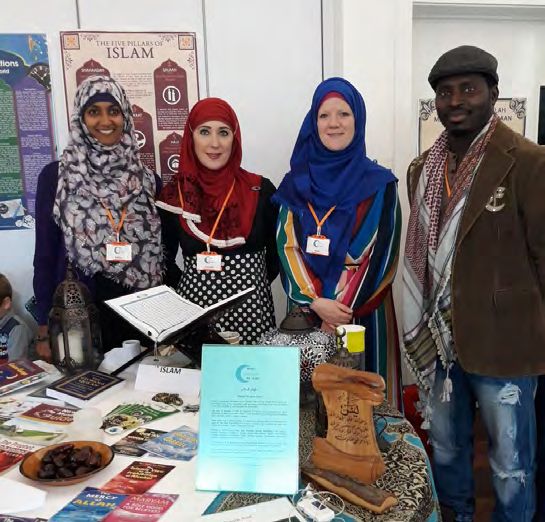
3. Actions built on need

The Cultural Strategy has been built on a review of the evidence and horizon-scanning to better understand our
communities, the gaps in the district’s cultural offer, the opportunities for growth and the actions we thus need
to take.

 a) East Herts’ population           The East Herts District Plan proposes significant new housing growth
 is changing and new                 across the district up to 2033. This, together with an increasingly diverse
 neighbourhoods and garden           population, brings new opportunities, new perspectives and new
 villages are bringing new           expectations. This is exactly what drives innovation in cultural activities
 opportunities                       and so cultural enrichment should be a key policy priority from the
                                     beginning of the development process.

                                     In a context of finite funding for public and community-based arts, new
                                     development offers the opportunity to create cultural facilities that can
                                     fund themselves in the long term and to establish stewardship structures
                                     to oversee the management of these facilities.

                                     Thoughtful planning and development can help co-ordinate the provision
                                     of new cultural facilities through unlocking developer contributions. An
                                     example of this is the new garden town, planned in Gilston, which provides
                                     an opportunity to expand culture through, for example, new public
                                     artworks, bringing art and design into everyday life.
 Action                              •	Support development of a cultural offer in East Herts which takes on
                                        board the changing population profile and ensures a widening range of
                                        activities that meet the needs of all our residents
                                     •	Embed arts and culture within new neighbourhoods and garden towns
                                        in the district, creating cultural opportunities residents
                                     •	Provide affordable access to cultural opportunities for East Herts
                                        residents especially the over 50s and 12-24 year old young people
                                     •	Ensure residents of all religious and black and minority ethnic
                                        backgrounds across East Herts are fully involved in the development of
                                        cultural opportunities in the district
                                     •	Ensure residents with physical and/or learning disabilities participate in
                                        the planning and enjoyment of cultural opportunities in East Herts.

 b) Relative deprivation can         Engagement in cultural activities is influenced by socio-economic
 hamper access to arts and           background and by where people live. East Herts residents enjoy generally
 culture                             better levels of health and wellbeing than the England average, however,
                                     this tends to mask small pockets of deprivation. The Public Health England
                                     Local Authority profile 2017 confirms that five of the most deprived wards
                                     account for 16% of the population, representing around 23,000 individuals.
 Action                              •	Provide opportunities, to be identified through community
                                        conversations and needs based research, for engagement in cultural
                                        activity that extend across our communities including our more
                                        deprived areas
                                     •	Support the development of local, cultural opportunities, working with
                                        local community groups and village halls, to minimise the cost of and/or
                                        the need to travel to participate in cultural activities.

                                          East Herts Cultural Strategy 2021-2025
c) Arts and culture can         National Quality of Life data published in 2018 underlines that loneliness is
alleviate loneliness and so     a main challenge to individuals’ quality of life.
have a positive impact on
health and wellbeing            Triggers for loneliness vary throughout the different stages of life. Among
                                younger adults, unemployment, financial challenges and raising a family
                                alone have all been found to lead to feelings of isolation. Our older
                                residents may be facing bereavement or disabilities which again can also
                                trigger social isolation and loneliness.
Action                          •	Reach out to communities, going beyond the participants they already
                                   know by providing a sensitive approach to drawing in those who have
                                   lost their confidence or feel that the arts have little to offer them
                                •	Encourage cultural activities that foster physical activity ‘by stealth’, for
                                   example photography clubs that promote walking
                                •	Encourage communities to establish activities close to home, reducing
                                   the barriers to access and supporting residents in rural communities to
                                   participate in cultural opportunities.

d) Arts and culture can         Arts-related programmes can prove to be key ways of tackling anti-social
promote community safety        behaviour and bringing different groups together to achieve a common,
and civic pride                 community-oriented goal. For example, interventions aimed at offenders
                                can improve communication skills, teamwork and self-awareness which
                                may reduce the later likelihood of reoffending.
Action                          •	Engage with residents and communities to safeguard people, property
                                   and individuals
                                •	Support initiatives to promote a high quality Night Time Economy
                                   in East Herts, for example, by supporting the use of the Police’s
                                   Community Voice engagement tool
                                •	Support residents from all communities, circumstances and abilities to
                                   participate in cultural activities across East Herts.

e) Young people thrive when     The Arts Council England review suggests taking part in drama and library
they are involved in arts and   activities has been proven to improve attainment in literacy, while taking
culture                         part in structured music activities improves attainment in maths, early
                                language acquisition and early literacy for young people.
Action                          •	Work with young people and educational institutions in the district
                                   to encourage active participation in cultural activities to enhance
                                   confidence, build skills and improve employment opportunities
                                •	Work with cultural groups from all East Herts communities to
                                   ensure children of all abilities and circumstances have access to, and
                                   participate in, enriching cultural experiences
                                •	Work is underway to ascertain school needs and assess Hert-ford
                                   Theatre’s potential offer in relation to those needs funded by Royal
                                   Opera House Bridge programme.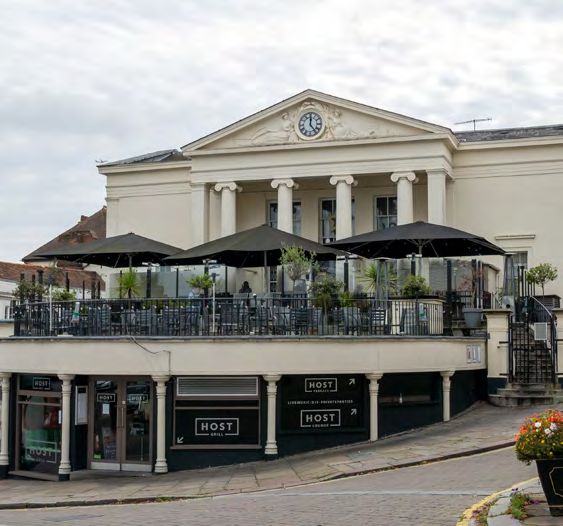
3. Actions built on need... Continued

f) Just getting to an arts   East Herts has high levels of car ownership reflecting many residents’
venue can be a challenge     relatively higher incomes. Car ownership rates may also result from the
                             rural and somewhat dispersed nature of our district and this causes
                             problems for residents without access to their own transport.

                             Despite good rail links into and out of London from the district’s major
                             towns, many rural communities still have very limited transport options
                             other than car use. While every ward is served with a bus service, there is
                             great variation in frequency.
Action                       •	Support all partners to develop cultural opportunities in all corners of
                                our district, allowing our residents to participate in a rich cultural life
                                in their own communities, whether in the rural villages or the bustling
                                town centres
                             •	Identify how the potential of the district’s assets, such as village and
                                community halls, can be maximised to achieve its cultural vision,
                                bringing in the relevant partners to identify projects and deliver
                                initiatives that benefit residents in East Herts.

g) COVID19 has made a big    The COVID19 pandemic has demonstrated the value and potential of
impact                       digital and virtual methods for bringing people together and enabling
                             shared experiences.

                             Social distancing measures have resulted in a number of organisations
                             reaching out through the adoption of digital platforms.

                             Despite the loss of physical human connectivity, digital technology has kept
                             the community alive in East Herts – all from the safety of people’s homes.
Action                       •	Build on what we’ve all learnt from the COVID19 pandemic so that we
                                can harness the potential of digital media to deliver both existing and
                                new cultural activities and opportunities through an invigorating blend
                                delivery of digital and physical platforms
                             •	Ensure digital delivery is accessible to all residents wishing to engage
                                with culture through digital platforms
                             •	Produce an approach to communications that will enable all partners
                                to publicise opportunities through both digital and traditional methods,
                                such as leaflets, posters and word of mouth.

                                  East Herts Cultural Strategy 2021-2025
h) Cultural activities are not    Climate change is one of the biggest threats to our planet. East Herts
immune to the challenges of       Council has set itself a challenging target of achieving carbon neutrality by
climate change                    2030. Partners have come together as the East Herts Environmental and
                                  Climate Change Forum to work towards the district itself being carbon
                                  neutral by 2030 – an extremely challenging aspiration.

                                  The entire cultural sector must challenge itself to provide activities that
                                  minimise the carbon footprint, by bringing activities closer to where
                                  people live to minimise travel, by building reuse and recycling into
                                  business-as-usual or by staging events that influence people’s thinking
                                  about the environment and encourage them to make for environmentally
                                  sustainable choices.
Action                            •	Enable the cultural sector to find ways to reduce its carbon footprint
                                     and encourage more environmentally sustainable actions across
                                     the entire cultural activity map from event design and production to
                                     engagement with audiences.

i) This strategy will be judged   Delivery of the Strategy will be secured through annual action plans
by the impact it has              devised by the East Herts Cultural Delivery group which will include actions
                                  and targets for the council and its partners, not just a few organisations.

                                  A wider, inclusive East Herts Cultural Strategic group will fulfil a ‘critical
                                  friend’ role to ensure the priorities of the strategy are fulfilled.

                                  We recognise that some actions, projects and funding bids will benefit
                                  from detailed evidence gained through gap analyses and empirical
                                  research. Such future work will be carried out by the partners coming
                                  together or by the partners’ pooling financial re-sources to fund external
                                  expertise.
Action                             e will design and implement different methodologies for collecting and
                                  W
                                  evaluating information including capturing specific data and evidence
                                  throughout the life of the Strategy such as:
                                  •   creative outputs and outcomes
                                  •   local people’s participation as board members of creative organisations
                                  •   levels of investment in the arts and culture sector in the district
                                  •	numbers of jobs, traineeships, apprenticeships, internships and
                                     opportunities for volunteering in the sector
                                  •   levels of participation, audience reach and engagement
                                  •   press coverage, marketing and publicity.

                                        East Herts Cultural Strategy 2021-2025
4. How we will work together

This Strategy has been shaped by East Herts’ cultural sector. To fulfil our potential, all partners will need to pull
together to strengthen our collective voice. The Strategy’s ambitions can be met if partners adopt one or more
the following roles.

 Type of role                          What this will do
 Enabler role                          An organisation working to support the growth of the East Herts cultural
                                       offer will:
                                       •   enable and support the establishment of a cultural social infrastructure
                                       •   build capacity throughout the sector and expand the tourism offer
                                       •	facilitate the drafting of innovative, partnership bids for external
                                          funding
                                       •	promote cultural festivals in the district, creating opportunities for
                                          everyone.
 Innovator role                        All partners acting as innovators will:
                                       •	support digital activities that increase community engagement in
                                          culture
                                       •   promote inter-generational engagement and digital inclusion
                                       •	use social media and other marketing innovations to reach new
                                          audiences
                                       •   Encourage creative use of enhancements in technology
                                       •   Implement digital assistive technology to open up access to the arts.
 Partner role                          A proactive cultural partner will:
                                       •	embed culture and the creative economy firmly within the various tiers
                                          of civic planning in the district
                                       •	encourage closer working relationships between the private, public and
                                          community sectors
                                       •	work with external agencies such as Hertfordshire Association of
                                          Cultural Officers and Arts Council England to share information, good
                                          practice and lever in external funding
                                       •	link cultural objectives to other agendas, for example, health and
                                          wellbeing, and economic growth.
 Provider role                         In order to deliver the ambitions of this Strategy, each partner will strive to:
                                       •	set an example as a provider of arts and culture that are accessible to a
                                          wide variety of service users
                                       •	identify and channel financial resources and people power into cultural
                                          activities
                                       •	be a provider of support, offer grants, advice, guidance, internships
                                          and/or other opportunities to develop the local cultural infrastructure
                                       •   explore opportunities for wider cultural engagement
                                       •	target increased opportunities for participation in areas of relative
                                          deprivation and/or among those most affected by disadvantage.

                                             East Herts Cultural Strategy 2021-2025
The council’s privileged East Herts Council is just one participant in the district’s rich and varied
community leadership role cultural sector. It is recognised that the council has a privileged community
leadership role and so in addition to roles to be played by all partners, the
council will:
• provide inspiring leadership to help generate new ideas and
conversations
• work jointly with all partners to identify cultural champions, from
whichever organisation or background, to maximise opportunities
• promote funding opportunities facilitated by East Herts Council, for
example, East Herts Lottery
• help promote cultural activities taking place within East Herts
• work closely with organisations from all communities to promote
volunteering opportunities
• explore opportunities to use the wide range of cultural assets in East
Herts to enable increased local delivery of cultural activities
• marshal efforts to ensure the actions make a real difference.
East Herts Cultural Strategy 2021-20255. Delivery and measurement of success
This Strategy has been adopted by East Herts Council and is
supported by the East Herts Cultural Peer Support Group.
Each year the partners who have come together to deliver this Strategy will devise and agree an action plan for
the coming year with clear goals, targets and named lead partners.
We will know the Strategy has been a success when:
• East Herts is recognised locally, regionally and farther afield as an ambitious and creative locality in the field of
arts and culture and
• all East Herts residents are able to say they can access rich cultural experiences as part of their everyday lives.
The efforts and actions of all stakeholders, working together in support of our shared ambitions,
are absolutely vital to the success of this Strategy so we will:
• gather and make use of evidence developed through partners’ case studies and
research
• together foster the continued support and engagement of stakeholders in the
public, private and community sectors as key advocates for the cultural and
creative industries
• clearly communicate our impact in delivering outcomes for our residents
• use our collective voice to influence decision-makers whoever and wherever they
may be.
• identify cultural assets across East Herts that can enable
the delivery of cultural activities closer to home
• work in partnership to secure funding to
support delivery of cultural activities in
East Herts.
Contact: Community Wellbeing Programme Officer at
Environmental.Health@eastherts.gov.uk
East Herts Cultural Strategy 2021-2025You can also read


