ECPAT INTERNATIONAL AND THE BODY SHOP
←
→
Page content transcription
If your browser does not render page correctly, please read the page content below
ECPAT INTERNATIONAL AND THE BODY SHOP
This publication was compiled and written by Alessia Altamura and Patchareeboon Sakulpitakphon, under the guidance and
                                                     assistance of Kathleen Speake, Junita Upadhyay and Mark Capaldi. The support of Jessica Wiseman is also greatly appreciated.

                                                     ECPAT International wishes to acknowledge and extend its special thanks to all the ECPAT member groups and partners that
                                                     have contributed their knowledge and expertise to review the country progress card reports multiple times throughout the
                                                     course of this campaign.

                                                     ECPAT International also wishes to acknowledge the feedback given by Christopher Davis and Jessie Macneil-Brown of the Global
                                                     Campaigns Team of The Body Shop International.

                                                     ECPAT International
                                                     328/1 Phayathai Road, Ratchathewi,
                                                     Bangkok, 10400 THAILAND
                                                     Tel: +662 215 3388
                                                     Fax: +662 215 8272
                                                     Email: info@ecpat.net
CREATING CHANGE THROUGH PARTNERSHIP 2012 | Page: 2

                                                     Website: www.ecpat.net

                                                     The Body Shop International PLC
                                                     Watersmead, Littlehampton,
                                                     West Sussex, UK
                                                     Tel: +44 1903 731500
                                                     Website: www.thebodyshopinternational.com

                                                     March 2012
                                                     Copyrights © ECPAT International and The Body Shop International PLC.

                                                     Design by: Manida Naebklang

                                                     © 2012 - The copyright of this report is jointly owned by ECPAT International and The Body Shop International PLC.
                                                     Not to be reproduced, copied or otherwise without the prior permission of ECPAT International and The Body Shop International PLC.
                                                     Email: info@ecpat.net
                                                     Website: www.ecpat.net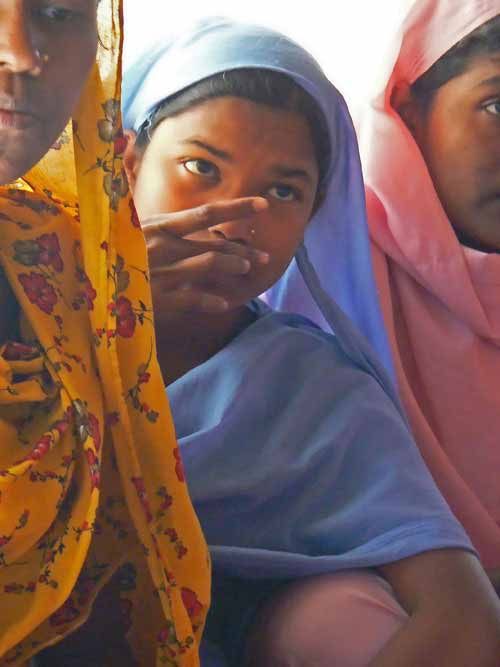
CREATING CHANGE THROUGH PARTNERSHIP 2012 | Page: 3
CONTENTS
Foreword 				 6
Preface By ECPAT International 		 7
Preface By The Body Shop 		 8
I. Introduction   		10
II. Millions of People Calling for Change: Mobilising
    Governments and Raising Funds for Child Protection
    against Sex Trafficking 		16
III. Global Overview of Change: Measuring Progress
     against Our Three Campaign Goals 		19
   Goal 1 Achievements on Prevention 		20
   Goal 2 Achievements on Legislation and Law Enforcement 		31
  Goal 3 Achievements on Support Services
		       for Trafficked Children 		39
IV. Conclusion and Way Forward 		47
Appendix				49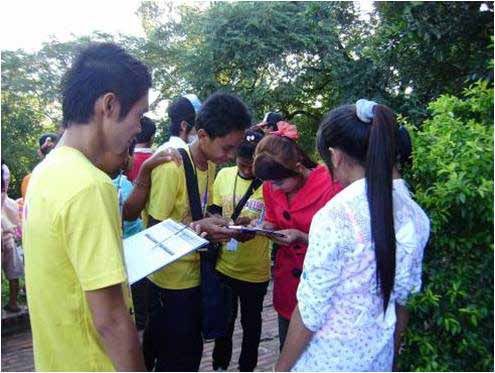
LIST OF COUNTRIES REVIEWED AND
                                                     CONTRIBUTING PARTNERS

                                                             COUNTRY                 CONTRIBUTING PARTNER

                                                     Australia         Child Wise, ECPAT National Group

                                                     Austria           ECPAT Austria

                                                     Belgium           ECPAT Belgium

                                                     Cambodia          ECPAT Cambodia

                                                     Canada            Beyond Borders/ECPAT Canada

                                                     Cyprus            Mediterranean Institute of Gender Studies (MIGS)

                                                     Czech Republic    Ecumenical Network for Youth Action, ECPAT
                                                                       Affiliate

                                                     Denmark           Red Barnet, ECPAT Affiliate

                                                     Estonia           Tartu Child Support Center, ECPAT Affiliate

                                                     Finland           Lasten Perusoikeudet – Children’s Fundamental
                                                                       Rights

                                                     France            ECPAT France

                                                     Germany           ECPAT Germany

                                                     Greece            Obrela – The Hellenic Association for the Prevention
                                                                       of Sexual Abuse
CREATING CHANGE THROUGH PARTNERSHIP 2012 | Page: 4

                                                     Hong Kong         Against Child Abuse

                                                     India             STOP India and Sanlaap, both ECPAT Affiliates

                                                     Indonesia         ECPAT National Coalition for the Elimination of
                                                                       Commercial Sexual Exploitation of Children

                                                     Ireland           Children’s Rights Alliance

                                                     Italy             ECPAT Italy

                                                     Japan             ECPAT STOP Japan

                                                     Luxembourg        ECPAT Luxembourg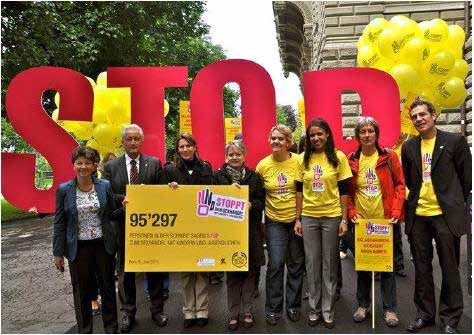
CREATING CHANGE THROUGH PARTNERSHIP 2012 | Page: 5
            COUNTRY                              CONTRIBUTING PARTNER

    Malaysia                      Nur Salam and P.S. The Children

    Mexico                        ECPAT Mexico

    Netherlands                   ECPAT Netherlands

    New Zealand                   ECPAT New Zealand

    Norway                        Redd Barna (Save the Children Norway)

    Pakistan                      Pakistan Pediatric Association, ECPAT Affiliate

    Philippines                   ECPAT Philippines

    Poland                        Nobody’s Children Foundation, ECPAT Affiliate

    Portugal                      Portuguese Association for Victim Support (APAV)

    Romania                       Salvati Coppiii Romania, ECPAT Affiliate

    Russia                        NGO Stellit, ECPAT Affiliate

    Singapore                     UNIFEM Singapore, HOME and Dr. Sallie Yea

    South Africa                  Child Welfare South Africa, ECPAT Affiliate

    South Korea                   Naeil Women’s Center for Youth, ECPAT Affiliate

    Spain                         ECPAT Spain

    Sweden                        ECPAT Sweden

    Switzerland                   ECPAT Switzerland

    Taiwan                        ECPAT Taiwan

    Thailand                      ECPAT International

    Turkey                        International Children’s Center (ICC) and the
                                  Network against Commercial Sexual Exploitation in
                                  Turkey, ECPAT Affiliate

    UK                            ECPAT UK1

    USA                           ECPAT USA

______

1
      In the UK, the campaign pursued specific and targeted indicators for the goals of the campaign.
      These were identified in the separate country progress report for the UK. Furthermore, in the
      UK, parameters used to define specific services vary – please refer to the UK country progress
      card report for more detail. www.ecpat.net
FOREWORD
The sexual exploitation of children
has become an increasingly
international phenomenon owing The Body Shop and ECPAT’s three-
to the development of information year campaign ‘Stop Sex Trafficking
technologies, trafficking networks, of Children and Young People’ is an
tourism and migration. admirable example of this international
and intersectoral cooperation,
Millions of children and young people highlighting the efficacy of corporate
under the age of 18 are victims of social responsibility, global
trafficking every year, the majority of partnership and youth participation.
whom subsequently become objects
of sexual exploitation. I would like to warmly commend
ECPAT and The Body Shop for this
Sexual exploitation of children is a important global campaign, which
gross violation of child rights that represents a significant opportunity
gravely compromises the health and to raise awareness on the issues of
development of children and the full child trafficking for the purpose of
enjoyment of their rights and has a sexual exploitation and brings forward
long-lasting impact on the victims. the alarming issue of trafficking as
a priority in the international political
Despite significant efforts to eliminate agenda.
the trafficking of children and young
people for sex, many challenges still I sincerely congratulate ECPAT for this
remain. Much still needs to be done monitoring report, which showcases
to protect, rehabilitate and reintegrate the achievement of the campaign
victims, provide reparation for damage advocacy goals: raising awareness,
CREATING CHANGE THROUGH PARTNERSHIP 2012 | Page: 6
caused to children, prosecute those mobilising actors, prioritising
responsible, and ultimately prevent children’s involvement, and raising
this phenomenon. funds to ‘Stop Sex Trafficking of
Children and Young People’.
The intersectoral, national and
international dimensions of this This report proves that we truly can
phenomenon require efficient and ‘Create Change through Partnership’.
coordinated cooperation between all
actors, both directly and indirectly,
with children, and at all levels— Dr. Najat Maalla M’jid
national, regional and international. UN Special Rapporteur on the Sale of
It also requires the strengthening Children, Child Prostitution and Child
of corporate social responsibility Pornography
initiatives to prevent and stop the
sexual exploitation of children.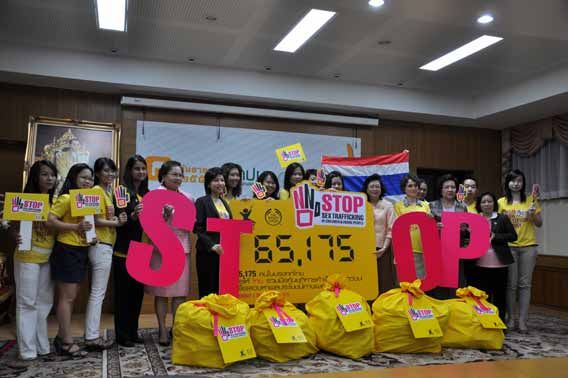
CREATING CHANGE THROUGH PARTNERSHIP 2012 | Page: 7
PREFACE BY ECPAT INTERNATIONAL

In 2009, ECPAT International launched    company inspired by the tremendous
a unique campaign with The Body          vision of its founder. We also believe
Shop ‘Stop Sex Trafficking in Children   this model of partnership between
and Young People’, because trafficking   civil society and private sector will
is and remains an intolerable form       serve as a catalyst for more new
of violence against children. The        and creative partnerships for social
campaign engaged the public as           change.
advocates and called on governments
to safeguard the rights of children      We are pleased to report that the ‘Stop
and adolescents to protection from       Sex Trafficking of Children and Young
sexual exploitation. Three years         People’ campaign has been important
later, in September 2012, 7 million+     in the fight against child trafficking.
people raised their voice as ECPAT       Almost one in four governments have
International and The Body Shop          implemented initiatives to combat
delivered one of the world’s largest     human trafficking, and at least 16
ever petitions to the UN Human Rights    government leaders have committed
Council in Geneva.                       to specific action. Unfortunately, the
                                         campaign revealed a few notable
‘Creating Change through                 gaps, such as the need for more
Partnership’ is the apt theme of this    specialised actions and services to
final report. The Body Shop and          protect children and young people.
ECPAT International have created         ECPAT International has a twenty-year
an imaginative and successful            track record as a global network with
partnership, drawing from our            the mission to ensure that children
respective and combined strengths        everywhere enjoy their fundamental
to effectively tackle a complex and      rights, free and secure from all
unacceptable social reality. ECPAT,      forms of sexual exploitation. As the
as an expert child rights network,       campaign concludes this year, we
contributed to the campaign’s            continue to address the important
unique advocacy strategy. It allows      recommendations made in this
individuals to make an informed          report, to ask all sectors of society
‘call to action’ of their governments,   do more to protect children, and to
and permits monitoring of actions        monitor countries’ progress towards
through ‘Progress Cards’ covering        implementation. We invite you to
42 countries. The Body Shop              remain engaged with us and continue
leveraged their global operations,       to raise your voice to create change
and campaigning expertise to build       that makes a difference.
awareness at all levels and activate
their customer base.                     Yours faithfully,

In creating global change, we feel
extremely privileged to have worked      Maureen Crombie
alongside The Body Shop, an ethical      President, ECPAT International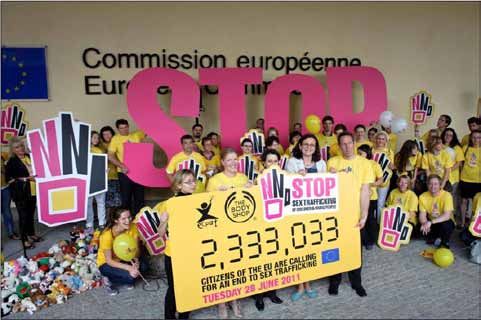
PREFACE BY THE BODY SHOP

                                                     I first met the team from ECPAT           and, at times, disagreements about
                                                     International in 2007 when, following     how to make our campaign most
                                                     the death of the founder of our           impactful, we have always stayed
                                                     company, Dame Anita Roddick, I was        true to our united objective of creating
                                                     seeking a campaign partner to work        a campaign that delivers long-term
                                                     with to launch a three-year campaign      change to help children and young
                                                     focused on human trafficking to           people.
                                                     honour her memory.
                                                                                               We are proud that the campaign was
                                                     ECPAT International convinced us          so emphatically embraced by 15,000
                                                     of the importance of focusing our         of my colleagues at The Body Shop
                                                     resources and energy to campaign on       working across 2,600 stores across
                                                     behalf of children and young people       65 countries. Their determination
                                                     who were trafficked and exploited         to take the campaign and ensure its
                                                     across the world. This report tells the   success in their own community
                                                     story of our campaign and documents       resulted in an estimated 300 million
                                                     how, working together, The Body           people every year seeing and hearing
                                                     Shop and ECPAT, with the support of       about the campaign in our stores.
                                                     millions of customers and supporters
                                                     around the world, have made a             Most of all, I am proud that together
                                                     significant difference.                   we have mobilised The Body Shop
                                                                                               customers to get involved in the
                                                     For all of us at The Body Shop it is      campaign and with 7,044,278 petition
                                                     something we are immensely proud          signatures, created the biggest
                                                     of.                                       campaign in The Body Shop’s history
                                                                                               and influenced governments in 16
                                                     We are proud that we were part of         countries to commit to long-term
CREATING CHANGE THROUGH PARTNERSHIP 2012 | Page: 8

                                                     a strong and constructive working         legislative change that will help protect
                                                     relationship with ECPAT International     children and young people for many
                                                     and many of the local ECPAT               years to come.
                                                     organisations around the world.
                                                     Through our discussions, debates          As our three-year campaign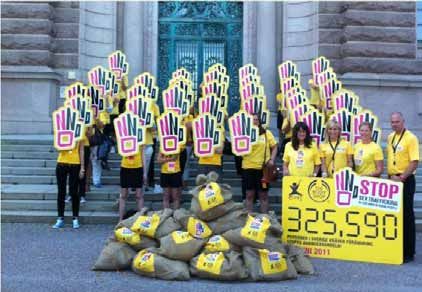
CREATING CHANGE THROUGH PARTNERSHIP 2012 | Page: 9
partnership draws to a close,            As we look to the future, I know
it is important to acknowledge           our respective organisations will
the incredible work of ECPAT             do everything possible to ensure
International and pay tribute to their   governments act on our petition
professionalism, dedication and          calls to action and that the bonds
knowledge on this challenging and        between The Body Shop and ECPAT
complex issue.                           International will remain strong for
                                         many years to come

                                         Yours sincerely,

                                         Christopher Davis
                                         International Campaigns Director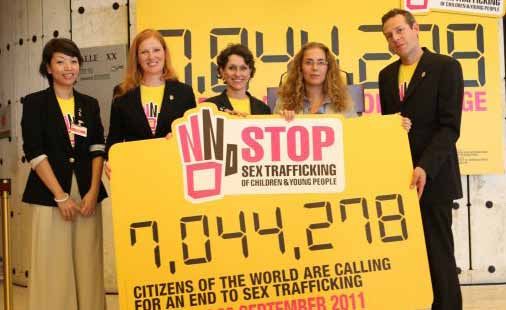
I. INTRODUCTION

                                                      Human trafficking is an illegal industry that generates billions of US dollars
                                                      by exploiting an individual’s fundament rights. It is believed that nearly
                                                      80% of all trafficking worldwide is for sexual exploitation, with over 20% of
                                                      the victims being children1. Operating like a global business, the crime is
                                                      not confined to certain geographical areas, such as ‘developing countries’,
                                                      but affects virtually every country in the world. Twenty years after the United
                                                      Nations Convention on the Rights of the Child has been nearly universally
                                                      accepted by states around the world, there remain at least 1.2 million child
                                                      trafficking victims per year2.
                                                                                           1: UNODC, Global Report on Trafficking in Persons, 2009.
                                                                                                                                       2: ILO, 2002.
CREATING CHANGE THROUGH PARTNERSHIP 2012 | Page: 10

                                                                The need to take action for children              immediate relief to children, ECPAT
                                                                motivated and inspired The Body                   and The Body Shop agreed to work
                                                                Shop and ECPAT International to                   in partnership for three years and,
                                                                create and implement the ‘Stop Sex                together, designed a campaign with
                                                                Trafficking of Children and Young                 special focus on generating long-term
                                                                People’ campaign. The unique                      impact by increasing awareness
                                                                partnership between The Body                      and facilitating the voice of The Body
                                                                Shop, a natural and ethical beauty                Shop customers and other campaign
                                                                company, and ECPAT, an international              supporters to be heard by those with
                                                                network of local grassroots NGOs,                 decision-making power to strengthen
                                                                resulted in an original and powerful              concerted action against child sex
                                                                global campaign that has affected                 trafficking. The campaign objectives of
                                                                unprecedented change around the                   conducting advocacy, education and
                                                                world. Wanting to go beyond a                     raising funds were pursued through
                                                                simple fundraising initiative to bring            the following three-year strategy:
2009 – 2010: 2010 – 2011: 2011 – 2012:
CREATING CHANGE THROUGH PARTNERSHIP 2012 | Page: 11
To educate To engage To conduct
and strengthen the public in follow-up with
the public’s advocacy via states on the
understanding the campaign campaign
of sex petition petition’s ‘calls
trafficking of in asking to action’ and
children and governments assess the
young people to take greater campaign’s
action against impact
child trafficking
The purpose of this report is a number of recommendations to
to capture and analyse the states and other actors. The data
campaign’s key successes that have in this report is taken from more
contributed to long-lasting change than 40 countries, all of which were
and improvement in the areas of extensively surveyed between January
prevention, support services, legal and February 2012. (Please visit
framework and law enforcement. www.ecpat.net to access all previous
In order to maintain momentum campaign reports and additional in-
for actions that combat child sex depth data.)
trafficking, the report will also provide
ECPAT members in Africa
ECPAT members in Americas The Body Shop
ECPAT members in East Asia and Pacific
ECPAT members in Europe & CIS
ECPAT members in South Asia
The campaign was implemented in over 2,600 The Body Shop stores in 65 countries and by the ECPAT network in over 75 countries.Measuring Change—
A Ground-breaking Methodology
How we have monitored the of interventions that are necessary to
achievement of the campaign ‘prevent, protect and assist children’ in
advocacy goals. As experts on the trafficking process and introduced
the issue of the commercial sexual the ‘progress cards system’, an
exploitation of children, ECPAT innovative advocacy tool designed by
International and its network provided ECPAT International to monitor and
technical support by producing over measure the overall achievement of
47 reports for the ‘Stop Sex Trafficking campaign objectives. Through the
of Children and Young People’ exhaustive scrutiny of 12 policy-
campaign. Representing in-depth related indicators (four for each goal)
and intensive research at a grass- and a progress card matrix, a precise
roots level, these reports were an and clear appraisal of the level of state
essential component of the campaign protection against trafficking for sexual
advocacy strategy and gave, for the exploitation has been provided on an
first time, an extensive assessment annual and country-by-country basis.
of the child sex trafficking situation
on-the-ground on a country-by- This ‘progress card system’ and
country basis. The global campaign the research undertaken by ECPAT
was launched in Bangkok with the has enabled a constant analysis of
release of the campaign baseline advancements made by each state
report, ‘Their Protection is in Our in relevant policies and practices
Hands’, which provided an overview affecting child victims and those
of the trends and manifestations of vulnerable to trafficking as well
child sex trafficking across the world’s as a global examination of states’
regions and the various combinations efforts to uphold every child’s right
of factors that put children at risk. to be protected from trafficking. The
The report also examined the types research also allowed campaign
Thailand: summary of progress card *
CREATING CHANGE THROUGH PARTNERSHIP 2012 | Page: 12
Goal 1: community-based prevention programmes
Prevention Collaboration Awareness raising Teacher training
Goal 2: legal framework
Optional Protocol Trafficking Protocol National legislation Special police units
Goal 3: specialised services for child victims
Helpline Shelters Medical services Psychological
counselling
Green = significant action taken by state; Yellow = partial action taken by state;
Red = inadequate level of state action; Star = work undertaken by NGOs
_______________
3. ECPAT International, Monitoring State Progress to Protect Children and Young People from Trafficking for Sexual Purposes,
2009, available at http://www.ecpat.net/EI/Publications/Trafficking/Global_Monitoring_ProgressCards.pdf
4. The ‘country progress card’ reports are available at http://www.ecpat.net/TBS/HTML/MakeHistory_country.htmlsupporters to know exactly what the protection of child victims and
CREATING CHANGE THROUGH PARTNERSHIP 2012 | Page: 13
situation of child sex trafficking was vulnerable children.
in their own countries and what states
were doing to combat it. Similar conclusions can also be
drawn from the final review of
Immediately after the campaign campaign achievements that ECPAT,
launch in 2009, ECPAT undertook in collaboration with member groups,
the first rigorous global review partner organisations and The Body
of states’ measures to protect Shop stores, conducted in January
children from sex trafficking. The and February 2012. As detailed later
report, ‘Monitoring States’ Progress in the report (Section III), the analysis
to Protect Children’ revealed of aggregated information and data
certain levels of success in some gathered during the final monitoring
areas (especially legislation) phase confirms that the campaign
while pointing to a number of has generated significant policy
shortcomings that required urgent changes under each of the frontline
government actions3. The study indicators that play a key role in
was followed by the publication stopping child sex trafficking.
in 2010 of 42 country-specific
progress card reports that featured Campaign Highlights in
recommendations for states and
other key stakeholders and supported Numbers
the ‘call to action’ for the national
campaign Creating One of the Largest Petitions
petitions4. in History
• 7,044,278 people from all over
the world signed the campaign
petition, which was presented
STATE PROGRE
SS
MONITORING CHILDREN & YOUNG
TO PROTECT M TRAFFICKING
to the President of the United
PEOPLE FRO PURPOSES
FOR SEXUAL Nations Human Rights Council
ACCELERATE
A CALL FOR HANDS!
D ACTION FROM
STATES: and the Chair of the Committee on
IT’S IN YOUR
the Rights of the Child;
• 2,333,033 European citizens
signed the campaign appeal for
In conjunction with the handover of action for the biggest human
the over seven million signatures rights petition ever presented to
to the Human Rights Council the European Commission;
in September 2011, ECPAT
published another global campaign • 170,877 signatures collected by
assessment. By examining the ECPAT youth representatives in 15
progress achieved by the 42 states countries;
reviewed, the research found that,
• More than 130,000 signatures
although advocacy requires a
collected via The Body Shop
sustained period for policy changes
stores in the Middle East
to be tangible and legislative review to
countries involved in the
be enacted, the ‘Stop Sex Trafficking
campaign: Egypt (7,309),
of Children and Young People’
Bahrain (4,771), Egypt (7,309),
campaign had contributed to the
Jordan (7,094), Kuwait (17,565),
gradual advancement of government
Lebanon (10,012), Qatar (15,000)
commitments and actions to prevent
and UAE (75,034).
child trafficking and strengthenIn the Middle East region, the campaign was particularly effective in raising awareness among the
public, as the campaign created opportunities for customers to discuss the issue of commercial
sexual exploitation of children (CSEC), which is rarely brought up in the public arena. Customers at
The Body Shop responded favourably to the campaign, and many asked for more information about
child trafficking and advice about how best to teach their children about this issue. As one member
of staff explained: One day, a family entered our store: father, mother and young boy. After browsing for
a while, I started to explain about the campaign to the family. The boy immediately said to his father,
‘remember when I told you about that TV programme I saw about poor children suffering? I need to help
stop it; I want to sign the petition’. So the father smiled and asked me for the campaign petition. I also
asked the young boy to write a few words. He was so happy that he signed the petition and wrote, ‘I hope
that, one day, happiness will be in everywhere in the world’. To this day, I still remember this boy’s name:
Hassan. Although he was young, he moved me. Kerilos B. Khalil, The Body Shop staff, Kuwait.
Creating Impact—Directly initiatives specifically against child
Influencing Positive Changes in sex trafficking;
Prevention, Legal Framework and
• 17% decrease in the number of
Support Services for Children
countries that lack public support
• 47 campaign reports were services for child victims of
used as advocacy tools to trafficking;
highlight specific calls to action
• Nearly 20% decrease in the
to strengthen states’ action in
number of countries with totally
combating child sex trafficking;
inadequate shelters to respond to
• 7% increase in the number of the specific needs of child victims
states that are making notable of trafficking.
efforts to stop child sex trafficking
and 50% decrease in the number
of countries that are making Generating Funds and Delivering
insufficient or limited progress; Direct Support to Children
• 4 countries have ratified the • Over US$ 3 million was raised
Optional Protocol on the sale through the campaign, going
CREATING CHANGE THROUGH PARTNERSHIP 2012 | Page: 14
of children, child prostitution directly to projects to tackle child
and child pornography, and 3 sex trafficking and other forms of
countries publically committed to commercial sexual exploitation of
do so in the near future; another children. Through these projects,
4 countries have adopted the thousands of children have been
UN Trafficking Protocol since the prevented from falling prey to sex
campaign started; traffickers through sensitisation
and other targeted initiatives;
• 8 countries have revised or are
in the process of revising their • Hundreds of police officers, social
domestic legislation; workers and other professionals
were trained to adequately deal
• 23% increase in the number of
with cases of sex trafficking of
governments that conducted
children and young people;
general sensitisation campaigns
on trafficking in persons or • Thousands of victims of
implemented awareness-raising trafficking were able to accessthe justice system and receive • We generated an exceptional
CREATING CHANGE THROUGH PARTNERSHIP 2012 | Page: 15
specialised assistance; model of collaboration between
civil society and the private
• Millions of people have learned
sector to address an important
about the commercial sexual
social issue in a coherent and
exploitation of children and are
innovative way.
now aware of the seriousness of
child sex trafficking and their duty
to act due to the campaign;
On 5 September 2011, ECPAT International and The Body Shop Thailand presented
65,175 petitions to the Deputy Permanent Secretary to the Ministry of Social
Development and Human Security, Ms. Sirirat Ayuwat, who joined by other senior
government officials from the anti-Human Trafficking Department. Together they
thanked The Body Shop Thailand and ECPAT and expressed their intention to continue
combating the child sex trafficking in Thailand. The Thai government has been a strong
supporter of the campaign both in Thailand and abroad.II. MILLIONS OF PEOPLE
CALLING FOR CHANGE:
Mobilising Governments
And Raising Funds For Child
‘The Stop Sex
Trafficking of
Protection Against Sex
Children and
Young People’
Trafficking
campaign
represents
a significant
opportunity to
bring forward By uniting the voice of millions of people, the ECPAT and The Body
the alarming Shop campaign has sought to inspire policy-makers to take concrete
issue of child steps against the sex trafficking of children and young people. In over
sex trafficking as 64 countries, the public was actively mobilised to support the campaign
a priority in the calls for action. Through unprecedented mobilisation, governments were
political agenda’. urged to accelerate and sustain their commitment towards achieving
Dr Najat Maalla three paramount goals that would contribute to enhancing protection of
M’jid, UN Special
Rapporteur on the
children and youth at all levels:
Sale of children,
Child prostitution
and Child Implementing community-based prevention programmes to
pornography stop child trafficking among those in at-risk populations
CREATING CHANGE THROUGH PARTNERSHIP 2012 | Page: 16
Incorporating international legal standards that protect
children from trafficking into the national legal framework
Integrating specialised government services for
child victims of trafficking into national policies
Mirroring the global appeal, targeted integrated into the national campaign
national calls to action were identified petitions that were initiated in mid-
following thorough research and 2010. The success of this activity
assessment of states’ efforts against went far beyond expectations. In a
child sex trafficking, as a result of number of countries involved in
research conducted by ECPAT groups the campaign, the petition was one
and partner organisations. These of the largest ever documented.
country-specific calls to actions were A series of events was organisedin 2011 to present and hand namely through the presentation of
CREATING CHANGE THROUGH PARTNERSHIP 2012 | Page: 17
over the petitions to government campaign petitions to the European
representatives and heads of state, Commission and the United Nations.
urging them to promote measures to Following these ceremonies, several
fulfil the campaign calls to action. To states responded directly to our
broaden the campaign’s support and appeal by implementing measures
generate greater impact, advocacy and taking commitments to better
has also been extended to other key protect children and young people
regional and international bodies, from sex trafficking.
HANDOVER TO THE UNITED The presentation of over 7 million signatures to the
President of the United Nations Human Rights Council,
NATIONS HUMAN RIGHTS COUNCIL Her Excellency Ms Laura Dupuy Lassere, took place
AND THE COMMITTEE ON THE on 29 September 2011, outside the room where
the campaign exhibition was displayed. Thailand’s
RIGHTS OF THE CHILD Ambassador to the United Nations, His Excellency
The campaign petition was one of the largest human Mr Sihasak Phuangketkeow, opened the ceremony,
rights petitions ever presented to the United Nations. highlighting that the Thai Permanent Mission was proud
With the kind support of the Permanent Mission of to sponsor this initiative. The UN Special Rapporteur
Thailand, the handover ceremony was also the first on the Sale of Children, Child Prostitution and Child
time that an NGO and a private sector company had Pornography, Dr Najat Maalla M’jid, encouraged member
been given the honour to host a campaign event and an states to prioritise the fight against the sex trafficking of
exhibition inside Palais des Nation. children and young people. Then ECPAT and The Body
Shop relayed the campaign advocacy message asking
the UN Human Rights Council and its member states
to endorse the campaign’s calls to action and organise
an ‘Annual Full Day Meeting’ on the rights of the child,
focusing on child trafficking. In response, the president
of the Human Rights Council, Her Excellency Ms
Laura Dupuy Lassere promised to bring the campaign
messages back to the UN Human Rights Council and
called on member states to continue to take action in
honouring their commitments to protect children. The
event was attended by representatives from over 100
member states, international organisations and UN
agencies as well as a number of NGOs, ECPAT and The
Body Shop.
To garner further support at the UN level, on 28
September 2011 at Palais Wilson, ECPAT and The Body
Shop presented the campaign petition to the Chair of
the Committee on the Rights of the Child, Mr Zermatten.
ECPAT and The Body Shop asked the Committee on
the Rights of the Child to organise a ‘Day of General
Discussion Focusing on the Issue of Child trafficking’
and to adopt a ‘General Comment’ on the issue of child
trafficking. Mr Zermatten strongly welcomed the global
campaign petition and promised to relay the message
to the other members of the Committee with a view to
following up on these requests.Besides advocating for change community-based prevention projects
‘This campaign through direct and expansive public and capacity building.
was very support, the partnership between
important ECPAT and The Body Shop has As the sections below will highlight,
because it generated a substantial level of the combination of successful
financial resources. Through the sale advocacy and lobbying efforts
provided
of the incredibly popular Soft Hands towards state actors and the
significant
Kinds Heart hand cream, created effective utilisation of campaign
financial
especially for the campaign by The funds for multiple initiatives in
resources Body Shop, the campaign generated areas at high-risk of commercial
to non- over US$ 3 million to help implement sexual exploitation of children
governmental programmes on the ground that help have considerably enhanced the
organisations vulnerable children. The money raised prevention of child sex trafficking
that are involved was used to fund a vast variety of while also determining an
in this struggle.’ initiatives ranging from providing improvement in the legal framework
Maria de Belém direct services to child victims of sex and the wide range of care and
Roseira, President trafficking to supporting meaningful support services available for
of the Partido child and youth participation, children.
Socialista and
The Body Shop
customer, Portugal
ACKNOWLEDGEMENT AND
RECOGNITION
The ‘Stop Sex Trafficking of Children and Young
People’ campaign has received significant praise
and support. From the onset, it has been endorsed
CREATING CHANGE THROUGH PARTNERSHIP 2012 | Page: 18
by Dr Najat Maalla M’jid, the UN Special Rapporteur
on the Sale of Children, Child Prostitution and Child
Pornography; Marta Santos Pais, the UN Special
Representative on Violence against Children; and
Jaap Doek, child rights expert and former Chair of
the UN Committee on the Rights of the Child, for
calling attention and inspiring change to protect
children from sex trafficking. In addition, at the
2009 Clinton Global Initiative event in New York, US
President Bill Clinton singled out the campaign as
‘an exemplary approach to addressing a specific
global challenge’. In 2010, Mr Christopher Davis,
International Campaigns Director of The Body Shop,
received the first UN Business Leader Award
against Human Trafficking. The campaign has also
been cited as a good example by the United Nations
Business and Human Rights publication and
featured in the Council of Europe’s publication on
best practices initiatives against human trafficking.III. GLOBAL OVERVIEW
CREATING CHANGE THROUGH PARTNERSHIP 2012 | Page: 19
OF CHANGE:
Measuring Progress against Our Three
Campaign Goals
Progress of Global States’ Efforts since 2009
60%
48%
2009
2012
20% 20% 19%
14%
12%
7%
Slow progress Limited Some progress Notable efforts * Information as of January 2012.
measures Based on 42 countries reviewed.
At the end of the campaign, ECPAT notable efforts to tackle this violation
undertook a rigorous critical has seen a 7% increase over the
examination of states’ performance last two years. Confirming a trend
to assess the extent and nature of already identified by the first and
the progress that has been made to second global assessment reports,
protect children from sex trafficking. the concluding analysis has shown
The data revealed that policies that most of the advances made by
and programmes on prevention, states have focused on enacting an
legal framework and assistance adequate legal framework. Slow but
designed and implemented by the 42 promising progress can also be seen
countries analysed have generally in the area of prevention, especially
increased since 2009 (for more through the adoption of national plans
details on the final ranking of these and the creation of spaces for multi-
states, see APPENDIX). Only 21% stakeholder collaboration, while the
of countries analysed continue to sphere where less improvement has
make insufficient or limited progress been registered continues to be the
in addressing child sex trafficking care and assistance for child victims
(down from 40% in 2009), while the of trafficking.
number of countries that have madeSome countries including Ireland, in Human Beings 2009-2012.
Philippines and Poland have achieved Building on developments that had
excellent results over the last two commenced prior to the campaign
years. launch, there has also been
progress on consolidating services
‘Since the campaign began, child to children. Positive steps to ratify
trafficking is now better recognised the Optional Protocol on the sale
as a serious child protection and of children, child pornography
rights violation issue in Ireland. and child prostitution have been
The campaign has allowed the taken and are on-going and we
Children’s Rights Alliance to urge believe this advancement is a direct
better implementation of the Irish result of the campaign’. Children’s
government’s National Action Plan Rights Alliance, campaign partner
to Prevent and Combat Trafficking organisation in Ireland.
GOAL 1:
Achievements on Prevention
Prevention is a key component of state programmes and policies to tackle
child sex trafficking and encompasses a broad range of multi-dimensional
interventions, from mobilisation and awareness building among families and the
general public to more targeted and specific interventions that reach children
who are at-risk due to specific conditions in their lives. The ‘Stop Sex Trafficking
of Children and Young People’ campaign has contributed to strengthening
preventive responses by calling on states to establish community-based
prevention programmes reaching out to vulnerable groups. To achieve the first
goal, the campaign adopted a four-stage strategy:
CREATING CHANGE THROUGH PARTNERSHIP 2012 | Page: 20
1 Adoption and implementation of policies providing for
community-based prevention programmes
2 Establishment of collaborative approches to child trafficking
prevention
3 Implementation of sustained awareness-raising activities
addressing specifically child sex trafficking
4 Adoption of a policy provision for the integration of child sex
trafficking into teachers’ training curriculumOverview of States’ Efforts on Prevention Overview of States’ Efforts on Prevention
CREATING CHANGE THROUGH PARTNERSHIP 2012 | Page: 21
Based on Four Indicators - 2009 Based on Four Indicators - 2012
7% 5%
Inadequate General Adequate
26% 24%
24% 20% 2% 5%
64% 67% 74% 38%
59% 51% 35%
46%
29% 22% 41% 60%
10% 9% 19% 57%
Prevention Collaboration Campaigns Education Prevention Collaboration Campaigns Education
Recognising that the establishment exposure to trafficking for sexual
of a national policy to prevent child exploitation. Thanks to this intense
trafficking demonstrates the extent lobbying work, the past two years
to which a state has prioritised have seen initial advances in the
efforts to reduce risk factors in its adoption of state policies for child
specific agendas and legislation, all trafficking prevention. While only
the countries involved in the campaign a third of states have child-specific
have advocated for the development policies in place, the number of
and implementation of a National countries with no anti-human
Plan of Action (NPA) or other policy trafficking NPA has decreased (down
frameworks encompassing specific from 29% in 2009 to 10% 2012).
initiatives to minimise children’s
AUSTRIA
Since the campaign launched, there has been considerable
progress concerning the integration of measures against child
trafficking into the new anti-trafficking NPA 2012 that the Austrian
government expects to approve by March 2012, not least as
a result of ECPAT Austria’s strong advocacy efforts linked
to the campaign. For the first time ever, the NPA will contain
a separate goal focusing on specific measures in the field of
victim support for children. Reflecting one of our campaign
petition’s ‘calls to action’, the section on general sensitisation
and raising awareness will also include support for trainings on
child trafficking with a special multi-stakeholder focus.GERMANY
As a result of the campaign, the newly passed Action Plan
for the Protection of Children and Young People from Sexual
Violence and Exploitation approved by the federal government
in September 2011 includes trafficking of children as a main
point. It specifically calls for: 1) prosecution, 2) education
and heightening awareness and 3) supporting victims. In
implementing the NPA, ECPAT Germany will be responsible for
ensuring child and youth participation and it will draw on the
successful experiences of the campaign.
CAMBODIA
In December 2011, the Cambodian government
adopted the NPA on the Suppression of Human
CREATING CHANGE THROUGH PARTNERSHIP 2012 | Page: 22
Trafficking and Sexual Exploitation valid for
2011-2014, which integrates a number of
measures that specifically address and reduce
children’s vulnerability to trafficking for sexual
purposes.NETHERLANDS
CREATING CHANGE THROUGH PARTNERSHIP 2012 | Page: 23
On 19 April 2011, more than 150 young people,
together with ECPAT Netherlands and The Body
Shop, handed over 173,188 signatures for the
campaign petition to the Dutch Minister of Security
and Justice. Since then, the Dutch government has
developed several Action Plans to combat different
forms of sexual exploitation of children, including
an Action Plan to Combat Trafficking by Loverboys
for the period 2011-2014 and a new Action Plan to
Combat Child Pornography valid for 2011-2012.
The campaign has also emphasised country examples. In Austria, for
the importance of adopting a instance, more federal states are
coordinated approach in the design, actively engaging in the Working
implementation and evaluation Group on Trafficking in Children set up
of child sex trafficking prevention in 2004. In Malta, the government is
policies to ensure that all relevant in the process of setting up a Steering
actors (government agencies, Committee to monitor the National
NGOs, inter-governmental and child- Action Plan as well as a multi-
rights organisations, private sector, stakeholder Task Force.
children, academia and others)
are allowed to contribute. While in
most of the states reviewed multi-
stakeholder collaboration is far from
being child-focused, sustained and
comprehensive, countries that still
lack anti-trafficking coordination ‘It can be assured that people, from all sectors
platforms have dropped to 10% (down working together can best protect our children from
from 41% in 2009). The ability of
sex trafficking. It is not our responsibility but our
the campaign to strengthen the
duty to ensure that this happens’. Ashley Theron, Child
development of multi-stakeholder
Welfare South Africa, ECPAT member in South Africa
partnerships at the national level
is testified by several successfulSWITZERLAND Following the handover of the campaign petition to government
representatives at their annual meeting, the overhead
organisation of the cantons strongly recommended (through
an oral and written statement also supported by an executive
member of the Federal Council) the creation of round tables
against human trafficking in all 26 cantons (now existing in
only 13). The interdisciplinary round tables involve various
authorities and services—including representatives of the
criminal prosecution authorities, cantonal police, migration
and welfare services, NGOs etc.—and will address child
trafficking as a permanent subject in all meetings.
ECPAT Philippines and The Body Shop Philippines enlisted PHILIPPINES
the entire city of Santa Rosa to officially adopt the ‘STOP Sex
Trafficking of Children and Young People’ campaign in March
2011. Through this unique initiative, the city integrated the
campaign into the city’s child protection programme in
coordination with the City Social Welfare and Development
Office. The campaign has gained nationwide support from
CREATING CHANGE THROUGH PARTNERSHIP 2012 | Page: 24
other government organisations, including the Department
of Interior and Local Government, Department of Justice,
Department of Education and the Philippine National Police.CREATING CHANGE THROUGH PARTNERSHIP 2012 | Page: 25
LATVIA
On 24 August 2011, The Body Shop and Women
Recourse Centre ‘Marta’ presented 15,430
campaign petitions to Ms Ingrida Circene,
Chairperson of Human Rights and Public Affairs
Committee of the Parliament of the Republic of
Latvia. In response, Ms Circene committed to
create a working group that will include officials
from the different ministries, NGOs and experts
to find solutions to the serious issues raised in
the petition.
The ECPAT and The Body Shop on this subject. It is still concerning
campaign advocated strongly for that in 74% of countries examined
governments to conduct or fully campaigns continue to address
support comprehensive, sustained human trafficking in general or
and nationwide awareness-raising remain limited in scope and duration.
programmes specifically on child However, the 5% increase in the
trafficking for sexual exploitation number of states that have fulfilled
reaching out to the public and at-risk this specific call to action since 2009
populations. Initial advances have represents a first important step
been noted in the implementation forward that will hopefully inspire and
of this type of interventions with stimulate further commitment and
an increasing number of states long-term changes.
engaging in sensitisation activities
‘The campaign is the first concerted attempt to bring
the issue of child trafficking into the wider public
consciousness’. Robert Boot, Guardian Newspaper, 15
July 2010CAMPAIGN SUCCEEDS IN INCREASING PUBLIC AWARENESS
While it is clear that government sensitisation efforts (735,889 signatures were collected) resulted in
have generally lacked a child-centred approach, a very successful campaign national handover
the campaign in itself has been very successful event, which was widely covered by mass
in increasing the awareness and understanding media, including CNN’s Freedom Project;
of millions of people on the specific issue of child • In Australia, 225,328 people signed the
trafficking and commercial sexual exploitation of petition, making it the largest petition in over a
children (CSEC). Every year, an estimated 300 decade. Over 35,000 people were added to the
million customers visit The Body Shop stores mailing list of Child Wise, the ECPAT member
across the world. With the campaign promoted in group in Australia, meaning that they could be
store windows and at till points, the exposure and kept up to date with issues surrounding the
reach of the campaign has been significant. commercial sexual exploitation of children. In
addition, between 25 July and 14 August 2011,
In addition, in many countries, the campaign petition The Body Shop conducted a survey at till points
was one of the largest, if not the largest, petition ever that asked customers when they had first
to be presented to the government: learned about child sex trafficking. The results
• In Sweden, the campaign was the largest from the survey illustrate the importance of the
petition presented to the government in the past campaign in raising awareness on the issue of
30 years (325,000 signatures collected); child sex trafficking:
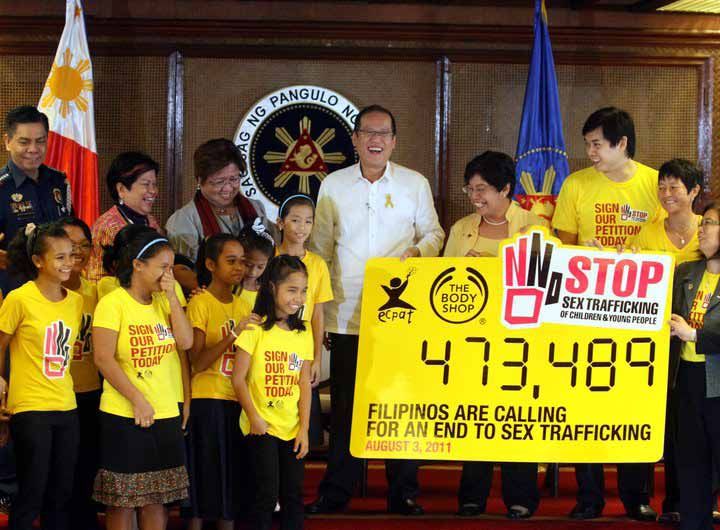
• In the Philippines, ECPAT and The Body Shop • 56% had learned about it for the first time
presented 473,489 campaign petitions directly that day
to President Benigno S. Aquino III, making it • 20% had learned about child sex trafficking
the largest petition ever submitted in the Asia elsewhere
Pacific region; • 24% had learned about child sex trafficking
• In Malta, according to campaign partner in stores during the first 2 years of the
Appogg, it is estimated that the campaign campaign
reached approximately 10% of the population; According to Child Wise, through the collection
• In the UK, the campaign helped to generate a of signatures on the petition, the public attitudes
much greater awareness of child trafficking and survey and exposure in The Body Shop stores,
the need for guardianship for child victims of more than a quarter of a million Australians
trafficking amongst parliamentarians and the are now aware of the global issue of child sex
CREATING CHANGE THROUGH PARTNERSHIP 2012 | Page: 26
public. The significant size of the final petition trafficking and Australia’s involvement.
With the understanding that potential trafficking cases. Despite the
education in schools helps to fact that there has been no progress
empower vulnerable children to on this indicator since 2009 (57%
protect themselves from the risks of of the 42 countries reviewed have
commercial sexual exploitation, the failed to introduce issues on child
campaign has also stressed the need trafficking in any school curricula),
for states to integrate training on examples of gradual improvement
commercial sexual exploitation of that have been identified in a
children (CSEC) and trafficking into few countries demonstrate that
the school curriculum for teachers. positive changes are possible when
This would enable them to convey governments, in collaboration with
accurate information to students and other stakeholders, are determined
contribute to child protection systems, to build a safer world for children.
especially through the identification ofIRELAND
CREATING CHANGE THROUGH PARTNERSHIP 2012 | Page: 27
In 2011, information on human trafficking was included in the
Civil, Social and Political Education (CSPE) programme module
on Human Rights and sent to all 750 secondary schools in
Ireland. Feedback on the material has been excellent, with
many schools requesting more copies of the material to teach
in other subjects such as religion. An art competition was held
for secondary school students, who were asked to design
a cover for a Guide for Service Providers dealing with Child
Trafficking, produced by the Anti-Human Trafficking Unit in the
Department of Justice and Equality. Almost 100 competition
entries were received. A prize-giving ceremony took place
on 22 February 2012 at which the published guidelines were
officially presented, with the winning cover.
MEANINGFUL PARTICIPATION OF
CHILDREN AND YOUTH
ECPAT and The Body Shop took care to plan and support At a local level, ECPAT youth groups were inspired
the involvement of children and young people in the global by the campaign to reach out to their communities.
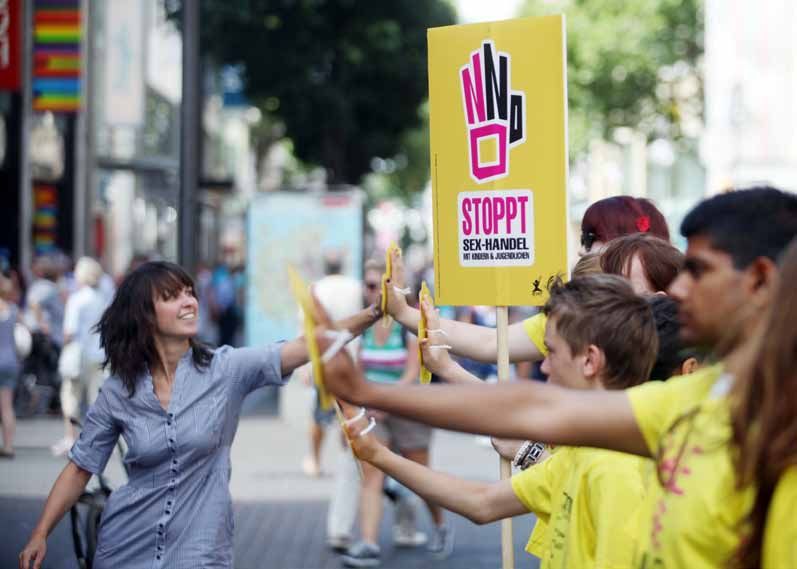
campaign. The ‘Youth Power’ toolkit was available and In Togo, the ECPAT youth group organised a peaceful
distributed in five languages (Chinese, English, Nepali, walking rally through two cities to highlight the issue of
Spanish and Thai). With support from ECPAT and The child sex trafficking to encourage community members to
Body Shop, the youth representatives collected more not turn a blind eye to the issue. In Nepal’s at-risk areas,
than 170,877 signatures and expanded the campaign the ECPAT youth group organised a street performance
reach to the following 11 additional countries where highlighting how children are lured by traffickers and how
the trafficking of children is a serious concern and the community can take action to prevent and report
where there are no The Body Shop stores: Bangladesh, cases. In addition, ECPAT youths also spoke on behalf
Cambodia, Gambia, Guatemala, Kazakhstan, Kyrgyzstan, of their peers as advocates at national and international
Moldova, Togo, Uganda, Ukraine and Vietnam. The events. These events included the UNODC’s Luxor
campaign allowed ECPAT youth to become advocates for International Forum held in Egypt in December 2010
their peers at different levels—as individuals, in their local and the ECPAT Youth Festival ‘Promoting Youth Power’
communities and even in the national and international in April 2011, where ECPAT Youth Representatives from
arena. For instance, at an individual level, the campaign Bangladesh, India, and Nepal were able to meet and
inspired a Ukrainian ECPAT youth name Vyacheslav present the petition directly to the President of Nepal,
Grvshchenko (16 years old) to collect 6,000 signatures Mr Ram Baran Yaday and ask for his commitment to
by himself: ‘I decided to support this project as I implement and amend existing laws to combat child
could not stand aside and be indifferent to this sex trafficking and the commercial sexual exploitation
problem. Then I decided to involve other leaders of children in South Asia. In response, President Yaday
of Kiev’s schools, as it is a very important issue expressed his full support and promised to talk to his
in the field of child rights protection’. counterparts from Bangladesh and India to follow up on
the youth and the campaign’s key ‘calls to action’.EXAMPLES OF CAMPAIGN- protection. There are several examples
of initiatives funded by the campaign
FUNDED PROJECTS ON that were intended to reduce the
PREVENTION likelihood of child trafficking and
sexual exploitation, including the
Besides requiring sustained following:
government action in the area
of prevention, the campaign has • In ECPAT Luxembourg’s project
allocated a consistent amount of in Bangladesh, 2,400 vulnerable
funds for the implementation of girls from rural areas have been
community-based prevention integrated into self-help groups
programmes targeting community providing them with access to
and children at risk, the general public, assistance and training/education
NGO staff, teachers, government programmes, and 1.8 million
representatives, social workers people in Union Parshad were
and other professionals, including made aware about the issue of
those in the media. Thanks to these child sex trafficking and how to
projects, thousands of children have report suspicious incidents or
been prevented from falling prey seek assistance.
to sex traffickers, and millions of
• In Romania, the ‘Work Safe!’
people have begun to change their
workshops, organised by the
attitudes and perceptions about
Samilia Foundation and ACSIS to
the commercial sexual exploitation
raise awareness of the risks of
of children, thus improving their
being trafficked helped to debunk
understanding of the seriousness
the misconception around child
of child sex trafficking and the need
sex trafficking (many children
to uphold the right of the child to
believed that child victims are
Page: 28
2012 || Page:
PARTNERSHIP 2012
THROUGH PARTNERSHIP 28
ECPAT Luxembourg’s successful
community-based prevention project in
Bangladesh has targeted vulnerable girls
who are at risk of becoming victims of
CHANGE THROUGH
sex trafficking and commercial sexual
exploitation.
CREATING CHANGE
CREATINGguilty as they ‘make a choice’ to 40 poor children with one meal
CREATING CHANGE THROUGH PARTNERSHIP 2012 | Page: 29
work for traffickers). As a result per day and a safe place to rest.
of the workshops, the 40 student Child Wise has also conducted
participants came away with awareness-raising projects in ten
a better understanding of the schools, where a series of training
process of human trafficking and sessions on child protection
its impact—both physically and were given to students, teachers,
emotionally— on victims. village leaders and parents.
• In Gambia, ten radio • The campaign has also
programmes were broadcasted funded a number of additional
to raise awareness among projects to ensure our data on
those who are illiterate. The child sex trafficking and other
programme included panel manifestations of commercial
discussions and one-on-one sexual exploitation of children
interviews on the issue of child (CSEC) remain up-to-date.
sex trafficking. Listeners were Besides providing a basis for
invited to phone in to the show more targeted and effective
to share their ideas and ask actions, this has enabled a clearer
questions. understanding of the specific
dynamics and changes in the
• In the Dominican Republic,
nature of sexual exploitation of
funds were utilised by the
children in a number of countries.
ECPAT member group MAIS
to conduct research in order • ECPAT International produced
to document the increase of more than 22 publications on the
children being trafficked from commercial sexual exploitation
Haiti to Dominican Republic of children, including two ‘Global
and in the process, establish Monitoring Report on the Status
contacts with key stakeholders. of Action against Commercial
The project is now working to Sexual Exploitation of Children’
create a community centre on reports for Hong Kong and
the northern border region to Singapore.
provide a variety of services
• In Singapore, an in-depth study
(basic health necessity, basic
was conducted specifically
education, family/parenting skills
focusing on how children and
and information on the dangers of
women were trafficked into the
trafficking).
city-state.
• In Cambodia, two community
• In Latin America, a study was
centres in Phnom Penh were
conducted on the trafficking
established by Child Wise
of children, especially boys, in
Australia, ECPAT’s member
Chile, Colombia, Guatemala and
group in Australia, that provide
Mexico.MAINTAINING MOMENTUM: RECOMMENDATIONS FOR
FOLLOW-UP ACTIONS ON PREVENTION
The review and analysis of campaign advocacy achievements in the area of
prevention undertaken at the end of the campaign has exposed a number of
remaining areas of concern that demand further efforts from governments
and other key actors responsible for child protection.
• States should further prioritise the fight against child sex trafficking.
Since in many countries this has not happened due to a lack of
data, research should be conducted to ascertain the dimension and
characteristics of this phenomenon. States where child sex trafficking
has been identified as an alarming issue should implement or financially
support community-based programmes aimed at raising awareness
among various target groups (children at risk, parents, general public,
professionals, buyers of sex services provided by children etc.).
• The lack of child-focused National Plans of Action (NPAs) or
other strategies to counteract child sex trafficking must be urgently
addressed. Anti-trafficking NPAs that are currently being developed
should incorporate measures to tackle the specifics of the sex trafficking
of children and young people and detail a timetable, a budget, objectives
to be achieved and organisations responsible for the execution of
the plans. States that have already adopted and are implementing
such comprehensive policy frameworks need to ensure that they are
evaluated both internally and externally to measure the impact of the
action implemented under the plan.
• Collaborative approaches in the development of policies and
implementation of preventive measures against child sex trafficking
must be further enhanced, especially between local administrations and
central government agencies, and ensure the meaningful involvement
CREATING CHANGE THROUGH PARTNERSHIP 2012 | Page: 30
of all relevant stakeholders, especially child-rights organisations and
children and young people. Resources should also be allocated to
guarantee the functioning of existing coordinating bodies.
• Information on child sex trafficking must be integrated into the national
curriculum for both teachers and students. This is particularly urgent
in countries where children at risk of being trafficked access formal
education. Recognising the difficulty that some countries are facing in
addressing what is still considered a taboo topic, it is suggested that
the subject of child trafficking and sexual exploitation of children be
dealt with in the broader framework of education on child rights, human
rights, or sex education in general.You can also read


