Mainstreaming Diversity - UNESCO CHAIR AT THE INSTITUTE OF TECHNOLOGY, TRALEE - UNESCO Chair IT Tralee
←
→
Page content transcription
If your browser does not render page correctly, please read the page content below
UNESCO CHAIR
AT THE INSTITUTE OF
TECHNOLOGY, TRALEE

A BLUEPRINT FOR ACTION

Mainstreaming            A Global Partnership for

Diversity
                         Mainstreaming Diversity through
                         Physical Education, Sport,
                         Recreation and Fitness

www.unescoittralee.com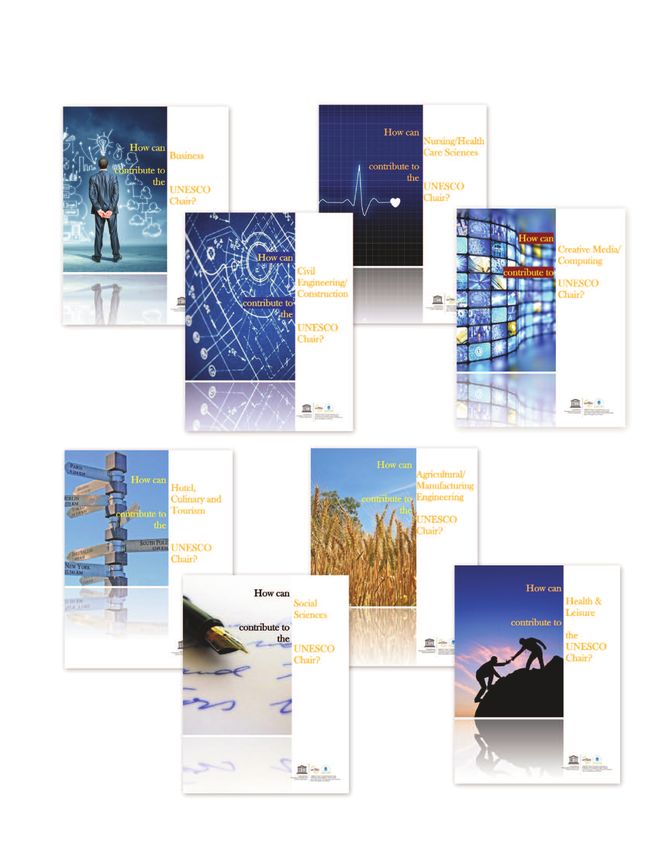
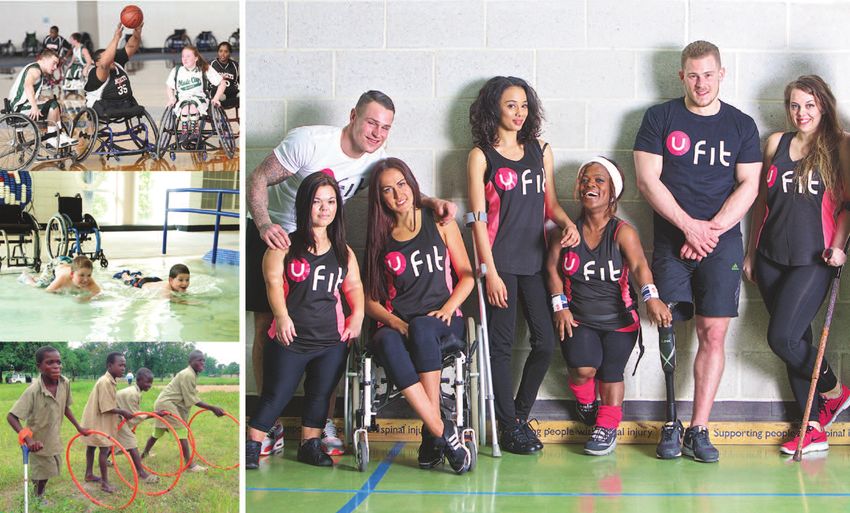
Purpose    The United Nations Educational, Scientific and Cultural Organisation (UNESCO),
                 in recognition of expertise and ongoing commitment, signed an agreement
                 with the Institute of Technology, Tralee to establish a Chair entitled
                 “Transforming the lives of people with disabilities, their families, and
                 community through Physical Education, Sport, Recreation and Fitness”.
                 The core purpose is Mainstreaming Diversity in these domains.

                 The Chair holds a global monitoring or watch dog function for dissemination
                 and advisory purposes. The mission centres on changing minds through
                 influencing policy and changing lives through innovative practice and
                 partnerships. ‘Changing Minds and Changing Lives’

     Objective   The Chair now leads a global partnership working in the domains of quality
                 inclusive Physical Education, Sport, Recreation and Fitness as part of a
                 broader intersectional human rights agenda focused on the social inclusion
                 of marginalised groups in keeping with the goals of the United Nations and
                 specifically those of UNESCO.

      Strategy   The Chair activities focus on CRAFTE strategic components i.e. Communication,
                 Research, Advocacy, Funding, Training, Education, and on adopting a broad
                 interdisciplinary approach with a view to maximising impact. As an independent
                 entity, the biggest strength of UNESCO Chair IT, Tralee lies in its capacity to
                 cultivate meaningful partnerships between a variety of key stakeholders,
                 adjusting to needs as they arise. The Chairholder will lead on a proportionate
                 and flexible planning process aimed at bringing policy and practice closer
                 together. The strategy will be evidence-based, impact focused, innovative,
                 responsive to change, adopting a longer term view to facilitate sustainable
                 support.

    Framework    The Institute of Technology, Tralee, with the establishment of the UNESCO Chair,
                 is reinforcing and internationalising its commitment to the fields of inclusive
                 practice and universal access. In Ireland, the Institute’s partner on campus, the
                 CARA National Adapted Physical Activity Centre, will continue to provide a
                 lead nationally in facilitating, co-ordinating and advocating for the inclusion
                 of people with disabilities in sport, physical activity and physical education;
                 while the UNESCO Chair’s National and International remit and partnership
                 commitment will work to complement, support and showcase the work of
                 the CARA Centre.

                 IT, Tralee’s UNESCO Chair builds bridges between academia and civic society,
                 policy makers, legislators and society as a whole. The Chair encompasses the
                 Institute’s staff and students, its partner network, and is guided by its
                 Chairholder Dr. Florian Kiuppis.

2
A BLUEPRINT FOR ACTION

CONTENTS
Foreword                                                      4
Message from the Chairholder                                  5
Background and Context                                        7
The Chair’s Purpose and Ojectives                           10
Blueprint                                                   12
The 3 ‘V’s: Vision - Value Proposition - Verification       13
UNESCO Chair: Our Vision                                    13
UNESCO Chair: Our Values                                    14
UNESCO Chair: Our Verification                              15
The 8 ‘P’s: Philosophy, Policy, Processes, People,
Programmes, Promotion, Places, Perception                   17
    P1. Philosophy                                          17
    P2. Policy                                              19
    P3. Processes                                           21
    P4. People                                              22
    P5. Programmes                                          23
    P6. Promotion                                           24
    P7. Places                                              25
    P8. Perception                                          27
The 3 ‘I’s: Implement, Impact, Innovate                     28
    Implementation                                          28
    Impact                                                  28
    Innovation                                              28
Spotlight                                                   29
The CRAFTE Strategy                                         32
Appendix                                                    42

                                                                            3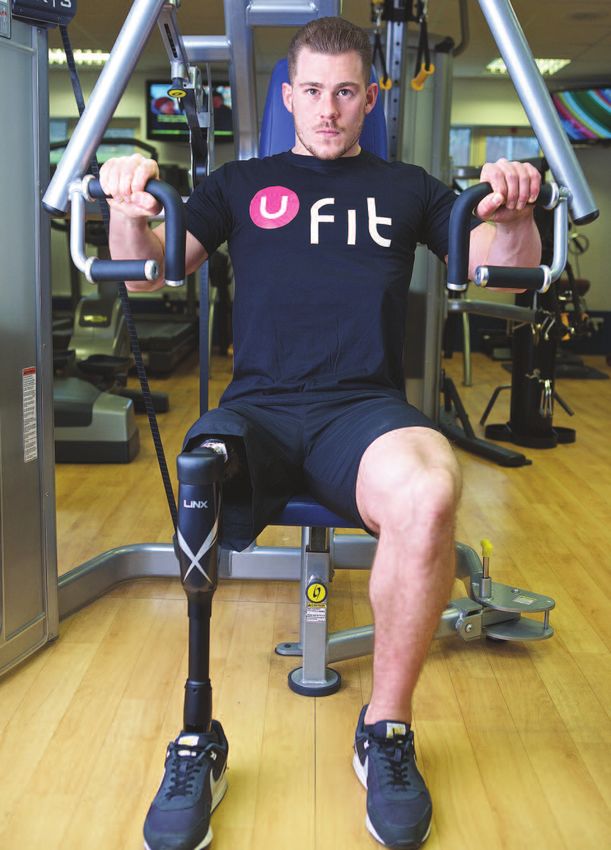
UNESCO CHAIR AT THE IT, TRALEE

FOREWORD
Dr. Oliver Murphy, President, Institute of Technology, Tralee

                        The Institute is honoured to host this UNESCO Chair and is committed to addressing the grand
                        challenges it presents through innovative, multi-sectorial partnership respectful of the many and
                        varied change agents needed to mobilise societal change at policy and practice levels on a global
                        platform.

                        The establishment of the UNESCO Chair reflects the long term commitment of the Institute to
                        the area of social justice particularly as addressed by the Article 30 of the Convention on Rights
                        of Persons with Disabilities (2006) and UNESCO’s International Charter of Physical Education and
                        Sport (1978). A societal shift towards ‘Mainstreaming Diversity’ is needed. The Institute is building
                        on the strategic importance it has placed on the area of inclusive practice in physical education,
                        sport, recreation and fitness, by internationalising its commitment to the area, and to the broader
                        inclusive education, social justice and sustainable development goals of UNESCO.

                        Sport, as a mirror of society, has been proven through history to have the capacity to mobilise
                        change. The United Nations define sport as ‘all forms of physical activity that contribute to
                        physical fitness, mental well-being and social interaction, such as play, recreation, organized or
                        competitive sport, and indigenous sports and games’. Benefits of sport extend from an individual
                        to a societal level, across; human flourishing, health, gender equality, social integration, social
                        capital, peace building and conflict resolution, economic development, and as a mobilising agent
                        for social change.

                        Across the globe the nature of the challenge presented by this Chair varies considerably. We in
                        Tralee, are very conscious of the fact that we do not hold all the solutions but we are committed
                        to forging partnerships that will develop innovative solutions. Global collaborations, at
                        government and grass roots level, are critical to the success of this endeavour.

                        As President of this Institute, I am happy to declare that we have adopted a ‘Campus of Inclusion’
                        approach to achieve the Articles of the Chair as agreed with UNESCO. We believe this multi-
                        sectorial, multi-disciplinary approach will generate new thinking and new solutions to this broad
                        social challenge. In higher education we are uniquely positioned to instil respect for diversity
                        across multiple disciplines thereby fostering the emergence of a generation of graduates who
                        are more mindful 'civic servants' respectful of diverse needs of all people.

                        The majority of us will personally experience disability in our lives. We all deserve respect and a
                        right to ‘choice’ in how we choose to live our lives. The Institute is embracing the Chairs’ goals
                        with optimism and open doors, inviting collaboration across the vast array of stakeholders who
                        can play a part in this important challenge. We call for positive change across many sectors;
                        education, sport, health, technology, local and national government, non-governmental
                        organisations, federations, national and international governing bodies of sport, philanthropy,
                        commercial and enterprise, community and voluntary sectors.

                        We invite you to join us on this journey.

                        Dr. Oliver Murphy, President IT, Tralee

4
A BLUEPRINT FOR ACTION

MESSAGE FROM OUR CHAIRHOLDER
Dr. Florian Kiuppis

                      Dear Colleagues, Friends and Supporters,

                      The guiding principle of inclusion is commonly discussed in context of education. For the last 20
                      years, while following up the ‘World Conference on Special Needs Education’ that was held in
                      Salamanca in 1994, UNESCO and its collaborators achieved to a far extent the implementation
                      of inclusion at all levels of education systems worldwide. However, which steps need to be taken
                      in order to ensure inclusive sports in sports clubs, schools, and in less formalised contexts in the
                      community at large, is a question that remained so far unanswered, arguably often even
                      unasked.

                      Our Purpose of transforming the lives of people with disabilities, their families, and communities,
                      through physical education, sport, recreation and fitness is connected with the guiding principles
                      of empowerment of persons with disabilities and their communities and enabling civic society
                      to become inclusive.

                      Our Objective to contribute to the mainstreaming of diversity through quality inclusive physical
                      education is more than a question of universal access - the full and effective inclusion of
                      persons with disabilities on an equal basis with others and their full enjoyment of physical
                      education, sport, recreation and fitness without discrimination are essential targets of our work.

                      Our Strategy is inspired by a community-based participatory research paradigm related to
                      the goal to facilitate, co-ordinate and advocate for the inclusion of people with disabilities in
                      sport, physical activity, and physical education - and to work with rather than for people with
                      disabilities.

                      Our Framework, defined by the reinforcement and the internationalisation of our commitment
                      to the fields of inclusive practice and universal access, as well as our concerted effort to
                      mainstream diversity is fuelled by the targets outlined in the UN-Convention on the Rights
                      of Persons with Disabilities (2006) and specified in the Berlin Declaration (2013).

                      Please join us in our endeavour to collectively and inclusively work on the encouragement and
                      promotion of participation, to the fullest extent possible, of persons with disabilities in
                      mainstream sporting activities at all levels.

                      Dr. Florian Kiuppis, Chairholder

                                                                                                                             5
UNESCO CHAIR AT THE IT, TRALEE

                                                                       UNESCO CHAIR

      MISSION:                  Transform the lives of people with disabilities, their families and communities
                                through PE, Sport, Fitness and Recreation

      CORE VALUES:            Enthusiasm • Commitment • Passion For Justice • Altruism • Openess

          Our motto ‘mainstreaming diversity’ was created to illustrate what we and many others are
          striving to achieve: a society where diversity is valued, where those living and working therein                                 VISION
          embrace it with positivity for the betterment of society.

                                                                        Facilitate opportunities for                                   Drive the
                                                                       employment and/engagement                                       advancement of
                                                                          across relevant sectors.                  Promote            meaningful and
                                         Maximise uptake of
                                     inclusive practices among                                                empowerment and          sustainable
                   Stakeholders        all relevant providers in                                              active participation     opportunities in PE,
                                                                                                              of PWD in physical       Sport, Fitness, and
                                       the public, private and           Empower all stakeholders                                      Recreation leading
                                           voluntary sectors.            by developing and sharing             activity contexts.
                                                                                                                                       to transformative
                                                                           tools, knowledge and                                        change.
                                                                                experiences.

                                                                                                                                       Build capacity
                     People,          Generate empowering                    Communicate and                         Build a           in the design,
                   Institutions,           knowledge                       collaborate as a bridge              comprehensive          delivery, and
                   Knowledge              for PWD and                          builder with all              quality focused digital   promotion
                                         stakeholders.                          stakeholders.                   repository and         of high quality
                        and
                                                                                                                clearing house.        physical activity
                   Technology
    PERSPECTIVES

                                                                                                                                       opportunities.

                                               TRAINING                         EDUCATION                        RESEARCH
                    Processes         Let’s ‘inclusivise’ practice         Build capacity among                Increase impact
                                        across stakeholders.              professionals to facilitate       focused multi-sectorial    Develop accessible
                                                                                  inclusion.                       research.           education, training
                                                                                                                                       and research
                                                                                                                                       aligned with the
                                                                                                                                       UNESCO Chair
                                                                              ADVOCACY                                                 mission.
                                                              Raise awareness on society’s duty to ‘inclusivise’
                                                                        movement opportunities.

                     Human,                                                                                                            Apply the
                                                                                                                                       Universal
                   Institutional         Grow and diversify                Develop cost-effective             Grow and diversify
                                                                                                                                       Management
                   Political and          highly qualified                    systems to make                  financial, human        Framework in a
                                         human resources.                   the best of available              and institutional
                     Financial                                                                                                         cross sectorial
                                                                                  resources.                       resources.          manner.
                     Capacity

    IMPACT              Peace Building; Africa; Gender Equality; Youth; Developing Countries; Small island developing states; Disadvantaged
     AREAS              and excluded groups; Human rights; Education for All; Bridging Education and Culture; Digital Technologies.

    THEMES              MAINSTREAMING DIVERSITY SOCIAL JUSTICE INCLUSIVISE EMPOWERMENT SUSTAINABILITY

6
A BLUEPRINT FOR ACTION

BACKGROUND AND CONTEXT

          What is a UNESCO Chair?
          The UNESCO Chair establishment brings a part of UNESCO to Tralee. The Chair’s
          Programme encourages international collaboration and networking to advance towards
          creating better societies. UNESCO Chairs work on helping UNESCO achieve their global
          goals relating to pressing challenges that can contribute to the development of societies.
          Seen as bridge builders between academia, civil society, local communities, research and
          policy-making, Chairs help in informing policy decisions, establishing new teaching
          initiatives, generating innovation through research initiatives and actions thereby
          contributing to the enrichment of existing education and outreach programmes while
          promoting cultural diversity. UNESCO Chairs can be seen as enablers of excellence and
          innovation. Chairs are established in key priority areas related to UNESCO’s fields of
          competence, including inclusive PE, Sport, Fitness and Recreation.

          UNESCO’s Interest in Inclusive PE, Sport, Fitness and Recreation
          UNESCO is the United Nations’ lead agency for Physical Education and Sport (PES).
          Assistance and guidance is provided for governments, NGOs, and experts to debate the
          evolving challenges of physical education and sport. UNESCO assists Member States
          wishing to elaborate or strengthen their training system in PE and programme
          development in sport. UNESCO together with the UN developed the Convention on the
          Rights of Persons with Disabilities (2006) and the International Charter on Physical
          Education and Sport (1978) which remains relevant today and IT, Tralee’s UNESCO Chair
          aims to reflect the articles therein. Many articles in both of these documents relate to
          ITT’s UNESCO Chair priorities. UNESCO plays the secretariat role for the Intergovernmental
          Committee for Physical Education and Sport (CIGEPS). UNESCO convenes ‘MINEPS’, the
          International Conference of Ministers and Senior Officials Responsible for Physical
          Education and Sport, together with key stakeholders of the sporting world, to tackle the
          most pressing challenges in international sport policies and to make action-oriented
          recommendations. MINEPS V led to the Berlin Declaration (2013) that considered the
          following priority areas:
          • Access to sport as a fundamental right for all;
          • Access of women and girls;
          • Inclusion of persons with disabilities;
          • Promoting investment in inclusive sport and PE programmes;
          • Sport mega events and their sustainability;
          • Preserving the integrity of sport.

          IT, Tralee was represented in Berlin, and through this Chair has committed, as an
          independent bridge builder, to helping UNESCO advance practice in this domain.

          The Institute of Technology, Tralee’s path to the establishment of a
          UNESCO Chair
          The Institute of Technology, Tralee, with the establishment of the UNESCO Chair is
          reinforcing and internationalising its commitment to the fields of inclusive practice and
          universal access. In 1993 with the Health and Leisure programmes were established with
          a core philosophy that was an ideal bedrock for the introduction of modules focusing on
          Adapted Physical Activity (APA). The Institute has developed and progressed this field as
          one of its key strategic priority areas. In 1995 the emergence of the Adapted Physical
          Activity programmes, with their strong community outreach approach, served to make
          significant impact on people’s lives, gaining national recognition.

                                                                                                       7
UNESCO CHAIR AT THE IT, TRALEE

                                 The focus on inclusive practice also extended over may other areas of the Health and Leisure
                                 programmes, including physical education, research, fitness, policy and planning, community
                                 development, health promotion and more recently campus-wide initiatives such as
                                 community engagement and a unique pan-institute commitment to addressing inclusion.
                                 Since 2003 the Institute has led and partnered in many transformative landmark EU projects
                                 in fields related to the Chair, bringing international visibility, key collaborative partnerships,
                                 and made impact potential more possible.

                                 The commitment of the Institute drew recognition and endorsement from the Irish Sports
                                 Council when in 2007 the CARA Centre, the National Centre for APA was established. A
                                 collaborative working relationship between the CARA Centre, its national partners and
                                 Institute staff has enabled the sharing of knowledge and resources to grow and strengthen
                                 activity nationwide. The CARA Centre is now recognised as a lead agency nationally in
                                 facilitating, co-ordinating and advocating for the inclusion of people with disabilities in sport,
                                 physical activity and physical education.

                                 The CARA Centre is also on Campus in Tralee and the National remit of the CARA Centre
                                 coupled with the National and International remit of the UNESCO Chair positions the Institute
                                 as a forerunner of developments in the field. The Institute has been collaborating with
                                 UNESCO since 2009 and the launch of the Institute led European Inclusive Physical Education
                                 and Training Project (EIPET), this collaboration ultimately led to the establishment of the Chair
                                 both in recognition of work done over many years and commitment to advancing practice
                                 into the future. The attainment of the goals of the Chair will require significant and extensive
                                 partnerships on a national and international scale to achieve impact at a societal level.

                                 Many partnership have already formed and the initial partnership is referenced in appendix
                                 1 on page 42. The Chair remains open to ongoing partnership development.

                                 Key Defining Factors
                                 In defining ‘sport’ the Chair embraces “all forms of physical activity that contribute to physical
                                 fitness, mental well-being and social interaction, such as play, recreation, organised or
                                 competitive sport, and indigenous sports and games”. As proposed by the UN Inter-Agency
                                 Task Force on Sport for Development and Peace 2003. There are many definitions of and
                                 classifications of disability, for the purposes of this Chair we are adopting the WHO 2015
                                 definition:

                                 “Disabilities is an umbrella term, covering impairments, activity limitations, and
                                 participation restrictions. An impairment is a problem in body function or structure;
                                 an activity limitation is a difficulty encountered by an individual in executing a task or
                                 action; while a participation restriction is a problem experienced by an individual in
                                 involvement in life situations.”
                                 WHO 2015 (www.who.int/topics/disabilities/en/)

                                 UNESCO (2015) describes quality physical education (QPE) as ‘not only the entry point for
                                 lifelong physical activity but also improves health awareness, enhances civic engagement and
                                 contributes to social inclusion’. UNESCOs Quality Physical Education Policy identifies that the
                                 Post 2015 Development Agenda outlines that sustainable development begins with healthy,
                                 safe, active, well-educated children. UNESCO views inclusion, equality and physical literacy
                                 as central tenants of QPE.

8
A BLUEPRINT FOR ACTION

Key Assumptions - The Chair:
• is adopting a pan-disability approach to inclusion;
• believes that quality practice is inclusive practice;
• is moving to mainstream diversity;
• is open to partnerships on a global platform;
• operates across public, private, commercial, community, and voluntary sectors;
• embraces a strengths based approach to human flourishing;
• works to create appropriate opportunities for participation aligned with the
  biopsychosocial needs of the individual, in the context of their family and community lives;
• acknowledges that 98% of us will experience a disability in our lives - disability is
  mainstream.

Note: References to the ‘Chair’ in this documents assumes the Chair Partnership.

                                                                                                 9
UNESCO CHAIR AT THE IT, TRALEE

THE CHAIR’S PURPOSE AND OBJECTIVES

                                 The purpose of the Chair is to promote an integrated system of research, training,
                                 information and documentation in the fields of inclusive physical education, adapted
                                 physical activity, sport, fitness and recreation for social inclusion of people with disabilities,
                                 their families and communities. The Chair will work to enhance individuals’ rights for
                                 social development and advancement, facilitating collaboration between high-level,
                                 internationally recognised researchers and teaching staff of the Institute and other
                                 institutions in Ireland and across the globe.

                                                       Social Justice
                                                                                               Community
                                                               Self                            and Active
                                                               Actualisation                   Citizenship

                                                                         PE Sport
                                                                         Fitness,
                                                                         Recreation
                                                                         for All

                                                                                            Physical
                                              Society and Culture                           Flourishing

                                 Figure 1. Thematic Scope of the Chair

                                 The Chair will develop a “clearing house” function aligned with its online repository. It
                                 will also act as a bridge builder with civic society, reaching out to communities and
                                 stakeholders on an international platform to facilitate transformative change to peoples’
                                 lives.

                                 The full realisation of the goals of this Chair will involve broad reaching sector skill alliances
                                 and knowledge alliances to ensure impact at an individual, family and community level.

10
A BLUEPRINT FOR ACTION
Objectives:
• To build the capacity of professionals so they can better work with all people and
agencies in the areas of physical education, sport, recreation and fitness through the
sharing of programmes and policies developed at the Institute and by partners;
• to develop a virtual space to provide a vehicle for unified collaboration world-wide;
• to engage in multi-sectorial transformational research with a view to
mainstreaming diversity;
• to mobilize the partnership to disseminate, advocate, operate, research and
transform current practice to encourage the implementation of changes in legislation,
policy and practice for the inclusion of all people in physical education, sport, fitness and
recreation and;
• to co-operate with UNESCO on relevant programmes and activities.
The multi-sectorial expertise available across the Institute and its research centres will facilitate
this end.
DEPARTMENT OF HEALTH AND LEISURE, DEPARTMENT OF SOCIAL SCIENCES, DEPARTMENT OF HOTEL, CULINARY AND
TOURISM, DEPARTMENT OF NURSING/HEALTH CARE SCIENCES, DEPARTMENT OF CIVIL ENGINEERING/CONSTRUCTION,
DEPARTMENT OF AGRICULTURE/MANUFACTURING ENGINEERING, DEPARTMENT OF CREATIVE MEDIA/COMPUTING
..
...
...
..
...
..
11UNESCO CHAIR AT THE IT, TRALEE
BLUEPRINT
The Blueprint for the UNESCO Chair at IT, Tralee is presented herein using the
internationally validated Universal Management Framework (UMF) and the CRAFTE
Strategic Components namely, Communication, Research, Advocacy, Funding, Training
and Education. The UMF represents a conceptual framework which evolved over 21 years
in IT, Tralee to facilitate Mainstreaming Diversity in practice. It is relevant across a range
of contexts from organisations, educational programmes, research, sport and activity
initiatives and projects. A range of tools support the implementation of the framework,
which will enable users to devise relevant local solutions to this global issue.
The UNESCO Chair has adopted the Universal Management Framework as an element
of its toolkit to serve in the transition to more inclusive practice in PE, Sport Recreation
and Fitness.
UNIVERSAL MANAGEMENT FRAMEWORK
Conceived by and for Diversity
vision Value verification
Proposition
Philosophy
Policy
Programmes Promotion
People
perception
Processes Places
implementation impact Innovation
Figure 2. Universal Management Framework
12A BLUEPRINT FOR ACTION
UNIVERSAL MANAGEMENT FRAMEWORK APPLIED TO THE UNESCO CHAIR BLUEPRINT: 3Vs | 8Ps | 3Is
THE 3 ‘V’s: VISION - VALUE PROPOSITION - VERIFICATION
“Mainstreaming UNESCO CHAIR: OUR VISION
diversity' addresses a
key issue which is,
that we are not The UNESCO Chair envisions a society that mainstreams diversity:
about inclusion, but
that society has to • Across public, private, commercial, voluntary and community sectors;
encompass every
• Where all people have equality of opportunity in physical education, sporting,
individual within fitness and recreational activities;
its boundaries, and
welcomes human • Where the provision for physically active lifestyles and the promotion of wellbeing
beings as individuals is accessible to all people;
who are similar and
• Where professionals and policy makers provide for all of society through their
different all at the
work;
same time”.
• Where interdisciplinary research advances further possibilities and opportunity;
Sir Philip Craven,
President
• Where collaboration in a spirit of mutual collegiality leads to better opportunities
International
on a global scale; and
Paralympic
Committee (IPC)
• Where the voices of all interest groups, including people with disabilities and other
marginalised groups inform practice.
The Chair remit extends from participation of young children
to older adults and from rehabilitation through to elite
performance on a global platform.
MAINSTREAMING DIVERSITY
Our motto was created to illustrate what we and many others are striving to
achieve: a society where diversity is valued, where those living and working
therein embrace it with positivity for the betterment of society.
Mainstreaming Diversity is our vision. On our path to mainstreaming, and recognising
the different and varied journeys stakeholders internationally must take to get there, we
have identified the following pathway to achieving diversity.
RECOGNISE
INCLUSIVISE MAINSTREAM
THE RIGHTS
PRACTICE DIVERSITY
OF ALL
Figure 3. Pathway to Diversity
13UNESCO CHAIR AT THE IT, TRALEE
UNESCO CHAIR: OUR VALUES
‘Making Universal Access Accessible!’
The UNESCO Chair programme draws together international multi-disciplinary expertise
to advance awareness, knowledge and practice in the areas of responsibility of each
respective Chair.
As the only Chair in the field of inclusive PE, Sport, Recreation and Fitness, and being an
independent entity, the biggest strength of UNESCO Chair IT, Tralee lies in its capacity to
cultivate meaningful partnerships between a variety of key stakeholders. Only through
communication, collaboration and commitment do we have the power to facilitate and
enact real change. The Chair will adopt a policy of openness, listening to the voices of
the many stakeholders especially that of people with disabilities, seeing our goals as a
continuous collective learning process seeking to advance practice for the betterment of
society and all people therein.
The Chairs’ partnership encourage and assist professionals to become inclusive in their
practice through relevant education, training, research, advocacy, support, resources and
toolkits. Becoming inclusive means providing a spectrum of opportunities, from
completely inclusive contexts to segregated ones, from which people can choose
according to their individuality.
The Chair provides practical strategies for inclusive practice, and for increasing confidence,
competence and enthusiasm towards working with, or providing for, people with
disabilities. Giving comprehensive guidance to policy makers and practitioners, the
UNESCO Chair addresses the ‘how’, ‘what’ and ‘why’ of inclusion in practical, easy-to-
implement ways, thus building efficacy to nurture universal access in physical education,
sport, recreation and fitness contexts. In addition the Chair, via its clearinghouse function,
showcases international best practice to facilitate the modelling of this by others.
The UNESCO Chair research and activities are impact-focused on a global scale. We will
maximise the online functionality that the public global space affords us to disseminate
broadly and share information about our activities and those of our partners. The Chair
partnership will act and advocate across sectors for changes in legislation, policy and
practice as regards the inclusion of people with disabilities in physical education, sport,
fitness and recreation with a broad societal change goal in sight.
Plan International
14A BLUEPRINT FOR ACTION
UNESCO CHAIR: OUR VERIFICATION
The need for the Chair is ubiquitous internationally. In 2015, there remains significant scope
for mainstreaming inclusive practice in professional preparation programmes in higher
education, vocational training and professional development. Moreover greater awareness
across civic society and the many mixed stakeholders who can influence changes in practice
is needed to stimulate change towards inclusive societies. People with disabilities in Ireland
and elsewhere in the world are not afforded equal societal opportunities in physical
education, sport, fitness and recreation. This impacts variously and heavily on individuals’
sense of self, family and community life and societal understanding of disability. The case
for global action is clearly articulated in a range of international declarations including the
UN Convention on the Rights of Persons with Disabilities (2006), International Charter on
Physical Education and Sport (1978), Berlin Declaration (2013) and Millennium Development
Goals and associated Post 2015 Development plans.
As an industry dedicated to finding solutions to the world’s
inactivity crisis, we are excited by the efforts of the UNESCO
chair working toward universal access to fitness for all.
We look forward to making that goal a reality.
Joe Moore, President and CEO of IHRSA; the Trade Association Serving the Global Health Club
80%
and Fitness Industry
1 BILLION 20%
80% of persons with
disabilities live in developing
countries. (UNDP)
30%
20% of the world's
poorest. (World Bank)
80%
1 Billion People - 15% of the world 30% of street youths.
population experience disability. (WHO, 2011) (UNICEF)
80% unemployment
in some countries (ILO)
72.1% 73% 57%
In England, 72.1% of disabled In Ireland, 73% of people with 57% of people with disabilities
people take part in no sport or illness and disability reported that think they develop a sense of
physical activity, compared to their condition prevented them belonging in their community
47.8% of non-disabled people. from doing sport. through volunteering.
(Active People Survey June 2014, (Irish Sports Annual Monitor Report, 2013) (Youth Sport Trust 2014)
Sport England)
15UNESCO CHAIR AT THE IT, TRALEE
VERIFICATION OF NEED AS EXPRESSED THROUGH UNESCO’s
WORLD WIDE SURVEYS 1998 - 2014
A comprehensive statement from Ken Hardman, UNESCO World
Wide Survey, 1998-2014, on the needs surrounding this UNESCO
Chair is available on the Chair website.
An extract from Ken Hardman’s statement is below.
‘From a policy perspective, the evidence generated by the
Worldwide Physical Education Survey III (2013-2014) indicates
greater consideration of the issue of Inclusion, anti-discrimination
legislation fostering deeper awareness of inclusion and disability
issues, and advocacy of inclusive practices in participation in
physical education programmes for pupils with disabilities. In
essence, however, survey data related to opportunities of access
to physical education lessons show little change in global and
regional contexts since 2007 and perhaps point to difficulties in
operational implementation. Thus, persistent barriers continue to
undermine the drive for a more holistic and inclusive physical education environment for
children with disabilities and these barriers are not limited to any one country or region,
they are globally widespread ... There is clear evidence that those with disabilities do not
receive equal access to the physical education experience and such individuals are
increasingly part of the mainstream school system. The preparation of teachers and their
continuing professional development is a specifically identified area, which requires
immediate attention: the challenges inherent in inclusion and disability suggest the need
for a sustained review of training programmes. As indicated in World-wide Physical
Education Surveys II and III, there is a need for rigorous research into many of the aspects
of inclusion of children with disabilities in physical education.
Collectively, the concerns expressed, and the inherent problems identified, need to be
addressed through socially inclusive policy and practice strategies within 'Basic Needs'
Models and formulation of Quality Physical Education/Quality PE Teacher Education
Indicators. The UNESCO Chair at IT, Tralee in partnership with governmental, inter- and
non-governmental agencies should have a significant role through programme
development, research and its application in promoting, fostering and advising on
Inclusion initiatives across the globe. The UNESCO Chair at IT, Tralee within the global
partnership can and should make a mind-changing contribution to promoting and
developing initiatives including innovative programmes and practices not only by building
bridges but also by creating pathways between academe and all vested interest and
responsible agencies.’
Ken Hardman
(UNESCO World Wide Survey, 1998-2014)
16A BLUEPRINT FOR ACTION
THE 8 ‘P’s: Philosophy - Policy - Processes - People -
Programmes - Promotion - Places - Perception
P1. PHILOSOPHY
UNESCO POSITIVE SALUTOGENISIS BIOPSYCHOSOCIAL CAPABILITY BEHAVIOUR APPRECIATIVE
CHAIR PSYCHOLOGY MODEL APPROACH CHANGE INQUIRY
CORE STRENGTHS THERAPY
PHILOSOPHY BASED
APPROACH
The Chair, growing from its roots in the Health and Leisure Department of the Institute
of Technology, Tralee, adopts a strengths based approach to human capacity building
and human flourishing. All individuals are different, all individual choices are influenced
by the environment and opportunities afforded us, all people have a right to ‘choice’.
The Chair aims to take the ‘dis’ out of disability, focusing more relevantly on individuals
abilities and strengths. Informed by a range of theories that share a strengths based
approach to full participation in all aspects of community living including cultural aspects
acknowledged as a human right. Facilitating this is a moral imperative.
The core philosophy of the Chair is underpinned by Antonovskys (1979) concept of
salutogenesis, the biopsychosocial understanding of disability and the capability and
human development approach to social justice. Salutogenesis takes a positive approach
to health and wellbeing, focusing on keeping healthy, instead of treating disease. The
biopsychosocial model emphasises the complex multifactorial and multileveled nature of
disability. Capability and human development approaches point out that what people
are able to do and be is influenced by the individual, their environment, social policies
and practices. Thereby social equality is about equality of opportunities to live the life
one values. Impactful social change therefore requires understanding of the intersection
of human condition and life’s opportunities. The UNESCO Chair co-ordinates global action
aimed at creating a society that embraces diversity with enthusiasm, positivity and
innovation.
Our philosophy of action follows an appreciative inquiry approach. To inform our practice
we combine appreciative inquiry principles with salutogenesis, strengths-based and
capabilities’ approaches, respectful of behaviour-change processes.
The context of the Chair’s action takes account of the biological, psychological and social
factors contributing to disability at the individual, community and environmental levels.
Actions in all these areas are needed to ignite change. In that regard, the importance of
open-mindedness, innovation and interdisciplinary practice is recognised.
17UNESCO CHAIR AT THE IT, TRALEE
APPRECIATIVE INQUIRY PRINCIPLE UNESCO CHAIR ACTIONS
What it’s about ...
The Constructionist Principle Through the creation of diverse sector
Change won’t come with more of the skills alliances and knowledge and
same. Open up a new discussion, new research alliances, the Chair aims to
thoughts, new thinking. open up new thinking, to influence
change on a societal level.
The Principle of Simultaneity The Chair and its partners will strongly
Passionate and continued inquiry sows and enthusiastically advocate across
the seeds of change. stakeholders necessary to bring about
change.
The Poetic Principle The Chair will engage in discussions
The power of the human story in with diverse groups to listen, embrace,
informing actions and new directions. act, advocate and collaborate with
view to influencing positive change.
The Anticipatory Principle The Chair’s Motto - Mainstreaming
One needs to visualise and verbalise Diversity- embraces its vision, it will
their future vision to initiate actions act to bring this reality closer.
toward making it a reality.
The Positive Principle The Chair brings with it an
Positive social change needs positive opportunity, our independence brings
social connectedness, open-mindedness, flexibility, our approach fosters
creativity and enthusiasm. innovation, our goals are a challenge
we embrace with positivity.
The Chair will adopt a multi-faceted interagency approach to make a difference at
societal level to ensure the sustainability and impact of actions. Action is proposed
in the areas of: policy and legislation, education training and research, awareness
raising and advocacy, collaboration, sharing of resources, research and information.
Plan International
18A BLUEPRINT FOR ACTION
P2. POLICY
The Policy of the UNESCO Chair relates to 6 operational areas as identified in our
CRAFTE Strategy (page 32).
Communication
Communication is the first element of the CRAFTE strategy, by design. The power of
communication to raise awareness and transfer this into meaningful action should not
be underestimated. By communicating the need to increase pathways to mainstream
diversity across the physical activity sector, the Chair is facilitating attitudinal change that
will lead to changed practice.
The diverse international partnership and stakeholder groups make the communication
task of the Chair a challenging one. The communication strand is, however, a powerful
strand. Ongoing internal and external communication mechanisms that give voice to the
diverse stakeholders will be co-ordinated. The communication message will be designed
to facilitate, enthuse, motivate, educate and advocate for the rights of people with
disabilities in multi-sectorial fields of relevance to the Chair.
Given the global public online space and its power and reach we commit to transferring
academic messages and research outputs into accessible relevant formats to capture the
interest of diverse audiences.
The UNESCO Chair commits to publishing and presenting widely about the Chair goals
and activities.
Research
The UNESCO Chair will actively seek opportunities to pursue high quality research
pertaining to the goals of the chair. The Chair will actively build capacity and seek to
engage diverse disciplines in research relating to the chair, advocating for key national
and international research outputs to refer to opportunities for people with disabilities.
Transformative research extends beyond academic research to include activities with key
national partners to change practice. This will be spotlighted for others to follow. We
shall also invite partners to showcase their good practice. Encouraging a disruptive
innovation approach, where diverse views and actions can merge to facilitate new
solutions and actions is respected within the Chairs transformative research approach.
Linking with our multi-sectorial remit the Chair in Tralee adopts a Campus of Inclusion
approach and synergies with the Institutes other Research Centres; namely the Centre
for Entrepreneurial and Enterprise Development- CEED; the Irish Academy of Hospitality
and Tourism - IAHT; the Centre for Mechatronics and RFID Technology Gateway; and
Shannon Applied Biotechnology Centre Technology Gateway.
Campus of Inclusion: The UNESCO Chair Disruptive Innovation Approach for Social Change.
The Chair has encouraged all disciplines, departments and research centres to examine the possibilities
their field can mobilise to Mainstream Diversity aligned with the UNESCO Chair remit. Actions are on
ongoing across all schools; Health and Social Sciences, Science Technology Engineering and Maths,
Business Computing and Humanities and the Institutes five Research Centres including the UNESCO
Chair Research Centre, Centre for Entrepreneurship and Enterprise Development, Irish Academy of
Hospitality and Tourism, Intelligent Mechatronics and RFID, and Shannon ABC.
19UNESCO CHAIR AT THE IT, TRALEE
“FIEP are delighted to Advocacy
see a UNESCO Chair The UNESCO chair and associate partnership will engage in wide-scale advocacy activity with
in this field, especially 'top down' and 'bottom up' approaches. Suggestions and tools for advocacy will be developed
across the partnership. The power of advocacy cannot be underestimated although its impact
given the release
can be hard to measure. Teaching 'advocacy' is a foundational component of our education and
of UNESCOs Quality
training programmes. Advocacy can impact upon initial awareness raising and behaviour change
Physical Education activities and can impact at a policy change level. A core goal of this Chair in terms of advocacy
Guidelines for Policy is to focus efforts on those sectors of the Chair remit that have not yet fully considered the
Makers in 2015. importance of all stages of our pathway to diversity from recognising and providing for the rights
Change is needed of all, inclusivising to mainstreaming. The Chair will identify those stakeholder for whom the
internationally at policy rights of people with disabilities has not been a priority, primarily as a result of lack of awareness,
and will actively try to promote change and provide mechanisms for initiating change.
and practice level and
Additionally the Chair will mobilise the partnership to reach out similarly into unawakened
FIEP fully support the
'mainstream' markets and environments in their regions.
initiatives of this Chair
in that regard”. Funding
UNESCO Chairs are not funded by UNESCO. Most UNESCO Chairs internationally are funded
Branislav Antala, philanthropically. Seeking philanthropic support is key at this stage of development. The Institute
Fédération of Technology, Tralee has invested heavily in the Chair to-date, testament to its commitment to
Internationale social justice and inclusion.
D’Éducation Physique,
International Vice Given the diversity of the Chair remit across sport, physical education, fitness and recreation, on
President a global platform from foundation level participation to rehabilitation to elite performance,
human and financial resources are key requirements for achieving success.
Funding will be sought via competitive calls from a variety of relevant funding sources. In addition,
given the social importance of the work of the chair on a global scale, philanthropy and
sponsorship will be sought.
Training
The UNESCO Chair will increase the opportunity for in-service professionals across a range of
PE, sport, fitness, recreation and interrelated professions to develop competency in catering for
people with disabilities as part of their lifelong learning opportunities. In keeping with the Chair
remit, through the sharing of knowledge and resources, across the partnership and with civic
society we will develop and disseminate a range of training options.
As the Chair remit extends to the post-conflict, post-disaster and developing countries,
sustainable partnerships will be forged with competent authorities to ensure delivery of long-
term impact focused training.
Many of the Chair partners have existing training provision and they will be promoted. In addition
new training offerings will be developed. Given the broader social justice remit of the Chair
training activities will be broadly focused across all sectors that are needed to realise the overall
vision.
Training will be made available in a variety of modes to suit varied needs and requirements.
Education
The UNESCO Chair will increase the opportunity for pre-service professionals across a range of
PE, sport, fitness, recreation and interrelated professions to build capacity to provide for people
with disabilities as part of their vocational preparation programmes. The Chair’s motto
‘Mainstreaming Diversity’ encapsulates our goal. Educational programmes preparing
professionals to work across the areas of responsibility of the chair should aim to ‘infuse inclusion’
across their curricula. Where necessary this should be supported with dedicated inclusion
modules and/or adapted physical activity modules that can build professionals with strong self-
efficacy regarding their ability to work with all people. In building self-efficacy it is imperative
that sufficient high quality practical activities involving people with disabilities are provided.
20A BLUEPRINT FOR ACTION
P3. PROCESSES
A key dimension of the UNESCO chair is to activate ourselves and mobilise the partnership
and other stakeholders to contribute to achieving the philosophy of the chair.
“This Council Key processes include:
congratulates IT, Tralee
on being one of only Research across disciplines to mobilise actions for Change. Transformative research with
actionable transfer into practice is the core research focus. The Chair invites collaboration
three third level
and consultation on priority research areas at local and international levels and across
institutions on the sectors, public, private, commercial, voluntary, etc.
island of Ireland to sign
an agreement for an Relationships Building and Partnerships, within our partnership and beyond. Be an
UNESCO Chair. We available contact point for those seeking to improve practice. There is no room for
commit to supporting exclusion in a Chair that is advocating for inclusion. We aim to build trust and respectful
relationships to promote productive multi-sectorial collaboration at every opportunity.
IT, Tralee in the
Examining how broader society can contribute and how many stakeholder have a role in
achievement of informing practice: Nihil de nobis, sine nobis - Nothing about us without us. Engaging
the articles of the with individuals, families and communities is an essential component of the Chair
Chair in any way we activities.
can, beginning with
the insertion of Advocate for Mainstreaming Inclusion
Providing justification and information relating to the capacity building of professionals
objectives in our
in fields related to the chair vis-à-vis inclusion. This will serve to capacity build and infuse
County Development inclusion across diverse areas. We will advocate from grassroots level to policy and
Plan which will lead legislative levels including adoption of declarations.
to the creation of an
environment that is Build-Capacity in the Education and Training Sectors
universally accessible Where possible in line with National Education Frameworks, develop, deliver and share
education and training resources in different modes, cognisant of cultural relevance. Make
in the Count”.
options available online to facilitate the engagement of many groups in the training
options. Examine sustainable mode of expanding the offerings across the geographical
Kerry County Council remit of the chair.
Communicate
The conversation has started, we need to keep it going. The Chair has to develop and
maintain a system of ongoing communication across all stakeholders. Communication
messages need to be relevant and tailored to the varied audiences for which they hold
relevance. The use of the internet and multimedia ICT will be very important in making
impactful messages heard on a global scale.
An Appreciative Inquiry Approach
The Chair presents an opportunity for new actions, new thinking, new direction and a
new vision. ‘Mainstreaming Diversity’ sums it up. Our activity and actions will be
community focused, forging broad cross-sector skills alliances and knowledge alliances
to forge new thinking and broad society based solutions.
LET’S ACT TO MAINSTREAM DIVERSITY
Discover Dream Design Destiny
LETS BUILD ON THE FUTURE THE BUILDING CREATE
THE SHOULDERS YOU WANT BLOCKS OF A NEW
OF GIANTS TO SEE CHANGE TOMORROW
21UNESCO CHAIR AT THE IT, TRALEE
P4. PEOPLE
“The establishment of People
the designated People are the most valuable asset in the work of the Chair. People will envision the new
UNESCO Chair at the reality and work to realise it. Together, the Chair partnership will respect the past, stand
Institute of Technology on the shoulder of giants, and create a new future. Our patron and ambassadors will
work with us to spread the core messages to all stakeholders.
Tralee is just reward
for the pioneering
developments in IT, Tralee n
s io
Inclusion programmes Ch n clu
a ir fI
testimony to which are Ho so
the outcomes of the ld pu
er m
European Inclusive Ca
Physical Education
PEOPLE
Training (EIPET) Project
(2007-2009), driven
by committed and Civic Society UNESCO
dedicated Institute
staff. The designated
Chair is also timely and
opportunely relevant
to providing evidence
Pa
rs
de
r
tn
for, and informing,
ol
er
h
s
ke
future policy advocacy
a
St
and action at local,
national and People in IT, Tralee
international levels.” The Institute Executive closely regulates and governs the Chair development. Since the
establishment of the Chair, and in scoping the necessary requirements for successfully
Ken Hardman achieving its goals and their wider social impact, IT, Tralee has adopted a pan-Institute
(UNESCO World Wide implementation approach. The Chair is seen as an entity within the Institute, guided and
Survey, 1998-2014) promoted by its Chairholder and supported and developed by the Institute staff and its
wider international partnership. The close proximity of the CARA Centre, our partner on
campus, enables close synergies in our advancing our aligned goals.
Partners
The Chair partnership was drawn together at application stage (see appendix 1) and has
grown since that point. The Partnership is fluid. In-line with our philosophy of approach,
this is a necessary means of ensuring the level of innovation the Chair is endeavouring to
achieve. Certain projects will draw the Chair closer to certain partners and this cycle will
change over time as new projects and synergies develop. The Chair will work across
sectors as relevant to the goals and objectives of the Chair; public, private, voluntary,
community sectors, global multi-nationals, small and medium enterprises, and micro small
and medium enterprises.
Chair Network
The UNESCO Chairholder and the Chair will become part of the UNESCO Chair global
network. The Chair will work closely with two other longer established Chairs in Ireland
namely the UNESCO Child and Family Research Centre at the National University of
Ireland, Galway and the UNESCO Chair in Education for Pluralism, Human Rights and
Democracy at University of Ulster.
22A BLUEPRINT FOR ACTION
P5. PROGRAMMES
Programmes are the mechanisms that deliver change. The Chair will build on the existing
suite of programmes connected with IT, Tralee, CARA and all Partner Institutes. In keeping
with our appreciative inquiry approach continuous enhancement is a core programme
ideal.
The range of existing programmes in both the Health and Leisure Department, Social
Care Department and Adventure Tourism Department at undergraduate and
postgraduate levels in the Institute will be shared and built upon. Community outreach
activities such as the Community Leadership Initiative will also be built upon.
EIPET - European Inclusive Physical Education Training Project
This project launched in 2009 and was adopted internationally by many higher
education teacher training institutions and by many allied professionals for in-
service training or lifelong learning. It is currently undergoing complete review, and
expansion to IIPET, International Inclusive Physical Education Training. This will
embrace UNESCOs quality PE guidelines and will have relevance in school and out
of school contexts and into post-conflict, post-disaster and developing regions.
UFIT - Universal Fitness Inclusion Training (2013 - 2015)
This UNESCO Chair led project is opening opportunities internationally for Fitness
Clubs to be more universal in their service offerings.
RECALL - Reviving and ‘Inclusivising’ Traditional Sports and Games
Led by Tafisa; The International Association for Sports for All, the UNESCO Chair will
show how games can be more universally accessible.
Programmes of research and activity relating to the Chair have been broadly engaged in
Institute-wide. Connected with the UNESCO Chair the Institute's ‘Campus of Inclusion’
commitment has led to the development of interdisciplinary strands by such areas as
Health and Leisure, Technology, Engineering, Tourism, Multimedia, Nursing and Social
Care, Business and Humanities. This commitment to multi-sectorial activity is in keeping
with the Articles of the Chair and the process and principles of appreciative inquiry.
The Research Centres in the Institute have also linked in with the UNESCO Chair agenda.
There have been collaborations with the Centre for Entrepreneurship and Enterprise
Development (CEED), The Irish Academy of Hospitality and Tourism (IAHT) and IMAR the
Intelligent Mechatronics and RFID Research Centre.
23UNESCO CHAIR AT THE IT, TRALEE
P6. PROMOTION
“Without, Promotion is an essential aspect of awareness raising. Promotion will serve to enthuse,
motivate and embrace inclusion and diversity with positivity.
promotion
something Acknowledge - Affirm - Illuminate
terrible happens:
The Chair, it’s goals, partnerships and activities will be widely promoted in a multi-sectorial
nothing” and multi-dimensional manner to raise awareness across the stakeholder mix the Chair
activities need to address. This necessitates an array of promotional activities from
Phineas Taylor academic papers, conference presentations, local and national and international media
Barnum reporting, dissemination across professional networks, and social media campaigns,
videos, etc.
The Chair will maximise use of the internet to share messages from across the partnership,
and will make available its repository as a platform for sharing of resources, publications
and good practice guides. The Chair will act as a ‘Clearing House’ for the aforementioned
activities.
24A BLUEPRINT FOR ACTION
P7. PLACES
Places: UNESCO Chair Home
The Institute of Technology, Tralee (IT, Tralee), County Kerry, Ireland is home to the
UNESCO Chair, but its remit is global. IT, Tralee is a university level institution with a range
of programmes from craft to postgraduate level. It has over 3,500 full-time and part-time
students and 250 staff. Established in 1977, the Institute has operated autonomously
since 1993. It provides education and training, facilitates industrial research and
consultancy, and is a major engine of economic and social development in the region.
The prioritised research themes at the IT, Tralee build upon the Institute’s established and
emerging strengths and directly align with national research priority areas and the
Innovation Union flagship initiatives of the Europe 2020 strategy for a smart, sustainable
and inclusive economy. The UNESCO Chair and its role and functions is one of the key
priority areas of the Institute.
The Institute Campus is also home to the CARA Centre, the National Centre for Adapted
Physical Activity (APA). The CARA Centre is an IT, Tralee and Irish Sports Council initiative.
The CARA Centre, since its establishment in 2007, has led positive change initiatives in
training and support structures to facilitate the inclusion of people with disabilities in
sport, physical activity and physical education in Ireland. Since 2007, the Institute and
CARA have worked in close collaboration to contribute to the advancement of APA in
Ireland and beyond. The UNESCO Chair and CARA will continue this co-operation, in
partnership with others to advance towards the Chair goals.
The UNESCO Chair will co-operate and share examples of good practice from Ireland and
elsewhere via its international partners.
The Institute has committed to building Kerry Sports Academy to be a home to the
UNESCO Chair and its inclusive educational, training and practical activities.
Places International
Achieving the Chair goals requires multiple partnerships across the 6 areas of operation
for successful change. The International scope is vast as evidenced in the above map.
25You can also read


