Effective COVID-19 General Update & Vaccine Distribution Plan - Marcy Flanagan, DBA, MPH, MA Executive Director
←
→
Page content transcription
If your browser does not render page correctly, please read the page content below
Effective COVID-19 General Update
& Vaccine Distribution Plan
                                                                        Marcy Flanagan, DBA, MPH, MA
                                                                        Executive Director
                  WeArePublicHealth.org   twitter.com/Maricopahealth   facebook.com/MCDPH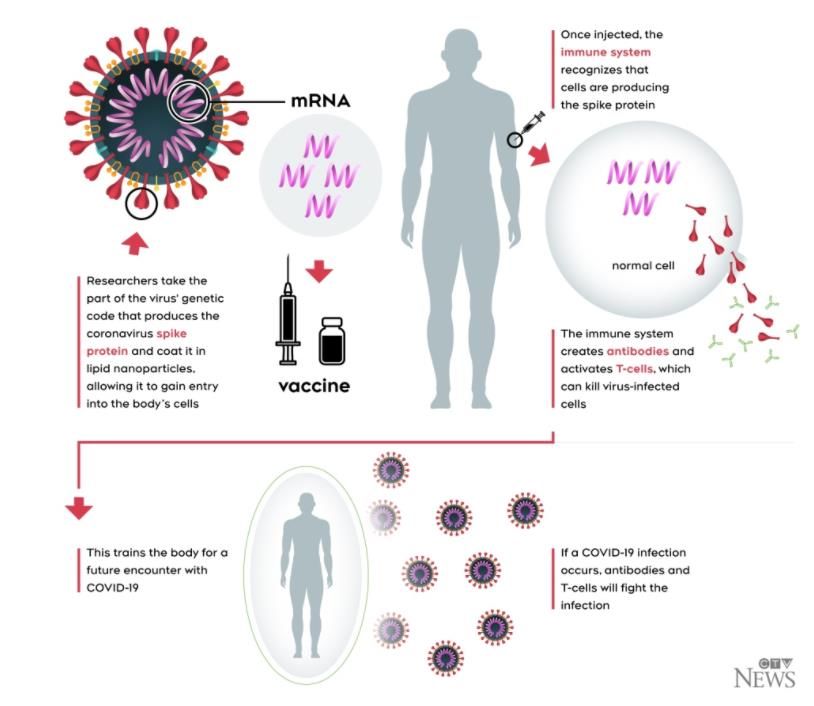
COVID-19 cases increasing exponentially
with anticipated peak far greater than July
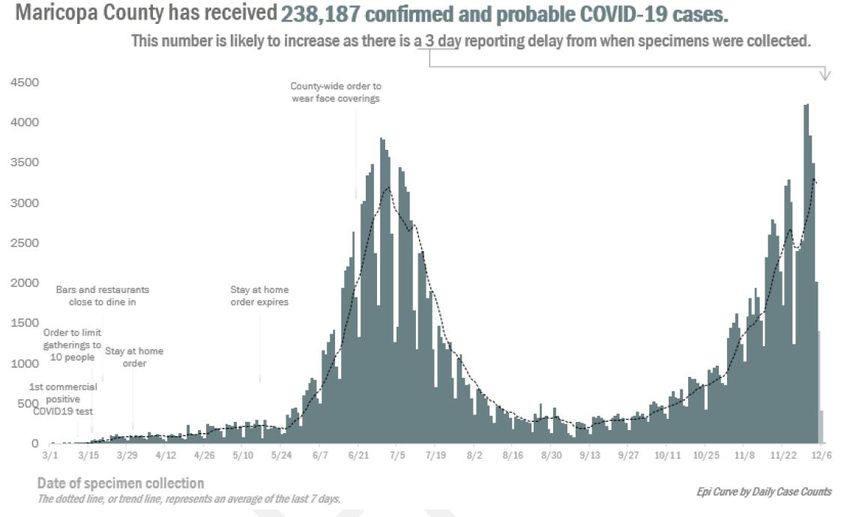
Epi Curve

                                        Current 7-day average
                                        3457 cases/day

            Prior peak 3200 cases/day
            (7-day average)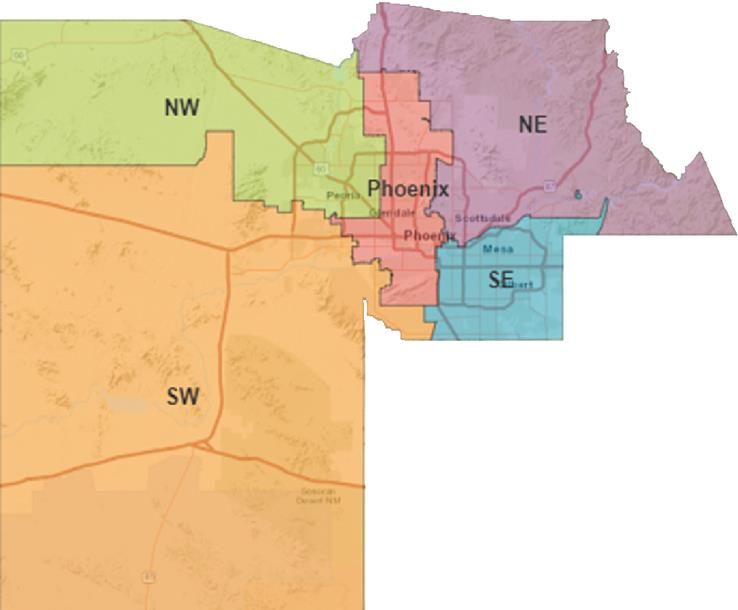
COVID-19 Vaccination Plan
                                                                       Marcy Flanagan, DBA, MPH, MA
                                                                       Executive Director
                  WeArePublicHealth.org   twitter.com/Maricopahealth   facebook.com/MCDPH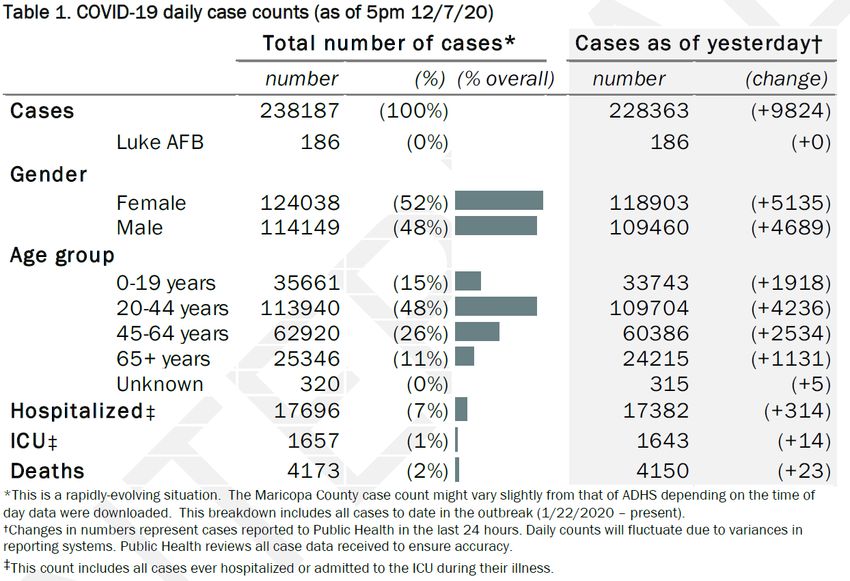
COVID-19 Vaccine Candidates
• The CDC COVID-19 Vaccination Program Interim Playbook for
  Jurisdiction Operations has made planning assumptions based on
  the 2 leading vaccine candidates

• Both vaccines are mRNA vaccines (messenger ribonucleic acid)
  – They do NOT contain the complete virus or the complete viral genome
  – They contain a segment of the viral genome that makes the recipient’s body
    generate an immune response as if it encountered the live virus
  – This results in the immune system creating antibodies to the virus without
    becoming infected first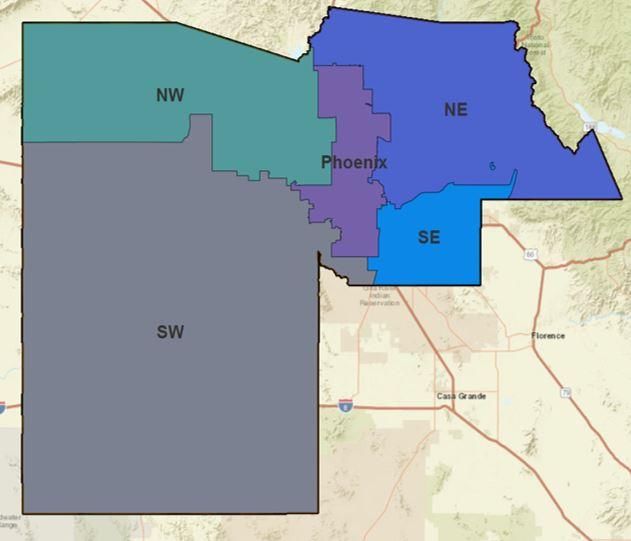
mRNA Vaccine
               mRNA vaccines are a new type of
               vaccine to protect against infectious
               diseases. To trigger an immune
               response, many vaccines put a
               weakened or inactivated germ into our
               bodies. Not mRNA vaccines.

               Instead, they teach our cells how to
               make a protein—or even just a piece
               of a protein—that triggers an immune
               response inside our bodies. That
               immune response, which produces
               antibodies, is what protects us from
               getting infected if the real virus enters
               our bodies.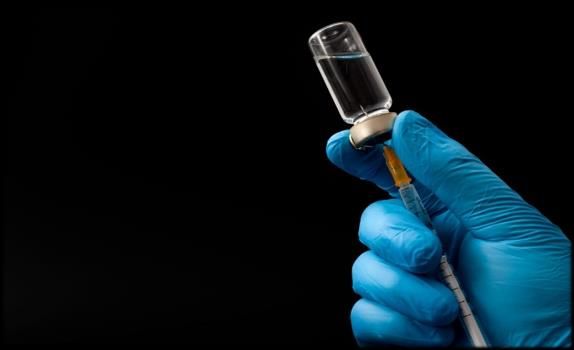
Facts about COVID-19 mRNA Vaccines
• They CANNOT give someone COVID-19.
  – MRNA vaccines do not use the live virus that causes COVID-19.

• They DO NOT affect or interact with our DNA in any way.
  – MRNA never enters the nucleus of the cell, which is where our DNA
    (genetic material) is kept.
  – The cell breaks down and gets rid of the mRNA soon after it is finished
    using the instructions.
Vaccine Side Effects (Adverse Events)
• Side effects are expected
• When the body’s immune system mounts a
response to a natural infection OR vaccination
the result is local and/or systemic inflammation
• Local inflammation: injection site soreness,
redness, swelling
• Systemic inflammation includes fever, muscle
aches, headache
• The stronger the immune response, the more
prominent the side effects
• The healthier the individual, the stronger the
immune responseCOVID Vaccine
• Advisory Committee on Immunization Practices (ACIP)
• Makes vaccine recommendation
• Met on October 30th to decide their guidelines
1st • Will make a recommendation after FDA reviews (can’t happen until a vaccine company applies)
• CDC Director
• Incorporates into the overall strategy
2nd
• Arizona Vaccine and Antiviral Prioritization Advisory Committee (VAPAC)
• Make recommendations to counties
3rd • Counties hold internal advisory committees (MCDPH held first one 10/30/20)Vaccine-associated Side Effects- Policy • Individuals who are vaccinated against SARS-CoV-2 (the virus that causes COVID-19) and develop post-vaccine side effects including injection site pain, mild to moderate fever and/or chills within 24 hours of vaccination should attribute their symptoms to vaccination if the symptoms resolve in 24 hours • Vaccinated individuals whose side effects resolve within 24 hours of vaccination are be able to return to work without restriction • Negative COVID testing is NOT required of vaccinated individuals whose side effects have resolved within 24 hours of vaccination
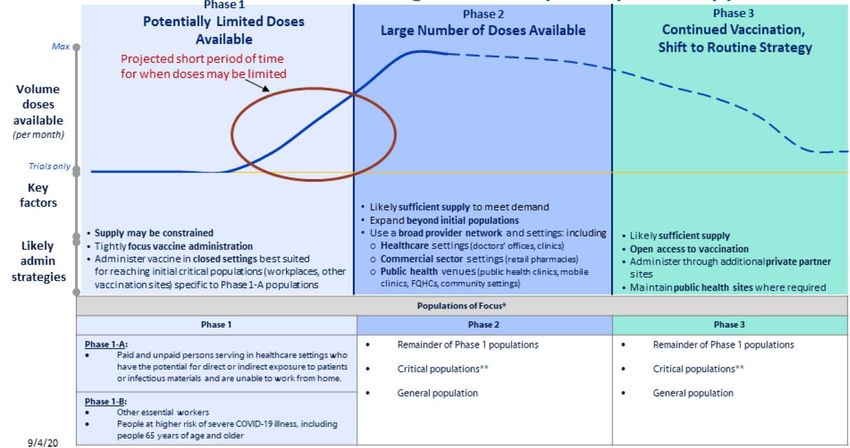
Phased Approach to COVID-19 Vaccine
How much?
• Federal government will make allocation to state
    – All we know now is CDC is asking AZ to "exercise" based on a 200k dose state allocation
    – We know some will be taken off the top for pharmacies and tribes to immunize long term care
      facility staff
•   State will make allocation to County
•   State VAPAC group met on Thursday, Dec. 3rd
•   Slow spigot– assuming not enough at first
•   Phased approach based on CDC playbook
PHASE 3
PHASE 2
Population: ~2M
PHASE 1b & 1c
Population: ~1M
Healthcare
Not in PHASE 1a Essential Dec '20-early 2021
1a Population: ~123-300K Workers
Healthcare personnel*
Law EMS
Long-term care, assisted High-risk Early '21-Spring '21
Enforce- >65 y/o
living, and skilled nursing
ment facility staff & residents
Teachers Childcare
workers Spring '21-Summer '21
Adults in congregate
settings Critical
workers
Summer '21- beyond
General population- priority
General populationPhase 1A COVID-19 Vaccine
• Phase 1A Healthcare:
– Paid and unpaid persons serving in healthcare settings who have the
potential for direct or indirect exposure to patients or infectious materials
and unable to telework
– Estimate varies based on local definition of who is most at risk
– Initial focus is on 123,000
– Unlikely we will have enough for 123,000
– Prioritized based on risk of infection
– Counties/tribes will decide sub-prioritization (MC-VPAC)Maricopa County VPAC Representatives
• Healthcare (IP/OP) Organizations • LTC (HSAG)
– Abrazo Health
• FQHC, OP (AACHC)
– Banner Health
– Dignity Health • OP Providers (MCMS)
– Honor Health • OP Nurses (AZNA)
– Mayo Clinic • EMS-Municipal
– Phoenix Children’s Hospital
• EMS-Private (AMR)
– Valleywise Health
– Wickenburg Community Hospital • Home Health (AZ Home Care)
• HospicePhase 1A COVID-19 Vaccine Target Populations
Healthcare at Risk
100,000
Residents in
LTC, SNF, AL
Public 100,000
Health Healthcare Support Functions*
600 200,000'
LTC CMS
Staff
10,000
EMS
20,000Planning for 1A Distribution • Vaccine availability – Vaccine A (Pfizer) is the only one available – We won’t have enough vaccine and will need to sub-tier prioritize – Minimum order is 1,000 – Must be stored at -70°C – Requires mixing of diluent prior to administration – Fragile vaccine • General Assumptions – Vaccine will be provided free of charge – Insurance can be billed an administrative fee – Vaccine will not be mandatory
Planning for 1A Distribution
 • Smaller sites do not have the ability to vaccinate 1,000 people
 • Traditional vaccine distribution will not work for Vaccine A
 • Each site must complete the Provider On Boarding Tool with
   ADHS
 • Doses must be reported to the Arizona Immunization System
   within 24 hours
 • Pooling resources and partnering with hospitals to maximize
   planning
Phase 1A Regional PODs
                         Early Planning
                         ▪ Regional planning committee for each site
                             – Hospital, city emergency management,
                               County Public Health, County Emergency
                               Mgmt, EMS and tribal representatives
                         ▪ 7-18 days – first dose
                         ▪ Ultra-cold storage on site
                         ▪ Registration system to meet necessary
                           eligibility, screening, consent and
                           documentation requirements
                         ▪ All eligible healthcare must go to one of
                           the 5 POD sites
                         ▪ MCDPH will NOT allocate to providers
                           during this time
Regional Locations
NSSC - Honor Health
Corporate
Banner Del Web 15,000 estimate
24,000 estimate
Abrazo West
6,000 estimate
Chandler-Gilbert
Comm .College
36,000 estimate
Arizona
Fairgrounds
42,000 estimatePartners
Staffing
 •   HealthCare Staff
 •   Hospital Volunteers
 •   EMS
 •   Public Health Volunteers – Medical Reserve Corps
     – Nursing Schools
     – ARMA, MCMS, AZ Nursing Association
 • National Guard
Screening Process
All healthcare workers are
pre-screened through
Maricopa County system
Maricopa County identifies
vaccine participants based
on amount of vaccine
available and risk factors
E-mail sent to invite
healthcare workers to sign
up for an appointmentPhase 1B & 1C Distribution Plan • Hybrid distribution strategy – Potentially utilize 1 or more POD’s, contracted vendors and traditional vaccine allocation system • Public Health begins allocating to providers who have completed the state/federal onboarding tool • Large companies (e.g. APS and SRP) with contracted closed PODs can receive vaccine and vaccinate their employees • Pharmacies will likely play a larger role in vaccination
Phase 2 – Spring 2021
    Traditional Vaccine Model
•   All those remaining in Phases 1A and 1B
•   General population
•   Regional PODs will no longer be necessary
•   Local providers, FQHC’s pharmacies and healthcare systems
    will vaccinate the remainder of the population who wants to
    be vaccinated
Communicating this to partners
• Weekly vaccine task force meetings since September
• MC-VPAC meetings - Oct. 30 and Dec. 3
• Fire Chief’s briefing – Nov. 2
• Law Enforcement Briefing – Nov. 23
• POD planning meetings 2-3 times per week
• Weekly Healthcare webinar since Feb.
• Weekly Municipal webinar since Feb
• Meetings per partner request - City of Phoenix MAC, various
Emergency Managers meetingsNext Steps • Support mitigation efforts that are in place to help slow spread and prevent overwhelming our healthcare system • Present our vaccine distribution plan details with local jurisdictions • Start to operationalize the COVID-19 vaccine distribution plan as vaccine becomes available in Arizona
You can also read


