Embedding Sustainable Development Goals in Education. Teachers' Perspective about Education for Sustainability in the Basque Autonomous Community ...
←
→
Page content transcription
If your browser does not render page correctly, please read the page content below
sustainability

Article
Embedding Sustainable Development Goals in
Education. Teachers’ Perspective about Education for
Sustainability in the Basque
Autonomous Community
Leire Agirreazkuenaga
 Research Group on Human Security, Local Human Development and International Cooperation (2016–2021)
 Consolidated Group of the Basque Research System (IT1037-16), Hegoa Institute, University of the Basque
 Country (UPV/EHU), 48015 Bilbao, Spain; leire.agirreazkuenaga@ehu.eus

 Received: 16 December 2018; Accepted: 5 March 2019; Published: 12 March 2019

 Abstract: In the current context of unsustainability that we inhabit, education is considered to be
 a necessary pillar for social transformation towards sustainable development. The main goal of
 this research is to analyze the implementation of educational practical experiences of the education
 for sustainability programs from the perspective of teachers working in secondary schools in the
 Basque Autonomous Community. The analyzed schools are situated in different socio-economic and
 environmental contexts. The analysis also aims to diagnose the extent of knowledge on the 2030
 Global Agenda of Sustainable Development Goals (SDGs) with a view to its future implementation.
 The study is based on qualitative tools such as in-depth interviews (38 interviews conducted at five
 secondary schools). For analytical purposes, the perspective of the teaching staff is adopted as they
 play an indispensable and determining role in education for sustainability. The main results showed
 that the involvement of the teaching staff, personal motivation and good leadership are essential for
 the success of the program, together with the support of school authorities. A stable teaching staff
 and a sense of identity with the project are decisive factors. In this sense, differences were detected
 between public schools and private schools that, to a certain extent, condition the difficulties faced by
 the teaching staff. Experiential activities, activities outside the classroom and a positive perspective on
 the subject are considered factors contributing to the success of the programs. SDGs were still largely
 unknown to the teaching staff but could provide a good framework for multidisciplinary education.

 Keywords: education for sustainability; ESD; teachers; learning for sustainability; sociology of
 education for a sustainable future; Agenda 2030; Sustainable Development Goals; School Agenda 21

1. Introduction
     Since the middle of the 20th century, human impact on the planet has been expediting a process
known as ‘the great acceleration’ [1], in which the impact of the human species has multiplied. This
process entails an alteration in the cycles of materials, the accelerated rate of the extinction of species
and the appearance of new contaminating materials, which in turn have a great effect on the welfare of
people [2]. In this respect, the International Geosphere-Biosphere Programme (IGBP) has proposed
a definition for a new geological age characterized by the human impact on the planet equaling or
surpassing the forces of nature: The Anthropocene [3].
     The capitalist model of economic growth and its mode of living are proving to be unsustainable
because the planet has limits. The current model of consumption requires an expenditure of natural
resources and energy that the planet will be unable to sustain for much longer. The planet is now in a

Sustainability 2019, 11, 1496; doi:10.3390/su11051496                    www.mdpi.com/journal/sustainability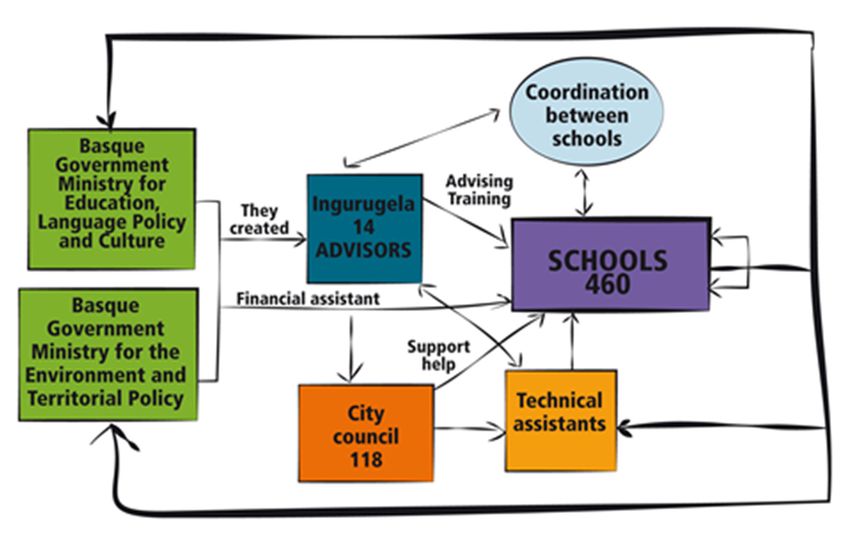
Sustainability 2019, 11, 1496 2 of 17
state of economic deficit, since the ecological footprint is greater than its bio-capacity. The world deficit
per capita is 2.6 hectares per person [4].
Facing this situation of consumption that exceeds planetary limits, new technological alternatives
are starting to emerge, such as renewable energies [5]. Nonetheless, in spite of these advances, it
continues to be absolutely necessary to change the model of production and consumption [6]. This
Sustainability 2019, 11, x FOR PEER REVIEW 2 of 17
involves a change of habits, and therefore a change of mentality, which entails cultural and social
changes. To achieve
a state ofthese
economic changes, it is
deficit, since theindispensable
ecological footprintto develop
is greater environmental
than its bio-capacity. The worldawareness in civil
deficit per capita is 2.6 hectares per person [4].
society, the business sector,
Facing this the public
situation decision-making
of consumption powers
that exceeds andlimits,
planetary citizensnew in general.
technological
To confront the global
alternatives challenges
are starting to emerge,we suchface, education
as renewable energieshas a decisivein role
[5]. Nonetheless, tothese
spite of play in directing
advances, it continues to be absolutely necessary to change the model of production and consumption
societies towards changes that will result in a sustainable future. This context
[6]. This involves a change of habits, and therefore a change of mentality, which entails cultural and
framing considers
education to besocial
a key tool To
changes. inachieve
response to the itglobal
these changes, socio-environmental
is indispensable to develop environmental problems
awareness ofinthe planet, and
the potential ofcivil society, the of
Sociology business sector, the (SE)
Education public for
decision-making
advancing powers and citizens
research in general.
in this field is underscored [7].
To confront the global challenges we face, education has a decisive role to play in directing
Specifically, thesocieties
role of the teaching
towards changes that staff is of
will result in adecisive
sustainableimportance,
future. This contextsince they
framing are responsible for
considers
education to be a key tool in response to the global socio-environmental
educating future generations [8]. Some authors highlighted the key role of the teacher problems of the planet, andas the leader in
the potential of Sociology of Education (SE) for advancing research in this field is underscored [7].
education for sustainable
Specifically, the development
role of the teaching [9].staff
Moreover, in importance,
is of decisive higher education,
since they are the involvement
responsible for of teachers
is considered a key factor in reaching sustainable innovation [10].
educating future generations [8]. Some authors highlighted the key role of the teacher as the leader
The Unitedin education for sustainable development [9]. Moreover, in higher education, the involvement of
Nations’ 2030 Agenda defines 17 Sustainable Development Goals (SDGs), providing a
teachers is considered a key factor in reaching sustainable innovation [10].
tool for reaching an integral
The United Nations’ understanding
2030 Agenda defines of what sustainability
17 Sustainable Development entails. Thisproviding
Goals (SDGs), research is based on
a tool for reaching an integral understanding of what sustainability
the idea that sustainability and sustainable development involve economic, social and entails. This research is based on environmental
the idea that sustainability and sustainable development involve economic, social and environmental
dimensions, with the understanding
dimensions, with the understandingthat the that social
the socialand
and ecological dimensions
ecological dimensions are linked,areand
linked,
that and that the
the social and economic dimensions depend on the environmental system
social and economic dimensions depend on the environmental system [8,9]. That is, the welfare of the [8,9]. That is, the welfare
of the planet and the biosphere is a priority for social and economic welfare (Figure 1).
planet and the biosphere is a priority for social and economic welfare (Figure 1).
Figure 1. A view of the Sustainable Development Goals (SDGs) showing that healthy ecosystems are a
Figure 1. A view of the Sustainable Development Goals (SDGs) showing that healthy ecosystems are
prerequisite forahuman welfare
prerequisite and
for human economic
welfare development
and economic [10].
development [10].
Havingthe
Having identified identified
needthefor need for understanding and
understanding and studying education
studying for sustainability,
education we
for sustainability, we
shared that concern with key actors in the area of education for sustainability in the Basque Country,
shared that concern with key actors in the area of education for sustainability in the Basque
and defined the object to be studied. It is also worth underscoring that the definition and idea of this Country,
and defined thestudy
object
aroseto beastudied.
from four-monthIt isinvolving
stay also worth underscoring
a collaboration that the
with Ingurugela, thepublic
definition
institutionand idea of this
for Education for Sustainability in the Basque Autonomous Community (BAC) (extended
study arose from a four-month stay involving a collaboration with Ingurugela, the public institution
explanation Section 2.1).
for Education for Sustainability in the Basque Autonomous Community (BAC) (extended explanation
Section 2.1).
The general goal of this research is to analyze the key factors with respect to methodologies and
the attitudes of secondary school teachers towards education for sustainability. Taking concrete cases of
secondary schools in the BAC, the implementation of education for sustainability projects is analyzed
from the perspective of the teachers. The case studies are located in different socio-economic and
environmental contexts. The analysis also attempts to evaluate and offer a diagnosis of the degree of
knowledge about Global 2030 Agenda and its future implementation. Therefore, the specific aim of the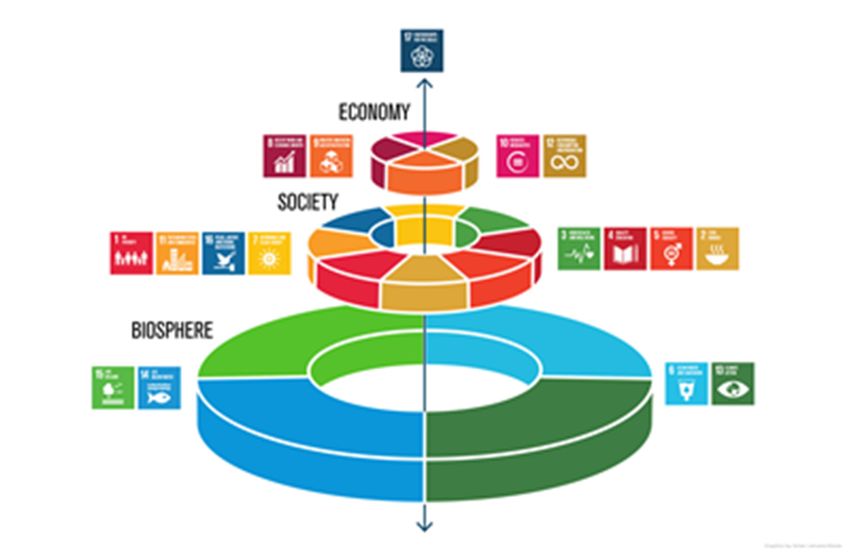
Sustainability 2019, 11, 1496                                                                         3 of 17

research is to identify keys to successfully implementing and imparting knowledge about education
for sustainability and SDGs, which is then reflected in a change of attitude.
     The SE, a specialization of sociology as science [11], can contribute to the sociological
understanding of educational phenomena [12,13]. The teaching staff, as a professional group, is
one of the objects studied by SE [11]. The contribution of this research is inserted in the field of SE, by
means of direct, first-hand knowledge of a topic that is of transcendental importance to the survival of
the planet. This empirically-based research aims to explain an aspect of the educational process that
affects the teaching staff and its ongoing training [14].
     The present paper begins by providing a short, conceptual description of education for
sustainability (in the case of this research, the terms environmental education and education for
sustainability are used interchangeably [15]), followed by an explanation of the context of the analysis
and the methodological strategy employed, and then the main results are set out and the text ends
with the discussion and conclusions.

2. Materials and Methods

2.1. Research Background and Context
      On an international level, the pioneering congress at which environmental education started to
be discussed was held in Tibilis in 1977. The topic was subsequently addressed at the Rio Summit in
1992, where Agenda 21 was defined on the request of civil society, administrations, governments and
international representatives. The goal of this Agenda 21 is to involve society in carrying out actions
aimed at achieving sustainability at the local level, with the aim of contributing to global sustainability
of the planet. From this emerged the now well-known statement, ‘Think globally, act locally’. School
Agenda 21 was defined as complementary work for carrying out actions towards sustainability in
local schools.
      Within the framework of this international context, education for sustainability was promoted
in the BAC, and in 1990 the Centers of Education and Research in Environmental Didactics
(CEIDA—Centros de Educación e Investigación Didáctico Ambiental) were created, nowadays known
as Ingurugela. The goal of Ingurugela is to support the teaching staff and encourage education
for sustainability in non-university education centers. The BAC has a territory with 2.17 million
people [16], which is a density of 300 inhabitants per km2 . In spite of it being a highly urbanized
territory, its culture is characterized as being closely linked to the natural setting, an aspect that offers
great potential for a transition towards sustainability.
      School Agenda 21 began to be implemented in 2003 and became the backbone of education for
sustainability in the schools of the BAC, with the support of advisers from Ingurugela. There are
also other initiatives in this sense that emerged from civil society, non-governmental organizations,
ecologist groups and others. This research takes the public institution Ingurugela as a referent of
education for sustainability in the BAC, although it identifies several other organizations where work
is done on this topic. Currently, an attempt is being made to move from School Agenda 21 to Agenda
2030, taking the latter’s integral and holistic vision as an axis. This process is aligned with the recent
Strategic Plan for Education for the Sustainability of the Basque Country [17]. On the one hand, this
strategy is in line with the Environmental Strategy of the Basque Government 2020, based on the
2015–2030 international agenda of the Sustainable Development Goals, and on the other, it aligns with
the specific Global Action Plan of UNESCO on Education for Sustainable Development.
      Ingurugela is a network of advisory and teacher training service on Education for Sustainability,
for the non-university education system. They were created in 1990 by the Department of Environment
and the Education Department of the Basque Government, following the identification of the need for
public administration to provide and develop counselling with respect to education for sustainability.
      School Agenda 21 (henceforth SA21) is an educational program for sustainable development.
It forms part of the ‘Research and Experimentation’ line of work of the Ingurugela educational
Sustainability 2019, 11, x FOR PEER REVIEW 4 of 17
Environment and the Education Department of the Basque Government, following the identification
of the need for public administration to provide and develop counselling with respect to education
for sustainability.
Sustainability 2019, 11, 1496 4 of 17
School Agenda 21 (henceforth SA21) is an educational program for sustainable development. It
forms part of the ‘Research and Experimentation’ line of work of the Ingurugela educational centers. The
centers.
annual workThe annual work of theeducational
of the Ingurugela Ingurugelacenters
educational centers
is defined is defined
on the basis ofon
thethe basis Government’s
Basque of the Basque
Government’s Environmental Education Program (Order of 22 June 1998 of the
Environmental Education Program (Order of 22 June 1998 of the Official bulletin of the BasqueOfficial bulletin of the
Basque
AutonomousAutonomous
Community Community
–BOPV- of –BOPV- of 11998).
1 October October 1998).
The
The program’s organization in the schools isisas
program’s organization in the schools asfollows
follows(Figure
(Figure2):
2):
-- The coordinator
The coordinatorisisresponsible
responsiblefor forsetting
settingthe
theprocess
processunderway
underwayand andleading
leadingit.it.
-- The
The support
support team
team is
is formed
formed ofof people
people from the teaching staff and school authorities who help in
the
the day-to-day
day-to-daywork
workof oforganizing
organizingthe theproject.
project.
-- The
TheEnvironmental
EnvironmentalCommittee
Committee is is
a participatory
a participatoryspace for for
space the the
whole educational
whole educationalcommunity. The
community.
people interested
The people are represented
interested and decide
are represented on the on
and decide main
thelines
mainoflines
the program (planning,
of the program plan of
(planning,
action,
plan ofevaluation, etc.).
action, evaluation, etc.).
-- The
The county-level
county-level coordination
coordination meetings
meetings areare aa space
space for
for cooperation
cooperation amongst
amongst the the educational
educational
centers. The coordinators of these centers meet periodically with environmental
centers. The coordinators of these centers meet periodically with environmental specialistspecialist from the
from
municipality and the
the municipality andadviser fromfrom
the adviser Ingurugela.
Ingurugela.
Figure 2. The organizational scheme of the School Agenda 21 program [18].
Figure 2. The organizational scheme of the School Agenda 21 program [18].
In turn, the aim of certification and recognition as a ‘Sustainable School’ is to give a distinction to
outstanding
In turn,experiences in the SA21 program.
the aim of certification This means
and recognition recognizing the
as a ‘Sustainable workisand
School’ the quality
to give of the
a distinction
school with respect
to outstanding to education,
experiences in the participation
SA21 program. and sustainability
This (Figure 3,
means recognizing thesustainable
work and schools are
the quality
marked with with
of the school a redrespect
star). to education, participation and sustainability (Figure 3, sustainable schools
In orderwith
are marked to take part
a red in this examination, the schools must have spent a minimum of 5 years in
star).
the SA21
In order to take part in this lasts
program. Recognition for 4 school
examination, the years.
schoolsAmust
total have
of 460spent
schools took partof
a minimum in5the SA21
years in
program
the SA21in the 2017/2018
program. school lasts
Recognition year,for
with approximately
4 school years. A60%
totalofofthe schools
460 schoolsbelonging
took parttoin
the BAC
the SA21as
well as 118
program inmunicipal councils
the 2017/2018 participating.
school year, with approximately 60% of the schools belonging to the BAC
as well as 118 municipal councils participating.Sustainability 2019, 11, x FOR PEER REVIEW 5 of 17
Sustainability 2019, 11, 1496 5 of 17
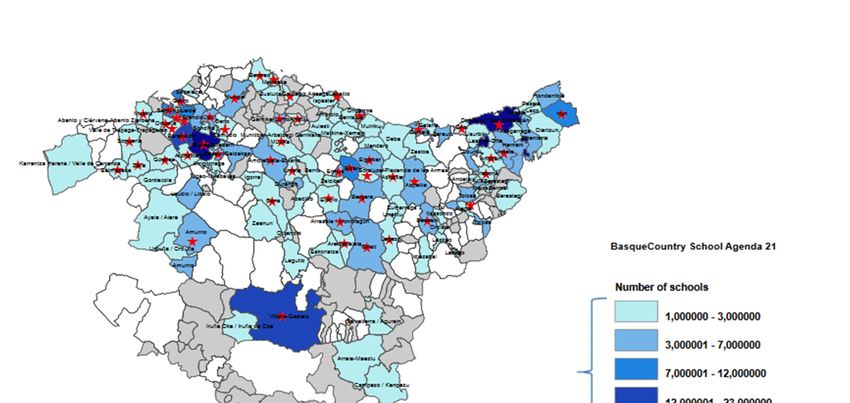
Figure
Figure 3. 3.
A Amap
mapofofthe
theBasque
Basque Autonomous
AutonomousCommunity,
Community, showing
showingschools taking
schools part inpart
taking School
in School
Agenda 21 and municipalities with schools certified as a ‘Sustainable School’ (for the 2014/2015
Agenda 21 and municipalities with schools certified as a ‘Sustainable School’ (for the 2014/2015 school school
year) [19].
year) [19].
2.2. 2.2. Sample
Sample andand ResearchStrategy
Research Strategy
When defining the schools for inclusion in the sample, we selected those certified as sustainable
When defining the schools for inclusion in the sample, we selected those certified as sustainable
schools by the Basque government (some of which are shown in Figure 3 indicated by red stars), to
schools by the Basque government (some of which are shown in Figure 3 indicated by red stars), to
guarantee a certain level of commitment and the realization of activities framed in the SA21 project
guarantee
[20] (pp.a 41–42).
certainSimilarly,
level of commitment and the
we selected schools realization
located of activities
in different framed in
socio-economic andthe SA21 project [20]
geographical
(pp.settings
41–42). Similarly, we selected
to obtain a diverse sample. schools located in different socio-economic and geographical
settings Atto obtain
schools aconsidered
diverse sample.
sustainable, a topic is dealt with each year and relevant activities are
At schools
designed and considered sustainable,
carried out around this. Fora example,
topic is the
dealt with
topic each
of the year
year andberelevant
might activities are
climate change,
waste or
designed andcircular economy
carried and activities
out around to beexample,
this. For carried outthe
during theofschool
topic year might
the year are designed aroundchange,
be climate
thatorcentral
waste axis.
circular These areand
economy the activities
profiles oftothe
beschools
carriedwhere we carried
out during the out the study.
school year areAt designed
the requestaround
of those interviewed, no names are given so as to avoid generating any stigmas.
that central axis. These are the profiles of the schools where we carried out the study. At the request of
- interviewed,
those noisnames
School A: This a publicare given
school so asin
located toan
avoid
urbangenerating
area. At thisany stigmas.
school they have been working
with School Agenda 21 since 2004, and it has been certified as a sustainable school since 2009, a
- School A: Thisthat
certification is ahaspublic
been school
renewed located
every 4in an urban area. At this school they have been working
years.
- with School
School Agenda
B: This 21 since
is a public 2004,
school and in
located it has been certified
a municipality as a sustainable
considered schoolThe
to be semi-rural. since
link2009, a
between School
certification Agenda
that has been21renewed
and the municipality
every 4 years. is an especially close one as it is the only school
- in theB:town.
School ThisThey have been
is a public involved
school in School
located Agenda 21 together
in a municipality with Ingurugela
considered since 2001
to be semi-rural. The link
and were certified as a sustainable school in 2010, which was subsequently renewed in 2018.
between School Agenda 21 and the municipality is an especially close one as it is the only school
- School C: This is a private school located in a semi-rural area. The School Agenda 21 project has
in the town. They have been involved in School Agenda 21 together with Ingurugela since 2001
been in effect in the school since 2007 and they obtained recognition as a sustainable school for the
and were
first timecertified
in 2016. as a sustainable school in 2010, which was subsequently renewed in 2018.
- - School
School C:D:
This
Thisisisa aprivate
privateschool
school located in aa semi-urban
located in semi-rural municipality.
area. The School Agenda
The School 21 project
Agenda 21 has
been in effect
project in the
has been putschool since
into effect 2007
in this andsince
school they2007.
obtained recognition
They obtained as a sustainable
recognition school for
as a sustainable
the first time in 2016.
- School D: This is a private school located in a semi-urban municipality. The School Agenda 21
project has been put into effect in this school since 2007. They obtained recognition as a sustainable
school in 2014. The majority of the students in this school are from that same municipality, with
the result that they have a direct link with the town in relation to the local A21.Sustainability 2019, 11, 1496 6 of 17
- School E: This is a private school located in the city center of Vitoria, the capital of Alava. The
School Agenda 21 project has been in effect in the school since 2007. They obtained recognition as
a sustainable school for the first time in 2009–2010, and this was renewed for the next four years
in the 2017–2018 school year.
To obtain specific results from the schools analyzed, we mainly used a qualitative methodology,
that is, one “that produces descriptive data—People’s own written or spoken words and observable
behavior” Taylor and Bogda [21]. Through qualitative practices, it is possible to verify that the object
studied is made up of a group of subjects and that each subject is in movement, including the social
science researcher [22]. For that reason, it is necessary to reconstruct and interpret the route created
by these subjects. Qualitative analysis proves to be especially relevant in education, given that it is
important to understand how teachers and classrooms function before making recommendations
for change. And that is the purpose of a deep qualitative examination of education, which involves
understanding and ‘paying attention’ to the context [23].
The (individual) in-depth interviews were chosen as the main tool, since our selected sample “does
not aim for statistical representation, but for a socio-structural typological representation corresponding
to the objects of study” [24] (p. 68). A total of 38 interviews were conducted with secondary school
teachers at 5 schools in the BAC. We chose to analyze this topic from the viewpoint of the teaching
staff, as we considered that they play an indispensable and decisive role in generating an education
with values oriented towards sustainability. It is worth underscoring that the profiles of the teaching
staff interviewed are varied. These include teachers of biology, technology, computers, plastic arts,
mathematics, languages, physical educational, philosophy or geography and history. This was in
order to obtain a diverse sample that would be as unbiased as possible due to the subjects taught by
each of them. Likewise, their ages and professional experience also varied, ranging from people with
more than 25 years of experience to others who are in the early years of their professional career. The
average age of the teachers ranged from 30 to 50, and there were teachers who had been in the world
of education from the start of their careers, while others had previous experience as researchers in
the university or even in private companies (Appendix A. These interviews were conducted by the
researcher between April and June 2018, followed by different visits to each school. Similarly, the
head teachers of the different schools issued a letter agreeing that the school would participate in
this research.
To design the interviews (Table 1) we used the Wengraf decision-making scheme with the
following steps: (1) Definition of goals and central research questions (CRQ); (2) Translation of each
central question into three and seven theoretical questions (TQ); (3) Development of sets of interview
questions (IQ) or interview interventions (II) for each theoretical question, taking into account the class
of interviewee or informant [25]. Similarly, to carry out point 2, the scheme proposed by Kvale was
taken as a reference [26] (p. 131).
The analytical approach employed when dealing with the material transcribed from the interviews
basically consisted in an interpretative, socio-linguistic and semiological discourse analysis. This
involves a ‘qualitative paradigm’ [27] insofar as it is associated with interpretative epistemology (the
intersubjective dimension), focusing on the individual subject and in discovering the meaning, motives
and intentions of their activity [28].Sustainability 2019, 11, 1496 7 of 17
Table 1. Interview design scheme.
Thematic Research Questions (TRP) Dynamic Research Questions (DRQ)
DRQ 1: What was your working experience before you started
working here?
TRQ 1: Context: Do their previous working career
and background influence the teaching staff’s DRQ 2: How long have you been working at this school? Tell
motivation and involvement in the School Agenda 21 me something about your job, the subject you teach, the
programs? methodologies you use (games, workshops, individual
reflective tasks . . . ) and other tasks.
When we talk about Environmental Education: What comes to
mind/what do you identify it with? What types of
projects/methodologies?
What contact/involvement have you had with Environmental
TRQ 2: What is the teaching staff’s level of
Education at this school?
knowledge and how do they perceive environmental
education? (To adapt to the context, we opted to use (In cases where the topic is dealt with in the classroom): Do
the concept ‘environmental education’ when you deal with any environmental problems in the classroom
designing and conducting the interviews, since it was (Local or global perspective?)
a more familiar concept that has been more How do you think that these programs (Environmental
frequently used and taught in classrooms to date.) Education) are viewed by the teaching staff? And by the
students/their families. Why?
Specifically with respect to students’ families: How do you
inform and involve them? How do you see this?
What things do you think work when dealing with the topic of
TRQ 3: From the teaching staff’s point of view: What Education for Sustainability? That is, what type of activities,
are the challenges and opportunities of the SA21? projects, methodologies.
What do you think are the main challenges?
Are you familiar with the concept of sustainability? What do
you understand by, or know about this concept? How would
you define it in just three words (what do you associate with
the concept)?
TRQ 4: What do you know about the concept of In the specific context of this school, how is this subject dealt
sustainability? What attitudes, motivation and with? What do you show?
behavior do you show/teach? How do you deal with this in your personal life? Do you
illustrate what you teach in the school with examples of
activities taken from your personal life?
What would you say motivates you to hold that attitude? Do
you try to transmit that attitude in class?
Continuing with the topic of sustainability, have you heard
TRQ 5: Do you relate sustainability with the holistic anything about the SDGs?
and integral idea posited by the SDGs? What How do you think this can be included in this new agenda?
knowledge is there about the SDGs and what does
move from the SA21 to the SDGs involve? Would it be positive to move from School Agenda 21 to
Agenda 2030 involving the SDGs? Why?
3. Results
This research is based on qualitative methodologies that uses in-depth interviews [29] with
teachers currently working at different schools as its main tool. The following are the principal results
arising from the field study, divided into the central blocs previously defined in the interview design.
3.1. Context and Career of Teaching Staff
The principal result is that teachers in public schools have been working between 15 and 30 years
and have often changed schools in the course of their career. This is due to the hiring system that
incorporates teachers into schools in the public sector, which involves their assignment to a series
of schools until they finally obtain a permanent position. Similarly, the majority of the interviewees
from public schools with a short career were carrying out substitutions in schools for a period of a few
months or at the most for the current school year. Conversely, this situation is not found so widely in
the private schools, since the majority of the interviewees had only worked at their particular school orSustainability 2019, 11, 1496 8 of 17
at most in one other. It should be kept in mind that access to private schools is by means of a direct
contract with the school.
This question influences the extent to which the teaching staff develop a sense of identification
with the school and thus with the School Agenda 21 (SA21) project, with the result that there is a greater
sense of identification with the SA21 project in private schools than in public ones. This situation does
not necessarily translate into better results in some schools rather than others, but it does affect the
ease or difficulty with which the coordinators and the support team can develop their work. Teachers
who feel that the school is a part of their life, and not simply a place of work, have assimilated certain
tasks to a greater extent, with the result that these tasks now form “part of the school’s identity” for
the teaching staff and hence also for the students. “At first it required making an effort, but nowadays
I consider it to be completely natural” [30].
On the other hand, interviews were conducted with teachers of different academic subjects
like biology, physics, chemistry, physical education, philosophy, languages, mathematics, history
and geography, amongst others. In the majority of their discourses, they identified environmental
education with teachers in the area of the natural sciences. Nonetheless, some of the teachers in this
area insist that the task is not their responsibility alone. There are also some teachers from the social
sciences who identify environmental education with their area, but they are a small minority. The
coordinators were from the teaching field of natural sciences in all but one of the five schools studied.
Furthermore, it is possible to perceive that the discourse on environmental education is constructed
differently depending on whether or not the interviewee proceeds from the social sciences, the natural
sciences or technology. Each teacher approaches the topic from their own way of thinking and relates
it to the content that they teach in their classroom subject, “For example, I try to get them to reflect
about computers, where they come from and where they go when we get rid of them” [31]; “Reflecting
on happiness, whether or not material goods make us happy, and what all of that consumption of
material things implies for our planet” [32].
One final point is that the immediate surroundings of each school are not reflected in the activity
developed by the teaching staff, as a large part of them are not from the locality where the school is
located, above all in the case of the public schools. However, in some private schools, like schools D
and E, all the interviewees are from the same locality, which generates a much stronger link to what
School Agenda 21 means for the municipality’s Local Agenda 21.
3.2. Perception and Understanding of Environmental Education
In the first place, it should be underscored that all those interviewed directly identified
environmental education with the SA21 project. In one of the interviews, the interviewee was trying to
understand what the purpose of the interview was and asked: “By that I take it that you are referring
to Agenda 21?” [33]. This indicates that the name is at least widely known, although at the same time
the topic is reduced to SA21.
The picture that emerges is that nobody objects to the need for implementing projects on the
topic, they are well-informed and familiar with the socio-environmental problem, and believe that
action must be taken to tackle it. Subsequently, however, on a day-to-day basis they do not act in the
way they say that they should. That is, the project is perceived as something necessary that must be
worked on, but they do not dedicate the necessary time to it. In some cases, this can be explained by
the limited commitment shown, while in other occasions concern is expressed that the topic is not
given the importance it merits. In cases where the teachers show concern, they propose ideas like
giving it a more ‘central’ timeslot in the academic timetable, amongst other things.
Sometimes, the problem we have in education is that actions which are not evaluated and
measured academically—i.e., examined—are left aside and have less weight. My concern is
with how to give more time, more weight to the topic . . . in general it is taught in the last
hour of class . . . perhaps it should be mid-morning . . . during a central timeslot, to giveSustainability 2019, 11, 1496 9 of 17
more importance and presence to the topic. I think that this topic should occupy a central
place in today’s education. [32]
Another perception is that a reduced set of ideas is being covered, above all restricted to recycling,
“yes, I know they do a lot of things, there is recycling in all classes, there’s a bin for plastic, one for
paper and one for the rest”, according to one literature teacher from school D who continues, “I can’t
pay much attention to it in my class, because I am teaching the Spanish language; they possibly do
more in the natural sciences”. Similarly, the idea is stressed that, “a lot of things are being done”, which
is considered very positive, but there is still a long way to go.
In sum, environmental education is perceived as something very important, something that is
essential to work on and there is a lot of talk about the need for change, but little action is taken in that
respect. There is still a gap between environmental awareness on the one hand, and the motivation or
will to work on the topic in the classroom and obtain conscious attitudes and actions in that respect, on
the other.
3.3. Challenges and Opportunities for Continuing to Advance: Keys to Successful Implementation
One of the problems repeatedly encountered is ‘time’. It is frequently observed that little time
is available for covering all the material in the corresponding school subject itself, and even less
for dedicating classroom time to topics related to SA21, “time is always the obstacle; we have got a
program to cover and we have to introduce it into that program, so that it’s not just a loose item. That’s
what I consider to be most difficult, integrating the program and Agenda 21; that’s one difficulty and
the time available is another. In our field it is easier or harder to tie it in depending on the topic you
are teaching. For example, you can do this with functions but not so easily with square roots” [34].
The teachers mention that there is sufficient classroom time for this topic, but that time is usually spent
covering topics that the students find more important or relevant, while those related to SA21 are
treated as less important. Additionally, they usually add the comment that their classroom time is
“completely filled up with activities”. However, they do recognize that carrying out such tasks is a
necessary part of their profession as teachers and that without such projects, nothing would be done:
On the one hand, you feel disinclined when you find you’ve received an email: ‘You must
insert topics like M8, SA21 into your annual plan for teaching Basque’ . . . with respect to
SA21, yes, I’m very aware of it, I would demand it and obviously I would always do it. And
this . . . it makes you feel disinclined, but there’s no alternative, because if it depended on
our own initiative it wouldn’t get done. If they didn’t make us, we’d leave it aside . . . at
least we’ve got something programmed. Perhaps due to worry, due to necessities or due
to disinclination, but on the other side there’s one’s own awareness, however small that
might be. [35]
In the same vein, the role of each teacher’s awareness or personal involvement is identified as
a challenge. That is, the school’s project for environmental education is implemented in the school
with greater or lesser dedication and effectiveness, depending on the commitment of the teaching staff.
Several SA21 school coordinators mentioned that this is the reason why, they turn to those members of
the teaching staff who think along the same lines as they do or are the friendliest, to be able to carry
out the project,
The importance of the role of the school authorities is an idea repeated at several schools. If the
project is implemented strongly by the school authorities, and if they are perceived as firmly believing
that the project forms one of the school’s central axes, then the teaching staff become involved,
irrespective of their personal awareness of the topic, since they understand that it forms part of the
school’s identity, “from the start the school authorities believed in this project and made available all
the necessary tools and resources for carrying it out”, according to the SA21 coordinator at school E.
The authorities at the same school stated that, “the project coordinator has a high leadership capacity
and is also personally very conscious. I believe those are the keys to the project’s success” [36]; “We’veSustainability 2019, 11, 1496 10 of 17
been very lucky with the people in charge of the project, the coordinator’s personal involvement is
notable and her awareness and ethics are highly developed” [37]. Although this is identified as a
key idea in all the schools, not all of them have the same working reality, which is identified as an
obstacle. This idea is also held by teachers with a lot of experience on working on the topic, who
shared their opinions at a meeting and in informal conversations and interviews. They agreed that
when a school ‘adopts a project as its own’, this identification creates a link that naturally results in
much greater involvement.
The age of the students the interviewees work with is perceived as a possible obstacle but also
as an opportunity. On the one hand, a recurrent idea is that “at that age what students are worried
about is what they’re going to be doing at the weekend, or what clothes to wear. They’re interested in
everything except what we’re trying to teach them” [38]; “Age is a problem, they’re always going to
go against what we tell them, they’re at that stage in life, adolescence” [39]. On the other hand, “it’s
true that in primary education they’re willing and happy to do all types of activities, with complete
enthusiasm, unlike in secondary education. But in secondary education they have a capacity to reflect
that enables them to tackle topics in class in a deeper way. For example, this talk that is being given
here at the moment by the humanitarian aid worker who works in Lesbos, Greece, could not be done
in this way in primary education, and that opens other doors” [37].
When it comes to identifying opportunities, it is more a question of identifying those activities
that work and that must be further developed. In this sense, one clear idea stands out: To obtain
positive results and successfully implement the activity, it is essential that it should be something that
involves practical experience, in which the student gets involved with her own hands, outdoors, in
contact with nature. For example, at school B, the school’s SA21 coordinator told us that according to
his experience, several projects, talks and other activities were carried out each year. But he believes
that the students will remember one activity especially; when they went to clean the town’s river.
The need to carry out experimental activities is emphasized, although this is not always possible:
To be able to write about rain, they have to feel it on their own skin . . . Yes to theory, but
where is the practice? I believe that that is a problem with education. The theory gets taught,
but then they don’t go outside to look at the flowers. Perhaps it’s because of the pressure of
the amount of content to be worked on. But I believe that is a mistake. People have to touch,
to smell, they have to feel it. [40]
It thus becomes clear that outdoor activities in natural settings have the greatest impact on
environmental awareness. However, some obstacles are also encountered, since “all of them are always
willing and happy to do activities outdoors, but the problem is when we ask for money, even if it’s
only 2 euros, in the end there’s the mounting cost of all the school materials, and at our school 60%
are grant-holders” [39]. This can be perceived as forming an obstacle in the public schools unlike the
private ones.
We also encountered the idea of the importance of having a good team with a good leader for
obtaining good results. The need to have one person as a referential figure who is seen to believe in the
project. For example, at school C they say that for the last two years the project has been coordinated
and led by a person who has a lot of contact with most of the staff, unlike the previous coordinator.
They mention that they now know each other better and this factor, amongst others, might be one of
the keys.
On the other hand, an interesting idea that emerged regarding the approach employed with
students is that a negative perspective is often used and this does not help in attaining the goal of
raising the students’ awareness and sensibility prior to doing the activity. This is mentioned by the
social sciences teacher and SA21 coordinator at school B:
The students are interested in things. But often things are ‘sold’ to them from a perspective
of culpability of the type: ‘we do everything badly and that’s why the world is in a bad state’
and so they don’t want to know anything else about the topic. I think we have to part waysSustainability 2019, 11, 1496 11 of 17
with that perspective. For example, in the 3rd year social sciences class many things are
given a bad evaluation and I think we have to invert that. [41]
Continuing with this line of thought, an interesting reflection was provided by the philosophy
teacher at school C. Based on his experience, he thinks that there are many ways of addressing the
topic, not just from the perspective of defending the planet, and it might be more effective for getting
students to reflect on excessive consumption by approaching it from the perspective of happiness.
Does this level and form of consumption make us happy? . . . In this way we start to analyze
the repercussions of our addiction to consumption, whether or not all these objects fill that
vacuum we might feel . . . in the psychology class they can be transversal questions. And
of course they are linked to the topics of ecology and caring for the planet. But also to the
many traps in our way of living, since we are all under the power of advertising. This can be
addressed, not only at the existential level, but also at the level of everyday life, by discussing
the lies that are found behind consumerism. In that sense we find a link for dealing with
these topics. [32]
3.4. What is Understood by Sustainability?
In general sustainability is a word that ‘frightens’. There is the case of the interviewee who
said that it was not a topic that he kept up on and that he did not understand it very well, with the
interviewer then having to stress that the aim was not to provide a perfect definition but to determine
each person’s perception and ideas.
A recurrent idea was sustainability understood as balance, “a balance between what we spend
and what we have” [42]; “maintaining natural resources over time” [43]; “finding the balance between
what we have . . . and what we need” [34]; “a reflection on what is generated by our life and presence
on the planet, what paths we are taking” [44].
On other occasions, sustainability is only considered in relation to recycling. Once again, we
encounter a reductionist idea of what is involved in acting responsibly to respect the environment.
Although there is talk about the need to cut down on our consumerist lifestyle and all that it generates
etc., this is not the general pattern of thought.
Finally, it should be underscored that sustainability is automatically related to environmental
sustainability and that this is a widely-held idea. When we speak of sustainability we are also entering
into the game of social and economic sustainability, but this dimension is only mentioned on a couple
of occasions. Above all, sustainability is related to the question of gender equality and social equalities.
3.5. Motivation and Intentions: Why Work on Environmental Education?
This question was only included with people who showed an interest in the topic and with the
coordinators. Two results were obtained in this respect. On the one hand, there are those who work on
this project out of conviction and their own awareness of the topic, and on the other, there are those
who, although they are aware of the topic, only work on it ‘because it was assigned to us’. Once again
we encounter personal motivation.
It should be underscored that the administration (Ingurugela) makes a positive contribution
to doing work on the topic through its provision of support. It provides materials, counselling and
training, as well as spaces where experiences can be shared with students. In any case, in spite of
that, we once again find that it is personal commitment and sensibility that continue to be the most
relevant factors.
All of the people interviewed are convinced that it is a topic that should be worked on, that it is
a necessary issue. They are well-informed about the problem and about global socio-environmental
crises, the repercussions on the future of the planet and future generations and about the urgent need
to pass on these values of respect for the planet and attitudes for a more sustainable life. However,
the majority, in spite of repeating this discourse and indicating that they know about the topic, do notSustainability 2019, 11, 1496 12 of 17
work on it in class. Their justification is that this question is not included in their school subject, that
they have no time or that it is covered in tutorials.
3.6. Knowledge about the Proposal of the SDGs
The question of the SDGs is not yet a familiar one, and the two schools where it was most
discussed are both in the private sector. The reason for this is perhaps that in the private sector every
year they make an effort to update themselves and ‘keep up with the latest developments’ and that is
why they started to discuss the SDGs, which they understand to be a key line of work. It is at school E
where Agenda 2030 has been most embedded in their activities, with its goals and integral view used
as a work tool.
In the context of the SDGs, the interviewees were asked about working on the different programs
included at the school (co-education, gender equality, School Agenda 21 etcetera), with all of these
integrated under the umbrella provided by School Agenda 21. There are different opinions in this
respect. Some consider that it would be ideal if everything were to be integrated as proposed, but that
at present the logistics are perhaps not so simple. On this point, some concerns and reflections were
expressed about the lack of communication amongst the departments responsible for the different
school subjects, “in some cases it can be easier to work together because we are physically close, but
everyone gets on with their own concerns” [45]. On the other hand, there is the idea that it is better for
each subject to preserve its identity and be kept separate.
4. Discussion
4.1. The Attitude of the Teaching Staff
Environmental education is a tool with a high potential for contributing to social transformation
towards a sustainable lifestyle. Education and educational centers play a leading role in implementing
sustainable development [46]. Education has a key role to play in activities on the path towards
a more sustainable future, although educational practice must be specifically adapted to its target
audiences [47]. In the specific field of formal education, in all the cases studied in this research, the
teaching staff are the key element for successfully putting the programs of environmental education
into practice.
In this respect, we observed that individual awareness and sensibility determines the motivation,
and thus the work that is done in the school. Our research underscores that the great majority of the
teaching staff show concern for the environment; nonetheless, it also reflects the scant commitment to
an active pro-environmental position in the classroom or in the personal sphere. Studies carried out
from the perspective of environmental psychology, like that of Thomson and Barton (1994), show that
in spite of holding values that favor the environment, it is difficult to change personal behavior and
involve oneself in change, especially if this calls for sacrifices or involves inconvenience [48]. Some
reasons are identified that might affect this disconnection between a pro-environmental attitude and
behavior, which tend to contradict each other. There are several models that analyze this relation
amongst values, attitude and conduct, such as Schwartz’s scale of ecological values [49], Dunlap and
Van Liere’s methodological tool—the New Ecological Paradigm (NEP) [50,51] or Hines, Hungerford
and Tomera’s model [52]. What all of these models agree upon is that initially it is necessary to possess
information and have a good understanding of the problem, and that the corresponding behavior
will come later. It must be borne in ind that the teaching staff are a part of society and therefore their
concern about the environmental problem is not necessarily linked to their classroom work, as our
study clearly showed.
The current theoretical frameworks of education for sustainability must be embedded in the
educational curricula of the teaching staff at teachers’ training colleges in order to promote awareness
and develop sustainability skills in students, who will be the future teachers. ‘Sustainable education’
is a necessary, holistic, educational paradigm that advances towards a sustainable culture andSustainability 2019, 11, 1496 13 of 17
lifestyle [15]. It is recommended that for programs on Education for Sustainability to be successful,
these “must be holistically integrated into the curriculum and institutional practices” [8], as they would
not work solely on the basis of the individual efforts of some educators. In this sense, it is important to
analyze from the perspective of the Sociology of Education, how teachers are trained to deal with the
topic of sustainability [53].
4.2. Connecting with Nature
From an analysis of the specific activity of educational projects for sustainability, we can deduce
that one of the keys to successful implementation that manages to get people involved and raise their
awareness lies in carrying out activities in which they participate. This implies the development of an
activity that entails experiencing direct contact with reality and with nature. There is a relation between
reconnecting people with nature and their subsequent progress towards a greater environmental
sensibility. Recent research carried out in primary and secondary schools in Singapore has shown that,
“Nature connectedness counts as a crucial predictor of pro-environmental behavior” [54]. Similarly,
there have been recent research experiences, in Scotland and Canada amongst others places, which
showcase the potential of outdoor education for developing pro-environmental sensibility [55,56].
Although the potential of experiences outside the classroom is recognized, the teaching staff bring up
certain problems, such as the time availability and budget limitations, to carrying them out.
It is also important to underscore the age at which this type of activities is carried out. In fact,
one of the results of our research shows that working with adolescents provides interesting challenges
and opportunities, a finding that is also shown by other studies [54]. Kaplan and Kaplan argue that
during adolescence, there is less preference for natural spaces as opposed to more ‘developed’ spaces.
They call this period ‘time out’, when there is a loss of interest in things related with nature [57]. On
the other hand, Crone and Dahl stress the importance of social and affective research as variables for
exploring immersion and for better understanding the opportunities for motivational apprenticeship
during adolescence in reference to the subjects covered [58].
4.3. Sustainable Development Goals as a Framework for Education for Sustainability
The results also show that one of the keys to success lies in approaching the topic with a holistic
or interdisciplinary view, that is, not treating it as a separate school subject that is understood as
‘environmental education’ or solely in relation to the natural sciences, but instead as something
embedded in the curriculum and the study plan of each school subject. In spite of the fact that some
schools are already doing this, it continues to pose a challenge, although attention is now being focused
on it. It is a question of developing an education in which the concept of sustainability is embedded in
a natural way, with education understood as forming a whole. “Schools must teach students about
the world we live in, our place in it, and how to sustain and protect the ecosystems that support us
all” [59]. Education for sustainability requires an interdisciplinary approach that encourages critical
thinking and resolving complex problems, which must be addressed from more than one discipline [60].
Environmental sensibility is generally understood in terms of recycling, sustainable consumption and
visits to natural parks, while cultural sustainability is not well known [61]. In this sense, Agenda
2030 of the SDGs provides an opportunity if it is considered as an accessible tool for starting to work
on sustainability in a more integral way, since the SDGs provide a framework for integrating all
the educational subjects and projects. In this context, it is crucial for the effectiveness of education
for sustainability that teachers should receive a specific qualification through the educational offers
aligned with the United Nations’ SDGs [46].
5. Conclusions
In the first place, this study showed that key factors for successfully implementing education
for sustainability programs are the involvement of the teaching staff, personal motivation and
the leadership of the coordinator, although the support of the school authorities is also neededSustainability 2019, 11, 1496 14 of 17
(complementary focuses). Moreover, the stability of the teaching personnel and their identification
with the project are essential. Differences can be established in this respect between public schools and
private schools that condition the difficulties of the teaching staff to a certain degree.
The analysis carried out from the perspective of the teaching staff showed that there are different
perceptions of the topic depending on their different areas of knowledge, while the prevalent view
considered that the topic falls under the scope of the natural sciences. On the other hand, it clearly
showed the need to address all the dimensions of sustainability, although there was a problem with
integrating contents, above all due to how the departments are structured. Additionally, it has been
shown that different approaches can be taken to the problem, for example it can be considered from
topics like consumption, philosophy/happiness, etc.
With respect to key educational methodologies, experiential activities outside the classroom are
considered to be an opportunity for ensuring the programs’ success. The focus on the topic must be a
positive one for it to have greater effect. In all the schools studied, environmental education is clearly
identified with School Agenda 21, while the support of Ingurugela provides a great opportunity and is
a key element for developing the educational programs. Working on the topic of SA21 with secondary
school students can pose a challenge (lack of interest) as well as provide an opportunity (capacity for
critical argument). With regards to the SDGs, these are still largely unknown to the teaching staff but
could provide a good framework for multidisciplinary education.
Finally, as future research that could complement this research, it would be interesting to carry out
the same analysis from the perspective of the students and to contrast the perspective of the teaching
staff with that of the students, thus obtaining conclusions that reflect this comparison.
Funding: This research was made possible by a grant for PhD researchers provided by the University of the
Basque Country (UPV/EHU).
Acknowledgments: To Joseba Martinez, Miren Agirreazkuenaga and all the members of the Basque
administration Ingurugela; Karlos Perez de Armiño and Manuel Martinez UPV/EHU; and all the people involved
in the interviews and the data collection for making this research possible.
Conflicts of Interest: The author declares no conflict of interest.
Appendix A Interviewed teachers’ profile
School A:
1. Social Science teacher; 35 years of experience as teacher, 22 years in this school.
2. Social Science; 26 years of experience as teacher, 2 years in this school.
3. Physical Education; 31 years of experience as teacher, 18 years in this school.
4. English teacher; 12 years of experience as teacher, 6 months in this school.
5. Natural Science teacher; 12 years of experience as teacher, 6 months in this school.
School B:
6. Natural Science teacher; 32 years of experience as teacher, 4 years in this school, 4 years as School
Agenda 21 coordinator.
7. Social Science teacher; 20 years of experience as teacher, 4 years in this school, 3 years as School
Agenda 21 coordinator.
8. Pedagogue; 13 years of experience as teacher, 1 years in this school.
9. Mathematics teacher; 3 years in private sector, 24 years of experience as teacher, 5 years in
this school.
10. Physical Education teacher; 18 years of experience as teacher, 2 years in this school.
11. Chemistry teacher; 4 years of experience as teacher, 1 years in this school.
12. Technology teacher; 6 years private sector, 2 years of experience as teacher.
13. English teacher; 35 years of experience as teacher, 11 years in this school.
14. Basque Language teacher; 11 years of experience as teacher, 6 moths in this school.You can also read


