Endangered Plants in Novel Urban Ecosystems Are Filtered by Strategy Type and Dispersal Syndrome, Not by Spatial Dependence on Natural Remnants
←
→
Page content transcription
If your browser does not render page correctly, please read the page content below
ORIGINAL RESEARCH
                                                                                                                                          published: 14 February 2020
                                                                                                                                         doi: 10.3389/fevo.2020.00018

                                            Endangered Plants in Novel Urban
                                            Ecosystems Are Filtered by Strategy
                                            Type and Dispersal Syndrome, Not
                                            by Spatial Dependence on Natural
                                            Remnants
                                            Greg Planchuelo 1* , Ingo Kowarik 1,2 and Moritz von der Lippe 1,2
                                            1
                                                Department of Ecology, Ecosystem Science and Plant Ecology, Technische Universität Berlin, Berlin, Germany,
                                            2
                                                Berlin-Brandenburg Institute of Advanced Biodiversity Research, Berlin, Germany

                           Edited by:       Understanding the contribution of cities to nature conservation is gaining increasing
                    Christopher Swan,
     University of Maryland, Baltimore
                                            importance with a globally accelerating urbanization and requires insights into the
                 County, United States      mechanisms that underlie urban distribution patterns. While a considerable number
                       Reviewed by:         of endangered plant species have been reported for cities, the spatial dependence of
                      Boris Schröder,       populations of these species on natural remnants versus anthropogenic ecosystems is
Technische Universität Braunschweig,
                             Germany        critically understudied due to deficiencies in population distribution data. To which extent
                       Marco Moretti,       endangered species in anthropogenic ecosystems spatially rely on natural remnants
    Swiss Federal Institute for Forest,
     Snow and Landscape Research
                                            is thus an open question. We used a unique dataset of 1,742 precisely mapped
                  (WSL), Switzerland        populations of 213 endangered plant species in the city of Berlin and related these
                *Correspondence:            point data to habitat patches that had been assigned to natural remnants, hybrid
                   Greg Planchuelo          ecosystems and novel ecosystems according to the novel ecosystem approach. By
 greg.planchuelo@alumni.tu-berlin.de
                                            applying point pattern analyses (Ripley’s K function, cross K function, cross pair
                   Specialty section:       correlation function) we unraveled the spatial dependence of the populations toward
         This article was submitted to
                                            the different ecosystem types. Moreover, we tested how plant traits related to plant
                        Urban Ecology,
                a section of the journal    strategy and dispersal filter for species occurrence across ecosystems. Differentiating
    Frontiers in Ecology and Evolution      populations on anthropogenic sites revealed that populations in hybrid ecosystems
         Received: 10 October 2019          spatially depended on natural remnants, but populations in novel ecosystems (i.e., more
         Accepted: 23 January 2020
        Published: 14 February 2020
                                            than a third of all populations) surprisingly didn’t. A conditional inference tree showed
                            Citation:
                                            that endangered plant species in novel ecosystems are filtered for ruderal strategy
         Planchuelo G, Kowarik I and        type and wind dispersal syndrome, while competitive and stress-tolerant species were
 von der Lippe M (2020) Endangered
                                            mainly confined to natural remnants. Our results highlight the importance of conserving
   Plants in Novel Urban Ecosystems
        Are Filtered by Strategy Type       natural remnants as habitats and seed sources of endangered plants. Yet novel urban
     and Dispersal Syndrome, Not by         ecosystems can support many populations of endangered plant species beyond the
      Spatial Dependence on Natural
   Remnants. Front. Ecol. Evol. 8:18.
                                            adjacency to natural remnants, with hybrid ecosystems likely acting as stepping stones.
       doi: 10.3389/fevo.2020.00018         This indicates a specific contribution of urban ecosystems to biodiversity conservation.

Frontiers in Ecology and Evolution | www.frontiersin.org                            1                                              February 2020 | Volume 8 | Article 18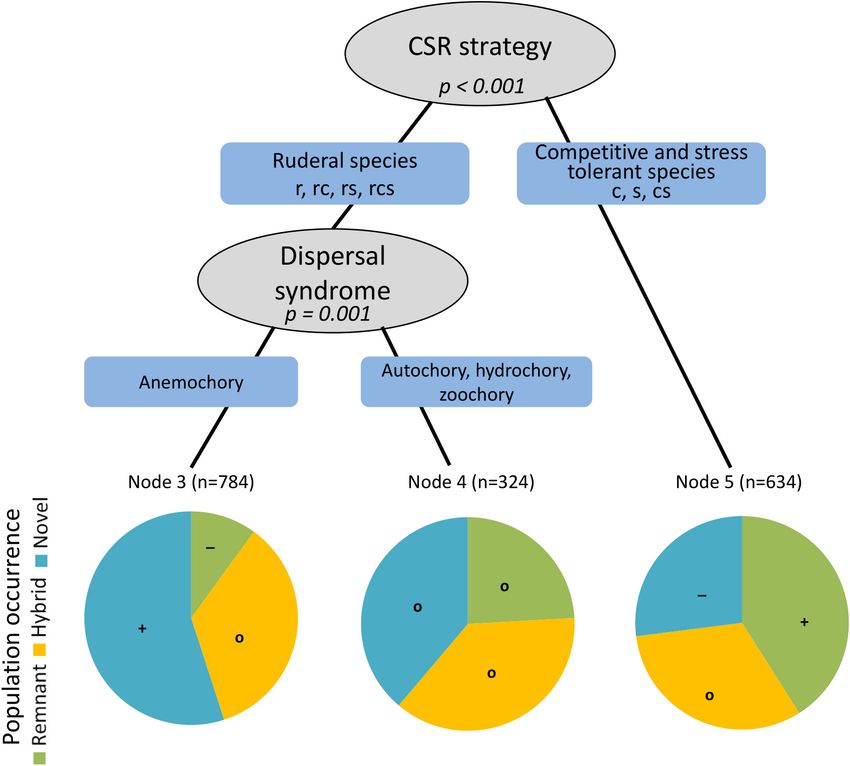
Planchuelo et al.                                                                                                 Endangered Plants Colonize Novel Sites

                                            Since different filters modulate the species pools of different ecosystem types, novel
                                            urban ecosystems are not supposed to substitute fully the habitat functions of natural
                                            remnants. Our study thus highlights promising opportunities for involving the total range
                                            of urban ecosystem types into urban conservation approaches.
                                            Keywords: endangered species, natural remnants, point-pattern analysis, population distribution, spatial
                                            distribution, species traits, urban ecosystems, dispersal syndrome

INTRODUCTION                                                                    conserving natural remnants – depends on the role that
                                                                                anthropogenic urban ecosystems can play as habitats of
Cities can harbor a high biological richness (Kühn et al., 2004;                endangered species. Such ecosystems are omnipresent in cities,
Aronson et al., 2014), also including a considerable richness of                resulting from a stepwise transformation of natural to novel
endangered plant species (Schwartz et al., 2002; Lawson et al.,                 urban ecosystems, and being modulated by different land-
2008; Lenzen et al., 2009; Shwartz et al., 2014; Ives et al.,                   use types and associated legacies (Kowarik, 2011; Ramalho
2016; Kowarik and von der Lippe, 2018; Planchuelo et al.,                       et al., 2014). Endangered species are filtered by their ability
2019). Urban areas in Australia, for example, host 30% of the                   to colonize these usually highly fragmented anthropogenic
country’s endangered plant species (Ives et al., 2016), with some               sites through dispersal, and to negotiate with novel ecological
of them occurring today exclusively in urban environments                       features of urban sites.
(Soanes and Lentini, 2019). While these studies indicate a high                     Few recent studies have reported a considerable amount of
potential of cities to contribute to biodiversity conservation at a             endangered plant species also from habitats of specific urban
global scale (McKinney, 2008; Kowarik, 2011), survival in urban                 origin (Kowarik and von der Lippe, 2018; Planchuelo et al.,
environments is a challenge for many species as demonstrated                    2019; Soanes and Lentini, 2019), including two studies from
by establishment failures (Kowarik and von der Lippe, 2018),                    Berlin, Germany. The first revealed that a similar share of
extinction debts (Hahs and McDonnell, 2014) and completed                       endangered plant species was able to establish populations
extinctions (Knapp et al., 2010; Duncan et al., 2011). Developing               in natural remnants and anthropogenic ecosystems (Kowarik
effective nature conservation strategies for cities thus requires               and von der Lippe, 2018). The second study showed that
insights into the mechanisms that underlie urban biodiversity                   populations of a large set of plant species of highest conservation
patterns in general, and those of endangered species in particular.             priority stretch over a broad range of natural and anthropogenic
    Plants are not randomly distributed in cities, and biodiversity             ecosystems; surprisingly with highest numbers of populations in
patterns were early identified in relation to urban structure,                  novel ecosystems, but highest density of populations in natural
the level of human pressure, urbanization, or specific land use                 remnants (Planchuelo et al., 2019).
(Kowarik, 1990; McKinney, 2002, 2008; Shochat et al., 2006;                         These studies highlight conservation opportunities for novel
Swan et al., 2011; Schmidt et al., 2014), thus resulting from                   anthropogenic ecosystems. Yet the role of the latter as habitats
an interaction of ecological and socio-economic parameters                      of endangered species might be compromised by a spatial
(Swan et al., 2011). Some major filters have been hypothesized                  dependence to remnant ecosystems. Species typical of ancient
to predict the composition of urban species assemblages by                      forests, for example, are critically dispersal-limited (Jacquemyn
filtering for species with a specific suite of biological traits                et al., 2001). Urban filters that determine the species’ assemblages
that support the colonization and persistence of species in                     of fragmented habitat patches (Williams et al., 2009; Aronson
cities (Williams et al., 2009; Aronson et al., 2016; Kowarik and                et al., 2016) can thus be expected to determine as well the
von der Lippe, 2018). Yet, despite increasing insights into the                 colonization success of endangered species in novel urban
mechanisms of urban species assembly (Knapp et al., 2009;                       habitats, with natural remnants as source habitats. Thus, one
Beninde et al., 2015; Williams et al., 2015; Aronson et al., 2016),             critical question for understanding the urban contribution to
the responses of endangered plant species to urban filters are                  biodiversity conservation is to which extent endangered species
critically understudied (Shwartz et al., 2014). This is an essential            are spatially confined to natural remnants and their vicinity
gap of knowledge because responses of large species sets to                     (source-sink dynamic; Pulliam, 1988; Schreiber, 2010).
urbanization cannot be simply translated to endangered species,                     As dispersal is an ecological process that causes spatial
as indicated by contrasting species’ traits that have gone extinct              autocorrelation in distribution patterns (Epperson, 2005; Bahn
or, alternatively, persist in cities (Knapp et al., 2010; Duncan et al.,        et al., 2008), spatial statistics can be used to assess whether
2011; Williams et al., 2015).                                                   or not populations located in anthropogenic urban ecosystems
    Cities were often founded in landscapes of high                             are still spatially dependent to populations in natural remnants.
geomorphological and biological richness (Kühn et al., 2004),                   Point pattern analysis has already been widely applied in non-
leading to the inclusion of natural remnants into the urban matrix              urban areas to assess the dependence of endangered plant species
(e.g., Godefroid and Koedam, 2003; Rebelo et al., 2011; Schwartz                on specific habitat patches of other species (Wehenkel et al.,
et al., 2013). The importance of such remnants for endangered                   2015). Further examples involve work on the effects of animal-
species is well established. Yet, an important part of the specific             mediated dispersal of an endangered shrub (Rodríguez-Pérez
urban contribution to biodiversity conservation – beyond                        et al., 2012), or on the minimum areas for the conservation of

Frontiers in Ecology and Evolution | www.frontiersin.org                    2                                        February 2020 | Volume 8 | Article 18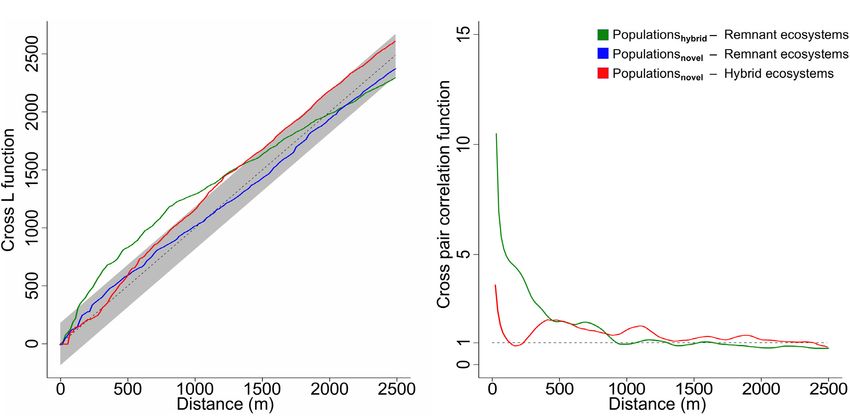
Planchuelo et al.                                                                                                  Endangered Plants Colonize Novel Sites

an endangered plant (Lim et al., 2008). Even if the importance                     novel ecosystems are not dependent on natural remnants,
of spatial patterning for biodiversity conservation in cities is                   are they instead dependent on hybrid ecosystems?
increasingly acknowledged (Rastandeh et al., 2017), insights into              (3) Are endangered plant species with populations in natural
related spatial patterns and processes are scarce because exact                    remnants, hybrid ecosystems and novel ecosystems filtered
spatial information on the locations of endangered species in                      by (a) dispersal-related species traits and (b) different
urban landscapes is often missing.                                                 strategy types according to the CSR scheme (Grime, 1977)?
   Many of the plants that pass dispersal filters in cities tend
to be ruderal species in terms of the CSR scheme (Grime,
1977), as they can rapidly colonize new urban habitats while              MATERIALS AND METHODS
tolerating a wide range of urban disturbances (Williams et al.,
2015). Other species might be pre-adapted or adapting to urban            Study Area and Population Data
environments, e.g., in terms of advantageous dispersal traits             This study was carried out in the city of Berlin, the capital and
(McDonnell and Hahs, 2015). For instance, some seed traits                most populous city of Germany with 3.6 million inhabitants as
related to dispersal increase the probability of human-mediated           of 2017. Berlin has a total area of 891km2 , from which 59% is
long-distance dispersal in cities (von der Lippe and Kowarik,             covered by built-up areas and streets, while green and blue spaces
2008). Correspondingly, species with human vectors as an                  occupy 41% of the area – including forests (17.7%), lakes and
additional dispersal pathway increased in abundance over time in          rivers (6.1%), parks (5.6%), allotment gardens (5.3%), fields (5%),
densely urbanized neighborhoods (Johnson et al., 2017) and were           and grasslands (1.3%) (SenStadtUm, 2016).
less affected by urban dispersal limitations (Chytrý et al., 2012).          Since the 19th century, the flora of Berlin has been thoroughly
   Here, we tested for the spatial dependence between                     studied (Sukopp, 1987). Information on populations dynamics
populations of endangered plant species in anthropogenic                  has been collected and updated numerous times in Red Lists
habitats and natural remnants in the urban landscape of a                 of endangered species (Seitz et al., 2018). Until today, 17% of
European metropolis. We used a unique dataset with the                    Berlin’s flora has gone extinct since the mid-19th century and
exact geographical position of 1,742 populations of 213                   29% is currently being endangered. In this study, we used a
endangered plant species in Berlin. These species had been                detailed dataset with the precise geographical location of 1,742
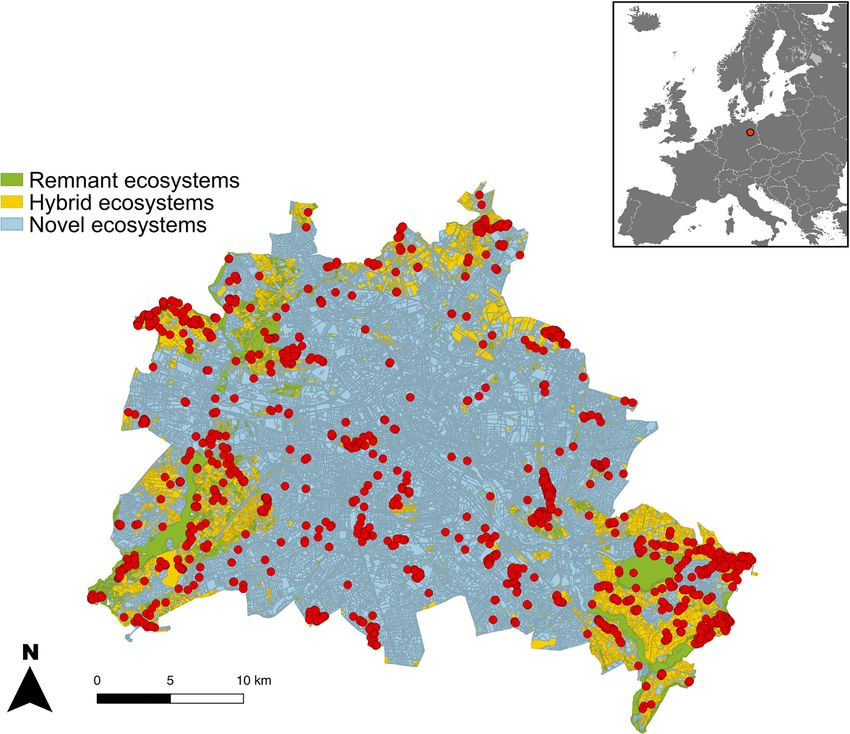
identified as species of highest conservation priority due to their       populations of 213 highly endangered plant species (Figure 1
endangerment in Berlin or at larger spatial scales, and their             and Supplementary Appendix S1) from Berlin’s Flora Protection
populations had been subsequently precisely mapped by experts             Program (Berliner Florenschutzkonzept). These species have
(Meißner and Seitz, 2010). While we have previously analyzed              been selected for the Flora Protection Program according to their:
(Planchuelo et al., 2019) the affiliation of these populations            (1) red list status in Berlin and/or at higher spatial scales, (2) long
to different types of biotopes and three types of ecosystems              term population trends (50–150 years), (3) short term population
according to the novel ecosystem approach (i.e., natural                  trends (1–15 years), and (4) biogeographical responsibility, i.e.,
remnants, hybrid ecosystems, novel ecosystems; Hobbs et al.,              when the range of a species in Berlin constitutes an important
2009), we here focus on the spatial patterns among populations            part of the global range of this species (Seitz, 2007). The
and the related biological features of the endangered species.            populations of these species are being monitored since 2009 by
   We hypothesized that populations of endangered plant                   several experts (Meißner and Seitz, 2010).
species are not randomly distributed but spatially clustered in
Berlin. We expected that populations in novel ecosystems occur            Biotope Types and Ecological Novelty
independently from source populations in natural remnants since           A methodological approach was developed in the 1980s to
novel ecosystems filter for species with enhanced capacities of           assign different biotope types to the whole area of Berlin
long-distance dispersal and for those that belong to a ruderal            by incorporating various combinations of land uses and
strategy type (Grime, 1977). Since hybrid ecosystems result               environmental conditions (Sukopp and Weiler, 1988). The
from a less profound transformation of natural ecosystems                 mapping was done as part of a combined work of 64 different
compared to novel ecosystems, we assume that populations                  projects between 2001 and 2014, where areas with high
located in hybrid ecosystems still spatially relate to seed sources       conservation value or low detectability in aerial photos such as
in natural remnants, with species pools filtered by different             forests were covered by field biotope mapping while built up areas
features compared to species that were able to colonize novel             and transportation corridors were primarily covered by data of
urban ecosystems.                                                         the urban planning authorities (SenStadtUm, 2014). Today, the
   In detail, we addressed the following research questions:              Berlin Environmental Atlas includes a very detailed area wide
                                                                          biotope mapping1 that is updated regularly (SenStadtUm, 2014).
  (1) Are populations (n = 1,742) of endangered plant species             Currently, the city of Berlin is divided into 79,268 patches, with
      (n = 213) located within natural remnants, hybrid                   each of these patches being assigned to one of 12 biotope classes.
      ecosystems and novel ecosystems in Berlin spatially                 These are forests, grasslands, ruderal sites, standing bodies of
      clustered?                                                          waters, built-up areas, bogs and marshes, hedges, green spaces,
  (2) Do populations located in the two types of anthropogenic            fields, flowing moving bodies of waters, heaths, and other types.
      ecosystems (i.e., hybrid ecosystems and novel ecosystems)
      spatially depend on natural remnants? If populations in             1
                                                                              www.stadtentwicklung.berlin.de/umwelt/umweltatlas/ek508.htm

Frontiers in Ecology and Evolution | www.frontiersin.org              3                                               February 2020 | Volume 8 | Article 18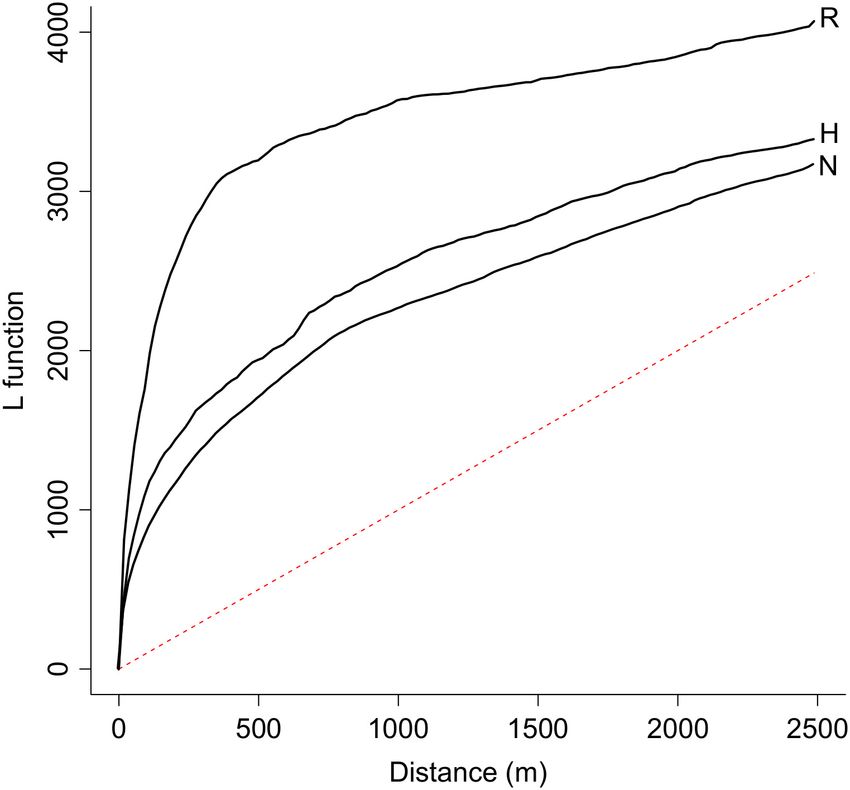
Planchuelo et al.                                                                                                           Endangered Plants Colonize Novel Sites

  FIGURE 1 | Location of populations of endangered plant species (213 species, 1742 populations, red dots) across remnant, hybrid and novel ecosystems inside the
  city limits of Berlin. The configuration of the urban matrix is overlaid in darker tones.

These biotope classes are in turn further subdivided in 7,483                          • Hybrid ecosystems are human mediated ecosystems that
biotope types at several hierarchical levels.                                            have been modified from their historical counterparts but
   To relate the geographical position of each of the 1,742                              still have the potential to return to historical conditions.
populations of endangered plant species to remnant, hybrid                               Examples range from managed grasslands to urban green
and novel ecosystems and assess their spatial correlation toward                         spaces, young tree plantations in forests and parks or
natural remnants, we used the ecological novelty map of Berlin                           intermediate succession stages following abandonment.
(Planchuelo et al., 2019). Each of the 79,268 patches that had                         • Novel ecosystems are human shaped ecosystems that
been discerned in the biotope map were assigned to either natural                        have potentially been irreversibly changed by large
remnants, hybrid or novel ecosystems – see Planchuelo et al.                             modifications to their abiotic conditions or biotic
(2019) for details:                                                                      composition. They include built up areas, rooftops, vacant
                                                                                         lots, abandoned industrial areas or intensively managed
                                                                                         agricultural fields.
    • Natural remnant ecosystems are relicts of natural
      ecosystems that are often slightly affected by urban                          Spatial Analyses
      impacts but still remain within their historical range of                     To enable spatial point pattern analyses to assess the correlation
      modifications. These include biotopes from mires and                          between populations of endangered plants and patches of
      wetlands to near-natural forests or moderately used dry or                    different novelty categories, the latter were represented by a point
      wet grasslands (Figure 1).                                                    positioned at the centroid of each patch (Baddeley, 2008). Using

Frontiers in Ecology and Evolution | www.frontiersin.org                        4                                              February 2020 | Volume 8 | Article 18
Planchuelo et al. Endangered Plants Colonize Novel Sites
the “polygon centroid” function in QGIS, we converted all 79,268 of the different novelty categories were spatially correlated or
ecosystem patches that had been differentiated in Berlin’s biotope not (see Supplementary Appendix S2). This was done only for
map into point data. patches where positive spatial relationships with populations of
To respond to the first research question, we first tested endangered plant species were previously shown.
whether populations within natural remnants, hybrid ecosystems The cross L function can reveal a spatial correlation between
and novel ecosystems were spatially clustered. This was done populations and novelty categories, but not if this correlation
by means of Ripley’s L function (Dixon, 2002), which allows to is positive or negative. We thus used a cross pair correlation
verify if, and at which spatial scales, populations are clustered, function in a successive step (Penttinen et al., 1992; Baddeley,
regularly or randomly distributed. This test (function Linhom of 2008; function pcfcross.inhom of the spatstat package in R) to
the spatstat package in R) compares the spatial distribution of assess the type of correlation at any given distance between the
a point pattern against a generated set of points with a random populations and the different novelty categories. There is a spatial
distribution (which is named Poisson distribution, see Stoyan and dependence between the populations and a novelty category
Stoyan, 1994). If the curve of the L function of a point pattern when the values of the cross pair correlation function lay over 1,
lies above the Poisson line, the populations are clustered; if it lies with values below 1 indicating spatial repulsion (Penttinen et al.,
below, the populations are regularly distributed; if it overlaps it, 1992; Baddeley et al., 2015). The higher or lower the values, the
the populations are randomly distributed (Dixon, 2002). L plots stronger the dependence or the repulsion.
of Ripley’s K functions were used (Dixon, 2002), as they stabilize All spatial statistics were performed in the R package spatstat
the variance and are more powerful than simple plots of the K (Baddeley et al., 2015). Ripley’s isotropic edge corrections (Ripley,
function (Baddeley et al., 2015). 1991) were applied to all calculations. A prior Monte Carlo
To respond to the second research question, we analyzed if test for spatial homogeneity proved our point data to be
populations in the two types of anthropogenic ecosystems (i.e., inhomogeneous (the number of points per area is not constant
hybrid ecosystems with 632 populations and novel ecosystems throughout the whole space), so we used statistical functions in
with 687 populations) are spatially dependent on remnant “spatstat” that were adapted for inhomogeneous data.
ecosystem patches. Because one of our hypotheses was that
populations in novel ecosystems are not related to natural Dispersal Traits and CSR Strategy
remnants, we also tested if populations in novel ecosystems might To respond to the third research question on the importance
instead be spatially dependent on hybrid ecosystem patches. of plant dispersal traits and CSR strategy types in explaining
Statistically significant spatial correlations between populations the spatial distribution of populations of endangered plant
of endangered plant species and the patches of different novelty species across the different types of ecosystems, we first gathered
categories were assessed with global envelopes of cross L information on plant dispersal traits and CSR strategy (Grime,
functions (function Lcross.inhom of the spatstat package in R). 1977) from the BIOFLOR database (Klotz et al., 2002; Table 1).
This spatial analysis compares the observed correlation between We used this database because it focuses on the German flora
the two point patterns of the empirical data against a null model, and it achieves a high level of detail by ranking the various
which is generated by keeping the same location of the ecosystem dispersal syndromes of each species, allowing us to select the most
patches while creating simulations with random locations for important one in relation to our study area.
the populations (Baddeley et al., 2015). If the curve of the In a second step, we performed a conditional inference tree
cross L function for the empirical point pattern transgresses analysis with the predictors shown in Table 1. A conditional
outside of the global envelope of the null model at any moment, inference tree is a non-parametric type of decision tree where
there is a statistically significant spatial correlation between the the dataset is recursively split into dichotomous subsets which
populations and the novelty category (Baddeley et al., 2014,
2015). Alternatively, if the curve does not transgress outside of
the global envelope, we consider that there is a missing spatial TABLE 1 | Predictor variables (dispersal traits, CRS strategy) used in the
correlation between the populations and the novelty category. conditional inference tree to predict occurrence of populations of endangered
plant species across the different types of ecosystems.
Global envelopes were chosen because they avoid the problem
of data snooping of pointwise envelopes and they allow to Variables Units Scale Range
achieve an exact significance level: α = 1/(1 + n◦ simulations), see
Baddeley et al., 2014. Thus, in order to achieve a 95% confidence Dispersal traits
interval, we generated global envelopes from 19 simulations of Dispersal syndrome / Categorical Four categories (anemochory,
autochory, hydrochory, and
the null model. L plots of cross K functions were used (Dixon, zoochory)
2002), as they stabilize the variance and are more powerful than Seed mass mg Continuous 0.00009–166.3
the K plots (Baddeley et al., 2015). Seed length mm Continuous 0.33–9
In many cases, spatial correlations can be simply fruit of Seed width mm Continuous 0.1–4.5
the spatial configuration of the urban matrix. Populations in Seed number n Continuous 0–4720600
hybrid ecosystems, for example, might be spatially dependent on Seed terminal m/s Continuous 0.17–4.94
remnant ecosystems simply because patches of hybrid ecosystems velocity
tend to be located in the proximity of patches of remnant CSR Strategy / Categorical Seven categories (c, s, r, cs, cr,
ecosystems. We thus assessed with cross L functions if the patches sr, and csr)
Frontiers in Ecology and Evolution | www.frontiersin.org 5 February 2020 | Volume 8 | Article 18Planchuelo et al. Endangered Plants Colonize Novel Sites
Spatial Relation Between Populations of
Endangered Plant Species and Different
Novelty Categories
Results from the cross L function show that from the populations
located in anthropogenic ecosystems, only those in hybrid
ecosystems are spatially correlated to natural remnant ecosystems
(Figure 3A, green line), as the observed curve of the point
process crosses outside of the boundaries of the global envelope
of the null model (Baddeley et al., 2014). An additional cross
pair correlation function indicates that this correlation is positive
(dependence), especially at distances from 0 to 700 m (Figure 3B,
green line), where values lie far above 1 (Penttinen et al., 1992;
Baddeley et al., 2015).
In contrast, populations located in novel ecosystems are
spatially independent from remnant ecosystems (Figure 3A, blue
line). Yet, they are spatially correlated to hybrid ecosystems
(Figure 3A, red line). In the latter case, the cross pair correlation
function indicates that this correlation is positive (dependence),
with a lower intensity, especially at shorter distances from 0 to
400 m (Figure 3B, red line).
FIGURE 2 | Populations of endangered plant species in Berlin are spatially
clustered as indicated by the value of Ripley’s L-function over the entire range
of distances between each two populations. The level of clustering is higher Dispersal Traits and CSR Strategy
for populations located in natural remnant ecosystems (line R, n = 423) than From all the predictor variables, the conditional inference
for populations located in hybrid (line H, n = 632) or novel (line N, n = 687)
ecosystems. A random spatial Poisson distribution is marked as a red
tree retained CSR strategy (p < 0.001) and dispersal
dashed line. syndrome (p = 0.001) as significant predictors of population
occurrence across the different types of ecological novelty
(Figure 4). Endangered species assigned to a ruderal
are discriminated by the most significant predictor (Hothorn strategy type (r, rc, rs, rcs) and with anemochory as main
et al., 2006). To analyze if populations attributed to different dispersal syndrome were exceedingly represented in novel
categories of ecological novelty in each terminal node contribute ecosystems (Node 3, Figure 4). In contrast, competitive
disproportionally to the different types of ecosystems, we and stress-tolerant species (c, s, cs) were much more
performed a log-linear model using the R-function loglin and common in remnant ecosystems than elsewhere (Node
computed the standardized residuals to reveal any positive or 5, Figure 4). Finally, populations of species assigned to a
negative deviations from the expected frequencies of population ruderal strategy type in combination with other dispersal
distribution across the different types of ecological novelty. syndromes other than anemochory were represented equally
These deviations were then included as symbols in the resulting amongst natural remnants, hybrid and novel ecosystems
nodes in the conditional inference tree, displaying over- or (Node 4, Figure 4).
under- representation of populations compared to the expected
frequencies. All analyses were performed with the statistical and
programming software R version 3.5.2 (R Core Team, 2018). DISCUSSION
It is well established that plants in cities are not randomly
distributed in space, but follow specific spatial patterns, driven
RESULTS by feedbacks between ecological and socio-economic factors
(Swan et al., 2011). While many studies have highlighted
Spatial Clustering of Populations of the importance of natural remnants in hosting species of
Endangered Plant Species conservation concern in urban regions (e.g., Godefroid and
The analysis of the distribution patterns of the endangered plant Koedam, 2003; Celesti-Grapow et al., 2013), recent studies also
populations by means of Ripley’s L function revealed a spatial revealed a high relative importance of anthropogenic habitats
clustering of populations in all three novelty categories over the for endangered plant species in cities (Kowarik and von der
entire range of distances between the populations, as all curves Lippe, 2018; Planchuelo et al., 2019; Soanes et al., 2019). Yet
of the Ripley’s L function exceed the dashed line that represents to which extent populations of endangered plant species in
the null model of complete spatial randomness (Figure 2). anthropogenic habitats rely on the adjacency to natural remnants
Furthermore, populations that are located in natural remnant as seed sources is a largely open question, since point data
ecosystems have a higher level of clustering than those located on the exact location of endangered plant species are mostly
in hybrid or novel ecosystems (Figure 2). missing for cities.
Frontiers in Ecology and Evolution | www.frontiersin.org 6 February 2020 | Volume 8 | Article 18Planchuelo et al. Endangered Plants Colonize Novel Sites
FIGURE 3 | (A) Cross L function showing significant (p < 0.05) spatial correlations at increasing distances between populations in hybrid ecosystems (n = 632) and
remnant ecosystem patches (n = 3426) (green line) and between populations in novel ecosystems (n = 687) and hybrid ecosystem patches (n = 15681) (red line), as
in all these cases the line of the observed point process crosses at some point outside of the boundaries of the global envelope of the null model (dashed line with
gray envelope generated from 19 simulations). No spatial correlation (independence) was found (95% confidence level) between populations in novel ecosystems
(n = 687) and remnant ecosystem patches (n = 3426) (blue line), as the observed curve of the point process (blue line) does not cross outside of the boundaries of
the global envelope of the null model. (B) Cross pair correlation function showing the type of correlation at increasing distances between populations in hybrid
ecosystems (n = 632) and remnant ecosystem patches (n = 3426) (green line) and between populations in novel ecosystems (n = 687) and hybrid ecosystem
patches (n = 15681) (red line). Values higher than 1 (dashed line) indicate an increasingly stronger positive correlation (dependence). Please note that the blue line is
not represented as there is spatial independence between populations in novel ecosystems and remnant ecosystems (Figure 3A).
This study makes a step forward by linking the location of each habitats, as commonly happens in highly dynamic landscapes
of 1,742 populations of 213 plant species of highest conservation (Johst et al., 2002). Spatial clustering of endangered plant
concern in Berlin to one of three ecosystem types that represent populations was most pronounced in natural remnants. It is likely
different transformation stages of natural to urban landscapes, that clustering of populations in this habitat type merely reflects
i.e., natural remnants, hybrid ecosystems and novel ecosystems, the rarity and scattered spatial distribution of natural remnants
following the novel ecosystem approach (Hobbs et al., 2009). in Berlin. Natural remnants only occupy 7% of the surface
Our methodological approach advances the understanding of area within the city borders but host 24% of all populations of
spatial patterns of endangered species at the city scale, because endangered plant species (Planchuelo et al., 2019).
the scarce studies on this topic are often based on species As a major and unexpected result of our study we found
inventories of grid cells (e.g., Kühn et al., 2004; Schwartz et al., contrasting spatial dependences of endangered plant populations
2013; Schmidt et al., 2014). While spatial relationships between among the two anthropogenic types of ecosystems and natural
anthropogenic habitats and natural remnants can be masked by remnants (Figure 3A). Populations in hybrid ecosystems spatially
the environmental heterogeneity of grid cells, our study relies on depended on natural remnants – while populations in novel
point data for populations and on spatially explicit data from ecosystems did not. As dispersal is the ecological phenomenon
about 80,000 biotope patches covering the entire area of Berlin, that most often causes spatial dependence (Epperson, 2005;
which in a previous study were classified as natural remnants, Bahn et al., 2008), our results suggest an exchange of species
hybrid or novel ecosystems (Planchuelo et al., 2019). This enabled between natural remnants and hybrid ecosystems. This could
us to test for the habitat function of different transformation happen through a source-sink dynamic (Pulliam, 1988; Schreiber,
stages of natural ecosystems in cities for endangered plant species. 2010), in which remnant ecosystems are acting as seed sources
for adjacent hybrid ecosystems. The importance of natural
remnants as relict habitats of endangered plant species is well
Spatial Relationship Between Natural known (Rebelo et al., 2011; Kowarik and von der Lippe, 2018).
Remnants and Populations of Correspondingly, Jarošík et al. (2011) demonstrated that the
Endangered Plant Species number of endangered species decreased with distance to natural
A first insight of this study is that the total populations areas. In Christchurch, New Zealand, a forest remnant within
of endangered plant species are not randomly distributed the city functioned as seed source for the colonization of
throughout Berlin but are overall clustered inside their respective adjacent gardens by native bush species, yet mostly within
Frontiers in Ecology and Evolution | www.frontiersin.org 7 February 2020 | Volume 8 | Article 18Planchuelo et al. Endangered Plants Colonize Novel Sites FIGURE 4 | Conditional inference tree showing the partitioning effects of plant dispersal syndrome and CSR strategy on the occurrence of populations of endangered plant species across natural remnant (green), hybrid (yellow) and novel (blue) ecosystems in Berlin. Positive and negative deviations from the expected frequencies of population from the three novelty types are displayed by symbols in the pie charts (+, more than four standardized residuals showing an overrepresentation of populations of the respective category; –, less than four standardized residuals showing an underrepresentation of populations; o, –2 to 2 standardized residuals, showing a similar representation of populations to the expected frequencies); n indicates the number of populations in each branch. only 250 m of the forest margin (Doody et al., 2010). Our (Hobbs et al., 2009; Kowarik, 2011), relict populations or seed results corroborate these findings, as the strength of the spatial banks of endangered plant species likely do not persist in these interaction between natural remnants and populations in hybrid systems. However, novel ecosystems can offer habitat analogs ecosystems was highest in a spatial range between 0 and for a range of native species (Lundholm and Richardson, 2010), approximately 400 m (Figure 3B), suggesting that dispersal i.e., new environmental conditions to which some species may capabilities prevent many species from directly dispersing further already have been pre-adapted in advance (McDonnell and Hahs, than that (Jacquemyn et al., 2003). 2015). In Berlin, a considerable amount of 687 populations As an alternative but not mutually exclusive explanation, (40% of the total) encompassing 142 highly endangered species some populations in hybrid ecosystems might be relicts of occur in novel ecosystems. One important insight of this study former remnants that have persisted despite land use change or is that in Berlin these populations are spatially independent increasing levels of urbanization. Grasslands, for example, are from natural remnant ecosystems, likely due to dispersal barriers a largely anthropogenic type of vegetation in Berlin (Sukopp, associated with higher levels of urbanization in novel ecosystems. 1990), but some endangered grassland species stem from In this context, hybrid ecosystems could partly act as stepping habitats in open forests, clearings or forest edges (e.g., Festuca stones between natural remnants and novel ecosystems, as psammophila or Botrychium lunaria) and have survived the populations in novel ecosystems were slightly dependent on transformation of forests to grassland as hybrid ecosystems. To hybrid ecosystems – while at the same time populations in hybrid untangle the relative role of dispersal-related versus persistence- ecosystems were spatially dependent on remnant ecosystems. related mechanisms underlying the presence of endangered However, species exchange between hybrid ecosystems and novel plants in hybrid ecosystems is a future research direction which ecosystems alone cannot explain the vast number of populations requires spatial information about land-use legacies. of endangered plant species in the latter, as populations in Since novel urban ecosystems have experienced much deeper Berlin’s novel ecosystems are only weakly correlated to hybrid changes to the abiotic conditions and species assemblages ecosystems, and only so in distances over 400 m. Thus, the high Frontiers in Ecology and Evolution | www.frontiersin.org 8 February 2020 | Volume 8 | Article 18
Planchuelo et al.                                                                                            Endangered Plants Colonize Novel Sites

number of populations here could be explained by additional                urban ecosystems as illustrated by Figure 4, and contribute to
natural or human mediated long-distance dispersal from far away            the understanding of the spatial independence of populations in
sources and a subsequent establishment of meta-communities                 novel ecosystems from natural remnants, since wind dispersal
within ecologically interconnected novel ecosystems (Loreau                often translates to long-distance dispersal (Cain et al., 2000).
et al., 2003). In our dataset, for instance, some species occur               While our study revealed the importance of long-distance
across the urban matrix in novel ecosystems that are very                  dispersal by wind for filtering species pools of endangered species
distant from each other (e.g., Cystopteris fragils or Dianthus             throughout different urban ecosystem types, the role of human-
carthusianorum). Conducting genetic analyses to assess whether             mediated long-distance dispersal might be underestimated
these populations originate from the same source would be an               in our analyses. Indeed, dispersal by humans is considered
interesting path for future research.                                      one of the most important mechanisms of long-distance
                                                                           dispersal (Nathan, 2006), and species with human vectors as
                                                                           an additional dispersal pathway are increasingly found over
Strategy Type and Dispersal Syndrome                                       time in highly urbanized neighborhoods (Johnson et al., 2017).
Filter Species Pools of Different Habitat                                  Correspondingly, urban roads function as dispersal highways
Types                                                                      for a broad range of native species (von der Lippe and
Shifts of biological traits in urban floras compared to rural floras       Kowarik, 2008), and likely more for anthropogenic than for
are well established (Knapp et al., 2008a, 2010; Williams et al.,          remnant ecosystems as the former are usually more exposed
2015). Our study revealed that biological features (i.e., strategy         to transportation corridors. Given that vehicles can move
type, dispersal syndrome) filtered endangered plant species                native species over long-distances along urban-rural gradients
differently for natural remnants, hybrid and novel ecosystems.             (von der Lippe and Kowarik, 2008), human-mediated dispersal
   As expected, the conditional inference tree revealed that               might thus link novel with other ecosystem types. Furthermore,
species assigned to a ruderal strategy (component) according               high seed production, which is a feature of many ruderal
to Grime (1977) were more present in novel urban ecosystems                species (Grime, 1977), increases the chance of dispersal by
than anticipated by chance, while species related to competitive           vehicles, especially for seeds with a low terminal velocity like
or stress strategies were more confined to remnant ecosystems              those of wind dispersed species (von der Lippe and Kowarik,
(Figure 4). This goes along with the review by Williams et al.             2012). In consequence, seeds of wind dispersed species might
(2015) who found that many studies report increased numbers                be introduced from distant sources (i.e., hybrid ecosystems)
of ruderal species in urban floras – despite diverging results             into novel ecosystems through the road network, while the
existing as well. Our study helps understand ambiguous previous            same mechanism could support meta-communities of species
results since different strategy types matter for different types of       already established in novel ecosystems. Work on pollen
ecosystems. Thus, the transformation from natural ecosystems to            dispersal correspondingly indicates a high level of exchange
novel urban ecosystems filters for species adhering to the ruderal         between different types of urban ecosystems (Van Rossum, 2010;
strategy types, while no specifications were detected for hybrid           Van Rossum and Triest, 2012).
ecosystems. Natural remnants, in contrast, are characterized by a
higher presence of competitive and stress-tolerant species, most           Future Perspectives
probably because of their limited dispersal as a consequence               The present study suggests that meta-communities of plants
of a trade-off between competition and dispersal (Pellissier,              might exist in novel ecosystems within cities. A future direction
2015) and the low reproductive effort of stress-tolerant species           is to examine the spatial structure and dynamics of populations
(Chapin et al., 1993).                                                     in novel urban environments (and probably related sources) also
   As spatial dependence in distribution patterns of plants is             with genetic analyses.
closely related to dispersal processes (Epperson, 2005; Bahn et al.,           On a different note, our research shows that differences
2008), we expected that dispersal-related plant traits filtered            in interspecific plant traits are related to the distribution of
the suite of endangered plant species across the different types           endangered plants across different kinds of urban ecosystems.
of ecosystems. A major insight of this study is that dispersal             Previous research has shown rapid changes and evolutionary
syndrome filtered for species composition of natural remnants              adaptations in some urban plants (McDonnell and Hahs, 2015;
versus novel ecosystems. Anemochory (i.e., wind dispersal) was             Dubois and Cheptou, 2017), and that trait frequencies can shift
significantly related to the latter, but only for species with a           as a consequence of different levels of urbanization (Knapp
ruderal strategy component (Figure 4). The revealed relevance of           et al., 2008b) or urban stressors (Williams et al., 2015). Thus, it
wind dispersal for endangered species in novel ecosystems seems            would be most interesting to assess patterns of intraspecific trait
to contradict results of Williams et al. (2015) who found that             adaptations throughout populations of the same species located
most of the few studies on species extinction in cities showed             in ecosystems with varying levels of ecological novelty.
that wind-dispersed species were more likely to disappear than                 Finally, though Berlin shares similar land use legacies
species dispersed by other vectors (e.g., Williams et al., 2005;           (Ramalho and Hobbs, 2012) and configuration of urban elements
Knapp et al., 2010); yet studies on the total urban flora did              (Louf and Barthelemy, 2014) with other historical European
not find consistent patterns in dispersal modes (Williams et al.,          cities, results of this study cannot be generalized for all urban
2015). These ambiguous results can be explained by the context             contexts. The classification of the urban ecosystems according
dependence of relevant species traits in relation to different             to their ecological novelty is a first step in providing a

Frontiers in Ecology and Evolution | www.frontiersin.org               9                                       February 2020 | Volume 8 | Article 18
Planchuelo et al. Endangered Plants Colonize Novel Sites
general scheme to compare species distributions between cities by strictly selecting dispersal-limited species for introduction to
of different history, and comparable studies in other cities novel ecosystems in restoration measures.
could be used to verify to which extent biodiversity patterns Understanding the spatial relationships between populations
vary amongst them. of endangered plant species in different urban ecosystems thus
supports conservation approaches that cover the total range of
urban ecosystems and associated opportunities for biodiversity
CONCLUSION conservation in cities.
The urban contribution to biodiversity conservation is widely
debated (Shwartz et al., 2014; Soanes et al., 2019), with DATA AVAILABILITY STATEMENT
one important question being the role of urban ecosystems
of anthropogenic origin for endangered plant species. While The datasets generated for this study are available on request to
previous studies have revealed an important relative contribution the corresponding author.
of human-shaped hybrid and novel ecosystems as habitats of
endangered plant species (Kowarik and von der Lippe, 2018;
Planchuelo et al., 2019) this study adds further insights into AUTHOR CONTRIBUTIONS
the underlying mechanisms, based on fine-grained georeferenced
All persons entitled to authorship have been so named.
data for a high number of populations of endangered plant
All authors conceived the ideas, designed methodology, and
species and urban biotope patches.
contributed to writing. GP processed the data. GP and ML
The spatial analyses allow three major conclusions to be
analyzed the data.
drawn. First, the spatial dependence of populations in hybrid
ecosystems on natural remnants shows the latter are important
habitats and seed sources for endangered plant species and
highlights the importance of conserving these remains of
FUNDING
natural landscapes in urban regions. Second, the missing spatial GP was funded by the Hans Böckler Foundation and the
dependence of populations in novel ecosystems demonstrates TU Berlin STIBET – DAAD Grant. Parts of this study were
that novel urban ecosystems can support populations of a range funded by the German Federal Ministry of Education and
of endangered species beyond the adjacency to natural remnants. Research (BMBF) within the Collaborative Project “Bridging in
Third, our results suggest that hybrid ecosystems may act as Biodiversity Science-BIBS” (funding number 01LC1501A-H). We
essential stepping stones by mediating the spread of endangered acknowledge support by the German Research Foundation and
plant species into novel urban ecosystems. the Open Access Publication Fund of TU Berlin.
The existence of natural remnants in cities can partly be
explained by the fact that urban agglomerations have preferably
been founded in naturally rich landscapes (Kühn et al., 2004). ACKNOWLEDGMENTS
Yet at least in Berlin, these legacies do not ultimately determine
the spatial patterns of endangered plant species in profoundly We thank Justus Meißner and Stiftung Naturschutz Berlin for
changed novel urban ecosystems. This is a strong argument sharing the population data, and Berlin’s Senate Department
for including the total range of natural and anthropogenic for the Environment, Transport and Climate Protection for
ecosystems in urban conservation strategies. providing GIS layers of biotope and land use maps. We
Discerning different biological features (i.e., strategy type, thank likewise Jonas Tumbrink for his comments on the
dispersal syndrome) related to the presence of endangered plants manuscript. We also thank reviewers for their comments. This
in natural remnants, hybrid ecosystems and novel ecosystems manuscript includes content from the doctoral dissertation of GP
demonstrates that different filters modulate the presence of (Planchuelo, 2019).
endangered plants across the trajectory of urban habitat
transformation. Identifying traits of species that successfully
colonize novel urban ecosystems demonstrates environmental SUPPLEMENTARY MATERIAL
barriers for other endangered species. This has important
implications for conservation efforts, e.g., for conserving and The Supplementary Material for this article can be found online
managing those species with highest priority in natural remnants at: https://www.frontiersin.org/articles/10.3389/fevo.2020.00018/
that are likely unable to colonize novel urban ecosystems; or full#supplementary-material
REFERENCES drivers. Proc. R. Soc. B Biol. Sci. 281:20133330. doi: 10.1098/rspb.2013.
3330
Aronson, M. F., La Sorte, F. A., Nilon, C. H., Katti, M., Goddard, Aronson, M. F., Nilon, C. H., Lepczyk, C. A., Parker, T. S., Warren, P. S., Cilliers,
M. A., Lepczyk, C. A., et al. (2014). A global analysis of the impacts S. S., et al. (2016). Hierarchical filters determine community assembly of urban
of urbanization on bird and plant diversity reveals key anthropogenic species pools. Ecology 97, 2952–2963. doi: 10.1002/ecy.1535
Frontiers in Ecology and Evolution | www.frontiersin.org 10 February 2020 | Volume 8 | Article 18Planchuelo et al. Endangered Plants Colonize Novel Sites Baddeley, A. (2008). Analysing Spatial Point Patterns in R. Workshop Notes. Jarošík, V., Konvièka, M., Pyšek, P., Kadlec, T., and Beneš, J. (2011). Conservation CSIRO Online Technical Publication. Available at: https://darrylmcleod.com/ in a city: do the same principles apply to different taxa? Biol. Conserv. 144, wp-content/uploads/2016/06/Analysing-spatial-point-patterns-in-R.pdf 490–499. doi: 10.1016/j.biocon.2010.10.002 Baddeley, A., Diggle, P. J., Hardegen, A., Lawrence, T., Milne, R. K., and Nair, G. Johnson, A. L., Borowy, D., and Swan, C. M. (2017). Land use history and seed (2014). On tests of spatial pattern based on simulation envelopes. Ecol. Monogr. dispersal drive divergent plant community assembly patterns in urban vacant 84, 477–489. doi: 10.1890/13-2042.1 lots. J. Appl. Ecol. 55, 451–460. doi: 10.1111/1365-2664.12958 Baddeley, A., Rubak, E., and Turner, R. (2015). Spatial Point Patterns: Methodology Johst, K., Brandl, R., and Eber, S. (2002). Metapopulation persistence in dynamic and Applications with R. London: Chapman and Hall/CRC. landscapes: the role of dispersal distance. Oikos 98, 263–270. doi: 10.1034/j. Bahn, V., Krohn, W. B., and O’Connor, R. J. (2008). Dispersal leads to spatial 1600-0706.2002.980208.x autocorrelation in species distributions: a simulation model. Ecol. Modell. 213, Klotz, S., Kühn, I., Durka, W., and Briemle, G. (2002). BIOLFLOR: Eine Datenbank 285–292. doi: 10.1016/j.ecolmodel.2007.12.005 mit Biologisch-Ökologischen Merkmalen zur Flora von Deutschland, Vol. 38. Beninde, J., Veith, M., and Hochkirch, A. (2015). Biodiversity in cities needs space: Bonn: Bundesamt für Naturschutz. a meta-analysis of factors determining intra-urban biodiversity variation. Ecol. Knapp, S., Kühn, I., Bakker, J. P., Kleyer, M., Klotz, S., Ozinga, W. A., et al. Lett. 18, 581–592. doi: 10.1111/ele.12427 (2009). How species traits and affinity to urban land use control large-scale Cain, M. L., Milligan, B. G., and Strand, A. E. (2000). Long-distance seed dispersal species frequency. Divers. Distrib. 15, 533–546. doi: 10.1111/j.1472-4642.2009. in plant populations. Am. J. Bot. 87, 1217–1227. doi: 10.2307/2656714 00561.x Celesti-Grapow, L., Capotorti, G., Del Vico, E., Lattanzi, E., Tilia, A., and Blasi, C. Knapp, S., Kühn, I., Mosbrugger, V., and Klotz, S. (2008a). Do protected areas in (2013). The vascular flora of Rome. Plant Biosyst. 147, 1059–1087. urban and rural landscapes differ in species diversity? Biodivers. Conserv. 17, Chapin, F. S. III, Autumn, K., and Pugnaire, F. (1993). Evolution of suites of traits 1595–1612. doi: 10.1007/s10531-008-9369-5 in response to environmental stress. Am. Nat. 142, 78–92. Knapp, S., Kühn, I., Stolle, J., and Klotz, S. (2010). Changes in the functional Chytrý, M., Lososová, Z., Horsák, M., Uher, B., Èejka, T., Danihelka, J., et al. composition of a Central European urban flora over three centuries. Perspect. (2012). Dispersal limitation is stronger in communities of microorganisms than Plant Ecol. Evol. Syst. 12, 235–244. doi: 10.1016/j.ppees.2009.11.001 macroorganisms across Central European cities. J. Biogeogr. 39, 1101–1111. Knapp, S., Kuehn, I., Wittig, R., Ozinga, W. A., Poschlod, P., and Klotz, S. (2008b). doi: 10.1111/j.1365-2699.2011.02664.x Urbanization causes shifts of species’ trait state frequencies. Preslia 80, 375–388. Dixon, P. M. (2002). “Ripley’s K function,” in The Encyclopedia of Environmetrics, Kowarik, I. (1990). “Some responses of flora and vegetation to urbanization in eds A.H. El-Shaaraui., and W.W. Piergorsch. (New York, NY: Wiley), Central Europe,” in Plants and Plant Communities in the Urban Environment, 1796–1803. eds H. Sukopp, S. Hejny, and I. Kowarik, (The Hague: SPB Academic Doody, B. J., Sullivan, J. J., Meurk, C. D., Stewart, G. H., and Perkins, H. C. (2010). Publishing), 45–74. Urban realities: the contribution of residential gardens to the conservation of Kowarik, I. (2011). Novel urban ecosystems, biodiversity, and conservation. urban forest remnants. Biodivers. Conserv. 19, 1385–1400. doi: 10.1007/s10531- Environ. Pollut. 159, 1974–1983. doi: 10.1016/j.envpol.2011.02.022 009-9768-2 Kowarik, I., and von der Lippe, M. (2018). Plant population success across urban Dubois, J., and Cheptou, P. O. (2017). Effects of fragmentation on plant adaptation ecosystems: a framework to inform biodiversity conservation in cities. J. Appl. to urban environments. Phil. Trans. R. Soc. Lond. B Biol. Sci. 372:20160038. Ecol. 55, 2354–2361. doi: 10.1111/1365-2664.13144 doi: 10.1098/rstb.2016.0038 Kühn, I., Brandl, R., and Klotz, S. (2004). The flora of German cities is naturally Duncan, R. P., Clemants, S. E., Corlett, R. T., Hahs, A. K., McCarthy, M. A., species rich. Evol. Ecol. Res. 6, 749–764. McDonnell, M. J., et al. (2011). Plant traits and extinction in urban areas: a Lawson, D. M., Lamar, C. K., and Schwartz, M. W. (2008). Quantifying plant meta–analysis of 11 cities. Glob. Ecol. Biogeogr. 20, 509–519. doi: 10.1111/j. population persistence in human-dominated landscapes. Conserv. Biol. 22, 1466-8238.2010.00633.x 922–928. doi: 10.1111/j.1523-1739.2008.00936.x Epperson, B. K. (2005). Estimating dispersal from short distance spatial Lenzen, M., Lane, A., Widmer-Cooper, A., and Williams, M. (2009). Effects of land autocorrelation. Heredity 95, 7–15. doi: 10.1038/sj.hdy.6800680 use on threatened species. Conserv. Biol. 23, 294–306. doi: 10.1111/j.1523-1739. Godefroid, S., and Koedam, N. (2003). How important are large vs. small 2008.01126.x forest remnants for the conservation of the Woodland Flora in an urban Lim, Y., Na, S.-T., Lee, S.-J., Cho, K. H., and Shin, H. (2008). Spatial distribution context? Glob. Ecol. Biogeogr. 12, 287–298. doi: 10.1046/j.1466-822x.2003. patterns and implications for conservation of Scrophularia takesimensis 00035.x (Scrophulariaceae), an endangered endemic species on Ulleung Island, Korea. Grime, J. P. (1977). Evidence for the existence of three primary strategies in J. Plant Biol. 51:213. doi: 10.1007/bf03030701 plants and its relevance to ecological and evolutionary theory. Am. Nat. 111, Loreau, M., Mouquet, N., and Holt, R. D. (2003). Meta-ecosystems: a theoretical 1169–1194. doi: 10.1086/283244 framework for a spatial ecosystem ecology. Ecol. Lett. 6, 673–679. doi: 10.1046/ Hahs, A. K., and McDonnell, M. J. (2014). Extinction debt of cities and ways j.1461-0248.2003.00483.x to minimise their realisation: a focus on Melbourne. Ecol. Manag. Restor. 15, Louf, R., and Barthelemy, M. (2014). A typology of street patterns. J. R. Soc. 102–110. doi: 10.1111/emr.12112 Interface 11:20140924. doi: 10.1098/rsif.2014.0924 Hobbs, R. J., Higgs, E., and Harris, J. A. (2009). Novel ecosystems: implications for Lundholm, J. T., and Richardson, P. J. (2010). Habitat analogues for reconciliation conservation and restoration. Trends Ecol. Evol. 24, 599–605. doi: 10.1016/j.tree. ecology in urban and industrial environments. J. Appl. Ecol. 47, 966–975. 2009.05.012 doi: 10.1111/j.1365-2664.2010.01857.x Hothorn, T., Hornik, K., and Zeileis, A. (2006). Unbiased recursive partitioning: McDonnell, M. J., and Hahs, A. K. (2015). Adaptation and adaptedness of a conditional inference framework. J. Comput. Graph. Stat. 15, 651–674. organisms to urban environments. Ann. Rev. Ecol. Evol. Syst. 46, 261–280. doi: 10.1198/106186006x133933 doi: 10.1146/annurev-ecolsys-112414-054258 Ives, C. D., Lentini, P. E., Threlfall, C. G., Ikin, K., Shanahan, D. F., Garrard, G. E., McKinney, M. L. (2002). Urbanization, biodiversity, and conservation. Bioscience et al. (2016). Cities are hotspots for threatened species. Glob. Ecol. Biogeogr. 25, 52, 883–890. 117–126. doi: 10.1111/geb.12404 McKinney, M. L. (2008). Effects of urbanization on species richness: a review of Jacquemyn, H., Butaye, J., and Hermy, M. (2001). Forest plant species richness in plants and animals. Urban Ecosyst. 11, 161–176. doi: 10.1007/s11252-007- small, fragmented mixed deciduous forest patches: the role of area, time and 0045-4 dispersal limitation. J. Biogeogr. 28, 801–812. doi: 10.1046/j.1365-2699.2001. Meißner, J. S., and Seitz, B. (2010). Das florenschutzkonzept im land Berlin und 00590.x seine umsetzung. Verh. Bot. Ver. Berlin Brandenburg 143, 111–120. Jacquemyn, H., Butaye, J., and Hermy, M. (2003). Influence of environmental and Nathan, R. (2006). Long-distance dispersal of plants. Science 313, 786–788. spatial variables on regional distribution of forest plant species in a fragmented doi: 10.1126/science.1124975 and changing landscape. Ecography 26, 768–776. doi: 10.1111/j.0906-7590. Pellissier, L. (2015). Stability and the competition-dispersal trade-off as drivers of 2003.03620.x speciation and biodiversity gradients. Front. Ecol. Evol. 3:52. Frontiers in Ecology and Evolution | www.frontiersin.org 11 February 2020 | Volume 8 | Article 18
You can also read


