Energy efficiency
Everything you need to know to start saving
on your energy bills
←
→
Page content transcription
If your browser does not render page correctly, please read the page content below
Energy efficiency Everything you need to know to start saving on your energy bills
© State of Queensland, 2018.

                 The Queensland Government supports and encourages the dissemination and exchange of its information. The copyright in this publication
                 is licensed under a Creative Commons Attribution 4.0 Australia (CC BY) licence.
CS7751 12/2017

                 Under this licence you are free, without having to seek our permission, to use this publication in accordance with the licence terms.
                 You must keep intact the copyright notice and attribute the State of Queensland as the source of the publication.
                 For more information on this licence, visit http://creativecommons.org/licenses/by/4.0/au/deed.en.

                   02
Table of contents
Saving energy around the home........................................................................................05
In the kitchen .........................................................................................................................07
In the living room ..................................................................................................................09
In the bathroom .....................................................................................................................11
In the laundry .........................................................................................................................13
In the bedrooms.....................................................................................................................15
Pools and spas .......................................................................................................................17
Lighting ................................................................................................................................... 19
Cooling ....................................................................................................................................20
Heating ................................................................................................................................... 21
Hot water systems ................................................................................................................23
Understanding your energy use .........................................................................................24
Look for the stars ..................................................................................................................30
Useful links............................................................................................................................. 31
Rebates/concessions ........................................................................................................... 31
0304
Saving energy around the home
Saving energy in the home is easy when you know           Lowering your energy usage also reduces the need
how – it’s all about choices.                             for more infrastructure development which will help
Making smart choices about which appliances to use        put downward pressure on electricity costs for all
and using them efficiently will help cut your energy      Queenslanders over the long term.
spending.                                                 The Queensland Government is committed to finding
This guide is full of practical information and tips to   ways to help Queensland customers to make savings
help you make energy saving choices in your home.         on their electricity bills. For more information, visit
                                                          www.dews.qld.gov.au.
Using less energy means less pollution and reduced
greenhouse gas emissions so not only will you save
money on your energy bills, you’ll be helping to save
the environment too.

                                                                                                            05
06
In the kitchen
To make the biggest savings, focus your efforts          •   If you buy a new fridge, ensure it is the right size
on the biggest energy hog in the house – the                 for your needs.
refrigerator. Because it cycles on and off all day,      •   Where possible, use lids on pots and saucepans
every day, the refrigerator consumes more electricity        to reduce cooking time. Defrost frozen food in
than nearly every appliance in the home.                     the fridge ahead of time.
With occasional maintenance and good habits,             •   When using a dishwasher, completely fill the
you can greatly improve the energy efficiency of             racks to optimise water and energy use, but
your large kitchen appliances without sacrificing            allow proper water circulation for adequate
convenience.                                                 cleaning.
•   Place refrigerators and freezers in a cool, well-    •   Consider using the dishwasher at night and use
    ventilated space out of direct sunlight and not          the dishwasher’s ‘economy’ setting to wash
    adjacent to a heat source such as an oven.               lightly soiled dishes and to save water.
•   Avoid leaving the fridge or freezer door open.       •   Where practical, switch off appliances at the wall
•   Keep fridge and freezer seals clean, and replace         when not in use.
    damaged seals.
•   Think before opening the fridge – the more time
    you keep the door open, the warmer the fridge
    becomes.
•   If you have a second fridge, turn if off when it’s
    not needed.

                                                                                                             07
08
In the living room
Family room fun — video game consoles, TV, DVR,                •   Install ceiling insulation and seal gaps to prevent
DVD, and stereo system — comes at a cost reflected                 draughts. This will make it warmer in cooler months
in your energy bill. But you could save in energy costs            and prevent heat infiltration during warmer months.
by recharging, reducing and replacing energy-sapping
                                                               •   Close all windows and doors to a room when heating
electronics.
                                                                   or cooling. It is more energy efficient to heat/cool a
•   The biggest energy hogs in the family room are the             small space than a large open-plan living area.
    television, DVR, digital cable box and video gaming
                                                               •   Consider using ceiling fans for cooling instead of air
    system. Where possible, buy energy star rated
                                                                   conditioning as they are significantly cheaper to run.
    electronics.
                                                               •   Turn off lights, fans, air conditioners and appliances
•   Turn off electronics rather than let them idle and plug
                                                                   when you leave the room.
    them into power strips to switch multiple devices
    off rather than unplugging. Some electronics such          •   If you have one, set your air conditioner at 24oC to
    as set-top boxes and downloading devices can’t be              25oC for maximum efficiency when cooling, or 18oC
    turned off because that would disrupt the digital              to 20oC in heat mode to heat your home efficiently.
    data-gathering you’ve programmed them to do. But               You can save up to 10% off cooling costs for every
    with a smart power strip, you can turn off your TV             one degree that you raise the temperature.
    while leaving the DVR plugged in.
•   Use power management features to lower the energy
    use if the device is not completely powered off.
•   Change your computer settings to standby/sleep
    mode. In standby mode, your computer uses 95%
    less energy than when idle. Better still, turn it off at
    the wall when not in use.
•   Install energy efficient bulbs in rooms you use
    regularly – they consume 80% less energy than a
    comparable incandescent bulb and can last 5 to 10
    times longer.

                                                                                                                      09
10
In the bathroom
The best way to ensure energy efficiency in the       •   Renew seals and washers on dripping taps. A hot
bathroom is to reduce your water use.                     water tap dripping once a second for a day can
Your bathroom water usage can be reduced by               waste enough hot water for an extra person.
almost half by making quick switches with some        •   Install a greenhouse-efficient hot water system.
simple hardware. Some of these have an upfront            Solar hot water systems use up to four times
cost but like most home energy efficiency measures,       less electricity than a regular electric storage hot
they pay for themselves quickly.                          water system.
•   Install a water-efficient showerhead. A 3-star    •   Switch off exhaust fans, heaters, heated lights
    WELS Scheme showerhead will use no more than          and any appliances plugged into the wall when
    nine litres of water per minute.                      you’re not using them.
•   Take shorter showers instead of a bath. Limit     •   If you have a regular exhaust fan, consider
    yourself to a four minute shower to save water        replacing it with an Energy Star model.
    and also help reduce the amount of electricity/   •   Swapping out the bulbs in your bathroom for
    gas needed for heating the water. If you are          LEDs will cut your energy usage drastically. LEDs
    having trouble cutting back, think about              often allow you to leave some of the lights off
    purchasing a shower timer.                            too.

                                                                                                          11
12
In the laundry
Knowing how to save energy while doing laundry is      •   If using a clothes dryer, use the medium heat
a good start to help you trim energy costs in your         setting and don’t overload the machine or over-
home. Most laundry expenses come from heating              dry your clothes.
water for washing and heating air for drying. But      •   Dry only full loads and try not to mix fast and
these costs aren’t set in stone, and you can save          slow-drying clothes — a practice that wastes
money by following these energy-reducing tips.             energy by continuing to dry clothes that are no
•   Choose an energy efficient washing machine and         longer wet.
    clothes dryer by comparing the water and energy    •   Clean the lint filters in your clothes dryer after
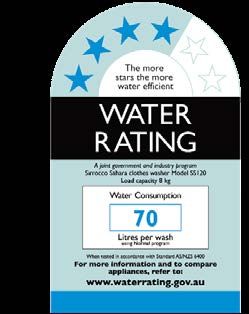
    star ratings. The more stars the better!               every load, and clean ducts annually. Your
•   Wash clothes in cold water to save energy from         clothes will dry faster, using less energy.
    heating water. Use laundry powder suitable for     •   Iron low temperature fabrics first to reduce the
    washing in cold water to get the best results.         warm up time and switch the iron off before
•   Load your washer fully each wash. If you do not        finishing the last garment.
    have a full load, adjust the water level of your   •   Iron batches of clothing at the same time to
    machine to save on water and power.                    avoid wasting energy in reheating.
•   Use the sun to dry clothes when possible. An
    outdoor clothes line or an airer near a sunny
    window will do the job and also leave your
    clothes smelling fresh and less damaged by
    over-heating.

                                                                                                            13
14
In the bedrooms
Your bedroom might not consume as much energy            •   If your bedroom gets too hot in warmer months
as your living room or kitchen, but there are some           put up some reflective blinds or awnings outside
energy wasters which could be causing your energy            the windows.
bill to go up each month. While the savings may be       •   When using air conditioning, close your closet
smaller than other areas of your home, many small            doors so you don’t waste energy cooling an area
savings add up over time.                                    that doesn’t need it. The larger your bedroom
•   If you find yourself complaining of drafts during        is, the harder your air conditioner has to work to
    the winter, then it may be time to double-check          keep you cool.
    the seals around all of your bedroom doors and       •   Unplug your devices before you fall asleep so
    windows.                                                 you don’t waste electricity and avoid wearing
•   During colder months close your curtains well            down your device’s battery throughout the night.
    before bedtime, but open them to let in the          •   Use a power strip to make it easy to turn off
    warming sun during the day.                              electronics when you’re not using them.
•   Instead of running a heater overnight, try an        •   Bedside lamps mean you only light the room
    under blanket or extra bedding layer on top. If          where it’s needed. Use energy efficient bulbs
    you can’t bear getting out of bed in the cold, use       whenever possible rather than standard
    a timer to turn the heating on half an hour before       incandescent bulbs.
    you get up.
                                                         •   Switch off all lights as you leave each room and
•   During warmer months, use fans to move air               clean lamp shades and bulbs regularly to ensure
    around to reduce humidity and temperature                maximum light output.
    to a comfortable level. Most ceiling fans have
    a switch to reverse rotation for cooler months
    where it pulls warmer air down from the ceiling,
    keeping your bedroom comfortable without the
    need for a heater.

                                                                                                             15
In outdoor areas
When most people focus on ways to reduce their • Planting shade trees can dramatically improve
energy use, they typically focus on things they can the temperature control in your home. By
do inside their home; but there’s plenty of things you blocking the sunlight entering your windows,
can do to reduce energy use outside the home too. shade trees make your home more energy
• Install motion sensors and light sensing controls efficient and reduce the energy needed to cool
on security lighting to enable activation of your home.
lights only between dusk and dawn or use solar
garden lights.
• Use CFL spotlights or LED lamps in your
outdoor lights.
• Clean light fixtures regularly and keep vegetation
away from light fixtures.
• Consider installing a solar PV system. Solar
has become more efficient and less costly than
it once was, and for most consumers, going
solar actually offers substantial overall savings
especially if you take advantage of rebates and
incentives.
16Pools and spas
Backyard swimming pools and spas don’t just use • Use pool and spa covers to reduce evaporation,
water, they also use significant amounts of energy keep leaves and other debris out, reduce
and contribute significantly to your electricity bill. filtration and minimise the energy needed to
• For greatest efficiency, use an energy efficient clean your pool.
pool pump and timer. An energy efficient pump • Connect your pool and spa pumps to an off-peak
could save you up to 80% on your future pool tariff (Tariff 33). Doing so could cut your future
running costs. running costs by around 19%.
• Regularly clear the water inlet to the pool pump
to remove leaves and other objects which can
impact water flow and require the pump to work
harder.
1718
Lighting
Replacing your existing lights with more efficient       •   Fit timers and motion sensors in areas that are
options can help reduce your bill. Some good                 used rarely so your lights are only on when they
lighting ideas for you to consider:                          need to be.
•   Use natural lighting during the day.                 •   Install a skylight to allow natural light inside and
•   Use LED or CFL light bulbs. They use significantly       reduce the need for artificial lighting during the
    less energy, last 5-10 times longer and can save         day.
    $71 - $91 each year per household.                   •   Download the lightbulb saver app
•   Use dimmers to adjust artificial lighting as             (http://www.energyrating.gov.au/apps)
    natural light levels fluctuate.                          which provides handy tips about choosing the
                                                             right lighting for each room in your house.
•   Install task lighting in areas like near reading
    chairs, over kitchen benches, dining table and
    the bathroom vanity so you don’t waste general
    space lighting.
•   Turn off lights in areas of your home when the
    rooms are not in use.

                                                                                                             19
Cooling
Air conditioners use a lot of energy. Keep your cool • Close doors and windows in areas you want to
without breaking the bank. air condition, to ensure the cool air stays inside.
• Open your home to create cross breezes and use Don’t waste electricity usage and money cooling
ceiling fans to circulate air to keep you cool. areas not being used.
• Install the right sized air conditioner for your • Turn off your air conditioner when you leave the
space – consider how big the room is, what house.
direction the windows in the room face, and • Clean the filter pads and coils on your air
whether you have insulation in the ceiling. conditioner regularly to ensure it runs as
• For best efficiency, set your air conditioner to efficiently as possible.
24oC to 25oC.
20Heating
Space heating, although not required for long • Decide which rooms require frequent heating
periods, still represents up to 10% of energy bills. and cooling. Make sure they are well insulated
• When possible, wear warm clothes to keep warm and can be closed off from the rest of the house.
and reduce the need to use heaters. • If you have a reverse-cycle air-conditioner,
• Choose the right size heater to suit your room setting it to 18oC to 20oC in heat mode is the
and conditions and keep it in good operating most efficient way to heat your home.
order.
• Seal gaps around doors and windows to keep
draughts out. Unsealed draughts can account for
up to 25% of the heat lost from your home.
• If you use a heater, use it for short periods
of time and use a timer to turn it on and off
automatically.
2122
Hot water systems
The energy used to heat your water (e.g. for hot           •   Upgrade your old hot water system to a new
showers, in the kitchen and in the laundry) can make           energy efficient model with a high energy star
up a significant amount of the power used in your              rating, a heat pump or a solar hot water system.
household. A wise choice about which hot water             •   Solar hot water systems can reduce your
system you buy can make a substantial difference to            hot water bill significantly and they’re
your energy bill.                                              environmentally friendly.
•   Ask your electrician to connect your hot water         •   Turn off your hot water system when going away
    system to Tariff 33 to save on your water                  for more than a few days.
    heating costs.
•   Position your hot water system near where you
    use hot water the most, which may be your
    bathroom, kitchen or laundry. This can help to
    save water and reduce heat loss from pipes.
•   Insulate the hot water pipes running between
    the tank and your taps to further reduce heat
    loss from pipes.
•   Ensure you have the right sized system for the
    number of people in your home. If it’s too small,
    you could run short of hot water. Ask your local
    hot water specialist for help to get the right sized
    system for your needs.

                                                                                                            23
Understanding your energy use
Reducing your energy bill can be as quick and easy In the average home air-conditioners, hot water
as replacing products with a more energy efficient systems and refrigerators are the biggest energy
model. The average household has around 70 consuming appliances. By choosing energy efficient
different appliances and some of them have a appliances and using a few energy saving strategies,
significant impact on your bills. Every appliance you you’d be surprised how much more control you can
have costs money to run – some even continue to have over your energy use and cost.
use electricity when they’re plugged in and turned Knowing the real costs of running your household
off at the wall. appliances can help you manage your energy use.
Air conditioning and home heating
2% 15%
Water heating (hot water tank)
Lighting
Television 5% 40%
Cooking 5%
Fridge and freezer (standard size combined)
6%
Dishwasher, clothes washer and clothes dryer
6%
Other appliances (including computers, tablets,
gaming consoles) 21%
Source: Ergon Energy
24Kitchen Input watts Cost/hour* Cost/use* Cost/day*
Refrigerators
60-85L Bar Fridge 125 $0.34
140-220L Single Door (manual defrost) 150 $0.51
320-440L 2 Door Automatic (cyclic defrost) 320 $1.09
320-440L 2 Door (frost free) 400 $1.37
510-610L 2 Door (frost free) 519 $1.77
Bottle Water Dispenser 120 $0.48
Freezers
140-220L Chest 160 $0.44
250-340L Chest 250 $0.68
220L Upright 160 $0.55
300L Upright 250 $0.81
Cooking appliances
Oven 1800 $0.31
Grilling Element 1800 $0.31
Hot Plate – Small 1200 $0.14
Hot Plate – Large 1500 $0.17
Rangehood/Exhaust Fan 60 $0.02
Microwave Oven – 800W 1200 $0.40
Microwave/Convection – 2400W 2400 $0.41
Frypan 2000 $0.23
Deep Fryer 2000 $0.23
Crock Pot 320 $0.04
Breadmaker 550 $0.03
Toaster – 4 slice 1800 $0.03
Toaster – 2 slice 1200 $0.02
Sandwich Maker 1450 $0.03
Other kitchen appliances
Electric Kettle 2400 $0.04
Electric Jug 2400 $0.04
Food Blender 300 $0.05
Food Processor 600 $0.02
Coffee Maker 1070 $0.03
Dishwasher – Hot water 800 $0.23
Dishwasher – Cold water 2400 $0.27
Garbage Disposal 450 $0.02
25Entertainment Input watts Cost/hour* Cost/use* Cost/day* Television – Large Colour 100 $0.03 Television – Plasma 420 $0.12 Television – LCD 312 $0.09 Television – LED 110 $0.03 Pay TV Receiver Box 130 $0.04 Set Top Box – SD/HD 20 $0.01 Video Player/Recorder 80 $0.02 DVD Player 80 $0.02 Xbox 360 430 $0.12 PlayStation 3 – Original 830 $0.24 Xbox One 110 $0.03 Nintendo Game Cube 780 $0.22 Nintendo Wii 60 $0.02 Stereo – Mini System 60 $0.02 Stereo – Modular Unit 120 $0.03 Bathroom Input watts Cost/hour* Cost/use* Cost/day* Exhaust Fan 75 $0.02 Bathroom Light/Heater – 4 lamps 640 $0.18 Heated Towel Rail 200 $0.02 Hair Dryer 1200 $0.27 Hair Curler 600 $0.14 Electric Razor 40 $0.01 Spa Bath – Pump 1860 $0.53 Spa Bath – Heater 6000 $1.37 Laundry Input watts Cost/hour* Cost/use* Cost/day* Twin Tub 350 $0.10 Small Top Load Automatic 500 $0.14 Large Top Load Automatic 600 $0.17 Front Load 600 $0.17 Clothes Dryer – 5kg 2400 $0.68 Iron 1400 $0.24 26
Home office               Input watts   Cost/hour*   Cost/use*   Cost/day*
PC & Monitor                 500          $0.18
Laptop Computer              168          $0.05
Modem                         16                                   $0.11
Photocopier                  800          $0.18
Phone Charger                 48          $0.01
Laser Printer                572          $0.07

Bedroom                   Input watts   Cost/hour*   Cost/use*   Cost/day*
Water Bed – Queen             80          $0.02
Electric Blanket              60          $0.02

General appliances        Input watts   Cost/hour*   Cost/use*   Cost/day*
Vacuum Cleaner               1500         $0.43
Clock Radio                     5         $0.03
Aquarium Pump                  12                                  $0.08
Aquarium Heater                50                                  $0.17
Bottled Water Dispenser       120                                  $0.41
Sewing Machine                60          $0.01

Summer air conditioner    Input watts   Cost/hour*   Cost/use*   Cost/day*
1750W (6000 BTU)              700         $0.14
2000W (6800 BTU)              800         $0.16
2500W (8500 BTU)             1000         $0.20
3500W (12000 BTU)            1400         $0.28
4300W (14700 BTU)            1720         $0.34
5000W (17000 BTU)            2000         $0.40
6100W (21000 BTU)            2440         $0.49
6880W (23500 BTU)            2760         $0.55
15,600W (53300 BTU)          6000         $1.20

                                                                           27
Other cooling appliances Input watts Cost/hour* Cost/use* Cost/day* Evaporative Cooler – Portable 150 $0.04 Evaporative Cooler – Ducted House 1500 $0.43 Ceiling Fan 75 $0.02 Pedestal Fan 60 $0.02 Domestic sewerage treatment plant Input watts Cost/hour* Cost/use* Cost/day* Average Domestic Plant $0.07 $1.62 Reverse cycle heating Input watts Cost/hour* Cost/use* Cost/day* 1750W (6000 BTU) 700 $0.10 2500W (8500 BTU) 1000 $0.14 3800W (13000 BTU) 1520 $0.22 4700W (16000 BTU) 1880 $0.27 6300W (21500 BTU) 2520 $0.36 14300W (48800 BTU) 5500 $0.78 Other heating appliances Input watts Cost/hour* Cost/use* Cost/day* Radiator Heater – 2000W 2000 $0.57 Radiator Heater – 2400W 2400 $0.68 Portable Fan Heater – 2400W 2400 $0.68 Oil Filled Heater – 1200W 1200 $0.34 Oil Filled Heater – 2400W 2400 $0.68 Lighting Input watts Cost/hour* Cost/use* Cost/day* Motion Detector $0.01 Incandescent Light – 60W 60 $0.02 Incandescent Light – 75W 75 $0.02 Incandescent Light – 100W 100 $0.03 Compact Fluorescent Light – 18W 18 $0.01 Fluorescent Light – 36W 36 $0.01 Led Light Recessed – 9W 9 $0.002 Outdoor Spotlights – 150W 150 $0.04 Outdoor Sensor Light 60 $0.02 28
Pool equipment                                                            Input watts        Cost/hour*         Cost/use*     Cost/day*
Pool Filter – Tariff 11                                                        1000              $0.28
Pool Filter – Tariff 33                                                        1000              $0.22
Salt Chlorinator with Pool Filter                                              2000              $0.57
Outdoor Spa Heating                                                            6000              $1.20
Outdoor Spa Pump                                                               1860              $0.53
Sauna                                                                          4800              $1.37

 Other equipment                                                           Input watts        Cost/hour*         Cost/use*     Cost/day*
Avg. Residential Security System                                                45                                               $0.31
Garage Roller Door                                                             200               $0.06

 Garden appliances                                                         Input watts        Cost/hour*         Cost/use*     Cost/day*
Electric Lawn Mower                                                            2000              $0.57
Electric Whipper Snipper                                                        200              $0.06
Electric Blower                                                                 200              $0.06
Pond Pump                                                                        30              $0.01
Pump/Bore                                                                       746              $0.21
Pressure Pump                                                                   375              $0.11

 Domestic sewerage treatment plant                                         Input watts        Cost/hour*         Cost/use*     Cost/day*
Average Domestic Plant                                                         $0.07              $1.62

*Approximate costs calculated using Tariff 11 pricing as at 1 July 2017. Excludes supply charges and meter services charges.

                                                                                                                                         29
Look for the stars Choosing appliances that provide the best value for money is important – the cheaper option upfront isn’t always the cheapest in the long run. Buying appliances that are energy efficient may cost a little more initially, but they will save you money on running costs in the longer term. When shopping for appliances, look for the Energy Rating label. The label provides appliances a star rating depending on how much energy they use – the higher the star rating, the more efficient the appliance is. This makes it easy to see which products are most energy efficient and cheapest to run. For more information, visit www.energyrating.gov.au. 30
Useful links
For more energy efficient information and tips, check out:
•   Ergon Energy
    https://www.ergon.com.au/retail/residential/home-energy-tips
•   Energex
    https://www.energex.com.au/home/control-your-energy/save-money-And-electricity
•   QCOSS
    https://www.qcoss.org.au/energy-factsheets

Rebates/concessions
To further ease cost of living pressures for Queensland households, a range of electricity rebates and concessions are
available:
•   Electricity rebate
•   Energy efficient appliance rebate
•   Reticulated natural gas rebate
•   Home energy emergency assistance scheme
•   Electricity life support concession scheme
•   Drought relief arrangements
To find out more about eligibility and how to apply, visit: https://www.dews.qld.gov.au/electricity/rebates

                                                                                                                   31
You can also read


