INDONESIA 2020-2024 ENGAGING WITH - The University of ...
←
→
Page content transcription
If your browser does not render page correctly, please read the page content below
ENGAGING W ITH

IN DO N E S I A
           2020–2024
TA B LE O F CO N T E N TS

F ROM THE VIC E - C H ANC ELLOR                                 1

FO U N DATION S OF A
R E S IL IEN T PA RTNERSH IP                                    2

P RIOR ITIES FO R
CO LLA BORATION                                                 4

K E Y EN A BLERS                                                6

HE A LTHY COMMUNIT IES                                          9

S USTA IN A BL E GROWT H                                      13

P O LICY DESIGN AND GOVE RNANC E                              17

CULTU RA L EXC H ANGE
A ND MU TUA L UND ERSTANDING                                  20

CO NCLUSION : TH E LONG TE RM                                 24

    Professor Sally Smart, Vice-Chancellors Fellow, is one of Australia’s
    leading contemporary artists. Her project The Choreography
    of Cutting re-imagines and encapsulates a dynamic discourse
    between the historical and contemporary avant-garde, mapping
    multiple ideas, temporalities and space. With a deep affinity
    for Indonesia and its culture, Professor Smart has exhibited in
    Yogyakarta, Jakarta and Bali.

The front cover is from Smart’s 2017 exhibition in Yogyakarta. The Choreography of Cutting,
Prima Visione #4 was shown at the Office For Contemporary Art (OFCA) International.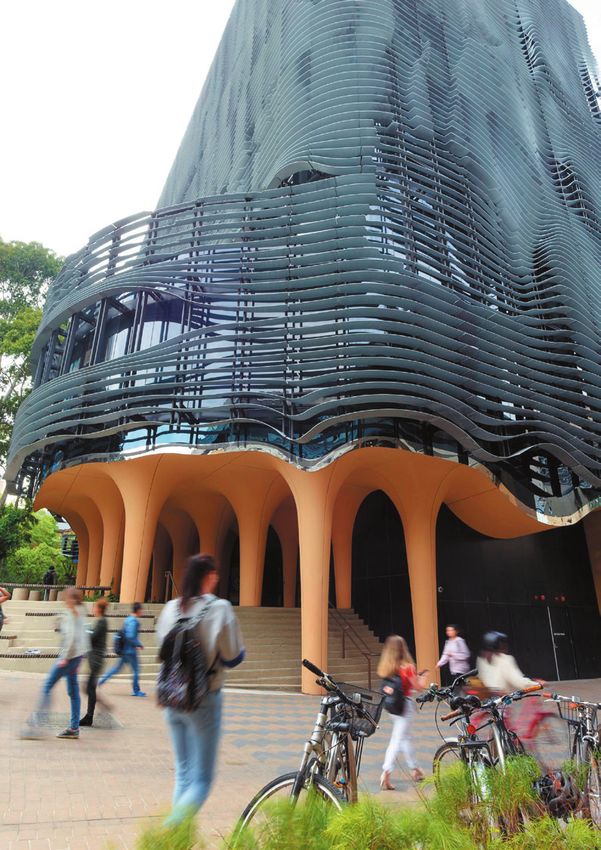
FRO M TH E V I C E - C H AN CE LLO R

                                                          Our partners are our anchor in Indonesia, providing
                                                          a channel for research and educational exchange
                                                          and the conduit through which we engage with the
                                                          broader Indonesian university community.

Indonesia is the world’s fourth most populous nation.                      The University of Melbourne aspires to lead the expansion of
It is a nation whose borders encompass diverse traditions                  educational and academic cooperation between Australia
– and is the largest Muslim-majority country in the                        and Indonesia, where possible using our bilateral ties as a
world. It is the biggest economy in Southeast Asia, the                    foundation for broader collaboration across the Indo-Pacific
sixteenth largest in the world, and has a leading role in                  region. In doing so, we build on a long history of collaboration.
the Association of Southeast Asian Nations (ASEAN).
                                                                           Indonesian students have been studying at the University of
Over the 70 years since proclaiming its independence,                      Melbourne for over 60 years. Starting from just a handful of
Indonesia has become an increasingly prosperous and                        students in the 1950s, students from Indonesia are our third
confident democracy. It has seen significant improvements                  largest cohort of international students and are a deeply
in the lives of its citizens: in the last 20 years infant mortality        valued part of our community. The diverse perspectives
has halved, and the percentage of adult Indonesians with at                they bring to the University help connect our institution
least a lower secondary education has more than doubled.                   and student community to our global and regional peers,
Indonesia is predicted to be the seventh largest economy                   enriching the educational and research environment on
in the world by 2030, and the fourth largest by 2050.                      campus. This impact continues after graduation: many of our
                                                                           alumni participate actively in the Indonesian or Australian
The 2017 Australian Foreign Affairs White Paper articulated                communities, whether in government, business, or academia.
the importance of the relationship between Australia
and Indonesia. Relations between our two nations have                      The University also enjoys partnerships with the leading
deepened in recent years through collaboration on the                      universities of Indonesia. Our partners are our anchor in
shared challenges and opportunities of the increasingly                    Indonesia, providing a channel for research and educational
inter-connected Indo-Pacific region. In March 2019, this was               exchange and the conduit through which we engage with the
cemented through the signing of the Indonesia-Australian                   broader Indonesian university community. Our academics are
Comprehensive Economic Partnership Agreement (IA-CEPA).                    working with Indonesian scholars on research with an impact
                                                                           on the priorities and needs of Indonesian development, and
Nevertheless, the full potential of this partnership has yet to            on the regional challenges that Indonesians and Australians
be realised. Educational and academic exchange is a powerful               share. Our students have the privilege of studying Indonesia at
force in deepening ties, and an opportunity for mutually                   first hand through co-taught intensive subjects. As we seek to
beneficial trade. The Indonesian and Australian governments                continue to deepen our connections in Indonesia our students,
identified this as a priority area for future collaboration in             alumni and university partners will continue to be our anchor.
August 2018. From the Joint Declaration on a Comprehensive
Strategic Partnership between Australia and the Republic of
Indonesia: “We commit to strengthen education and academic
cooperation between our two countries, particularly through
the expansion and deepening of Indonesian and Australian
studies as well as academic exchanges and joint research to
promote innovation and find solutions to shared challenges.”

                                                                                                       Engaging with Indonesia 2020–2024       1
FO U N DAT I O N S O F A
    RE S ILIE NT PART NE RS H I P

         Our partnerships in Indonesia are grounded in the mutually
         beneficial exchange of knowledge and ideas, and in the shared
         effort of translating knowledge into actions. The University
         of Melbourne benefits greatly from collaborations with
         Indonesia and is committed to making a positive contribution
         in return through research, education, and capacity building.

    Our engagement in Indonesia reflects the broader ideals of the University of Melbourne. We contribute to the
    capacity and wellbeing of international communities and institutions through collaborative research and teaching.
    In turn, international collaborations build the University’s capacity to produce research that speaks meaningfully to
    the problems of our community and region.

    A commitment to the production and sharing of knowledge informs our work with policy makers, civil society
    actors and university leaders in both Indonesia and Australia.

          OUR PARTNERSHIP                                                          AT THE END OF FIVE YEARS WE
          ASPIRATIONS                                                              WILL EXPECT TO SEE
          •    Work with Indonesian researchers to                                 •    Increased numbers of University of
               produce high quality research with an                                    Melbourne undergraduate students
               impact on the most difficult problems                                    studying Indonesia or undertaking
               facing Indonesia and the world.                                          mobility experiences in Indonesia.
          •    Contribute to developing a world-class                              •    An increase in joint research
               higher education system in Indonesia                                     projects and publications with
               through capacity building and exchange.                                  Indonesian partner universities.
          •    To be one of the top destinations for                               •    Expanded reach of Indonesia-
               the best Indonesian students.                                            focused public engagement channels,
                                                                                        with more Indonesian voices.
          •    To be a pre-eminent source of Indonesia
               expertise, with an impact on policy                                 •    More Indonesian students choosing
               design and public debate.                                                the University of Melbourne
                                                                                        for study and research
          •    Produce graduates who understand
               Indonesia and Australia, and work to                                •    More joint projects in Indonesia with
               promote mutual understanding.                                            the Australian Government and with
                                                                                        partners from other sectors.

2   Engaging with Indonesia 2020–2024
Launching their book, ‘Jurnal PhD Mama’
are Dr Kanti Pertiwi, Honorary Fellow (right)
and Dr Hani Yulindrasari (left), PhD candidate
in the Faculty of Arts. They are members of
a strong alumni community in Indonesia,
numbering over 3000.

                     Engaging with Indonesia 2020–2024   3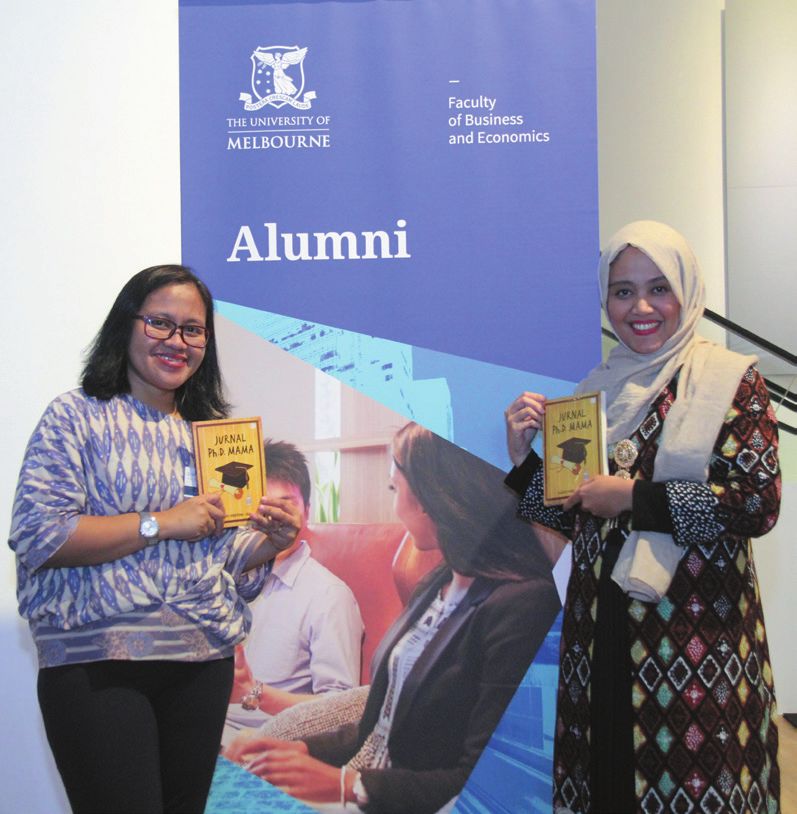
PR IOR I T I E S FO R
    CO LLA B O RAT I O N

                                           Melbourne School of Engineering is collaborating with partners from Universitas Indonesia and
                                            Universitas Gadjah Mada to shape the future of infrastructure development. It is one of many
                                                  relationships between our countries, focusing on sustainable growth across the region.

    Indonesia is working on challenging reforms to health,                 The University of Melbourne is seeking to deepen our support
    sustainable development and governance. It is also increasingly        for capacity building initiatives and research collaboration in
    playing a leadership role on an international stage – notably          the country, building on our existing strengths in working with
    through its participation in the UN Sustainable Development            Indonesian partners on curriculum development, research,
    Goal process, and through leadership in the ASEAN region.              research training, and the collaborative design of evidence-
                                                                           based policy. The University has specific expertise in key
    Underpinning these aspirations is the construction of an               areas of interest identified in RIRN, but we also take pride
    internationally competitive higher education system, supporting        in being a world-class comprehensive research university
    a generation of ‘smart and competitive’ Indonesians to lead an         with deep connections in, and knowledge of, Indonesia.
    innovative, sustainable and prosperous nation. To support this
    ambition, the Indonesian Government launched a                         We consider our focus on multi and inter-disciplinary
    Master Plan for Research (RIRN). RIRN is focused on                    perspectives to be a strength, supporting research and policy
    strengthening Indonesia’s capacity to meet domestic and                collaborations that are grounded in an understanding of the
    regional challenges internally through world-class research            communities for whom they are intended. This includes an
    that speaks to Indonesia’s future needs, and through effective         emphasis on developing research within and between the
    translation for policy makers.                                         sciences and social sciences and the humanities disciplines.

4   Engaging with Indonesia 2020–2024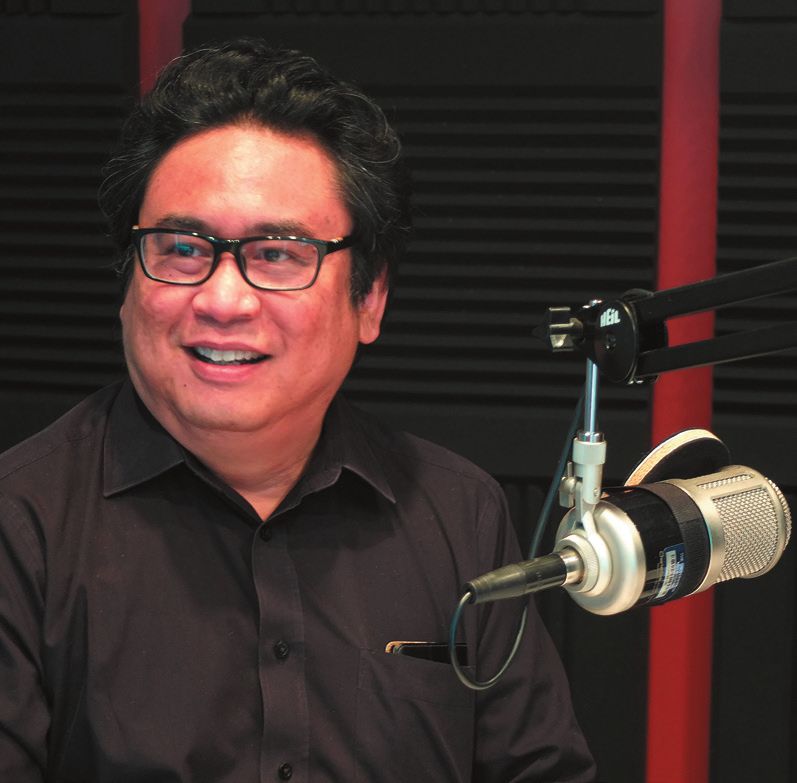
We will work with Indonesian partners
to deliver on our shared commitment to…

  HEALTHY COMMUNITIES
  •   Pivotal role in the health security partnership between Indonesia and Australia
  •   Vision for interdisciplinary ‘One Health’ research that is replicable across Indonesia and the broader Indo-Pacific
  •   Training options for policy makers to support health system strengthening
  •   Exploring expansion of the successful Bachelor of Medical Science program
  •   Reducing the burden of non-communicable diseases on Indonesia’s ‘Golden Generation’.

  SUSTAINABLE GROWTH
  •   New joint research initiatives in agriculture and food sustainability
  •   Generating community benefits from natural resource wealth
  •   Workshops for policy makers managing the challenges of rapid urbanisation
  •   Expanded professional training relating to infrastructure and project finance.

  POLICY DESIGN AND GOVERNANCE
  •   Build deeper understandings of law and policy reform processes in Indonesia and increased
      executive education offerings for governance, public policy and regulation
  •   New coursework and research seminars on migration, forced migration, mobility and diaspora
  •   University administration and excellence training on a larger scale.

  CULTURAL EXCHANGE AND MUTUAL UNDERSTANDING
  •   Fostering understanding of Indonesian society and culture
  •   University of Melbourne graduates who are Indonesia-literate and engaged
  •   Support for creative collaborations and global cultural flows.

                                                                                          Engaging with Indonesia 2020–2024   5
K E Y ENABL E RS

    APPOINTMENT OF                     MORE ENGAGEMENT                    UNIVERSITY OF                     MORE POLICY
    ASSISTANT DVC                      WITH ALUMNI                        MELBOURNE OFFICE                  COLLABORATION
    INTERNATIONAL                      Many of our graduates return       IN INDONESIA                      The University will continue to
    (INDONESIA)                        to participate actively in         The University of Melbourne’s     develop avenues for thought
    Professor Vedi Hadiz is Director   Indonesian society. Our PhD        Indonesia office is the first     leadership and capacity building
    and Professor of Asian Studies     graduates are potential partners   point of contact for many         in both Indonesia and Australia,
    at the Asia Institute. An          for the University’s researchers   Indonesian students – providing   including:
    Indonesian national, Professor     back in Melbourne, creating a      prospective students with         • Roundtable series with the
    Hadiz was previously Professor     foundation for further growth      information about the               Department of Foreign Affairs
    of Asian Societies and Politics    in collaborative research.         University and the application      and Trade.
    at Murdoch University’s            They can help us communicate       process, and facilitating
    Asia Research Centre and           with and learn about fast-         Pre-Departure Briefings for       • Bespoke short courses for
    Director of its Indonesia          changing communities in            accepted students. The office       Indonesian policy makers
    Research Programme.                Indonesia. Moreover, many          also provides invaluable advice     on Indonesian Government
                                       continue to have an interest       and support to travelling           priorities.
    In 2018, Professor Hadiz was       in the University. We intend       researchers.                      • Closer communication with
    appointed as Assistant Deputy      to strengthen links with
                                                                          Over the next five years,           Indonesian media.
    Vice-Chancellor International      our alumni through:
    (Indonesia). In this role,                                            the University will explore       • Inclusion of Indonesian
                                       • Expanded program of
    Professor Hadiz coordinates                                           an expansion of the office          voices in all our engagement
                                         academic lectures and
    priorities from across the                                            to support our plans for a          channels, including the ‘Ear
                                         visits from senior University
    University to support deeper                                          growing program of academic         to Asia’ podcast.
                                         staff and officials.
    collaboration. He travels                                             engagements, alumni events
                                                                          and executive education.          • Active planning across
    regularly to Indonesia to          • Post-doctoral workshops for
                                                                                                              engagement channels
    represent the University.            Indonesian PhD graduates
                                                                                                              to amplify the impact of
                                         who have returned to
                                                                                                              University research.
                                         Indonesia, focusing
                                         on continued capacity
                                         building as well as the
                                         creation of research links.
                                       • Planned postdoctoral
                                         programs in the STEM
                                         and Arts disciplines.
                                       • Targeted support for
                                         alumni who are engaged
                                         in Indonesian public life.

6   Engaging with Indonesia 2020–2024
Professor Vedi Hadiz recording an episode
                                                                                                 of the University’s Ear to Asia podcast

Indonesia at                   Ear to Asia podcast                Talking Indonesia                    Asialink
Melbourne blog                 (Asia Institute)                   podcast
                                                                                                       Asialink is Australia's leading
The Indonesia at Melbourne     Ear to Asia talks with             Extended fortnightly interviews      centre for promotion of public
blog was launched in July      researchers who focus on Asia –    with experts on Indonesian           understanding of the countries
2015 to present analysis,      in all its diversity of peoples,   politics, foreign policy, culture,   of Asia and of Australia's role in
research and commentary on     societies and histories. It        language and more.                   the region. Its strong existing
contemporary Indonesia from    regularly features in-depth                                             links in Indonesia offer an
academics and postgraduate     analysis on Indonesia.                                                  opportunity for broadening
students affiliated with the                                                                           University research
University of Melbourne.                                                                               engagement channels.

                                                                                                 Engaging with Indonesia 2020–2024          7
“Studying at Melbourne has opened
the possibility of me pursuing
research before going into medicine.”
Vina Quinnarva
Second-year Bachelor of Biomedicine
student from Jakarta, Indonesia
8 Engaging with Indonesia 2020–2024H EA LT HY CO MMU N I T I E S
Why? What?
Indonesia’s investment in the health of its people has
Advancing health security
steadily increased over the last twenty years. In 2014,
the Indonesian government established a universal social Infectious diseases present major global challenges and
health insurance scheme. This scheme is already the world’s require international collaboration to solve. Both Australia and
largest in population terms and is intended to massively expand Indonesia are seeking to play productive roles in building regional
access to healthcare among the Indonesian population. preparedness and responsiveness to health security and related
challenges. This includes a growing global leadership role for
This expanded investment and a young population Indonesia, which hosted the most recent Global Health Security
offers a once-in-a-generation opportunity to address Agenda (GHSA) High Level Ministerial Meeting in November 2018.
the dual challenges of noncommunicable disease and
infectious disease in Indonesia, and calls for world- OW: The University of Melbourne is a world leader in
N
leading research in both Indonesia and worldwide. research on several infectious diseases that impact on both the
Australian and Indonesian populations. The Doherty Institute, a
collaboration between the University and the Royal Melbourne
Hospital, supports a Dengue Fever research project underpinned
“The median age of the Indonesian by close collaborative links with colleagues in Indonesia, Vietnam,
population is 29; over half of the and Thailand.
population is less than 30 years old. In addition, the Murdoch Children’s Research Institute work in
How this generation of children and child and adolescent tuberculosis and the rotavirus vaccine are
young people are supported to be underpinned by collaborative engagements with colleagues
healthy and engaged in learning, will across the region. The RV3 Rotavirus Vaccine Program at the
Murdoch Children’s Research Institute aims to develop a low-cost
determine Indonesia’s future population
neonatal vaccine to prevent rotavirus disease from birth: a trial
health and economic wealth.” of the immunogenicity and efficacy of the vaccine is currently
Professor Susan Sawyer underway in Indonesia, in collaboration with colleagues at
Chair of Adolescent Health Universitas Gadjah Mada (UGM).
Department of Paediatrics
NEXT: The forthcoming Australia Indonesia Health Security
Partnership demonstrates the deepening commitment
to collaboration between the Indonesian and Australian
governments to tackle the shared problem of infectious
disease. The Partnership aims to “strengthen Indonesia’s
capacity to prevent, detect, and respond to infectious
disease outbreaks to increase national, regional, and global
health security.” Given the co-existence at the University
of Melbourne of world-leading expertise in infectious
disease and in Health System Strengthening, we see a great
opportunity to play a pivotal role in this partnership.
Engaging with Indonesia 2020–2024 9H EA LT H Y CO M M UN I TI E S ( CONT INUED )
One Health Health system strengthening
The ‘One Health’ (or Planetary Health) approach to research is The University of Melbourne’s Nossal Institute for Global Health
based on a recognition of the interconnectedness of the health Research, established in 2006, is dedicated to advocacy for public
and wellbeing of humans, animals, and the environment. health in vulnerable communities, through long-term projects in
Asia and the Pacific.
NOW: The Faculty of Veterinary and Agricultural Science (FVAS)
uses a One Health approach to undertake innovative agricultural NOW: The Nossal Institute has been engaged by UNICEF
and veterinary research. In a recent example, the FVAS’ to develop and deliver a learning program to improve UNICEF’s
Asia Pacific Centre for Animal Health was awarded funding for capacity in Health Systems Strengthening (HSS). The program
a collaborative research project on significant poultry disease emphasises HSS knowledge and practical skills and aims to
outbreaks in Indonesia. Working with poultry experts at provide a solid foundation for improvements to health systems
University of Gadjah Mada (UGM), FVAS researchers developed in countries where UNICEF work.
diagnostic technologies suitable for use in UGM labs.
NEXT: The Nossal Institute is developing a specialised
NEXT: The University of Melbourne’s Doherty Institute, Massive Open Online Course (MOOC) in HSS for development
the Faculty of Veterinary and Agricultural Science, partners, government colleagues and general public.
the Faculty of Medicine, Dentistry and Health Services, and There is an opportunity for further growth in this area that
the Nossal Institute are collaborating on development of could translate into innovative activities in Indonesia.
a multi-disciplinary vision to guide One Health research
across the University. This will enhance the quality of our
partnerships with Indonesia in this area.
“We aim to optimise diagnosis of diseases compromising
the health, welfare and productivity of poultry in Indonesia
which can (in turn) affect human health and nutrition.”
Dr Nadeeka Wawegama
Research Fellow and Project Leader, One Health
10 Engaging with Indonesia 2020–2024Bachelor of Medical Science (BMedSci) program Reducing the burden of
The BMedSci program is a tailored one-year research training non-communicable disease
initiative for undergraduate medical students. The University of The University of Melbourne’s researchers have deep expertise in
Melbourne BMedSci is unique and combines coursework with preventative interventions and strengthening for public health,
a three-month clinical placement whereby students are placed primary care, mental health and adolescent health.
with a senior clinician in a clinical speciality of their interest
at one of our teaching hospitals. Students also have the option NOW: Our depth of expertise in key aspects of non-communicable
of completing a biomedical research project stream in a disease prevention and management provides an opportunity
research laboratory. to engage on research questions likely to determine Indonesia’s
future health and resilience. One area of particular interest is
NOW: BMedSci and Faculty of Medicine, Universitas Indonesia adolescent health. University researchers led the Health Cluster in
(FKUI) have partnered since 2002 to deliver this research training the first phase of the Australia Indonesia Centre’s (AIC) activities,
to over 350 Indonesian medical students. University of Melbourne working in Indonesia to build capability in preventing non-
is the founding partner for this program and nearly 20 students a communicable diseases among Indonesia’s ‘Golden Generation’.
year participate in the BMedSci program. The project was jointly delivered with colleagues in Australia and
Indonesia. Although AIC is no longer involved in this project, the
NEXT: The University believes there is an opportunity University of Melbourne recognises the substantial importance
to connect with BMedSci alumni, including building an of the work and is providing direct support for its final phase.
engaged alumni network and hosting regular events in
Indonesia. There is also the prospect of expanding the The Nossal Institute can play an important facilitatory role
delivery of the BMedSci program with other universities in linking expertise within the Faculty of Medicine, Dentistry
in Indonesia and the region. and Health Sciences with Indonesian and international
stakeholders through joint projects and the development of
professional training opportunities. The Institute, alongside the
University's School of Population and Global Health are leading
an ARC-funded cross-disciplinary research team which aims to
understand Indonesian women’s experience of cervical cancer,
and the role of the Indonesian health system in contributing
to prevention and care. The Nossal Institute also supports
professional development programs of potential interest to
Indonesia stakeholders, such as the recent short course on
‘Non-Communicable Disease and Global Health’.
NEXT: The University sees an opportunity to expand
collaborations through more joint projects, exploring
pathways for talented students in Indonesia to study and
receive research training. These students will be empowered
to tackle the issues surrounding non-communicable diseases
in both countries.
Engaging with Indonesia 2020–2024 1112 Engaging with Indonesia 2020–2024
SUSTA I NABL E GRO WTH

Why?                                                                 What?
Indonesia is home to striking natural wealth, with forest covering
                                                                     Agriculture and food sustainability
more than half its land mass. As the nation’s strong economic
growth drives rapid urbanisation and increased demand for            The University of Melbourne has expertise in agriculture and food
energy, the Indonesian Government has sought to pursue a             sustainability spread across multiple faculties including the
‘green growth pathway’. The immediate challenges are threefold:      faculties of Science, Veterinary and Agricultural Sciences,
                                                                     Engineering and Arts.
• Indonesia expects to have 63 per cent of its population
  living in cities by 2025 and is seeking to ensure                  NOW: The Faculties of Science and Veterinary and Agricultural
  that rapidly expanding urban environments are                      Sciences are internationally recognised for research excellence
  sustainable and inclusive for new residents.                       and strong links to industry. They aim to make a difference
• Recognising that Indonesia’s agricultural and mineral              on global issues such as food security for a rapidly growing
  wealth will continue to be important to economy, the               population. Faculty of Veterinary and Agricultural Sciences
  Indonesian Government has committed to supporting                  researchers have collaborated in Indonesia on a number of
  sustainable growth in these industries, which supports             projects related to crop productivity and other agricultural issues,
  a gradual movement further up the global value chain.              while the Faculty of Science is host to projects of high relevance
  Supporting greater self-sufficiency in food and energy is a        to Indonesia, including the development of iron-enriched rice to
  priority, as is linking remote resource-rich regions to global     combat human malnutrition.
  markets in a way that ensures the benefits of Indonesia’s
  resources are funnelled back into its poorest communities.           NEXT: The forthcoming establishment of a new cross-
                                                                       disciplinary institute focused on Plant and Soil Science,
• The world’s largest archipelago needs some of the world’s
                                                                       led by the Faculties of Science and Veterinary and
  most innovative infrastructure policy solutions. In addition to
                                                                       Agricultural Sciences, represents a novel opportunity to
  the complexity of Indonesia’s geography and its high incidence
                                                                       deepen existing research collaborations with Indonesia
  of natural disasters, policy makers face significant challenges
                                                                       and explore new initiatives. The Institute will engage with
  in identifying funding for needed infrastructure in a highly
                                                                       international partners, and several complementary bodies
  constrained fiscal environment.
                                                                       of knowledge in Indonesia have been identified as targets
                                                                       for future collaboration.

    “One of the greatest challenges of the twenty-
    first century is the endeavour to secure
    global prosperity without placing excessive
    demand on the Earth’s natural resources and
    without jeopardising the climate system.”
                                       Research at Melbourne:
                         Ensuring excellence and impact to 2025

                                                                                                 Engaging with Indonesia 2020–2024          13
SUSTA I N ABL E GR O WTH ( CONT INUED )
Generating community benefits • University of Melbourne researchers from the Melbourne
from natural resource wealth School of Engineering and Faculty of Science worked with the
East Java Environmental Protection Authority to develop a
The University of Melbourne has strong cross-faculty expertise new method for evaluating the toxicity of discharges into the
in energy, water, minerals, and forestry (the University is a core rivers of East Java and the safety of drinking water. As the East
partner in the Energy Transition Hub), with scholars within the Java EPA’s analytical capacity was limited, researchers worked
Faculty of Science and Melbourne School of Engineering already to develop a new higher order regulatory framework that
at work on some of the most pressing questions for Indonesia. reduced the need for expensive analytics and allowed officials
to cheaply and efficiently assess the toxicity of river water.
NOW: The University has developed expertise on sustainable
energy generation and resource exploitation in Indonesia, • In the Melbourne School of Engineering, researchers are using
including energy access for remote communities and recent advances in renewable energy and energy storage
responsible stewardship of forests to support production technologies in collaboration with Universitas Gadjah Mada to
of sustainable and high-quality forest products. deliver promising and reliable energy management solutions
to operate in remote communities under near off-grid
• The Sustainable and Renewable Forest Products Group conditions. For energy engineering, university researchers
aims to create knowledge and build capacity in innovative worked with Institut Pertanian Bogor and Indonesia’s Agency
uses of sustainable timber products. The group is involved for Assessment and Application of Technology (BPPT) to
in multiple research projects in Australia and Southeast successfully harvest energy from waste and forest biomass.
Asia and participates actively in international aid projects • Both the Faculty of Arts and the School of Geography in the
through the Australian Centre for International Agricultural Faculty of Science have several scholars undertaking research
Research, including in Indonesia, where a recent project in Indonesia on natural resource management use, and
focused on value adding in plantation timber. SEFS forest governance. A current project within the School of Geography
ecosystem management researchers are also collaborating explores the impact of climate change on governance of
with Indonesia’s Ministry of Environment and Forestry natural resources, with a particular focus on conflicts over
to build capacity in forest research and specifically in access to water.
the measurement and reporting of greenhouse gas
emissions from land use change. SEFS also recently
NEXT: The University sees an opportunity for expanded
completed a research collaboration with Bogor Agricultural
collaboration in both executive education and collaborative
University to identify biomass energy options to assist
research. Successful recent coursework provides a model for
communities remote from Indonesia’s electricity grid.
further expansion. In 2017, SEFS researchers collaborated
with the Food and Agriculture Organisation of the United
Nations and Global Forest Observations Initiative on delivery
of a two-week REDD+ course on Forestry Measurement and
Reporting for 31 Indonesian participants.
14 Engaging with Indonesia 2020–2024Design for rapid urbanisation Resilient infrastructure and project finance
Researchers at the University of Melbourne are highly engaged Melbourne School of Engineering (MSE) has long-standing and
in the unique challenges of rapid urbanisation in the Indonesian impactful collaborations with leading Indonesian universities,
archipelago. The Faculty of Architecture, Building and Planning with a strong focus on infrastructure development and its
(ABP) has several scholars interested in Southeast Asian proximate challenges including financing, project management,
architecture, planning, social geography and urbanism. These and natural disaster resilience. MSE has also forged strong
researchers are complemented by scholars in the Melbourne relationships within the Indonesian Ministry of National
School of Engineering (MSE) working on transportation and Development Planning (Bappenas) especially in the training
governance challenges associated with new and growing cities. and development of key personnel involved in development of
policies and strategies for financing and developing projects.
NOW: Melbourne School of Design (MSD) is continuing to
develop its strong offering of research and teaching and learning NOW: Recent projects include studies into policy and
opportunities in Indonesia, building especially on expertise finance of infrastructure, transport, disaster management
in urban form and informal urbanism. In late 2019, MSD will and infrastructure asset health monitoring.
reconvene its Travelling Studio in Indonesia in collaboration with
Institut Teknologi Bandung (ITB) and the University of Stuttgart. Researchers at MSE undertook significant study in Indonesia on
the influence of ports on the cities they typically adjoin. It was
At the same time, MSE colleagues have continued their own conducted in collaboration with leading Indonesian universities,
collaboration with Smart City research counterparts in ITB, and involved partnership with Indonesian and Australian
with whom MSE presented a joint workshop ‘Australia– government agencies, Indonesian and international companies
Indonesia Joint Workshop on Smart Cities’ in Bandung, and investment houses, and port terminal operators in Sulawesi,
Indonesia. The workshop identified major challenges in Surabaya, and Jakarta. Through the program, MSE offered PhD
transportation, healthcare and governance and MSE is continuing student exchanges, and research work involving 15 students from
to pursue further collaborative research in these areas. Australia and more than 10 from Indonesia. The collaborative
relationships developed through the project continue today.
NEXT: Due to strong demand from academic and industry
MSE researchers have also been working with Indonesian
collaborators, both MSE and ABP are exploring options to
partners on disaster management and structural health
expand offerings of professional and executive training.
monitoring for civil infrastructure, working closely with the
For example, ABP is exploring expanded post-professional
Ministry of Land Administration, Public Works, consulting firms,
development opportunities in heritage conservation for
university partners, and local cement and concrete suppliers.
the professional industry, building on existing workshop
program offered by MSD’s Australian Centre for Architectural
History, Urban and Cultural Heritage. Continuing to bring NEXT: Due to strong demand from its partners, MSE is
scholars and civil servants to the University of Melbourne continuing to develop its support for capacity building and
for graduate study is also a priority, and we are exploring professional training in parallel with continued research on
options to secure funding for more PhD places in key areas of infrastructure development. Notable examples of work in
interest to university and agency partners. progress include capacity building in land administration
and public-private partnerships for infrastructure finance.
On the learning and teaching front, the School of Computer
and Information Services has signed an articulation
agreement with Universitas Indonesia to collaborate on
Master’s level teaching in IT.
Engaging with Indonesia 2020–2024 15The Faculty of Arts has been
engaged in developing research
and workshops with policy
makers across Indonesia, with a
focus on strengthening capacity
for policy development. It’s just
one example of the growing
partnerships between the
University of Melbourne and our
colleagues across Indonesia.
16 Engaging with Indonesia 2020–2024P O LICY DE S I GN AN D GOV E RN AN CE
Why? Examples include:
• In November 2018, the Faculty of Arts hosted a conference,
The Australian Foreign Policy White Paper, released in 2017, focusing on ‘Indonesia’s inequalities’, bringing together
recognises Australia’s partnership with Indonesia as of ‘first key researchers and policy makers in Indonesia, Australia
order importance’. Noting Indonesia’s leadership role in and the region. Areas of discussion included growing
Southeast Asia, the Australian Government committed to economic inequality, significant sub-national variations
working with Indonesia to shape the regional order and in development and social outcomes, inequalities
solve shared problems – both international and domestic. in access to services such as health care, disability
Within Indonesia, the priorities identified by the National and education, and the politics of inequality.
Long-Term Plan include improved standards of economic and • The Faculty of Business and Economics is undertaking
social governance, as well as raising the quality of human capital research in corporate governance and development
through development of a quality higher education system. economics with a focus on Indonesia and the wider
Southeast Asian region.
• The School of Computer and Information Systems (CIS) has
undertaken work in Indonesia, focused on IT platforms and
“We remain committed to consulting enabling sustainable digital infrastructures with projects
closely on key issues and working together on Information Systems Enabled Capabilities Development
on regional challenges. We will be in Sustainable Supply Chain Management. They also
stronger if we tackle challenges together.” completed an Indonesian healthcare project on the Digital
Transformation of Human-Centered Service Ecosystems.
Joint Declaration on a Comprehensive
• A current project on Women’s Collective Action and
Strategic Partnership between Australia
Village Law has received funding from the Australian
and the Republic of Indonesia
Department of Foreign Affairs and Trade and will be
conducted in collaboration with Universitas Gadjah Mada.
NEXT: The Faculty of Arts has been actively engaged in
What? developing research and short-course workshops with policy
makers and NGOs in Indonesia, with a focus on evidence-
Governance, public policy and regulation based public policy and strengthening capacity for policy
development. Recent examples include a collaboration
The Indonesian Government aspires to support ‘social and with the Melbourne School of Professional and Continuing
developmental equality among all people and all areas Education (MSPACE) for delivery of ‘Executive Education
in the country’ by 2025. Expanded access to law, justice, in Policy Analysis and Strategic Planning for Community
and economic opportunity, especially for women, is Level Poverty Alleviation’, supported by the Australian
an important plank of Indonesia’s aspirations. Government. Arts has also worked with the Knowledge
Sector Initiative through the Nossal Institute for Global
NOW: The University of Melbourne has significant research Health. These programs offer a promising model that can
capacity in areas of Indonesian development, social protection, be expanded to leverage a broader range of experts in areas
corporate social responsibility, resource conflict, foreign such as social protection, quality of education, infrastructure
policy and politics. The Melbourne Law School’s Centre for financing and development, and inclusive growth policies.
Indonesian Law, Islam and Society is the only centre outside
Indonesia dedicated to research on the Indonesian legal
system. Its academics also often work with Australian and
Indonesian Government stakeholders on research projects.
Engaging with Indonesia 2020–2024 17PO LICY DE S I GN AN D GOV E RN AN CE
(CONTI N U E D )
Migration, forced migration, mobility and diaspora University administration and excellence
The management of displaced populations is one of the The Indonesian Government aims to develop a world-class
most complex and vexing policy issue facing the Australia- higher education system by 2025. The University of Melbourne
Indonesia relationship. Indonesia’s exposure to global is contributing to this process through capacity-building
refugee flows is closely tied to Australia’s, and the two activities with our Indonesian partner universities.
countries co-chair the Bali Process on People Smuggling,
Trafficking in Persons and Related Transnational Crime. NOW: Faculties currently conduct a broad suite of
activities including curriculum design, research training,
NOW: Growing bodies of expertise on migration and statelessness and PhD places. Current examples include:
provide a significant opportunity for the University to expand its
engagement on these urgent issues, especially through public • The Faculty of Architecture, Building and Planning has
engagement and high quality educational offerings for policy identified the Bandung Institute of Technology (ITB) as a key
makers. In addition, the Faculty of Arts has a complementary strategic partner. It is supporting this commitment through
depth of expertise in migration and diaspora in the Asia-Pacific. funding with doctoral training for ITB academic staff, joint
Our researchers are currently engaged in a collaborative research research projects, and extended visits by academic staff.
project on state frontiers and conflict, drawing on comparative • The Faculty of Arts has developed tailored professional
research from Indonesia and Myanmar. Research partners in development workshops focused on academic writing
Indonesia include Universitas Gadjah Mada. at the request of colleagues in the Faculty of Social
and Political Sciences at Universitas Gadjah Mada.
NEXT: The recent establishment within the Melbourne Law These workshops ran successfully from 2018–2019
School of the Peter McMullin Centre on Statelessness reflects and have been extended through to 2020.
the depth of the University's expertise in statelessness,
migration and refugees. The Centre is leading a project on NEXT: There is growing interest in Indonesia in university
statelessness and international refugee law and delivered governance reform. A recent executive education workshop
the inaugural Statelessness Intensive in February 2019, using on university governance and reform in 2018 for staff
case studies from the Asia Pacific region, including Indonesia, from the Faculty of Administrative Science at Universitas
to provide participants with the skills and practical tools to Indonesia may provide a model for delivery of capacity
understand and address the problem of statelessness. building on a larger scale than has been possible to date.
18 Engaging with Indonesia 2020–2024Students from Melbourne School of Design
are working with colleagues from Bandung
Institute of Technology to develop new
approaches for balancing urban dreams
with complex socio-spatial reality.
Engaging with Indonesia 2020–2024 19CU LT URAL E XC HAN GE
AN D MU T UAL U N DE RSTAN DI N G
Why? What?
The peoples of Australia and Indonesia have a long and
Fostering understanding of
rich history of exchange, dating to the trading connections
between the people of South-West Sulawesi and the Indonesian culture and society
Indigenous communities of Northern Australia in the 17th The University of Melbourne has one of the largest concentrations
century. Building on this history through cultural exchange of Indonesian scholars in Australia and is a national leader in
and greater mutual understanding will be essential to the research on many aspects of Indonesia’s culture and society.
ongoing efforts of the two nations toward a resilient and There is an urgent need for greater insights into the challenges
respectful partnership. The University can play a substantial and complexities of modern-day Indonesia. Indonesia is not
role in this process. Support for the exchange of knowledge, only the world’s third largest democracy, but also one of the
culture and ideas is fundamental to the University’s mission. world’s newest. Its trajectory over the coming decade is likely to
have a lasting impact on our regional and global community.
Professor Jimly Asshiddiqie presents Melbourne Law School’s Distinguished Asian Lecture 2015, hosted
by the University’s Centre for Indonesian Law, Islam and Society (CILIS). Through research, teaching and
public engagement, CILIS is devoted to the study of Indonesian law and Islamic legal studies.
20 Engaging with Indonesia 2020–2024NOW: The University of Melbourne’s Indonesia experts are NEXT: In 2019, the University launched the Indonesia
actively engaged in research on some of the most pressing issues Democracy Research Initiative, building on the University’s
facing the Indonesian polity. In addition, the University supports substantial existing expertise on Indonesia by catalysing
specific fora to convene researchers and students with an interest new interdisciplinary partnerships on key areas of politics,
in Indonesia, alongside facilitating visits from a broad range of rights, and Islam and democracy. The Initiative is expected
Indonesian and Indonesia-engaged stakeholders. to deliver deeper insights into the trajectory of Indonesia’s
political system, the interplay between the criminal justice
Our experts are frequently called on to provide insights to the system and political and civil rights, and the question of
Australian, Indonesia and international media and via public ‘political Islam’. It will bring leading Indonesian public and
engagements. The University has actively supported public scholarly figures to the University.
channels to ensure that this evidence-based scholarship is part
of the public conversation in Australia, Indonesia, and around To support this significant new initiative, the University will
the world, including: strengthen our public engagement channels in order to
broaden their impact. This is likely to include building on the
• In-depth briefings for Australian Government stakeholders
successful workshop series with the Australian Government
• Workshops and briefings on request for and Indonesian media to fully reflect the range of expertise
leading Indonesian newspapers available in the University. In addition, increased
representation of Indonesian voices in all channels
• Public fora (including podcasts and blogs) offering
is a priority.
in-depth analysis of Indonesia society, culture, and
current events. These channels draw on University
experts and those from other institutions.
“We in Melbourne are isolated so much from the world that we are doubly glad to welcome
you as representatives of other cultures who can do so much to enrich our own.”
Vice Chancellor G W Patton
welcoming Indonesian students to the University of Melbourne in 1954
Engaging with Indonesia 2020–2024 21CU LT URAL E XC HAN GE
AN D MU T UAL U N DE RSTAN DI N G ( CONT INU ED)
University graduates ready to • The Faculty of Arts also delivers two joint degrees with
engage in and with Indonesia university partners in Indonesia: a Master of Social
Policy with Universitas Gadjah Mada, and a Master of
The world will need solutions to global challenges that are Public Administration with Universitas Indonesia.
sensitive to Indonesia’s specific needs. It will also need to produce
• All students in the Melbourne Business School’s Senior
a strong cohort of graduates who are familiar with Indonesia,
Executive MBA Program travel to Jakarta for one week
are aware of its cultures, and can speak its language. This type
as part of their overseas module. While there, they work
of awareness is not only required within the domain of classical
on a project sponsored by an Indonesian company and
‘Indonesian Studies’ – though this discipline is vital – but needs
make presentations to the CEO and C-Suite team.
to be available and encouraged in every academic discipline.
• The University’s membership of the Australian
NOW: The University of Melbourne’s Indonesian Studies Consortium of In-Country Indonesia Studies (ACICIS)
program was founded in 1958, following an invitation from supports experiences such as the semester-long Agricultural
the Australian Government, and is now one of the flagship Practicum run at Bogor Agricultural University.
programs of the University’s Asia Institute and a world-leading
centre of Indonesian studies. Students can pursue Indonesian
NEXT: The University is working actively with our
language studies from beginners’ level to advanced, in addition
partner organisations to deepen offerings of joint
to a comprehensive range of subjects providing exposure
subjects in Indonesia and will also explore opportunities
to Indonesia, both inside and outside the Asia Institute.
for joint degrees. These programs will continue to
• There are two dedicated University of Melbourne Overseas broaden opportunities for students to develop a greater
Subjects (UMOS) for undergraduates delivered at the campus understanding of Indonesia outside the traditional domain
of Udayana University in Bali (‘Cultural Tourism in South-East of Indonesia studies. For example, the Faculty of Fine Arts
Asia’ and ‘Analysing Indonesia: Concepts and Issues’). and Music is expanding an already-rich offering of Indonesia-
focused course offerings – including gamelan ensemble
• The Faculty of Arts has developed five Masters-level subjects performance and traditional performance techniques –
for University of Melbourne students which are co-designed by launching a University of Melbourne Overseas Subject
and jointly taught with Indonesian partners. University of in 2020 which will study traditional Balinese mask-making
Melbourne students, usually about 15 per subject, are brought techniques. In addition, to encourage greater engagement
to Indonesia to work with Indonesian Masters’ students with the high-quality mobility and educational opportunities
enrolled in an equivalent subject in their home university. supported by the University, each Faculty will identify an
‘academic champion’ for Indonesia.
22 Engaging with Indonesia 2020–2024Creative collaborations and global cultural flows Indonesia Forum
The Faculty of Fine Arts and Music (FFAM) is deeply involved in Formed in 1991, the Indonesia Forum (IF) is an informal
activities which connect students and scholars in Australia and and open network of academics and administrative
Indonesia, with each other, and with colleagues around the region. staff of the University who share a common interest
and professional involvement in Indonesia. For
NOW: International creative collaborations between staff the past 10 years, IF has hosted major functions
and students foster cross-cultural exchange and shared and visits ranging from senior government officials
engagement with shared history. FFAM regularly supports to journalists, musicians, and not-for-profits.
teaching and research collaborations of this kind, including:
• ‘Art – Nature – Culture’ (2017) was a collaboration between Centre for Indonesian Law,
students from the Faculty of Recorded Media Arts, Indonesian Islam and Society
Institute of the Arts (ISI) and FFAM, VCA Visual Art and VCA Film
and Television. Exhibitions of photographs and video/animation The Centre for Indonesian Law, Islam and Society
screenings were presented at both ISI and the University of (CILIS) commenced activities in 2013 and is devoted to
Melbourne. Students and staff from ISI visited Melbourne for the the study of Indonesian law and Islamic legal studies.
final exhibit and screening, prompting a lively exchange of ideas. Outside Indonesia, it is the world’s only scholarly
research centre on law in Indonesia.
• Funded by the Australia-Indonesia Centre, the Wilin Centre at
FFAM organised an artistic exchange between artists in Makassar
and First Peoples communities along the northern coast of
Australia, celebrating the trading relationship that flourished
between these peoples long before European settlement.
NEXT: FFAM is currently exploring opportunities to leverage
existing collaborations to reach deeper into the region through
establishment of an Asia Pacific Artistic Research Network.
This is a new initiative, launched jointly by the Centre of Visual
Arts in FFAM’s Victorian College of the Arts and the Indonesian
Institute of the Arts, Yogyakarta. The purpose of the network
is to provide a framework for practical collaboration and a
platform for development of greater understanding of local
cultural dynamics influencing artistic research across the
Asia Pacific.
Engaging with Indonesia 2020–2024 23CO N CLUS I O N: T H E LO N G TE RM
Twenty-year plan
Over the next five years, the University of Melbourne plans to lay the foundations for long-term partnerships. We intend to deepen our
relationships and capacity to engage with partners in a way that is not transactional and is grounded in our respective strengths. We hope
to build on our research excellence and strengths in capacity building for University administration and public policy. And we hope to help
educate the next generation who will continue this partnership and take it to the next level. We hope that they will be better equipped than
their predecessors in addressing the challenges of the times we face in common.
In ten to twenty years…
• a new generation of scholars in Indonesian universities will have studied or undertaken training with the University of Melbourne
• more Australians will be Indonesia aware and literate
• joint research with researchers and institutions in Indonesia will be among the University’s top five sources
for international co-publications.
Our ambitions
Over the long-term, the University will seek to work with government, higher education institutions and philanthropic partners to support
signature initiatives aligned with our strengths and the interests of stakeholders in Indonesia. These initiatives may include the following:
Indo-Pacific One Health Network
We will work with Indonesian partners to jointly develop a model for a ‘One Health’ research centre intended for
replication across ASEAN.
Melbourne Professional Education Centre
A venue for University of Melbourne’s increasingly popular training offerings in areas ranging from infrastructure
project finance to statelessness.
University of Melbourne Indonesia Post-Doctoral Program
A flagship post-doctoral program offering world-class academic training for aspiring Indonesian scholars.
Melbourne-Indonesia ‘Graduate School’
An expanded offering of joint degrees with Indonesian partners preparing a generation of graduates to move
easily between Australia and Indonesia while engaged in key shared issues such as governance, health systems,
and poverty alleviation.
24 Engaging with Indonesia 2020–2024Engaging with Indonesia 2020–2024 25
www.unimelb.edu.au/global

                                         CRICOS provider code: 00116K
                                         Intellectual property: Copyright in this publication is owned by the University
                                         and no part of it may be reproduced without the permission of the University.
                                         Disclaimer: The University endeavours to ensure that information
                                         contained in the publication is current and correct at the time of publication (Aug 2019).

26   Engaging with Indonesia 2020–2024
You can also read


