ENGINEERINGSPRING 2021 - Meet some of our COVID-19 researchers - Department of Electrical & Computer Engineering - Texas A&M Engineering
←
→
Page content transcription
If your browser does not render page correctly, please read the page content below

Department of Electrical
& Computer Engineering

                           Meet some of
                           our COVID-19
                           researchers
ELECTRICAL & COMPUTER

ENGINEERING                     SPRING 2021
Table of Contents
 3    Letter from the Department Head
 4    Notable Faculty Accomplishments
 6    Department Metrics
 7    Tracking COVID-19
 8    Undergraduate Research – Minimizing Impact
 10   Undergraduate Student Q&As
 14   Remembering Dr. Edgar Sanchez-Sinencio

                  Cover,
           left to right:

                            Dr. Krishna Narayanan   Dr. Ulisses Braga-Neto   Dr. Arum Han
Letter from the
                                   Department Head

The COVID-19 pandemic has brought unprecedented challenges upon higher education. Despite the
unexpected shift in work habits and lifestyles we have all had to make around the world, I am proud to say
that our faculty, staff and students have adapted to the circumstances and managed to maintain the strong
sense of community for which Aggies have always been known. We do not take these circumstances lightly
and will continue to remain cautious and attentive, while also looking forward to the day when we can get
back to a fully normal operating environment. The challenges of COVID-19 have put all of the Texas A&M
University core values of respect, excellence, leadership, loyalty, integrity and selfless service to the test, and
Aggies have responded in unison.

At the end of the fall 2020 semester, we were able to offer an in-person commencement ceremony, which
was conducted with the highest of safety precautions in place in order to keep everyone properly distanced
while also celebrating the notable achievement that is graduation.

Despite the circumstances over the past year, our faculty members accomplished great things and
continually pushed the boundaries of technology and innovation. They continued to pursue large
research projects to make a tangible, positive impact in our world and were recognized for their work
in our field. They are also continuing to find innovative ways to maintain effective instruction under the
challenging circumstances. Over the past year, two of our young faculty were awarded the significant
Faculty Early Career Development (CAREER) Award from the National Science Foundation (NSF). In addition
to participating in cutting-edge research and bringing in large grants, our faculty invest in the research
experience and education of undergraduates, which you will see in this publication. We also sadly lost one
of our prominent faculty members who made a lasting impact in our lives and left a legacy of extraordinary
leadership, generosity and respect in our department.

As we enter the second year of operating under unusual circumstances, I am certain that we are moving
toward a brighter future where we can embrace new opportunities and tackle new challenges together.

Dr. Miroslav M. Begovic, FIEEE
   Moore Professor
   ECEN Department Head
Notable Faculty
    Accomplishments
        Dr. Karan Watson was selected as a 2020 recipient of the Bevlee
        A. Watford Inclusive Excellence Award. Presented by the Women in
        Engineering ProActive Network, this impactful award honors those who
        actively support and bolster the success and inclusion of women of color
        in engineering at the undergraduate, graduate and professional levels.

        Dr. Yang Shen received the Faculty Early Career Development
        (CAREER) Award from the National Science Foundation (NSF). He is using
        this work on computational methods to unravel how proteins interact in
        living systems, which will allow for a better understanding of how biological
        systems work. This can ultimately lead to the development of therapeutics
        to combat diseases or illnesses.

        Dr. Dileep Kalathil received the NSF CAREER Award and is working to
        make the promises of the artificial intelligence evolution attainable by
        addressing the resiliency, scalability and data efficiency of the system.

4
Dr. Michel Kinsy was presented the Computing Research Associate
                       Widening Participation Inaugural Skip Ellis Early Career Award. This honor
                       goes to individuals who have made significant research contributions in
                       computer engineering and have contributed to the profession, especially
                       in outreach to underrepresented demographics.

                       Dr. Chanan Singh was named a 2020 foreign fellow of the Indian
                       National Academy of Engineering (INAE). INAE presents fellowships
                       to individuals who have demonstrated eminence in their own chosen
                       area and achieved outstanding accomplishments in engineering and
                       technology. He was also named a 2021 University Distinguished Professor,
                       which is the university’s highest faculty honor.

                       Dr. Nick Duffield was named a 2020 fellow by the Association for
                       Computing Machinery for his contributions to network measurement
                       and analysis. The fellows program recognizes the top 1% of members for
                       outstanding accomplishments in computing and information technology.

                       Dr. Le Xie was honored as a 2020 Chancellor Enhancing Development
                       and Generating Excellence in Scholarship Fellow. The fellowship was
                       created to honor, incentivize and boost mid-career faculty who are
                       making significant marks in their discipline.

engineering.tamu.edu                                                                                5
BY THE NUMBERS
   RESEARCH                                                           RESEARCH
   LAB SPACE                                                          EXPENDITURES
   52,375       $23.39 MILLION     Total Square
                                   Footage                                                              IN 2020

   NSF CAREER AWARDS: 4                                                                                 (SINCE 2016)

ENROLLMENT*                                                             FACULTY                             14      Professorships

                                                                                                            3
                                     (FALL 2020)
                                                                          71       Tenured/Tenure-                Distinguished

  1,449
                                                                                   Track faculty                  Professors
                                  Undergraduates
                                                                          11                                6
                                                                                   Academic
                                                                                                                  Members of the

    579
                                                                                   Professional Track
                                                                                                                  National Academies
                                                                                   faculty
                                  Graduates
                                                      *preliminary         9       Chairs
                                                                                                            32       IEEE Fellows

   DEGREES AWARDED (2019-2020)
          293           Bachelor’s
                                                  197                Master’s
                                                                                              37          Ph.D.

   RANKINGS
   by U.S. News & World Report.

          GRADUATE                                                              UNDERGRADUATE
PUBLIC

          12TH          for Computer Engineering
                                                                                14TH         for Computer Engineering

          12TH          for Electrical Engineering
                                                                                 9TH         for Electrical Engineering

          GRADUATE                                                              UNDERGRADUATE
OVERALL

          22ND            for Computer Engineering
                                                                                20TH           for Computer Engineering

          20TH           for Electrical Engineering
                                                                                16TH         for Electrical Engineering

There are four Texas A&M University graduates serving as CEOs of Fortune 500 companies.
One of the four is a former student from the Department of Electrical and Computer Engineering.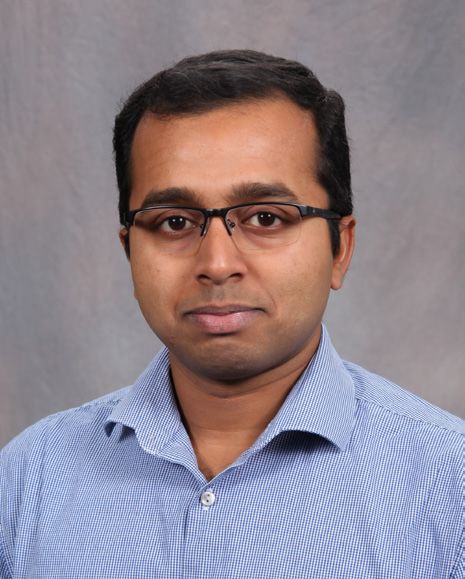
T R AC K I N G
                                            COVID-19
    Tracking the spread of COVID-19 is vital for public health     While Cator and Braga-Neto are still running simulations,
    decision making. To this end, Dr. Ulisses Braga-Neto is        their ultimate goal is to gather real campus data and then
    working with undergraduate and doctoral students in the        integrate that data into the model to allow them to deploy
    Department of Electrical and Computer Engineering at           this tool for campus use.
    Texas A&M University to model the spread of COVID-19
    and estimate its true prevalence from incomplete and           Expanding to the state of Texas
    noisy testing data.
                                                                   Doctoral student Yukun Tan is working with Braga-Neto on
    Tracking COVID-19 on campus                                    a similar project, but instead of focusing on the spread of
                                                                   COVID-19 on campus, his research focus encompasses the
    Senior Durward Cator III is working with Braga-Neto,           entire state of Texas.
    professor in the department, on a model to track the
    spread of COVID-19 on Texas A&M’s campus using its             Tan began this research project after the high second
    evolution over space and through time.                         round of reported cases in Texas in June. Prior to
                                                                   tackling this project, he was working with Braga-Neto on
    The model Cator is using is based on a campus SEIR             signal-processing and machine-learning tools for a gene
    (susceptible, exposed, infected and recovered) model. The      regulatory network interface, and wanted to use the
    model can generate population plots of the susceptible,        expertise from that area to explore and predict epidemic-
    infected and recovered individuals on campus. Cator            related issues.
    explained that the probability of a contact infection is not
    directly shown but can be approximately inferred from          Braga-Neto explained that the gene regulatory network
    the graphs. These probabilities can be changed based on        project and the COVID-19 model project are similar in that
    factors such as mask wearing and social distancing.            at any given time there is a state of a gene to assess, and
                                                                   for the COVID-19 model, there is a state of an individual
    In his model, Cator can account for student behavior, such     to look at, for example whether they are infected or not
    as movement between buildings and building proximity,          infected.
    to accurately simulate and track the spread of COVID-19
    on campus.                                                     “It is a very practical project,” Tan said. “If we do well we
                                                                   could not only get the prediction of our current and future
    Cator began this project when he applied for and               situation, but also obtain the guidance of how to prevent
    was accepted in the Online Research Experience for             and control the epidemic in reality.”
    Undergraduates (O-REU) program over the summer.
    Shortly after joining the program, Braga-Neto approached       One thing that sets Tan’s work apart from the campus
    Cator with the idea for this project and he was                simulations Cator is running is that Tan can apply the
    immediately intrigued.                                         real-world data provided by all the counties in Texas to his
                                                                   model.
    “(The O-REU program) has definitely been a useful
    experience,” Cator said. “I am glad that I did it and I’m      For the campus, state and nation, finding a way to
    happy to continue working on (this project) and hopefully      accurately track the spread of COVID-19 is the first
    do something useful for the campus and create something        step in understanding and overcoming the pandemic.
    everyone can use.”                                             Fortunately, researchers at Texas A&M are already hard at
                                                                   work to help solve this problem.

engineering.tamu.edu                                                                                                               7
MINIMIZING
                                                                     IMPACT
    Combining her love for STEM with her desire to help in the fight against
    climate change, electrical engineering junior Alyssa Brown has taken
    part in undergraduate research with a focus on power electronics to
    help her achieve her goal of aiding in this fight.
    For as long as she can remember, electrical engineering junior
    Alyssa Brown has enjoyed math and science. More recently, she
    has become painfully aware of the effects of global warming on
    the world. Combining her love for STEM with her desire to help in
    the fight against climate change, she decided to pursue a degree
    in the Department of Electrical and Computer Engineering at
    Texas A&M University.

    “I wanted to do something where I could make an impact on the
    environment but still be within the realms of math and science
    and I figured electrical engineering was the best route to do that,”
    Brown said. “I wanted to be part of the industry that could make
    a difference in power production and renewable energy.”

    To get a head start on accomplishing her goals, Brown has
    been working on research with Dr. Prasad Enjeti, TI Professor
    III in Analog Engineering. In fact, she is currently enrolled in his
    graduate-level course on power electronics as an undergraduate
    student and is working on a project in his class to design an AC
    to DC power adapter with built-in features to make it similar to a
    typical “brick” on a laptop charger.

    “Dr. Enjeti provided some specifications for the project but gave
    my partner and I design liberty for the most part,” Brown said.
    “This project is very similar to something power electronics
    engineers would be working on at companies like Dell,
    Microsoft, Apple and many others since we are also taking into
    consideration the cost of materials and trying to optimize the
    design with this in mind.”

    Brown hopes to earn her doctoral degree in electrical
    engineering and is excited that she has the opportunity to pursue
    research as an undergraduate student. Undergraduate research
    has provided an avenue for Brown to hone her skills and
    knowledge of power electronics, even if she hasn’t taken a course
    covering the subject yet.

    Renewable energy is one of the most effective tools in the fight
    against climate change. Power electronics can increase the
    efficiency of renewable energy sources such as wind and solar
    power. Brown is eager to contribute in this area and her work as
    an undergraduate student is setting her up for a future filled with
    possibilities.

8
engineering.tamu.edu 9
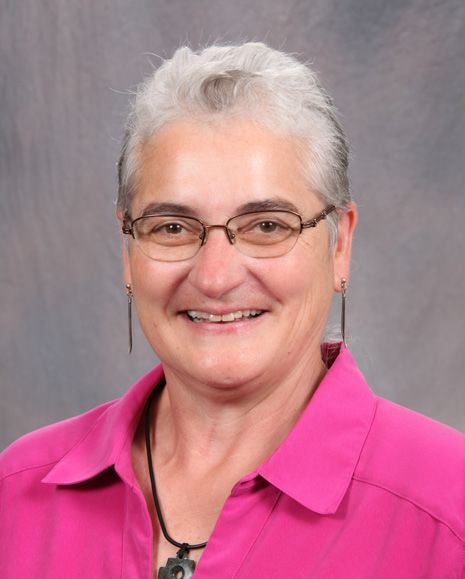
with computer engineering senior

                                                              NADA KORTAM
     Nada Kortam is a senior in the              What led to your decision                    What is one piece of advice you
     Department      of    Electrical and        to establish the Galveston                   would give to an international
     Computer Engineering. She is a              Student Association?                         student coming here for the
     member of the International Student                                                      first time to Texas A&M?
     Mentors Association and the founder         I started as a freshmn in Galveston and
     and president of the Engineering            then transferred to College Station as       I would say don’t be scared of the
     at Galveston Student Association.           a sophomore. My friends and I were           changes. People behave differently
     Kortam shares her passion for helping       just sitting one day in the Galveston        based on the environment they are
     others and her experiences of being         library and I said, “I think it would be     in. Don’t try to change too much to fit
     an international student, as well           cool if we just started a club that unites   in because there are people like you
     as a student who originally started         us over here and helps people who            everywhere. Don’t change your values
     her academic career at Texas A&M            are from Galveston to transition to the      or morals because you see someone
     University at Galveston.                    College Station campus,” because we          doing something else. Also try to
                                                 didn’t really have someone to ask. We        understand where people are coming
     How did you get involved in                 officially started the club last semester    from, especially so they can also
     the International Student                   because it took some time to get             understand where you are coming
     Mentors Association?                        adjusted and see how we could help           from.
                                                 other students. We have community
     One of my friends last spring told
                                                 events in College Station for anyone         What is one piece of advice
     me about her involvement with                                                            you would give to a student
     the International Student Mentors           who is here now to attend and we
                                                 also always try to communicate with          starting in Galveston but
     Association. She invited me and my
                                                 the people in Galveston through the          transitioning here to College
     roommates to get together with her
     and her mentee, and her mentee was          professors. Last semester, we also           Station?
     really nice; she was from Norway. I         did a panel in Galveston to hear their       I would say manage your time better
     just thought it was really cool that you    questions and we answered them to            because classes here are farther
     get to have someone that is not from        the best of our ability.                     away from each other. Know how
     the U.S. and you get to mentor them         Why did you choose to study                  to get to class and take buses if
     throughout that semester. I applied         electrical and computer                      you need to, don’t get scared of the
     that day and later got an interview with    engineering?                                 sizes of the classes and try to make
     them and was accepted. Last semester                                                     relationships with your professors
     I had a mentee; he was from India           At the beginning of my freshman              and go to office hours. Also, try to
     and a graduate student in mechanical        year I wanted to study just electrical       utilize as many resources as you can
     engineering. It was really fun to just      engineering and then once I came             and find a good group of friends. A lot
     get to know someone not living here         here and attended Department                 of people will already have a group of
     and get to know about his culture. He       Information Saturday and did more            friends because they established that
     watched his first American football         coding, I realized I wanted to do            freshman year, but also keep your
     game here at (Texas) A&M. It was just       computer engineering because it              Galveston group kind of close and
     really cool mentoring someone from          combines electrical engineering and          try to keep up with them as much as
     outside of the U.S.                         computer science. I like programming         you can even though you will be in
                                                 but I didn’t like programming to the         different majors. My roommates also
     Where are you from originally?              point where I wanted to do straight-         went to Galveston and we are the best
     I am originally from Egypt. We moved        up computer science – same with              of friends because we went through
     to the U.S. in 2011. I didn’t really have   electrical engineering. I didn’t want        the same experience together and no
     someone to help me through the              to do all hardware; I wanted to do           one else did. Anytime I meet someone
     transition because it’s literally like a    a mix of both. I just thought it was         who went to Galveston, even though I
     culture shock. I wish someone was           interesting to understand both levels        didn’t know them while I was there, we
     there for me, so that’s one of the          and how they communicate with each           know each other – we see each other.
     reasons why I did it too. When I moved      other. I’m happy with my decision. I         I’ve made friends here that were from
     here, I didn’t speak English very well.     really like coding but I also really like    Galveston but we didn’t know each
     I just kind of had to learn by myself,      the hardware. I didn’t realize how           other at the time. We just have that
     but people from other countries who         much I liked hardware until I started        connection.
     already speak English don’t have that       this major.
     much of a transition.

10
engineering.tamu.edu 11
with electrical engineering senior
                                                          MATIJA JANKOVIC
    Matija Jankovic is a senior in the Department of Electrical      can improve medical care and health care. The ESP Lab has
    and Computer Engineering at Texas A&M University. He             many projects that are multidisciplinary, incorporating the
    transferred to Texas A&M from the University of Western          areas of biomedical engineering, computer engineering,
    Australia in Perth, Australia, in fall 2019. Upon moving         computer science and electrical engineering. My particular
    across the seas – an experience that he described as both        research concerns a cuffless wearable system that can
    nerve-wracking and exciting – he has joined the Texas A&M        measure blood pressure continuously. With cardiovascular
    Undergraduate Research Program and Engineering Honors            disease as the leading cause of death worldwide, and
    Program.                                                         high blood pressure being directly correlated to that, this
                                                                     research is highly relevant and has the potential to make a
    Why did you choose to study electrical                           positive impact in this area.
    engineering?
                                                                     What inspired you to participate in a research
    I chose to study electrical engineering because I enjoy
                                                                     project as an undergraduate student?
    having the ability to design and build electronic devices
    that can be utilized in many industries. Also, it is a highly    I decided to join the ESP Lab and participate in their
    relevant field in the future of technological space and has      research because it was something that I thought would
    many different areas of specialization.                          be interesting, innovative and challenging. I also thought
                                                                     it would be a good way to apply the theories and ideas I
    What advice would you give to another student                    learned in my coursework to a practical situation. I wanted
    looking to transfer to the Texas A&M College of                  to engage in an area of electrical engineering that I hadn’t
    Engineering?                                                     particularly known about and something that wasn’t
    I would say to research all the amazing opportunities Texas      commonly thought of as an area of electrical engineering.
    A&M Engineering has to offer and see whether one of them         Participating in undergraduate research is also a good
    really appeals to you. These opportunities include research,     introduction to graduate school, so doing this gave me
    professional events, industry talks, a large organization        some idea what the research aspect of a Master of Science
    base and countless others. If you’re looking for a school that   would look like.
    incorporates education and research, while also valuing          What are your career aspirations and future
    hands-on experience and the communication aspect of the
                                                                     goals related to your degree?
    classroom, you should definitely consider Texas A&M.
                                                                     My career aspirations include working in the semiconductor
    How would you describe your undergraduate                        industry and applying the knowledge related to my degree
    research project?                                                to make a positive impact. I have come to have an interest
    I have been working in Dr. Roozbeh Jafari’s Embedded             in wearable systems through my research, so I would like
    Signal Processing Lab (ESP Lab) since my first semester          to use the research experience I’m gaining in the ESP lab
    at Texas A&M in fall 2019. Dr. Jafari’s lab was formed           to further my knowledge in this area. I would eventually
    to investigate how embedded processing and sensing               like to complete a master’s degree in electrical/electronics
    systems that use advanced signal processing techniques           engineering.

engineering.tamu.edu                                                                                                                13
12
SELFLESS
       SERVICE
       The legacy of Dr. Edgar Sanchez-Sinencio

     Dr. Edgar Sanchez-Sinencio, TI Jack Kilby Chair Professor     Sanchez-Sinencio was the director of the Analog and
     and Distinguished Professor in the Department of              Mixed-Signal Center and co-author of six books on
     Electrical and Computer Engineering at Texas A&M              different topics such as radio-frequency (RF) circuits, low-
     University, passed away on Nov. 20, 2020.                     voltage low-power analog circuits and neural networks.
                                                                   His interests included the area of ultra-low power
     Sanchez-Sinencio had been a professor and researcher in       analog circuits, RF circuits, harvesting techniques, power
     the College of Engineering since 1984 and leaves behind       management and medical electronics circuit design.
     a legacy of selfless service, extraordinary leadership,
     generosity and respect.                                       “His exemplary and inspired research in analog and
                                                                   hybrid microelectronics has found fertile ground for
     He was an unwavering supporter of the department,             applications in some of the major U.S. corporations, which
     college and the university, as well as his fellow faculty     gladly employed his students, supported his research
     and current and former students. This year, he made           and considered Texas A&M a major supplier of the best
     arrangements to create a number of scholarships to            trained workforce in that area,” Begovic said.
     maintain and enhance the future of young researchers in
     analog and hybrid electronics. In addition, with generous     Sanchez-Sinencio served in many esteemed capacities of
     help and support of his friends and former students,          the Institute of Electrical and Electronics Engineers (IEEE),
     Sanchez-Sinencio created the Edgar Sanchez-Sinencio           including life fellow. He was a recipient of a Honoris Causa
     and Yolanda F. de Sanchez Chair, which will be used to        Doctorate by the National Institute for Astrophysics, Optics
     support the teaching, research, service and professional      and Electronics, Mexico, in November 1995, which was
     development activities of the holder.                         the first honorary degree awarded for microelectronic
                                                                   circuit-design contributions. He was a co-recipient of
     “Edgar is no longer with us, but his storied career and       the 1995 Guillemin-Cauer Award for his work on cellular
     legacy, created through the success of his research and       networks, a recipient of the Texas Senate Proclamation
     careers of his students as well as the new endowments         for Outstanding Accomplishments in 1996 and a co-
     in support of the young researchers, will continue to feed    recipient of the 1997 Darlington Award for his work on
     the future successes and preeminence of Texas A&M that        high-frequency filters. He was also a recipient of the IEEE
     Edgar was an essential part of,” said Dr. Miroslav Begovic,   Circuits and Systems Society Golden Jubilee Medal in 1999
     department head and Moore Professor.                          and the prestigious IEEE Circuits and Systems Society 2008
                                                                   Charles A. Desoer Technical Achievement Award.

14
Department of Electrical & Computer Engineering 3128 TAMU | College Station, TX 77843-3128 21_3064
You can also read


