Equality Bites - Belfast Health & Social Care Trust
←
→
Page content transcription
If your browser does not render page correctly, please read the page content below
Equality Bites
Edition 8: March 2021

Hello and welcome to the eighth edition of our Equality Bites Newsletter.
 In this edition we are celebrating various projects and initiatives
to show how individually and together we can all ‘Make a
Difference’ in achieving our Equality, Human Rights and Good
Relations duties which ultimately affects servicer user / patient
and carer experiences and health outcomes.
Partnership working maximises the impact we can make on
improving people’s health social well being and quality of life. In
this edition we are delighted to highlight some of the outcomes of
some joint working – from the colourful co-designed HSC Good
Relations statement, the new GP & Trust Partnership Forum to
the successful Phlebotomy Centre at Musgrave.
As we begin to emerge from our 3rd surge of Covid 19, it would be remiss not to reference
Covid in this edition. Like everyone within the Trust and beyond we have felt the impacts and
it is all the more important that we as an organisation continue to keep Equality, Human Rights
and Good Relations central to all that we do. Can I take the opportunity to remind everyone
of the value of conducting equality screenings and eqias on policies, proposals or plans – not
only in accordance with our statutory obligations but also because it makes good business
and financial sense to consider people’s needs at the earliest juncture to ensure these are
appropriately met?
For our staff, I would remind you that in the absence of the opportunity to avail of face-to-face
training, we have our easily accessible online mandatory equality training or if you’d prefer, you
can book onto a facilitated online version.
                  There is some great advice in this edition about wearing masks and how to
                  be mindful of how a mask can be a barrier to communication and that little
                  things can make a big difference. I am delighted that we are still working
                  on the Every Customer Campaign to make services accessible for disabled
                  people and look forward to the learning from the pilot and look forward to the
                  new guidance for staff around LGBT+ issues later this year.

Charlene Stoops
Director of Planning, Performance and Informatics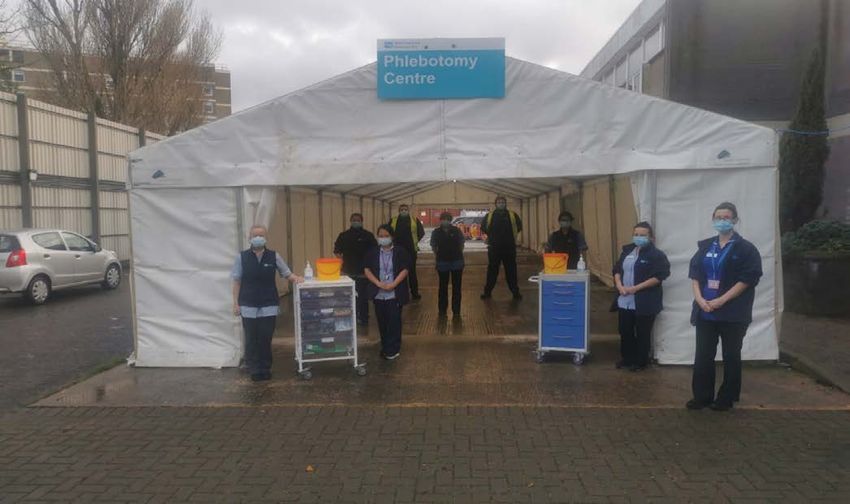
Equality Bites

    Positive Action Employability Scheme: BHSCT Jobs for people
    with a learning disability
    Let’s hear how the BHSCT award winning programme made a difference for one of our
    new employees. Interview with Matthew Feenan

            Tell me a bit about yourself
    I am 27, from a family of 6 living in North Belfast and have been working for BHSCT
    for two years. I am now working part time as a domestic based in McKinney House in
    Musgrave Park Hospital. I am waiting to hear about moving to the Royal as I got a new full
    time job there as a domestic. I enjoy travelling and recently bought my first car after getting
    my driving licence last year.

            Do you like your job in Belfast Trust?
    Yes, I love working for Belfast Trust. People are so friendly and I feel very settled. In my
    job I clean to the standards of the Trust, I report any faults, empty bins and have an area
    - two floors in McKinney House I am responsible for. I enjoy hoovering the most – don’t
    know why because I don’t do it at home! I have been on a lot of courses like fire safety and
    PPE which I enjoyed. I now want to work full time to stand on my own two feet.

            What other jobs have you had before working for BHSCT?
    This is my first ever paid job since I left St Gerard’s school in Belfast at the age of 16. I
    have worked in a lot of places like Queens and Stormont but I was never paid. The jobs
    gave me good work experience for my CV.

            Tell me a bit how you got a job with BHSCT?
    I got a job through the Postiive Action Scheme. Mencap phoned me one day to say
    there was a place for me on the scheme and I was over the moon as I only got the place
    because someone dropped out.

2
Equality Bites

        What is the Positive Action Scheme?
It’s like a three month interview. You are guaranteed paid work at the end of it if you have
done everything right. Half the time you do some paperwork and computer work about the
rules you need to know when you work for Belfast Trust. The rest of the time you work to
show that you can do the job. I had to show through my actions and attitude that I was the
right person for the job. I worked in Estates doing cleaning, catering and portering. It was
a bit overwhelming at first but after the first month I was ok. I would tell anyone to go for it,
the scheme is worthwhile as there is a big reward.

         What has changed for you because you have a paid job in BHSCT?
The job has changed my life. I got the job to prove to everyone who said I could not work
wrong. I am very stubborn – I get that from my mum. The job means I do not have to worry
about paying bills and that I can try and get my own flat (especially away from my two
sisters who are very annoying!). I am more confident now – I went for my first interview a
few months ago for a full time job and did it without any support as I wanted to stand on
my own two feet. I now have a car and learnt to drive a year ago which is good because I
don’t have to take buses during Covid. The job gets me out and about and if I did not have
it especially during Covid I would be sitting at home on my own and probably would have
lost my mind.

        What is your goal in life?
I just want to have a ‘normal’ life – a life with a job, house and family and don’t want to be
weighed down by my restrictions. I want to be treated the same as other people.

        What’s your message to anyone recruiting new staff?
Treat people well and judge people for their abilities not their disability. Don’t make
assumptions about what a person can and cannot do. Give people with a learning disability
a chance in a job so that they can live a ‘normal’ life.
For more information about Positive Action contact:
• Aisling Curran
  Service Manager
  Community Learning Disability Services
  aisling.curran@belfasttrust.hscni.net

                       Did you know?
                       Just 10% of adults with a learning disability in
                       NI are in paid employment.

                                                                                                    3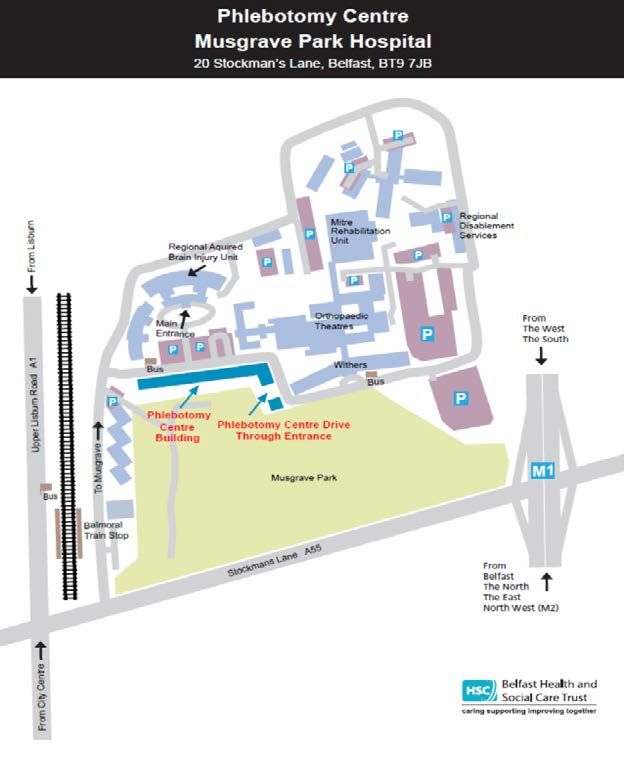
Equality Bites

    Every Customer Counts: Small changes can make a huge
    difference
                                  As a Trust committed to providing accessible care that all
                                  service users (patients/visitors and carers) can use and
                                  benefit from – where reasonable adjustments will be made
                                  to remove any physical, sensory and intellectual barriers
                                  disabled people might face when accessing our services,
                                  our care, our facilities - we signed up to the Every Customer
                                  Counts initiative. This has been developed by the Equality
                                  Commission (NI), with the aim of increasing access to
                                  services for people with a disability.
                                  Through our Disability Steering Group, a Working Group,
    comprised of a range of staff and service users, was established and the Eye Outpatient
    Diagnostic Unit (EODU) in the Royal Victoria Hospital was selected as the location for a
    pilot to be carried out.
    An Access Audit was carried out by using a number of ‘mystery patient’ type exercises,
    undertaken by a number of volunteers who have a disability. The participants then
    answered a series of questions regarding how easy or difficult it was to find EODU.
    This feedback proved invaluable in terms of revealing barriers to access from a patient
    perspective and benchmarking for future changes.
    A list of actions was agreed including:
    • The creation of a walk-through video
    • A map with printed directions
    • A dedicated EODU section on the Trust website
    • The training of volunteers and others as ‘Sighted Guides’ to assist patients/visitors with
      a visual impairment
    • A signage review
    • Enhanced accessible toilet facilities at EODU.
    It is intended that the learning and outcomes form this exciting project will be shared
    across the organisation so that other service areas may also use the Every Customer
    Counts model to improve access for disabled people.

                         Did you know?
                         Equality, Good Relations & Human Rights staff
                         mandatory training can be completed online via
                         Equality, Good Relations & Human Rights staff
                         mandatory training or facilitated via MS Teams by
                         contacting Lesley.Jamieson@belfasttrst.hscni.net

4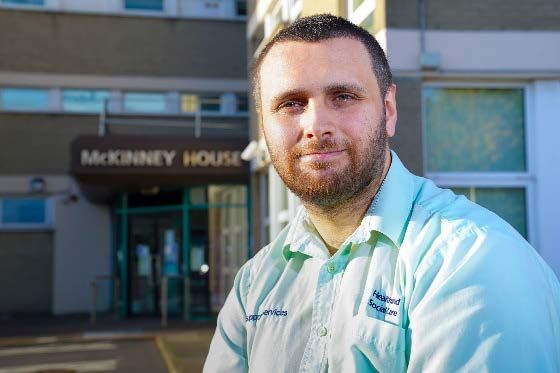
Equality Bites

Two Organisations Making A Difference to Young People

Action For Children: Supporting Young Carers
When we think of carers we don’t always think about young carers. Well, in NI there are
approx. 6700 young carers providing 1-19 hours of care
every week and 960 providing 20-49 hours.
A Young Carer is ‘a child aged between 8 and 18 years
who has a substantial caring role for a member of their
family and whose health or development is affected due
to their caring responsibilities’.
A young carer might:
• Provide emotional support
• Encourage a cared-for person when they are having a bad day
• Supervise siblings
• Do housework
• Help with medication
• Take younger siblings to a place of safety
• Have to phone for help and deal with emergencies
• Manage bills
• Go to the shops.
Action For Children (Email niyoungcarers@actionforchildren.
org.uk) is one of the many organisations who support young
carers by organising group and individual activities, family
fund days and advocate on behalf of the young person.
Throughout the pandemic support has continued with Action for Children organising
Bingo, Quizzes, The Bake off, Scavenger Hunts and the Great Sunflower growing
competition to help young carers manage at home. When lockdown was eased other
activities such as Snow Tubing and Crazy Golf was arranged.

  Did you know?
  A new Belfast Trust and GP Partnership Forum has been set
  up. The Trust collaborates with GPs, meeting fortnightly, to work
  more closely and effectively across key service initiatives.

                         Did you know?
                         BHSCT are running a pilot carers bereavement service? Contact
                         Carers Co-Ordinator Margaret McDonald for more information.
                                                                                          5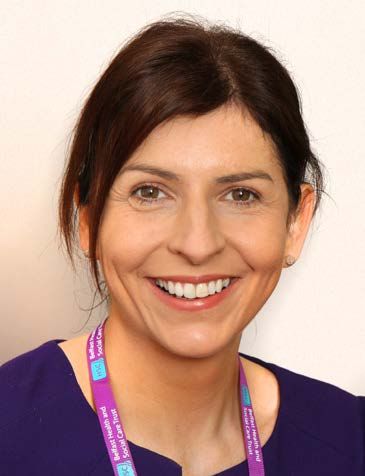
Equality Bites

    SÓLÁS: Supporting young people with moderate/severe learning
    disability including autism
    SÓLÁS is a charity based on the Ormeau Road, South Belfast for
    over 12 years. It has 35 staff and operates 6/ 7 days per week from 6
    sites including Parkmore, DPCC, Apsley, WWC, Rosario, Annadale
    Community Centre. Support is extensive as shown below. For more
    information contact Tel: 028 9024 7600/ joan@solasbt7.com

                                SÓLÁS area of Service Provision

    How opinions can make a difference
    Belfast Trust, through Care Opinion, is encouraging anyone who
    has had an experience of health and social care in the last three
    years to tell their stories and to let us know:
    • What we are doing right                            Did you know?
                                                         You can improve care by telling your
    • How to make things better
                                                         story? Go to www.careopinion.org.uk
    • What the patient experience is.
    Service users, families and carers have the
    opportunity to share their experience of Belfast
    Trust through the online user feedback platform Care Opinion.
    Using Care Opinion is not about making a formal complaint but is about telling staff about
    one instance or a whole journey of care, even if that includes multiple providers/services/
    departments.
    All stories are anonymous, the story author chooses a username. The only other
    information Care Opinion asks for is an email address and a postcode but these details
    remain separated.
    Máire Alexander is the Trust Care Opinion Facilitator and can be contacted at 028 9504
    3228 or Maire.alexander@belfasttrust.hscni.net. Marie is asking staff to encourage people
    who are being discharged or are being reviewed to tell their stories.

6
Equality Bites

Domestic & Sexual Abuse Support Service makes a difference
Rates of domestic abuse are at an all-time high in Northern Ireland. This has been further
compounded by Covid 19 with people being told to stay at home – which unfortunately
for too many people is the most dangerous place. Levels of sexual abuse are also on the
increase for adults often related to domestic abuse and for children as they are at home
more and have less supervision online.
Recent statistics reveal

32,000+
                                  Domestic abuse incidents           The PSNI recorded
                                     now account for
                                                                      31,817
                                 19.1%           of all police
                                recorded crime, up
                                                                      domestic abuse
                                                                       incidents and
 crimes of this nature in
                                 from 16.5% on the
 the past twelve months
                                    previous year
                                                                      18,640
                                                                       domestic abuse
             Police
                                 Domestic abuse constitutes         crimes – the highest
             respond to
             a domestic
             abuse
                                   5% of all crimes in NI               statistics since
                                                                      records
             incident every                                          began in

17 minutes                                                           2004/05

                                 5   women              have    5,536 women
                                                                 and 5,143
                                 been murdered by a male
                                partner or relative in NI since
                                  lockdown began in March            children accessed
                                           2020                       outreach support
561 women and                                                        through Women’s

 316 children                                11 babies                       Aid
                                              were born in
 stayed in Women’s Aid
                                              Women’s Aid
         refuges
                                                refuges

   The largest volume increase in domestic abuse crimes was seen in offences
    of harassment (including malicious communications) which increased by
                                 1,270 (49.8%)
The new domestic abuse and family proceedings bill is so important and we
wholeheartedly welcome it.
                                                                                             7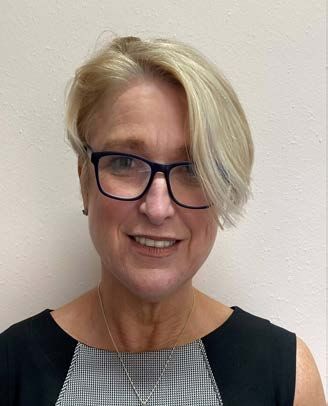
Equality Bites

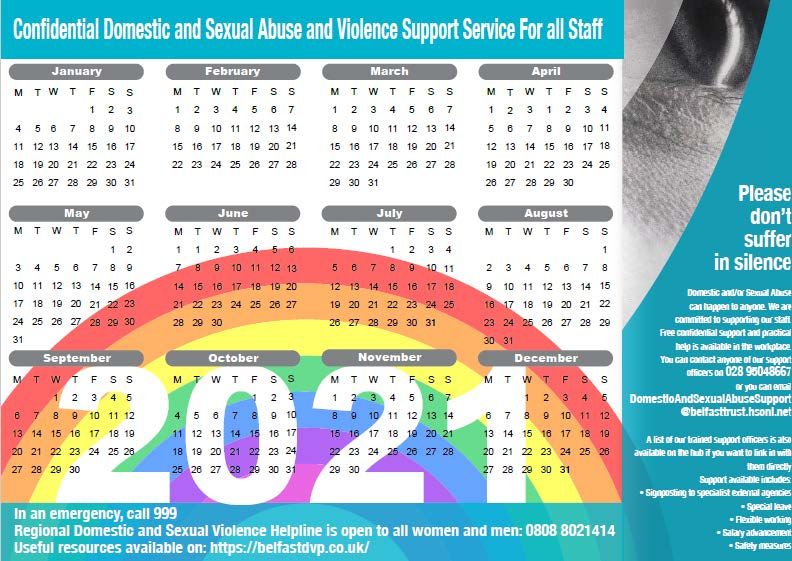
    Orla Barron, Equality Lead and Corporate Planner for BHSCT has worked
    with Samantha Whann (HR) in partnership with Trade Union colleagues
    since 2008 to co-ordinate a completely free and confidential service that
    provides practical and emotional support for all staff around the issues of
    domestic and sexual abuse.

            Tell us about the BHSCT domestic and sexual support service for
            staff?
    The service is provided by a diverse range of staff members who have been trained
    – staff who volunteer from different locations, different professions and levels within the
    organisation, people who are female or male and with different sexual orientations.
    We have had a range of staff using the service, because domestic abuse can happen to
    anyone – it’s an important realisation that domestic abuse happens to ‘regular’ people. We
    have definitely seen an increase over the last year with referrals coming from managers or
    staff fearful for a colleague’s safety or from the individual themselves.
    To be honest, more women have tended to avail of the service and if I could get any
    message out there, it would be that domestic and sexual abuse happens to men as well as
    women and our service is available to all.

            What can staff expect when they contact the service?
    Our team of support officers offer a listening, compassionate and sensitive service. We do
    not judge, direct or advise someone what to do. Support Officers can facilitate practical
    arrangements in the workplace to make work somewhat of a haven for staff and to help
    keep them safe from the perpetrator.
    A support officer may meet the person for a coffee and a chat or can link in via phone.
    Staff are offered a choice as to who they would prefer to talk to.
    Support officers can also provide details of external specialist organisations and signpost
    to innovative partnership working like the One Stop Shop provided in Women’s Aid.

            Can you give some examples of how the service has Made A
            Difference?
    Yes . . . examples include:
    • Simply listening: Someone experiencing abuse can often be stripped of their self-
      esteem and self-worth, believing that the abuse is their fault. Having someone to talk
      to, in a non-judgemental confidential and compassionate forum can help to undo some
      of the relentless negativity and help the person believe that they do deserve better and
      that there are options for them – only if they chose to avail of them
    • Helping to access a clinical psychologist in Occupational Health: this has often
      been instrumental in helping people to deal with their feelings and fears

8
Equality Bites

• Talking to a manager with permission: Abuse at home can obviously impact on
  absenteeism, timekeeping, concentration and performance. If a line manager is made
  aware that someone is trying to deal with this at home, they can be more understanding
  and exercise discretion, without taking someone down a disciplinary or capability line
• Arranging salary advances: These have been invaluable to people experiencing
  financial control if they want to leave the abusive relationship but don’t routinely
  have access to their own salary. Working with HR and Payroll a salary can be paid
  into a different account to enable, for example, the person to move to a different
  accommodation without the perpetrator’s knowledge. Financial support can also be
  accessed via Trade Unions
• Organising safety measures: These are key to ensuring people are not only safe
  in the workplace but also arriving at or leaving work. There is a wide range and can
  include provision of a car park space or a personal safety alarm
• Facilitating redeployment: Staff members have been able to be redeployed across the
  Trust or even between Trusts in NI to ensure that the perpetrator does not know where
  they work. A lot of abuse and control continues to take place when the person is at work
  and the abuser wants to stay in control.

        What do you say to staff who are facing abuse or violence at home?
Domestic and sexual abuse are the most appalling human rights violations.
Support is available within the Trust so people don’t have to deal with this alone. A support
officer will not try to make you leave, they will listen, offer emotional support and will be
guided by your wishes.
We need to take care of each other – staff are the Trust’s most valuable resource. If
you are worried about a colleague, you can speak in confidence one of our support
officers who can be accessed through phoning 028 9504 8667 or by email on
domesticandsexualabusesupport@belfasttrust.hscni.net

        What is the biggest challenge facing the service?
I would say there are two main challenges:
One is awareness and ensuring that
all staff and managers know about the
service – hence the 15,000 calendars,
the posters, leaflets and awareness
training – but in an organisation our size,
promotion needs to be ongoing!
The bigger problem – that doesn’t
present with quick or automatic
resolution – are the issues of stigma,
shame and secrecy. For so many years,
there has been a shroud of silence
around domestic and/or sexual abuse
                                                                                                9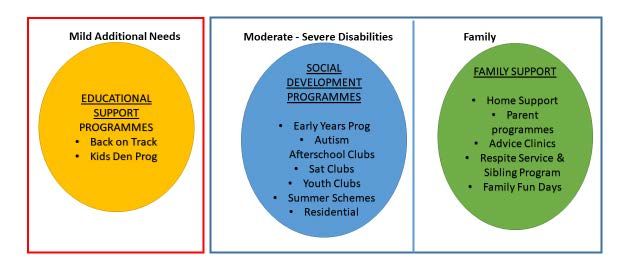
Equality Bites

     with the abused person being
     manipulated into thinking         Did you know?
     they are to blame. There is
                                       Did you know that if you “Ask for Ani” at pharmacies
     also the stigma and fear that
                                       (including Boots) that you will be led into a private
     if you disclose it, people will
     judge you or you will have to     consulting room where you will be asked if you need
     disclose difficult information.   help to contact the police, relevant support services or
                                       the 24 hour Domestic and Sexual Abuse Helpline?
     These are societal issues
     that need to be addressed
     but as the largest HSC Trust,
     it is important that Belfast Trust continues to provide and promote this support service, to
     encourage those courageous conversations to take place and to allow colleagues to feel
     supported and cared for in the workplace and at home.
     If a member of staff is experiencing abuse at home they can contact 028 9504 8667 or
     domesticandsexualabusesupport@belfasttrust.hscni.net

     Covid 19: Equality Statutory Duties still apply
     In these unprecedented times, it is recognised that policymakers may need to make quick
     and often challenging policy decisions. Yet, even if justified by the needs of the moment,
     it is important to appreciate that such decisions may have different impacts on different
     groups of people.
     The Equality Commission NI have
     advised that the legal duties set
     out in Section 75 of the NI Act
     1998 continue to apply during the
     pandemic.
     The duties provide a mechanism to
     identify and mitigate any adverse
     impacts of policies. The duties have
     not been revoked or suspended
     which means that when developing
     Covid-19 related policies, Build
     Back Better initiatives, an equality
     screening must be completed, in
     accordance with the Trust’s equality scheme commitments. If not it may be subject to
     challenge for alleged breaches of the duties by way of a judicial review, complaint or an
     investigation by the Equality Commission.
     Trust staff from the Planning and Equality Team have undertaken a number of significant
     equality screenings both in terms of Covid-19 surge plans, rebuild plans, Visitor Guidance
     and new innovative ways of working such as the Phlebotomy Centre and Virtual
     Consultations. Click to view Belfast Trust Equality Screenings
     For more information about screenings contact Lesley.jamieson@belfasttrust.hscni.net

10
Equality Bites
Making a difference together: New co-produced ‘Good Relations’
Statement
During ‘Good Relations’ week 2020, the six Health and Social Care Trusts engaged with
key partners to co-produce a consistent, clear and unequivocal ‘Good Relations’ statement
for the Health and Social Care Sector.
Those that attended the online Did you know?
event included colleagues from the
Community Relations Council, the The Equality Team is working with Trade
Equality Commission NI, Service Unions and the LGBT+ community to produce
Users and Carers, Health and Social guidance for staff?
Care staff and Trade Unions, local
Council representatives, the Patient
and Client Council, the Business
Services Organisation, the Public Health Agency and representative organisations.
After a lively debate, consensus was reached, approved by our respective Executive
Teams and the agreed ‘Good Relations’ statement noted below was launched online
during International Human Rights Day in December 2020.
Belfast Trust is
committed to having
regard to ‘Good
Working together we will promote good Relations’ in all that we
relations between people of different race, do and to promoting
religion or political opinion ‘Good Relations’
This means that we: amongst everyone – our
• Will actively address and challenge racism and sectarianism in all its forms patients, service users,
• Will treat each other fairly, with respect and dignity carers, visitors and staff
• Will make sure our spaces are shared, welcoming and safe. – regardless of different
religious belief, face or
political opinion.
You will soon see the
statement prominently
displayed throughout
Health and Social Care
facilities in Northern
Ireland to remind everyone of all of our duty as we work, deliver services and care for
patients, carers and visitors.
Did you know?
There is a new Belfast Trust Ethnic Minority Staff Network? To join or
find out more contact: AskEMNetwork@belfasttrust.hscni.net
11Equality Bites
Covid innovations stepped up: Phlebotomy Centre at Musgrave
Over 9,000 people have now attended the new Phlebotomy Centre at Musgrave Park
Hospital. The Centre includes a drive through
and was initially piloted in Rheumatology, Did you know?
Hepatology, Gastro and Endocrine Outpatient
clinics in response to the need to take bloods 92% of Phlebotomy Centre patients
in a safe space, which did not enhance hospital love the idea of a drive through?
footfall, respected social distancing and suited
the service user. Since then up to 30 clinics are
using the Centre and it has proved to be a great success with service users. Ongoing
feedback from staff, GPs and service users is sought to ensure the service is accessible
and inclusive however to date the feedback is very
positive.
Comments:
“much quicker and
“quick and “good not to “handy and
like the idea of not
easy” have to find comfortable”
being cramped in
one room with lots parking”
of people”
““very good, now
“very helpful and Consultant has “superb
accommodating with blood results before idea”
“very fast” excellent customer consultation”
service”
“excellent “(As staff)… we think the service is “very
service” excellent, it has really benefited all our efficient”
services …pre-assessment clinics,
specialist nurse clinics and supporting
red flag cancer patients…”
12Equality Bites
Equality & Covid 19 Issues: Wearing of Masks
We are all now wearing face coverings in Trust premises
and while they help us to stay safe, they can create a
communication barrier for people who are deaf, hard of
hearing, or have other communication support needs. Many
people rely on being able to see someone’s lips and whole face
to communicate.
Below are a few tips to help you think about communicating well
with our service users, while also keeping them and yourself safe
from COVID-19:
• Be alert for signs and behaviour that indicate the face mask is a barrier and a problem
• Ask yourself – or ask your infection control colleagues: is it possible for someone to
safely accompany the service user to support your communication with them?
• Check if they use sign language. If they do, it’s vital you book an interpreter
• Ask yourself – is it possible for you to wear a clear visor rather than a face covering?
• Try writing things down – this might help, but should only be used as a very short term
solution
• Raise awareness in your team that some people will find face masks to be a barrier to
effective communication.
Additional resources:
Making Communication Accessible for All: A Guide for Health and Social Care Staff
(Available at: https://belfasttrust.hscni.net/about/publications/making-communication-
accessible/)
InterpreterNow: Temporary remote sign language interpreting service that is currently
used to improve access to Health and Social Care services (https://interpreternow.co.uk/
hscni)
A ClearMask™ product has been approved by the PHA/HSCB Infection Prevention and
Control team for use in HSC organisations in line with certain protocols. A small stock of
the ClearMask™ is available from the central PPE store in each Trust. It is important to
note to highlight that the ClearMask™ is not a substitute for a fluid resistant surgical mask
and so whilst it does enable more effective communication in certain scenarios there will
be some health and care situations where a clear mask cannot be used. because of this
it’s vital that there is a shared understanding that no clear mask will overcome all of the
barriers associated with a face covering.
While clear masks may offer an opportunity to enable more effective communication in
certain scenarios, it is very important that service users and their carers and families are
made aware that, inevitably, there will be health and social care situations where a clear
mask cannot be utilised.
13Equality Bites
Disability Discrimination: has a law made a difference 25 years on?
November 2020 marked
the 25th anniversary Legislation is an effective tool and gives us
of the introduction the ability to change things . The criticism
of the Disability generally comes down to an individual being
Discrimination brave enough to take on the fight.
Act 1995 (DDA). Chris Fry, DDA Lawyer
Continuing to advocate
the ethos of ‘Nothing About Us Without
Us’, many disability rights speakers
acknowledge that whilst the introduction DDA was never going to be a magic answer
of the DDA was a milestone, it was to all our problems but it did one important
fundamentally flawed eg enforcement thing – it paved the way for radical change in
relies on disabled people to take a the social concept of disabled people’s lives.
legal case which can often be costly, Instead of disabled people being tragic victims,
it was accepted that we were unable to thrive
cumbersome and complex and the
due to disabling environment & social attitudes
existence of the word reasonable when
which kept us excluded and powerless.
removing barriers to disabled people
in work and accessing goods, facilities Baroness Jane Campbell: House of Lords
and services.
Locally, you can listen to Monica Wilson
(former CEO of Disability Action) reflect on the DDA anniversary by going to: https://www.
youtube.com/watch?v=XqN4ExhvAgw
Vaccination information translated for HSC workers
As Belfast Trust celebrates the fact that over 17,000 staff (including Bank and Agency
workers) have received their first COVID 19 vaccine it is great to learn that information
about the vaccine for HSC workers has been translated. Go to https://www.publichealth.
hscni.net/publications/covid-19-vaccination-protection-health-and-social-care-workers-
and-translations
A Year with Covid: Staff Thank You video
In February 2020 Belfast Trust admitted our first patient with Covid-19. Since then every
staff member, from every service has played their part in providing safe, compassionate
and effective care for hundreds of patients with Covid-19. A video has been produced
to thank staff and while the video features a small number of staff, they represent over
22,000 staff who collectively met the challenges of Covid-19. To view the video go to:
https://youtu.be/MAK4AhUeYvM A year with Covid.
If you have any comments, or require this newsletter in alternative formats/languages, please
contact Lesley Jamieson on 028 950 48734 or Lesley.jamieson@belfasttrust.hscni.net
14 BT20-2431You can also read


