Ethanol as motor fuel in Brazil
←
→
Page content transcription
If your browser does not render page correctly, please read the page content below

Public Policies for the Sustainable Use of Natural Resources:
                                          the case of biofuels
           Economic Commission of Latin America and Caribbean
                                            Port of Spain, 2007

             Ethanol as motor fuel
                   in Brazil

                                             Luiz A. Horta Nogueira
                                        Universidade Federal de Itajubá
                                                                  Brasil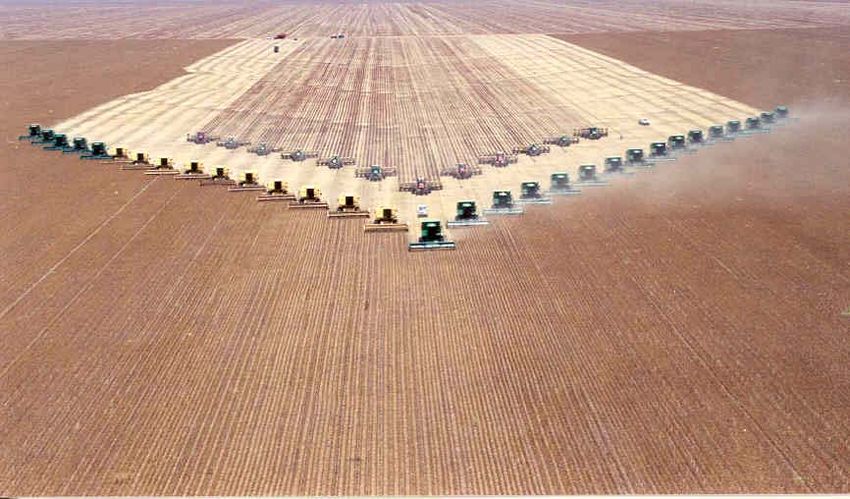
L.A. Horta Nogueira (UNIFEI)
                                               Ethanol Production and Use in Latin America:
                                                                        Facts and Potential

1. Introduction
Ethanol use as motor fuel is old
as the automotive industry is.

                Henry Ford, pure ethanol car (1896)

                                            % ethanol
Since 1931 Brazil cars use            25%    % etanol

                                      20%
regularly gasohol blends and          15%

several tests were carried out        10%
                                      5%

with pure ethanol                     0%
                                        1925            1945     1965        1985        2005

                                   Ethanol content in Brazilian gasoline
                                                                       2
L.A. Horta Nogueira (UNIFEI)
                                       Ethanol Production and Use in Latin America:
                                                                Facts and Potential

1. Introduction
  Drivers for growing interest in ethanol as fuel
      - national energy reliance
      - environmental sustainability
      - agriculture activation
      - economic feasibility

                                                                (FO Licht, 2006)      3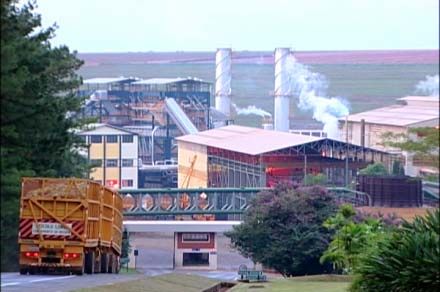
L.A. Horta Nogueira (UNIFEI)
                                           Ethanol Production and Use in Latin America:
                                                                    Facts and Potential

1. Introduction
 Currently biofuels represent about 2% of global transport fuel
 consumption.

 USA and Europe are aiming to displace 20% of conventional
 fossil fuels by biofuels by the middle of next decade.

                                                                        (Walter, 2007)    4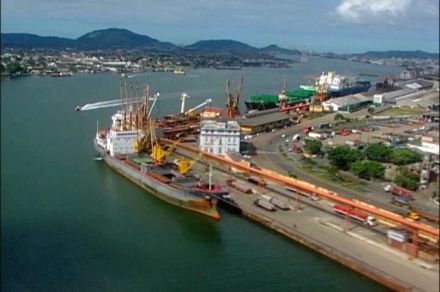
L.A. Horta Nogueira (UNIFEI)
                                                                     Ethanol Production and Use in Latin America:
                                                                                              Facts and Potential

 2. The Brazilian alcohol fuel program

 The fuel ethanol industry in Brazil is a consolidated renewable
 energy program, representing US$ 8.3 billion per year (1.6% of
 GDP) and 3.6 million of direct jobs.

 The current production is equivalent to 200,000 oil barrels per day,
 mainly consumed in Brazil, where represents 40% of gasoline
 market.

                                20      Millions of m 3                                            US$ cents/liter

                                                                                                                       80

                                15
                                                                                                                       60

                                10
                                                                                                                       40

                                5                                                                                      20
Ethanol production and prices                             production of ethanol
                                                          prices for producer ex-taxes
      for producers, ex-taxes   0                                                                                      0
                                     1980         1985              1990           1995          2000           2005 5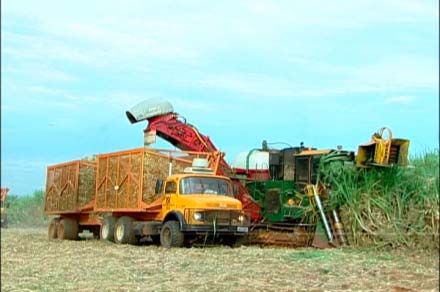
L.A. Horta Nogueira (UNIFEI)
                                                                Ethanol Production and Use in Latin America:
                                                                                         Facts and Potential

2. The Brazilian alcohol fuel program

         Energy for transport in Brazil, 2005
                                                                                           Diesel
                                                                                           53.9%

                                                                                             VNG           (*)
            Gasoline A                                                                       2.9%
              26.2%
                                      Anhydrous Ethanol           Hydrated Ethanol
                                             8.7%                        8.3%

    Share of ethanol in fuel                                  Share of ethanol in
    demand in light vehicles (1)                              transportation demand
    26.2% + 8.7% = 34,9%                                      8.7 + 8.3 ⇒ 17%
(1) In Brazilian gas stations are sold three fuels for spark ignition motors:
  gasoline with 25% of ethanol (E25), hydrous ethanol and vehicular natural gas.
                                                                                    Source: ANP; ABEGAS – 2006
L.A. Horta Nogueira (UNIFEI)
                                    Ethanol as Motor Fuel Iin Brazil
                                                  Por t of Spain, 2007

2. The Brazilian alcohol fuel program

                                                                         7
Energy value of sugarcane

                    1 ton
                       1 T sugarcane
                           CANA                 ~
                                                =           1,2 BARRIS
                                                                1,2 barrels
                                                                         PETRÓLEO
                                                                            of oil

                                  AÇÚCARES
                                   SUGAR
                                   153 KG            608 x 10 3 KCAL

                                   BAGAÇO
                                   BAGASS
                                (50% UMIDADE)
                                     MOISTURE)       598 x 10 3 KCAL
                                    276 KG
                                    STRAW
                                    PALHA
                                (15% UMIDADE)        512 x 10 3 KCAL
                                    165 KG

    1 T-sugarcane
      T-                                            1718 x 10 3 KCAL        1 Barrel of oil
                                                                           1386 x 10 3 KCAL

 Only sugarcane is used as feedstock for ethanol
 production in Brazil, mostly processed in sugar
 mills, sharing equipments and utilities for raw sugar
 production, allowing to reduce costs and impacts.

                                                                            (Dedini, 2004)    8
L.A. Horta Nogueira (UNIFEI)
Ethanol as Motor Fuel Iin Brazil
Por t of Spain, 2007
2. The Brazilian alcohol fuel program
Only sugarcane is used as feedstock for ethanol
production in Brazil, mostly processed in sugar
mills, sharing equipments and utilities for raw sugar
production, allowing to reduce costs and impacts.
Sugar plant Sugar
molasses
cane Juice extraction juice
bagass
Fermentation
Distillation Anhydrous ethanol (for blending)
stillage and
Dehydratation Hydrated ethanol (for straight use)
9L.A. Horta Nogueira (UNIFEI)
Ethanol as Motor Fuel Iin Brazil
Por t of Spain, 2007
2. The Brazilian alcohol fuel program
Economic agents of ethanol agro-industry Brazil, 2005
Sugar Cane Agriculture Phase
Sugar and Alcohol Industrial Phase
• 50.000 sugar cane growers
• 346 Industrial Plants
Regulatory Domain: Ministry of Agriculture
Regulatory Domain: Ministry of Mines and Energy / ANP (National Petroleum Agency)
Gas Stations
• 32,030 Gas Stations
• Free Market precification
Exporters Fuel Distributors
• approx. 2 billion litters • 160 Operating Distributors
exported in 2006 • Only distributors may blend
ethanol with motor gasoline
MAPA – MME – MDIC - 2005L.A. Horta Nogueira (UNIFEI)
Ethanol Production and Use in Latin America:
Facts and Potential
2. The Brazilian alcohol fuel program
In order to supply a growing domestic ethanol demand associated to
the flex-fuel cars success and possibly trading opportunities, in the
forthcoming years the ethanol production capacity in Brazil should
increase up to 30 million m3.
Ethanol mills: existent and
Usinas existentes
under construction Usinas em implantação
112. The Brazilian alcohol fuel program
Ethanol cost learning curve
100
(2 0 0 4 ) U S $ / G J
1980 2004
1986
10
1990
2002
1995 1999
1
0 50000 100000 150000 200000 250000 300000
3
Ethanol Cumulative Production (thousand m )
Ethanol prices in Brazil Rotterdam regular gasoline price
trend (Rotterdam gasoline prices) trend (Ethanol prices)
(Goldemberg, 2003)Cogeneration technologies in sugarcane agroindustry
Condición del
Caso Tecnología Combustible Operación
vapor vivo
1 Turbinas de contra-presión 22 bar/ 300 ºC todo bagazo zafra
2 Turbinas de contra-presión 65 bar/ 480 ºC todo bagazo zafra
3 Turbinas de contra-presión 90 bar/ 520 ºC todo bagazo zafra
4 Turbinas de extracción/condensación 90 bar/ 520 ºC todo bagazo+40% da paja zafra
5 Turbinas de extracción/condensación 90 bar/ 520 ºC todo bagazo+40% da paja año todo
Para un ingenio procesando 2 millones de t, 200 días de
Capacidade instalada zafra Energia exportada
80 MW 300 MWh
70
250
60
200
50
40 150
30 100
20
50
10
0 0
1 2 3 4 5 1 2 3 4 5
Casos Casos
(Macedo, 2007)Producción y uso de etanol en Brasil
Foresta
Amazónica
Pantanal
2004 Area
(106 ha)
Soya 22 Regiones cañeras
Maíz 12
Caña de azúcar 6 Foresta Húmeda Atlántica
Agricultura 60
Pastaje 200
Agricultura (potencial) 320
(CGEE, 2006) 14Ethanol feasibility depends heavly on feedstock and production technology… 15 AIE, 2006
16

Matérias Primas para Biodiesel
                                          Conteúdo    Meses Rendimento
                                Origem
            Espécie                        de Óleo     de     em Óleo
                                do Óleo
                                             (%)     Colheita  (t/ha)
 Dendê (Elaeis guineensis N.)   Amêndoa     26         12     3,0-6,0
 Babaçu (Attalea speciosa M.)   Amêndoa     66         12     0,4-0,8
 Girassol (Helianthus annus)     Grão      38-48       3      0,5-1,5
 Colza (Brassica campestris)     Grão      40-48       3      0,5-0,9
 Mamona (Ricinus communis )      Grão      43-45       3      0,5-1,0
 Amendoim (Arachis hipogaea)     Grão      40-50       3      0,6-0,8
 Soja (Glycine max)              Grão       17         3      0,2-0,6

 O interesse das palmáceas tropicais: dendê, babaçu,
 licuri...

 A importância da adequação regional e os subprodutos
17
Produção de Biodiesel no Brasil
soja e
outras
30%
v palma
soja e 9%
outras
palma 73%
37%
mamona
mamona 18%
33%
3 260 mil m3
840 mil m
Oferta de Biodiesel nos leilões da Capacidade de produção de Biodiesel
(ANP, novembro de 2006) (autorizada pela ANP, novembro de 2006)
A distância entre a intenção e o gesto, entre o discurso
e o concreto, entre o possível e o viável.18
Produção de Biodiesel no Brasil
Matéria Produtividade de Área requerida Área for B5 /
prima biodiesel para B5 Área para etanol (2005)
litro/ha milhões de ha
Soja 600 3,33 67 %
Mamona 1.000 2,00 40 %
Palma 5.000 0,40 8%
Demanda absoluta e relativa de área cultivada
para produção de biodiesel no Brasil19
Matérias Primas para Biodiesel
Qual o modelo de produção para o biodiesel no
Brasil?
Colheita de soja no Mato Grosso, Colheita de mamona no
2004 semi-árido do Piauí,
2005
Biodiesel in Brazil, Horta Nogueira, 200520 Matérias Primas para Biodiesel Exemplos de palmeiras de interesse Dendê (Elaeis guineensis) Licuri (Syagrus coronata)
L.A. Horta Nogueira (UNIFEI)
                                     Ethanol Production and Use in Latin America:
                                                              Facts and Potential

3. Some points to comment
9 Ethanol and biodiesel are very different animals…

9 Feedstock selection is crucial on final results

9 Production model: labor or capital intensive

9 Why biofuels in Caribbean countries?

   ¾ national market or trading abroad?

9 Governmental role is decisive to promote sustainable
 ethanol programs.

9 Yield and energy balance are decisive on sustainability
                                                                                    21
L.A. Horta Nogueira (UNIFEI)
Ethanol Production and Use in Latin America:
Facts and Potential
Luiz A. Horta Nogueira
horta@unifei.edu.br
22You can also read


