EU Legislative framework for implementation of Hydrogen in different applications
←
→
Page content transcription
If your browser does not render page correctly, please read the page content below
EU Legislative framework
for implementation of Hydrogen in different applications
                       May 2018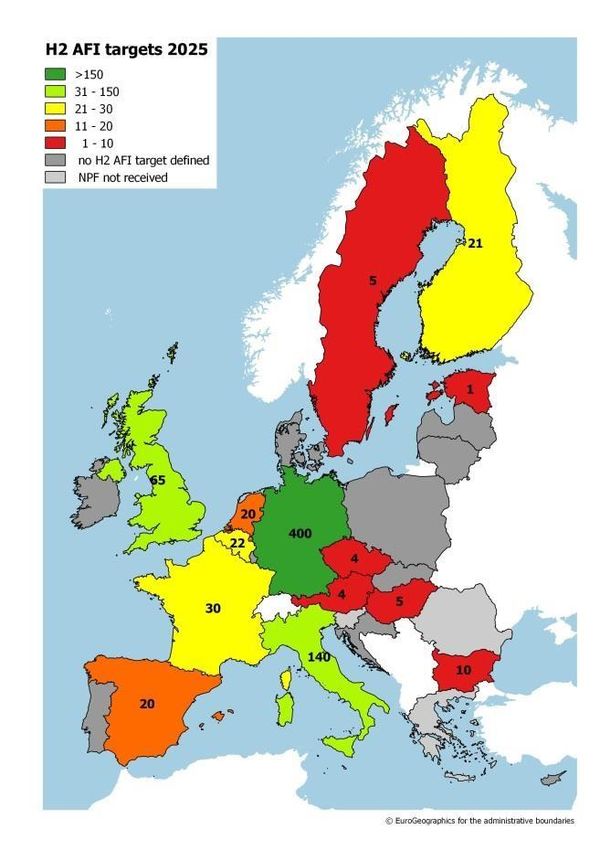
Hydrogen Europe

Hydrogen Europe represents the European hydrogen and fuel cell sector with
more than 115 companies, 65 research organisations and 10 national
associations as members.

We partner with the European Commission in the innovation programme Fuel
Cells and Hydrogen Joint Undertaking (FCH JU).

We promote hydrogen as the enabler of a zero-emission society.

               Hydrogen Europe is a supporting organisation of the
                             Hydrogen Council

                                                                         2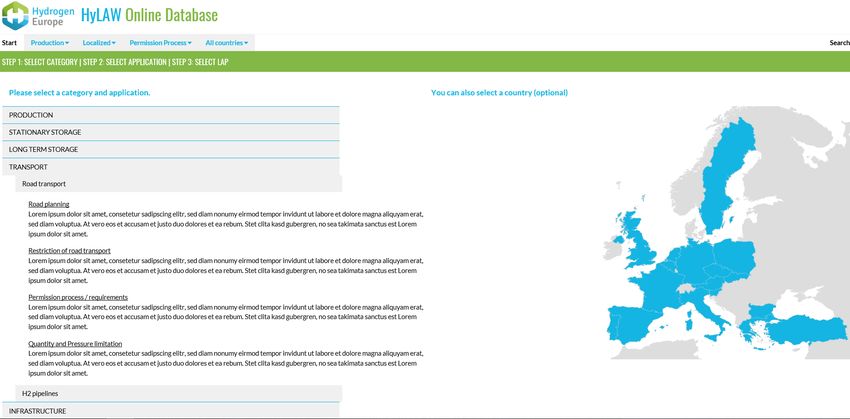
Hydrogen Europe >185 Companies Research institutes and
Associations

                                                         3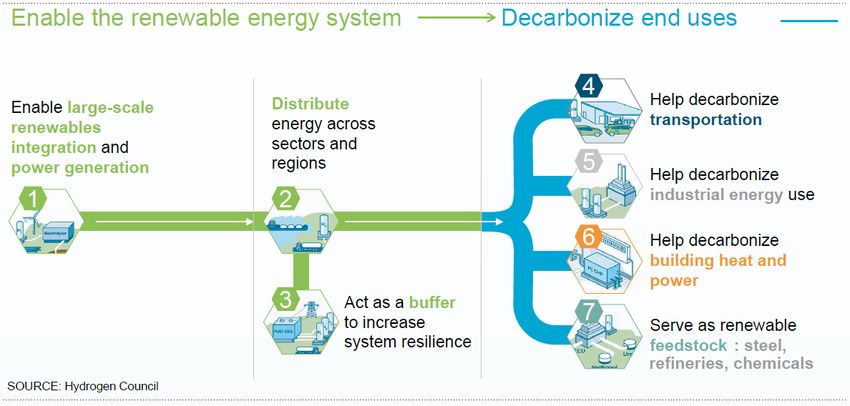
EU Legislative framework for Hydrogen

A positive regulatory framework for hydrogen requires 2 elements

1. Positive legislation which acknowledges and supports the role of
   hydrogen
               Hydrogen Europe’s advocacy work

2. Removing barriers that will hinder the deployment
               HyLAW project

                                                                      4
EU Legislative framework for Hydrogen

A positive regulatory framework for hydrogen requires 2 elements

1. Positive legislation which acknowledge and support the role of
   hydrogen
               Hydrogen Europe’s advocacy work

                                                                    5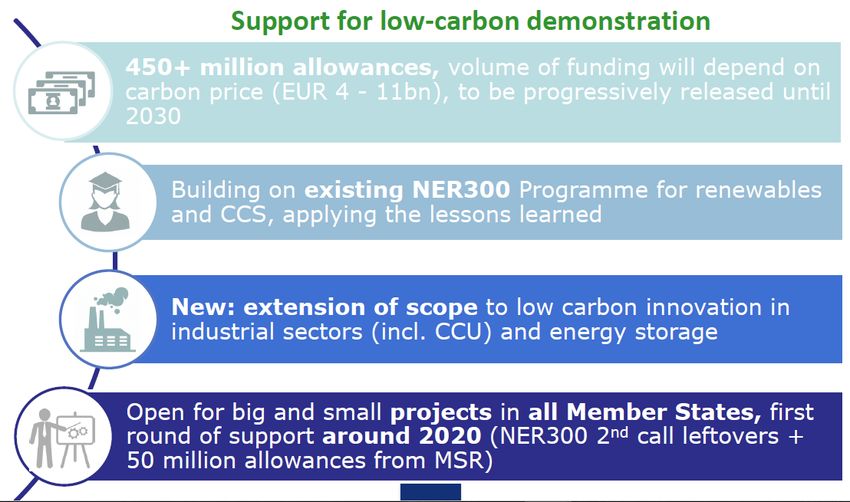
7 roles of hydrogen need to be acknowledged

                                              6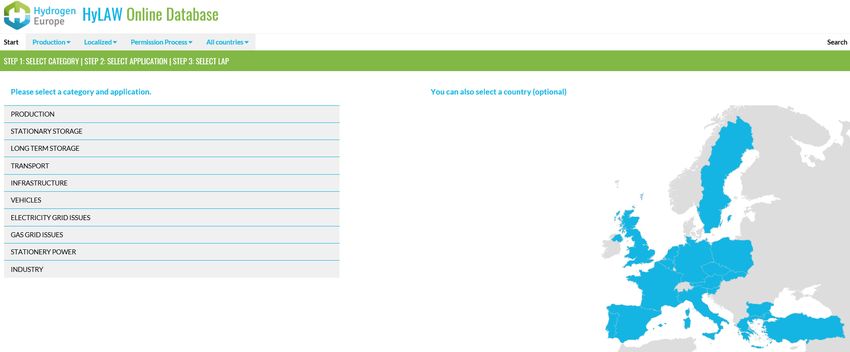
EU framework
Sector        Requirement             Legislative Tools            Financial Tools        Hydrogen’s role
Transport     -CO2                    1. Fuel Quality Directive                           -H2 as a fuel
              -PM/NOX/SOX reduction   2. Renewable Energy                                 -H2 made fuels
                                      Directive (RED2)
              -integration of RES                                                         -green hydrogen for
                                      3. CO2 emission standards                           refineries
                                      4. Clean vehicle Directive
                                      5. Alternative Fuel
                                      Infrastructure Directive
Energy-       Decarbonisation         EU ETS                       Modernisation Fund /   Green/Decarbonised
intensive                                                          Innovation Fund        hydrogen as feedstock
industries                                                                                switch

Gas/Heating   Decarbonisation (to     (1. RED (2))                 Possibly CEF Energy    1. Green/Decarbonised
              remain a player)                                                            hydrogen as feedstock 2.
                                      2. Upcoming Gas Regulation                          Fuel cell as energy
                                      (2019/2020)                                         converter

Power         Storage / ancillary     Electricity Market Design                           Rapid response
              services                Directive / Regulation                              electrolysers + Sectoral
                                                                                          Integration      7
EU framework – Renewable Energy Directive

A. Integrating renewables in transport:
   1.   Obligation of fuel suppliers to integrate a percentage of renewables
   2.   Link with Hydrogen
   3.   In which conditions
   4.   Equality of treatment with renewable electricity

• B Guarantees of Origin

                                                                               8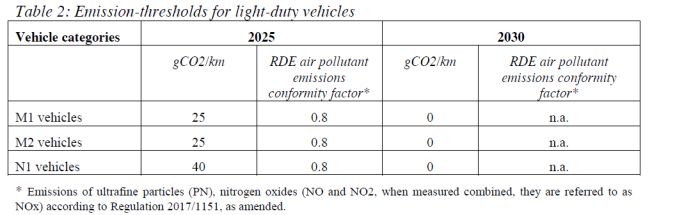
EU framework – Renewable Energy Directive

1. Obligation of fuel suppliers to integrate a percentage of renewables

RED 2 is the instrument to reach the objective of having 27% (or more) of renewable as primary
energy in Europe

Article 25 sets a specific objective to integrate renewables in transport with an obligation for fuel
suppliers to integrate a fraction of renewables in the fuels they sell
    1. General percentage
        •   Commission : 6.8%
        •   Parliament EP: 12%... but multipliers
        •   Council: 14% …. but multipliers

    2. Different minimum/maximum/flexible percentages for different categories of fuels             9
EU framework – Renewable Energy Directive
2. Link with H2: RFNBIO
a) Renewable H2 as a fuel: YES
b) Renewable H2 made fuel : YES
c) Renewable H2 in refineries: ?
Article 25: Mainstreaming RES in transport -> RFNBO or Refunobio
“When electricity is used for the production of renewable liquid and
gaseous transport fuels of non-biological origin, either directly or for
the production of intermediate products, […]”
Text is not questioned in trilogue but legal clarity on interpretation
remains unclear
=> Hydrogen Europe letter to Bulgarian Presidency, EC, EP.
10EU framework – Renewable Energy Directive
3. In which conditions can H2 count for compliance with the target
• Restrictive conditions
• Intense discussion on the text
• Current trilogue finalisation: 17 May
Commission proposal Council position Hydrogen Europe position
Determination of the renewable share of RFNBIO Electricity for fuel production can be fully counted as Electricity for fuel production can be fully counted as
renewable, if connected to the grid, but: renewable, if connected to the grid, but:
• Average share of electricity from RE sources in the
Union • Can provide evidence that the respective electricity • Can provide evidence that the respective electricity
or has been provided without importing electricity from the has been provided without importing electricity from
• The share of electricity from renewable energy grid. If electricity has been imported from the grid: the grid. If electricity has been imported from the grid:
sources in the Member State two years before
• Renewable electricity generation would have been • Renewable electricity generation would have been
• Fully counted only if curtailed if not consumed by the plant curtailed if not consumed by the plant or
• Renewable properties have been demonstrated
• no grid connection Or renewable properties have been through the use of guarantees of origin or power
• And comes into operation after demonstrated purchase agreements
or at the same time as the
-> Implementing act to establish common
installation producing -> Implementing act to establish common
methodology
methodology
11EU framework – Renewable Energy Directive
4. Equality of treatment with renewable electricity? NO
• Different conditions for renewable electricity and renewable hydrogen
• “Multipliers”
Parliament proposal Council position Hydrogen Europe position
The contribution of renewable Within this total share, the contribution “Within this total share, the direct
electricity supplied to road vehicles of renewable electricity shall be contribution of renewable electricity
shall be considered to be 2.5 times its considered to be 5 times its energy or indirect contribution through
energy content. content when supplied to road renewable liquid and gaseous
vehicles and 2 times the energy transport fuels of non-biological
content when supplied to rail origin of renewable electricity shall
transport. be considered to be 2.5 times its
energy content when supplied to
road vehicles and 2 times the energy
content when supplied to rail
transport.”
12EU framework – Renewable Energy Directive
B. Guarantee of origin on Hydrogen for consumer choice
Article 19: Inclusion of hydrogen guarantees of origin
European Commission Proposal European Parliament position Council position
A guarantee of origin shall specify at least: A guarantee of origin shall specify at least: A guarantee of origin shall specify at least:
(a) the energy source from which the energy (a) the energy source from which the energy (a) the energy source from which the energy
was produced and the start and end dates of was produced and the start and end dates of was produced and the start and end dates of
production; production; production;
(b) whether it relates to: (b) whether it relates to: (b) whether it relates to:
(i) electricity; or (i) electricity; or (i) electricity; or
(ii) gas, or (ii) gas, including hydrogen or (ii) gas, or
(iii) heating or cooling; (iv) heating or cooling; (iii) heating or cooling;
13EU framework
Sector Requirement Legislative Tools Financial Tools Hydrogen’s role
Transport -CO2 1. Fuel Quality Directive -H2 as a fuel
-PM/NOX/SOX reduction 2. Renewable Energy Directive -H2 made fuels
(RED2)
-integration of RES -green hydrogen for
3. CO2 emission standards refineries
4. Clean vehicle Directive
5. Alternative Fuel Infrastructure
Directive
Energy- Decarbonisation EU ETS Modernisation Fund / Green/Decarbonised
intensive Innovation Fund hydrogen as feedstock
industries switch
Gas/Heating Decarbonisation (to (1. RED (2)) Possibly CEF Energy 1. Green/Decarbonised
remain a player) hydrogen as feedstock 2.
2. Upcoming Gas Regulation Fuel cell as energy
(2019/2020) converter
Power Storage / ancillary Electricity Market Design Rapid response
services Directive / Regulation electrolysers + Sectoral
Integration 14EU framework – CO2 emission standards
• Presented in November 2017 by the European Commission
• Philosophy: Technology neutral and rewarding best performers
• 2 Key elements
1. CO2 standards: 15% reduction in 2025 and 30% reduction in 2030 (compared with 2021)
2. Reward for introduction of ZEV/LEV
• Which vehicles: CO2 tailpipe emissions between 0 - 50 g CO2/km
=> plug-in hybrid, BEV, FCEV
• Mechanism:
• Benchmark objective: 15% in 2025 and 30%
• Reward if OEM achieves more: a less stringent CO2 target
• "exchange rate" of 1% / 1% with maximum 5% increase of CO2target
• ZEV counted as one; LEV counted according to CO2 emissions
• No sanction if OEM achieves less 15EU framework – CO2 emission standards
• Illustration of the mechanism
target becomes
target = 100 g CO2/km 105 g CO2/km
(max. + 5 % credit)
benchmark = 30% ZLEV 37 % ZLEV
16EU framework
Sector Requirement Legislative Tools Financial Tools Hydrogen’s role
Transport -CO2 1. Fuel Quality Directive -H2 as a fuel
-PM/NOX/SOX reduction 2. Renewable Energy Directive -H2 made fuels
(RED2)
-integration of RES -green hydrogen for
3. CO2 emission standards refineries
4. Clean vehicle Directive
5. Alternative Fuel Infrastructure
Directive
Energy- Decarbonisation EU ETS Modernisation Fund / Green/Decarbonised
intensive Innovation Fund hydrogen as feedstock
industries switch
Gas/Heating Decarbonisation (to (1. RED (2)) Possibly CEF Energy 1. Green/Decarbonised
remain a player) hydrogen as feedstock 2.
2. Upcoming Gas Regulation Fuel cell as energy
(2019/2020) converter
Power Storage / ancillary Electricity Market Design Rapid response
services Directive / Regulation electrolysers + Sectoral
Integration 17EU framework – Clean Vehicle Directive
Presented in November 2017 by the European Commission:
• public procurement-based fleet deployment across
Europe
• First it defines clean vehicles based on emission
thresholds (EC proposal)
• For cars: de facto electric powered vehicles
• For vans: de facto electric powered vehicles
• For bus: accepts also natural gas
• Second, it sets a minimum procurement target per
Member states and per vehicle segment (next slide)
18Light duty vehicles
Buses
Member State 2025 2030
Member State 2025 2030
Luxembourg 50% 75%
Luxembourg 35% 35%
Sweden 50% 75%
Sweden 35% 35%
Denmark 50% 75%
Denmark 34% 34%
Finland 46% 69%
Minimum procurement target per Finland 35% 35%
Germany 50% 75%
Germany 35% 35%
Member states and per vehicle France 34% 34%
France 48% 71%
United Kingdom 50% 75%
segment United Kingdom 35% 35%
Netherlands 50% 75%
Netherlands 35% 35%
Austria 50% 75%
Austria 35% 35%
Belgium 50% 75%
Belgium 35% 35%
Italy 50% 75%
Italy 35% 35%
Ireland 50% 75%
Ireland 35% 35%
Spain 50% 75%
Spain 33% 33%
Cyprus 50% 75%
Cyprus 29% 29%
Malta 50% 75%
Malta 35% 35%
Portugal 40% 61%
Portugal 27% 27%
Greece 38% 57%
Greece 23% 23%
Slovenia 33% 50%
Slovenia 20% 20%
Czech Republic 46% 70%
Czech Republic 27% 27%
Estonia 36% 53%
Estonia 21% 21%
Slovakia 39% 58%
Slovakia 20% 20%
Lithuania 47% 70%
Lithuania 19% 19%
Poland 37% 56%
Poland 20% 20%
Croatia 32% 48%
Croatia 17% 17%
Hungary 42% 63%
Hungary 21% 21%
Latvia 40% 60%
Latvia 20% 20%
Romania 29% 43%
Romania 17% 17%
Bulgaria 39% 58%
Bulgaria 16% 16%
19EU framework
Sector Requirement Legislative Tools Financial Tools Hydrogen’s role
Transport -CO2 1. Fuel Quality Directive -H2 as a fuel
-PM/NOX/SOX reduction 2. Renewable Energy Directive -H2 made fuels
(RED2)
-integration of RES -green hydrogen for
3. CO2 emission standards refineries
4. Clean vehicle Directive
5. Alternative Fuel
Infrastructure Directive
Energy- Decarbonisation EU ETS Modernisation Fund / Green/Decarbonised
intensive Innovation Fund hydrogen as feedstock
industries switch
Gas/Heating Decarbonisation (to (1. RED (2)) Possibly CEF Energy 1. Green/Decarbonised
remain a player) hydrogen as feedstock 2.
2. Upcoming Gas Regulation Fuel cell as energy
(2019/2020) converter
Power Storage / ancillary Electricity Market Design Rapid response
services Directive / Regulation electrolysers + Sectoral
Integration 20EU framework – Alternative Fuel Infrastructure Directive
Presented in November 2017 by the European Commission:
• Seen as key directive to unlock potential for hydrogen-based fuels along TEN-T core network.
• National plans on deployment of Mandatory ? Fuels
Objectives/distance
requirement
alternative infrastructure
(electricity, gas, … hydrogen). One recharging point per
estimated ten electric vehicles
Electricity
Yes (and for information purposes:
• Hydrogen is included in 14 for vehicles
at least every 60 km on TEN-T
NPFs (Austria, Belgium, Bulgaria, Core Network)
Czech Republic, Germany, At least every 150 km on TEN-
Estonia, Spain, Finland, France, T Core Network and one CNG
Yes CNG
refuelling point per estimated
Hungary, Italy, Netherlands, 600 CNG vehicles
Sweden, and UK)
LNG for At least every 400 km on TEN-
Yes
vehicles T Core Network
• There will be more money
Coverage of maritime ports
available via TEN-T, (especially in LNG for
with mobile or fix installations
Yes maritime
Core Network Corridors also for to enable the circulation on
vessels
hydrogen), NER300 and some TEN-T Core Network
regional funds LNG for Coverage of inland ports with
inland mobile or fix installations to
Yes
waterway enable the circulation on the
• Special mentioning of the Cleaner vessels TEN-T Core Network
Transport Facility (CTF) of the EIB
At least every 300 km on TEN-
No Hydrogen
T Core Network
21EU framework
Sector Requirement Legislative Tools Financial Tools Hydrogen’s role
Transport -CO2 1. Fuel Quality Directive -H2 as a fuel
-PM/NOX/SOX reduction 2. Renewable Energy Directive -H2 made fuels
(RED2)
-integration of RES -green hydrogen for
3. CO2 emission standards refineries
4. Clean vehicle Directive
5. Alternative Fuel Infrastructure
Directive
Energy- Modernisation Green/Decarbonised
intensive Fund / Innovation hydrogen as feedstock
Decarbonisation EU ETS Fund switch
industries
Gas/Heating Decarbonisation (to (1. RED (2)) Possibly CEF Energy 1. Green/Decarbonised
remain a player) hydrogen as feedstock 2.
2. Upcoming Gas Regulation Fuel cell as energy
(2019/2020) converter
Power Storage / ancillary Electricity Market Design Rapid response
services Directive / Regulation electrolysers + Sectoral
Integration 22EU framework – EU ETS / Innovation Fund
23EU framework
Sector Requirement Legislative Tools Financial Tools Hydrogen’s role
Transport -CO2 1. Fuel Quality Directive -H2 as a fuel
-PM/NOX/SOX reduction 2. Renewable Energy Directive -H2 made fuels
(RED2)
-integration of RES -green hydrogen for
3. CO2 emission standards refineries
4. Clean vehicle Directive
5. Alternative Fuel Infrastructure
Directive
Energy- Decarbonisation EU ETS Modernisation Fund / Green/Decarbonised
intensive Innovation Fund hydrogen as feedstock
industries switch
Gas/Heating Decarbonisation (to (1. RED (2)) Possibly CEF Energy 1. Green/Decarbonised
remain a player) hydrogen as feedstock 2.
2. Upcoming Gas Regulation Fuel cell as energy
(2019/2020) converter
Power Storage / ancillary Electricity Market Design Rapid response
services Directive & Regulation electrolysers + Sectoral
Integration 24EU framework – Electricity Market Design
Seen as key directive to unlock potential for Sectoral Integration (SI) including electricity and
hydrogen
2 key aspects:
• Definition of energy storage
• Ownership of storage
Energy storage Ownership of storage
means, in the electricity system, deferring an TSO/DSO shall not be allowed to own, develop,
amount of the electricity that was generated to the manage or operate unless:
moment of use, either as final energy or converted a) No other party has come forward
into another energy carrier. b) Necessity to fulfil duty under said directive
c) Regulatory authority has approved
25EU framework
Sector Requirement Legislative Tools Financial Tools Hydrogen’s role
Transport -CO2 1. Fuel Quality Directive -H2 as a fuel
-PM/NOX/SOX reduction 2. Renewable Energy Directive -H2 made fuels
(RED2)
-integration of RES -green hydrogen for
3. CO2 emission standards refineries
4. Clean vehicle Directive
5. Alternative Fuel Infrastructure
Directive
Energy- Decarbonisation EU ETS Modernisation Fund / Green/Decarbonised
intensive Innovation Fund hydrogen as feedstock
industries switch
Gas/Heating Decarbonisation (to (1. RED (2)) Possibly CEF Energy 1. Green/Decarbonised
remain a player) hydrogen as feedstock 2.
2. Upcoming Gas Regulation Fuel cell as energy
(2019/2020) converter
Power Storage / ancillary Electricity Market Design Rapid response
services Directive / Regulation electrolysers + Sectoral
Integration 26EU framework – Gas Market Regulation (next battlefield)
• Prepared now but presented end of 2019/beginning 2020
• It will be a Regulation and not a Directive
• Content:
1. One part of the package will be mirroring the electricity market (retail).
2. Another part of the package will mostly cover the future content of the gas grids =>
Hydrogen
• The Commission seems neutral when it comes to green or blue hydrogen. It’s important that it
is decarbonised
Objectives Hydrogen Europe: Gas Grid WG -> Welcome to join!
• Acknowledgement of hydrogen production from the grid or storage as a value-adding component for the
energy infrastructure
= Remuneration mechanism for market players
• Legislation needs to harmonise fragmented regulation to introduce hydrogen into the natural gas
network. 27EU Legislative framework for Hydrogen
A positive regulatory framework for hydrogen requires 2 elements
2. Removing barriers that will hinder the deployment
HyLAW project
28HyLaw - tackle barriers and inform the market
• HyLAW stands for Hydrogen Law and removal of legal barriers to the
deployment of fuel cells and hydrogen applications
• The project started in January 2017 and is scheduled to end in December
2018
• The main objectives of HyLAW are twofold:
Policy Market
Identify regulatory barriers Document legal and
(and best practices) and administrative processes
advocate for better which apply when deploying
regulation to support the key Hydrogen technologies
uptake of fuel cell and (coherent, user friendly, online
hydrogen technologies database)
29HyLaw – Examples of barriers identified
Who: Directive 2010/75/EU on industrial Who: Lack of legislation (Regulatory Gap)
emissions (integrated pollution prevention
and control What: Despite national / private initiatives (DE, DK,
BE) to certify “green” hydrogen. There is no binding or
What:The Directive, with the aim to reduce uniform guarantee certification system at European
harmful emissions, imposes a series of level
obligations on operators
Consequences: The lack of a green hydrogen
Consequences: The Directive applies to the definition across the EU can be a barrier that will slow
production of hydrogen (Annex I, point 4.2), down the implementation of hydrogen if divergent
irrespective of quantity or method (e.g. approaches jeopardize the free movement of (green)
electrolysis) severely limiting the potential of Hydrogen across the EU.
HRS with on-site production (among other
things)
30HyLaw - inform the market (1)
• Work started on web portal and online database:
www.hylaw.eu
31HyLaw - inform the market (2)
32HyLaw - inform the market (1)
33Thank you! Questions?
Shift happens!
Hydrogen enables you.
Contacts Dr Nicolas Brahy
Hydrogen Europe Director
Avenue de la Toison d’Or 56-60 E-mail: n.brahy@hydrogeneurope.eu
1060 Brussels Tel.: 0032 2 540 87 75
Belgium www.hydrogeneurope.eu
34You can also read


