Everything is sacred: seeing the wonders that play below 2021 1 - Jesuits of Canada
←
→
Page content transcription
If your browser does not render page correctly, please read the page content below

2021 1

jesuits.ca

     Everything is sacred:
     seeing the wonders
     that play below
     page 16

                       New seeds of hope for an old forest
                                                       page 8

                          Justice and Indigenous Wisdom
                                                      page 32

                         Cultivating the land and the soul:
                   the work of the Ferme Berthe-Rousseau
                                                       page 5
From the Director

“    Let us place our first step in the ascent at the bottom, presenting to
    ourselves the whole material world as a mirror through which we may
    pass over to God, the supreme [Artisan] “
                                                    — Saint Bonaventure (1221–1274)

                                                                                                                    Photo: Stijn Dijkstra de Pexels
T
      his edition of Canadian Jesuits         ensure that the younger generation is
      focuses on one of the most urgent       informed, aware, and able to incorporate
      calls facing humanity and creation:     this issue with their faith.
caring for our Common Home.
                                                And, perhaps most fundamentally,
  It is no secret that our planet is facing   spiritual and pastoral centres, parishes,
a climate emergency. The most reputable       and chaplaincies seek to work together
scientific organizations agree that human     to emphasise awareness of God’s call to
activity is causing profound and systemic     love all that is sacred.
environmental damage that threatens
                                                But, of course, we cannot do this alone.
our existence.
                                              The climate emergency is global and
  And this environmental crisis is            systemic and therefore requires us to join
particularly affecting the poorest and        forces with those who influence change
most vulnerable. Christians and all           in these structures.
people of good will are called to act
                                                In this issue we not only highlight the
urgently. We’re in need of an ecological
                                              efforts we lead as the Society of Jesus,
conversion if we are to be honest
                                              but we also highlight the ways in which
custodians of this wonderful planet and
                                              we collaborate with other drivers of
avoid its destruction. We can still change
                                              change.
the course of history.
                                                We provide concrete examples of
  We Jesuits and colleagues do not
                                              how Jesuits in Canada are working and
ignore this cry of suffering from creation.
                                              cooperating with others in this regard.
In fact, it is part of our four Universal
Apostolic Preferences, which orient our         Our hope is that the stories shared
efforts for the next ten years.               in these pages will inspire those who
                                              feel inclined to participate, to join,
  Our social centres, such as the Centre
                                              with Gospel depth, in this mission of
Justice et Foi, study the structural
                                              reconciliation and resurrection in our
causes of the emergency, collaborating
                                              common home.
with schools, universities, and others
who share our concerns to promote             José Antonio Sánchez
fundamental solutions.                        Director                                         Jesus saw God
 Our educational institutions, such as the                                                 in all that he saw.”
University of Sudbury and Regis College,
and those who work in them, seek to                                                                — James Finley

2    CANADIAN JESUITS
In this Issue

                                          2     From the Director

2021 Nº 1                                 4     From the Provincial

Canadian Jesuits is the
                                          Our works
magazine of the Jesuits of                5     Cultivating the land and the soul:
Canada. It is published twice a                 the work of the Ferme Berthe-Rousseau
year in French and English.
                                          8     New seeds of hope for an old forest
Director of the Magazine
José Sánchez                              11    The ministry of fresh mangoes, meaty coconuts
                                                and the shade of trees
Associate Editor
Fannie Dionne
                                     8    News
Proofreading and Editing
Kathy Baroody
                                          13    Canadian News
Editorial Committee                       14    Taking care of our common home:
Gilles Mongeau, SJ                              Other works and projects
John O’Brien, SJ
Michel Corbeil, SJ                        Spirituality
Barry Leidl
                                          16    Everything is sacred: seeing the wonders that play below
Other Contributors
André Brouillette, SJ                     Portrait of a Canadian Jesuit
Pierre Belanger, SJ
John McCarthy, SJ                         18    Mother Nature and Brother Hudon
Becky Sindelar
Layout                               31
                                          Ignatian Wisdom in Daily Life
Camille Legaspi                           22    The Ignatian Magis: Spirituality and Growth
Printing
PubCité                                   Events, Publications, Resources
Year 2021 - Issue 1                       24    Events, Publications, Resources
Date of publication:
January 1, 2021                           Formation
Legal Deposit:
National Library of Canada
                                          25    From rockets to canoes
Quebec
                                          I   nternational
25, rue Jarry Ouest
                                     32   28    Brother Paul Desmarais: Sowing the Seeds of Knowledge
Montreal, Quebec
Canada H2P 1S6                            31    International News
For more information
(subscriptions, etc.),
                                          32    Justice and Indigenous Wisdom:
contact José Sánchez,
                                                The Work of the Pan-Amazonian Network
director of communications, at
CANcommunications@jesuites.org            Witnesses of a Life
514-387-2541                              35    Cigarettes, coffee and justice:
jesuits.ca                                      the unusual holiness of Martin Royackers, SJ
Cover Photo : Alexander Mcferon of
Unsplash

                                                                                      JESUITS.CA      3
From the Provincial

                                        I grew up in rural New Brunswick, with its abundance of       to develop a deeper sensitivity to the common good
                                      forests and rivers, as well as the ocean within easy reach.     associated with the deeply Christian truism of the
                                      Thus, from an early age, I developed a deep appreciation        brotherly and sisterly love among all human beings. Good
                                      for unspoiled nature. I reminisce fondly about the times        Pope Francis reminds us that this is God’s deepest desire
                                      when, with siblings and friends, I could take off for days      for the world. Shouldn’t we all want what God wants?
                                      at a time to the beautiful island in the middle of the
                                                                                                         The Jesuits of Canada and our partners are doing our
                                      river, a half hour’s sail from where we lived. I’m amazed
                                                                                                      utmost to live out the sacred and human values that are
                                      to recollect that 10- and 12-year-olds were permitted to
                                                                                                      at the root of the founding desires of the first Jesuits
                                      do such things in those days. Being from the country, I
                                                                                                      almost five hundred years ago and that resonate so
                                      was doubly appreciative that we were far enough away
                                                                                                      forcefully with the prophetic leadership of our brother
                                      from the city of Saint John not to pick up the sulfur smell
                                                                                                      Jesuit, Pope Francis. No less does the contemporary
                                      that emanated from the local pulp mill. I ask myself the
                                                                                                      articulation of Jesuit values as espoused by the Universal
                                      question today: Did it really sink in during those salad
                                                                                                      Apostolic Preferences and our own recent Canadian
                                      days that many others were less fortunate than I, knowing
                                                                                                      Jesuit document Pilgrims Together express our hope for a
                                      as I did even then the stories about vulnerable residents in
                                                                                                      world where alle Menschen werden bruder (Beethoven’s
                                      the city whose health was affected by those toxic fumes?
                                                                                                      setting of Schiller’s poem in the Ode to Joy of his Ninth
                                        Youthful memories run deep, yet I am grateful to have         Symphony); a world where all people will recognize their
                                      learned that to appreciate the beauty of nature unspoiled       common origins that connect them with each other and
                                      is not enough in an age fraught with the preoccupations of      with the Earth. The Jesuits came to this country in the
                                      ecological crisis and climate change, and the unavoidable       seventeenth century, naively displacing the healthy and
                                      and difficult question: What kind of world do we want           established cultures of our Indigenous brothers and sisters
                                      to leave for those who come after us? The imperative            who, we are only beginning to understand, have so much
                                      to better care for our common home needs to be heard            to teach us in terms of respect for nature and the best
                                      and acted upon, especially by those of us who live in           qualities of human collaboration. I encourage Jesuits, our
                                      the so-called First World. We need to acknowledge the           coworkers, and you, our friends, to make every effort to
                                      fact that at the root of the current crisis is the truth that   listen, to dialogue, to learn, and to emulate God’s great
                                      Western industrialization and the exploitation of natural       desire for healing and peace among peoples. We need
                                      resources have aided the prosperity and privilege of            you. God needs you. AMDG
                                      our beautiful country. Equally crucial is the fact that our
                                      comfort and flourishing has been too often at the expense
                                      of fellow human beings in other parts of the world who
                                      struggle to find food and clean water, often as the result of
                                      the abusive practices of multinational companies.

                                        Pope Francis wrote his celebrated encyclical Laudato                              Erik Oland, SJ
Photo: Tim Foster of Unsplash

                                      Si’ five years ago and most recently Fratelli Tutti. Both of                        Provincial of the
                                      these inspired writings challenge Catholics, and indeed                             Jesuits of Canada
                                      the whole world, to wake up to the reality of our suffering
                                      biosphere, to gain a greater sense of engagement and
                                      responsibility for the care of our common home, and

                                4   CANADIAN JESUITS
Nos œuvres

                       Cultivating the land
                       and the soul:
                       the work of the Ferme Berthe-Rousseau
                       by Fannie Dionne | photos : Ferme Berthe-Rousseau
Photo : José Sánchez

                                                                           A
                                                                                   fter months of confinement in Montreal, I was happy to visit
                                                                                   the 40 acres of the Ferme Berthe-Rousseau in Durham South.
                                                                                   The organization’s mission: to welcome and house people
                                                                           living in difficult circumstances.. Marie-Ève Barbeau, one of the
                                                                           farm’s team members, received me with the joy and passion that
                                                                           were already apparent when we spoke on the phone.

                                                                             Although the farm is nondenominational, it is in fact part of the
                                                                           network of Jesuit works in Canada. Firmly rooted in the Ignatian
                                                                           value of contemplation in action, it offers residents an opportunity to
                                                                           step back from their day-to-day routine and gain a new perspective
                                                                           on reality, a perspective that is perhaps more focused on the positive
                                                                           aspects of their lives. “We are women and men who value life above
                                                                           all,” says Michel Corbeil, SJ, one of the founders. “This includes all
                                                                           of us and implies an awareness of what is happening within and
                                                                           around us.” The Ignatian dimension of justice and ecology is also
                                                                           being lived on the farm. “We are making choices that may seem

                                                                                                                              JESUITS.CA        5
Our Works

                                     radical in light of today’s organizations that     to William, a resident. And ecology is an
                                     need to be profitable and results-oriented,”       integral part of the farm’s mission.
        In 2019-2020                 says Marie-Ève.
                                                                                        MENTAL HEALTH AND ECOLOGY
      the farm welcomed:                At the farm, hospitality, ecology, community
                                                                                          The farm is a model of sustainable living.
      •    16 residents              life, and education are different aspects
                                                                                        “We do the dishes by hand so that we can
                                     of the same mission. Organic agricultural
      •    24 groups, totalling                                                         spend time together. We have a composting
                                     production serves as the basis for communal
           296 visitors                                                                 toilet to save water. The zero-waste lifestyle
                                     living, accompaniment, listening, and
           (schools and other                                                           is popular right now, but when you live on
                                     building relationships.
           organizations)                                                               the farm, it comes naturally. . . . Visitors and
                                       Pascal Melançon, a former resident,              residents are made aware of the importance
      •    456 individual            poetically describes life on the farm: “At         of protecting our common home,” Marie-Ève
           visitors who made         Ferme Berthe-Rousseau, we take care of             points out.
           1,072 visits              the land and the water as well as what is
                                                                                          This attention to the environment was at
                                     most beautiful in ourselves. We garden and
                                                                                        the very foundation of the organization. “All
                                     care for animals and people, heart-to-heart
                                                                                        the people who were there when the farm
                                     and hand-to-hand. At the break of dawn,
                                                                                        began were attracted by the values of local,
                                     we begin to sow the seeds of goodness and
                                                                                        eco-friendly farming,” explains Marie-Ève.
                                     beauty, for the common good.
                                                                                        The farm has a dairy cow and dairy goats as
                                     A BIT OF HISTORY                                   well as a fruit and vegetable garden where
                                                                                        the harvest lasts a good part of the year.
                                       With the establishment of the international
                                     cooperation organization “Salut, le monde!”          “We offer the residents hands-on, practical
                                     in the 1980s and after having been warmly          work as a way for them to get out of their
                                     welcomed by families in Central America            heads. What’s interesting is that the project
                                     who shared what little they had, a group of        enables these people who are usually
                                     people in Quebec were inspired to create           marginalized because of mental health issues
                                     a project to accompany those who were              to experience a sense of belonging to a group.
                                     marginalized. The farm was born.                   When they arrive at the farm, they quickly
                                                                                        feel that they are involved in a different type
                                       “They wanted to work with people who
                                                                                        of project, one that is meaningful.”
                                     have mental health issues, who are homeless,
                                     who are isolated,” explains Marie-Ève. “The          “Gardens are a wonderful excuse to spend
                                     mission is to welcome people who need a            time with people, to show them what it means
                                     place where their spirits can be restored and      to be self-sufficient and active, to help them
                                     where community life can ground them. It is a      restore a sense of balance in their lives,”
                                     place of transition, but there is no pressure to   adds Julia, a former vegetable gardener. “It’s
                                     reach a certain level of reintegration.” Julia     rewarding to say, ‘Hey, we’re going to eat the
                                     Roy, who’s also in charge, adds, “The farm is      food that I grew in my garden.’”
                                     a place where we are really welcomed and
                                                                                          “For me, being on the farm is like taking
                                     accepted as we are.”
                                                                                        a break. It’s a time to rest, to relax. Here, I
                                      In short, it’s “a place where we can be           feel like I’m working,” says William, who had
                                     Zen and not have to perform,” according            heard about the farm when he was in therapy.
photos : Ferme Berthe-Rousseau

     6    CANADIAN JESUITS
Our Works

  Marie-Ève adds: “Someone who recently came to the farm said: ‘All
my life, I have been considered a parasite on society, but now I have the
opportunity to participate in a common project that is bigger than me. It’s
different than being in a place where I don’t fit in.’”

  Community work—in the barn or garden, for example—does a lot of good
for people, even though not all residents have a strong interest in agriculture.

COMMUNITY LIFE
  During the visit, Marie-Ève introduced me to her spouse, also one of
the people responsible for the farm, and their two young children. As part
of their approach to community life, the team lives on site, which offers
an opportunity for informal moments of connection between the residents
and the team, where “the most wonderful interactions happen.”

 In addition to residents, the community regularly welcomes visitors
who come for a much-needed break. Meals are sometimes served to as
many as 25 people! The farm is also open to the wider community and has
developed strong ties with its neighbors and the village of Durham-Sud.

  During our visit to the garden, we meet Jean-Marc, a neighbor who is
picking cucumbers. He speaks enthusiastically about the fact that the farm
has created networks of relationships. “I’m a native of this area, and I’ve
met a lot of people through my time at the farm. It creates bonds and
introduces you to new people, new ways of thinking. It brings new energy
to the community.”

IMPACT ON A LARGER SCALE
  Ferme Berthe-Rousseau also has an educational mission. “Last year,”
recalls Jean-Marc, “young people from Collège Régina Assumpta were
surprised to see that this is how we grow vegetables!” Marie-Ève adds:
“Groups of scouts came to visit, and we cleaned the fields with them. One
girl said, ‘Now I understand all the energy and effort behind the pint of
milk I buy at the grocery store.’ When she said that, I thought to myself,
this is why we exist!”

  Everyone should go for a visit! “It’s amazing to see what it does for you
to be in such a beautiful, peaceful place, so connected with nature, with
animals. It’s really wonderful,” concludes Julia

 You can read more of this article at https://bit.ly/fermeBR-ENG

               Fannie Dionne is a historian, a mother of two boys (loves coffee!),
               and passionate about social justice and ecology. She holds a PhD
               on Jesuit-Indigenous relations in New France, an MA in French
               literature and a certificate in communication.

                                                            JESUITS.CA          7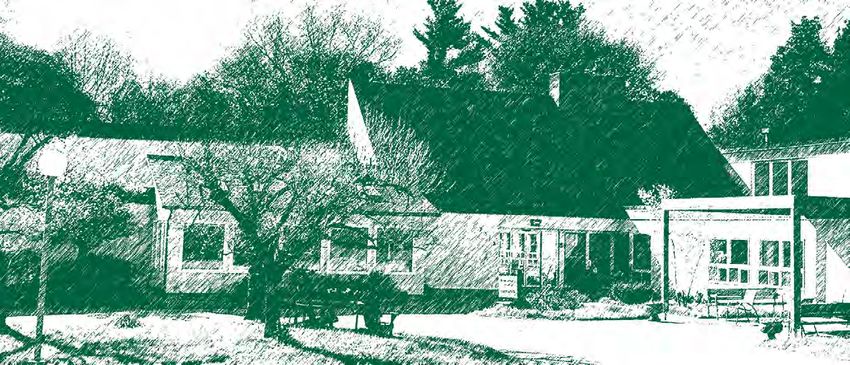
Our Works

New seeds of hope
for an old forest
by Fannie Dionne and José Sanchez | photos : Ignatius Old-Growth Forest

                                                                          T
                                                                                 he Ignatius Old-Growth Forest Project is one
                                                                                 of the ministries of the Ignatius Jesuit Centre
                                                                                 in Guelph Ontario. It consists of nearly 100
                                                                          protected acres of trails, forests, meadows, wetlands,
                                                                          and waterways that are home to a rich biodiversity of
                                                                          plant and animal life. The values of the centre, oriented
                                                                          by Ignatian principles such as finding God in all things
                                                                          and practicing a faith that does justice, are an integral
                                                                          part of the project’s foundation. It encourages the
                                                                          sharing of the sacredness of creation through spiritual
                                                                          development, education, community building and the
                                                                          care and stewardship of the earth.

                                                                            “Working with nature, restoring habitats, and inspiring
                                                                          young people to be part of nature is a spiritual journey,”
                                                                          said Martin Tamlyn, the manager of the Old-Growth
                                                                          Forest. A member of the Centre’s team for the past five
                                                                          years, he left a career as a school teacher to be part of the
                                                                          healing process of the ecological crisis. In the following
                                                                          interview, he gives an overview of the project.

                                                                          WHAT IS THE OLD-GROWTH FOREST
                                                                          PROJECT?
                                                                            Most of the original forest that was on the project site
                                                                          was removed during colonization, says Mr. Tamlyn. The
                                                                          long-term vision of the Ignatius Old-Growth Forest is to
                                                                          restore the site to old-growth forest.

8     CANADIAN JESUITS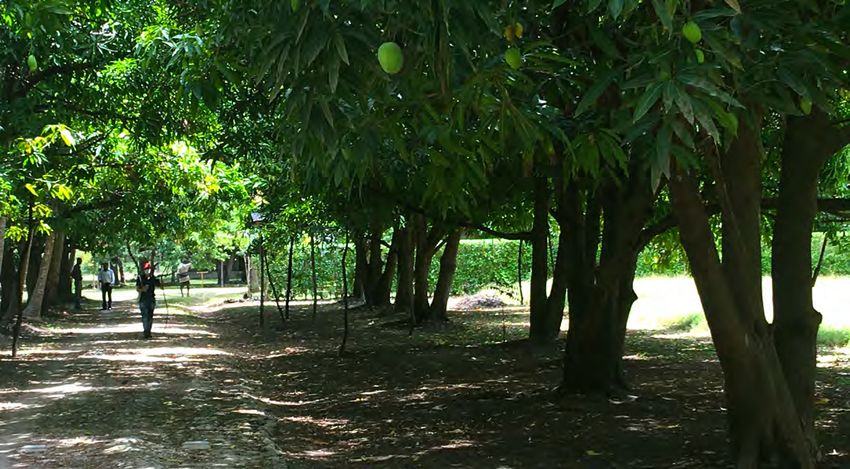
Our Works

  “There are two distinct aspects to this project.
One is to restore the land, the other is to engage the
community—including schools and volunteers in the
process of healing the land. Ecological restoration can
have a great impact on a community, helping people
develop a greater sense of community and a deeper
connection to place, as well as fostering a sense of the
common good. People come here to see what we we’re
able to do; they see restoration in action and then apply
that knowledge to their own ecological communities. It
is a catalyst.”

WHAT IS THE PURPOSE OF THE
PROJECT?
 We are in the midst of an ecological crisis and
humanity is disconnected from the natural world: “We
need ecological conversion,” explains Mr. Tamlyn,
perhaps echoing Pope Francis’s message in the
encyclical Laudato si’.

  “Through this journey toward healing the earth we
are also healing our relationships to it and each other.
It addresses one of the key questions toward living
sustainably: What does a reciprocal relationship to the
planet that sustains look like in our modern times? Not
only is it an exciting journey but one of great richness
and hope for future generations.”

WHAT IS THE IMPACT OF THE IGNATIUS                          I found the visit to the forest informative
OLD-GROWTH FOREST?                                          and inspiring. I feel that a whole new
  Ricardo Ramirez, an independent consultant,               dimension of spirituality has been
conducted an evaluation of the Ignatius Old-Growth          awakened. The subsequent walks
Forest (Guelph’s “best kept secret”!) as part of the
Ontario Trillium Foundation’s generous grant to the
                                                            along the forest trails greatly enhanced
project. He explains, “By planting trees … people feel      my prayer time.”
connected to nature and humanity.”
                                                            “I have found my bliss.”
  The project allows students who visit the forest to
take concrete actions to combat climate change. Who         “It showed me how a simple action can
benefits from the project? Me, the tree I planted, the
                                                            have a big impact.”
environment, the community. Visitors—both adult
retreatants and students of different grade levels—         “In the future, I want to be a person
enjoyed their experience. Here are some of their
comments:                                                   who helps save the planet.”

                                                                                              JESUITS.CA   9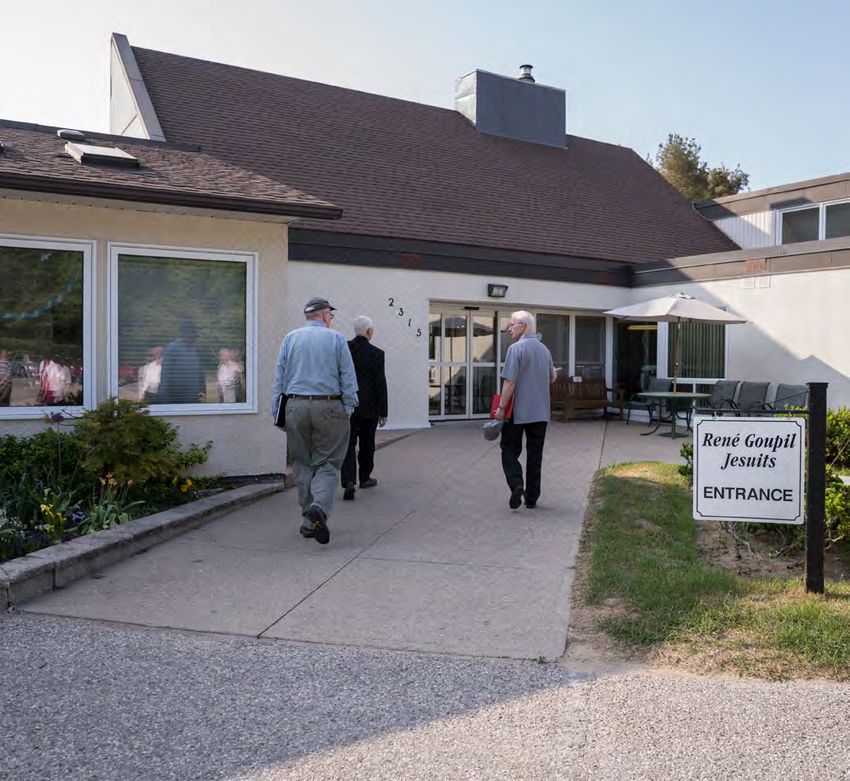
Our Works

  At a broader level, the evaluation indicates that
the project has made a significant impact on the
participants. The following are excerpts from the
findings:

 •    There is better interaction between staff
      members in their work environment.

 •    Participants are more sensitive to other natural
      sites that they encounter in their day-to-day
      lives.
                                                           RESTORATION MILESTONES
 •    The project fosters a stronger commitment to
                                                             Since the project’s conception in 2006, Ignatius staff, in
      the environment.
                                                           collaboration with volunteers, community groups, and government
 •    Participants recognize the sense of calm that        and environmental agencies, have made great strides.
      can result from a connection with nature.
                                                            Here are some key accomplishments:
 •    The project helps to develop a sense of community.
                                                                       The removal of the Ignatius Dam to allow Marden
HOW ARE ECOLOGY AND NATURE                                             Creek to flow freely into the Speed River
CONNECTED WITH SPIRITUALITY?
                                                                       Conducted an ecological assessment of the land and
  According to Mr. Tamlyn, the metaphor of a journey                   developed a long-term restoration plan
helps to explain how spirituality and the care of our
common home are connected.                                             The return of cold-water species such as sculpin and
                                                                       brook trout to the section of the creek on project
  It begins with opening your heart. By taking care
                                                                       lands
of something, you fall in love. Choosing to nurture
love is part of this journey. To quote Dr. Peter
                                                                       The reforestation of the land by planting 2,000
Leigh from the National Oceanic and Atmospheric
                                                                       native trees and shrubs per year
Administration: “The feeling of awe and wonder
is transcendental.” The next part of the journey is                    The securing of a conservation easement through
mystery. This mystery involves understanding the                       the Ontario Farmland Trust, which protects the land
magic of the ecological processes and connections.                     forever
After that comes knowledge, to be watchful noticing
the subtle changes, being able to name the plants and                  The ongoing removal of invasive plant species
animals, and having a more holistic understanding of
the impacts and solutions to ecosystem degradation         For more information about the Old-Growth Forest, please visit:
and climate change. It provides an opportunity for                https://ignatiusguelph.ca/old-growth-forest/
individuals to work in solidarity toward caring for
our common home. All these experiences lead you
to engage your entire being in a reality that is much
bigger than you realized. And this can be described as                José Sánchez is the Director of Communications for the
a spiritual experience.                                               Jesuits of Canada. Of Venezuelan origin and with a decade
                                                                      of experience in communications, journalism, and new
  The evaluators shared that during the evaluation
                                                                      business ventures, he is now completing a master’s degree
they “witnessed something precious.”
                                                                      in theological studies at Regis College, University of Toronto.

10 CANADIAN JESUITS
Our Works
The ministry of
fresh mangoes,
meaty coconuts and the shade of trees
by Fannie Dionne | photos : Jean Denis Saint Félix, SJ, Marcel Charélus, SJ and Frère Mathurin
“
Sometimes I find it hard to look at the deforested mountains
in some departments,” says Br. Marcel Charélus, SJ, director
of the Centre de Spiritualité Pierre-Favre in Port-au-Prince.
Fortunately, Haitian Jesuits such as Br. Marcel and Br. Mathurin
Charlot, SJ, are involved in some reforestation projects. The
latter, an agricultural technician and one of the oldest Jesuits
in Haiti, works in the Artibonite Department with the Project to
Support Reforestation and Agricultural Development (PAREDA).
Br. Marcel describes their work and the impact of reforestation.
In Haiti, planting trees has many benefits for people.
HOW DO YOU AND BR. MATHURIN CONTRIBUTE
TO REFORESTATION?
Br. Mathurin’s job focuses on the environment. He works in
a rural setting, accompanying farmers. He is also involved in
reforestation; we don’t see many people up in his area doing this
type of work. What he does is very beautiful; he reforests small
mountains. He grows a lot of high-quality mangoes. It’s one of
his best products, even though he doesn’t like to eat them! The
area where he lives is covered with trees: mango trees, coconut
palms, tamarind trees. He also grows beans, onions, tomatoes,
bananas.
JESUITS.CA 11Our Works
He prepares a lot of fruit-tree seeds, such as lemon
and coconut, and gives them to people to plant
elsewhere. I do the same at the retreat centre where
I accompany people. The place is surrounded by trees. The Support Group for Rural Development (GADRU) provides
People often ask: “Marcel, can you give me a mango technical supervision of farmers, capacity building for
plant and some flowers? I’d like to plant them, too. farmers’ organizations, and the transformation of agricultural
They’re beautiful, and there aren’t any where we live. products, as well as raises awareness on ecology issues (see
the last issue of the magazine)
WHY ARE THE JESUITS IN HAITI
WORKING ON REFORESTATION?
In Br. Mathurin’s time, the country was totally
covered with trees. Even I, who am younger than he,
remember when my home was totally surrounded by
woods, when the mountains were not bare as they
are today.
And we Jesuits preach ecology, we often talk
about the environment, like our Pope Francis. We are
mostly country people, so we are interested in the
environment. We have a love for trees, for plants. It’s
in our blood.
WHAT IMPACT DOES REFORESTATION
HAVE ON THE PEOPLE OF HAITI?
There are places in the country that don’t have any
trees, places where it’s impossible to live or breathe
because of the unrelenting heat of the sun. You can come to the centre, they relax, and they find fruit to
sometimes travel for miles without seeing any trees, eat. Beautiful mangoes. Or maybe fresh coconuts.
it’s completely desolate. And Haiti currently lacks Everything tastes good.
infrastructure. In Port-au-Prince, when there is no
IT IS BEAUTIFUL!
rain, everything is covered in dust. When it rains,
you’re knee-deep in mud and debris. But where there Fr. Midy Godfroy, SJ, once gave a retreat on beauty.
are plants and trees, you find gentle rain, fresh air, Beauty is more than just aesthetics, it is also the
and shade. natural environment and our inner world. It includes
all that surrounds us, what we breathe, what we eat,
People who come to the spirituality centre are
what we experience. He took both a biblical approach
amazed to see that we live in a healthy environment,
and an environmental approach. This is beauty.
thanks to the trees. They don’t need to stay inside
the house or the building; they spend their days
comfortably outside, in the shade amidst the fragrant
trees and the birds. Even in Haiti’s heat, when we
sit under the mango trees, we can breathe. The Artibonite is one of the ten departments
people who come for retreats do not want to leave! of Haiti. Its surface area is 4,887 km2
There’s a variety of trees, even fruit trees. People
12 CANADIAN JESUITSCanadian News
WINDOWS ON THEOLOGY AT REGIS COLLEGE
As Pope Francis points out, the ecological crisis is the
manifestation of a deeper crisis of modernity that has “ethical,
cultural, and spiritual” dimensions. We are all called to heal the
relationship between ourselves and the wider Earth community. To
do so, we need not only transformed technologies, policies, and
economics but also practical and ethical know-how. Ecological
wisdom capable of discerning a path toward just and loving
relationships is paramount. Just before the pandemic (which is
itself related to this ecological crisis) hit Canada, Regis College
launched a series of courses through its Windows on Theology
program called “Ecological Wisdom: Righting Our Relationships
with Each Other and the Earth.”
OUR LADY OF LOURDES PARISH—CREATIVELY
PRESENT TO THE COMMUNITY DURING COVID-19
During the long period of lockdown, Our Lady of Lourdes
Parish in Toronto set up a ministry to connect volunteers with
parishioners who were isolated for reasons of health or age,
offering them a friendly phone call or help to pick up groceries
or medication. Volunteers connected with more than 75 isolated
parishioners. The parish food bank also remained open thanks to
Jesuits and volunteers.
JESUITS OF CANADA
RESPOND TO THE DEATH OF
JOYCE ECHAQUAN
On September 28, Joyce Echaquan,
a member of the Atikamekw First NEW SERVICE FOR DISCERNMENT IN COMMON
Nation of Manawan, died in a
hospital in Quebec, amidst a barrage The Jesuit Province of Canada has recently established a new
of dehumanizing racist insults. The way to be of service to, among others, nonprofit organizations
photo : Facebook and the private sector by helping them to engage in a process of
Jesuits of Canada expressed their
deep sympathy to her family and community and their solidarity communal discernment. This process helps each organization to
with the First Nations in their frustration regarding the extent become more aware of its purpose and mission and thus to act more
of systemic prejudice and discrimination against Indigenous authentically. It enables groups to be more efficient and supportive,
peoples in Canada. “To transform the places where the virus of it gives people a greater understanding of the purpose of their work,
racism lurks within us, particularly among those of us who are and it improves performance and entrepreneurship. How does
not Indigenous, we must actively engage in the fight against discernment in common differ from traditional decision-making
racism and decolonize our attitudes and institutions. Most processes? It shifts the focus away from the problem itself and
importantly, we need the help of our Indigenous sisters and redirects it to the meaning of the group’s action, its ultimate goal,
brothers. We must listen to their voices and learn from their its identity, and its foundation. The decision is thus anchored in the
wisdom.” mission of the group.
JESUITS.CA 13Our works
IGNATIUS JESUIT CENTRE
Those who work, walk, play, and pray on the land of the Ignatius
Jesuit Centre experience firsthand the deep connection between
Taking
humans and the sacredness of Earth. This experience of connection
can be extremely powerful, evoking a deep sense of peace and
promoting physical, mental, and spiritual health. The Ignatius
care of our
Jesuit Centre provides programs, such as retreats, to foster deeper
ecological awareness and connection with the Earth common
home:
JESUIT COMMUNITIES
The Jesuit communities of the province have deepened their
commitment to the protection of our common home in a variety
Other works and projects
of ways, including energy-efficient renovations, responsible
consumption of resources, and waste sorting
doing and knowing, the Two-eyed knowing project invites us to
continually learn how to maintain a holistic approach to caring for
our common home. By weaving together indigenous and western
knowledge systems in this way, we gain a more complete picture
and narrative of how we are integrally connected to the planet and
to each other.
Photo : Canadian Jesuits International
THE JESUIT FORUM
The Jesuit Forum engages people in reflecting deeply and sharing
what’s happening in our globalized world, starting with their own
experience. It publishes guides to encourage dialogue on issues
related to social and ecological justice at the local and global levels.
CENTRE JUSTICE ET FOI Photo : Camp Lac Simon
The Centre justice et foi is a center for social analysis whose CAMP LAC SIMON
activities focus on our relationship with our common home and
the climate crisis, among other critical issues. It explores the The beauty of creation surrounds all who come to Lac Simon
underlying causes of the crisis in collaboration with the higher summer camp, creating a stark contrast with the experience of
education sector and others who share our concerns. city living that is common to most of us. Basking in the delights
of nature—the forest, the moon, the sun, the stars, the wind,
THE IGNATIUS JESUIT CENTRE’S TWO-EYED the silence of the night, and the lake—has become almost too
KNOWING PROJECT familiar, and we can take it for granted. For this reason, the camp
Informed by the inherent values of respect, relationships, now intends to enhance, in more tangible ways, its efforts to
reciprocity and responsibility for indigenous ways of seeing, preserve our common home.
14 CANADIAN JESUITSCanadian Jesuits Magazine - 5-Minute Survey
Please take a few moments to fill out this brief survey. It will help us to make sure that the
magazine responds to your needs and interests. Your participation is entirely voluntary. Thank you
for your time and support.
Would you recommend this magazine to others Any topics you wish the magazine would cover?
interested in the Jesuits of Canada?
_________________________________________
Yes No
Why: ____________________________ Please indicate your agreement with this
statement: “Canadian Jesuits magazine
Where did you find this magazine? strengthens my interest in the Jesuits.”
Received by mail Retreat centre Strongly Agree Agree
Parish or church Website Disagree Strongly disagree
Given by friend Given by a Jesuit
What actions have you taken influenced by reading
Other: ____________________________
the magazine?
How many issues of Canadian Jesuits have you Attended an event (retreat, etc)
read? Made a donation
1 2 3 4 Contacted a Jesuit
How much of the latest magazine did you read? Contacted someone who works with the Jesuits
All of it Most of it Recommended the Jesuits
Some of it None of it Forwarded all or part of the magazine
Saved all or part of the magazine
You prefer to read Canadian Jesuits…
Visited the Jesuits’ website
In print Online Both
No action taken
Favourite section of the magazine: Other: ____________________________
Our Works Canadian Jesuit
What is your relationship to the Jesuits?
International Jesuit International Work
Jesuit Lay colleague of the Jesuits
Canadian News International News
Friend Donor
Ignatian Spirituality Meditation
Other: ____________________________
Resources
Survey QR Code
Use the attached envelope to send in
your answers or fill out the survey online:
https://bit.ly/survey-CanadianJesuitsSpirituality
Everything is sacred:
seeing the wonders that play below
by John McCarthy, SJ
Since once again, Lord—though this time not
in the forests of the Aisne but in the steppes of
Asia—I have neither bread, nor wine, nor altar,
I will raise myself beyond these symbols, up to
the pure majesty of the real itself; I, your priest,
will make the whole earth my altar and on it
will offer you all the labors and sufferings of the
world.
- Pierre Teilhard de Chardin, Hymn of the Universe,
New York: Harper & Row, 1965, p. 19.
This varied scenario of celebrations of the
Eucharist has given me a powerful experience
of its universal and, so to speak, cosmic
character. Yes, cosmic! Because even when it
is celebrated on the humble altar of a country
church, the Eucharist is always in some way
celebrated on the altar of the world. It unites
heaven and earth. It embraces and permeates
all creation. Encyclical Letter, Ecclesia de
Eucharistia
- Saint Pope John Paul II Encyclical Letter, Ecclesia de
Eucharistia, 2003, No. 8.
“Fire down on the Labrador” by David Blackwood
16 CANADIAN JESUITSSpirituality
D
avid Blackwood’s Fire Down on the Labrador (1980) is
haunting. A lone lifeboat of survivors drifts from danger
under the chilled Labrador night. An iceberg reaches into
the depths, into the home of the denizen humpback, the drifting
mass of humanity oblivious to the pelagic life and the icy thrust
way down deep.
On the surface of life, we make our comings and goings, intent
on beginnings and endings, bound by joy and delight, failure
and despair. We often content ourselves with the veneer of life,
oblivious to the wonders that play below.
In the encyclical Laudato Si’ on the future of our planet and all its
life, Pope Francis calls for a renewed imagination and dialogue on
the care for our common home. Both religious faith and scientific
inquiry may help in this needed dialogue. Jesus Christ would
say, Let those with eyes see, and those with ears hear … It is Lagoon Nebula - WikiImages of Pixabay
an invitation to witness the meaningful depth of the world, to go in and through whom all things were made. Our Trinitarian God is
deep within our souls and deep within all of creation. Both faith revealed as the Creator Trinity. Our credal formulations, clean and
and science offer insights that add depth to our understanding of precise, simply state the obvious regarding the utter depth of all
the world. that is seen and unseen. Creation is the very action of salvation.
Furthermore, as the ground of creation, God is revealed as a
The 14-billion-year-old universe has a story, a history. Galaxies
Trinitarian dynamic in a mutuality of love among Father, Son, and
came to be, life emerged, photosynthesis was “invented,” and
Spirit. All creation is relational and connected. Thus, the world is,
the diversity of mammals exploded after the rapid demise of the
by its very essence, dynamic, relational, and with a depth best seen
dinosaurs. Even humans have a story, with ever-new discoveries
by the eyes of faith.
refreshing our knowledge of our hominoid genealogy. In the human
emerged consciousness and active self-awareness, language, The word of science and the word of faith help to make sense
and the joy of singing. Creation became conscious of itself and of this beautiful and groaning world. On the surface of things, we
expressed itself in word. may seem adrift in the lifeboat of life. But, deep within creation
breathes a spirit that engenders life, that same breath of life as
Through open-ended and dynamic ages emerged the unthinkable
when the world was a formless void. The dance of science and
and the novel. We have also witnessed evolutionary dead ends
faith fills us with hope and direction. May we only have the eyes to
and the extinction of almost every species that has ever lived.
see and the ears to hear.
The greatest insight from this story is the deep, abiding truth
of relationality. All creation, from rivers to chrysanthemums to You can read more of this article at https://bit.ly/everything-sacred
humans, bears the mark of the Big Bang, sharing as we all do in the
elements of life. Furthermore, all life shares common genetic roots
and descendants.
Scientist and Jesuit priest, John McCarthy, SJ,
Our faith language also attempts to fathom the mystery of holds advanced degrees in theology as well as
existence and life. All creation is rooted in a very act of Love, a PhD in boreal forest ecology, a master’s in soil
flowing as a gift from the effusive, creative love of the Trinity. The science, and a BSc in forest tree biology. He was
world is not an accident but has meaning and purpose, animated the recipient of the 2002 Canadian Environment
by the wild and free Spirit of God. At the centre of creation rests Awards Gold Medal (Lands and Forests category)
the Word, the deep, incarnate gift of Jesus Christ. As Alpha and for his work in boreal forest conservation in Newfoundland. He is the
Omega, as the beginning and the end, Christ acts as the crucible Ecology Facilitator for the Jesuits of Canada.
JESUITS.CA 17Portrait of a Canadian Jesuit Mother Nature and Brother Hudon by Fannie Dionne 18 CANADIANCANADIENS 18 JÉSUITES JESUITS
Portrait of a Canadian Jesuit

                                        “
                                             The best week of my life was spent on a canoe-camping trip with the Pioneer
                                             Scouts. We paddled a hundred kilometers, we only had five minutes of rain,
                                             and it was extraordinary,” said Brother Bernard Hudon, a Jesuit from Quebec,
                                         after he shared some some of the moments of consolation that he has experienced
                                         during his life. Nature and connection with others, especially as an educator, were
                                         key elements of this interview that will make you want to immerse yourself in nature.

                                          A Jesuit who calls himself “one of God’s biologists” .

                                         HOW DID YOUR RELATIONSHIP WITH NATURE INFLUENCE
                                         YOUR SPIRITUALITY AND GUIDE YOU TO THE JESUITS?
                                          I was shaped by the Scout movement, as a youth and as a leader. The idea of social
                                         awareness and contact with nature impacted me a lot. I felt as comfortable sitting
                                         on a log as I did in a La-Z-Boy recliner. I lived my spiritual experiences in the forest,
                                         being close to young people.

                                           Then I did my studies in the city. I have a diploma in science and a bachelor’s degree
                                         in biology. But every summer I would go back to the forest, and the idea of vocation
                                         would always come to mind. In the winter, I would try to fight against it by studying.
                                         After graduating, I found a job as a teacher in a program for wildlife conservation
                                         officers. Two months after I started teaching, the vocational question returned. So, at
                                         that point I figured I really had to address “this problem” before I could go any further.

                                                            Bernard Hudon, SJ
                                                            2011-2020 :
                                                            Bursar of the Bellarmine Jesuit community and
                                                            accountant for the Maison du Gesù

                                                            Minister of the House of Saint-Michel and responsible for
                                                            forest management

                                    2004-2020 : Associate researcher at the Centre justice et foi

                                    1998-2000 : Intern at the Canadian Religious Conference, Quebec Chapter, in
                                    social justice and the environment

                                    1988-1992 : Teacher (physics, wildlife conservation, and forestry)
Photo : Jonathan Forage, Unsplash

                                    1988 et 1989 : Hunting and fishing lodge grader for the Quebec Ministry of
                                    Recreation, Hunting, and Fishing

                                    1987 : Researcher at the Quebec Ministry of Energy and Resources and the
                                    Canadian Forest Service

                                    1982-1986 : Counselor at L’Oasis Notre-Dame summer camp

                                                                                                              JESUITS.CA 19
Portrait of a Canadian Jesuit
I had heard about a house that belonged to the Séminaire de
Québec where you could continue your work or studies while
reflecting on your vocation. I ended up spending two years
there.
Then, with the encouragement of the superior of the major
seminary, I contacted the Jesuits again. I entered the novitiate
on February 1, 1992. I tried to fight against that, in the winter,
by studying. After graduating from high school, I got a job as
a teacher in a wildlife conservation officer course. Two months
after I started teaching, the vocational ideas returned. So, at
that point I thought I really had to sort out “the problem” before
I could go any further.
SO FOR YOU, THE RELATIONSHIP WITH
NATURE IS NOT ONLY ESSENTIAL, IT’S A
SOURCE OF CONSOLATION.
Yes, my first spiritual experience took place when I was out
in nature as a counselor at a summer camp. It made a big
impression on me. I was sitting, leaning against a tree, on the
shore of a lake. It was an experience of feeling God’s love in a
personal way and also in a communal way, because I had to
take care of a group of young people.
For me, it is absolutely essential to go out into the woods at
least once a month.
WERE YOU ABLE TO CONTINUE YOUR
CONNECTION WITH NATURE EVEN AFTER YOU
JOINED THE JESUITS?
During the novitiate, we have to do a long experiment. I
worked with the journal Relations. I put together a special
report on forest management in Quebec. And then, during my
30-day retreat, it was clear to me and to the novice master that
I was called to continue working in the field of ecology, so I
was encouraged to stay as up-to-date as possible in the field. I
participated in the annual conference of biologists almost every
year. I also did a master’s degree in ethics at the Université du
Québec à Rimouski, and my thesis was on the forest industry
in Quebec.
Br. Hudon continues to lead forestry efforts at the Villa Saint-Michel,
the Jesuits’ rural retreat in Quebec. photo: Gilles Mongeau, SJ
20 CANADIAN JESUITS“
Portrait of a Canadian Jesuit
After that, I spent a couple of years working for the
Canadian Religious Conference where I created an
environment committee and sat on the social justice
committee. I also put together a brief on a project to
reform the Forest Act that I presented to the National
Assembly of Quebec.
My driving force is my
After my theology studies, I worked with the Centre
justice et foi. I found the research and writing for
Relations to be very stimulating.
love of nature. Deep
IN OTHER WORDS, YOUR WORK IN THE down, my spiritual
SOCIETY OF JESUS COMBINES SOCIAL
JUSTICE WITH ECOLOGY. experiences are that the
For Jesuits, social involvement through the
combination of faith and justice is essential. Social power to love creation or
analysis is very important for me; working on structural
inequalities, for example, when we offer input to the creatures has led me to
National Assembly (where I presented three times)
on behalf of people who are poor and marginalized. love the Creator.
What motivates me is my love of nature. Ultimately,
my spiritual experience has found its expression in my
love for creation and creatures which has led me to
love the Creator.
YOUR MISSION IS OBVIOUSLY ALSO DEEPLY
SPIRITUAL, FOR EXAMPLE, THROUGH THE
RETREATS YOU OFFER AT VILLA SAINT-MICHEL.
We use the natural sciences in our contemplation of nature. We
go out into nature to observe the plants and trees and to learn how
to identify them. Plankton is harvested from the lake and examined
under a microscope. Ultimately, the goal is to contemplate nature.
You have to love nature to appreciate it and give thanks to the Creator.
When we do the evaluation at the end of the retreat, people say
that they have changed or learned a lot and that this experience has
made them more aware of loving nature and the Creator. This gives
me great joy.
You can read more of this article at https://bit.ly/brother-hudon
photo : Fannie Dionne
JESUITS.CA 21Ignatian Wisdom
The Ignatian
Magis :
Spirituality and Growth
by André Brouillette, SJ
M
agis is a key word in Ignatian consciousness, enabling us to imagine something else. It broadens the horizon of
spirituality. It is a Latin term that movement and growth. It does not contradict the satis but invites us to transcend
means “more.” St. Ignatius of Loyola it, using another kind of logic, the logic of growth and even of generosity.
used the Spanish más to express the same idea,
In the Gospel according to St. Matthew (19:16–22), the encounter between
especially in his Spiritual Exercises. The risk
Jesus and a young man opens us to a new way of seeing. This person comes to
of a mere quantitative reading of this spiritual
Jesus to ask him what good thing he must do to have eternal life. He wants to
exhortation is obvious: more, more, always more.
know what is required; not necessarily the minimum, but what should be done.
More activity, more prayer, more work. Activism
Jesus reminds him of the importance of the commandments, of what is forbidden:
can be unhealthy, leaving us exhausted. So, what
murder, adultery, theft, false testimony. He reiterates the importance of honoring
is the Ignatian magis?
one’s parents and loving one’s neighbor as oneself. In this way, Jesus confirms
First of all, we can look at it from the what every good Jew already knew; he describes a path toward God that is
perspective of movement—from satis to magis. shaped by attention to others in a very incarnate way. To truly love and care for
Satis can be translated as “enough,” “adequate,” the widow, the orphan, the stranger, and the poor person is already huge! But the
or “sufficient”; for example, being satisfied with young man wants to go even further. He is already doing all this. He wants more,
a job, or satisfying or fulfilling requirements. We he wants to go further, he wants to know if there is another path that goes beyond
have done enough. We can stop now. There is no this already exceptional way of being. Jesus responds to his request by proposing
need to go any further. Maybe we can even rest such a “more”: “If you want to be perfect, go, sell what you have, give it to the
on our laurels! The movement stops. We settle poor [...]. Then come, follow me.” This invitation is not an obligation, it responds
down. It can sometimes mean that we have to the young man’s desire. If you want, you can give away everything and follow
simply done the minimum. The magis, however, me. Beyond justice and goodness, there is gratuitous generosity.
disrupts this state of complacency. It awakens
22 CANADIAN JESUITSIgnatian Wisdom
Photo: Jukan Tateisi, Unsplash
invitation to a “more” is part of a personal relationship with Jesus
and the consequent offering of self in response.
In fact, the Ignatian magis is best understood through this logic
of growth in love. It’s not about doing enough or not doing enough
or doing more. It’s not a question of quantifying anything. It’s about
entering into the logic of an incarnate love—through deeds more
than through words—that will grow increasingly deeper (Spiritual
Heinrich Hofmann, “Christ and the rich young ruler”, 1889 Exercises, § 230-231). The lover wants to share everything with
the beloved and vice versa. This mutual self-giving is dynamic,
Ignatius presents a similar logic in the Kingdom meditation of the
always wanting to give more; the relationship deepens, love
Spiritual Exercises (§ 91–100). When Christ invites us to work with
becomes more unitive, purer, truer, greater. Love always keeps us
him, to commit ourselves to following him, all good Christians are
moving, growing. This is the heart of the experience of the Ignatian
invited to say “yes,” to offer ourselves to the work that is to come.
magis—a love that continuously opens us to the possibility of
Such a response is expected of all of us, regardless of our state of
renewed incarnation.
life. Ignatius then opens a window onto another horizon: If some
people wish to distinguish themselves more (más) in how they serve
Christ, they can make an even more radical offering, committing André Brouillette, SJ A native of Rivière-du-Loup,
themselves to accept even insults, if the Lord calls them to do so. Quebec, André Brouillette, SJ, has earned postgraduate
Such an offering is not an obligation. It is not “necessary”; it arises degrees in philosophy, history and theology in Europe
from the generosity of those who desire to offer themselves to and North America. In addition to completing academic
Christ. It is interesting to note that for the young man of the Gospel, work and teaching theology at Boston College, he offers
spiritual direction and accompanies the French-speaking
like the sincere Christian who makes the Spiritual Exercises, the
Catholic community in Boston.
JESUITS.CA 23Events, Publications, Resources
EVENTS
RETREATS: LET US COME TO YOU!
LOYOLA HOUSE, IGNATIUS JESUIT CENTRE, GUELPH, ON
As the Ignatius Jesuit Centre retreat team awaits the safe return of onsite, residential retreats
and programs at Loyola House, they have decided to take their spiritual show on the road! In
addition to their online offerings, members of the team are ready to lead in-person retreats in
other viable venues. Religious communities, motherhouses, parishes, and other retreat houses
are all possible stops for a visiting band of Ignatian spiritual directors from Guelph.
Inquiries can be made through our registrar, Leanne McCann, at registration@ignatiusguelph.ca
or 519-824-1250, ext. 266.
Learn more about online retreat offerings at ignatiusguelph.ca/events/
PUBLICATIONS
BOOK: THE JESUIT GUIDE TO BOOK: CANADIAN CATHOLIC
(ALMOST) EVERYTHING: A SPIRITUALITY: SAINTS AND
SPIRITUALITY FOR REAL LIFE SINNERS OVER FOUR CENTURIES
BY FR. JAMES MARTIN, SJ BY TERENCE J. FAY, SJ
This practical spiritual guidebook is based This book explores the spirituality of
on the life and teachings of St. Ignatius Canadian Catholics from the seventeenth
of Loyola. Centred on the Ignatian goal century to the present using traditional historical sources to
of “finding God in all things,” it includes chapters on how focus on the spiritual meaning of the Canadian story. Religious
to manage relationships, money, work, prayer, and decision workers in these four hundred years, such as Jean de Brebeuf,
making, all while keeping a sense of humour. The guide is Marguerite Bourgeoys, Marguerite d’Youville, and D’Arcy
for both believers and seekers and is filled with user-friendly McGee, promoted Christian faith and service. It tells the stories
examples, humorous stories, and anecdotes from the inspiring of both sinners and saints who revealed their spirituality
lives of Jesuit saints, priests, and brothers. through lives of prayer, understanding, and good works.
RESOURCES
APP: LISTEN TO BOOKS BY JESUITS ON AUDIBLE
Let Jesuits read to you! Here are a couple of the books available on the Audible app
that are written and narrated by Jesuits. Happy listening!
• My Life with the Saints, written and narrated by James Martin, SJ
• Turning to God: How You Can Pray Like a Jesuit, written and narrated by
Howard Gray, SJ
24 CANADIAN JESUITSFormation
From rockets
to canoes
Erik Sorensen, SJ
by Becky Sindelar
E
rik Sorensen, SJ, had once planned to be an engineer.
Today, however, he studies theology at Regis College
in Toronto, on his way to becoming a Jesuit priest.
His formation has been one of accompanying and building
relationships with those he encounters..
BEFORE YOU JOINED THE SOCIETY OF
JESUS, WHAT DID YOU SEE AS YOUR PATH
IN LIFE?
When I was twelve years old, I told my parents that I
wanted to be an aerospace engineer. And, in fact, that’s what
I decided to do. I studied aerospace engineering at Carleton
University in Ottawa, and I loved it. It was also there that I
met the Jesuits. I finished the degree and joined them right
after that.
HOW DID YOU GO FROM CONSIDERING A
CAREER IN ENGINEERING TO JOINING THE
JESUITS?
While I was at university, I got to know the Jesuit chaplain,
Fr. David Shulist, SJ. He was the first Jesuit I’d ever met, and I
started working with him and the Catholic student group at the
chaplaincy. Then I met a Jesuit who was studying engineering
at the time, Fr. Boniface Mbouzao, SJ, now the superior of the
Bellarmine community in Montreal. I was studying engineering
and really enjoying it but didn’t realize that you could be both an
engineer and a Jesuit. Meeting someone who was doing that
made me consider it more seriously.
JESUITS.CA 25Formation
HOW DID YOU END UP ORGANIZING THE CANOE
PILGRIMAGE IN 2017, AN 850-KILOMETRE CANOE TREK
THAT PROMOTED RECONCILIATION BETWEEN THE FIRST
NATIONS AND THE FRENCH AND ENGLISH PEOPLES OF
CANADA?
The canoe pilgrimage came from an idea that predated me. A group of
Jesuits had done the same trip back in 1967 for the 100th anniversary of
Canada and Expo 67. A fellow novice, Fr. Kevin Kelly, SJ, and I had heard
the lore of this trip and thought that it would be really cool to do again. The
50th anniversary of the trip was coming up, and that was the impetus to
start looking at it more seriously. As we explored further, the issues around
Indigenous relationships became very apparent. So this quickly became the
focus of the trip. We reached out and started to collaborate with a wider
group of people to make the trip happen.
Erik Sorensen at the NASA Marshall Space Flight Center IN WHAT WAYS DID THE PILGRIMAGE HELP IN THE
in Huntsville, Alabama. photo: Erik Sorensen, SJ PATH TOWARD RECONCILIATION WITH INDIGENOUS
PEOPLES?
The important thing for us was to build relationships. The core group ended
up being about 28 paddlers, Indigenous and non-Indigenous, and so before
we could really get into reconciliation, we had to get to know each other.
Paddling together for a month forced us to build relationships. We mostly just
tried to get to the end of each day in one piece and then make it together to
the end of the trip.
Erik in a L’Arche community. photo: Erik Sorensen, SJ An experience like this builds relationships, and in the process, we get to
know each other, learn about each other’s histories, and see—through our
own firsthand experience and the personal ties that are created—the issues
Erik Sorensen, SJ that impact the Indigenous communities. I can now say that I have friends
Aug. 2012 – Aug. 2014: who are impacted by these issues. Residential-school survivors made the trip
Novitiate in Montreal with us, and they shared their stories. To have that kind of firsthand encounter
Jan. 2013: Spiritual Exercises
really provides a foundation for further work in reconciliation.
Feb. – Mar. 2013:
L’Arche Quebec HAS YOUR WORK WITH FIRST NATIONS AND THEIR
Apr. - May 2013: Camino de Santiago pilgrimage
VISION OF CREATION AFFECTED YOU IN ANY WAY?
Jan. - May 2014: Long Experiment at Mother Teresa
Middle School in Regina, SK It’s been quite formative in my life as a Jesuit. When I was a novice, even
Sept. 2014 - May 2018: First Studies at Regis
before the pilgrimage, I spent six months in Regina working at our Mother
College in Toronto
Sept. 2016 – Dec. 2017: Coordinator for the Canadian
Teresa Middle School, which serves several different populations, but
Canoe Pilgrimage primarily urban Indigenous youth in low-income situations. This was my first
Sept. 2018 - June 2020: Regency, teaching at Loyola encounter with Indigenous peoples. Understanding more about the Indigenous
High School in Montreal worldview and the sense of connection with creation has had a significant
Sept. 2020 – present: Theology studies at Regis influence on my studies. While studying philosophy, I focused on that sense
College in Toronto
of gift exchange as a basis for understanding relationships with Indigenous
peoples, and it continues even now to influence my theology studies.
26 CANADIAN JESUITSYou can also read


