Flags: the Union Flag and flags of the United Kingdom - UK ...
←
→
Page content transcription
If your browser does not render page correctly, please read the page content below
BRIEFING PAPER
        Number 04474, 4 March 2020

        Flags: the Union Flag and                                                       By Hazel Armstrong
        flags of the United Kingdom
                                                                                        Contents:
                                                                                        1. Background
                                                                                        2. National flags of the UK
                                                                                        3. Northern Ireland

www.parliament.uk/commons-library | intranet.parliament.uk/commons-library | papers@parliament.uk | @commonslibrary
2 Flags: the Union Flag and flags of the United Kingdom
Contents
Summary 3
1. Background 4
1.1 Flag flying on royal residences 5
1.2 Flag flying on Government Buildings 6
1.3 European Flag 8
1.4 Flag flying at UK Parliament 9
1.5 Guidance for local authorities, individuals and organisations 9
2. National flags of the UK 12
2.1 The United Kingdom 12
2.2 England 14
2.3 Scotland 14
2.4 Wales 17
3. Northern Ireland 20
3.1 Historical flags 20
3.2 1954 Act 20
3.3 Government Buildings in Northern Ireland 21
3.4 Northern Ireland Assembly 23
3.5 Belfast City Council 24
3.6 Commission on Flags, Identity, Culture and Tradition (FICT) 25
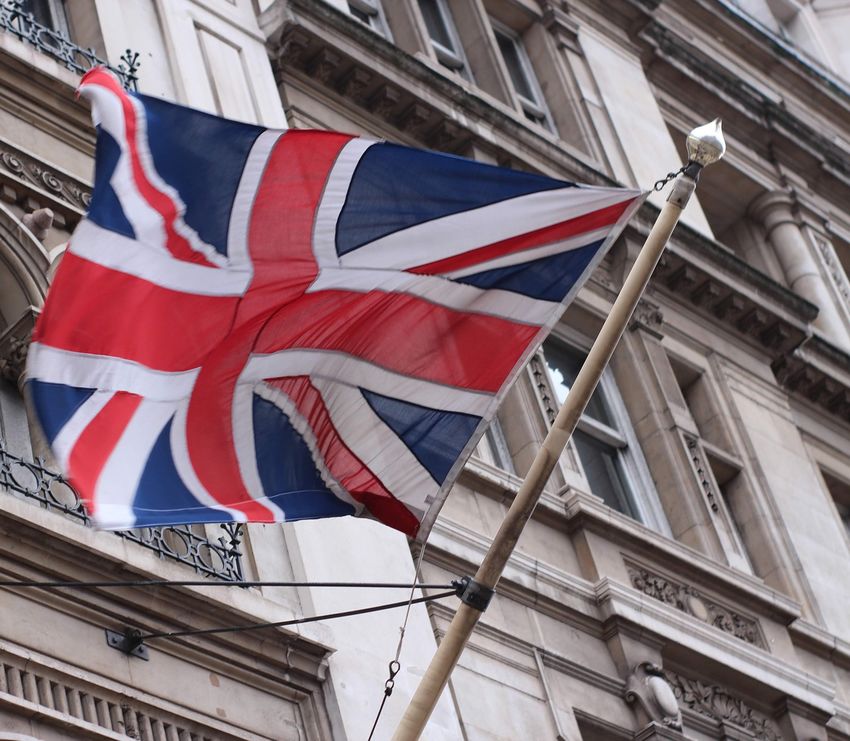
Attribution: Union Jack with building by andrewbecks / image cropped. Licensed under
Pixabay License – no copyright required.3 Commons Library Briefing, 4 March 2020
Summary
The Union Flag, commonly known as the Union Jack, is the national flag of the United
Kingdom of Great Britain and Northern Ireland. The original Union Flag was introduced in
1606 as a maritime flag and in 1634, a Royal Proclamation laid down that the Union Flag
was reserved for His Majesty’s Ships of War. 1
When the 'Union Jack' was first introduced in 1606, it was known simply as 'the British
flag' or 'the flag of Britain'. 2 The term ‘Jack’ was first used in the British Navy to describe
the Union Flag that was at that time flown at the main masthead. Variations of the Union
Flag have existed since the beginning of the 17th century when the crowns of England and
Scotland were joined together under King James I (James VI of Scotland) in 1603.
Flying of flags, including the Union flag, is not the subject of statute law in England, Wales
or Scotland. Advice is issued by the Department for Digital, Culture, Media and Sport
(DDCMS) on flying of national flags on government buildings, apart from those which are
the responsibility of a devolved administration. The advice relates to government buildings
only, but many councils also follow the advice on a voluntary basis.
In Northern Ireland only there is specific legislation setting out the arrangements for the
flying of flags from government buildings. This legislation was recently updated to
remove a day for flying the European flag, as part of preparation for the UK’s exit from
the EU. In Scotland the Scottish Government, and at their instigation the Scottish
Parliament, took the decision to continue to fly the European flag after UK exit.
During the period between the 2016 Referendum and the official exit on 31 January
2020, the European Flag came to be identified as a symbol of “remain” campaigning,
whilst the Union flag was identified as a symbol of “leave” campaigns.
The cultural significance of flags, along with other symbols of identity, is contentious in
Northern Ireland. A Commission on Flags, Identity, Culture and Tradition was established
in 2016 to scope the issues and make recommendations for change. The Northern Ireland
Assembly did not sit between February 2017 and January 2020, which has meant that the
Commission has been unable to publish its research or recommendations.
1
Flags of the World, Edited by E.M.C. Barraclough, Frederick Warne & Co Ltd London, England, p. 23
2
The Flag Institute: The Union Jack or the Union Flag?4 Flags: the Union Flag and flags of the United Kingdom
1. Background
Flying of flags is not the subject of statute law in England, Wales or
Scotland. Advice is issued by the Department for Digital, Culture, Media
and Sport (DDCMS) on flying of national flags on government buildings,
apart from those which are the responsibility of a devolved
administration. The advice relates to government buildings only, but
many councils also follow the advice on a voluntary basis. 3
In Northern Ireland there is specific legislation setting out the
arrangements for the flying of flags from government buildings. This is
set out in the Flags Regulations (NI) 2000, as amended by the Flags
Regulation (NI) (Amendment) 2002 and the Flags (Northern Ireland)
(Amendment) (EU Exit) Regulations 2019. A building is a government
building for this purpose if it is wholly or mainly occupied by members
of the Northern Ireland Civil Service. 4
The order of precedence of flags in the UK is as follows: Royal
Standards, the Union Flag, the flag of the host country (England,
Scotland, Wales, etc.), flags of other nations [...] the Commonwealth
Flag, the European Union Flag, county flags, flags of cities or towns,
banners of arms, and house flags. 5 National flags should never be
flown in worn or damaged condition, or when soiled as this shows
disrespect to the nations they represent.
The Royal Standard (actually the Royal Banner) should only be flown
whilst the Royal person is on the premises, being hoisted (or broken) on
their arrival and lowered following their departure. The Royal Standard
takes precedence over all other flags in the United Kingdom, including
the Union Flag. 6
In the United Kingdom, burning or defacing the Union Flag in public is
not a specific offence. This is unlike some other countries, such as the
United States. However, such actions may be relevant in the context of
a possible public order offence, under section 5 of the Public Order Act
1986 or an offence of arson, under the Criminal Damage Act 1971.
In 2008 a Private Member’s Union Flag Bill was presented by Andrew
Rosindell MP under the ten minute rule procedure. The Bill provided a
formal definition of the composition of the Union Flag as the official
flag of the United Kingdom of Great Britain and Northern Ireland. It
confirmed the proportions of the flag and how it should be flown.
Private Member’s Bills, under ten minute procedure, are unlikely to
become legislation due to lack of time for debate after introduction.
This Bill did not become an Act. However, the Flag Institute prepared a
reworded version of the Union Flag Bill giving a full and accurate
3
Belfast City Council, Policy on the Flying of the Union Flag: Equality Impact
Assessment Draft Report for Consultation June 11th 2012, p.13
4
The Flags Regulations (Northern Ireland) 2000 ( Explanatory Note)
5
Flag Institute: A Guide to Britain's Flag Protocol
6
Flag Institute: A Guide to Britain's Flag Protocol5 Commons Library Briefing, 4 March 2020
interpretation, together with a line drawing and a colour picture of the
national flag, which is available from the Flag Institute’s website. 7
1.1 Flag flying on royal residences
The Royal Standard is flown on royal residences to indicate that the
Monarch is in residence. It may also be flown on any building, official or
private, during a visit by the Queen, if the owner requests.
The Royal Standard has four quarterings - England (three lions passant)
in the first and fourth quarters, Scotland (a lion rampant) in the second
quarter and Ireland (a harp) in the third quarter. Wales is not
represented in the Royal Standard, as its position as a Principality was
recognised by the creation of the Prince of Wales long before the
incorporation of the quarterings for Scotland and Ireland in the Royal
Arms, in 1603.
The Prince of Wales has a Royal Standard, used in Wales since Prince
Charles’s investiture in 1962. When the Queen opened the new
National Assembly for Wales in 1997, in a change to Royal protocol, it
was agreed that both the Royal Standard and the Standard of the Prince
of Wales would fly together for that day. In Scotland a different version
of the Royal Standard is used, with Scottish arms in the first and fourth
quarters and English arms in the second. The current version of the
Royal Standard for Scotland has been used since 1998.
The Royal Standard is flown only when the Sovereign is present. If the
Union Jack is flying above Buckingham Palace instead of the Standard,
The Queen is not in residence. This has been the practice since 1998.
Unlike the Union flag, the Royal Standard is never flown at half mast,
even after the death of a monarch, as there is always a Sovereign on the
throne.
Following the death of Diana, Princess of Wales, in 1997, there was
public expression of concern that a flag was not being flown at half
mast at Buckingham Palace. Many public buildings were flying their
normal flags at half mast,or had hoisted flags in order that these could
be seen to fly in this way. At the time, the Queen was at Balmoral, so
no flag was being flown at Buckingham Palace. On 6 September 1997,
the day of the funeral, in a change to Royal protocol, the Union Flag
was flown at half mast once the Queen had left Buckingham Palace.
The Union flag remained flying in this way for a further day in 1997.
In 1998, in a further change to Royal protocol, the Union flag was flown
at half mast on several Royal residences, to mark the anniversary of the
death of Diana. It was made clear that this would only occur for the first
anniversary. Flags on Government building also flew at half mast on
that day.
The practice of flying the Union flag at Buckingham Palace when the
Queen is not in residence dates from the time of Princess Diana’s
funeral, and was made normal practice in 1998. The Union flag has also
7
Flag Institute: Union Flag Bill 2007-2008 ; Union Flag Bill 2007-2008: Progress of the
Bill6 Flags: the Union Flag and flags of the United Kingdom
been lowered to half mast on Buckingham Palace on several occasions,
such as the death of Queen Elizabeth, the Queen Mother, the
September 2001 attacks in New York and the London Bombings in July
2005.
This illustrates the symbolic significance many people attach to flying of
flags at half mast, as a visual mark of respect on the death of public
figures or on occasions of national mourning.
1.2 Flag flying on Government Buildings
Currently, the Union Flag is flown on government buildings by
command of Her Majesty the Queen. There is no formal definition of a
Government building but ‘it is generally accepted to mean a building
owned or used by the Crown and predominately occupied or used by
civil servants or Her Majesty’s Armed Forces’.8
Prior to 2008, UK Government buildings in Great Britain were expected
to fly flags only on up to 18 designated days, mostly to mark national or
Royal anniversaries. Since March 2008, UK Government Departments
officially have had the freedom to fly the Union Flag from government
buildings all year round.
A consultation paper, The Governance of Britain, was published on 3
July 2007. 9 It contained a broad set of proposals for constitutional
reform, including the need for consultation on altering the then
operational guidance for the flying of the Union Flag from UK
Government buildings. Over 60 per cent of the respondents wanted the
Union Flag flown on all UK Government buildings all of the time.
New flag flying guidance, which was issued by the Department in 2007,
stated:
• make permanent the freedom for UK Government
departments to fly the Union Flag on their buildings when
they wish, and
• allow Whitehall UK Government buildings with two or
more flag poles to fly the flags of Scotland and Wales on
their patron saints’ days. 10
The 2007 consultation did not apply to buildings of the Scottish
Government, the Scottish Parliament, Welsh Government and the
National Assembly for Wales. These bodies have developed their own
guidance for their own flags.
Designated fixed flag flying days still apply, when UK Government
buildings, which do not fly the Union Flag all year round, are required to
fly one or two flags. The guidance includes the procedure to follow for
buildings with one or two separate flag poles. The DDCMS Guidance is
shown below. The Union Flag is also flown for visiting Heads of State or
the death of Heads of State.
8
House of Commons Debate,30 March 2006, Written answers, c1157W
9
The Governance of Britain, 3 July 2007, Cm 7071
10
Governance of Britain- Analysis of Consultations, 25 March 20087 Commons Library Briefing, 4 March 2020
Box 1: Designated days for flying Union flag on UK Government Buildings, 2020
• 9 January Birthday of the Duchess of Cambridge
• 20 January Birthday of the Countess of Wessex
• 6 February Her Majesty’s Accession
• 19 February Birthday of the Duke of York
• 1 March St David’s Day (in Wales only, see note 1)
• 9 March Commonwealth Day (second Monday in March, see note 5)
• 10 March Birthday of the Earl of Wessex
• 17 March St. Patrick’s Day (in Northern Ireland only, see note 4)
• 21 April Birthday of Her Majesty the Queen
• 23 April St George’s Day (in England only, see note 1)
• 2 June Coronation Day
• 10 June Birthday of the Duke of Edinburgh
• 13 June Official celebration of Her Majesty’s birthday
• 21 June Birthday of the Duke of Cambridge
• 17 July Birthday of the Duchess of Cornwall
• 15 August Birthday of the Princess Royal
• 8 November Remembrance Day (second Sunday in November, see note 2)
• 14 November Birthday of the Prince of Wales
• 20 November Her Majesty’s Wedding Day
• 30 November St Andrew’s Day (in Scotland only, see note 1)
Also:
• The day of the opening of a Session of the Houses of Parliament by Her Majesty (see note 3)
• The day of the prorogation of a Session of the Houses of Parliament by Her Majesty (see note 3)
Notes:
1. Where a building has two or more flag poles the appropriate national flag may be flown in
addition to the union flag but not in a superior position. UK government buildings within the
wider Whitehall area may fly the national flags alongside the union flag on their appropriate
saint days.
2. Flags should be flown at full-mast all day.
3. Flags should be flown on this day even if Her Majesty does not perform the ceremony in person.
Flags should only be flown in the Greater London area.
4. The Union Flag only should be flown.
5. Where a building has two or more flag poles, a Commonwealth Flag may be flown in addition to
the Union on Commonwealth Day but not in a superior position. 11
It is noticeable that UK Government buildings around central London
may also fly a range of flags on other days, apart from those in the list
of designated days. For instance, flying the Rainbow flag during late
May and June to mark LGBTQ+ Pride and the Armed Forces Day flag,
for a week before that celebration, which happens on the last Saturday
of June. 12 13
11
DDCMS, Guidance: Designated days for Union flag flying, updated 22 January 2020,
accessed 19 February 2020.
12
Whitehall flies flag with pride for first time, press release, Deputy Prime Minister’s
Office, 6 July 2012.
13
Armed forces day flag flies across Whitehall, press release, MoD, 22 June 2015.8 Flags: the Union Flag and flags of the United Kingdom
As part of an initiative to highlight the more liberal flag flying regime
from 2008 onwards, the then Department for Communities and Local
Government (DCLG) flew a series of English county standards, alongside
the Union Flag, outside the Department’s then headquarters at Eland
House in Victoria. Flags were flown for a week at a time in alphabetical
order or to coincide with particular county days. 14
In February 2020 there was some controversy about whether flags
should be flown on the designated day of 19 February, to mark the
birthday of Prince Andrew, the Duke of York. Prince Andrew had stood
down from public Royal duties on 20 November 2019. 15 The list of
designated days had not been changed after this announcement. On 18
February 2020 a DDCMS spokesman stated:
Following the decision by the Duke of York to step back
from public duties for the foreseeable future, there is no
longer a requirement for UK government buildings to fly
the union flag on Wednesday 19 February. 16
1.3 European Flag
The European Flag features a ring of twelve gold stars on a blue
background. The flag was designed for the Council of Europe in 1955.
It was also officially adopted as the flag of the European Communities
(now European Union) by all member states, in 1985. The circle is a
symbol of unity and the stars defined as standing for unity, solidarity
and harmony. The number of stars does not relate to the number of EU
member countries.
EU Member States agreed in 2007 that the EU flag would be flown for
a week around 9 May, Europe Day, in front of the managing authorities
for EU structural funds. The then Department for Communities and
Local Government (DCLG) had centralised these operations in 2011 and
had become the managing authority for England. So in the period
2011-2013, the EU flag was flown for a week at the DCLG office. In
2013 Member States agreed that recipients could acknowledge the
source of funding through a sticker or a plaque with the EU emblem
instead. This was announced to the Commons on 20 January 2014,
when the Secretary of State, Eric Pickles, referred to “the burdensome
law on flying the EU flag”. 17
In early 2019, the DDCMS updated its Guidance on designated days to
remove Europe Day, which is marked on 9 May, in anticipation of the
United Kingdom leaving the EU. Although the UK had not left the EU
by 9 May 2019, the Guidance for UK Government buildings was not
then revised. Prior to 2019 the Guidance included a note:
14
https://www.gov.uk/government/news/buckinghamshire-flag-to-fly-at-department-
for-communities-and-local-government
15
Statement by his Royal Highness the Duke of York, Royal website, 20 November
2019.
16
“Government buildings will not have to fly flag for Prince Andrew’s birthday”,
Guardian, 18 February 2020.
17
HC Deb 20 January 2014, c179 Commons Library Briefing, 4 March 2020
4. The Union Flag should fly alongside the European Flag.
On UK Government buildings that only have one flagpole,
the Union Flag should take precedence.
As flag flying on Government buildings is covered by legislation in
Northern Ireland, the Flags (Northern Ireland) (Amendment) (EU Exit)
Regulations 2019 had also been tabled in July 2018 and passed through
Parliament in March and April 2019 (see also below).
1.4 Flag flying at UK Parliament
Until 2010 the Union Flag was flown from the Victoria Tower of the
Palace of Westminster only when Parliament was sitting and on the
appointed days, set out in DDCMS guidance.
These regulations were queried by the then Flags & Heraldry Committee
(now the All-Party Parliamentary Flag Group) who together with the
Flag Institute, had long campaigned to see the flag flown permanently.
In early 2010 Black Rod 18 agreed that this should be so and since then
the flag has flown all the time. 19 Currently, the Union Flag is flown from
the Victoria Tower of Parliament and all other flag poles, three hundred
and sixty-five days a year. 20 When the Queen attends Parliament to
carry out the State Opening, the Union Flag is replaced by the Royal
Standard, whilst Her Majesty is present.
Devolved Parliamentary bodies follow their own practices (see below).
1.5 Guidance for local authorities,
individuals and organisations
Under the Town and Country Planning (Control of Advertisements)
(England) Regulations 2007, for planning permissions, flags are treated
as a form of advertising. 21
In November 2012 the then Department for Communities and Local
Government (DCLG), now Ministry of Housing, Communities and Local
Government (MHCLG), published a Plain Guide to flying flags which
provides a summary of new liberalised regulations. According to those,
flags were divided into three categories:
(a) flags which can be flown without consent of the local
planning authority,
(b) flags which do not need consent provided they comply
with further restrictions (referred to as “deemed consent”
in the Regulations) and
(c) flags which require consent (“express consent”) 22
The current full list of flags that do not require consent is:
18
Black Rod- Senior officer in the House of Lords responsible for security, controlling
access to and maintaining order within the House and its precincts
19
Flag Institute, Press Release 22 March 2011
20
Flag Institute, Flying flags in the United Kingdom, March 2010
21
The Town and Country Planning (Control of Advertisements) (England) Regulations
2007
22
Plain English guide to flying flags, p.110 Flags: the Union Flag and flags of the United Kingdom
(a) Any country’s national flag, civil ensign or civil air
ensign;
(b) The flag of the Commonwealth, the European Union,
the United Nations or any other international organisation
of which the United Kingdom is a member;
(c) A flag of any island, county, district, borough, burgh,
parish, city, town or village within the United Kingdom;
(d) The flag of the Black Country, East Anglia, Wessex, any
Part of Lincolnshire, any Riding of Yorkshire or any historic
county within the United Kingdom;
(e) The flag of Saint David;
(f) The flag of Saint Patrick;
(g) The flag of any administrative area within any country
outside the United Kingdom;
(h) Any flag of Her Majesty’s forces;
(i) The Armed Forces Day flag
The above flags or their flagpoles must not display any
advertisement or subject matter additional to the design of
the flag, but the Regulations now highlight that you can
attach a black mourning ribbon to either the flag or
flagpole where the flag cannot be flown at half mast, for
example, when flying a flag on a flagpole projecting at an
angle from the side of a building. The use of the word
“country” in (a) and (g) of the list above, includes any of
the Channel Islands, the Isle of Man and any British
Overseas Territory. The flags of St George and St Andrew
are recognised as the national flags of England and
Scotland, but the flags of St David and St Patrick are listed
separately as they do not necessarily fall into the category
of a country’s national flag. 23
As part of an initiative to highlight the more liberal flag flying regime,
the DCLG flew a series of English county standards, alongside the Union
Flag, outside the Department’s then headquarters at Eland House in
Victoria. Flags were flown for a week at a time in alphabetical order or
to coincide with particular county days. 24
Historic County Flags Day has been celebrated on 23 July since 2014,
throughout Great Britain. The MHCLG encourages county councils and
other bodies to fly county flags on that date, as well as on their own
county day. In 2019, for the first time, the 50 registered county flags
were flown together in Parliament Square from 23-26 July. 25 And the
Sun newspaper issued a challenge to try to help readers identify some
of these flags. 26
In February 2020 there was some controversy about whether flags
should continue to be flown on the designated day of 19 February, to
mark the birthday of Prince Andrew, the Duke of York. Prince Andrew
23
Plain English guide to flying flags, p.2
24
Press release, Buckinghamshire flag to fly[…], 4 October 2010
25
Historic County flags flown at Parliament Square, Press release, MHCLG, 23 July
2019.
26
Flag up the counties, Sun, 2 July 2019.11 Commons Library Briefing, 4 March 2020
had stood down from public Royal duties on 20 November 2019. 27 The
list of designated days had not been changed after this announcement,
and a routine reminder email about the 19 February flag day was sent
from the DDCMS to local authorities in England.
Questioned about the email, the Prime Minister’s spokesman indicated
that the DDCMS and the Royal Household were engaged in a review of
how the policy on designated days might apply in such a change of
circumstances. 28 Some local authorities responded to the reminder by
announcing that they would not fly the union flag to mark Prince
Andrew’s birthday. 29 DDCMS announced on 18 February 2020 that
government buildings no longer had to fly the union flag on 19
February.
27
Statement by his Royal Highness the Duke of York, Royal website, 20 November
2019.
28
“Protocol has to be binned: Anger after Town Halls told to fly union jack […],”
Independent, 6 February 2020.
29
“Liverpool Council will not fly flag […]”, Liverpool Echo, 6 February 2020.12 Flags: the Union Flag and flags of the United Kingdom
2. National flags of the UK
2.1 The United Kingdom
The Union Flag, commonly known as the Union Jack, is the national flag
of the United Kingdom of Great Britain and Northern Ireland. The
original Union Flag was introduced in 1606 as a maritime flag and in
1634, a Royal Proclamation laid down that the Union Flag was reserved
for His Majesty’s Ships of War. 30
When the 'Union Jack' was first introduced in 1606, it was known
simply as 'the British flag' or 'the flag of Britain'. 31 The term ‘Jack’ was
first used in the British Navy to describe the Union Flag that was at that
time flown at the main masthead. At the end of the seventeenth
century the term ‘Jack’ was already firmly established. 32
Variations of the Union Flag have existed since the beginning of the 17th
century when the crowns of England and Scotland were joined together
under King James I (James VI of Scotland) in 1603. The Union with
Scotland Act 1706 gave statutory force to the Treaty of Union between
England and Scotland. Article 1 provided for the design of flags
incorporating the symbols of both constituent kingdoms:
That the two Kingdoms of England and Scotland shall upon
the first Day of May which shall be in the Year one thousand
seven hundred and seven, and for ever after, be united into
one Kingdom by the Name of Great Britain; and that the
Ensigns Armorial of the said united Kingdom be such as her
Majesty shall appoint, and the crosses of St. George and St.
Andrew be conjoined in such Manner as her Majesty shall
think fit, and used in all Flags, Banners, Standards and
Ensigns, both at Sea and Land.
The Union with Ireland Act 1800 gave effect to the Articles of Union.
Article 1 referred to flags:
[…] that the said Kingdoms of Great Britain and Ireland
shall, upon the first Day of January which shall be in the
Year of our Lord one thousand eight hundred and one, and
for ever after, be united into one Kingdom, by the name of
The United Kingdom of Great Britain and Ireland; and that
the Royal Stile and Titles appertaining to the Imperial
Crown of the said United Kingdom and its Dependencies,
and also the Ensigns, Armorial Flags and Banners thereof,
shall be such as his Majesty, by his Royal Proclamation
under the Great Seal of the United Kingdom, shall be
pleased to appoint.
The design of the new flag, incorporating the crosses of St. George, St.
Andrew and St. Patrick, was set out in a Royal Proclamation, dated 1
January 1801. The Union Flag is thus “made up of the crosses of St
George, St Andrew, and St Patrick, respectively the patron saints of
30
Flags of the World, Edited by E.M.C. Barraclough, Frederick Warne & Co Ltd
London, England, p. 23
31
The Flag Institute: The Union Jack or the Union Flag?
32
Flags of the World, Edited by E.M.C. Barraclough, Frederick Warne & Co Ltd
London, England, p. 1213 Commons Library Briefing, 4 March 2020
England, Scotland, and Ireland, and it was first flown on 1 January
1801”. 33
It is often stated that the Union Flag should only be described as the
Union Jack when flown in the bows of a warship, but this is a relatively
recent idea. From early in its life the Admiralty itself frequently referred
to the flag as the Union Jack, whatever its use, and in 1902 an
Admiralty Circular announced that Their Lordships had decided that
either name could be used officially. Such use was given Parliamentary
approval in 1908 when it was stated that "the Union Jack should be
regarded as the National flag". 34
Following the Anglo-Irish Treaty of 1922, the Irish Free State came into
being, which had the status of a self-governing dominion within the
British Empire. It adopted the tricolour flag (green, white and orange).
In 1949, the Irish Free State became The Republic of Ireland and kept
the tricolour flag. Northern Ireland remained part of the United
Kingdom and continued to use the Union Flag. The Royal and
Parliamentary Titles Act 1927 officially changed the name of the United
Kingdom Parliament to reflect the change that had occurred with the
creation of the Irish Free State in 1922. The Parliament of the United
Kingdom of Great Britain and Ireland changed to the Parliament of the
United Kingdom of Great Britain and Northern Ireland. The United
Kingdom had therefore officially changed its name but there was no
change to the Union Flag.
Driving licences and number plates
In 2015 the UK government implemented a new design for driving
licences. All driving licences in EU member states must include the
European Flag. From 2013 it became possible for Member States to
also include national symbols. The new design, trailed in December
2014 and introduced in July 2015, incorporated the Union flag
alongside the EU flag for licences issues by the DVLA in Great Britain.
Driver licensing is not a devolved matter in Scotland or Wales, but there
has been some campaigning since 2015 to give drivers the option of
including another national flag, or a County flag, on their own driving
licence. This has been ruled out by the UK Government, partly on
grounds of cost. Driver licensing is devolved in Northern Ireland, and NI
licences do not include the Union flag.
Once the UK leaves the EU, there will no longer be a requirement to
include the EU flag on GB driving licences. Some Government ministers
have indicated this will be removed, but there has not yet been a firm
announcement or a timetable. 35
Since 2009 it has been legal to allow certain flags to be included on
vehicle licenses plates. 36 Only national symbols may be displayed, which
are the Union flag; Cross of St George; Saltire or Red Dragon, or the EU
33
N Groom, The Union Jack – The story of the British Flag, 2006, p xiii
34
The Flag Institute: The Union Jack or the Union Flag?
35
HC Deb 19 April 2017, cc375-384WH
36
Road Vehicles (Display of Registration Marks) (Amendment) Regulations 200914 Flags: the Union Flag and flags of the United Kingdom
flag. There have been campaigns to allow a wider range of emblems,
including County flags to be displayed, once the UK ceases to be
covered by EU law on this topic. In 2017 Andrew Jones, a Department
for Transport Minister, stated:
I regard this debate as the start of our national
conversation about what we would like to have on our
driving licences and on our number plates. I also recognise
that technology presents opportunities to personalise and
to print, but I have also tried to explain that there are some
significant practical implications from a DVLA perspective
and from a law enforcement agency perspective. There are
cost implications as well. 37
2.2 England
The national flag of England is the cross of St George. The white flag
has a red upright cross throughout and was originally used in 1191. 38 St
George has been the patron saint of England since the 13th century but
prior to this, St Edward the Confessor, King of England from 1042-1066
was widely regarded as the patron saint of England. Edward III
established the Order of the Garter in 1348, which was dedicated to St
Edward the Confessor and St George. The insignia of the Order have
developed over the centuries, starting with a garter and badge depicting
St George and the Dragon. A collar was added in the sixteenth century,
and the star and broad riband in the seventeenth century. 39
St George is also the patron saint of soldiers and the cross of St George
was worn by Knights of the Garter and soldiers alike as they went into
battle. 40 The cross of St George thus became widely used as a patriotic
symbol.
St George’s Day takes place on 23 April each year, and under the
current guidance, the cross of St George may be flown from UK
Government buildings in England where a building has two or more
flagstaffs, but it cannot be flown in a superior position to the Union
Flag. 41 Only if a UK Government building has more than one flag pole,
can the cross of St George be flown. The Union Flag takes precedence
over all national flags and the cross of St George is not flown on any
other days.
2.3 Scotland
The national flag of Scotland is the cross saltire of St Andrew (also
known as the Saltire). The cross saltire of St Andrew consists of a white
cross on a blue background. St Andrew has been the patron saint of
Scotland since the early part of the 12th century. St Andrew’s Day takes
place on 30 November each year and under the current guidance, the
cross of St Andrew may be flown from UK Government buildings on St
37
HC Deb 19 April 2017, c384WH
38
Complete Flags of the World, Dorling Kindersley Limited, London 2005, p. 128
39
The official website of the British Monarchy: Order of the Garter
40
Flags of the World, Edited by E.M.C. Barraclough, Frederick Warne & Co Ltd
London, England, p. 20
41
DDCMS, Designated Days for Union Flag flying.15 Commons Library Briefing, 4 March 2020
Andrew’s Day, in Scotland only, where a building has two or more flag
poles but it cannot be flown in a superior position to the Union Flag. 42
Scottish Government
Flag flying policy in Scotland is a matter for the devolved administration.
The Scottish Government guidance is updated annually. According to
this, the Saltire should be flown every day from Scottish Government
buildings.
There are a few designated days where another flag is to be hoisted, on
a building with only one flagpole, for instance the rainbow flag on 1
February for LGBT History Month. The Union Flag is only flown from
two principal Scottish Government buildings, with the Saltire, on
Remembrance Day. 43 This guidance was changed in 2018 and the
number of days on which the Union flag was flown was reduced. 44
In 2020, the European Flag will continue to be flown on Scottish
Government buildings to mark Europe Day on 9 May.
Scottish Parliament
The Scottish Parliamentary Corporate Body (SPCB) is responsible for the
administration of the Scottish Parliament. The flag flying guidance in
2019 was:
The Saltire, Union flag and European flag shall be flown
daily and will meet the requirements of the listed dates
below.
European Day – 9th May
Official Celebration of Her Majesty’s Birthday – usually the
2nd Saturday in June
Official Opening of the Scottish Parliament – 1st July
Remembrance Day – usually the second Sunday of the
Month of November
St Andrew’s Day – 30th November
In addition to the daily flags the Commonwealth flag, the
Armed Forces flag and the United Nations flag shall be
flown on the listed dates below
Commonwealth Day – Usually 2nd Monday of the month
of March
The Armed Forces flag shall be flown on Armed Forces Day
- usually the last Saturday of the month of June
United Nations Day – 24th October
Flying of other flags
No other flags will be flown unless in exceptional
circumstances where a case is made to and approved by
the SPCB.
Superior Position
42
DDCMS, Designated Days for Union Flag flying.
43
Scottish Government, Days for hoisting flags on Buildings of the Scottish
Government 2020.
44
“SNP eradicates Union flag […], Daily Telegraph, 23 January 2018.16 Flags: the Union Flag and flags of the United Kingdom
The Scottish Parliament has flag poles all of the same
height and the superior position is the central pole. The
next superior position is the flag pole to the left of centre
flag pole viewed from Horse Wynd towards the front of the
building followed by the flag pole to the right of the central
flag pole.
Position of flags
The Saltire must be flown in the superior position, with the
Union flag in the second superior position and the
European flag in the third. Any additional flags to be
flown, approved by the SPCB shall be flown in the fourth
and fifth superior positions dependent on importance. 45
In January 2020 the SPCB, which is made up of representatives of all
Parties in the Parliament, informed Members of the Scottish Parliament
of its decision to cease flying the European Flag. This change would
come into effect on 31 January 2020, to reflect the UK leaving the
European Union. This was questioned in a Point of Order on 16
January. 46 A public petition to retain the European flag was launched
and gathered some 3,900 signatures. 47
On 28 January 2020 the Scottish Government tabled a motion for
debate by the Parliament to overturn the decision:
That the Parliament notes that the European flag has been
flown at Holyrood since 2004 as a symbol of membership
of the family of European nations; recognises that Scotland
and the UK will continue to be represented within the
Council of Europe, and that the UK’s exit from the
European Union will not change this; notes that the
European flag was originally the flag of the Council of
Europe and affirms Scotland's commitment to the aims of
the Council of Europe to build peace and prosperity
together, while respecting common values of democracy,
human rights, the rule of law and diversity; recognises the
importance of continuing to fly the European flag as a sign
of support and solidarity with those EU nationals who have
made Scotland their home, and directs the Scottish
Parliamentary Corporate Body to ensure that the European
flag continues to fly daily at the Parliament building. 48
The Motion was debated 49 on 29 January 2020 and carried on
division. 50
There was discussion in the debate about whether any previous
decisions of the SPCB had been overturned by the Parliament. The
Cabinet Secretary, Fiona Hyslop, cited one previous example of such a
change. There was also debate which reflected the ongoing symbolic
role of a flag and its display at an official representative body.
After the vote the Presiding Officer, as Chair of the SPCB, announced
that the flag-flying policy would be amended with immediate effect.
45
Scottish Parliament, Corporate Flag Flying policy, website accessed 1 May 2019..
46
SP OR 16 January 2020, c103
47
Keep the European Flag flying […], Change.uk, January 2020.
48
SP Motion S5M-20625, Recognising Scotland in Europe, 28 January 2020.
49
SP OR 29 January 2020, c1-13
50
SP OR 29 January 2020, c 8417 Commons Library Briefing, 4 March 2020
2.4 Wales
The national flag of Wales is the Red Dragon (Y Ddraig Goch) and it was
was officially adopted in 1959. 51 It consists of two equal horizontal
stripes, white above green, and a large red dragon passant. The dragon
standard was traditionally associated with the Tudors.
St David is the patron saint of Wales and St David’s flag consists of a
gold cross on a black background. Unlike the other parts of the United
Kingdom, Wales does not use the flag of its patron saint as its national
flag. St David’s Day takes place on 1 March each year and under the
current guidance, the Red Dragon may be flown from UK Government
buildings on St David’s Day, in Wales only, where a building has two or
more flag poles but it cannot be flown in a superior position to the
Union Flag. 52
Wales has no direct representation on the Union Flag. After the military
campaigns in Wales by King Edward I of England in 1282, Edward
conferred upon his eldest son and heir the title Prince of Wales, making
Wales a principality, not a kingdom. 53 The union of England and Wales
was brought about by the Wales Act 1536 during the reign of Henry VIII
and there was no statute similar to the Union with Scotland Act 1706
where the flags of two kingdoms formed the new flag of the Kingdom
of Great Britain.
Welsh Government
The Welsh Government policy and practice on flag flying was set out in
the answer to an Assembly question in 2017 as:
The First Minister (Carwyn Jones): The Welsh
Government’s policy is for the Red Dragon, Union flag and
European Union flag to be flown on its buildings each day.
Cadw sites fly the Red Dragon and the Union flag (and at
Rhuddlan Castle and Raglan Castle, the castle freeholder’s
flags) on designated days.
In addition, during this administration we have flown the
following flags:
Transgender flag-18-21 November 2016 to mark
Transgender Day of Remembrance
Rainbow flag-12-14 August 2016 for Pride Cymru
9-15 February 2017 to mark LGBT History Month
17 May 2017 to mark International Day Against
Homophobia, Transphobia and Biphobia
27 July 2017 to mark the 50th anniversary of the passing of
the Sexual Offences Act 1967
25 -28 August 2017 for Pride Cymru
Commonwealth flag
14 March 2017 to mark Commonwealth Day
Armed Forces Day flag
18-25 June 2016
17-24 June 2017
51
Complete Flags of the World, Dorling Kindersley Limited, London 2005, p. 129
52
DCMS – Days for hoisting flags on government buildings. Available at:
https://www.gov.uk/designated-days-for-union-flag-flying more-like-this
53
Groom, Nick, The Union Jack: The Story of the British Flag,(Atlantic Books London
2006), p.11018 Flags: the Union Flag and flags of the United Kingdom
The Owain Glyndŵr flag was not flown on 16 September
2017. 54
At a Press Conference on 6 January 2020, the First Minister, Mark
Drakeford said that the European flag would continue to be flown on
occasion:
Speaking at a news conference Drakeford was asked about
the large European flag next to him - which sits alongside
the Welsh and British flags.
When asked if it would disappear after Brexit he said that
he believe the flag would be less "routine".
But he added that believed there would be instances where
he believed it would be suitable to do so.
He said: "There will be occasions on which we will want to
mark the importance of our relationship with the European
Union, as we do with many other parts of the world, so
you haven't seen the end of the flag either." 55
National Assembly
Currently, the National Assembly for Wales building flies the Union flag,
the Red Dragon and the European Flag on a daily basis. 56 The Protocol
on the flying of flags at the National Assembly for Wales says:
The National Assembly for Wales has:
• four main flagpoles between the Senedd and the
Pierhead in Cardiff Bay;
• four flagpoles outside Tŷ Hywel in Cardiff Bay; and
• four flagpoles outside the office in Colwyn Bay.
The following flags are flown every day unless other arrangements
have been agreed in accordance with this protocol:
• European Union;
• Union Jack;
• Y Ddraig Goch;
• National Assembly for Wales.
The Assembly may also follow precedent to fly specific flags when the
Assembly is welcoming particular visitors, including the British royal
family and heads of state and government.
The National Assembly takes note of the guidance issued by The UK
Department of Digital, Culture, Media and Sport, including on the
question of when flags are flown at half mast. The final decision as to
54
WAQ74252W, answered 3 October 2017.
55
“Welsh First Minister vows to carry on flying European flag […]”, The European, 6
January 2020
56
Belfast City Council, Policy on the Flying of the Union Flag: Equality Impact
Assessment Draft Report for Consultation June 11th 2012, p.1319 Commons Library Briefing, 4 March 2020
whether the Assembly is in local or national mourning, and whether
flags should be flown at half mast, rests with the Presiding Officer.
On 23 January 2020, the press reported that the European flag would
be lowered at the Assembly and Welsh Government buildings, and
replaced by another Welsh flag. 57
57
“Brexit: Welsh Assembly and Government to remove EU flags”, BBC News, 23
January 2020.20 Flags: the Union Flag and flags of the United Kingdom
3. Northern Ireland
The flying of flags in Northern Ireland has remained a highly contentious
issue. Northern Ireland is the only part of the United Kingdom where
there is legislation which governs flying of flags on official buildings.
3.1 Historical flags
St Patrick is the patron saint of Ireland and was already revered as the
national saint as early as in the mid-seventh century. 58 However, the
origins of the cross of St Patrick are not clear. Although St Patrick was
the Patron Saint of Ireland, he was not a martyr and so was not entitled
to a cross as his badge. 59
The cross saltire of St Patrick consists of a red cross on a white
background. The red saltire originated in the arms of the powerful
family the Geraldines of Kildare. 60 The Irish have never used this cross as
a national emblem and Ireland’s traditional badge is either the shamrock
or the golden harp. 61 Nevertheless, in the seventeenth century the cross
of St Patrick was evidently recognized as the flag of a united Ireland,
and it is therefore the oldest such standard- centuries older than the
Tricolour, and even older than the harp flag, although the harp was
already a national emblem of Ireland. 62 St Patrick’s flag was
superimposed upon the flags of St George and St Andrew to create the
Union Flag in 1801. St Patrick’s Day takes place on 17 March each year
but St Patrick’s flag is not commonly used throughout Ireland.
3.2 1954 Act
Partly as a result of incidents arising in Northern Ireland concerning flag
flying for the 1953 Coronation, an Act was passed determining flag use,
by the parliament of Northern Ireland. The Flags and Emblems (Display)
Act (Northern Ireland) 1954 made it a criminal offence to interfere with
the display of the Union flag. The Act also gave the Royal Ulster
Constabulary (RUC) a positive duty to remove any flag or emblem from
public or private property which was considered to be likely to cause a
breach of the peace. As the Act exempted display of the Union Flag
from ever being considered a breach of the peace, almost exclusively
display of the Irish tricolour would be deemed a breach of the peace. 63
The RUC did not always welcome the duty of enforcement on flying of
the Tricolour, with the potential for this to cause incidents of unrest. In
practice carrying or use of the Tricolour in Nationalist areas or at
sporting events was in effect ignored. On the other side of the
argument, Unionists such as the Rev Ian Paisley campaigned for the
enforcement of the Act and for the Union Flag to be flown on all public
58
Groom, Nick, The Union Jack: The Story of the British Flag, 2006, p102-3
59
Flags of the World, Edited by EMC Barraclough, 1971, p22
60
Groom, Nick, The Union Jack: The Story of the British Flag, 2006, p201
61
Flags of the World, Edited by EMC. Barraclough, 1971, p22
62
Groom, Nick, The Union Jack: The Story of the British Flag,2006, p110
63
Patterson, Henry, “Party versus order: Ulster Unionism and the Flags and
Emblems Act”, Contemporary British History, v13, no4, pp105-1221 Commons Library Briefing, 4 March 2020
buildings. In 1959 this led to Belfast Corporation ordering all schools in
the city to fly the Union Flag. 64
The 1954 Act was repealed in 1987, under direct rule from
Westminster, and replaced by other public order legislation. The
experiences around this legislation help to explain the strong feelings
surrounding flags as community identity symbols in Northern Ireland.
3.3 Government Buildings in Northern
Ireland
The arrangements for the flying of the Union flag from government
buildings in Northern Ireland were set out by the Flags Regulations (NI)
2000, as amended by the Flags Regulations (NI) (Amendment) 2002. A
building is a government building for this purpose if it is wholly or
mainly occupied by members of the Northern Ireland Civil Service. 65
These Orders allow the Secretary of State to make regulations on the
flying of flags on Government buildings in Northern Ireland, after
consulting the Northern Ireland Assembly.
Article 2(1) of the regulations states that ‘the Union Flag shall be flown
at the government buildings specified in Part I of the Schedule to these
Regulations on the days specified in Part II of the Schedule’. 66 Part I of
the Schedule is a list of specified government buildings on which the
Union Flag must be flown and Part II of the Schedule refers to the days
on which the Union Flag must be flown (see Appendix A). The flying of
flags on government buildings, otherwise than stated in the
Regulations, is prohibited (Article 9). 67
The Justice (Northern Ireland) Act 2002 contained a provision to include
court-houses in the definition of government buildings within the
Regulations:
67 Flying of flags at court-houses
(1) In Article 3(1) of the Flags (Northern Ireland) Order 2000 (SI
2000/1347 (NI 3)) (power to make regulations about the flying of
flags at government buildings), insert at the end “and court-
houses”.
(2) The Flags Regulations (Northern Ireland) 2000 (S.R.2000
No 347) (which were made in the exercise of that power) apply in
relation to court-houses as they apply in relation to the
government buildings specified in Part 1 of the Schedule to the
Regulations (but subject to any amendment which may be made
to the Regulations in the further exercise of that power).
There are 21 courthouses subject to the flying of the Union flag on
designated days. 68
64
Nolan, Paul & Bryan, Dominic, Flags: towards a new understanding, Queens
University Belfast, 2016.
65
The Flags Regulations (Northern Ireland) 2000 ( Explanatory Note)
66
The Flags Regulations (Northern Ireland) 2000. Available at:
http://www.opsi.gov.uk/sr/sr2000/nisr_20000347_en.pdf
67
The Flags Regulations (Northern Ireland) 2000. Available at:
http://www.opsi.gov.uk/sr/sr2000/nisr_20000347_en.pdf
68
Written answers to questions (Hansard), Friday1 March 2013, Volume 82, WA422
(AQW 20105/11-15)22 Flags: the Union Flag and flags of the United Kingdom
In 2018 an application was made for judicial review of the Flags
Regulations 2000, on the grounds that the regulations breached the
guarantee of parity of esteem of the unionist and nationalist
communities, and that the Secretary of State had not fulfilled a
requirement to have regard to the Good Friday Agreement 1998 when
making the Regulations. The applicant contended that she did not
recognise the Union Flag as her national flag. This was a follow up to a
similar case brought in 2001. The application was dismissed by the High
Court of Northern Ireland, but demonstrates that the symbolic issue of
flag flying on official buildings continued to be contentious in Northern
Ireland. 69
In 2018 the UK Government introduced draft regulations to allow the
removal of Europe Day (9 May) from the list of designated flag flying
days covered in the 2000 and 2002 Regulations. This order was made
under the European Union (Withdrawal) Act 2018, and was designed to
come into effect once the UK had left the EU. The Explanatory
Memorandum for the Regulations stated:
This instrument is required as it would be inappropriate and
unnecessary to retain the legal obligation to observe
Europe Day in Northern Ireland once the United Kingdom
ceases to be a member of the European Union. In addition,
the instrument will also ensure Northern Ireland reflects
custom and practice in the rest of the United Kingdom
regarding Europe Day, which will cease to be a designated
day in Great Britain following the United Kingdom’s
withdrawal from the European Union. The non-legislative
guidance for Great Britain will be updated to reflect this
position. 70
Under the provisions of the 2000 and 2002 Flags Regulations, the
Secretary of State would be required to amend changes to those
Regulations to a consultation with the Northern Ireland Assembly. The
Assembly did not meet between February 2017 and January 2020, after
a breakdown of power sharing arrangements. The UK Government
therefore took action to make the changes to flag flying regulations in
Northern Ireland under the EU Withdrawal Act 2018, in preparation for
planned UK exit from the EU in March 2019.
The UK Government recommended that these resolutions should be
subject to a negative procedure in Parliament (not debated). The
European Statutory Instruments Committees in both the Commons and
the Lords considered the new regulations and recommended them for
debate. The debates in Lords Grand Committee 71 and on the floor of
both Houses illustrated the continuing issues about flag flying, in Great
Britain and in Northern Ireland.
Both Houses approved the Regulations, but as they would not come
into force until the UK had left the EU, the Union Flag or the Union Flag
69
Judgement in the matter of application for judicial review by Helen McMahon,
[2018] NIQB 74, 2 October 2018.
70
THE FLAGS (NORTHERN IRELAND) (AMENDMENT) (EU EXIT) REGULATIONS 2018,
Explanatory Memo.
71
HL Deb 25 March 2019, cc363GC-372GC23 Commons Library Briefing, 4 March 2020
and EU flag (in the case of buildings with two flagpoles) would have
been flown on 9 May 2019. 72
In the course of debate in the Lords, the Minister, Lord Duncan of
Springbank, confirmed that there were five buildings with two
flagpoles. He stated:
It would be easy for me to say that it involves only five
flagpoles, so what is the problem? But that would miss the
point. The flags are about identity. They are about the
bigger picture. They are about how people wish to see
themselves and how they wish to be seen. That is why I do
not doubt that in the cities of Northern Ireland and more
widely, flags will continue to be flown which represent a
whole wealth and breadth of passion and of identity. 73
In the recently agreed deal to restore devolved government in Northern
Ireland this commitment on the flags regulations was also made, in the
Annexe on UK Government Commitments to Northern Ireland:
27. Update the Flags Regulations (Northern Ireland) 2000
to bring the list of designated flag flying days from
Northern Ireland government buildings and court-houses
into line with the DCMS designated days, meaning the
same designated days will be observed in Northern Ireland
as in the rest of the UK going forward. This will involve the
addition of three designated days. 74
3.4 Northern Ireland Assembly
The Flags Regulations 2000 and 2002 only apply to specific Government
buildings. They do not have legislative effect on the Northern Ireland
Assembly buildings.
On 5 December 2012, in answer to a Written Question on Parliament
Buildings: Flags in the Northern Ireland Assembly, the representative of
the Assembly Commission, Mr Patrick Ramsey, stated:
The arrangements for the flying of the Union flag from
government buildings in Northern Ireland are set out by the Flags
Regulations (NI) 2000, as amended by the Flags Regulation (NI)
(Amendment) 2002. The Northern Ireland Assembly Commission
follows these Regulations. 75
In 2014-2015 the Assembly Commission carried out an Equality Impact
Assessment of the flag flying policy. 76 In June 2015 the Assembly
Commission decided that it would in future follow the guidance on
designated flag flying days, as issued by the UK DDCMS. This increased
the designated days from 15 to 18, and the Union Flag would only fly
on those days. A DUP MLA proposed an amendment that the Union
Flag be flown every day, as at the UK Parliament, but this was defeated
on a vote by the Assembly Commission.
72
HL Deb 3 April 2019, cc200-220.
73
HL Deb 3 April 2019, c216
74
New decade, new approach, Northern Ireland Office, January 2020.
75
Northern Ireland Assembly, Official Report, APW 17085/11-15, 5 December 2012.
76
Northern Ireland Assembly Commission, Equality Assessment Report on the Flying of
the Union Flag at Assembly Buildings, February 2015.24 Flags: the Union Flag and flags of the United Kingdom
3.5 Belfast City Council
Since 1906 the Union Flag had flown every day over Belfast City Hall.
This was challenged by a complaint under the Council’s Equality Scheme
in 2002-3. After a widespread formal consultation carried out in the
autumn of 2003, the Council agreed, at its meeting on 4 May 2004, not
to make any change to its policy. 77
Guidance on the flying of the Union flag issued by the Equality
Commission for Northern Ireland in 2009 stated:
the flying of the Union flag must be viewed in the context
in which it is flown or displayed. Factors affecting the
context include the manner, location and frequency with
which flag are flown. The Union flag is the national flag of
the United Kingdom and, arising there from, has a
particular status symbolising the constitutional position of
Northern Ireland. On the other hand, the Union flag is
often used to mark sectional community allegiance. There
is a world of difference between these two approaches.
Thus, for example, while it is acceptable and appropriate, in
the Commission’s view, for a local Council to fly the Union
flag at its Civic Headquarters, the rationale for its display at
every Council location, facility and leisure centre would be
questionable. 78
The Flags Regulations NI as brought into legislation in 2000 and 2002
by the UK Parliament, only applied to Government buildings occupied
wholly or mainly by members of the NI civil service. They did not apply
to all public buildings, including those occupied by local authorities.
After the political makeup of the City Council changed in 2011, an
Equality Analysis on the flag flying policy was carried out again. The
Draft EQIA Report concluded that the range of policy options open to
the Council in respect of the City Hall which best promoted good
relations were “in descending order of effectiveness”:
• Designated flag days only;
• Designated flag days plus specified additional days;
• No flag or a neutral flag;
• Two flags. 79
On 3 December 2012, Belfast City Council voted to fly the union flag at
City Hall only on designated days, as defined by the UK DCMS. The
motion was put forward by the Alliance Party.
The decision led to protests and demonstrations by loyalists, which spun
into violent street riots and attacks on police officers. This was
condemned by the First Minister and Deputy first Minister in Northern
77
Policy on the Flying of the Union Flag, Equality Impact Assessment – Final Decision
Report, 13 November 2012
78
Equality Commission for Northern Ireland: Promoting a Good & Harmonious
Working Environment, A Guide for Employers and Employees , October 2009
79
Policy on the Flying of the Union Flag, Equality Impact Assessment – Final Decision
Report, 13 November 2012You can also read


