Focusing on real value - Quarterly Letter - Rothschild & Co
←
→
Page content transcription
If your browser does not render page correctly, please read the page content below
Focusing on real value
Quarterly Letter

Issue 19 | July 2018
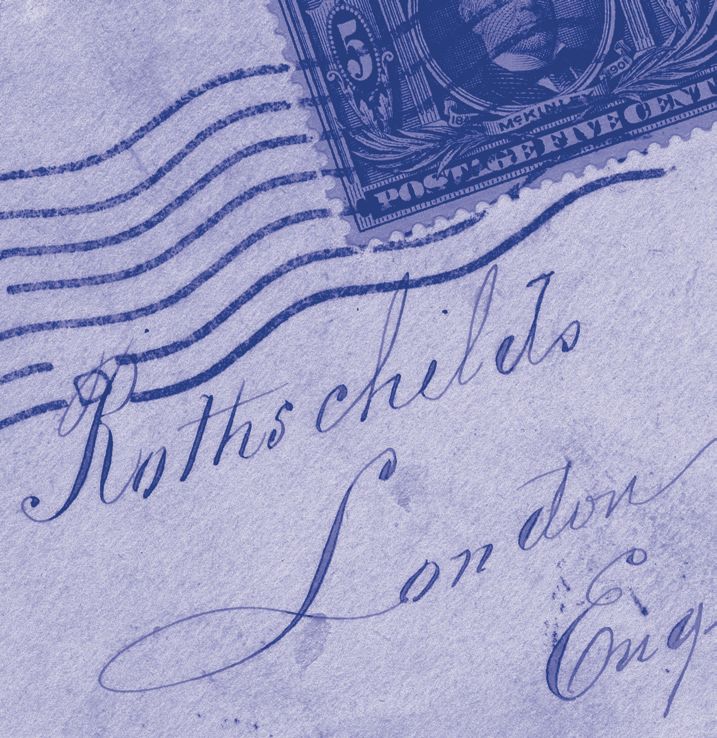
Cover image:                    Rothschild Wealth Management
Envelope from a Presidential    New Court
‘Thank you’ sent to Nathaniel   St. Swithin’s Lane
1st Lord Rothschild (1840–      London
1915), Senior Partner N M       EC4N 8AL
Rothschild & Sons, from         +44 20 7280 5000
President Theodore Roosevelt    rothschild.com
(1858–1919) in 1904.
Courtesy of The Rothschild      © 2018 Rothschild Wealth Management
Archive                         Publication date: July 2018.
                                Values: all data as at 30 th June 2018.
Foreword
In today’s complex and sometimes frenetic world, we often try and create
a sense of order by putting our ideas and experiences into separate
mental boxes. In our heads, we compartmentalise our lives into different
categories, often unconsciously.
Financial Times journalist Gillian Tett called this tendency “the silo effect”.
In an enlightening book of that name, she explored how mind-forged silos
help us cope with complexity but can also lead to blind spots that mean we
miss opportunities.
This silo effect can influence how some think about investments. We often
focus on share prices and whether they have gone “up” or “down”, and
forget that behind this share price there is a business with customers,
employees, assets and liabilities - a business that is hopefully generating
a growing earnings stream some of which may be returned to us through
dividend payments.
In the shorter term there are many factors that can influence the share
price but, over the long term, it is the underlying business performance
that counts. In this letter, we have tried to explain how we break down
these silos to think more like business owners and the advantages that we
believe this brings.
I hope you find this Quarterly Letter enjoyable and illuminating and thanks,
as always, for your continued support.
Helen Watson
CEO, UK Wealth Management
Quarterly Letter | July 2018 | Page 1Focusing on real value
“Investment is most intelligent when it is most businesslike”
Benjamin Graham, The Intelligent Investor
Imagine you are standing in the middle of One of the most influential investors of the
a field. You’re a farmer taking a moment to 20th Century, Benjamin Graham, characterised
survey your land. The wheat surrounding you is this jabbering source of stock market noise as
swaying gently in the breeze, skylarks are singing “Mr Market”**. Like our farmer’s persistent
overhead, the sun is beating down on your fast- neighbour, Mr Market is a strange fellow prone to
growing crops. You are pleased with what you mood swings. One minute he will be calmly and
see. Your farm is productive and all feels good rationally evaluating what a business is worth. The
with the world. next he lets his enthusiasm or his fears run away
with him, and the price he proposes seems silly.
But then your peace is shattered - all thanks to a
neighbour who won’t shut up. Every day, this man While Mr Market is sometimes rational, he can’t
with a farm bordering your property yells out a be relied on to value companies sensibly. Yet,
price at which he will either buy your farm or sell many investors do rely on him, almost exclusively.
you his. The prices he shouts out swing widely They fixate on quoted market prices, and the news
depending on his mood, even over short periods around them, without questioning whether they
of time. are a true reflection of what companies are worth.
Sometimes his thoughts turn negative and the And that is a mistake. As investors spend
price he proffers for his farm seems ridiculously their days fretting about interest rates, Brexit,
low. You’re tempted to snap it up, even though President Trump and the myriad other factors
you’re not certain it is a good idea. At other times that affect sentiment and market pricing, they
he is infected by irrational exuberance and the make blunders and miss out on opportunities.
sum he offers for your farm is extremely high.
Real value vs market pricing
You consider selling, even if that isn’t part of
At the heart of our investment process is a
your plan. All in all, his behaviour leaves you
fundamentally different way of thinking about
feeling mightily confused. His yelling affects your
value. Our approach focuses on intrinsic, or as
own thinking, putting you at danger of doing
we prefer to call it, the ‘real value’ of companies.
something you may later live to regret.
We believe this is a much better indicator of
Sounds absurd, doesn’t it? But there is an what a business is worth than the blunt tool of
analogy between this fictional parable of a market quoted prices.
harassed farmer and the investment markets in
The distinction between market prices and real
the real world. It is one that we can thank Warren
values is a crucial one to grasp. The market
Buffett for, who outlined the idea in Berkshire
price is the current price at which a company,
Hathaway’s annual letters to shareholders.*
or a share of a company, can be bought or sold.
Like our farmer, stock market investors are The real value is an estimate of the true value
subject to a barrage of shouting, in their case of a business based on its underlying operating
with share prices. As with our farmer, this “noise” performance and future earnings power.
can encourage irrational behaviour, fuelling
For those of you who own - or have owned - a
speculation and the impulse to buy and sell on
private business, thinking about real value will
the basis of price movements alone.
be second nature. It is almost certainly how
Even worse, rather than changing just once you value - or valued - your own enterprise,
a day, stock market prices update second- scrutinising its current value and future potential
by-second. This makes unending share price without reference to a market price.
oscillation very difficult to ignore. Thinking back
To explain this further it is useful to refer back to
to our field in the country, it makes the stock
our opening analogy. In real life, farmers aren’t *For example: http://www.
market noisier than a neighbouring parliament of
assailed by constant price chatter. They don’t have berkshirehathaway.com/
agitated rooks. letters/2013ltr.pdf
a share price - or vocal neighbour - to tell them how
** Benjamin Graham, The
much their farm is worth on a daily basis. Intelligent Investor, 1949.
Page 2 | Quarterly Letter | July 2018A farm does have a market value; it is what A farmer’s lot is rarely easy. A freak hailstorm just
investors or buyers would be willing to pay to buy before harvest, flooding after heavy rains, animal
all or a portion of a farm. But farmers only know illness, unexpected weather and disease can
the market value when they come to sell, which quickly put a lot of hard work to waste. However,
is usually a rare occurrence. However, even farmers are not prone to panic just because of
without reference to a market value, farmers and one year’s disappointments.
other private business owners tend to have a
Farmers expect the unexpected, focusing on the
pretty good idea of what their enterprise is worth.
long-term rather than short-term frustrations. If
So, if they are not relying on market prices to
the real value of their farm remains attractive, no
value their business, what are they using?
one would expect a farmer to sell up and move
In the broadest terms, the real value is based on if a single year’s harvest disappoints. Yet,
on the stream of earnings a business is likely such behaviour can be witnessed every day on
to deliver, not just this year but in many years the stock market, as Mr Market’s mood swings.
to come. As a result, the real values of most
There is much that investors can learn from
companies tend to be relatively steady compared
farmers’ patient approach. Investment decisions
with market prices. Earnings and earnings growth
are often guided by emotion not rational
fluctuate, but not usually to the same extent as
analysis. Market prices can quickly shift for
market prices, which can move dramatically with
the worse even if nothing has affected what a
sentiment over short time periods.
company can and will earn.
Investors respond to what other investors are
doing: if they are selling, I better sell too, goes
When market prices are freely the thinking. It’s called “herding behaviour”,
available, as they are for stock another farming metaphor, but one related to
gullible sheep not business-savvy farmers.
market listed companies, the Indeed, farmers are much more independently
tyranny of the markets can be minded. Just because the McGregors in the
neighbouring village sell their farm for a lower
difficult to escape. price than you paid, doesn’t mean you are going
to rush to sell your farm “before it’s too late”.
Earnings power
Overcoming adversity Most farmers understand that the real value of
As we said, real value won’t be an alien concept
their farm is the value today of many future years of
to entrepreneurs. However, you might not have
production. Extending this idea to all businesses,
thought to apply it to your other investments.
we believe it is useful to think of real value as a
When market prices are freely available, as
measure of the earnings power of a company.
they are for stock market listed companies, the
tyranny of the markets can be difficult to escape. When we analyse a company we think about what
sort of earnings the business could generate
To counter this tendency, we have for some
over the next five to ten years and what sort of
time been considering how we would operate
value we ascribe to these earnings. It is the future
if we didn’t have share prices to refer to at
financial and operating performance of a business
all. Rather than a portfolio of listed securities
that interests us more than the current market
with corresponding market prices, we imagine
price. This work provides us with an estimate
a holding company owning stakes in unlisted
of the ‘real value’, from which we can derive an
companies. This thought experiment has helped
estimate of the ‘forward returns’ we can expect
us to think analytically about how best to assess
from owning shares in the business. Rather than
real value, its application in our investment
being at the mercy of Mr Market, we can use him
process and the competitive advantages it can
to our advantage. When he is gloomy we will buy,
impart.
when forward returns are high.
Because real values tend to be much more
Crucially, a business can have earnings power,
stable than quoted market prices, when you use
and therefore an attractive real value, even when
real value to guide decision making, you are less
market or economic conditions are poor. If a
likely to panic when sentiment turns sour. In fact,
business is doing smart things during a recession
you are more likely to act like a farmer than a
or at the bottom of the earnings cycle - building
typical stock market investor.
capacity, buying cheap warehouses, whatever
Quarterly Letter | July 2018 | Page 3it may be - this should benefit earnings over the whether to stay or leave the European Union was
longer term. That is something that will again ring emotionally charged. And it should come as no
true if you have ever run your own business. surprise that the high emotion that surrounded
the vote leaked into the investment markets.
Even in a recession, great companies don’t
become terrible companies overnight. Mr Market Ryanair’s share price dropped sharply following
might not like what he sees and the share price the June 2016 referendum result. Investors
may fall. But if the real value of a company has became concerned that its business, principally
not changed, why would we want to sell just short-haul flights to European destinations,
because its share price has dropped? would be severely disrupted. Once again, though,
based on an analysis of the company’s real
The journey can sometimes be uncomfortable.
value, we thought the market had overreacted.
However, being patient and refusing to panic will,
we believe, ultimately deliver superior results for We made the quite reasonable assumption that
our clients. people would still want to fly to Europe on holiday
with a low-cost airline. We also concluded that
Real value in action
Ryanair retained the fundamental advantages
Being able to compare real values to market
that had enabled it to offer cheaper prices than
prices also helps us to invest more insightfully.
its competitors.
If we have conviction in a company’s real value,
price falls can be used to buy more of what we
like at a cheaper price.
If we have conviction in a
Emblematic of this was our decision in early 2016
to buy more shares in American Express (Amex).
company’s real value, price falls
At the time, investors had become nervous about can be used to buy more of
the demise of Amex’s once-lucrative partnership
with warehouse retailer Costco, under which the what we like at a cheaper price.
two offered a Costco branded card. Over the
previous year, as the 16-year relationship came to
Indeed, little had changed in its long-term
an end, Amex’s share price had fallen from more
investment case. We bought more shares at
than $90 to under $55.
€12, believing that the low-cost airline’s real
We looked on and concluded that Mr Market had value wasn’t being recognised. A year later,
overreacted. Even though the company’s share as the market woke up to our way of thinking,
price had dropped substantially, we estimated Ryanair’s share price was back above €18.
that Amex’s real value hadn’t been materially
This example helps to highlight an important
affected – forward returns were high.
point underlying our investment process. At
The decision to exit the Costco contract might times mood-prone market prices won’t reflect
have seemed like a crisis, but to us, and Amex’s the real value of a company. But over the longer
management, it made good business sense. term, short-term sentiment is trumped, as even
The credit card giant was outbid by Citi for the Mr Market comes to accept that it is real value
Costco contract and it didn’t want to engage in that counts. “In the short run, the market is a
a bidding war. Amex had decided that upping its voting machine but in the long run, it is a weighing
offer wasn’t a good use of capital and we were machine,” as Benjamin Graham eloquently put it.
inclined to agree.
Don Bradman’s ducks
We were further encouraged by Amex’s decision We believe it is better to be on the side that can
to utilise the capital that it saved to grow its deliver attractive average returns over the longer
higher-value own branded cards business and term, even when, at times, the market disagrees
invest in its marketing and service offering. We with our stance. It is one of the reasons why we
knew that the loss of the Costco contract would have always promoted the notion of a diversified
cause earnings to fall in the short-term, but we portfolio.
didn’t think Amex’s long-term earnings power had
To explain why, it is instructive to reflect on the
been adversely affected. We added to our Amex
career of Australian cricketing legend Sir Donald
holding at $55. Two years later its share price is
Bradman. A cricketing marvel in the first half
over $100; a pleasing outcome.
of the 20th Century, Sir Donald is famous for
One of the key benefits of our approach is that his batting average of 99.94. For those of you
it helps remove much of the emotion from who aren’t fans of cricket, a player’s batting
investment decision making. None of us needs average represents how many runs, on average,
reminding that the UK’s referendum about a batsman scores before getting out.
Page 4 | Quarterly Letter | July 2018Sir Donald’s batting average is the highest that This was demonstrated again in 2015 when we
has ever been recorded. Even so, he wasn’t added to our shares in farming equipment maker
always on form. Out of 80 innings Sir Donald John Deere. The farming cycle, particularly in
made “seven ducks”. A duck is when you get the US, was going through a downward phase.
out without scoring a run. Nobody’s perfect, Sir As sentiment soured, the company’s shares
Donald made mistakes. dropped back to around $80. To us, the real
value of the company was broadly unchanged –
Yet, despite these slips, Sir Donald is still
the quality of the business and the company’s
recognised as the greatest batsman that ever
entrenched competitive advantages hadn’t
lived. That’s because a batting average is
disappeared. We felt the low share price offered
measured over a player’s entire cricketing career.
high forward returns and bought more.
It is Sir Donald’s average performance over the
20 years he played Test cricket that has secured Underlying our decision was a technique that
his place in history. in investment circles is called “scuttlebutt”.
Derived from the ship’s bucket around which
It is possible to think about the advantages of
sailors would gather to share the latest gossip
a diversified portfolio in a similar way. Like Sir
at sea, scuttlebutt is a process that helps you
Donald, investors are not always going to get
assess a company’s strengths and weaknesses
everything right. Cases like Amex and Ryanair
by gathering opinions from those who are in one
are the equivalent of a good innings, but we
way or another concerned with the company. It
make mistakes - companies can sometimes
is about gathering firsthand information from all
be cheap for good reason. An investment
possible sources.
might remain cheap or get even cheaper. Our
estimated forward returns may be wrong. In John Deere’s case we had been talking to
dealers, farmers and competitors for many
Just as for Sir Donald, it is our batting average
years, giving us an invaluable insight into its
we are focused on. We know we will make
earnings potential. Scuttlebutt helped us to
mistakes, but anticipate that our successes will
spot an opportunity to invest which we might
leave us with an acceptable average. We don’t
otherwise have missed. In this case we were
need to emulate Sir Donald’s world beating
again proved right, as three years later the
achievements to generate very good returns for
shares have nearly doubled to more than $150.
you, our clients.
Keeping investing honest
Our intensive research process enables us
to write a “road map” for every business we
That means that when the invest in. This map includes how we expect the
unexpected does happen, business to perform, what we expect its margins
to be and what we expect its management to do
like Amex’s loss of the Costco - and not do. The map gives us the key metrics to
enable us to monitor a company on an ongoing
contract, we can react quckly basis.
and with confidence. Each road map keeps us honest as investors. It
ensures we focus on what really counts in the
long run, and that is real value. It helps us rise
That said, the fewer ducks you have the better, above the market noise. When market prices do
and to improve our batting average our in- shift sharply we can rationally and calmly analyse
house research team gets to know companies whether there is an opportunity to be seized. It
inside out. It is an intensive process. Our initial also helps us spot when a business departs from
research into a potential new investment can our investment rationale.
take anywhere between three to six months. Our
An investment process focused on real values
rigorous approach to research means we are
gives us, we believe, the best chance of
able to assess a business’s earning power and
ultimately delivering superior long-term returns.
real worth with conviction.
It puts us in a position to take advantage
Once we have made the decision to invest, our of market prices rather than let prices take
analysts might spend three or four weeks every advantage of us.
year monitoring each of our portfolio holdings.
This means that when the unexpected does
happen, like Amex’s loss of the Costco contract,
we can react quickly and with confidence.
Quarterly Letter | July 2018 | Page 5Notes
At Rothschild Private Wealth we offer an objective long-term perspective on
investing, structuring and safeguarding assets, to preserve and grow our
clients’ wealth.
We provide a comprehensive range of services to some of the world’s
wealthiest and most successful families, entrepreneurs, foundations and
charities.
In an environment where short-term thinking often dominates, our long-
term perspective sets us apart. We believe preservation first is the right
approach to managing wealth.
Important information
This document is strictly confidential and produced by any future projections, targets, estimates or forecasts
Rothschild & Co for information purposes only and for contained in this document. Furthermore, all opinions
the sole use of the recipient. Save as specifically agreed and data used in this document are subject to change
in writing by Rothschild & Co, this document must not without prior notice.
be copied, reproduced, distributed or passed, in whole This document is distributed in the UK by Rothschild
or part, to any other person. This document does not Wealth Management (UK) Limited. Law or other
constitute a personal recommendation or an offer or regulation may restrict the distribution of this document
invitation to buy or sell securities or any other banking or in certain jurisdictions. Accordingly, recipients of this
investment product. Nothing in this document constitutes document should inform themselves about and observe
legal, accounting or tax advice. all applicable legal and regulatory requirements. For
The value of investments, and the income from them, the avoidance of doubt, neither this document nor any
can go down as well as up, and you may not recover the copy thereof may be sent to or taken into the United
amount of your original investment. Past performance States or distributed in the United States or to a US
should not be taken as a guide to future performance. person. References in this document to Rothschild or
Investing for return involves the acceptance of risk: Rothschild & Co are to any of the various companies
performance aspirations are not and cannot be in the Rothschilds Continuation Holdings AG Group
guaranteed. Should you change your outlook concerning operating/trading under the name “Rothschild & Co” and
your investment objectives and/or your risk and return not necessarily to any specific Rothschild & Co company.
tolerance(s), please contact your client adviser. Where None of the Rothschild & Co companies outside the
an investment involves exposure to a foreign currency, UK, nor companies within the Rothschild Trust Group
changes in rates of exchange may cause the value of the are authorised under the UK Financial Services and
investment, and the income from it, to go up or down. Markets Act 2000 and accordingly, in the event that
Income may be produced at the expense of capital services are provided by any of these companies, the
returns. Portfolio returns will be considered on a “total protections provided by the UK regulatory system for
return” basis meaning returns are derived from both private customers will not apply, nor will compensation be
capital appreciation or depreciation as reflected in the available under the UK Financial Services Compensation
prices of your portfolio’s investments and from income Scheme. If you have any questions on this document,
received from them by way of dividends and coupons. your portfolio or any elements of our services, please
Holdings in example or real discretionary portfolios contact your client adviser.
shown herein are detailed for illustrative purposes only The Rothschild & Co Group includes the following wealth
and are subject to change without notice. As with the management and trust businesses (amongst others):
rest of this document, they must not be considered as a Rothschild Wealth Management (UK) Limited. Registered
solicitation or recommendation for separate investment. in England No 4416252. Registered office: New Court,
Although the information and data herein are obtained St Swithin’s Lane, London, EC4N 8AL. Authorised and
from sources believed to be reliable, no representation regulated by the Financial Conduct Authority. Rothschild
or warranty, expressed or implied, is or will be made and, Bank International Limited (No 1088). Registered
save in the case of fraud, no responsibility or liability is or office: St Julian’s Court, St Julian’s Avenue, St Peter
will be accepted by Rothschild & Co as to or in relation to Port, Guernsey, GY1 3BP. Licensed and regulated by
the fairness, accuracy or completeness of this document the Guernsey Financial Services Commission for the
or the information forming the basis of this document or provision of Banking and Investment Services. Rothschild
for any reliance placed on this document by any person Bank AG. Registered office: Zollikerstrasse 181, 8034
whatsoever. In particular, no representation or warranty Zurich, Switzerland. Authorised and regulated by
is given as to the achievement or reasonableness of Eidgenössischen Finanzmarktaufsicht FINMA.
RPW/QL/06/18You can also read


