Food Lesson Plan 2: Why is pollination important? - All-Ireland ...
←
→
Page content transcription
If your browser does not render page correctly, please read the page content below

Lesson Plan 2: Why is pollination important?

  Objectives
  In this lesson, students will:

  • learn that we rely on pollinators to help us produce much of our fruits and vegetables.
  • learn that pollination is also important for Business, Biodiversity and Tourism

  1. Food
  You need vitamins, minerals and lots of other super important stuff in fruit and vegetables to
  feed your body and brain as they grow. Food is like fuel for your body, and fruit and
  vegetables are jam- packed with all the good stuff (ice-cream, not so much!). If you eat lots
  of healthy, nutritious food, then you’ll be better able to run, jump, do your homework and
  save the world (or whatever it is you get up to at the weekend).
  Fruit and vegetables that are pollinated by bees and other insects have been discovered to
  be the best for you. So if you are going to eat a piece of fruit, then shouldn’t
  it be the best fruit you can get? That’s why it’s important for us to help bees and other
  pollinators to do their jobs, because it means we get to eat the juiciest pears, the sweetest
  strawberries and the tastiest apples there are.

  Don’t forget you can refer to
  our Resources and
  animations for more
  background information: See
  www.pollinators.ie/schools

                                   Lesson Plan 2: Why is Pollination important?   1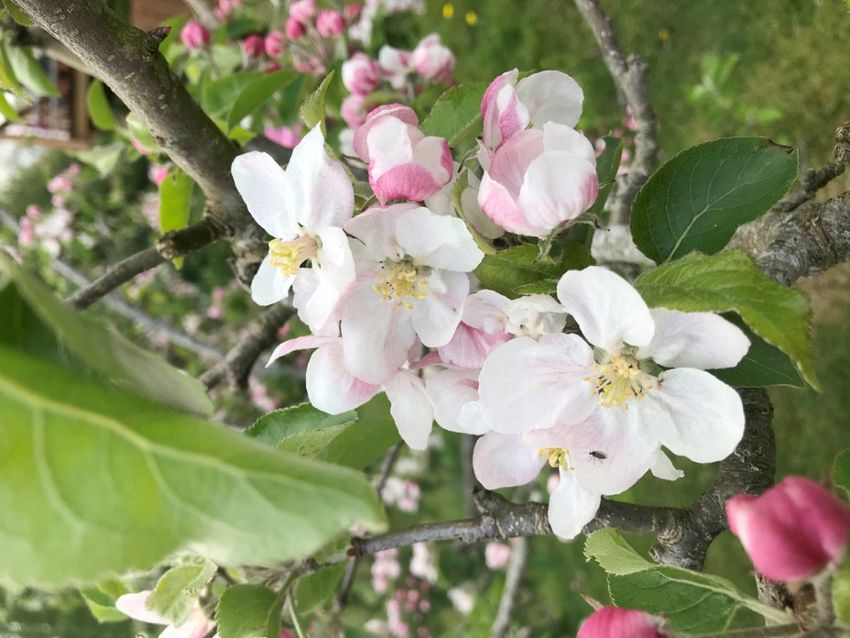
Bees are good for Business!
Farming:
Lots of crops are pollinated by bees, and this helps the
farmer with all the work that has to be done on the farm. If
farmers had to pollinate the plants by themselves this would
take too much time and cost too much money.

Food Retail:
Lots of supermarkets and small shops sell fruits and
vegetables that are pollinated by bees. Imagine if there were
no bees in the future, how expensive these foods would
become; some might even disappear off the shelves. No
more strawberries and ice cream!

  5th & 6th Class might want to explore the benefits from bees even further with a
  discussion around how else bees might benefit business. Here are two examples:

  Gardening and Horticulture:                                   Tourism & Exports:
  Lots of flowers, shrubs and trees that we want                People often visit Ireland because of our
  to grow in our gardens and parks are                          beautiful scenery and that includes lots of
                                                                wildflowers and flowering trees.
  pollinated by bees, so the horticulture
                                                                People abroad also buy foods produced in
  industry and garden centres and landscape                     Ireland because they know about our pretty
  architects and park gardeners often benefit                   green landscapes.
  from bees in having lots of healthy plants to                 Insects pollinate 78% of all of our wild flowering
  work with or to sell.                                         plants in Ireland, so bees are an important link
                                                                in our export and tourism businesses.

                                    Lesson Plan 2: Why is Pollination important?   2
Biodiversity
Plants and animals need each other. It’s not hard to see why animals need plants –
most animals eat plants and cannot live without them. Even animals that eat other
animals are dependant on plants because without them their plant-eating prey would
not exist. Plants, on the other hand, make their own food through photosynthesis –
using sunlight, water and carbon dioxide. Yet if all the animals disappeared from the
planet, most plants would disappear as well. Why?

Many plants need help to to be pollinated and to spread their seeds. Some plants –
about 10% – use the wind for pollination – from huge trees to the smallest blade of
grass. Yet most plants need the help of animals to get the job done.

The number of pollinators buzzing around each year is getting less and less. We
need to make sure none of these bees and insects disappear forever. It wouldn’t
be just our healthy lunchboxes that would suffer, others need bees too:

                                     Insects pollinate
                                     78% of our wild
                                     plants in Ireland!

Birds and Mammals
Lots of our animals and birds feed on fruits and seeds from wild plants that grow in the
countryside. Without bees and other insects pollinating these wild plants, they wouldn’t
produce the fruits and seeds that animals and birds need to eat. Fruits are the part of the
plant that surrounds and protects the seed.

                           Lesson Plan 2: Why is Pollination important?   3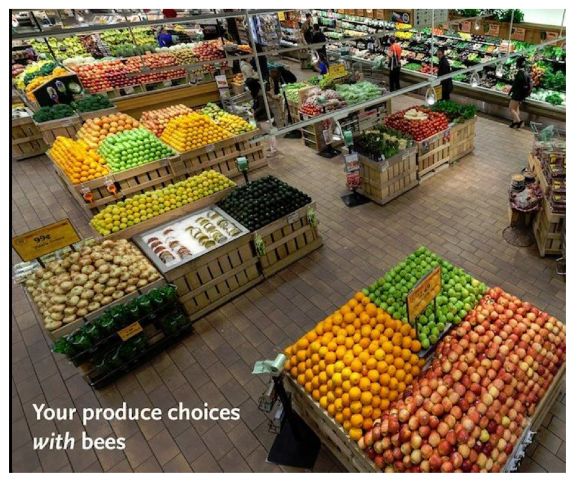
Other plants
In Europe there are 264 crop plants that we eat. In Ireland alone we have another 2,300
flowers and trees that grow in the wild. They need to be pollinated too! We know that
some of these wild flowers and trees provide important food for our animals and birds.
They also provide them with shelter.

Wild plants like buttercups and daisies provide us with a beautiful, colourful place to live.
Without bees pollinating our plants, our countryside would be a very dull and boring
place.

We all understand how important it is to look after the environment and know all the
things we can do to take care of our planet. Pollinators do lots to protect the
environment too.

                                                                                 Image © Craig Somerville

                              Lesson Plan 2: Why is Pollination important?   4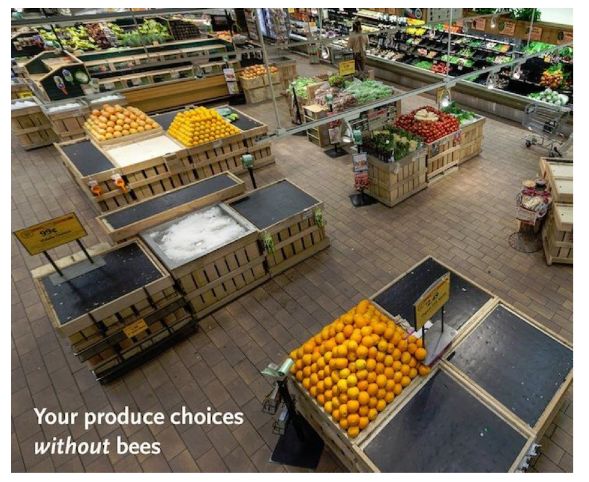
Desk-based activity:                          Wind or   Bee?

 Worksheet: Join up the foods with the correct type of pollination
 Question: Does this food need insect pollinators or Wind to carry
 its pollen and help it to make seed?

Lesson Plan 2: Why is Pollination important?     5

Activity – Be a Bee!

Acting out pollination can be a fun and really helpful way to explain the process. This game will help the children
to associate pollination with production of food.

What you need:
• Paper/cardboard for wings
• Elastic bands/twine to attach your wings
• Straws to drink ‘nectar’
• Apple or orange juice
• sellotape
• different coloured cotton balls

  1.    You could ask students to decorate pollinator wings they can wear to represent bees, the most important
        pollinators. They might also like to make antennae which can be attached to a hairband.

  2.    Once they are all wearing their wings, put a strip of double-sided tape on each student’s arm (since the
        pollen will need to stick to them just as it does with an insect)

  3.    Give each student a plastic straw and tell them it is their ‘proboscis' which they will use to suck up nectar
        from flowers (or they can pretend to do this if preferable to not take a drink).

  4.     Create flowers by printing or drawing large flower designs to represent strawberry flowers and place
        these flowers on different tables around the room. Place a cup of apple juice on the centre of the
        drawing/picture to represent the flower’s nectar supply. Place small pieces of cotton ball all around the
        cup to represent the pollen grains. You may like to colour the cotton balls on each flower in different
        colours so that it’s clear how they are being moved around the room

             Your antennae can be made as simply or detailed as you like!

                                      Lesson Plan 2: Why is Pollination important?   6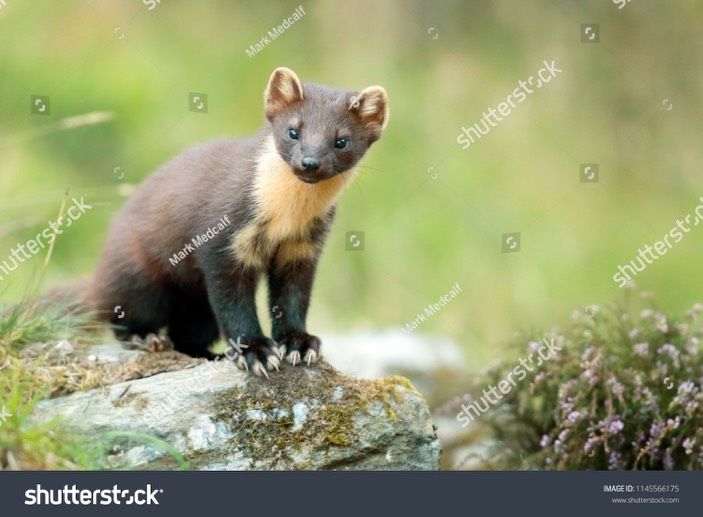
5.   The students use their ‘proboscis’ to take a sip of the ‘nectar’ and while they do, the Teacher/
     helpers sticks some of the cotton balls onto the tape on their arms, telling them that pollen just got
     stuck to them. They can even put some in their pockets to represent the pollen they will bring back
     to their nests to feed their baby bees!

6.   When all students have drank nectar and collected some pollen they should rotate positions and
     visit new flowers. There, they will take another sip of nectar they should ‘drop some pollen from
     their sticky arms onto the new flower. Hey presto! They have successfully pollinated the flower.
     The have mixed up the coloured cotton “pollen” showing how cross-pollination takes place.

7.   Once all the flower have been pollinated, cover the flower drawings/picture with nice pictures of
     lovely strawberries, or even some real fruit, or in case of allergies, fruit-shaped sweets for the the
     students to enjoy!

                               Lesson Plan 2: Why is Pollination important?   7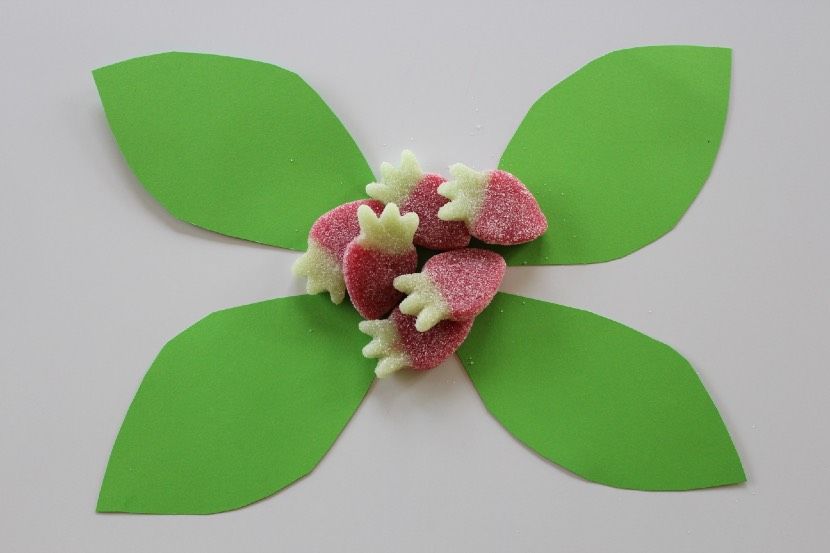
The Seed Game                                                                   (outdoor activity)

  • For this game you will need a series of tokens (printed paper or card) to
    represent water, soil, sunlight, air (CO2), and a pollinator. Scatter the
    tokens on around the school yard or hall or hide them for the children to
    find.
  • Use a sign to mark a spot in the school yard or hall called ‘Wildflower
    meadow’
  • Each child is a young flower and in order to grow and produce seeds,
    they will need to collect one of each of the tokens.

Make or print a sign to mark the Sunflower Field

  Wildflower Meadow- You made it!

                                                          Wildflower Meadow - You made it!

                             Lesson Plan 2: Why is Pollination important?   8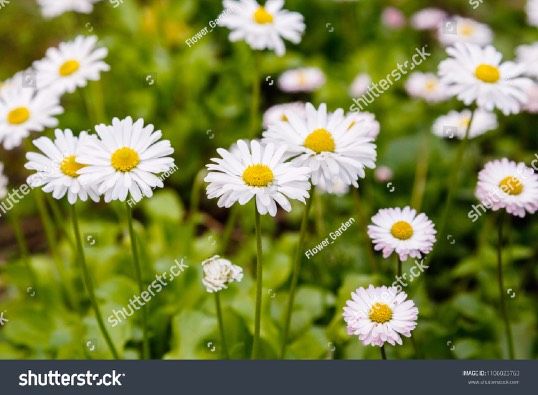
Tokens

                                         Air

                                      Water

                                        Soil
              +                                                    =

                                     Sunlight

                                        Bee

• When a child finds all 5 tokens, they can go to the place signposted
  ‘wildflower meadow’ where they will grow into a beautiful flower and
  produce lots of seeds.
• The first person to reach the wildflower meadow wins the game.

• This is a very active game which children love. It is important to
  keep highlighting the important aspects.

Discussion:
• If you have different numbers of ‘Bee’ tokens each time you play this
  game, the number of flowers that can grow will vary.
Less bees = less pollinated flowers producing seeds.

                Lesson Plan 2: Why is Pollination important?   9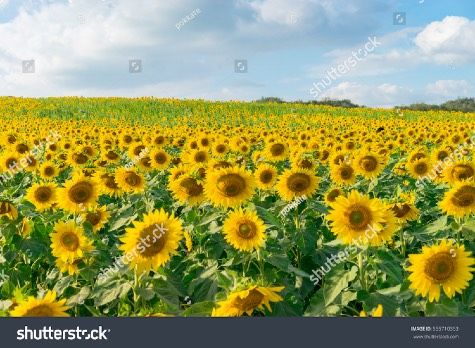
Help the Farmer work out his income                                    Desk-based Maths activity

Assign roles to students:

6 students will be 6 apple trees, numbered Apple Tree 1 to Apple Tree 6

6 students are Bees

Cut out small pieces of paper in different colours to represent the pollen on each tree’s flowers.

A bee rolls the dice, and the number that comes up on the dice, they must visit that corresponding
tree. So if Bee 1 rolls a 4, he visits 'Tree 4’ and that tree gives him some red ‘pollen’ strips

Then another Bee takes their go.

Once all the bees have had their go, they start again and Bee 1 rolls the dice. This time they roll a 3,
so they go to tree 3 and give it some of the pollen it had collected from Tree 4.

Then the other bees all take their go.

At the end of a the game a certain number of trees will have two different colours of pollen strip -
these have been cross-pollinated, but some will only have one type, these have not been pollinated.

If the farmer gets 200 apples from each tree if it is pollinated correctly, work out how many
apples the farmer will be able to harvest this year.

Example
If 4 trees were pollinated, the farmer will get 800 apples

                                Lesson Plan 2: Why is Pollination important?   10
Now play the game with other students as apple trees and bees, but this time reduce the number of
‘bees’ to just 3 bees.
This time, less apple trees can be pollinated by fewer bees,
Example:
If 2 trees are pollinated, he will get 400 apples.
5th & 6th Class:
With older classes you might want to make up his income, for instance if he gets €0.40 for each apple,
how much will he make on a good year for bees and how much will he make on a bad bee year, where
few bees visit his orchard?
In our previous example, with 6 bees, 4 trees were pollinated giving 800 apples or €320.
But on a year with few bee visitors, 3 bees, only 2 trees were pollinated, making €160 for the Farmer.
6 Bees visit orchard
3 Bees visit orchard
320
240
160
80
0
Farmer's Profit
Lesson Plan 2: Why is Pollination important? 11You can also read


