Magazine the Juergen Boos in Conversation with Helge Malchow and Kerstin Gleba Dark Nights - Contemporary German Crime Fiction The Children of ...
←
→
Page content transcription
If your browser does not render page correctly, please read the page content below
Juergen Boos in Conversation with Helge Malchow and Kerstin Gleba
       Dark Nights – Contemporary German Crime Fiction
      The Children of Marx and Coca-Cola – Fifty Years 1968
    Dr. Heimat – What I Always Wanted to Say about Germany

                           the

 frankfurt
 magazine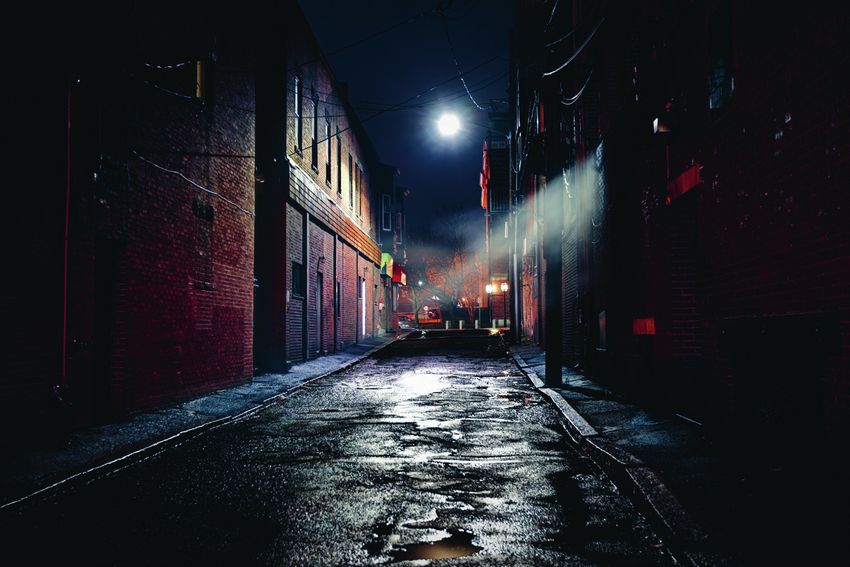
Books and the book trade in figures
In
In the
the sea
sea of
of books
Books and the book trade in figures
EDITORIAL
books
2016 data for Germany, change compared to previous year in brackets
2016 data for Germany, change compared to previous year in brackets
A pile of all the new books published in
2016
A pile ofwould 2,180 metres
somepublished
newtobooks
all therise
2016 would rise to some 2,180 metres
in
Book consumption: Dear readers,
Who
Book reads how often?
consumption:
New releases
Who reads how often?
Book market sales New releases Old habits die hard, and breaking them sometimes We look at a social phenomenon that forms the
by distribution First edition
Book marketchannel
sales Daily / several takes time. You now hold in your hands the result focus of myriad new publications: it’s now 50 years
by Sales
distribution channel Total First
bookedition
production
in euros
72,820
Total (-4.9%)
book production
times
Daily a week
/ several of one such radical break: the frankfurt magazine, since students in Germany and elsewhere took to
Sales in euros Online book Other times a week published by the Frankfurter Buchmesse. A liter- the streets in 1968 to call for radical change. We
© Frankfurter Buchmesse
72,820 (-4.9%)
market sales points
Other 42% 25%
Online book
1.69 billion (+5.3%) 4,966 (+14.1%) 42% 25% ary magazine whose aim is to inform its readers – recommend contemporary German crime novels
market 0.94 billionpoints
sales (+0.4%) 8,961 (-1.3%)
Textbooks
1.69 18.2%*
billion (+5.3%) 10.1%*
0.94 billion (+0.4%)
Children’s and
8,961 (-1.3%) 4,966 (+14.1%) visitors to the German collective stand at inter or Krimis, and explore the diverse offerings of
Direct from young adultand
books Textbooks
publishers
18.2%* 10.1%* Children’s national book fairs and professionals in the field German-language museums via their exhibition
Direct from young adult books 19% 16%
publishers
1.94 billion (+1.2%) Mail-order booksellers About once a week / – about German books, and to encourage their catalogues. We introduce new German children’s
19% 16%
1.94 billion (+1.2%) Book clubs 0.16 billion booksellers
Mail-order (+37.5%) every
About once14 days /
a week translation into as many languages as possible. books, young adult fiction and illustrators to watch, Bärbel Becker
20.9%* 1.7%* 13,891 (-1.9%)
20.9%* 0.03 billion (-64.5%)
Book clubs 0.16 billion (+37.5%)
Total sales Fiction
every 14 days One relic from pre-digital days were the cata- and showcase a selection of recently published has been at the Frank
0.3%*(-64.5%) 1.7%* 13,891 (-1.9%)
0.03 billion
9.28 Total
billionsales
(+1.0%) Fiction logues that accompanied book collections at our titles in English translation. The magazine also in- furter Buchmesse
0.3%*
Department stores
9.28 billion (+1.0%) 40% 59% stands (which have also long been available at cludes a wide-ranging interview with publishers for many years and is
0.13 billion (+16.3%)
Department stores Women
About once40% 59% /
a month www.book-fair.com). As interest in these some- Helge Malchow and Kerstin Gleba from Kiepen- the director of the
1.4%*
0.13 billion (+16.3%) Men Aboutless frequently
once a month / what modest booklets had noticeably decreased, heuer & Witsch, and a profile of four prize-winning department Interna-
Women
1.4%* Men less frequently
we put our heads together and came up with the authors. Last but not least, German President tional Projects.
Greatest density
Greatest density
of bookshops
idea of an entirely new publication. The support Frank-Walter Steinmeier answers five questions
Retail book market *share of the total
(notRetail book market
incl. e-commerce) market
*share of the total of bookshops
Residents per bookshop and encouragement of our partners in the German about books, and author Saša Stanišić reveals what
Number of licensing
(not incl. e-commerce)
4.39 billion (-0.8%)
market Residents per bookshop
Göttingen Number of licensing
agreements Federal Foreign Office has played a vital role in the notion of ‘Heimat’, or home, means to him.
Licences sold abroad:
4.39 47.3%*
billion (-0.8%) Heidelberg
Göttingen
Regensburg Licences
most sold abroad:
important countries
agreements
7,310 (-2.8%) this project, along with the enthusiastic commit-
1 7,310 (-2.8%)
47.3%* Heidelberg
1 Regensburg most important countries ment of all our Frankfurter Buchmesse colleagues. We very much hope you enjoy reading
2 5.946 3
2 5.946 3 This first issue of the frankfurt magazine reflects the frankfurt magazine!
6.251 7.656
E-book buyers* 6.251 7.656 the topics covered by German collective stands
E-book buyers* at over 20 book fairs around the world in 2018. Bärbel Becker
China Czech Republic
38% 62% China18.6%)
3.9 million 38% Women
62% 1,359 (share Czech
357 Republic
(share 4.9%)
Men 1,359 (share 18.6%)
3.4 million 3.9 million
2015 Men Women 357 (share 4.9%)
3.4 million
2013 2015 *Private use, not Spain
2013 *Private
incl. use, not
textbooks and Spain 5.3%)
384 (share
2.4 million incl. textbooks
reference booksand 384 (share 5.3%) Turkey
2.4 million 3.9 million France 308Turkey
2012
2012 3.9 million
2014 3.8 million
reference books
375 France
(share 5.1%)
(share 4.2%)
308 (share 4.2%) CONTENT
2014 3.82016
million Industries in 375 (share 5.1%)
Industries
comparison in
2016
3 Editorial | 4 Best of Frankfurt 2017 | 5 Five Questions to
Frank-Walter Steinmeier,
comparison
Sales in euros
Sales in euros Travel
Music industry
Travel
5.7%
5.7%
Federal President of Germany | 6 Juergen Boos in Conversation with Helge Malchow and
13.2 million
13.2 million
Music
1.59 industry
billion (+3.0%)
1.59 billion (+3.0%)
(+0.2%)
(+0.2%) Kerstin Gleba | 16 Authors, Books, Awards Books People Are Talking About
2012 21.5 million
2012 21.5 million Specialist media
2013 Specialist media Book market
2013 3.43 billion (+2.4%) 9.28Book market
billion (+1.0%) Product categories:
E-books 27.0 million 3.43 billion (+2.4%) 9.28 billion (+1.0%) Product categories:
27.0 million
10 Dark Nights 20 The
Children of
E-books 2015 share of book market sales Non-fiction
sold* 2015 share of book market sales Non-fiction
sold* 24.8 million 9.8%
24.8 million
2014
2014
9.8%
(-2.7%)
(-2.7%) Contemporary German Marx and Coca-Cola
*Private use, not incl. textbooks and Computer and video
Computer and video games
games
28.1
28.1million Film
Film industry
*Private use, not incl. textbooks and
reference books million industry 2.13 billion
2.13 billion (+7.0%)
(+7.0%) Crime Fiction Fifty Years 1968
reference books 2016
2016 2.80
2.80 billion
billion
(-6.9%)
(-6.9%) Textbooksand
and
Textbooks
How studyaids
aids
Howmuch
muchdo study
26 When Pictures Become Books Art Exhibition Catalogues
do
new
newbooks
bookscost?
cost? 10.9%
10.9%
30 Fifty Books That Travel Selected Translations | 36 Five International Locations in German Novels
Science (+6.1%)
(+6.1%)
11.51
11.51euros
euros 16.30 Science
(-1.8%) 16.30euros
euros
Book Heroes 2017 Reading Places in Frankfurt | 37 Five Promising Openings to a Novel
(-1.8%) (-3.7%) 11.1%
11.1%
17.23
17.23euros
euros (-3.7%)
€€ (-1.5%)
(-1.5%)
The Five Most Beautiful Books of 2017 | 38 A Forest of Books Reading Tips for Parents and Kids
(+0.1%)
(+0.1%) €€
Self-help
Self-help
€€
42 Dr. Heimat What I Always Wanted to Say about Germany | 42 Imprint
Children’sand
Children’s and Children’s
Children’s and
and young
young adult books
adult books 14.5%
14.5%
young adultbooks
youngadult books Fiction
Fiction 16.5%
16.5% (-0.1%)
(-0.1%) Fiction
Fiction
(hardcover)
(hardcover) Textbooks
Textbooks (hardcover)
(hardcover) (+9.0%) 31.5%
31.5% 43 Favorite Places of German-speaking Authors
(hardcover)
(hardcover) (-0.5%)
(-0.5%)
Börsenblatt.This
©©Börsenblatt. Thisposter
posterwaswasincluded
includedas
asaasupplement
supplement in Börsenblatt, Issue 31, published
in Börsenblatt, published 33 August
August 2017.
2017.
The
Theinformation
informationisistaken
takenfrom
fromBuch
Buchund
undBuchhandel
Buchhandelin
in Zahlen
Zahlen 2017 (Books and Bookselling
Bookselling Figures
Figures2017) fromthe
2017)from theGerman
GermanBook
Book
Trade
TradeAssociation
Associationand
andisisavailable
availableonline
onlineat
atwww.mvb-online.de
www.mvb-online.de
Editors:
Editors:Sabine
SabineCronau,
Cronau,Jana
JanaLippmann,
Lippmann,Sandra
Sandra Schüssel.
Schüssel. Design
Design and Illustration: Sabine Timmann,
Timmann, www.infografik-hamburg.de
www.infografik-hamburg.de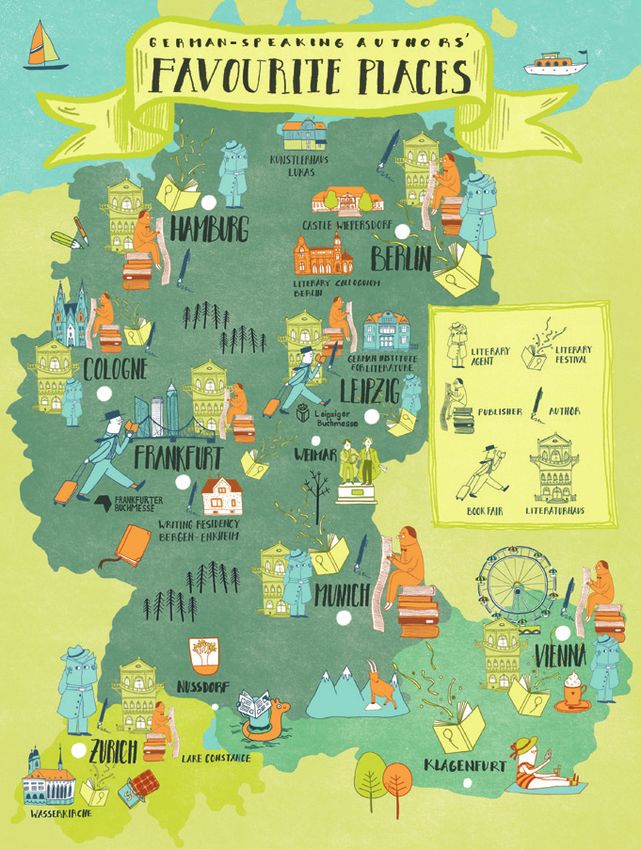
BEST OF FRANKFURT 2017 FIVE QUESTIONS TO
FRANK-WALTER
STEINMEIER
Federal President of Germany
1 | Which German classic made a lasting
1 2 3
impression on you?
Franz Kafka. No one else has described the state
of our modern lives as precisely as he did.
© Bernd von Jutrczenka / dpa
2 | What types of books do you read to
1: © FBM / Bernd Hartung; 2: © FBM / Anett Weirauch; 3, 6, 7, 9, 10, 12, 13: © FBM / Marc Jacquemin;
unwind and how do you choose your
reading material?
When I read, it is important to me to learn a new
way to look at my own life. I often choose books Federal President Frank-Walter Steinmeier in discussion with the authors
that analyse questions of relevance to society from Daniel Kehlmann (l.), Eva Menasse (2nd from right) and Salman Rushdie
4 5 6 (r.) on ‘Freedom of Thought in Troubled Times’ during his conference
an artistic point of view. Daniel Kehlmann’s novel series ‘Forum Bellevue – On the Future of Democracy’ held at Schloss
Tyll is a recent example, as is Das Glück des Zau Bellevue in Berlin.
berers by Sten Nadolny, which I read a couple of
4, 5, 8, 11: © FBM / Markus Kirchgessner
weeks ago.
range of ways to see the world. And last but not
3 | In your opinion, what role do writers least, literature is always an invitation to engage in
7 8
play today? dialogue.
11 What makes writers, like artists in general, special
9 10
is that they feel what moves a society. They have 5 | What would you like to see German
13 the ability to find words to describe the diversity writers do as regards furthering under
and complexity of our world, our dreams, incon- standing in Europe?
gruities and what is ineffable in human experience. As Federal President, it is far from me to tell writ-
12 They hold up a mirror to us as a society. They use ers or artists what to do. In our open societies, they
their intellectual independence to remind us of our are free to choose their own objectives. At the
actual purpose as beings who have been endowed same time, as a passionate reader, I see writers and
with reason. To quote Imre Kertész, literature ex- artists as particularly blessed. Their works allow
plains existence to existence. It helps us to recog- them to create a feeling of community and to
nise the big picture and to move from understand- highlight what unites us, including our intellectual
ing to action. and cultural European identity. Anti-European
movements combine politics with a narrow defini-
4 | What can politicians learn tion of culture and focus on what divides us. They
from writers? place their own nation, language and culture above
1 Bestselling British author Paula Hawkins in an interview at the Business Club. | 2 Conquering the whole city: the BOOK FEST. | 3 The most exciting overnight They can learn to put themselves in another per- others and play one homeland off against another.
accommodation in Frankfurt: the Kein & Aber Tower at the fairground. | 4 The Hungarian author Péter Nádas during a television interview on the Blue Sofa.
5 The Franco-Moroccan author Leïla Slimani at the ‘Weltempfang’ stage, centre for politics, literature and translation. | 6 French President Emmanuel Macron and son’s place – irrespective of whether we are talking However, division does not bring about coexist-
German Chancellor Angela Merkel at the opening of the Guest of Honour pavilion. | 7 Legendary German musician Udo Lindenberg at the Open Stage, Agora. about a character from literature or a real person – ence and understanding. The devastation of two
8 Bestselling US author Dan Brown at the presentation of his new thriller Origin. | 9 The British-Georgian singer Katie Melua at the Guest of Honour handover and to expand their own viewpoint to include other world wars, to which our united Europe is the an-
ceremony from France (2017) to Georgia (2018). | 10 Brian May, Queen’s lead guitarist, presents his autobiography. | 11 Master of the historical novel: bestselling
British author Ken Follett. | 12 ‘Francfort en français – Frankfurt auf Französisch’ (Frankfurt in French): the official slogan of the Guest of Honour 2017. people’s experiences. Literature can teach toler- swer, should always sound a warning to us for the
13 Fashion show at the creative business festival THE ARTS+. ance and empathy by showing us the enormous future. ◊
4 5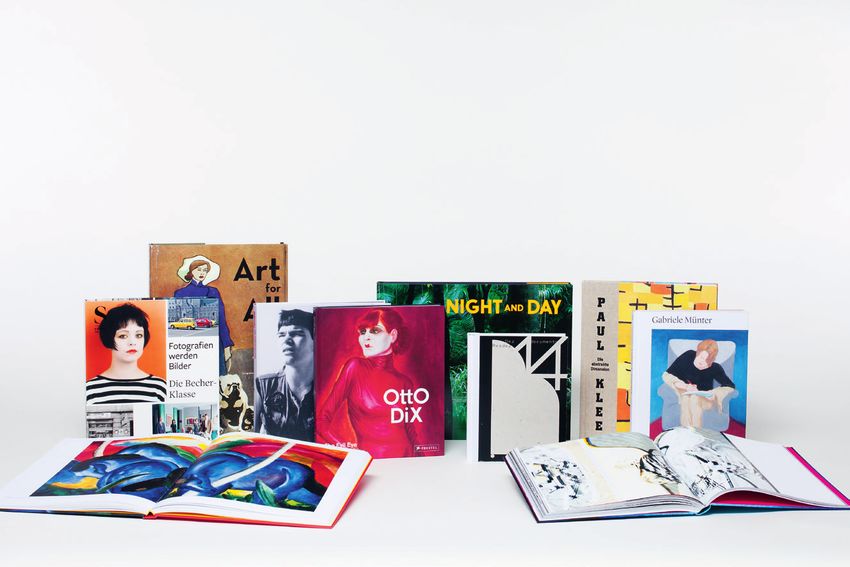
JB: Kiepenheuer & Witsch is part of a rather liberal JB: Many publishers rely on multiple imprints to help The publishing house
JUERGEN BOOS IN CONVERSATION WITH
left-wing tradition, yet at the same time you are them credibly present different genres and empha- Kiepenheuer & Witsch
considered a literary publishing house. How would ses within the same publishing house. Hanser, for was founded in
Helge Malchow and you define your profile as a publisher?
HM: We see ourselves as a literary publishing
example, has bought Zsolnay in order to have a more
popular voice. Would KiWi ever consider doing that?
Cologne in 1951. Its
list focuses on literary
Kerstin Gleba
house, though our ratio of nonfiction to fiction is KG: Our strength is that everything appears under works by German
about fifty-fifty. Our nonfiction is primarily polit- one imprint. Our crime writers sit comfortably and international
ical, while our fiction titles are divided into literary alongside our literary authors. The trade has re- authors, political and
and genre fiction. sponded well to our thrillers, because it knows they popular nonfiction,
Good literature, critical essays and popular nonfiction – KG: Genre includes Frank Schätzing or Jean-Luc are of a high quality. We release 100 titles a year: and genre fiction.
Bannalec, for example. Yet our list is predominant- one imprint is enough. Kiepenheuer & Witsch
since 1951, this has been the focus of the list of the Cologne-based ly literary fiction – with authors such as Heinrich JB: You’re in a transitional phase at the moment has been part of the
publishing house Kiepenheuer & Witsch. Böll, Eva Menasse, Feridun Zaimoglu, Christian since there is going to be a new publisher at the helm Georg von Holtzbrinck
The Director of the Frankfurter Buchmesse, Juergen Boos, Kracht, Thomas Hettche, Uwe Timm, Katja Lange- soon. Will the way things are done change radically publishing group
in conversation with the publisher and his successor. Müller and many others. or are you looking more to ensure continuity? since 2002. In 2009,
JB: An anecdote has been making the rounds in pub- KG: I think we would be well advised to find the the Berlin subsidiary
lishing circles: a few years ago, the management right balance between starting over and continui- Galiani was estab-
consultancy firm McKinsey allegedly advised col ty. Helge Malchow and I have already been work- lished.
leagues at S. Fischer Verlag only to publish the ‘right ing together closely for over 20 years. We’ve al-
books’ from now on. How does a publisher go about ways had intense discussions about our list – with
finding the ‘right books’? all our other colleagues as well, because for impor-
tant books at KiWi we get all departments on
board from the start. Since Helge will remain ac- One of the publishing
The ‘sure-fire tive as an editor for us and will keep working with house’s most impor-
certain authors, continuity is a given. tant authors is Nobel
bestseller’ is a tricky HM: Kerstin has been editor-in-chief with us for laureate Heinrich Böll.
business years and has always been much more active in His works have print
certain areas than I have. Networking within the runs in the millions
international rights market is one of her great around the world. The
KG: A ‘right book’ has always something unique strengths, for example. There won’t be any funda- same is true of the
about it. This is the case in literature when an au- mental changes, but obviously she will set some collected works of
thor’s voice makes me see the world in a new way. new priorities, which I’m very much looking for- Erich Maria Remarque
After all, the editor is always the first reader: if ward to seeing. and the crime novelist
reading a text touches off something in her be- Frank Schätzing,
cause the perspective is new or the characters are whose Die Tyrannei des
depicted in a surprising way, then she begins to ask Schmetterlings is due
herself who else might also be interested in it.
We need out in April 2018.
That’s how it starts. to develop a new,
HM: The ‘sure-fire bestseller’ is a tricky business. Every year, Kiepen-
Uncertainty about how the market will react is
creative approach, heuer & Witsch sells
much greater today than it used to be; virtually particularly foreign rights to
nothing is predictable anymore. This has to do many of the books by
with the development of the media and the shift
when it comes its German-language
in society toward individuality. It used to be possi- to sales authors, including
ble to tell who voted for the Christian Democrats Jean-Luc Bannalec,
and who for the Social Democrats, where some- Alina Bronsky,
© for all photographs in this article by Boris Breuer
one bought his clothes, what the overall national JB: How important is internationality for a pub Volker Kutscher,
mood was. lisher? And how can you be active at the interna- Katja Lange-Müller,
KB: Using a scattershot approach to try and appeal tional level? Do you have your own scouts? Eva Menasse,
to absolutely everyone is the wrong way to go KG: Yes, we work with scouts. But we also get Joachim Meyerhoff,
about things. As a publisher, we have to focus on many of our recommendations from our foreign Norman Ohler,
the books we want to do, those we believe in. These authors, including Dave Eggers, Jonathan Safran Uwe Timm and
are the books we have to fight for. Foer, Zadie Smith, Arnon Grünberg and Don Volker Weidermann.
6 7
younger generations of readers. Frank Schätzing’s
new novel, for example, which I’m just editing now,
is exactly the right book for young people who
grew up in the digital age.
KG: Books, as both an age-old and extremely up-
to-date medium, are acquired culture – they won’t
disappear. The form and tone of address are impor
tant of course, but no medium is better at reflect-
ing on the present than books. Netflix, Amazon
Prime and other streaming portals are all here to
stay, but so are books.
HM: Provided, that is, that nothing topples the two
pillars on which our book culture rests: copyright
and fixed book prices. No other place has as much
cultural variety as we do; Germany really is a bea-
Helge Malchow, as a DeLillo, with whom we are basically in equally con in this respect – and globally, at that.
typical member of the close contact as we are with our German authors. JB: One last question: Can a publishing house or
1968 generation, was And then of course there are also our personal publisher change society?
very politically active contacts with international publishers and editors, HM: Maybe not change outright, but it can make
as a student. After who tell us about the interesting manuscripts they people think or spur societal debate. Uncle Tom’s
working as a German happen to have on their desks at the moment and Cabin, for example, provided a very strong impetus
teacher, he came to what they are going to make an offer on. for the emancipation of black Americans.
Kiepenheuer & Witsch JB: Buzzword ‘industry crisis’: over the past five KG: And Fire and Fury made people hope, at least
as a trainee in 1983. years, in Germany alone, we’ve lost a significant for a moment, that Donald Trump might be im-
As editor and later number of book buyers. In the long term, declining peached … No, a publishing house as an entity cer-
editor-in-chief, he did customer traffic in city centres threatens not just tainly can’t change the world, but what we can do
a lot to shape the booksellers, but the retail market as a whole. What is is to shoot very carefully aimed arrows into society
profile of the publish- your take on the current market situation? that then trigger processes of change.
ing house. In 2002, HM: The trick is to do it at the right moment –
he replaced Reinhold then a single book can play an extremely active
Neven DuMont as role in a tectonic shift in social conditions. That’s
publisher.
No medium how it was back in the seventies, eighties, with
is better at reflecting Heinrich Böll and Günter Wallraff: without their
Kerstin Gleba came to books – Die verlorene Ehre der Katharina Blum
Kiepenheuer & Witsch
on the present than and Ganz unten, with Wallraff as ‘Ali the Turk’ –
in 1995, after earning books abuses such as manipulation by the mass media or
a degree in literary the exploitation of migrant workers never would
translation. As a young have captured as much attention. The sale of mil-
editor, she began to HM: We shouldn’t let an apocalyptic mood take lions of copies of these books led to legislative
build up the house’s hold in this respect – that’s not in keeping with the changes, people reconsidered contract work – job
literary list. In 2002, reality. But we need to develop a new, creative security was introduced, in other words. We’ve had
she took over as approach, particularly when it comes to sales. It more than one book in our publishing house that
editor-in-chief from used to be that 95 per cent of all titles were sold has had a direct socio-political effect.
Helge Malchow. With through intermediaries; today, it’s maybe 40 per JB: So the answer is yes?
his departure at the cent. That means we have to rethink and reorgan- HM: In an era in which every conceivable moral,
end of 2018, she will ise our distribution departments, with more staff political and individual-rights related sensitivity is
become the new with a specialised focus, key accounts for chain being mobilised to restrict artistic freedom and
publisher of Kiepen- bookstores and for Amazon, and so on. Another freedom of political opinion, it is once again our job
heuer & Witsch. challenge is trying to increase the number of as book publishers to preserve and expand the field
younger readers. To reach this target group, we of public communication as much as possible. In
have to think about how to present our books, but that regard the answer is: in the best case scenario,
above all what themes we address, which authors yes.
we publish and what types of books speak to ◊
8 9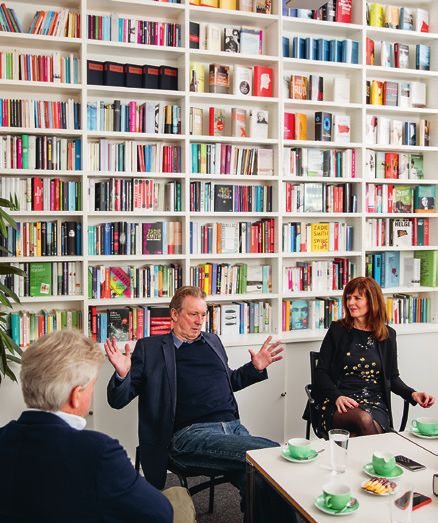
CONTEMPORARY GERMAN CRIME FICTION
Dark Nights
German crime fiction may have had a slow start, but today it’s thriving –
you’ll find everything from lighthearted regional crime fiction to
serious historical thrillers and gritty dystopian crime. If ever there was
a time to discover the Krimi, it’s now.
book-fair.com /
crimefiction
More information
hankfully, the days of having to defend crime novels’ – allowed a fresh crop of writers to about the
German crime fiction – usually by emerge. Newer publishers like Emons and Gmei featured titles can
muttering ‘it’s better than you think’ – ner were able to increase their output and consol- be found here.
are long gone. But some of those early idate their position in the market. Established pub-
criticisms did contain a grain of truth. Slow to de- lishing houses like Rowohlt and Ullstein began
velop after the cultural isolation and devastation integrating their crime fiction into paperback se-
of the Nazi era, it wasn’t until the late 1960s ries with broad appeal, rather than more special-
© Hans Scherhaufer
that German crime fiction found something like ised ones. There was a bit of grumbling about
an identity of its own. Inspired by Sjöwall and ‘over-saturation’, but once the fuss died down and
Wahlöö’s ‘Martin Beck’ series, the Soziokrimi or sales of the Krimi took off – helped by the com-
‘social crime novel’ emerged at the same time as mercial success of international crime authors like
iconic TV crime drama Tatort and its East German Donna Leon and Henning Mankell – the genre had German Crime
counterpart Polizeiruf 110, which also tackled so- a solid foundation on which to build. Fiction Award 2018
cial themes. International audiences, however, had Today, German crime fiction is a picture of health. Oliver Bottini, author
to wait until the 1990s to become properly ac- Spanning everything from bestselling murder of Zen and the Art
quainted with German crime, and then it was later, mysteries to more avant-garde works, it embraces of Murder and other
edgier writers like Pieke Biermann and Jakob Ar- virtually every subgenre and literary style, from highly acclaimed crime
jouni who were the first to break through. the simple to the sophisticated. As in all publishing novels, has been
The German book market only truly discovered sectors, there are trends and micro-trends, ebbs honoured again with
home-grown crime fiction at the beginning of the and flows. The resulting diversity makes it almost the German Crime
2000s. Low overheads played a big role: trans impossible to predict future directions for the Fiction Award for his
© iStock by Getty Images
lation costs fell away and, to begin with at least, genre. Ultimately, what connects German crime latest book Der Tod
author advances were relatively modest. In addi- fiction is its shared language, rather than a com- in den stillen Winkeln
tion, the growing boom in Regiokrimis – ‘regional mon setting or specifically ‘German’ themes. des Lebens (Dumont).
10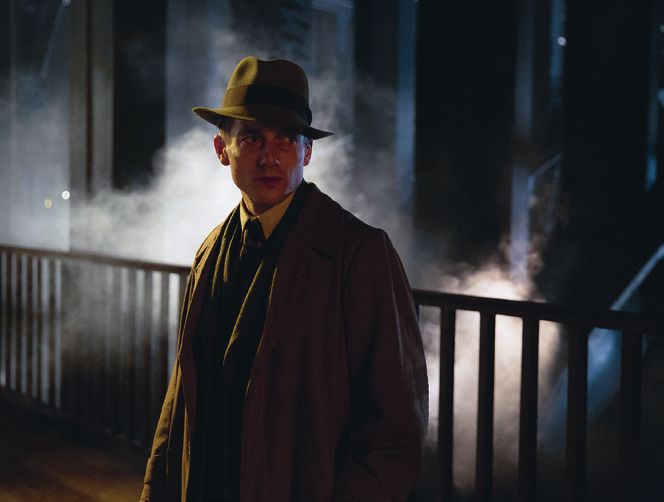
SYNDIKAT is a
German-language
Entertaining and Robert Hültner
crime fiction authors’ gritty – historical Lazare und
der tote Mann
group with 750 mem-
crime fiction am Strand
© privat
bers – from aspiring (btb)
newcomers to estab- continues to boom A corpse on the
beach of Sète. Can
lished bestselling The Swiss writer Inspector Lazare
authors. Friedrich Glauser get to the bottom
(1896–1938) was the The same applies to the most recent wave of Ger- of the (deadly)
plot of backroom
creator of one of man historical crime fiction. Volker Kutscher’s use deals, corruption
the first detective of a model pioneered by Philip Kerr, Richard and deception?
characters in German- Birkefeld and Göran Hachmeister shows how past
language fiction. publishing successes can help generate new liter-
CRIMINALE is a ary formulas. In turn, Kutscher’s ‘Gereon Rath’ se- Robert Brack
© Christoph Boeckheler
crime fiction festival ries has inspired further crime novels set in the Die Morde von
St. Pauli
with over 200 au- first half of the 20th century. As we know from (Ullstein)
thors organised by French and Latin American authors, crime fiction Hamburg in the
SYNDIKAT, and held A peek at the shelves of the crime fiction bookstore is a good medium for thinking deeply about history Golden Twenties:
Wendeltreppe in Frankfurt am Main a series of murders
in a different location and articulating the forgotten or the repressed. keeps St. Pauli’s
every year. Serious historical thrillers like those of Robert underworld on ten-
Bong, alias Jean-Luc Bannalec, has successfully Brack, set in Weimar-era Hamburg, or Andreas terhooks. A crime
Regional crime transposed the concept to Brittany, and fellow Kollender’s Kolbe, about an unsung resistance hero
novel in the tra
dition of Babylon
The Friedrich Glauser fiction has a German authors are busy claiming all manner of during the Nazi years, form an important part of Berlin.
Prize has been award- tourist destinations as settings for their work. Germany’s ongoing engagement with the past.
ed annually since 1987
few surprises up But specific local settings can also be used to com-
by SYNDIKAT for its sleeve municate serious themes – as Oliver Bottini skil-
the categories ‘Best fully demonstrates in Der Tod in den stillen Winkeln
Novel’, ‘Best Chil- des Lebens. This novel, recently awarded the Ger-
The one to Zoë Beck
Die Lieferantin
dren’s or YA Crime This argument holds true despite the apparent in- man Crime Fiction Award 2018, turns the bru The non-monetary watch: dystopian (Suhrkamp)
Ellie Johnson knows
Novel’, ‘Best First fluence of the Regiokrimi. The use of this market- tality of industrialised agriculture into an exciting German Crime Fiction
Novel’, ‘Best Crime ing term often elides major differences, blurring thriller whose locations, Mecklenburg-Western Award (Deutscher
crime fiction she is in danger.
She runs the hot-
Fiction Short Story’ the distinctions between relatively unsophisticated Pomerania and the Romanian Banat, play a crucial Krimi Preis) is awarded is on the rise test – and also
most illegal – start-
and ‘Glauser novels – whose regional German settings mirror role in the narrative. Provincial Franconia of the annually by a jury up in London:
Honorary Award’. popular holiday destinations to maximise sales – 1970s is equally fundamental to the horrific tale of composed of literary through her app,
you can order
and more ambitious works. The former often have abuse in Ute Cohen’s Satans Spielfeld. Such works scholars, critics and Looking slightly further down the line, we can the highest quality
comic elements, as illustrated by the thigh-slap- show how misguided it is to dismiss all regional booksellers, which see a trend for dystopian scenarios emerging in drugs …
ping Bavarian crime novels of Rita Falk and au- crime fiction as trivial. The ‘regional’ isn’t always selects three winners contemporary German crime. The novels Score
thor-duo Volker Klüpfel and Michael Kobr, or purely ‘regional’, and every novel should be judged each in the categories and Drohnenland, by Martin Burckhardt and Tom
Klaus-Peter Wolf’s East Frisian crime series. Jörg on its own merits. ‘national’ and ‘interna- Hillenbrand respectively, helped to pave the way Christian
tional’. for this development. Max Annas’s latest book, v. Ditfurth
Finsterwalde, which shows racism triumphing in Giftflut
(carl’s books)
The Crime Fiction Germany, voices anxieties about the current polit- A bomb attack on
Bestseller List ical climate. And Zoë Beck’s Die Lieferantin de- the Oberbaum
Franz Dobler Sabine Trinkaus Oliver Bottini (KrimiBestenliste) picts a post-Brexit England riven by class conflict Bridge shakes
Ein Schlag ins Seelenfeindin Der Tod in den Berlin. Bridges are
presents the 10 best and the growth of links between politics and or- also blown up in
Gesicht (Emons) stillen Winkeln
(Heyne) The psychiatrist des Lebens international crime ganised crime. Paris and London.
Simone Thomas Nadja Schönberg (Dumont) novels of the month. German crime fiction is also becoming increasing- There’s no doubt
has already been finds herself in a ‘Oliver Bottini’s about it: someone
Its jury is composed ly politicised in various ways. Argument Verlag is at war with
through a lot, conundrum. Her new book is like
so the last thing new patient is sup- autumn: gloomy, of 19 literary critics with its literary imprint Ariadne specialises in fem- Europe.
she needs is to be posedly suffering dismal, barren. and crime fiction inist crime writing by authors like Monika Geier,
threatened by a from delusions Yet the way its specialists from Ger- Christine Lehmann and Merle Kröger, while Polar
stalker too. A case of persecution – deadly entangle-
for ex-cop Robert but what if her ment unfolds is many, Austria and Verlag is launching a new ‘German Polar’ series
Fallner. delusions are real? enthralling.’ RBB Switzerland. that draws on the French ‘polar’ tradition of police
12 13
novels and political noir. Nearly every German
publisher’s list features crime authors writing on
A vibrant cultural
the major political issues of the day. They include scene with Krimi
Christian von Ditfurth at carl’s books, Ullrich
Effenhauser at :transit, Norbert Horst at Gold-
prizes, bookshops
mann, Yassin Musharbash at KiWi and Leonhard F. and festivals
Seidel at Nautilus.
Nor should we forget the mavericks who infuse
high-quality German crime with character and di- earning opportunities. Specialist bookshops like
versity: Friedrich Ani, the melancholy creative; Hammett in Berlin or Wendeltreppe in Frankfurt
Andreas Pflüger, author of classy action novels; supply expert advice. Das SYNDIKAT, a profes-
the thoughtful Matthias Wittekindt; the calm, sional association for German-language crime
quiet, lethally precise Regine Nössler; and more writers, recently celebrated its thirtieth anniver
experimental authors like Anne Kuhlmeyer and sary. There are crime fiction prizes of varying im-
Uta-Maria Heim. portance, and influential Krimi bestseller lists
Names like these are proof of the fact that almost compiled by radio broadcaster Deutschlandfunk
every important publisher in the German-speak- and the Frankfurter Allgemeine Sonntagszeitung.
ing world is committed to fostering German crime Knowledgeable discussions about crime fiction
fiction. This is as true of Suhrkamp, Klett-Cotta, take place on radio, TV and in almost all the lead-
Galiani and Hanser / Zsolnay as it is of established ing newspapers. Crime events are frequently held
imprints in the Random House Group, publishing for fans, like the Munich Crime Festival (Münch-
companies such as Ullstein, Piper and Rowohlt, ner Krimifest), and for professionals working in the
and smaller, more specialised publishers like Pen- field, such as the ‘Making Krimis’ (‘Krimis Machen’)
dragon, KBV and Grafit. Indeed, it’s hard to find convention. The online magazine CrimeMag pro-
any area of German publishing that’s a completely vides a forum for international reflections on crime
crime-free zone. Steidl, Culturbooks and Konkurs- fiction, and many prominent critics also run their
buch may only publish crime every so often, but own blogs.
when they do, their titles are well worth the wait. So, in a nutshell, German crime fiction has come a Thomas Wörtche
Add to this an extremely well-developed crime long way. It has moved from the margins to the is considered one of
sector infrastructure. Countless TV series and very centre of German literature and publishing. Germany’s most
spin-offs like Radio Tatort offer audiences multi- Or as we crime reviewers like to say – it’s a hit with important thriller
© X Filme Creative Pool Entertainment GmbH
media access to crime drama and boost authors’ readers and critics alike. ◊ critics. He has written
The German crime series for a wide range of
Babylon Berlin is based publications, including
on Volker Kutscher’s
novels featuring Detective DIE ZEIT, Süddeutsche
Inspector Gereon Rath. Zeitung and Playboy.
He is currently editing
a series of thrillers for
Suhrkamp.
Monika Geier Heinz Strunk
Hans Schefczyk Alles so hell Regina Nössler Der goldene
Das Ding drehn da vorn Uta-Maria Heim Schleierwolken Handschuh
(Transit) (Argument) Toskanische (Konkursbuch) (Rowohlt)
The former mem- A policeman is Beichte Elisabeth feels like In 1976, the serial
bers of a military shot to death. In (Gmeiner) she’s being fol- killer of women
cell want to ensure a brothel in Frank- A beautiful spot lowed: a former Fritz Honka
their survival with furt. And, of all on the coast of girlfriend suddenly achieved gruesome
one last coup. people, it’s Chief Tuscany becomes shows up at her notoriety: he picked
A highly political Inspector Bettina the setting for a door, threatening up all his victims
thriller set in Bar- Boll’s ex-partner sophisticated her. And a dark at the Hamburg
celona, Toulouse, and ex-almost-boy- intrigue within the secret pushes its pub Zum Goldenen
Cologne and Paris. friend. Catholic Church. way to the surface. Handschuh …
14 15
The novel Die Hauptstadt, published in autumn
BOOKS PEOPLE ARE TALKING ABOUT
2017 – the first novel ever about the European
Authors, Books, Awards
Union – benefits from the essay that preceded it.
Menasse has written an entertaining and intelli-
gent book in which he portrays the workings of Mariana Leky Favourite Book of
the Brussels machine in such a way that the reader Was man von hier the Independents
aus sehen kann
develops a genuine interest in it. The fact that (Dumont) Since 2014, Indepen
the novel won the coveted German Book Prize ‘A wonderful, smart, dent Bookstore Week
With their novels, essays and poems, Robert Menasse, for best German-language novel – selected from amusing and
profound book.’
(WUB) has been
Mariana Leky, Sasha Marianna Salzmann and Jan Wagner are among the most among all the novels published in a given year, by a Deutschlandfunk held in Germany every
jury whose members change annually – also helped Kultur November. In 2017,
outstanding German-language authors working today. make Die Hauptstadt one of the bestselling books nearly 600 bookstores
of the season. nominated 188 new
fiction titles for
‘Favourite Book of the
F
or his new novel, Vienna native Robert Mariana Leky Independents’. The
Menasse moved to Brussels. The multiple Liebesperlen three ‘favourite books’
award-winning 63-year-old author wanted (Dumont) to date are by
With the ability to
to write about the EU, so he rented a room in the find the comedy in Dörte Hansen,
German Book Prize Belgian capital for a few years to study the Euro- tragedy, Mariana Benedict Wells and,
The German Book politicians up close. Before this book came out, Leky shows a young most recently,
woman navigating
© Rafaela Proell / Suhrkamp
Prize, established in Robert Menasse (whose first novel was published the tricky transition Mariana Leky.
2005, is awarded in 1988) was best known as an essayist whose work to adulthood.
annually to the best probed deeply into Austrian society.
© Franziska Hauser
German-language Now Brussels. ‘I was curious: what sort of people
‘novel of the year’. are these, the ones who draw up the framework for
The winner receives the EU? Do they fit the cliché of ivory-tower
25,000 euros. bureaucrats behind mirrored-glass façades?’ Like Robert Menasse Mariana Leky
Authors who have won an ethnologist, Menasse examined the Brussels
Mariana Leky
Die Herren
the German Book bureaucrats and found himself debunking some of The world’s first novel about the EU: ausstatterin
(Dumont)
Prize to date include the clichés about the supposedly ‘labyrinthine’ and in Brussels, everything converges – ‘An absurdly lovely
Uwe Tellkamp, Lutz ‘paralysing’ EU administration. and a pig runs through the streets. Love and death in the Westerwald: and funny story
Seiler, Terézia Mora Yet initially the material refused to come together whenever an okapi appears in about the worries
of ghosts, space
and, most recently, as a novel. ‘After a while in Brussels I noticed that Selma’s dreams, someone in town dies the food and adjustable
Robert Menasse. I tend to fall into an essayistic tone when I write. next day. Who will it be this time? hearts.’ STERN
I thought to myself: This isn’t a novel, this is like a Wut der Bürger und der Friede Europas, came out in
thesis. So I decided that I would write the essay 2012. In it, the author convincingly celebrates the
first, to get it out of my system’, says Menasse. European Union’s frequently vilified civil servants
N
The essay, entitled Der Europäische Landbote. Die as highly qualified and dedicated idealists. othing about the okapi seems to fit to- back their letters of confession – which are em-
gether properly. The unusual creature barrassing to themselves and others.
looks like an odd cross between a zebra It is as though Leky is trying to show gently, empa-
and a wild horse. Selma dreams about an animal thetically and with kind irony: that’s just how it is
like this, driving an entire town in Germany’s Wes with people, they’re inconsistent, volatile, fickle –
terwald region wild with fear. Because whenever yet loveable all the same. ‘When I take on heavy
Robert Menasse Selma, whose granddaughter is the first-person themes like love and death it helps me a great deal
Robert Menasse Robert Menasse Die Vertreibung
Die Hauptstadt Don Juan de la aus der Hölle narrator Luise in Mariana Leky’s new novel Was to strike a light tone. I think it’s easier to penetrate
(Suhrkamp) Mancha (Suhrkamp) man von hier aus sehen kann, sees an okapi, it’s a these themes if you occasionally write about them
‘In Die Haupt- (Suhrkamp) At a 25-year high sign that someone is going to die within the next with humour, from their tragicomic side’, says the
stadt, Robert The portrait of a school reunion,
Menasse balances generation, the there is happy com- 24 hours. Yet when that period of time has elapsed 44-year-old author.
on a high-wire post-1968 society. placency – until and everyone is still alive, all of the town’s inhabit- Literature’s big themes – love and death – were
stretched between ‘One of the most Viktor confronts his ants descend on the postman. There’s no way for also at the heart of her previous novel, Die Herren
thriller and social entertaining light former classmates
novel …’ Süd- reads of recent with their teachers’ any of them to know that death has merely been ausstatterin. With that humorous love triangle, she
deutsche Zeitung years.’ DIE ZEIT Nazi past. delayed, so they ask the postman to give them proved what a wonderfully light touch she is able
16 17
Sasha Marianna
Salzmann
Außer sich
Jan Wagner Jan Wagner Jan Wagner (Suhrkamp)
Selbstporträt mit Regentonnen- Der verschlossene ‘My name begins
Bienenschwarm variationen Raum with the first letter
Georg Büchner Prize (Hanser Berlin) (Hanser Berlin) (Hanser Berlin) of the alphabet –
An anthology as In this poetry col The finest literary it is a scream, a
Since 1951, the self-portrait: lection Jan Wagner essays: on libraries, stagnation, a fall-
Büchner Prize has Jan Wagner brings takes the poetic bookshops, poetry, ing, a promise
been awarded by together his best measure of the art and the epipha- of a B and a C that
work from one and world – from black- ny of a rosemary can’t exist in a
the German Academy a half decades thorn in the frost bush in a Swabian history devoid of
for Language and of poetic creation. to donkeys in Sicily. garden. causality.’
Poetry and is con
sidered the most
renowned and lucra-
S
tive prize (worth to bring to heavy subjects. Ever since then, this lates from the English. His poems, which have asha Marianna Salzmann is one of today’s ing flashbacks, Salzmann writes about the major
50,000 euros) avail writer has been one to watch for her tender explo- been translated into some 30 languages, regularly hottest young playwrights. Some even con- dramas of the 20th and 21st centuries – and, again
able to German- rations of relationships and emotional states. win awards. So it seems rather fitting that last au- sider the 32-year-old, who was born in and again, about starting over in new places and Literary Advancement
language authors. Mariana Leky isn’t one of those writers who has tumn he also won the Georg Büchner Prize – Ger- Volgograd in Russia and grew up in Moscow, the new configurations. ◊ Award of the Jürgen
Büchner Prize laure- been showered with accolades. But that never many’s most important literary award, worth ‘German-language dramatist of the moment’. In Ponto Foundation
ates to date include made this native of Cologne, who has been living in 50,000 euros. any event, StudioR, which she directs at Berlin’s The prize, awarded
Paul Celan, Berlin for some time now, want to stop writing. In This Berliner by choice, who admits to always Maxim Gorki Theatre, is considered one of the annually since 1978 for
Friedrich Dürrenmatt, October 2017, her most recent novel was voted carrying ‘20 possibilities for poems’ around with most exciting venues for experimental theatre in an outstanding literary
Elfriede Jelinek ‘Favorite Book of the Independents’ by hundreds him, once described his way of working as fol- Germany. début, is named after
and, most recently, of booksellers from around Germany. For Mariana lows: ‘I collect for a long time, giving something a Based on the writer’s early years, one hardly would the banker Jürgen
Jan Wagner. Leky, who once wanted to become a bookseller chance to mature. There’s nothing worse than have predicted such a career. In 1995, Sasha Mari Ponto, who was assas
herself, this is a special distinction since it comes haste. I’d rather remain dissatisfied for a long time anna Salzmann arrived with her family in Germany sinated by the Red
from, as she puts it, ‘the book’s first readers’. than slam the door too soon and miss the possibil- as a 10-year-old Jewish ‘quota refugee’. She got Army Faction terrorist
© Heike Steinweg / Suhrkamp
ities that lie slumbering in the poems.’ So far, this off to a rough start in provincial Germany. In group. Since 2002,
F
or the writer Jan Wagner, there is nothing approach certainly seems to be working. school, her teacher told the newcomer she should the award has been
too small or insignificant to consider turn- probably simply accept that she would never really worth 15,000 euros.
ing into a poem. And so he writes about a master the German language. Perhaps this was the Ponto prize winners
teabag or a nail, about rain barrels, pussy willows, sentence that made the immigrant girl become a to date include
koalas and bees. ‘A successful poem is surprising writer. At the age of 17, she was already jotting Andreas Maier, Zsuzsa
and novel’, he says, ‘because it captures something down dialogue that would later become a play. Sasha Marianna Bánk, and, most
in a way that’s never been said before, yet at the She studied literature and dramatic writing and recently, Sasha
same time it should seem like the most natural wrote more plays, which soon began to garner Salzmann Marianna Salzmann.
thing in the world.’ It is an invitation to the reader, prizes. ‘I want to see a reality on stage that reflects
‘irresistible, to see the world in a new light and thus my everyday reality’, she says. Who tells you who you are?
© Alberto Novelli / Villa Massimo
to think in a new way’. Considering her compelling life, it’s only fitting This question – and the insatiable
Many have accepted this invitation. Wagner has that the celebrated dramatist has also won readers longing for life itself and
the Midas touch of poetry, seemingly able to pull over with her prose. ‘There’s nothing calculated its challenging boundlessness –
off anything successfully. The virtually weightless about how I write. Maybe there’s such a thing as are the subject of
quality of his compositions attests to his tremen- exigency beyond volition’, she says. Sasha Mari Sasha Marianna Salzmann’s
dous artistry – and, unusually for poetry, there is anna Salzmann’s first novel Außer sich won not just novel Außer sich.
widespread interest in his accessible work. His Jan Wagner one but two prizes awarded for a prose début,
2014 collection Regentonnenvariationen not only both worth 15,000 euros: the literary prize of Holger Heimann
won the Leipzig Book Fair Prize, but also became a ‘I make verse out of the conviction the Jürgen Ponto Foundation and the Mara Cas- is a literary critic
bestseller. that even the slightest thing sens Prize. and works for Die
Jan Wagner, who was born in Hamburg in 1971 and can become a poem and that, In the novel she tells the story of an immigrant WELT, Deutschland-
whose debut poetry collection was entitled Probe- if you have an eye and child – a story that is also her own. Außer sich re- funk, WDR and
bohrung im Himmel, has published seven volumes an ear, a poem contains the most turns to Moscow in the post-Soviet years, and other broadcasters.
of poetry to date. He also writes essays and trans- complex things.’ moves from there to Berlin and Istanbul. In sweep- He lives in Berlin.
18 19FIFTY YEARS 1968
THE CHILDREN
OF MARX
AND COCA-COLA
What was 1968 really? Glorified and demonised more than almost any other social
phenomenon, the student movement is celebrating its 50th anniversary
this year. The sociologist Heinz Bude reflects on the myth of 1968 and people’s
different interpretations of it.
book-fair.com /
W
hen we think of 1968 we think of the struggle and historical end games according to 1968
sit-ins and go-ins, of the Rolling the motto ‘Socialism or Barbarism’. But the revo- More information
Stones’ I Can’t Get No Satisfaction, lutionary awakening came to public attention by about the
of the raised and black-gloved fists of constantly coming up with clever new ways to flout featured titles can
the American sprinters Tommie Smith and John the rules. ‘If it serves to help establish the truth’, be found here.
Carlos on the winners’ podium at the 1968 Olym- was the answer given by the defendant Fritz Teufel
pic Games in Mexico, of Why Don’t We Do It In when a judge ordered him to rise before the court.
The Road, of the American national anthem dis-
torted by Jimi Hendrix at Woodstock, the protests
against the Vietnam War and of course Karl Marx. The last
© Wieslaw Smetek
Not least of Bob Dylan, who won the Nobel Prize
for Literature in 2016 and didn’t appear for the hot revolution
award ceremony, and Ulrike Meinhof as painted by
Gerhard Richter in his Stammheim cycle. and the Karl Marx would have
Today, ’68 is seen by a liberal, cosmopolitan- celebrated his 200th
minded class as the start of a fundamental liberal first cool revolt birthday on 5 May
isation process in Western societies, and by right- this year.
wing populists as the beginning of the decline
of the Western world, which can no longer sum- It wasn’t due to the size of the crowds – dem-
mon the strength to resist settlers from all over onstrations with 10,000 or 15,000 participants
the world. were simply too small for that – but to a thousand
But what was ’68 really? The French historian Paul tiny provocations that the revolt broke new ground
Veyne, to whom we owe a big book about the re- and dominated the media. The whole world was
© SZ Photo
publican pleasures of the ancient Romans, entitled watching.
Bread and Circuses, once described ’68 as the last The 1968 movement was ignited both by a deadly
21.10.1967: at the interna- hot revolution and the first cool revolt. For the serious desire to improve the world, and a cheerful The former fashion
tional day of demonstrations last time, the whole revolutionary register was disarrangement of the world. Jean-Luc Godard, model Uschi Ober-
© Michael Ruetz
against the Vietnam war,
over 7,000 people took to drawn upon with readings of Das Kapital, distinc- who said he made his films not when shooting, maier was the sex
the street in West Berlin. tions between friends and enemies in the class but when eating, drinking, reading and dreaming, symbol of the ’68-ers.
20 21lectic which never led to the final sublation. It is The banner with
part of the passion of 1968 that philosophy, rock, the slogan ‘Unter den
cinema and happening created a sound from which Talaren / Muff von
no one who felt young could exclude themselves. 1000 Jahren’ was
The movement thus became the movement by revealed on 9 No
simply crossing boundaries which, a generation be- vember 1967 at the
fore, had been the prerequisites for civility, free- transfer of office
dom and affluence. at Hamburg Univer
But the interpretation of 1968 was disputed from sity, by students
the outset. At the time, for example, Jürgen rejecting the elitist
Haber mas and Karl Heinz Bohrer put forward structures and out-
© Barbara Klemm
© Hamburger Bibliothek für Universitätsgeschichte
competing interpretations of the events playing moded traditions
out in front of their eyes. One as a radical demo- of the universities.
The philosophers Theodor W. Adorno (l.) and Jürgen crat, the other as an absolute aesthete. What
Habermas (r.) with SDS members Hans-Jürgen Krahl Habermas saw as models of civil disobedience,
and K. D. Wolff.
Bohrer dismissed as the self-justifications of a new
left-wing ‘juste milieu’. While Bohrer saw the re-
The Socialist German referred to the activists, with wicked precision, turn of Surrealism in the best parts of 1968,
Students’ Association as ‘the children of Marx and Coca-Cola’. Their Habermas drew a line between unprincipled activ- ‘Unter den Talaren / Muff von 1000 Jahren’ – ‘Under the gowns / the mildew of a thousand years’
(SDS), founded in activities – particularly those of the students – ists for whom ‘direct action’ was more important
1946 as the student were aimed at breaking down the clean divisions of
© AKG
association of the bourgeois life, where work, love, politics, art, pleas- Angela Merkel; the other insists even today on revolution, influenced by Marx and Freud, Herbert
SPD, became the core ure and science could communicate but not inter- A sound of the madness of an interruption that cannot be Marcuse and Louis Althusser, R. D. Laing and Shu-
of the Extra-Parlia- mingle. In post-war societies, which still had World claimed for any idea. Both referred to the inspi lamith Firestone, emerged from a post-war world The young people’s
mentary Opposition War II and genocide in their bones, there was a philosophy, rock, ration of Walter Benjamin, who famously consid- peopled by isolated existences in an atmosphere magazine twen
(Außerparlamenta- powerful anxiety that the whole thing might oth- ered it a disaster that everything continued on based on the communicative silencing of Stalin- (1959–1971) broke
rische Opposition / erwise come crashing down. cinema its course. grad and Auschwitz. many taboos and
APO) until it dissolved But the ’68-ers, born between 1938 and 1948, 1968 consisted in the discovery of society as a cat- The concept of society was much more than an paved the way for
itself in 1970. didn’t give a damn about any of that. And in any and happening egory for the understanding of the personal prac- instrument for the sociological explanation of the the sexual revolution.
case, as Theodor Adorno insisted, it was inauthen- tice of life. For subsequent generations, who make world; it contained the promise that the self-
tic. People heard the big words of this small man jokes about floating signifiers such as ‘socialisa- doubting ego might overcome itself. There was a
with the child’s eyes and knew, even though they than ‘domination-free discourse’, and the majority tion’, ‘communication’ and ‘interaction’, that is connection between personal unhappiness and
didn’t understand the full import, that these were who were mainly fed up with the ‘mildew of a thou- hard to understand. One needs to consult novels social injustice. For this reason the laments of the
the right words. A rebellious experience was one sand years’ at the universities. One drew a long like Revolutionary Road by Richard Yates or televi- self could become a legitimate object of political
which delivered itself up to a negative, endless dia- line extending from 1968 to Barack Obama and sion series like Mad Men to understand how the demands. Not only sociology, but also linguistics,
© privat
© AKG
© AKG
© AKG
© AKG
© AKG
Santiago de Cuba: Fidel Castro and Berlin: The first major student New York City: 300,000 people Berlin: The leaders of the Socialist German Frankfurt am Main: Andreas Baader and Paris: The eviction of students occu-
Che Guevara proclaim the triumph of demonstration against the Vietnam protest against the American Student’s Association (SDS), Rudi Dutschke Gudrun Ensslin, accused of setting fire to a pying the university leads to general
the Cuban Revolution. War ends in a melee. bombing of North Vietnam. and Karl Dietrich (KD) Wolff, organise the department store, are sentenced to three strikes throughout France.
Vietnam Congress. years in prison each.
Thomas Hesterberg
© Michael Ruetz
© Michael Ruetz
© SZ Photo /
© SZ Photo
© AKG
© AKG
Washington, D.C.: Martin Luther King Berlin: ‘Kommune I’, the most Berlin: The student Benno Ohnesorg Warsaw: A demonstration on the Berlin: Student leader Bonn: Emergency laws are enacted
Jr. gives his famous ‘I Have a Dream’ notorious commune in the world, is shot dead in front of the Deutsche campus of the University of Rudi Dutschke is severely amidst major protests by the APO
speech in front of 250,000 people. is founded. Oper during a protest against the visit Warsaw is brutally broken up by wounded in an assassination (Extra-Parliamentary Opposition) and
of the Shah of Persia. ‘worker activists’. attempt. large sections of the population.
1959 1963 1966 1967 APRIL JUNE 1968 MARCH APRIL MAY
22 23You can also read


