French Paintings and Pastels, 1600-1945 - The Collections of The Nelson-Atkins Museum of Art
←
→
Page content transcription
If your browser does not render page correctly, please read the page content below
French Paintings and
       Pastels, 1600–1945
The Collections of The Nelson-Atkins Museum of Art

                                     Aimee Marcereau DeGalan, Editor

             4525 Oak Street, Kansas City, Missouri 64111 | nelson-atkins.org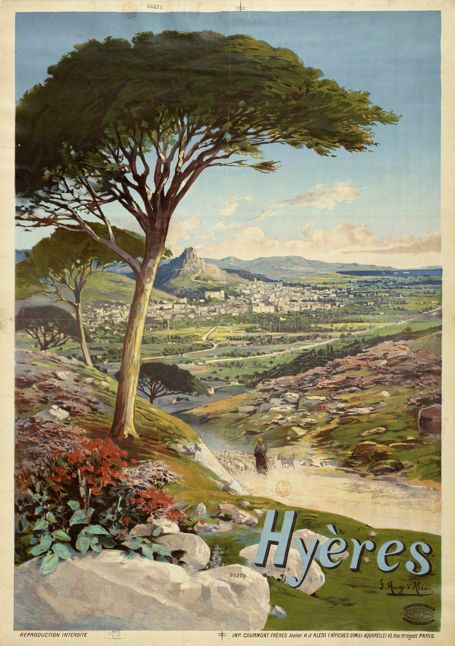
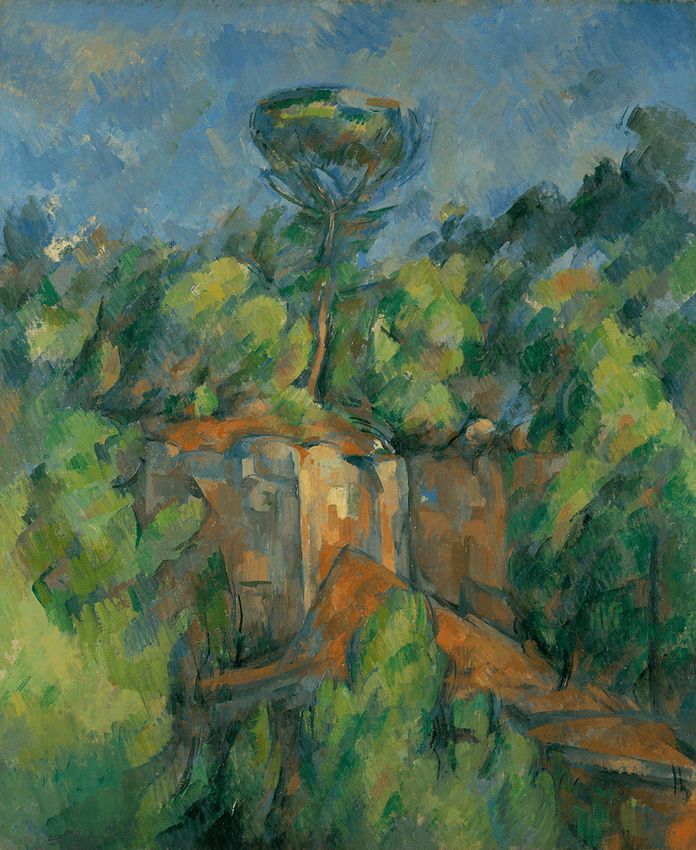
Paul Cezanne | Quarry at Bibémus, 1895–1900

    The Nelson-Atkins Museum of Art | French Paintings and Pastels, 1600–1945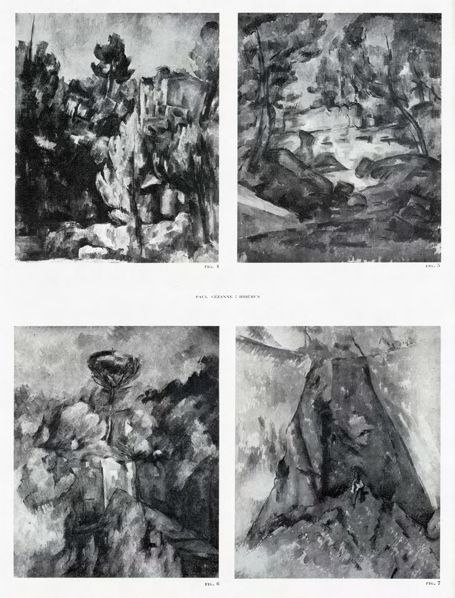
Paul Cezanne, Quarry at Bibémus, 1895–1900

                  Artist                   Paul Cezanne, French, 1839–1906

                  Title                    Quarry at Bibémus

                  Object Date              1895-1900

                  Alternate and Variant    Carrière de Bibémus; Rochers rouges surmontés d’un arbre un peu
                  Titles                   parasol

                  Medium                   Oil on canvas

                  Dimensions               25 3/4 x 21 1/2 in. (65.4 x 54.6 cm)
                  (Unframed)

                  Credit Line              The Nelson-Atkins Museum of Art. Gift of Henry W. and Marion H.
                                           Bloch, 2015.13.7

                                                                                        doi: 10.37764/78973.5.710

                                                                    known for its Surrealist-oriented content and cover art,
Catalogue Entry                                                     Minotaure occasionally printed pieces on French
                                                                    modernism. Venturi’s essay, appearing the same year as
                                                                    his catalogue raisonné of Cezanne’s oeuvre, chronicled
  Citation                                                          the artist’s growing reputation from the mid-1890s
                                                                    onward and contained several black-and-white
                                                                    illustrations of lesser-known pictures.2 A reproduction of
  Chicago:                                                          Quarry at Bibémus figures alongside three other vertical
                                                                    landscape paintings, all but one of which show a defunct
  Brigid M. Boyle, “Paul Cezanne, Quarry at Bibémus,                limestone quarry near Aix-en-Provence (Fig. 1).3 For
  1895–1900,” catalogue entry in Aimee Marcereau
                                                                    Venturi, these works dramatized not only the perpetual
  DeGalan, ed., French Paintings, 1600–1945: The
                                                                    clash between humanity and nature but also Cezanne’s
  Collections of the Nelson-Atkins Museum of Art (Kansas
                                                                    private battles:
  City: The Nelson-Atkins Museum of Art, 2021),
  https://doi.org/10.37764/78973.5.710.5407                             The violence inflicted on the stone by men becomes a
                                                                        tragic motif. The very earth seems to struggle in the
  MLA:                                                                  midst of torments worthy of Dante’s Inferno. All of this is
                                                                        a pretext for Cézanne to express his inner turmoil.4
  Boyle, Brigid M. “Paul Cezanne, Quarry at Bibémus,
  1895–1900,” catalogue entry. French Paintings, 1600–
                                                                    Venturi’s rhetoric of mortality and personal strife
  1945: The Collections of the Nelson-Atkins Museum of
                                                                    reverberates in the writings of other scholars. T. J. Clark
  Art, edited by Aimee Marcereau DeGalan, Nelson-
                                                                    famously characterized the view from Bibémus as “at
  Atkins Museum of Art, 2021. doi:
                                                                    one level a view from the tomb,” a sentiment later
  10.37764/78973.5.710.5407
                                                                    echoed by Philip Conisbee, who compared the
                                                                    experience of standing before one of Cezanne’s quarry
In October 1936, the short-lived Parisian journal                   paintings to “being lowered into a funeral vault.“5 Alex
Minotaure published an article by Lionello Venturi on the           Danchev expanded on Clark’s metaphor, describing
late work of Paul Cezanne (1839–1906).1 Although best               Cezanne’s quarry scenes as “an evocation of ‘self-

             The Nelson-Atkins Museum of Art | French Paintings and Pastels, 1600–1945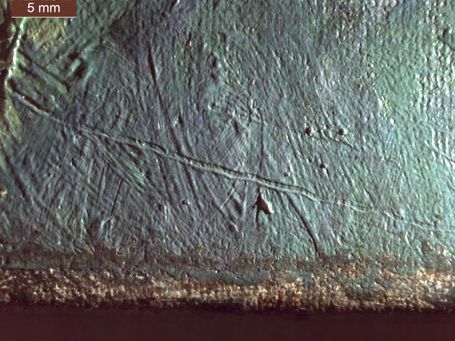
times, the quarry fell into disuse for several centuries,
                                                                           and it was not until the 1600s that local workers began
                                                                           extracting stone again.10 Quarry operations ceased once
                                                                           more during the 1800s, though scholars disagree on the
                                                                           precise date.11 Many still-extant buildings in Cezanne’s
                                                                           hometown, including the Château de la Gaude and the
                                                                           Hôtel de Forbin, were constructed using ocher-colored
                                                                           stones particular to the Bibémus region.12 Their
                                                                           yellowish-red facades struck the Swiss painter Henri
                                                                           Dobler (1863–1941) as quite distinctive: “Indeed, Aix will
                                                                           always stand out from other artistic cities because of the
                                                                           color of its stones, owing to the proximity of the
                                                                           Bibémus quarries.“13 Cezanne, too, was intrigued by
                                                                           their unique coloring and striations. Going straight to
                                                                           the source, he painted the Bibémus quarry repeatedly
                                                                           during the mid- to late 1890s.14

                                                                           To facilitate his study of this landmark, Cezanne rented a
                                                                           nearby cabanon, or cabin, and stored his easel and other
                                                                           supplies there between painting sessions.15 Gaining
                                                                           entry to the quarry was no easy feat, but its
                                                                           inaccessibility suited Cezanne’s temperament, since he
                                                                           preferred to paint alone sur le motif.16 In Ambroise
                                                                           Vollard’s posthumous biography of the artist, he relates
                                                                           a secondhand tale about Cezanne’s irritation at having
                                                                           his solitude interrupted. As the story goes, an elderly
Fig. 1. “Paul Cézanne: Bibémus,” in Lionello Venturi, “Sur les dernières   woman settled herself in Cezanne’s vicinity one
années de Cézanne,” Minotaure, no. 9 (1936): 36.
                                                                           afternoon and began to knit. Although she paid him little
                                                                           attention, her presence so annoyed Cezanne that he
entombment.’“6                                                             packed up his painting equipment and left.17 Apocryphal
                                                                           or not, this anecdote offers insight into not only
By contrast, the 2020 exhibition Cézanne: The Rock and                     Cezanne’s preferred working method but also the
Quarry Paintings—which reunited two of the                                 quarry’s unique appeal as a peaceful refuge.
aforementioned landscapes in Minotaure, including the
Nelson-Atkins picture—investigated not the artist’s
allusions to death, the afterlife, or psychological anguish
in his Bibémus scenes, but rather his fascination with
geology.7 The Princeton University Art Museum’s
introductory panel emphasized Cezanne’s friendship
with the geologist Antoine-Fortuné Marion, as well as the
materiality of his oil paints. During the exhibition’s
opening celebration, the contemporary artist Terry
Winters (b. 1949) commented to the curator, John
Elderfield: “Paint is colored mud. It’s really the same
material as the rocks themselves.“8 This down-to-earth
observation (pun intended) emblemizes a shift not
simply in the scholarship on Cezanne’s quarry paintings
but also in art history more broadly, as scholars give
greater attention to artists’ raw materials.

Cezanne first explored the Bibémus quarry in his youth,
                                                                           Fig. 2. Paul Cezanne, The Bibémus Quarry, ca. 1895, oil on canvas, 25 5/8 x 31
accompanied by boyhood friends and classmates such                         1/2 in. (65 x 80 cm), Museum Folkwang, Essen, © Erich Lessing / Art
as Joseph Huot.9 However, he was in his fifties before he                  Resource, NY

undertook the Nelson-Atkins picture and other paintings
of this abandoned site. Actively excavated during Roman

                    The Nelson-Atkins Museum of Art | French Paintings and Pastels, 1600–1945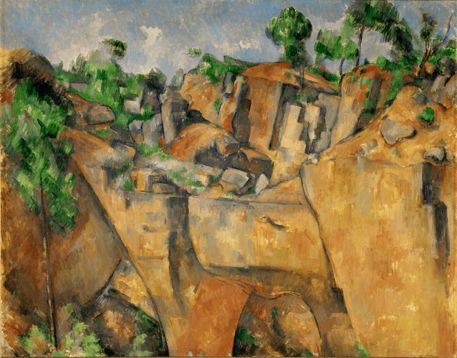
Cezanne’s best-known representation of the Bibémus                   associated with this region in the European visual
quarry is perhaps the version belonging to the Museum                imagination. For example, four umbrella pines feature
Folkwang in Essen (Fig. 2). In many ways, it is the                  conspicuously in an 1896 lithographic poster by F. Hugo
antithesis of the Kansas City painting. Horizontally
                                                                     d'Alesi (Romanian, 1849–1906) that advertises the
oriented and more monumental in size, the Essen canvas
                                                                     Provençal town of Hyères (Fig. 5). Standing sentinel over
is dominated by a rocky escarpment that fills three-
quarters of its picture space. The wall’s height is                  a verdant landscape filled with flowers, sheep, and
amplified by its sheer cliff faces, jagged contours, and             buildings, the pines invite viewers to explore this idyllic
sparse undergrowth. The diminutive trees along its                   community. Likewise, the Neo-Impressionist painter Paul
upper ridge seem almost to be an afterthought. By                    Signac (1863–1935) painted numerous umbrella pines
comparison, the Nelson-Atkins picture appears lush with              when he moved to Saint Tropez, another French Riviera
life. Greenery surrounds the quarry wall on four sides,              town, in 1892.20 Thus, in the Nelson-Atkins picture the
threatening to overtake it. An umbrella pine towers
                                                                     umbrella pine functions not only as a compositional
above the canopy and makes the Bibémus cliffs look
                                                                     anchor, but also as a visual shorthand for Provence, the
oddly diminished. In fact, this tree is so essential to the
composition that Vollard titled the painting Rochers                 area where Cezanne spent much of his life and felt most
rouges surmontés d’un arbre un peu parasol (Red Rocks                comfortable. In the century or so since Cezanne's death,
Crowned by an Umbrella-Like Tree) in one of his stock
books.18

                                  Fig. 4. Paul Cezanne, The
 Fig. 3. Paul Cezanne, The
                                  Bibémus Quarry, ca. 1898, oil
 Bibémus Quarry, ca. 1895, oil
                                  on canvas, 25 5/8 x 21 1/4 in.
 on canvas, 36 3/16 x 28 11/16
                                  (65 x 54 cm), private collection
 in. (92 x 72.8 cm), Barnes
 Foundation, Philadelphia, BF34

In addition to the Nelson-Atkins picture, two other
vertical quarry paintings by Cezanne contain a
prominent, centralized tree (Figs. 3–4). Both the Barnes
Foundation canvas and the version in private hands
clearly portray the same expanse of quarry wall, perhaps
viewed from slightly different distances. Although the
Kansas City landscape forms a natural trio with this pair,
it appears to show a different location within the
Bibémus quarry. The irregularly shaped precipice that                Fig. 5. F. Hugo d’Alesi (Romanian, 1849–1906), Hyères, 1896, color lithograph,
protrudes beyond the horizon line in the other two                   42 1/8 x 29 1/2 in. (107 x 75 cm), Ville de Paris / Bibliothèque Forney, Paris,
                                                                     AF 55270 MF
paintings is missing from the Nelson-Atkins picture, and
the idea that all three artworks feature the same
umbrella pine at varying stages of growth, while                     the Bibémus quarry has become yet another tourist
tantalizing, seems     unlikely.19   The umbrella pine, also         destination for the artist's legions of fans. While the
known as a stone pine, is a coniferous evergreen that                quarry was not officially municipal property until 1998,
thrives along the Mediterranean coast. So ubiquitous in              intrepid travelers explored the site much earlier.21 The
southern France are these trees with their characteristic            New York Times published an article in 1970 that outlined
profile that, by the late nineteenth century, they became            one- and two-day itineraries to Aix-en-Provence for

             The Nelson-Atkins Museum of Art | French Paintings and Pastels, 1600–1945
visitors wishing to "return to Cézanne's sources," Provence, exh. cat. (Washington: National Gallery
including the quarry.22 As such outings became more of Art, 2006), 190–229, at 195.
popular, many photographers published coffee table
6. Alex Danchev, Cézanne: A Life (New York: Pantheon
books or travel blogs offering practical advice about
Books, 2012), 320.
retracing the artist's footsteps.23 Today, guided tours of
the Bibémus quarry depart regularly from the Aix-en- 7. The exhibition opened at the Princeton University
Provence Tourist Office. A website promoting these Art Museum on March 7, 2020, but closed one
excursions shows a dozen sightseers walking beneath week later due to the coronavirus pandemic. It
was originally slated to travel to the Royal
two enormous, intersecting rock faces at the quarry.24
Academy of Arts, London, but ongoing health
Some take photographs to document the experience,
concerns precluded a second venue.
while others reach their arms upward to touch the
coarse limestone. Were Cezanne still alive, he would 8. “Cézanne: The Rock and Quarry Paintings, A
surely lament these crowds as an unwelcome intrusion, Conversation with John Elderfield and Terry
but their presence is a testament to the captivating Winters,” presented at Princeton University,
power of his landscape paintings, including Quarry at McCosh Hall, March 7, 2020. Caroline I. Harris
made a similar observation during a virtual panel
Bibémus.
discussion, noting that Cezanne sought to
Brigid M. Boyle
establish “a one-to-one equivalency between
March 2020 areas of rock and thick paint.” See “Painting the
Mountains: Cézanne’s Rock and Quarry
Notes Canvases,” hosted by the Princeton University Art
Museum, April 2, 2020.
1. Lionello Venturi, “Sur les dernières années de
Cézanne,” Minotaure, no. 9 (1936): 33–39. 9. John Elderfield, ed., Cézanne: The Rock and Quarry
Paintings, exh. cat. (New Haven: Yale University
2. Venturi deliberately eschewed “les œuvres les plus Press, 2020), 103.
célèbres, qui ont été reproduites maintes fois,” in
favor of “des peintures et des aquarelles inédites.” 10. Nina M. Athanassoglou-Kallmyer, Cézanne and
See Venturi, “Sur les dernières années de Provence: The Painter in his Culture (Chicago:
Cézanne,” 35. University of Chicago Press, 2003), 170–71.
3. The fourth painting features trees and rocks in the 11. Athanassoglou-Kallmyer claims that the quarry
environs of the Château Noir, a nineteenth- was dormant by the 1830s, but Anna Swinbourne
century bastide (manor house) where Cezanne suggests that activity continued until 1885. See
was a tenant from 1887 to 1902. See Trees and Athanassoglou-Kallmyer, Cézanne and Provence,
Rocks, ca. 1900, oil on canvas, 24 x 19 11/16 in. (61 170–71; and Swinbourne, “Bibémus,” in Elderfield,
x 50 cm), Dixon Gallery and Gardens, Memphis, TN The Rock and Quarry Paintings, 103–6, at 103.
(FWN 334).
12. These former private residences have since been
4. Venturi, “Sur les dernières années de Cézanne,” converted into a luxury hotel and a bank,
35. “La violence exercée par les hommes sur la respectively. For the Château de la Gaude’s
pierre devient un motif tragique. La terre même construction, see Claude Frégnac, Merveilles des
semble se débattre au milieu de tourments dignes châteaux de Provence (Paris: Hachette, 1965), 300.
de l’Enfer dantesque. Tout est prétexte pour
Cézanne à extérioriser son orage intérieur.” All 13. Henri Dobler, Les écoles d’architecture et d’art
translations are by the author. décoratif des XVIIme et XVIIIme siècles à Aix, Capitale
et Siège du Gouvernement de la Provence (Marseille:
5. See T. J. Clark, “Phenomenality and Materiality in Editions Artistiques Véga, 1910), ix. “Aix en effet se
Cézanne,” in Tom Cohen, Barbara Cohen, J. Hillis distinguera toujours des autres villes d’Art par la
Miller, and Andrzej Warminski, eds., Material couleur de ses pierres due à la proximité des
Events: Paul de Man and the Afterlife of Theory carrières de Bibémus.”
(Minneapolis: University of Minnesota Press,
2001), 93–113, at 111; and Philip Conisbee, “Le 14. Scholars continue to revise the dating of
Tholonet, Bibémus, and the Château Noir,” in Cezanne’s quarry paintings. Some historians date
Philip Conisbee and Denis Coutagne, Cézanne in the Nelson-Atkins picture to 1898–1900, but others
The Nelson-Atkins Museum of Art | French Paintings and Pastels, 1600–1945propose 1895–1900. See Walter Feilchenfeldt, 24. See the feature image at “Aix-en-Provence, ville de
Jayne Warman, and David Nash, “La Carrière de Cezanne,” accessed March 12, 2020,
Bibémus, 1898–1900 (FWN 318),” The Paintings, http://www.cezanne-en-provence.com/wp-
Watercolors and Drawings of Paul Cezanne: An content/uploads/2015/01/page-visite-
Online Catalogue Raisonné, accessed March 11, carrieres.png.
2020,
https://www.cezannecatalogue.com/catalogue/entry.php?
id=814; and John Elderfield and Ariel Kline, entry Technical Entry
for cat. nos. 16–18 in Elderfield, The Rock and
Quarry Paintings, 119–25, at 119.
Citation
15. Athanassoglou-Kallmyer, Cézanne and Provence,
131.
Chicago:
16. According to Anna Swinbourne, the quarry could
be reached by coach or on foot, but both routes Diana M. Jaskierny, “Paul Cezanne, Quarry at
involved scaling steep hills. See Swinbourne, Bibémus, 1895–1900,” technical entry in Aimee
“Bibémus,” 104. Marcereau DeGalan, ed., French Paintings, 1600–
1945: The Collections of the Nelson-Atkins Museum of
17. Ambroise Vollard, Paul Cézanne (Paris: Galerie A. Art (Kansas City: The Nelson-Atkins Museum of Art,
Vollard, 1914), 99. 2021), https://doi.org/10.37764/78973.5.710.2088
18. See National Gallery of Art, Gallery Archives, John MLA:
Rewald Papers (RG43), Ambroise Vollard Research
Files (43A5.8), box 54, folder 8, Vollard stock book Jaskierny, Diana M. “Paul Cezanne, Quarry at
A, no. 3653. Vollard’s title was probably his own Bibémus, 1895–1900,” technical entry. French
invention, rather than one approved by Cezanne. Paintings, 1600–1945: The Collections of the Nelson-
Atkins Museum of Art, edited by Aimee Marcereau
19. John Elderfield and Ariel Kline recently proposed DeGalan, Nelson-Atkins Museum of Art, 2021. doi:
that the Nelson-Atkins canvas might depict “that 10.37764/78973.5.710.2088
same single tree grown more fully.” See Elderfield
and Kline, entry for cat. nos. 16–18 in Elderfield,
Quarry at Bibémus is mounted on a commercially made
The Rock and Quarry Paintings, 119.
five-member, wooden stretcher possibly original to the
20. See, for example, Paul Signac, The Bonaventure painting. The corner joints are open mortise and tenon,
Pine, 1893, oil on canvas, 25 7/8 x 31 7/8 in. (65.7 x while the crossbar joints appear to be blind mortise and
81 cm), Museum of Fine Arts, Houston, 74.142. tenon. During a conservation treatment of the painting
in 2019, the canvas was temporarily removed from the
21. Michel Fraisset, “La mise en tourisme de l’Atelier
stretcher. At this time, it was discovered that only one set
de Cézanne,” in Atelier Cézanne, 1902–2002: Le
of tack holes are present on the top, left, and right edges
Centenaire (Aix-en-Provence: Société Paul
Cézanne, 2003), 176. of the stretcher, indicating that this stretcher had not
been re-used. The bottom edge, however, has two sets
22. Thomas R. Parker, “Cezanne Landscape Country: of holes, one set corresponding to those on the canvas,
Picture Windows or National Park?,” New York and one set that cannot be explained.1
Times, August 9, 1970.
The painting was completed on a plain weave canvas,
23. See, for example, Derek Fell, Cezanne’s Garden
estimated to be linen, and corresponds in size to the
(New York: Simon and Schuster, 2003), 115; and
French standard canvas no. 15 figure. On the canvas
Phil Haber, “In the Footsteps of Cézanne, Part III:
reverse, there are several canvas stamps, including one
The Bibémus Quarries,” Phil Haber’s Photography
indicating that the support was purchased from M.
Notes, November 27, 2011,
Chabod while the artist supplier was in residence at Rue
https://philhaber.com/2011/11/27/in-the-
footsteps-of-cezanne-part-iii-the-bibemus- Jacob 20 (Fig. 6).2
quarries.
The ground layer is opaque white, or slightly off-white,
and is likely lead-white based. It is thinly and evenly
The Nelson-Atkins Museum of Art | French Paintings and Pastels, 1600–1945applied, with an even application found within the corner worked quickly at times, but returned after some
folds, indicating that the canvas was industrially passages had cured. Commonly found in Cezanne’s
prepared at a larger scale and later cut down for this landscapes, and within the Quarry at Bibémus series, the
stretcher size. Cusping found here corresponds with the majority of the foliage was applied in the “constructive
tack holes on all four tacking margins and is likely stroke” of diagonal hatching to create volume and
secondary cusping, occurring after the industrially movement, while the hillside stone was composed of
primed canvas was affixed to the stretcher (Fig. 7).3 flat, broad strokes, giving the illusion that it is receding
behind the trees.9 The brushwork in the sky was more
haphazardly applied in multiple directions, while details
and outlines throughout the landscape were carefully
rendered with smaller brushes.
In addition to the thin blue strokes in the lower
applications, at various points in completing the
composition, similar though slightly more opaque
Fig. 6. Detail of Chabod canvas
Fig. 7. Detail of secondary
strokes are found throughout the painting. They can be
stamp in ultraviolet-induced
cusping, Quarry at Bibémus found between paint passages (Fig. 10) and as final
visible fluorescence, Quarry at
Bibémus (1898–1900)
(1898–1900) accents on top of the paint layer (Fig. 11). Several incised
lines are evident in the painting; however, these do not
appear to relate directly to the composition and are
most likely the result of a brush handle or tool dragging
across still-wet paint (Fig. 12).
Fig. 8. Photomicrograph of Fig. 9. Photomicrograph of
exposed ground and possible blue painted line beneath
blue wash remnants, Quarry at paint passages, Quarry at
Bibémus (1898–1900) Bibémus (1898-1900)
Fig. 10. Photomicrograph of Fig. 11. Photomicrograph of
Exposed ground is visible in several areas of the
blue painted line between blue painted line above paint
painting, a technique often used by Cezanne.4 Many of paint passages, Quarry at passages, Quarry at Bibémus
these areas are intentional, while others appear to have Bibémus (1898–1900) (1898–1900)
remnants of thin blue paint washes within the interstices
of the ground. These remnants may correspond with the
initial underpainting, or blocking-in, of the composition,
but were abraded during a past cleaning and now reveal
more of the ground layer (Fig. 8).5 Additionally, peeking
beneath many paint passages are thin, semi-transparent
blue lines, a characteristic noted in many Cezanne
paintings (Fig. 9).6 While no distinct underdrawing was
found through infrared reflectography,7 it is likely that
these lower blue strokes relate to Cezanne’s initial
laying-in of the composition.8
The paint layer was applied with varying levels of
thickness, ranging from thin washes to more heavily
bodied paint, however there is relatively little impasto.
The areas of more heavily bodied paint exhibit a higher
sheen compared to the thinly applied passages. Most Fig. 12. Photomicrograph of incised line near bottom edge, Quarry at
Bibémus (1898–1900)
paint applications appear to have been completed with
brushes ranging in size from 1/4 inch to 1/2 inch.
The painting’s condition is good overall. Minimal
Paint passages reveal a combination of wet-over-wet abrasion is visible, most noticeably in the darker paints
and wet-over-dry applications, indicating that Cezanne such as the blue strokes mentioned previously. Splits
The Nelson-Atkins Museum of Art | French Paintings and Pastels, 1600–1945and weakness of the canvas at the tacking margins and Yale University Press, 1990), 196.
all four corners prompted the 2019 treatment. As the
painting had never been lined and the canvas’s picture 9. “The constructive stroke” was a term first used by
Theodore Reff to describe the parallel brushwork
plane was in good condition, a strip lining was applied to
often seen in Cezanne’s paintings. Impressionist
strengthen the tacking margins and preserve the
and Post-Impressionist Masterpieces: The Courtauld
original canvas reverse and canvas stamps. With the
Collection (New Haven: Yale University Press,
removal of the discolored synthetic varnish, applied in
1987), cat. 23.
1987, sheen variations between paint passages were
revealed. A low-concentration synthetic varnish was
applied to enhance the original paint color saturation
Documentation
while retaining the newly uncovered nuances in sheen.
Diana M. Jaskierny
Citation
July 2020
Notes Chicago:
1. Diana M. Jaskierny, May 1, 2020, treatment report,
“Paul Cezanne, Quarry at Bibémus, 1895–1900,”
Nelson-Atkins conservation file, 2015.13.7. documentation in Aimee Marcereau DeGalan, ed.,
French Paintings, 1600–1945: The Collections of the
2. After taking over J. Bovard’s business in 1862, M.
Nelson-Atkins Museum of Art (Kansas City: The
Chabod and his company supplied materials to
Nelson-Atkins Museum of Art, 2021),
artists throughout the nineteenth century. His
https://doi.org/10.37764/78973.5.710.4033
widow continued the business into the early
twentieth century, before selling it to Vignol. MLA:
During the attributed dates of this painting, M.
Chabod et Cie operated out of Rue Jacob 20, as is “Paul Cezanne, Quarry at Bibémus, 1895–1900,”
indicated on this painting’s canvas stamp. Pascal documentation. French Paintings, 1600–1945: The
Labreuche, “Chabod,” Guide Labreuche: Guide Collections of the Nelson-Atkins Museum of Art, edited
historique des fournisseurs de matériel pour artists à by Aimee Marcereau DeGalan, Nelson-Atkins
Paris 1790–1960, 2018, accessed January 14, 2020, Museum of Art, 2021. doi: 10.37764/78973.5.710.4033
https://www.labreuche-fournisseurs-artistes-
paris.fr/maison/bovard-chabod (site under
construction as of January 6, 2021).
Provenance
3. Ernst van de Wetering, Rembrandt: The Painter at
Work (Berkeley: University of California Press, Paul Cezanne (1839–1906), Aix-en-Provence, 1895/99–no
2000), 116. later than December 1899;
4. Anthea Callen, The Art of Impressionism: Painting Purchased from Cezanne by Ambroise Vollard, Paris,
Techniques and the Making of Modernity (New stock book A, no. 3653, as Rochers rouges surmontés d’un
Haven: Yale University Press, 2000), 74. arbre un peu parasol, by December 1899–no later than
August 1936 [1];
5. Elisabeth Reissner, “Ways of Making: Practice and
Innovation in Cézanne’s Paintings in the National Purchased from Vollard by the Galerie Pierre, Paris,
Gallery,” National Gallery Technical Bulletin 25 account book no. 964, on joint account with the Galerie
(2008): 14–15. Alfred Daber, Paris, by August 1936–June 1937 [2];
Half-share purchased from the Galerie Alfred Daber by
6. Bernard Dunstan, Painting Methods of the
the Galerie Pierre, June 1937–at least 1939 [3];
Impressionists (New York: Watson-Guptill
Publications, 1983), 91. With the Galerie Beyeler, Basel, January–November 1956
[4];
7. No underdrawing was detected in infrared using a
Hamamatsu infrared vidicon camera. Purchased from the Galerie Beyeler, through
Marlborough Fine Art, by Ragnar Egede Moltzau (1901–
8. David Bomford, Jo Kirby, John Leighton, and Ashok
1982), Oslo, November 1956–October 1958 [5];
Roy, Art in the Making: Impressionism (New Haven:
The Nelson-Atkins Museum of Art | French Paintings and Pastels, 1600–1945Probably purchased from Moltzau, through Marlborough thereafter, Loeb fled with his family to Havana,
Fine Art, by the Galerie des Arts Anciens et Modernes, remaining there until the end of the war. Upon Loeb’s
Schaan, Liechtenstein, October 1958 [6]; return to Paris in June 1945, Aubry proved reluctant to
restitute the gallery to its founder, but conceded after
Purchased from the Galerie des Arts Anciens et Pablo Picasso intervened on Loeb’s behalf. Despite
Modernes by Sam Spiegel (1901–1985), New York, financial difficulties, Loeb resumed normal gallery
October 1958–December 31, 1985 [7]; operations in 1946; see “La Galerie Pierre au prisme des
lois de Vichy,” accessed June 1, 2015, http://emmanuelle-
Spiegel estate, New York, 1985–May 11, 1987;
polack.com/la-galerie-pierre-au-prisme-des-lois-de-
Purchased from the latter at Impressionist and Modern vichy/.
Paintings from the Collection of the Late Sam Spiegel,
Sotheby’s, New York, May 11, 1987, lot 5, as Carrière de [4] For dates of ownership, see e-mail from Simon
Bibémus, through Susan L. Brody Associates by Marion Crameri, Fondation Beyeler, to MacKenzie Mallon, NAMA,
(née Helzberg, 1931–2013) and Henry (1922–2019) Bloch, May 12, 2015, NAMA curatorial files.
Shawnee Mission, KS, 1987–June 15, 2015;
[5] Die Weltkunst reported on October 15, 1956 that
Their gift to The Nelson-Atkins Museum of Art, Kansas Quarry at Bibémus was entering the collection of
City, MO, 2015. Moltzau; see Erhard Göpel, “Schweizer Reise,” Die
Weltkunst 26, no. 20 (October 15, 1956): 9. However, the
Notes painting was still on view at the Kunsthaus Zürich at that
time, and the Galerie Beyeler’s records indicate that the
[1] A faint inscription preserved on the stretcher says
sale was not finalized until November 1956; see e-mail
“3653.” Stock book A is essentially an inventory of
from Simon Crameri, Fondation Beyeler, to MacKenzie
paintings that Vollard had on his premises in late 1899
Mallon, NAMA, May 12, 2015, NAMA curatorial files.
and early 1900. Few of the entries are dated, but at least
two entries following no. 3653 bear dates in December Marlborough Fine Art acted as an agent for this
1899. Thus Quarry at Bibémus was purchased by at least purchase. Co-founders Frank Lloyd and Harry Fischer
December 1899. See e-mail from Jayne Warman, and chairman David Somerset helped Moltzau build his
independent art historian, to Brigid M. Boyle, NAMA, collection and later sell it at enormous profit; see
June 5, 2015, NAMA curatorial files. “Kunsthandel: Marlborough-Galerie; Trio mit Fifi,” Der
Spiegel, no. 50 (December 11, 1963),
[2] Sébastien Chaffour confirmed this joint purchase
https://www.spiegel.de/spiegel/print/d-46173079.html;
from Vollard, but did not specify the date of this
and David L. Shirey, “Frank Lloyd and the Marlborough:
transaction; see e-mail from Sébastien Chaffour, Institut
Art and Success,” New York Times 122, no. 42,121 (May 21,
national d’histoire de l’art, to Brigid M. Boyle, NAMA,
1973): 40. A backing board exhibition label from the
June 10, 2015, NAMA curatorial files. The earliest
Kunsthaus Zürich lists the owner as “Galerie Beyeler,
publication to cite the Galerie Pierre as owner of Quarry
Basel Marlborough Fine Art Ltd.”
at Bibémus is John Rewald and Léo Marschutz, “Cézanne
et la Provence,” Le Point, no. 4 (August 1936): 4–34. In the two most recent catalogue raisonnés of Cezanne’s
Inscriptions preserved on the stretcher say “Galerie oeuvre, Moltzau erroneously appears before the Galerie
Pierre” and “964.” Beyeler in the provenance for Quarry at Bibémus. See
John Rewald, The Paintings of Paul Cézanne: A Catalogue
[3] The Galerie Pierre became sole owner of Quarry at
Raisonné (New York: Harry N. Abrams, 1996), 503; and
Bibémus in June 1937; see letter from Alfred Daber,
Walter Feilchenfeldt, Jayne Warman, and David Nash, “La
Galerie Alfred Daber, to Pierre Loeb, Galerie Pierre, June
Carrière de Bibémus, 1898–1900 (FWN 318),“ The
25, 1937, and Grand livre des comptes généraux, entry
Paintings, Watercolors and Drawings of Paul Cezanne: An
dated June 30, 1937, NAMA curatorial files. Quarry at
Online Catalogue
Bibémus still belonged to the Galerie Pierre in 1939, when
Raisonné, https://www.cezannecatalogue.com/catalogue/e
Loeb loaned the painting to the Musée du Prince Paul in
id=814 (last updated on July 24, 2020, accessed on
Belgrade, Serbia, for the exhibition La Peinture Française
au XIXe Siècle. August 5, 2020).
The Galerie Pierre was founded on October 17, 1924 by [6] Moltzau still owned Quarry at Bibémus in August 1958,
the Jewish dealer Pierre Loeb. The gallery was subject to when he loaned the painting to the Royal Scottish
the Vichy government’s Aryanization laws, and on May Academy, Edinburgh (August 13–September 20, 1958),
16, 1941, Loeb was forced to cede control of his gallery to for an exhibition of his collection that traveled
Georges Aubry, a fellow dealer, for 23,000 francs. Shortly subsequently to the Tate Gallery, London (October 3–
The Nelson-Atkins Museum of Art | French Paintings and Pastels, 1600–1945November 2, 1958). Quarry at Bibémus was on view at Cézanne: Les dernières années (1895-1906), April 20–July
both venues. Moltzau probably sold Quarry at Bibémus to 23, 1978, Grand Palais, Paris, no. 39, as La Carrière
the Galerie des Arts Anciens and Modernes during the Bibémus.
course of this exhibition, again through Marlborough
Fine Art, whose business operations are based in Post-Impressionism: Cross-Currents in European and
Liechtenstein. The painting may have remained on view American Painting, 1880-1906, National Gallery of Art,
even after the Galerie purchased it. Washington, DC, May 25–September 1, 1980, no. 17, as
The Bibémus Quarry / La Carrière Bibémus.
[7] Quarry at Bibémus was one of eight paintings that
Spiegel purchased from the Galerie des Arts Anciens et Cézanne in Provence, National Gallery of Art, Washington,
Modernes in September and October 1958. See the DC, January 29–May 7, 2006; Musée Granet, Aix-en-
Preface in Impressionist and Modern Paintings from the Provence, June 9–September 17, 2006, no. 84, as The
Collection of the Late Sam Spiegel (New York: Sotheby’s, Bibémus Quarry (Washington only).
1987). It remained in Spiegel’s possession until his
Manet to Matisse: Impressionist Masters from the Marion
death.
and Henry Bloch Collection, The Nelson-Atkins Museum of
Art, Kansas City, MO, June 9–September 9, 2007, no. 23,
Related Works as Quarry at Bibémus (Carrière de Bibémus).
Paul Cezanne, Bibémus Quarry, ca. 1895, oil on canvas, 36 Cezanne: The Rock and Quarry Paintings, Princeton
1/4 × 28 3/4 in. (92 × 73 cm), Barnes Foundation, University Art Museum, Princeton, March 7–October 15,
Philadelphia. 2020, no. 18, as Bibémus Quarry.
Paul Cezanne, Bibémus Quarry, ca. 1898, oil on canvas, 25 References
5/8 x 21 1/4 in. (65 x 54 cm), private collection.
John Rewald and Léo Marschutz, “Cézanne et la
Exhibitions Provence,” Le Point, no. 4 (August 1936): 21, (repro.), as
La Carrière de Bibémus près du Château Noir.
Origines et développement de l’art international
indépendant, Musée du Jeu de Paume, Paris, July 30– Lionello Venturi, “Sur les dernières années de Cézanne,”
October 31, 1937, no. 20, as Les Rochers de Bibémus. Minotaure, no. 9 (1936): 35–36, (repro.), as Bibémus.
La Peinture Française au XIXe Siècle / Francusko Slikarstvo u Lionello Venturi, Cézanne: Son art, son œuvre (Paris: Paul
XIX Stoleću, Musée du Prince Paul, Belgrade, Serbia, 1939, Rosenberg, 1936), no. 778, pp. 1:64, 232, 402; 2:(repro.),
no. 7, as La Carrière de Bibémus and Trkalište Bibémus. as Carrière de Bibémus.
Exposition des maîtres des XIXe et XXe siècles, Galerie John Rewald, “A propos du catalogue raisonné de
Jeanne Castel, Paris, June 14–July 12, 1955, no. 3. l’œuvre de Paul Cézanne et de la chronologie de cette
œuvre,“ La Renaissance 20, nos. 3–4 (March–April 1937):
Paul Cézanne, 1839-1906, Kunsthaus Zürich, August 22– 55–56, as Carrière Bibémus.
October 7, 1956, no. 78, as « Carrière de Bibémus ».
Fritz Novotny, Cézanne ([1937]; repr. London: Phaidon
Sammlung Ragnar Moltzau, Oslo, Kunsthaus Zürich, Press, 1948), (repro.), as View of the “Bibémus” Quarry.
February 9–March 31, 1957, no. 17, as Carrière de
Bibémus. Origines et développement de l’art international
indépendant, exh. cat. (Paris: Musée du Jeu de Paume,
Collectie Ragnar Moltzau, Oslo, Gemeentemuseum, The 1937), as Les Rochers de Bibémus.
Hague, April 19–June 11, 1957, no. 18, as Steengroeve van
Bibémus. “Les Expositions,” Les Cahiers d’Art 12, nos. 4–5 (1937):
163.
From Cézanne to Picasso: The Moltzau Collection, Royal
Scottish Academy, Edinburgh, August 13–September 20, Fritz Novotny, Cézanne und das Ende der
1958; Tate Gallery, London, October 3–November 2, 1958, wissenschaftlichen Perspektive (Vienna: Anton Schroll,
no. 21, as The Bibémus Quarry. 1938), 85.
Cézanne: The Late Work, Museum of Modern Art, New Christian Zervos, Histoire de l’Art Contemporain (Paris:
York, October 7, 1977–January 3, 1978; Museum of Fine Cahiers d’art, 1938), 43, (repro.), as Carrière de Bibémus.
Arts, Houston, January 26–March 19, 1978, no. 15, as
Bibémus Quarry.
The Nelson-Atkins Museum of Art | French Paintings and Pastels, 1600–1945La Peinture Française au XIXe Siècle / Francusko Slikarstvo u 1958): 14, as Bibémus Quarry.
XIX Stoleću, exh. cat. (Belgrade: Musée du Prince Paul,
1939), 28, 58, as La Carrière de Bibémus and Trkalište D. L. A. Farr, “London,” Burlington Magazine 100, no. 668
Bibémus. (November 1958): 403, as Bibémus Quarry.
Göran Schildt, Cézanne (Stockholm: Wahlström och Robert William Ratcliffe, “Cézanne’s Working Methods
Widstrand, 1946), 222, 227, (repro.), as Bibemus stenbrott. and their Theoretical Background” (PhD diss., University
of London, Courtauld Institute of Art, 1960), 22, 26.
Exposition des maîtres des XIXe et XXe siècles, exh. cat.
(Paris: Galerie Jeanne Castel, 1955), (repro.). Cézanne Watercolors: An Exhibition at M. Knoedler and
Company, exh. cat. (New York: Wittenborn, 1963), 43.
Advertisement, Die Weltkunst 26, no. 22 (November 15,
1956): (repro.), as Steinbruch von Bibémus. Werner Hofmann, Grundlagen der Modernen Kunst: Eine
Einführung in ihre symbolischen Formen (Stuttgart: Alfred
Kurt Badt, The Art of Cézanne, trans. Sheila Ann Ogilvie Kröner Verlag, 1966), 223, 228, 503, (repro.), as Partie im
(1956; Berkeley: University of California Press, 1965), 310, Steinbruch “Bibémus.”
314, as Quarry of Bibémus.
Sandra Orienti, L’opera completa di Cézanne (Milan:
Maîtres de l’art moderne, exh. cat. (Basel: Galerie Beyeler, Rizzoli, 1970), no. 708, pp. 118–19, 125–27, (repro.), as
1956), (repro.), as Carrière de Bibémus. Cava di pietra a Bibémus.
Paul Cézanne, 1839–1906, exh. cat. (Zurich: Kunsthaus Sandra Orienti, The Complete Paintings of Cézanne
Zürich, 1956), 30, as « Carrière de Bibémus ». (London: Weidenfeld and Nicolson, 1972), no. 708, pp.
118–19, 125–26, (repro.), as Rock Cave at Bibémus.
Heinrich W. Petzet, “Altmeister der Moderne: Galerie
Beyeler in Basel stellt aus,” Die Weltkunst 26, no. 19 Adrien Chappuis, The Drawings of Paul Cézanne: A
(October 1, 1956): 8, as Steinbruch von Bibémus. Catalogue Raisonné, vol. 1, Introduction and Catalogue
(Greenwich: New York Graphic Society, 1973), 191.
Erhard Göpel, “Schweizer Reise,” Die Weltkunst 26, no. 20
(October 15, 1956): 9. Sandra Orienti, Tout l’œuvre peint de Cézanne (Paris:
Flammarion, 1975), no. 708, pp. 118–19, 125–26, (repro.),
Collectie Ragnar Moltzau, Oslo, exh. cat. (The Hague: as Carrière de Bibémus.
Gemeentemuseum, 1957), as Steengroeve van Bibémus.
William Rubin, ed., Cézanne: The Late Work, exh. cat. (New
Sammlung Ragnar Moltzau, Oslo, exh. cat. (Zurich: York: Museum of Modern Art, 1977), 204, 242, 390-91,
Kunsthaus Zürich, 1957), 13, as Carrière de Bibémus. (repro.), as Bibémus Quarry.
Heinrich Rumpel, “Die Sammlung Ragnar Moltzau: Zur Cézanne: Les dernières années (1895–1906), exh. cat.
Ausstellung in Zürcher Kunsthaus,” Schweizer (Paris: Réunion des musées nationaux, 1978), 130–32,
Monatshefte 36, no. 12 (March 1957): 989. 241, (repro.), as La Carrière Bibémus.
Erhard Göpel, “Ein großer norwegischer Sammler: Die Post-Impressionism: Cross-Currents in European and
Sammlung Ragnar Moltzau im Zürcher Kunsthaus American Painting, 1880-1906, exh. cat. (Washington, DC:
ausgestellt,” Die Weltkunst 27, no. 5 (March 1, 1957): 5, as National Gallery of Art, 1980), 30, (repro.), as The Bibémus
Steinbruch Bibémus. Quarry / La Carrière Bibémus.
H. C., “Zürich: Sammlung Ragnar Moltzau, Oslo,” Werk Marianne R. Bourges, Itinéraires de Cézanne ([Aix-en-
Chronik, supplement to Werk 44, no. 4 (April 1957): 71, as Provence]: Ville d’Aix-en-Provence, 1982), (repro.), as
Carrière de Bibémus. Carrière de Bibemus [sic].
From Cézanne to Picasso: The Moltzau Collection, exh. cat. Impressionist and Modern Paintings from the Collection of
(London: Tate Gallery, 1958), (repro.), as The Bibémus the Late Sam Spiegel (New York: Sotheby’s, 1987),
Quarry. (repro.), as Carrière de Bibémus.
“From Cézanne to Picasso: The Moltzau Collection,” Kunstpreis-Jahrbuch 1987: Deutsche und Internationale
Times (London), no. 54,248 (September 5, 1958): 5, as The Auktionsergebnisse, vol. 42, pt. 1 (Munich: Weltkunst
Bibémus Quarry. Verlag GmbH, 1987), 141, as Der Steinbruch von Bibémus.
“Moltzau Collection in London: Awkward Arrangement at Andrew Sinclair, Spiegel: The Man Behind the Pictures
Tate Gallery,” Times (London), no. 54,272 (October 3, (Boston: Little, Brown, 1987), 93.
The Nelson-Atkins Museum of Art | French Paintings and Pastels, 1600–1945Sotheby’s: Art at Auction 1986–87 (London: Sotheby’s, Richard R. Brettell and Joachim Pissarro, Manet to
1987), 105, (repro.), as Carrière de Bibémus. Matisse: Impressionist Masters from the Marion and Henry
Bloch Collection, exh. cat. (Kansas City, MO: Nelson-Atkins
“Sale room: $2.3m buy goes to a chill room,” Times Museum of Art, 2007), 12, 15–16, 122–27, 160–61, (repro.),
(London), no. 62,767 (May 13, 1987): 14, as Carrière de as Quarry at Bibémus (Carrière de Bibémus).
Bibémus.
Alice Thorson, “First Public Exhibition: Marion and Henry
Lionello Venturi, Cézanne: Son art, son oeuvre (San Bloch’s Art Collection,” Kansas City Star (June 3, 2007): E4,
Francisco: Alan Wofsy Fine Arts, 1989), no. 563, pp. 1:64, as Quarry at Bibémus.
232, 402; 2:(repro.), as Carrière de Bibémus.
Steve Paul, “Pretty Pictures: Marion and Henry Bloch’s
Denis Coutagne, ”Les Paysages,“ Dossier de l’art, no. collection of superb Impressionist masters,” Panache 4,
25 (September–October 1995): 25, (repro.), as Les no. 3 (Fall 2007): 20, as Quarry at Bibémus.
Carrières de Bibémus.
“Lasting Impressions: A Tribute to Marion and Henry
Françoise Cachin et al., Cézanne, exh. cat. (1995; repr. Bloch,” Member Magazine (The Nelson-Atkins Museum of
New York: Harry N. Abrams, 1996), 451n2. Art) (Fall 2007): 11, (repro.).
Charles de Lartigue, Les paysages de Paul Cézanne (Lyon: Pavel Machotka, Cézanne: La sensation à l’œuvre; The eye
Les Créations du Pélican, 1995), 134, 173, (repro.), as La and the mind (Marseille: Éditions Crès, 2008), 1:(repro.);
Carrière Bibémus. 2:217, (repro.), as La Carrière de Bibémus.
Les Sites Cézanniens du Pays d’Aix: Hommage à John Rewald Anne Byrd, “The Brush Stroke as Catastrophe: Gasquet’s
(Paris: Réunion des musées nationaux, 1996), 145, ‘Cézanne’ and the Paintings of Bibémus Quarry,“ RACAR:
(repro.), as La Carrière de Bibémus. Revue d’art canadienne / Canadian Art Review 34, no.
1 (2009): 41, (repro.), as La Carrière de Bibémus.
John Rewald, The Paintings of Paul Cézanne: A Catalogue
Raisonné (New York: Harry N. Abrams, 1996), no. 839, pp. Carol Vogel, “O! Say, You Can Bid on a Johns,” New York
1:502–03, 561, 571, 574, 577–79; 2:293, (repro.), as La Times 159, no. 54,942 (February 5, 2010): C26.
Carrière de Bibémus.
Alice Thorson, “Museum to get 29 Impressionist works
Laura M. Giles and Carol Armstrong, eds., Cézanne in from Bloch,” Kansas City Star (February 5, 2010): A1, as
Focus: Watercolors from the Henry and Rose Pearlman Quarry at Bibémus.
Collection, exh. cat. (Princeton: Princeton University Art
Museum, 2002), 52n3. Thomas M. Bloch, Many Happy Returns: The Story of Henry
Bloch, America’s Tax Man (Hoboken, NJ: John Wiley and
Natasha Fraser-Cavassoni, Sam Spiegel (New York: Simon Sons, 2011), 174, as Bibemus [sic] Quarry.
and Schuster, 2003), 204, 337.
Pavel Machotka, Cézanne: Landscape into Art, rev. ed.
Pavel Machotka, ed., On Site with P. Cézanne in Provence (Prague: Arbor Vitae, 2014), 173, 175, 210, (repro.), as La
(2005; Marseille: Editions Crès, 2006), 90–92, 143, (repro.), Carrière de Bibémus.
as La carrière de Bibémus.
Diane Stafford, “Bloch gift to go for Nelson upgrade,”
Rebecca Dimling Cochran and Bobbie Leigh, “100 Top Kansas City Star 135, no. 203 (April 8, 2015): A8.
Collectors who have made a difference,” Art and Antiques
28, no. 3 (March 2006): 90, as Bibemus [sic] Quarry. “Nelson-Atkins Museum of Art officially accessions Bloch
Impressionist masterpieces,” Artdaily.org (July 25, 2015):
Bobbie Leigh, “Magnificent Obsession,” Art and Antiques
http://artdaily.com/news/80246/Nelson-Atkins-Museum-
28, no. 6 (June 2006): 62, 65, as Quarry at Bibémus.
of-Art-officially-accessions-Bloch-Impressionist-
“Inaugural Exhibitions Celebrate Kansas City,” Member masterpieces, as Quarry at Bibémus.
Magazine (The Nelson-Atkins Museum of Art) (Fall 2006):
3. Julie Paulais, “Le Nelson-Atkins Museum of Art reçoit des
tableaux impressionnistes en échange de leurs
Philip Conisbee and Denis Coutagne, Cézanne in répliques,” Le Journal des arts (July 30, 2015):
Provence, exh. cat. (Washington, DC: National Gallery of https://www.lejournaldesarts.fr/patrimoine/le-nelson-
Art, 2006), 189, 191, 193–95, 203, 284, 320, (repro.), as The atkins-museum-art-recoit-des-tableaux-
Bibémus Quarry. impressionnistes-en-echange-de-leurs.
The Nelson-Atkins Museum of Art | French Paintings and Pastels, 1600–1945Josh Niland, “The Nelson-Atkins Museum of Art Acquires bloch-galleries-feature-old-masterworks-and-new-
a Renowned Collection of Impressionist and technology#stream/0.
Postimpressionist Art,” architecturaldigest.com (July 31,
2015): Victoria Stapley-Brown, “Nelson-Atkins Museum’s new
https://www.architecturaldigest.com/story/nelson- European art galleries come with a ‘love story’,” Art
atkins-museum-accessions-bloch-art-collection. Newspaper (March 10, 2017):
http://theartnewspaper.com/news/museums/nelson-
“Nelson-Atkins to unveil renovated Bloch Galleries of atkins-museum-s-new-european-art-galleries-come-
European Art in winter 2017,” Artdaily.org (July 20, 2016): with-a-love-story/.
http://artdaily.com/news/88852/Nelson-Atkins-to-unveil-
renovated-Bloch-Galleries-of-European-Art-in-winter- Harry Bellet, “Don du ciel pour le Musée Nelson-Atkins,”
2017. Le Monde (March 13, 2017):
http://www.lemonde.fr/arts/article/2017/03/13/don-du-
“Nelson-Atkins Museum of Art celebrates generosity of ciel-pour-le-musee-nelson-atkins_5093543_1655012.html.
Henry Bloch with new acquisition,” Artdaily.org (October
18, 2016): https://artdaily.cc/news/90923/Nelson-Atkins- Menachem Wecker, “Jewish Philanthropist Establishes
Museum-of-Art-celebrates-generosity-of-Henry-Bloch- Kansas City as Cultural Mecca,” Forward (March 14,
with-new-acquisition#.XnKATqhKiUk. 2017): http://forward.com/culture/365264/jewish-
philanthropist-establishes-kansas-city-as-cultural-mecca/
Catherine Futter et al., Bloch Galleries: Highlights from the [repr. in Menachem Wecker, “Kansas City Collection Is A
Collection of the Nelson-Atkins Museum of Art (Kansas City, Chip Off the Old Bloch,” Forward (March 17, 2017): 20–
MO: Nelson-Atkins Museum of Art, 2016), 105, (repro.), 22].
as Quarry at Bibémus.
Juliet Helmke, “The Bloch Collection Takes up Residence
Kelly Crow, “Museum Rewards Donor with Fake Art to in Kansas City’s Nelson Atkins Museum,” Blouin ArtInfo
Hang at Home,” Wall Street Journal (January 25, 2017): International (March 15, 2017):
https://www.wsj.com/articles/museum-rewards-donor- http://www.blouinartinfo.com/news/story/2005267/the-
with-fake-art-to-hang-at-home-1485370768. bloch-collection-takes-up-residence-in-kansas-citys.
David Frese, “Bloch savors paintings in redone galleries,” Louise Nicholson, “How Kansas City got its magnificent
Kansas City Star (February 25, 2017): 1A. museum,” Apollo: The International Art Magazine (April 7,
2017): https://www.apollo-magazine.com/how-kansas-
Albert Hecht, “Henry Bloch’s Masterpieces Collection to
city-got-its-magnificent-museum/, (repro.), as Quarry at
Go On Display at Nelson-Atkins Museum,” Jewish
Business News (February 26, 2017): Bibémus.
http://jewishbusinessnews.com/2017/02/26/henry- Lilly Wei, “Julián Zugazagoitia: ‘Museums should
bloch-masterpieces-collection/. generate interest and open a door that leads to further
learning,’” Studio International (August 21, 2017):
David Frese, “Inside the Bloch Galleries: An interactive
http://studiointernational.com/index.php/julian-
experience,” Kansas City Star 137, no. 169 (March 5,
zugazagoitia-director-nelson-atkins-museum-of-art-
2017): 1D, 5D, (repro.), as Quarry at Bibémus.
kansas-city-interview, (repro.), as Quarry at Bibémus.
“Editorial: Thank you, Henry and Marion Bloch,” Kansas
City Star (March 7, 2017): Robert D. Hershey Jr., “Henry Bloch, H&R Block’s
cofounder, dies at 96,” Boston Globe (April 23, 2019):
http://www.kansascity.com/opinion/editorials/article137040948.html
[repr. “Thank you, Henry and Marion Bloch,” Kansas City https://www.bostonglobe.com/metro/obituaries/2019/04/
Star 137, no. 172 (March 8, 2017): 16A]. bloch-block-
cofounder/Vj42N3pMidFGni38EUajyO/story.html.
Hampton Stevens, “(Not Actually) 12 Things To Do
During the Big 12 Tournament,” Flatland: KCPT’s Digital Robert D. Hershey Jr., “Henry W. Bloch, Tax-Preparation
Magazine (March 9, 2017): Pioneer (and Pitchman), Is Dead at 96,” New York Times
http://www.flatlandkc.org/arts-culture/sports/not- (April 23, 2019):
actually-12-big-12-tournament/. https://www.nytimes.com/2019/04/23/obituaries/henry-
w-bloch-dead.html.
Laura Spencer, “The Nelson-Atkins’ Bloch Galleries
Feature Old Masterworks and New Technology,” KCUR Claire Selvin, “Henry Wollman Bloch, Collector and
(March 10, 2017): http://kcur.org/post/nelson-atkins- Prominent Benefactor of Nelson-Atkins Museum of Art,
The Nelson-Atkins Museum of Art | French Paintings and Pastels, 1600–1945Is Dead at 96,” ArtNews (April 23, 2019): Missourian 140, no. 29 (April 26, 2019): 1A.
http://www.artnews.com/2019/04/23/henry-bloch-dead-
Eric Adler and Joyce Smith, “KC businessman and
96/.
philanthropist Henry Bloch dies,” Lee’s Summit Journal
Eric Adler and Joyce Smith, “Henry Bloch, co-founder of 132, no. 79 (April 26, 2019): 1A.
H&R Block, dies at 96,” Kansas City Star 139, no. 219 (April
Luke Nozicka, “Family and friends remember Henry
24, 2019): 1A.
Bloch of H&R Block,” Kansas City Star 139, no. 225 (April
“Henry Wollman Bloch (1922-2019),” Artforum (April 24, 30, 2019): 4A [repr. Luke Nozicka, “Family and friends
2019): https://www.artforum.com/news/henry-wollman- remember Henry Bloch of H&R Block,” Kansas City Star
139, no. 228 (May 3, 2019): 3A].
bloch-1922-2019-79547.
John Elderfield, ed., Cezanne: The Rock and Quarry
Frank Morris, “Henry Bloch, Co-Founder Of H&R Block,
Paintings, exh. cat. (Princeton: Princeton University Art
Dies At 96,” NPR (April 24, 2019):
Museum, 2020), 106, 119, 122–25, 126n17, 127n14, 160,
https://www.npr.org/2019/04/24/716641448/henry-
(repro.), as Bibémus Quarry.
bloch-co-founder-of-h-r-block-dies-at-96.
Walter Feilchenfeldt, Jayne Warman, and David Nash, “La
Ignacio Villarreal, “Nelson-Atkins mourns loss of Henry Carrière de Bibémus, 1898–1900 (FWN 318),“ The
Bloch,” ArtDaily.org (April 24, 2019): Paintings, Watercolors and Drawings of Paul Cezanne: An
http://artdaily.com/news/113035/Nelson-Atkins- Online Catalogue
mourns-loss-of-Henry-Bloch#.XMB76qR7laQ. Raisonné, https://www.cezannecatalogue.com/catalogue/e
id=814 (last updated on March 16, 2020, accessed on
Eric Adler and Joyce Smith, “H&R Block co-founder,
April 8, 2020), (repro.), as La Carrière de Bibémus.
philanthropist Bloch dies,” Cass County Democrat
The Nelson-Atkins Museum of Art | French Paintings and Pastels, 1600–1945You can also read


