Frequently Asked Questions on Vog from Kīlauea Volcano - IVHHN
←
→
Page content transcription
If your browser does not render page correctly, please read the page content below
12

     More Information
     • Vog dashboard (comprehensive information including        Frequently Asked
                                Frequently                  AskedQuestions on Vog
       links below): www.ivhhn.org/vog
     • UH Mānoa VMAP Vog Forecast     Model (SO and sulfate
                                                       2

                                                                 from Kīlauea Volcano
                                   Questions on Vog
       particle forecasts based on wind model):
       http://weather.hawaii.edu/vmap/
     • HDOH Hawaiʻi short-term SO2 monitoring and advisory

                                   from Kīlauea Volcano
       (SO2 gas data from island-wide monitoring stations):
       www.hiso2index.info/
     • U.S. EPA AirNow current PM2.5 conditions:
       www.airnow.gov (select Hawaii State at top of page)
     • NPS HVNP air quality monitoring and advisory (SO2 and
       PM2.5 data from within the National Park):
       www.hawaiiso2network.com

     Acknowledgements
     This fact sheet was updated in August 2016 following the findings
                                                                              Graphic Design by Klineworks

     from surveys conducted by Dr. Claire Horwell, Durham University, UK,
     on community protection from vog, and two interagency workshops
     supported by UH Hilo Center for the Study of Active Volcanoes, Hawaiʻi
     County Civil Defense Agency, and the National Park Service. The
     fact sheet updates were prepared by Hawaii Department of Health
     (John Peard); USGS Hawaiian Volcano Observatory (Tamar Elias); and
     International Volcanic Health Hazard Network (Claire Horwell).

                                                                                                             USGSUSGS
     UPDATED 08 2016
2                                                                                                        SO2 is a colorless, irritating gas that has an acrid odor like              3

                                                                            BARON SEKIYA/HAWAII247.COM
                                                                                                         fireworks or a struck match. It is also emitted from other
                                                                                                         sources, such as fossil fuel power plants and motor vehicles.
                                                                                                         Fine particles consist of particulate matter less than 2.5
                                                                                                         micrometers in diameter and are referred to as ‘PM2.5’. These
                                                                                                         particles are smaller than the width of a human hair. PM2.5 in vog
                                                                                                         is mainly composed of acid and neutral sulfate particles. Other
                                                                                                         sources of PM2.5 include vehicle exhaust and smoke from fires.
                                         Vog shrouds Hilo Bay, 1/17/2010.                                Vog contains mostly SO2 and acid particles, in contrast to
    Introduction
                                                                                                         urban, industrial, and other pollution sources, which also
                                                                                                         contain additional toxic contaminants, such as ozone and
    Ongoing volcanic activity at the summit and East Rift Zone of                                        hydrocarbons.
    Kīlauea Volcano, on the Island of Hawaiʻi, creates the potential
    for airborne health hazards to residents and visitors. At the
    levels of volcanic emissions occurring over recent years,                                            What is laze?
    individuals with pre-existing respiratory conditions are the                                         When molten lava
    primary group at risk of experiencing health effects from vog                                        flows into the ocean,
    exposures, but healthy people may also experience symptoms.                                          it reacts vigorously
    General information, advice, and data resources are provided                                         with sea water to
    in this fact sheet; however, it is very important to listen to your                                  create large steam
    own body and take measures to protect yourself if you feel                                           plumes laden with
    your health is being affected by vog.                                                                hydrochloric acid.
                                                                                                         These acidic ‘laze’

                                                                                                                                                                              USGS
                                                                                                         plumes mainly create
                                                                                                         a local hazard for
    What is vog?                                                                                         people visiting the coastal entry. Inhaling or contacting acid
    The term ‘vog’ refers to the hazy air pollution caused by the                                        gases and liquids can irritate the skin, eyes and respiratory
    volcanic emissions from Kīlauea Volcano, which are primarily                                         tract, and may cause breathing difficulties, particularly for
    water vapor (H2O), carbon dioxide (CO2), and sulfur dioxide                                          people with pre-existing respiratory diseases.
    (SO2) gas. As SO2 is released from the summit and east rift
                                                                                                         What is volcanic ash?
    eruptive vents, it reacts in the atmosphere with oxygen,
    sunlight, moisture, and other gases and particles and, within
    hours to days, converts to fine particles, which scatter sunlight,                                   Volcanic ash is made of tiny rock and glass particles (less than
    causing the visible haze that is observed downwind of Kīlauea.                                       2 mm wide), which can be inhaled by people in downwind
    Areas far downwind (e.g., the west side of Hawaiʻi Island and                                        communities. Substantial volcanic ash emissions from Kīlauea
    other islands in the state) are mostly affected by the fine                                          have been rare in recent years. Rockfalls from the vent walls of
    particles; however, areas closer to the eruptive vents, including                                    Halemaʻumaʻu Crater and spattering of the lava lake continue to
    the communities ranging from Ocean View to Hilo, can be                                              produce minor, local ash emissions that do not generally pose a
    exposed to both SO2 gas and fine particles during periods of vog.                                    health hazard, so are not discussed further here.
4                                                                                                                                                                           5
    How much vog is there and where does it go?                                                   • Downwind areas relatively near Kīlauea (approximately
                                                                                                    ranging from Ocean View to Hilo): under certain wind
    In any location, vog                                                                            conditions, SO2 can reach levels considered ‘unhealthy for
    concentrations are                                                                              sensitive groups’.
    primarily dependent on
    the amount of volcanic                                                                        • In most areas: PM2.5 concentrations only occasionally
                                                                                                    reach levels considered ‘unhealthy for sensitive groups’.
    emissions, the distance
    from the source vents,                                                                     The County of Hawaiʻi, HDOH, USGS Hawaiian           ADVISORY LEVELS

                                                                     UH MANOA VMAP VOG MODEL
    and the wind direction                                                                     Volcano Observatory, and several other federal
    and speed on a given day.                                                                  agencies worked together to form a short-term
    In the Hawaiian Islands,                                                                   SO2 color code advisory system, designed
    the predominant wind                                                                       to alert people to volcanic SO2 pollution on
    direction is from the                                                                      Hawaiʻi Island. The same color code system is
    northeast (trade winds).                                                                   used by EPA for PM2.5 24-hour advisories. The
    Consequently, the areas                                                                    advisory websites are listed on the back cover
    southwest of Kīlauea are        Forecast of vog plume location                             of this document.        Advisory levels color key
    most frequently affected        on the Island of Hawai‘i during
    by vog on Hawaiʻi Island.       trade winds. Colors indicate health
    When trade winds are            advisory levels.
    absent, which occurs most
    often during winter months, East Hawaiʻi, the entire island, or
    the entire state can be impacted by vog.
    Sulfur dioxide emissions from Kīlauea Volcano have decreased
    substantially since the beginning of the 2008 Halemaʻumaʻu
    eruption, resulting in less vog for the island and state. In
    general, SO2 and PM2.5 are below levels considered to cause
    serious health effects for the general population. However,
    some individuals may experience symptoms from both
    PM2.5 and SO2 exposures, depending on location.
    Levels of health concern for SO2 and PM2.5 concentrations
    over the last several years, as defined by the U.S.
    Environmental Protection Agency (EPA) and/or Hawaii

                                                                                                                                                                      EPA
    Department of Health (HDOH):
       • In areas close to the eruptive vents (e.g., Hawaiʻi
         Volcanoes National Park (HVNP) and surrounds):
         under certain wind conditions, SO2 can reach levels
         considered ‘unhealthy’ for the general population.
6                                                                                                                                                  7
    What are the health effects of sulfur dioxide                        Particle pollution can cause temporary health symptoms such as:
                                                                             • eyes, nose and/or throat irritation
    gas (SO2) and fine particles (PM2.5) from                                • coughing and/or phlegm
    volcanic emissions?                                                      • chest tightness and/or shortness of breath

    Individuals vary in their sensitivity, and vog exposure may          See https://airnow.gov/index.cfm?action=particle_health.index
    worsen symptoms for people who have pre-existing health              for more information.
    conditions. Sensitive groups include:
        • people with asthma or other respiratory conditions             Will staying indoors protect me from vog?
        • people with cardiovascular disease
                                                                         Staying indoors, with doors and windows closed, can help
        • older adults
        • infants and children                                           reduce vog exposures over a short time period (hours),
        • new or expectant mothers                                       depending on how well your house is sealed from the outside
                                                                         environment. Over the long term, outdoor air gradually seeps
    SO2: Physically active asthmatics are most likely to experience      into a home, even if closed up. The house should be opened up
    serious health effects from SO2. Even short-term exposures can       again when vog levels decrease.
    cause narrowing of the airways (bronchoconstriction), causing        Air conditioning (AC) can provide comfort, but is not designed to
    asthma symptoms. Potential health effects increase as SO2            filter out SO2 gas or PM2.5 from the air. However, AC dehumidifies
    levels and/or breathing rates increase. At SO2 levels considered     the air, and some vog components may be pulled out of the air
    ‘unhealthy’ for the general population, even non-asthmatics          along with the moisture. During periods of vog, temporarily set
    may experience breathing difficulties. Short-term SO2 exposure       the unit to the ‘air recirculation’ or ‘closed vent’ setting to prevent
    is connected to increased visits to emergency departments and        the unit from pulling outdoor air into the home.
    hospital admissions for respiratory illnesses, particularly in the
    ‘sensitive groups’. No one knows the long-term health effects of
    exposure to volcanic SO2.                                            Do room air cleaners work?
    Short-term health symptoms include:                                  A room air cleaner can be effective in reducing levels of SO2
       • eye, nose, throat, and/or skin irritation                       and/or PM2.5 from the air. People living close to the volcano
       • coughing and/or phlegm                                          are exposed to both SO2 and PM2.5, so they may want to seek
       • chest tightness and/or shortness of breath                      protection by using a specialized air cleaner which has both
       • headache                                                        a HEPA (PM2.5) filter and an acid gas (SO2) filter. Those living
       • increased susceptibility to respiratory ailments                further from the eruptive vents can use an air cleaner designed
       • some people also report fatigue and/or dizziness                to filter fine particles only (HEPA) since they are not exposed to
                                                                         substantial amounts of SO2.
    PM2.5: Both long- and short-term particle exposures have
    been linked to various health problems. High levels of particle      Quality room air cleaners can be expensive and are designed
    pollution are linked to increased hospital admissions and            for a room that can be closed off from the rest of the house
    emergency room visits, and even to death from existing heart         and the outdoors. Periodic filter replacement and other
    or lung disease. Low levels of PM2.5 are not considered as           maintenance is required for air cleaners to perform as
    problematic for asthmatics as low levels of SO2 gas.                 designed. For more information, see the EPA ‘Guide to Air
                                                                         Cleaners in the Home’: https://www.epa.gov/indoor-air-
                                                                         quality-iaq/guide-air-cleaners-home.
8                                                                                                                                                     9
    Should I use a respirator or face mask                                        Volcanic ash can also get into the water, causing
                                                                                  contamination, and interfere with common water treatment
    during vog episodes?                                                          methods such as filtration and chlorination. Guidelines for
    The HDOH does not recommend the use of respirators or face                    maintaining water catchment systems can be found at
    masks for the general public at current vog levels. ‘Sensitive                http://www.ctahr.hawaii.edu/hawaiirain/guidelines.html.
    groups’ such as children or people with pre-existing respiratory              For health and safety reasons, in general, the HDOH does
    conditions should be especially cautious because respirators/                 not recommend using catchment water for drinking or
    masks typically do not fit children, and the breathing resistance             preparing food. County water spigots can be used
    caused by respirators/masks can worsen respiratory disorders.                 instead as a safer water supply.
    Respirators/masks may not protect people with beards or
    mustaches. Many commonly available paper dust masks,                          Is it safe to visit the volcano
    bandanas, or surgical masks may not provide any significant
    protection from either SO2 or PM2.5.                                          if I have a respiratory condition?
    Safe occupational use of respirators requires correct mask and/               At Hawaiʻi Volcanoes National Park (HVNP), elevated vog levels,
    or filter cartridge selection, fit testing, physician screening, and          and laze conditions at the coast, are most common when trade
    training on correct use, maintenance and storage.                             winds are absent. Current air quality and wind conditions can
                                                                                  be checked online prior to visiting the park. People with pre-
                                                                                  existing respiratory conditions should have their medications
    Are water                                                                     available when visiting the park, as SO2 and other acid gas
    catchment systems                                                             concentrations can reach unhealthy levels quickly, in some
                                                                                  areas of the park. Pay attention to park warnings and follow
    affected by vog?                                                              park advisories.
    Water from catchment
    systems in vog-prone
    areas can become acidic
    and leach harmful
    contaminants, such as
                                                                           USGS

    lead, copper, and zinc,
    from roofing and plumbing
    materials, especially on older homes. Catchment water used
    for drinking or food preparation should be carefully monitored.
    Methods for adjusting water catchment pH include adding
    baking soda to the tank, or using an inline pH adjusting filter.
    Subsidized water testing for lead and copper is available
    through a special program:
    http://health.hawaii.gov/sdwb/raincatchment/.

                                                                                                                                               USGS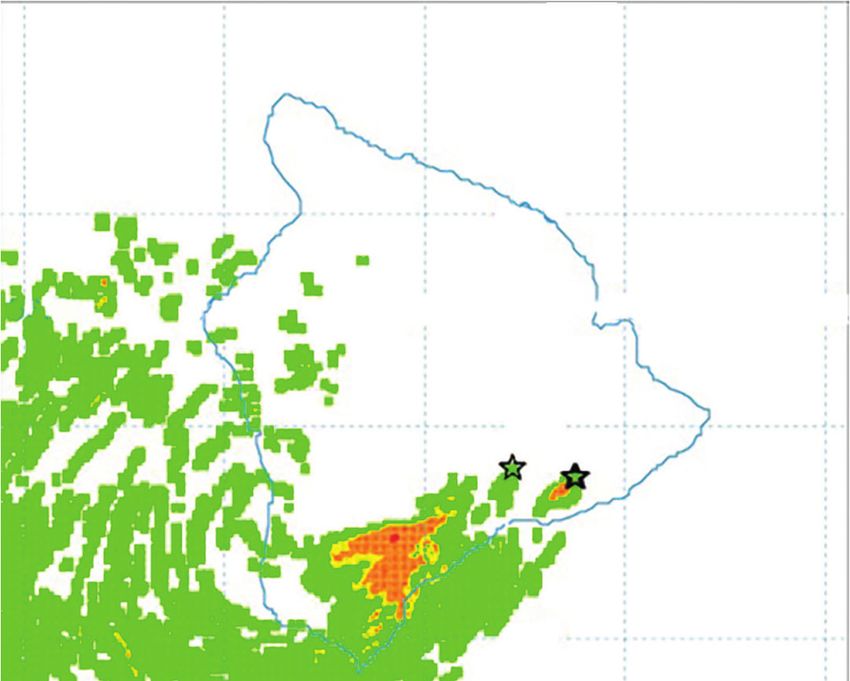
10                                                                                                                                                 11
     What can I do to protect myself                                     from vog?
            Prepare for vog exposure:                                                 • Reduce your exposure to vog:
            • Understand the hazard: Get familiar with key air                          - Limit strenuous activities: Outdoor exercise or
              monitoring websites and the SO2 and PM2.5 advisory                          exertion increases your chances of being affected
              codes/levels.                                                               by SO2 gas and/or PM2.5. When vog levels are
                                                                                          elevated, reduce strenuous activity, if possible.
            • Learn about wind conditions: Be aware of winds
              that could carry vog to your area. This will help you to                  - Stay indoors: When vog levels rise, go indoors and
              better track and predict when you might be affected                         close all doors and windows to the outside. Eliminate
              by vog.                                                                     sources of indoor pollutants (e.g., smoking, candles/
                                                                                          incense, and improperly vented fuel-burning
            • Keep medications handy: If you have asthma or                               stoves) and beware of becoming overheated as
              other respiratory conditions, keep your medication                          a result of closing up your house. If your house is
              available and use as prescribed. If you don’t have                          not well-sealed, it may still offer some protection.
              medications, but feel you might need them, call your                        Alternatively, consider visiting indoor areas that
              doctor.                                                                     are better-sealed and/or have air conditioning
                                                                                          (e.g., commercial buildings or businesses).
       See links on back cover for wind and air monitoring websites                     - Reduce indoor vog with an air cleaner: If doors and
                                                                                          windows in your house, or in one room of it, can be
                                                                                          closed, the use of an appropriate air-cleaning device
            Protective actions when vog is a problem:                                     can help reduce the levels of both SO2 and PM2.5 (if
            • Seek medical assistance as necessary: Assume that                           you live near the source vents), or just PM2.5 (if you
              asthma could get worse during periods of high vog. If                       live farther from the vents).
              you are having asthma symptoms, such as trouble                           - Leave the area if appropriate: If indoor areas have
              breathing, wheezing, increased coughing, or chest                           poor air quality, consider temporarily relocating to a
              tightness, contact your doctor or seek other medical                        less impacted part of the island.
              assistance.
                                                                                        - Restrict vog from entering your vehicle: If driving
            • Take care of yourself:                                                      through the dense volcanic plume near Hawai‘i
              - Do not smoke: Also, avoid secondhand smoke.                               Volcanoes National Park, to minimize air infiltration,
              - Stay hydrated: Drink plenty of liquids to help loosen                     temporarily close your windows and vents, and turn
                congestion. Warm or hot liquids in particular may                         your fan and air conditioner off.
                help some people.
              - Manage congestion or irritation: Over-the-counter        For recommendations on what to do
                nasal sprays or eye drops can help reduce upper          at specific SO2 and PM2.5 advisory levels see:
                respiratory symptoms for some people.                    http://www.hiso2index.info/assets/FinalSO2Exposurelevels.pdf
                                                                         and https://www.airnow.gov/index.cfm?action=pubs.aqguidepart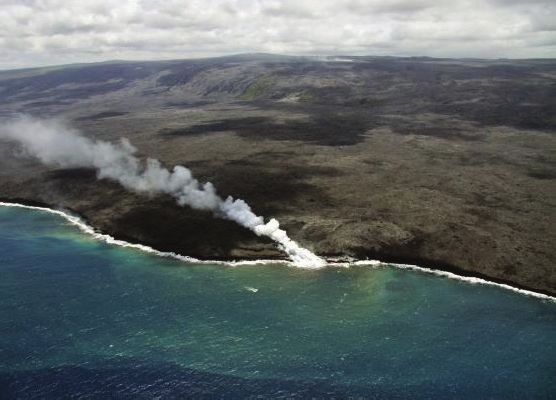
12
                                               More Information
     More Information
                                         • Vog dashboard (comprehensive information including
     • Vog dashboard (comprehensive information       including
                                           links below):  www.ivhhn.org/vog
                                                                                                               Frequently Asked
                                                                                                               Questions on Vog
       links below): www.ivhhn.org/vog
                                         • UH Mānoa VMAP Vog Forecast Model (SO2 and sulfate
     • UH Mānoa VMAP Vog Forecast Model       (SO2 and
                                           particle     sulfatebased on wind model):
                                                    forecasts

                                                                                                               from Kīlauea Volcano
       particle forecasts based on wind model):
                                           http://weather.hawaii.edu/vmap/
       http://weather.hawaii.edu/vmap/
                                         • HDOH Hawaiʻi short-term SO2 monitoring and advisory
     • HDOH Hawaiʻi short-term SO2 monitoring
                                           (SO2 gasand
                                                     dataadvisory
                                                           from island-wide monitoring stations):
       (SO2 gas data from island-wide monitoring    stations):
                                           www.hiso2index.info/
       www.hiso2index.info/
                                         • U.S. EPA AirNow current PM2.5 conditions:
     • U.S. EPA AirNow current PM2.5 conditions:
                                           www.airnow.gov (select Hawaii State at top of page)
       www.airnow.gov (select Hawaii State at top of page)
                                         • NPS HVNP air quality monitoring and advisory (SO2 and
     • NPS HVNP air quality monitoring and     advisory
                                           PM2.5 data from    2 and the National Park):
                                                          (SOwithin
       PM2.5 data from within the National www.hawaiiso2network.com
                                           Park):
       www.hawaiiso2network.com

                                               Acknowledgements
     Acknowledgements
                                               This fact sheet was updated in August 2016 following the findings

                                                                                                                         Graphic Design by Klineworks
     This fact sheet was updated in August 2016from
                                                 following  theconducted
                                                      surveys   findings by Dr. Claire Horwell, Durham University, UK,
                                                                                Graphic Design by Klineworks

     from surveys conducted by Dr. Claire Horwell,  Durham University,
                                               on community     protectionUK,from vog, and two interagency workshops
     on community protection from vog, and two     interagency  workshops
                                               supported by UH Hilo Center for the Study of Active Volcanoes, Hawaiʻi
     supported by UH Hilo Center for the Study County
                                                of Active  Volcanoes,
                                                        Civil Defense Hawaiʻi
                                                                       Agency, and the National Park Service. The
     County Civil Defense Agency, and the National
                                               fact sheet updatesThe
                                                     Park Service.   were prepared by Hawaii Department of Health
     fact sheet updates were prepared by Hawaii   Department
                                               (John            of Health
                                                       Peard); USGS   Hawaiian Volcano Observatory (Tamar Elias); and
     (John Peard); USGS Hawaiian Volcano Observatory      (Tamar  Elias);Health
                                               International Volcanic    and Hazard Network (Claire Horwell).
     International Volcanic Health Hazard Network (Claire Horwell).

                                                                                                                                                        USGS
                                               UPDATED 08 2016
     UPDATED 08 2016


You can also read


