Housing Modification Guide - Ministry of Health funded - Enable New Zealand
←
→
Page content transcription
If your browser does not render page correctly, please read the page content below
Ministry of Health funded

Housing
Modification
Guide

Contents
About this service...............................................................2
Who’s who.............................................................................4
Roadmap of the process...................................................6

Funding information...........................................................8
Income & Cash Asset Testing (ICAT)
Full funding
Part payment
Cost contribution

Property information.......................................................10
Building Consents
Insurance
Property owner permission
Sustainability of support solution
“Making good”

Things to note....................................................................12
Information privacy
Home visits
Alternative arrangements during modifications
Repairs and maintenance
Maintenance period
Chattels

FAQs.....................................................................................14
Can I use my own builder or a different design?
How long will the process take?
What are Basic and Complex housing modifications?
If I am eligible, will my funding application be approved?
What happens if my request for funding is not approved?

Support and contact details...........................................16
Notes.....................................................................................17
About this service
If your disability makes it difficult for you to access and manage
every day activities in your home, you may be eligible for home
modifications funded by the Ministry of Health.

Modifications the Ministry of Health can help fund*
The Ministry of Health might be able to help fund modifications to
your home, such as:
    • handrails to help you use a set of steps leading into your home
    • a ramp or lift to help you get into and out of your home and to
      get between levels inside your home
    • a shower with level access to help you use your bathroom
      safely and independently, or with help from a carer
    • changes to doorways to make it easier for you to move around
      the rooms that you have to use in your home
    • fencing that will help stop you being injured because of your
      disability. (However, we cannot fund the usual fencing and
      security needs of young children.)
*This information is taken from the Ministry of Health website.

Who manages the process?
For those living in the following areas, Ministry
of Health housing modifications are managed by
Enable New Zealand:

    • North Island: all areas south of the Bombay Hills
    • South Island, Stewart Island, Chatham Islands
This guide outlines how the housing modification
process works and introduces the people you’ll meet
along the way. If you live outside these areas, your
housing modification would not be managed by
Enable New Zealand. You can find information
about modifications outside these regions
on the Ministry of Health website.
3

About Enable New Zealand
Enable New Zealand’s purpose is supporting disabled people to live
everyday lives in their communities.
We do this by delivering a variety of
services, equipment and modifications, on
behalf of Government or directly.
These include the national Disability
Information and Advice Service (DIAS),
including Firstport.co.nz; our palliative care
equipment service; our EASIE Living disability information centre,
retail store and demonstration home; our equipment hire service; and
multiple disability support funding and advice services including the
Ministry of Health’s Equipment and Modification Service, the national
children’s spectacle subsidy, and hearing aid subsidy and funding
scheme.
In the 2019/20 financial year, we managed over 2,100 housing
modification projects on behalf of the Ministry of Health.

What does delivering services ‘on behalf’ mean?
Enable New Zealand is contracted by the Ministry of Health to review
and deliver funded housing modifications.
The funding we distribute comes
from the Ministry of Health, and
we are bound by their guidelines
around eligibility, access criteria and
standards of delivery.
We are also contracted to seek the best cost-effective solutions so
the Ministry can equitably support as many people as possible with
available funds.
You can find more information about disability support funding on
the Ministry of Health website - Health.govt.nz, under Your Health,
Disability services.
Who’s who
An introduction to the team involved in funded housing modifications:

                           Occupational Therapists (OTs) are the first
                           point of contact for any funded housing
                           modification. They help you explore your
                           options and advise on what may be funded
                           and how the process works. These OTs are
                           not employed by Enable New Zealand, but
                           they work closely with us and are available
                           to support and advise you throughout the
                           process from start to finish.

                           Enable New Zealand’s Housing Advisors
                           (HAs) have a lot of experience with
                           Ministry of Health housing modifications,
                           and they often come from backgrounds in
                           contracting or building. Housing Advisors
                           help liaise between the health professionals
                           and the building professionals to keep
                           everyone on the same page and within
                           building code and Ministry of Health
                           guidelines.

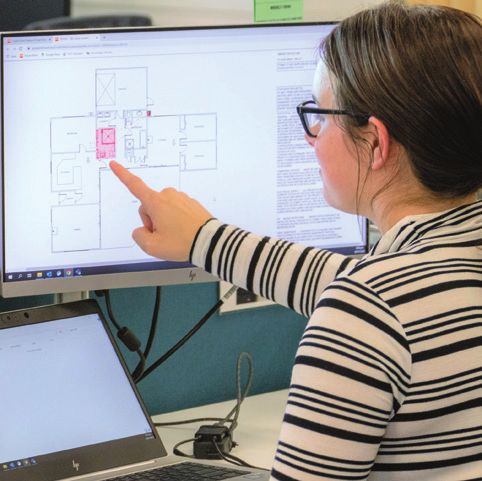
                           Building Consultants are experts like
                           architects or designers that Enable
                           New Zealand engages when housing
                           modifications require more complex plans
                           and/or building consents from the council.
                           Not all modifications require a Building
                           Consultant, but for those that do, they will
                           survey the site and work with you, your OT
                           and your Housing Advisor to create plans
                           that meet your disability related needs in a
                           cost-effective way.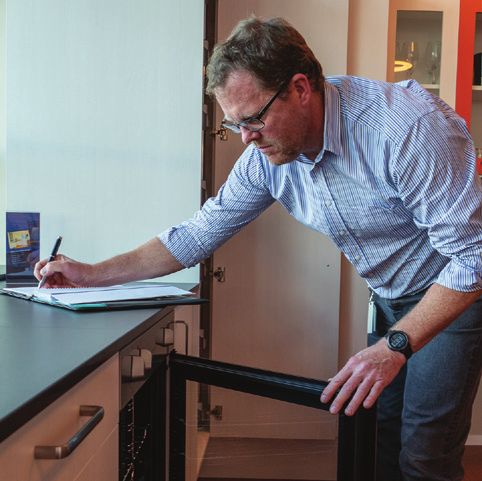
5
 This team exists to help you through the funded housing modification
process, answer your questions and keep everything running smoothly.

                      Enable New Zealand’s Customer Service
                      Facilitators (CSFs) are paperwork pros
                      who keep housing modifications on track
                      and running smoothly. They liaise with OTs,
                      EMS Advisors, Housing Advisors, Building
                      Consultants, Contractors and others
                      throughout the process to make sure all the
                      right information is gathered, paperwork
                      filled out and funding delivered.

                      Enable New Zealand’s EMS Advisors
                      are qualified Allied Health Professionals
                      who provide advice and support to OTs
                      as they look for the most appropriate,
                      cost-effective solutions to meet disability
                      needs. They are experts on the Ministry of
                      Health’s guidelines around funded support,
                      and they help ensure requests align with
                      the Government’s guidelines and meet the
                      disability related support needs.

                      Our Building Contractors are approved to
                      complete funded housing modifications.
                      While these Building Contractors are
                      not Government or Enable New Zealand
                      employees, they work on behalf of Enable
                      New Zealand and are expected to be
                      professional and respectful as they carry
                      out modifications in your home.
Roadmap of the process
1   Initial assessment and planning
    Your Occupational Therapist (OT) meets with you and
    your whānau/support person in your home to discuss your
    disability related needs and discuss options for funded
    housing modifications. The OT can answer questions and raise
    important considerations at this stage, and they will work with
    you to explore your options and come up with a plan.

    Property owner permission
    If you are not the owner of the property where you reside, we
    will need written consent from the property owner.

2   Funding review
    Your OT submits a service request to Enable New Zealand,
    where a Customer Service Facilitator (CSF) receives it.
    Our CSFs will collect all the required documentation to get
    the ball rolling. At this stage, one of our EMS Advisors or
    Housing Advisors may provide input to ensure the planned
    modifications align with Ministry of Health guidelines and
    access criteria. They may need to get a quote for planned
    works or contact your OT for additional information. We will
    keep you in the loop throughout this process.

3   Income & Cash Asset Test, if applicable
    At this point, you may be asked to fill out an Income & Cash
    Asset Test (ICAT). Find out more about the ICAT on page 8.
    If your housing modification is being funded through Cost
    Contribution, Enable New Zealand will hand over to you to
    manage steps 4–7. For more information, see page 9.

    Basic housing modifications (which require no additional
    plans or building consents) skip steps 4, 5, 7 and 8. For more
    information about the difference between basic and complex
    housing modifications, see page 14.
7
Every modification is different, but all follow the same basic process, starting
  with an assessment in the home and finishing with distribution of funding.

 4    Consultant home visit
      If needed, the Building Consultant will arrange a time to
      visit your home and meet with you and your OT. This site
      visit will allow the Building Consultant to take any necessary
      measurements, photographs and notes for preliminary plans
      that will be drawn up.

 5    Planning and building consent
      The Building Consultant submits the plans to the Housing
      Advisor, who then liaises with all parties to review quotes,
      make any necessary queries and approve the final plans. If
      needed, the Building Consultant will then initiate the Building
      Consent process (more information on page 10).

 6    Works
      Modifications are carried out with as little disruption as
      possible, and we make sure you know what to expect and how
      to prepare before works begin. More information on page 12.

 7    Council inspection
      If your project requires Building Consent, the City Council will
      arrange for an inspection to ensure the works are compliant.

 8    Final review
      Once the works are complete, your OT should arrange a final
      visit to make sure the modifications meet your needs.

 9    Finalising payments
      At this point, Enable New Zealand will finalise
      funding payments. Find more information
      on how the different types of funding
      work on page 8.
Funding information Income & Cash Asset Testing Once we have received all your information and documents from your OT, you may be asked to complete an Income & Cash Asset Test (ICAT) form. The form records your income, cash assets and expenses, and it helps determine the amount of funding you may be eligible for and whether you will need to contribute towards the cost of modifications. An ICAT is only needed for people who are 16 years of age or older whose total cost of home modifications is more than $8,076 (including GST). This total cost includes the cost of any previous modifications that the Ministry of Health may have funded for you after you turned 16 years of age. The ICAT includes the person with the disability, their spouse or partner and the property owner (if they share the same property and live with this person). The test is administered by the Ministry of Social Development, Work and Income (WINZ). If an ICAT is required, you will be sent some forms to fill in and return to WINZ. You can choose not to have an ICAT, but this will limit the amount of funding you are eligible for from the Ministry of Health to a maximum of $8,076 (including GST, minus the total cost of any previously funded modifications as referenced above). Types of Funding Full funding For applications that are approved for full funding, the Ministry of Health will pay the full cost of the modifications. This does not include the cost of any repair or maintenance work, as outlined on page 13. We will manage all payments directly to the contractors. Part payment People who are not eligible for full funding will be asked to contribute a part payment for their modifications. A part payment may also be necessary if the proposed costs of the modifications are over certain Ministry of Health funding limits. Before moving forward with any modifications, we will let you know how much payment is likely to be
9
required of you. You will need to pay your contribution directly to the
building contractor. We will manage the rest.

Cost Contribution
A housing modification can be funded through Cost Contribution if
the planned modifications cost more than $1,000 (excluding GST)
and at least one of the following situations applies:
    • The modifications are part of a new build or renovation
    • You’re doing housing modifications over and above what has
      been determined to meet your disability related needs, i.e.
      additional cosmetic work or new features
    • You choose to use a building contractor who does not have a
      contract with Enable New Zealand
    • The total cost of access modifications into or between levels
      of the home (for example, a ramp or lift) is more than the
      Ministry’s funding limit ($15,334 including GST, specific to
      access).
Cost Contribution is a completely acceptable and frequently used
funding pathway, however it must be agreed before Enable New
Zealand engages a Building Consultant, and it means that you will be
responsible for managing the building process, which includes:
    •   Getting plans and specifications
    •   Arranging the building consent
    •   Organising the builder or other trades people to do the work
    •   Dealing with problems or complaints
    •   Ensuring the building works meet the Building Code
You will also need to sign a Cost Contribution Agreement that
outlines the arrangement. The works must be completed within 12
months of signing of this agreement.
After the works are completed, your OT will meet with you to review
whether the works meet your disability related needs and the
agreement terms. Enable New Zealand will then
initiate the agreed contribution payment, which
will come through to you between the 20th and
25th of the month following the review.
Property information
Building Consents
A Building Consent helps your local council or building
consent authority make sure that the building work
planned will be completed safely and meets all the
necessary building codes for your area.
Different councils and building consent authorities have
different requirements, standards and fees. However, you might
expect to need a Building Consent for:
• a lift or ramp that is 1.5 metres or higher above the ground or
floor level,
• a level access shower or
• modifications to external walls, doors, load-bearing walls and
window frames.
Unless you are managing modifications through Cost Contribution,
Enable New Zealand will organise the Building Consent as part of our
Housing Modifications Service.
Clients using Cost Contribution: you will need to arrange with your
builder or building consultant to apply to the local council or building
consent authority for the Building Consent.
The local council or building consent authority will need to see:
• a plan for the building modifications
• specifications for the different parts of the modifications
• legal details of the property ownership.
The local council or building consent authority must approve building
consent before the builder can start modifying the home. You will
also need to meet the cost of the Building Consent.
Insurance
Some insurance companies will require notification when work is
carried out on a home they insure. We suggest you contact your
insurance company prior to any building work starting to ensure the
works will not affect your policy.11 Property owner permission It is important to remember that funded modifications cannot be approved until written permission from the property owner is in place. While this may be you and therefore not a problem to get sorted, if you rent the property where you live (whether privately or through Kāinga Ora/Housing New Zealand), we will need to ensure that the correct permissions are given by the property owner before funding can be approved. The same would also apply if the property where you live is in a Trust or owned by another family member. Sustainability of support solution If you do not own the home, the OT will need confirmation that you are able to remain at your address long-term. A letter may be required from the property owner indicating that the rental agreement is of a long-term nature. The Ministry of Health can only fund modifications that will support you to live in the home for at least 2 to 3 years. OTs will need to be confident that the housing modification will provide you with the necessary support in the long-term. “Making good” ‘Making good’ refers to leaving the area of the house that has been modified in good repair. For example, where a doorway has been widened, the new doorframe will be painted and the surrounding wallpaper or paint work will be repaired to match the existing as far as reasonable. ‘Make good’ works will be funded as part of the housing modification works, however if you want the area redecorated or finished to a standard that is above ‘make good’ then you’ll need to organise this with the builder separately and pay for the works yourself.
Things to note
The following information is important to note as it relates to you and
your housing modification.

Information privacy
The information you share with your OT and Enable New
Zealand is treated as private and confidential. Some
information, such as your contact details and address,
are shared with organisations we contract to work
on our behalf—i.e. Building Consultants and Building
Contractors.

Home visits
Whenever someone needs to visit your property, they will contact
you in advance and arrange a suitable time. You’ll need to make sure
that everyone that needs to access your property as part of the
housing modification process is able to do so safely and easily.
OTs, Building Consultants and Building Contractors are all expected
to be professional and respectful towards you and your home, so if
you have any concerns about any individual’s behavior then please
contact us to discuss further.

Alternative arrangements during modifications
Depending on what type of modification is being carried out, the
Building Contractor may require the home to be vacant during
modifications in order to comply with health and safety standards.
Alternatively, you may not have access to certain areas of your
home during the works. It is important to consider what alternative
arrangements you need to put in place to ensure you have access to
toileting, showering facilities etc.
Talk to your OT about whether access will be limited, and they can
help you come up with ideas for alternative arrangements. For
example, there are companies that rent out portable shower and
toilet units to customers across New Zealand which you could use
while your bathroom is being modified. Costs for these arrangements
are not covered by Ministry funding, you will need to pay for these
yourself.
13

Repairs and maintenance
You (or the property owner) will need to complete any rectification
works to your property to allow the housing modifications to
commence or continue (if necessary repairs have become apparent
during the housing modification). This might be things like:
    •   replacement of rotten framing or lining
    •   upgrading electrical, plumbing, water or sewerage systems
    •   asbestos testing and/or removal
    •   work required to bring the building to a minimum Building
        Code standard.
You (or the property owner) are also responsible for any insurance,
ongoing repairs or maintenance related to your modifications.
Costs for these activities are not covered by Ministry of Health
funding; you or the property owner will need to pay for these
yourself.

Maintenance period
A 3-month maintenance period begins from the date your housing
modification is completed, during which time any issues that arise
due to workmanship or defective materials will be rectified by the
Building Contractor at their cost. If you have any issues of this kind
within the 3-month maintenance period, please contact Enable New
Zealand and we will arrange for these to be sorted out.

Chattels
Most housing modifications and related materials become chattels
of your home once completed, and as such, they are your (or the
property owner’s) responsibility to maintain or remove if no longer
required. However, you should arrange for ceiling hoist motors,
modular ramps and low-rise lifts to be removed by Enable New
Zealand when no longer required.
If you’re not sure what should stay or go when
no longer needed, feel free to give Enable New
Zealand a call.
FAQs
We’ve compiled answers to some frequently asked questions to
support you. If you have other questions, don’t hesitate to ask!
Can I use my own builder or a different design?
You are welcome to use your own builder and design for
your housing modification, and this will be treated as a
Cost Contribution by Enable New Zealand (see page 9
for more information about Cost Contribution).
If you are using your own design, it must still meet
your disability related needs as agreed by your OT.
This will mean that you are responsible for the building
process as outlined on page 9.
How long will the process take?
There are a number of factors that can affect how long a housing
modification takes, including:
• additional information being required
• the modification request requiring further Ministry of Health
approval
• Income & Cash Asset Testing process
• waiting for preliminary plans and working drawings
• construction issues discovered during the process
• waiting for building consents
• availability of the contractor
It is difficult to give definitive timeframes on how long things will take,
but we will keep you informed along the way.
What are Basic and Complex housing modifications?
Basic housing modifications are low cost, generally under $2,000
(GST excl.) and do not require significant structural work or
building consent. Basic housing modifications include, but are not
limited to, external and internal handrails, internal door widening,
lever taps and threshold ramps. If a modification is not classified
as a Basic housing modification, it is considered Complex.15 If I am eligible, will my funding application be approved? A person who is eligible for disability support services has the right to be considered for publicly funded services, but eligibility is not an entitlement and it does not guarantee that you will receive any particular service. In order for a housing modification to be approved for funding, the proposed modifications must also align with the Ministry of Health access criteria. If you have additional questions about eligibility and access criteria, you can find out more information on the Ministry of Health website or your OT can provide guidance. What happens if my request for funding is not approved? Because the funding we distribute comes from the Ministry of Health, Enable New Zealand and OTs are bound by Ministry guidelines around eligibility and access criteria. The Ministry of Health is not able to provide funding to meet all identified needs, so not all requests can be supported. Where this is the case, Enable New Zealand or your OT will contact you to let you know. If you feel that the outcome of your funding decision needs a further review, you can discuss this with your OT and, if desired, request a Review of Decision. If you would like support or further information, you can talk to your OT or contact the Health and Disability Advocacy Service on 0800 555 050 or at advocacy.org.nz. You can also find out more about other funding options on the national disability information website, Firstport.co.nz or on the Ministry of Health website - Health.govt.nz.
Support
Your Occupational Therapist
Your OT is your first point of contact for support during this process,
from start to finish. They can answer your questions or point you
in the right direction for further information. You can jot down their
contact details below:

Enable New Zealand
If you have any questions for our team, you can phone us on 0800
362 253 (0800 ENABLE) or email enable@enable.co.nz.

Firstport
Firstport is your one-stop website for disability related information in
New Zealand. Find out about:
    •   disability allowances and benefits
    •   applying for grants and scholarships
    •   how to live independently
    •   disability equipment guides
    •   finding a support service
    •   news, articles and events
    •   real life stories, photos and videos
Visit firstport.co.nz and Facebook @FirstportNZ for more information.

Your local Disability Information Centre (DIC)
Your local DIC will be able to offer you advice and
guidance around a whole range of disability-related
topics. They are staffed by trained, experienced
people who will be able to point you in the direction
of further support should you need it.
You can find your local DIC on Firstport.co.nz under
Resources & tools > Find an information centre.
Notes
We are New Zealand’s largest supplier of disability equipment
and modification services, helping disabled people and their
       whānau to live everyday lives in their communities.

call       0800 ENABLE (362 253)
email     enable@enable.co.nz
web        enable.co.nz

          EnableNZ               Enable New Zealand
You can also read


