From Bohemian artists to modern graphic design
←
→
Page content transcription
If your browser does not render page correctly, please read the page content below
Module 1 COMMUNICATION AND GRAPHIC DESIGN • Unit 1.2 GRAPHIC DESIGN

       From Bohemian artists to modern graphic design

Between 1910 and 1939 a number of                                         The work of the community of artists mentioned
modernist art styles were integrated into                                 above, such as Toulouse-Lautrec, was centred
graphic design. A variety of progressive                                  in the Parisian neighbourhood of Montmartre,
graphic designers in Britain, France and                                  whereas in the 1900s, a second, parallel art
the United States began absorbing stylistic                               scene emerged: Montparnasse, which gradually
elements from modern art movements,                                       superseded Montmartre as the favoured living
especially Cubism and Futurism, by seeking                                and working location for avant-garde artists. In
to integrate advertising design with the                                  1912, Pablo Picasso moved to Montparnasse in
sophisticated abstract painting styles of the                             search of lower rent and remained there until
pre-war years. However, the bohemian artists                              the outbreak of the First World War in 1914.
who lived in Montmartre and Montparnasse                                  In Montparnasse, Picasso lived near a friend,
were hostile to the creation of commercial                                Georges Braque (1882-1963), who would later
art. Part of their self-identification came                               join him in developing the most influential
from the stance that they had rejected                                    painting style of the twentieth century, Cubism.
mainstream society. Furthermore, there was                                The term “Cubism” was used by a critic who
no established figure, such as Toulouse-                                  saw an exhibition of Braque’s abstract paintings
Lautrec, who could bridge the world of fine                               and disparaged the forms in the paintings as
art and graphic design: the golden age in                                 merely “little cubes”. From 1908 until 1912,
which posters attained a special cachet had                               Braque and Picasso developed the style into
gone. Nonetheless, the fundamental stylistic                              its first mature form, now called “Analytic
elements derived from abstract painting by                                Cubism”. In this style, three-dimensional
Cubists and others, would have a substantial                              objects are represented on the canvas as two-
impact on graphic design for decades to come.                             dimensional abstractions.

 to attain: conseguire                     mainstream: (qui) conformista
 blandly: in modo monotono                 merely: solamente
 to break down: (qui) scomporre            neighbourhood: quartiere
 to bridge: collegare                      nonetheless: nonostante ciò
 canvas: tela                              to overlap: sovrapporsi
 charcoal: carboncino                      pasted papers: ritagli di
 to develop: sviluppare                    quotidiani incollati
 to devise: ideare                         scraps: ritagli
 to disparage: denigrare,                  rent: affitto
 sminuire                                  to seek (sought-sought): cercare
 to epitomize: incarnare,                  stance: posizione
 rappresentare al meglio                   still life: natura morta
 facet: superficie                         to supersede: soppiantare
 furthermore: inoltre                      via: per mezzo di
 however: tuttavia                         wallpaper: tappezzeria

                          Images & Messages N.E. - Copyright © EDISCO Editrice - Vietata la vendita e la diffusione

                                                                   1/4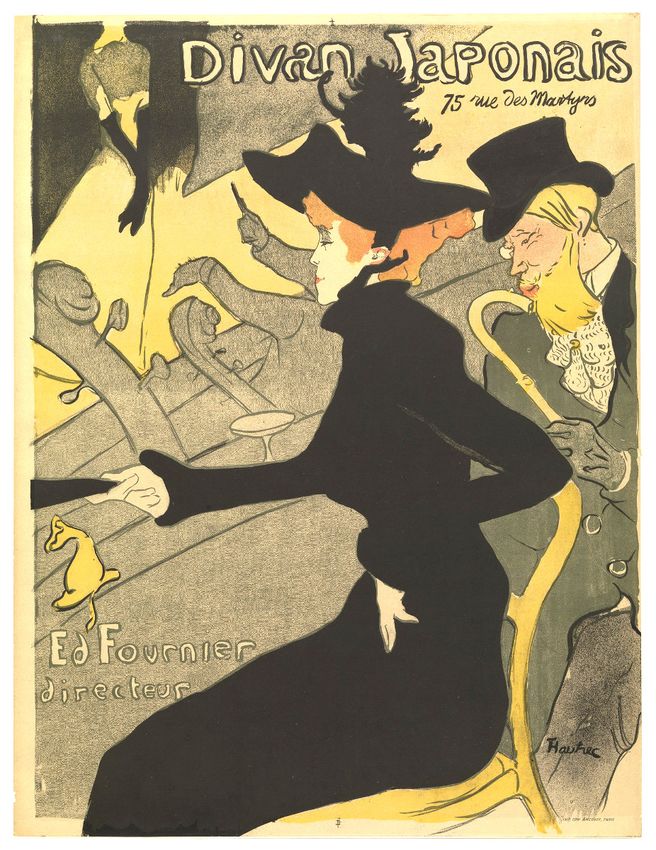
From Bohemian artists to modern graphic design

                                               The term “analytic” refers to the fact that the Cubist
                                               painter analyses solid forms and then transfers them into
                                               canvas via flat facets that represent the subject from a
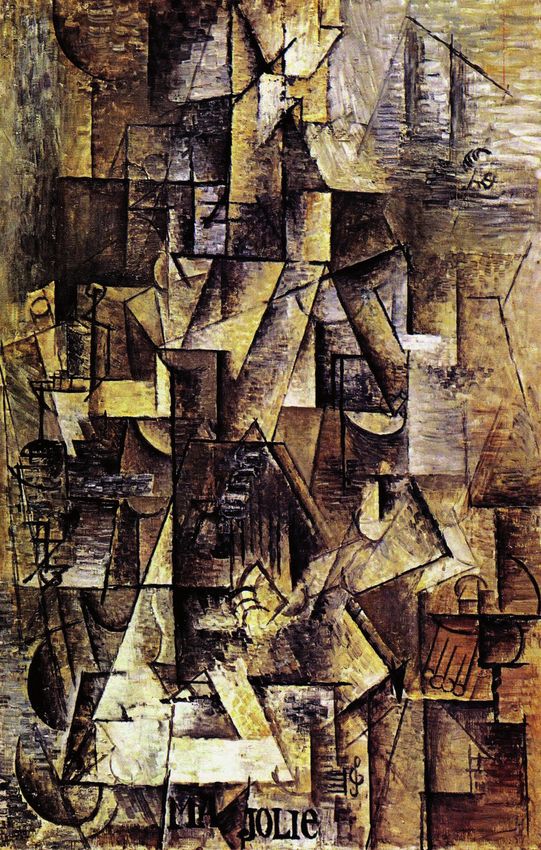
                                               multiplicity of views. Picasso’s painting Ma Jolie (1911-
                                               1912, oil on canvas), which means “My pretty one”, is
                                               an example of fully-developed Analytic Cubism. The
                                               subject, a woman, has been reconfigured as an abstract
                                               assortment of overlapping geometric facets, which are
                                               blandly coloured with a near monochrome effect. Ma Jolie
                                               could refer either to the model or to a popular song at the
                                               time. Of course, when analytic Cubism was later used by
                                               graphic designers, they had to make adjustments in order
                                               to make people understand the commercial message
                                               easily. The Cubists favoured neutral subject matter, such
                                               as still life and portraits.
                                               Around 1912, Picasso and Braque devised a second
                                               Cubist technique called “Synthetic Cubism”. In contrast
                                               to the Analytic Cubist who likes breaking down forms,
                                               artists who create Synthetic Cubist pictures conceive
                                               the image-making progress as flowing in the opposite
                                               direction, as the artist “synthesizes” an object out of a
                                               mix of abstract parts. Picasso’s La Bouteille de Suze (pasted
                                               papers, gouache and charcoal) epitomizes an example of
                                               Synthetic Cubism. Here Picasso has built up a picture
of a café table and its associated objects by making a collage of scraps of blue and black paper,
wallpaper and newspaper. These abstract, fragmented elements all appear to rest on a blue table in
front of a wall. Serving as a formal element, the newsprint also suggests the popular Parisian café
activity of reading the paper while smoking and drinking. In this manner Cubism was a pioneering
force in establishing the significance of the new medium of collage. Synthetic cubism created an
alternative for artists and designers for an abstract language with which they could experiment.

1	       PAIR WORK Student A: using the prompts below, ask questions about the reading passage.
     Student B: answer Student A’s questions. Then give an oral report of what you have learnt about
     Cubism.
     a. did/move/why/to/Montparnasse/Picasso?
     b.	Cubism/and/Braque/first/Picasso/did/when/ style/develop/into/its /mature/?
     c. for/used/the/term/time/“Cubism”/who/the/first?
     d. neighborhood/long/remain/Montparnasse/how/Picasso/did/in/Parisian/of/the?
     e. Picasso’s/are/the/like/facets/what/painting/Ma Jolie/in?
     f. does/what/represent/La Bouteille de Suze?
     g. Did/how/designers/graphic/cubism/analytic/use?
     h. Cubists/kind/what/matter/subject/did/favour/of?

                         Images & Messages N.E. - Copyright © EDISCO Editrice - Vietata la vendita e la diffusione

                                                                  2/4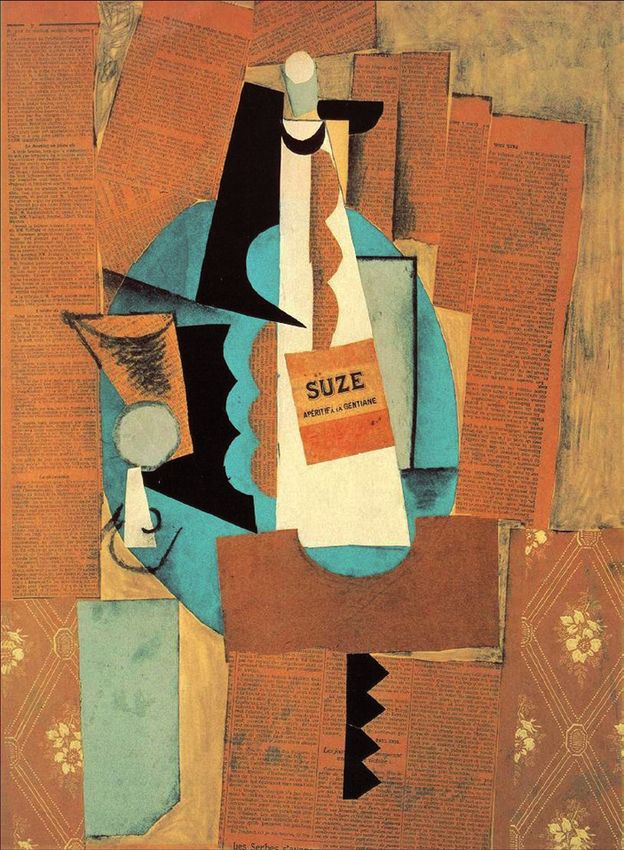
From Bohemian artists to modern graphic design

2	    Complete the following summary of the passage on the previous pages using the words
  listed below.
    canvas • that • fine • commercial • became • most • by • designers • up • examples • materials • angles

  Between 1919 and 1939, Montparnasse 1. ............................................ a magnet for artists but in a different
  way from Montmartre. Here artists, such as Toulouse-Lautrec, developed professional careers
  2. ............................................ connected poster design and 3. ............................................ arts as well as personal
  relationships.The Montmartre community, on the other hand, was devoted to progressive innovation and
  rejected 4. ............................................ art. Picasso and Braque embarked on some of their greatest experimental
  styles while living in Montparnasse. Cubism, the 5. ............................................ influential style of painting
  of the twentieth century, was created there. Graphic
  6. ............................................ were influenced 7. ............................................
  Cubism, which they used for commercial purposes by
  adapting technical innovations to their target. The first stage
  of the Cubism movement was called Analytical Cubism. In
  this style, the subject was 8. ............................................ into different
  blocks and looked at from different 9. .............................................
  It was then reconstructed. The second stage of Cubism,
  Synthetic Cubism, introduced the idea of adding other
  10. ............................................, such as newspapers and scraps
  of paper, in a collage, to represent the different blocks of
  the subject. Picasso’s quintessential 11. ............................................
  of the two stages are respectively: Ma Jolie (1911), oil on
  12. ............................................ and La Bouteille de Suze (1912, pasted
  papers, gouache and charcoal).                                                                                                        Toulouse Lautrec, Divan Japonais

   O
       R
           D
3
  W S  Match the adjectives from the passage in the first column to their antonyms in the second
  column.
  a. bohemian                                                                            1. representational
  b. abstract                                                                            2. old
  c. new                                                                                 3. conformist
  d. early                                                                               4. far
  e. mature                                                                              5. upper
  f. pretty                                                                              6. late
  g. near                                                                                7. synthetic
  h. monochrome                                                                          8. immature
  i. analytic                                                                            9. ugly
  j. lower                                                                             10. polychrome

                                         Images & Messages N.E. - Copyright © EDISCO Editrice - Vietata la vendita e la diffusione

                                                                                               3/4
From Bohemian artists to modern graphic design
O
R
D
4
W S Read the passage again and decide which part of speech the words in italics belong to.
Remember that recognizing grammatical classes is very important when you need to look up a
word in a dictionary under the correct entry.
a. nonetheless adjective adverb
b. bohemian adjective noun
c. furthermore adverb preposition
d. which relative pronoun noun
e. canvas noun adverb
f. that verb relative pronoun
g. still adjective verb
DE STIJL
Britain, France, Italy and the Unites States were not the only countries in which avant-garde movements had a major
influence on graphic design in the period of the First World War. Dutch De Stijl and Russian Constructivism had a long-
lasting impact on graphic design. De Stijl in particular had one of the most immediate impacts. It was founded by a
group of artists and architects that included Theo van
Doesburg and Piet Mondrian. They felt that individualism
and a nationalist egotism was responsible for the savagery
of the conflict that began in 1914 and viewed art as a sort
of spiritual redemption. Van Doesburg wrote: “The old
is connected with the individual. The new is connected
with the universal”. Therefore, they offered a universal
language of geometric abstraction to cure Europe’s
wounds. De Stijl proposed simplicity and abstraction,
both in architecture and painting, by using only straight
horizontal and vertical lines and rectangular forms.
Moreover, their formal vocabulary was limited to the
primary colours – red, yellow, and blue. In 1919, Doesburg
completed an experimental alphabet in which the letters
were determined by an underlying geometric scheme
resulting in a constructed rectilinear sans-serif typeface.
G. Braque in his Paris studio in 1950.
Images & Messages N.E. - Copyright © EDISCO Editrice - Vietata la vendita e la diffusione
4/4You can also read


