FY2021 results Year ended 30 June 2021 - Boral Limited
←
→
Page content transcription
If your browser does not render page correctly, please read the page content below

FY2021 results
                                            Year ended 30 June 2021

                                       Building a stronger Boral

                                                                                              24 August 2021

Agenda

01   FY21 highlights & overview   Zlatko Todorcevski         04       Strategy & priorities

                                                                                                Zlatko Todorcevski

02   Financial performance                                   05       Outlook

                                  Tino La Spina

03   Financial Framework                                     06       Supplementary slides

                                                                                                                     2
FY21 strategy highlights
Significant progress to focus the portfolio, unlock value and build a competitive and profitable core business
New strategy in place with progress across 4 pillars: FOCUS, POSITION, REDEFINE and EXTEND
Sale of 50% interest in USG Boral for US$1.015b complete
Sale of Midland Brick for A$86m complete
Sale of Meridian Brick for US$250m1 targeting to complete in 1Q FY22
Sale of North American Building Products business for US$2.15b (~A$2.9b) expected to complete in 1H FY22
Sale of Timber business for A$64.5m expected to complete in 1H FY22
Assessment of strategic options for Fly Ash undertaken – now well progressed with divestment decision / process
Financial Framework supporting balance sheet and shareholder returns
• net debt at $0.9b at lower end of range
• 10% of issued capital purchased at an average price of $7.012
Significant surplus post completion of divestments
New operating model effective 1 July sees Boral Australia organised along national products lines
1. Equates to US$125m for Boral’s 50% share
2. 78.9m shares or 6% of issued capital purchased in FY21; with the remainder purchased after 30 June 2021 3
FY21 financial highlights
Solid progress to improve returns and deliver better operating leverage
Total operations Continuing operations
Underlying profit after tax1 $251m, up 44% Revenue of $2.92b, down 6%
Statutory profit after tax $640m, versus loss of ($1.145b) in FY20 EBIT1 (including property) of $181m, down 8%
Return on funds employed (ROFE)1,2 of 7.4%, versus 4.3% in FY20 EBIT1 (excluding property) of $157m, up 11%
Underlying EPS1 (cents) 20.6, versus 14.5 in FY20 Transformation benefits of $75m (net of inflation) in line with target;
including $69m in continuing operations and $6m in discontinued Building
Statutory EPS (cents) 52.5 Products Australia
No final dividend ROFE1,2 (including property) of 8.3%, versus 8.8% in FY20
ROFE1,2 (excluding property) of 7.2%, versus 6.3% in FY20
1. Excluding significant items
2. ROFE is EBIT before significant items on funds employed (average of opening and closing funds employed for the year) 4
Commitment to Zero Harm Today
Boral Australia
Serious harm injury
Reporting of H&S metrics broadened to include two
Recordable injury frequency rates (RIFR)1 frequency rates indicators:
Figures may not add due to rounding
(SHIFR)2 • actual SHIFR
Comparable data • potential SHIFR
13.1
MTIFR
Potential SHIFR
11.9 In FY21, Boral Australia reported a 67% reduction in
11.2 11.3 LTIFR ASHIFR and 53% reduction in PSHFIR. This reflects
10.5 implementation of programs that focus on critical
9.8 10.3 10.0 10.8 controls as well as identifying and preventing
incidents that cause serious harm
5.1
RIFR1 up 19% to 11.9
8.7
FY20 FY21
8.4 Efforts to minimise risk of spreading COVID-19 virus
7.4
remain a key priority including hygiene practices,
Actual SHIFR social distancing, tracking and tracing, and employee
wellbeing
0.3 Serious environmental incident frequency rate
2.6 3.1 (SEIFR)3 was 0.3, which was an improvement on the
1.8 prior year. Boral Australia received no penalty
infringement notices in FY21
FY16 FY17 FY18 FY19 FY20 FY19 FY20 FY21 0.1
FY20 FY21
1. RIFR per million hours worked is made up of lost time injury frequency rate (LTIFR) and medical treatment frequency injury rate (MTIFR) for Boral Australia (incl Building Products). FY16 – FY20 data
includes employees and contractors in all businesses and joint ventures. Comparable data includes only 100%-owned businesses and controlled joint venture operations only
2. Serious Harm Injury Frequency Rates (PSHIFR and ASHIFR) per million hours worked for employees and contractors in 100% owned businesses and controlled JVs including Building Products 5
3. Serious Environmental Incident Frequency Rate (SEIFR) is defined as Level 3 (or greater) environmental, regulatory or community incident rate (per million hours worked)
Challenging market conditions
Australian market drivers Boral Australia2, %
Roads Highways Subdivisions & Bridges (RHS&B) & Other engineering1
~3% decrease in RHS&B VWD (-9% NSW, +1% Vic, +3% Qld, -8% SA, -5% WA)
~7% decrease in Other Engineering VWD (-5% NSW, -10% Vic, -4% Qld, -15% SA, -6% WA)
Non-residential1
Non-residential VWD declined ~5% (-3% NSW, -8% Vic, -5% Qld, -9% WA)
Commercial Office & retail segments heavily impacted due to uncertainty around post pandemic demand
Share of revenue from major projects at ~10% in FY21 versus 17% in FY20
Boral’s NSW major projects revenue down 63% and Qld down 52%
Temporary contraction in materials intensity of major projects – FY21 share of construction materials demand 42% RHS&B
~3% of VWD versus ~5% in FY20 7% Other engineering
FY21 completion of key major projects (and some delays) ahead of new activity moving to execution 18% Non-residential
• Completed: Norfolk Island airport, North Connex, Pacific Highway and Northern Road (NSW), 11% Detached housing
Melbourne Metro Rail (Vic), Logan Enhancement, M1/M3, the Mudgeeraba to Varsity Lakes and 9% Multi-residential
Sunshine Coast Airport (Qld) 11% A&A
• Delayed: West gate Tunnel (Vic) 2% Other
• Limited significant new projects: West Connex & Line Wide System Connect projects (NSW) only
significant projects commencing recently
1. Macromonitor (Jul-21 Outlook) forecast
2. Revenue by end market. Based on FY21 external revenue for continuing operations 6
Challenging market conditions (cont.)
Australian market drivers
Residential
FY21 total housing starts1 estimated at ~201,000, up 16% on prior year (+11% NSW, +7% Vic, +13% Qld, +26% SA, +73% WA), reflecting:
• ~32% increase in detached housing starts supported by government stimulus (+25% NSW, +21% Vic, +21% Qld, +49% SA, +91% WA)
• ~6% decline (and 44% below peak) in multi-residential reflecting lower immigration (flat in NSW, -14% Vic, -1% Qld, -31% SA, +10% WA)
FY21 total residential VWD2 estimated to be down ~1% on prior year, reflecting:
• ~7% increase in detached housing VWD (+2% NSW, +5% Vic, +8% Qld, +21% SA, +18% WA)
• ~12% decline in multi-residential VWD (-7% NSW, -16% Vic, -10% Qld, -22% SA, -13% WA)
Alterations and additions2 VWD up ~11% (+17% NSW, +1% Vic, +21% Qld, +8% SA and +4% WA)
COVID continues to reshape construction demand in Australia; with largest net migration out of capital cities on record in March Quarter3
Overall, Boral’s share of revenue from residential (incl A&A) was 31% in FY21 vs 28% in FY20
Overall, VWD across all construction segments was down ~3% in FY21, with a greater impact on Boral due to:
lower materials intensity from major projects relative to last year
major project completions and project delays
geographic exposure (NSW down ~3%, Vic down ~5%, Qld flat, WA down ~2%, SA flat)
1. ABS original housing starts to Mar-21 quarter plus Macromonitor (Jul-21 Outlook) forecast
2. ABS to Mar-21 quarter plus Macromonitor (Jul-21 Outlook) forecast 7
3. Regional internal migration estimates, provisional, RBA March 2021, August 2021
Financial performance
8
Summary of financials
A$m FY21 FY203 Var %
Solid earnings from total operations
reflect improved US market conditions
Total operations basis
Revenue 5,346 5,728 (7)
and Australian transformation initiatives
EBITDA1 882 807 9 For Total operations, the impact of lower revenue primarily from
continuing operations, was offset by delivery of the Group transformation
EBIT1 445 324 37 targets and improved results in North America
EBIT ROS 1 8.3% 5.7%
Net profit after tax of $251m, up 44% on prior year
Net profit after tax1 251 174 44
Significant gross items 358 (1,408) Significant items (gross) of $358m reflects:
• $399m profit on divestments and related matters
Tax on significant items 32 90
• $21m restructuring / transformation costs
Statutory profit/(loss) after tax 640 (1,145) • $10m SAP implementation costs
ROFE1,2 7.4% 4.3% • $10m takeover costs
Continuing operations basis
For continuing operations, revenue was down and lower property
Revenue 2,924 3,117 (6) earnings offset the benefits of Transformation
EBITDA1 406 435 (7)
EBIT1 181 197 (8)
ROFE1,2 including Property 8.3% 8.8%
1. Excludes significant items
2. ROFE is EBIT before significant items on funds employed (average of opening and closing funds employed for the year) 9
3. FY20 comparative figures have been restated – see Note 1 (d) of the premliminary final reports for further details
Continuing operations
Continuing operations
Revenues and earnings impacted by
FY21 FY203 Var % lower volumes and softer prices
A$m
Revenue 2,924 3,117 (6) Revenue declined 6%
1
lower volumes (3% lower in concrete and 4% lower in quarries) reflecting
EBITDA 406 435 (7) less demand from infrastructure and major projects; weakness in demand
from multi-residential and non-residential construction; only partially
EBITDA1 ROS 13.9% 14.0% offset by growth in detached housing and A&A
~1-2% lower like-for-like selling prices in concrete, quarries & aggregates
EBIT1 181 197 (8)
1 Major projects (including concrete placing) contributed ~10% of revenue
EBIT ROS 6.2% 6.3%
relative to 17% in prior year, as key projects completed (esp in NSW and
Qld) and others delayed ahead of new projects moving to execution, and as
Property 24 55 (56)
current projects are less materials intensive (
EBIT drivers
Continuing operations
445
$51m of reversals from prior year COVID impacts and
one-offs (continuing ops only) plus $14m benefit from
lower D&A, partially offset by $13m of net one-off
items including kiln outage and legal costs.
324 127 264
Net volume decline impact of
~$77m after reversal of prior year Net Transformation benefit
flood and bushfire volume impacts ~$69m (excludes $6m in
of $24m (continuing ops only) discontinued)4
197 55
A$m
24 181
24
50 52 157
142 101
119
29
FY20 EBIT1 FY20 FY20 EBIT1 FY21 EBIT1 FY21 FY21 EBIT1
Cost savings3
Price / mix
Discontinued2
Discontinued2
Property
Volume
Property
Inflation
One-offs
Total EBIT1 ex. ex. EBIT1 Total
operations Property Property operations
1. Excluding significant items
2. Discontinued operations include the Australian Building Products business, Boral North America and Boral‘s 50% interest in its USG Boral Joint Venture
3. Cost savings delivered by Boral Australia from permanent cost reduction initiatives and exclude savings from discontnued operations 11
4. Excludes $6m of Transformation benefits from Building Products business which is classified as discontinued. See slide 45 for a reconciliation of data for continuing and discontinued operations
Boral Australia FY21 volume movement EBIT drivers
The reversal of prior year flood and bushfire
volume impacts of $24m for continuing
operations is captured in the movements
across each segment driver1
8 -6
16 -21
FY21 EBIT impact A$m
-34
-77
-40
Detached A&A Multi- Non- RHS&B and Major Total volume
housing residential residential other projects impact on EBIT
engineering
1. See slide 45 for a reconciliation of data for continuing and discontinued operations
Note that management estimates for margins by sector have been used to determine EBIT impact by sector 12
Financial Framework
13
Disciplined Financial Framework
Optimal capital Disciplined Total shareholder return
structure allocation of capital
Target net debt range of ROFE Total Shareholder Return ranks 5th in ASX 100 for the
Disciplined investment
2 – 2.5 times EBITDA, > year to 30 June 2021
/ divestment decisions
where ROFE = WACC WACC
Return surplus capital TSR of 89.9% is top quartile of ASX 100, in line with
Target net debt $900m target under the financial framework
to shareholders
to $1.1b
EPS growth in
top quartile of
ASX100
TSR in top
quartile
of ASX100
14
Optimal capital structure
Targeting net debt of 2 – 2.5 x EBITDA incl. leases A$m Debt maturity profile –
30 June 2021
Optimal net debt range (including leases) is 2 – 2.5 x EBITDA,
equivalent to $0.9b - $1.1b where ROFE = WACC for continuing
operations
Net debt (incl. leases) for continuing operations at 30 June 2021 of 100 125
672
$900m
Short-term liquidity at 30 June 2021 of ~$1.35b, including cash of 312 300
$904m 169
225 187 32
Undrawn committed bank facilities ~A$450m
FY22 FY23 FY24 FY25 FY26 FY27 FY28 FY29 FY30
- maturing in 2024, 2025 & 2026, currently undrawn
Bank USPP 144A Undrawn
Weighted average tenor of 4.9 years
- next debt maturity ~US$127m Nov 2022 Net debt reconciliation, A$m FY21
Opening balance (2,580)
Cash flow 1,213
Transferred to liabilities held for sale 207
Non cash (FX/lease) 261
Closing balance (899)
15
Cash flow
A$m FY21 FY202
Free cash flow higher following receipt of sale proceeds
(figures may not add due to rounding) and focus on cash flow generation through FY21
EBITDA1 882 807
Improved EBITDA performance
Change in working capital and other (10) 11
Steady net working capital performance
Interest and tax (141) (152)
Equity earnings less dividends 12 (13) Reduction in capital expenditure of $70 million in FY21
Other items - including profit on sale of assets (28) (2) Cash receipt from USG & Midland disposals of $1.45 billion
Restructuring, transaction & integration payments (61) (38)
Share buy-back outflow of $507 million
Operating cash flow 654 613
Repayment of lease principal (88) (98)
Capital expenditure (258) (328)
Proceeds on disposal of assets 1,450 40
Free cash flow 1,758 227
Share buy-back (507) -
Dividends paid - (158)
Settlement of financial instruments (38) -
Cash flow 1,213 69
1. Excluding significant items
2. FY20 comparative figures have been restated – see Note 1 (c) of the preliminary final report for further details 16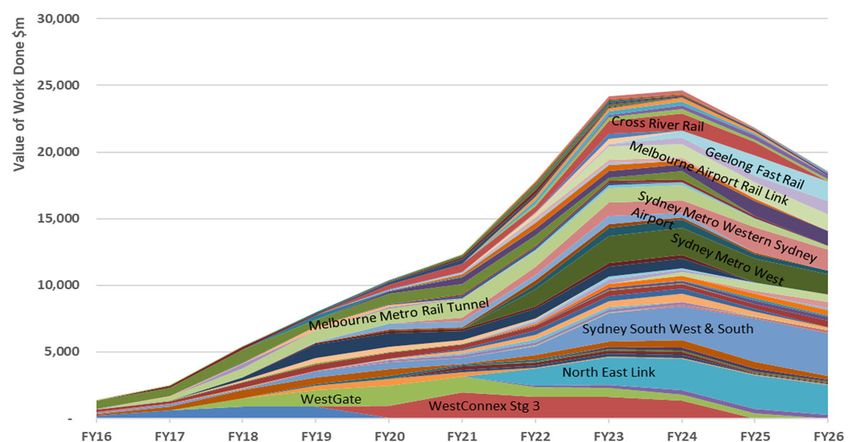
Transformation
Well underway to delivering our targeted $200-$250 million of transformation benefits
Indicative Australian transformation timing
Transformation target
FY21 Gross Transformation
$5-10m $125-175m breakdown
benefits of $125m includes: $20-30m
• Labour $51m
• Ops Excellence $40m $15-25m
• Procurement $29m
$25-35m
• Supply chain $3m
• Operating model $1m
$60-75m
• Concrete network $1m
Less
• Inflation $50m
$75m
Supply Chain ~$50-65m
Operating model ~$40-55m
Operations Excellence ~$20-30m
Adjacencies ~$15-25m
$75m includes $6m of
Transformation benefits in FY21 FY22 FY23 FY24 FY25 FY26 Transformation
discontinued building Actual Target total
products businesses
17
Capital expenditure
Disciplined reinvestment in the business Depreciation & amortisation1 (continuing)
Capex continuing
FY21 total capital expenditure (total operations) of $313m Capex discontinued
• $258m of capital acquisitions
• $55m of lease additions 169
150 205
Boral Australia
64
• Port of Geelong clinker grinding & storage
101 129
• Tarong Fly Ash 239
201 225
60 188 193 191
Boral North America 184
• Kirkland natural pozzolan grinding
284 ~300
276 275
• Miller ash collection upgrade 249
223
190 184
~$300m capex for continuing operations expected in FY22,
including:
• completion of Geelong clinker facility, Tarong fly ash and
Berrima chlorine by-pass project (alternative fuels) FY15 FY16 FY17 FY18 FY19 FY202 FY21 FY22(f)
• strategic land purchase at Dunmore
Pre AASB 16 Post AASB 16
1. Depreciation & amortisation excludes acquired amortisation
2. FY20 comparative figures have been restated see Note 1(c) of the preliminary final report for further details 18
18
Disciplined capital allocation
Focus remains on disciplined capital allocation
• Net debt of $0.9b is in line with target
• No surplus capital currently available to return to shareholders
Post receipt of proceeds from Boral North America Building Products, Meridian Brick and Timber divestments, net debt will fall
below the target, creating surplus capital
Subject to any additional ROFE accretive opportunities, surplus capital will be available for distribution to shareholders
Manner of distributing surplus capital to shareholders will consider the circumstances at the time and will be subject to:
• availability of franking credits
• Boral’s share price
• preferences of shareholders
19
Strategy & priorities
20Boral’s four strategy pillars
We have been progressing a comprehensive program of work to create a more purposeful organisation
with a clear strategy and frameworks to achieve our objectives
A FOCUS Boral’s portfolio and unlock value:
Divest non-core businesses to strengthen
the portfolio from both a strategic and financial
perspective
B POSITION our core business in Australia to build
a competitive and profitable core to underpin our
position as the national Australian leader in our
chosen segments
C REDEFINE our business and operations to
become the leader in decarbonisation so that we are
best positioned to pre-empt and act upon emerging
trends
D EXTEND Boral’s operations by exploring future
opportunities to create value from the
commercialisation of innovations
21
Delivering our strategy – Focus and Position
A FOCUS Boral’s portfolio and unlock value B POSITION our core business in Australia
Financial Framework embedded; completed 10% New operating model effective 1 July sees Boral
share buyback at average price of $7.01 per share Australia organised along national products lines
Sale of USG Boral complete Business Transformation Program: Boral Australia
Midland Brick complete targeting $200-$250m of net EBIT transformation
benefits; with $75m delivered in FY21
Sale of Meridian Brick, targeting completion in 1Q FY22
Potential to realise latent value within the existing
Sale of North American Building Products business for property portfolio – surplus property represents a
US$2.15 billion (~A$2.9 billion) expected to complete in market value of at least $850m
1H FY22
Progressing divestment of Fly Ash business
We are focused on unlocking value Considerable rigour in approach
and growing the bottom line including Steering Committee structure
across each stream
22Delivering our strategy – Redefine
C REDEFINE to strengthen our competitive advantage
Adjacent growth strategies Targeting Net Zero by 2050 on 1.5 degree decarbonisation
pathway
recycling and waste
Sector-leading short- and medium-term SBTi targets
supplementary cementitious materials (SCMs)
Decarbonisation pathways identified
accelerating lower carbon products / technology
Economics and available technologies
Lower Carbon Concrete will determine timing of investments
Envisia®, Envirocrete®, Envirocrete®Plus External funding and partnerships supplementing own
investment in R&D / innovation e.g.
UTS Boral Centre for Sustainable Building
$2.4m funding from Federal Government’s CCUS
Development Fund towards a pilot-scale carbon
capture and use project
23
Our sustainability framework
Decarbonisation comes together with other focus areas in our sustainability framework
24
24Adopting climate targets aligned with
“How” we’ll deliver the strategy
    Now organised along national product lines – cement, quarries, concrete, asphalt and recycling, and
    transitioning to a new Leadership structure to reflect Boral’s focused portfolio as divestments complete

                                                                              Executive Committee1
            CEO & Managing
               Director
          ZLATKO TODORCEVSKI
                                          Chief Finance &              Chief People &                  Chief                       Company                  Chief Operating
                                          Strategy Officer             Culture Officer              Legal Officer                  Secretary                Officer (Interim)
                                           TINO LA SPINA             REBELLE MORIARTY               AMY JACKSON                DOMINIC MILLGATE             WAYNE MANNERS

                                                                                                                                                         Asset & Product Solutions
                                                                                              EGM                                     EGM                Supply Chain & Logistics
               EGM                 EGM                EGM                  EGM                                    EGM
                                                                                           Recycling &                               Sales &            Health, Safety & Environment
             Concrete             Cement             Quarries             Asphalt                             Major Projects
                                                                                             Growth                                 Marketing                    Innovation
                                                                                                                                                          Operational Excellence

1   Darren Schulz as President & CEO Boral North America remains in that role until portfolio actions complete and remains a member of the Executive Committee.
    Kylie FitzGerald as Group Investor Relations & Communications Director remains in that role and a member of the Executive Committee until early November 2021.

                                                                                                                                                                                       27

          Outlook
                                                                                                                                                                                       28
FY2022 outlook
Mixed and uncertain conditions in Australia are continuing with COVID disruptions significantly impacting
Underlying market conditions in Australia expected to be mixed in FY22:
• Infrastructure activity expected to improve slightly in 2H and but more so moving into FY23, particularly road construction
• Non-residential activity expected to be broadly steady
• Continued flow through of stimulus led detached housing activity but lead indicators suggest softening of demand to follow
• Multi-residential activity expected to remain weak, with a lift in activity not expected until immigration returns
Uncertainty across all geographies and market segments remains:
• We were seeing signs of improved demand as we ended FY21 and moved into FY22, however, COVID disruptions and unprecedented impact on construction
through temporary closures from July 2021 present early challenges and considerable uncertainty
• In July 2021 construction closures in Greater Sydney and South Australia had an estimated EBIT impact of ~$16m due to lost volumes and higher costs.
Further impacts continuing in 1Q FY22 in Greater Sydney due to LGA closures together with restrictions in other states and the slow ramp up of activity in SA.
• At this stage, the impact of COVID disruptions in the first quarter may be in the order of ~$50m
• Ability to recover lost volumes remains unclear
• Will continue to take actions to minimise the financial impacts of COVID-related measures, including short-term cost measures
Targeting FY22 Transformation benefits of ~$60 – $75m net of inflation, contributing to $200 – $250m target
Additional financial considerations:
• No significant Property sales are currently contemplated
• Boral’s financing costs will be approximately 4.2% pa on gross debt value (including leases)
• Capital expenditure (continuing operations) for FY22 expected to be around $300m (including new leases) subject to market conditions.
29
29
Supplementary information
30Boral’s portfolio of upstream and downstream assets
Geographically diversified network of 3671 construction materials sites across Australia
The combination of upstream assets with the Revenue by region1 Boral’s construction materials network1 Concrete
(FY21, %) 226
location and service reach of its downstream & placing
assets provides Boral with a vertically integrated
and attractive geographic footprint: Quarries 67
Well positioned, high quality and efficient quarries to NT
take advantage of the growth in New South Wales QLD
Asphalt 46
and other key East Coast regions 1
WA 1 65 17 Cement2 6
Boral owns a cement kiln, located in Berrima, New
South Wales, and is in the final stages of completion 15 1
of an import terminal in Geelong 12
Recycling 12
7 SA
Good position in South-East Queensland through the NSW / ACT
Sunstate Cement joint venture with Adbri Limited, with 1
10 3 94 14 5
potential for further expansion opportunities
9 19 4
Access to cost competitive, efficient rail logistics for 43% NSW / ACT
key quarry and cement assets in NSW to send VIC / TAS
upstream materials into metro areas for downstream 29% VIC / TAS / SA
44 11 7
manufacturing and distribution 23% QLD
16 1
Well-positioned footprint of concrete and asphalt 5% WA
plants in key East Coast metro locations
1. At 30 June 2021. Includes transport, fly ash and R&D sites. Concrete and asphalt sites include mobile plants. Excludes mothballed plants, distribution and administration sites.
31
2. Includes cement manufacturing, grinding, bagging and lime plants in NSW, a clinker plant in Victoria and a clinker grinding JV in Queensland.
Valuable upstream and downstream operations
Vertically integrated positions in key regions, especially East Coast states
Cement Quarries Bitumen
~70% manufactured clinker, (All Product Types) Bitumen
~30% imported ~30m tonnes p.a. Importers
1.5m tonne p.a. clinker kiln Close to 1b tonnes total Australia (BIA)
capacity and ~4m tonne p.a. reserves with ~20–50 years JV
cement grinding capacity1 reserves in key metro quarries
~ 50–60% cement volumes
sold internally to Concrete2
~40–50% quarry volumes ~5–15% Quarry volumes ~35% of bitumen supplied
sold internally to Concrete2,3 sold internally to Asphalt2,3 by BIA JV2
Concrete and Placing4 Asphalt
>7m m3 p.a. concrete >2m tonnes of asphalt p.a.
~35–55% Quarry
Per m3 concrete: ~0.3t Per tonne asphalt: ~0.055t
volumes sold
cementitious material; ~1.0t bitumen; ~0.7t aggregates;
externally2
aggregates; ~0.9t sand ~0.2t sand
End customer
1. Includes Boral’s share of 1.5m tonnes of grinding capacity in 50% owned Sunstate Cement JV
2. Based on long-term historical average
3. For sand aggregates only 32
4. Placing operations in Sydney and SEQ onlyBoral Australia (continuing operations), cost data
FY21 $2.5b cash cost base, % FY21 Energy and fuel costs (continuing operations), A$m
~$130m
Coal $14m
Gas $12m
Electricity $44m
27% Raw materials
26% Payroll Diesel $59m1
27% Logistics
6% Other costs
9% Repairs & maintenance
5% Energy & fuel
1. Net of fuel tax rebates and excludes hedging 33
33
Market data
34Boral Australia’s market segments
Revenues are derived from various market segments
RHS&B2,3, VWD A$b FY21 External revenue Detached housing4, starts
35 160,000
by end-market1, %
30
25 120,000
20
80,000
15
10 40,000
5
- -
FY21F
FY06
FY07
FY08
FY09
FY10
FY11
FY12
FY13
FY14
FY15
FY16
FY17
FY18
FY19
FY20
FY21F
FY06
FY07
FY08
FY09
FY10
FY11
FY12
FY13
FY14
FY15
FY16
FY17
FY18
FY19
FY20
Other engineering2, VWD A$b
Multi-residential4, starts
75 160,000
50 120,000
80,000
25
40,000
- 42% RHS&B -
FY21F
FY06
FY07
FY08
FY09
FY10
FY11
FY12
FY13
FY14
FY15
FY16
FY17
FY18
FY19
FY20
FY06
FY07
FY08
FY09
FY10
FY11
FY12
FY13
FY14
FY15
FY16
FY17
FY18
FY19
FY20
FY21F
7% Other engineering
18% Non-residential
Non-residential2, VWD A$b Alterations & Additions4, VWD A$b
11% Detached housing
60 12.5
50 9% Multi-residential 10.0
40 11% A&A 7.5
30
20
2% Other 5.0
10 2.5
- -
FY06
FY07
FY08
FY09
FY10
FY11
FY12
FY13
FY14
FY15
FY16
FY17
FY18
FY19
FY20
FY21F
FY06
FY07
FY08
FY09
FY10
FY11
FY12
FY13
FY14
FY15
FY16
FY17
FY18
FY19
FY20
FY21F
1. Based on split of FY21 Boral Australia external revenue 4. Source: original series from ABS to Mar-21 and Macromonitor (Jul-21 Outlook)
2. Source: Macromonitor (Jul-21 Outlook) forecasts forecasts 35
3. Roads, highways, subdivisions and bridges
Australian construction VWD by segment
Construction spend in Australia in FY21 was lower than in recent years
Total annual Australian construction spend by segment ($ billion)
48 46
44 41
38
38
30 28 Other Engineering
26 28 27
23
RHS&B
40 45 46
40 49 47 Non-residential
9 10 9 9 A&A
9 10
30 33 34 33 25 Multi-residential
28
Detached housing
37 37 38 38 35 38
FY16 FY17 FY18 FY19 FY20 FY21 F
All historical and forecast data per Macromonitor 36Australian residential construction decline
Total housing starts1 Housing starts – by state1
(‘000) Detached Multi FY21F vs FY20 (‘000)
221 230 16%
201 206
197 196
173 175 171
106 108 66 65
85 68 +7%
71 70 72
+11%
134 128 141
115 121 112 105
102 99
+13%
FY17 FY18 FY19 FY20 FY21F 1H20 2H20 1H21F 2H21F
* Half year data annualised
+73%
Alterations & additions1 59
63
56
(value of work, $b) 50 +26%
11%
35
31
24
11 13 14
10.4 9.8 10.6 10.1
9.6 9.2 9.4 9.3 8.9
FY20 FY21F FY20 FY21F FY20 FY21F FY20 FY21F FY20 FY21F
NSW VIC QLD SA WA
FY17 FY18 FY19 FY20 FY21F 1H20 2H20 1H21F 2H21F
* Half year data annualised
1. Original series housing starts from ABS to Mar-21 quarter. Forecast from Macromonitor (Jul-21) Outlook. % change FY20 vs FY21F
37
Note: Figures may not add due to rounding
Selection of Australian project work & potential pipeline1,2
FY21 completed FY22 FY23 FY24
Boral • Karratha Tom Price Rd, WA • Line Wide System Connect, NSW • Snowy Hydro 2.0, NSW (precast),
Melbourne Metro Rail Project Mordialloc Bypass, Vic NSW
projects • •
(Precast), Vic • Pacific Highway M1 (various), SE Qld • Sydney Metro (Martin Place),
• Norfolk Island Airport, Offshore • Saltwater Creek, Qld NSW
• RAAF East Sale, Vic • WestConnex 3B (above ground), • Sydney Gateway Project, NSW
• Sydney Metro Precast, NSW NSW • Queens Wharf – resort dev’t, Qld
Tendering • Bunbury Outer Ring Road, WA • Bruce Highway Upgrade
• Coomera Connector, QLD (Various), Qld
• Great Eastern Highway Bypass, WA • North East Link, Melbourne, Vic
• Groote Eylandt, NT • Tonkin Highway extension, WA
• Inland Rail Project, Qld, NSW, Vic • Warragamba Dam, NSW
• New M12 Motorway, NSW • Wyangala Dam Upgrade, NSW
• Metronet MEL Line, WA
• M6 – Kogarah, NSW
• South Road Upgrade, SA
• Sydney Metro (West), NSW
• Tonkin Gap, WA
• Warringah Freeway Upgrade, NSW
• Western Sydney Airport, NSW
Pre- • Rockhampton Ring Road, Qld • Western Harbour Tunnel, NSW • Outer Suburban Rail Loop,
Coffs Harbour Bypass, NSW VIC
tendering •
• Raymond Terrace, NSW • Brisbane Olympics
Infrastructure, SE Qld
1. Boral’s major projects are generally defined as contributing >$15m of revenue to Boral
2. As at June 2021. Timing are best estimates and are subject to client schedule delays 38
,A strong medium-term pipeline
While the pipeline is strong, the shifting nature Softer concrete volumes driven by more tunnelling
of work is changing materials intensity Premix demand (million m3) from major transport construction1
Runways
Major transport infrastructure projects1
Rail
(A$m)
RHS&B
Growing asphalt volumes driven by Vic demand
Asphalt demand (million t) from major transport construction1
WA
VIC / SA / TAS
NSW / ACT
QLD
1. Macromonitor Major Projects (Non Resource), VWD >$450M – May 2021 Final Forecasts 39
Concrete and asphalt demand in Australia
Macromonitor forecast1 demand across all Australia construction markets
Pre mix concrete demand1 Asphalt demand1
(‘000) m3 (‘000) tonne
Forecast volumes Forecast volumes
14,000
35,000
12,000
30,000
WA / NT 10,000
25,000
8,000
20,000 VIC / TAS / SA
15,000 6,000
10,000 NSW / ACT 4,000
5,000 2,000
QLD
- -
FY21F
FY22F
FY23F
FY24F
FY25F
FY06
FY07
FY08
FY09
FY10
FY11
FY12
FY13
FY14
FY15
FY16
FY17
FY18
FY19
FY20
FY06
FY07
FY08
FY09
FY10
FY11
FY12
FY13
FY14
FY15
FY16
FY17
FY18
FY19
FY20
FY21F
FY22F
FY23F
FY24F
FY25F
Macromonitor forecasts Concrete volumes to improve Macromonitor forecasts Asphalt volumes to decline in FY21 and
slightly in FY21 and remain steady till FY25 then improve in FY22 and remain at high levels to FY23/24
• ~1% CAGR2 in concrete volumes forecast FY21 to FY25 • ~6% CAGR2 in asphalt volumes forecast FY21 to FY25
Depending on phasing of projects and given Boral’s large share of major projects,
Boral’s change in volumes could be different to what Macromonitor is forecasting
1. Macromonitor Construction Materials forecast (Jul 2021 outlook)
2. Compound annual growth rate 40Financial data
41
Total and continuing Australian operations
The following charts provide a reconciliation of key data provided on slides 11 and 12 for continuing and discontinuing operations in Australia
Transformation Volumes prior year one offs
Continuing operations
Continuing operations
75 69 24
26
Discontinued operations
6 Discontinued operations
2
Total. ops Total. ops
Other prior year one offs COVID production slows and costs and PY one offs
Continuing operations 28 Continuing operations
23 23 36
8 Discontinued operations
Total. ops Total. ops
42Boral North America
Discontinued operations FY21 FY20 Var %
A$m Boral North American included as part of discontinued
operations
Revenue 2,162 2,336 (7)
EBITDA 1
419 350 20
Sale of Boral North America for US$2.15b announced on 21
June 2021
EBIT1 209 121 73
Transaction expected to close in 1H FY22
US$m
Revenue 1,616 1,566 3
1
EBITDA 313 235 33
EBITDA1 ROS 19.4% 15.0%
EBIT1 156 81 93
1
EBIT ROS 9.7% 5.2%
Average funds employed 2,370 2,770
ROFE1,2 6.6% 2.9%
1. Excluding significant items
2. Divisional ROFE is EBIT before significant items on funds employed (average of opening and closing funds employed for the year)
43
USG Boral
Discontinued operations FY21 FY20 Var %
A$m (9 months) Boral’s 50% interest in USG Boral included as part of
discontinued operations
Reported result
Equity income1,2 37 25 46
Sale of 50% interest in USG Boral for US$1.015b
complete 31 March 2021
Underlying result
Profit on sale before tax of $443 million
Revenue 1,065 1,474 (28)
EBITDA2 184 217 (15)
EBITDA2 ROS 17.3% 14.7%
1
EBIT 103 107 (4)
1
EBIT ROS 9.6% 7.3%
1. Post-tax equity income from Boral‘s 50% share of USG Boral JV
2. Excluding significant items 44FY21 segment revenue, EBITDA and EBIT
External revenue, A$m EBITDA1, A$m EBIT1, A$m
Figures may not add due to rounding FY21 FY20 FY21 FY20 FY21 FY20
Boral Australia2 2,924 3,117 432 472 210 235
Corporate - - (26) (36) (28) (38)
Total continuing operations 2,924 3,117 406 435 181 197
Discontinued Operations3 2,422 2,612 476 371 263 127
Total 5,346 5,728 882 807 445 324
1. Excluding significant items
2. FY20 comparative have been restated – see Note 1 (d) of the Preliminary final report for further details 45
3. Discontinued Operations includes Boral North America, Boral’s 50% post-tax equity accounted income from the USG Boral joint venture and Australian Building Products
Non-IFRS information
Boral Limited’s statutory results are reported under International Financial Reporting Standards. Earnings before significant items is a
non-IFRS measure reported to provide a greater understanding of the underlying business performance of the Group. Significant
items are detailed in Note 2.1 of the full year financial report and relate to amounts of income and expense that are associated with
significant business restructuring, business disposals, impairment or individual transactions.
A reconciliation of these non-IFRS measures to reported statutory profit is detailed on the next page.
The results announcement has not been subject to review or audit, however it contains disclosures which are extracted or derived
from the Full Year Financial Report for the period ended 30 June 2021. This Full Year Financial Report for the 12 months ended 30
June 2021 is prepared in accordance with the ASX Listing Rules and should be read in conjunction with any announcements to the
market made by the Group during the year.
46Non-IFRS information (continued)
A$m
Sales revenue
Before Significant Items Significant items Total This table provides a
Continuing operations 2,924.1 2,924.1 reconciliation of
Discontinuing operations 2,421.6 2,421.6
Total 5,345.7 - 5,345.7 non-IFRS measures to
EBITDA
Continuing operations 405.8 (41.2) 364.6
reported statutory
Discontinuing operations 476.2 398.9 875.1 profit
Total 882.0 357.7 1,239.7
Depreciation & Amortisation (incl acquired amortisation)
(224.6)
Continuing operations (224.6)
(212.8)
Discontinuing operations (212.8)
(437.4) -
Total (437.4)
EBIT
Continuing operations 181.2 (41.2) 140.0
Discontinuing operations 263.4 398.9 662.3
Total 444.6 357.7 802.3
Net financing costs
Continuing operations (122.9) (122.9)
Discontinuing operations (7.7) - (7.7)
Total (130.6) (130.6)
Profit before tax
Continuing operations 58.3 (41.2) 17.1
Discontinuing operations 255.7 398.9 654.6
Total 314.0 357.7 671.7
Income tax benefit / (expense)
(10.4) 12.4 2.0
Continuing operations
(52.9) 19.1 (33.8)
Discontinuing operations
(63.3) 31.5 (31.8)
Total
Profit after tax
Continuing operations 47.9 (28.8) 19.1
Discontinuing operations 202.8 418.0 620.8
Total 250.7 389.2 639.9
1. Based on weighted average number of shares on issue of 1,219,708,646 47
Funds employed – continuing operations
Continuing operations
Actual Funds Employed
A$m (figures may not add due to rounding)
Cash 904
Receivables 497 497
Inventories 218 218
Financial assets 20 20
Tax assets 147
Other assets 54 54
Investments 15 15
Property, plant & equipment 2,032 2,032
Intangible assets 72 72
Assets classified as held for sale 3,626
Total assets 7,584 2,908
Payables 484 484
Provisions 236 236
Debt & lease liabilities 1,803
Financial liabilities 42 42
Tax liabilities 45
Liabilities classified as held for sale 610
Total liabilities 3,220 762
Net Assets/ Funds employed as at 30 June
4,364 2,146
2021
Funds employed - 30 Jun 2020 2,241
Average funds employed 2,193
48Funds employed – total operations
Total operations
Actual Funds Employed
A$m (figures may not add due to rounding)
Cash 904
Receivables 497 497
Inventories 218 218
Financial assets 20 20
Tax assets 147
Other assets 54 54
Investments 15 15
Property, plant & equipment 2,032 2,032
Intangible assets 72 72
Assets classified as held for sale 3,626 3,626
Total assets 7,584 6,534
Payables 484 484
Provisions 236 236
Debt & lease liabilities 1,803
Financial liabilities 42 42
Tax liabilities 45
Other liabilities 0 0
Liabilities classified as held for sale 610 610
Total liabilities 3,220 1,372
Net Assets/ Funds employed as at 30 June
4,364 5,162
2021
Funds employed - 30 Jun 2020 6,918
Average funds employed 6,040
49
Disclaimer
The material contained in this document is a presentation of information about the Group’s activities current at the date of the
presentation, 24 August 2021. It is provided in summary form and does not purport to be complete. It should be read in conjunction with
the Group’s periodic reporting and other announcements lodged with the Australian Securities Exchange (ASX).
To the extent that this document may contain forward-looking statements, such statements are not guarantees or predictions of future
performance, and involve known and unknown risks, uncertainties and other factors, many of which are beyond our control, and which
may cause actual results to differ materially from those expressed in the statements contained in this release.
This document is not intended to be relied upon as advice to investors or potential investors and does not take into account the
investment objectives, financial situation or needs of any particular investor.
50You can also read


